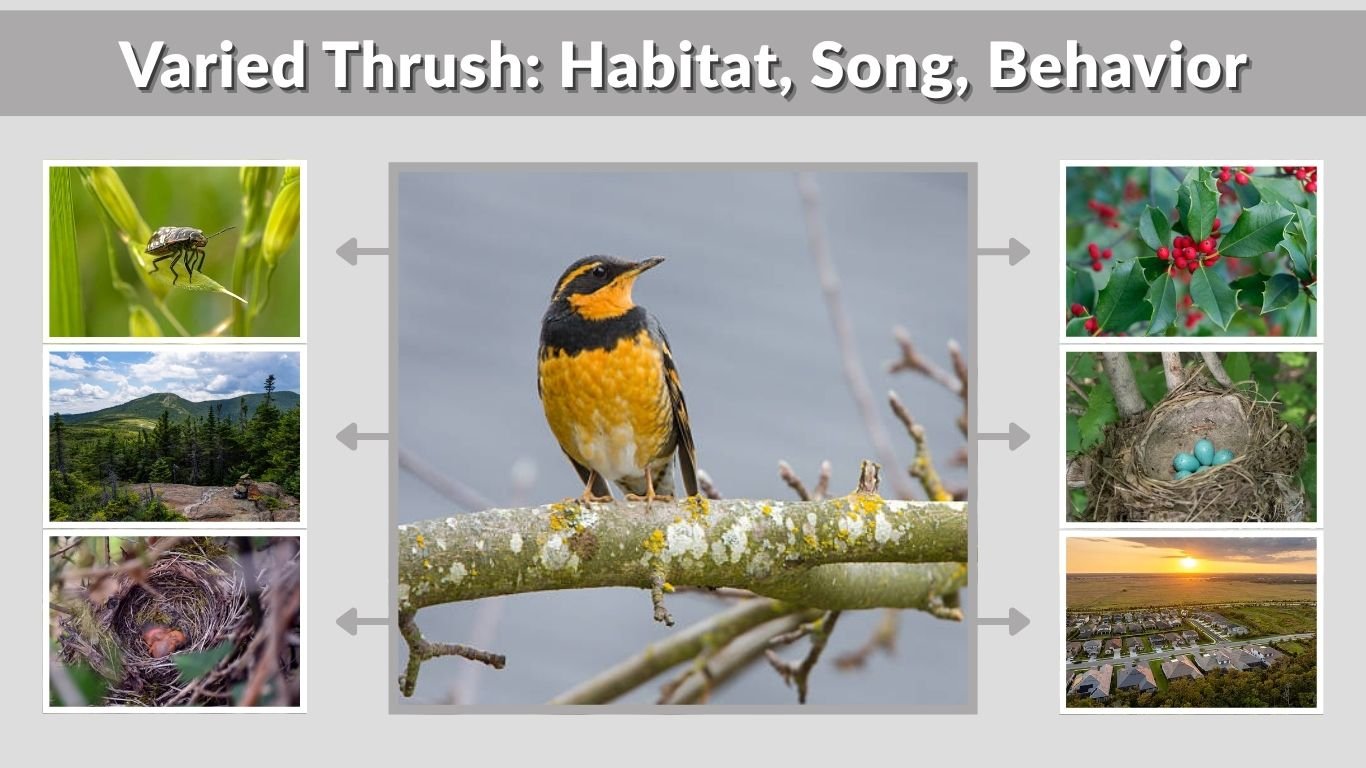
The varied thrush (Ixoreus naevius) is a striking forest bird known for its bold orange and black coloration and its haunting, flute-like song. Native to the Pacific Northwest of North America, this elusive species is often found in dense, moist forests. Unlike many songbirds, the varied thrush tends to be solitary and secretive, making sightings special for birdwatchers. Its unique appearance and distinctive call make it one of the most recognizable woodland birds in its range.
Varied Thrush Physical Characteristics and Identification
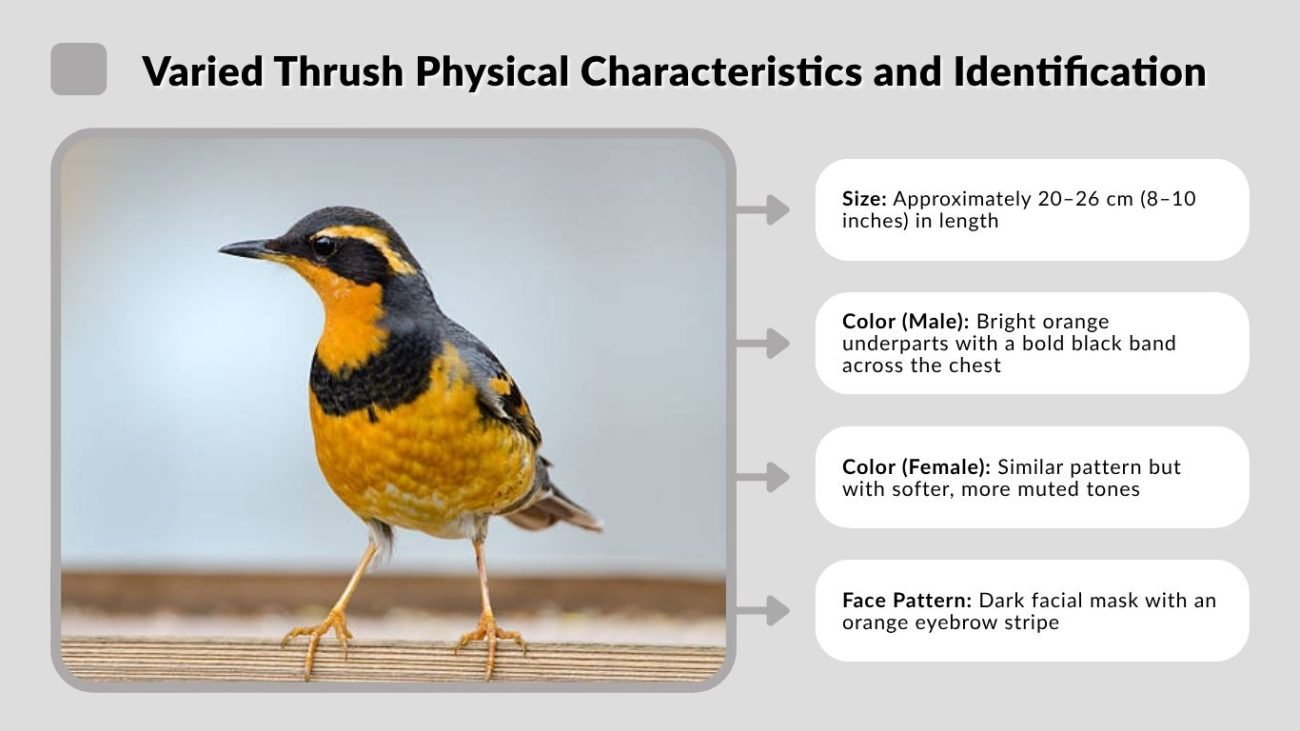
The varied thrush is a medium-sized songbird that stands out due to its vivid coloration and strong contrast between dark and bright tones. Although it shares similarities with the American robin, its markings are more dramatic and easier to distinguish once you know what to look for.
Key Identification Features
- Size: Approximately 20–26 cm (8–10 inches) in length
- Color (Male): Bright orange underparts with a bold black band across the chest
- Color (Female): Similar pattern but with softer, more muted tones
- Face Pattern: Dark facial mask with an orange eyebrow stripe
- Wings: Dark with orange wing bars
- Beak: Straight and slightly pointed
- Tail: Medium length and dark-colored
Quick Identification Tips
- Look for the black chest band, which is a key distinguishing feature
- The orange and black contrast is stronger in males
- Often seen alone in shaded forest areas
- More likely to be heard before seen due to its unique call
Varied Thrush Habitat and Distribution
Geographic Range
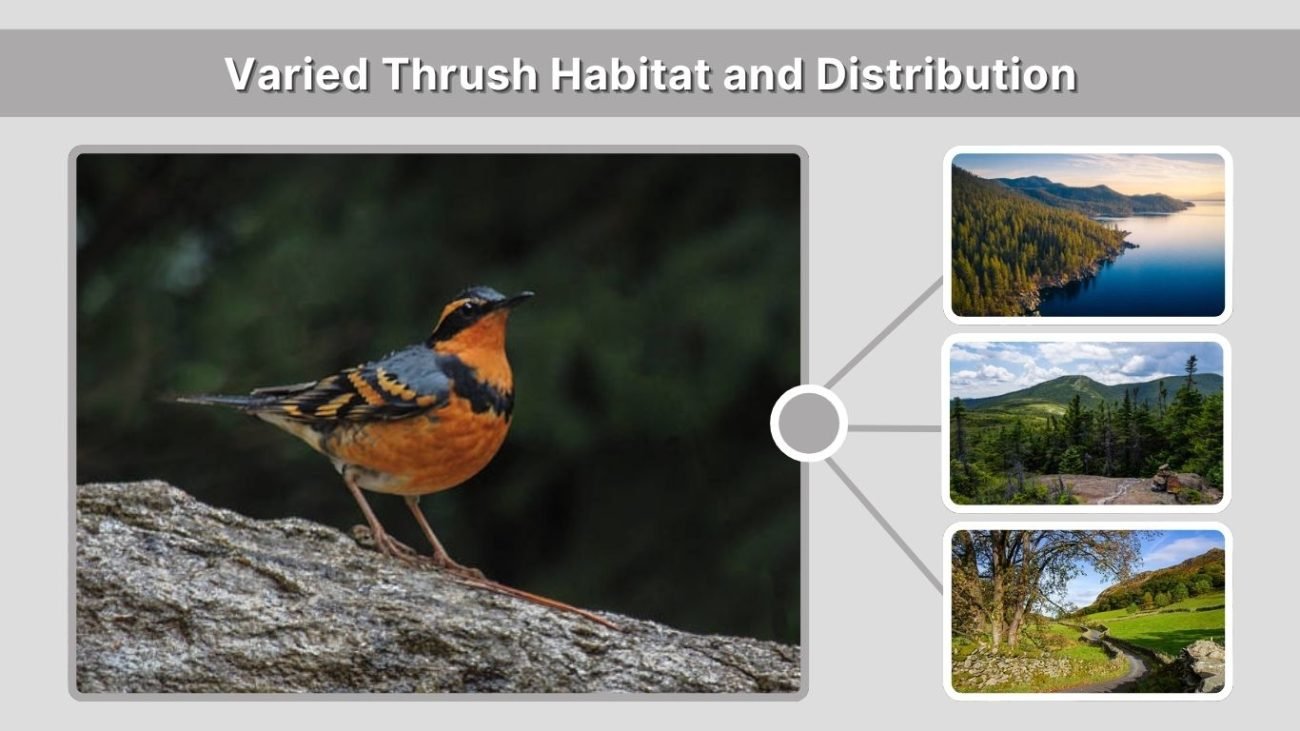
The varied thrush is primarily found along the Pacific Northwest coast, ranging from Alaska through British Columbia and down to California. Its distribution is closely tied to forested regions, especially those with high moisture levels. While it is most common in these areas, some individuals may travel farther during the winter months.
Preferred Habitat
This species prefers dense coniferous and mixed forests, particularly those with thick understory vegetation. Moist environments such as coastal forests, mountain woodlands, and shaded valleys provide ideal conditions. The varied thrush relies on these habitats for both food and protection from predators.
Migration Patterns
The varied thrush is a partial migrant. Instead of long-distance migrations, it often moves to lower elevations or more open areas during winter. In colder months, it may also appear in suburban gardens or parks, especially when food becomes scarce in its natural habitat. These seasonal movements make it more visible to people outside its usual forest environment.
Varied Thrush Behavior and Unique Traits
Solitary Nature
Unlike many songbirds that form large flocks, the varied thrush is generally solitary or found in small groups. It tends to keep a low profile, often staying hidden within dense vegetation. This behavior makes it less commonly observed despite being relatively widespread in suitable habitats.
Distinctive Song
One of the most fascinating aspects of the varied thrush is its song. It produces a long, clear, and haunting whistle that echoes through the forest. Each note is usually delivered separately, creating a spaced-out, almost eerie sound. This call is often described as one of the most beautiful and mysterious bird songs in North America and is used primarily for marking territory.
Foraging Behavior
The varied thrush spends much of its time foraging on the forest floor. It uses a hopping motion and often flips over leaves and debris to find food. This ground-feeding behavior helps it locate insects and other small prey hidden beneath the surface. Its quiet and methodical movements make it well adapted to life in dense forests.
Varied Thrush Diet and Feeding Habits
Main Diet
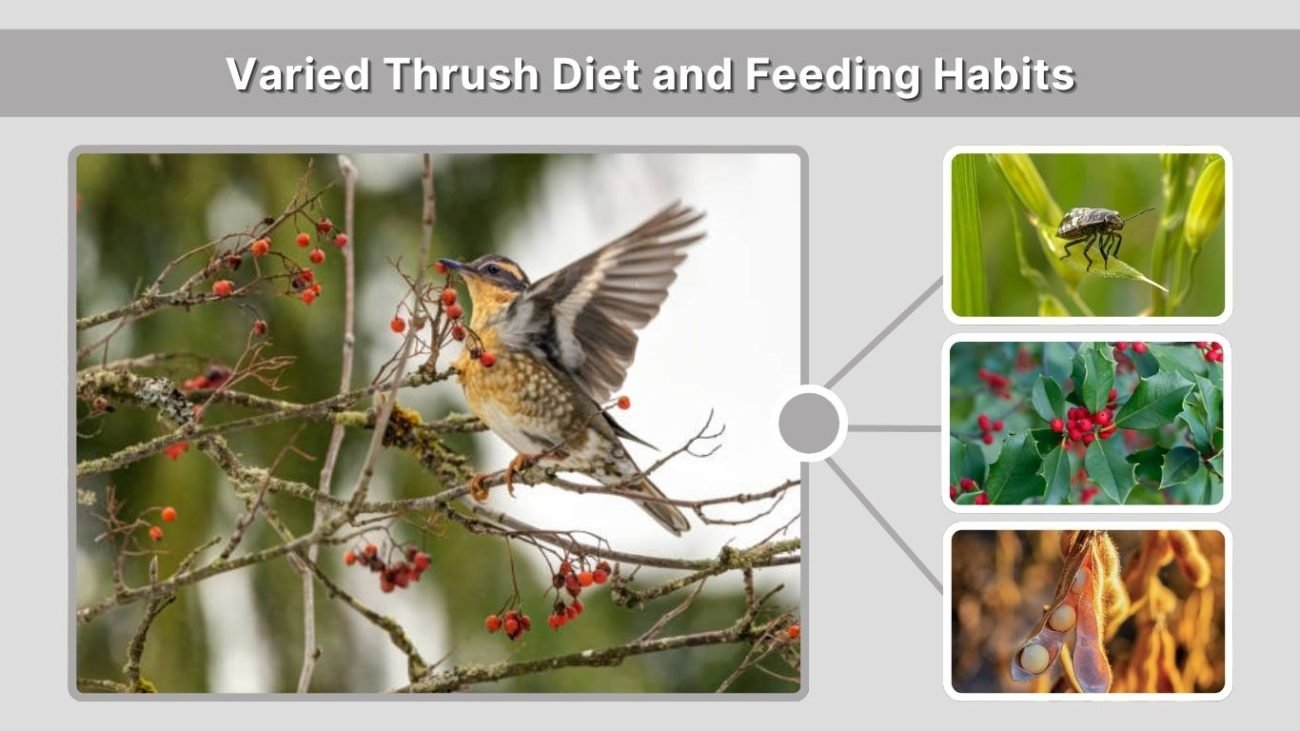
The varied thrush has a varied diet that includes insects, berries, and seeds. During the breeding season, insects such as beetles, ants, and caterpillars are especially important because they provide essential nutrients for growing chicks.
Seasonal Diet Changes
As seasons change, so does the bird’s diet. In colder months, when insects are less available, the varied thrush relies more on fruits, berries, and seeds. This shift allows it to survive in different conditions throughout the year.
Feeding Techniques
The bird is known for its unique feeding behavior, especially its habit of flipping leaves on the forest floor to uncover hidden food. It may also forage in low shrubs or occasionally visit feeders when natural food sources are limited. Its adaptability in feeding helps it thrive in a range of forest environments.
Varied Thrush Breeding and Nesting
Nesting Sites
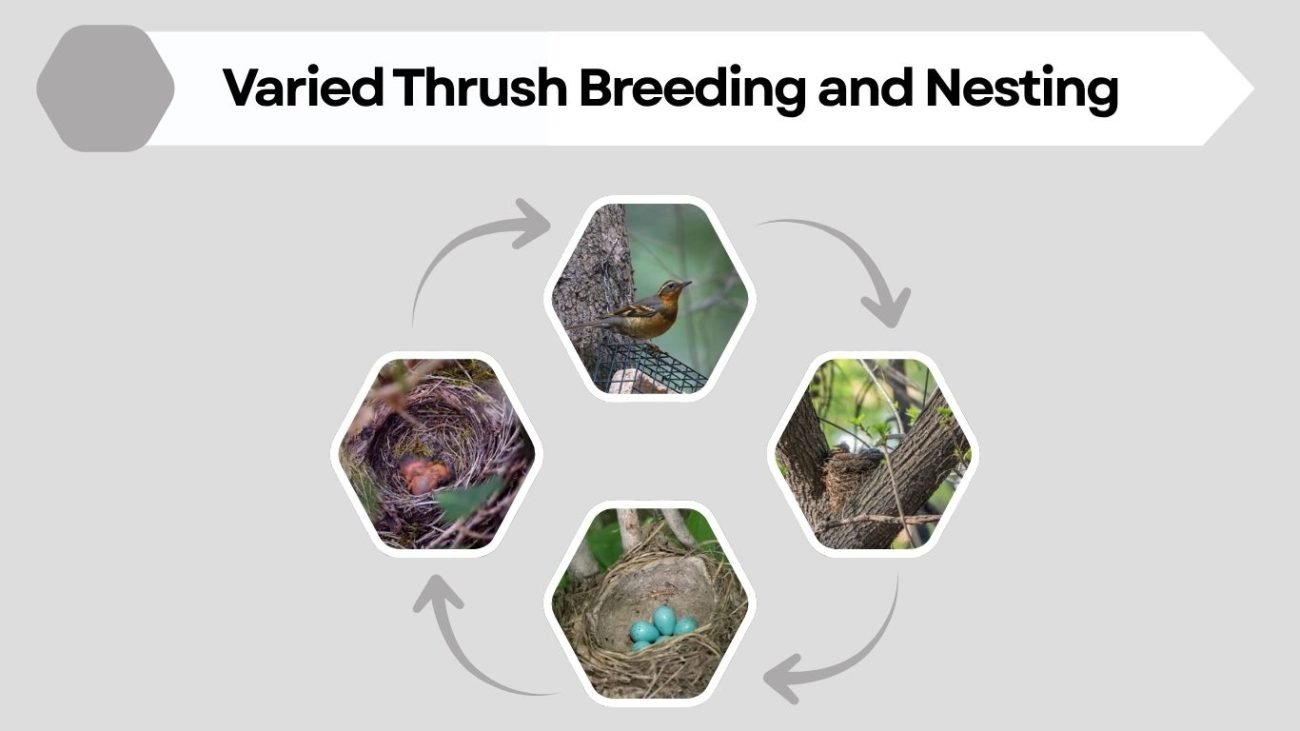
Varied thrushes typically build their nests in dense forest environments, often choosing trees or large shrubs for safety and concealment. Nests are usually placed several feet above the ground, hidden among thick foliage. They are constructed using twigs, moss, leaves, and grass, creating a sturdy cup-shaped structure that blends well with the surrounding environment.
Egg Laying and Parental Care
The female usually lays 3–5 eggs, which are pale blue with light spotting. She is primarily responsible for incubation, which lasts about 12–14 days. During this time, the male may stay nearby and help protect the territory. After hatching, both parents participate in feeding the chicks, bringing insects and other soft foods to support their rapid growth.
Breeding Behavior
Varied thrushes are territorial during the breeding season. Males use their distinctive song to establish and defend their territory, often choosing elevated perches to call from. Courtship displays may include subtle movements and vocal interactions. Their preference for quiet, undisturbed habitats is essential for successful breeding.
Conservation Status and Threats
Population Trends
The varied thrush is generally considered a species of least concern, with stable populations across much of its range. However, local declines can occur, especially in areas where forest habitats are disturbed. Because the species depends heavily on specific forest conditions, any significant environmental change can impact its numbers.
Major Threats
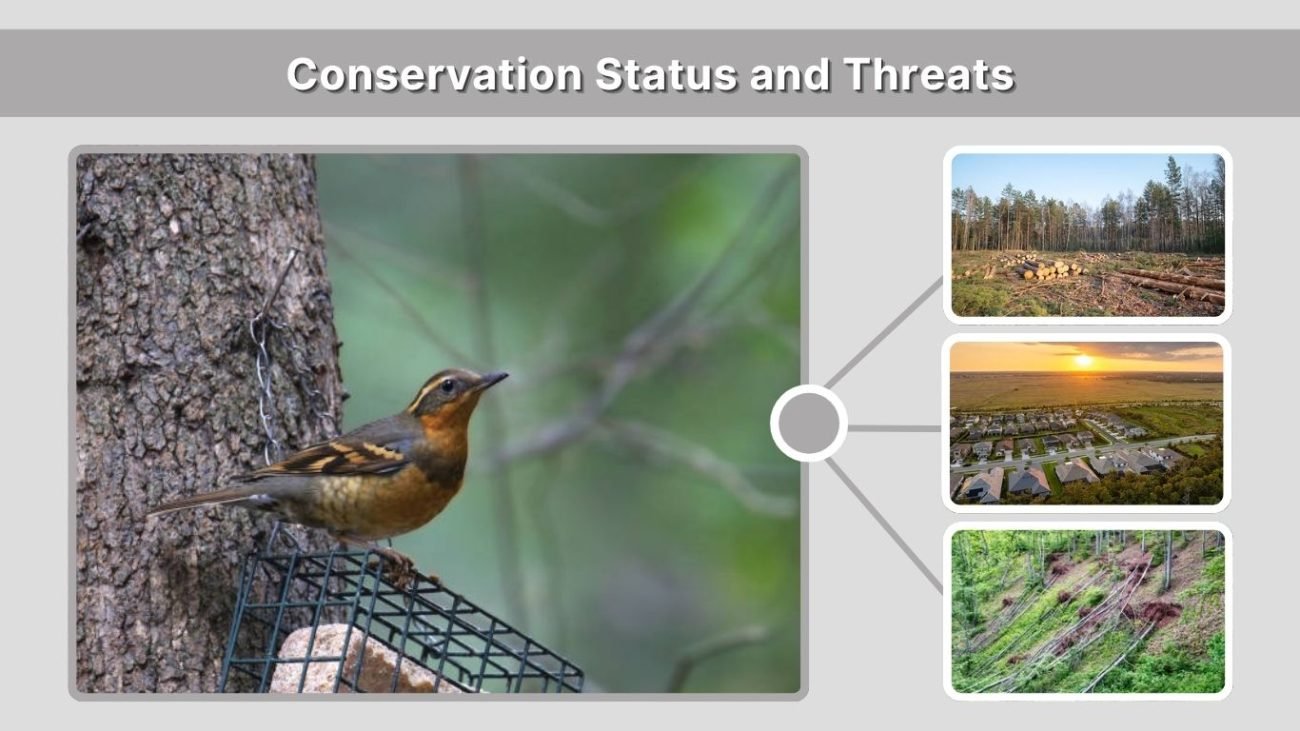
Habitat loss is one of the primary threats to the varied thrush. Logging, urban expansion, and forest fragmentation can reduce suitable nesting and feeding areas. Climate change may also alter the ecosystems they depend on, affecting food availability and migration patterns. Additionally, harsh winters can impact survival rates, especially when food is scarce.
Interesting Facts About the Varied Thrush
- The varied thrush is closely related to the American robin but has more dramatic coloring.
- Its song is often described as “haunting” or “ethereal” due to its clear, single-note whistles.
- It prefers dense forests and is rarely seen in open areas during the breeding season.
- In winter, it may visit backyards and feeders, especially in regions outside its typical range.
FAQs
Where can you see a varied thrush?
Varied thrushes are most commonly found in the forests of the Pacific Northwest, including Alaska, Canada, and parts of the western United States. During winter, they may appear in parks and gardens.
What does a varied thrush sound like?
Its song is a long, clear whistle that is often spaced out between notes. Many people describe it as haunting or echoing through the forest.
Is the varied thrush rare?
The varied thrush is not considered rare overall, but it can be difficult to spot due to its secretive nature and preference for dense forests.
How is the varied thrush different from a robin?
Although similar in size, the varied thrush has bold orange and black coloring with a distinct black chest band, while the American robin has a more uniform orange breast and lacks the strong contrast.
Conclusion
The varied thrush is a remarkable bird known for its striking appearance and unforgettable song. Its life in dense forests, solitary habits, and seasonal movements make it both fascinating and elusive. While its population remains relatively stable, ongoing threats such as habitat loss and climate change highlight the importance of preserving forest ecosystems. By understanding and appreciating this unique species, we can help ensure that the haunting call of the varied thrush continues to echo through North America’s forests for years to come.