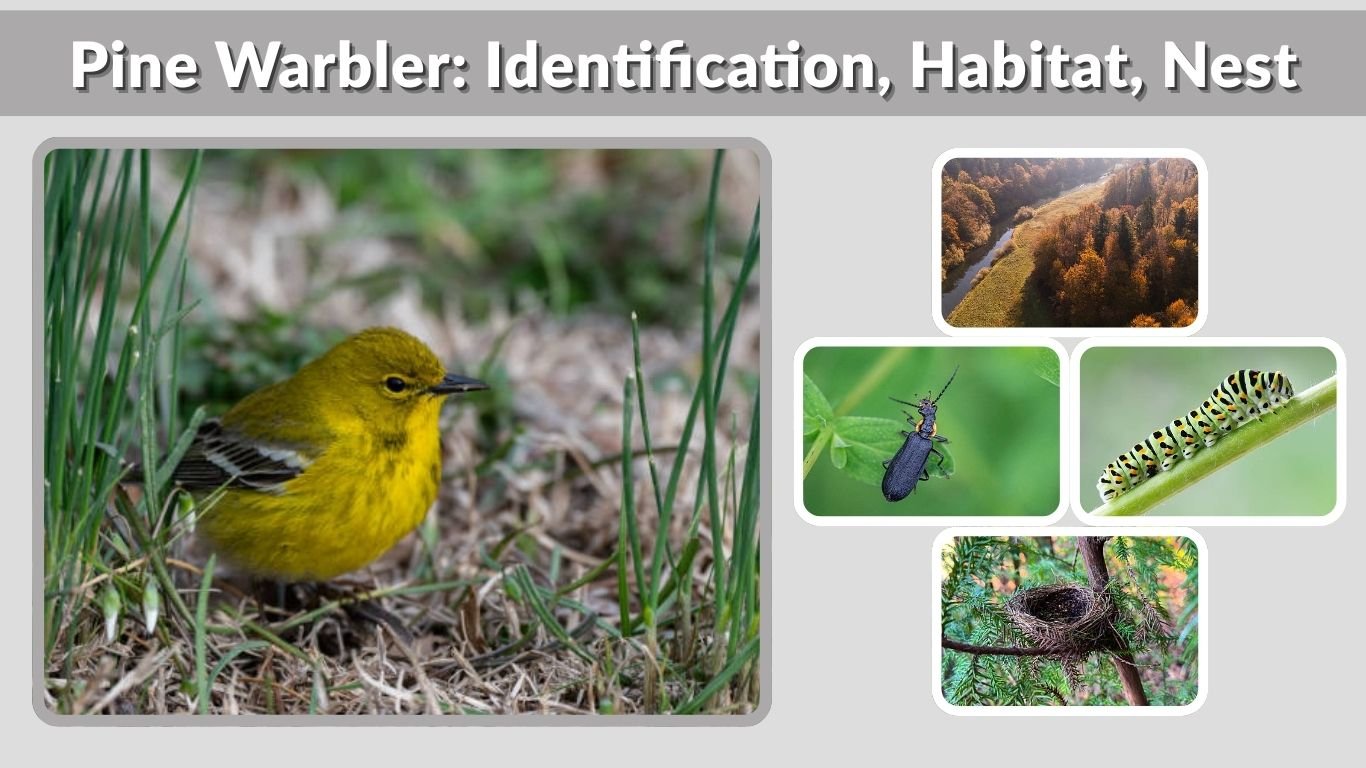
The pine warbler is a small, subtle songbird commonly found in pine forests across North America. Unlike many brightly colored warblers, it has a more muted yellow and olive appearance, making it harder to spot among tree branches. However, its sweet trill-like song and unique behavior set it apart. This bird is also unusual because it can eat seeds, unlike most warblers. In this article, we explore the pine warbler’s identification, habitat, and diet in detail.
Pine Warbler Identification
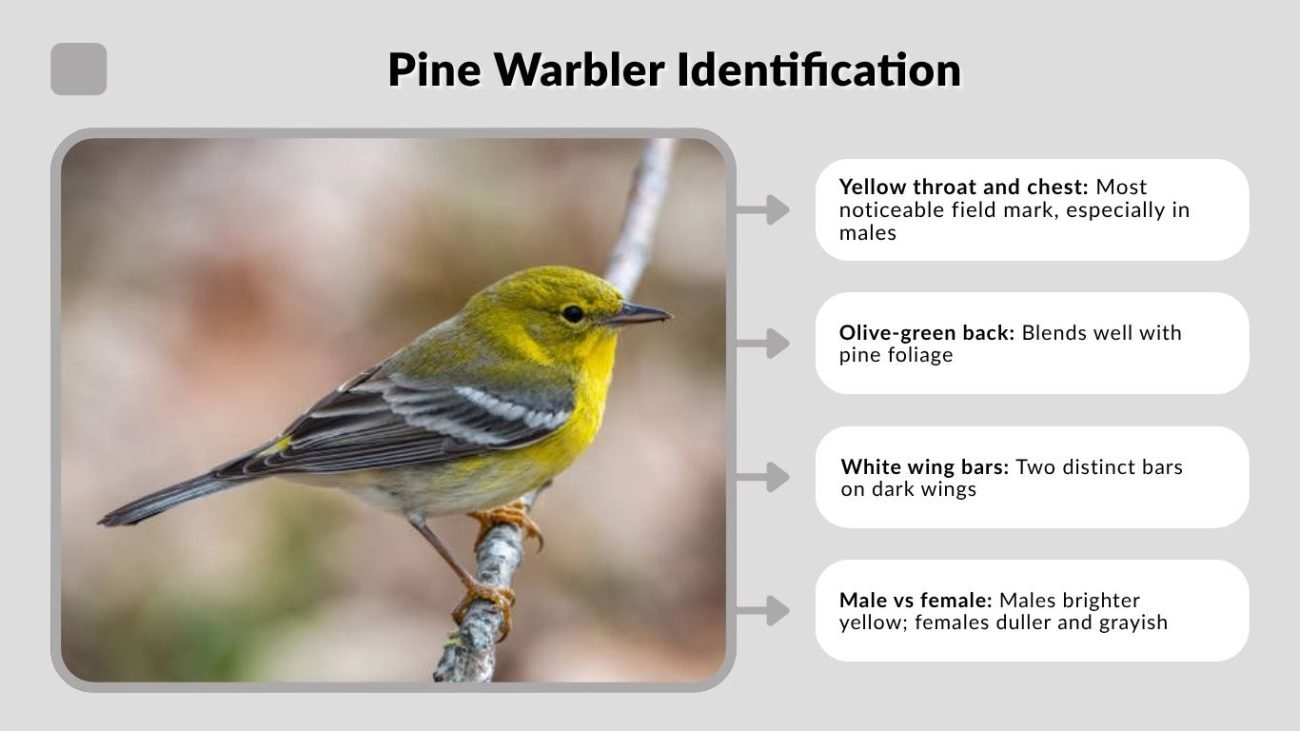
The pine warbler is a small, understated songbird that can be tricky to identify due to its soft, blended colors. Unlike many brightly colored warblers, it relies on subtle features and behavior for recognition. Birdwatchers often identify it by its yellow tones, wing markings, and its habit of staying high in pine trees.
Key Identification Features (Quick Overview)
- Yellow throat and chest: Most noticeable field mark, especially in males
- Olive-green back: Blends well with pine foliage
- White wing bars: Two distinct bars on dark wings
- Male vs female: Males brighter yellow; females duller and grayish
- Thin, pointed bill: Typical of insect-eating songbirds
- Trill-like song: Musical, steady trill similar to a chipping sparrow
- Tree-dwelling behavior: Often seen high in pine branches
- Subtle coloration: Less vibrant than most warblers, aiding camouflage
These features, combined with its habitat and song, make it possible to identify the pine warbler even among similar-looking birds.
Pine Warbler Habitat
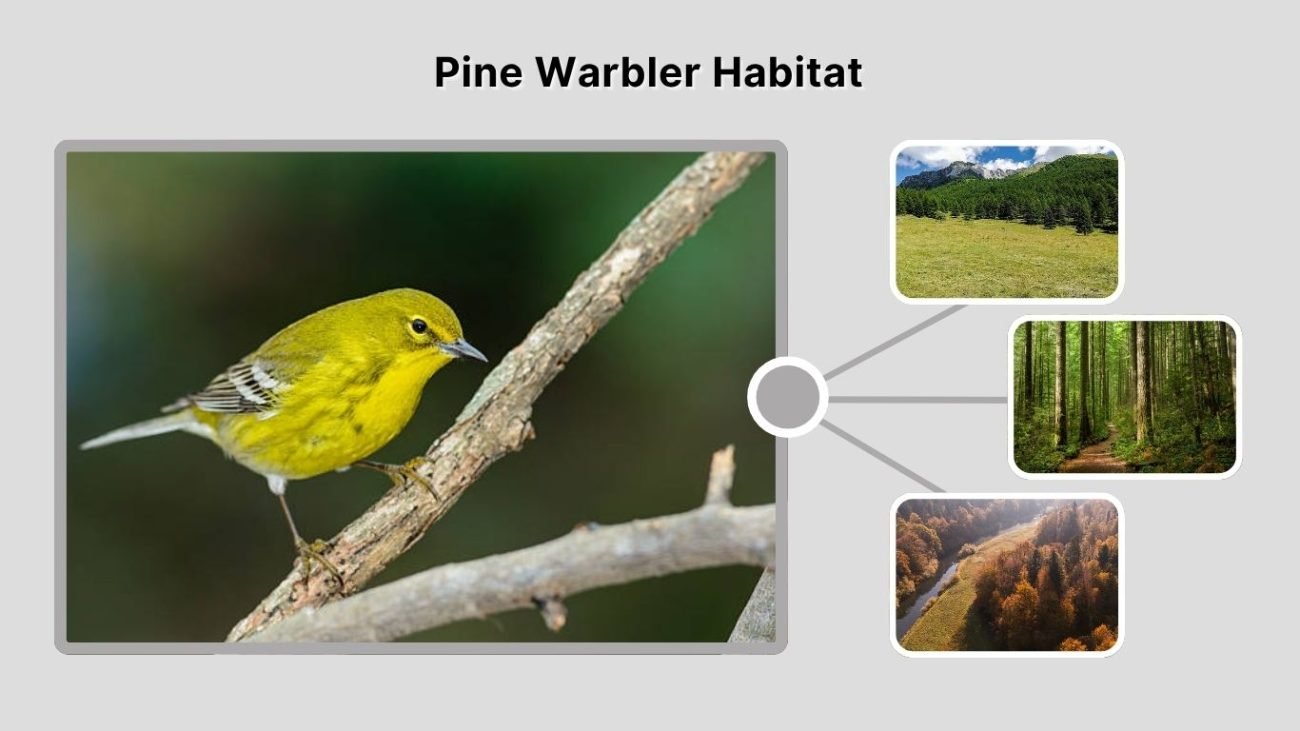
The pine warbler’s habitat is closely tied to its name, as it is most often found in areas dominated by pine trees.
Preferred Habitat
Pine warblers prefer open pine forests, coniferous woodlands, and mixed forests with a strong presence of pine trees. They are commonly seen in areas where pine trees are abundant, as these provide both food and shelter.
Geographic Range
This species is widely distributed across eastern North America. It can be found from southern Canada down through the eastern United States and into parts of Central America during migration.
Seasonal Behavior
Some pine warblers migrate south during the winter, while others remain in the southeastern United States year-round. Their ability to adapt to different climates makes them more flexible than many other warbler species.
Pine Warbler Diet
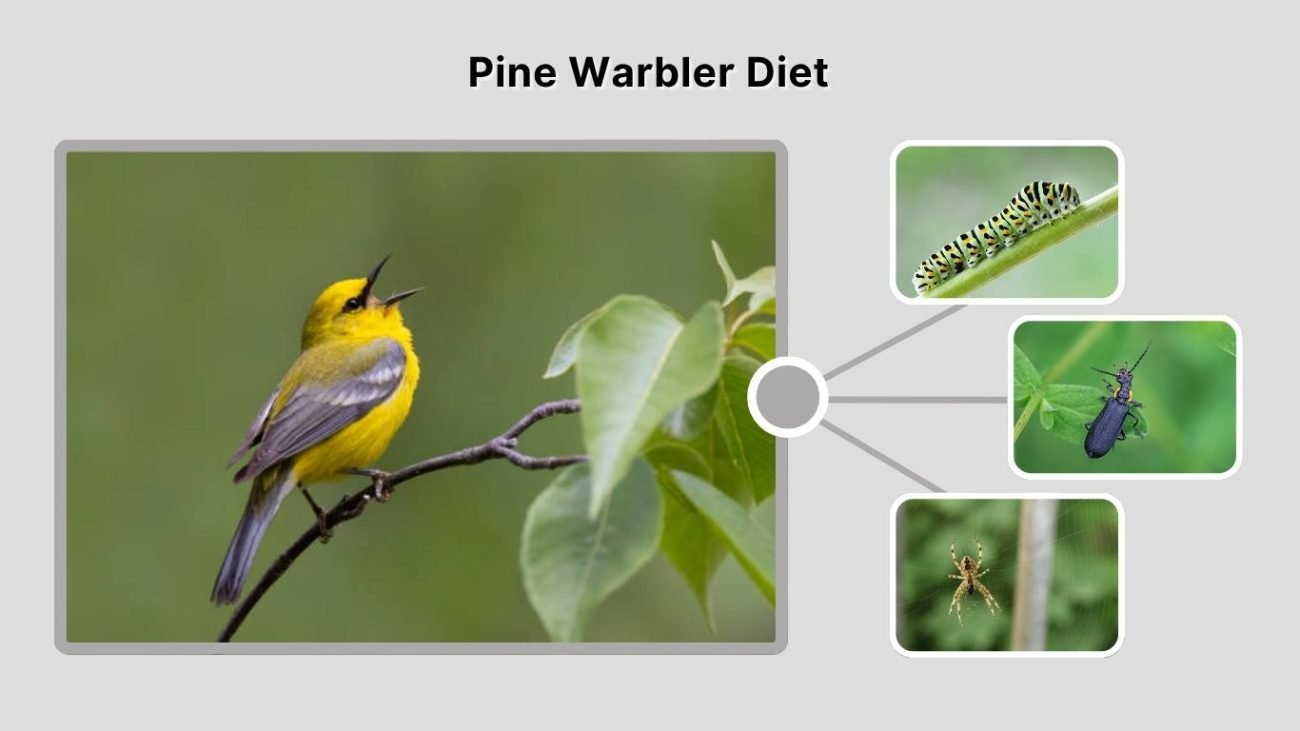
The diet of the pine warbler is one of its most interesting features, as it differs slightly from that of other warblers.
Insects and Natural Food
Like most warblers, pine warblers feed heavily on insects such as caterpillars, beetles, and spiders. These provide essential nutrients, especially during the breeding season when energy demands are higher.
Seeds and Unusual Diet
Unlike many warblers, pine warblers also eat seeds, particularly pine seeds. This ability allows them to survive in colder months when insects are less available, making them more adaptable than other species.
Feeding Behavior
Pine warblers usually forage high in trees, carefully moving along branches to find food. Occasionally, they may come down to feeders, especially if seeds are available. Their calm and methodical feeding style makes them interesting to observe.
Pine Warbler Nest
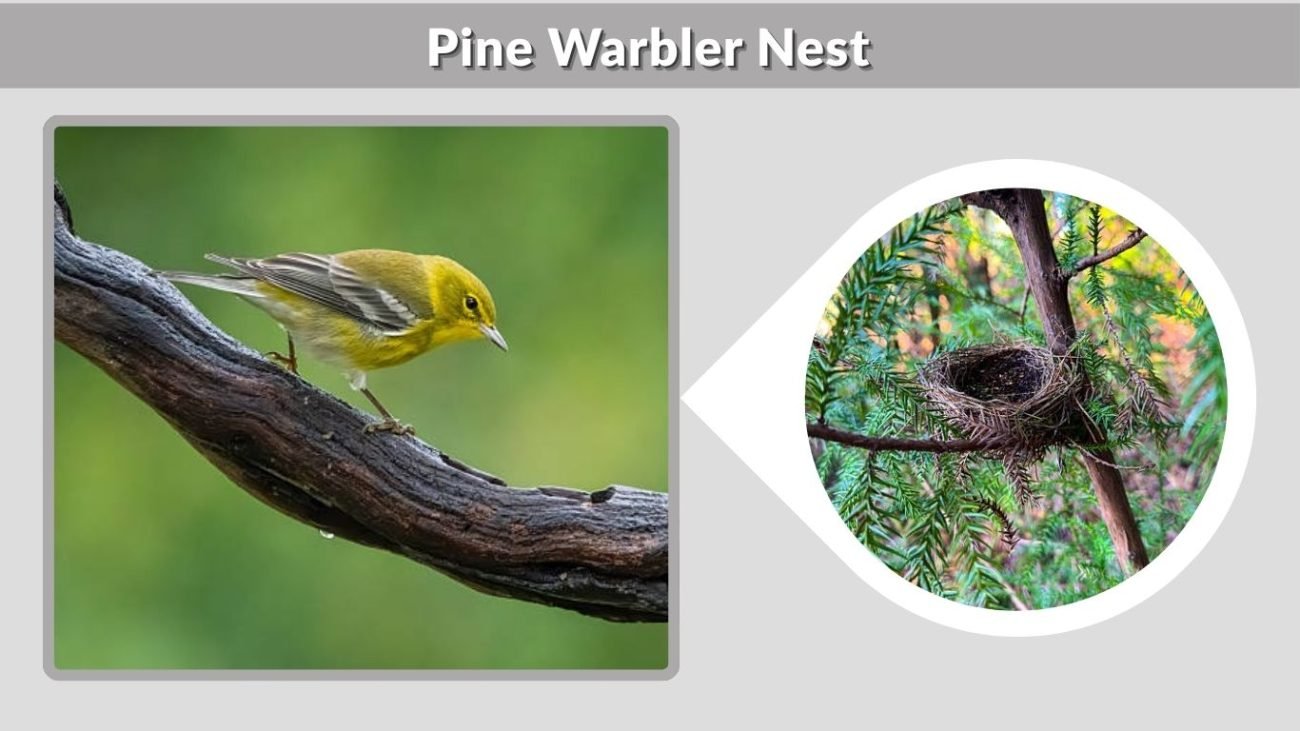
Nesting is an important part of the pine warbler’s life, and it typically takes place high in pine trees where the birds are best protected.
Nest Construction
The female pine warbler builds a small, cup-shaped nest using materials such as grasses, bark strips, pine needles, and plant fibers. The inside of the nest is lined with softer materials like feathers or fine grass to provide comfort for the eggs and chicks.
Nest Location
Nests are usually placed high in pine trees, often on horizontal branches and well hidden among clusters of needles. This elevated and concealed location helps protect the nest from predators and harsh weather conditions.
Pine Warbler Eggs
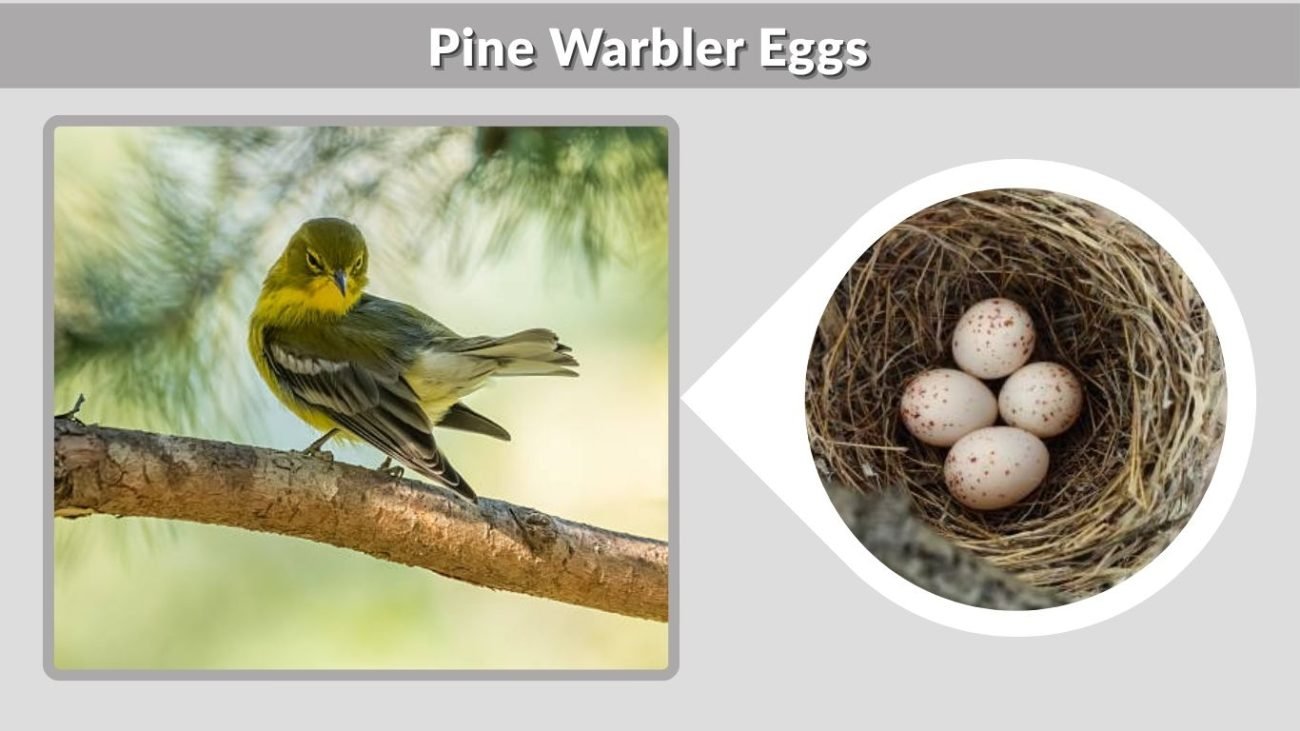
Reproduction begins once the nest is complete, with the female laying a small clutch of eggs.
Egg Appearance
Pine warbler eggs are typically pale white, gray, or slightly greenish, with small brown or reddish spots. These markings help camouflage the eggs within the nest.
Clutch Size
A typical clutch contains about 3 to 5 eggs. In favorable conditions, pine warblers may raise more than one brood in a single season.
Incubation and Care
The incubation period usually lasts around 10 to 13 days, with the female doing most of the incubation. After hatching, both parents participate in feeding the chicks, providing insects and other food until they are ready to leave the nest.
Pine Warbler vs Goldfinch
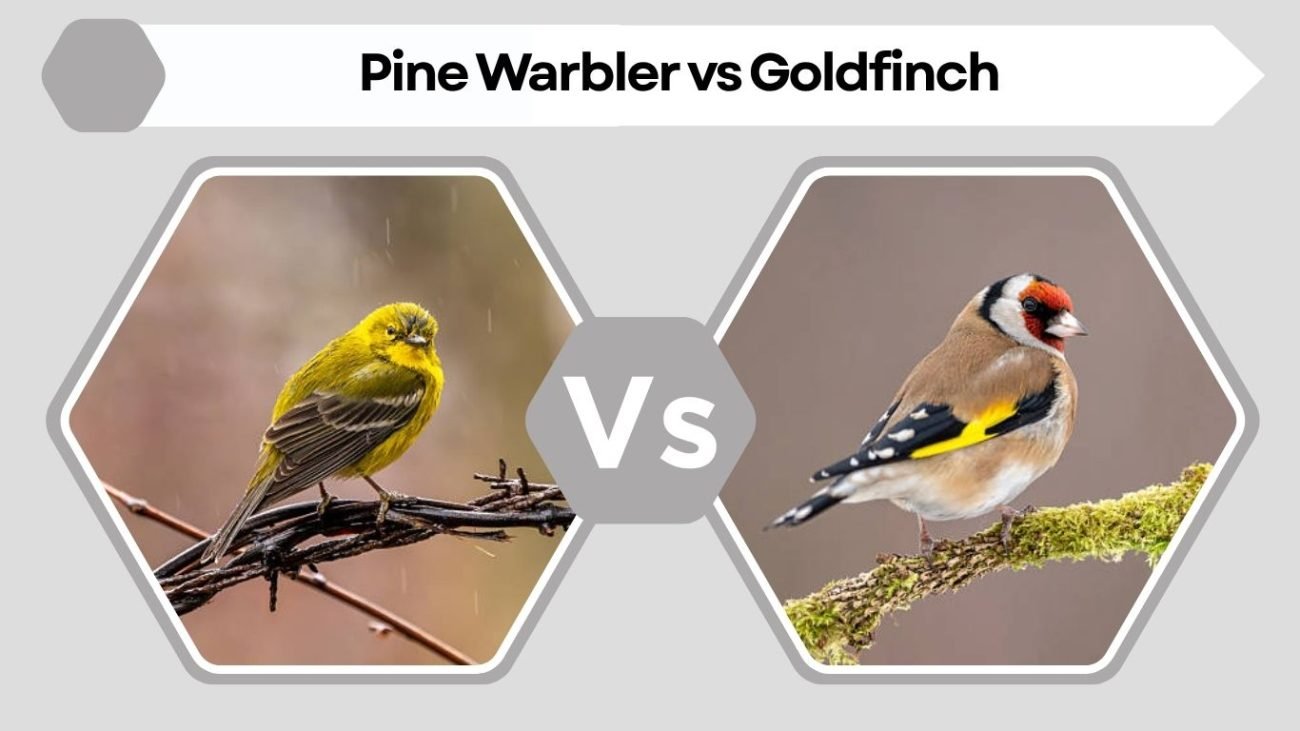
The pine warbler is sometimes confused with the American goldfinch, but there are several key differences between the two species.
Appearance Differences
Pine warblers have a more muted yellow and olive coloration, while goldfinches are bright yellow with bold black wings and markings. Goldfinches are generally more vibrant and easier to spot.
Habitat Differences
Pine warblers prefer pine forests and wooded areas, whereas goldfinches are commonly found in open fields, meadows, and gardens. This difference in habitat can help with identification.
Behavior Differences
Pine warblers tend to stay high in trees and are less social, while goldfinches are more social birds that often gather in groups and frequently visit feeders.
Pine Warbler Facts
Pine warblers have several interesting traits that make them unique among songbirds.
- One of the few warblers that regularly eats seeds
- Often remains in the same region year-round in warmer areas
- Produces a musical trill-like song
- Spends most of its time high in pine trees
- Uses camouflage to blend into its surroundings
Conclusion
The pine warbler is a fascinating bird that combines subtle beauty with unique adaptability. From its muted coloration and gentle song to its ability to eat seeds and thrive in pine forests, it stands out among warblers. Understanding its habitat, nesting habits, and behavior helps birdwatchers appreciate this often-overlooked species. Protecting pine forest ecosystems is essential to ensure that pine warblers continue to thrive in the wild.
FAQs
Where do pine warblers live?
They live mainly in pine forests across eastern North America.
What do pine warblers eat?
They eat insects, spiders, and seeds, especially pine seeds.
How can you identify a pine warbler?
Look for a yellow throat, olive back, white wing bars, and a trill-like song.
What do pine warbler eggs look like?
Their eggs are pale with small brown or reddish spots.
How is a pine warbler different from a goldfinch?
Pine warblers are duller in color and live in pine forests, while goldfinches are bright yellow and prefer open areas.