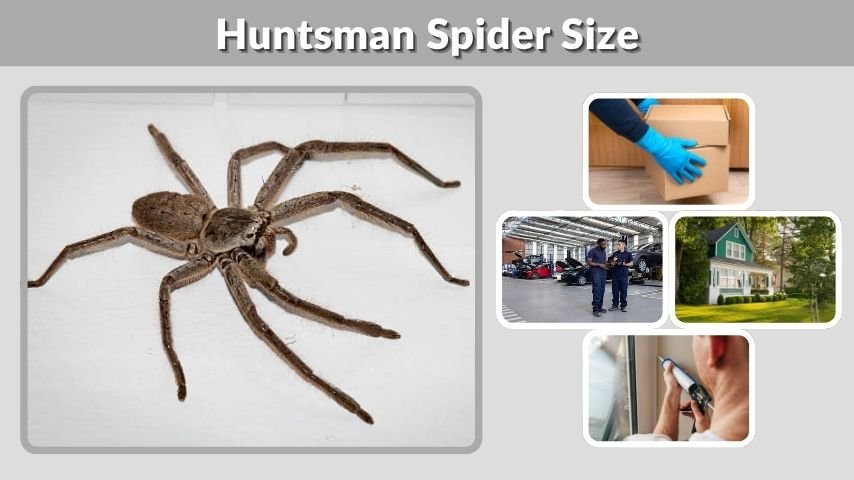
Huntsman spiders are famous for their long legs, flat bodies, and sudden fast movement across walls and ceilings. Their size often surprises people, especially in Australia, Florida, and other warm regions where they may enter homes. Although they look huge, most huntsman spiders are not as heavy-bodied as tarantulas. Their impressive size usually comes from their wide leg span rather than a bulky body.
What Is the Average Huntsman Spider Size?
Most huntsman spiders are medium to large spiders with long, sideways-facing legs. Their body may not be very large, but their legs make them appear much bigger. A common adult huntsman spider may have a leg span of several inches, depending on the species, age, and sex.
Many household huntsman spiders are around 3 to 6 inches across when their legs are spread. Some may be smaller, especially young spiders. Larger adults can look close to the size of a human hand, which is why people often notice them immediately indoors.
Body Size vs Leg Span
When people talk about huntsman spider size, they usually mean leg span. This is the distance from the tip of one extended leg to the opposite leg. However, the spider’s body is much smaller than its full spread.
A huntsman spider’s body may only be around 1 inch long, while the full leg span can be several inches wide. This is why a huntsman spider can look huge on a wall but still squeeze into narrow cracks, behind bark, under furniture, or inside small gaps.
Why Huntsman Spiders Look So Large
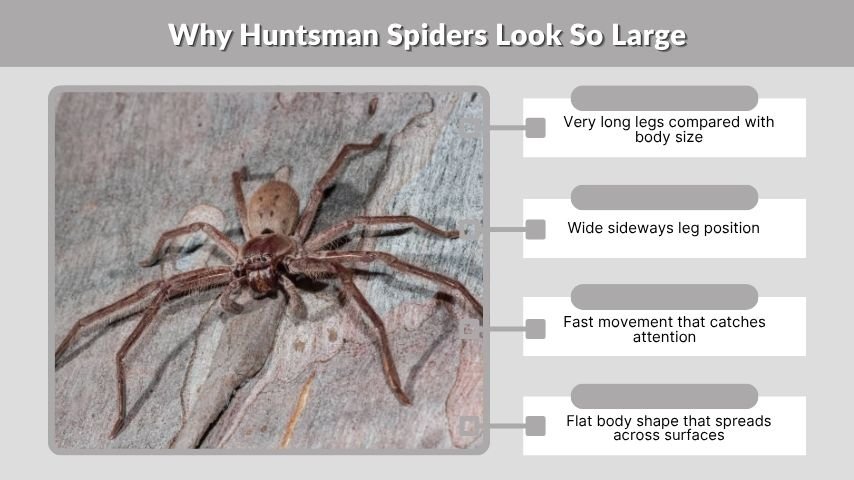
Huntsman spiders have a flattened body and long legs that spread outward. Their legs often curve forward in a crab-like position. This shape helps them move quickly across flat surfaces and hide under loose bark, rocks, and tight spaces.
Their size can look even more dramatic when they appear indoors. A spider on a white wall, ceiling, bathroom tile, or car dashboard may look larger than it really is because there is nothing around it to give scale.
Main Reasons They Look Bigger
Huntsman spiders seem large because of:
- Very long legs compared with body size
- Wide sideways leg position
- Fast movement that catches attention
- Flat body shape that spreads across surfaces
- Appearance on plain walls and ceilings
- Fear response when seen indoors
Their size is real, but many photos online can exaggerate it through camera angle and close-up perspective.
Huntsman Spider Size Chart
Different huntsman spiders vary in size. Some are small and easy to overlook, while others are among the largest spiders in the world by leg span.
| Huntsman Type | Approximate Leg Span | Notes |
|---|---|---|
| Baby huntsman spider | Less than 1 inch | Very small, pale, and easy to miss |
| Small huntsman spider | 1–3 inches | Often young or smaller species |
| Common adult huntsman | 3–6 inches | Often seen in homes and sheds |
| Large Australian huntsman | 5–6+ inches | Can look hand-sized |
| Giant huntsman spider | Up to about 12 inches | Known for extreme leg span |
| Pantropical huntsman | Around 3–5 inches | Found in warm regions, including Florida |
These sizes are general estimates. Exact size depends on species, sex, maturity, and individual growth.
Giant Huntsman Spider Size
The giant huntsman spider is one of the most famous spiders in the world because of its enormous leg span. It is often described as the largest spider by leg span, reaching close to 12 inches across in some reports.
This species is linked with Laos and is known scientifically as Heteropoda maxima. It has a relatively flattened body, very long legs, and a wide spread. Its size makes it look more dramatic than many heavier spiders.
Giant Huntsman Spider Size in Feet
A giant huntsman spider can reach nearly 1 foot across by leg span. That does not mean its body is 1 foot long. The body is much smaller, but the legs stretch widely enough to create a very large overall measurement.
This difference is important. When someone hears “1-foot spider,” they may imagine a massive thick-bodied animal. In reality, the measurement mostly comes from the legs.
Australian Huntsman Spider Size
Australia is strongly associated with huntsman spiders. Many Australians see them in homes, garages, cars, sheds, and gardens. Australian huntsman spiders can be large enough to cover a good part of an adult hand when their legs are spread.
Some Australian huntsman spiders may reach around 5 to 6 inches across, and a few large individuals can look even bigger. They often rest flat against walls, ceilings, or tree bark.
Are Australian Huntsman Spiders the Biggest?
Australia has many large huntsman spiders, but the giant huntsman spider from Laos is usually recognized for the largest known leg span. Australian huntsman spiders are still among the most noticeable household spiders because they often live near people and appear indoors.
Their size can be intimidating, but they are generally shy spiders. They usually prefer to run away rather than bite.
Florida Huntsman Spider Size
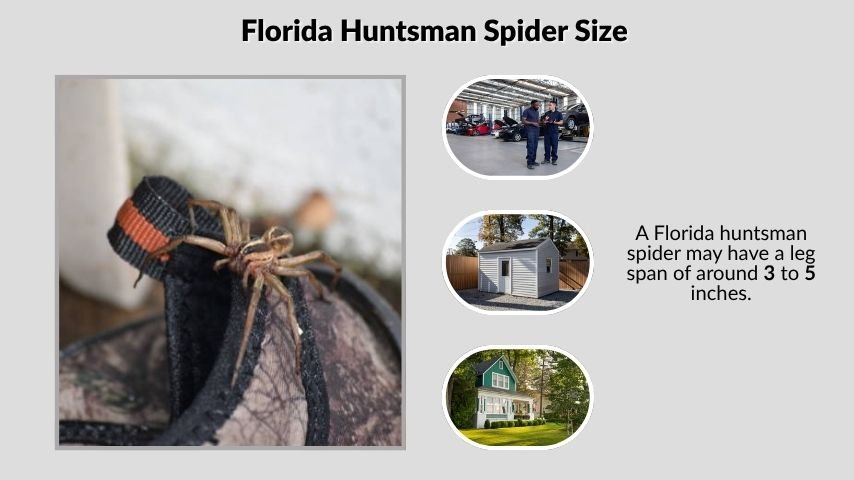
Florida is home to the pantropical huntsman spider, also called the giant crab spider. This spider is not as enormous as the giant huntsman from Laos, but it can still look large when seen indoors.
A Florida huntsman spider may have a leg span of around 3 to 5 inches. Its flat body and sideways legs give it a crab-like shape. It may be found in homes, garages, sheds, plants, and outdoor structures.
Why Florida Huntsman Spiders Enter Homes
Huntsman spiders may enter homes while hunting insects or searching for shelter. They are more common in warm, humid areas and may hide behind furniture, curtains, boxes, or wall decorations.
Their size can alarm people, but they are useful predators of insects and other small pests. If you find one indoors, it is best to move it safely using a container rather than handling it by hand.
Huntsman Spider Size Compared to a Human Hand
A common way to understand huntsman spider size is to compare it with a human hand. Many adult huntsman spiders can be close to palm-sized or hand-sized when their legs are fully spread.
A smaller huntsman may cover only part of the palm. A larger one may stretch across much of an adult hand. Very large species may exceed hand size, especially when measured from leg tip to leg tip.
Size Compared to Common Objects
A huntsman spider may be compared to:
- A coin when young
- A small cookie when partly grown
- A computer mouse as an adult
- A human palm for larger adults
- A small dinner plate for very large individuals
- Nearly a ruler length for giant huntsman spiders
These comparisons are approximate, but they help explain why people often describe huntsman spiders as huge.
Huntsman Spider vs Wolf Spider Size
Huntsman spiders and wolf spiders are often confused because both can be brown, fast, and hairy-looking. However, their shape and size are different.
Wolf spiders usually have a more compact body and shorter legs compared with huntsman spiders. Huntsman spiders have longer legs that spread sideways, giving them a wider appearance.
Key Size Differences
A huntsman spider often looks wider because of its leg span. A wolf spider may look thicker and more compact. Wolf spiders are usually seen running on the ground, while huntsman spiders often appear on walls, ceilings, tree trunks, or behind objects.
A large wolf spider can still look scary, but most huntsman spiders appear larger across because of their long legs.
Huntsman Spider vs Tarantula Size
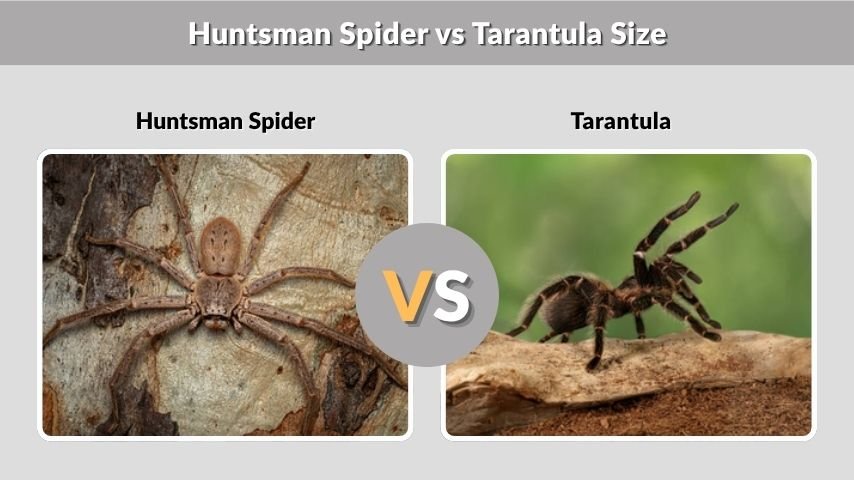
Huntsman spiders and tarantulas are both large spiders, but they are built differently. Tarantulas are usually heavier, thicker, and hairier. Huntsman spiders are flatter, faster, and longer-legged.
A tarantula may have a larger body mass, while a huntsman may have a wider leg span. This means a huntsman can look bigger across a wall, while a tarantula may look heavier and bulkier on the ground.
Which One Is Bigger?
It depends on how size is measured. By body weight and bulk, large tarantulas are often bigger. By leg span, the giant huntsman spider can exceed many tarantulas. The Goliath birdeater, for example, is famous for its heavy body and mass, while the giant huntsman is famous for its wide leg span.
Male vs Female Huntsman Spider Size
Female huntsman spiders are often larger-bodied than males, especially when mature. Males may have longer-looking legs and a slimmer body. During mating season, male huntsman spiders may wander more often, which is why people sometimes see them indoors.
Female huntsman spiders may also appear larger when carrying eggs or guarding an egg sac. They can become more defensive during this time, so it is best not to disturb them.
Baby Huntsman Spider Size
Baby huntsman spiders are tiny compared with adults. They may appear as small pale spiders clustered near an egg sac or scattered after hatching. Over time, they molt several times and gradually grow into larger juveniles and adults.
Young huntsman spiders are easy to miss because they do not yet have the dramatic size of adults.
Largest Huntsman Spider Record
The largest huntsman spider is generally considered the giant huntsman spider from Laos. It is known for a leg span that can approach 12 inches, making it one of the most impressive spiders by spread.
Some online photos show huntsman spiders that appear larger than life. While some individuals are genuinely huge, camera angles can exaggerate the size. A spider close to the camera and a hand or wall in the background may look much bigger than it actually is.
Real Size vs Internet Photos
Many huntsman spider photos are real, but perspective matters. A close-up image can make a 4-inch spider look like a monster. A spider photographed beside a ruler, hand, or object gives a more accurate size comparison.
When judging size, look for scale. A clear ruler or hand nearby is more helpful than a dramatic close-up.
Do Bigger Huntsman Spiders Mean More Danger?
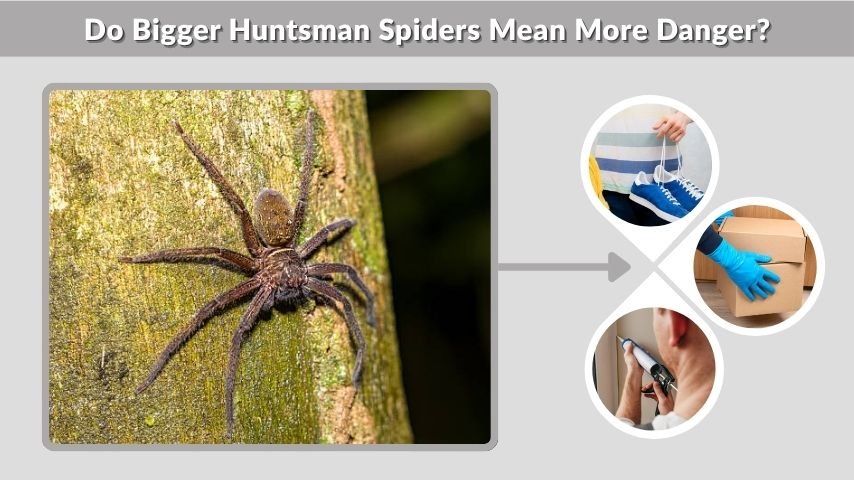
A large huntsman spider can look frightening, but bigger does not automatically mean more dangerous. Huntsman spiders can bite if handled or trapped, but they are not considered highly dangerous to humans.
A larger spider may have a more painful bite simply because of bigger fangs and stronger jaws. However, most huntsman bites cause local pain, redness, and swelling rather than serious medical problems.
Safe Handling Advice
Do not pick up a huntsman spider with bare hands. If you need to remove one, use a container and a flat piece of cardboard. Place the container over the spider, slide the cardboard underneath, and release it outside away from doors and windows.
To avoid accidental contact:
- Shake out shoes and clothing
- Wear gloves when moving stored boxes
- Check towels or bedding in spider-prone areas
- Avoid putting hands behind furniture blindly
- Keep insects under control indoors
- Seal gaps around doors and windows
These simple steps reduce the chance of surprise encounters.
Why Huntsman Spider Size Matters
Understanding huntsman spider size helps people identify them more accurately. A large, flat, long-legged spider on a wall may be a huntsman, while a compact spider running on the ground may be a wolf spider. A thick, hairy, slow-moving spider may be a tarantula.
Size alone should not be the only identification clue. Color, body shape, leg position, location, and behavior all matter. If you are unsure, take a photo from a safe distance and compare it with local spider guides or ask a pest professional.
FAQs
How big is a huntsman spider?
A common adult huntsman spider may measure around 3 to 6 inches across by leg span. Some are smaller, especially young spiders, while large species can be much bigger. Their bodies are usually far smaller than their full spread because most of the size comes from their long legs.
What is the biggest huntsman spider size?
The giant huntsman spider from Laos is known for the largest leg span among huntsman spiders. It can reach close to 12 inches across, or nearly 1 foot. This measurement refers mainly to leg span, not body length, so the spider is wide rather than heavily built.
How big are Australian huntsman spiders?
Australian huntsman spiders commonly reach several inches across, with some large adults measuring around 5 to 6 inches by leg span. They may look hand-sized when seen on walls or ceilings. Their flat shape and long legs make them appear bigger than their actual body size.
Are Florida huntsman spiders large?
Yes, Florida huntsman spiders can look large, especially the pantropical huntsman spider. They may reach around 3 to 5 inches across by leg span. Their crab-like leg position and fast movement make them noticeable in homes, garages, sheds, and warm outdoor spaces.
Is a huntsman spider bigger than a wolf spider?
A huntsman spider often looks bigger across because it has longer legs and a flatter body. A wolf spider is usually more compact, with a thicker body and shorter leg spread. Some wolf spiders can be large, but huntsman spiders often appear wider when measured by leg span.