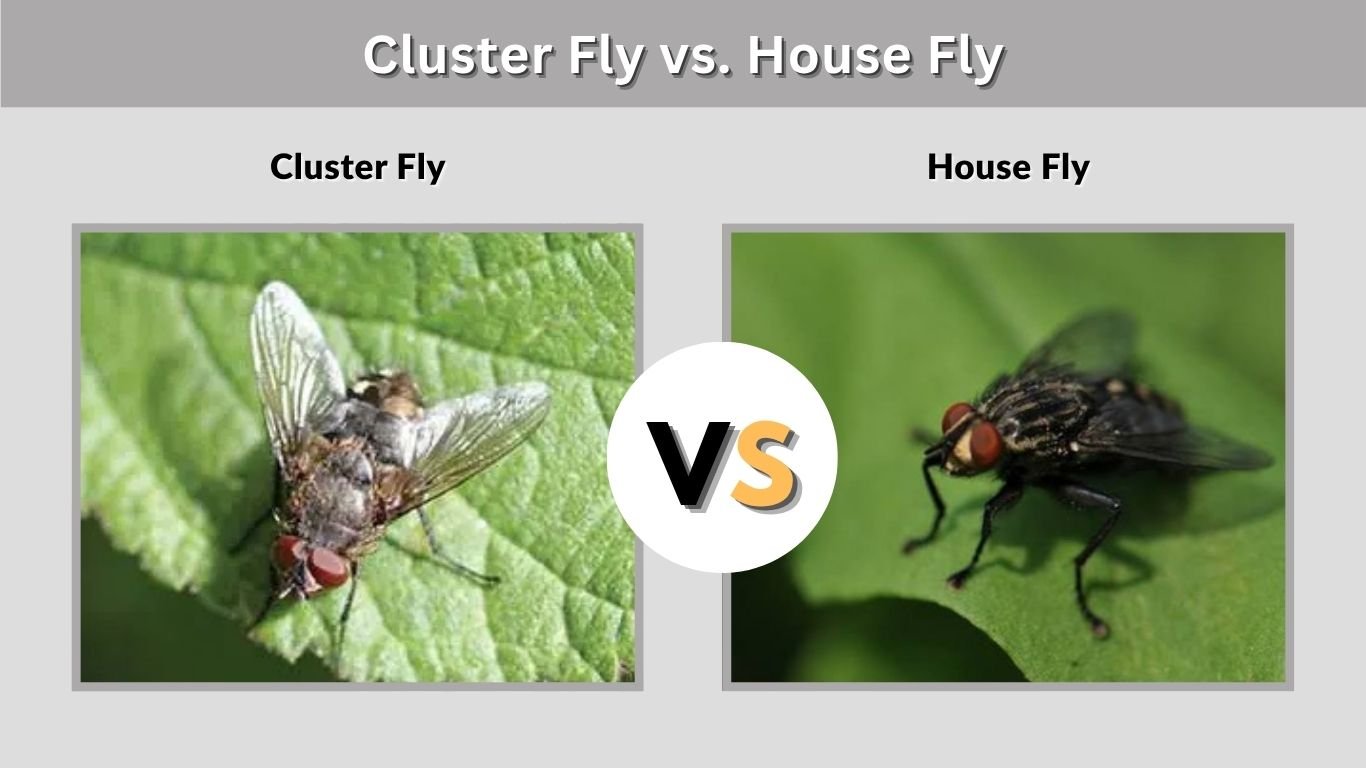
Cluster flies and house flies may look similar, but their behavior, breeding sites, seasonal activity, and health risks are noticeably different. Cluster flies are slow-moving outdoor insects that enter buildings to survive winter, while house flies are active sanitation pests that reproduce in garbage, manure, and decaying organic matter. Correct identification is important because removing indoor waste will control house flies but may do little against overwintering cluster flies. This guide explains how to identify both insects and choose the most effective control method.
Cluster Fly vs. House Fly: Quick Comparison
Both insects are gray flies commonly found around windows and indoor living spaces. However, size, movement, body markings, and the time of year usually reveal which species is present. Cluster flies are primarily seasonal invaders, whereas house flies enter buildings whenever they can find food, warmth, and suitable breeding material.
| Feature | Cluster fly | House fly |
| Scientific group | Pollenia species | Musca domestica |
| Adult size | About 3/8–1/2 inch | About 1/4 inch |
| Body color | Dark gray or grayish black | Gray with a lighter abdomen |
| Main marking | Golden-yellow hairs on thorax | Four dark stripes on thorax |
| Movement | Slow and sluggish | Fast and active |
| Resting wings | Often overlap | Usually remain separated |
| Indoor numbers | Often gather in large groups | Usually scattered around food |
| Breeding site | Soil and earthworms | Garbage, manure and decaying matter |
| Indoor reproduction | No | Yes, when suitable waste is present |
| Main season indoors | Fall, winter and early spring | Any season, especially summer |
| Health concern | Mainly a nuisance | Can contaminate food and surfaces |
How to Identify a Cluster Fly
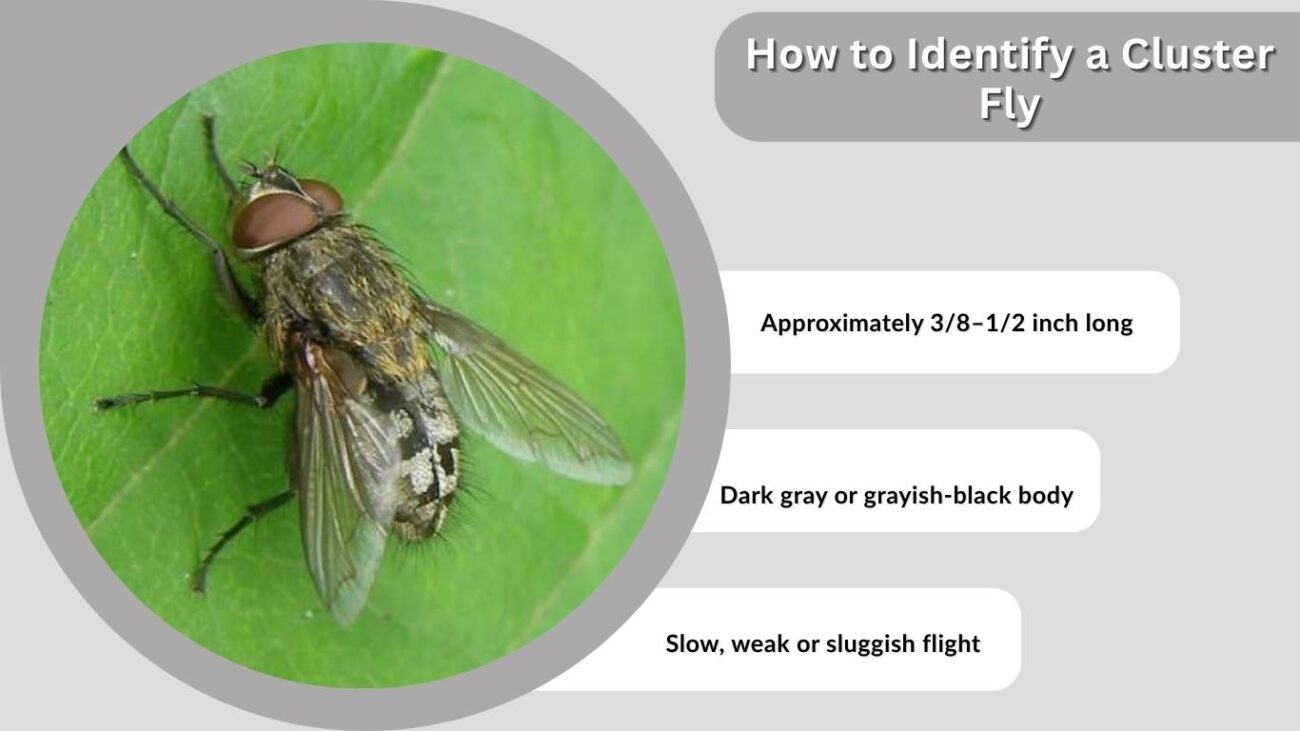
Cluster flies are slightly larger and darker than common house flies. They are named for their tendency to gather—or cluster—in attics, wall voids, upper rooms, and around sunny windows. According to the University of Minnesota Extension, adults often enter buildings during late summer and fall to find protected winter shelter.
Cluster Fly Identification Features
Look for the following characteristics:
- Approximately 3/8–1/2 inch long
- Dark gray or grayish-black body
- Short golden or yellowish hairs on the thorax
- Light and dark checkered pattern on the abdomen
- Wings that overlap while the fly rests
- Slow, weak or sluggish flight
- Large groups near upper-floor windows
- Flies appearing on sunny winter days
The golden hairs are useful for identification, but they can wear away from older flies. Behavior and location may therefore provide stronger clues than color alone.
Cluster Fly Behavior
Cluster flies frequently rest in large numbers inside attics, ceilings, wall spaces, and unused rooms. When indoor temperatures rise or sunlight warms a wall, dormant flies may become active and move toward windows.
They do not enter homes because of garbage or poor sanitation. Instead, the building functions as a protected winter shelter. Cluster flies may repeatedly appear even in a clean home if they can enter through exterior cracks.
How to Identify a House Fly
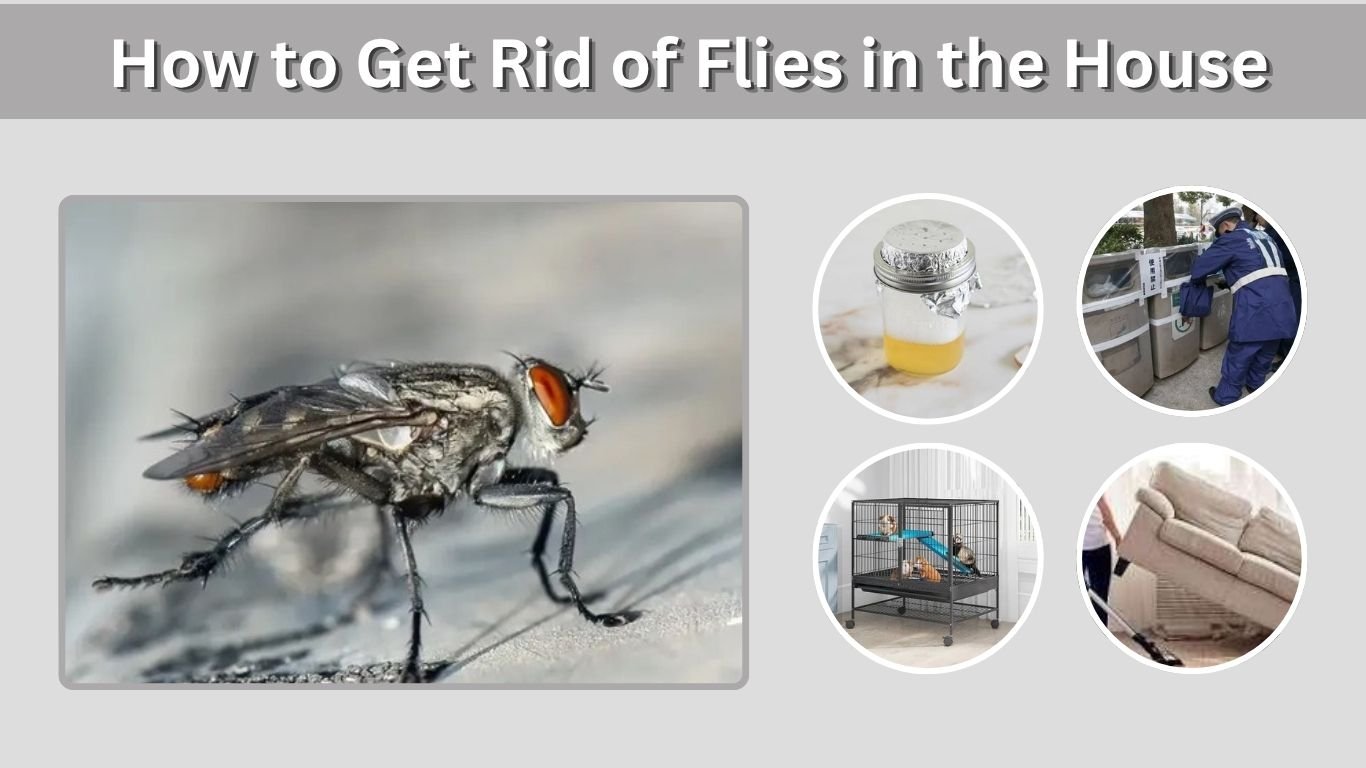
House flies are smaller, quicker, and more active than cluster flies. They regularly move between garbage, food, countertops, animal waste, and other surfaces. Unlike cluster flies, they can reproduce inside a building whenever they find warm, moist organic matter suitable for their larvae.
House Fly Identification Features
A common house fly generally has:
- A body approximately 1/4 inch long
- Four dark longitudinal stripes on the thorax
- Large reddish compound eyes
- A gray or yellowish abdomen
- One pair of clear wings
- Fast, unpredictable flight
- Sponging mouthparts instead of biting mouthparts
- Frequent activity around food and waste
Adult house flies often land repeatedly on walls, tables, kitchen surfaces, windows, garbage containers, and animal areas. Small dark spots around resting places may be fly feces or regurgitated material.
House Fly Behavior
House flies are strongly attracted to food odors and decomposing organic matter. They feed by releasing saliva onto solid food and consuming the liquefied material. Their frequent movement between unsanitary breeding sources and human food makes them a greater hygiene concern than cluster flies.
House flies are especially active during warm weather, although heated buildings can support them throughout the year.
Breeding and Life Cycle Differences
The greatest difference between cluster flies and house flies is where their larvae develop. Seeing adults indoors does not necessarily mean they are reproducing inside the structure. Determining the breeding source is essential before choosing a control strategy.
Cluster Fly Life Cycle
Cluster flies reproduce outdoors. Their life cycle generally follows these steps:
- Adult females lay eggs in cracks in outdoor soil.
- The eggs hatch into small larvae.
- Larvae locate and enter earthworms.
- They develop as internal parasites of earthworms.
- Mature larvae pupate in the soil.
- Adult flies emerge and continue the cycle.
Several generations may develop during the warmer months. The final generation searches for winter shelter in late summer or fall, entering homes through gaps around siding, roofs, windows, vents, and utility lines.
House Fly Life Cycle
House flies undergo four stages:
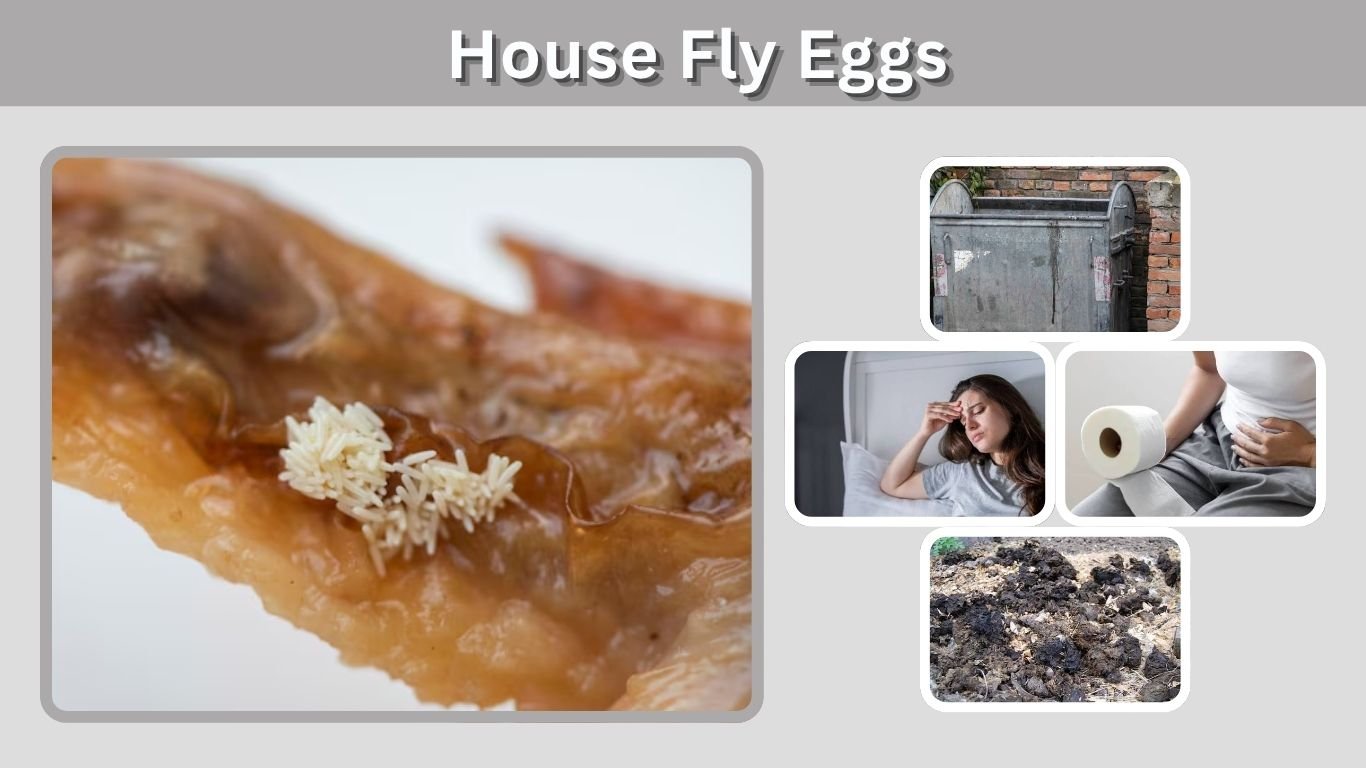
- Egg: Females deposit eggs in moist organic material.
- Larva: White maggots hatch and feed on decaying matter.
- Pupa: Mature larvae move to a drier area and form brown pupal cases.
- Adult: Winged flies emerge, mate and begin another generation.
In warm conditions, the complete cycle can take as little as 7–10 days. Garbage, manure, spoiled food, dead animals, and dirty waste containers are common breeding sources.
Where You Will Find Each Fly
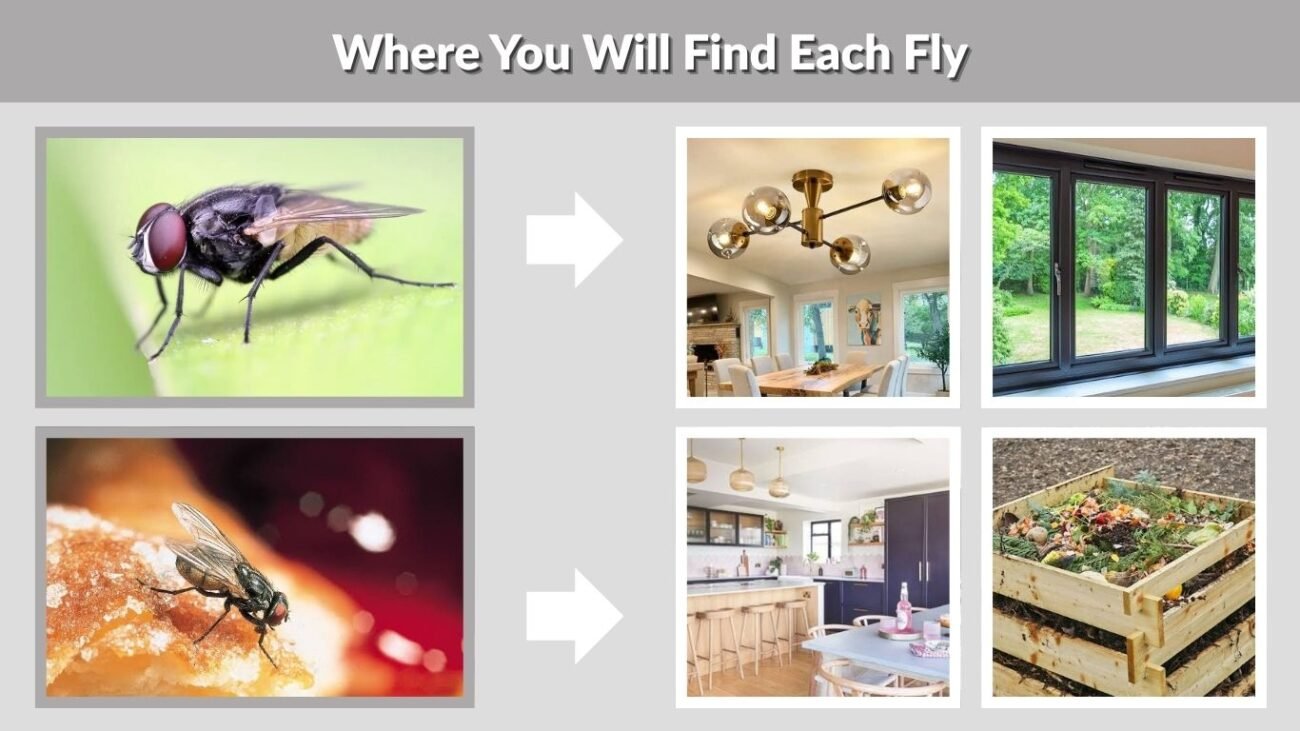
Location can help identify the insect before you examine its body. Cluster flies generally occupy the upper and sunnier parts of a building. House flies remain closer to food, waste, animals, and active living areas.
Common Cluster Fly Locations
- Attics and lofts
- Upper wall cavities
- Ceiling fixtures
- Window frames
- Unused bedrooms
- Roof spaces
- South- and west-facing walls
- Sunny windows during winter
Common House Fly Locations
- Kitchens and dining rooms
- Garbage containers
- Food preparation areas
- Animal housing and litter areas
- Compost piles
- Manure storage locations
- Restaurant waste areas
- Places containing spoiled food
A large number of sluggish flies appearing around upstairs windows in fall or early spring strongly suggests cluster flies. Fast-moving flies around food or garbage are more likely to be house flies.
Are Cluster Flies or House Flies Dangerous?
Neither species normally bites or stings people. Nevertheless, their health importance differs significantly.
Cluster Fly Risks
Cluster flies are mainly nuisance insects. Because they develop through earthworms rather than decaying waste, they are not associated with filth in the same way as house flies. Large numbers can still create unpleasant odors, leave dark spots on windows or walls, and attract carpet beetles that feed on dead flies.
House Fly Risks
House flies can pick up microorganisms while visiting feces, garbage, dead animals, and decomposing food. They may then transfer contaminants to food, utensils, and preparation surfaces through their feet, body, feces, or regurgitated material.
Food exposed to heavy fly activity should be discarded, and contaminated surfaces should be cleaned thoroughly.
How to Get Rid of Cluster Flies
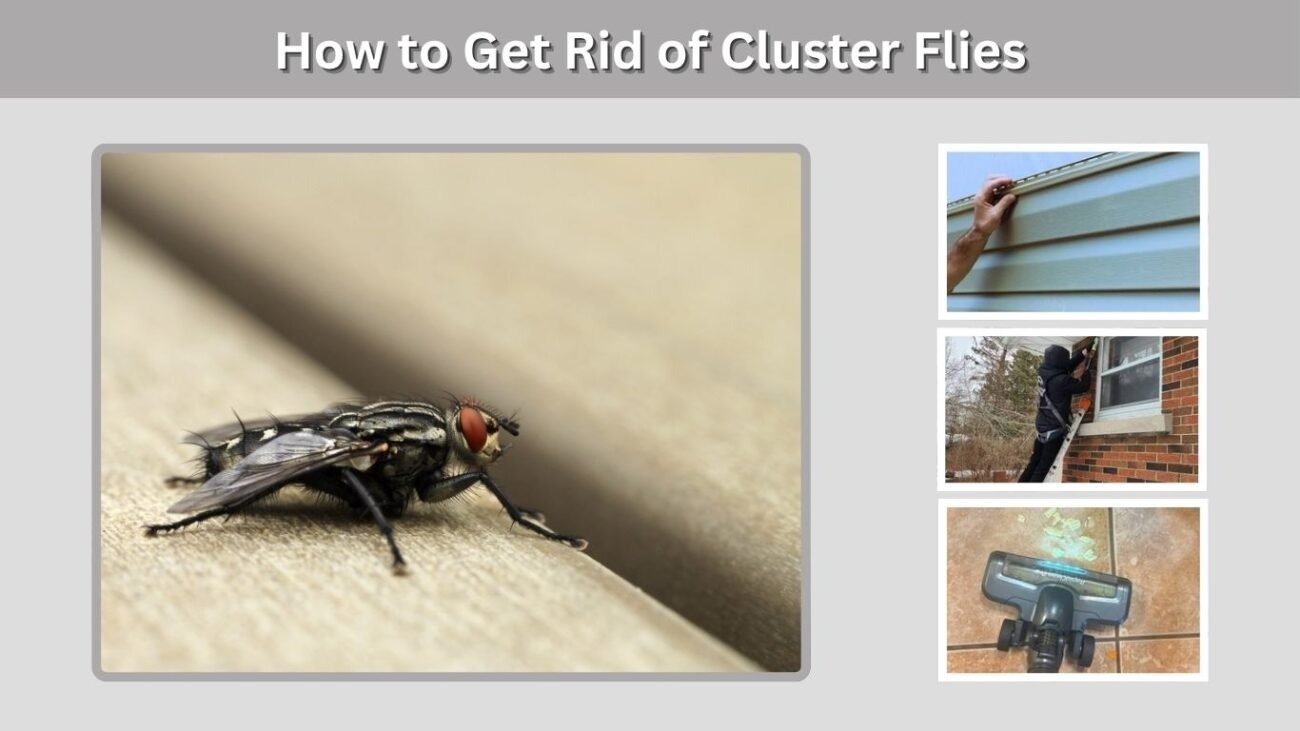
Effective cluster fly control focuses on preventing autumn entry. Once flies are hidden inside walls, complete removal can be difficult because they may occupy inaccessible spaces.
Cluster Fly Control Methods
- Seal gaps around siding, fascia boards and rooflines.
- Caulk openings around windows and doors.
- Repair damaged screens.
- Cover vents with suitable insect screening.
- Seal spaces around cables, pipes and utility lines.
- Vacuum visible flies instead of crushing them.
- Place light traps in attics or unused rooms.
- Arrange professional exterior treatment before fall entry.
Indoor spraying provides only temporary relief because most flies remain protected inside walls. Dead cluster flies should be removed when accessible because their bodies may attract other household pests.
How to Get Rid of House Flies
House fly control depends on locating and removing the material in which maggots are developing. Traps can reduce adults, but they cannot stop new generations if the breeding source remains.
House Fly Control Methods
- Empty and wash garbage containers regularly.
- Keep waste bins tightly covered.
- Remove pet feces promptly.
- Clean food spills beneath appliances.
- Store food in sealed containers.
- Repair screens and install door sweeps.
- Keep compost properly managed.
- Investigate odors that may indicate a dead animal.
- Use sticky traps or fly traps away from food areas.
Persistent indoor activity may indicate hidden waste, damaged plumbing, animal manure, or decomposing material in a wall, attic, basement, or crawl space.
FAQs
Are cluster flies bigger than house flies?
Yes. Cluster flies are generally 3/8–1/2 inch long, while common house flies are usually around 1/4 inch long.
Why do cluster flies gather around windows?
Warmth and sunlight activate overwintering cluster flies. They move toward windows because the light appears to offer a route outdoors.
Do cluster flies lay eggs inside houses?
No. Cluster flies normally lay eggs outdoors in soil, and their larvae develop as parasites of earthworms.
Can house flies survive indoors during winter?
Yes. Heated buildings can provide enough warmth, food, moisture, and breeding material for house flies to remain active throughout winter.
Why do cluster flies keep returning every year?
A building with suitable entry gaps and warm wall spaces may attract new cluster flies each fall. Sealing exterior openings before late summer is the best long-term prevention method.