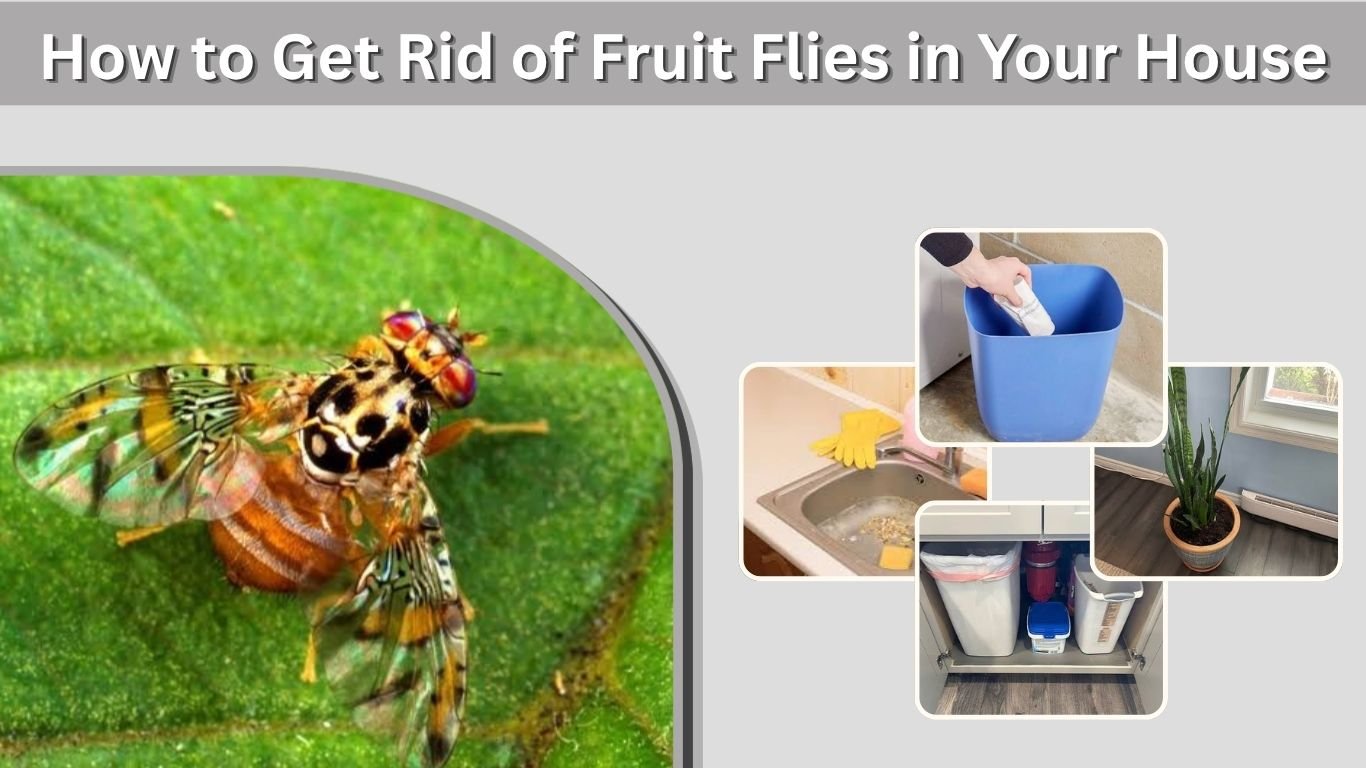
Fruit flies in the house can quickly become frustrating because these tiny insects reproduce rapidly wherever they find fermenting food and moisture. They commonly gather around ripe fruit, garbage cans, recycling bins, drains, and forgotten food spills. Simply killing the adults rarely solves the problem because eggs and larvae may already be developing nearby. The most effective way to get rid of fruit flies is to remove their breeding sources, clean affected areas thoroughly, trap remaining adults, and prevent new flies from reproducing.
Why Are There Fruit Flies in My House?
Fruit flies usually appear because they have found fermenting organic material suitable for feeding and breeding. A few adults may enter through doors or windows, but they can also arrive on produce brought home from a store or garden. Once indoors, warm temperatures and readily available food can allow their population to increase rapidly.
How Do Fruit Flies Get Into Your House?
Fruit flies can enter from outdoors through small openings around doors, windows, screens, and vents. Their excellent sense of smell helps them locate fermenting fruit and other food from a distance.
They may also arrive with bananas, tomatoes, peaches, grapes, or other produce. Eggs or tiny larvae can sometimes already be associated with damaged or overripe fruit.
Once suitable food is available, adults mate and lay eggs, beginning an indoor infestation.
Common Causes of Fruit Flies
The most common breeding sources include:
- Overripe bananas and other fruit
- Rotten potatoes or onions
- Open garbage cans
- Recycling containers
- Fruit juice and soda spills
- Wine or beer residue
- Dirty garbage disposals
- Organic buildup in drains
- Compost containers
- Forgotten food beneath appliances
Even a small amount of fermenting material may support developing larvae.
How to Identify Fruit Flies in the House
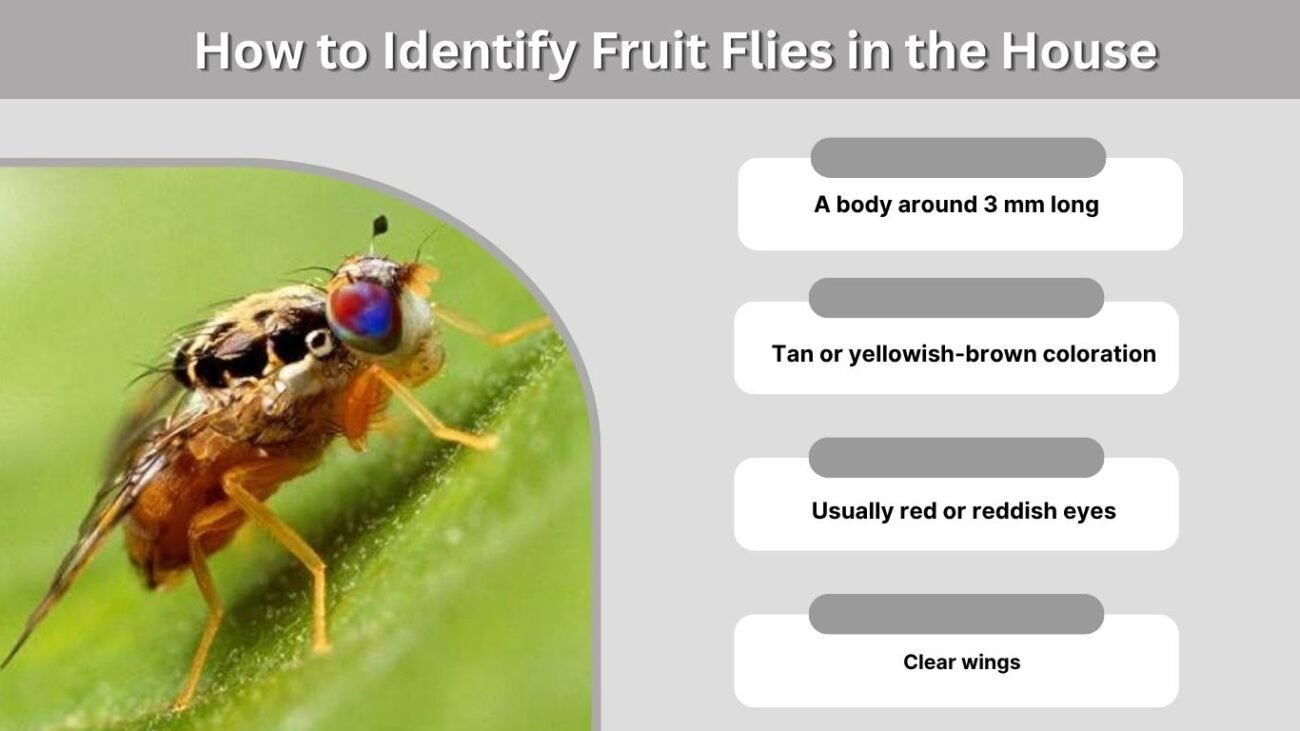
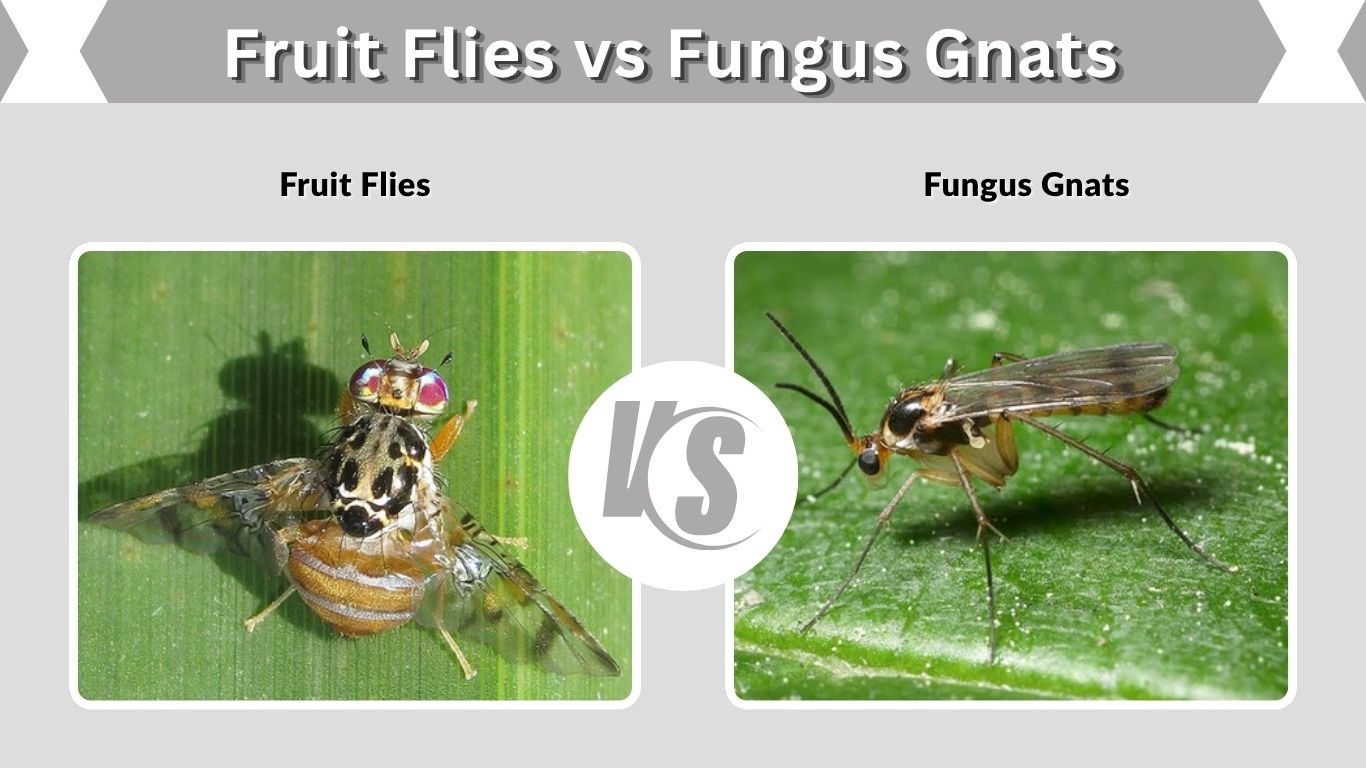
Correct identification is important because several tiny flying insects commonly occur indoors. Fruit flies are often confused with fungus gnats, phorid flies, and drain flies. Looking at their body shape, eyes, behavior, and location usually provides enough clues to determine which pest is present before choosing a control method.
Fruit Fly Identification
Typical household fruit flies have:
- A body around 3 mm long
- Tan or yellowish-brown coloration
- Usually red or reddish eyes
- A compact, rounded body
- Clear wings
- Rapid short flights
- Strong attraction to fermenting foods
- A tendency to gather around kitchens and trash
They are usually most noticeable when fruit, vegetables, juice, or other fermenting products are present.
Fruit Flies vs House Gnats
Small dark flies emerging repeatedly from houseplant soil are more likely to be fungus gnats.
Fungus gnats have slender bodies, long legs, and a mosquito-like appearance. Fruit flies are more compact and usually gather around food.
Drain flies are fuzzy and moth-like, while phorid flies have humpbacked bodies and frequently run across surfaces.
Finding the actual breeding location is often more useful than judging the insect by color alone.
How to Get Rid of Fruit Flies in Your House
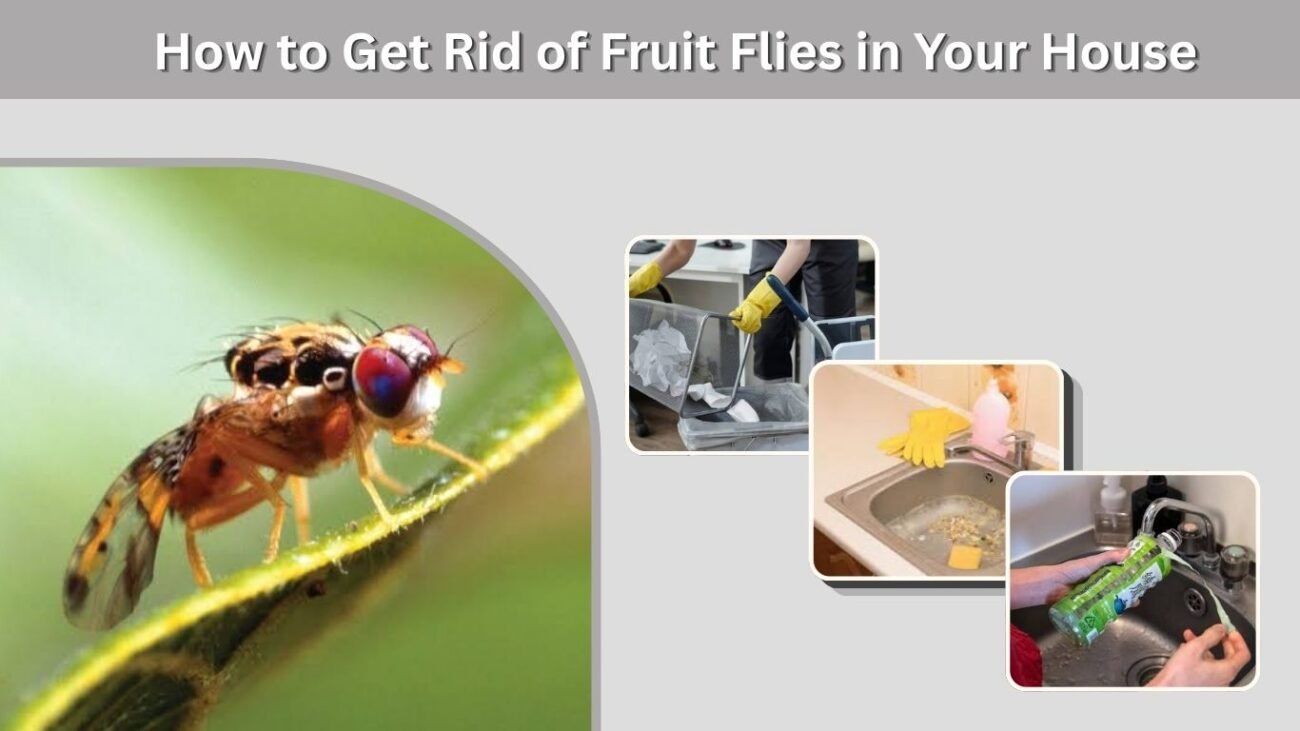
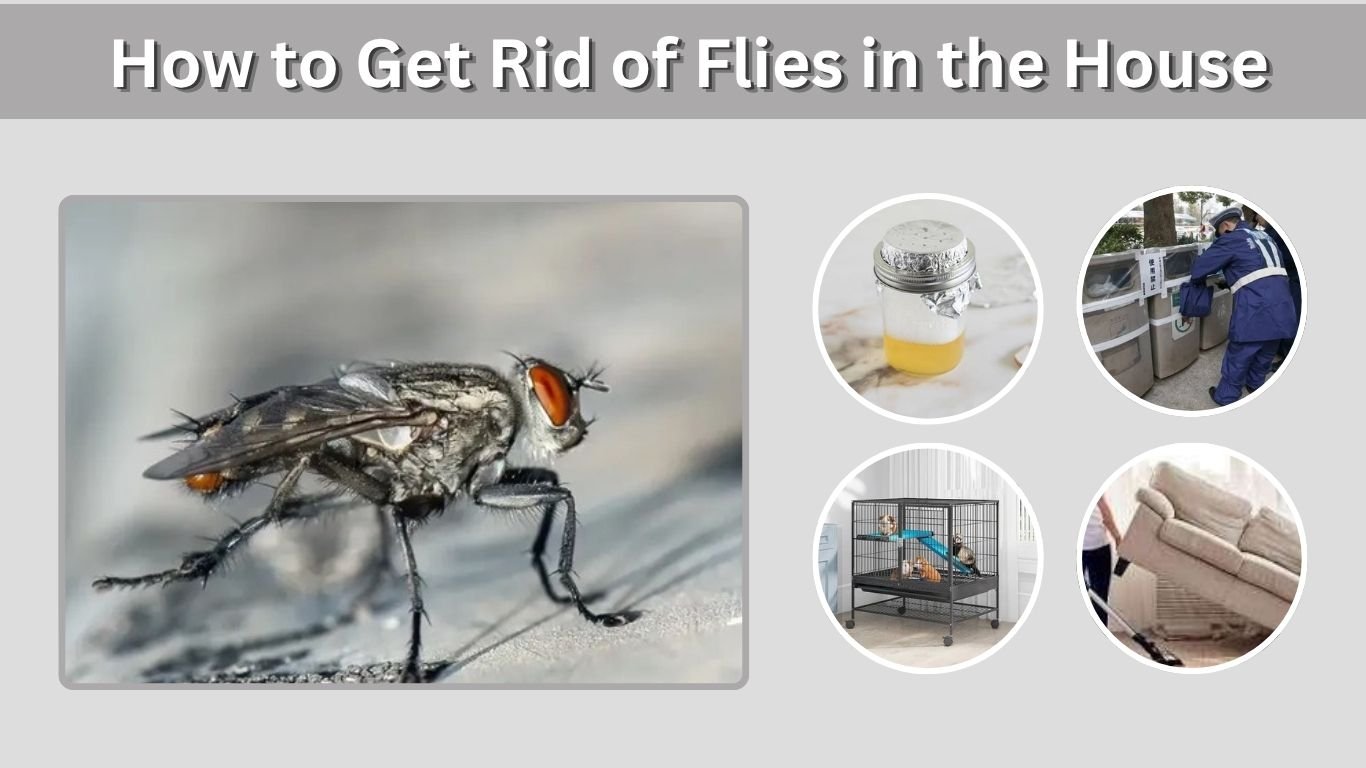
Successful fruit fly control requires more than trapping the adults you can see. Eggs and larvae develop directly in moist food material, so the infestation continues until that material is removed. The fastest approach combines sanitation with adult trapping. Removing breeding sources first prevents another generation from replacing the flies you kill.
Steps to Eliminate Fruit Flies
Follow these steps throughout the affected rooms:
- Discard rotten produce. Remove overripe or damaged fruits and vegetables.
- Refrigerate ripe fruit. Keep suitable produce inside the refrigerator temporarily.
- Empty garbage. Remove trash containing food every day during an infestation.
- Clean recycling. Rinse bottles and cans before storing them.
- Clean drains. Remove organic residue around sinks and garbage disposals.
- Wipe spills. Clean juice, wine, soda, and food residue immediately.
- Check hidden areas. Look underneath refrigerators, ovens, cabinets, and trash cans.
- Trap remaining adults. Continue trapping until activity stops.
Removing the source is more important than killing individual adults.
Best Home Remedy for Fruit Flies
A simple vinegar trap can help reduce adult fruit flies.
Place a small amount of apple cider vinegar in a jar or cup. Adding a small drop of dish soap lowers the liquid’s surface tension, allowing flies that land on it to sink.
The vinegar odor resembles fermenting fruit and attracts adults.
However, vinegar traps should be considered a supporting method. They cannot stop eggs or larvae developing in another food source.
How to Kill Fruit Flies Fast
Vacuuming visible adults can immediately reduce their numbers. Sticky traps or vinegar traps can capture additional flies over the following days.
Avoid relying on indoor insecticide sprays as the primary solution. Killing adults without removing their breeding material often produces only temporary improvement.
Finding the source is what ends the infestation.
Fruit Flies in Houseplants and Drains
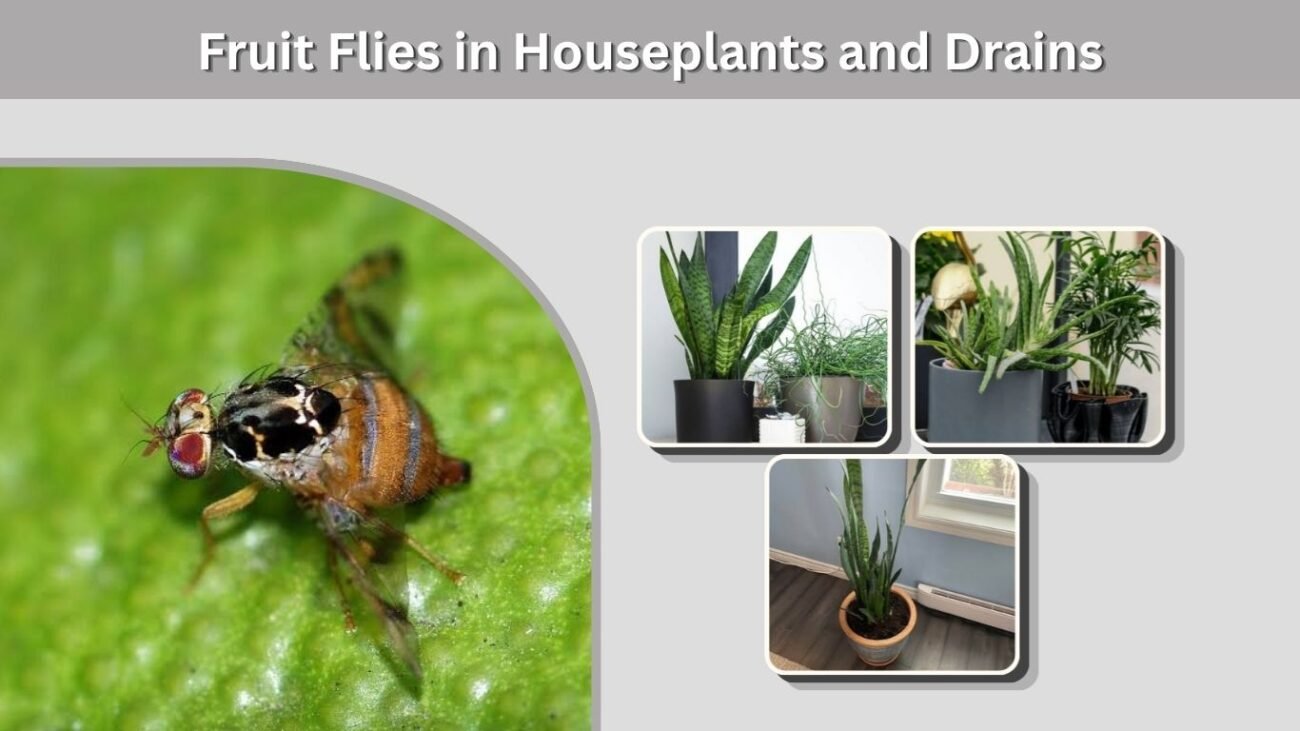
Fruit flies may appear near sinks and indoor plants, but the location can sometimes lead to incorrect identification. Dirty drains can contain enough fermenting organic material to support fruit flies, while insects developing directly in potting soil are usually fungus gnats. Inspecting the exact place where flies consistently emerge helps determine which treatment will work.
Fruit Flies Around Houseplants
If small flies rise from the soil every time you water a plant, fungus gnats are more likely than fruit flies.
Fruit flies may still visit houseplants if fallen fruit, decomposing leaves, compost, or other fermenting material is nearby.
Remove dead plant debris and avoid leaving organic waste around pots. If fungus gnats are responsible, allowing the upper soil layer to dry somewhat between waterings can help reduce suitable larval habitat.
Fruit Flies in Drains
Fruit flies can breed around drains if food particles and fermenting residue accumulate inside.
Simply pouring water into a drain may not remove this buildup.
Clean the drain opening, garbage disposal, stopper, overflow area, and accessible inner surfaces. Removing the organic film deprives larvae of food and prevents adults from continuing to lay eggs there.
Why Do Fruit Flies Keep Coming Back?
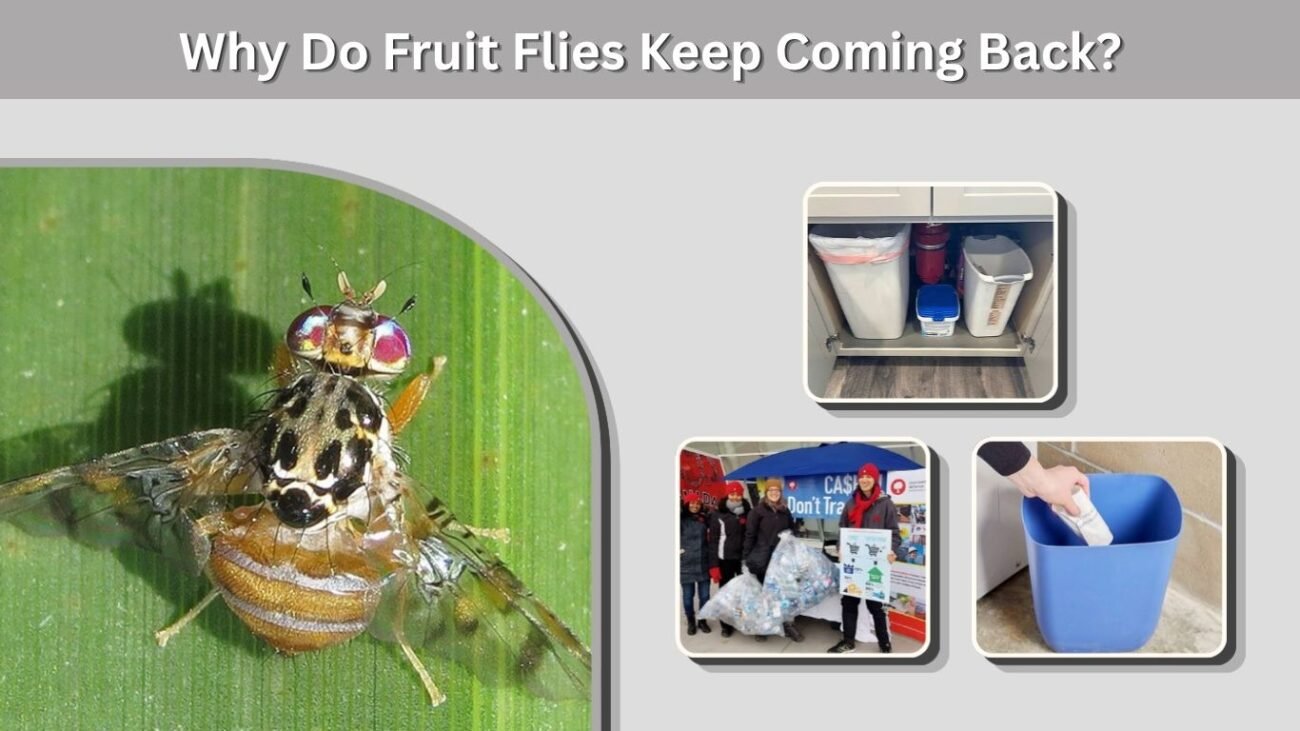
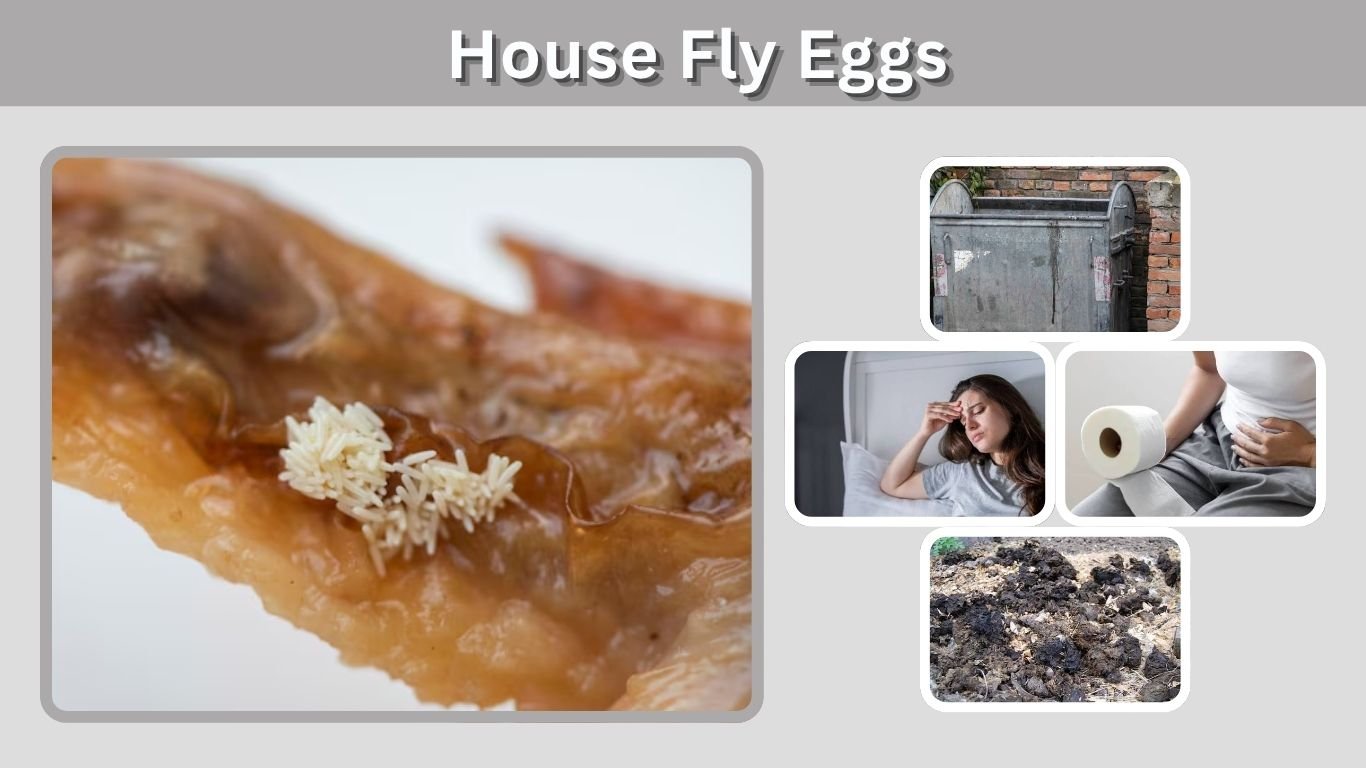
A continuing infestation almost always means a breeding source has been overlooked. Because fruit flies develop quickly, adults may emerge from hidden material even after all visible flies have been killed. Kitchens provide many possible sources, and surprisingly small amounts of forgotten food can maintain a population for weeks.
Hidden Sources You May Have Missed
Check beneath and behind appliances, inside recycling containers, underneath trash-can liners, around beverage bottles, and in cupboards where potatoes or onions are stored.
Also inspect mop heads, cleaning cloths, compost containers, garbage disposals, and spilled liquids beneath cabinets.
A single forgotten piece of fruit can allow another generation to develop.
How to Prevent Fruit Flies
Once the infestation is gone:
- Refrigerate very ripe produce.
- Use sealed food containers.
- Empty garbage regularly.
- Rinse recycling containers.
- Clean food spills immediately.
- Check potatoes and onions frequently.
- Keep drains and disposals clean.
- Do not leave dirty dishes overnight.
- Remove damaged fruit quickly.
Good sanitation prevents fruit flies from finding places to reproduce.
How Long Does It Take to Get Rid of Fruit Flies?
Fruit flies develop quickly, so complete elimination may take longer than simply trapping visible adults. Even after removing the breeding source, eggs, larvae, or pupae already present may continue developing temporarily. Consistent sanitation is therefore essential for at least several days after adult numbers begin to decrease.
When Will the Infestation Disappear?
If every breeding source has been removed, adult numbers should gradually decline.
New adults may continue appearing briefly because larvae or pupae were already developing before cleaning began.
If large numbers remain after one or two weeks of careful sanitation, another breeding source is probably present.
When Should You Call a Professional?
Professional help may be useful when tiny flies continue appearing despite thorough cleaning or when they seem to emerge from walls, floors, plumbing areas, or inaccessible spaces.
Persistent flies associated with drains may also be phorid flies or drain flies rather than fruit flies.
Correct identification can prevent weeks of ineffective treatment.
FAQs
Fruit fly infestations usually result from a combination of food, moisture, warmth, and overlooked breeding material. Understanding where they come from and what they need to reproduce makes control much easier. The following common questions address sudden infestations, trapping, household remedies, and situations where flies appear even though no fruit seems to be present.
1. Why are there suddenly so many fruit flies in my house?
A hidden food source may have reached the right stage of fermentation for rapid breeding. Check produce, garbage, recycling, drains, and forgotten spills.
2. What is the fastest way to get rid of fruit flies?
Remove every breeding source first, then clean food-storage areas and use vinegar or sticky traps to catch remaining adults.
3. Can fruit flies live in a house without fruit?
Yes. They can reproduce in other fermenting materials such as vegetables, juice residue, alcohol, garbage, compost, and organic material around drains.
4. Do vinegar traps completely eliminate fruit flies?
No. Vinegar traps capture adults but do not kill eggs and larvae developing elsewhere. Source removal is necessary for permanent control.
5. Why do I have tiny flies when there is no fruit?
They may be breeding in drains, garbage, vegetables, recycling residue, or another hidden food source. If they emerge from plant soil, they may actually be fungus gnats rather than fruit flies.