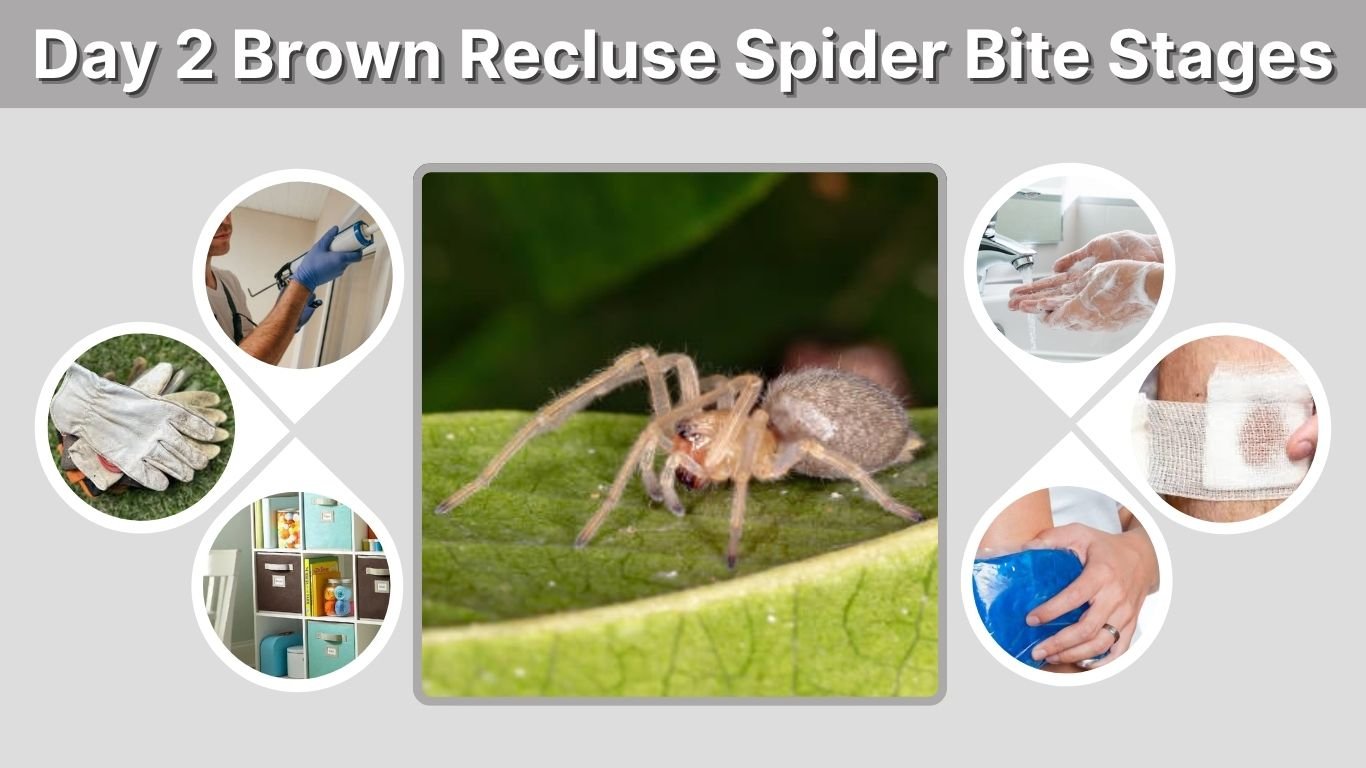
A brown recluse spider bite can be confusing on the second day. Some bites remain mild, while others begin to show pain, redness, swelling, blistering, or skin discoloration. Day 2 is also when many people start worrying about infection, tissue damage, or whether the sore is really a spider bite at all. Because staph infections and other skin conditions can look similar, it is important to watch symptoms closely and seek medical care if the wound worsens.
What Happens on Day 2 of a Brown Recluse Spider Bite?
Day 2 means roughly 24 to 48 hours after the suspected bite. By this point, a brown recluse bite may look more noticeable than it did at first. Some people do not feel the bite when it happens. Others may notice a mild sting, burning, or itching within the first few hours.
By the second day, the skin may become red, tender, swollen, or irritated. In some cases, a small blister may form. The center of the bite may look pale, bluish, purple, or darker than the surrounding skin. However, not every brown recluse bite becomes severe. Many suspected bites stay small and heal with simple wound care.
The challenge is that a day 2 brown recluse spider bite can resemble other problems, especially bacterial skin infections. That is why appearance alone is not always enough to confirm the cause.
Day 2 Brown Recluse Spider Bite Stages
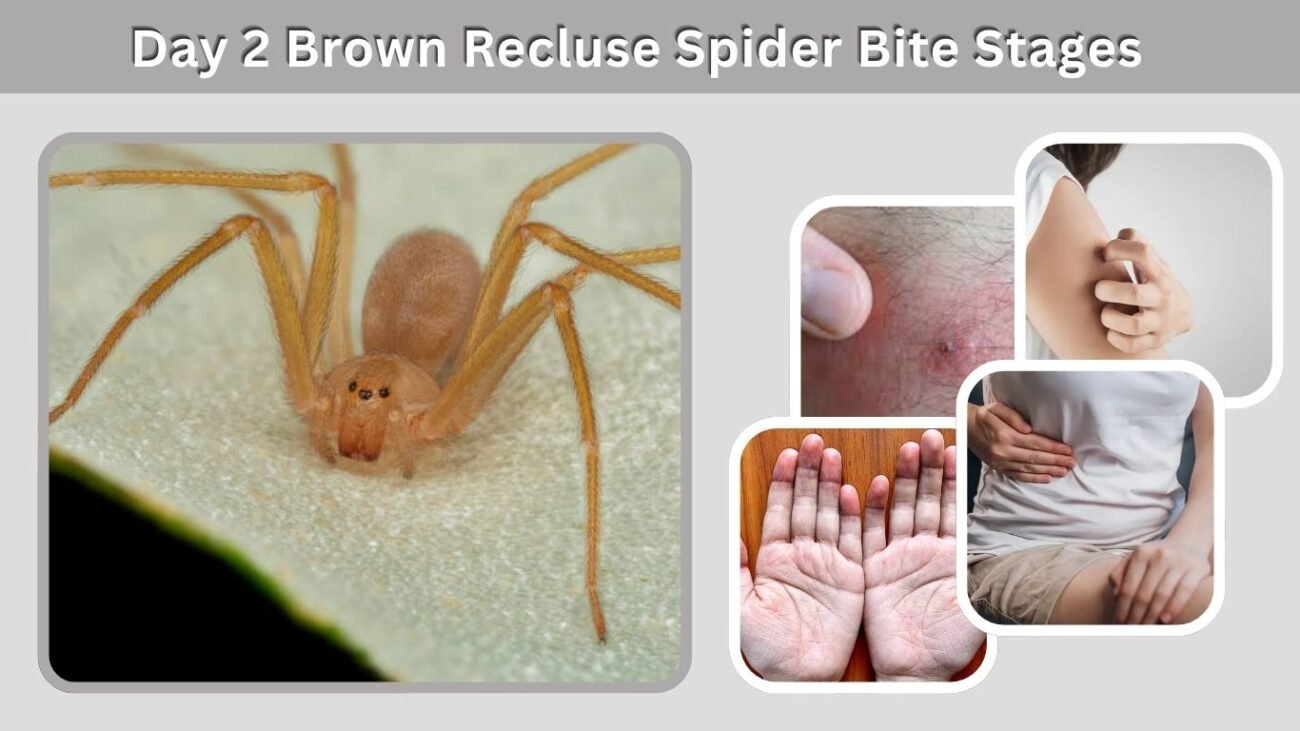
Brown recluse bite stages do not look exactly the same for everyone. The timeline can vary depending on the amount of venom, bite location, individual reaction, and whether the wound becomes infected. Still, a typical day 2 pattern may include several possible stages.
Stage 1: Early Redness and Tenderness
On day 2, the bite area may be red and slightly swollen. It may feel warm, itchy, sore, or tender to the touch. Some people compare the feeling to a bee sting or irritated insect bite.
At this stage, the skin may still look like an ordinary bug bite. If the redness is small, pain is mild, and there are no whole-body symptoms, the bite may remain minor. Even so, the area should be monitored because brown recluse reactions can change over the next several days.
Stage 2: Blister or Pale Center
Some brown recluse bites develop a small blister or a pale center surrounded by redness. The center may look white, gray, or slightly sunken. This can happen because the venom may affect tiny blood vessels and surrounding tissue.
A blister does not automatically mean the bite will become severe. However, a blister that grows quickly, becomes very painful, leaks pus, or spreads with redness should be checked by a healthcare professional.
Stage 3: Red, White, and Blue Appearance
Some descriptions of brown recluse bites mention a “red, white, and blue” pattern. This means there may be redness around the wound, a pale or white area near the center, and a bluish or purple area where blood flow or tissue injury is affected.
This pattern can be concerning, especially if it appears with worsening pain or expanding skin damage. However, similar color changes can occur with bruises, infections, pressure injuries, or other skin problems. A doctor can help determine what is actually happening.
Stage 4: Darkening Skin or Early Tissue Damage
In more serious cases, the center of the wound may begin to darken by day 2 or in the days that follow. The skin may look purple, blue-black, or gray. This can be a sign of tissue injury, sometimes called necrosis.
Necrosis does not happen in every brown recluse bite. In fact, many bites do not cause major tissue damage. But if the center of the bite is turning dark, growing larger, or becoming more painful, medical care is important.
Common Day 2 Symptoms
Symptoms on day 2 can be local, meaning they affect the bite area, or systemic, meaning they affect the whole body. Local symptoms are more common.
Possible day 2 symptoms include:
- Redness around the bite
- Mild to moderate swelling
- Itching or burning
- Pain or tenderness
- A small blister
- Pale skin near the center
- Purple or blue discoloration
- Warmth around the wound
- A sore that seems to be expanding
Some people may also feel generally unwell. This is less common but more concerning.
Whole-body symptoms may include:
- Fever
- Chills
- Nausea
- Vomiting
- Muscle aches
- Headache
- Weakness
- Rash away from the bite
- Dark urine
Children, older adults, and people with weakened immune systems may be at higher risk for serious reactions and should be evaluated sooner.
What Does a Brown Recluse Bite Look Like on Day 2?
On day 2, a brown recluse bite may look like a red, swollen bump with a tender center. It may also look like a small blister or a flat red patch. If the reaction is stronger, the middle may become pale, bluish, purple, or dark.
However, there is no single appearance that proves a brown recluse bite. Many skin problems look similar, including infected hair follicles, boils, abscesses, allergic reactions, tick bites, mosquito bites, burns, and staph infections.
A key point is location. Brown recluse spiders are most common in certain parts of the United States, especially the south-central and Midwest regions. If someone lives far outside their natural range, a “brown recluse bite” may be less likely than another cause.
Staph Infection vs Day 2 Brown Recluse Spider Bite
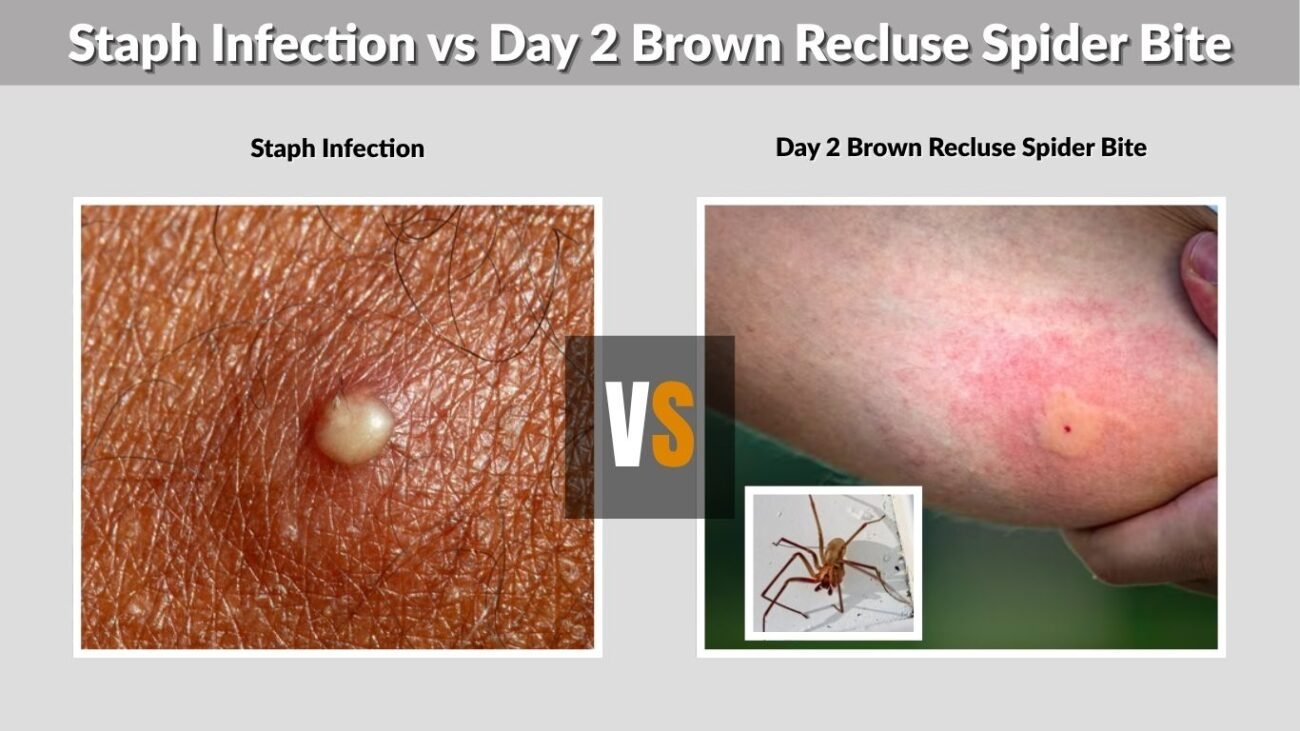
One of the most important comparisons is a staph infection versus a brown recluse bite. Many people search for “staph infection day 2 brown recluse spider bite stages” because the two can look alike.
A staph infection is caused by bacteria, not spider venom. MRSA is a type of staph that can resist some antibiotics. Staph infections may appear as red, swollen, painful bumps that resemble spider bites. They can also form boils, abscesses, or pus-filled sores.
Signs It May Be a Staph Infection
A wound may be more likely to involve infection if it has:
- Pus or cloudy drainage
- Increasing warmth
- Rapidly spreading redness
- Severe tenderness
- A swollen lump or boil
- Red streaks moving away from the wound
- Fever or chills
- A wound that gets worse instead of better
If pus is present, do not squeeze the wound. Squeezing can push infection deeper or spread bacteria. A healthcare provider may need to drain an abscess safely and decide whether antibiotics are needed.
Signs It May Be a Brown Recluse Bite
A brown recluse bite may be more likely if:
- The bite happened in an area where brown recluse spiders live
- The spider was seen and identified correctly
- The bite occurred after reaching into clothes, bedding, boxes, shoes, or storage areas
- The wound develops a pale center, blister, or purple discoloration
- Pain and skin changes progress over the first few days
Even then, it can be hard to confirm without seeing the spider. Medical professionals often focus on treating the wound and ruling out infection rather than proving the spider species.
When Day 2 Symptoms Are an Emergency
Some symptoms should not be watched at home. Get urgent medical care if the bite or wound is rapidly worsening or if whole-body symptoms appear.
Seek medical help quickly if you notice:
- Trouble breathing
- Severe swelling of the face, lips, or throat
- Fever, chills, or vomiting
- Severe or spreading pain
- A rapidly enlarging wound
- Black, blue, or purple skin spreading from the center
- Red streaks extending from the bite
- Pus or foul-smelling drainage
- Dizziness or fainting
- Dark urine
- A bite on a child, elderly person, or immunocompromised person
A worsening day 2 wound should be taken seriously because both brown recluse reactions and bacterial infections can become more complicated if ignored.
What To Do for a Suspected Bite on Day 2
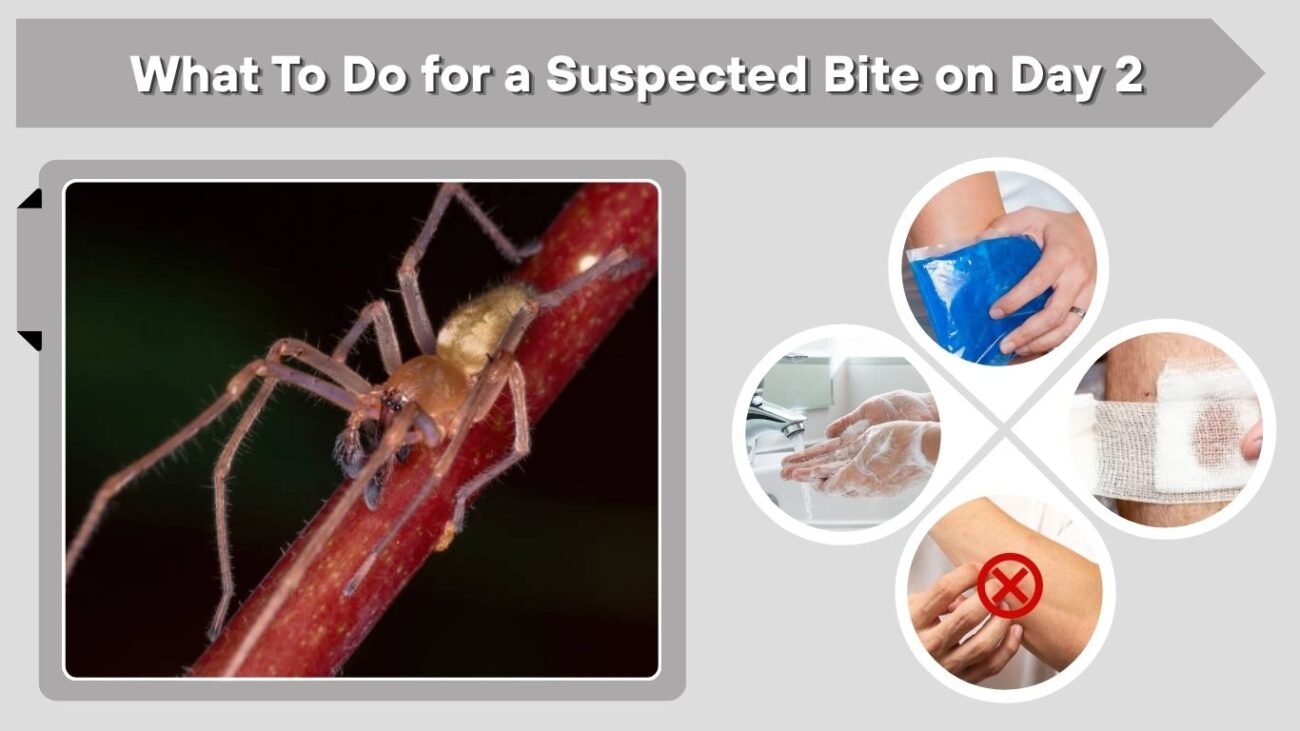
If the symptoms are mild and there are no danger signs, basic first aid may help while you monitor the area. The goal is to keep the wound clean, reduce swelling, and avoid making the injury worse.
Helpful steps include:
- Wash the area gently with soap and water
- Apply a cool compress for short periods
- Keep the bite elevated if possible
- Avoid scratching the wound
- Cover it with a clean bandage
- Mark the edge of redness with a pen to track spreading
- Take a clear photo once or twice daily for comparison
- Use over-the-counter pain relief only as directed on the label
Do not cut the wound, apply harsh chemicals, use unproven home remedies, or try to drain it yourself. These actions can increase irritation or infection risk.
What Doctors May Do
A doctor may examine the wound, ask where and when the bite happened, check for infection, and look for signs of tissue damage. If infection is suspected, treatment may include antibiotics or drainage of an abscess. If the wound is severe, follow-up care may be needed.
For suspected brown recluse bites, treatment often focuses on wound care, pain control, monitoring, and preventing complications. Surgery is not usually done early unless there is a specific medical reason. Some wounds need time to declare how much tissue is affected.
How Long Does It Take to Heal?
Mild bites may improve within a few days and heal over one to two weeks. More serious bites can take several weeks or even months, especially if tissue damage occurs. Healing depends on the depth of the wound, infection status, general health, and how quickly proper care begins.
A bite that is not improving after day 2 or day 3 should be watched carefully. If redness spreads, pain increases, or the center darkens, it is time to get medical advice.
Can a Brown Recluse Bite Be Deadly?
Death from a brown recluse bite is very rare. However, severe reactions can happen, especially in children or vulnerable people. Serious complications may include tissue death, infection, anemia, kidney problems, or systemic illness.
The bigger everyday risk is assuming every sore is a spider bite and delaying treatment for a bacterial infection. A staph or MRSA infection can worsen without proper care, so any painful, draining, or spreading wound should be evaluated.
How To Prevent Brown Recluse Bites
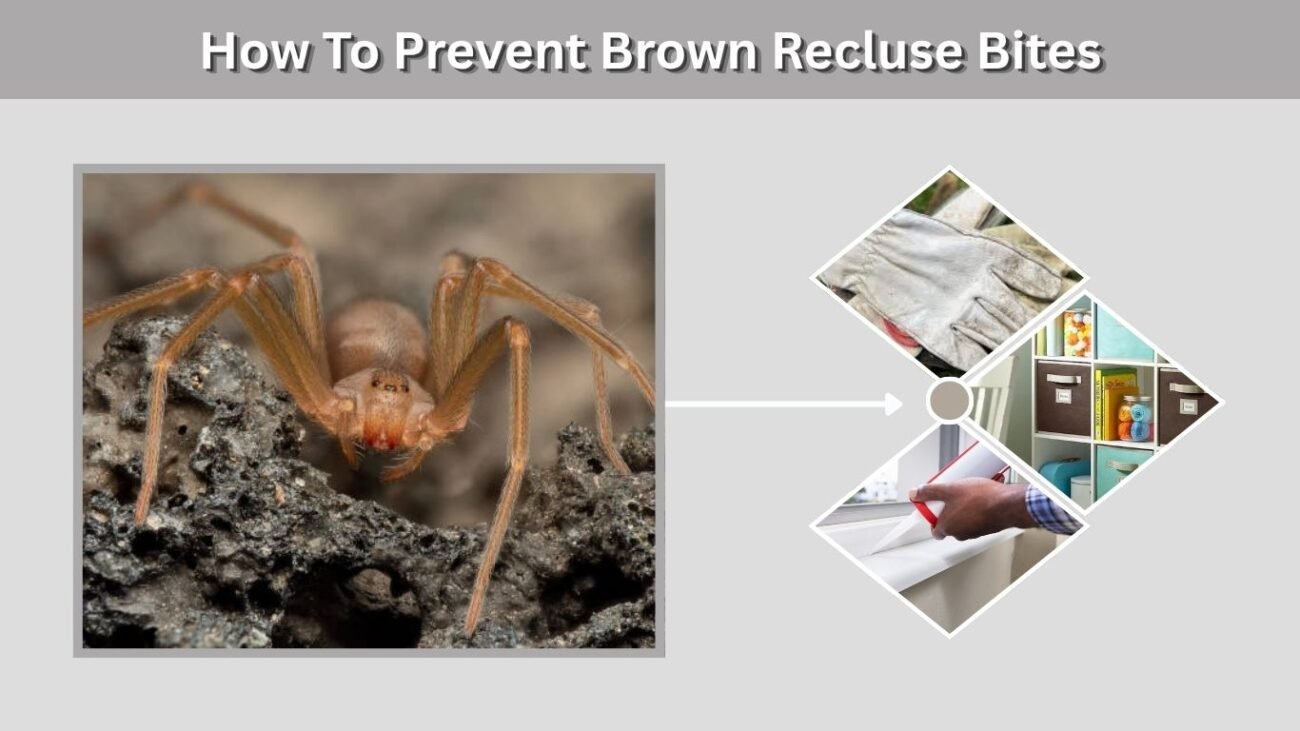
Brown recluse spiders prefer quiet, dark, undisturbed places. They may hide in storage boxes, closets, shoes, bedding, garages, basements, woodpiles, and cluttered spaces.
Prevention tips include:
- Shake out shoes, gloves, and clothing before wearing
- Keep beds away from walls if spiders are a concern
- Reduce clutter in storage areas
- Use sealed plastic containers instead of cardboard boxes
- Wear gloves when moving wood, boxes, or debris
- Seal cracks and gaps around the home
- Vacuum corners, closets, and baseboards regularly
- Use pest control support if infestations are suspected
These steps are especially useful in areas where brown recluse spiders are known to live.
Day 2 Brown Recluse Bite: What To Remember
Day 2 is an important checkpoint. A mild bite may show redness, itching, swelling, and tenderness. A more concerning bite may show blistering, a pale center, purple discoloration, spreading pain, or darkening skin. However, staph infections and other skin conditions can look very similar.
The safest approach is to monitor the wound, keep it clean, avoid squeezing or cutting it, and seek medical care if symptoms worsen. If there is fever, pus, spreading redness, severe pain, dark skin, or whole-body symptoms, do not wait.
FAQs
What should a brown recluse bite look like on day 2?
On day 2, a brown recluse bite may look red, swollen, tender, itchy, or blistered. Some bites develop a pale center or purple discoloration. However, many other skin problems can look similar, including staph infections, boils, and other insect bites, so worsening symptoms should be checked.
Is day 2 too early for necrosis?
Day 2 can be early for obvious necrosis, but serious skin changes may begin around this time or over the next several days. A dark, blue, purple, gray, or black center can be concerning. If the wound is expanding, increasingly painful, or changing color, seek medical care.
How do I know if it is staph instead of a spider bite?
A staph infection may look like a painful red bump, boil, abscess, or pus-filled sore. It may feel warm and get worse quickly. Pus, spreading redness, fever, red streaks, or severe tenderness are warning signs. A doctor may need to evaluate and treat it.
Should I go to the doctor for a day 2 brown recluse bite?
You should see a doctor if the bite is worsening, very painful, blistering, turning purple or black, draining pus, or spreading. You should also seek care for fever, chills, nausea, vomiting, weakness, or if the bite is on a child, older adult, or immunocompromised person.
Can I treat a brown recluse bite at home?
Mild symptoms may be managed with gentle washing, a cool compress, elevation, a clean bandage, and careful monitoring. However, home care is not enough if the wound worsens, shows signs of infection, changes color, or causes whole-body symptoms. When in doubt, get medical advice.