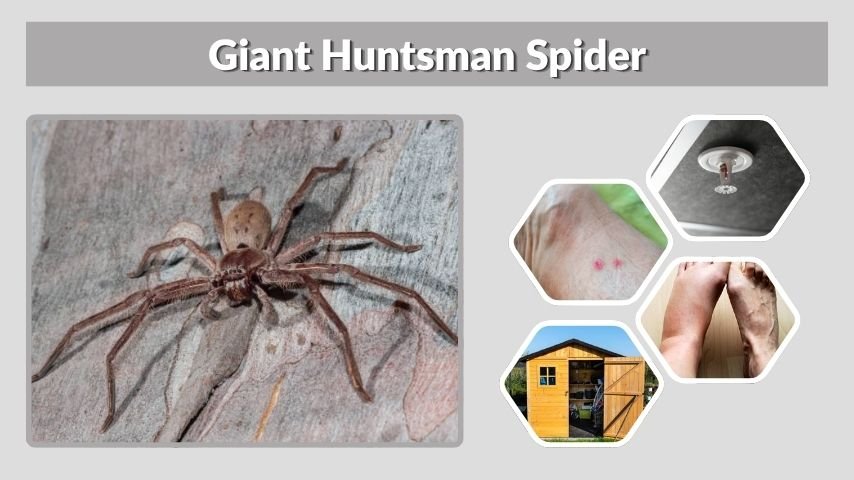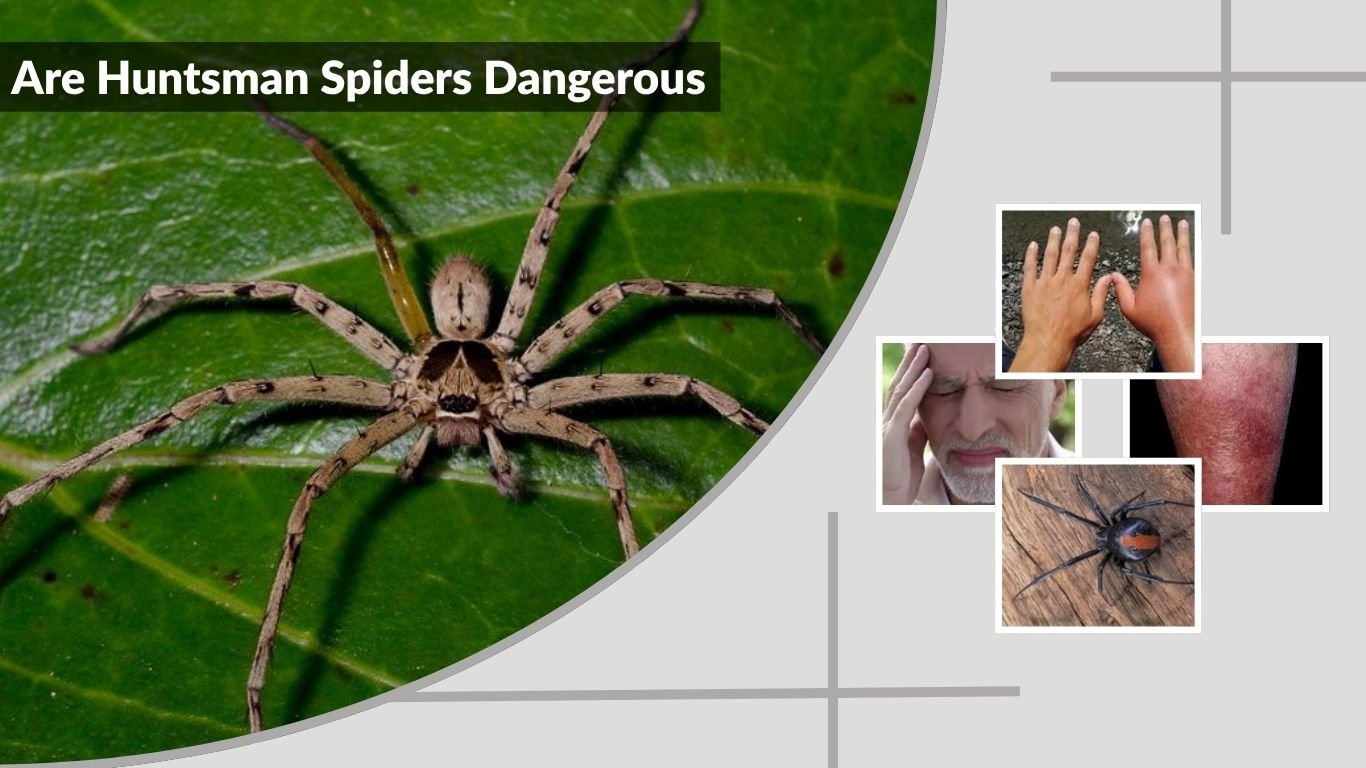
Huntsman spiders look scary because they are large, flat, hairy, and very fast. Many people panic when they see one on a wall, ceiling, car visor, or curtain. But despite their frightening appearance, huntsman spiders are usually not dangerous to humans. They are venomous, like most spiders, but their venom is not considered medically dangerous for most people. A bite can hurt and cause swelling, but serious problems are rare.
What Are Huntsman Spiders?
Huntsman spiders are a group of large spiders known for their long legs, flattened bodies, and sideways crab-like movement. They belong to the family Sparassidae. They are found in many warm parts of the world, including Australia, Asia, Africa, Europe, and the Americas.
They are especially famous in Australia, where they often enter homes, sheds, garages, and cars. Their size makes them look threatening, but huntsman spiders are usually shy and prefer running away instead of biting. The Australian Museum states that huntsman spiders are not considered dangerous and usually try to flee rather than act aggressively.
| Feature | Huntsman Spider |
|---|---|
| Spider family | Sparassidae |
| Body shape | Flat and wide |
| Leg position | Long legs spread sideways |
| Speed | Very fast runner |
| Venomous | Yes |
| Dangerous to humans | Usually no |
| Common behavior | Runs away when disturbed |
| Main benefit | Eats insects and other pests |
Are Huntsman Spiders Dangerous to Humans?
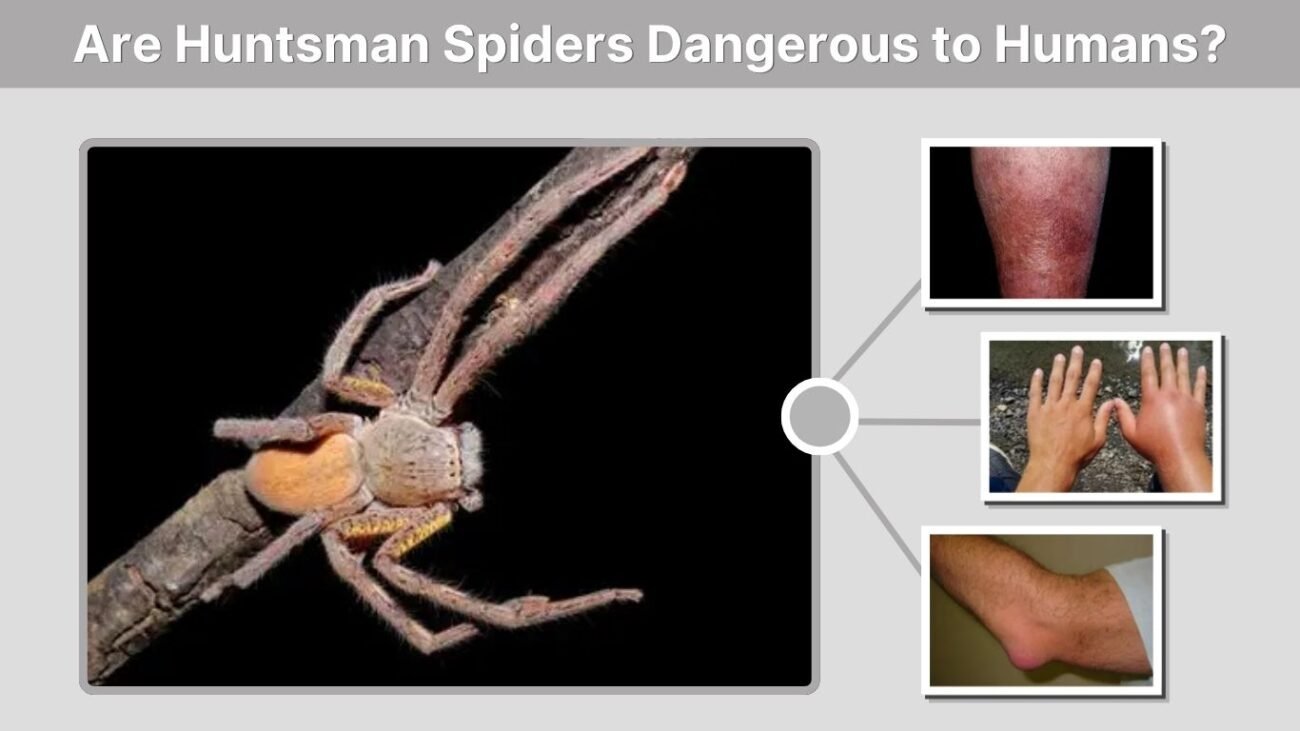
Huntsman spiders are not considered dangerous to humans in most cases. Their bite may cause pain, redness, and swelling, but it is not usually life-threatening. Better Health Channel from Victoria, Australia, notes that despite their size, huntsman spiders are usually harmless, though a bite may cause temporary pain and swelling.
The main reason people fear huntsman spiders is their appearance. Some species can have a large leg span, and they move quickly across walls or floors. This sudden movement can make them seem aggressive, but speed is usually a defense mechanism. They are trying to escape.
Why They Look More Dangerous Than They Are
- They are large
A big spider naturally looks more threatening than a small one. - They move very fast
Huntsman spiders can sprint quickly, which can startle people. - They appear indoors
Seeing one inside a bedroom, bathroom, or car feels alarming. - They have long legs
Their wide leg span makes them seem bigger than their actual body size. - They are venomous
People often hear “venomous” and think “deadly,” but many venomous animals are not dangerous to humans.
Do Huntsman Spiders Bite?
Yes, huntsman spiders can bite, but they usually bite only when threatened, trapped, or handled. Most bites happen when someone accidentally presses the spider against skin, tries to pick it up, or reaches into a place where the spider is hiding.
Huntsman spiders do not chase humans to bite them. They are predators of insects, not people. Their venom is used to control prey such as cockroaches, moths, flies, and other small animals.
When Bites May Happen
Huntsman spider bites are more likely when:
- A spider is trapped inside clothing
- Someone tries to handle it
- A spider is accidentally squeezed
- A person reaches behind furniture or boxes
- A spider is hiding in a car, towel, shoe, or curtain
- A mother spider is guarding an egg sac
Female huntsman spiders may become more defensive when protecting their eggs. Even then, they usually prefer escape if they have a clear path.
Huntsman Spider Bite Symptoms
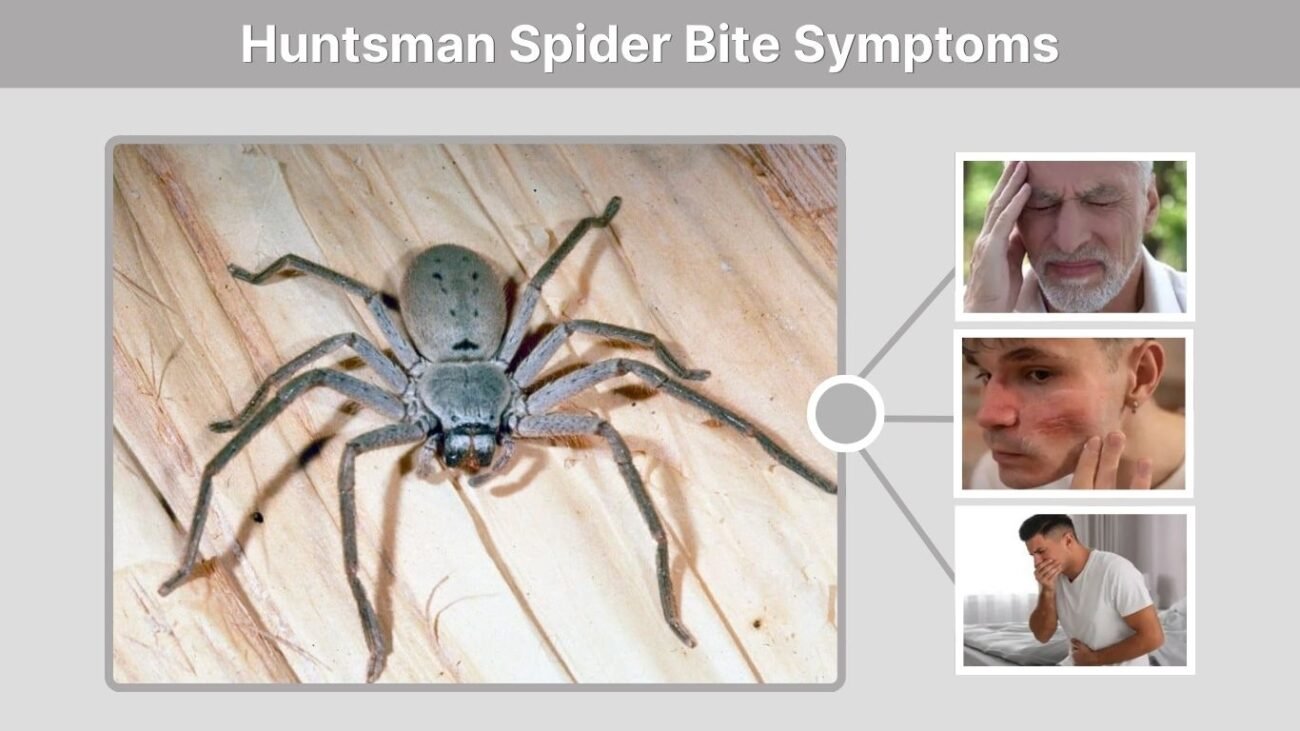
A huntsman spider bite can be painful, but symptoms are usually local and temporary. The Australian Museum notes that huntsman spiders possess venom and a bite may cause some ill effects, but they are reluctant to bite.
Most people may experience symptoms around the bite area rather than throughout the whole body.
| Symptom | How Common It Is |
|---|---|
| Sharp pain | Common |
| Redness | Common |
| Swelling | Common |
| Itching | Possible |
| Mild nausea | Less common |
| Sweating | Possible with some species |
| Vomiting | Rare, but reported with some huntsman species |
| Serious reaction | Rare |
The Australian Museum’s page on badge huntsman spiders says bites from badge huntsmans may cause local severe pain and swelling, and sometimes sweating, nausea, and vomiting. It recommends a cold pack for local pain and medical attention if symptoms persist.
Are Huntsman Spiders Poisonous or Venomous?
Huntsman spiders are venomous, not poisonous. These two words are often confused.
A venomous animal injects venom through a bite or sting. A poisonous animal causes harm when it is eaten, touched, or absorbed. Huntsman spiders use venom through their fangs, so they are venomous.
However, venomous does not always mean deadly. Bees, ants, and many spiders are venomous, but most are not life-threatening to healthy adults. Huntsman spider venom is mainly designed for small prey, not large mammals.
Are Huntsman Spiders Dangerous to Pets?
Huntsman spiders are usually not highly dangerous to cats and dogs, but a bite can still cause pain, swelling, or irritation. Small pets may react more strongly than large pets. Curious cats may try to paw at a huntsman spider, and dogs may try to bite or sniff it.
Most pet encounters are not serious, but it is smart to watch for unusual symptoms after a suspected bite.
Watch Pets for These Signs
- Swelling around the face or paw
- Excessive licking
- Sudden yelping or pain
- Drooling
- Vomiting
- Weakness
- Trouble breathing
- Unusual behavior
A veterinarian should be contacted if symptoms are severe, spreading, or not improving.
Are Huntsman Spiders Aggressive?
Huntsman spiders are not usually aggressive toward humans. They may look bold because they are fast and sometimes remain visible on walls, but their first response is usually to run away.
They can become defensive if cornered. A spider that has no escape route may raise its front legs, move suddenly, or bite if handled. This is defensive behavior, not true aggression.
Huntsman spiders are active hunters. Unlike web-building spiders, they chase prey. Their hunting style makes them fast and alert, but it does not mean they are looking for humans to attack.
Why Do Huntsman Spiders Come Inside Houses?
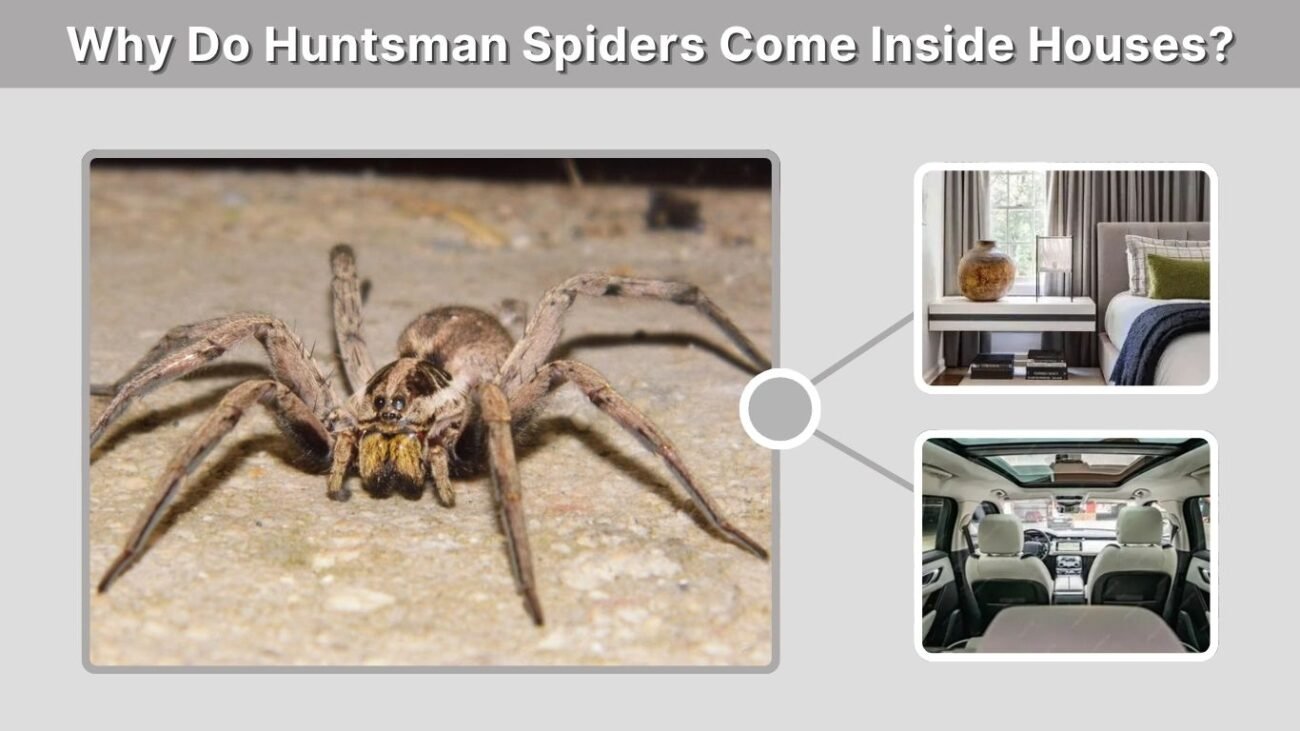
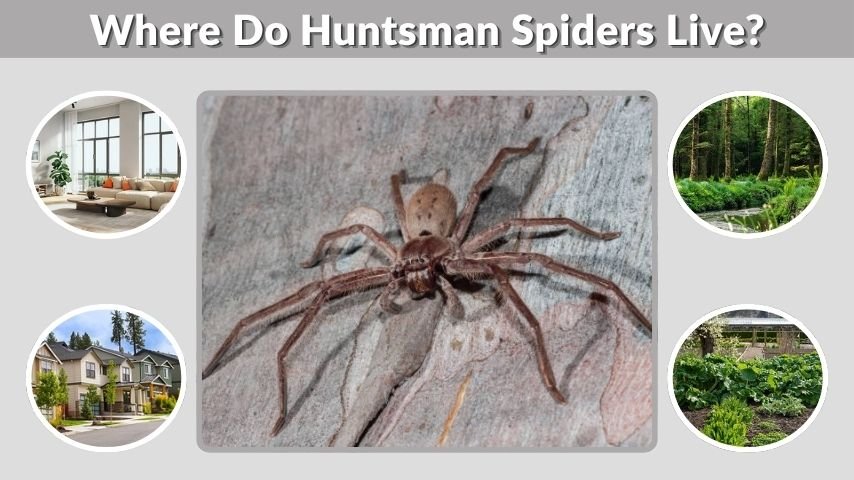
Huntsman spiders may enter homes while searching for food, shelter, warmth, or moisture. They often hide behind curtains, picture frames, furniture, doors, and wall cracks.
They are also known for appearing inside cars. This can happen when they crawl into vehicles through small gaps or hide behind sun visors, dashboards, or door seals.
Common Indoor Hiding Places
- Behind curtains
- Behind wall art or picture frames
- Inside garages and sheds
- Around windows and doors
- In closets or storage boxes
- Under furniture
- Inside cars
- Around outdoor lights where insects gather
Because huntsman spiders eat cockroaches, flies, moths, and other pests, they can actually help reduce household insects.
What Should You Do If You See a Huntsman Spider?
The best response is to stay calm. Most huntsman spiders are not trying to harm you. If it is indoors and you do not want it there, you can remove it safely without touching it.
Safe Removal Steps
- Place a large container over the spider.
- Slide a stiff piece of paper or cardboard underneath.
- Keep the container covered.
- Release the spider outside away from doors and windows.
- Wear gloves if you are nervous.
- Avoid grabbing the spider with bare hands.
Do not slap or squash a huntsman spider on a wall if you can avoid it. Sudden movement may make it run unpredictably, and trying to hit it can increase the chance of panic or accidental contact.
What to Do After a Huntsman Spider Bite
Most huntsman spider bites can be managed with basic first aid. Queensland Poisons Information Centre lists general spider bite symptoms such as redness, itching, increasing pain, nausea, and sweating, and separates more serious concerns like funnel-web and redback bites.
For a suspected huntsman spider bite, the goal is to reduce pain and monitor symptoms.
First Aid for a Huntsman Spider Bite
- Wash the bite area
Use soap and water to reduce the risk of infection. - Apply a cold pack
Wrap ice or a cold pack in cloth and place it on the bite area to reduce pain and swelling. - Avoid scratching
Scratching can irritate the skin and increase infection risk. - Watch symptoms
Monitor for spreading pain, swelling, nausea, sweating, or allergic signs. - Seek medical help if needed
Get medical attention if symptoms are severe, persistent, or unusual.
Emergency help is important if the person has trouble breathing, facial swelling, dizziness, fainting, severe vomiting, or signs of an allergic reaction.
Huntsman Spider vs More Dangerous Spiders
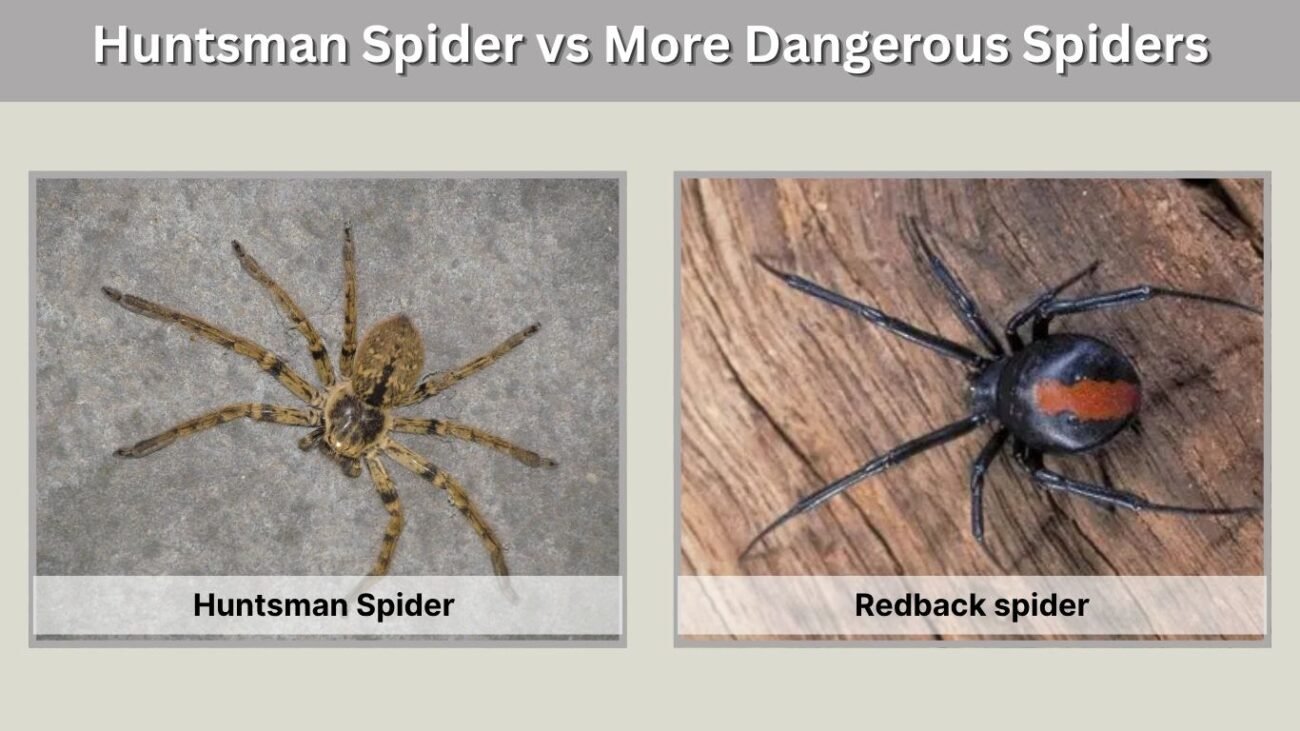
Huntsman spiders are often feared because of their size, but size is not the best way to judge danger. Some smaller spiders are more medically important than huntsman spiders.
| Spider | Danger Level to Humans | Notes |
|---|---|---|
| Huntsman spider | Usually low | Painful bite possible, serious effects rare |
| Redback spider | Higher | Can cause significant symptoms |
| Funnel-web spider | Very high in Australia | Bite can be life-threatening |
| Wolf spider | Usually low | Pain and swelling possible |
| House spider | Usually low | Rarely serious |
This comparison is important because people often panic at large spiders while ignoring smaller, more medically significant species.
Benefits of Huntsman Spiders
Although huntsman spiders can be frightening indoors, they are useful predators. They help control insects and other small pests.
The Australian Museum notes that huntsman spiders in houses perform a useful role as natural pest controllers.
They may eat:
- Cockroaches
- Flies
- Moths
- Crickets
- Beetles
- Other spiders
- Small household insects
For this reason, some people choose to leave huntsman spiders alone if they are in a garage, shed, or outdoor area.
Myths About Huntsman Spiders
Huntsman spiders are surrounded by myths because they are large and dramatic-looking. Many stories exaggerate their danger.
Common Myths
Myth 1: Huntsman spiders chase people.
They do not chase people to attack. They run quickly to escape, and sometimes their escape path happens to be toward a person.
Myth 2: Huntsman spiders are deadly.
They are venomous, but they are not considered deadly to humans.
Myth 3: All big spiders are dangerous.
Spider size does not always match medical danger. Many large spiders have bites that are painful but not life-threatening.
Myth 4: Huntsman spiders infest homes like pests.
They may enter homes, but they do not usually infest buildings in the same way cockroaches or ants do.
How to Keep Huntsman Spiders Away
You may not be able to prevent every huntsman spider from entering, especially in warm climates, but you can reduce the chance.
Prevention Tips
- Seal gaps around windows and doors.
- Install or repair fly screens.
- Keep garages and sheds tidy.
- Shake out shoes, towels, and clothing left outside.
- Reduce insects around outdoor lights.
- Remove clutter where spiders can hide.
- Keep firewood, boxes, and garden debris away from the house.
- Check cars if you live in an area where huntsman spiders are common.
Reducing insects around your home can also reduce spider activity because huntsman spiders follow food sources.
FAQs
Are huntsman spiders dangerous?
Huntsman spiders are usually not dangerous to humans. They are venomous, but their venom is not considered medically serious for most people. A bite may cause pain and swelling.
Can a huntsman spider bite kill you?
A huntsman spider bite is not normally fatal. Serious reactions are rare, but medical help is needed if symptoms are severe or if an allergic reaction occurs.
Do huntsman spiders bite humans?
Yes, they can bite, but they usually bite only when threatened, trapped, or handled. Most huntsman spiders prefer to run away.
Are huntsman spiders good to have around?
Yes, they can be beneficial because they eat cockroaches, flies, moths, and other household pests. Many people leave them alone in garages or outdoor areas.
What should I do if a huntsman spider is in my house?
Stay calm and avoid touching it. Use a container and cardboard to move it outside, or contact pest control if you are uncomfortable handling the situation.