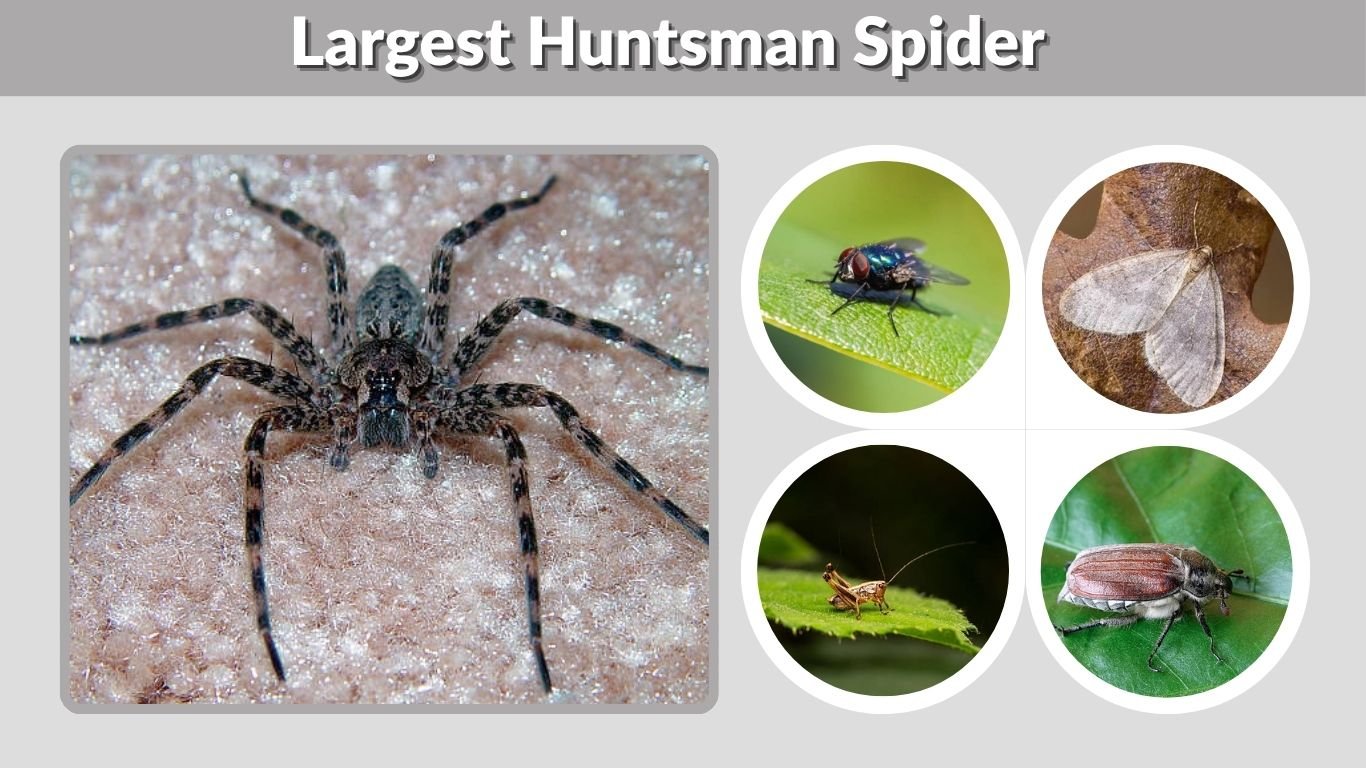
The largest huntsman spider is the giant huntsman spider, known scientifically as Heteropoda maxima. It is famous for having the greatest leg span of any known spider, reaching up to about 30 cm or 11.8 inches. Although many viral photos show huge huntsman spiders in Australia, the true record holder is from Laos, not Australia. Here is a clear guide to its size, habitat, behavior, and myths.
What Is the Largest Huntsman Spider?
The largest huntsman spider is the giant huntsman spider, Heteropoda maxima. It belongs to the family Sparassidae, the group commonly known as huntsman spiders. Guinness World Records notes that Heteropoda maxima can reach a leg span of up to 30 cm, making it the largest spider by leg span.
Quick Facts About the Giant Huntsman Spider
- Common name: Giant huntsman spider
- Scientific name: Heteropoda maxima
- Family: Sparassidae
- Known for: Largest spider by leg span
- Maximum leg span: About 30 cm or 11.8 inches
- Native range: Laos
- Habitat: Caves and dark limestone areas
- Body style: Flattened body with long sideways legs
- Danger to humans: Not considered deadly
- Hunting style: Active hunter, not a web trapper
This species was described by arachnologist Peter Jäger in 2001. The World Spider Catalog lists Heteropoda maxima as a valid species and records its scientific publication history.
How Big Is the Largest Huntsman Spider?
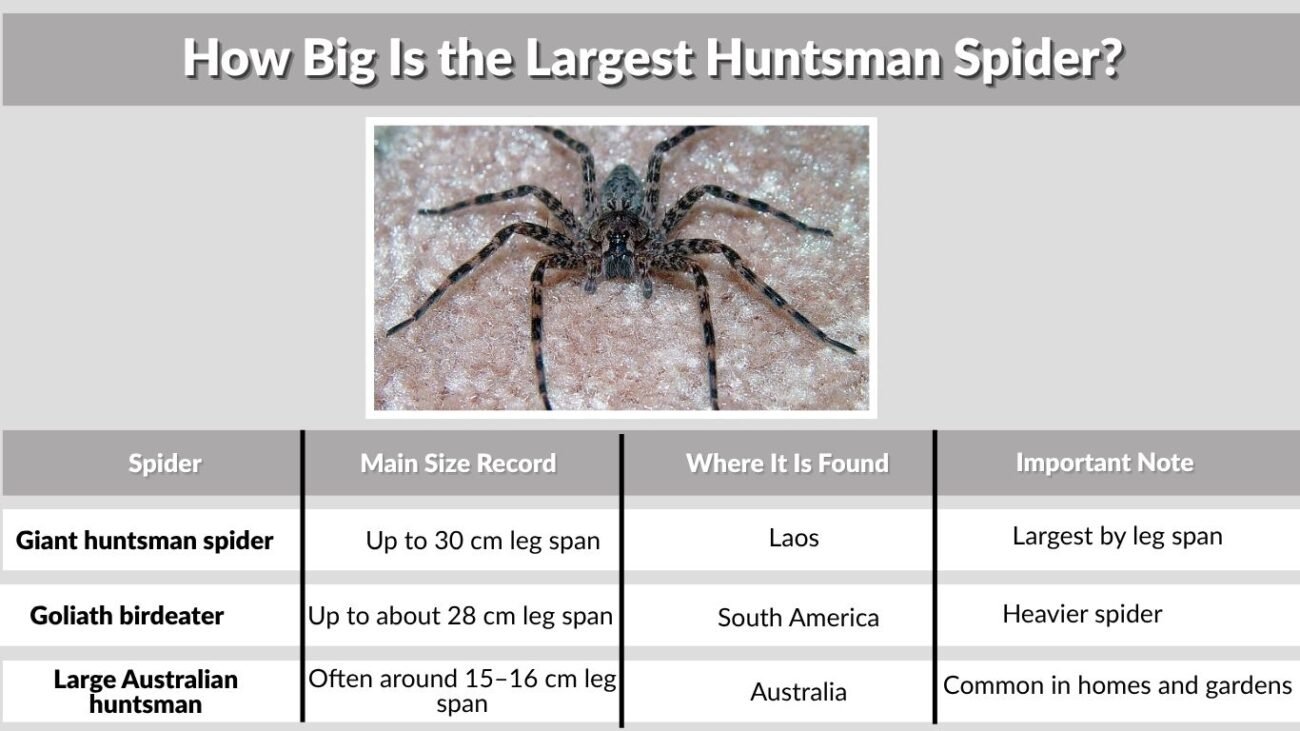
The giant huntsman spider is impressive because of its leg span, not because of body weight. Its legs can stretch across a dinner plate-sized area, but its body is much smaller than people often imagine. This is why it looks enormous in photos, especially when its legs are fully spread.
Size Comparison Table
| Spider | Main Size Record | Where It Is Found | Important Note |
| Giant huntsman spider | Up to 30 cm leg span | Laos | Largest by leg span |
| Goliath birdeater | Up to about 28 cm leg span | South America | Heavier spider |
| Large Australian huntsman | Often around 15–16 cm leg span | Australia | Common in homes and gardens |
The giant huntsman slightly exceeds the goliath birdeater in leg span, but the goliath birdeater is much heavier. Guinness records the goliath birdeater as the largest spider by mass, while the giant huntsman is considered the largest by leg span.
Why Leg Span Matters
Spider size can be measured in different ways. Some spiders have heavy bodies, while others have extremely long legs. The giant huntsman wins the “largest” title when the measurement is leg span. Its long, sideways-positioned legs make it look wider and flatter than many other spiders.
This is also why people sometimes think every very large huntsman is a record-breaking spider. A big huntsman on a wall, broom, curtain, or car dashboard can look much larger because of camera angle and perspective.
Where Does the Largest Huntsman Spider Live?
The giant huntsman spider is native to Laos in Southeast Asia. It was discovered in a cave environment, which helps explain its long-legged, flattened shape. Caves and limestone areas provide dark cracks, crevices, and surfaces where this spider can move quickly and hide.
Habitat and Distribution
The giant huntsman spider is not an Australian species. It is associated with Laos, while Australia is home to many other huntsman spiders. The Australian Museum explains that huntsman spiders are usually grey to brown, long-legged, and often flattened, with many species adapted to living under bark, rocks, or in narrow spaces.
In Australia, huntsman spiders are common in houses, sheds, gardens, tree bark, and cars. Large Australian huntsman spiders can be frightening because they move fast and appear suddenly, but they are different from Heteropoda maxima.
Largest Huntsman Spider in Australia
Australia is strongly connected with huntsman spiders because they are common there and often enter homes. However, the largest huntsman spider in the world is not from Australia. Australian huntsman spiders can still become very large, with some species reaching around 15–16 cm in leg span.
The “Charlotte” Huntsman Spider Story
One of the most famous viral huntsman spiders was “Charlotte,” a very large huntsman photographed in Queensland, Australia. Many posts claimed she might be one of the biggest huntsman spiders ever photographed. However, an ABC News report quoted an arachnologist saying the spider looked much bigger because of unusual perspective and was likely a fairly normal large huntsman.
This story is important because many people search for “largest huntsman spider ever photographed” or “largest huntsman spider on broom.” The photo may be real, but it does not prove a world record. Camera angle, object distance, and the spider’s leg position can make a huntsman look far larger than it actually is.
What Does the Largest Huntsman Spider Look Like?
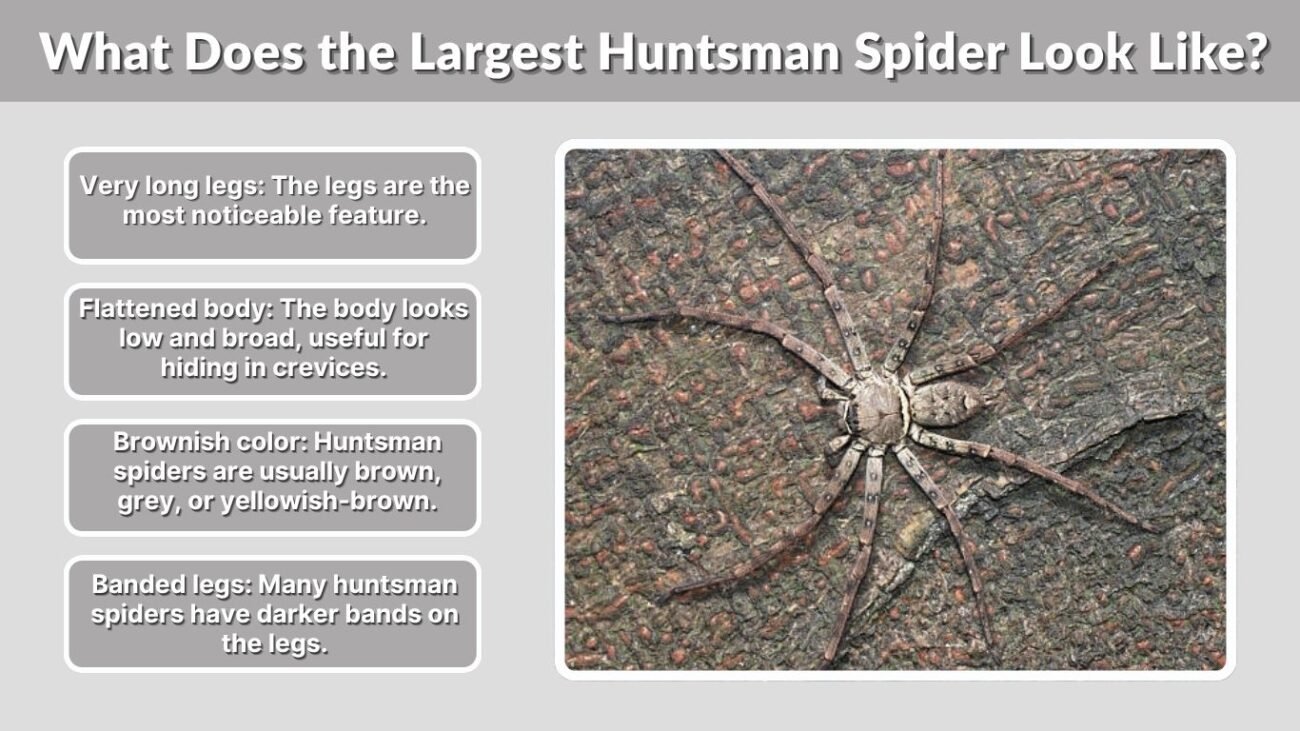
The giant huntsman spider has the typical huntsman body plan: long legs, a flattened body, and a crab-like stance. Huntsman spiders do not stand like many tarantulas. Their legs angle outward and forward, helping them move sideways and squeeze into narrow places.
Identification Features
- Very long legs: The legs are the most noticeable feature.
- Flattened body: The body looks low and broad, useful for hiding in crevices.
- Brownish color: Huntsman spiders are usually brown, grey, or yellowish-brown.
- Banded legs: Many huntsman spiders have darker bands on the legs.
- Sideways stance: The legs spread outward in a crab-like shape.
- Fast movement: They run quickly rather than waiting in a web.
- Eight eyes: Like other spiders, huntsman spiders have eight eyes.
The Australian Museum describes huntsman spiders as large, long-legged spiders, mostly grey to brown, sometimes with banded legs.
Is the Largest Huntsman Spider Dangerous?
The largest huntsman spider may look terrifying, but it is not considered a deadly spider for humans. Huntsman spiders have venom for catching prey, but they are not known as highly dangerous spiders like some medically significant species. They usually avoid people and bite only when handled, trapped, or threatened.
Bite and Safety
A huntsman spider bite can cause pain, swelling, or mild symptoms in some cases. However, most encounters do not lead to bites. The bigger problem is panic. In places where huntsman spiders are common, people sometimes crash cars, fall, or injure themselves after reacting suddenly to a spider.
Do not pick up a large huntsman with bare hands. If one enters your home, use a container and stiff paper, or ask someone experienced to remove it. In Australia, huntsman spiders are often left alone because they help control cockroaches and other insects.
What Does the Giant Huntsman Spider Eat?
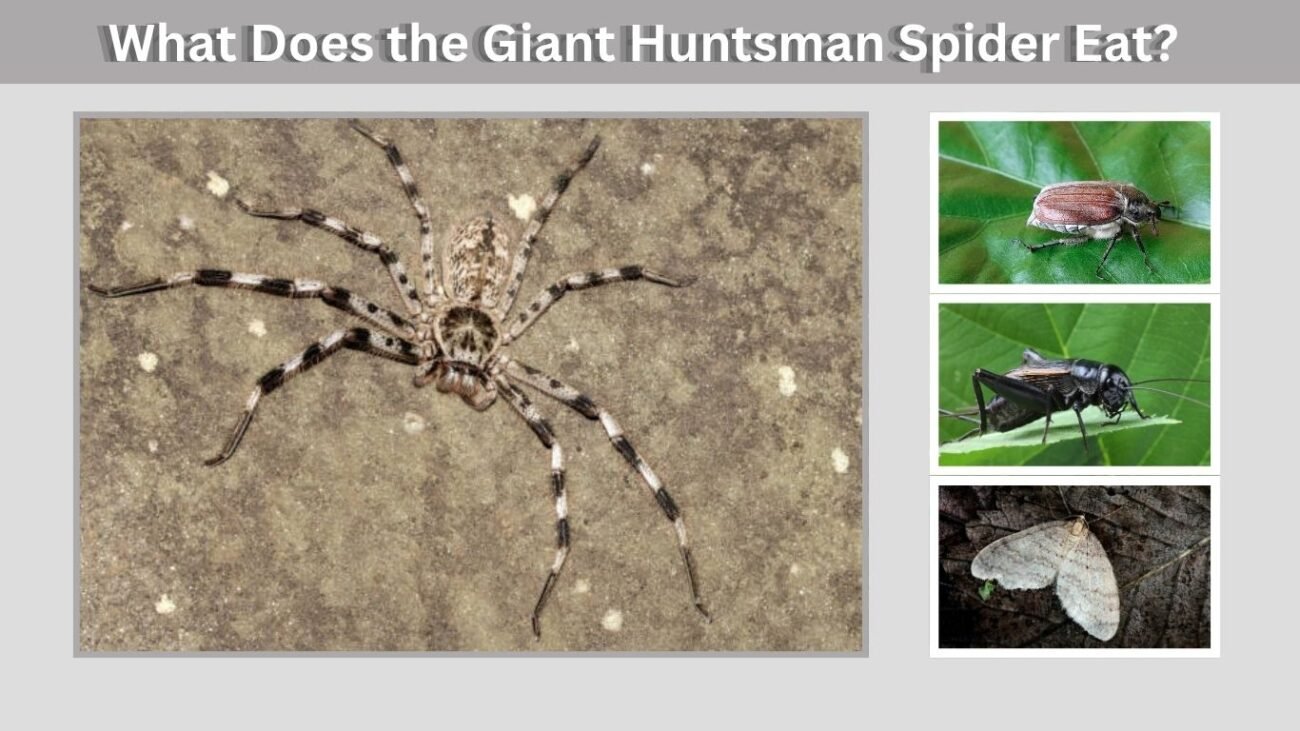
The giant huntsman spider is an active predator. Unlike orb-weaving spiders, it does not depend on a large sticky web to trap prey. It uses speed, strong legs, and ambush behavior to catch insects and other small animals.
Behavior and Diet
Huntsman spiders usually feed on insects such as cockroaches, crickets, moths, and beetles. Large huntsman spiders may also catch small lizards or frogs when the opportunity appears. A New South Wales educational fact sheet notes that large huntsman spiders may eat insects, other invertebrates, and sometimes small lizards or frogs.
Their hunting style is one reason many people tolerate them in homes and gardens. They can reduce pest insects naturally. However, their speed and size often scare people, especially when they appear at night.
Why Is the Giant Huntsman Spider So Large?
The giant huntsman spider’s size is mostly about leg length. Long legs help it move quickly across cave walls, rocks, and hidden surfaces. Its flattened body also helps it fit into narrow cracks where predators and larger animals may not reach easily.
Adaptations
The giant huntsman spider’s shape gives it several survival advantages. Its long legs help it cover distance quickly. Its low body helps it hide in tight spaces. Its brown coloration helps it blend into dark cave and rock surfaces.
Huntsman spiders are not heavy, bulky spiders. They are built more for speed and reach than for mass. That is why the giant huntsman can have a wider leg span than the goliath birdeater while being much lighter overall.
Largest Huntsman Spider Ever Recorded
The largest huntsman spider ever recorded by leg span is generally recognized as Heteropoda maxima. Its maximum leg span is commonly listed at around 30 cm. This makes it the spider with the greatest known leg span, even though it is not the heaviest spider.
Record vs Viral Claims
Many online claims mix real records with viral stories. The giant huntsman from Laos is the official record holder by leg span. Australian huntsman spiders can be large, but most verified Australian specimens are smaller than the maximum size recorded for Heteropoda maxima.
Viral images may show real spiders, but they are not always measured scientifically. Without a verified measurement, a photo alone cannot prove the “largest ever” claim. This is especially true when the spider is close to the camera or photographed beside objects at a misleading angle.
Giant Huntsman Spider vs Goliath Birdeater
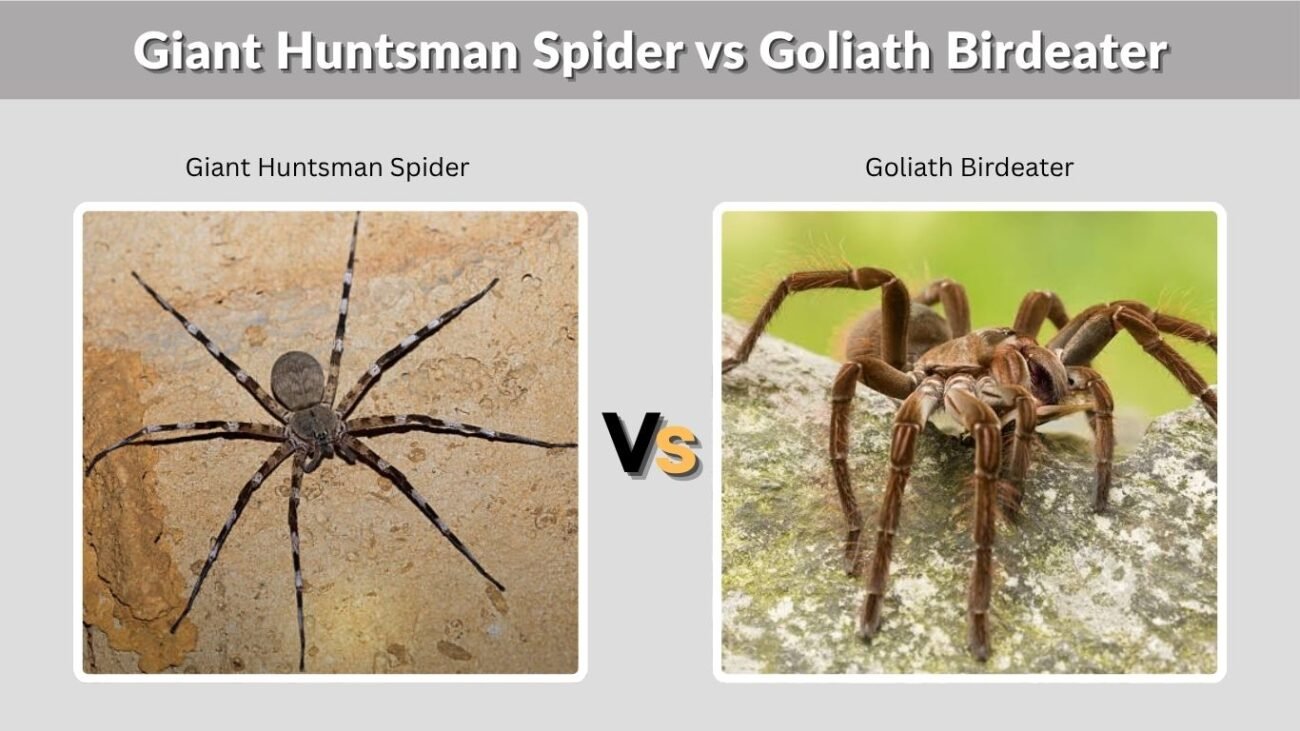
Many people ask whether the huntsman spider is the largest spider in the world. The answer depends on the measurement. The giant huntsman is the largest by leg span. The goliath birdeater is often treated as the largest by mass.
Key Differences
- Giant huntsman: Wider leg span, lighter body, faster runner.
- Goliath birdeater: Heavier body, thicker legs, tarantula appearance.
- Measurement difference: Leg span vs body weight.
- Habitat: Giant huntsman is from Laos; goliath birdeater is from northern South America.
- Public confusion: Both are often called the “largest spider,” but for different reasons.
This difference is important for accuracy. Calling the giant huntsman the largest spider is correct only when referring to leg span.
Myths About the Largest Huntsman Spider
The giant huntsman spider has become famous online, so many myths surround it. Some myths come from fear, while others come from viral images and exaggerated headlines.
Common Myths
One common myth is that the largest huntsman spider lives in Australia. Australia has many large huntsman spiders, but the record-holding giant huntsman is native to Laos. Another myth is that all huge huntsman spiders are deadly. In reality, they are not considered deadly to humans.
A third myth is that the biggest viral photo always shows the biggest real spider. Photos can be real and still misleading. Perspective can make a normal large huntsman look record-breaking.
What Should You Do If You See a Large Huntsman Spider?
Finding a large huntsman spider indoors can be shocking, but staying calm is the safest response. These spiders usually want to escape rather than attack. Most accidental problems happen when people panic or try to hit the spider.
Safe Removal Tips
- Do not touch the spider with bare hands.
- Place a wide container over it if possible.
- Slide stiff paper or cardboard under the container.
- Release it outside near trees, rocks, or sheltered areas.
- Keep windows and doors screened if huntsman spiders often enter.
- Shake out towels, shoes, and stored clothes in spider-prone areas.
- Call pest control if you have repeated indoor sightings.
Killing every huntsman spider is not necessary. In many cases, they are useful predators that help reduce insects around homes.
FAQs
What is the largest huntsman spider in the world?
The largest huntsman spider in the world is the giant huntsman spider, Heteropoda maxima. It is known for having a leg span of up to about 30 cm or 11.8 inches. It is native to Laos and is considered the largest spider by leg span.
Is the largest huntsman spider from Australia?
No, the largest known huntsman spider is not from Australia. The record-holding giant huntsman spider, Heteropoda maxima, is native to Laos. Australia has many large huntsman spiders, but they are generally smaller than the maximum recorded size of the giant huntsman.
How big was the largest huntsman spider ever recorded?
The largest huntsman spider ever recorded by leg span is usually listed at about 30 cm or 11.8 inches. This record belongs to the giant huntsman spider. Its body is much smaller than its full leg spread, which is why it appears so wide.
Is the giant huntsman spider dangerous to humans?
The giant huntsman spider is not considered deadly to humans. Like most spiders, it has venom for catching prey, but it usually avoids people. A bite may cause pain or swelling, so it should not be handled, but it is not known as a highly dangerous spider.
Was Charlotte the huntsman spider the largest ever?
Charlotte was a famous large huntsman spider photographed in Queensland, Australia. The photo was real, but experts suggested the spider looked bigger because of perspective. Since Charlotte was not scientifically measured as a record specimen, she is not confirmed as the largest huntsman spider ever.