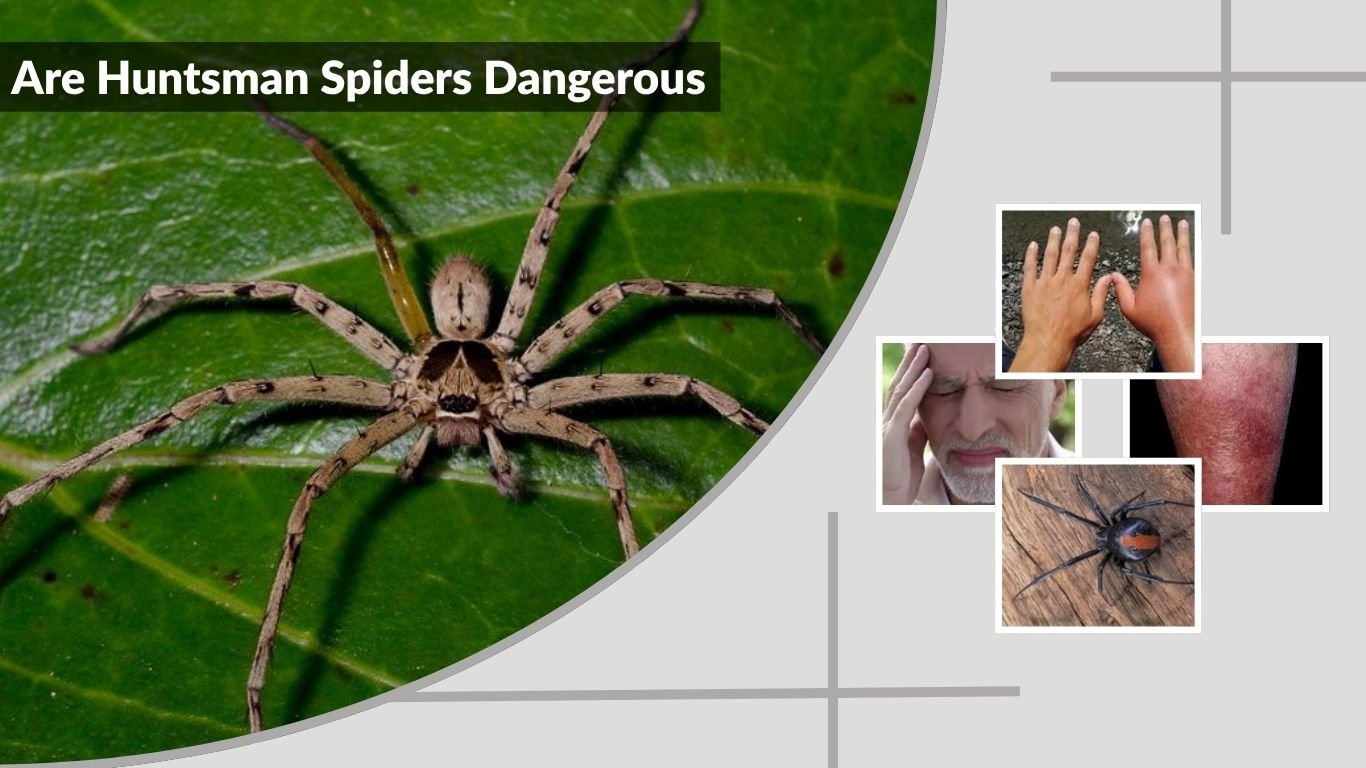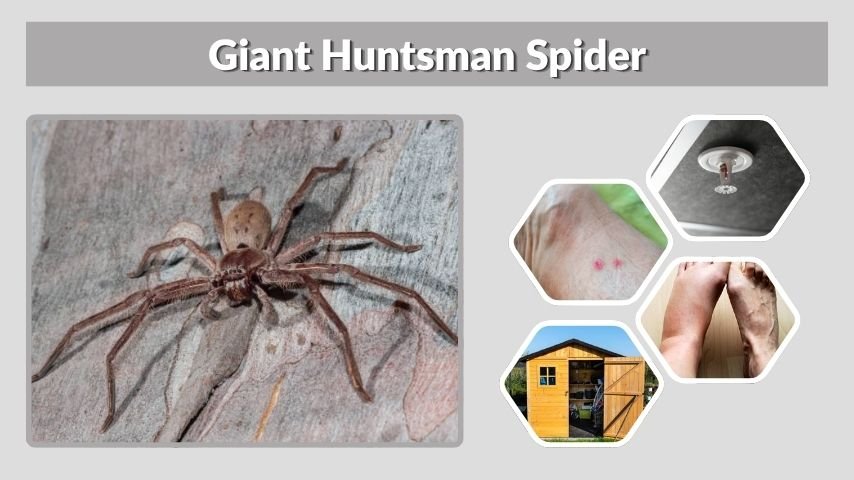
The giant huntsman spider is one of the most fascinating spiders in the world because of its enormous leg span, fast movement, and unusual cave habitat. Its scientific name is Heteropoda maxima, and it belongs to the huntsman spider family, Sparassidae. Although it looks frightening, this spider is not considered dangerous to humans. Its size makes it famous, but its biology, hunting style, and habitat are just as interesting.
What Is the Giant Huntsman Spider?
The giant huntsman spider is a large cave-dwelling spider known for having the largest leg span of any known spider. It was first formally described in 2001 after being found in a cave in Laos. This discovery attracted attention because the spider was much larger across the legs than most other known spiders.
Like other huntsman spiders, it has long legs that spread sideways in a crab-like shape. This body design helps it move quickly across surfaces and squeeze into narrow spaces. Unlike web-building spiders, the giant huntsman spider does not rely on a sticky web to catch food. It hunts actively, using speed and venom to capture prey.
The name “giant huntsman spider” is often used online for any very large huntsman spider, but scientifically it refers to Heteropoda maxima. This species is different from the common huntsman spiders people may see in homes in Australia, Asia, or warm parts of the world.
Why This Spider Is So Famous
The giant huntsman spider became famous because of its record-breaking leg span. Many spiders have large bodies, but the giant huntsman is known for the distance across its stretched legs. This gives it a dramatic appearance that can look larger than a person’s hand.
Its discovery also showed that large animal species can still remain unknown to science, especially in caves and remote habitats. Cave ecosystems are difficult to study, and many species living there are rare, hidden, or adapted to specific conditions.
People are also fascinated by this spider because it challenges common ideas about spider size. The giant huntsman is not the heaviest spider, but it is one of the largest by leg span. That difference matters when comparing it with tarantulas and other giant spiders.
Giant Huntsman Spider Size
The giant huntsman spider is widely known for its huge leg span, which can reach around 30 cm. That is about 12 inches across, making it roughly the size of a dinner plate when its legs are fully spread.
Its body is much smaller than its leg span. This is common among huntsman spiders. The long legs create the impression of a much larger animal, while the body remains relatively flat and compact.
| Feature | Giant Huntsman Spider |
|---|---|
| Scientific name | Heteropoda maxima |
| Spider family | Sparassidae |
| Known for | Largest leg span among known spiders |
| Leg span | Up to around 30 cm |
| Habitat | Caves and rocky areas in Laos |
| Hunting style | Active hunter, not a web trapper |
| Danger to humans | Not considered dangerous |
| Diet | Insects and other small prey |
The giant huntsman spider is sometimes compared with the Goliath birdeater tarantula. The Goliath birdeater is generally considered heavier and larger by body mass, while the giant huntsman is famous for its leg span.
Appearance and Identification
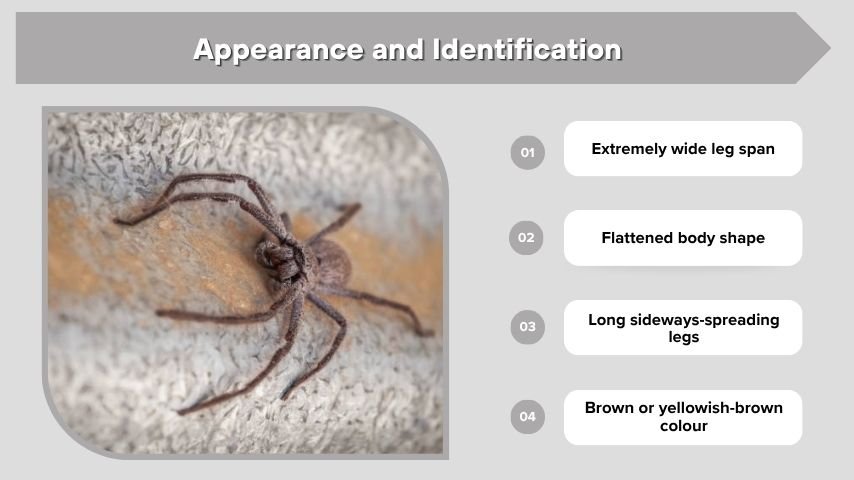
The giant huntsman spider has a flattened body and very long legs that extend outward and forward. Its legs are arranged in a way that gives it a crab-like posture. This shape is typical of huntsman spiders and helps them move sideways and fit into tight spaces.
Its colour is usually yellowish-brown to brown, which helps it blend into cave walls, rocks, and natural surfaces. Some descriptions mention darker markings or bands on the legs. Because it lives in low-light environments, its appearance is adapted more for hiding and movement than bright colouring.
Key Identification Features
You may identify a giant huntsman spider by:
- Extremely wide leg span
- Flattened body shape
- Long sideways-spreading legs
- Brown or yellowish-brown colour
- Fast, crab-like movement
- Cave or rocky habitat association
- Active hunting behaviour
However, most people will never see this species in person. Many large huntsman spiders are mistaken for the true giant huntsman. A large house huntsman in Australia or Southeast Asia may look enormous, but that does not automatically make it Heteropoda maxima.
Where Does the Giant Huntsman Spider Live?
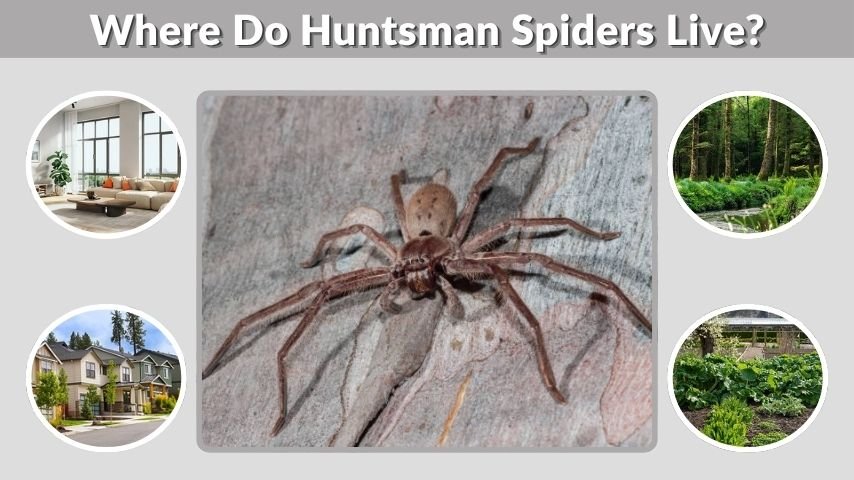
The true giant huntsman spider lives in Laos, where it was discovered in a cave. Its habitat is strongly associated with caves and rocky environments. Caves provide darkness, shelter, stable humidity, and access to small prey.
Many huntsman spiders around the world live under bark, in tree holes, behind rocks, in houses, or around sheds. The giant huntsman, however, is especially famous as a cave-dwelling species.
Its limited known range makes it interesting to scientists. Species with narrow habitats can be more vulnerable to environmental change, cave disturbance, and human activity. Because it is not a common household spider, most online fear about it is exaggerated.
Does the Giant Huntsman Spider Live in Australia?
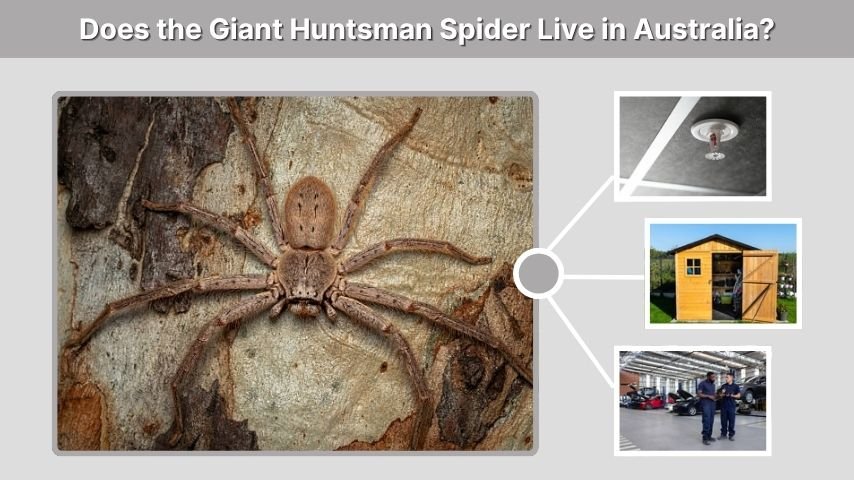
The true giant huntsman spider, Heteropoda maxima, is not the common Australian huntsman spider. It was discovered in Laos, not Australia. However, Australia does have many huntsman spiders, and some can grow quite large.
Australian huntsman spiders may reach impressive sizes, with some having a leg span up to around 15 cm. They are often seen on walls, ceilings, fences, sheds, garages, and cars. Because they are large and fast, people sometimes call them “giant huntsman spiders,” even when they are not the record-holding species.
This is an important difference. A large Australian huntsman can look scary, but it is usually a different species from the true giant huntsman spider of Laos.
Is the Giant Huntsman Spider Dangerous?
The giant huntsman spider is not considered dangerous to humans. Like most spiders, it has venom for subduing prey, but that does not mean it is a serious threat to people.
A bite from a huntsman spider may cause pain, redness, swelling, or mild local symptoms. Bites usually happen when a spider is trapped, handled, or pressed against the skin. The spider’s first response is usually to escape rather than attack.
People should still avoid handling any large spider with bare hands. Even non-dangerous spiders can bite defensively, and some people may react more strongly than others.
Giant Huntsman Spider Bite
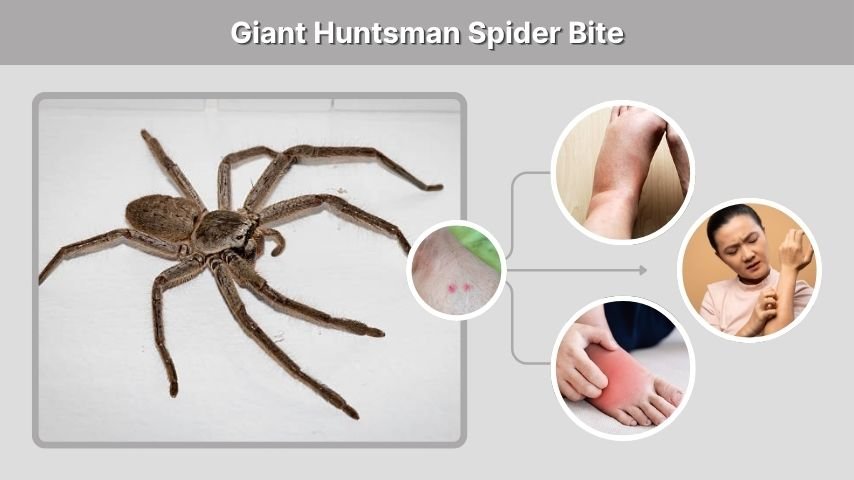
A giant huntsman spider bite is unlikely for most people because the species is not commonly encountered. If a large huntsman spider does bite, the symptoms are usually local rather than life-threatening.
Possible symptoms may include:
- Sharp pain at the bite site
- Redness or swelling
- Mild itching or irritation
- Temporary discomfort
- Anxiety from the encounter
If someone is bitten by an unidentified spider and symptoms become severe, medical advice is recommended. Seek help if there is intense pain, spreading swelling, dizziness, breathing difficulty, nausea, or signs of an allergic reaction.
What Does the Giant Huntsman Spider Eat?
The giant huntsman spider is a carnivorous predator. It likely eats insects and other small animals found in its cave or rocky habitat. Like other huntsman spiders, it does not build a web to trap prey. Instead, it hunts by speed and ambush.
Its diet may include insects, cockroaches, crickets, beetles, moths, and other small arthropods. A large huntsman spider may also eat other spiders if it can overpower them.
How It Hunts
The giant huntsman spider hunts by:
- Waiting in a hidden position
- Detecting nearby movement
- Rushing toward prey quickly
- Grabbing prey with its legs
- Using venom to subdue the animal
- Feeding after the prey is controlled
This hunting style is one reason huntsman spiders are often considered useful predators. They help control insects in the environments where they live.
How Fast Is the Giant Huntsman Spider?
Huntsman spiders are known for their speed. Their long legs and sideways stance allow them to move quickly over flat surfaces, rocks, tree trunks, and walls. The giant huntsman spider is also believed to be fast and agile, which helps it catch prey without a web.
Its speed is one reason people find huntsman spiders frightening. A spider that slowly sits in a web may be easier to ignore, but a large spider suddenly running across a surface can startle anyone.
Speed does not mean aggression. Fast movement is mainly a survival tool. It helps the spider hunt and escape predators.
Giant Huntsman Spider vs Other Large Spiders
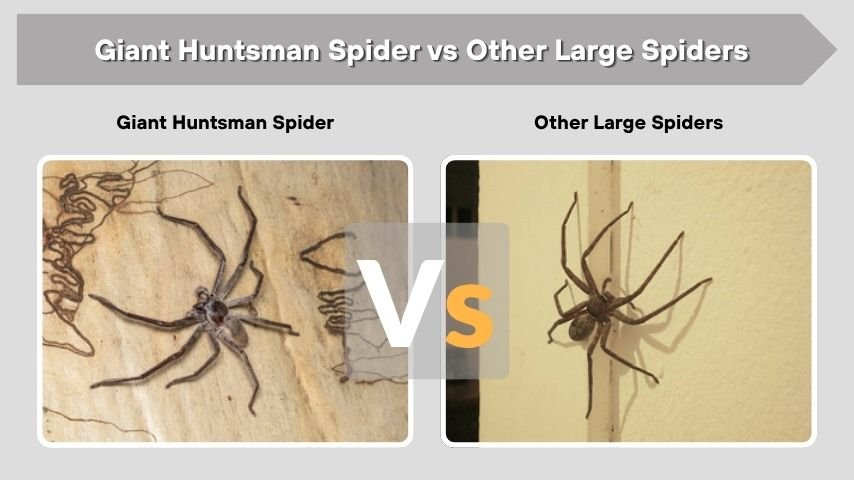
The giant huntsman spider is often compared with tarantulas and other famous large spiders. The main difference is how size is measured.
The giant huntsman spider is famous for leg span. The Goliath birdeater tarantula is famous for body mass and weight. This means both can be called “largest” in different ways.
A tarantula may look heavier and bulkier, while a giant huntsman looks wider and flatter. The giant huntsman’s long legs make it appear especially dramatic when stretched across a wall or cave surface.
Reproduction and Life Cycle
Like other spiders, the giant huntsman spider begins life as an egg. Female huntsman spiders usually produce an egg sac and protect it until the young hatch. In many huntsman species, the female may guard her eggs closely and become more defensive during that period.
After hatching, spiderlings are small and vulnerable. They grow by moulting, shedding their outer body covering as they increase in size. Young spiders must avoid predators, find small prey, and survive environmental challenges.
The exact life cycle details of Heteropoda maxima are not as widely known as those of common household spiders. Because it is a rare and cave-associated species, there is still much to learn about its behaviour, lifespan, and reproduction.
Why It Matters to Science
The giant huntsman spider matters because it shows how much biodiversity remains hidden in caves and remote places. Its discovery in 2001 was a reminder that even large species can go unnoticed when they live in difficult-to-access environments.
Cave animals can also teach scientists about adaptation. Darkness, limited food, humidity, and stable temperatures shape how cave-dwelling species behave and survive. Studying spiders like the giant huntsman may help researchers understand evolution, ecology, and habitat specialization.
It also highlights the importance of protecting caves. Disturbance from tourism, mining, pollution, and habitat damage can affect species that may live only in small areas.
Myths About the Giant Huntsman Spider
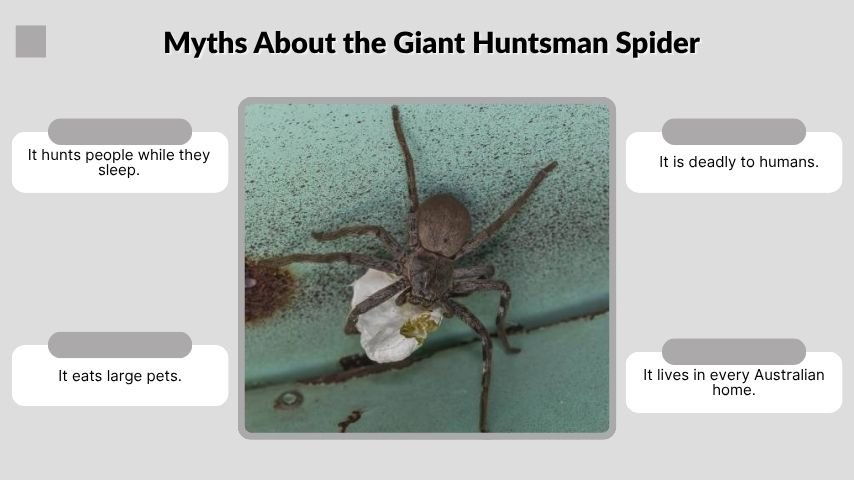
The giant huntsman spider is often exaggerated online. Its size leads to fear, but many claims about it are misleading. It is not a monster, it does not chase humans to attack them, and it is not known as a deadly spider.
Some people also confuse it with large Australian huntsman spiders. While Australian huntsman spiders can be big, the true giant huntsman spider is a specific species from Laos.
Common Myths
Common myths include:
- It is deadly to humans.
- It lives in every Australian home.
- It hunts people while they sleep.
- It eats large pets.
- It is the same as every large huntsman spider.
- It is aggressive toward humans.
These claims are not accurate. The giant huntsman spider is best understood as a large but shy predator that plays a role in its ecosystem.
What To Do If You See a Large Huntsman Spider
Most people will not see the true giant huntsman spider, but they may encounter large huntsman spiders in homes, sheds, or outdoor areas in warm regions. If you see one, stay calm and avoid touching it.
To remove a huntsman spider safely, use a container and a flat piece of cardboard. Place the container over the spider, slide the cardboard underneath, and release it outside in a sheltered area. If you are uncomfortable doing this, ask someone confident or contact a local pest professional.
Avoid spraying or crushing spiders when possible. Huntsman spiders help control insects and are not usually dangerous.
FAQs
How big is the giant huntsman spider?
The giant huntsman spider can have a leg span of up to around 30 cm, or about 12 inches. Its body is much smaller than its full leg spread. It is famous for having the largest leg span of any known spider, not for being the heaviest spider.
Where does the giant huntsman spider live?
The true giant huntsman spider, Heteropoda maxima, is known from Laos, where it was discovered in a cave. It is associated with cave and rocky habitats. Large huntsman spiders live in other warm regions, but they are not always the true giant huntsman species.
Is the giant huntsman spider poisonous?
The giant huntsman spider is venomous, not poisonous. It uses venom to subdue prey, but it is not considered dangerous to humans. A bite may cause pain or local swelling, but serious effects are not expected in most healthy adults.
What does the giant huntsman spider eat?
The giant huntsman spider eats insects and other small prey. Its diet likely includes cockroaches, crickets, beetles, moths, and other arthropods. Like other huntsman spiders, it does not use a web to trap food. It actively hunts and catches prey.
Is the giant huntsman spider found in Australia?
The true giant huntsman spider was discovered in Laos, not Australia. Australia has many large huntsman spiders, and some are often called giant huntsman spiders casually. However, they are not the same as Heteropoda maxima, the record-holding giant huntsman.