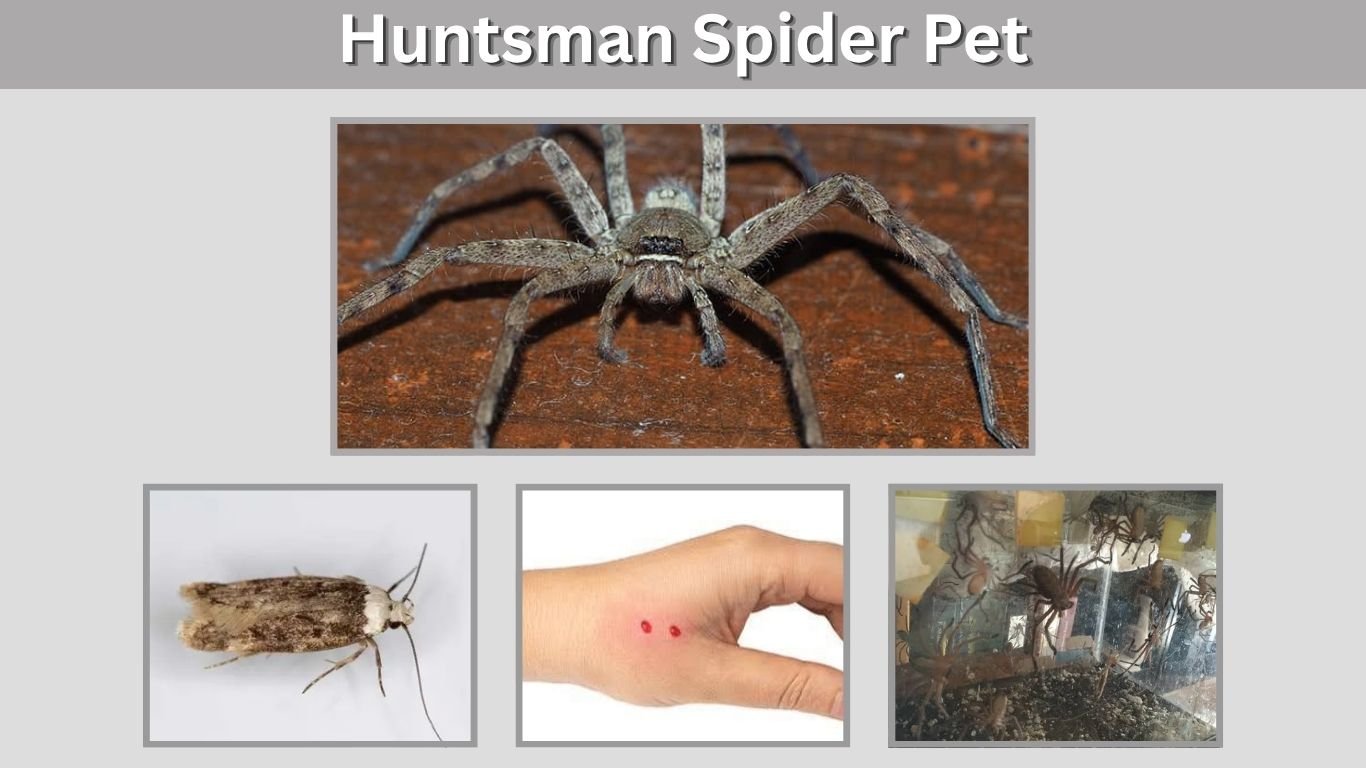
Keeping a huntsman spider as a pet is possible, but it is not the best choice for every beginner. Huntsman spiders are fast, nervous, and excellent escape artists. They can be fascinating display animals, especially for experienced invertebrate keepers, but they are not pets you should handle like a tarantula, gecko, or hamster. A pet huntsman spider needs a secure enclosure, proper humidity, live insect food, safe hiding spaces, and careful maintenance.
Can You Keep a Huntsman Spider as a Pet?
Yes, you can keep some huntsman spiders as pets, depending on local laws and species availability. However, they are better described as display pets rather than handling pets. They are quick-moving spiders that can bolt suddenly when disturbed.
Huntsman spiders belong to the family Sparassidae. They are known for their flat bodies, long sideways legs, and ability to run quickly across walls, tree bark, and rocks. The Australian Museum describes huntsman spiders as large, long-legged spiders, usually grey to brown, with flattened bodies adapted for narrow spaces under bark or rock crevices.
A huntsman spider pet may be interesting for people who enjoy observing natural behavior, hunting, molting, and enclosure design. But it is not ideal for anyone who wants a calm, holdable spider.
| Question | Short Answer |
|---|---|
| Can a huntsman spider be a pet? | Yes, in some places |
| Is it beginner-friendly? | Not always |
| Can you handle it? | Not recommended |
| Does it need live food? | Yes |
| Is it venomous? | Yes, but usually not dangerous |
| Is it legal everywhere? | No, check local rules |
| Best for | Experienced spider keepers |
Is a Huntsman Spider a Good Pet?
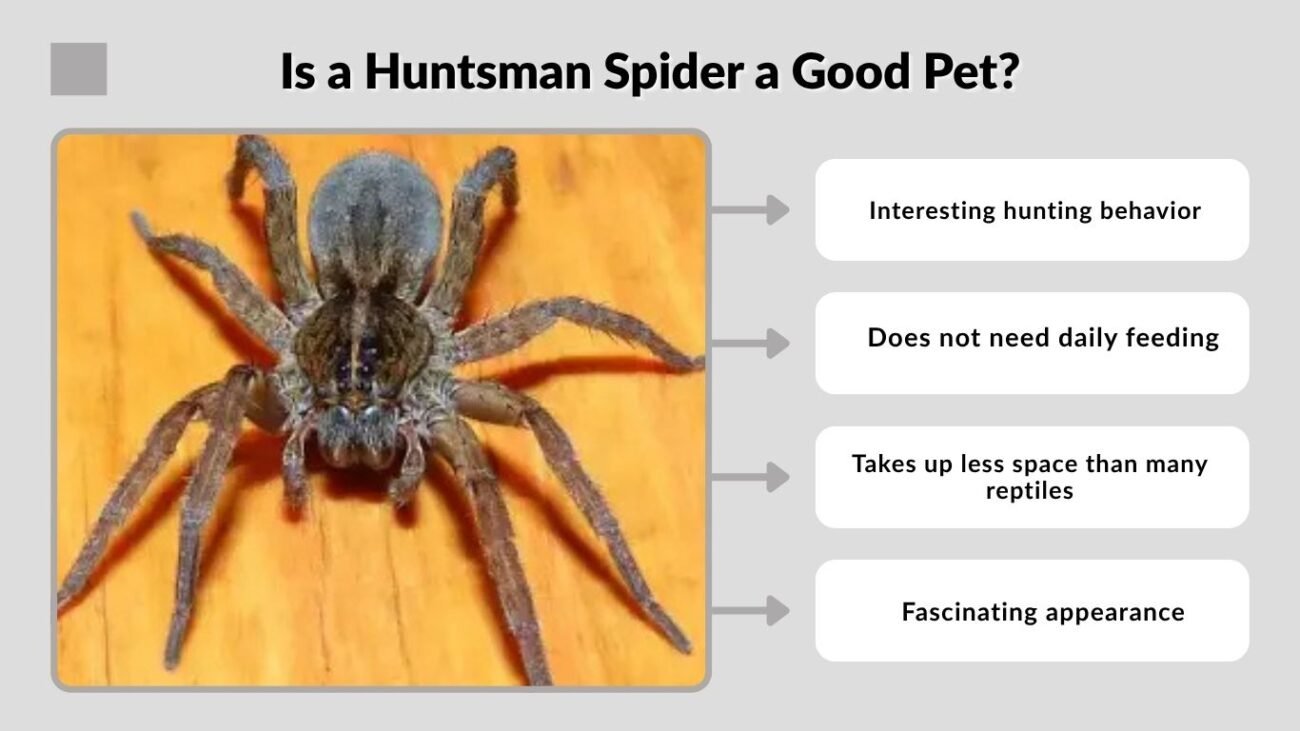
A huntsman spider can be a good pet for the right person, but it can be a stressful pet for beginners. The biggest challenge is speed. Huntsman spiders can move much faster than many pet tarantulas, and an escaped spider may be difficult to catch.
They are also more delicate than they look. A fall, rough handling, or a bad enclosure setup can injure them. Because of this, most keepers prefer to observe them rather than touch them.
Pros of Keeping a Huntsman Spider
- Interesting hunting behavior
- Does not need daily feeding
- Takes up less space than many reptiles
- Quiet and odor-free when kept clean
- Fascinating appearance
- Useful for experienced arachnid hobbyists
- Can be kept in a natural-looking display enclosure
Cons of Keeping a Huntsman Spider
- Very fast and hard to catch if it escapes
- Not good for handling
- Requires live feeder insects
- Can bite if trapped or threatened
- Some species need careful humidity control
- Not always easy to identify correctly
- Laws may restrict collection, sale, or import
Are Pet Huntsman Spiders Dangerous?
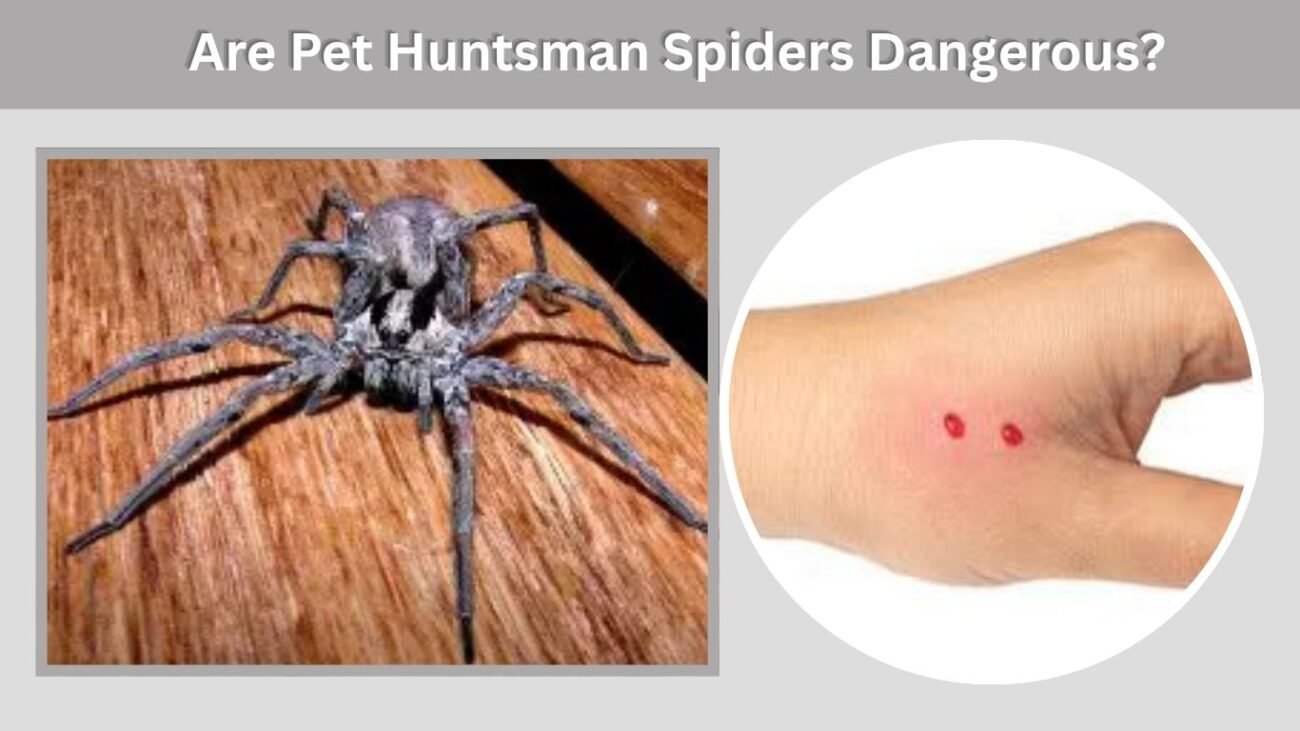
Pet huntsman spiders are usually not considered highly dangerous to humans, but they are venomous and should be treated with respect. The Australian Museum says huntsman spiders are not considered dangerous spiders, although they do have venom and a bite may cause ill effects. It also notes that they are reluctant to bite and usually try to run away rather than act aggressively.
A bite may cause pain, swelling, redness, or mild illness. Some species, such as badge huntsman spiders, have been associated with more noticeable symptoms, including local severe pain, swelling, sweating, nausea, and vomiting. The Australian Museum recommends a cold pack for local pain and medical attention if symptoms persist.
Safety Rules for Keepers
- Do not handle your huntsman spider
Handling increases the risk of bites, falls, and escapes. - Use feeding tongs
Never place your fingers close to the spider during feeding. - Keep the enclosure secure
Huntsman spiders can squeeze through small gaps. - Move slowly during maintenance
Sudden movement can make the spider bolt. - Keep children and pets away
A spider enclosure should not be opened by children or curious pets.
Huntsman Spider Pet Enclosure
A huntsman spider enclosure should be secure, well-ventilated, and designed for climbing and hiding. Since many huntsman spiders naturally live under bark, in crevices, or on tree trunks, vertical or semi-vertical space is useful.
The exact enclosure depends on the species, age, and size of the spider. A small juvenile needs a smaller container so it can find food easily. An adult needs more space, but too much open space without hiding areas can make the spider feel exposed.
Basic Enclosure Setup
- Secure lid with tight-fitting ventilation
- Cork bark or flat bark pieces
- Vertical hiding spaces
- Substrate such as coco fiber or soil mix
- Small water dish for larger specimens
- Light misting when needed
- No sharp decorations
- No wide gaps around doors or lids
| Enclosure Item | Purpose |
|---|---|
| Cork bark | Hiding and climbing surface |
| Substrate | Holds moisture and softens falls |
| Ventilation | Prevents mold and stale air |
| Water dish | Provides drinking water |
| Secure lid | Prevents escape |
| Plants/decor | Adds cover and reduces stress |
Temperature and Humidity
Huntsman spiders come from different climates, so temperature and humidity needs can vary by species. Some species prefer drier conditions, while tropical species need more moisture. This is why correct species identification matters before setting up long-term care.
Many commonly kept huntsman spiders do well at normal warm room temperatures, but cold rooms may slow feeding and activity. Avoid placing the enclosure in direct sunlight because small containers can overheat quickly.
General Care Conditions
A basic care range may include:
- Warm room temperature
- Moderate ventilation
- Occasional misting
- Dry and slightly moist areas
- No waterlogged substrate
- No direct sun
- No exposure to pesticides or cleaning sprays
Too much moisture can cause mold. Too little moisture can cause dehydration or molting problems, especially for young spiders. The best setup gives the spider a choice between drier and slightly more humid zones.
What Do You Feed a Pet Huntsman Spider?
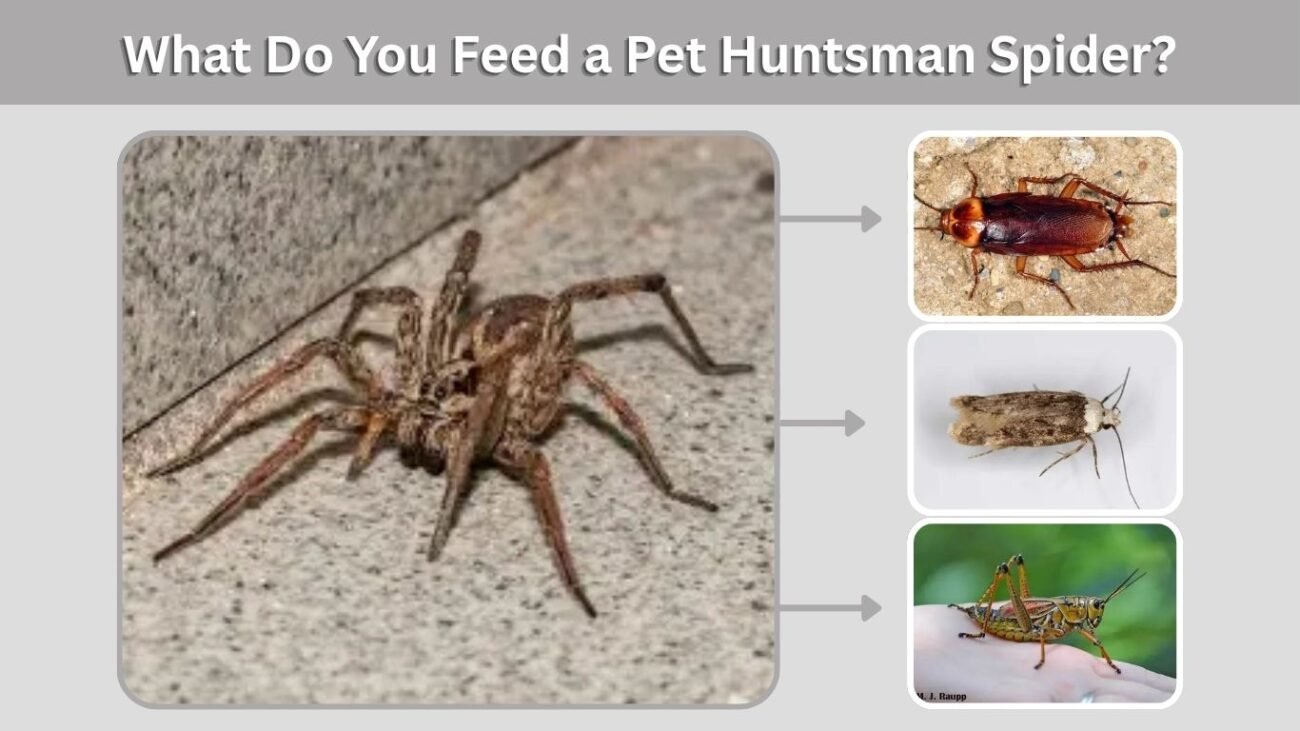
A pet huntsman spider eats live insects. In the wild, huntsman spiders hunt insects and other small prey. A Colorado Butterfly Pavilion fact sheet notes that huntsman spiders come out at night to catch medium-sized prey such as caterpillars, moths, and cockroaches, hunting on the ground and tree trunks.
In captivity, the safest feeder insects are captive-bred insects from reliable sources. Avoid feeding wild insects because they may carry pesticides, parasites, or disease.
Good Feeder Insects
- Crickets
- Roaches
- Moths from safe captive sources
- Locusts where legal
- Mealworms occasionally
- Small grasshoppers from captive sources
- Soft-bodied insects for juveniles
A care guide for a tiger huntsman recommends food insects no larger than one-third the size of the spider and suggests feeding twice a week, with young spiders feeding more often when growing.
Feeding Tips
Feed prey that is smaller than the spider’s body or safely manageable. Remove uneaten prey after a few hours, especially before molting. Crickets can injure a molting spider if left inside the enclosure.
Molting and Growth
Like all spiders, huntsman spiders grow by molting. Molting means the spider sheds its old exoskeleton and forms a new one. During this time, the spider is vulnerable and should not be disturbed.
Before a molt, your pet huntsman may stop eating, become less active, or hide more often. This is normal. Do not force food during this period.
Signs of Molting
- Refusing food
- Staying hidden
- Duller appearance
- Less movement
- Creating a secure retreat
- Remaining still for long periods
After molting, wait before feeding. The new exoskeleton and fangs need time to harden. Feeding too soon can stress or injure the spider.
Can You Handle a Pet Huntsman Spider?
You should not handle a pet huntsman spider unless it is absolutely necessary for safe rehousing. Huntsman spiders are extremely fast and may jump, run, or disappear into furniture if startled.
Handling is risky for both the spider and the keeper. The spider may bite if trapped against skin, and it may be badly injured if it falls. Even experienced keepers usually use catch cups, soft brushes, and careful enclosure transfers instead of bare hands.
Huntsman Spider Pet in Australia
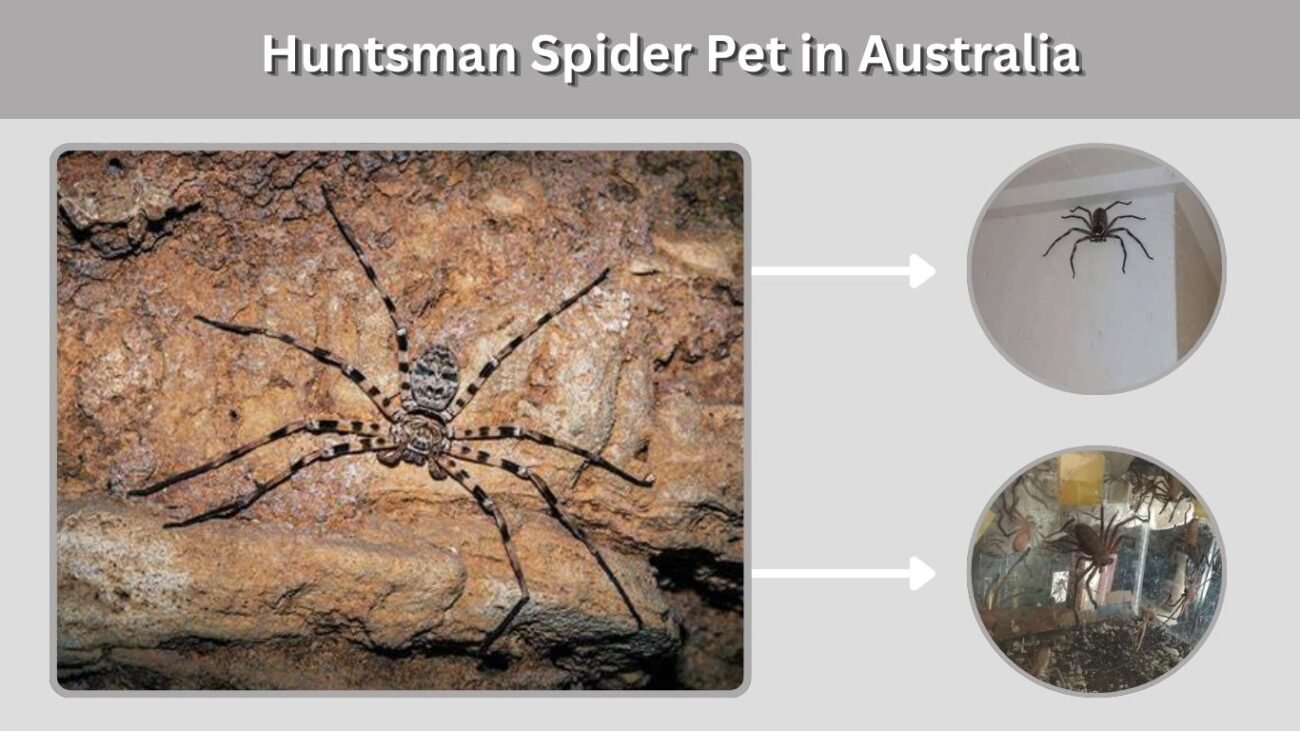
Huntsman spiders are common in Australia, and many people find them in homes naturally. However, keeping a wild-caught huntsman may be subject to state or territory rules. Wildlife laws can vary, and some native animals may require permits to collect or keep.
For Australian keepers, the safest approach is to check local wildlife regulations before collecting or buying a huntsman spider. Also avoid taking spiders from protected areas, national parks, or reserves.
Huntsman Spider Pet in the UK or USA
In the UK or USA, huntsman spiders are less commonly available than tarantulas, jumping spiders, or true spiders from more established hobby lines. Some exotic pet shops or specialist invertebrate breeders may offer captive-bred huntsman species.
Before buying, check:
- Whether the species is legal in your area
- Whether it is captive-bred or wild-caught
- Whether the seller gives the scientific name
- Whether you can provide correct temperature and humidity
- Whether you have escape-proof housing ready
Avoid buying a spider if the seller cannot identify it properly. Different huntsman species can have different care needs.
Giant Huntsman Spider as a Pet
Many people search for “giant huntsman spider pet” because the giant huntsman spider is famous for its enormous leg span. However, the biggest species are not automatically the best pets.
Large huntsman spiders can be more intimidating, harder to house, and more difficult to manage during transfers. A smaller captive-bred species is usually a better choice for someone learning huntsman spider care.
A giant huntsman spider should only be kept by experienced arachnid keepers who understand escape prevention, fast spider handling methods, and species-specific care.
Should You Buy a Huntsman Spider for Sale?
A huntsman spider for sale should only be bought from a responsible source. Captive-bred animals are usually better than wild-caught ones because they are less likely to carry parasites and do not remove animals from wild populations.
Before Buying, Ask
- What species is it?
- Is it captive-bred?
- How old is it?
- What has it been eating?
- Has it molted recently?
- What temperature and humidity does it need?
- Is it legal to keep in my location?
A good seller should answer clearly. If the seller only says “huntsman spider” without a species name or care information, be cautious.
Is a Huntsman Spider Safe Around Other Pets?
A huntsman spider should not be allowed loose around cats, dogs, birds, reptiles, or small mammals. Even if the spider is not highly dangerous, an encounter can end badly. A cat or dog may injure the spider, and the spider may bite in defense.
Keep the enclosure in a stable place where pets cannot knock it over. Do not place it near a cage with birds, rodents, or reptiles. A secure spider enclosure protects both the huntsman and your other pets.
FAQs
Can you keep a huntsman spider as a pet?
Yes, some huntsman spiders can be kept as pets where legal. They are best for experienced invertebrate keepers because they are fast, nervous, and difficult to handle.
Is a huntsman spider a good pet for beginners?
Usually, a huntsman spider is not the best beginner spider. A slower, captive-bred tarantula or jumping spider may be easier for first-time keepers.
What do I feed my pet huntsman spider?
A pet huntsman spider should be fed live insects such as crickets, roaches, or other safe captive-bred feeder insects. Do not feed wild insects that may contain pesticides.
Can you handle a pet huntsman spider?
Handling is not recommended. Huntsman spiders are very fast and may bite, escape, or fall if startled. Use catch cups and tools for transfers.
Are huntsman spiders dangerous to pets?
A huntsman spider is usually not highly dangerous to cats or dogs, but bites can cause pain or swelling. Keep the spider securely enclosed and away from other pets.