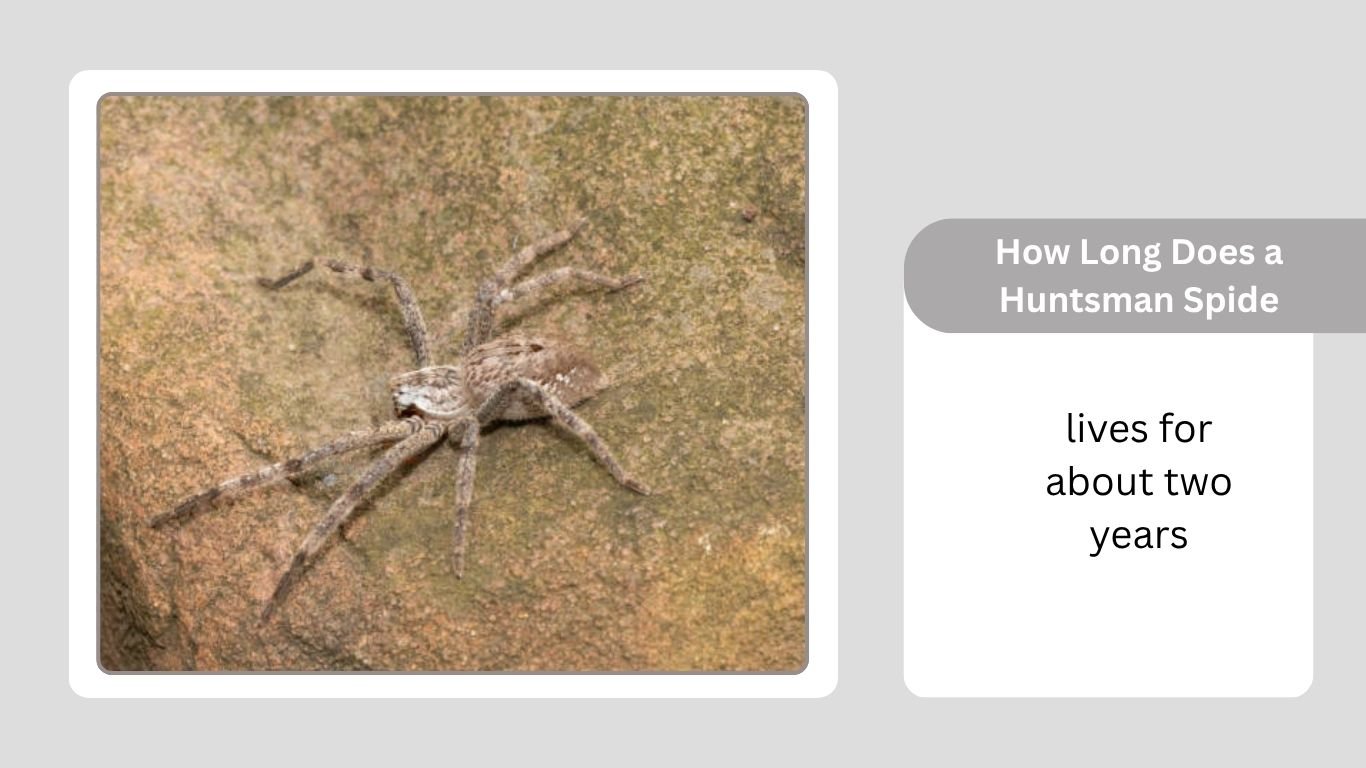
A huntsman spider usually lives for about two years, although lifespan can vary by species, sex, climate, food supply, and whether the spider is wild or captive. Some huntsman spiders may live longer in protected conditions where they avoid predators and have steady food. These large, fast spiders are found in many warm parts of the world, especially Australia, Asia, Africa, and tropical or subtropical regions. They often live under bark, in rock crevices, inside houses, garages, sheds, and sometimes attics.
How Long Does a Huntsman Spider Live?
Most huntsman spiders live around two years. Some may live a little less in the wild because of predators, weather, injury, or lack of food. Others may live longer in captivity when kept in stable conditions with proper food, humidity, and shelter.
Australian Geographic lists the average lifespan of huntsman spiders as about two years or more, depending on the species. Some hobby and naturalist sources also note that adults may live around two years, while captive individuals can sometimes survive longer.
| Huntsman Spider Life Stage | Approximate Description |
|---|---|
| Egg | Protected in an egg sac |
| Spiderling | Small young spider after hatching |
| Juvenile | Growing stage with several molts |
| Adult | Mature hunting and breeding stage |
| Typical lifespan | About two years or more, depending on species |
The exact answer depends on the species. “Huntsman spider” is not one single spider. It refers to many species in the family Sparassidae. A small local huntsman and a giant huntsman spider may not have the same lifespan.
Huntsman Spider Life Cycle
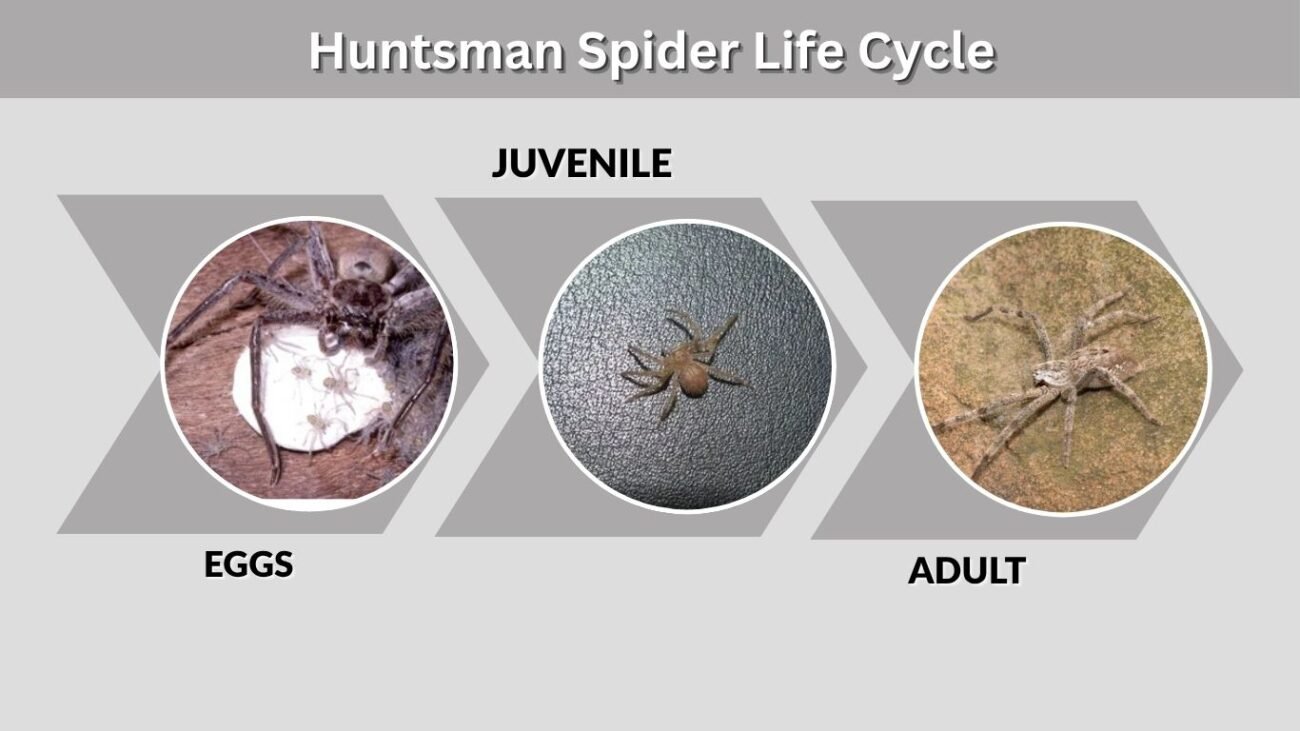
The life of a huntsman spider begins inside an egg sac. Female huntsman spiders often guard their eggs carefully. Some females carry or protect the egg sac and may become more defensive during this time.
After hatching, the young spiderlings remain small and vulnerable. They must molt several times before becoming adults. Molting is the process of shedding the old outer body covering so the spider can grow.
Main Life Stages
- Egg stage
The female lays eggs inside a protective silk sac. - Spiderling stage
Tiny young spiders hatch and eventually disperse. - Juvenile stage
The spider grows through repeated molts. - Adult stage
Mature huntsman spiders hunt, mate, and reproduce. - Old age
Older spiders may become slower, weaker, and less successful at hunting.
Molting is risky. A spider can die during a bad molt, especially if conditions are too dry, too wet, or stressful. This is one reason captive care must be stable for pet huntsman spiders.
How Long Can a Huntsman Spider Live Without Food?
A huntsman spider can often survive for weeks without food, but this does not mean it is healthy to starve one. Spiders have slow metabolisms compared with many warm-blooded animals, so they can go through periods of limited feeding.
The exact time depends on the spider’s size, age, hydration, temperature, and health. A large adult may survive longer without food than a small spiderling. However, lack of water is usually more dangerous than lack of food.
Factors That Affect Survival Without Food
- Size of the spider
- Age and health
- Temperature
- Humidity
- Access to water
- Recent feeding history
- Whether it is about to molt
- Species differences
A huntsman spider that refuses food may not always be sick. It may be preparing to molt, stressed from disturbance, or adjusting to a new hiding place.
Where Do Huntsman Spiders Live?
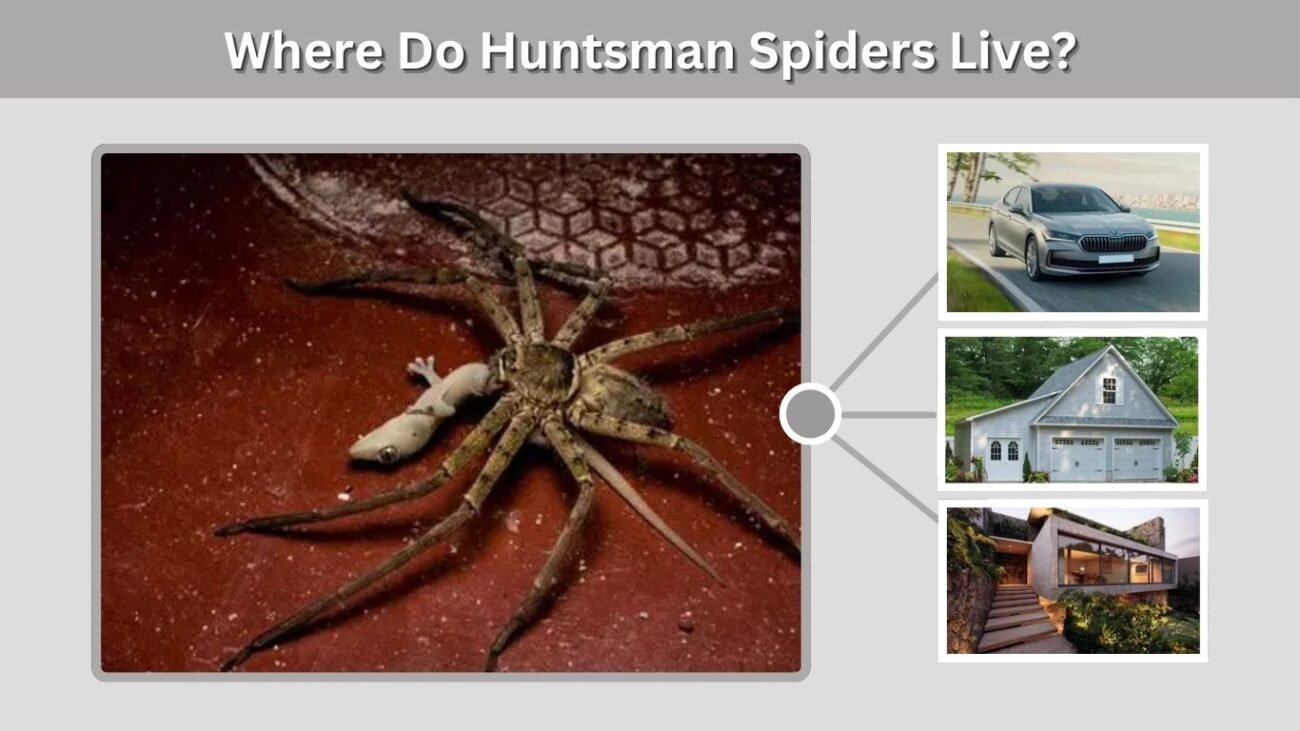
Huntsman spiders live in warm regions around the world. They are especially well known in Australia, but they are also found in Asia, Africa, parts of Europe, and parts of the Americas. The Australian Museum explains that huntsman spiders are large, long-legged spiders and that many species have flattened bodies adapted for living in narrow spaces under loose bark or rock crevices.
They do not usually build webs to catch prey. Instead, they are active hunters. They hide during the day and come out to chase insects, cockroaches, moths, and other small animals at night.
| Habitat Type | Why Huntsman Spiders Use It |
|---|---|
| Under tree bark | Flat bodies fit into narrow spaces |
| Rock crevices | Protection from predators and weather |
| Houses | Shelter and insects |
| Garages and sheds | Dark hiding places |
| Cars | Warmth and hidden gaps |
| Attics | Quiet areas with insects |
| Forests and gardens | Natural hunting grounds |
Huntsman Spider Habitat in the Wild
In the wild, huntsman spiders often live in places that give them cover during the day and access to prey at night. Their flat bodies help them squeeze into spaces where other animals may not reach easily.
They may hide:
- Under loose bark
- In cracks in trees
- Under rocks
- Inside logs
- In garden vegetation
- Around leaf litter
- In caves or rocky areas
- Around human buildings near natural habitat
Many huntsman spiders are nocturnal. That means they are more active at night. During the day, they hide in dark, protected spaces.
Do Huntsman Spiders Live in Houses?
Yes, huntsman spiders can live in houses, especially in warm areas where they are common outdoors. They may enter homes while searching for insects, shelter, or a safe daytime hiding place.
The Australian Museum says huntsman spiders in houses can be useful natural pest controllers. This is because they eat insects such as cockroaches, flies, moths, and other small pests.
Common Places in Houses
Huntsman spiders may hide in:
- Behind curtains
- Behind picture frames
- Under furniture
- In closets
- Near windows and doors
- In bathrooms
- In garages
- In sheds
- Behind wall decorations
- Around ceiling corners
They may look scary because they are large and fast, but they usually prefer to run away instead of biting.
Do Huntsman Spiders Live in Attics?
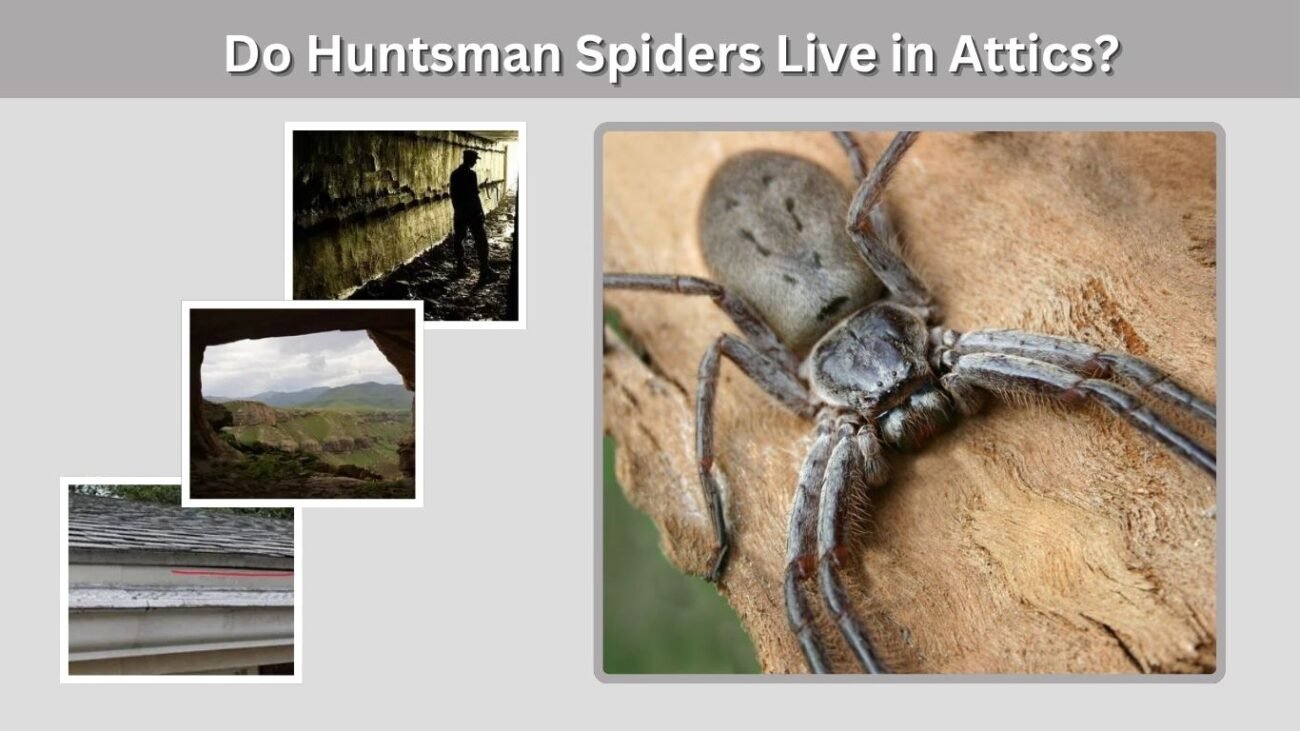
Yes, a huntsman spider can live in an attic if the attic offers darkness, shelter, warmth, and insects. Attics can be attractive because they are quiet and often undisturbed.
However, huntsman spiders do not usually “infest” attics the way ants, termites, or cockroaches might infest a home. Seeing one huntsman spider does not always mean there are many more. It may simply have wandered inside.
Why Attics Attract Huntsman Spiders
- Dark hiding places
- Warm temperatures
- Insects to eat
- Low human activity
- Gaps near rooflines
- Stored boxes and clutter
- Access from trees or walls
To reduce huntsman spiders in an attic, seal entry gaps, remove insect attractants, keep storage areas tidy, and check window or roof openings.
Where Do Giant Huntsman Spiders Live?
The giant huntsman spider, Heteropoda maxima, is famous for having one of the largest leg spans of any spider. It is different from the common huntsman spiders many people see in houses.
The giant huntsman spider is found in Laos and is believed to be associated with caves. Live Science reports that it was discovered in Laos in 2001 and is thought to mostly dwell in caves.
This means the “giant huntsman spider” is not the same as every large huntsman spider seen in Australia or inside homes. Many huntsman spiders are large, but the true giant huntsman spider is a specific species.
| Spider | Where It Lives |
|---|---|
| Common huntsman spiders | Australia, Asia, Africa, and other warm regions |
| Giant huntsman spider | Laos, especially cave-like habitats |
| Giant grey huntsman | Eastern Queensland, Australia |
| House huntsman spiders | Homes, sheds, garages, and gardens in warm climates |
The Queensland Museum notes that the giant grey huntsman spider is one of Australia’s largest spider species by leg span and is widely distributed throughout eastern Queensland.
Do Huntsman Spiders Live in Australia?
Yes, huntsman spiders are very common in Australia. They are among the most recognizable spiders in Australian homes and gardens. People often find them on walls, ceilings, curtains, car visors, sheds, and outdoor surfaces.
Australia has many huntsman species. Some are gray or brown, while others have banded legs or more distinct markings. Their wide, flat bodies help them hide in small spaces during the day.
Although they can be alarming indoors, huntsman spiders are not considered dangerous spiders. They may bite if trapped or handled, but they usually try to escape.
Do Huntsman Spiders Live in Pairs?
Huntsman spiders do not usually live in pairs as permanent companions. Most are solitary hunters. However, a male may stay near a female during mating periods, and young spiderlings may remain near the egg sac for a short time after hatching.
Some people may see two huntsman spiders near each other and assume they live as a pair. In most cases, this is temporary behavior linked to mating, shelter, or a good hunting area.
Why Would Someone Let a Huntsman Spider Live in the House?
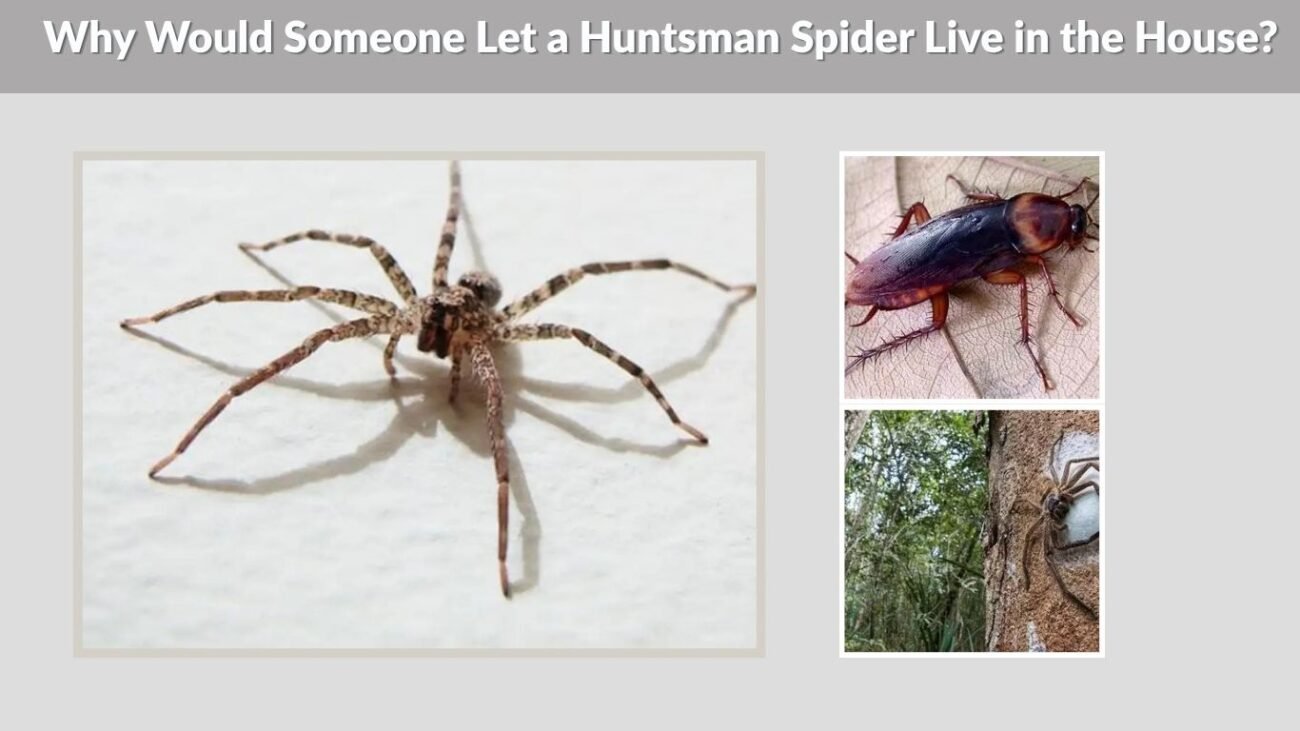
Some people allow a huntsman spider to live in the house because it eats pests. Huntsman spiders can help reduce cockroaches, flies, moths, and other insects. Since they usually avoid humans, some homeowners choose to leave them alone if they are in a garage, laundry area, or quiet corner.
Still, not everyone is comfortable sharing a home with a large spider. If you want to remove one, use a container and a piece of cardboard to move it outside safely.
Reasons People Leave Them Alone
- They eat cockroaches
- They reduce insects naturally
- They are usually not aggressive
- They do not build messy prey-catching webs
- They usually hide during the day
- They can be moved outside if unwanted
Can Huntsman Spiders Live in California?
Some huntsman spiders can be found in warm parts of the United States, including areas where introduced species may survive. However, the giant huntsman spider from Laos is not a normal California house spider.
If someone searches “giant huntsman spider live in California,” they may be confusing large local spiders, exotic pet spiders, or introduced huntsman species with the true giant huntsman spider. California’s climate may support some warm-adapted spiders, but the famous giant huntsman spider is associated with Laos, not California.
How to Keep Huntsman Spiders Out of Living Spaces
Huntsman spiders enter buildings through cracks, gaps, open windows, doors, vents, and spaces around rooflines. Keeping them out is mostly about reducing entry points and lowering insect activity.
Prevention Tips
- Seal cracks around windows and doors.
- Repair fly screens.
- Keep outdoor lights from attracting too many insects.
- Remove clutter from garages and sheds.
- Store boxes off the floor when possible.
- Shake out clothing, towels, and shoes left outside.
- Trim branches touching the house.
- Check cars, sheds, and attics in huntsman-prone areas.
Avoid using pesticides carelessly, especially indoors or around pets. If spider activity is heavy, professional pest control may be safer.
FAQs
How long does a huntsman spider live?
Most huntsman spiders live about two years or more, depending on the species, environment, food, and predators. Some captive spiders may live longer under protected conditions.
Where does a huntsman spider live?
A huntsman spider often lives under bark, in rock crevices, gardens, forests, houses, sheds, garages, cars, and attics. They prefer dark, sheltered places where insects are available.
Do huntsman spiders live in houses?
Yes, huntsman spiders can live in houses, especially in warm regions. They often hide behind curtains, furniture, picture frames, doors, and wall corners.
Where does the giant huntsman spider live?
The true giant huntsman spider, Heteropoda maxima, lives in Laos and is believed to be associated with caves. It is not the same as every large huntsman spider found in homes.
How long can a huntsman spider live without food?
A huntsman spider may survive for weeks without food, especially if it is healthy and has access to water. Exact survival time depends on size, age, temperature, hydration, and species.