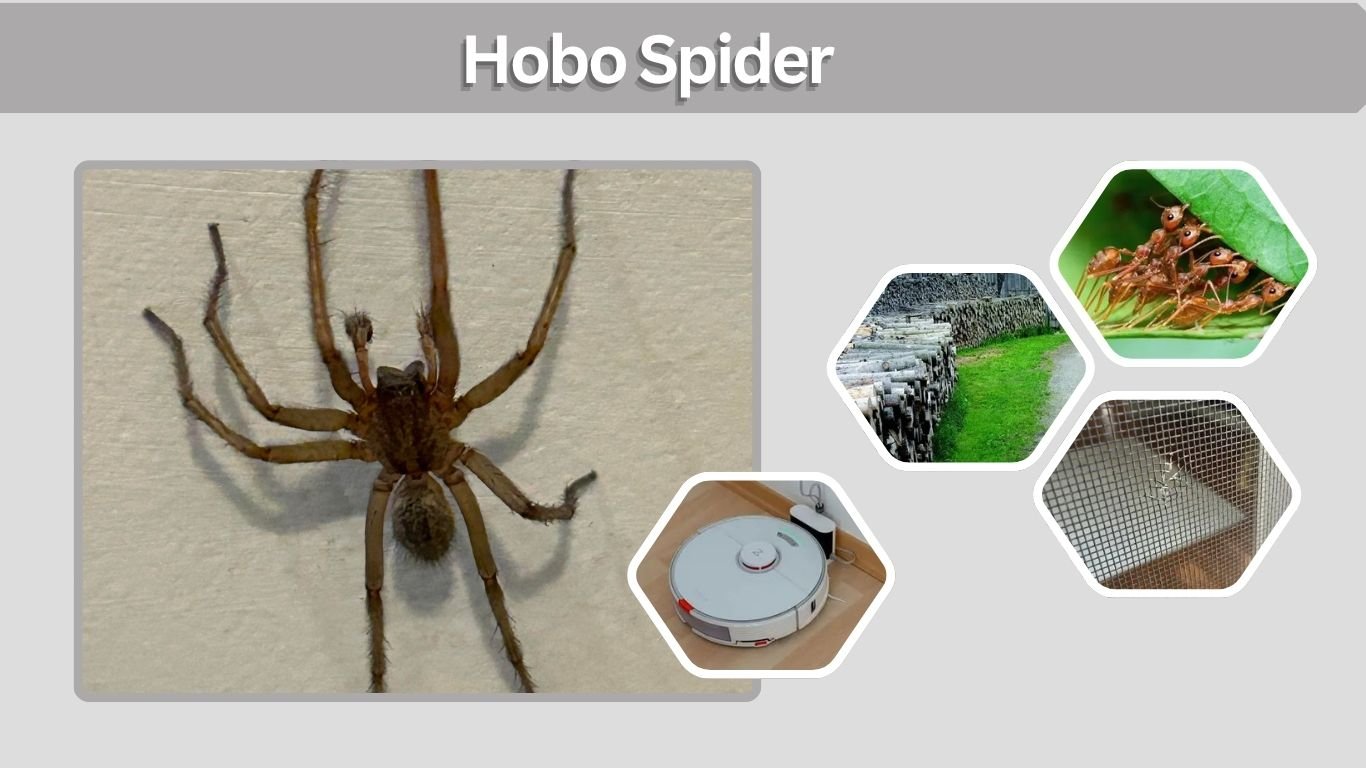
The hobo spider is a brown funnel-weaving spider often confused with many other house spiders. People usually search for it because they find a fast-moving brown spider indoors and worry about a bite. In reality, hobo spiders are difficult to identify without expert examination, and newer research does not support the old belief that they cause serious necrotic wounds. This guide explains their size, color, habitat, diet, behavior, and safety facts.
What Is a Hobo Spider?
The hobo spider, scientifically known as Eratigena agrestis and formerly called Tegenaria agrestis, belongs to the funnel-weaver spider family Agelenidae. It is not the same as the dangerous Australian funnel-web spiders. Hobo spiders make sheet-like funnel webs and wait for insects to walk across the web surface.
| Feature | Hobo Spider Details |
| Common name | Hobo spider |
| Scientific name | Eratigena agrestis |
| Former name | Tegenaria agrestis |
| Spider family | Agelenidae |
| Main web type | Funnel or sheet-like web |
| Main food | Insects |
| Human danger level | Not considered medically important by current sources |
Why It Is Called a Hobo Spider
The name “hobo spider” is linked to the idea that this species spread through parts of North America by traveling with human transportation, especially railways. UC IPM notes that it is a European immigrant species that became established in the Pacific Northwest.
Is It Easy to Identify?
No. Hobo spiders look similar to many other medium-sized brown spiders. UC IPM explains that many related spiders are misidentified as hobo spiders, even by non-specialists. Accurate identification often requires examining reproductive structures under magnification.
Hobo Spider Size
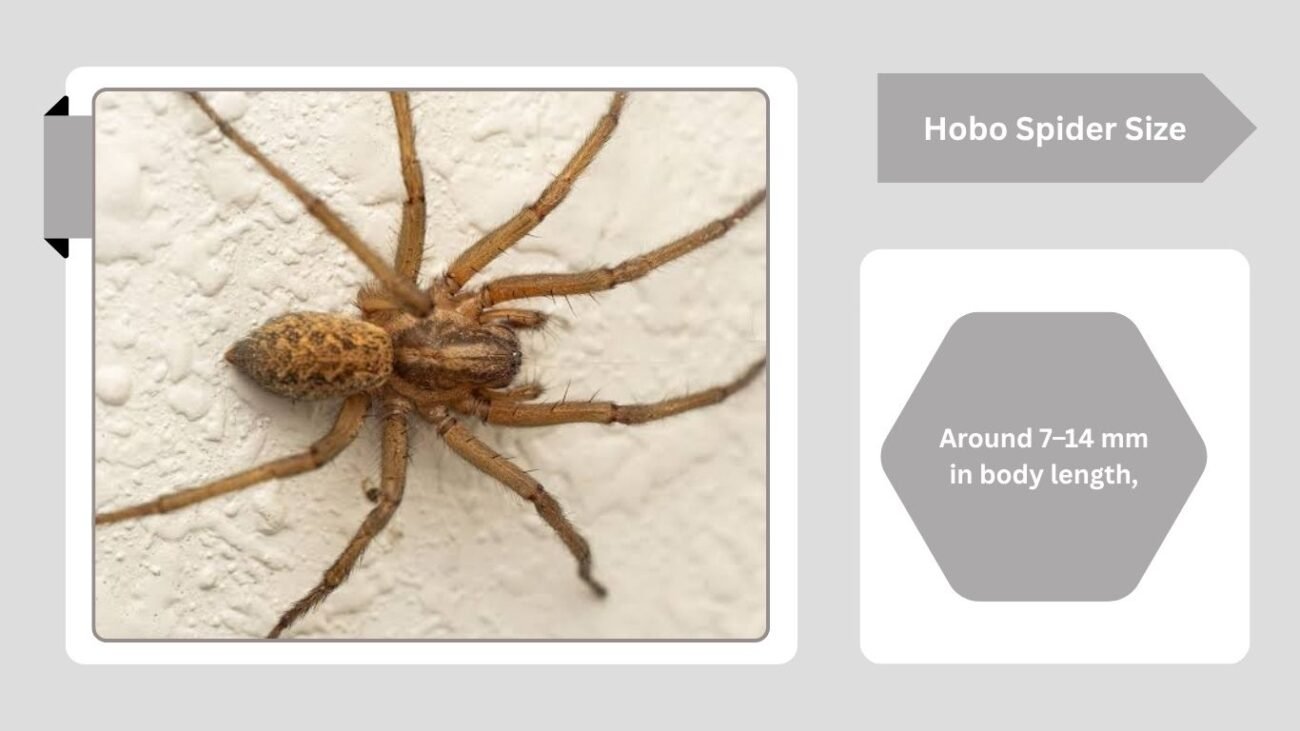
Hobo spiders are medium-sized spiders, but their size can be misleading because people often include the legs when estimating spider size. Scientific descriptions usually measure body length only.
Adult hobo spiders are commonly around 7–14 mm in body length, while UC IPM describes them as about 1/2 to 5/8 inch long. Larger-looking spiders may actually be giant house spiders or other similar funnel-weavers.
Male Hobo Spider Size
Male hobo spiders are usually slimmer than females. During late summer and fall, males may wander indoors while searching for mates. This is why people often notice them moving quickly across floors, basement walls, or corners.
Female Hobo Spider Size
Female hobo spiders usually have a fuller abdomen than males. They often stay closer to their web and are less likely to be seen wandering through open rooms. A female may look larger because of her rounder abdomen, especially when mature.
Hobo Spider Leg Span
Many homeowners describe hobo spiders as “large” because of their long legs. However, leg span is not the best way to identify them. Several harmless house spiders can have a similar or larger leg span, especially the giant house spider.
Hobo Spider Color and Identification
The hobo spider is usually light to medium brown with subtle pale markings. It does not have the bold, easy-to-see patterns that many people expect. This makes visual identification tricky, especially from a quick look or blurry photo. UC IPM describes the hobo spider as a light brown spider with pale markings.
Common Color Features
Hobo spiders may show:
- Brown to light brown body color
- Pale or yellowish markings on the body
- Long, fairly plain legs
- A patterned abdomen, often with muted chevron-like markings
- No bright colors or shiny black body
What It Does Not Look Like
A hobo spider is not shiny black like a black widow. It does not have the violin-shaped marking associated with brown recluse spiders. It also should not be identified by color alone, because many spiders share brown coloring.
Hobo Spider vs Similar House Spiders
| Spider | Key Difference |
| Hobo spider | Medium brown funnel-weaver; hard to confirm without magnification |
| Giant house spider | Often larger and commonly confused with hobo spiders |
| Barn funnel weaver | Similar funnel-web builder often found around buildings |
| Wolf spider | Usually hunts without a web and has a different body shape |
| Brown recluse | Has a violin-like marking, but does not naturally occur in much of the Pacific Northwest |
Hobo Spider Habitat
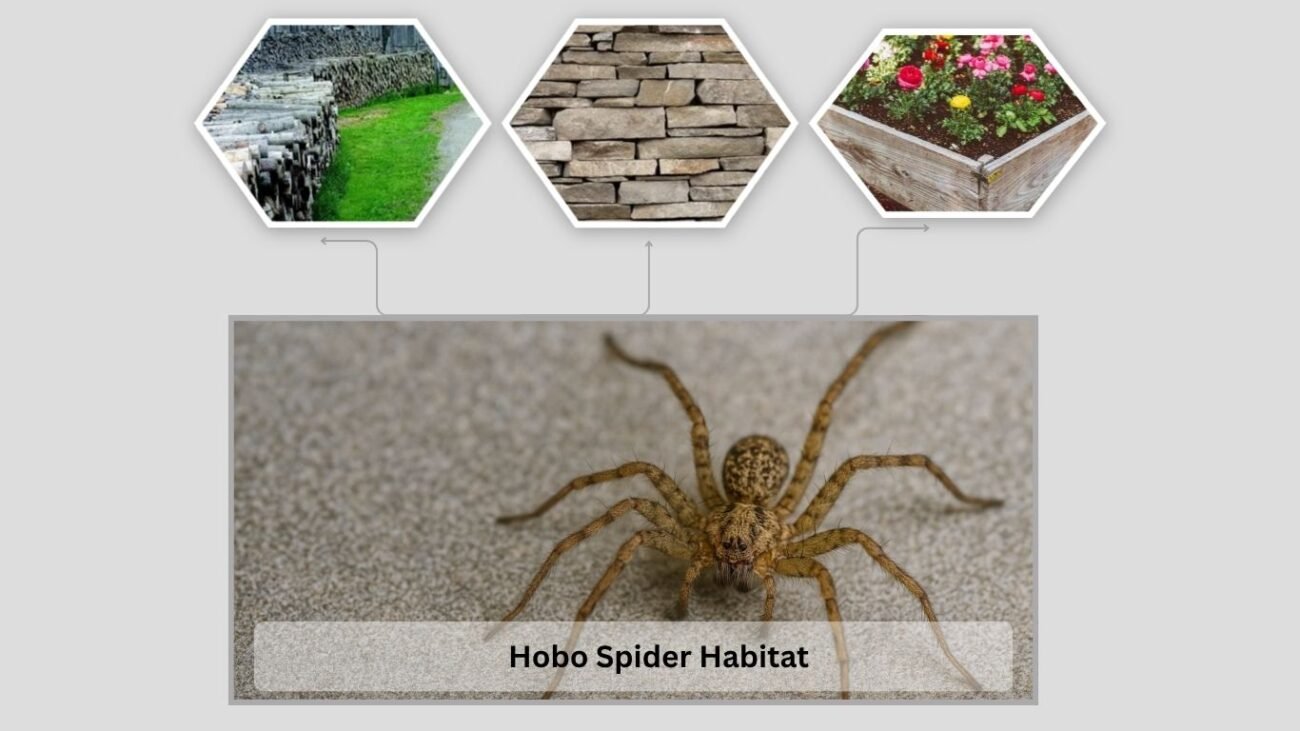
Hobo spiders prefer dark, protected areas where they can build hidden funnel webs. Outdoors, they may live around wood piles, rocks, vegetation, flower beds, and foundations. Indoors, they are often noticed in basements, corners, and other quiet areas. BugGuide notes that they are commonly found in darker places such as flower beds, wood piles, and basement recesses.
Outdoor Habitat
Outside the home, hobo spiders may use:
- Wood piles
- Stone walls
- Flower beds
- Tall grass edges
- Foundation cracks
- Spaces under boards, logs, and debris
They prefer places where the web can be anchored and partly hidden. Their webs are not always obvious unless the area is dusty, dewy, or undisturbed.
Indoor Habitat
Hobo spiders may enter homes, especially at ground level. They are most often reported in:
- Basements
- Crawl spaces
- Garages
- Window wells
- Storage rooms
- Dark floor corners
- Areas near exterior doors
They do not usually infest clean, open living spaces in large numbers. When found indoors, they are often accidental visitors or males wandering in search of mates.
Geographic Range
In North America, the hobo spider is mainly associated with the Pacific Northwest and nearby western regions. UC IPM lists its range from British Columbia east to Montana, Wyoming, and Colorado, and south through Oregon and northern Utah.
Hobo Spider Diet
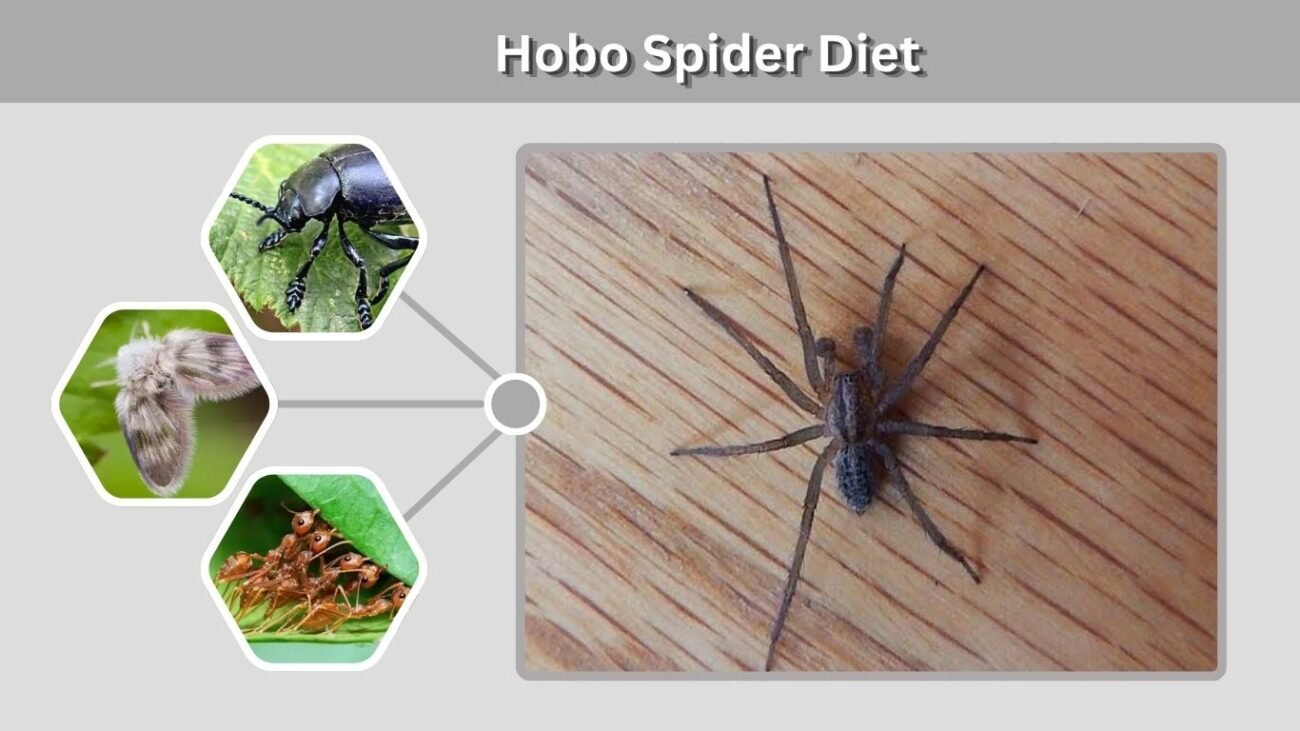
Hobo spiders are carnivores and insectivores. They catch prey in their funnel-like webs rather than chasing insects across open ground. Animal Diversity Web states that hobo spiders prey on insects that become tangled in their webs.
What Do Hobo Spiders Eat?
Common prey may include:
- Ants
- Beetles
- Flies
- Small moths
- Small roaches
- Other small insects
- Occasionally other spiders
Their diet makes them useful in controlling some household and garden insects, although most people still prefer not to have them indoors.
How They Hunt
The hobo spider builds a flat sheet web with a retreat area. When an insect walks across the web, the spider rushes out, grabs it, and pulls it back into the funnel-like shelter. This hunting style is common among funnel-weaving spiders.
Hobo Spider Behavior
Hobo spiders are often described as fast-moving. Their older nickname, “aggressive house spider,” caused confusion because it made people think they attack humans. In reality, they are not aggressive toward people. They may run quickly when disturbed, but that is usually escape behavior.
Seasonal Activity
Hobo spiders may be found from spring onward, but they are noticed most often in late summer and fall. BugGuide notes that males are commonly seen in late August through September while searching for mates. USU Extension also says they are frequently found in Utah homes from August through October.
Do Hobo Spiders Jump?
Hobo spiders do not jump like jumping spiders. They run quickly and may dart for cover when lights are turned on. This sudden movement can make them seem more alarming than they are.
Are Hobo Spiders Social?
No. Hobo spiders are solitary. They do not live in colonies like ants or termites. If several are found in one area, it usually means the habitat is favorable, not that they are nesting together as a group.
Hobo Spider Bite and Safety
Hobo spiders were once blamed for serious skin wounds, especially in the Pacific Northwest. However, current university extension sources now say there is no strong scientific evidence that hobo spider venom causes necrotic wounds in humans. USU Extension says the CDC does not list hobo spiders among venomous spiders toxic to humans, and Montana State University Extension states there is no conclusive evidence that hobo spider venom causes necrosis.
Do Hobo Spiders Bite?
Yes, they can bite, but bites are not common. Like most spiders, they usually bite only when trapped, pressed against skin, or threatened. Montana State University Extension notes that spider bites are rare and that spiders typically bite only if threatened or trapped in clothing or shoes.
What Should You Do After a Suspected Bite?
If you think a spider bit you, wash the area with soap and water, apply a cool compress, and monitor symptoms. Seek medical care if pain increases, swelling spreads, the wound becomes infected, or you develop serious symptoms. Many skin wounds blamed on spiders may actually be bacterial infections or other medical problems. MSU Extension notes that MRSA and other infections can be mistaken for spider-related wounds.
How to Keep Hobo Spiders Out of the House
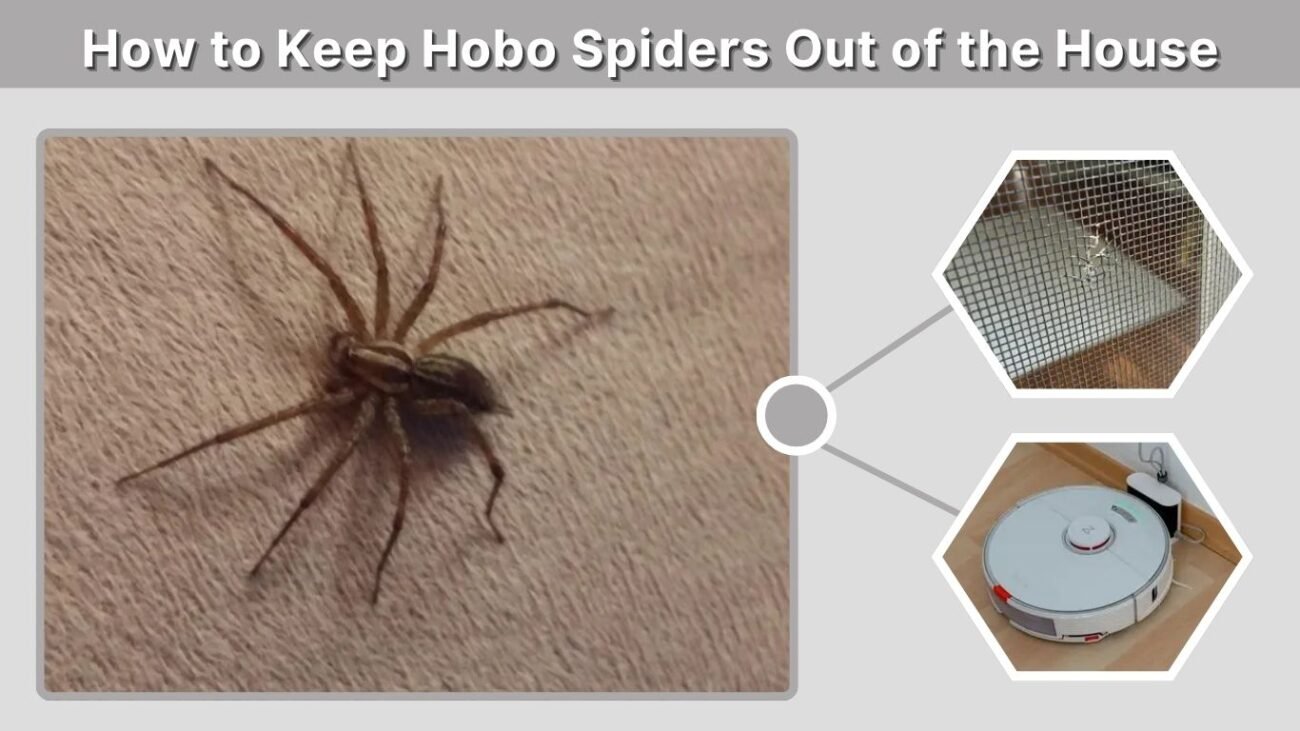
The best way to reduce hobo spiders is to remove hiding places, seal entry points, and make the home less attractive to insects. Since hobo spiders feed on insects, reducing prey can also reduce spider activity.
Prevention Tips
- Seal cracks around doors, windows, and foundations
- Install door sweeps
- Repair damaged screens
- Reduce clutter in basements and garages
- Move firewood away from the house
- Keep storage boxes off the floor when possible
- Vacuum corners, webs, and egg sacs
- Use sticky traps in basements or garages for monitoring
Should You Use Pesticides?
Pesticides are not always necessary. For most homes, exclusion, cleaning, and web removal are enough. If there is a heavy spider problem, focus first on reducing insects and sealing entry points. Professional pest control may be useful if spiders are frequent and difficult to manage.
FAQs
Are hobo spiders dangerous?
Current research-based sources do not consider hobo spiders medically important. They can bite if trapped or threatened, but there is no strong scientific evidence that they cause serious necrotic wounds in humans.
What color is a hobo spider?
A hobo spider is usually light to medium brown with pale markings. Because many spiders share this same color range, color alone is not enough for accurate identification.
Where do hobo spiders live?
They live in dark, protected areas such as wood piles, flower beds, foundation cracks, basements, crawl spaces, and garages. They are most associated with the Pacific Northwest and nearby western regions of North America.
What do hobo spiders eat?
Hobo spiders mainly eat insects that get caught in their webs. Their prey can include ants, beetles, flies, moths, and other small insects.
Why do I see hobo spiders in my house?
You may see them indoors when males wander during mating season, especially in late summer and fall. They may also enter through gaps near doors, windows, basements, or foundations.