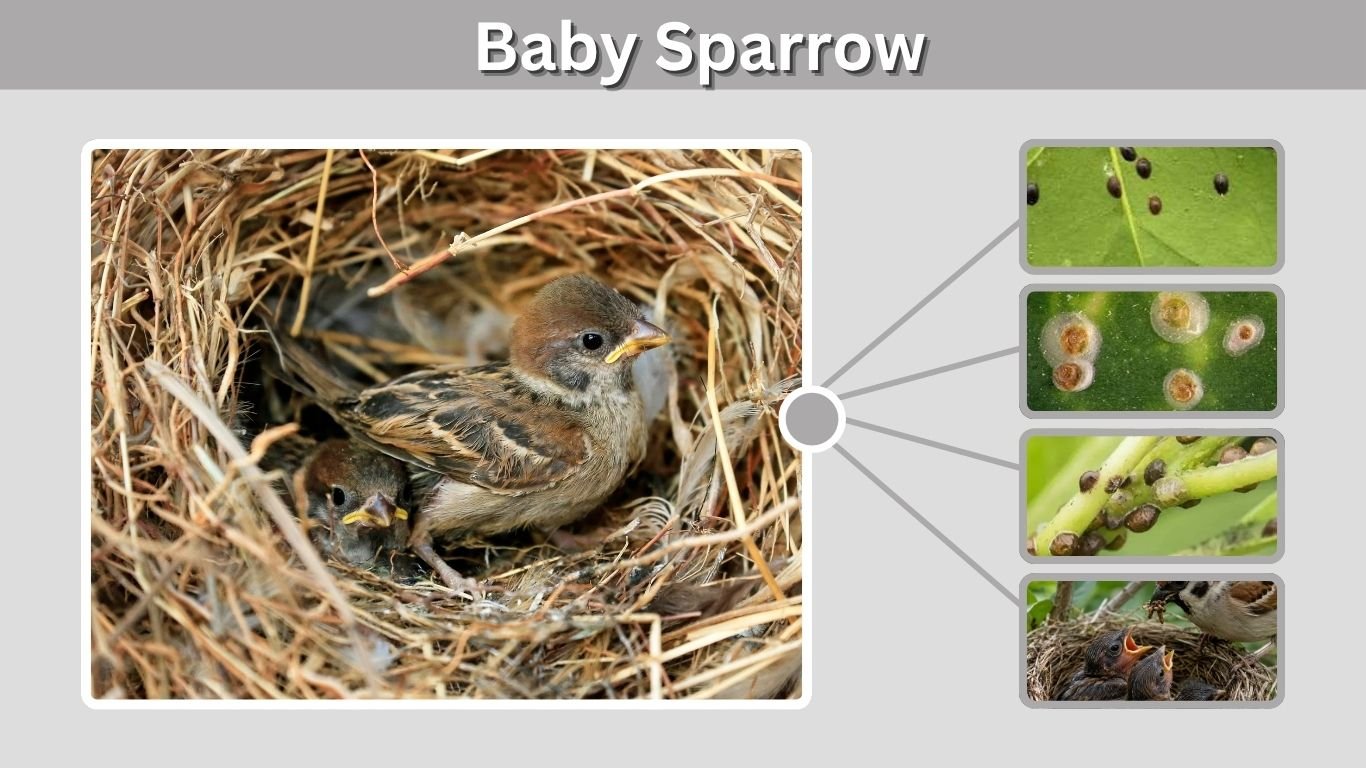
A baby sparrow is a young sparrow that may be a tiny naked nestling, a partly feathered chick, or a fluffy fledgling learning to fly. Many people find baby sparrows on the ground and wonder whether to feed them or rescue them. The safest first step is to identify the bird’s age and condition. Most fledglings should be left near their parents, while helpless nestlings may need to be returned to the nest.
What Does a Baby Sparrow Look Like?
A baby sparrow changes quickly during its first two weeks. Newly hatched house sparrows are naked, pink-skinned, and helpless, with closed eyes. Cornell Lab lists house sparrow nestlings as staying in the nest for about 10–14 days.
Baby Sparrow Identification
Look for these signs:
- Tiny body with yellow gape edges around the beak
- Brown, gray, or pinkish skin depending on age
- Fluffy down or short growing feathers
- Weak hopping or fluttering in older chicks
- Wide open mouth when begging
- Short tail and soft, uneven feathers
- Parents nearby calling or feeding
If the bird is fully feathered and hopping, it is probably a fledgling, not an abandoned baby.
Baby Sparrow Age Chart
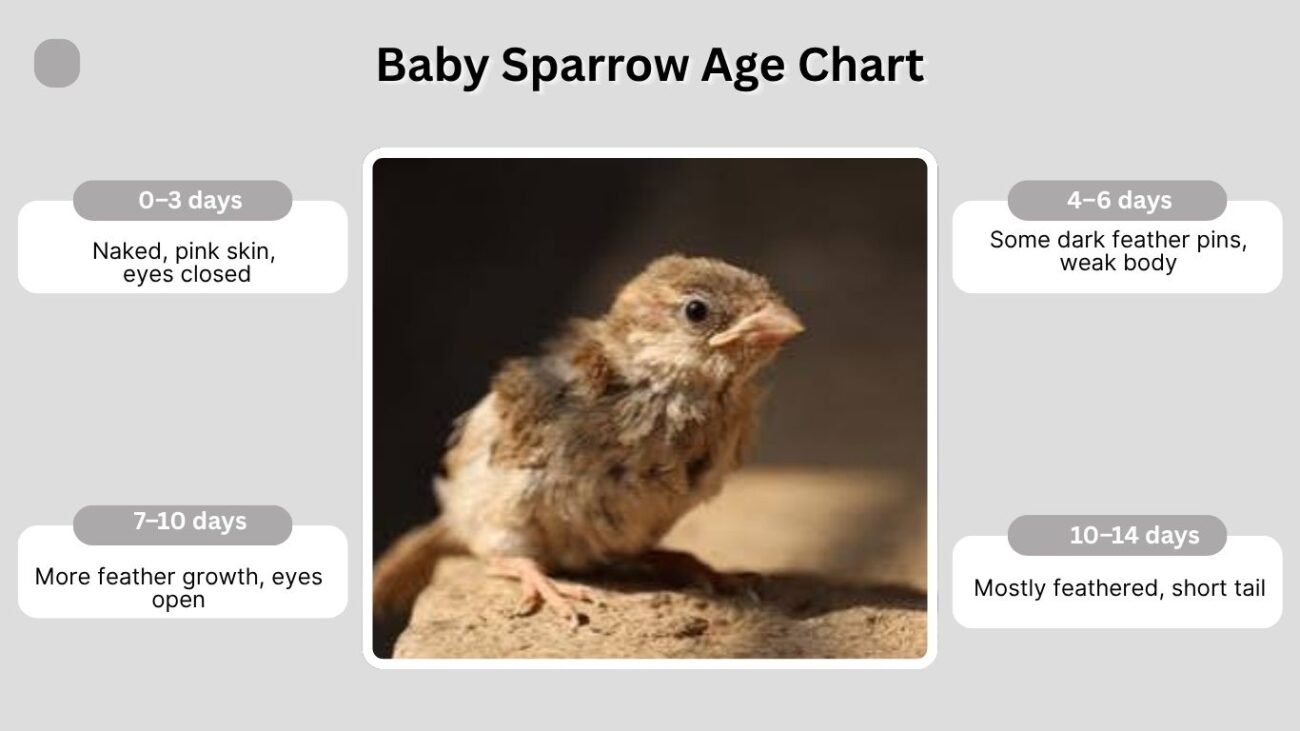
Use this simple chart to estimate the baby sparrow’s age. Exact timing can vary, but it helps you decide what to do.
| Age | Appearance | Stage |
| 0–3 days | Naked, pink skin, eyes closed | Hatchling |
| 4–6 days | Some dark feather pins, weak body | Young nestling |
| 7–10 days | More feather growth, eyes open | Older nestling |
| 10–14 days | Mostly feathered, short tail | Near fledging |
| 13–14+ days | Fully feathered, hopping outside nest | Fledgling |
Mass Audubon describes fledglings as fully feathered birds, usually around 13–14 days old or older, with short wings and tails while learning to fly.
Nestling vs Fledgling: The Most Important Difference
Before helping a baby sparrow, decide whether it is a nestling or fledgling. This is more important than guessing its exact age.
Nestling
A nestling has few feathers or only small pin feathers. It cannot stand, hop, or grip well. A healthy nestling found on the ground should usually be placed back in the original nest if possible. Audubon notes that uninjured featherless nestlings can be returned to the nest, and parent birds will not reject them because of human smell.
Fledgling
A fledgling is mostly feathered and may hop on the ground. It may look helpless, but this is a normal stage. RSPCA says fledglings usually should be left alone and watched from a distance because parents are often nearby and still feeding them.
What Do Baby Sparrows Eat?
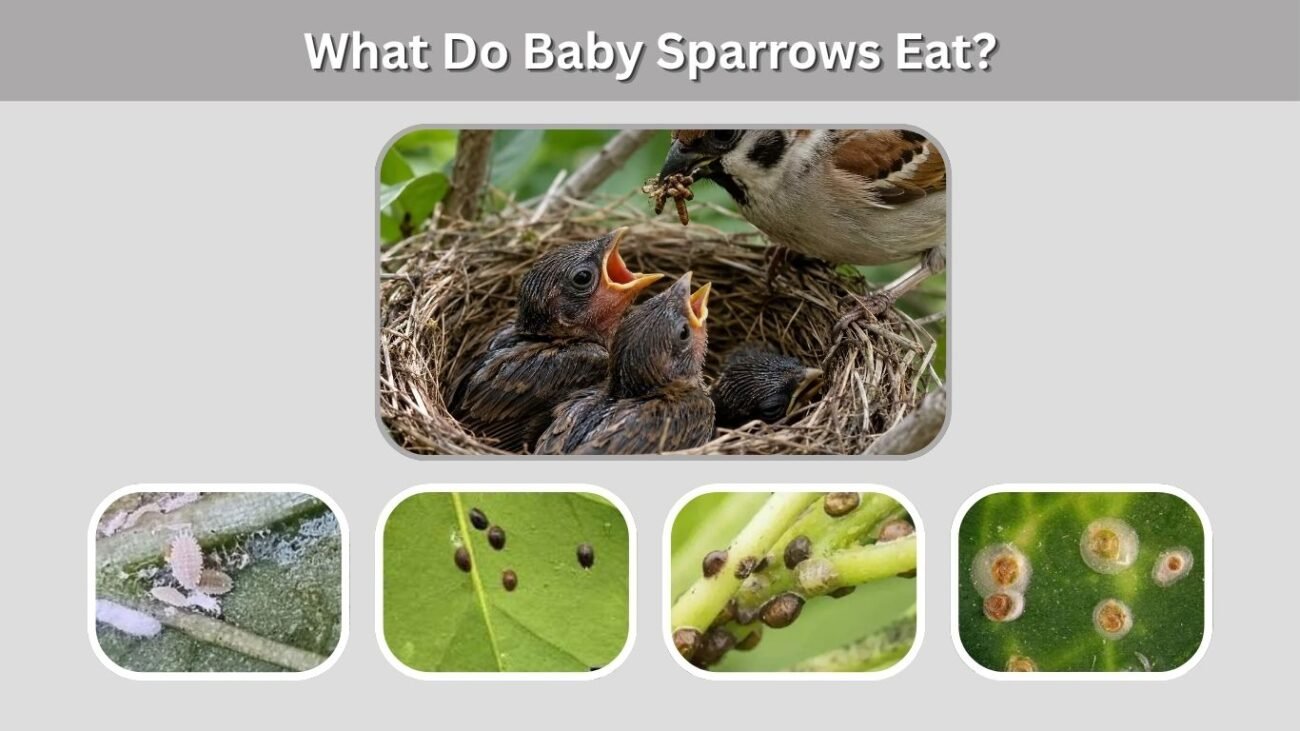
Baby sparrows naturally eat food brought by their parents. Adult sparrows may feed young birds soft insects, small seeds, and other tiny food items. During breeding season, insects are especially important for many young songbirds; the Humane Society notes that over 90% of songbirds rely on insects to feed their young.
What Not to Feed a Baby Sparrow
Do not give a baby sparrow:
- Bread
- Milk
- Rice
- Water by mouth
- Large seeds
- Human snack food
- Dry pet food without expert instruction
Wildlife experts warn that giving food or water to a baby bird can cause choking, aspiration, pneumonia, or death. The Wildlife Center of Virginia advises not to offer food or water unless a permitted rehabilitator tells you to do so.
Baby Sparrow Fell Out of Nest: What Should You Do?
If you find a baby sparrow on the ground, first check for danger. Keep cats, dogs, and people away. If the bird is injured, bleeding, cold, weak, or was touched by a cat, contact a wildlife rehabilitator or veterinarian quickly. Wildlife Center guidance says injured young birds should go to a permitted rehabilitator and should not be fed or given water.
Quick Action Steps
- If it is a healthy nestling, return it to the nest.
- If the nest is unreachable, call a wildlife rehabilitator.
- If it is a fledgling, leave it near shrubs or shelter.
- Move it only a few feet if it is in danger.
- Keep pets away and watch from a distance.
- Do not take it home for long-term care.
Best Friends Animal Society also advises that baby birds should reach a rehabilitator quickly if parents do not return, and people should not try to rehabilitate them at home.
How Long Do Baby Sparrows Stay in the Nest?
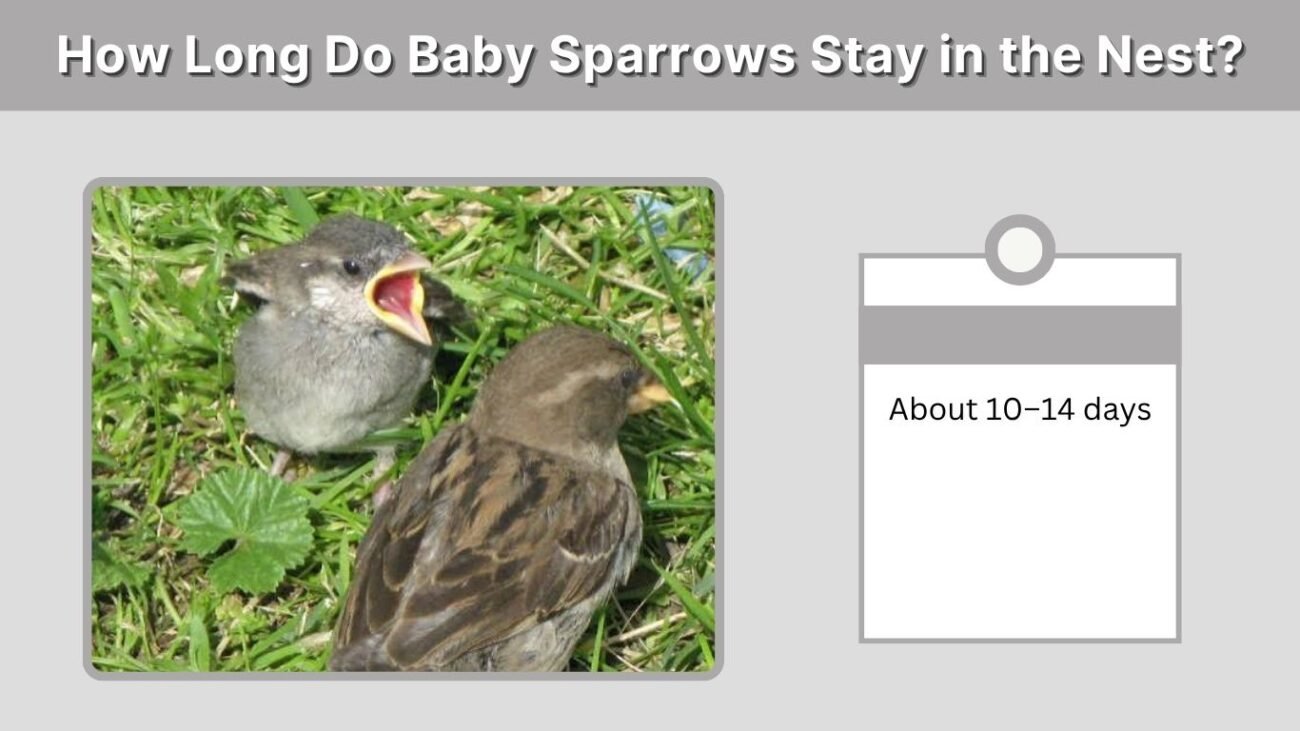
House sparrow chicks usually remain in the nest for about 10–14 days before fledging. They hatch helpless, grow quickly, and leave the nest when they are mostly feathered but still inexperienced.
After leaving the nest, fledglings may spend time on the ground or low branches while parents continue feeding them. This stage can look worrying, but it is often normal. The best help is usually to keep pets away and avoid disturbing the family.
Baby House Sparrow Growth Stages
Baby house sparrows develop fast. In the first days, they depend completely on warmth and feeding from their parents. By the second week, feathers grow quickly, eyes open, and the chick becomes more alert. Near fledging, the baby looks like a fluffy, short-tailed version of an adult female sparrow.
| Stage | Main Need | Human Action |
| Hatchling | Warmth and parents | Return to nest if fallen |
| Nestling | Nest safety | Re-nest or call rehabber |
| Fledgling | Space to learn | Leave alone, protect from pets |
| Injured baby | Professional care | Contact rehabber/vet |
FAQs
What do baby sparrows eat?
Baby sparrows are fed by their parents and usually receive soft insects, tiny seeds, and other small natural foods. Insects are especially important for young songbirds. Do not give bread, milk, or water by mouth because baby birds can choke or aspirate easily.
What should I do if a baby sparrow falls out of the nest?
First decide whether it is a nestling or fledgling. A healthy nestling should be returned to the nest if possible. A feathered fledgling should usually be left nearby because its parents are probably still feeding it. Keep pets and people away.
How long do baby sparrows stay in the nest?
Baby house sparrows usually stay in the nest for about 10–14 days. After that, they leave as fledglings. They may still look clumsy and short-tailed, but their parents continue to feed and guide them while they learn to fly.
Can I feed a baby sparrow homemade food?
You should not feed a wild baby sparrow homemade food unless a licensed wildlife rehabilitator gives specific instructions. Baby birds need the right diet, temperature, and feeding method. Wrong food or water can cause choking, illness, or death.
How can I tell how old a baby sparrow is?
A naked pink baby with closed eyes is only a few days old. A chick with pin feathers is a nestling. A mostly feathered baby with a short tail is close to fledging. A hopping, fully feathered baby on the ground is usually a fledgling.