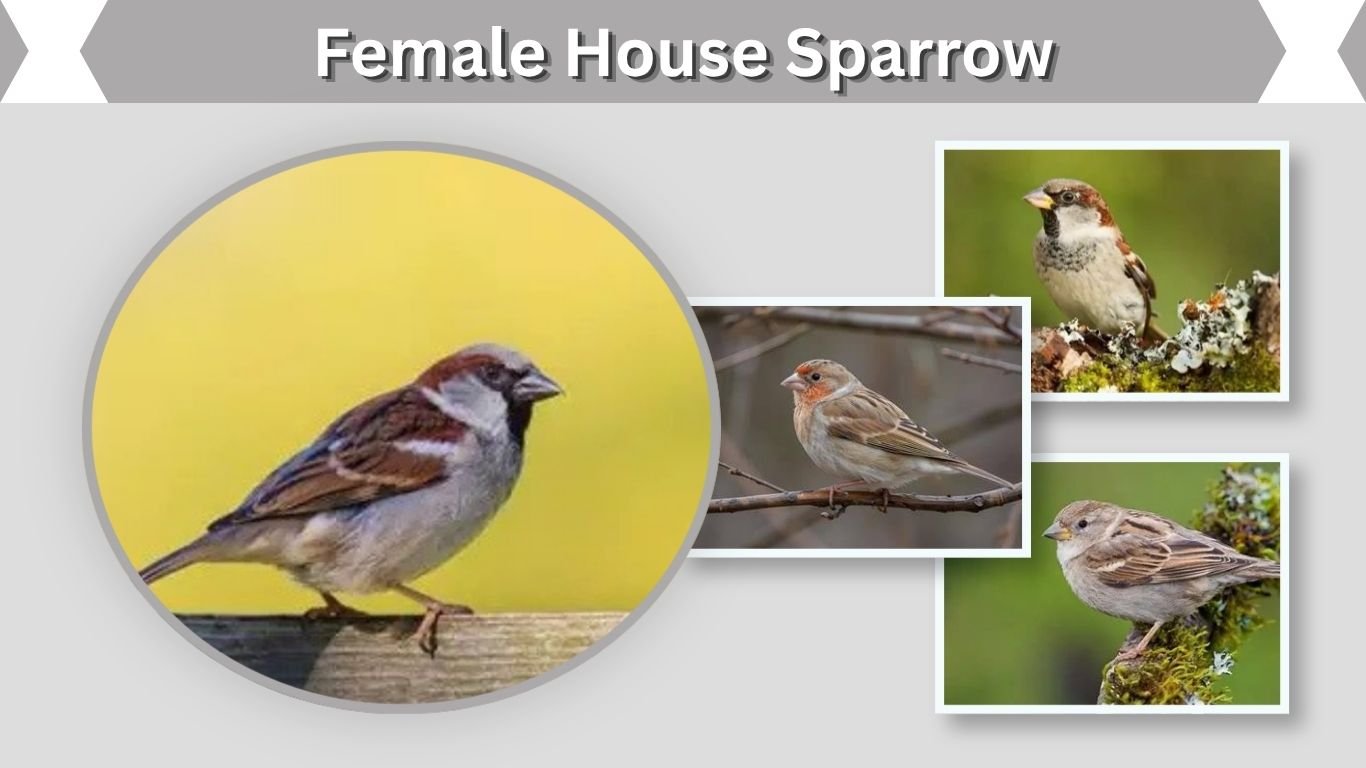
A female house sparrow is a small, brown, streaked bird often seen around homes, gardens, farms, parks, and city streets. Unlike the male house sparrow, she does not have a black bib or bold gray crown. Instead, she has soft brown and buff colors that help her blend into shrubs, nests, and ground cover. This guide explains how to identify a female house sparrow, compare her with males, and separate her from similar birds.
What Does a Female House Sparrow Look Like?
A female house sparrow has a plain but beautiful appearance. She is usually light brown, grayish-brown, and buff, with a pale eyebrow stripe behind the eye. Her body is compact, her bill is short and thick, and her tail is fairly short.
Female House Sparrow Identification
Look for these key features:
- Small, chunky body
- Brown back with darker streaks
- Pale buff or grayish underside
- Light eyebrow stripe behind the eye
- No black throat bib
- No gray crown like the male
- Short, cone-shaped seed-eating bill
- Usually found near buildings, feeders, and human activity
Female house sparrows may look dull compared with males, but their softer markings are very useful for identification.
Female House Sparrow vs Male House Sparrow
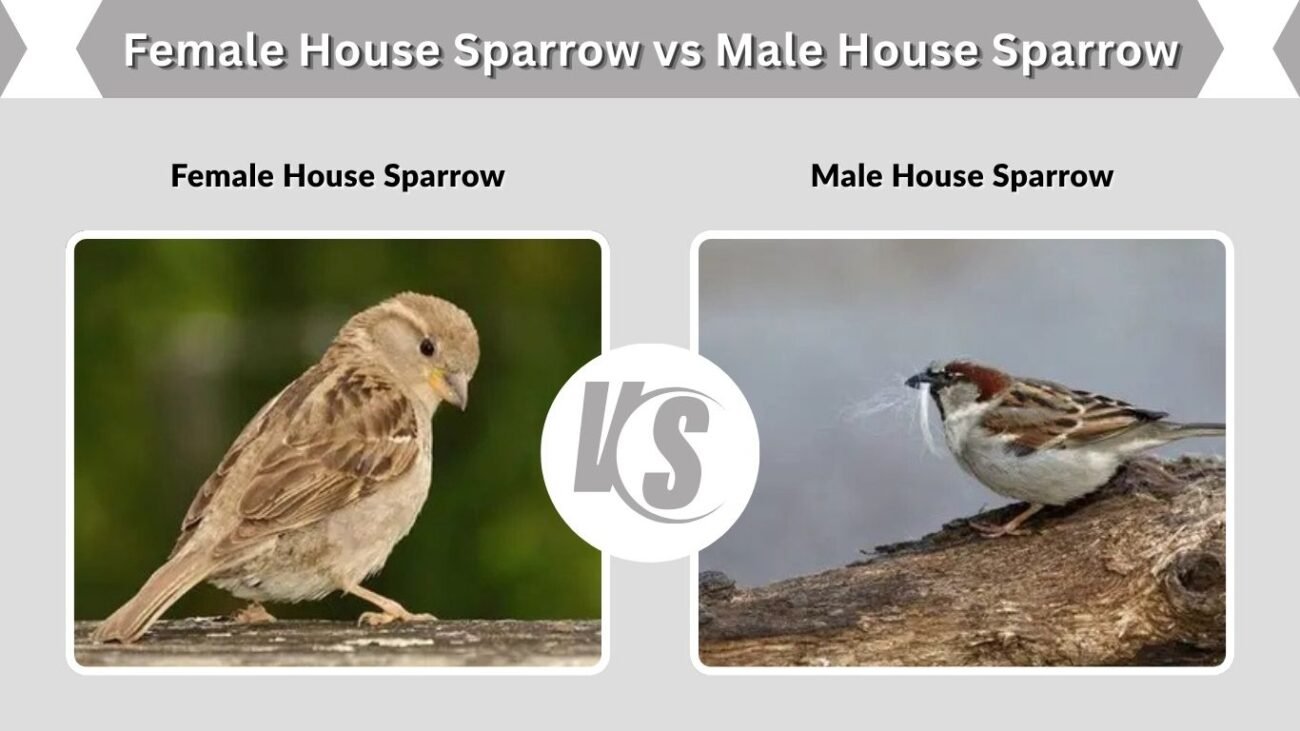
Male and female house sparrows are easy to separate once you know the main differences. Males are more colorful and have stronger markings, while females are softer and more uniform brown.
| Feature | Female House Sparrow | Male House Sparrow |
| Head | Brown with pale eyebrow | Gray crown with chestnut sides |
| Throat | Plain, no black bib | Black throat and bib |
| Body color | Buff, brown, and grayish | Brown, gray, black, and white |
| Face | Soft and plain | Bold and patterned |
| Overall look | Subtle and streaky | More contrasting |
Main Difference Between Male and Female House Sparrow
The easiest difference is the male’s black bib. A female house sparrow does not have this black throat patch. She also lacks the male’s gray cap and bright chestnut head markings. Her face looks plainer, with a buff eyebrow and soft brown tones.
Female House Sparrow vs Female House Finch
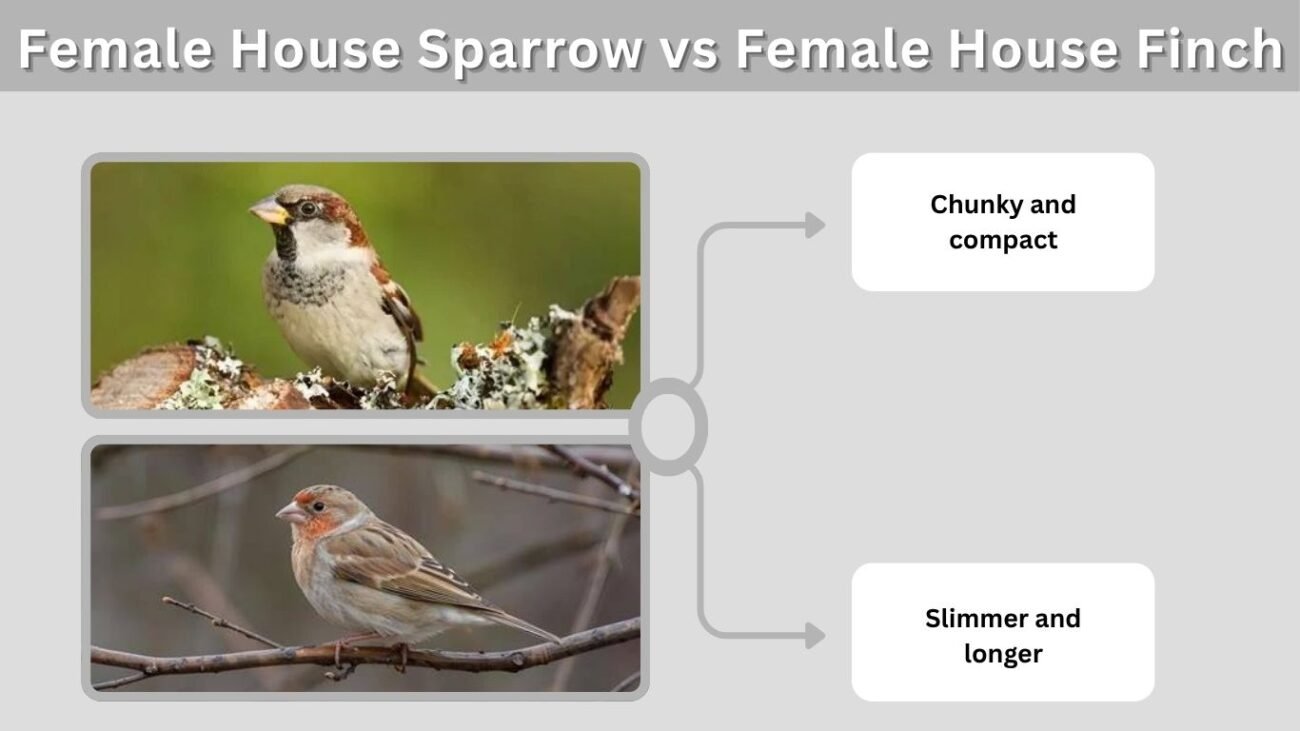
Female house sparrows and female house finches are often confused because both are brownish backyard birds. However, their body shape, bill, and streaking are different.
| Feature | Female House Sparrow | Female House Finch |
| Body shape | Chunky and compact | Slimmer and longer |
| Bill | Short, thick, cone-shaped | Short but more curved |
| Streaking | Mostly on back | Heavy streaking on chest and belly |
| Face | Pale eyebrow, plain cheek | More evenly streaked face |
| Common place | Buildings, sidewalks, feeders | Trees, feeders, shrubs |
How to Tell Them Apart Quickly
Use these simple clues:
- The female house sparrow has a plainer belly.
- The female house finch has stronger streaks on the chest.
- The female house sparrow looks chunkier.
- Female house finches often looks slimmer and longer-tailed.
- The female house sparrow has a clearer pale eyebrow stripe.
If the bird has heavy streaking down the breast and belly, it is more likely a female house finch.
Female House Sparrow vs Song Sparrow
A song sparrow is another brown bird that may look similar at first. However, song sparrows usually have stronger streaks on the chest and a longer tail. They are also more often found in brushy, grassy, or wetland edges rather than right beside buildings.
Key Differences
- The female house sparrow has a plain pale belly.
- Song sparrows has bold chest streaks.
- Song sparrows often has a dark central breast spot.
- The female house sparrow has a shorter tail.
- Song sparrow looks more slender and wild-looking.
- House sparrows stay closer to people and buildings.
Female House Sparrow Behavior
Female house sparrows are active, social birds. They often feed in small groups and can be seen hopping on the ground, searching for seeds, crumbs, grains, and small insects.
During breeding season, the female helps build the nest and incubates the eggs. She may nest in building holes, roof gaps, nest boxes, signs, vents, and dense vegetation. House sparrows are very adaptable, which is why they live successfully in towns and cities around the world.
Common Behaviors
You may notice a female house sparrow:
- Picking up grass, feathers, and nesting material
- Feeding on seeds and grains
- Visiting bird feeders
- Dust bathing on dry soil
- Chirping near buildings
- Feeding young fledglings
- Staying close to other sparrows
Female House Sparrow Call and Song
The female house sparrow does not sing a complex song like some other birds. Her sound is usually a simple chirp or repeated “cheep” call. These calls help her communicate with other sparrows, warn of danger, and stay connected with the flock.
Both male and female house sparrows make short chirping sounds. Around nests, females may call more often when feeding young or reacting to disturbance.
Female House Sparrow in Winter
In winter, female house sparrows look very similar to the rest of the year, but their feathers may appear slightly fluffier. This helps them stay warm. They often gather in flocks and roost together in shrubs, building holes, evergreen trees, or sheltered corners.
| Season | Female House Sparrow Appearance |
| Spring | Active near nests, clean breeding plumage |
| Summer | Often seen feeding fledglings |
| Fall | Joins larger feeding flocks |
| Winter | Fluffed feathers, stays near shelter |
Female house sparrows do not migrate long distances in most areas. They usually remain close to reliable food and shelter.
Juvenile Female House Sparrow
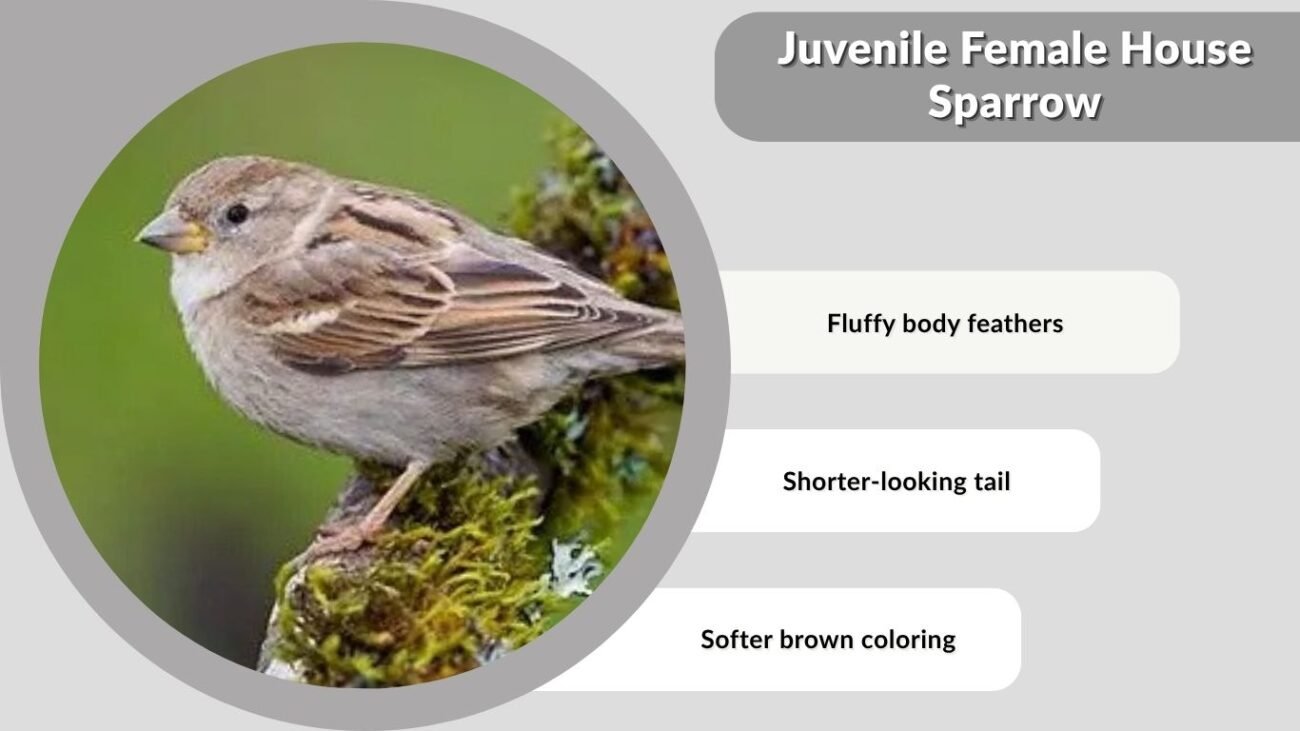
A young female house sparrow can look very similar to an adult female. Juveniles are usually softer, duller, and fluffier. Their markings may not look as neat, and their behavior may seem less confident.
Signs of a Young Female House Sparrow
A juvenile may have:
- Fluffy body feathers
- Shorter-looking tail
- Pale gape edges near the bill
- Softer brown coloring
- Begging behavior
- Clumsy hopping or short flights
It can be hard to tell young males and young females apart at first. As males mature, they develop stronger head markings and a darker throat.
Female House Sparrow Nesting and Eggs
Female house sparrows play a major role in nesting. The nest is usually made from dry grass, straw, feathers, paper, and other soft materials. It may look messy but gives the eggs and chicks warmth and protection.
The eggs are usually pale with small brown or gray markings. The female incubates the eggs, while both parents may help feed the chicks after hatching. House sparrows can raise multiple broods in a breeding season when food and nesting sites are available.
FAQs
What does a female house sparrow look like?
A female house sparrow is brown, buff, and grayish with a pale eyebrow stripe. She has a plain underside, streaked brown back, short tail, and thick seed-eating bill. She does not have the male’s black bib or gray crown.
How can you tell a male and female house sparrow apart?
The male house sparrow has a black bib, gray crown, and chestnut head markings. The female is plainer, with soft brown feathers and a pale eyebrow. The missing black bib is the easiest way to identify a female.
Is a female house sparrow the same as a female house finch?
No, they are different birds. A female house finch has heavier streaking on the chest and belly, while a female house sparrow has a plainer underside. House finches also look slimmer, while house sparrows appear chunkier.
Do female house sparrows sing?
Female house sparrows usually make short chirping or “cheep” calls rather than a complex song. They use these sounds to communicate with other sparrows, warn of danger, and interact near nests or feeding areas.
What is the difference between a juvenile and adult female house sparrow?
A juvenile female house sparrow often looks fluffier, duller, and less neat than an adult. Young birds may also show pale gape edges near the bill and may beg for food. Adult females look cleaner, smoother, and more confident.