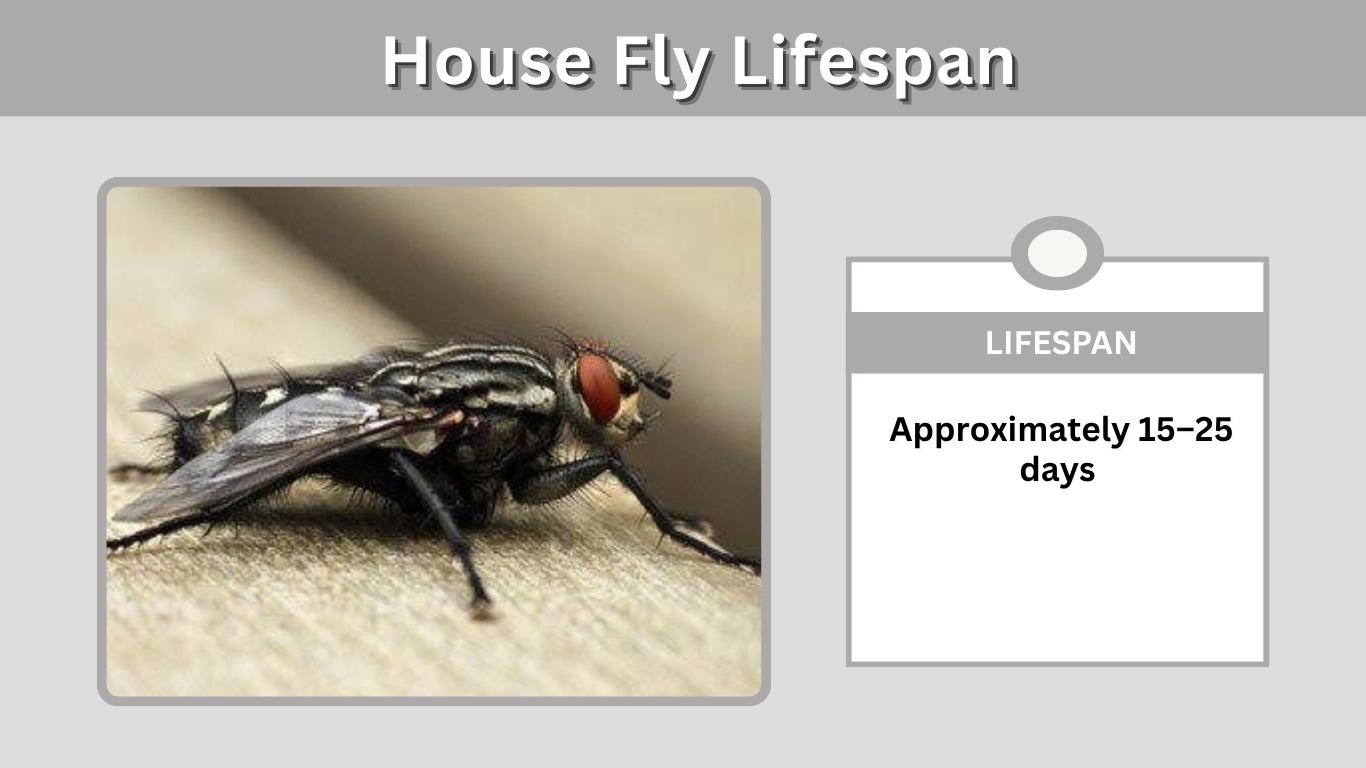
The average adult house fly lives for approximately 15–25 days, although favorable indoor or laboratory conditions may allow some individuals to survive for six weeks or even two months. Temperature, humidity, food, water, predators, and breeding conditions all influence longevity. A house fly’s complete development from egg to adult can take only 7–10 days during warm weather. This rapid life cycle, combined with the female’s ability to produce hundreds of eggs, explains why a small number of flies can quickly become a serious household infestation.
What Is the Average House Fly Lifespan?
The common house fly (Musca domestica) normally spends two to four weeks as a winged adult. However, adult longevity varies considerably. Wild flies exposed to predators and harsh weather may survive only a few days, whereas protected flies with consistent food and water can live much longer.
House Fly Lifespan at a Glance
- Average adult lifespan: 15–25 days
- Possible maximum lifespan: Approximately six weeks to two months
- Egg stage: About 8–20 hours
- Larval stage: Approximately 4–7 days
- Pupal stage: About 2–6 days
- Egg-to-adult development: As little as 7–10 days
- Without food: Approximately 2–3 days
- Female lifetime egg production: Approximately 350–900 eggs
These are general ranges. Cooler temperatures slow development, while warm conditions can dramatically accelerate the life cycle.
Do House Flies Live for Only 24 Hours?
No. The idea that house flies live for only 24 hours is a common myth. Adult house flies usually live for at least two or three weeks when food and moisture are available.
The myth may come from confusion with mayflies. Some adult mayflies survive for only several hours or days because their primary purpose is reproduction. House flies feed throughout adulthood and live considerably longer.
House Fly Life Cycle from Egg to Adult
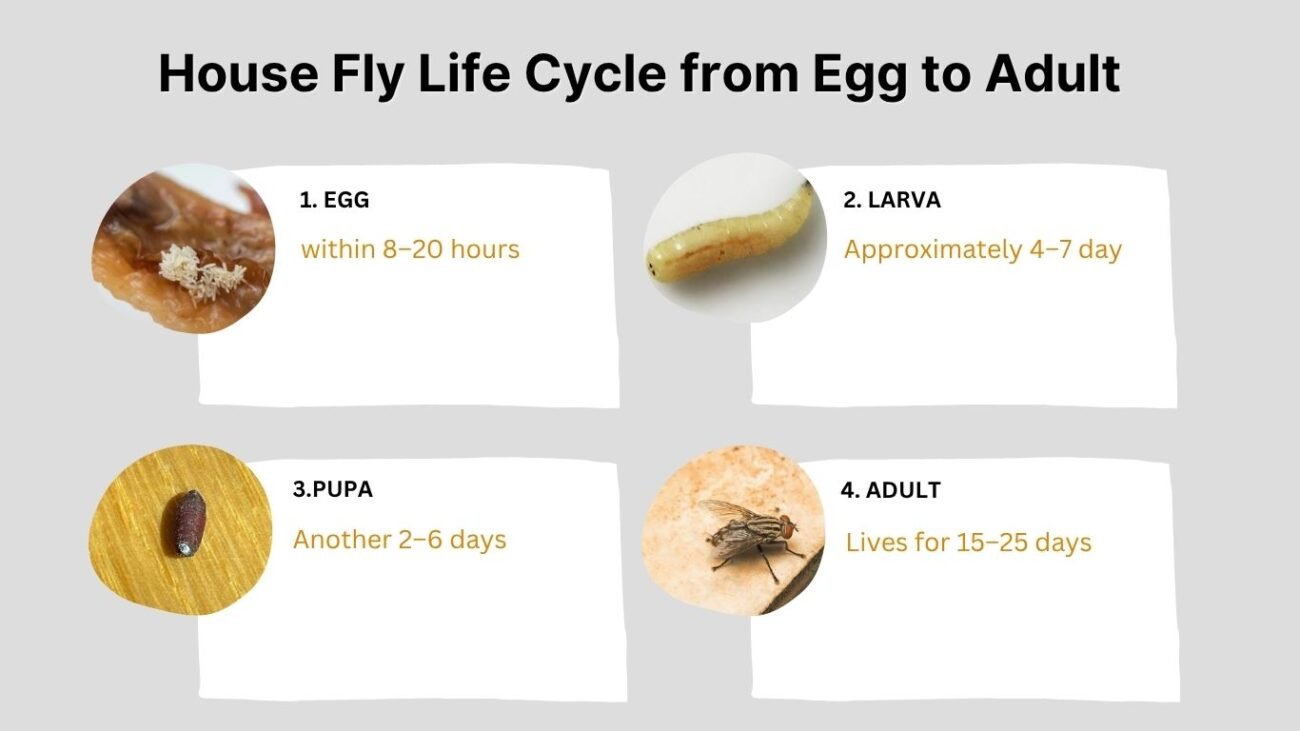
House flies undergo complete metamorphosis, developing through egg, larva, pupa, and adult stages. They reproduce rapidly in warm, moist organic material. Several generations can overlap, so adult flies, eggs, maggots, and pupae may be present around the same breeding location.
Four Stages of the House Fly Life Cycle
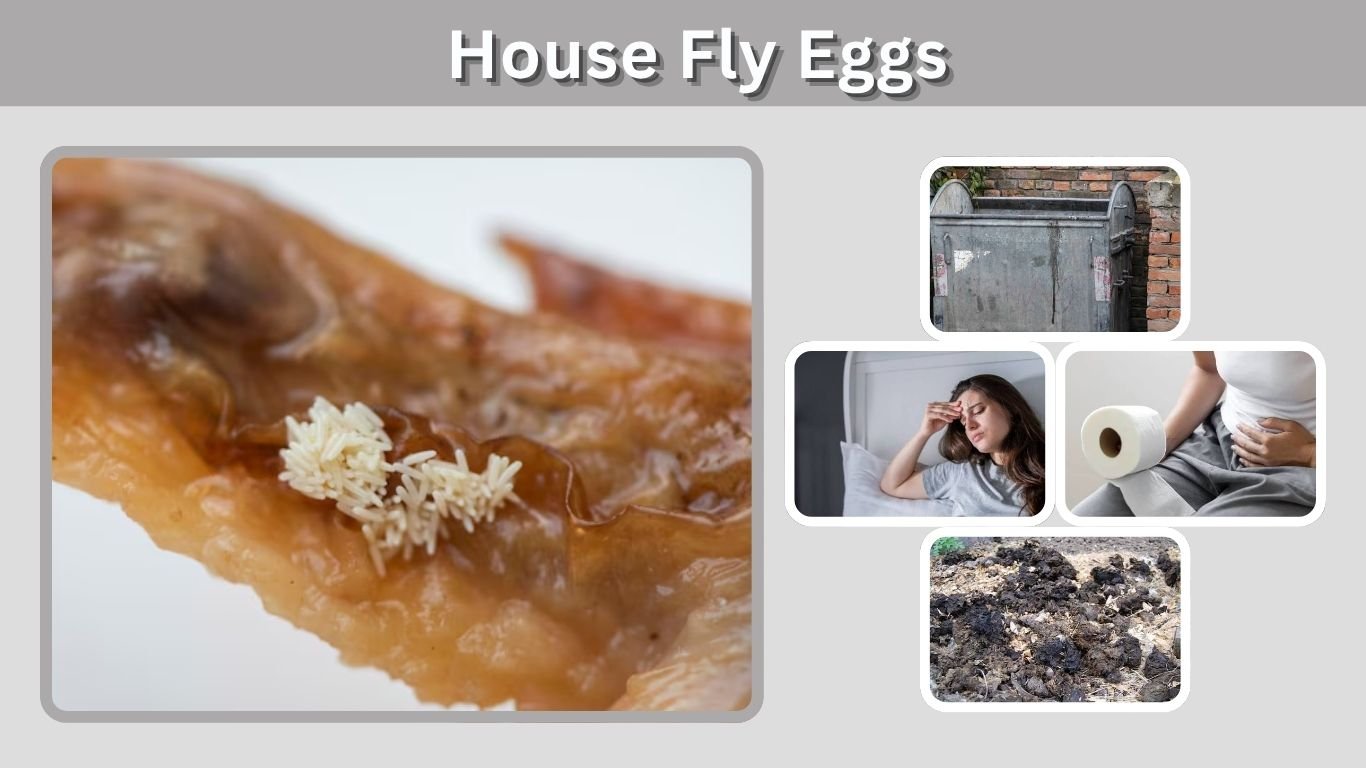
- Egg stage: Females deposit batches of approximately 75–150 white eggs on moist organic material. Eggs may hatch within 8–20 hours in warm conditions.
- Larval stage: White, legless maggots feed within manure, garbage, spilled animal feed, or decaying organic material. They pass through three larval stages over approximately 4–7 days.
- Pupal stage: Mature maggots move toward a drier location and form dark reddish-brown puparia. Adult development generally takes another 2–6 days.
- Adult stage: The adult breaks out of the puparium and expands its wings. It can begin mating within several days and normally lives for 15–25 days.
How Long Is the House Fly Larval Stage?
House fly larvae usually develop for four to seven days under warm, favorable conditions. Cold temperatures, limited food, or dry breeding material can extend this period. Once mature, the maggots leave the wettest material and search for a relatively dry, protected place to pupate.
How Quickly Can House Flies Reproduce?
A female generally begins laying eggs 4–12 days after emerging as an adult. She produces several batches during her life, with each batch containing around 75–150 eggs. Total production may range from approximately 350 to 900 eggs.
Not every egg reaches adulthood. Dry conditions, predators, parasites, sanitation, and unsuitable temperatures can cause significant mortality.
How Long Do House Flies Live Indoors?
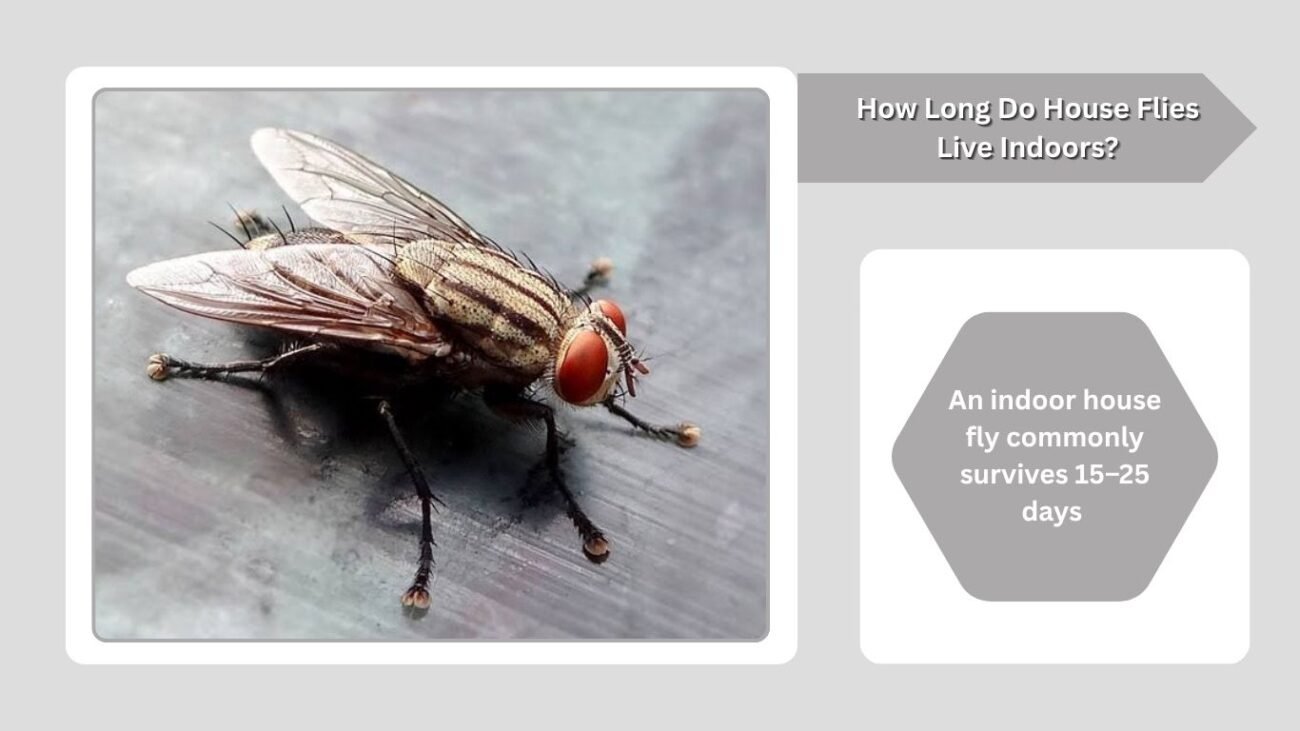
A house fly can live its entire normal adult lifespan indoors when warmth, food, and moisture are available. Kitchens, restaurants, livestock buildings, and waste-storage areas may provide especially favorable conditions. Indoor flies do not automatically die after entering a building.
Lifespan of a Fly in a House
An indoor house fly commonly survives 15–25 days if it can reach food and water. Exceptionally favorable conditions may support survival for six weeks or longer. A fly trapped in a clean, dry room without resources will die much sooner.
House flies may consume liquids from spilled drinks, overripe fruit, food residue, dirty drains, garbage, pet waste, and damp cleaning materials. They can also dissolve solid food by applying saliva and then consuming the resulting liquid.
Can House Flies Survive Winter Indoors?
Some adult house flies can survive winter inside heated buildings. However, outdoor populations in colder climates often overwinter as pupae within manure, organic debris, or other protected breeding materials.
Continuous warmth inside livestock facilities or commercial buildings may allow feeding and reproduction to continue during winter. In unheated locations, cold temperatures greatly slow their activity and development.
How Long Can a House Fly Live Without Food?
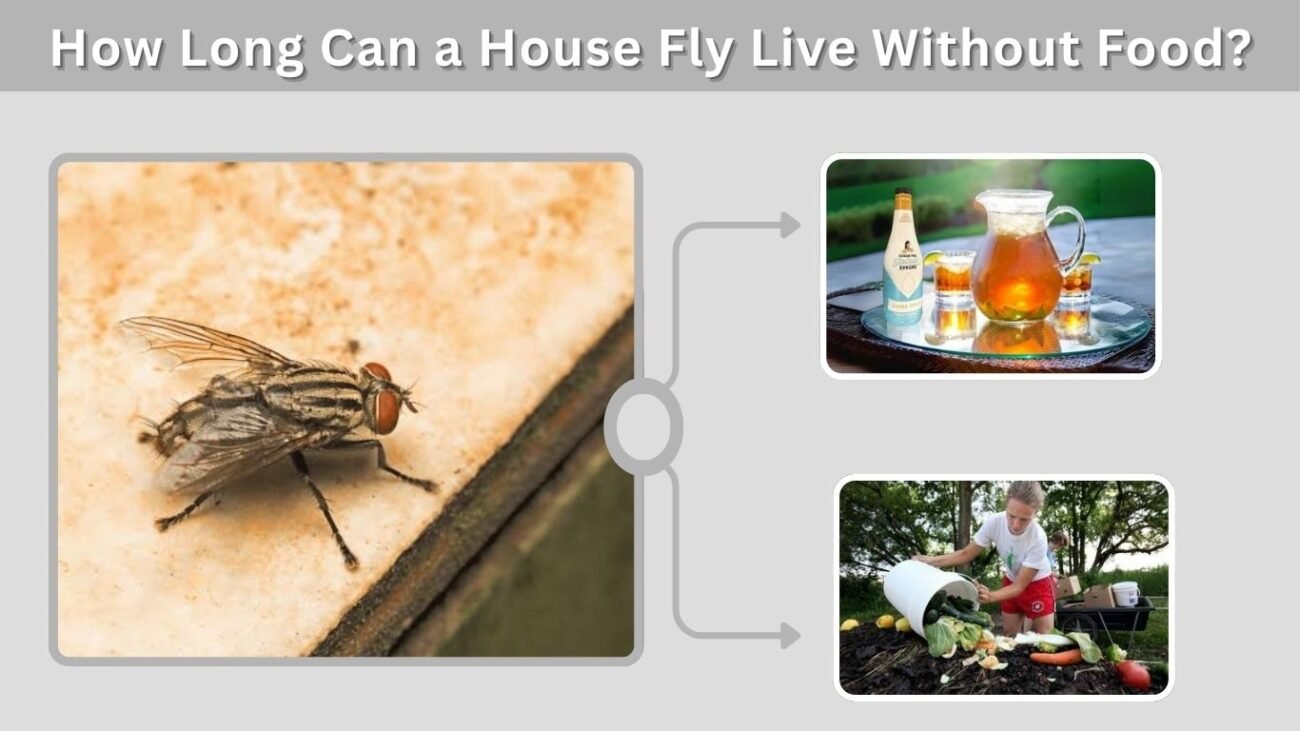
Adult house flies have small bodies and limited energy reserves. They must feed regularly, particularly on sugar-rich liquids. Without access to food, their survival is much shorter than their normal adult lifespan.
Survival Without Food or Water
House flies generally survive only about two or three days without food. A lack of water can shorten this period further, especially under hot and dry conditions. Humidity and access to condensation may extend survival slightly.
A fly may appear to have no food while secretly feeding on tiny amounts of residue. Drink spills, crumbs moistened with saliva, dirty dishes, pet bowls, and garbage can provide enough nourishment to keep it alive.
What Do Adult House Flies Eat?
- Sugary drinks and syrups
- Overripe or damaged fruit
- Food scraps and grease
- Animal manure and pet waste
- Garbage and decaying organic matter
- Milk and other spilled liquids
- Moist residue in drains
- Regurgitated material from other food sources
Because they move between waste and human food, house flies can mechanically transfer disease-causing microorganisms onto surfaces and meals.
Male and Female House Fly Lifespans
Male and female house flies generally have similar adult lifespans, although females may survive longer under favorable conditions. Reproduction places considerable energy demands on females, but reliable food and moisture allow them to continue producing egg batches throughout adulthood.
Female House Fly Lifespan
An adult female typically lives 15–25 days but may survive for up to six weeks under optimal laboratory conditions. Some reports indicate maximum survival approaching two months.
A female usually mates once and stores sperm for fertilizing multiple egg batches. This allows a single fly entering a suitable breeding area to produce hundreds of offspring without mating repeatedly.
Adult House Fly Lifespan in Captivity
House flies maintained in controlled laboratory conditions can live longer than many wild individuals. Researchers provide stable temperature, suitable humidity, sugar, protein, and water while protecting the flies from predators and severe weather.
Captivity does not guarantee a long life. Overheating, dehydration, crowding, contaminated food, poor ventilation, or insufficient nutrition can cause early death.
What Affects a House Fly’s Lifespan?
House fly longevity depends on the interaction of temperature, nutrition, moisture, and environmental hazards. Conditions that speed reproduction and development do not always produce the longest adult lifespan.
Major Lifespan Factors
- Temperature: Warmth accelerates development, but excessive heat causes dehydration and early death.
- Food: Regular access to carbohydrates and other nutrients supports activity and reproduction.
- Water: Flies depend on moist foods, liquids, or environmental moisture.
- Humidity: Extremely dry air increases water loss.
- Predators: Spiders, birds, predatory insects, and other animals consume adult flies.
- Parasites: Tiny parasitoid wasps attack house fly pupae.
- Sanitation: Removing breeding material prevents immature stages from completing development.
- Pesticides: Properly labeled treatments may reduce adults or larvae but cannot replace sanitation.
House Fly vs. Other Indoor Flies
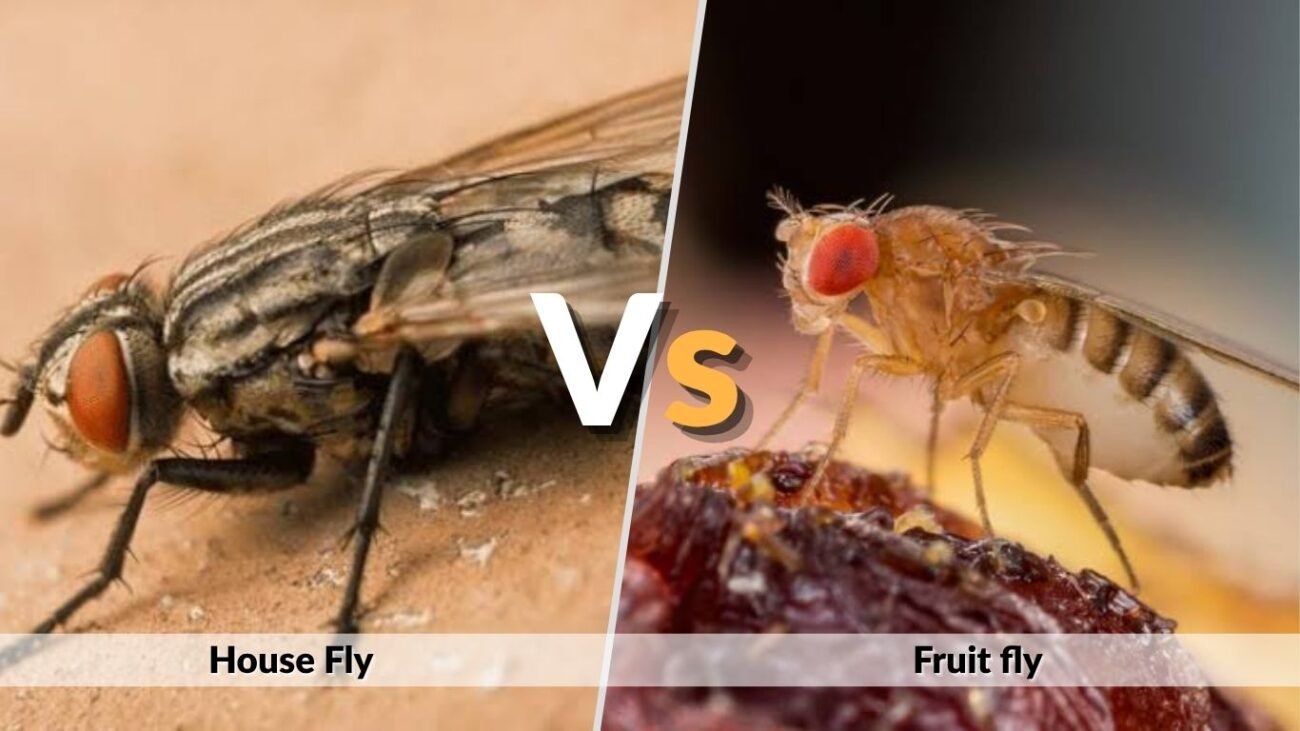
Not every fly found inside a house is a house fly. Species have different breeding sources and lifespans, so identification is important when controlling an infestation.
| Indoor Insect | Typical Characteristics |
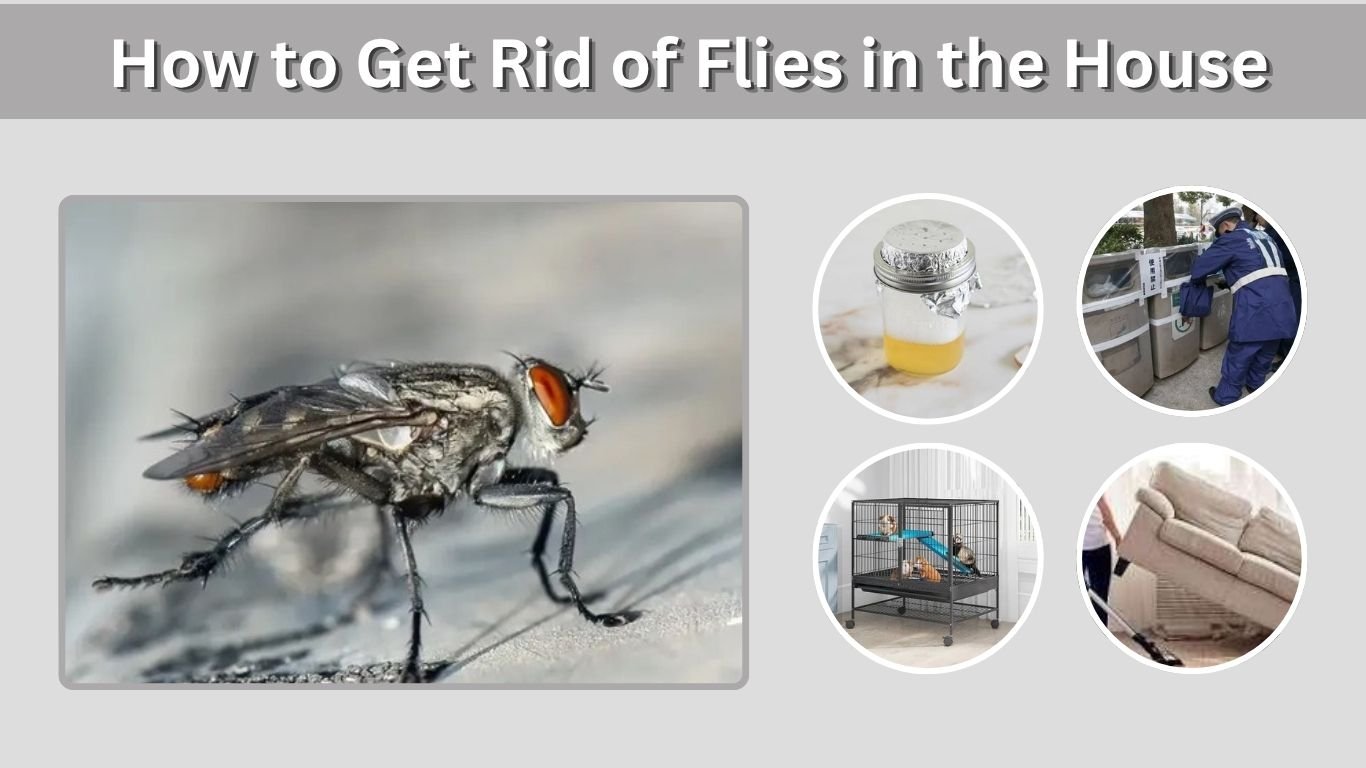
| House fly | Medium-sized, gray body with four dark thoracic stripes |
| Lesser house fly | Smaller and slimmer; males often hover in shaded rooms |
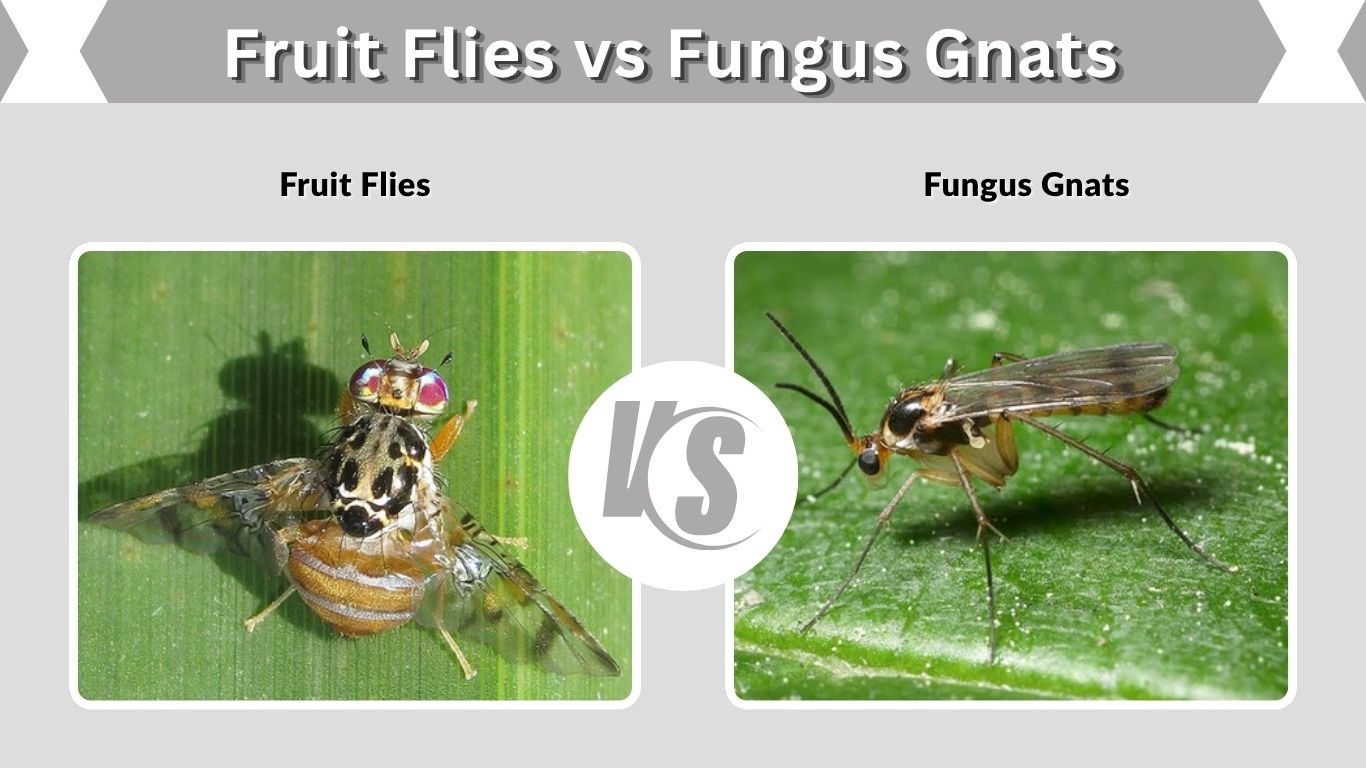
| Fruit fly | Tiny, tan or brown fly commonly found near fermenting fruit |
| Crane fly | Large, long-legged insect that resembles an oversized mosquito |
| Horse fly | Robust outdoor biting fly that rarely breeds inside houses |
| Flying termite | Not a fly; has four equal-length wings and emerges from a colony |
FAQs
What Is the Lifespan of a Normal House Fly?
A normal adult house fly usually lives for 15–25 days. Under excellent conditions, some individuals may survive for six weeks or as long as two months.
Why Do Flies Keep Appearing If They Live Only a Few Weeks?
New flies continue emerging from hidden breeding material. Because development from egg to adult may take only 7–10 days, several overlapping generations can make an infestation seem continuous.
Will a House Fly Eventually Die Inside My Home?
Yes, but waiting is not an effective control method. A fly with access to food and moisture may reproduce before dying. Removing food residue, garbage, pet waste, and breeding materials prevents replacement generations.
Do Female House Flies Live Longer Than Males?
Females can sometimes live longer under favorable conditions, but both sexes commonly survive for approximately 15–25 days. Temperature, nutrition, moisture, and environmental hazards have a greater influence than sex alone.
Is the House Fly Lifespan Different in the UK?
The species and basic lifespan are the same in the UK. Adult house flies typically live 15–25 days. Cooler outdoor temperatures slow development, while heated buildings can support longer seasonal activity and occasional winter survival.