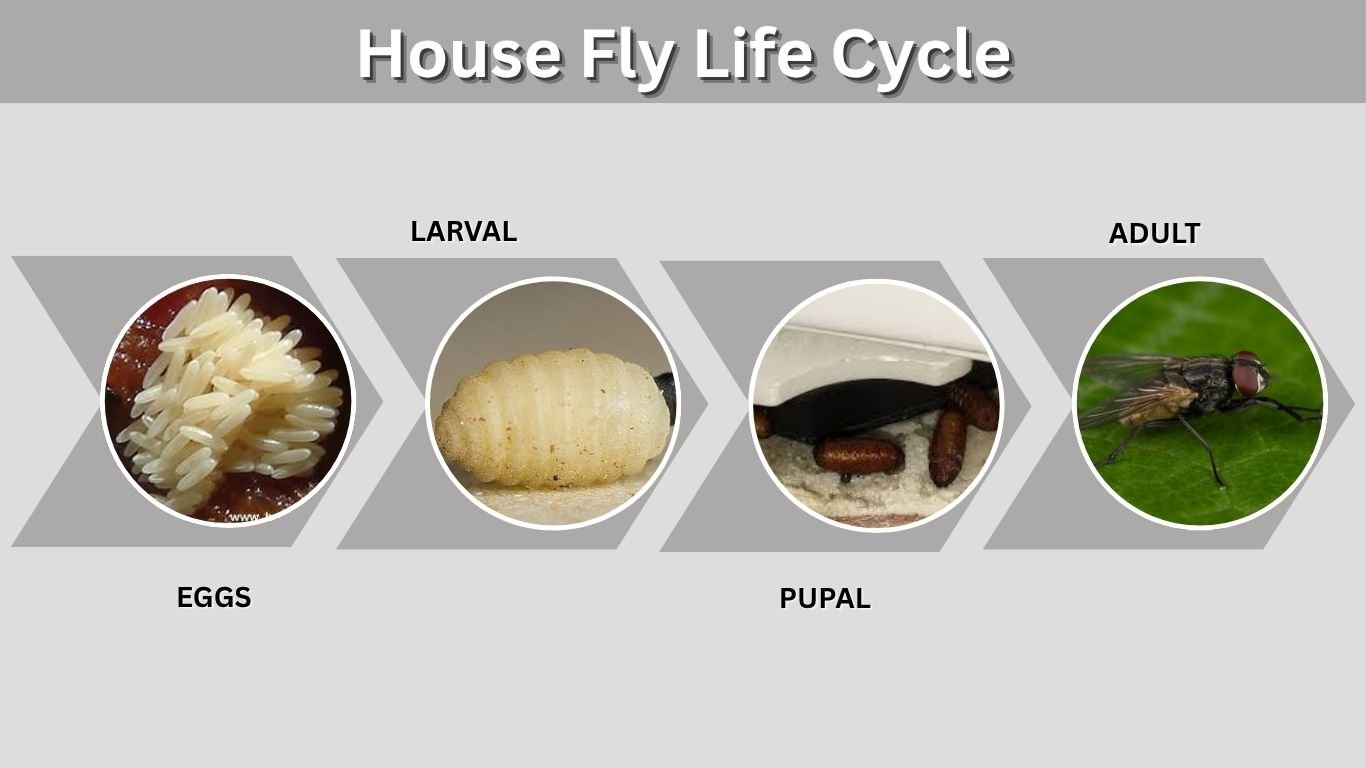
The house fly life cycle has four distinct stages: egg, larva, pupa, and adult. Under warm, favorable conditions, a house fly can develop from an egg into a reproducing adult in as little as 7 to 10 days. Cooler temperatures, limited food, and low moisture slow the process considerably. Understanding each stage makes infestations easier to control because eliminating adult flies alone does not remove the eggs, maggots, or pupae developing in garbage, manure, drains, and other moist organic material.
House Fly Life Cycle at a Glance
The common house fly (Musca domestica) undergoes complete metamorphosis. This means its immature stages look entirely different from the winged adult. Development time varies with temperature, moisture, food availability, and local conditions. A complete cycle may take approximately one to three weeks, although extremely favorable summer conditions can shorten it considerably.
House Fly Life Cycle Timeline
| Life stage | Typical duration | What happens |
| Egg | 8–24 hours | Eggs hatch in warm, moist material |
| Larva or maggot | 4–7 days | Maggots feed and pass through three growth stages |
| Pupa | 2–6 days | The adult develops inside a protective case |
| Adult | About 15–30 days | Adults feed, mate, and lay new batches of eggs |
Warm summer conditions can reduce the egg-to-adult period to approximately 7–10 days, according to the University of Florida. In less favorable environments, development may require several weeks.
Stage 1: House Fly Eggs
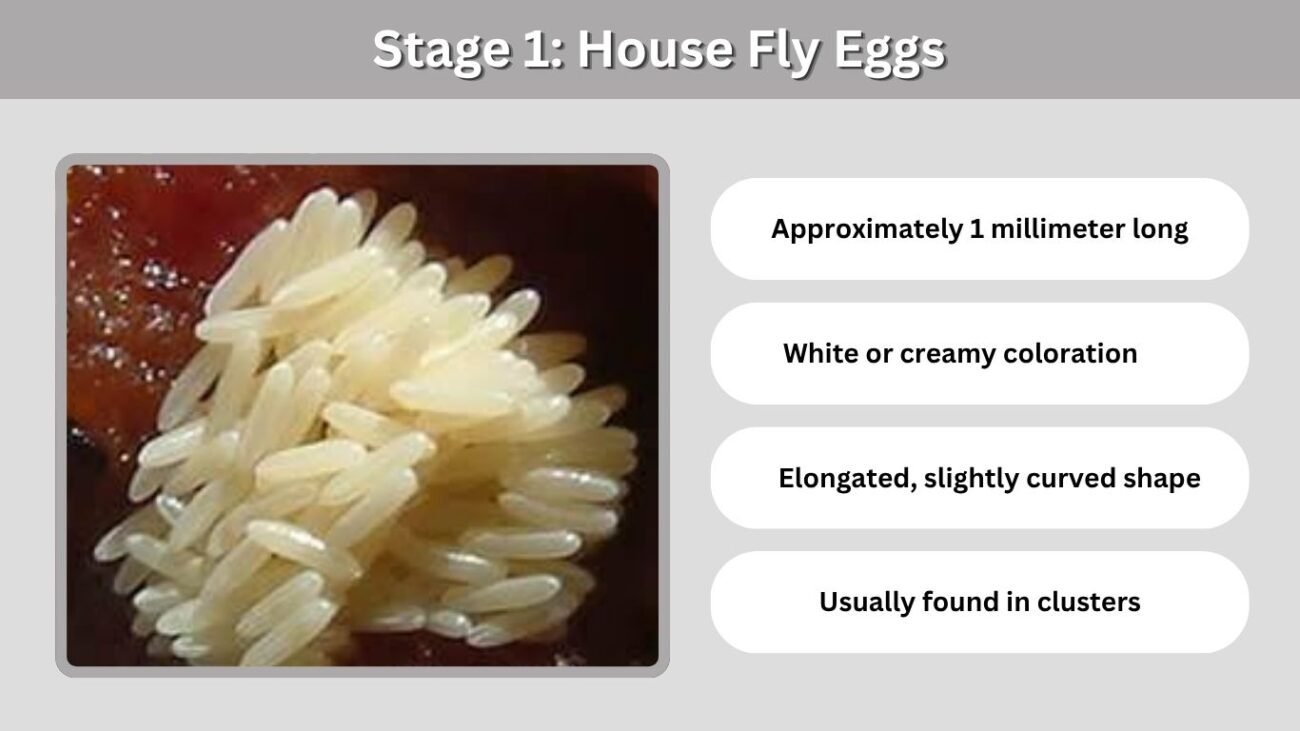
The life cycle begins when a female selects a warm, moist breeding site containing decaying organic matter. Garbage, animal manure, spoiled food, grass clippings, and dirty waste containers provide both moisture and food for the larvae that will soon hatch. Eggs are rarely scattered individually; females usually deposit them together in batches.
What House Fly Eggs Look Like
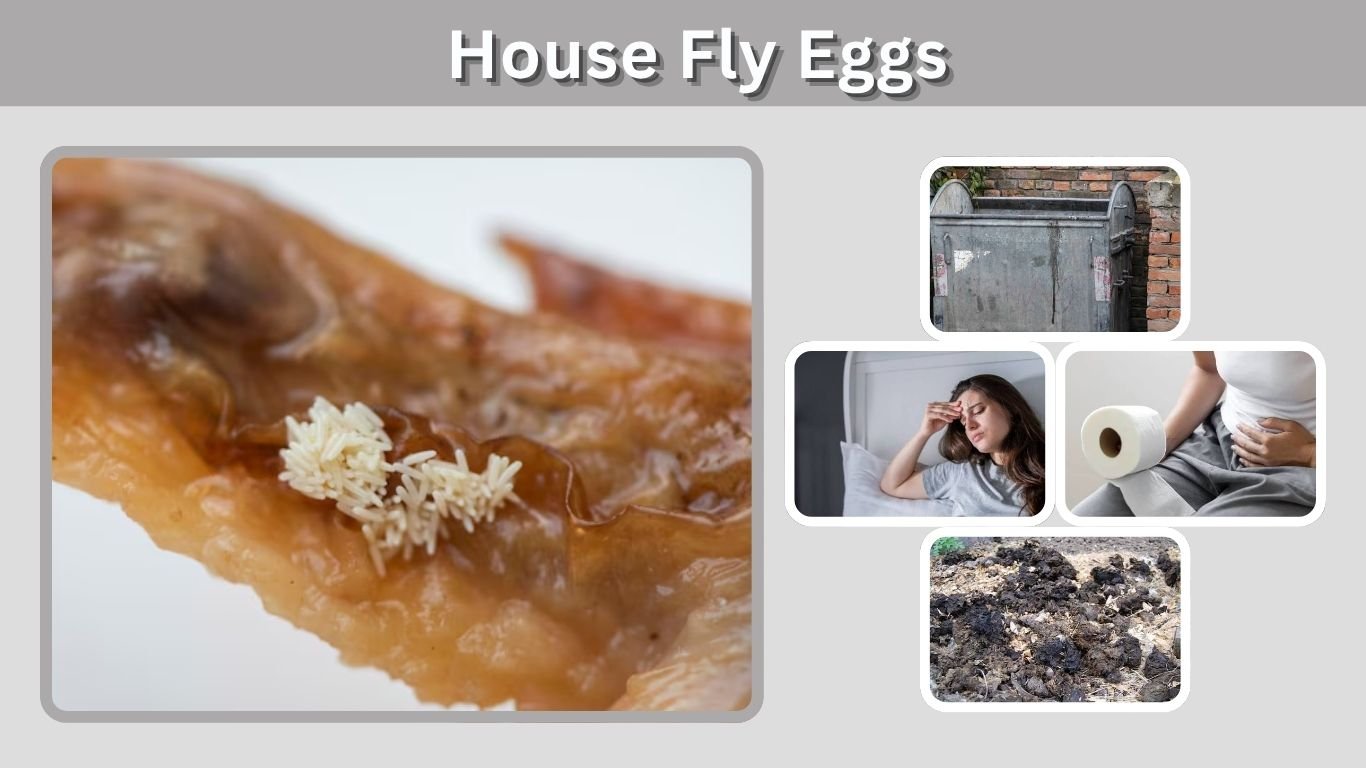
House fly eggs are difficult to notice without close inspection. Their primary identifying features include:
- Approximately 1 millimeter long
- White or creamy coloration
- Elongated, slightly curved shape
- Fine grooves running along the surface
- Usually found in clusters
- Commonly hidden beneath moist waste
A female may deposit approximately 75–150 eggs in one batch and produce several batches during her life. This reproductive capacity explains why a small fly problem can become a major infestation quickly.
How Long House Fly Eggs Take to Hatch
In warm conditions, eggs may hatch within 8–24 hours. Cold or dry conditions delay hatching and may kill some eggs. The newly emerged larvae immediately move deeper into the breeding material, where moisture protects them from drying out.
Stage 2: House Fly Larvae
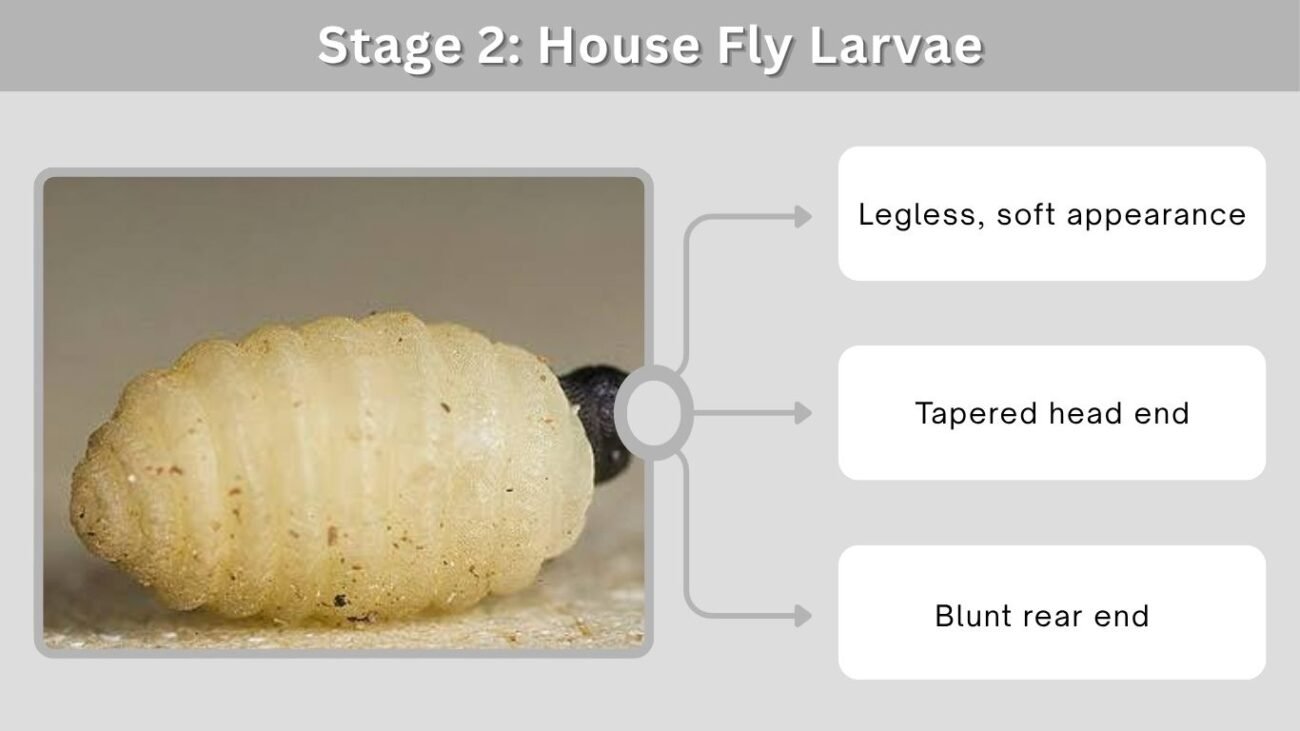
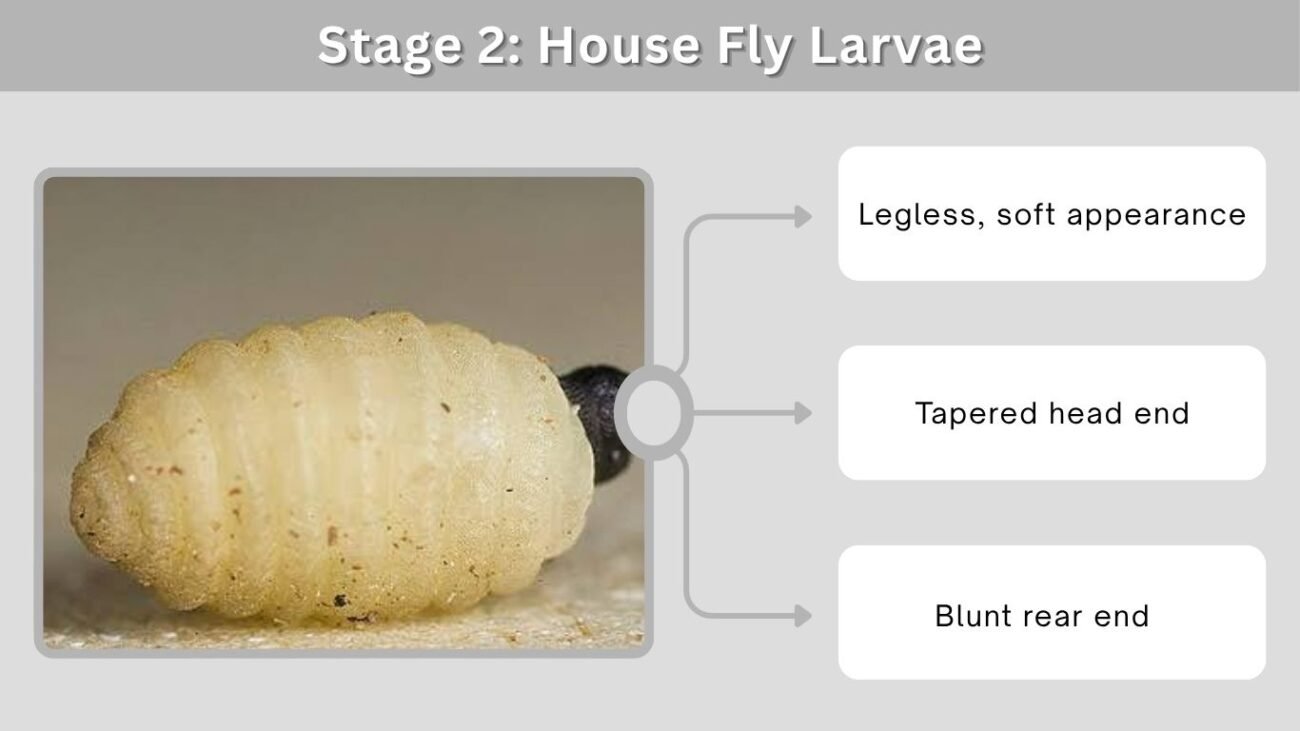
House fly larvae are commonly called maggots. They are the main feeding and growing stage of the life cycle. Unlike adults, maggots have no wings, visible legs, or clearly defined head. Their tapered bodies help them move through wet organic material while feeding on microorganisms and decomposing matter.
What House Fly Maggots Look Like
House fly larvae can be identified by several characteristics:
- Creamy white or pale yellow body
- Legless, soft appearance
- Tapered head end
- Blunt rear end
- Approximately 3–12 millimeters long, depending on age
- Wriggling or crawling movement
The larval period contains three developmental phases called instars. The maggot molts between each instar, becoming larger every time. Under favorable conditions, this stage usually lasts four to seven days.
Where Maggots Develop
House fly maggots require moist, nutrient-rich material. Common breeding locations include garbage bins, animal bedding, manure, compost containing food waste, rotting vegetables, dead animals, and neglected organic material beneath appliances.
When fully grown, the larvae stop feeding and crawl toward a drier, cooler location. They may move several feet away from the original breeding material before entering the pupal stage. This behavior explains why pupae sometimes appear beneath cabinets or along wall edges rather than directly inside the waste.
Stage 3: House Fly Pupae
The pupa is a nonfeeding transformation stage. The mature larva contracts, and its outer skin hardens into a protective case known as a puparium. Inside this case, the legless maggot reorganizes into a winged adult fly.
What House Fly Pupae Look Like
House fly pupae are usually:
- Oval or capsule-shaped
- Approximately 8 millimeters long
- Yellowish at first
- Red-brown or dark brown as they mature
- Stationary and enclosed in a hard case
- Located in relatively dry, protected spaces
The pupal stage often lasts two to six days in warm weather. Lower temperatures can extend it significantly. Because pupae do not feed, ordinary food baits have little effect on them.
Once development is complete, the adult pushes open one end of the puparium using an inflatable sac on its head. After emerging, the fly expands its wings and allows its outer body to harden.
Stage 4: Adult House Fly
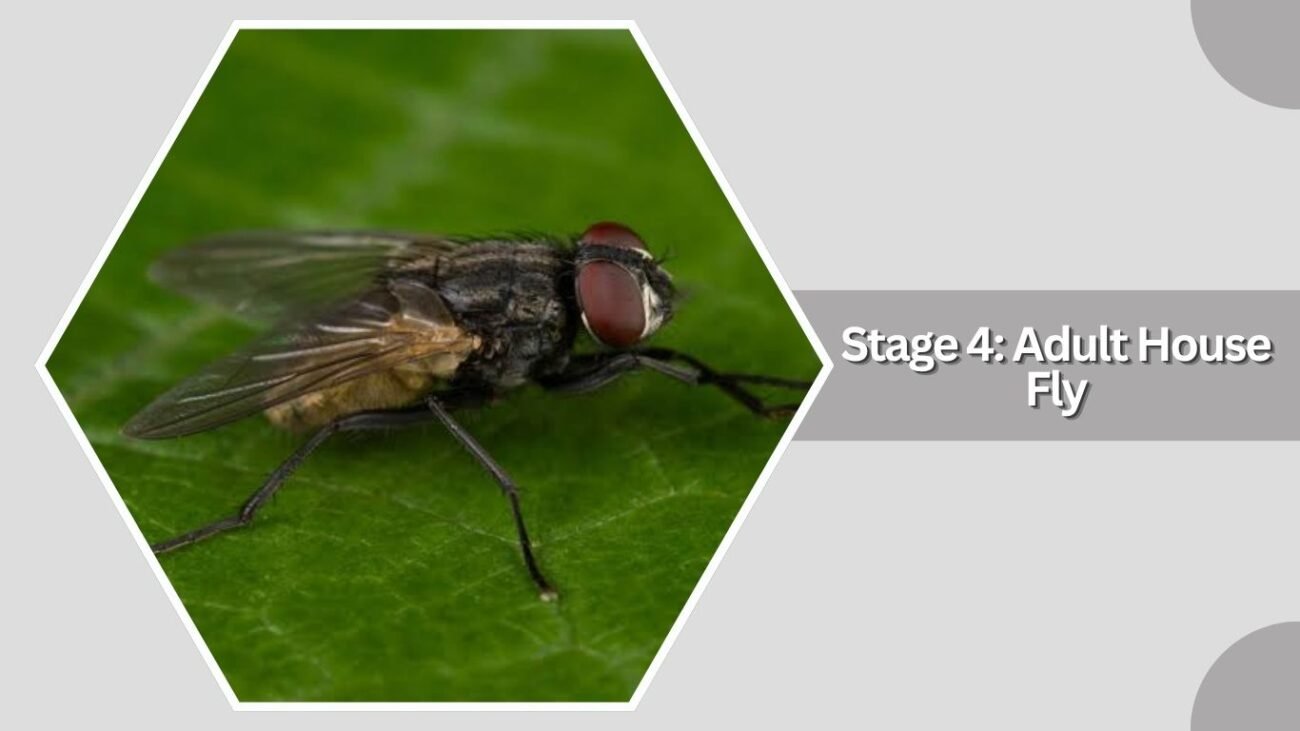
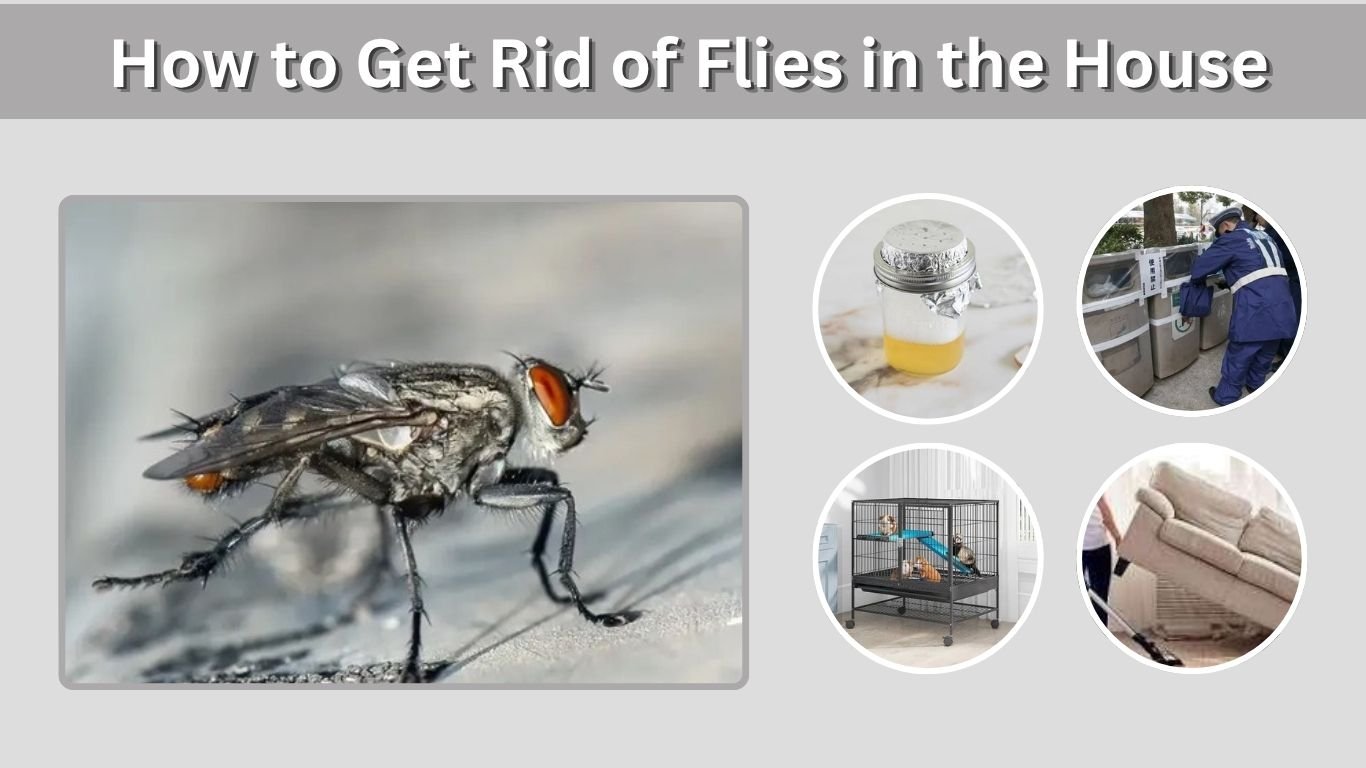
A newly emerged house fly is initially soft, pale, and unable to fly. Within a short period, its body darkens and its wings become functional. Adults have gray bodies, reddish compound eyes, two wings, and four dark stripes running lengthwise across the thorax.
Adult Development and Reproduction
Adult house flies feed by releasing saliva onto solid material and consuming the resulting liquid. They are attracted to food, waste, animal feces, sugary substances, and other organic material.
Females generally mate soon after reaching maturity. After mating and obtaining suitable nutrition, they search for moist breeding material in which to deposit their eggs. Each new batch begins another generation.
Several generations may develop during one warm season. Overlapping generations mean that eggs, larvae, pupae, and adults can all be present around the same property simultaneously.
How Long Adult House Flies Live
Adult house flies commonly survive for approximately two to four weeks, although lifespan varies with food, temperature, humidity, predators, and pest-control measures. Adults may live longer in cool, protected environments because their metabolism and activity slow down.
How Temperature Affects the Life Cycle
Temperature strongly influences every stage of house fly development. Warm conditions accelerate egg hatching, larval growth, pupation, and adult reproduction. This is why house fly populations often increase rapidly during summer and in heated livestock buildings.
Warm and Cool Conditions
- Warm weather: Development may finish in 7–10 days.
- Moderate weather: The cycle often requires two or three weeks.
- Cool weather: Growth slows and may require several weeks.
- Freezing conditions: Exposed eggs and larvae often die, but protected stages may survive.
Penn State Extension notes that environmental conditions can lengthen the egg-to-adult period beyond the typical warm-weather cycle. Moisture is also essential: overly dry breeding material prevents eggs and maggots from developing successfully.
What Happens to House Flies in Winter?
House flies do not necessarily disappear during winter. In cold climates, outdoor reproduction slows or stops, but flies can survive in protected places. Pupae may remain inside manure, garbage, soil, wall spaces, or other sheltered material until conditions improve.
Adults can remain active throughout the year in heated homes, restaurants, barns, poultry houses, and waste facilities. If a building continually provides warmth, moisture, food, and breeding material, the house fly life cycle may continue even during winter.
How to Break the House Fly Life Cycle
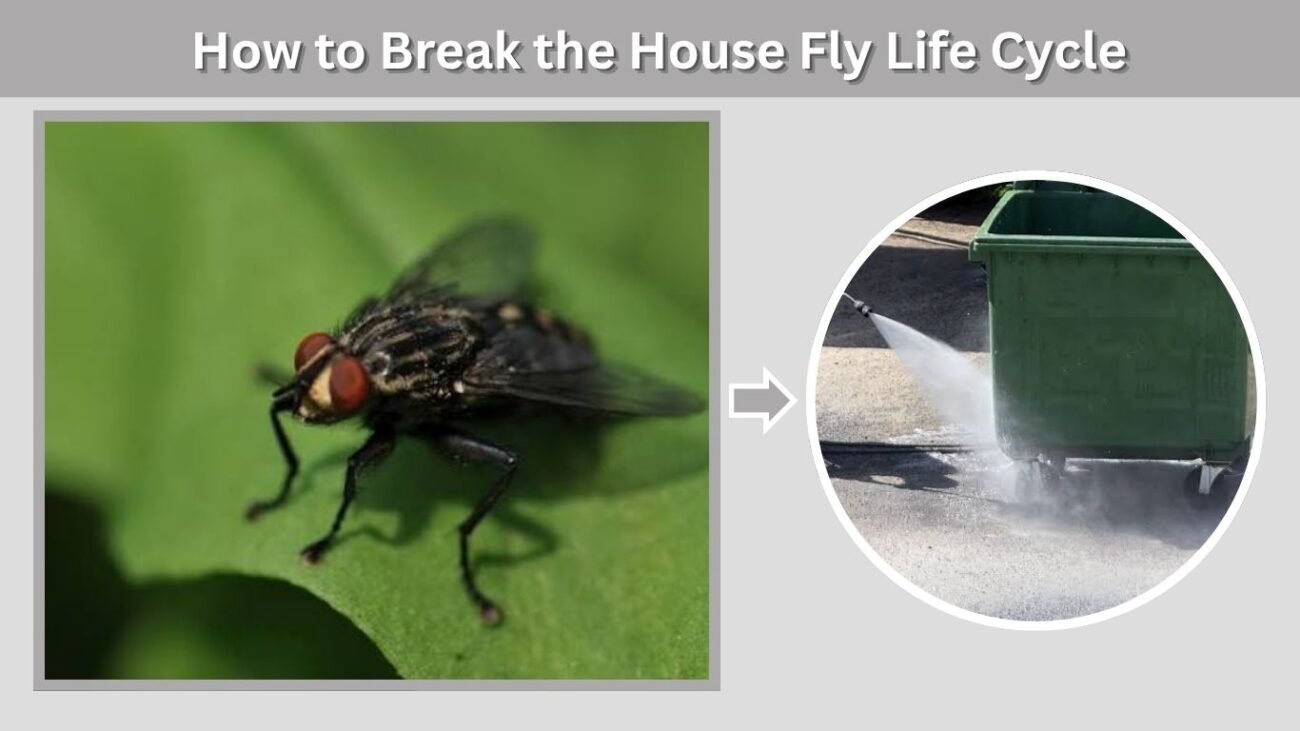
Successful control must target breeding material as well as adult flies. Killing visible adults provides temporary relief, but hidden eggs, maggots, and pupae can produce another generation within days.
Remove Breeding Sources
- Empty indoor garbage frequently.
- Wash bins to remove wet residue.
- Keep outdoor waste containers tightly closed.
- Clean spills beneath refrigerators and appliances.
- Remove pet waste from yards and litter areas.
- Store animal feed in sealed containers.
- Avoid placing meat, dairy, or greasy food in open compost.
- Fix leaking pipes and improve drainage.
Stop Adult Flies From Entering
Repair window screens, install door sweeps, seal openings around utility lines, and keep doors closed when possible. Food should remain covered, especially in kitchens and dining areas.
Fly traps and sticky strips can reduce adult numbers, but sanitation remains the most effective long-term measure. Heavy or recurring infestations may indicate concealed waste, a dead animal, damaged plumbing, or another overlooked breeding source.
House Fly vs. Lesser House Fly Life Cycle
The lesser house fly is a different species, commonly called Fannia canicularis. Its adults often fly slowly in circles around rooms. Its flattened, spiny larvae look noticeably different from the smooth, tapered maggots of common house flies.
The lesser house fly also develops through egg, larva, pupa, and adult stages, but its complete cycle generally takes longer. Finding circling flies indoors may therefore require investigating poultry manure, animal waste, decaying vegetation, or other moist breeding material.
FAQs
How many stages are in a house fly’s life cycle?
A house fly has four life stages: egg, larva or maggot, pupa, and adult. This developmental pattern is known as complete metamorphosis.
How long is the complete house fly life cycle?
The cycle commonly lasts one to three weeks. In very warm and favorable conditions, development from egg to adult can occur in approximately 7–10 days.
Where do house flies lay their eggs?
Females lay eggs in moist organic material such as garbage, manure, spoiled food, animal waste, and decomposing vegetation.
Can house flies reproduce inside a home?
Yes. They can reproduce indoors when they find warm, damp breeding material. Dirty garbage containers, pet waste, food residue, and hidden decaying material are common sources.
Are fruit flies and house flies the same?
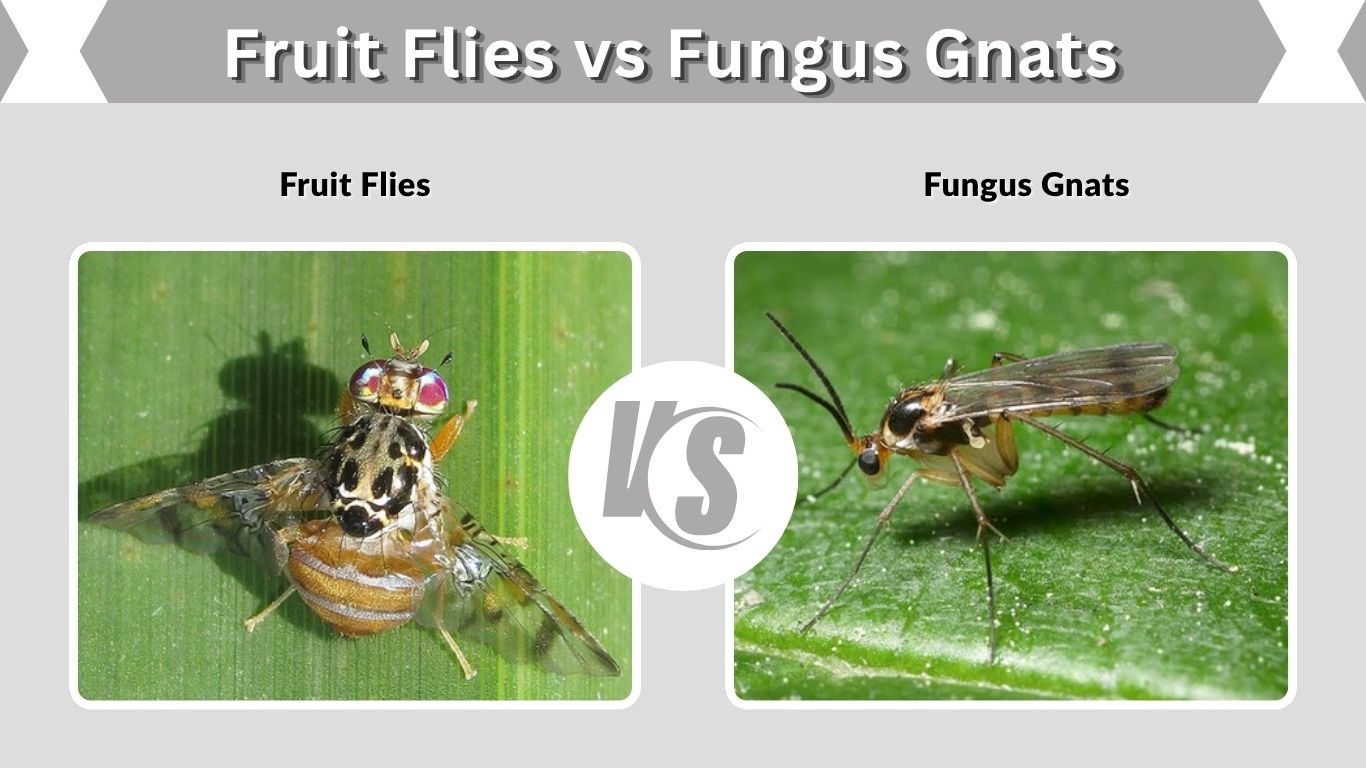
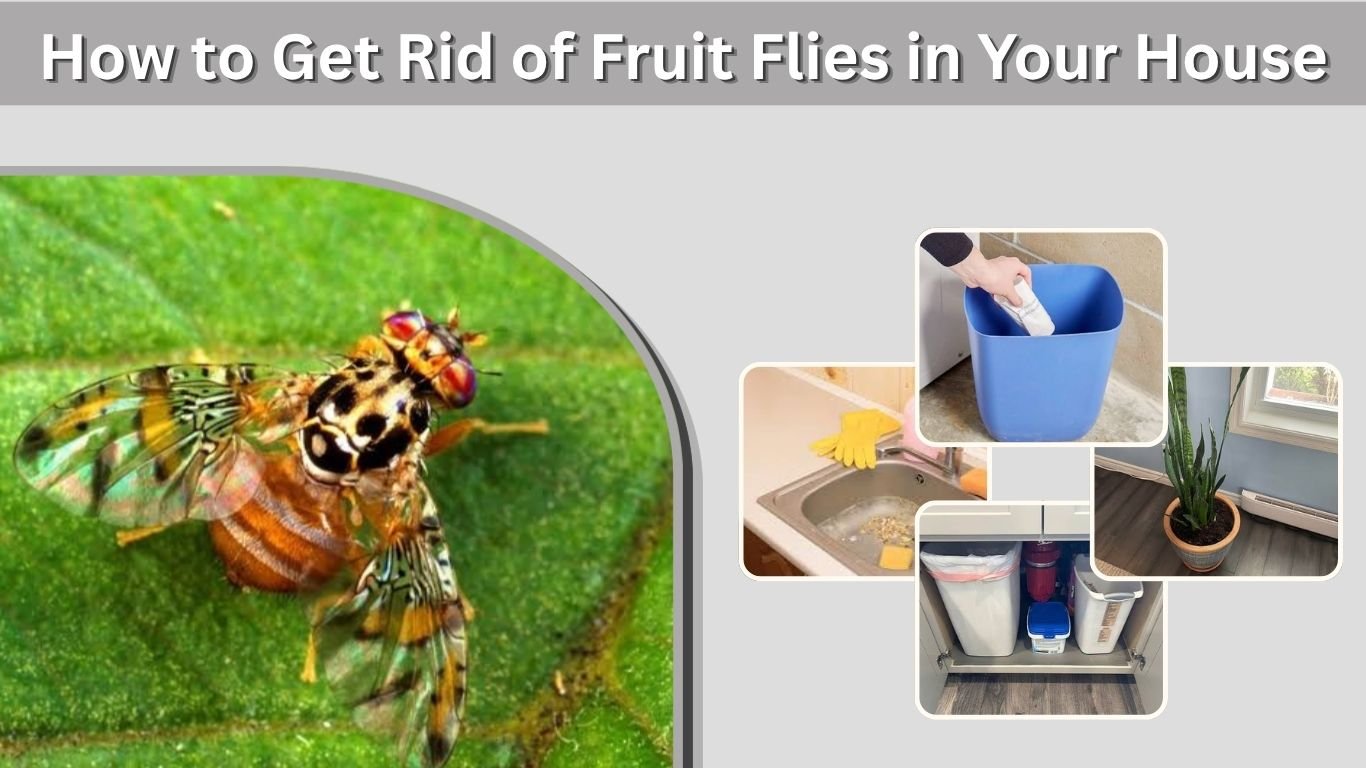
No. Fruit flies are smaller and usually reproduce in fermenting fruit, beverages, or drain residue. House flies are larger and commonly breed in garbage, manure, and other decomposing organic matter.