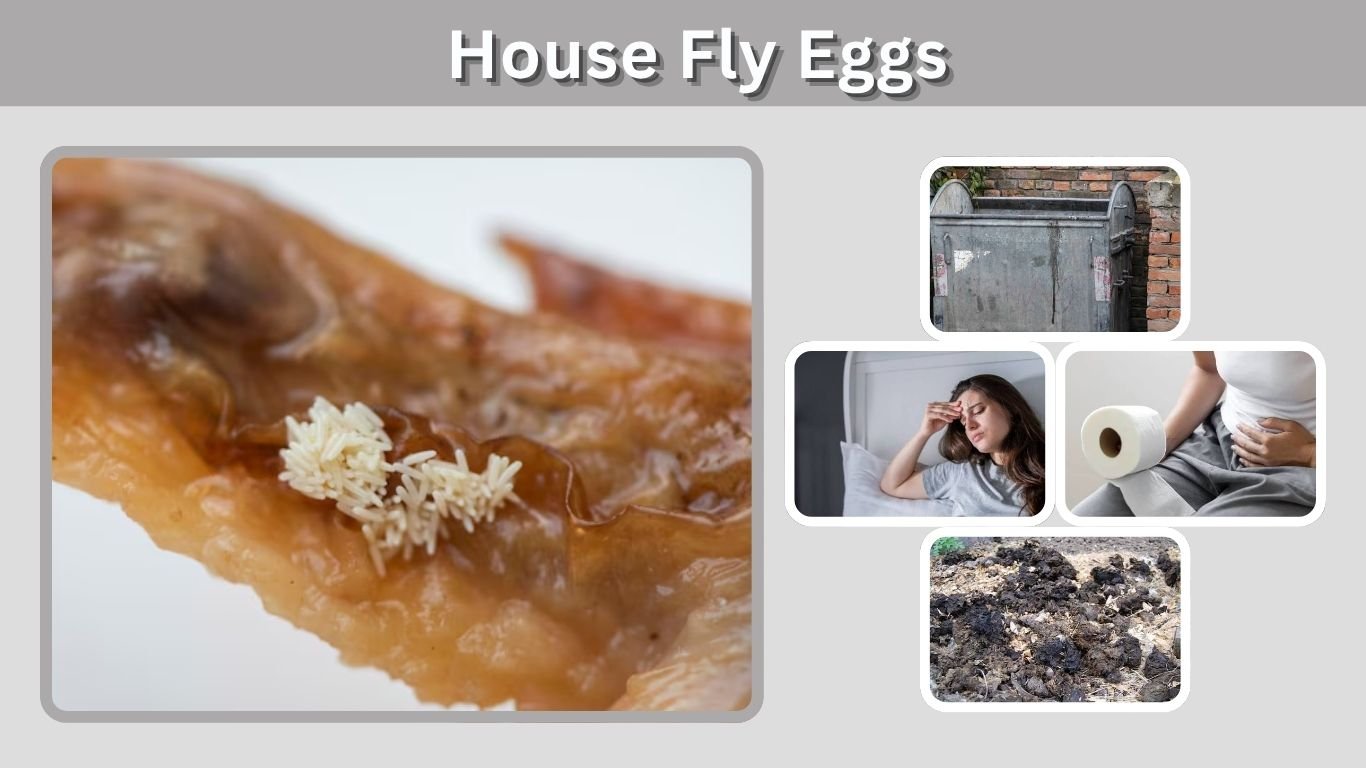
House fly eggs are tiny, white, elongated eggs laid in moist organic material where newly hatched maggots can immediately find food. A female house fly (Musca domestica) typically chooses garbage, animal waste, rotting food, manure, or other decomposing material rather than clean walls or dry household surfaces. The eggs can hatch extremely quickly under warm conditions, often within about a day. Finding house fly eggs indoors usually means there is a nearby breeding source that should be removed before the larvae develop into more adult flies.
What Do House Fly Eggs Look Like?
House fly eggs are very small and may be difficult to recognize without looking closely. They are generally deposited in groups rather than scattered individually.
House Fly Egg Identification
Typical house fly eggs are:
- White to creamy white
- Approximately 1 mm long
- Elongated and slightly curved
- Narrow at the ends
- Similar in appearance to tiny grains of rice
- Usually found in clusters
- Motionless
Fresh eggs do not crawl or move. If small white organisms are wriggling, they are probably newly hatched fly larvae, commonly called maggots.
Can You See House Fly Eggs?
Yes, house fly eggs are visible to the naked eye, but their small size makes them easy to overlook.
They are easiest to notice when several eggs are grouped together on dark food waste, garbage, manure, or other breeding material.
A magnifying glass can help distinguish eggs from crumbs, mold, or small larvae.
Where Do House Flies Lay Eggs?
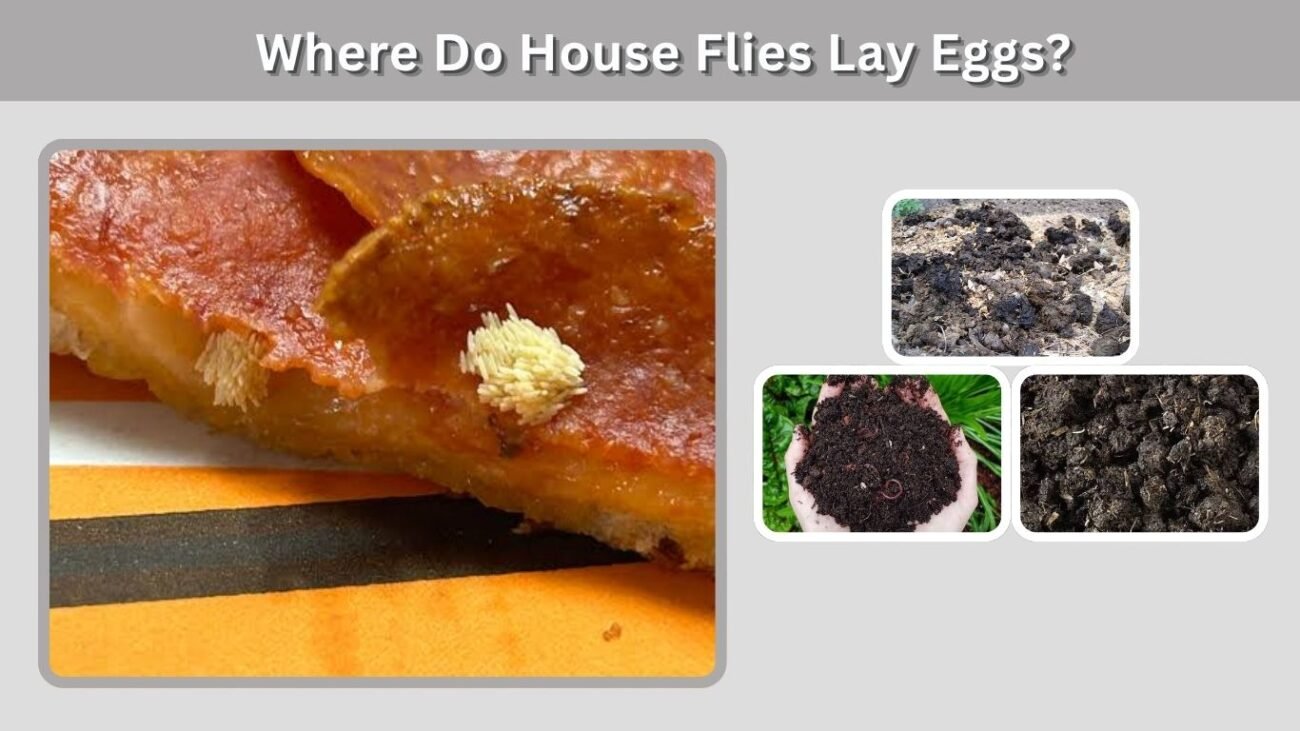
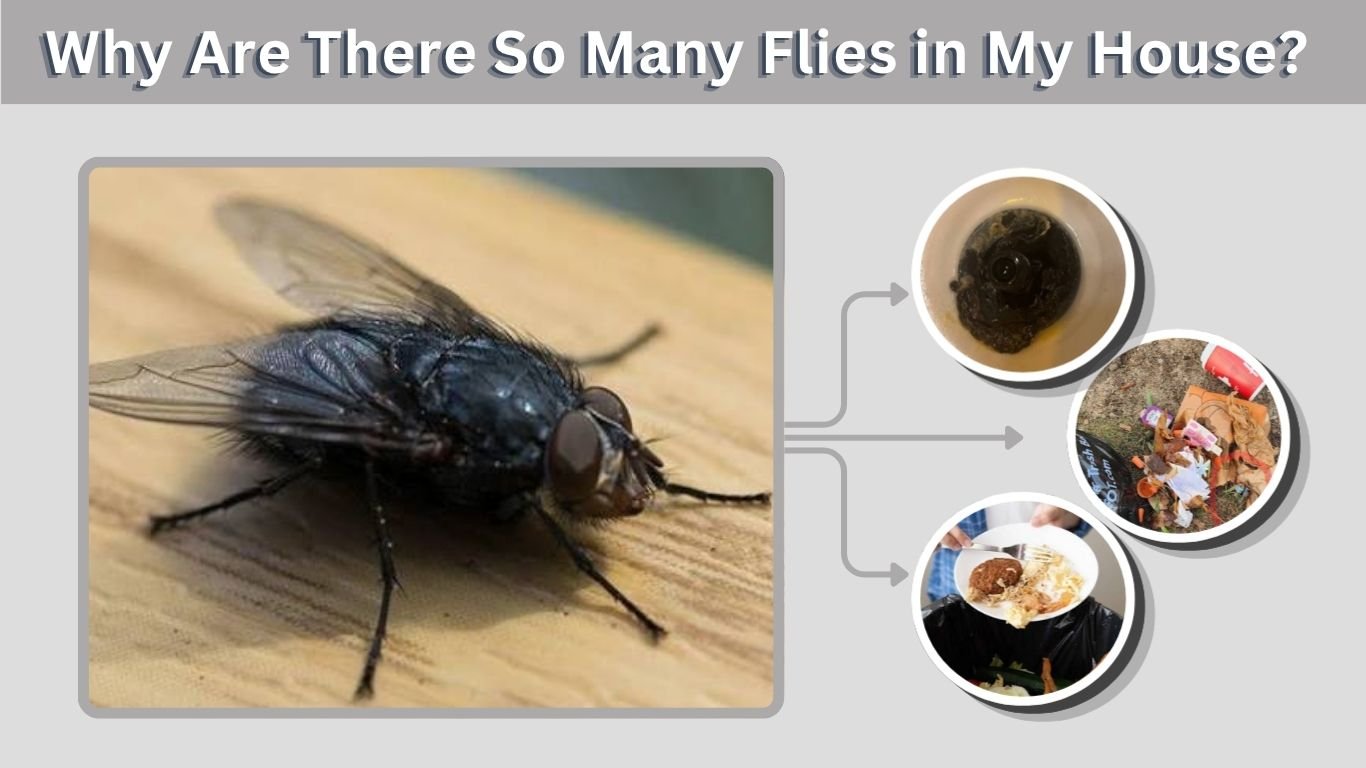
Female house flies deliberately seek moist, decomposing material because their larvae need organic matter immediately after hatching.
A clean, dry house usually does not provide suitable breeding conditions unless food waste, animal waste, or another source is available.
Common Egg-Laying Sites
House flies may lay eggs in:
- Garbage
- Rotting food
- Animal manure
- Pet waste
- Compost
- Decaying plant material
- Spoiled meat
- Food scraps
- Dirty trash containers
- Dead animals
- Wet organic debris
Indoors, trash cans and forgotten food are among the most likely breeding sources.
House Fly Eggs on Food
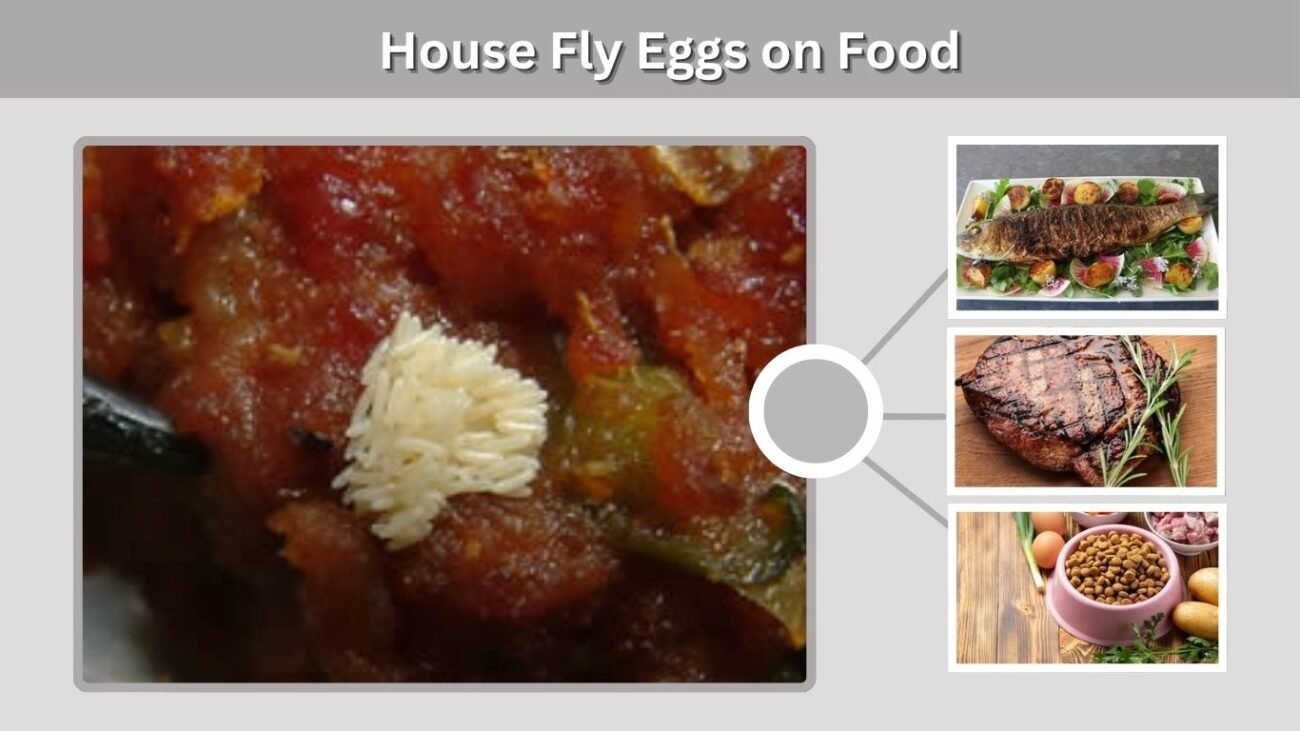
House flies may lay eggs on food when it has been left exposed long enough and provides suitable conditions for larvae.
Animal products and decomposing foods are particularly attractive.
Foods That May Attract Egg-Laying Flies
Potential breeding materials include:
- Meat
- Fish
- Pet food
- Pizza with meat toppings
- Leftovers
- Spoiled vegetables
- Food scraps
- Wet garbage
A fly briefly landing on food does not necessarily mean it immediately laid eggs.
However, food that has been exposed for an extended period, especially in warm conditions with several flies present, is more concerning.
What Should You Do If You Find Fly Eggs on Food?
Discard the affected food.
Do not simply remove the visible eggs and eat the remaining portion because flies may have contacted other areas of the food.
Place contaminated food in a sealed trash bag and clean the surrounding surface.
House Fly Eggs on Cat or Dog Food
Wet pet food can attract house flies quickly, especially during warm weather.
If food sits outside or indoors for extended periods, females may deposit eggs on it.
Prevention Tips
- Serve smaller portions.
- Remove uneaten wet food promptly.
- Wash pet bowls daily.
- Keep feeding areas clean.
- Store pet food in sealed containers.
- Keep outdoor feeding areas away from garbage.
Discard pet food if you can clearly see fly eggs or maggots.
House Fly Eggs on Walls or Windows
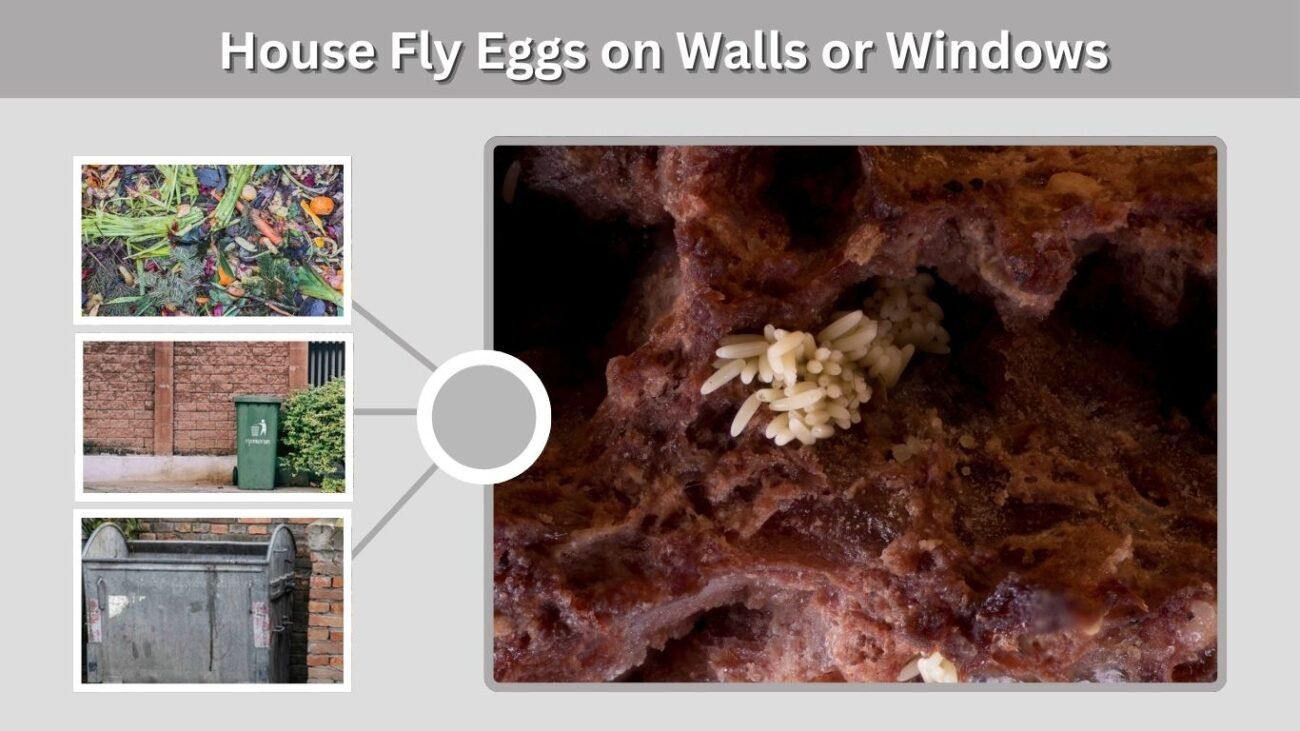
House flies do not normally choose clean walls or windows as breeding sites because their larvae would have nothing to eat after hatching.
If you find small white clusters on a wall, they may belong to another insect.
Why Eggs May Appear Near a Wall
Possible explanations include:
- Organic material is hidden nearby.
- A trash container is close to the wall.
- A dead animal is inside a wall void.
- The objects are not actually house fly eggs.
- Larvae have moved away from their feeding source to pupate.
House fly larvae commonly leave moist breeding material when ready to pupate, so maggots may appear on floors or near walls even though eggs were deposited elsewhere.
House Fly Eggs in Carpet
House flies rarely lay eggs directly in clean, dry carpet.
However, carpet contaminated with food, pet waste, vomit, or other organic material could potentially become attractive.
What to Check
If eggs or maggots appear around carpet:
- Look under furniture.
- Check for spilled food.
- Inspect pet feeding areas.
- Look for pet waste.
- Check nearby trash.
- Search for a dead rodent or other animal.
Removing the breeding source is far more important than treating the carpet alone.
How Long Do House Fly Eggs Take to Hatch?
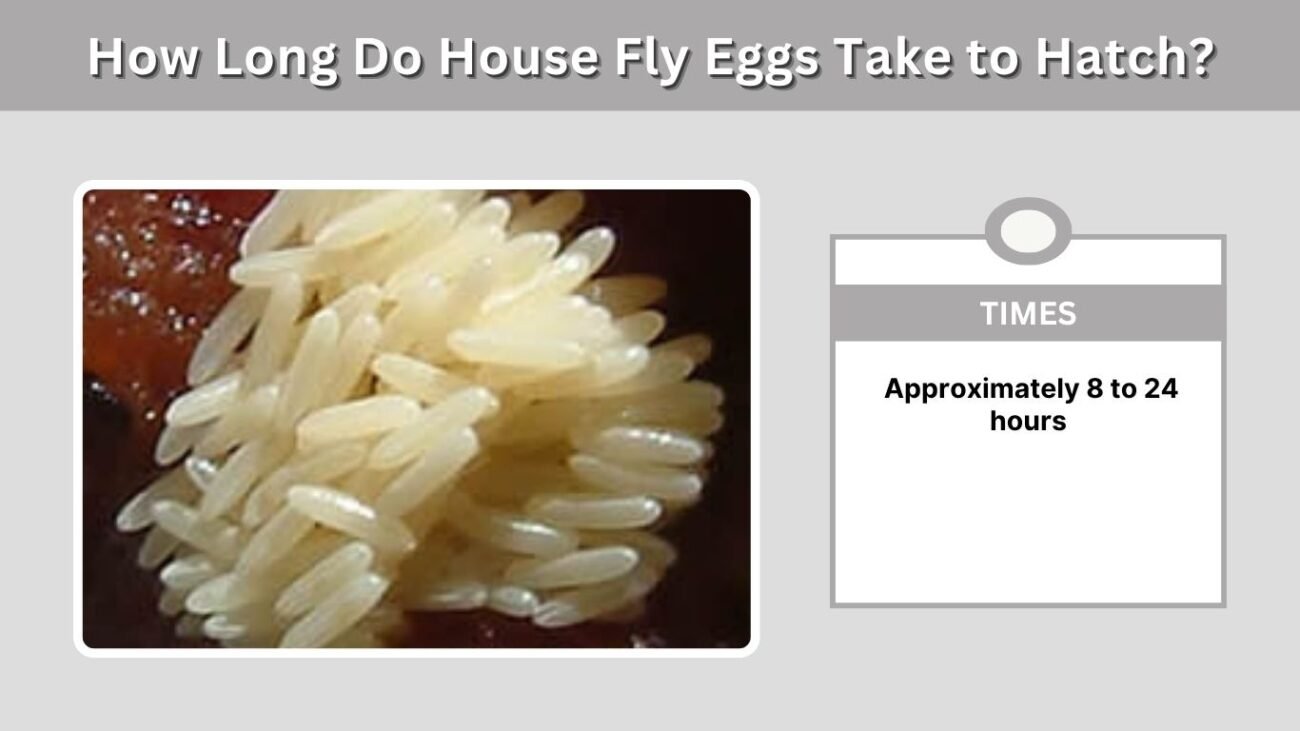
House fly eggs develop quickly.
Under warm, favorable conditions, they commonly hatch within approximately 8 to 24 hours.
Temperature strongly influences development. Warmer conditions generally speed up the life cycle, while cooler temperatures slow it.
What Happens After the Eggs Hatch?
The life cycle proceeds through:
- Egg
- Larva or maggot
- Pupa
- Adult house fly
After hatching, maggots immediately begin feeding on the surrounding organic material.
They grow rapidly and molt several times before leaving the wet feeding material to find a drier place for pupation.
How Many Eggs Does a House Fly Lay?
A female house fly can produce a large number of eggs during her lifetime.
Eggs are generally deposited in batches, with one batch often containing roughly 75 to 150 eggs.
A female may lay several batches during her lifetime, potentially producing hundreds of eggs when conditions are favorable.
Why House Fly Populations Grow So Fast
Several factors contribute:
- Females produce many eggs.
- Eggs hatch rapidly.
- Larvae develop quickly in warm weather.
- Several generations can occur during favorable seasons.
- Garbage and manure provide abundant breeding material.
This is why a small fly problem can become a noticeable infestation surprisingly quickly.
Are House Fly Eggs Dangerous?
The eggs themselves do not bite, sting, or inject venom.
The main concern is contamination.
House flies frequently visit garbage, feces, manure, and decomposing organic matter. Their bodies and digestive systems can carry microorganisms from these unsanitary places to food and food-contact surfaces.
Should You Eat Food With Fly Eggs?
No.
Food containing visible house fly eggs or maggots should be discarded rather than washed or cooked for consumption.
This is especially important for foods that have remained unrefrigerated or exposed long enough for flies to reproduce.
What Happens If You Accidentally Eat House Fly Eggs?
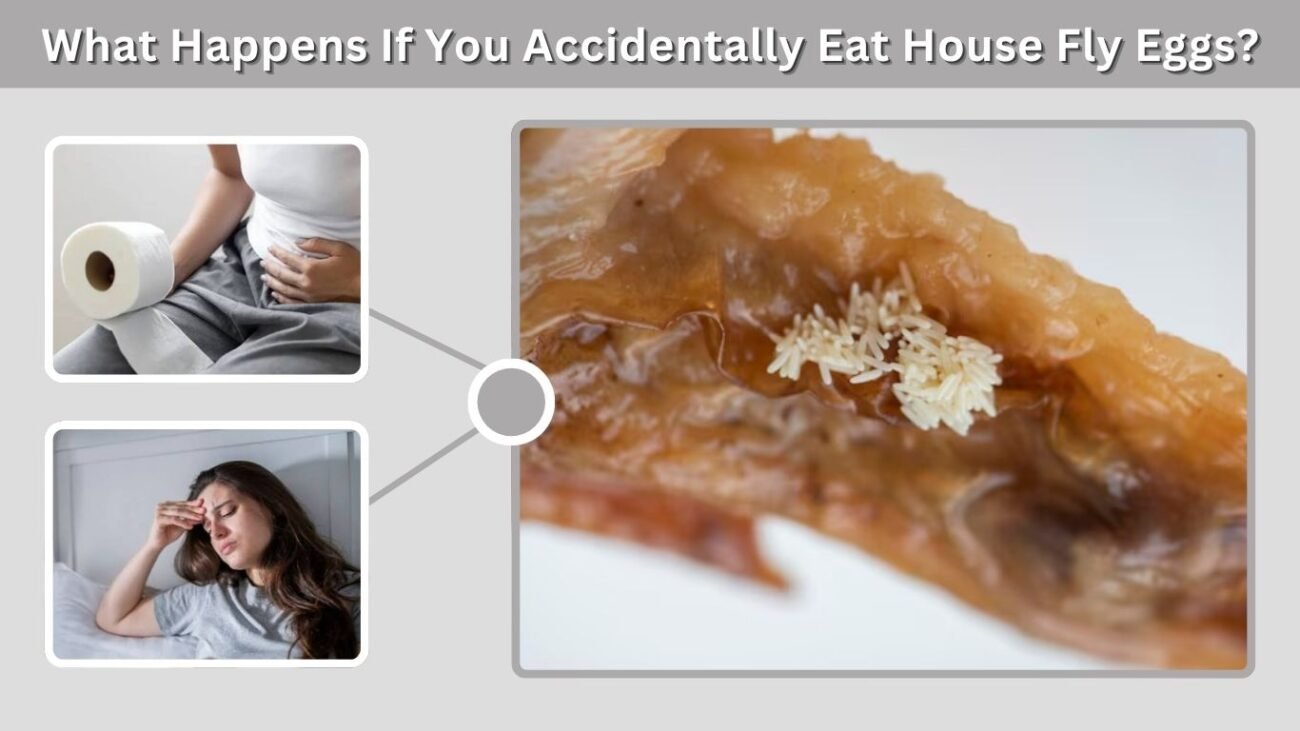
Accidentally swallowing a tiny number of house fly eggs does not automatically mean they will hatch and establish themselves inside your stomach.
Normal stomach acidity and digestive processes create a hostile environment for house fly development.
However, eating contaminated food can still expose you to bacteria or other microorganisms associated with spoiled food and fly activity.
When to Seek Medical Advice
Contact a healthcare professional if contaminated food consumption is followed by:
- Persistent vomiting
- Severe diarrhea
- High fever
- Significant abdominal pain
- Dehydration
- Blood in stool
The greater concern is usually foodborne illness rather than ordinary house fly eggs successfully developing in the stomach.
Do House Flies Lay Eggs or Maggots?
House flies normally lay eggs.
The eggs hatch into maggots shortly afterward.
Therefore:
Adult fly → egg → maggot → pupa → adult fly
If you suddenly notice maggots in garbage, the eggs may have already hatched before you discovered them.
Because the eggs are tiny and can hatch within a day, people often never see the egg stage.
How to Find House Fly Eggs in Your House
If adult house flies are multiplying indoors, look for moist organic material rather than checking every wall and window.
Places to Inspect
Check:
- Kitchen trash cans
- Garbage bags
- Pet food bowls
- Pet waste areas
- Compost containers
- Forgotten food
- Under appliances
- Dirty mop buckets
- Outdoor garbage bins
- Animal cages
- Dead rodents or birds
- Decaying material in garages
A strong unpleasant odor can sometimes indicate a hidden dead animal that is supporting fly development.
How to Get Rid of House Fly Eggs
Removing eggs is relatively easy once the breeding source is found.
The most important step is to eliminate the material in which they were laid.
House Fly Egg Removal
- Put contaminated food or waste into a sealed bag.
- Remove it from the house.
- Wash the container or surface thoroughly.
- Remove remaining organic residue.
- Dry the area.
- Clean nearby cracks and corners.
- Keep garbage containers covered.
- Continue monitoring for adults.
Vacuuming can help remove eggs or larvae from dry indoor surfaces, but dispose of the vacuum contents promptly.
How to Prevent House Fly Eggs Indoors
Prevention involves making your house unsuitable for reproduction.
Prevention Tips
- Take garbage outside regularly.
- Use trash cans with tight-fitting lids.
- Clean food spills immediately.
- Refrigerate perishable food.
- Cover food left on counters.
- Remove pet waste quickly.
- Do not leave wet pet food sitting out.
- Keep compost containers covered.
- Repair window and door screens.
- Clean garbage bins regularly.
- Investigate unexplained odors.
Reducing access to breeding material is much more effective than repeatedly killing adult flies.
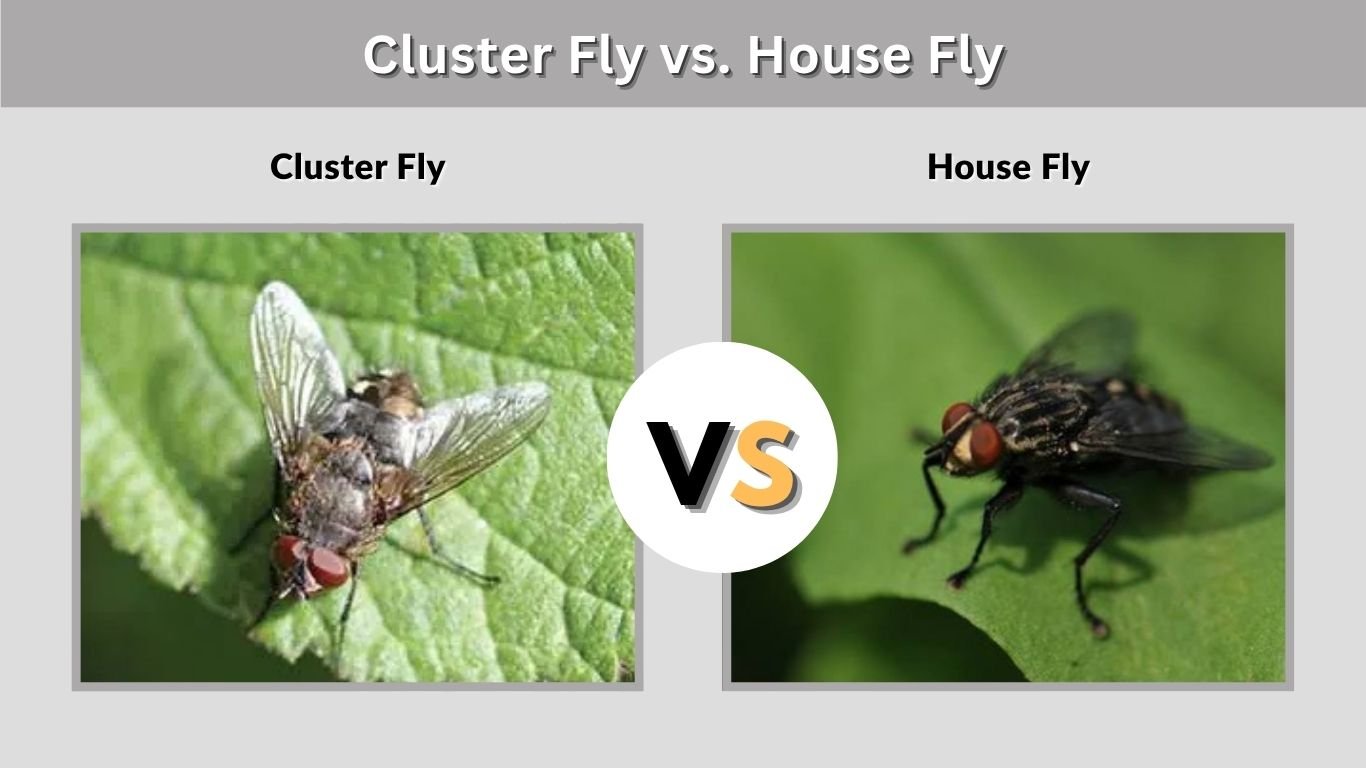
House Fly Eggs vs. Blow Fly Eggs
House fly and blow fly eggs can look very similar.
Both may be small, white, elongated, and grouped together.
The location often provides a useful clue.
Blow flies are especially strongly attracted to:
- Dead animals
- Rotting meat
- Animal carcasses
- Decomposing tissue
House flies have a broader range of breeding materials, including garbage, manure, and decaying food.
Egg appearance alone may not be enough for reliable species identification.
FAQs
What do house fly eggs look like?
They are tiny, white or cream-colored, elongated eggs approximately 1 mm long. Clusters can resemble very small grains of rice.
Where do house flies lay their eggs?
Females usually lay eggs in moist, decomposing organic material such as garbage, manure, spoiled food, pet waste, and decaying plant or animal matter.
How long do house fly eggs take to hatch?
Under warm and favorable conditions, house fly eggs can hatch in approximately 8 to 24 hours.
How many eggs can a house fly lay?
Females commonly deposit roughly 75–150 eggs per batch and may produce several batches, resulting in hundreds of eggs during their lifetime.
How do you get rid of house fly eggs in the house?
Find and remove the breeding source, discard contaminated food or waste, clean the surrounding area thoroughly, keep garbage covered, and eliminate moist organic material that could support additional egg laying.