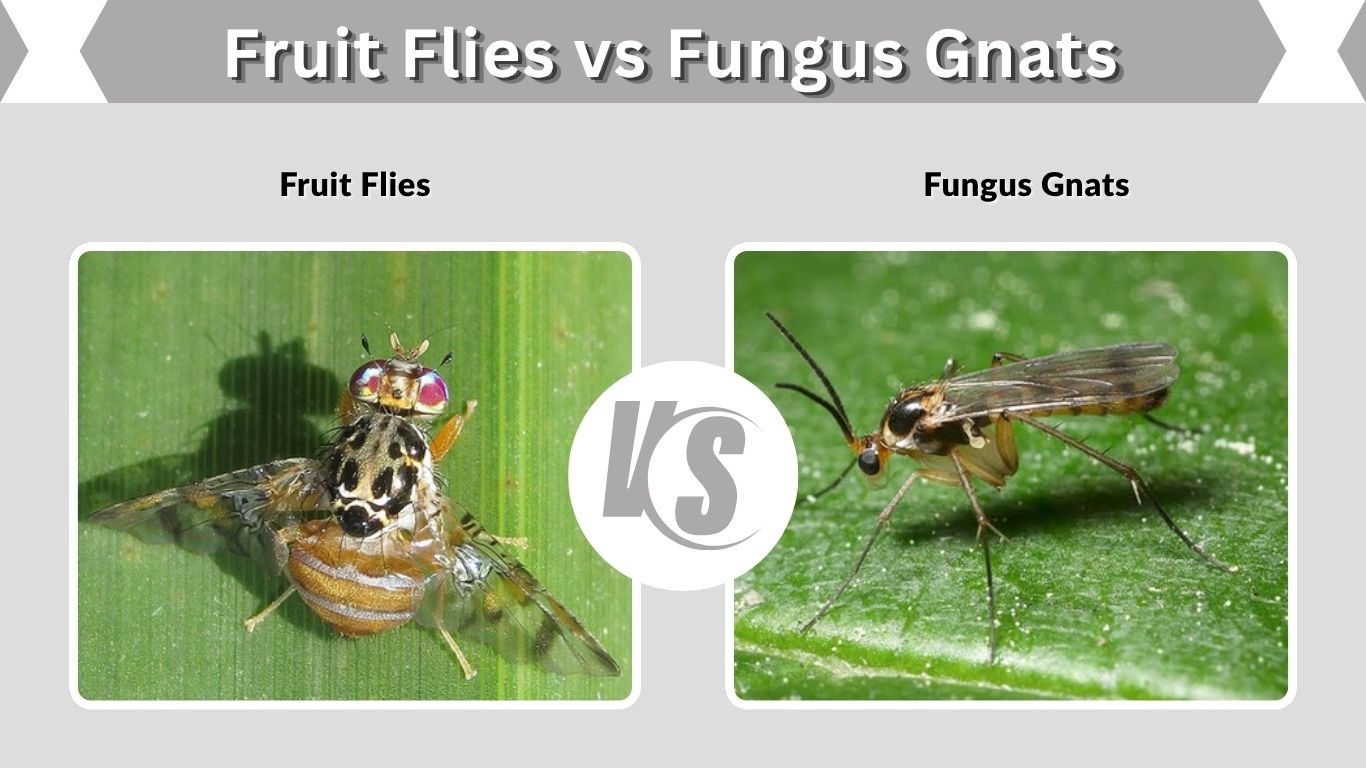
Fruit flies and fungus gnats are tiny flying insects that often appear inside homes, but they come from very different sources. Fruit flies are usually attracted to ripe fruit, fermenting food, garbage, and beverage residue, while fungus gnats are strongly associated with damp houseplant soil and decaying plant material. Their appearance, movement, larvae, and breeding habits also differ. Correct identification is important because fruit fly traps will not solve a fungus gnat problem, and drying plant soil will not eliminate fruit flies breeding in kitchen waste.
Fruit Flies vs Fungus Gnats: Quick Differences
Fruit flies and fungus gnats may look similar from a distance because both are only a few millimeters long. However, their body shape, eye color, flight behavior, and preferred breeding sites make them relatively easy to separate once you know what to look for. Location is often the fastest clue: kitchens suggest fruit flies, while houseplant soil strongly suggests fungus gnats.
Quick Comparison
| Feature | Fruit Flies | Fungus Gnats |
| Size | About 2–4 mm | About 2–4 mm |
| Body | Compact and rounded | Slender and mosquito-like |
| Color | Tan to brown | Dark gray or black |
| Eyes | Often red | Usually dark |
| Legs | Shorter | Long and thin |
| Antennae | Short | Long and noticeable |
| Main source | Fermenting food | Moist potting soil |
| Flight | Active around food | Weak, slow flight near plants |
Where You Usually See Them
Fruit flies gather around kitchens, garbage cans, fruit bowls, drains, recycling containers, and bottles containing sweet beverage residue.
Fungus gnats usually remain close to houseplants. Adults may crawl over the soil surface, sit around pot rims, or fly upward when a plant is watered or disturbed.
What Do Fruit Flies Look Like?
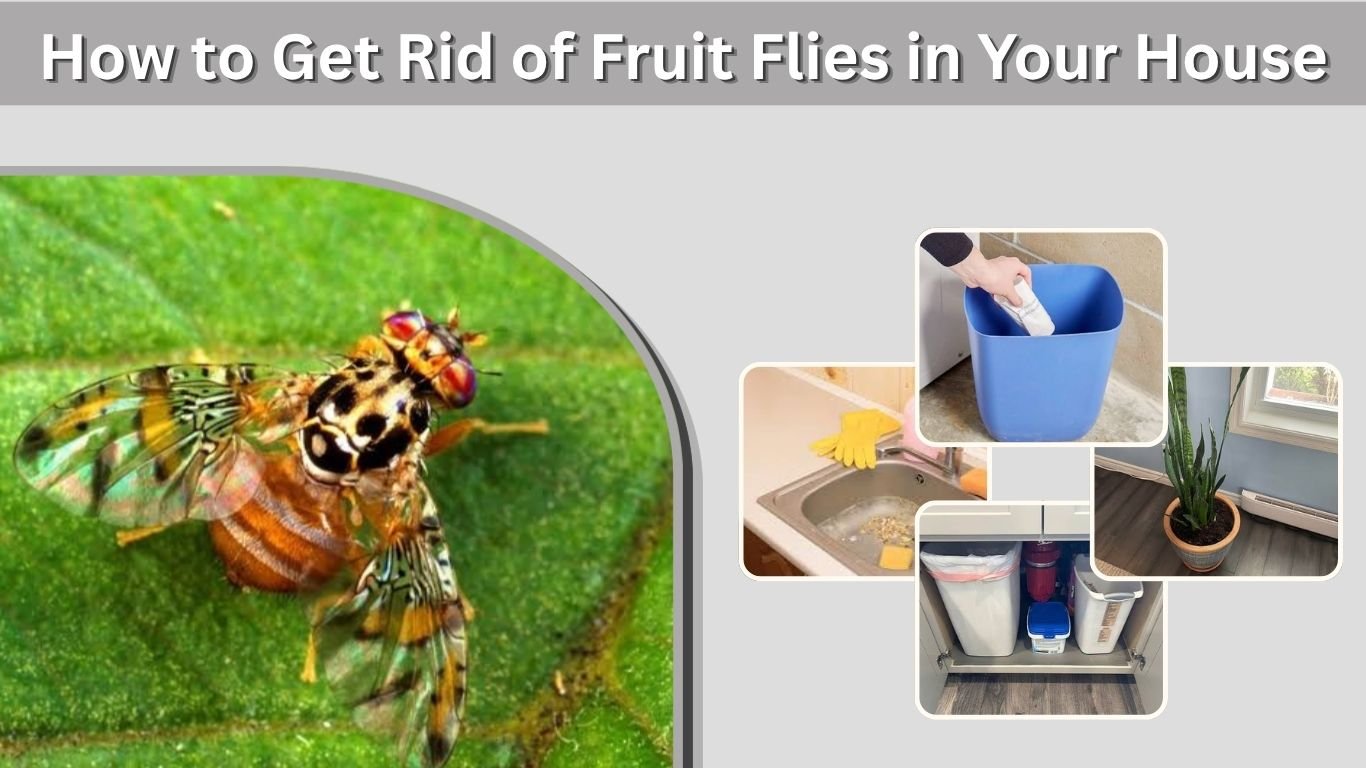
Fruit flies are small but relatively compact insects. The common household fruit fly is usually tan or yellowish-brown and often has noticeable reddish eyes. They are strong enough fliers to move repeatedly between food sources and frequently hover around kitchens. Their presence usually indicates that fermenting organic material is available somewhere nearby.
Fruit Fly Identification
- Usually around 1/8 inch long
- Tan, yellowish, or brown body
- Often bright red or reddish eyes
- Rounded, compact appearance
- Short antennae
- Clear wings
- Frequently hover around food
- Attracted to fermenting odors
Where Fruit Flies Breed
Fruit flies commonly reproduce in overripe bananas, peaches, tomatoes, potatoes, onions, fruit scraps, garbage, recycling residue, juice spills, wine, beer, and fermenting material around drains.
Adults lay their eggs directly on moist organic matter. After hatching, the larvae feed in the same material before leaving it to pupate nearby.
What Do Fungus Gnats Look Like?
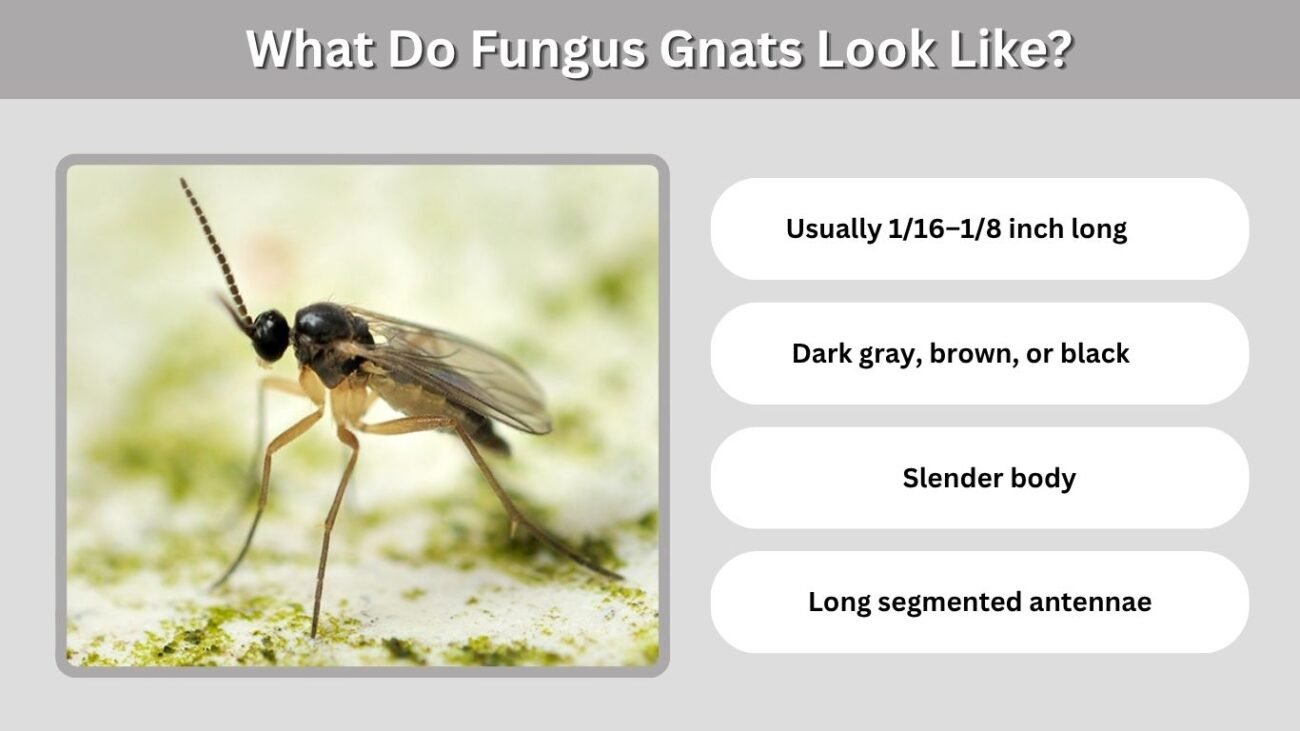
Fungus gnats have a noticeably different shape. Their dark bodies, long legs, and slender appearance often make them look like miniature mosquitoes. Adults are weak fliers and frequently remain close to the plants where their larvae are developing. They are particularly common when potting soil stays consistently damp for long periods.
Fungus Gnat Identification
- Usually 1/16–1/8 inch long
- Dark gray, brown, or black
- Slender body
- Long legs
- Long segmented antennae
- Clear or smoky wings
- Mosquito-like appearance
- Weak, erratic flight
Fungus Gnat Larvae
Fungus gnat larvae live mainly inside moist potting soil.
They are slender, translucent to whitish worms with distinctive shiny black head capsules. Larvae feed primarily on fungi, algae, decaying organic material, and sometimes tender plant roots.
Large populations can damage seedlings or young plants, although adult fungus gnats themselves do not feed on plants.
Fruit Fly vs Fungus Gnat Larvae
The larvae provide another useful identification clue, although they usually occur in very different environments. Fruit fly larvae develop in fermenting organic material, whereas fungus gnat larvae remain primarily in moist soil. If tiny worms are found directly around plant roots, fungus gnats are more likely. Larvae discovered inside spoiled fruit or food waste are more consistent with fruit flies.
Main Larval Differences
Fruit fly larvae are:
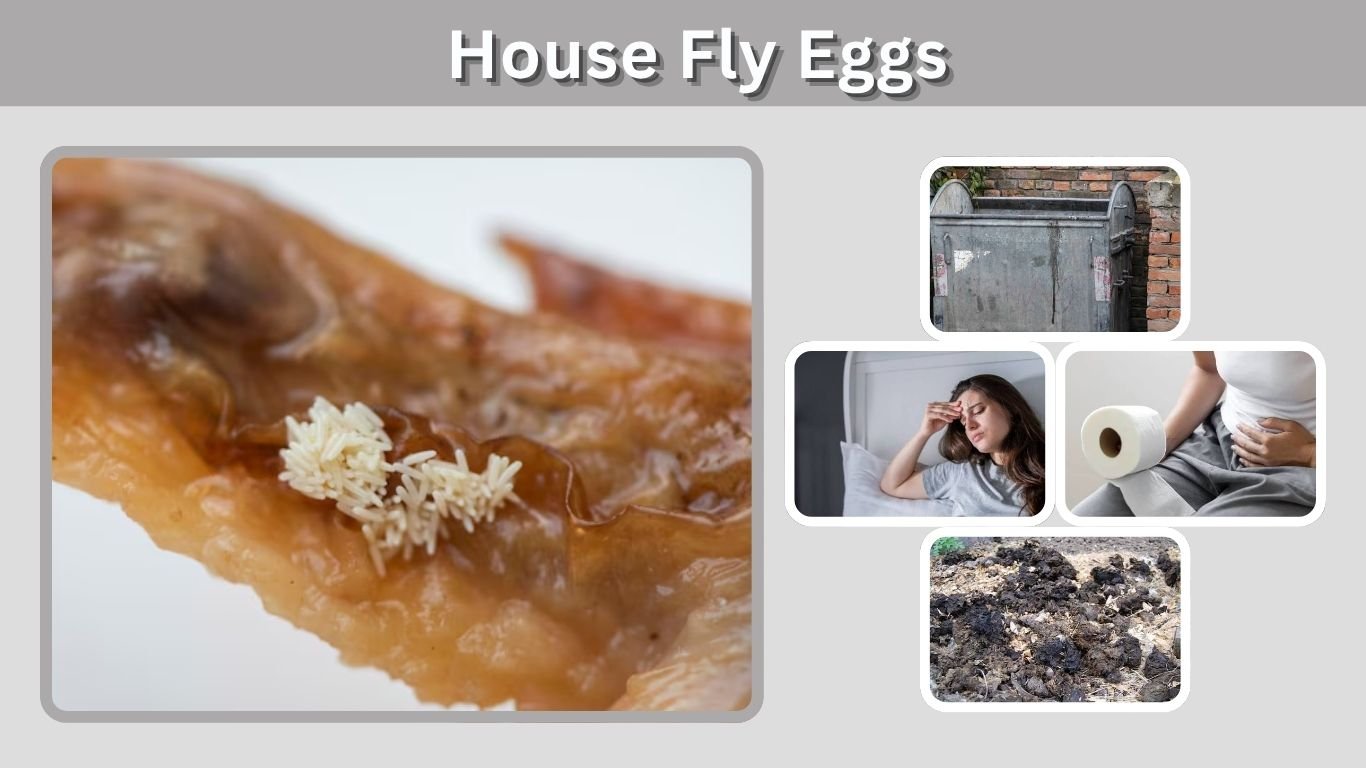
- Creamy white
- Maggot-like
- Legless
- Found in fermenting food
- Usually without an obvious dark head
Fungus gnat larvae are:
- Nearly transparent or white
- Thin and worm-like
- Equipped with a black head capsule
- Found in moist potting soil
- Often clustered around organic matter and roots
Do Fungus Gnat Larvae Damage Plants?
Small populations usually cause little noticeable harm.
When numbers become high, larvae may feed on fine roots and tender plant tissues. Seedlings, cuttings, and young plants are particularly vulnerable.
Plants may show slow growth, yellowing, or wilting, although these symptoms can also have many other causes.
Why Fruit Flies and Fungus Gnats Appear Indoors
Both pests depend on moisture and organic material, but they use those resources differently. Fruit flies are associated mainly with fermentation, whereas fungus gnats depend on moist soil containing fungi and decomposing material. An infestation can continue for weeks when the breeding source is overlooked, even if large numbers of adult insects are trapped.
Causes of Fruit Flies
Fruit flies commonly appear because ripe or decomposing food is available.
A forgotten potato in a cabinet, recycling bottle containing juice, dirty garbage disposal, or overripe banana can produce many flies.
Removing only the visible fruit may not solve the problem if another breeding site remains.
Causes of Fungus Gnats
Fungus gnats are strongly encouraged by consistently wet potting soil.
Frequent watering keeps the upper soil moist and promotes fungal growth, creating ideal conditions for larvae.
Plants grown in organic-rich potting mixtures may be particularly attractive when drainage is poor.
How to Get Rid of Fruit Flies
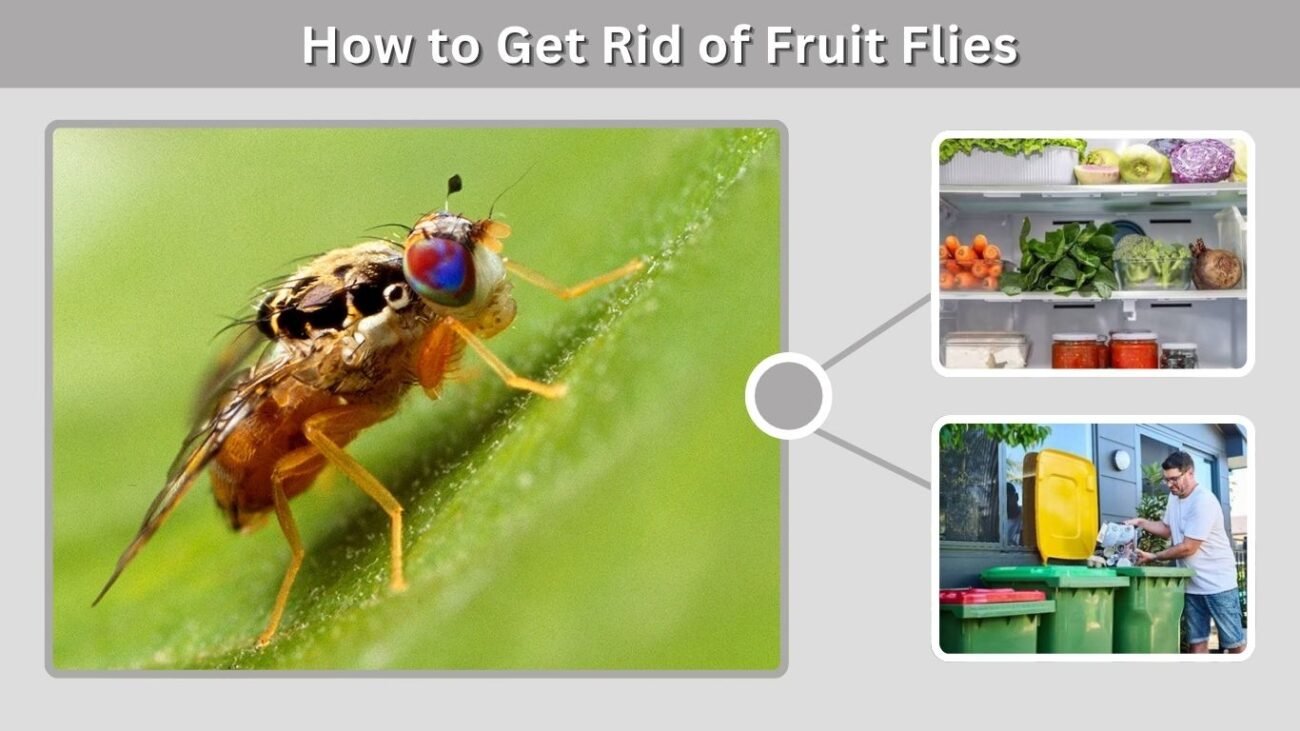
Successful fruit fly control requires removing the material where larvae are developing. Adult traps can reduce visible flies, but they cannot stop the infestation if eggs and larvae remain in another location. Kitchens should be inspected carefully because even a small amount of fermenting food hidden beneath an appliance or inside a recycling container can maintain the population.
Fruit Fly Control Steps
- Throw away rotten or overripe produce.
- Refrigerate ripe fruit temporarily.
- Empty garbage frequently.
- Rinse bottles and recycling containers.
- Clean drains and garbage disposals.
- Wipe up juice, wine, and soda spills.
- Check potatoes and onions in cupboards.
- Use vinegar traps for remaining adults.
Fruit Fly Trap
Apple cider vinegar can attract adult fruit flies because its odor resembles fermentation.
Place a small quantity in a cup and add a drop of dish soap. The soap reduces surface tension, causing flies that contact the liquid to sink.
Traps work best only after breeding sources have been removed.
How to Get Rid of Fungus Gnats
Fungus gnat control focuses primarily on the potting soil. Continuously moist soil allows larvae to survive and reproduce, so correcting watering practices is one of the most effective long-term solutions. Adult gnats may continue appearing temporarily while existing larvae complete development, meaning treatment should target both adults and immature stages.
Fungus Gnat Control Steps
- Allow the top layer of soil to dry between waterings.
- Improve drainage around affected plants.
- Remove dead leaves and decomposing plant material.
- Empty standing water from plant saucers.
- Use yellow sticky traps to catch adults.
- Isolate heavily infested plants when possible.
- Avoid unnecessary frequent watering.
Biological Control
Beneficial nematodes and products containing Bacillus thuringiensis israelensis may be used against fungus gnat larvae when applied according to label instructions.
These treatments target larvae in the soil rather than merely capturing adults.
Combining biological treatment with proper watering usually provides better results than relying on sticky traps alone.
Drain Flies vs Fruit Flies vs Fungus Gnats
Drain flies introduce another common identification problem. They can occur in kitchens and bathrooms alongside other small flies. Drain flies are generally much easier to recognize because their bodies and wings are covered with fine hairs, giving them a fuzzy, moth-like appearance. Their larvae develop in organic film associated with drains and other persistently wet locations.
Three-Way Identification
Fruit fly: Compact tan fly, often red-eyed, usually around fermenting food.
Fungus gnat: Slender dark insect with long legs, usually around houseplant soil.
Drain fly: Small fuzzy fly with broad, moth-like wings, usually resting near drains.
Knowing where each insect breeds is usually more reliable than judging size alone because all three can be extremely small.
Which Pest Is in Your House?
If flies appear primarily around bananas, garbage, wine, or recycling, start by checking for fruit flies.
If they rise from plant soil after watering, fungus gnats are the more likely culprit.
If they rest on bathroom walls around sinks or showers and look fuzzy, inspect drains for drain flies.
Preventing Fruit Flies and Fungus Gnats
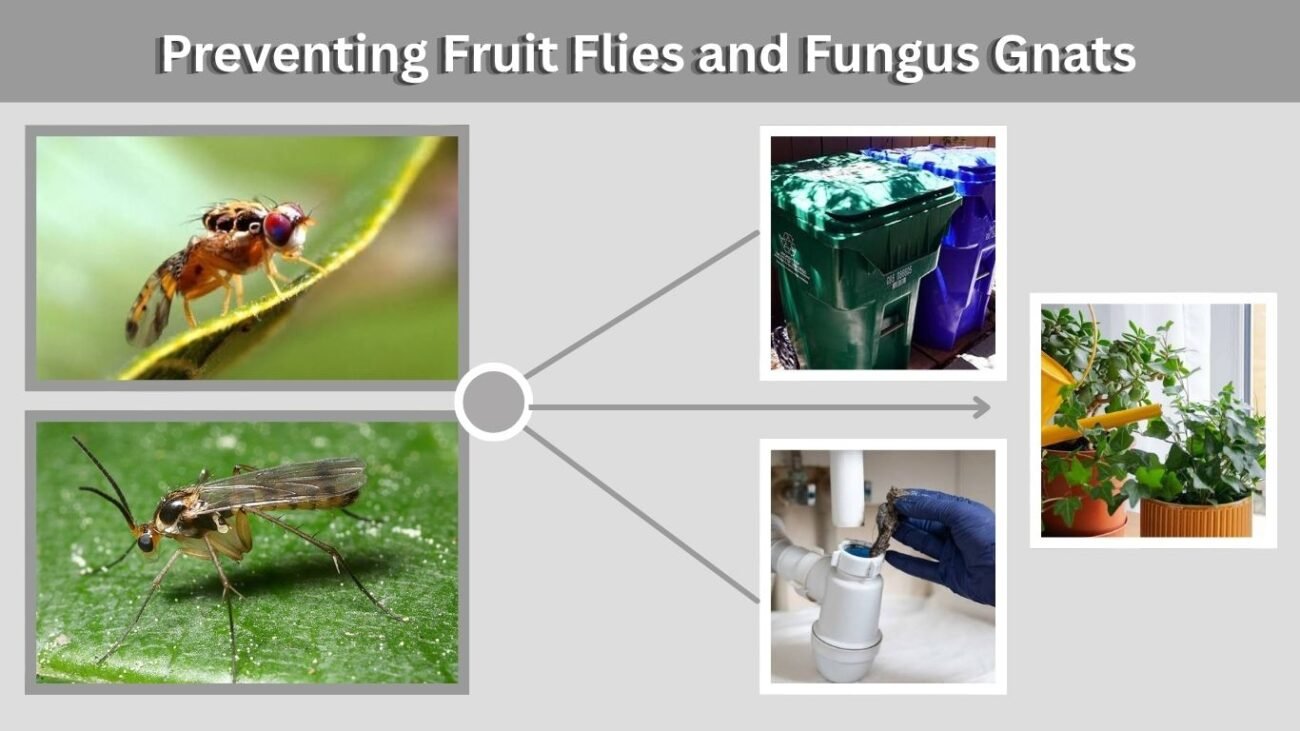
Prevention means removing the environments these insects need before populations build. Fruit flies need fermenting organic material, while fungus gnats need persistently moist soil. Routine kitchen sanitation and sensible plant watering therefore prevent most problems without requiring repeated pesticide treatments. Regular inspection also helps catch a small population before it develops into a noticeable indoor infestation.
Prevention Around the House
- Refrigerate very ripe fruit.
- Clean spills quickly.
- Empty food waste regularly.
- Rinse recycling containers.
- Keep drains clean.
- Avoid overwatering houseplants.
- Remove dead plant material.
- Use pots with good drainage.
- Inspect new plants before bringing them indoors.
Once the correct breeding source is removed, both pests become much easier to eliminate.
FAQs
Fruit flies and fungus gnats are frequently confused because both are small enough to appear simply as tiny black or brown insects flying around the home. Their breeding habits provide the clearest distinction. Fruit flies depend mainly on fermenting foods and liquids, while fungus gnats develop in moist soil. These common questions address identification and control.
1. What is the easiest way to tell fruit flies from fungus gnats?
Fruit flies are compact and often have red eyes, while fungus gnats are slender, dark, long-legged, and mosquito-like.
2. Are tiny flies around plants always fungus gnats?
Usually, especially if they emerge directly from potting soil. Fruit flies may visit plants but generally require fermenting organic material for breeding.
3. Can fruit flies live in houseplant soil?
Ordinary fruit flies do not normally use clean potting soil as their primary breeding habitat. Fungus gnats are much more strongly associated with moist soil.
4. Which is harder to get rid of?
Both can persist when their breeding source remains. Fruit flies require removal of fermenting food, while fungus gnats require changes to soil moisture and larval control.
5. How can I tell drain flies from fruit flies and fungus gnats?
Drain flies look fuzzy and moth-like. Fruit flies are compact and usually associated with food, while fungus gnats are slender and commonly found around plants.