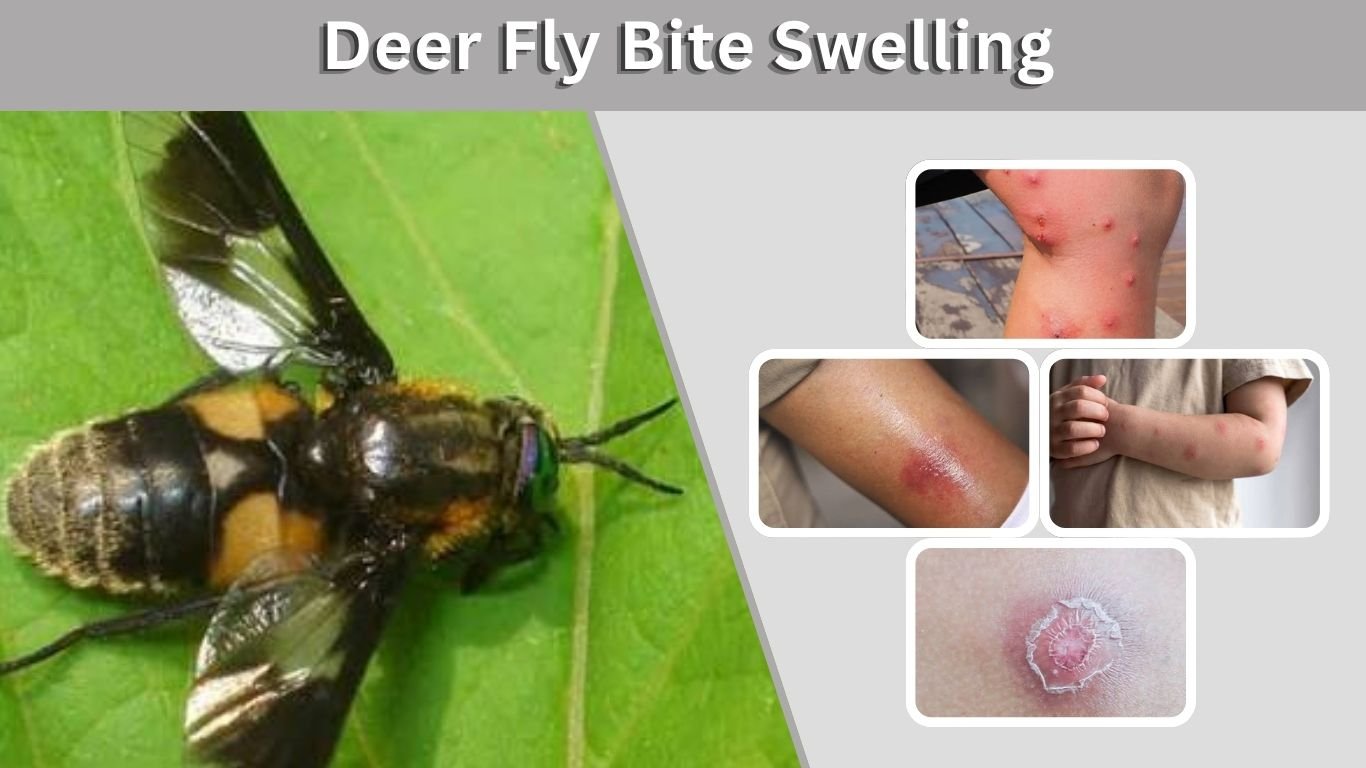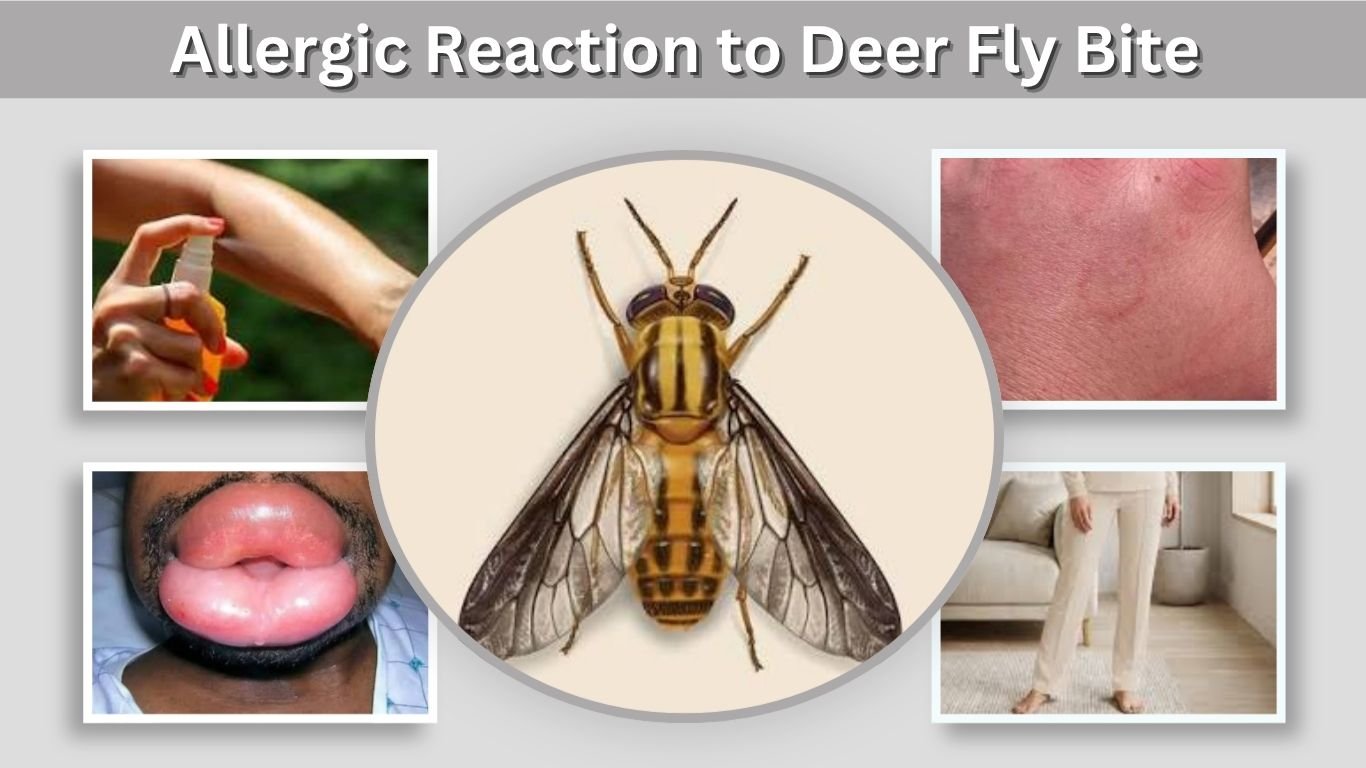
A deer fly bite is usually painful, itchy, and swollen, but some people develop a stronger allergic reaction. Deer flies cut the skin to obtain blood, and their saliva can trigger inflammation or an immune response. An allergic reaction to a deer fly bite may cause unusually large swelling, intense itching, hives, or, in rare cases, a serious whole-body reaction. Knowing the difference between a normal bite response, a strong local reaction, and an emergency can help you decide what treatment is appropriate and when medical care is necessary.
What Causes an Allergic Reaction to a Deer Fly Bite?
Female deer flies require blood for egg development. Unlike mosquitoes, they have cutting mouthparts that damage the skin before feeding. This is one reason a deer fly bite may hurt immediately and sometimes leave a small amount of blood.
During feeding, saliva enters the bite area. The body’s immune system reacts to substances in this saliva, producing inflammation around the wound. In most people, the resulting swelling and itching remain localized.
However, some people’s immune systems respond more strongly, producing a larger or more widespread reaction.
Why Some People React More Strongly
The severity of a reaction can vary considerably from person to person. Someone may experience only a small welt after one bite but develop greater swelling after another exposure.
A person’s previous reactions, individual immune response, number of bites, and location of the bites may influence how noticeable the symptoms become.
Having a large swollen area does not automatically mean anaphylaxis. A strong local reaction can remain limited to the skin and surrounding tissue.
Allergic Reaction Deer Fly Bite Symptoms
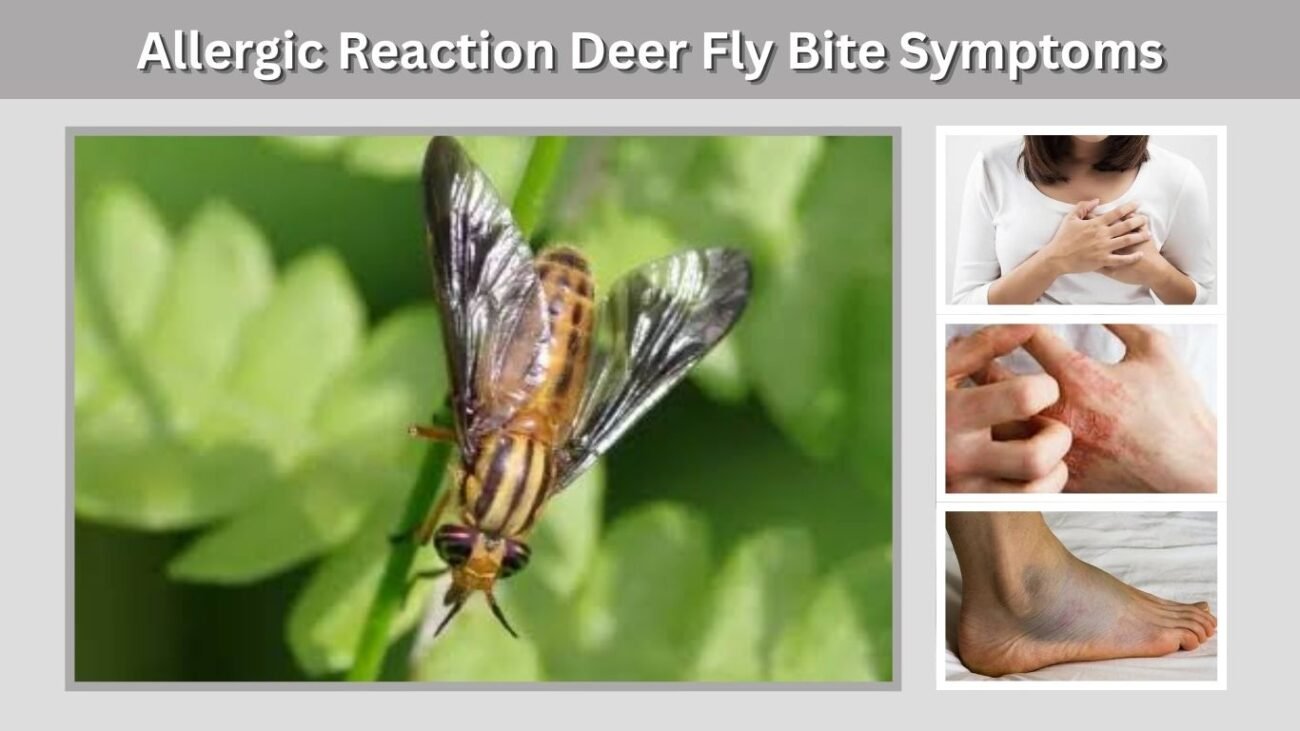
Normal deer fly bites can already produce pain, redness, swelling, and itching. The reaction becomes more concerning when symptoms are unusually extensive or begin affecting areas away from the original bite.
Mild or Local Bite Symptoms
Common symptoms around the bite include:
- Immediate sharp or burning pain
- A raised red or discolored welt
- Itching
- Tenderness
- Mild to moderate swelling
- A small amount of bleeding
- Warmth around the bite
These symptoms are generally limited to the area where the fly is fed. Fly bites, including deer fly bites, commonly cause localized skin irritation.
Signs of a Strong Local Allergic Reaction
A stronger local reaction may involve:
- A much larger area of swelling
- Intense itching
- Significant redness
- Increased warmth
- Large raised welts
- Swelling extending beyond the immediate bite
- Symptoms lasting longer than expected
For example, a bite on the hand might cause noticeable swelling across a larger portion of the hand rather than producing only a small bump.
Large local reactions can look alarming, but they are different from anaphylaxis if the symptoms remain localized and breathing and circulation are unaffected.
Severe Allergic Reaction to Deer Fly Bites
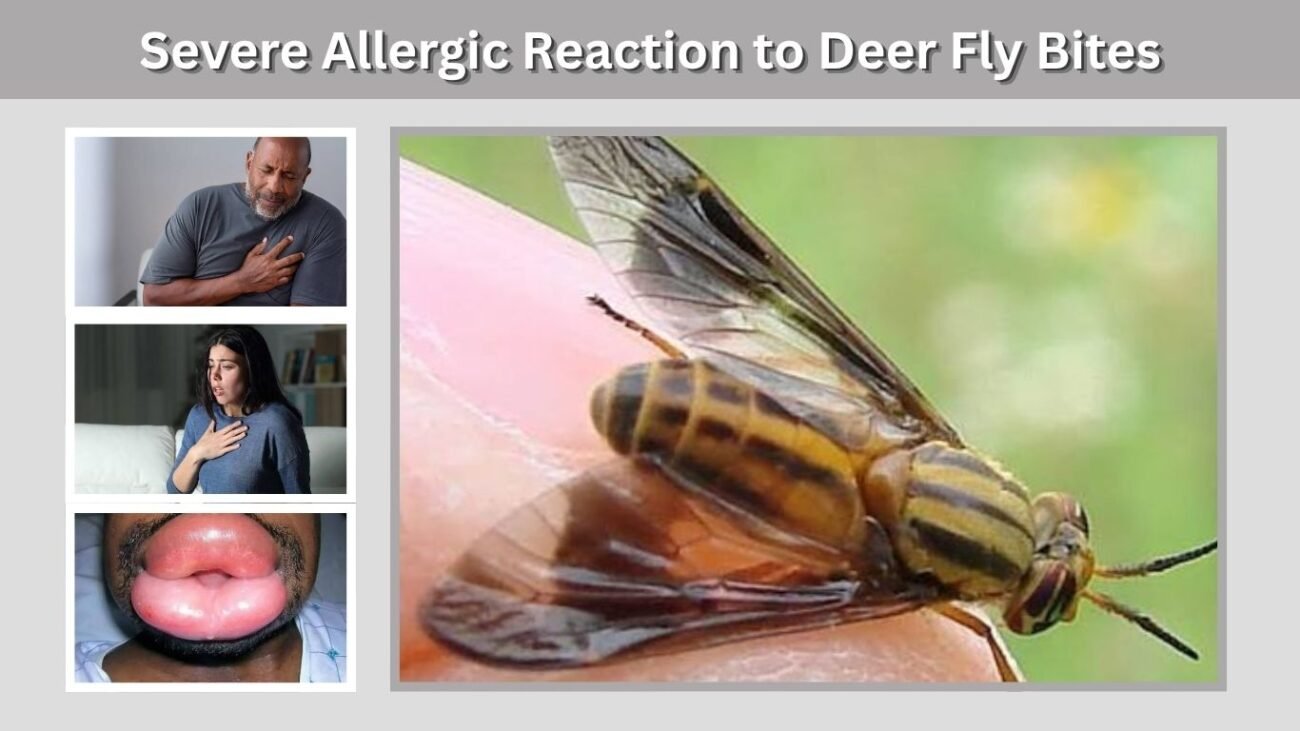
A severe systemic allergic reaction is much more serious than ordinary redness or swelling. Anaphylaxis can progress rapidly and interfere with breathing or circulation. Severe allergic reactions to insect bites require immediate emergency medical attention.
Warning Signs of Anaphylaxis
Emergency symptoms can include:
- Difficulty breathing
- Wheezing
- Tightness in the throat or chest
- Difficulty swallowing
- Swelling of the tongue, lips, face, or throat
- Widespread hives or itching
- Dizziness
- Fainting or loss of consciousness
- Weak, rapid pulse
- Nausea, vomiting, or diarrhea
- Rapidly worsening symptoms
A person does not need to have every symptom for the situation to be dangerous. Difficulty breathing, throat or facial swelling, fainting, or rapidly progressing symptoms should be treated as an emergency.
What to Do During a Severe Reaction
If symptoms suggest anaphylaxis, contact emergency medical services immediately.
People who have been prescribed an epinephrine auto-injector for known severe allergies should use it according to their individual medical instructions. Emergency evaluation is still necessary after epinephrine because symptoms can require additional treatment.
Do not rely on an oral antihistamine alone when someone is having trouble breathing, fainting, developing throat swelling, or showing other signs of anaphylaxis.
Deer Fly Bite Allergic Reaction Treatment
Treatment depends on how severe the reaction is. Mild localized irritation can often be managed at home, while severe or rapidly worsening symptoms require medical attention.
Cleaning and Cooling the Bite
Start by gently washing the area with soap and water. Keeping the wound clean reduces contamination and is especially important because scratching can damage the skin further.
A cool compress wrapped in cloth can be placed over the bite for short periods to help reduce discomfort and swelling.
Avoid putting ice directly against bare skin.
Controlling Itching and Swelling
For uncomplicated itchy insect bites, an over-the-counter antihistamine or anti-itch treatment may sometimes help. A pharmacist or healthcare professional can recommend an appropriate option based on age, health conditions, pregnancy status, and other medications.
Try not to scratch the bite. Scratching can break the skin and increase the risk of a secondary bacterial infection.
When a Doctor May Be Needed
Contact a healthcare provider when:
- Swelling becomes unusually large
- Symptoms continue getting worse
- Pain becomes severe
- Multiple large reactions develop
- The bite is near the eye or mouth
- You have a history of serious allergic reactions
- Symptoms do not improve as expected
People who repeatedly develop substantial reactions after deer fly bites may also want to discuss future bite management with their healthcare provider.
Allergic Reaction vs. Infected Deer Fly Bite
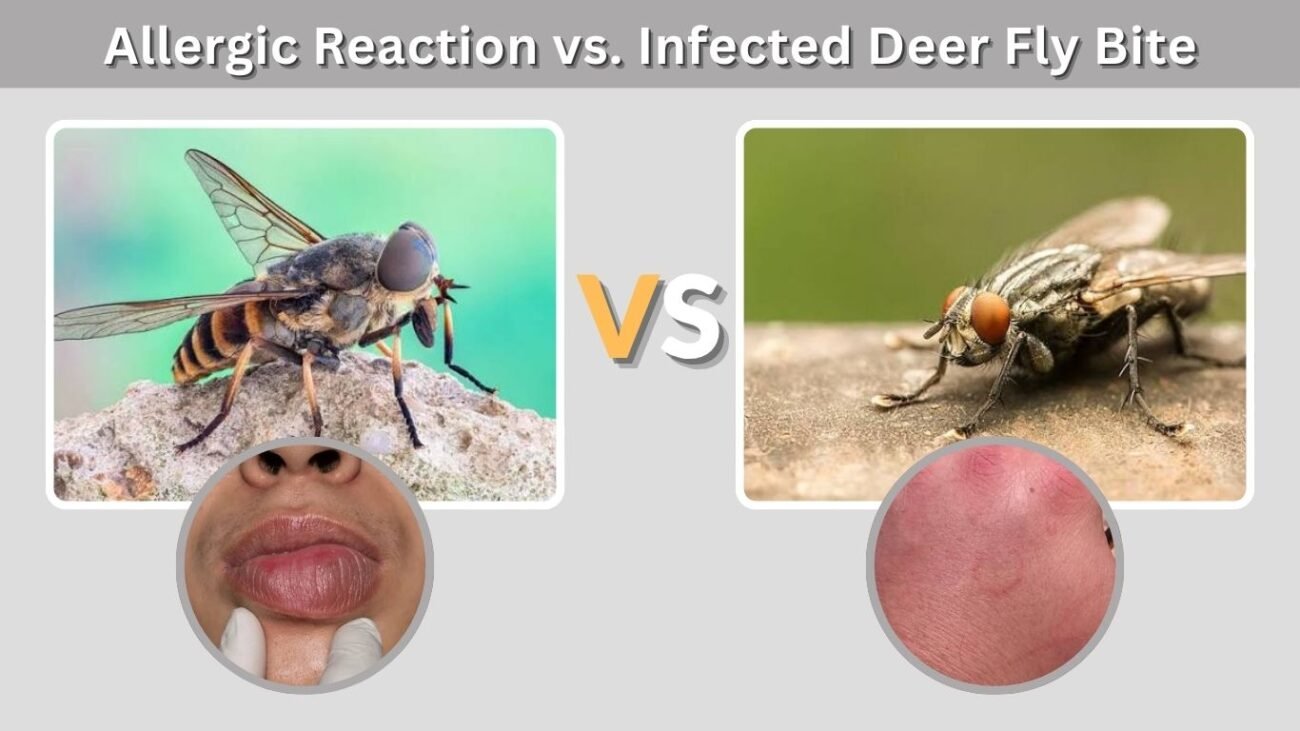
An allergic reaction and an infection can sometimes look similar because both may cause redness and swelling. Timing and progression can provide useful clues, although a healthcare professional may be needed to distinguish them.
| Allergic Reaction | Possible Infection |
| Often develops relatively soon after the bite | May progressively worsen after the bite |
| Prominent itching | Increasing tenderness or pain |
| Local swelling or welts | Expanding redness |
| May cause hives elsewhere | Increasing warmth around the wound |
| Severe allergy may affect breathing | Pus or drainage may develop |
| Usually immune-related | Usually related to microorganisms entering damaged skin |
Increasing redness, warmth, swelling, or pain should not simply be assumed to be an allergy. Infected insect bites can occasionally progress to cellulitis and need medical treatment.
How Long Does an Allergic Reaction to a Deer Fly Bite Last?
There is no single duration that applies to everyone. A mild reaction may start improving within a few days, while larger local reactions can remain uncomfortable longer.
The important factor is whether symptoms are gradually improving or worsening.
Redness and swelling that continue expanding, increasing pain, drainage, fever, or other new symptoms deserve medical evaluation rather than being assumed to be a normal allergic response.
How to Reduce Future Deer Fly Bites
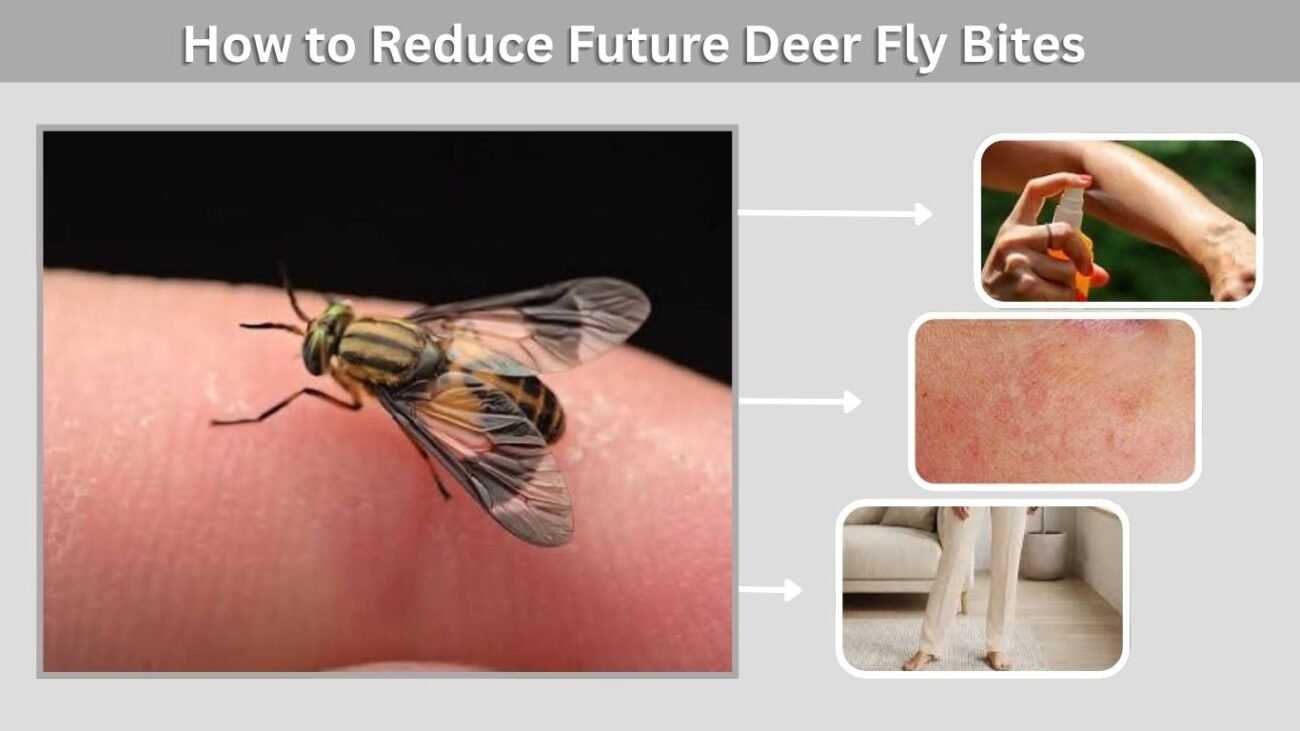
Preventing bites is particularly useful for someone who has experienced strong reactions before.
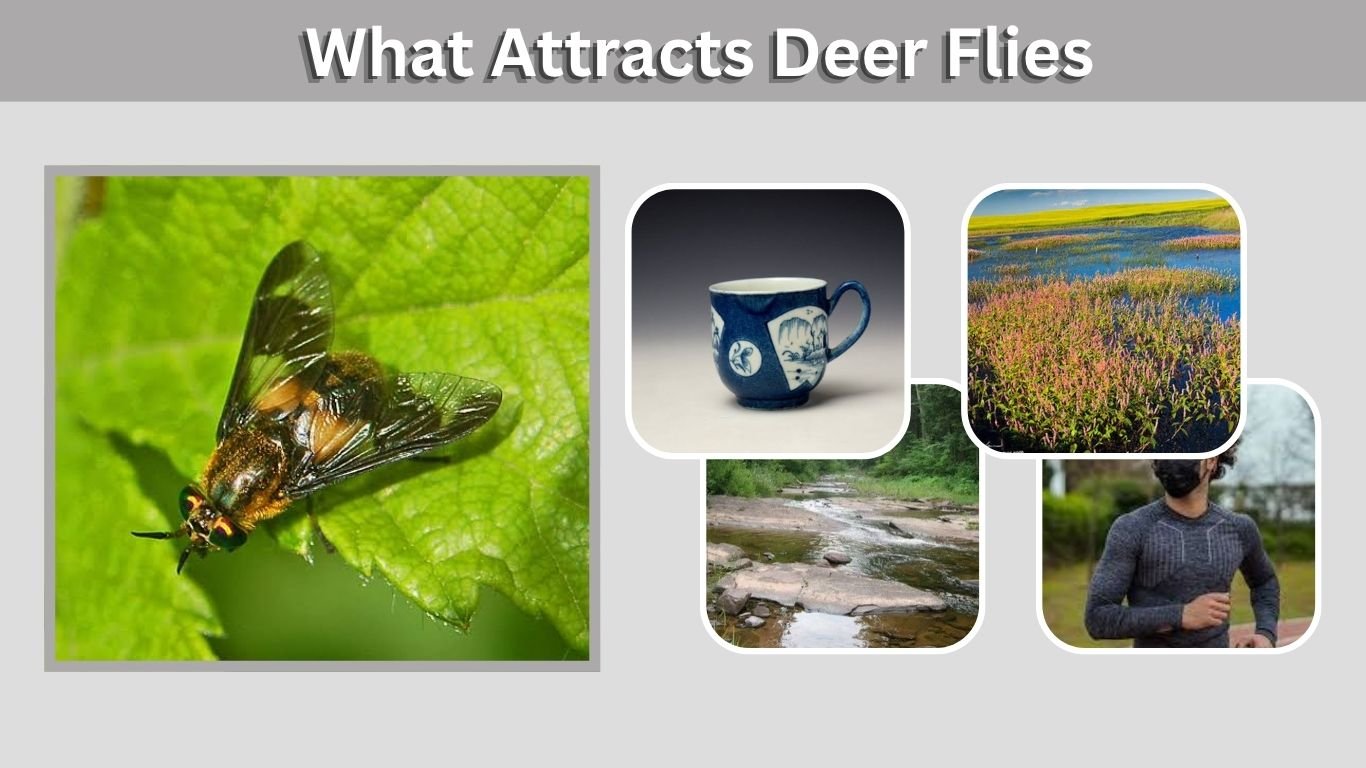
Deer flies are active outdoors and are attracted to moving hosts. When entering areas where biting flies are common:
- Wear long sleeves and long pants when practical.
- Consider an appropriate insect repellent.
- Wear protective clothing around heavily infested areas.
- Avoid known deer fly concentrations when activity is especially high.
- Check exposed skin after spending time outdoors.
- Keep prescribed emergency allergy medication accessible if a healthcare professional has advised you to carry it.
If previous insect bites have caused breathing problems, facial swelling, fainting, or other systemic symptoms, discuss prevention and emergency planning with a qualified healthcare professional.
When Should You Seek Emergency Medical Care?
Seek emergency medical assistance after a deer fly bite if the person develops difficulty breathing, swelling of the lips, tongue, face or throat, fainting, severe dizziness, widespread hives, a weak rapid pulse, or rapidly progressing symptoms.
These can indicate anaphylaxis, which is potentially life-threatening and requires prompt treatment.
FAQs
Can you be allergic to a deer fly bite?
Yes. Most deer fly bites cause localized pain, redness, itching, and swelling, but some people can experience a stronger immune response. Reactions may range from substantial swelling around the bite to a rare systemic allergic reaction involving hives, breathing difficulty, or facial and throat swelling.
What does an allergic reaction to a deer fly bite look like?
A local allergic reaction may appear as a large swollen, red or discolored, itchy area surrounding the bite. More serious reactions may involve widespread hives or swelling beyond the bite area. Difficulty breathing or swelling of the tongue or throat is an emergency.
How do you treat an allergic reaction to a deer fly bite?
Mild reactions may be managed by washing the bite, using a cool compress, avoiding scratching, and considering an appropriate over-the-counter anti-itch or antihistamine treatment. Severe symptoms such as breathing difficulty, fainting, or throat swelling require immediate emergency medical care.
How long does swelling from a deer fly bite last?
Minor swelling often gradually improves over several days, although a stronger local reaction may last longer. Seek medical advice if swelling continues spreading, becomes increasingly painful or hot, develops drainage, or is accompanied by fever or other concerning symptoms.
Can a deer fly bite cause anaphylaxis?
A severe systemic allergic reaction to an insect bite is possible, although it is far less common than a localized reaction. Warning signs include breathing difficulty, facial or throat swelling, widespread hives, dizziness, fainting, vomiting, or a weak rapid pulse. Suspected anaphylaxis requires emergency treatment.