While many geese are known for their gray or white plumage, several species stand out for their striking black or predominantly dark coloring. These geese range from Arctic migrants like the Black Brant to tropical natives like the Spur-winged Goose. Some are true wild species, while others are domestic hybrids or related waterfowl often included in goose categories. In this list, you’ll find 14 geese (and goose-like birds) with rich black or dark features—each with its own unique appearance, habitat, and behavior.
1. Black Brant

The Black Brant is a small, sea-loving goose known for its almost entirely black body and white neck ring. It is a coastal subspecies of the Brant Goose and breeds in the Arctic before migrating to the Pacific coasts of North America and Asia.
Identification
- Nearly all-black body
- Prominent white necklace on the upper neck
- White under-tail
- Short black bill and legs
- Compact and streamlined build
Habitat
Breeds in low Arctic tundra near coastal lagoons. Winters along saltwater bays, estuaries, and mudflats, especially on the Pacific coasts of the U.S. and Mexico.
Behavior
Forms tight coastal flocks during migration and winter. Prefers saline environments and rarely ventures far inland. Known for long migratory flights and strong flock cohesion.
Diet
Feeds mainly on eelgrass, sea lettuce, and marine algae. Grazes in intertidal zones and estuarine meadows, especially at low tide.
2. Brent Goose (Dark Morph)

The Brent Goose, especially in its dark morph, is often confused with the Black Brant due to its similarly dark plumage. It is a small, compact goose that migrates between Arctic breeding grounds and temperate coastal wintering areas.
Identification
- Dark gray to black body (dark morph)
- Small white patch on the side of the neck
- Pale under-tail and rump
- Short black bill and legs
- Slightly lighter belly than Black Brant
Habitat
Breeds in high Arctic tundra, primarily in Russia and Canada. Winters along coasts in Europe and Asia, favoring estuaries, saltmarshes, and mudflats.
Behavior
Highly social and often forms large flocks in winter. Flies in tight formations and remains close to coastal feeding areas.
Diet
Feeds on eelgrass, seaweed, and saltmarsh plants. Grazes in tidal zones and occasionally in coastal fields.
3. Black-necked Swan Goose (Hybrid/Domestic)
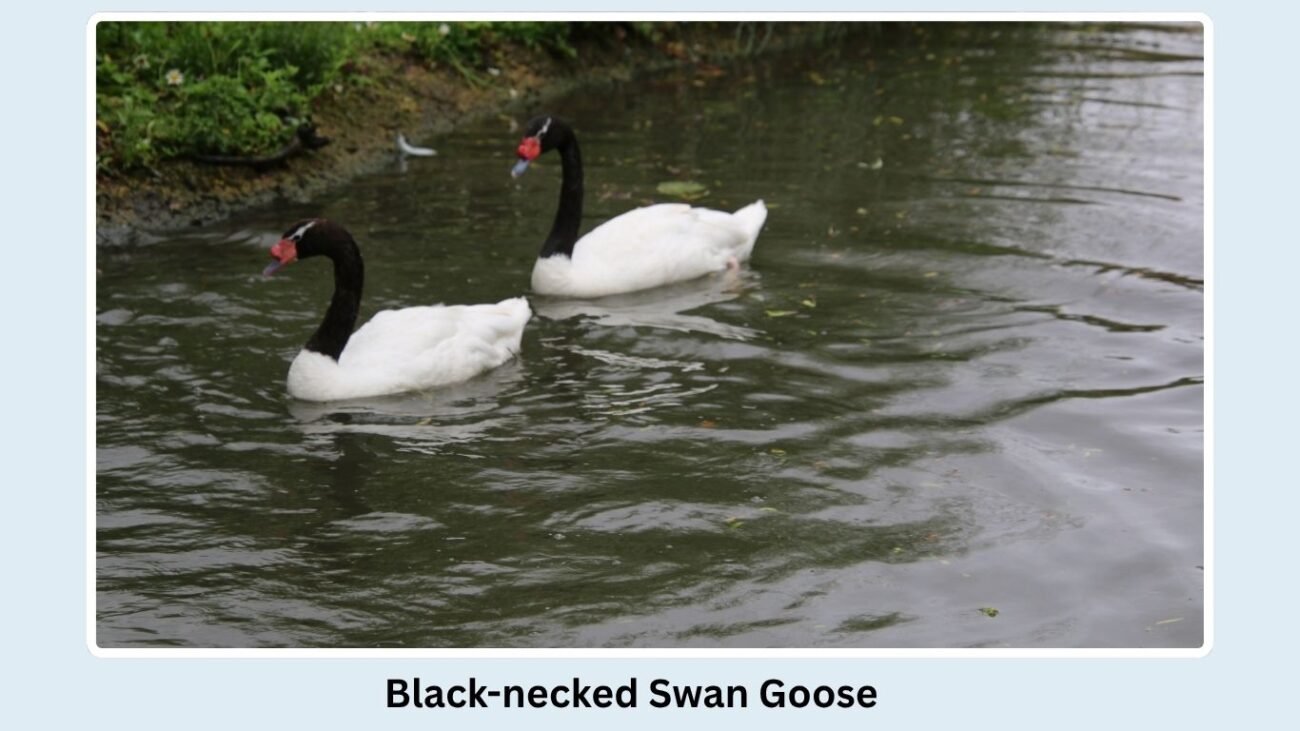
The Black-necked Swan Goose is a hybrid or selectively bred domestic variant, known for its bold black neck and white or gray body. While not a wild species, it’s kept in collections and ornamental ponds due to its unique look.
Identification
- Distinct black neck extending to the chest
- Pale gray or white body
- Orange or pink legs
- Large basal knob on the bill (in some individuals)
- Medium to large size
Habitat
Primarily found in captivity—on farms, estates, or ornamental lakes. Not native to the wild.
Behavior
Generally calm and social. Often interacts well with other domestic geese and waterfowl. Not migratory.
Diet
Feeds on grains, grasses, vegetables, and aquatic plants. Grazes in grassy areas and along pond edges.
4. Black Swan (Often Included in Goose Lists)
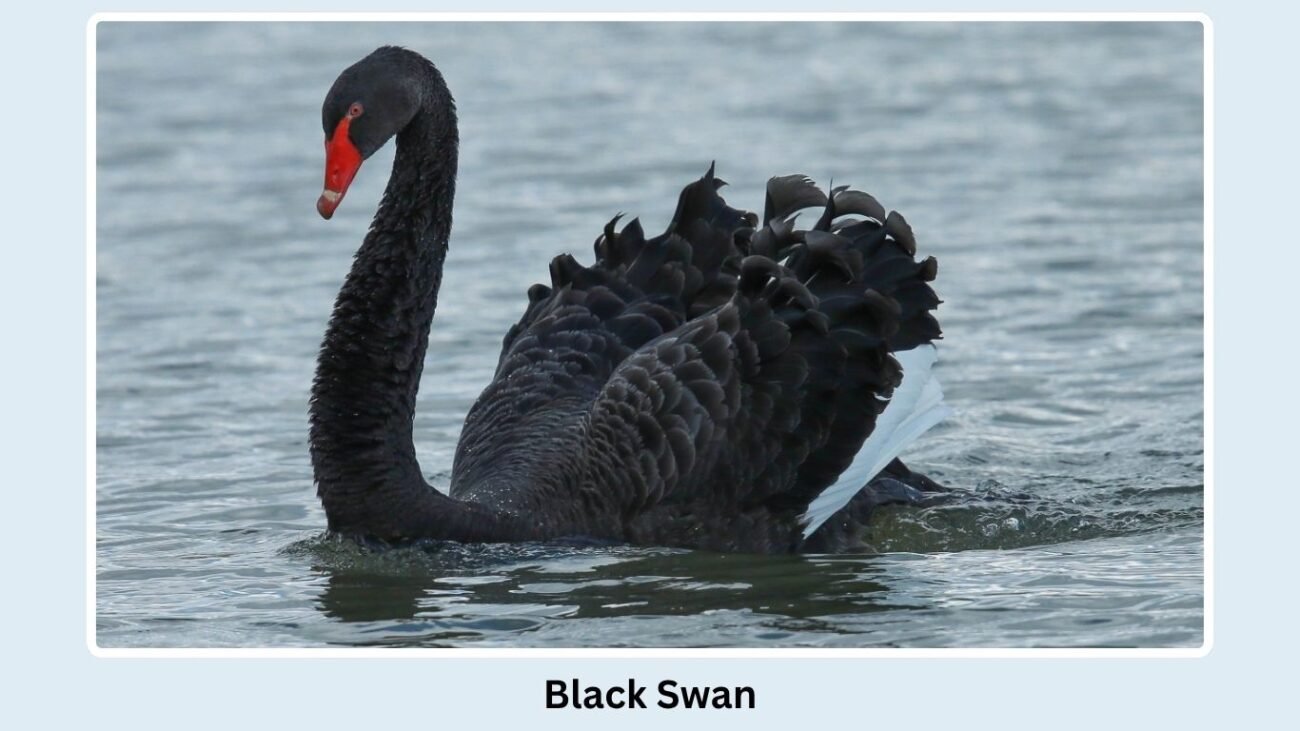
Though not a true goose, the Black Swan is sometimes included in goose-related lists due to its grazing behavior and waterfowl family ties. Native to Australia, it is one of the few swan species with entirely black plumage.
Identification
- All-black body with curled wing feathers
- Bright red bill with a white tip
- White flight feathers visible in flight
- Long neck held in a graceful curve
- Large body and long legs
Habitat
Found in freshwater lakes, swamps, and rivers across Australia and Tasmania. Also introduced to New Zealand and ornamental parks worldwide.
Behavior
Graceful swimmers, usually in pairs or small flocks. They are territorial during breeding and often seen on open water or shorelines.
Diet
Feeds on aquatic vegetation, algae, and submerged grasses. Also grazes on land near water edges.
5. Spur-winged Goose

The Spur-winged Goose is a large African waterfowl with mostly black plumage. Despite being closer to shelducks taxonomically, it’s commonly referred to as a goose due to its size and habits.
Identification
- Mostly black body with white patches on the face and wings
- Bare red skin on the face
- Strong wing spur (used for defense)
- Iridescent greenish-black wing sheen (in males)
- Long neck and red legs
Habitat
Widespread across sub-Saharan Africa in wetlands, lakes, and slow-moving rivers. Prefers vegetated water bodies with open access.
Behavior
Often solitary or in small groups. Known for being wary and territorial. Strong fliers despite large size and spend time both on land and in water.
Diet
Feeds on aquatic plants, grasses, and seeds. Sometimes eats toxic beetles, which can make the goose itself poisonous to predators.
6. Red-breasted Goose

The Red-breasted Goose is a small, strikingly colored goose native to the tundra of Arctic Siberia. While not fully black, it has a deep black base color covering much of its body, making it one of the darkest geese overall.
Identification
- Black back, belly, and neck
- Rich red chest and facial patches
- White stripes on face, neck, and flanks
- Short black bill and legs
- Compact, rounded body
Habitat
Breeds on Arctic tundra near rivers and lakes in Siberia. Winters around the Black Sea, particularly in Bulgaria, Romania, and Ukraine.
Behavior
Forms dense flocks in winter and often mixes with White-fronted Geese. Shy and cautious, especially during migration and in feeding grounds.
Diet
Eats grasses, clovers, winter wheat, and seeds. Forages in open fields and wetlands during migration and winter.
7. Hawaiian Goose (Nēnē)

The Hawaiian Goose, or Nēnē, has a largely black head and heavily furrowed neck, giving it a dark appearance, especially from the front. It’s the rarest goose in the world and the state bird of Hawaii.
Identification
- Black head and crown
- Buff-colored cheeks
- Deeply furrowed, striped black-and-buff neck
- Gray-brown body
- Black legs and bill
Habitat
Native to the Hawaiian Islands, found in dry shrublands, grasslands, and lava plains. Adapted to rugged, non-wetland environments.
Behavior
Non-migratory and ground-dwelling. Often walks more than it swims. Forms strong family groups and nests on land.
Diet
Feeds on native Hawaiian vegetation, including berries, leaves, and grasses. Forages on volcanic terrain and open grassy areas.
8. Barnacle Goose
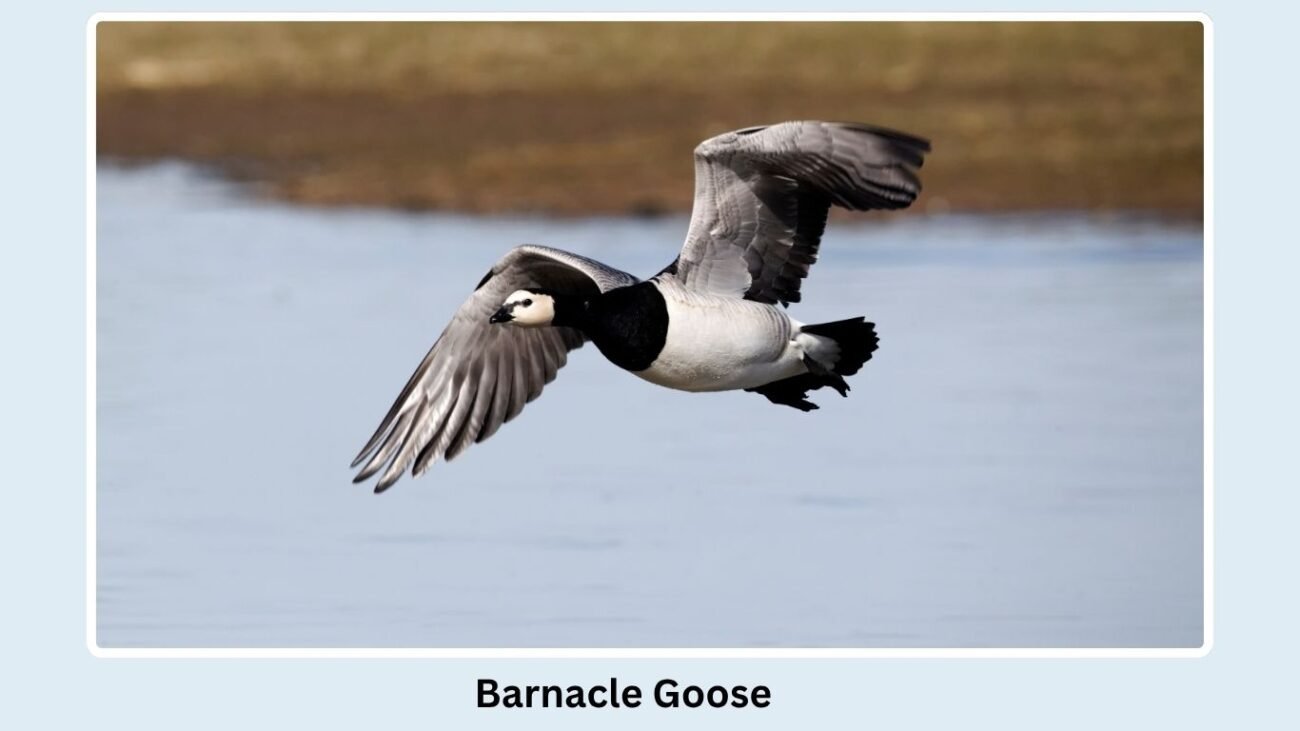
The Barnacle Goose is a small, compact goose with a bold black-and-white color pattern. Its black neck and chest give it a mostly dark appearance, especially when viewed from the front. It’s a high Arctic breeder and winters in coastal Europe.
Identification
- Black neck, chest, and crown
- White face and forehead
- Silvery-gray back with black bars
- Short black bill and legs
- White under-tail
Habitat
Breeds in the Arctic—Greenland, Svalbard, and Arctic Russia. Winters along European coastlines, estuaries, and saltmarshes.
Behavior
Often seen in flocks, especially during migration. Nests on cliffs to protect young from predators, leading goslings to leap down after hatching.
Diet
Feeds on grasses, mosses, and coastal plants. In winter, grazes in agricultural fields and saltmarsh meadows.
9. Cackling Goose

The Cackling Goose looks like a smaller version of the Canada Goose but is a distinct species. It has a very dark appearance due to its black head, neck, and chest, paired with a shorter neck and smaller body.
Identification
- Black head and neck with a white chinstrap
- Brownish-gray body
- Short neck
- Small black bill
- White under-tail
Habitat
Breeds in the Arctic tundra of Alaska and northern Canada. Winters in the southern United States, especially around wetlands and farmlands.
Behavior
Highly vocal with a high-pitched cackling call. Often seen in mixed flocks with Canada Geese. Strong migratory behavior and social in large groups.
Diet
Feeds on grasses, grains, and aquatic plants. Commonly forages in harvested fields during migration and winter.
10. Canada Goose

The Canada Goose is one of the most widespread and recognizable geese in North America. Its prominent black head and neck give it a dark overall look, especially when viewed from the front or in flight.
Identification
- Black head and neck
- White chinstrap
- Brownish-gray body
- White under-tail and rump
- Long neck and large wingspan
Habitat
Found across North America in lakes, rivers, wetlands, and urban parks. Some populations are migratory, while others have become year-round residents in cities.
Behavior
Highly adaptable and social. Migrates in V-formations and is known for aggressive nesting behavior. Frequently interacts with humans in urban areas.
Diet
Feeds on grasses, grains, and aquatic plants. Often seen grazing in parks, golf courses, and farm fields.
11. Tundra Bean Goose

The Tundra Bean Goose has a dark brown head and neck, giving it a dusky appearance. While not fully black, its dark upper body and overall muted tone make it one of the darker goose species.
Identification
- Dark brown head and neck
- Brownish-gray body
- Orange legs
- Black bill with a narrow orange band
- Medium to large size
Habitat
Breeds in the Arctic tundra of Russia. Winters in wetlands, farmlands, and lakes across parts of Europe and Asia.
Behavior
Migratory and social, often seen in mixed flocks with other geese. Forms long-distance flocks during seasonal movements.
Diet
Feeds on grasses, sedges, and agricultural grains. Frequently grazes in open fields and wetland edges.
12. Taiga Bean Goose
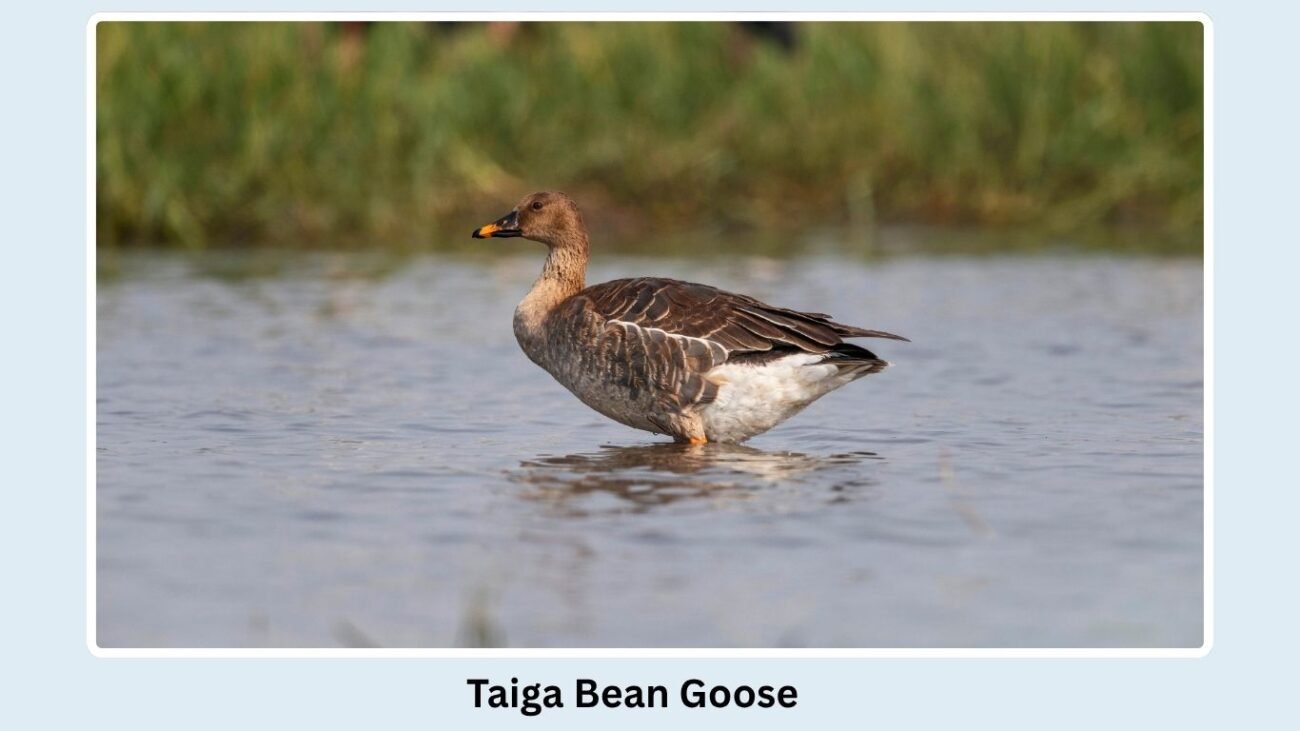
The Taiga Bean Goose is closely related to the Tundra Bean Goose but is larger with a slightly longer neck. It has a dark brown head and neck, contributing to its mostly dark front-facing profile.
Identification
- Dark brown head and neck
- Brownish-gray body
- Black bill with a larger orange band
- Orange legs
- Longer and bulkier than Tundra Bean Goose
Habitat
Breeds in the taiga forests of Scandinavia and Russia. Winters in Europe and Asia in lakes, wetlands, and agricultural fields.
Behavior
Forms smaller flocks than other geese and is slightly more solitary. Migratory, with strong fidelity to wintering sites.
Diet
Feeds on grasses, cereal crops, and tubers. Forages in fields, wet meadows, and forest clearings.
13. Emperor Goose

The Emperor Goose features a scaly gray body and dark underparts, with a blackish-gray neck that contributes to a dark, imposing appearance despite its smaller size.
Identification
- White head and nape
- Scaled blue-gray body
- Black throat and chest
- Orange legs
- Short, pinkish bill
Habitat
Breeds in coastal tundra and wetlands in Alaska and eastern Russia. Winters along the Aleutian Islands and Bering Sea coast.
Behavior
Less social than many geese, often seen in small groups. Strong fidelity to breeding and wintering sites.
Diet
Feeds on grasses, sedges, and intertidal marine plants like eelgrass and algae.
14. Torrent Duck (Male)
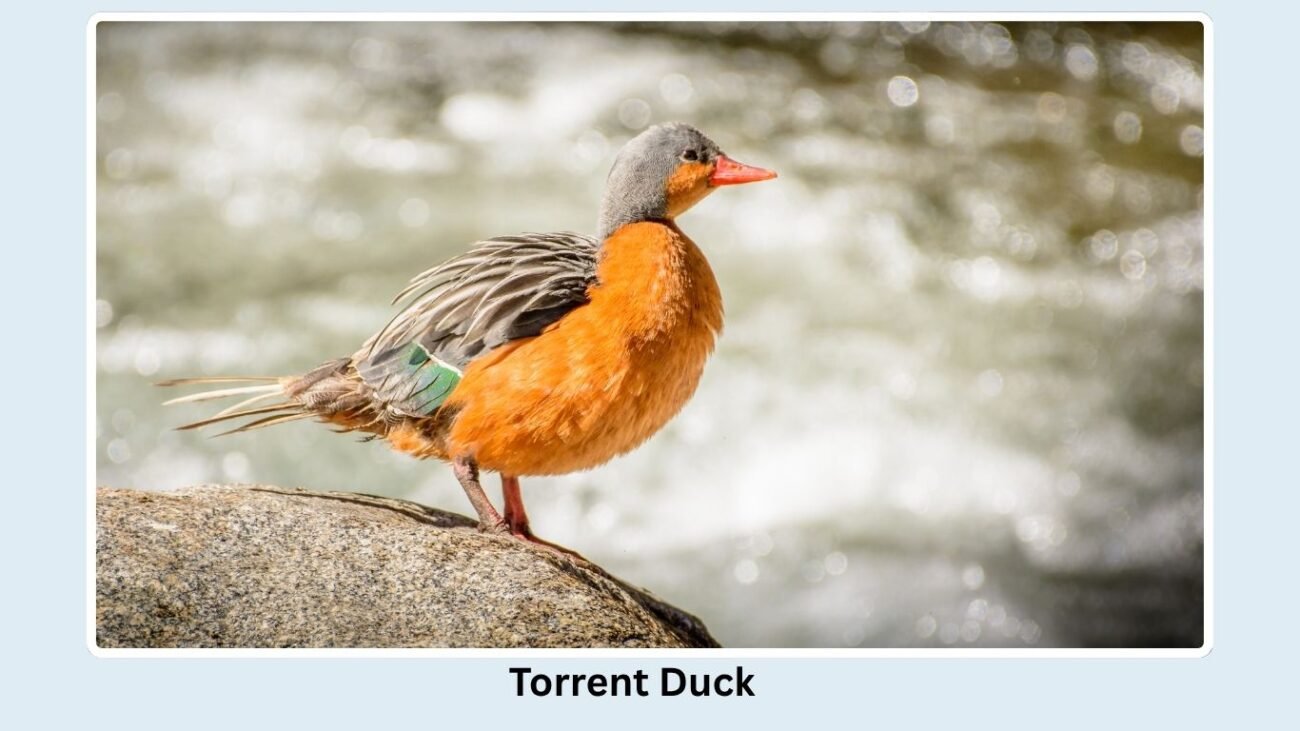
While not a true goose, the male Torrent Duck has a dark, almost black body with bold white markings, often included in goose-like waterfowl groups due to its build and habitat.
Identification
- Black and white striped head
- Dark gray to black back and belly (male)
- Narrow, pointed bill
- Strong feet for gripping rocks
- Streamlined body for swimming in fast currents
Habitat
Fast-flowing mountain rivers across the Andes from Venezuela to southern Chile and Argentina.
Behavior
Strong swimmers and divers. Often seen perched on rocks near rapids. Highly territorial during breeding.
Diet
Feeds on aquatic invertebrates, larvae, and insects under rocks in turbulent waters.
FAQs
1. Are all black-colored geese part of the same species group?
No. Black or dark-colored geese come from different species and genera. Some, like the Black Brant and Canada Goose, are closely related, while others, like the Spur-winged Goose or Torrent Duck, belong to different families or are even distant relatives.
2. Why do some geese have dark or black plumage?
Dark plumage helps with camouflage in specific environments, aids in heat absorption in colder climates, and can also play a role in mating displays or species recognition.
3. Can black geese interbreed with lighter-colored species?
Some subspecies, especially within the Branta genus (e.g., Canada Goose and Cackling Goose), can interbreed where their ranges overlap. Domestic hybrids may also be selectively bred for darker plumage.
4. Where can I commonly see black-colored geese?
You can spot species like the Canada Goose and Cackling Goose across North America, while the Black Brant is common along the Pacific coast. Others, like the Spur-winged Goose or Emperor Goose, are more region-specific and harder to find.
5. Are black geese more aggressive than lighter-colored geese?
Aggression levels depend on the species, not plumage color. For example, Canada Geese (dark-necked) are known for their territorial behavior, while Emperor Geese are relatively calm despite having dark features.