Geese are found across nearly every continent, each species boasting its own distinct look, behavior, and habitat. From the familiar Canada Goose to rare highland dwellers like the Blue-winged Goose, these waterfowl vary widely in size, color, and range. In this guide, you’ll discover 35 types of geese—from wild to domestic, from tropical to tundra—organized with identification tips and interesting facts to help you recognize and appreciate each one.
1. Canada Goose
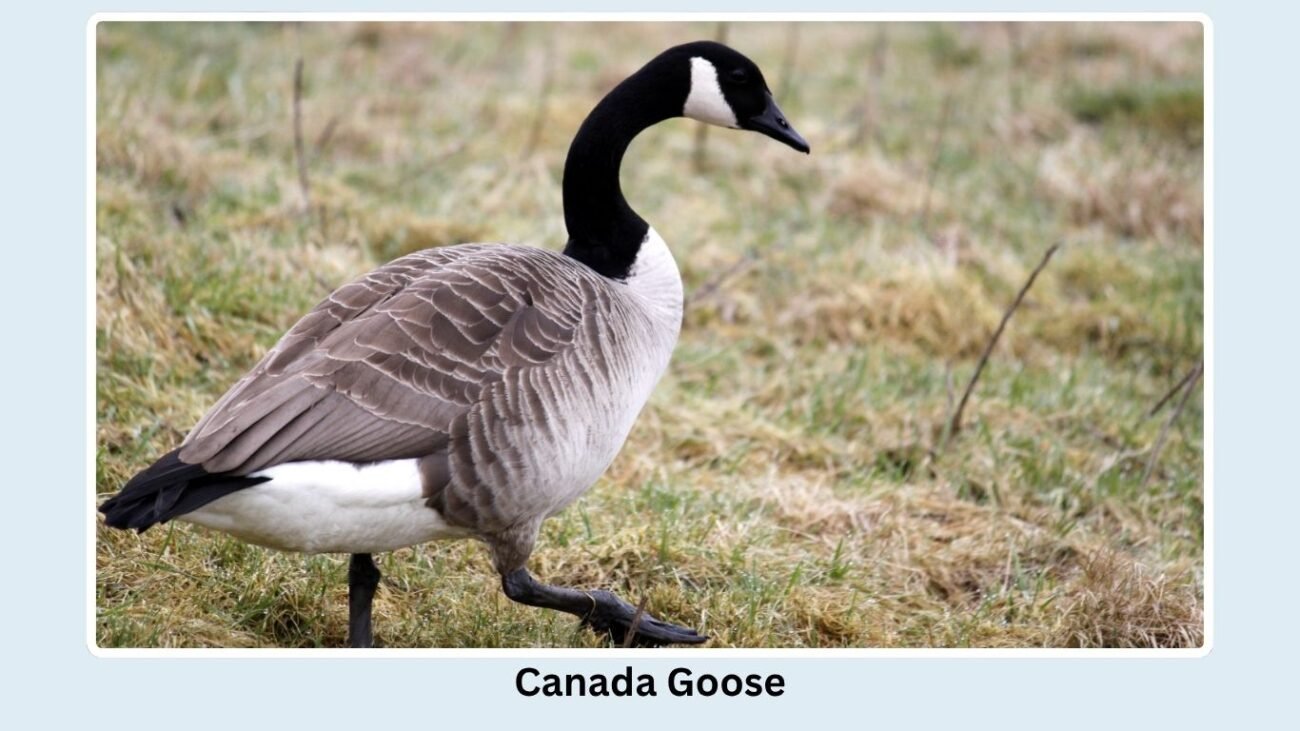
The Canada Goose is one of the most recognizable and widespread geese in North America. Known for its black head and neck with a striking white chinstrap, it can be found in parks, wetlands, and even urban environments. These geese are highly adaptable and migrate in large V-shaped formations.
Identification
- Black head and neck
- White chinstrap
- Brownish-gray body
- White under-tail
- Large wingspan (up to 6 feet)
Habitat
Canada Geese are commonly found in lakes, ponds, rivers, and grassy fields. They thrive in both rural wetlands and city parks.
Behavior
They are social birds, often seen in flocks. During migration, they fly in a V formation. Canada Geese are also territorial during nesting season and can be quite aggressive.
Diet
Their diet includes grasses, grains, and aquatic plants. In urban areas, they may forage on lawns and agricultural fields.
2. Snow Goose
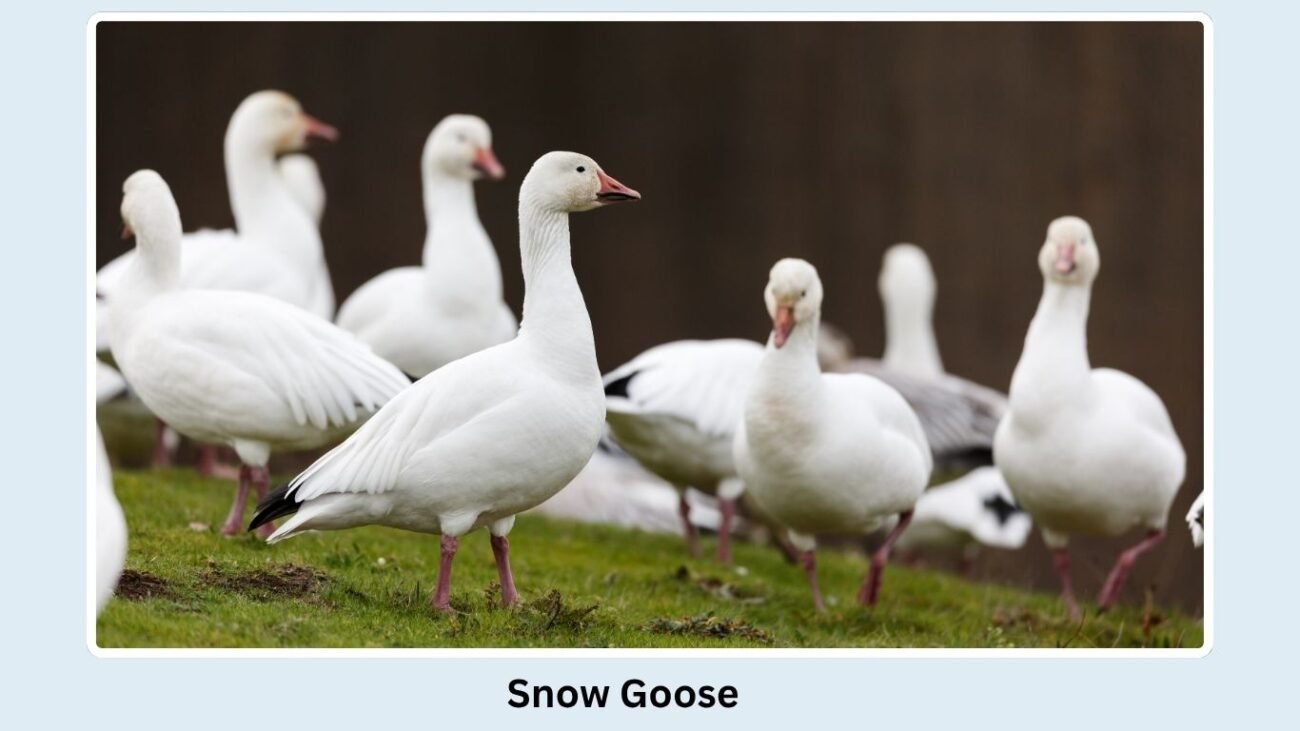
The Snow Goose is known for its stunning white plumage and contrasting black wingtips. Found primarily in North America, it migrates thousands of miles between its Arctic breeding grounds and southern wintering areas. It has two color morphs—white and blue—which can appear in the same flock.
Identification
- White body with black wingtips (white morph)
- Slate-blue body with white head (blue morph)
- Pink bill with a black “grin patch”
- Pink legs
- Medium to large size
Habitat
Snow Geese prefer open wetlands, grassy fields, and coastal marshes. During migration and winter, they gather in large flocks in agricultural fields and wildlife refuges.
Behavior
They are strong, high-flying migrants. Snow Geese form huge flocks and often feed, rest, and migrate together. They are vocal, producing a loud honking call in flight.
Diet
They feed on grasses, sedges, grains, and roots, often pulling up entire plants. In fields, they consume leftover crops like corn and rice.
3. Ross’s Goose
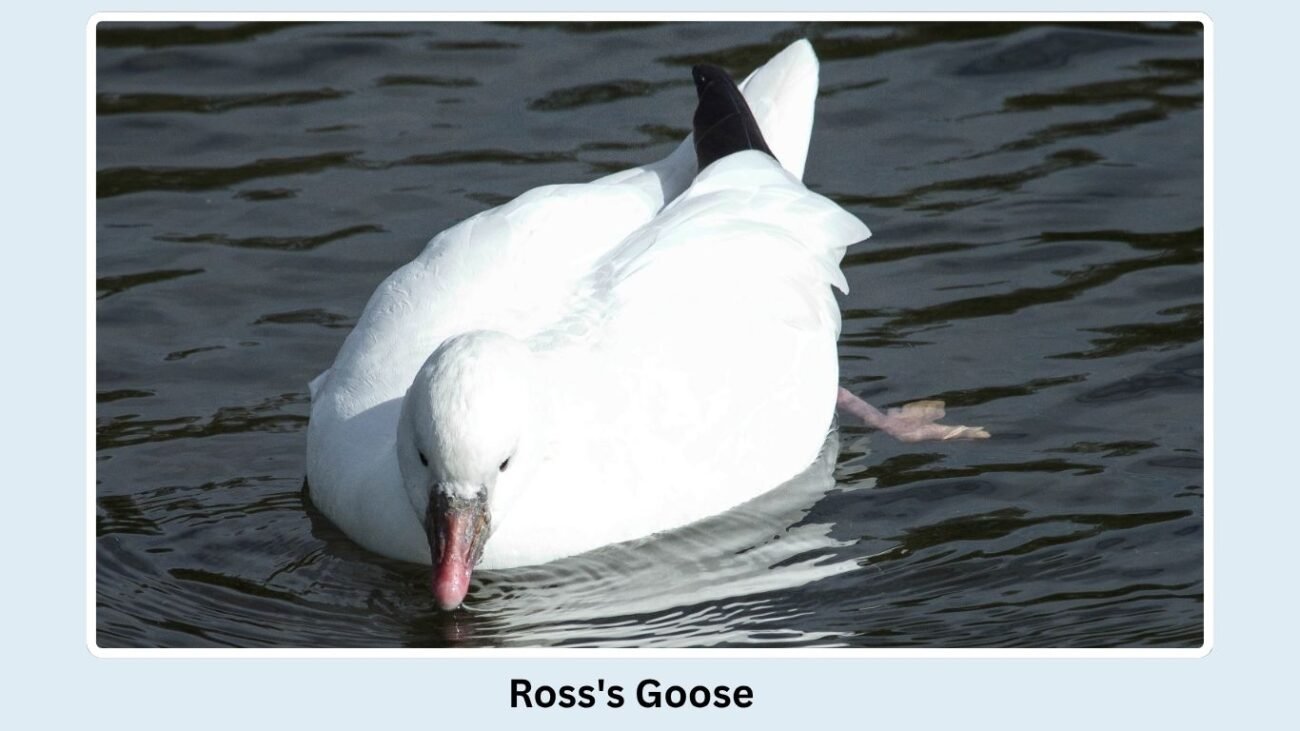
Ross’s Goose looks like a miniature version of the Snow Goose but is smaller and more delicate in appearance. It is native to North America and breeds in the high Arctic, wintering further south in the U.S. alongside Snow Geese.
Identification
- Pure white plumage
- Shorter, stubbier pink bill
- Blue wingtips less prominent than Snow Goose
- Smaller and more compact body
- Pink legs
Habitat
This goose prefers Arctic tundra for breeding and migrates to inland lakes, marshes, and farmlands in winter. It is often seen in mixed flocks with Snow Geese.
Behavior
Ross’s Geese are very social and often travel in dense flocks. They are fast, agile flyers and have a softer call than the Snow Goose.
Diet
Like other geese, they feed on grasses, sedges, and agricultural grains. They forage by grazing and digging with their bills.
4. Greater White-fronted Goose
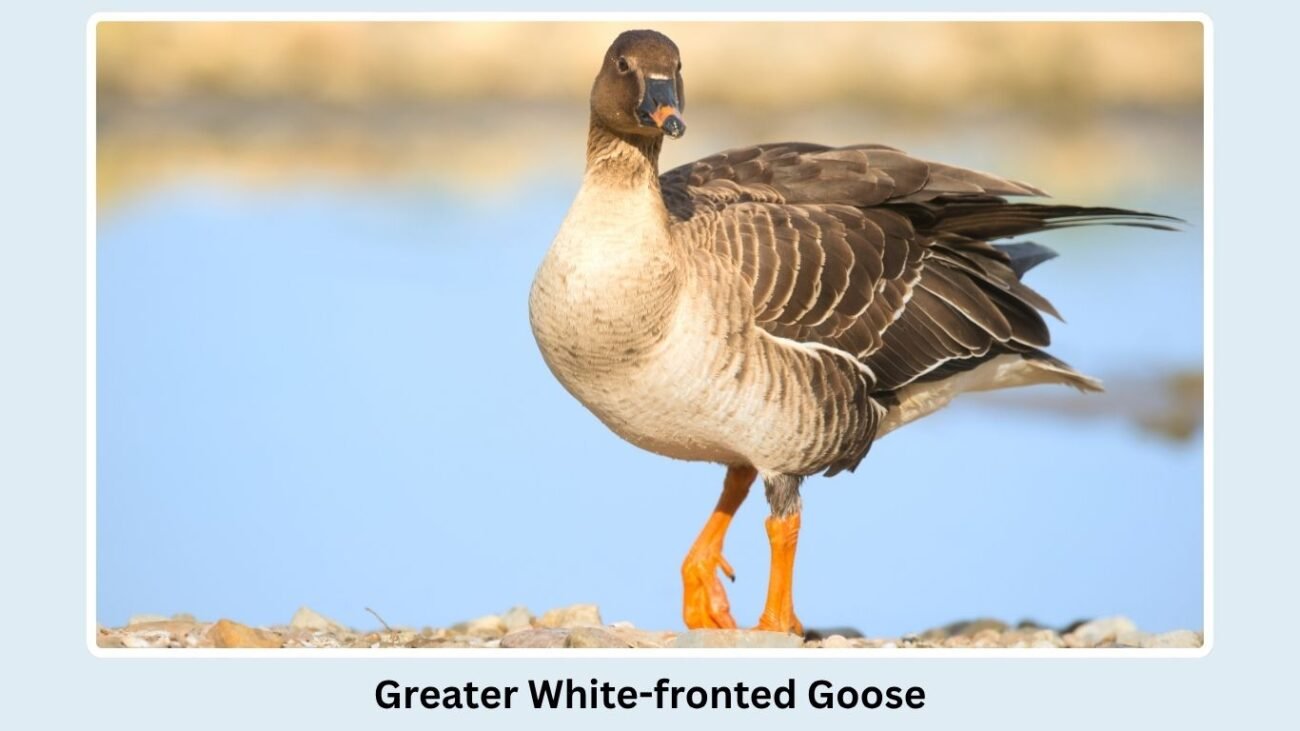
The Greater White-fronted Goose is a medium-sized goose known for the distinctive white band at the base of its bill and its speckled belly. It breeds in the Arctic tundra and migrates to southern U.S., Mexico, and even parts of Europe and Asia for the winter.
Identification
- White patch at the base of the pink-orange bill
- Brownish-gray body
- Black barring or spots on the belly
- Orange legs
- Loud, laughing calls
Habitat
Breeding occurs in Arctic wetlands and tundra. During migration and winter, they settle in lakes, marshes, grasslands, and agricultural fields.
Behavior
They are highly gregarious and often seen in large flocks. Known for their strong pair bonds and group cohesion, they often migrate alongside other goose species.
Diet
Greater White-fronted Geese feed on grasses, roots, seeds, and grains. In farmland areas, they consume leftover crop residue such as corn and rice.
5. Lesser White-fronted Goose
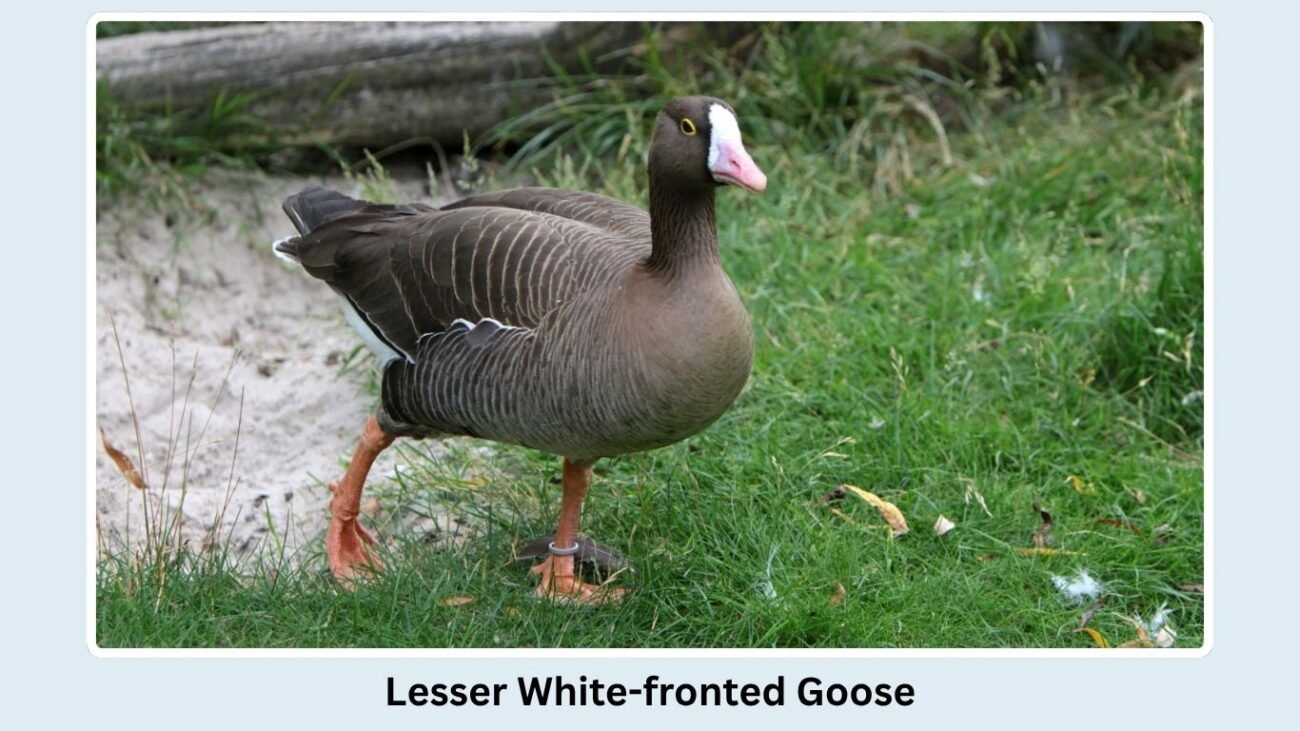
Smaller and more delicate than the Greater White-fronted Goose, the Lesser White-fronted Goose is distinguished by its short neck, yellow eye-ring, and compact body. It is mainly found in northern Europe and Asia, and is considered globally threatened.
Identification
- Bright white patch on the forehead
- Short, pink bill
- Yellow eye-ring
- Black bars on the belly
- Smaller size and rounder head
Habitat
It breeds in Arctic tundra and wetlands in northern Eurasia and migrates to southeastern Europe and parts of Asia in winter. Prefers shallow wetlands and grasslands.
Behavior
More shy and secretive than other geese, often staying hidden in vegetation. It forms small family groups and is less likely to mix with other species.
Diet
Feeds mainly on grasses, shoots, and aquatic plants. In winter, it also consumes agricultural grains and small seeds.
6. Greylag Goose
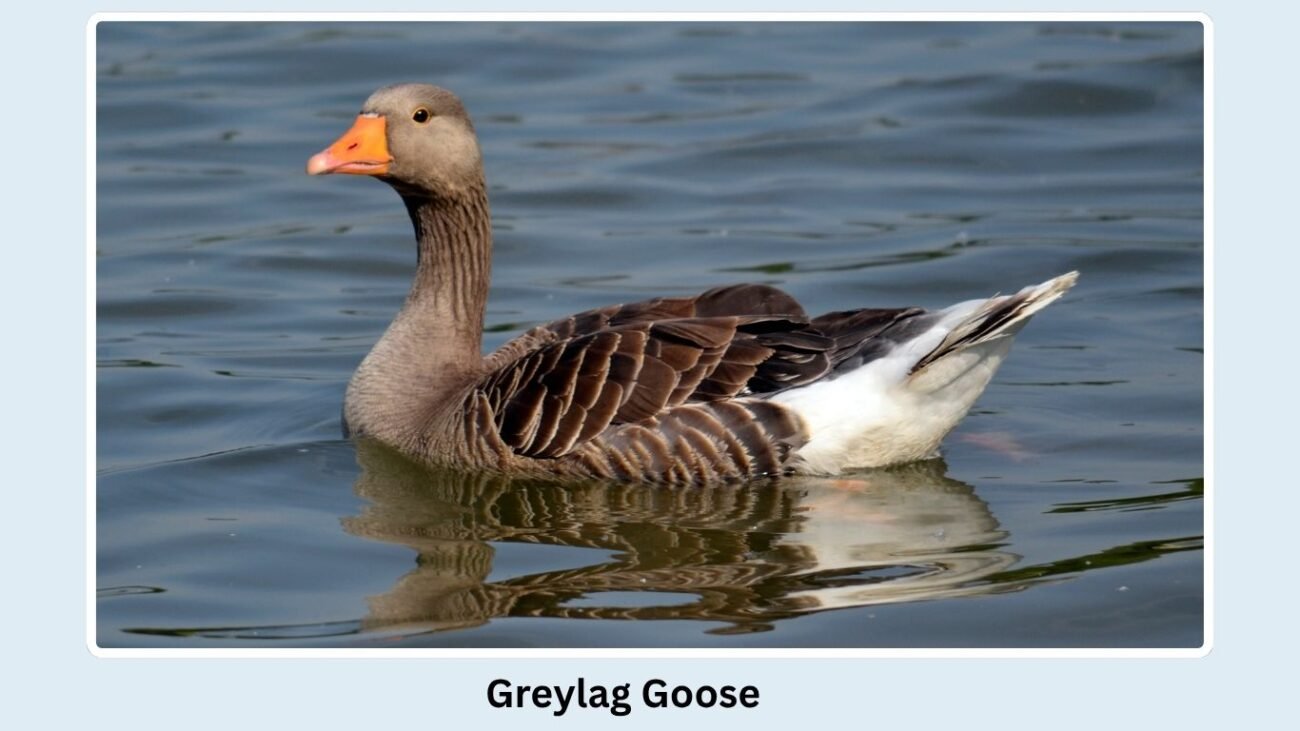
The Greylag Goose is the ancestor of most domestic geese and one of the largest wild geese in Europe. Recognized by its sturdy build and loud honking, it’s a common sight across wetlands and farmlands in Europe and parts of Asia.
Identification
- Bulky grayish-brown body
- Pale belly and darker back
- Orange or pink bill
- Pink legs
- White edges on the feathers give a scaly look
Habitat
Greylags breed in marshes, lakes, and river valleys, and in winter, they often move to coastal areas and farmland.
Behavior
They are social birds, often forming large flocks. Greylags are strong fliers and exhibit complex social behavior, including lifelong pair bonds.
Diet
They feed on grasses, grains, roots, and aquatic plants. In farmlands, they eat crops like barley, wheat, and potatoes.
7. Swan Goose
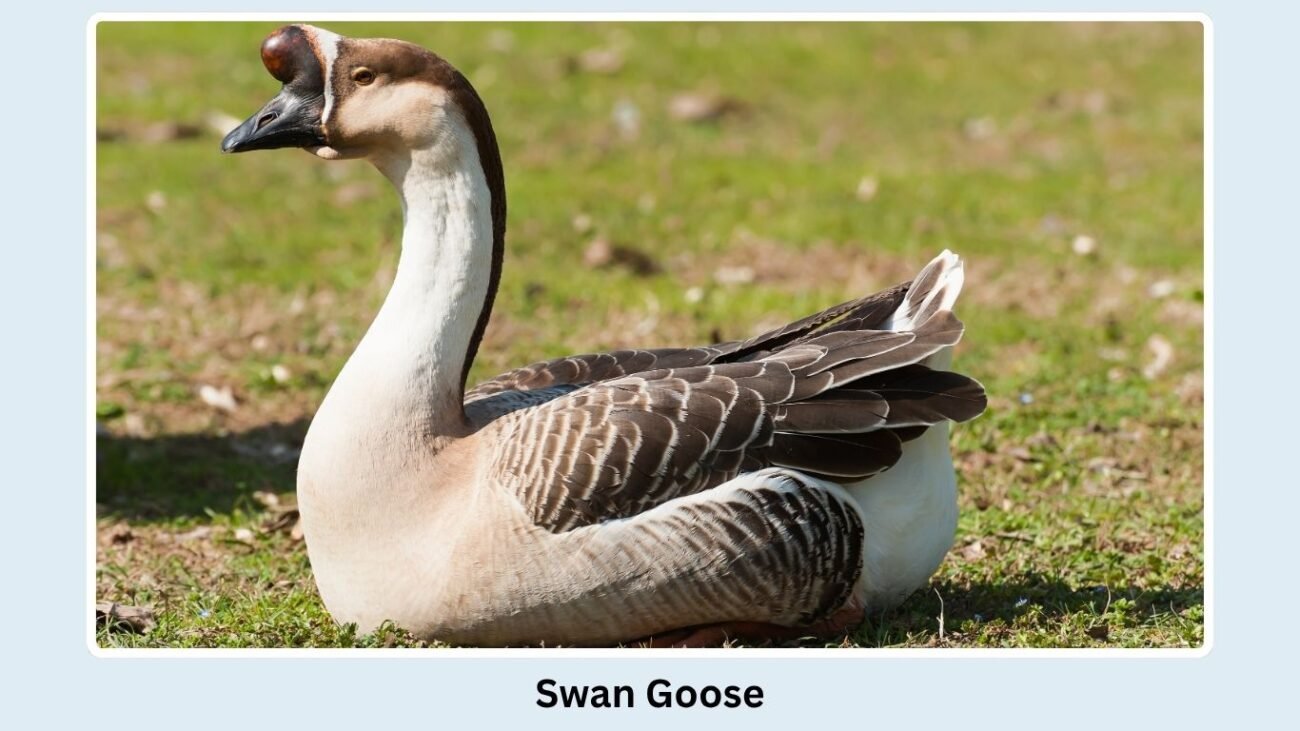
The Swan Goose is a large, elegant goose native to eastern Asia. It is the wild ancestor of the Chinese domestic goose and is easily identified by its long neck and dark facial stripe.
Identification
- Long neck
- Brownish-gray back and wings
- Pale underparts
- Distinct dark stripe from crown to upper back
- Orange legs and black bill
Habitat
Breeds near freshwater lakes and rivers in Mongolia, China, and southeastern Russia. Winters in rice paddies, reservoirs, and lakes in eastern China.
Behavior
Swan Geese are more reserved and usually found in small groups. They are migratory and often cover long distances between breeding and wintering grounds.
Diet
They graze on grasses, sedges, and aquatic vegetation. In agricultural areas, they eat leftover rice and other grains.
8. Bar-headed Goose
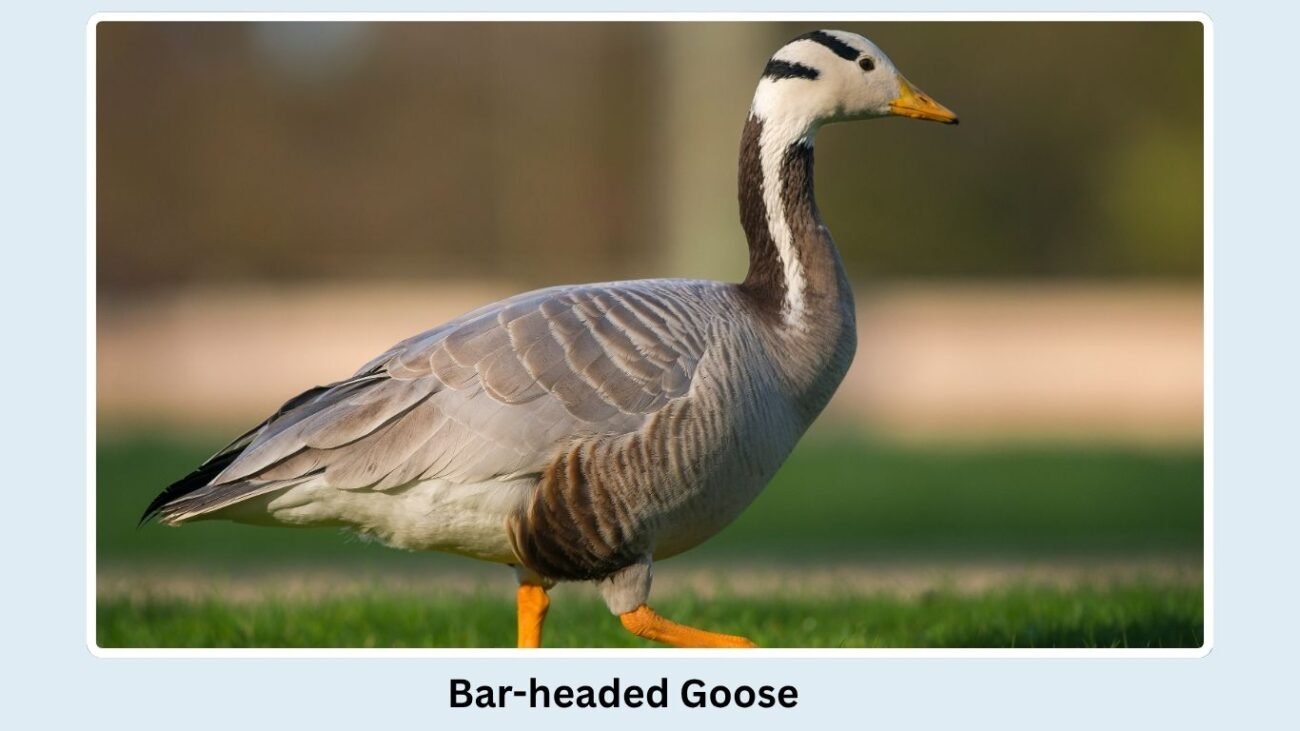
The Bar-headed Goose is famous for its incredible high-altitude migration over the Himalayas. Native to Central Asia, it’s easily recognized by the black bars on the back of its white head.
Identification
- Pale gray body
- White head with two distinct black bars
- Orange legs and bill
- Black wingtips
- Medium size and upright posture
Habitat
Breeds near high-altitude lakes in Central Asia, including Tibet and Mongolia. Winters in wetlands, lakes, and agricultural fields across India and Southeast Asia.
Behavior
Known for flying at extreme altitudes, often over 25,000 feet. These geese are social and migrate in V-formations. They are calm and often mingle with other waterfowl.
Diet
Feeds on grasses, grains, and aquatic plants. In farmlands, they forage on leftover rice, barley, and wheat.
9. Barnacle Goose
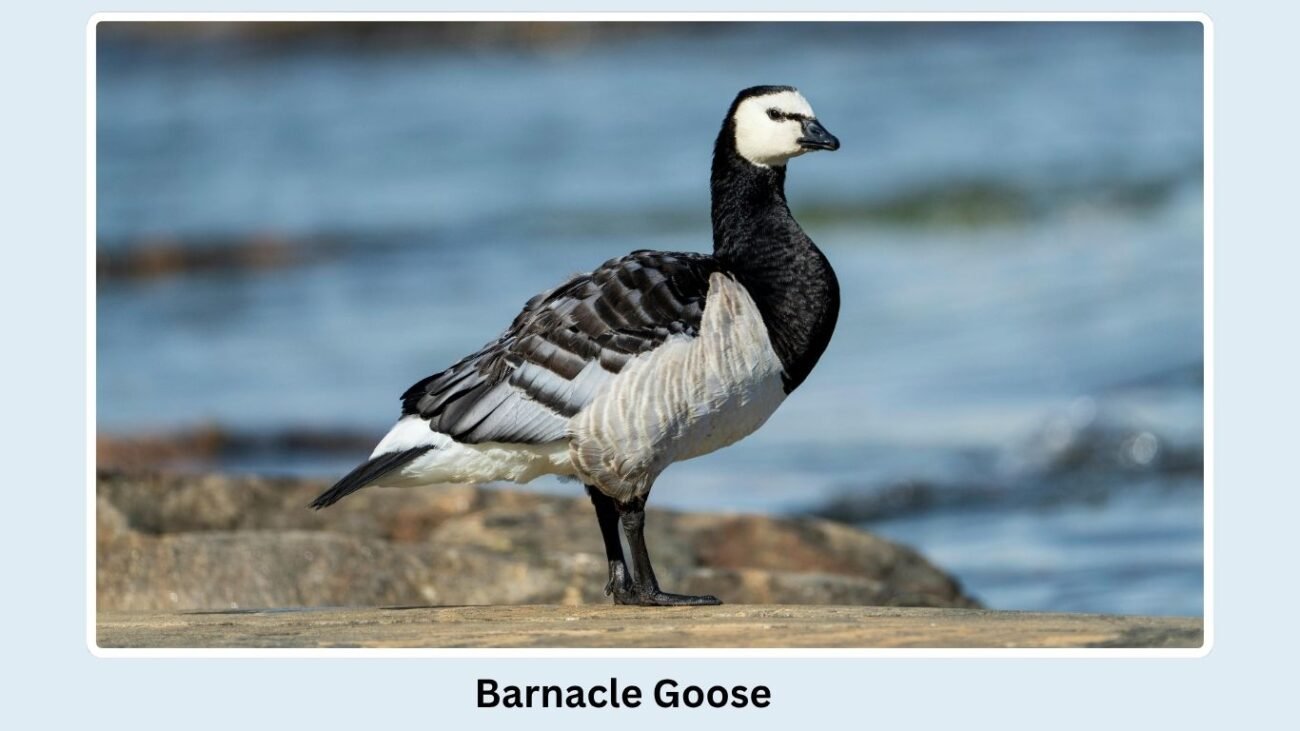
The Barnacle Goose is a small, compact goose with bold black-and-white coloring. It breeds in the Arctic and migrates to Europe for the winter, particularly favoring coastal areas.
Identification
- Black neck and chest
- White face
- Silvery-gray back with black bars
- Short black bill and legs
- Small size, compared to other geese
Habitat
Nests on cliffs and tundra in Greenland, Svalbard, and Arctic Russia. Winters along European coasts, salt marshes, and estuaries.
Behavior
Highly social and vocal, often seen in flocks. Known for nesting on high cliffs to avoid predators. Parents lead goslings down steep cliffs to reach food sources.
Diet
Eats grasses, mosses, and small plants in breeding areas. In winter, grazes on coastal pastures, farmlands, and salt-tolerant vegetation.
10. Cackling Goose
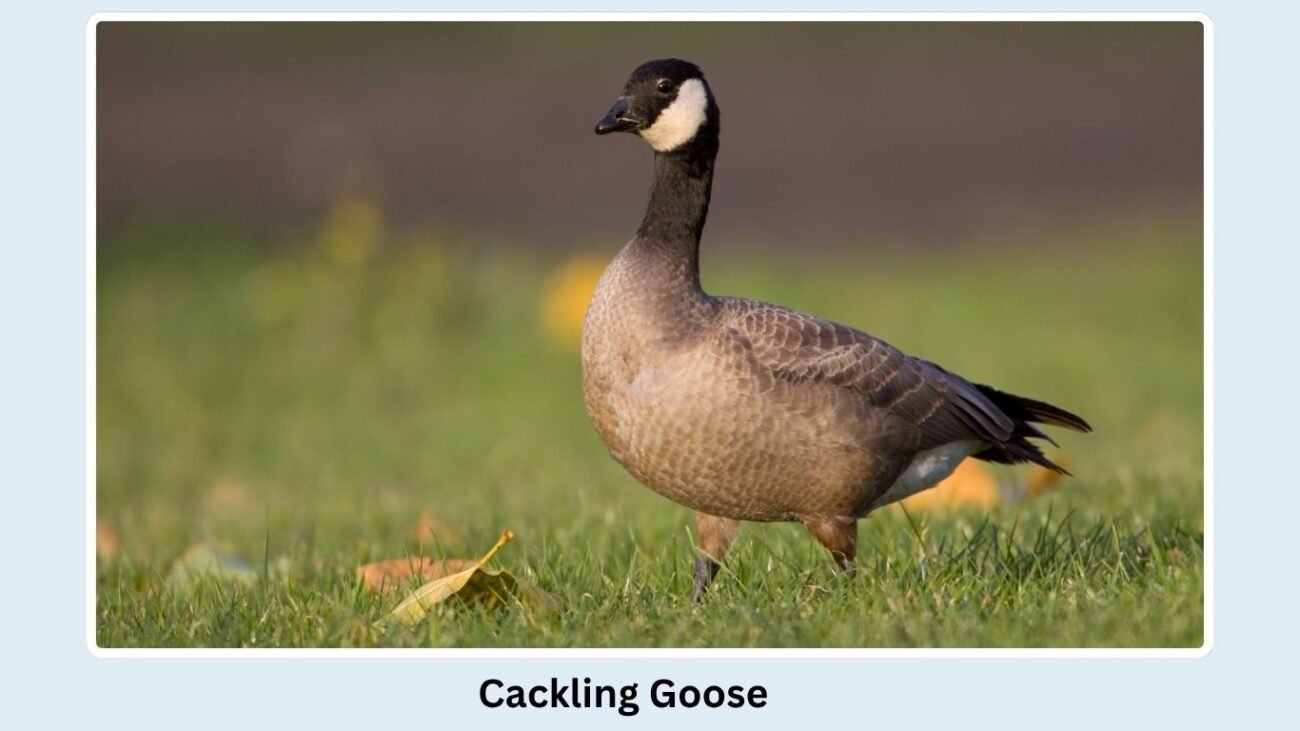
The Cackling Goose looks very similar to the Canada Goose but is noticeably smaller with a shorter neck and a higher-pitched voice. It was once considered a subspecies of the Canada Goose but is now classified as a separate species.
Identification
- Small body and short neck
- Black head and neck with white chinstrap
- Brownish-gray body
- Small black bill
- Distinct cackling, high-pitched vocalization
Habitat
Breeds in the tundra of Alaska and northern Canada. Winters in the southern U.S., especially in wetlands, lakes, and agricultural fields.
Behavior
Often forms flocks with Canada Geese. Their compact size and different voice help distinguish them. They migrate in V-formations and are social, vocal birds.
Diet
Feeds on grasses, sedges, and grains. In winter, they forage in harvested fields for spilled corn, wheat, and barley.
11. Emperor Goose
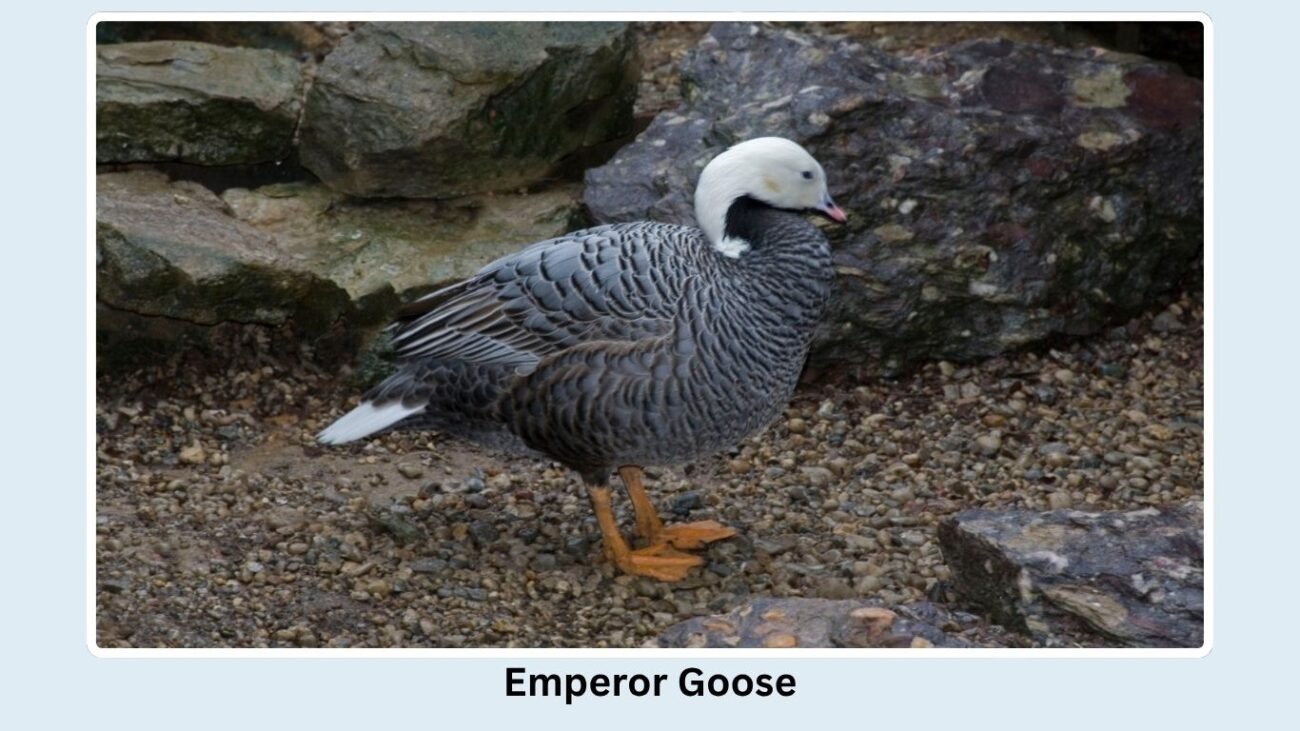
The Emperor Goose is a striking Arctic species with a beautiful scaled gray pattern and a snow-white head. It is found primarily in Alaska and parts of eastern Russia.
Identification
- White head and nape
- Blue-gray body with scalloped feather pattern
- Short orange legs
- Small pinkish bill
- Compact, medium-sized goose
Habitat
Breeds in coastal tundra regions of western Alaska and Russia. Winters along the Aleutian Islands and the southern Bering Sea coast.
Behavior
Less social than other geese, often seen in small family groups. It tends to stay close to coastal areas and is relatively sedentary in winter.
Diet
Feeds on aquatic grasses, mosses, and sedges. In coastal areas, it may eat marine vegetation such as eelgrass and algae.
12. Pink-footed Goose
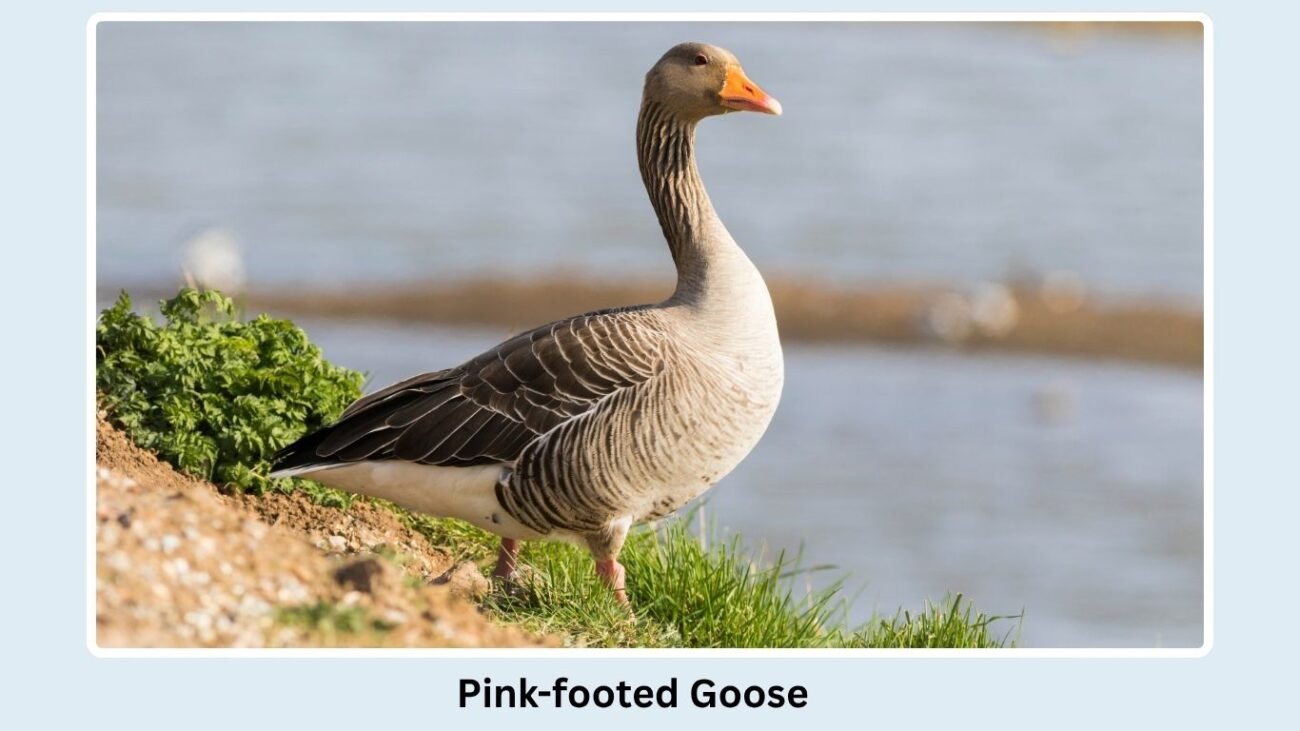
The Pink-footed Goose is a medium-sized goose found mainly in Europe. It is named for its pink legs and feet and is known for its coordinated migratory patterns between Greenland, Iceland, and the British Isles.
Identification
- Grayish-brown body
- Pale belly
- Pink feet and legs
- Short, pinkish-black bill
- Darker head and neck
Habitat
Breeds in tundra regions of Greenland and Iceland. Winters in the United Kingdom, the Netherlands, and northern Europe, often seen in farmlands and estuaries.
Behavior
Forms tight-knit migratory flocks. Known for strong site fidelity—returning to the same breeding and wintering grounds year after year. Very vocal during migration.
Diet
Feeds on grasses, roots, and crops. In agricultural areas, it commonly eats potatoes, grains, and sugar beet leaves.
13. Red-breasted Goose
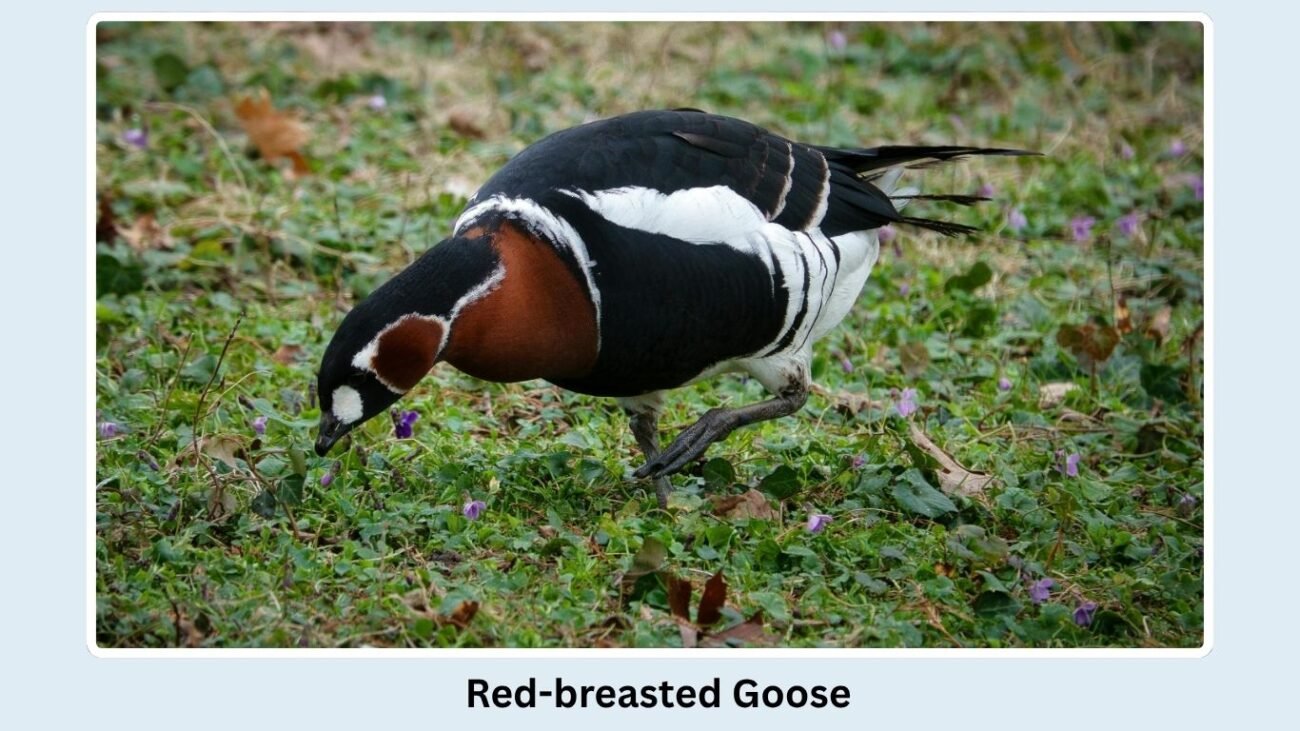
The Red-breasted Goose is one of the most visually stunning geese, with bold red, black, and white markings. Native to Eurasia, it is considered vulnerable due to habitat loss and is protected in many regions.
Identification
- Bright reddish chest and face patch
- Black back, neck, and belly
- White facial lines and flank patches
- Small, compact body
- Short black bill and legs
Habitat
Breeds in the Arctic tundra of Siberia. Winters around the Black Sea, particularly in Bulgaria, Romania, and Ukraine, often using coastal lagoons and farmlands.
Behavior
Often associates with other geese, especially White-fronted Geese, for safety. Known for its beautiful appearance and shy, cautious nature.
Diet
Eats grasses, winter wheat, and clover. During migration and winter, it forages in fields and wet meadows.
14. Tundra Bean Goose
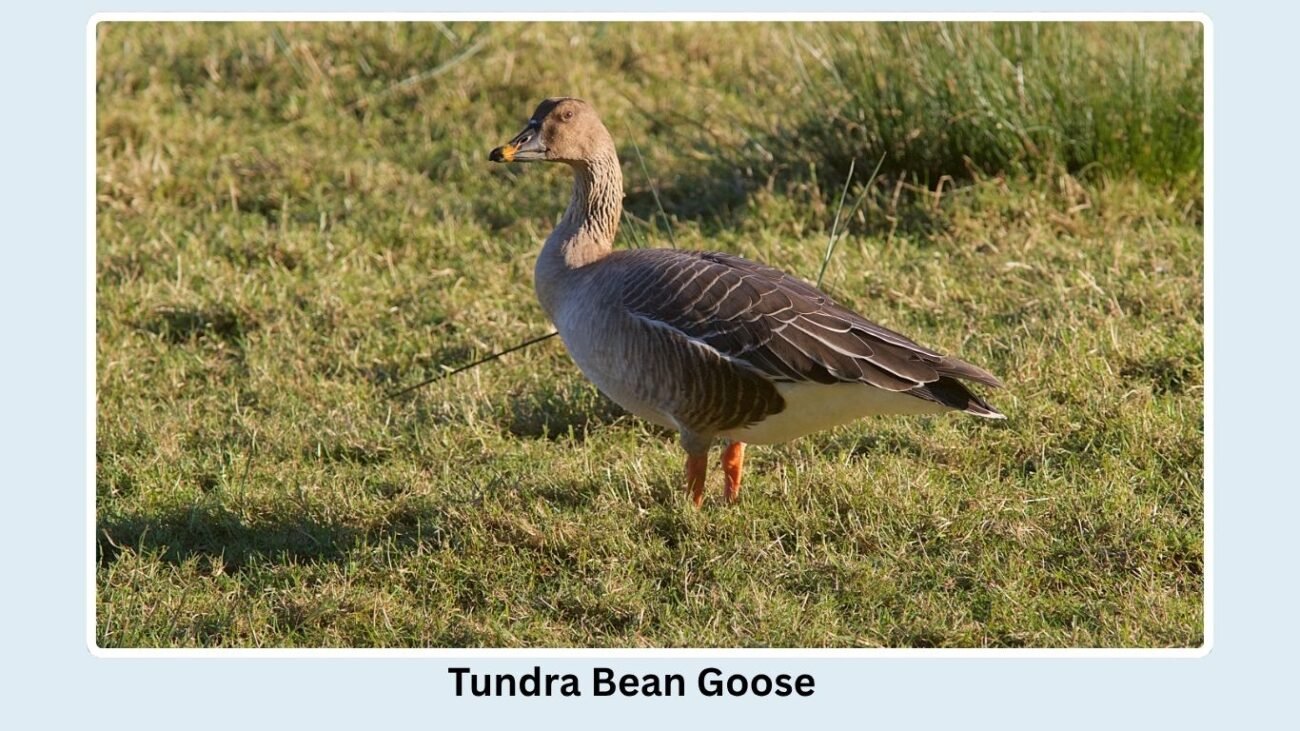
The Tundra Bean Goose is a medium-to-large goose that breeds in the Arctic tundra of Russia and migrates to Europe and East Asia during winter. It is often confused with the closely related Taiga Bean Goose but is generally smaller and more compact.
Identification
- Brownish-gray body
- Dark brown head and neck
- Orange legs
- Black bill with an orange band
- Slightly stockier than Taiga Bean Goose
Habitat
Breeds in the low Arctic tundra near lakes and rivers. Winters in wetlands, rice fields, and grasslands across parts of Europe and East Asia.
Behavior
Forms tight winter flocks and often mixes with other species like White-fronted Geese. Tundra Bean Geese are strong fliers and travel long distances during migration.
Diet
Feeds on grasses, sedges, and agricultural grains. In wintering grounds, it grazes in fields and wet meadows, often in the early morning or late afternoon.
15. Taiga Bean Goose
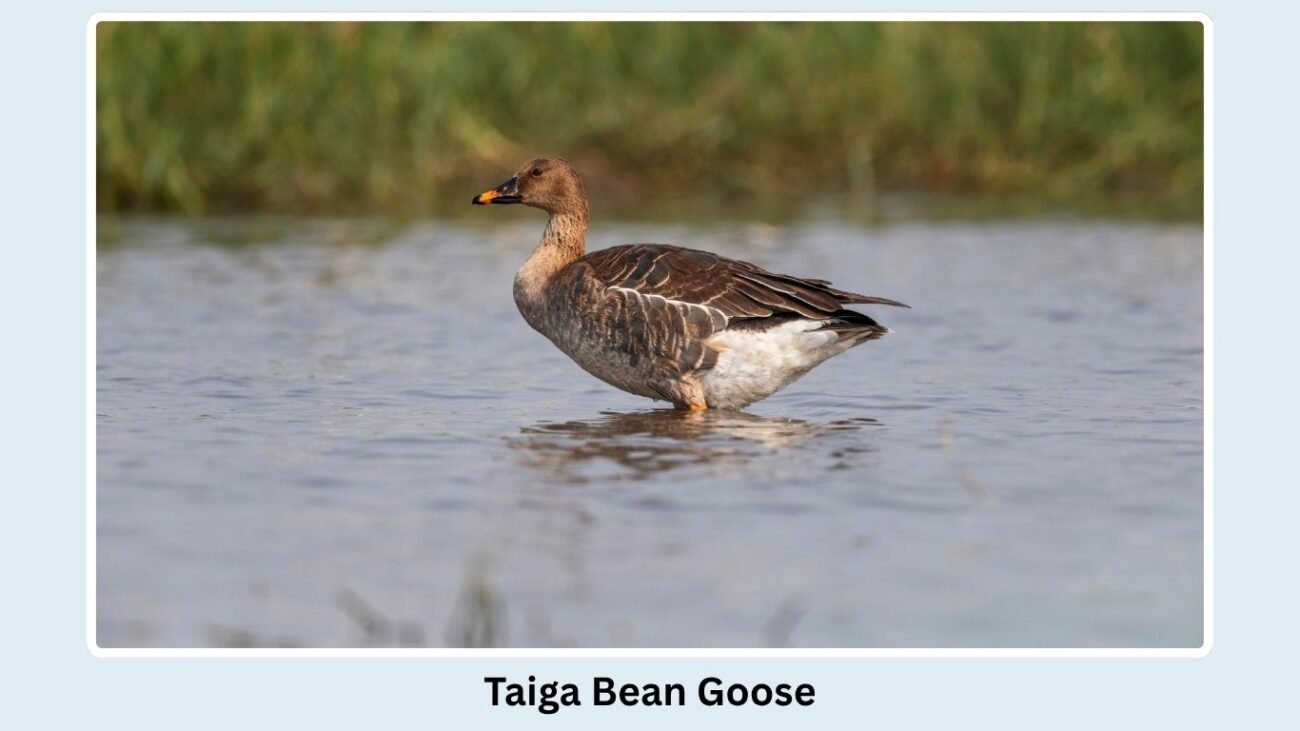
The Taiga Bean Goose is the larger and longer-necked cousin of the Tundra Bean Goose. It breeds in the taiga forests of northern Europe and Russia and migrates to southern Europe and Asia for the winter.
Identification
- Long neck and body
- Dark brown head and neck
- Orange legs
- Black bill with a more extensive orange band than the Tundra type
- Slightly larger overall size
Habitat
Breeds in boreal forest wetlands and taiga zones. Winters in open wetlands, lakes, and farmland in regions like China, Korea, and parts of Europe.
Behavior
Less gregarious than other geese, often seen in small family groups. During migration, they may form loose flocks and feed in nearby fields.
Diet
Consumes grasses, sedges, berries, and cultivated grains. In winter, they favor agricultural areas where they feed on leftover crops and wild vegetation.
16. Egyptian Goose
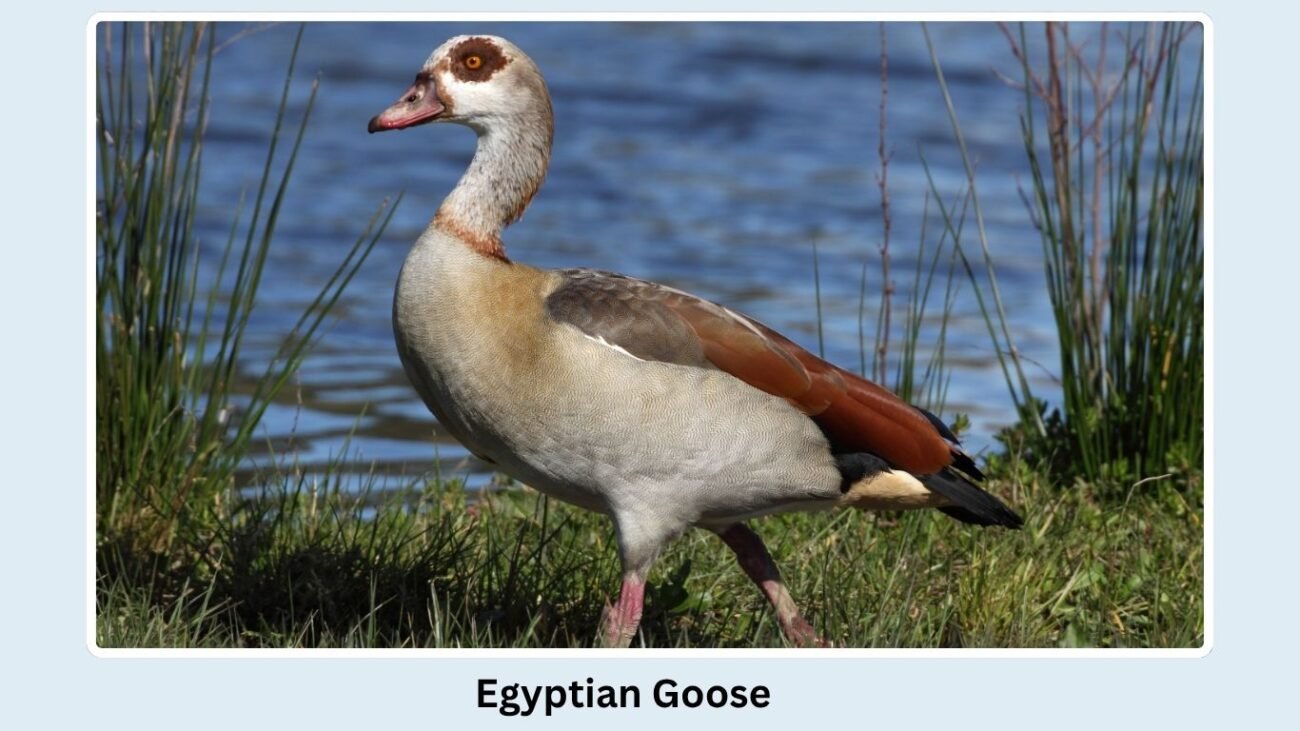
The Egyptian Goose is a striking bird native to Africa, especially along the Nile and sub-Saharan wetlands. Though technically a shelduck relative, it is commonly referred to as a goose due to its size and behavior. It has also established feral populations in parts of Europe.
Identification
- Light brown body with darker brown eye patches
- Chestnut breast spot
- Pink legs
- Pale gray face with reddish eye ring
- Long neck and upright posture
Habitat
Found near lakes, rivers, and wetlands across sub-Saharan Africa and the Nile Valley. Also seen in urban parks and golf courses in Europe and the Middle East.
Behavior
Pairs are monogamous and often aggressively defend territory. They nest on the ground or on tree platforms and are strong swimmers.
Diet
Feeds on grasses, seeds, and leaves. In urban areas, they also forage on lawns and scavenge for food scraps.
17. Hawaiian Goose (Nēnē)
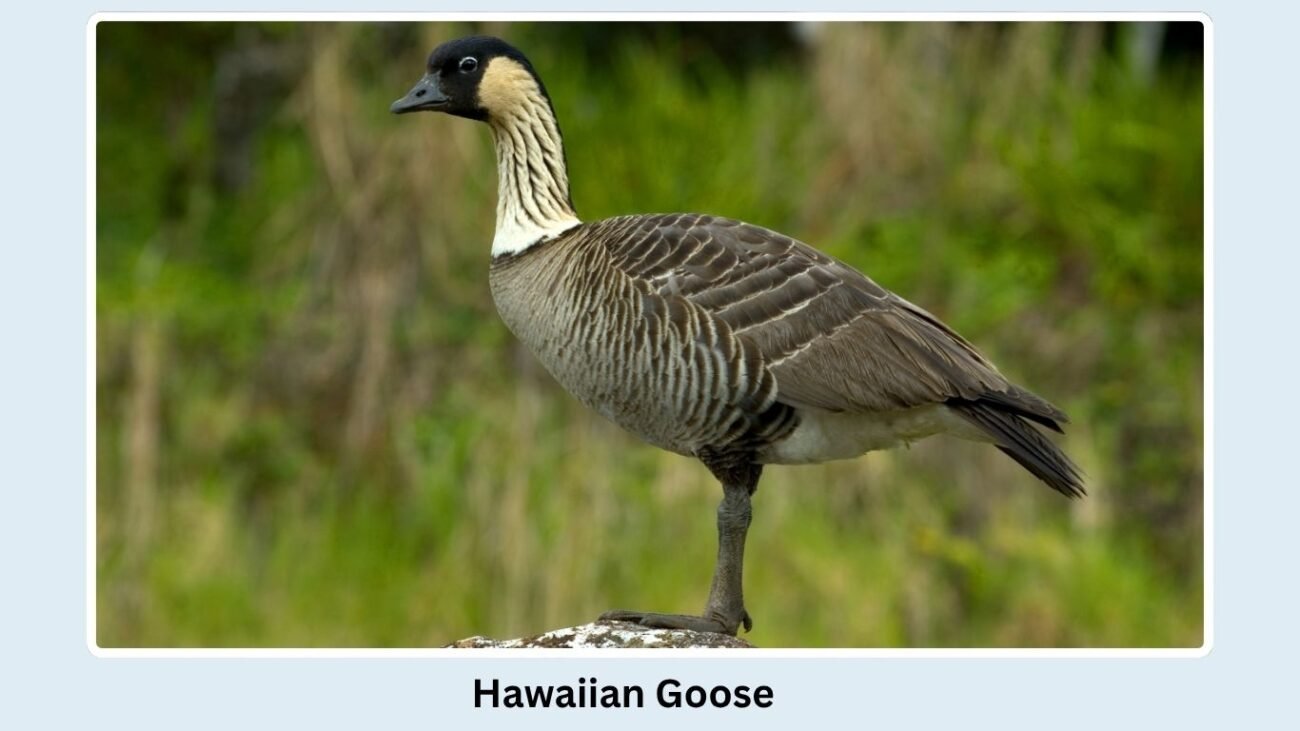
The Hawaiian Goose, or Nēnē, is the state bird of Hawaii and one of the rarest geese in the world. It evolved from the Canada Goose and is adapted to volcanic terrain rather than wetland habitats.
Identification
- Buff-colored cheeks
- Black head and crown
- Deeply furrowed neck with dark stripes
- Grayish-brown body
- Black legs and bill
Habitat
Inhabits dry shrublands, grasslands, lava plains, and coastal dunes on the Hawaiian Islands. Rarely seen near water, unlike most geese.
Behavior
Nēnē are non-migratory and live in small family groups. They have strong feet adapted for walking on rugged terrain rather than swimming.
Diet
Feeds on native plants, leaves, berries, and seeds. Often grazes on grasses and shrubs and can survive in drier conditions than other geese.
18. Chinese Goose
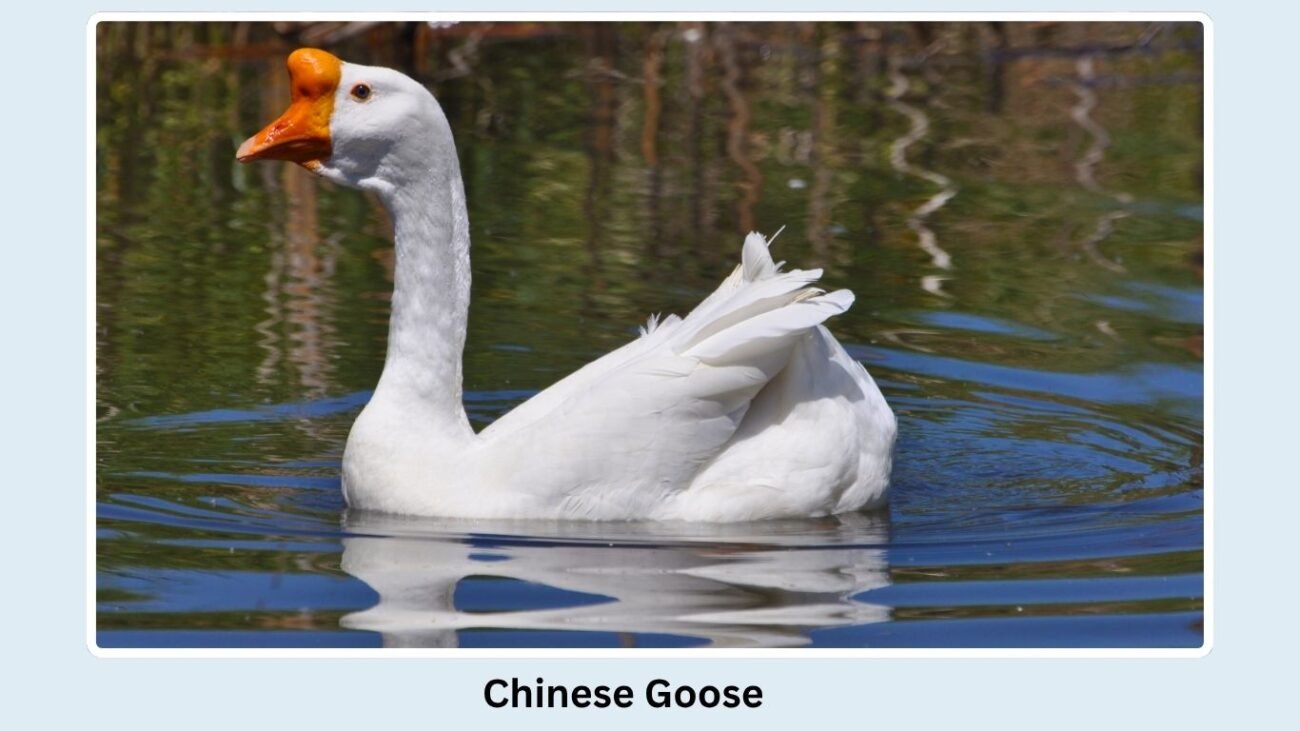
The Chinese Goose is a domesticated breed derived from the wild Swan Goose. It’s known for its elegant neck and prominent basal knob at the top of the bill. Common in ornamental and farm settings, it’s valued for both its appearance and utility.
Identification
- Long, arched neck
- Large black basal knob on top of the bill
- Brown body with darker back
- White underparts
- Orange legs and feet (in some varieties)
Habitat
Primarily found in farms, gardens, and parks. Although domestic, feral populations may exist near ponds or lakes.
Behavior
Chinese Geese are alert, loud, and often used as “watch geese.” They are social and tend to stay in flocks. Their upright stance gives them a graceful appearance.
Diet
They eat grasses, grains, and kitchen scraps. In ornamental settings, they graze on lawn vegetation and aquatic plants.
19. African Goose
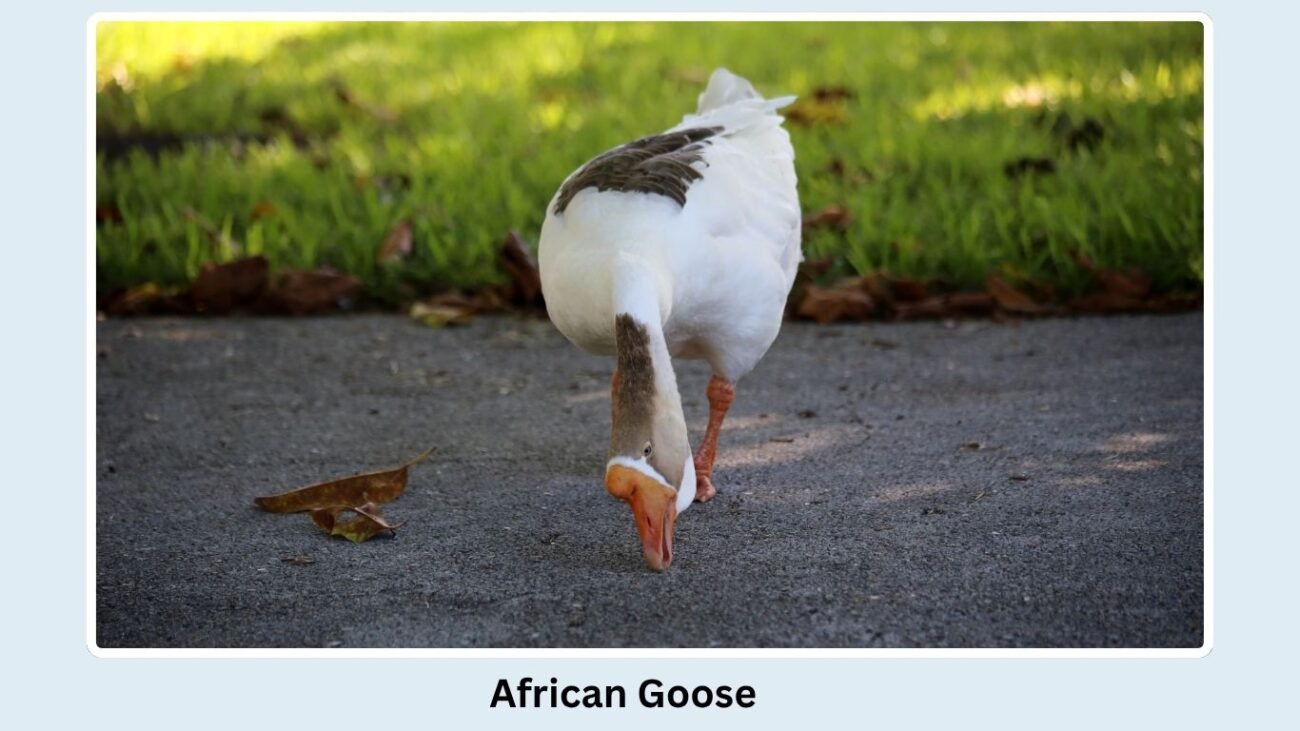
The African Goose is a heavy domestic goose breed, also descended from the wild Swan Goose. It is closely related to the Chinese Goose but is bulkier and has a larger dewlap.
Identification
- Large, heavy body
- Prominent black knob on the bill
- Gray or white plumage varieties
- Large dewlap under the chin
- Orange feet and shanks
Habitat
Found on farms, estates, and water gardens. Though domestic, they need access to water and open space.
Behavior
These geese are calm, steady, and often kept for meat or ornamental purposes. They are less aggressive than some other domestic geese.
Diet
Feeds on grains, greens, pellets, and water plants. They enjoy foraging and grazing in open yards or pastures.
20. Spur-winged Goose
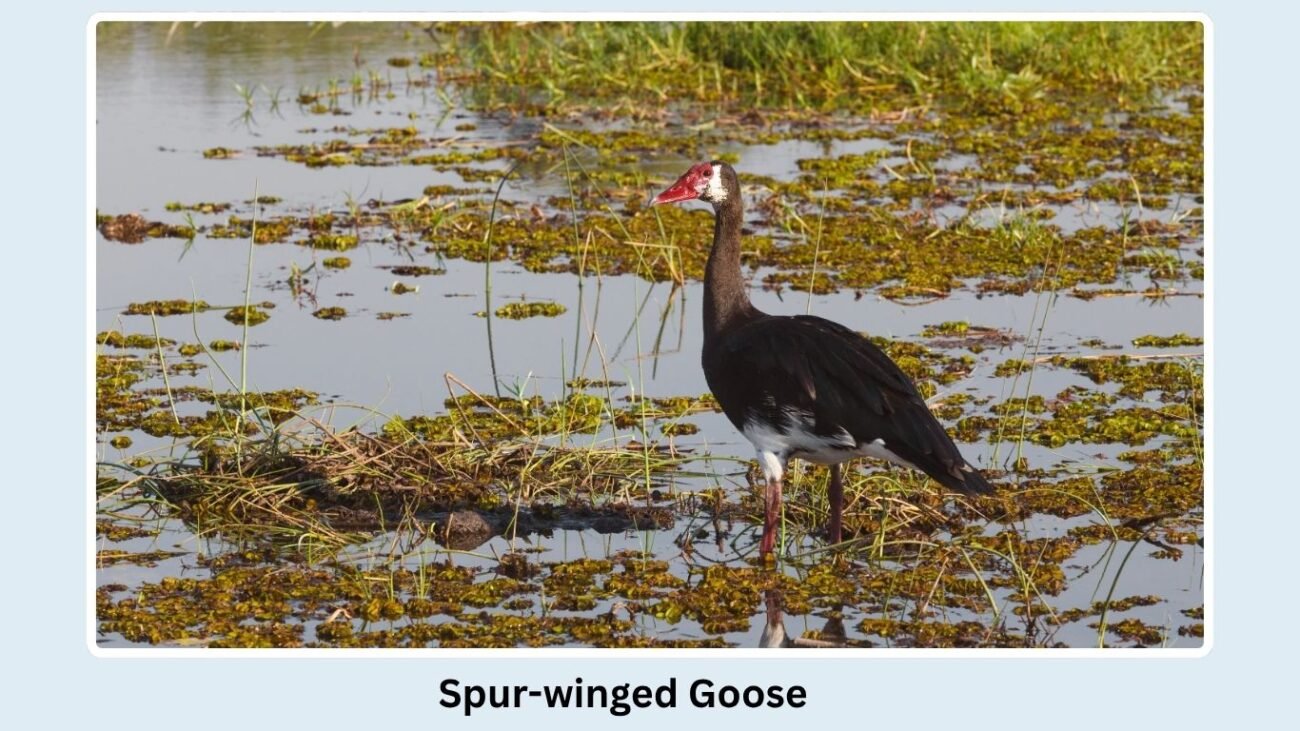
The Spur-winged Goose is a large, semi-aquatic bird native to sub-Saharan Africa. Though often called a goose, it is technically part of the shelduck family. It gets its name from the sharp spurs on its wings, which it uses for defense.
Identification
- Black body with white patches on face and wings
- Bare red facial skin
- Large size with long neck and legs
- Sharp carpal spur at the wing bend
- Greenish sheen on wings (in males)
Habitat
Found near rivers, lakes, marshes, and floodplains throughout sub-Saharan Africa. Prefers quiet, vegetated wetlands for breeding and feeding.
Behavior
Usually seen in small groups or solitary. It nests near water and is known to be territorial. Can be aggressive when defending its nest or territory.
Diet
Feeds on aquatic vegetation, grasses, seeds, and small insects. Occasionally consumes toxic beetles, making its flesh inedible to predators and even humans.
21. Magellan Goose (Upland Goose – Male)
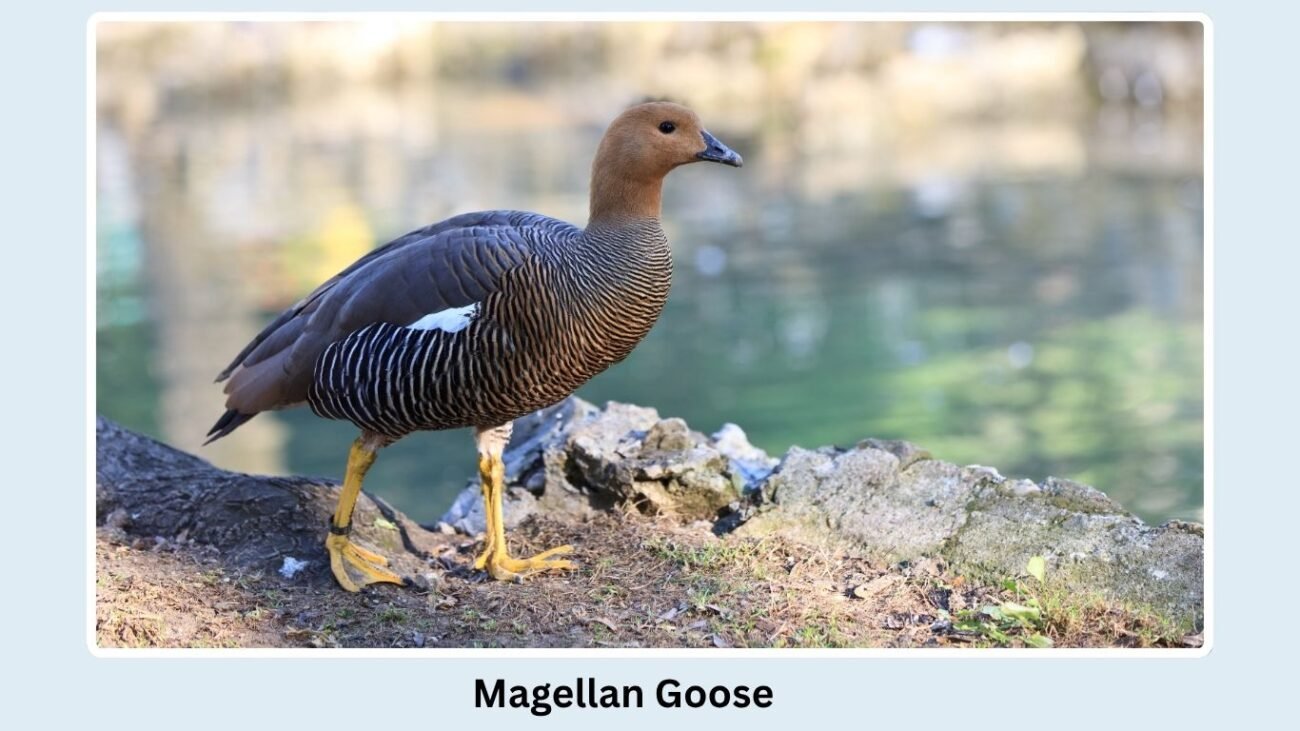
The Magellan Goose, also known as the Upland Goose (especially in the male form), is a species native to the southern parts of South America, including Argentina, Chile, and the Falkland Islands.
Identification
- Males: White body with black barring on the tail and wings
- Females: Brown body with barred flanks and gray head
- Strong, thick neck
- Orange legs and bill
- Medium size, stocky build
Habitat
Prefers open grasslands, meadows, and coastal plains. It is commonly found in southern Patagonia and islands near the southern tip of South America.
Behavior
Highly terrestrial and rarely swims. Usually seen in pairs or small flocks. Known for strong pair bonds and ground nesting.
Diet
Feeds primarily on grass, seeds, and herbs. It grazes on the ground like a goose but stays close to cover and avoids open water.
22. Ashy-headed Goose
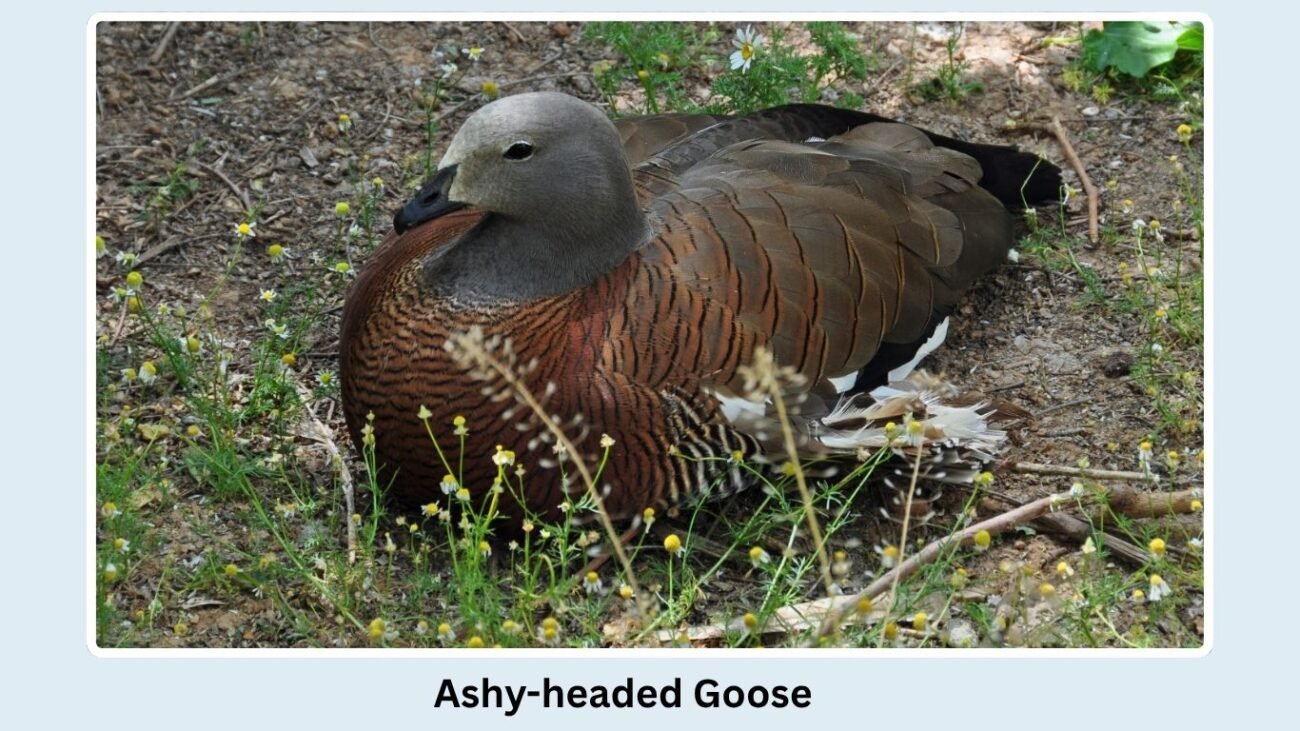
The Ashy-headed Goose is a South American species found mainly in southern Chile and Argentina. It prefers forest edges and grasslands and is one of the lesser-known geese in the world.
Identification
- Pale gray (ashy) head
- Chestnut-brown upper breast
- White underparts
- Black-and-white barred flanks
- Pinkish legs and small black bill
Habitat
Found in forest clearings, marshy grasslands, and wet meadows in southern South America. Migrates northward during the winter to open pastures and valleys.
Behavior
Usually in small groups or pairs. Non-aggressive and quiet compared to other geese. It nests on the ground and is often seen grazing in upland areas.
Diet
Feeds on grasses, herbs, and seeds. It grazes during the early morning and late afternoon, typically near water or on gentle slopes.
23. Ruddy-headed Goose
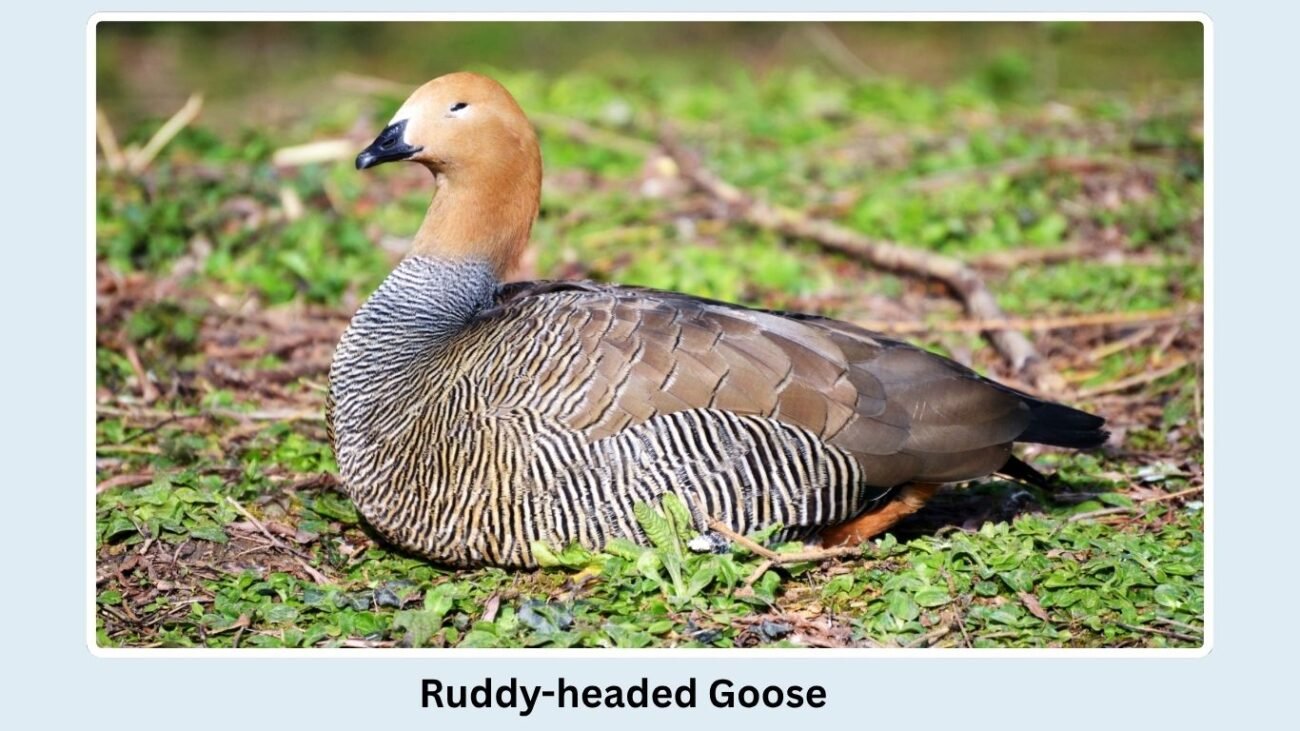
The Ruddy-headed Goose is a small, shy goose found in the southernmost parts of South America, including Tierra del Fuego and the Falklands. Its population is declining due to habitat pressure and competition.
Identification
- Reddish-brown (ruddy) head and neck
- Gray body with fine black barring
- White belly
- Pale legs and short, dark bill
- Smaller and slimmer than other upland geese
Habitat
Lives in meadows, coastal grasslands, and moist upland fields. Breeds in southern Argentina and Chile, winters further north in Patagonia.
Behavior
Typically quiet and timid. Moves in small flocks or family units. It is ground-nesting and avoids areas with high human activity.
Diet
Feeds mostly on grasses, clover, and low herbs. Grazes in open fields and occasionally near freshwater sources.
24. Kelp Goose
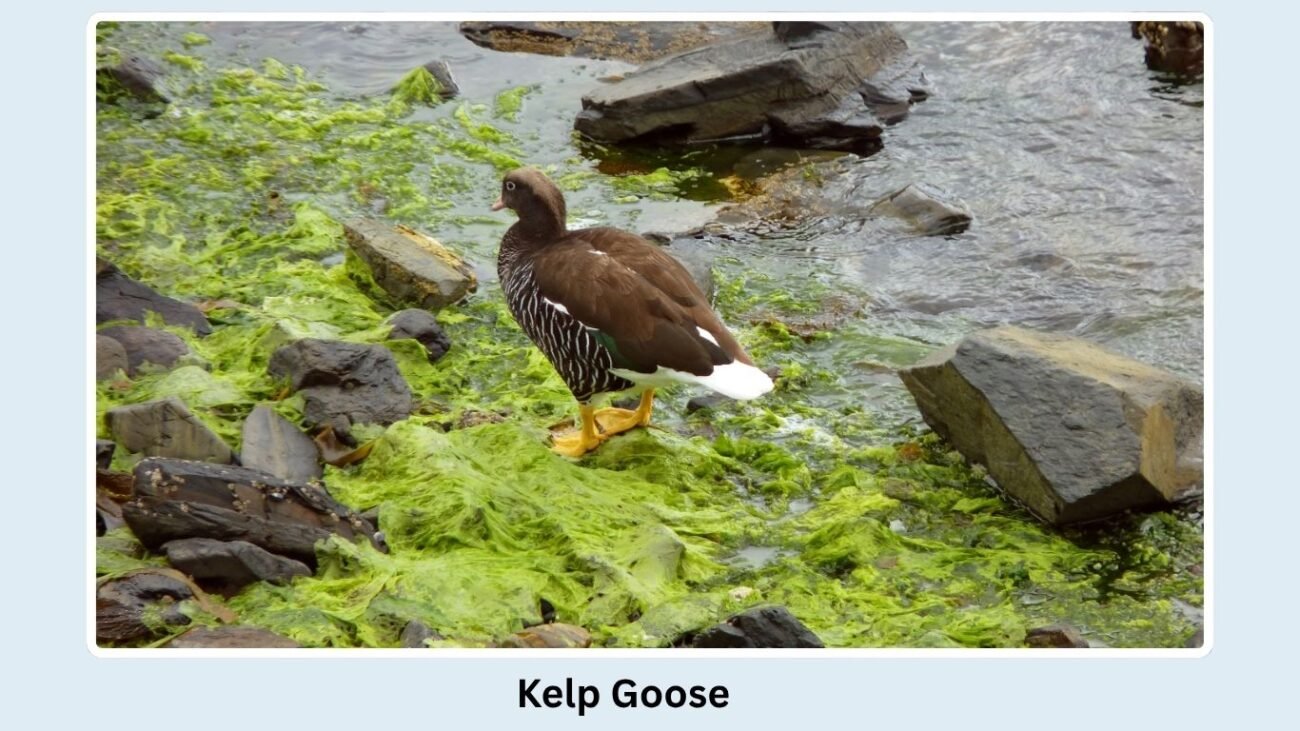
The Kelp Goose is a coastal species native to the southern tip of South America, particularly around Tierra del Fuego and the Falkland Islands. Males and females are distinctly different in color, making them easy to tell apart.
Identification
- Males: Pure white plumage with yellow legs and bill
- Females: Dark brown body with black-and-white barring
- Both sexes have stocky bodies and short necks
- Adapted for coastal life
Habitat
Found along rocky shorelines, kelp beds, and coastal cliffs. It nests near the sea, often hidden among rocks and vegetation.
Behavior
Usually seen in pairs or small groups, often walking along shorelines. It is not migratory and remains close to the coast year-round.
Diet
Feeds almost exclusively on marine algae, especially kelp. Grazes along intertidal zones during low tide.
25. Upland Goose (Female)
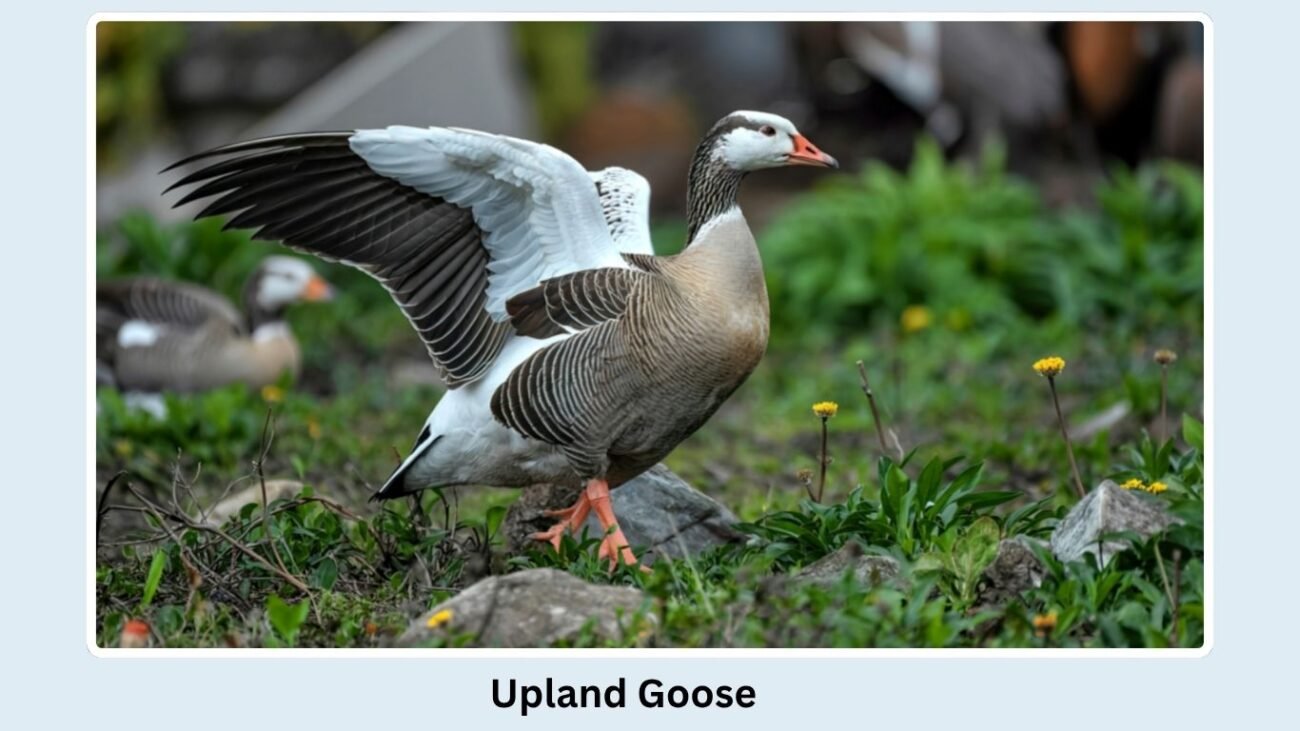
The Upland Goose is the same species as the Magellan Goose, but the female has distinct plumage and behavior. Native to southern South America, females are often confused with other local geese due to their earth-toned colors.
Identification
- Brown head and neck
- Grayish-brown body with heavy black-and-white barring
- White underparts
- Orange legs and dark bill
- Stockier than other female geese
Habitat
Inhabits grasslands, meadows, and open fields, often far from water. Common in Patagonia, the Falklands, and southern Chile and Argentina.
Behavior
The female is often seen with her white-plumaged mate. She is more reserved and cautious, especially during the nesting season.
Diet
Feeds mainly on grasses, clover, and herbs. Forages on land, often in early morning or late afternoon.
26. Andean Goose
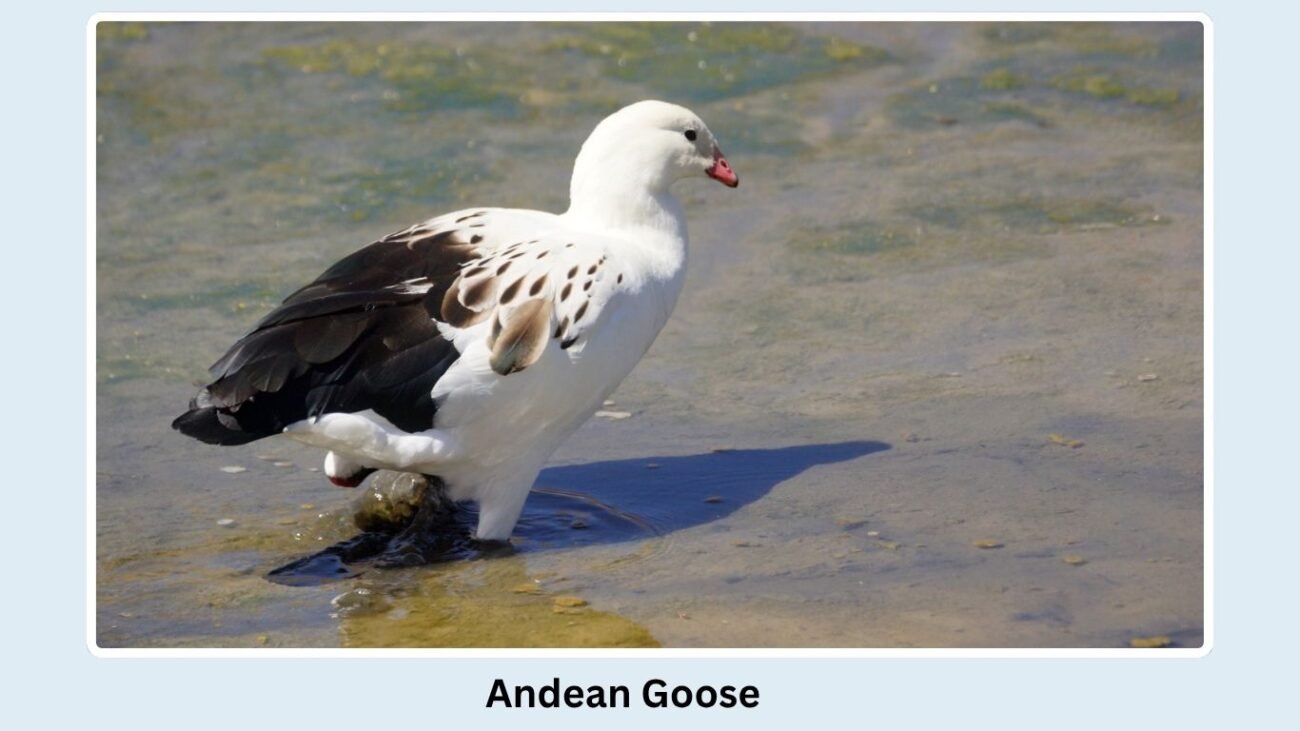
The Andean Goose is a high-altitude species native to the Andes Mountains in South America. Well adapted to cold, thin-air environments, it is commonly found at elevations over 3,000 meters (10,000 feet).
Identification
- Mostly white body
- Black wingtips
- Pink legs
- Short, black bill
- Robust build with a slightly hunched posture
Habitat
Lives in the high-altitude grasslands, bogs, and wetlands of Peru, Bolivia, Chile, and Argentina. Prefers open areas near streams and lakes.
Behavior
Non-migratory and usually seen in pairs or small family groups. Calm and slow-moving, it forages near water or in grassy meadows.
Diet
Feeds primarily on grasses and aquatic plants. Grazes slowly throughout the day, often near wet or marshy ground.
27. Orinoco Goose
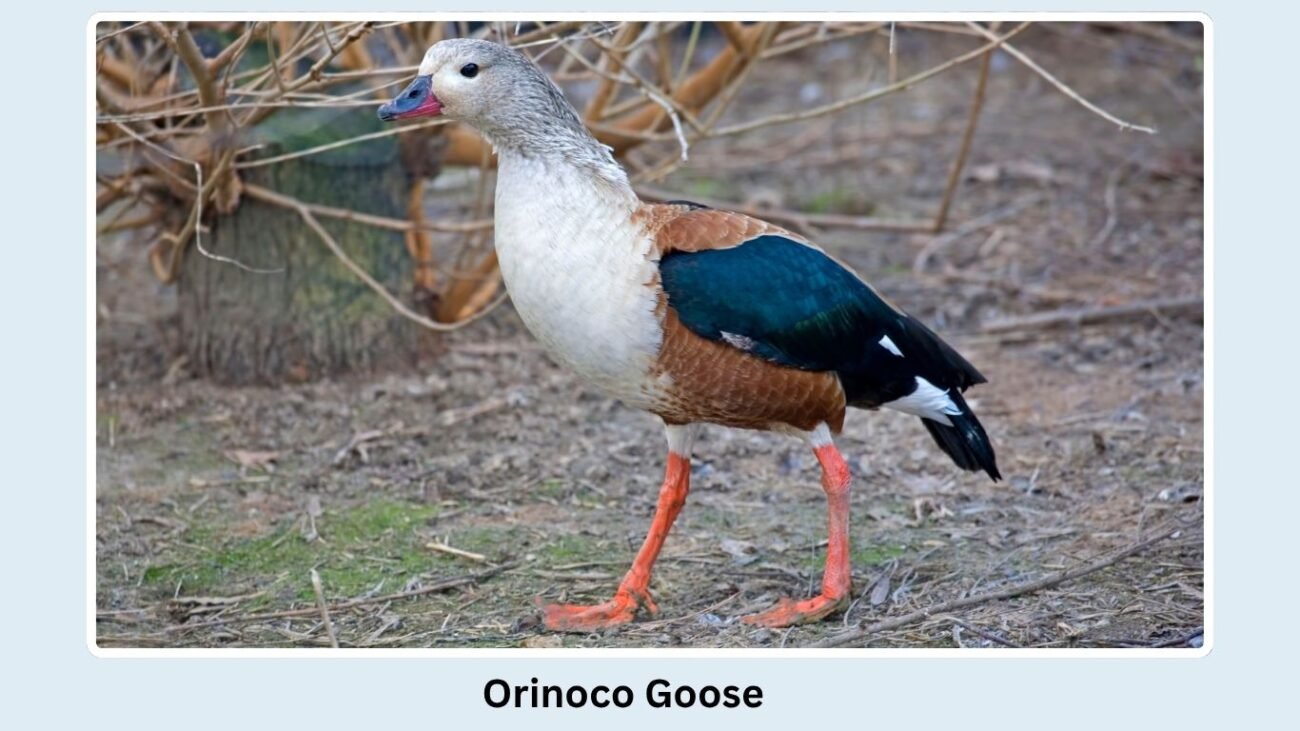
The Orinoco Goose is a unique and colorful species native to tropical South America. It’s often seen in forested riverbanks and is the only goose regularly found in such habitats.
Identification
- Chestnut breast and flanks
- White face and neck
- Greenish-black back and wings
- Red or pink legs
- Medium size with upright stance
Habitat
Found near rivers, lagoons, and forest edges in countries like Venezuela, Brazil, Colombia, and the Guianas. Prefers undisturbed, forested waterways.
Behavior
Usually seen in pairs or small groups. Unlike most geese, it perches in trees and nests in tree cavities. Quiet and secretive.
Diet
Feeds on seeds, grasses, aquatic plants, and fruit. Often forages at the forest edge or in shallow water.
28. Blue-winged Goose
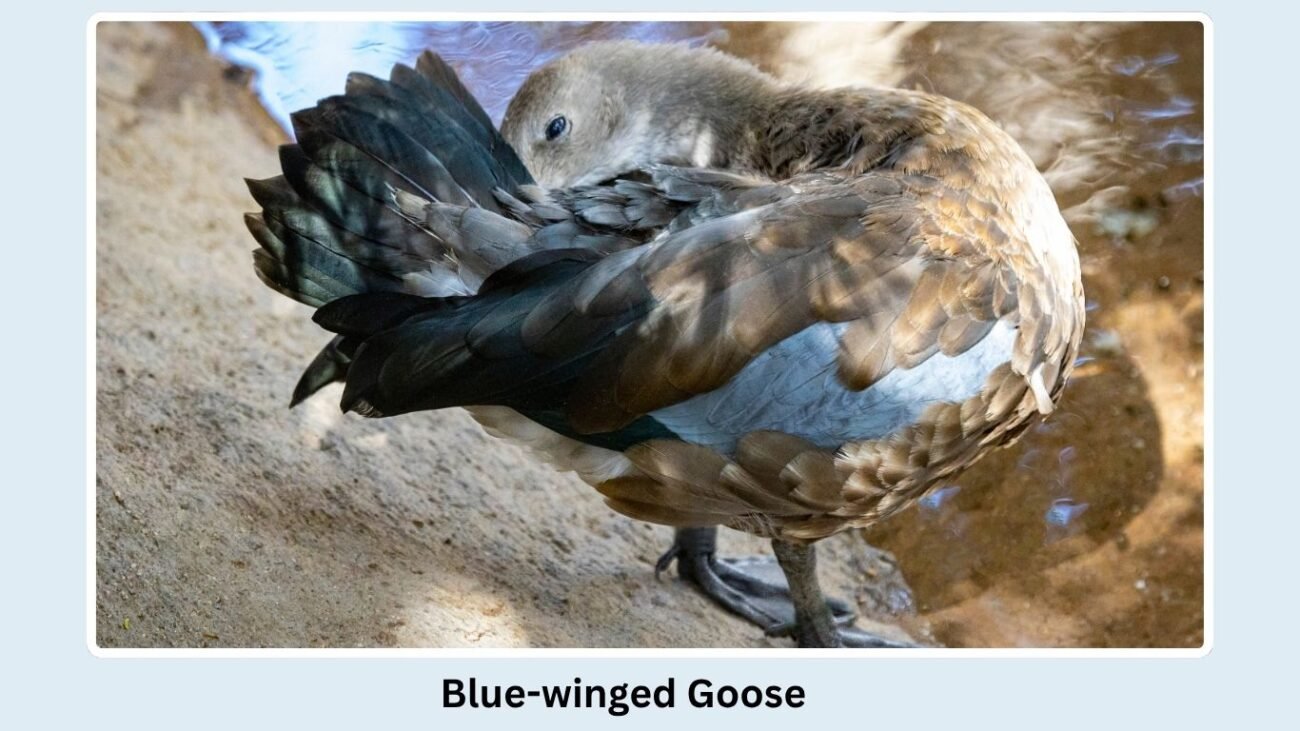
The Blue-winged Goose is a rare and little-known goose species found only in Ethiopia. It is endemic to the Ethiopian Highlands and is unique among geese for its sedentary lifestyle and highland habitat.
Identification
- Overall gray-brown body
- Blue-gray wing coverts (giving it its name)
- Pale head and neck
- Black bill and legs
- Stocky body and short neck
Habitat
Inhabits high-altitude wetlands, riversides, and grassy moorlands in the Ethiopian Highlands. Prefers quiet, remote areas with plenty of cover.
Behavior
Generally sedentary and non-migratory. Seen alone, in pairs, or small family groups. Tends to be quiet and shy, often foraging near water in the early morning.
Diet
Feeds on grasses, roots, and aquatic plants. Often grazes on the ground near wetland edges and sometimes in drier grassy areas.
29. Cape Barren Goose
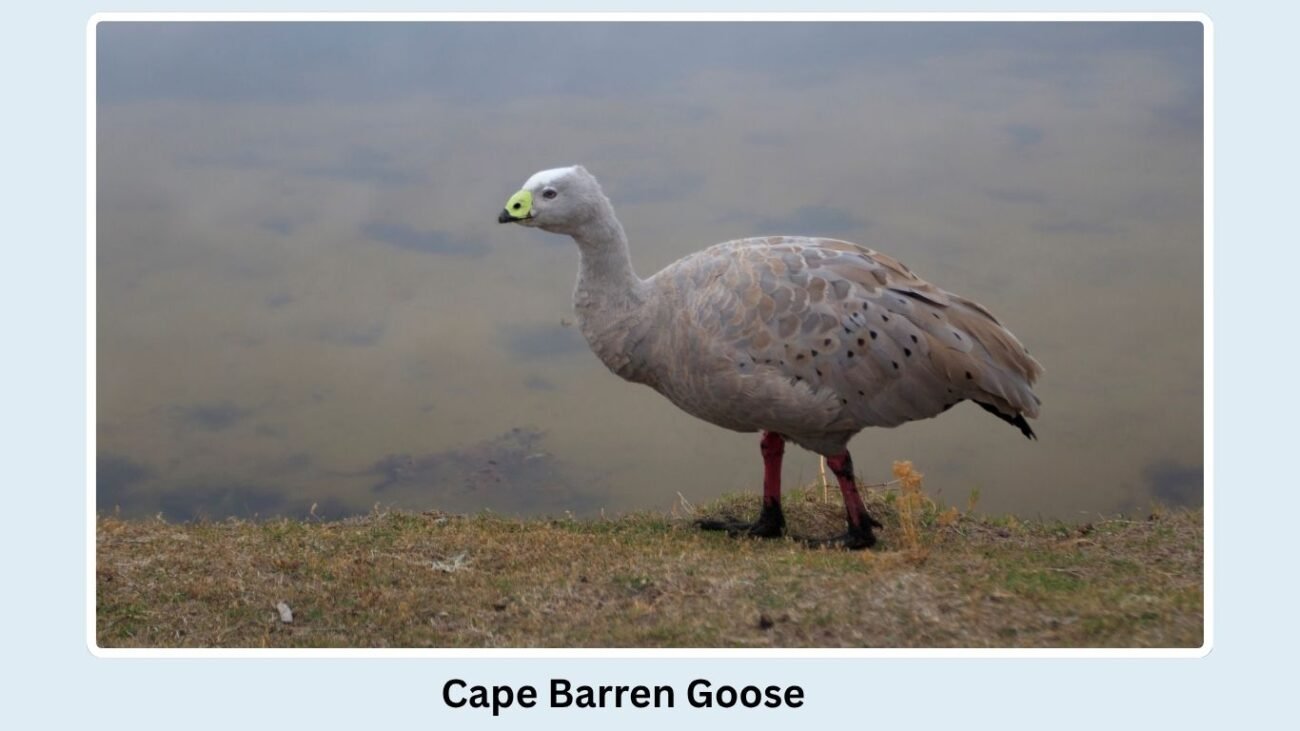
The Cape Barren Goose is a large, robust species native to southern Australia, including offshore islands like Tasmania. It is among the rarest of the world’s geese but can be quite bold and conspicuous.
Identification
- Pale gray plumage with dark spots
- Large, bright greenish-yellow cere at the base of the bill
- Pink legs and black feet
- Stout body and thick neck
Habitat
Found on offshore islands and southern coastal Australia, especially in open grasslands and pastures near water. It prefers areas free from predators.
Behavior
Non-migratory and territorial during breeding season. It often grazes during the day and rests in open fields or near water bodies.
Diet
Feeds mainly on grasses, herbs, and succulent plants. Can survive on dry, low-quality vegetation that other geese typically avoid.
30. Black-necked Swan Goose (Hybrid / Variant)
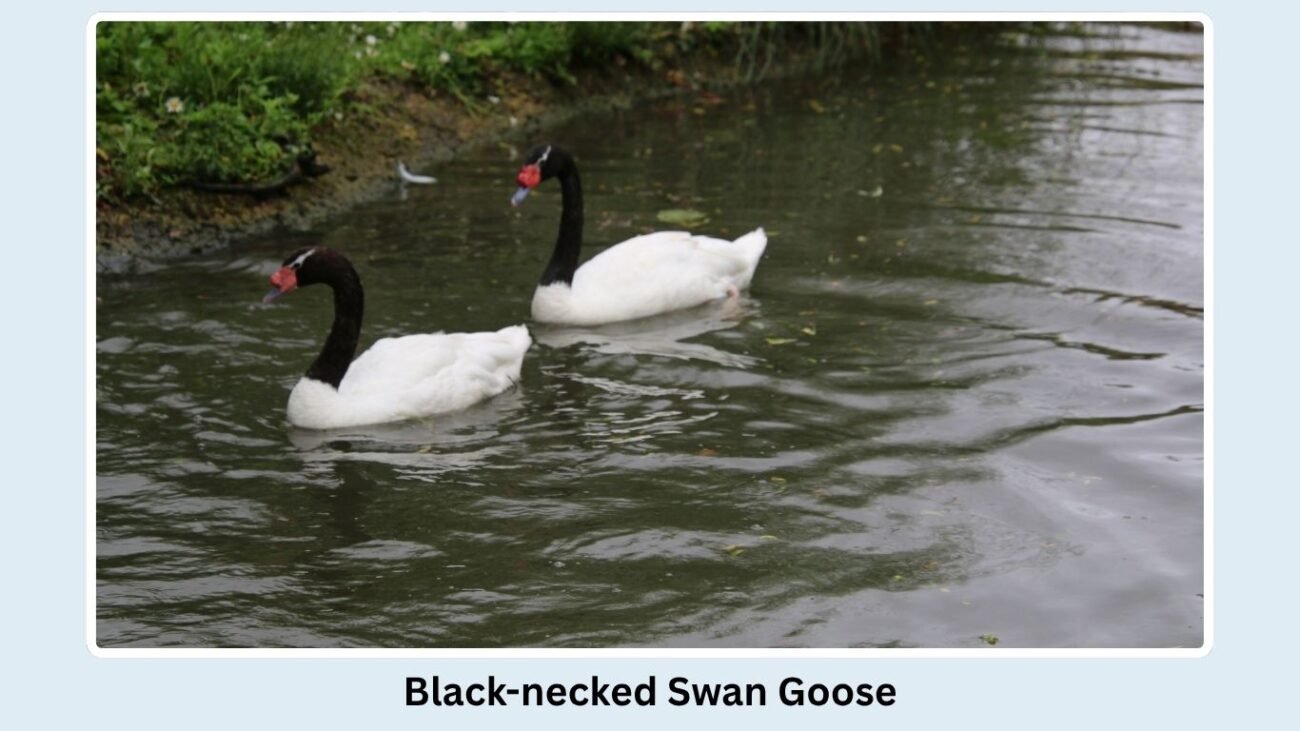
The Black-necked Swan Goose is a rare domestic hybrid or selectively bred variant, typically resulting from crossing Swan Geese with other domestic or ornamental geese. It’s not a naturally occurring wild species but is recognized in some collections and ornamental flocks.
Identification
- Black neck extending down to the upper chest
- White or pale gray body
- Orange or pink legs
- Prominent knob at the base of the bill (in some individuals)
- Medium to large in size, depending on lineage
Habitat
Mostly seen in captivity, waterfowl collections, or ornamental lakes and farms. It is not a wild species.
Behavior
Generally docile and kept for ornamental purposes. Often mingles well with other domestic geese and waterfowl.
Diet
Fed a mix of grains, grasses, and waterfowl pellets. May also graze on lawn vegetation and aquatic plants.
31. White-cheeked Goose (Canada Goose Group)
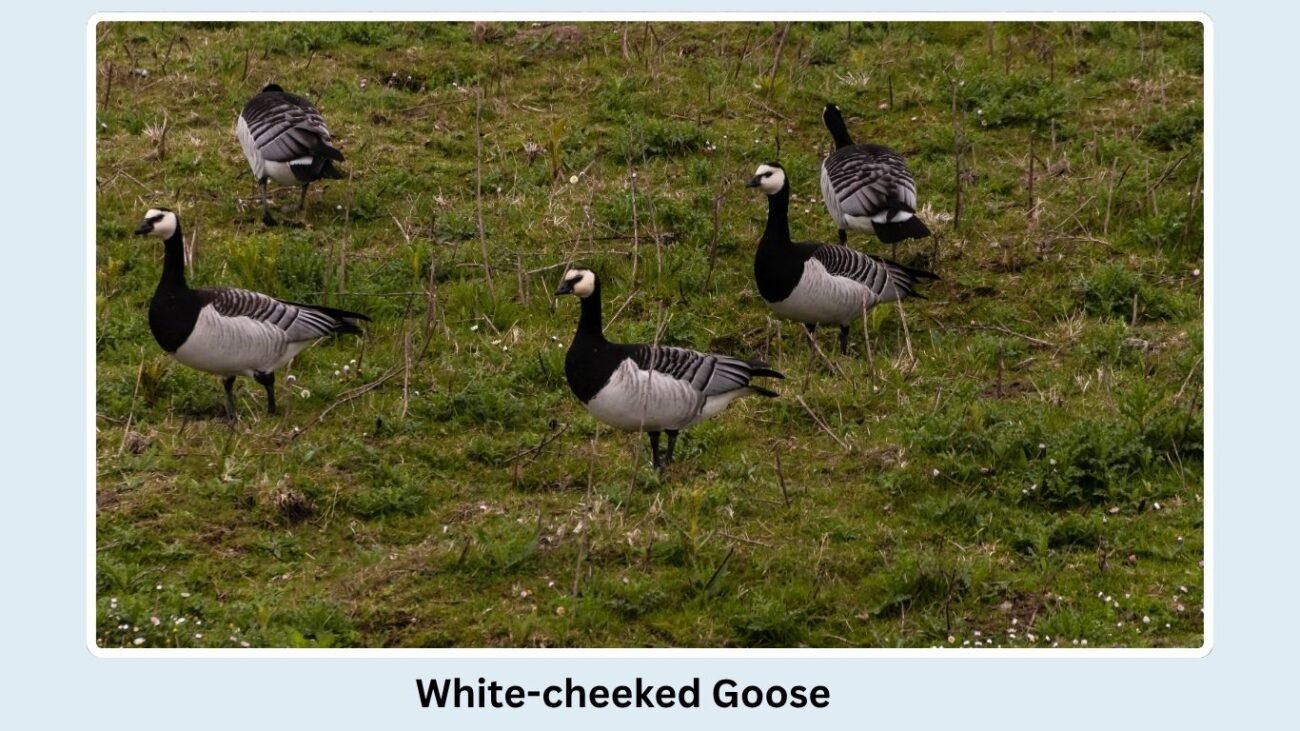
The White-cheeked Goose is an informal name sometimes used to refer to the Canada Goose and closely related subspecies due to their iconic white cheek patch. In taxonomy, this term often groups smaller races within the Branta canadensis species complex.
Identification
- Black head and neck with a white cheek patch
- Brownish-gray body
- White under-tail
- Large, strong wings
- Variable size (depending on subspecies)
Habitat
Widespread across North America. Found in lakes, rivers, marshes, parks, golf courses, and even urban areas.
Behavior
Highly adaptable and migratory in the north, but some populations have become resident in urban regions. Often aggressive during breeding season.
Diet
Feeds on grasses, aquatic vegetation, grains, and urban lawn clippings. Readily adapts to agricultural fields and human-modified environments.
32. Indian Spot-billed Goose
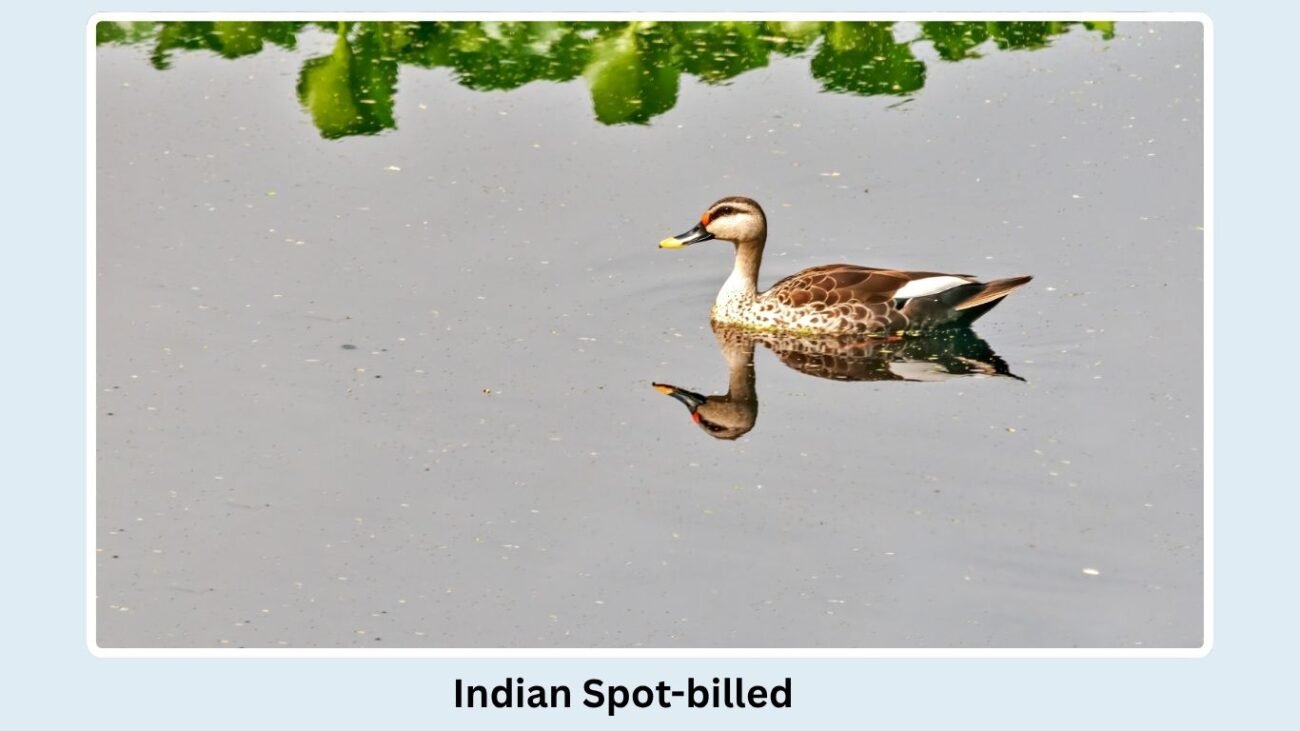
The Indian Spot-billed Goose is a distinctive species native to the Indian subcontinent. It gets its name from the prominent yellow and black spots on its bill and is a familiar sight in lakes and wetlands across India, Sri Lanka, and parts of Southeast Asia.
Identification
- Grayish-brown body
- Black bill with a bright yellow spot near the tip
- White face stripe and wing coverts
- Orange legs
- Broad wings with green speculum
Habitat
Commonly found in freshwater lakes, marshes, rivers, and agricultural wetlands across India and Southeast Asia.
Behavior
Generally non-migratory, though some local movements occur. Often found in small flocks, foraging during early morning and late evening.
Diet
Feeds on aquatic plants, seeds, and grasses. In agricultural areas, it consumes rice, grains, and green shoots.
33. Pygmy Goose
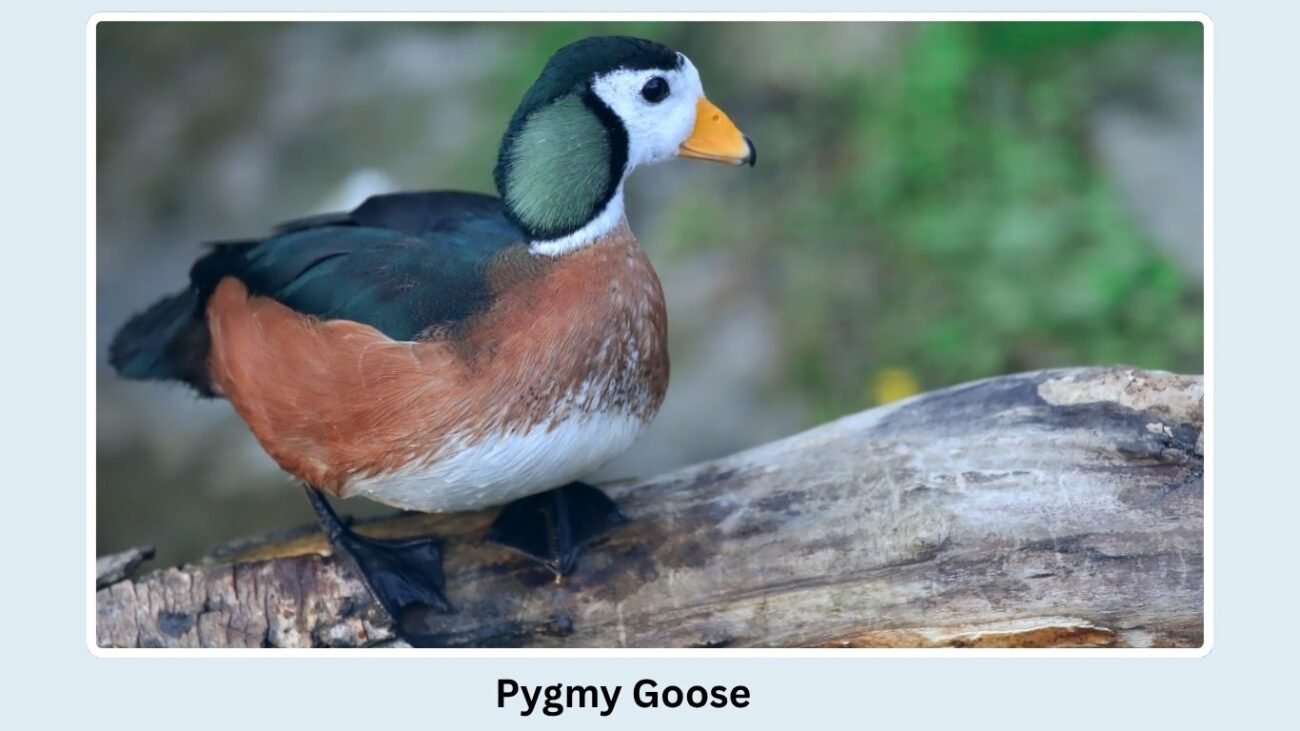
The Pygmy Goose is a small, tree-dwelling goose that behaves more like a duck. Native to parts of Africa and Asia, it is often seen in quiet ponds with lily pads and is known for its bright, beautiful colors.
Identification
- Small, duck-like body
- Bright green upperparts (in males)
- White face and chest
- Orange bill and legs
- Females are duller with gray-brown face and chest
Habitat
Prefers still, vegetated freshwater bodies like ponds, lakes, and marshes, often with floating vegetation such as water lilies.
Behavior
Usually seen in pairs or small groups. It nests in tree hollows and is an excellent swimmer and flyer, despite its small size.
Diet
Feeds on aquatic plants, seeds, and small invertebrates. Often grazes on lily pads and floating vegetation.
34. Torrent Duck (Goose-like Waterfowl)
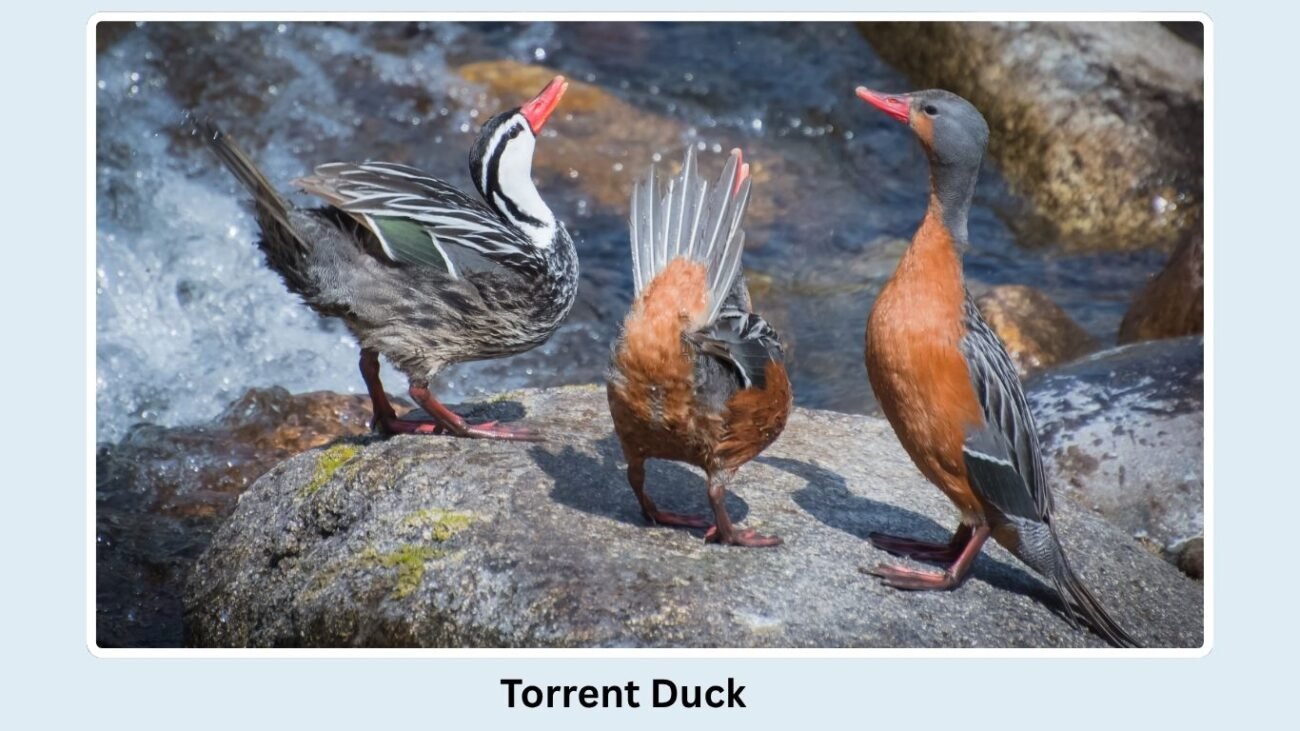
The Torrent Duck is not a true goose but is sometimes referred to in goose lists due to its semi-goose-like appearance and behavior. Native to fast-flowing mountain rivers of South America, it’s uniquely adapted to rapid waters.
Identification
- Males: Striking black-and-white head and neck, gray body
- Females: Reddish chest with darker back and gray head
- Long, narrow body
- Sharp-edged bill adapted for river feeding
- Strong legs and claws
Habitat
Found in Andean mountain rivers from Venezuela to Tierra del Fuego. Prefers rocky, fast-flowing streams and steep terrain.
Behavior
Highly territorial and excellent swimmers. Often seen diving through whitewater rapids. Monogamous and very protective of breeding territories.
Diet
Feeds on aquatic insects, larvae, and small invertebrates. Dives and forages under rocks in fast-moving streams.
35. Maned Goose (Maned Duck)
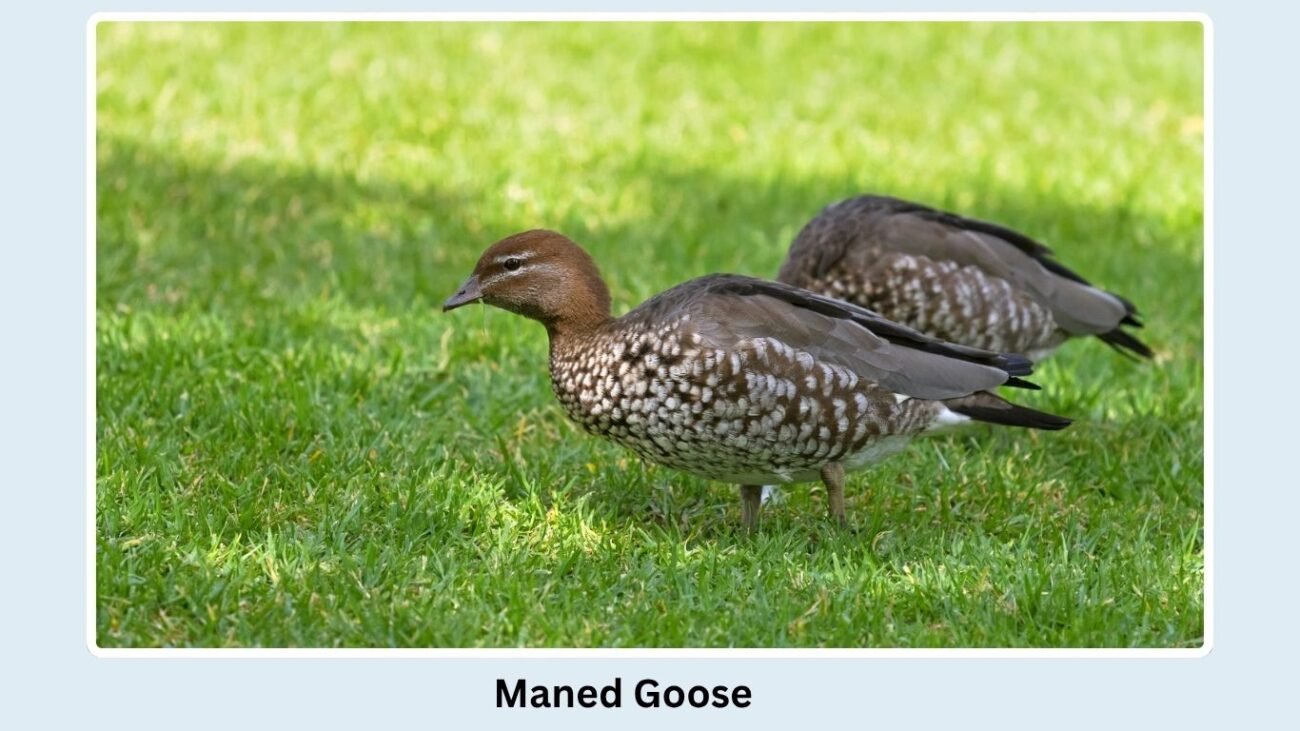
The Maned Goose, also known as the Maned Duck, is native to Australia. Although called a goose, it’s more duck-like in size and behavior but is included in lists of goose-like birds due to its upright posture and grazing habits.
Identification
- Males: Brown body with dark mane-like feathers on the back of the neck
- Females: Mottled brown with white facial stripes
- Upright, goose-like posture
- Pale gray body with darker wings
- Pinkish legs
Habitat
Found in grasslands, farm fields, and wetlands across Australia and Tasmania. Frequently visits man-made water bodies like dams and reservoirs.
Behavior
Often seen grazing on land far from water. Forms flocks outside breeding season. Known for ground nesting and strong pair bonds.
Diet
Eats grasses, seeds, and small insects. Forages mostly on land, more like geese than ducks in feeding style.