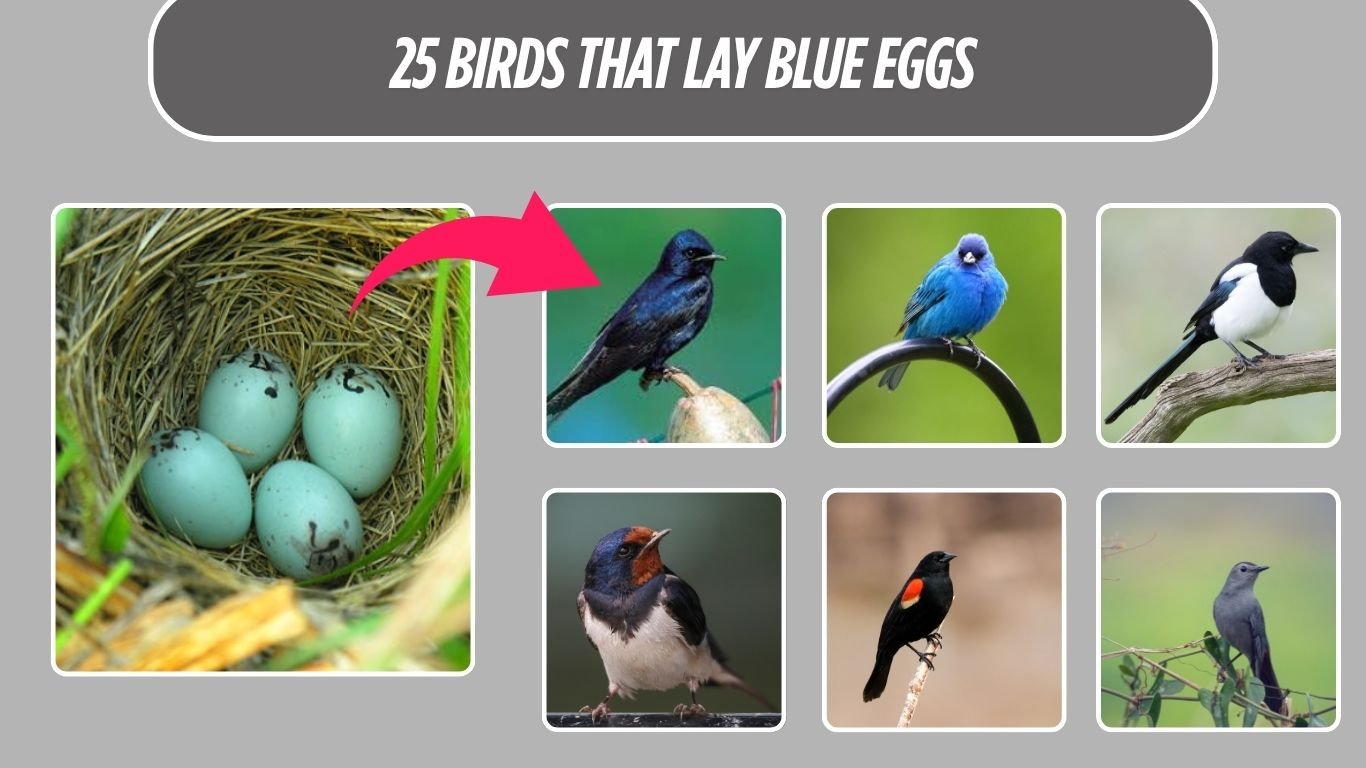
Blue eggs are among nature’s most beautiful surprises, and many bird species lay them in varying shades—from soft sky blue to turquoise and speckled hues. In this guide, you’ll discover 25 birds known for laying blue or bluish eggs. From backyard favorites like the American Robin to secretive forest dwellers and urban nesters, each bird brings its own unique nesting behavior and egg-laying pattern to admire and explore.
1. American Robin
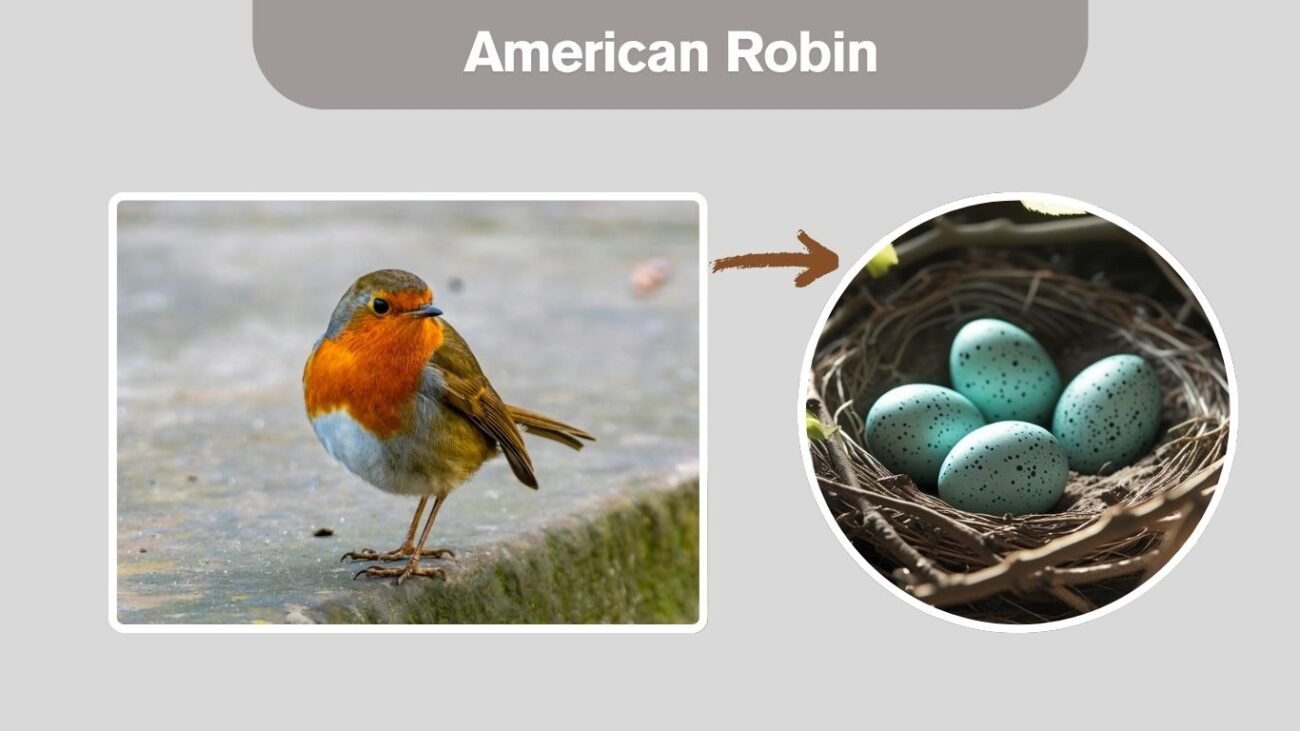
The American Robin is one of the most recognized songbirds in North America, especially famous for laying beautiful pale blue eggs. These eggs have become a cultural symbol of spring and renewal in many regions.
Egg Color and Traits
- Color: Smooth sky blue
- Shape: Oval, slightly pointed at one end
- Size: About 2.8–3 cm long
- Clutch Size: 3 to 5 eggs per nesting
Nesting Behavior
American Robins build cup-shaped nests using mud, grass, and twigs. The female handles all nest construction and incubation duties. Eggs hatch in about 12–14 days, and chicks fledge roughly two weeks later.
Where They Lay Eggs
Robins prefer building nests in trees, shrubs, on building ledges, or under eaves. They often return to the same nesting area each year and may raise 2–3 broods during a breeding season.
When They Lay Eggs
Breeding season starts in early spring and lasts through mid-summer. Egg-laying usually begins shortly after nest construction is completed, often in April through July, depending on the region.
2. Eastern Bluebird
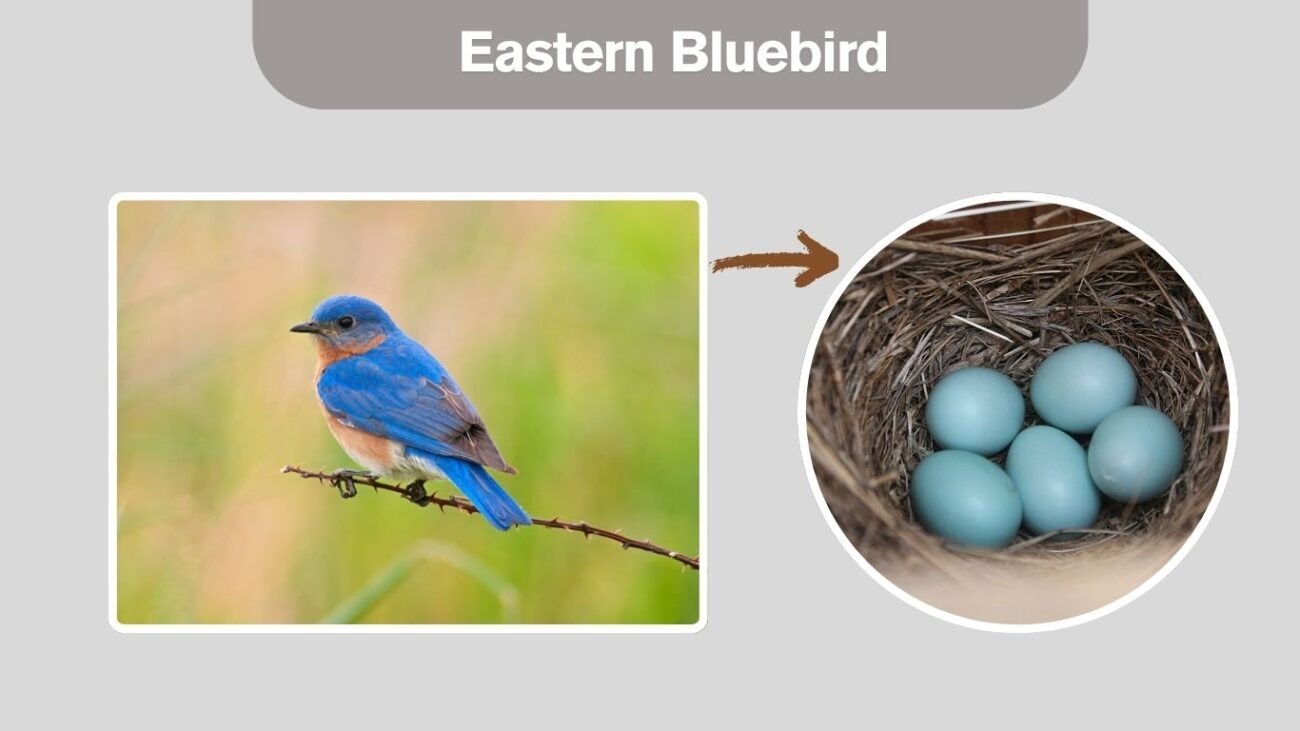
The Eastern Bluebird is a small, vibrant bird native to eastern North America. Known for its brilliant blue plumage and gentle song, it is also recognized for laying soft blue eggs in tree cavities and nest boxes.
Egg Color and Traits
- Color: Pale blue (occasionally white)
- Shape: Smooth, oval
- Size: About 2.0–2.2 cm long
- Clutch Size: 3 to 7 eggs per nesting
Nesting Behavior
Eastern Bluebirds prefer open fields and meadows with nearby trees. They nest in natural tree cavities or man-made nest boxes, using dried grasses, pine needles, and animal hair to form a neat cup. Only the female incubates the eggs, which hatch in 13–16 days.
Where They Lay Eggs
They typically lay eggs in cavities of old woodpecker holes or nest boxes placed 4–6 feet above ground, often near pastureland or golf courses.
When They Lay Eggs
Breeding begins in early spring (March or April) and may continue into August. Eastern Bluebirds often raise 2–3 broods per year in suitable habitats.
3. Western Bluebird
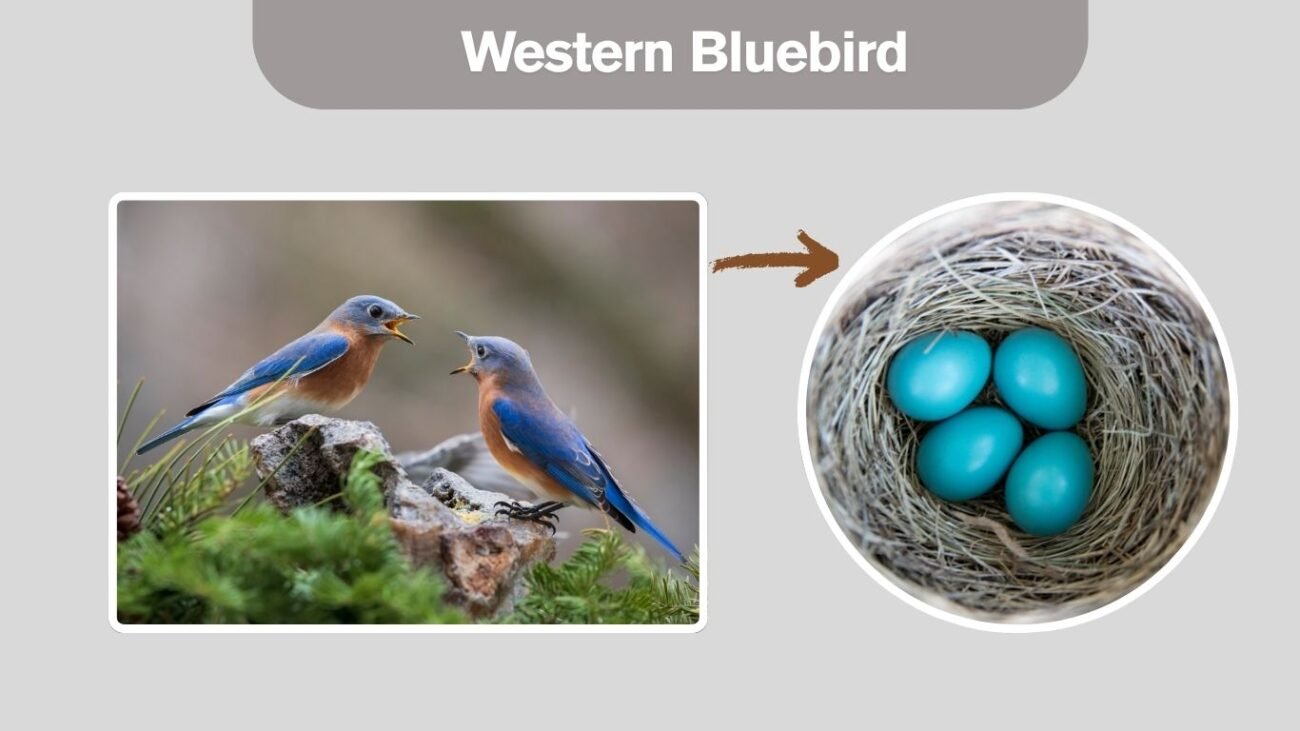
The Western Bluebird is a close relative of the Eastern Bluebird, found across the western United States. It shares similar nesting habits and also lays beautiful blue eggs that signal a new generation of this gentle species.
Egg Color and Traits
- Color: Soft sky blue (rarely white)
- Shape: Oval and smooth
- Size: Around 2.1–2.4 cm long
- Clutch Size: 4 to 6 eggs
Nesting Behavior
Western Bluebirds nest in tree cavities, fence posts, and nest boxes. Nests are built with dry grasses and pine needles. Females lay one egg per day and incubate alone. Hatchlings emerge after 13–14 days and leave the nest around day 20.
Where They Lay Eggs
Preferred nesting sites include oak woodlands, conifer forests, and semi-open areas. Nest boxes installed at forest edges are frequently used.
When They Lay Eggs
Nesting season runs from March to July. Pairs may raise up to two broods in one season, especially in areas with mild weather and abundant food.
4. Mountain Bluebird
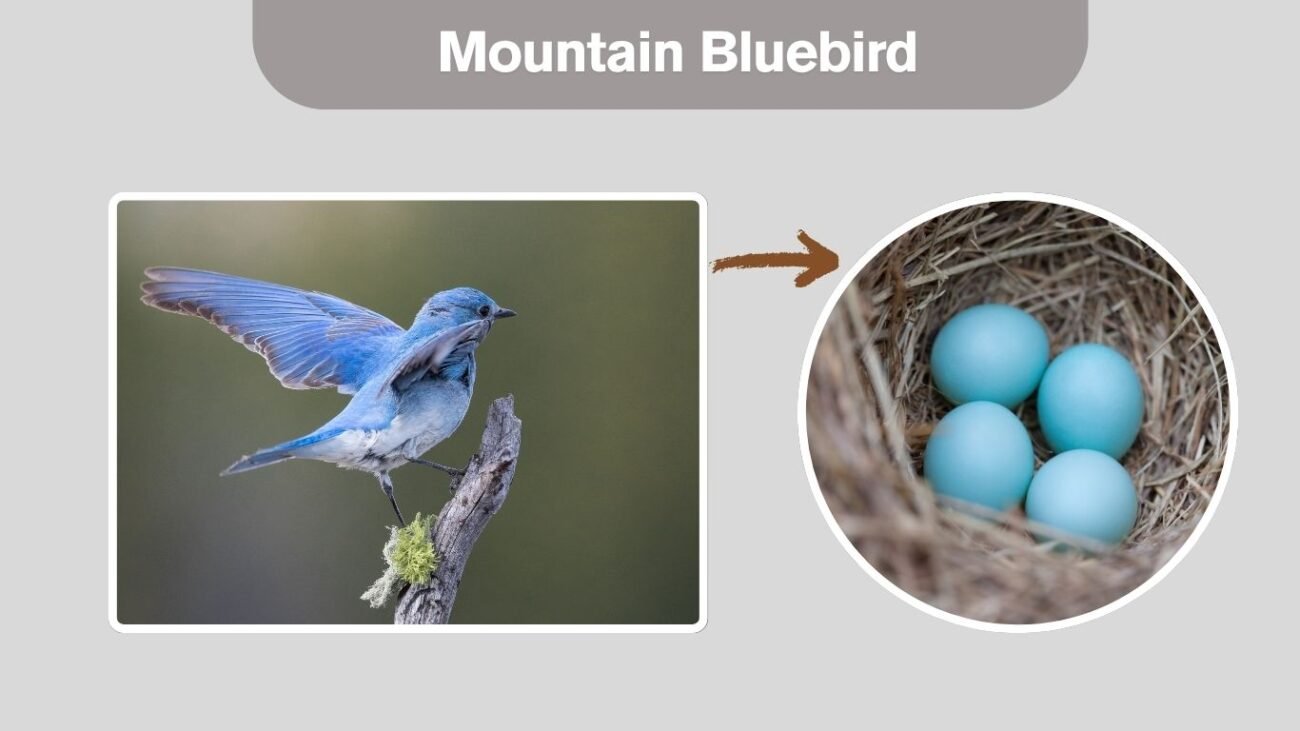
The Mountain Bluebird is a stunning bird of the western mountains and high plains, known for its vivid sky-blue coloring and equally beautiful pale blue eggs. It often nests in open grasslands or sagebrush country.
Egg Color and Traits
- Color: Pale blue (occasionally white)
- Shape: Smooth, oval
- Size: Around 2.1–2.4 cm long
- Clutch Size: 4 to 8 eggs
Nesting Behavior
Females build the nest inside tree cavities or nest boxes using dry grasses and rootlets. The male guards the territory while the female incubates. Eggs hatch in 13–14 days, and chicks fledge about 18–21 days later.
Where They Lay Eggs
Mountain Bluebirds nest in natural cavities, woodpecker holes, or human-made boxes in open or semi-open landscapes, usually at elevations between 5,000–10,000 feet.
When They Lay Eggs
Breeding typically begins from April through July, depending on elevation and climate. Most pairs produce 1–2 broods per season.
5. Blue Jay
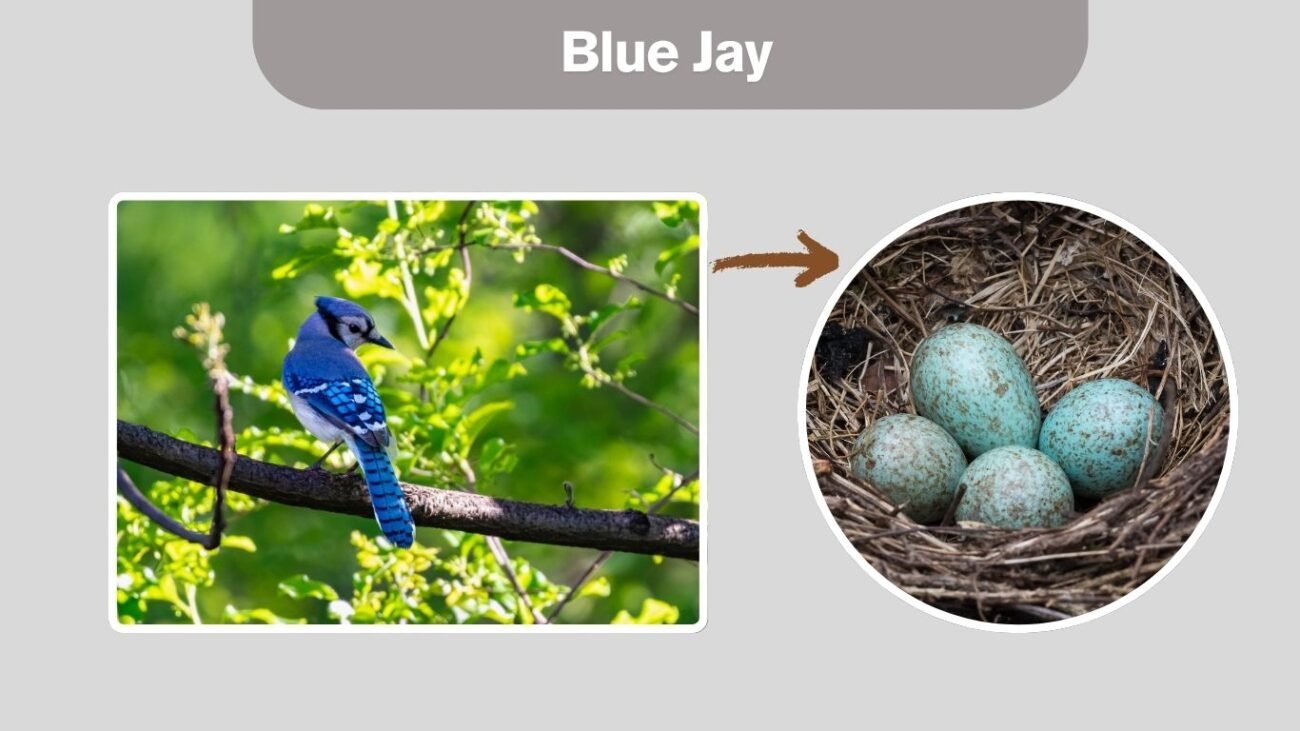
The Blue Jay, a bold and intelligent bird native to eastern and central North America, lays striking blue-green eggs with light speckling. Known for its loud calls and mimicry, it is a highly protective and social nester.
Egg Color and Traits
- Color: Light blue or blue-green with brown or gray speckles
- Shape: Oval and slightly glossy
- Size: About 2.6–3.1 cm long
- Clutch Size: 3 to 6 eggs
Nesting Behavior
Blue Jays build bulky nests in trees, often 10–25 feet high. Both male and female collect twigs, bark, moss, and grass, and the female incubates while the male guards and feeds her. Eggs hatch in 16–18 days.
Where They Lay Eggs
Nests are usually built in the branches of deciduous or coniferous trees, often well-hidden by leaves and located near forest edges or suburban yards.
When They Lay Eggs
Egg-laying begins in late March to early May. Blue Jays typically have one brood per season, though in rare cases they may attempt a second.
6. Dunnock
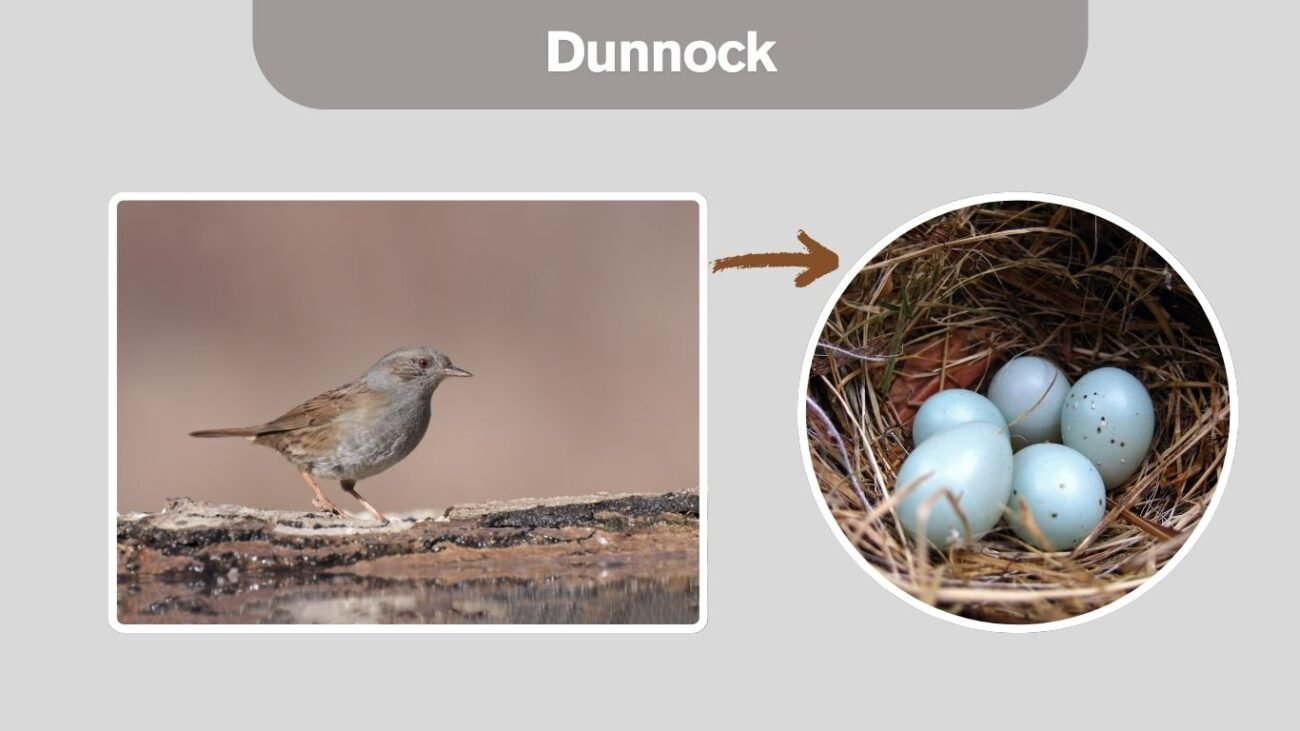
The Dunnock, also known as the Hedge Sparrow, is a small, secretive songbird found across Europe and parts of western Asia. Despite its drab appearance, it lays remarkably bright blue eggs in hidden nests low to the ground.
Egg Color and Traits
- Color: Bright turquoise blue
- Shape: Small and oval
- Size: About 1.8–2.0 cm long
- Clutch Size: 3 to 5 eggs
Nesting Behavior
Dunnocks build their nests in thick hedgerows, shrubs, or ivy-covered walls. The female constructs a neat, deep cup using twigs, moss, and leaves, lined with hair and feathers. She incubates the eggs for 12–14 days.
Where They Lay Eggs
Typically placed 1–3 feet above ground, well hidden in dense vegetation such as thorn bushes, brambles, or garden shrubs.
When They Lay Eggs
Egg-laying begins in early spring, usually March through July. Dunnocks often raise 2–3 broods per breeding season.
7. Starling (European Starling)
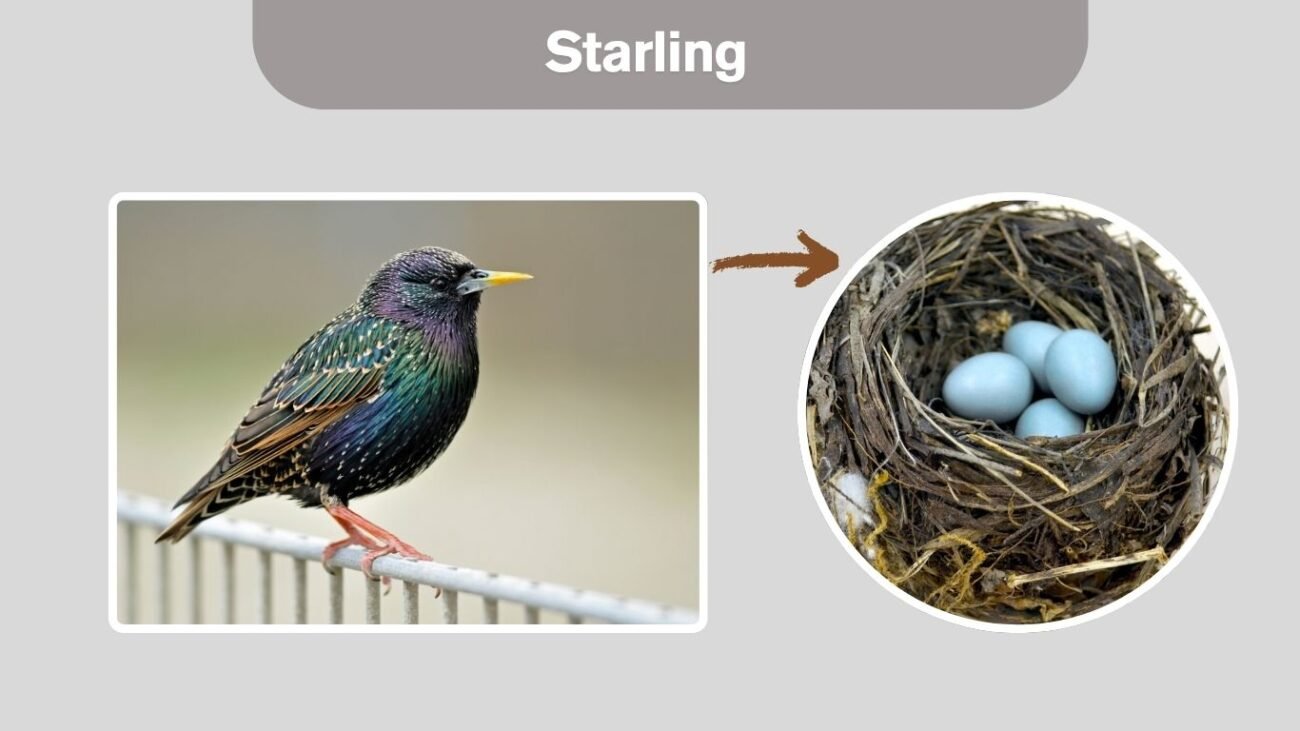
The European Starling is a highly adaptable bird introduced to many parts of the world. Known for its iridescent plumage and social flocks, it lays pale blue eggs in cavities and man-made structures.
Egg Color and Traits
- Color: Pale blue to bluish-green
- Shape: Glossy, smooth oval
- Size: Around 3.0–3.3 cm long
- Clutch Size: 4 to 6 eggs
Nesting Behavior
Starlings nest in tree cavities, vents, roof spaces, and nest boxes. They use grass, feathers, and trash to build a bulky nest. Both parents share incubation and feeding duties. Eggs hatch after 12–15 days.
Where They Lay Eggs
Common nesting sites include hollow trees, crevices in buildings, and nest boxes, often in urban or suburban environments.
When They Lay Eggs
Breeding starts in early spring (March or April) and may continue into July. Most pairs raise 1–2 broods per season.
8. House Finch
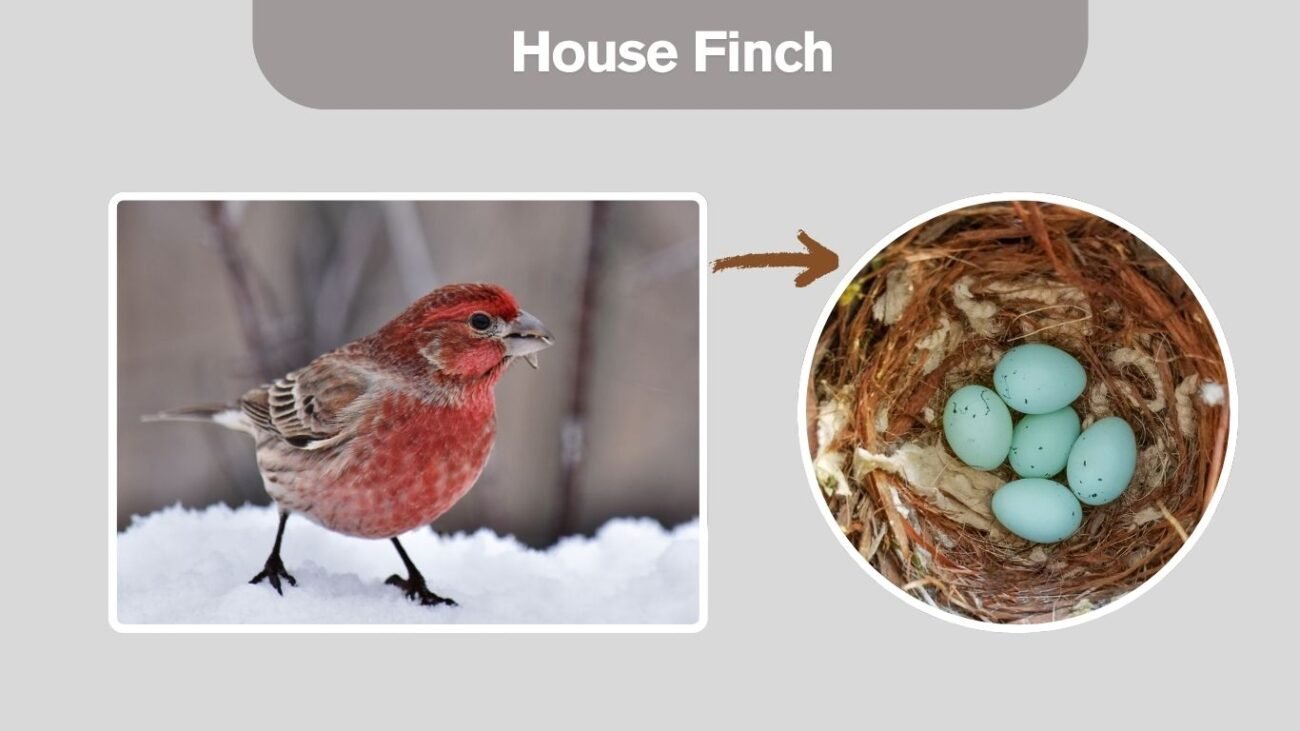
The House Finch is a common songbird across North America, recognized for its cheerful song and adaptability to urban environments. While not all eggs are blue, some females lay soft bluish or greenish eggs depending on the region.
Egg Color and Traits
- Color: Pale bluish-white to bluish-green, often with fine speckles
- Shape: Oval and smooth
- Size: Around 1.6–2.0 cm long
- Clutch Size: 3 to 6 eggs
Nesting Behavior
Females build nests in hanging planters, vents, ledges, or tree branches using twigs, grass, and feathers. The male feeds the female during incubation, which lasts 12–14 days. Hatchlings are fed by both parents until they fledge in about 12–19 days.
Where They Lay Eggs
Common sites include hanging baskets, window ledges, streetlights, building signs, and tree forks—often very close to human dwellings.
When They Lay Eggs
House Finches may begin nesting as early as February in warmer regions and continue through August, often raising 2–3 broods per season.
9. Song Thrush
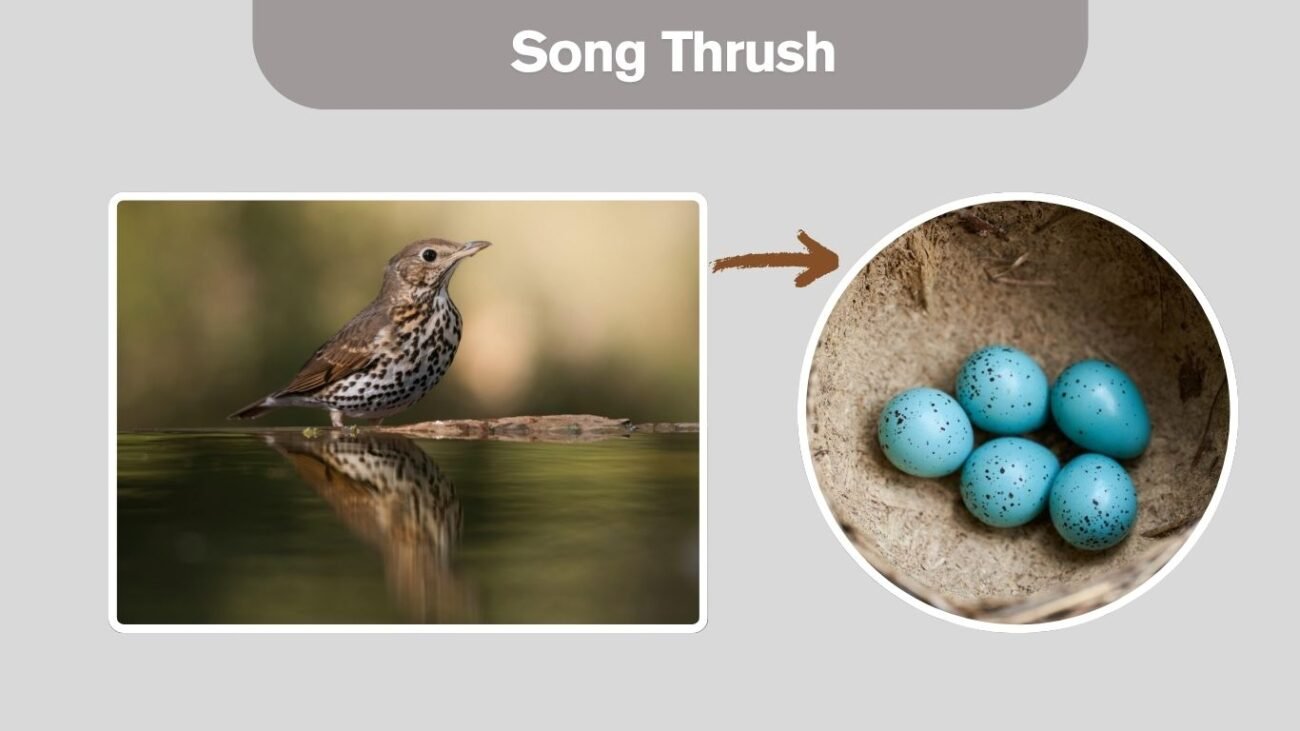
The Song Thrush is a well-loved European bird known for its rich, fluting song and spotted breast. It lays bright blue eggs in well-concealed nests, typically in shrubs and hedges.
Egg Color and Traits
- Color: Glossy bright blue, sometimes unmarked
- Shape: Smooth, oval
- Size: About 2.7–3.1 cm long
- Clutch Size: 3 to 5 eggs
Nesting Behavior
The female constructs the nest using grass, twigs, and mud, creating a firm structure often lined with rotten wood pulp. She incubates the eggs alone for 12–14 days, and chicks fledge about 13–15 days after hatching.
Where They Lay Eggs
Usually built in hedgerows, dense shrubs, ivy, or tree forks—often at heights of 1–3 meters and well hidden from predators.
When They Lay Eggs
Song Thrushes start nesting between March and July. Depending on conditions, they may raise two, sometimes three broods per season.
10. Blackbird (Common Blackbird)
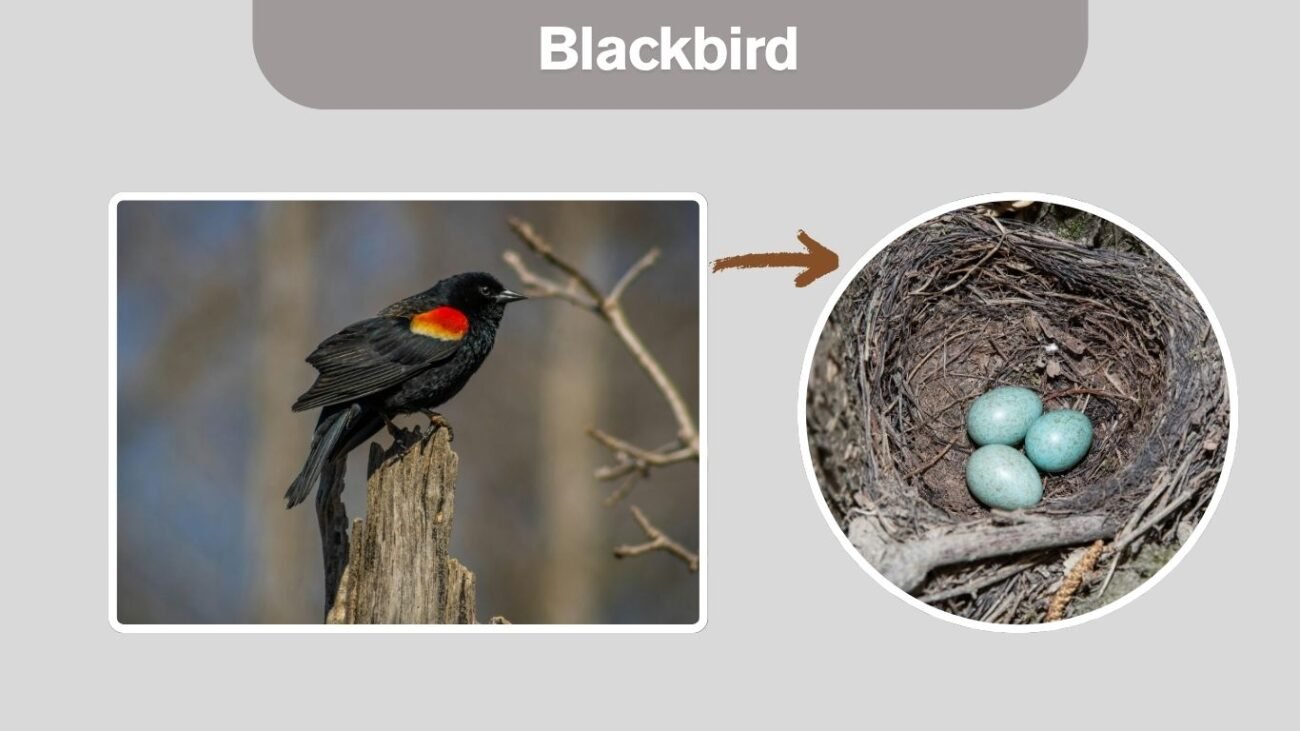
The Common Blackbird, a familiar sight across Europe and parts of Asia, is known for its rich, melodious song and its turquoise-blue to greenish-blue eggs with speckles.
Egg Color and Traits
- Color: Bluish-green with reddish-brown speckles
- Shape: Oval, matte texture
- Size: Around 2.9–3.2 cm long
- Clutch Size: 3 to 5 eggs
Nesting Behavior
Females build a solid, cup-shaped nest out of mud, grass, and straw, lined with fine materials. The nest is placed in shrubs, trees, or even ledges. Incubation lasts around 12–14 days, and both parents care for the chicks.
Where They Lay Eggs
Blackbirds nest in dense shrubs, hedges, and low tree branches, often close to gardens or open woodlands.
When They Lay Eggs
Breeding season spans from March to July, with many pairs producing 2–3 broods in a season, especially in milder climates.
11. European Robin
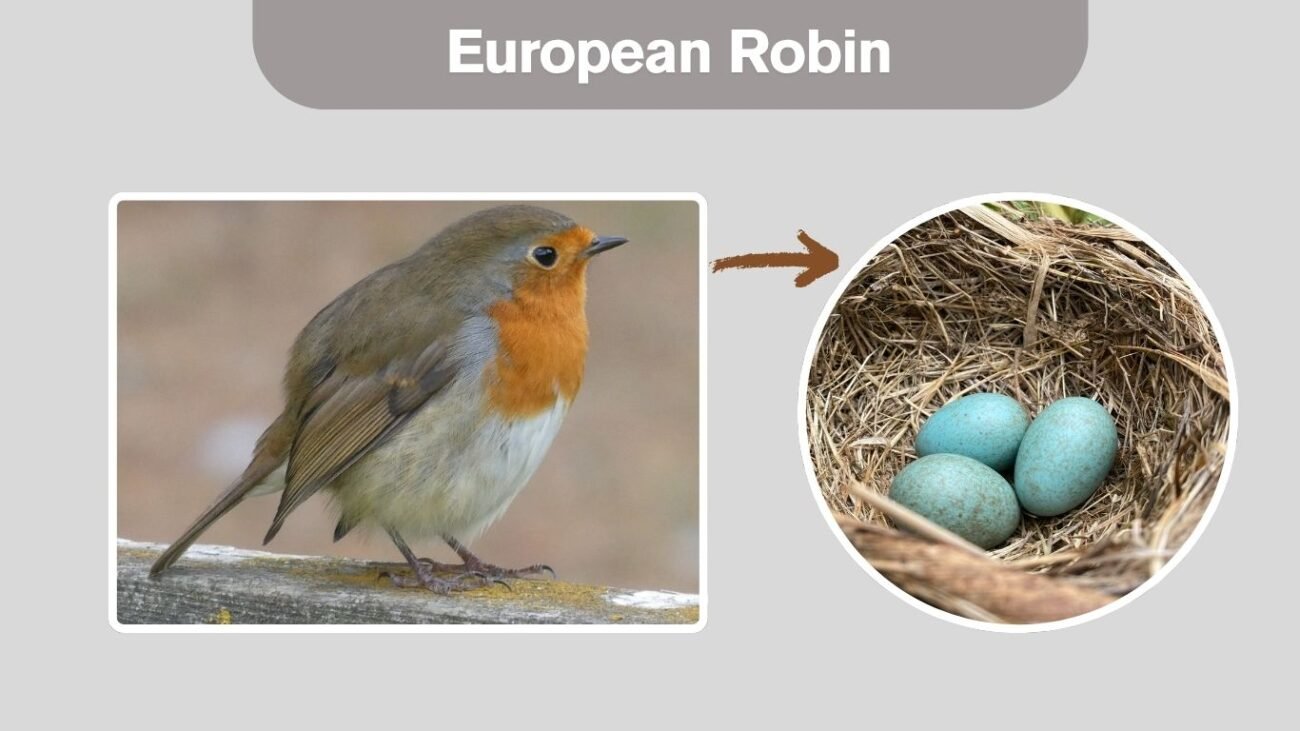
The European Robin, iconic in gardens and folklore across Europe, lays delicate eggs that are often light blue or cream with fine reddish speckles, depending on the individual bird.
Egg Color and Traits
- Color: Pale bluish or whitish with reddish-brown speckles
- Shape: Small, oval
- Size: Around 1.8–2.0 cm long
- Clutch Size: 4 to 6 eggs
Nesting Behavior
Robins build their nests in hidden locations like tree roots, rock crevices, sheds, and thick bushes. The female constructs the nest from moss, leaves, and hair, and incubates alone for 12–15 days.
Where They Lay Eggs
Nest sites are usually low to the ground and well hidden—inside flowerpots, ivy walls, or crevices in buildings and tree stumps.
When They Lay Eggs
Egg-laying begins as early as March and can continue into July. Robins often raise 2–3 broods in a single season.
12. Magpie
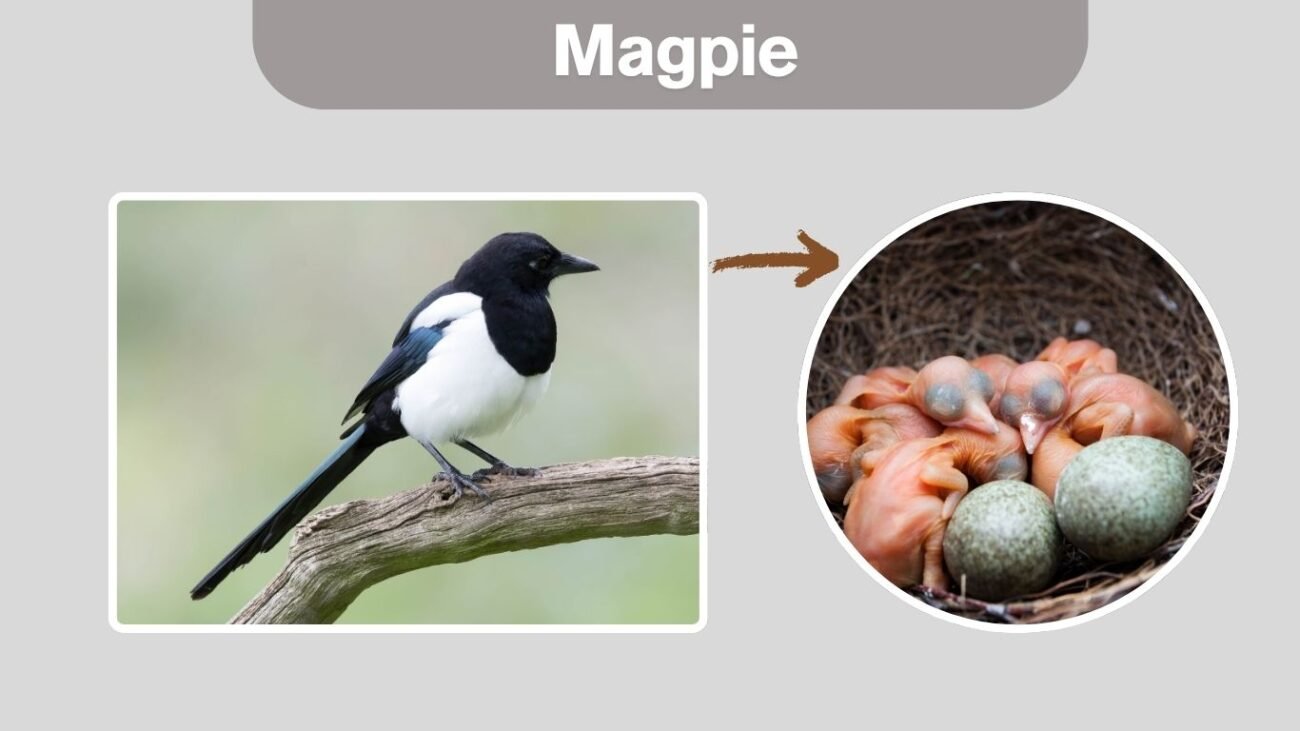
The Eurasian Magpie is a highly intelligent and social bird, recognized for its long tail and iridescent plumage. It lays distinctive pale blue or greenish-blue eggs with dark speckles.
Egg Color and Traits
- Color: Pale blue or greenish-blue with brown or gray speckles
- Shape: Oval and slightly glossy
- Size: Around 3.0–3.5 cm long
- Clutch Size: 5 to 8 eggs
Nesting Behavior
Magpies build large, domed nests high in trees or tall bushes, using sticks, mud, and softer lining materials like hair and grass. The female incubates the eggs for 18–20 days, while the male guards and provides food.
Where They Lay Eggs
Nests are usually placed 10–30 feet high in trees or tall hedgerows, often in isolated or open areas for a wide field of view.
When They Lay Eggs
Magpies typically lay eggs from March to May, producing one brood per season.
13. Common Myna
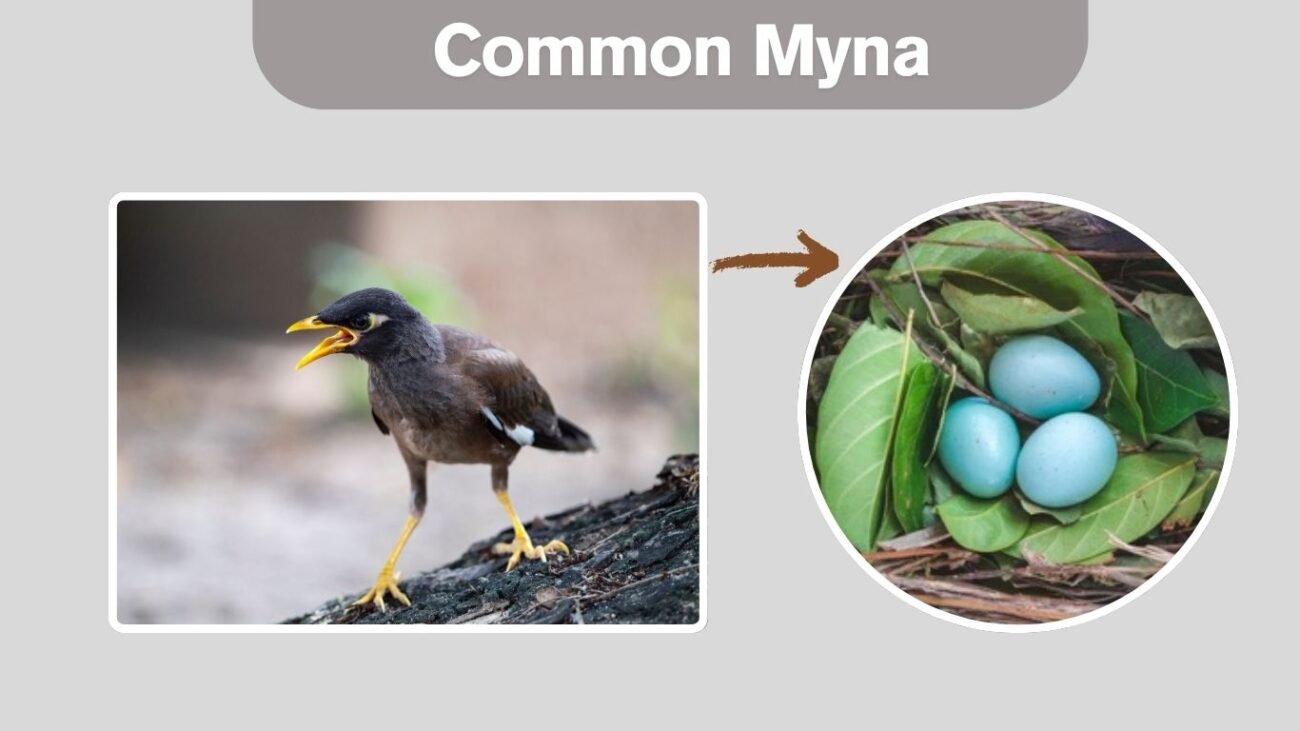
The Common Myna, a bold and noisy bird native to Asia and widely introduced elsewhere, lays smooth, glossy blue eggs in man-made and natural cavities.
Egg Color and Traits
- Color: Sky blue and unmarked
- Shape: Smooth, oval
- Size: About 2.6–3.0 cm long
- Clutch Size: 4 to 6 eggs
Nesting Behavior
Common Mynas build nests in holes of buildings, trees, or walls using twigs, paper, plastic, feathers, and any soft urban materials. Both parents share incubation (13–15 days) and chick feeding duties.
Where They Lay Eggs
They nest in tree holes, wall cavities, eaves of buildings, and light poles—often close to human settlements.
When They Lay Eggs
Egg-laying typically begins from February to August, with the potential for two or more broods per season in favorable climates.
14. Gray Catbird
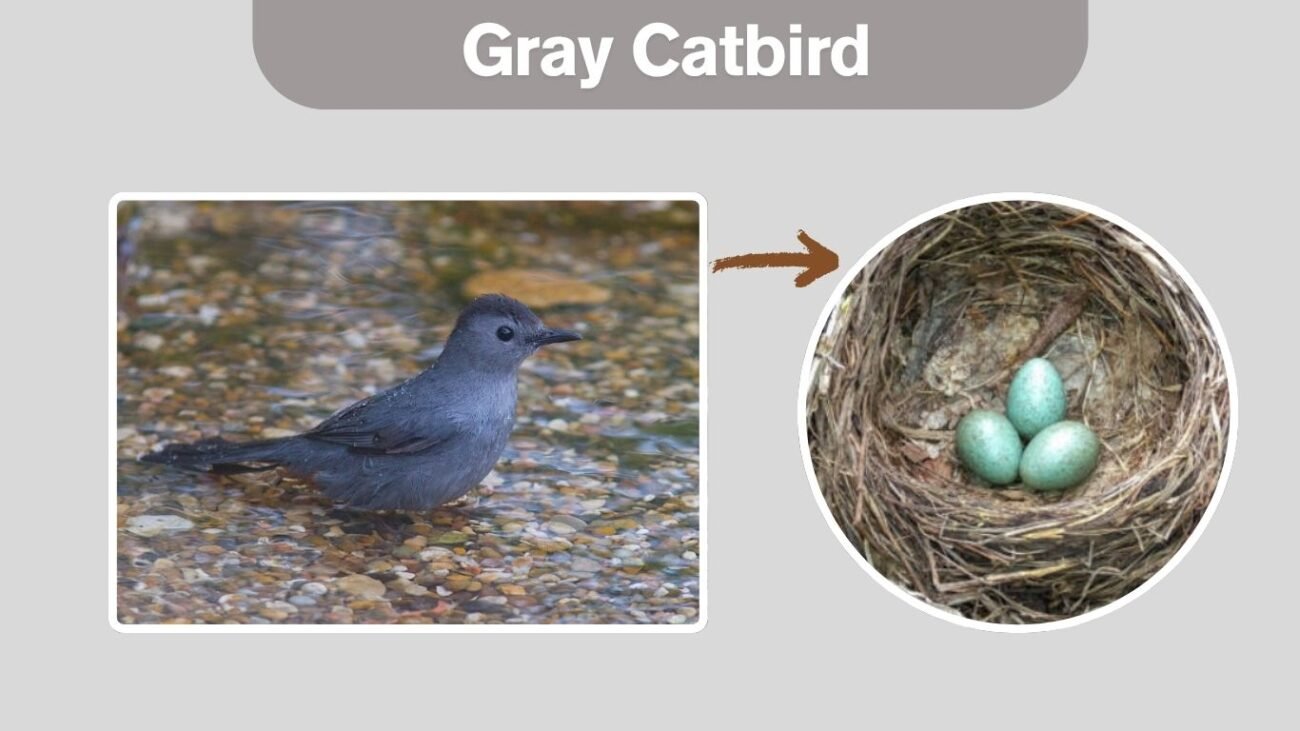
The Gray Catbird, a sleek, slate-gray songbird with a mewing call, is common across North America. It lays bright blue to greenish-blue eggs in well-hidden, low-lying nests.
Egg Color and Traits
- Color: Deep turquoise to greenish-blue, unmarked
- Shape: Oval and smooth
- Size: Around 2.3–2.7 cm long
- Clutch Size: 2 to 5 eggs
Nesting Behavior
The female builds a bulky nest using twigs, grass, and plant stems, lined with finer materials. She incubates the eggs for 12–14 days, and both parents feed the chicks until they fledge at about 10–11 days old.
Where They Lay Eggs
Catbirds prefer dense shrubs, thickets, or vine tangles about 3–10 feet off the ground, often near woodland edges or gardens.
When They Lay Eggs
Breeding begins from May through August. They usually raise 1–2 broods per year, depending on location.
15. Brown-headed Cowbird
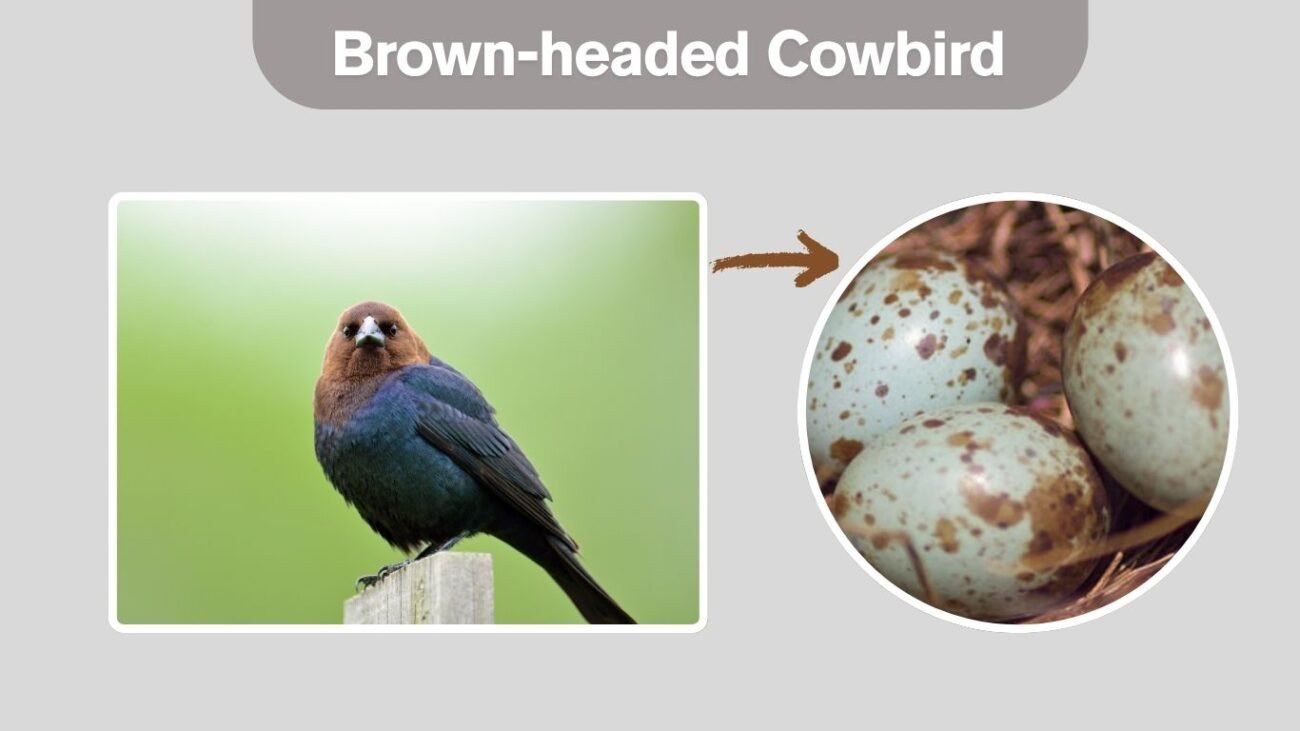
The Brown-headed Cowbird is a brood parasite, meaning it lays its eggs in the nests of other birds. Its eggs are sometimes pale blue, making them similar in appearance to its host’s eggs.
Egg Color and Traits
- Color: Pale blue, grayish, or white with brown speckles
- Shape: Oval
- Size: Around 2.1–2.4 cm long
- Clutch Size: 1 egg per nest (multiple nests parasitized)
Nesting Behavior
Cowbirds do not build their own nests. Instead, females lay their eggs in the nests of over 200 other bird species. They time egg-laying to match the host’s breeding cycle. The cowbird chick often hatches earlier and may outcompete the host’s young.
Where They Lay Eggs
In nests of robins, warblers, finches, sparrows, and many other birds—often low in shrubs, trees, or on the ground.
When They Lay Eggs
Egg-laying occurs from April to July, peaking in spring. A single female may lay up to 40 eggs per season in multiple nests.
16. Red-winged Blackbird
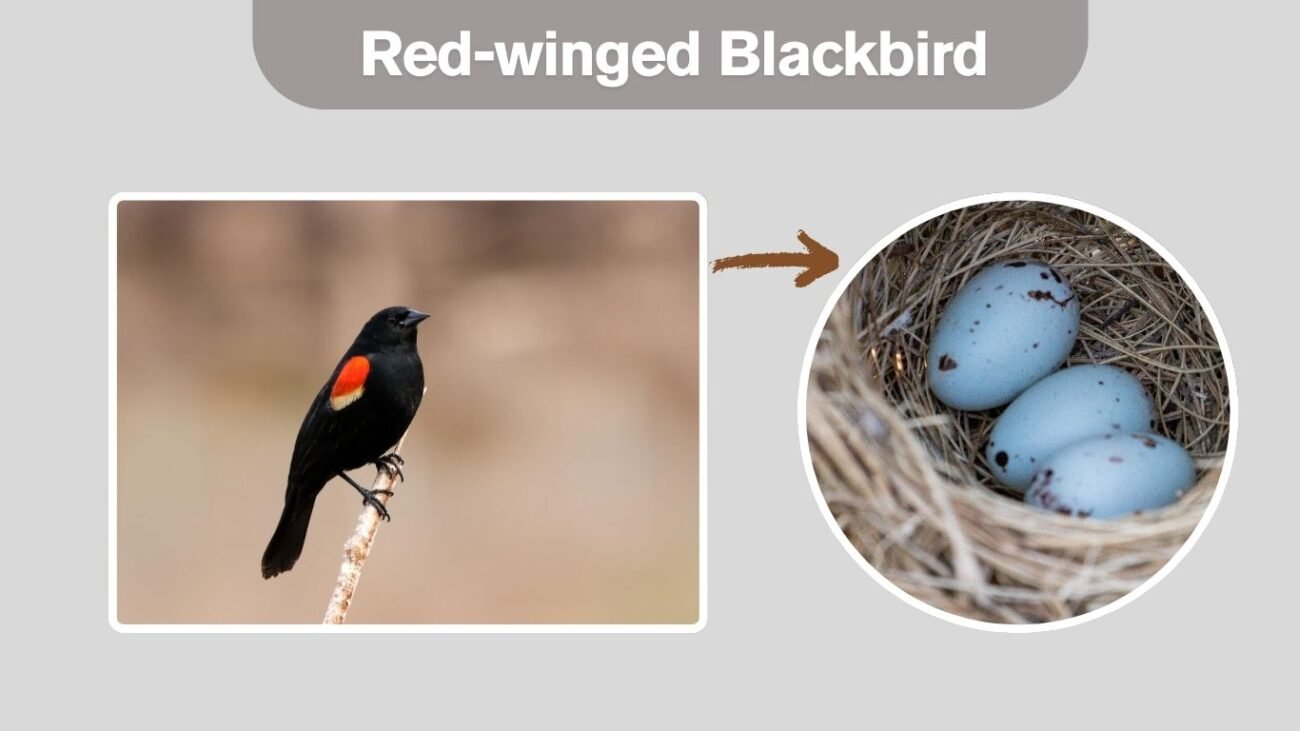
The Red-winged Blackbird, a common sight across North America’s wetlands and open fields, is known for its loud, territorial calls and the female’s habit of laying pale blue eggs with dark markings.
Egg Color and Traits
- Color: Pale blue to greenish-blue with dark brown or black streaks and blotches
- Shape: Oval and smooth
- Size: Around 2.3–2.8 cm long
- Clutch Size: 3 to 5 eggs
Nesting Behavior
Females build deep, well-concealed nests in marsh vegetation using cattails, reeds, and grasses. The nest is anchored to vertical stems and lined with fine materials. Only the female incubates for about 11–13 days.
Where They Lay Eggs
Nests are built in dense, upright marsh vegetation or shrubs, often 1–3 feet above water or ground level.
When They Lay Eggs
Egg-laying begins in early spring, typically from April to July. Most females raise 1–2 broods per season.
17. Indigo Bunting
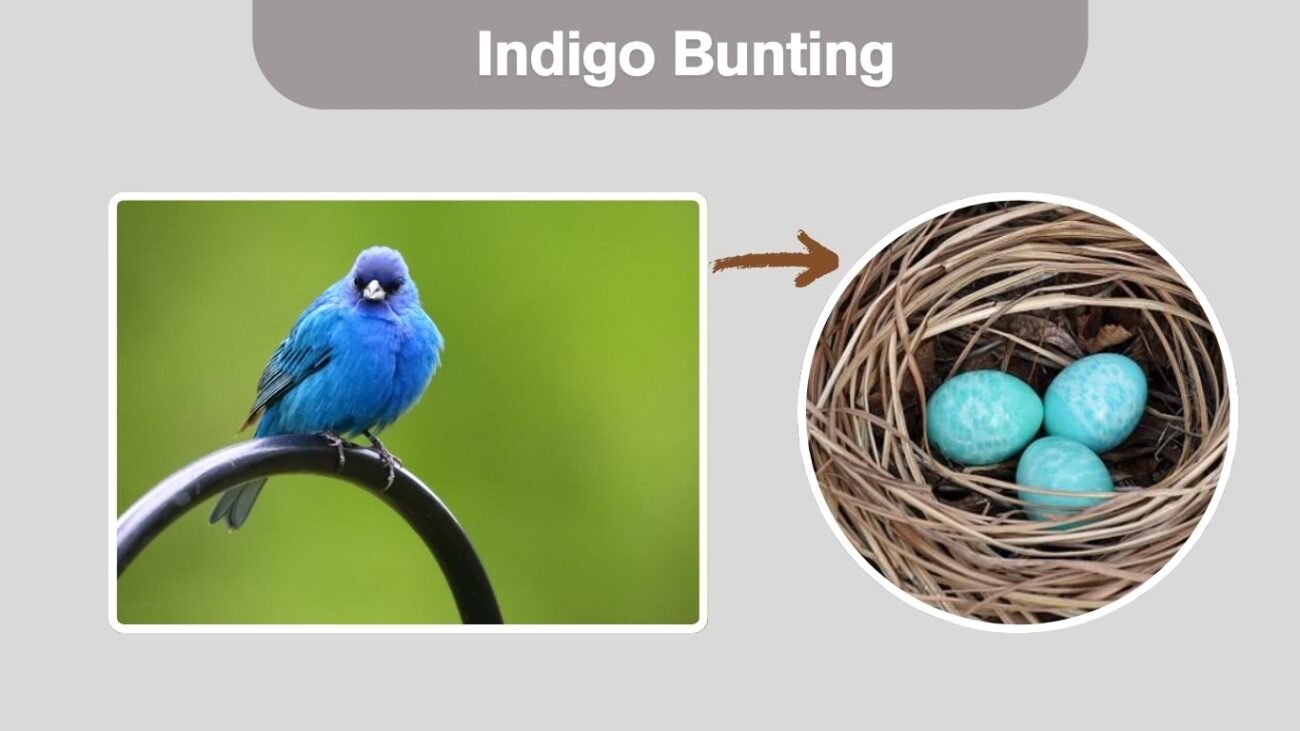
The Indigo Bunting, a small, vibrantly blue songbird of North America, lays pale blue or bluish-white eggs in well-concealed nests tucked inside shrubs and thickets.
Egg Color and Traits
- Color: Pale blue to bluish-white, usually unmarked
- Shape: Small and oval
- Size: Around 1.6–2.0 cm long
- Clutch Size: 3 to 4 eggs
Nesting Behavior
The female builds a cup-shaped nest out of grass, bark, and spider silk, lining it with soft plant fibers. She incubates alone for 12–13 days. Chicks fledge about 9–12 days after hatching.
Where They Lay Eggs
Nests are placed in low shrubs, blackberry tangles, or field-edge bushes, usually 1–4 feet above the ground.
When They Lay Eggs
Breeding season runs from May to August, with the possibility of 1–2 broods per year depending on location.
18. House Sparrow
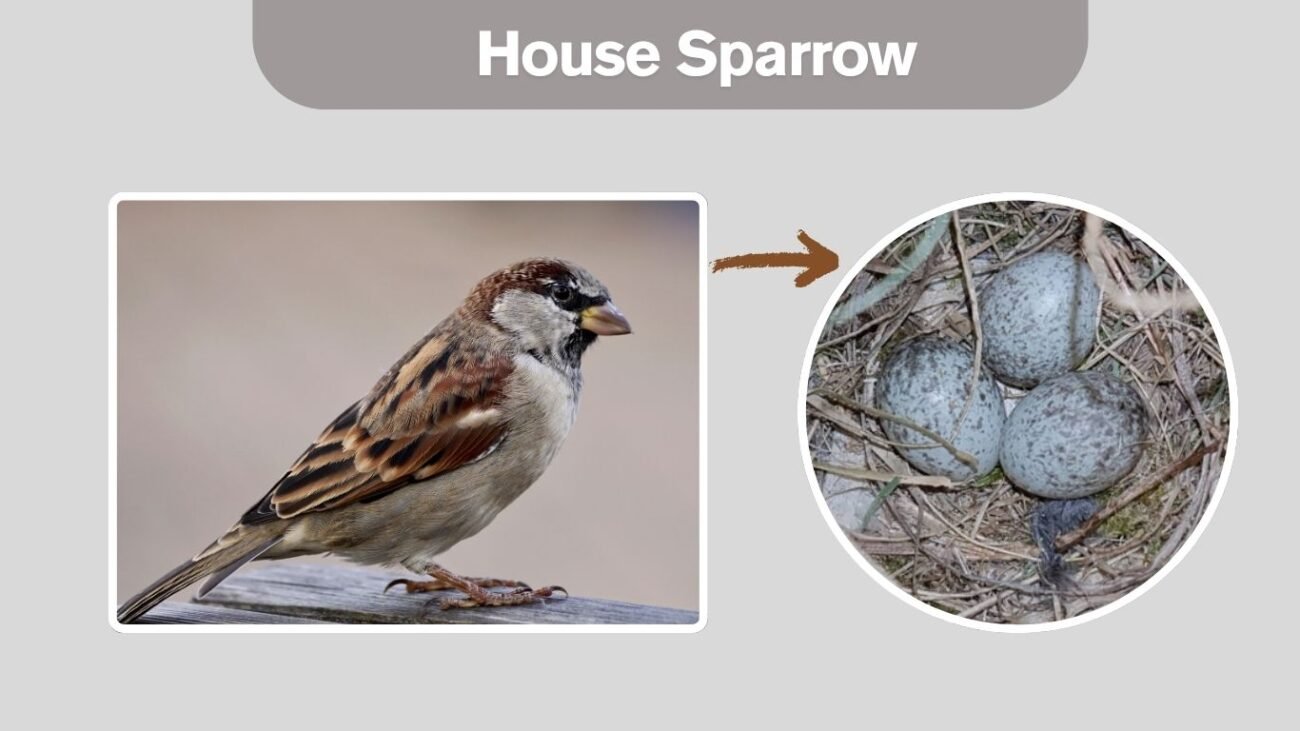
The House Sparrow is one of the most widespread birds globally, commonly found in urban and rural settings. Though their eggs are more often cream or gray, some females lay light bluish or greenish eggs with speckles.
Egg Color and Traits
- Color: Pale blue, grayish-blue, or greenish-white, usually speckled with brown or gray
- Shape: Oval and slightly glossy
- Size: About 2.1–2.5 cm long
- Clutch Size: 3 to 7 eggs
Nesting Behavior
House Sparrows are opportunistic nesters. They build bulky nests using grasses, straw, feathers, paper, string, and other debris. Nest construction occurs in cavities, eaves, vents, and crevices. Both male and female participate in nest building. The female incubates the eggs for 10–14 days.
Where They Lay Eggs
Nests are commonly placed in buildings, gutters, nest boxes, wall cavities, rooftops, and tree hollows—especially close to human activity.
When They Lay Eggs
House Sparrows breed almost year-round in warmer regions and from March to August in temperate areas. They can raise 3–4 broods annually under favorable conditions.
19. Barn Swallow
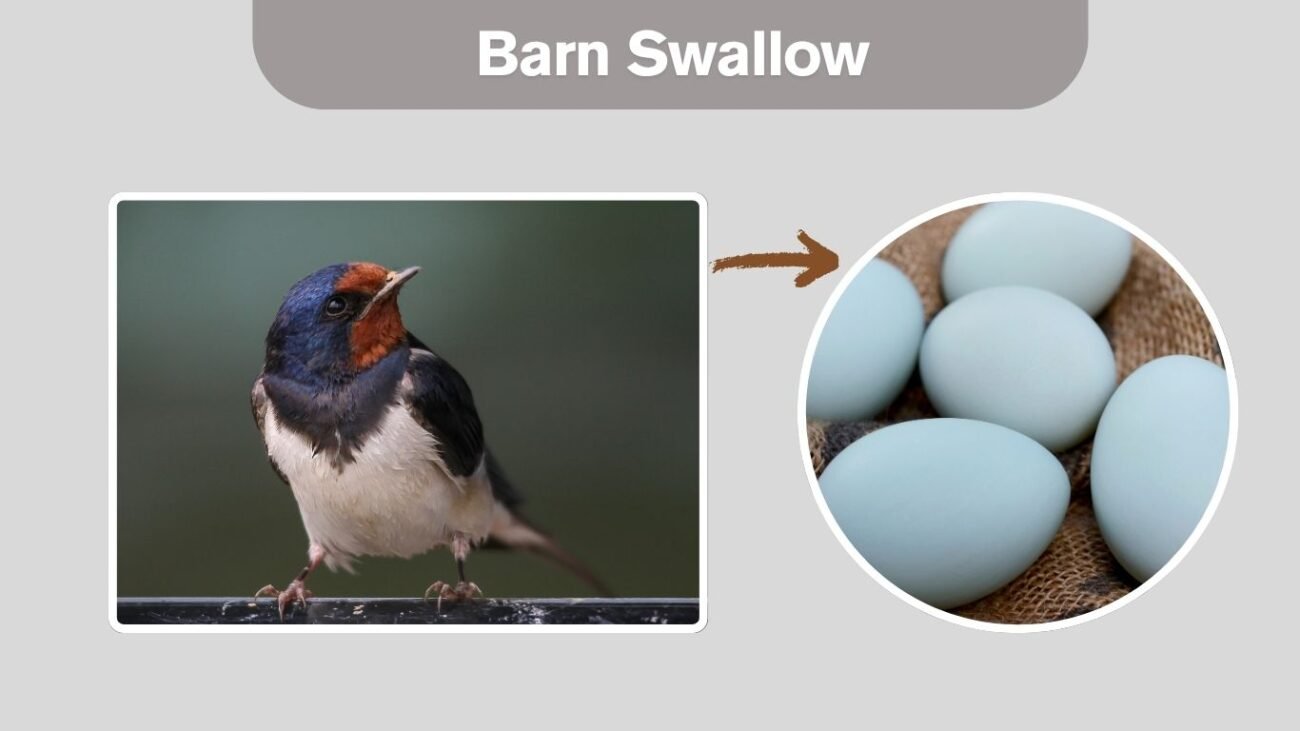
The Barn Swallow is a graceful and acrobatic flyer with a deeply forked tail. It’s commonly found in open fields and farmland, often nesting on barns and other human structures. Their eggs are sometimes pale blue or bluish-white with variable markings.
Egg Color and Traits
- Color: Pale blue or bluish-white, often speckled with brown, black, or gray
- Shape: Smooth, small, and oval
- Size: Around 1.9–2.2 cm long
- Clutch Size: 3 to 7 eggs
Nesting Behavior
Barn Swallows build cup-shaped nests made of mud pellets and straw, often attached to beams, walls, or ledges. The nest is lined with feathers and soft grass. The female incubates the eggs for 13–17 days, while both parents feed the chicks after hatching.
Where They Lay Eggs
Nests are commonly placed inside barns, under bridges, ledges, porches, and sheds—often reusing old nests or sites close to previous ones.
When They Lay Eggs
Barn Swallows start nesting in spring (April to July), with 1–2 broods per year. In warmer climates, a third brood is possible. They prefer returning to the same nesting sites year after year.
20. Tree Swallow
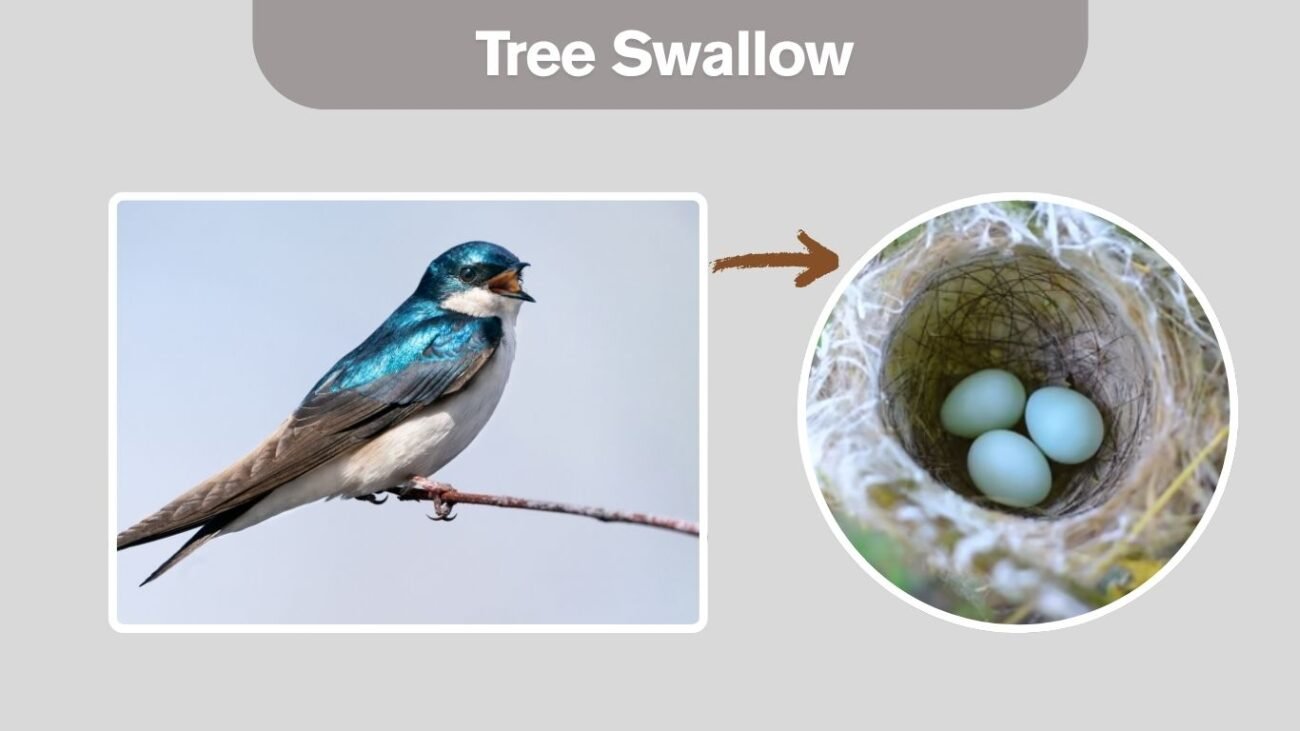
The Tree Swallow is a sleek, iridescent blue songbird found across North America. It readily nests in tree cavities and nest boxes, laying beautiful pale blue or white eggs depending on the female.
Egg Color and Traits
- Color: Pale blue (sometimes white, especially in later broods)
- Shape: Small, smooth, oval
- Size: About 1.7–2.1 cm long
- Clutch Size: 4 to 7 eggs
Nesting Behavior
Tree Swallows nest in natural tree cavities or man-made nest boxes. The female builds the nest using dry grass and lines it with feathers, especially white ones. Only the female incubates the eggs, which hatch after 14–15 days. Both parents feed the chicks.
Where They Lay Eggs
Commonly use abandoned woodpecker holes, nest boxes near water, or hollow tree trunks, typically 3–20 feet above the ground.
When They Lay Eggs
Breeding occurs from April through July. Most pairs raise one brood per year, but in southern regions, a second brood may occur.
21. Purple Martin
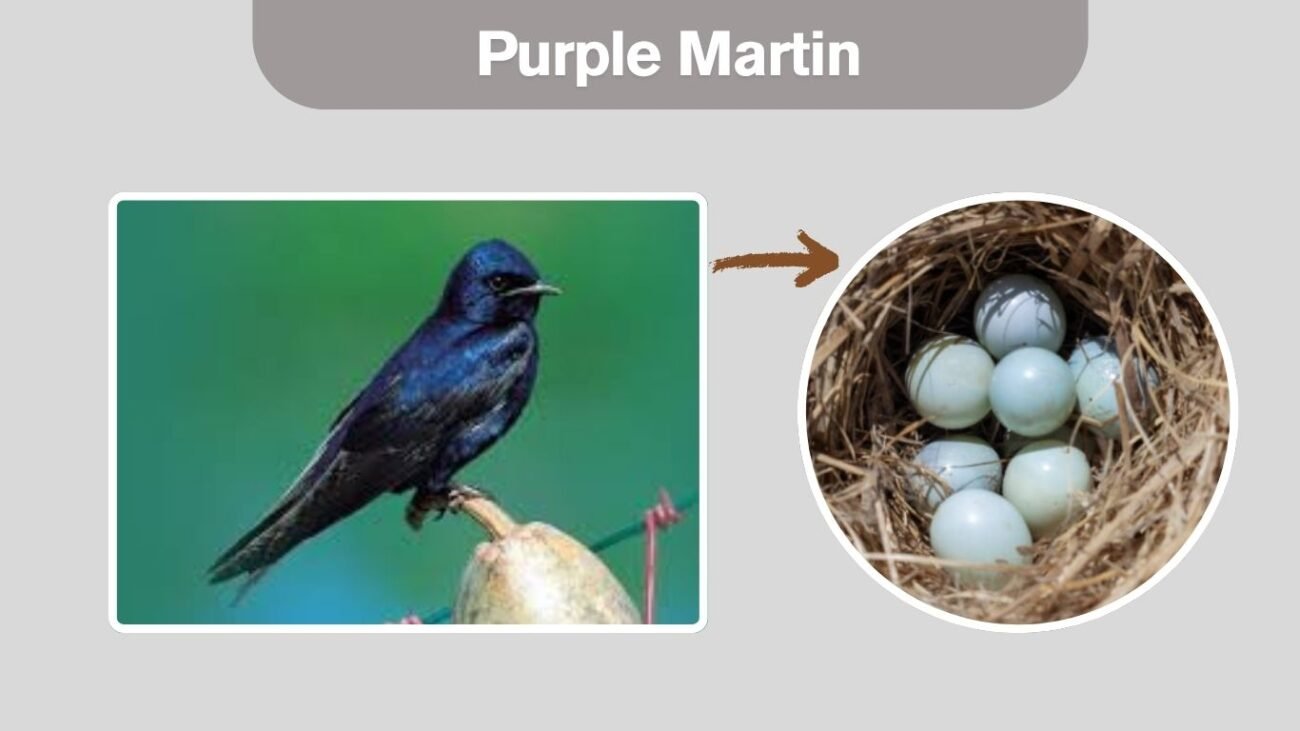
The Purple Martin is the largest swallow in North America, admired for its aerial agility and musical chattering. They nest colonially in special birdhouses and occasionally lay pale blue or white eggs.
Egg Color and Traits
- Color: Pale blue (sometimes white)
- Shape: Oval, smooth, and slightly glossy
- Size: Around 2.0–2.3 cm long
- Clutch Size: 3 to 7 eggs
Nesting Behavior
Purple Martins nest in communal housing—gourd-shaped nests or multi-compartment birdhouses. Nests are made from twigs, grass, and mud, lined with green leaves. The female lays one egg per day and incubates them for 15–18 days. Both parents feed the chicks after hatching.
Where They Lay Eggs
In man-made martin houses, gourds, or hollow cavities—typically 10–20 feet high in open spaces with nearby water.
When They Lay Eggs
Egg-laying starts from late April to early July, depending on latitude. Usually, they raise one brood per season, although a second brood may occur in southern areas.
22. Eurasian Jackdaw
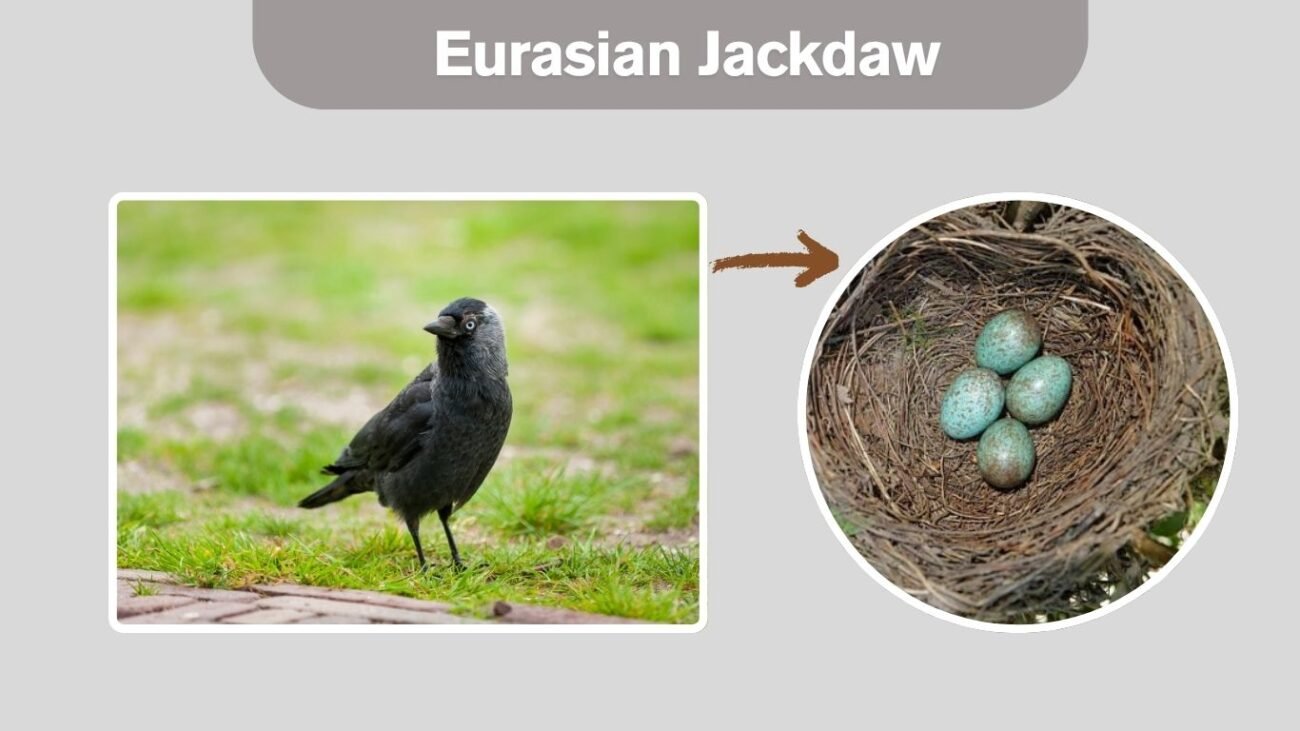
The Eurasian Jackdaw, a small member of the crow family, is highly intelligent and social. It often nests in colonies and lays eggs that are pale blue or bluish-green, often speckled with gray or brown.
Egg Color and Traits
- Color: Pale blue or greenish-blue with grayish or brownish speckles
- Shape: Smooth, oval
- Size: Around 3.4–3.8 cm long
- Clutch Size: 4 to 6 eggs
Nesting Behavior
Jackdaws build nests in chimneys, cliffs, hollow trees, and abandoned buildings. Both parents gather twigs, hair, and grass to build a bulky nest. The female incubates the eggs for about 17–18 days, and both adults feed the chicks after hatching.
Where They Lay Eggs
They prefer dark, enclosed cavities—chimney pots, old ruins, tree hollows, and nest boxes placed high up in vertical structures.
When They Lay Eggs
Breeding starts in April and continues through early summer. Typically, they raise one brood per season.
23. Common Grackle
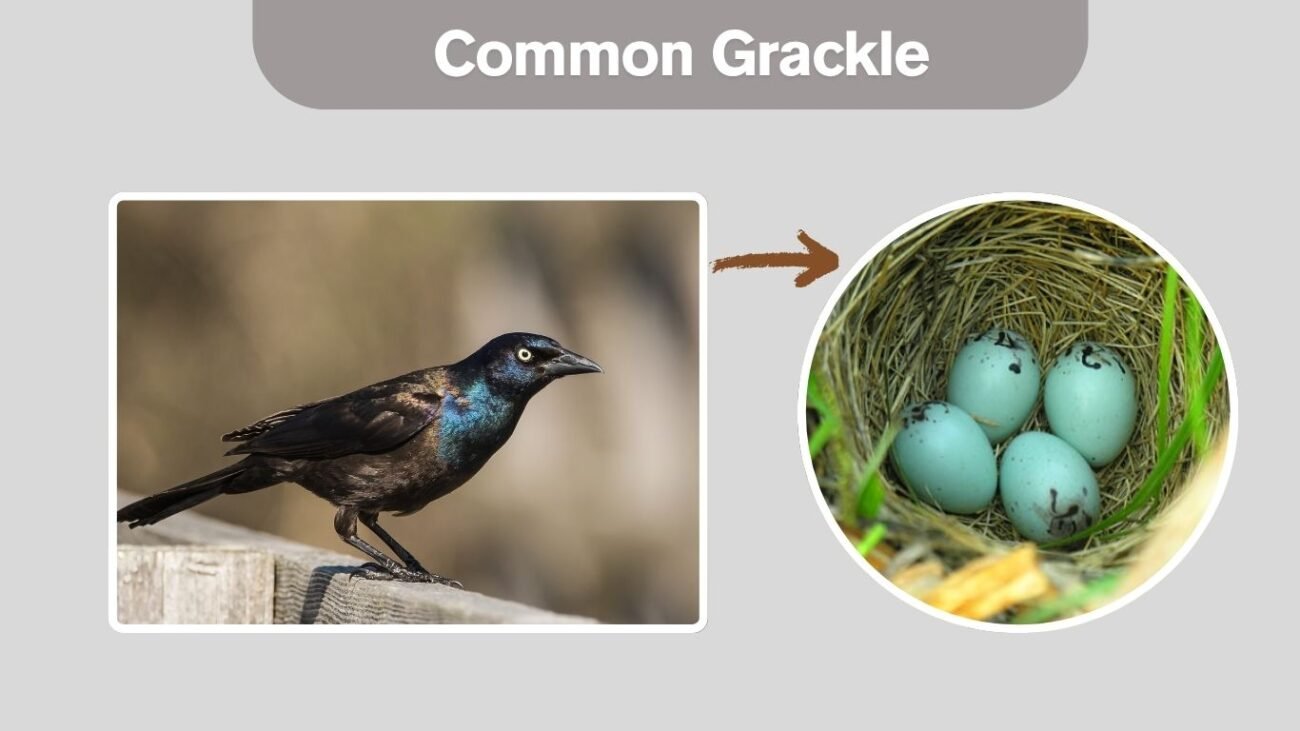
The Common Grackle is a glossy blackbird with an iridescent sheen, often found in fields, parks, and suburban areas of North America. It lays pale blue to blue-gray eggs, sometimes with markings.
Egg Color and Traits
- Color: Pale blue to bluish-gray, often with black, brown, or purple speckles or streaks
- Shape: Oval and slightly glossy
- Size: Around 2.5–3.0 cm long
- Clutch Size: 4 to 7 eggs
Nesting Behavior
Grackles build bulky nests in dense shrubs, tall trees, or on man-made structures. Nests are made from twigs, grass, mud, and sometimes trash. The female does most of the building and all incubation, which lasts about 12–14 days.
Where They Lay Eggs
Nests are located in trees, marsh vegetation, or even on rooftops and poles—often in colonies with other grackles or blackbirds.
When They Lay Eggs
Egg-laying occurs from April through June, with typically one brood per season, though a second is possible in warmer climates.
24. Northern Mockingbird
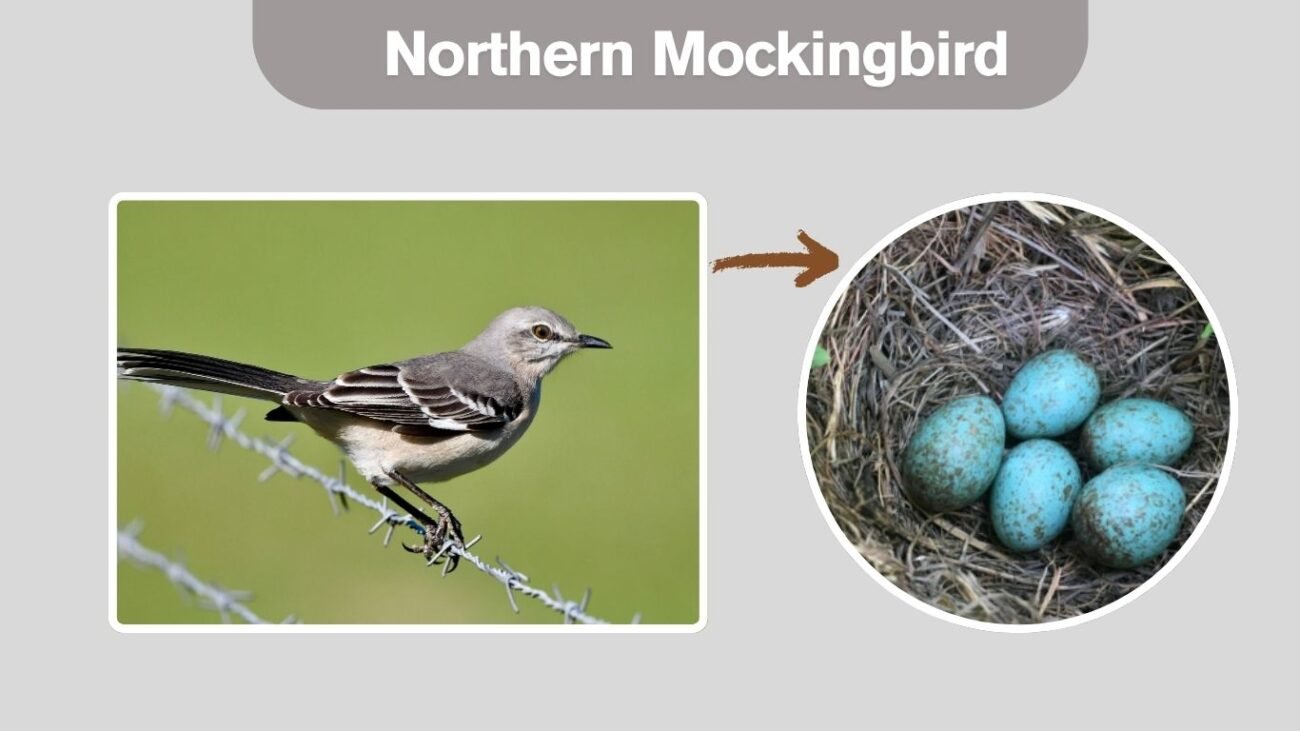
The Northern Mockingbird, famous for its wide range of vocal mimicry, is a common resident across North America. It lays pale blue to greenish-blue eggs with distinctive speckling.
Egg Color and Traits
- Color: Pale blue to greenish-blue with brown or reddish speckles
- Shape: Oval and smooth
- Size: Around 2.4–2.7 cm long
- Clutch Size: 2 to 6 eggs
Nesting Behavior
Mockingbirds build open-cup nests in shrubs or small trees using twigs, grass, and rootlets, lined with softer materials. The female incubates the eggs for about 12–13 days, while the male guards the territory. Both parents feed the chicks after hatching.
Where They Lay Eggs
Nests are typically built 3–10 feet off the ground in shrubs, hedges, or small trees—often in residential areas, parks, and forest edges.
When They Lay Eggs
Breeding begins as early as March and can extend into August. Mockingbirds often raise 2–3 broods per season, especially in warmer climates.
25. Rock Pigeon
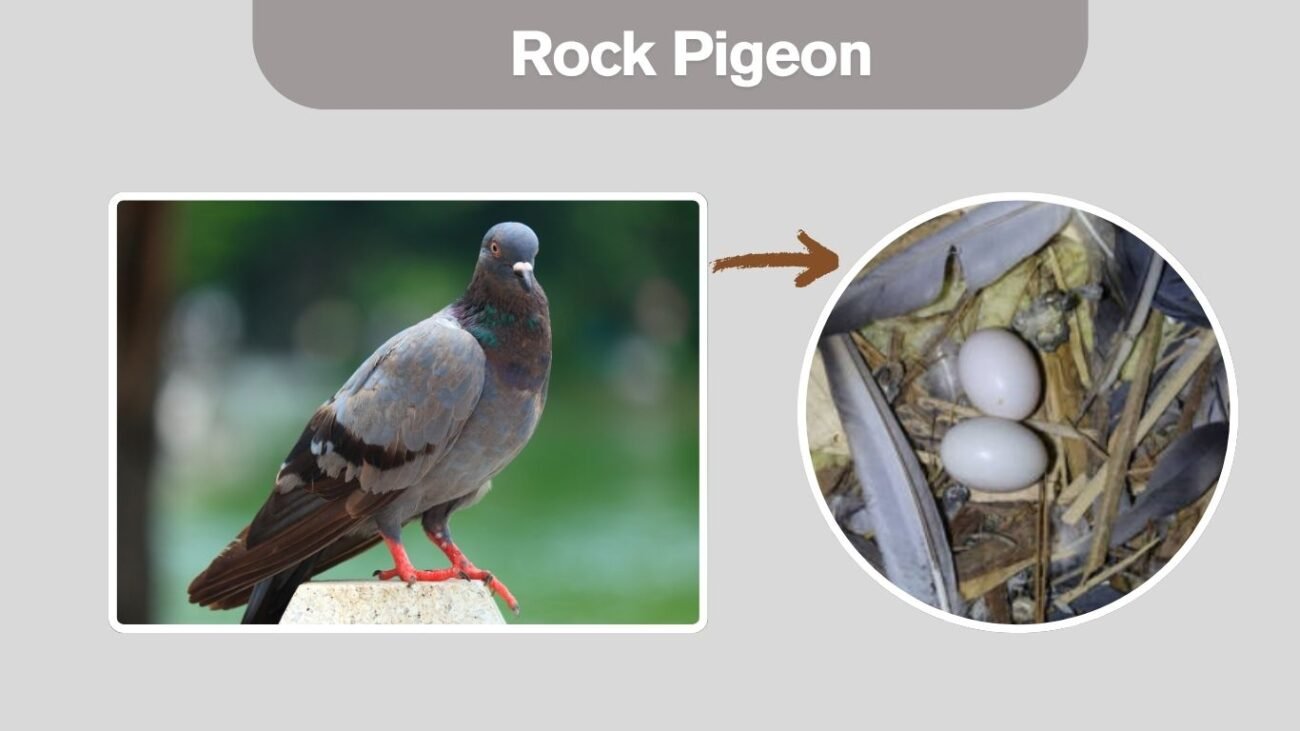
The Rock Pigeon, commonly seen in cities and towns worldwide, often lays bluish-white eggs. Though usually plain in color, some eggs appear with a pale blue tint depending on lighting and location.
Egg Color and Traits
- Color: White to pale bluish-white, usually unmarked
- Shape: Smooth and elliptical
- Size: Around 3.6–4.0 cm long
- Clutch Size: Usually 2 eggs per nesting
Nesting Behavior
Pigeons build simple, flimsy nests using twigs, straw, and debris. Both parents take turns incubating the eggs for about 17–19 days. After hatching, both feed the chicks with nutrient-rich “pigeon milk” secreted from their crops.
Where They Lay Eggs
Nests are made on building ledges, window sills, rooftops, and bridges—often reusing the same site repeatedly.
When They Lay Eggs
Rock Pigeons can breed year-round in urban environments, especially in temperate regions. They may raise up to 6 broods per year under ideal conditions.