Robins are known not only for their cheerful songs but also for their diverse nesting habits. From treetop cups to hidden ground nests, different robin species choose unique places to raise their young. In this guide, we explore 8 distinct types of robin bird nests, including their construction materials, egg-laying patterns, incubation, and chick development—revealing just how resourceful and adaptable these birds truly are.
1. Cup-Shaped Nest in Trees
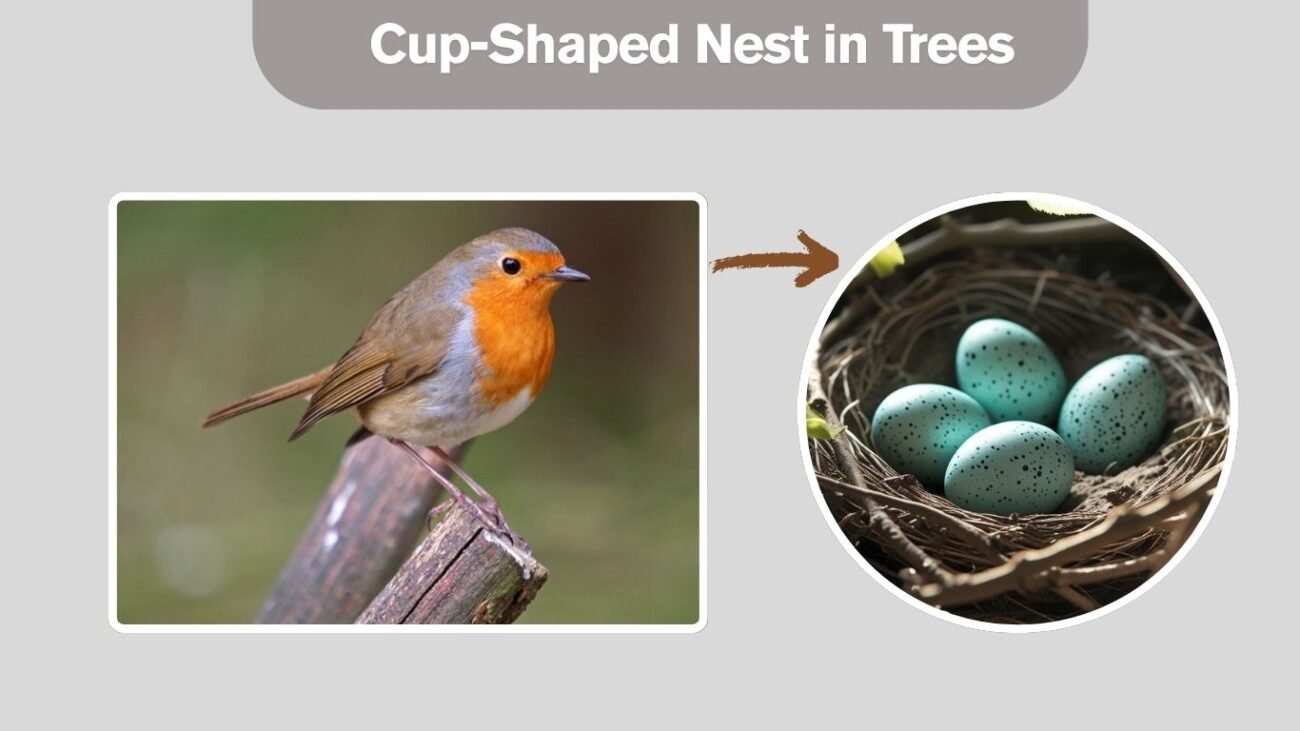
Many robin species, such as the American Robin, are renowned for their well-constructed cup-shaped nests built securely in the branches or forks of trees. These nests offer protection from predators and harsh weather, making them ideal for raising chicks.
Nest Materials Used
Robins use a variety of natural materials including:
- Twigs
- Dry grass
- Pine needles
- Leaves
- Mud (as a binding agent)
- Fine grass or feathers for lining the inner cup
Mud is a key component, especially for American Robins, helping harden and support the structure.
How the Nest Is Built
The female builds the nest alone. She begins by weaving twigs and dry grass into a round base in a tree fork. She then gathers mouthfuls of mud, placing and shaping it into a firm cup using her breast to mold the interior. Once dry, she adds a soft lining for comfort and insulation.
Egg Characteristics
The female typically lays 3 to 5 eggs per clutch.
- Egg color: Pale blue (most common)
- Size: About 1 inch long
- Shape: Oval and smooth
Eggs are laid one per day, and incubation begins after the final egg is laid to ensure synchronized hatching.
Incubation and Hatching
The female incubates the eggs for 12 to 14 days. During this period, she rarely leaves the nest, while the male brings her food. Eggs hatch within a 24-hour window of each other, ensuring all chicks are at the same development stage.
Chick Development: Hatch to Fledging
- Day 1–3: Chicks hatch blind, featherless, and helpless.
- Day 4–7: Eyes open; fine pinfeathers begin to appear.
- Day 8–10: Feathers develop; chicks grow rapidly and require frequent feeding.
- Day 11–14: Fully feathered, alert, and start exercising wings.
- Day 13–15: Fledging occurs. Chicks leave the nest, though parents continue feeding them for up to 2 more weeks.
In total, from egg laying to chicks leaving the nest, the process takes about 26–30 days.
2. Nest in Shrubs or Bushes
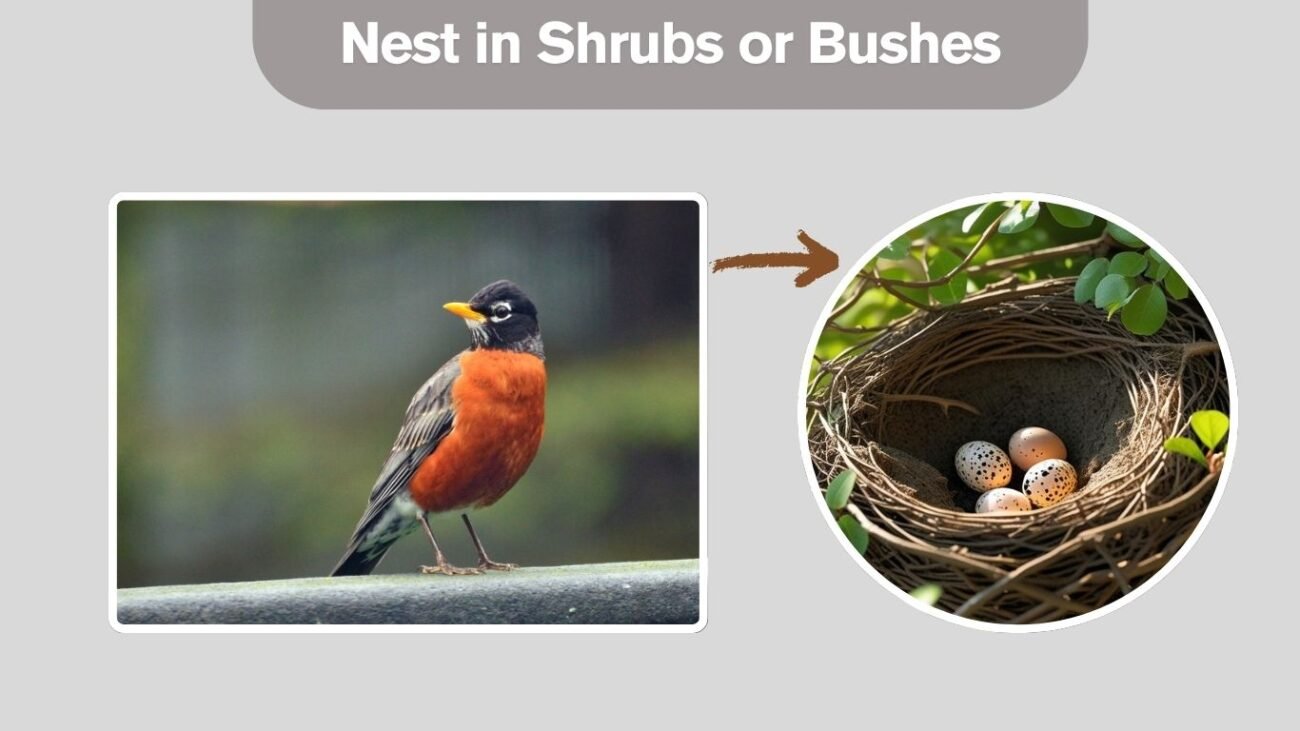
Some robin species, like the European Robin and Indian Robin, prefer to build their nests low to the ground, hidden in dense shrubs or bushes. These nests offer camouflage and shelter from predators and the elements.
Nest Materials Used
Materials are chosen based on availability and location, including:
- Grass stems
- Dead leaves
- Moss
- Hair or animal fur (for lining)
- Small twigs
- Feathers
The lining is softer, ensuring warmth and cushioning for the eggs and chicks.
How the Nest Is Built
The female robin selects a well-concealed spot deep within thick shrubbery. She weaves dry plant materials into a cup-shaped nest, reinforcing the walls with moss or roots. Unlike tree nests, shrub nests are typically lower and better hidden, sometimes just a foot above the ground.
Egg Characteristics
- Eggs per clutch: 4–6
- Color: Pale cream, white, or bluish with reddish-brown speckles (varies by species)
- Shape: Small and oval
Eggs are laid daily, and incubation starts once the clutch is complete.
Incubation and Hatching
Incubation lasts 12–15 days depending on the species. During this period, the female remains on the nest for most of the day. Males may help feed the female or guard the area.
Chick Development: Hatch to Fledging
- Day 1–3: Chicks hatch weak and nearly naked.
- Day 4–7: Down feathers emerge; chicks begin vocalizing.
- Day 8–11: Wing feathers develop; chicks become more active.
- Day 12–15: Nestlings grow alert and strong; start fluttering wings.
- Day 14–17: Fledging begins. Chicks leave the nest, often hiding under nearby cover while still dependent on parents for food.
From egg laying to independence, the full nesting cycle in shrubs spans around 28–32 days.
3. Ground Nest in Thick Vegetation
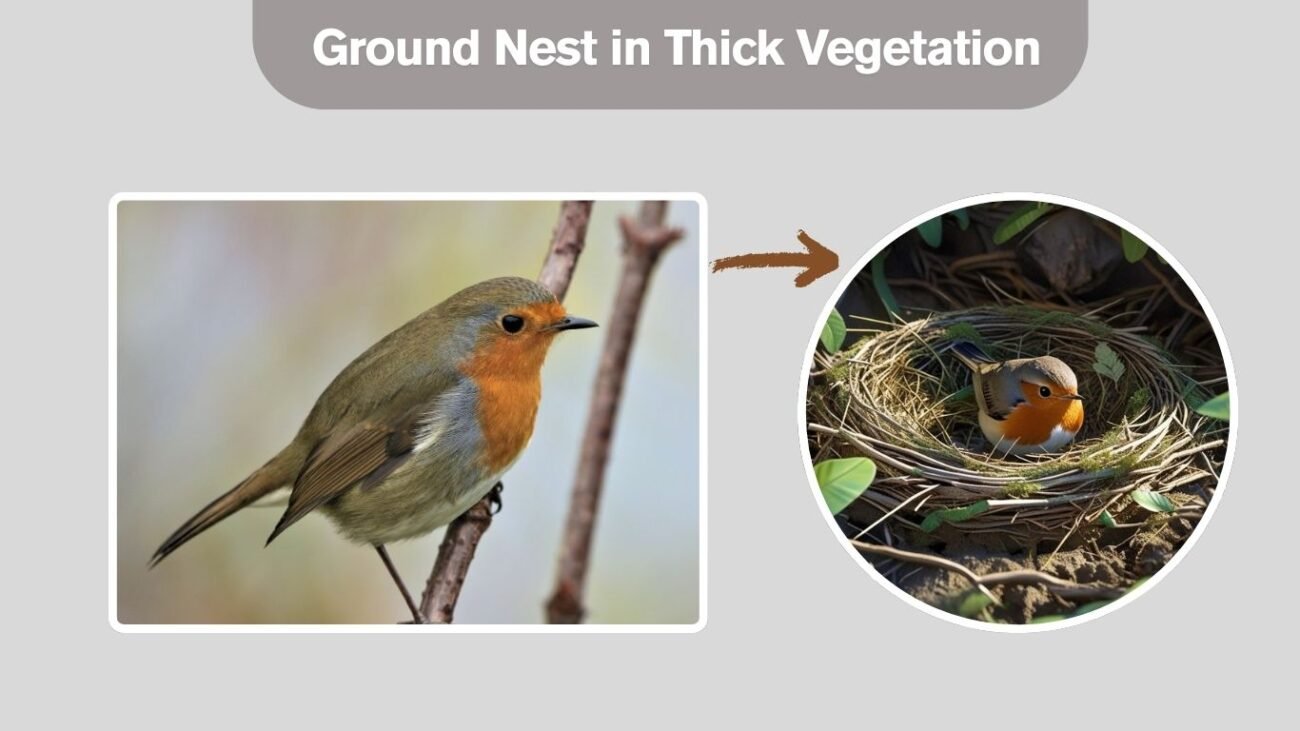
Some robin species, such as the White-starred Robin and certain forest robins, prefer to nest directly on the forest floor. These ground nests are well-hidden among thick vegetation, roots, or fallen logs, offering natural camouflage and protection from above.
Nest Materials Used
Ground nests are made using soft, earthy materials, including:
- Dead leaves
- Moss
- Fine roots
- Grass blades
- Fern fronds
- Spider webs or animal hair (for lining)
Materials are chosen for softness, warmth, and the ability to blend with the forest floor.
How the Nest Is Built
The female finds a depression or hollow among tree roots, under ferns, or beside a mossy log. She arranges leaves and moss into a cup, sometimes shaping it into the existing natural contours. The inner lining is finely woven to protect fragile eggs from cold and damp.
Egg Characteristics
- Clutch size: Usually 2–3 eggs
- Color: Pale cream or white, sometimes lightly speckled
- Shape: Round to oval, small in size
The eggs are laid close together to conserve heat in the shaded forest environment.
Incubation and Hatching
Incubation lasts about 13–15 days. The female stays on the nest nearly full-time due to the cool, shaded location. Males may feed the female or guard the territory.
Chick Development: Hatch to Fledging
- Day 1–3: Hatchlings are blind and nearly featherless; require constant brooding.
- Day 4–7: Sparse down feathers develop; feeding frequency increases.
- Day 8–12: Chicks open eyes, develop stronger muscle control and begin wing flapping.
- Day 13–16: Fully feathered; start exploring just outside the nest.
- Day 16–18: Fledging begins, with chicks hopping into nearby cover and continuing to receive care.
The full nesting period on the ground typically lasts around 30–34 days from egg-laying to fledging.
4. Nest in Tree Hollows
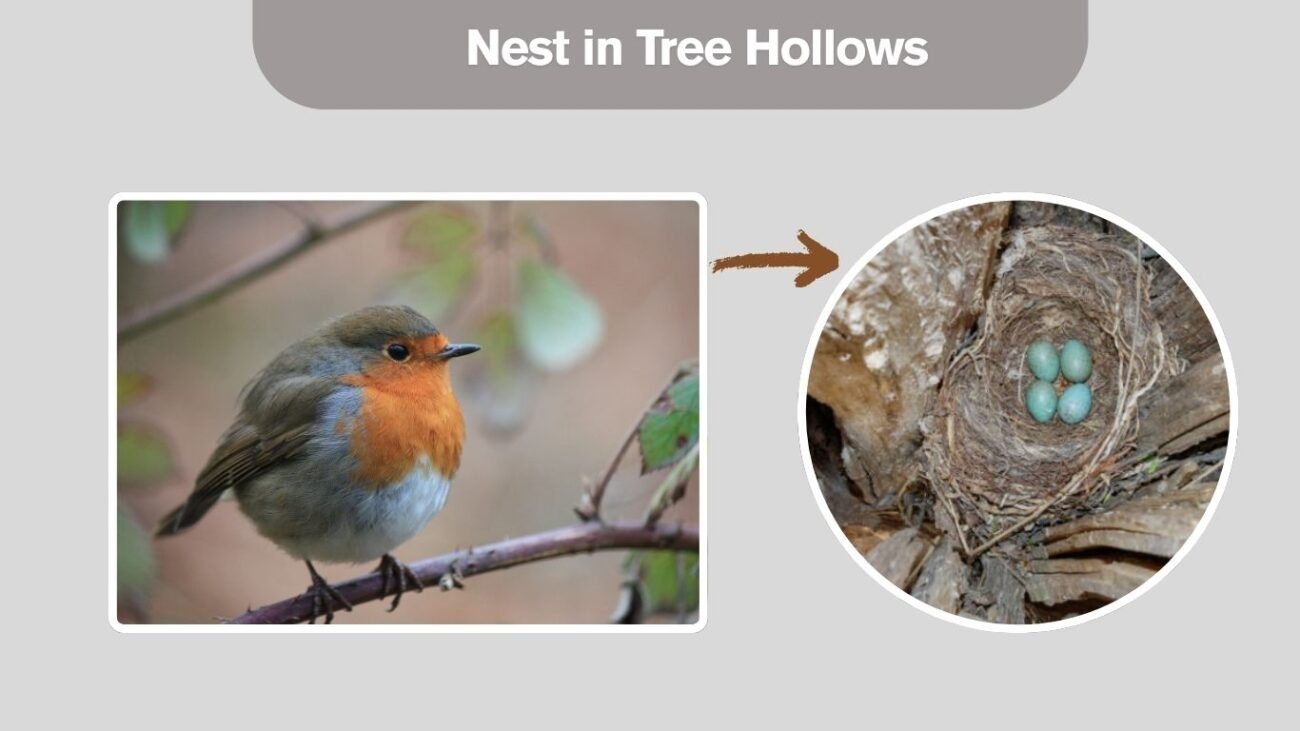
Some robin species, such as the Bush Robin and Madagascar Magpie-Robin, build their nests inside natural tree hollows or cavities. These protected spaces offer excellent shelter from predators and harsh weather.
Nest Materials Used
Materials are carefully selected to suit the enclosed, wooden environment:
- Moss
- Bark strips
- Grass stems
- Feathers
- Animal fur
- Plant fibers
These soft materials are layered inside the hollow, forming a well-insulated and secure nest.
How the Nest Is Built
The female locates a suitable hollow in a tree trunk or branch, usually 1–3 meters above the ground. She fills the base with dry, cushioning materials and carefully shapes the interior to form a deep, soft cup. The cavity helps maintain a stable temperature and keeps the nest hidden from view.
Egg Characteristics
- Clutch size: Typically 2–4 eggs
- Color: Often pale blue, greenish-white, or cream with speckling
- Shape: Oval and medium-sized
Eggs are laid over consecutive days, with incubation beginning once the clutch is complete.
Incubation and Hatching
The incubation period lasts around 12–14 days. The female does most of the incubating while the male may defend the area or bring food. The hollow’s insulation helps retain warmth during cooler nights.
Chick Development: Hatch to Fledging
- Day 1–3: Chicks hatch with closed eyes and soft skin
- Day 4–7: Down feathers appear; feeding frequency increases
- Day 8–11: Rapid growth and feather development
- Day 12–15: Nestlings become more active and vocal
- Day 15–18: Fledging begins, but young birds may remain near the cavity, still relying on parents
From egg laying to fledging, the total nesting cycle spans about 28–32 days.
5. Nest on Building Ledges
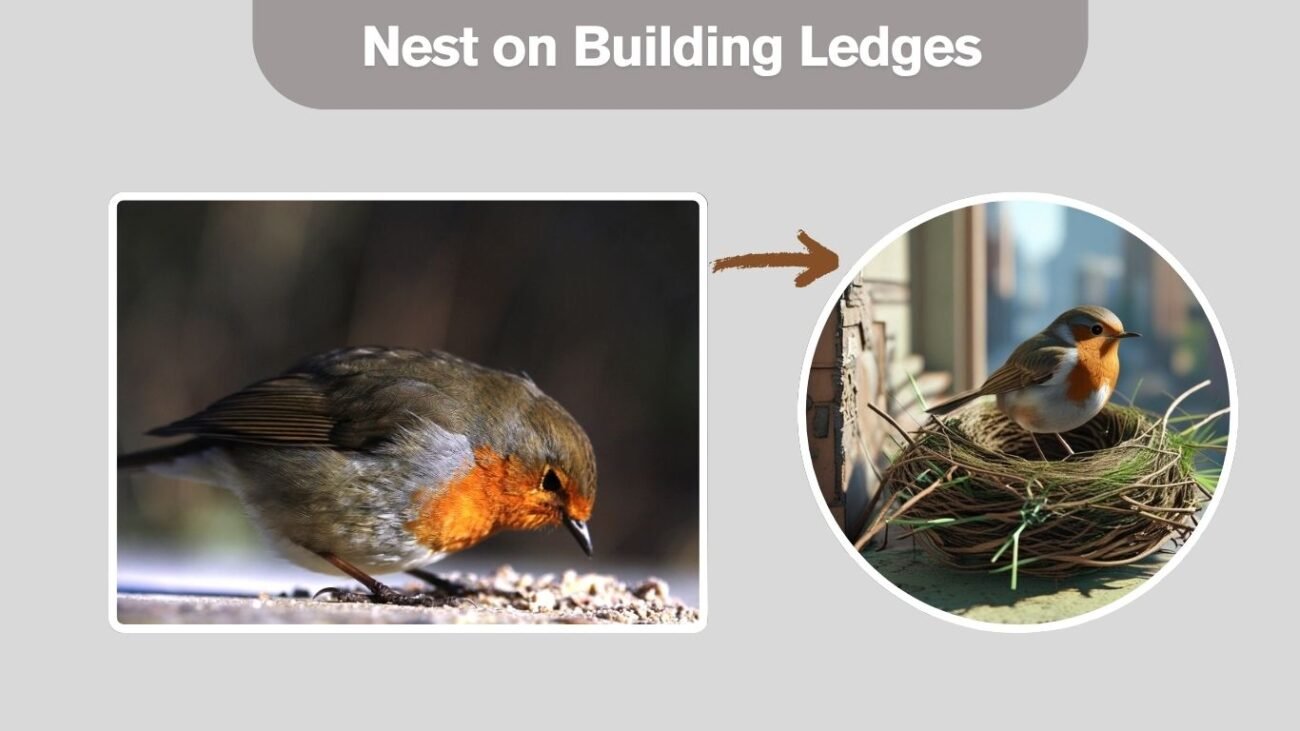
Urban-adapted robins such as the Oriental Magpie-Robin and European Robin sometimes build nests on building ledges, window sills, or in open garages. These man-made nesting spots offer shelter and easy access to food sources in human-modified environments.
Nest Materials Used
Common nesting materials include:
- Straw and dry grass
- Mud or soft clay (for structure)
- Paper scraps or string
- Feathers and soft cloth fibers
Urban robins often use readily available materials, mixing natural and artificial items.
How the Nest Is Built
The female chooses a narrow, protected ledge—often under a roof, gutter, or window sill. She forms a shallow cup using grasses, twigs, and mud, then lines it with soft materials. The position offers cover from rain and predators but can be noisy due to human activity.
Egg Characteristics
- Clutch size: 3–5 eggs
- Color: Varies by species — pale blue, white with speckles, or cream
- Size: Small and oval
Eggs are laid one per day, and incubation begins after the last one is laid.
Incubation and Hatching
Incubation lasts 11–14 days. The female stays on the nest most of the time. Despite the human setting, the nesting period proceeds normally as long as there is minimal disturbance.
Chick Development: Hatch to Fledging
- Day 1–3: Chicks hatch with soft skin, needing warmth and frequent feeding
- Day 4–7: Feathers begin emerging; eyes slowly open
- Day 8–12: Chicks become louder and more alert
- Day 13–16: Feathers fill in; chicks prepare to leave the nest
- Day 16–18: Fledging occurs; young birds may stay close and continue receiving food from parents
The total nesting period in urban spots lasts around 27–31 days.
6. Nest in Crevices or Wall Cavities
Some robins, especially species like the Indian Robin and Collared Robin, take advantage of crevices in rocks, walls, or buildings for nesting. These narrow spaces provide excellent concealment and protection from predators and environmental hazards.
Nest Materials Used
Robins use soft and flexible materials to fit the confined space, including:
- Grass stems
- Roots and bark strips
- Feathers
- Cotton fibers or cloth scraps (in urban areas)
- Mud for reinforcement (occasionally)
These materials are tightly packed to fit and cushion within the uneven crevice.
How the Nest Is Built
The female finds a small cavity or crack in a stone wall, rock crevice, or man-made structure. She weaves materials into a compact, padded nest, pressing them against the rock or wall to form a cozy space. These nests are harder to spot and provide great insulation.
Egg Characteristics
- Clutch size: 2–4 eggs
- Color: Typically off-white or pale with reddish-brown speckles
- Shape: Small and oval
Laid at daily intervals, the eggs remain protected deep within the crevice.
Incubation and Hatching
Incubation lasts 12–14 days. The female stays hidden during this period, only leaving briefly to feed. The tight space helps regulate temperature and offers security.
Chick Development: Hatch to Fledging
- Day 1–3: Hatchlings are bare and quiet to avoid drawing attention
- Day 4–7: Down feathers appear; chicks are fed frequently
- Day 8–12: Feathers develop; chicks begin shifting in the nest
- Day 13–16: They exercise wings and prepare to leave
- Day 16–18: Fledging occurs; chicks hop out and hide nearby, still fed by parents
The full nesting cycle in wall or rock crevices takes about 28–32 days.
7. Nest in Hanging Vines
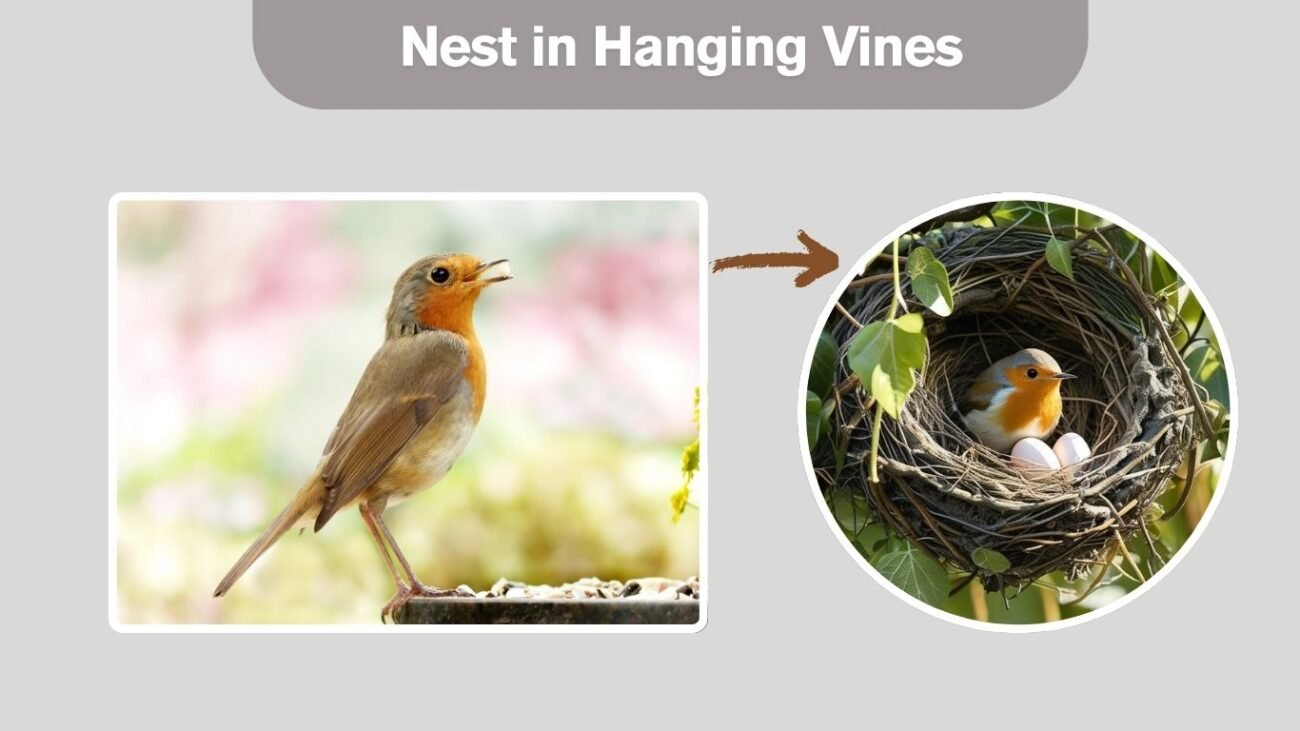
Some rainforest robins, such as the Pale-yellow Robin and White-faced Robin, prefer to nest in hanging vines or drooping branches where the nest sways gently above the forest floor. These elevated, swinging locations provide camouflage and reduce the risk of ground-based predators.
Nest Materials Used
Materials are selected for flexibility and strength, including:
- Fine vines and rootlets
- Moss and lichen
- Spider webs (to hold fibers together)
- Feathers or fur for lining
These components help suspend and secure the nest in swinging vegetation.
How the Nest Is Built
The female weaves a tight, deep cup between hanging vines or in a slender fork of drooping vegetation. She uses spider silk to bind the nest securely and molds it with her body. The nest sways with wind and movement, blending into the surrounding foliage.
Egg Characteristics
- Clutch size: 1–2 eggs
- Color: Creamy white or pale with fine markings
- Size: Small and oval
Eggs are laid with spacing, and incubation begins after the last egg is placed.
Incubation and Hatching
Incubation takes 13–15 days. The female carefully balances on the suspended nest, often remaining still to avoid attracting predators. The location keeps the eggs cool and shaded.
Chick Development: Hatch to Fledging
- Day 1–3: Tiny hatchlings emerge and are brooded closely
- Day 4–7: Down feathers begin to cover the body
- Day 8–11: Feather growth increases; chicks become active
- Day 12–15: Nestlings begin balancing and stretching wings
- Day 15–17: Fledging occurs as chicks hop or flutter to nearby vines or branches
The complete nesting cycle in hanging vine nests spans around 30–33 days.
8. Nest in Mossy Banks or Root Tangles
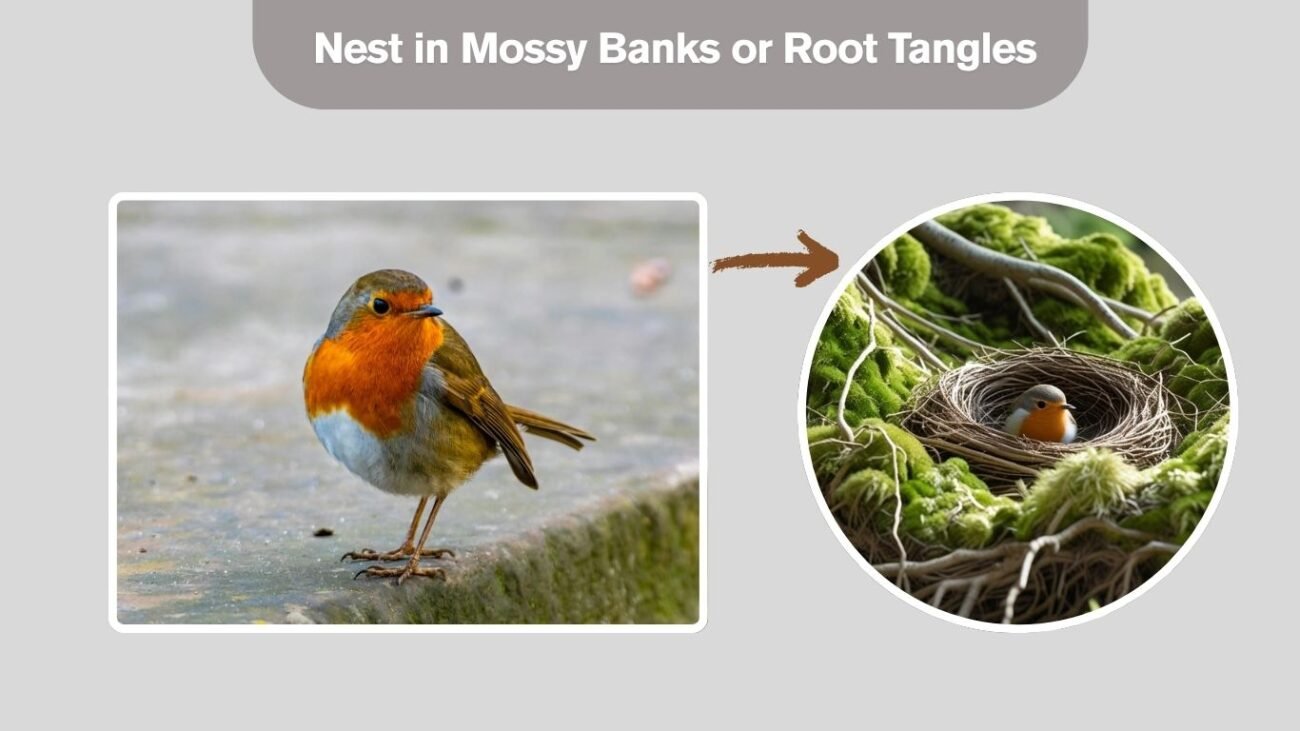
Some secretive forest robins, like the Blue-fronted Robin and Forest Robin, choose to nest in mossy banks or among exposed root tangles at the base of trees. These natural, hidden spots offer excellent camouflage and moisture regulation.
Nest Materials Used
These robins carefully gather soft, moisture-resistant materials such as:
- Moss
- Leaf litter
- Fern stems
- Fine roots and bark strips
- Hair or feathers for lining
The materials blend into the forest floor, keeping the nest both insulated and hidden.
How the Nest Is Built
The female locates a small cavity in a mossy bank or among tangled roots at the base of a tree or slope. She shapes a cup-like nest inside this space, layering moss for structure and lining it with softer fibers. The nest is typically recessed into the slope or bank for added concealment.
Egg Characteristics
- Clutch size: 2–3 eggs
- Color: Cream or pale buff with delicate spotting
- Shape: Small, oval eggs laid close together
Due to the humid environment, the nest is often elevated slightly within the cavity to prevent moisture buildup.
Incubation and Hatching
Incubation takes about 13–15 days. The female remains well-hidden throughout the period, rarely leaving the nest. The dense vegetation helps maintain a steady, cool temperature.
Chick Development: Hatch to Fledging
- Day 1–3: Chicks hatch under thick cover; nearly featherless and quiet
- Day 4–7: Down appears; feeding increases as parents bring small insects
- Day 8–12: Chicks gain strength and feather coverage
- Day 13–15: Wing exercises begin; chicks show alert behavior
- Day 15–17: Fledging occurs discreetly into nearby undergrowth, with parental care continuing
From nest building to fledging, the full cycle in mossy banks or root tangles lasts approximately 30–34 days.
Summary:
Robins are versatile nest builders, creating homes in a variety of locations ranging from treetops to ground cover, building ledges, and even hanging vines. This guide explores 8 distinct types of robin bird nests, detailing the materials used, how each nest is constructed, the appearance and number of eggs, and the complete development cycle from hatching to fledging. These nesting behaviors highlight the adaptability and survival instincts of robins across different environments.