Florida is home to a diverse group of owl species, from the mighty Great Horned Owl to the rare Snowy Owl. These birds of prey inhabit forests, wetlands, grasslands, even suburban areas. Whether you’re spotting Burrowing Owls in Cape Coral or hearing Barred Owls in a swamp, this guide covers 9 types of owls found in Florida, complete with identification, calls, habitat details, and the laws around owning owls in the state.
1. Great Horned Owl in Florida
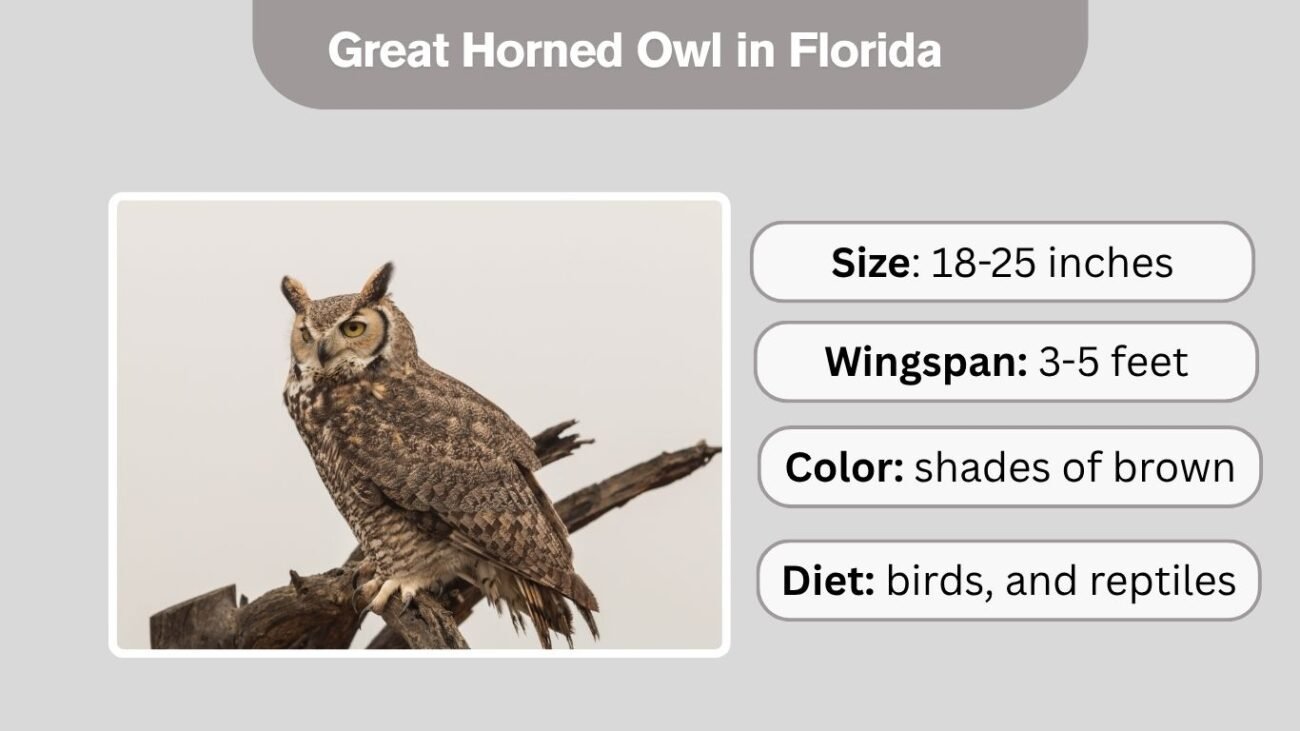
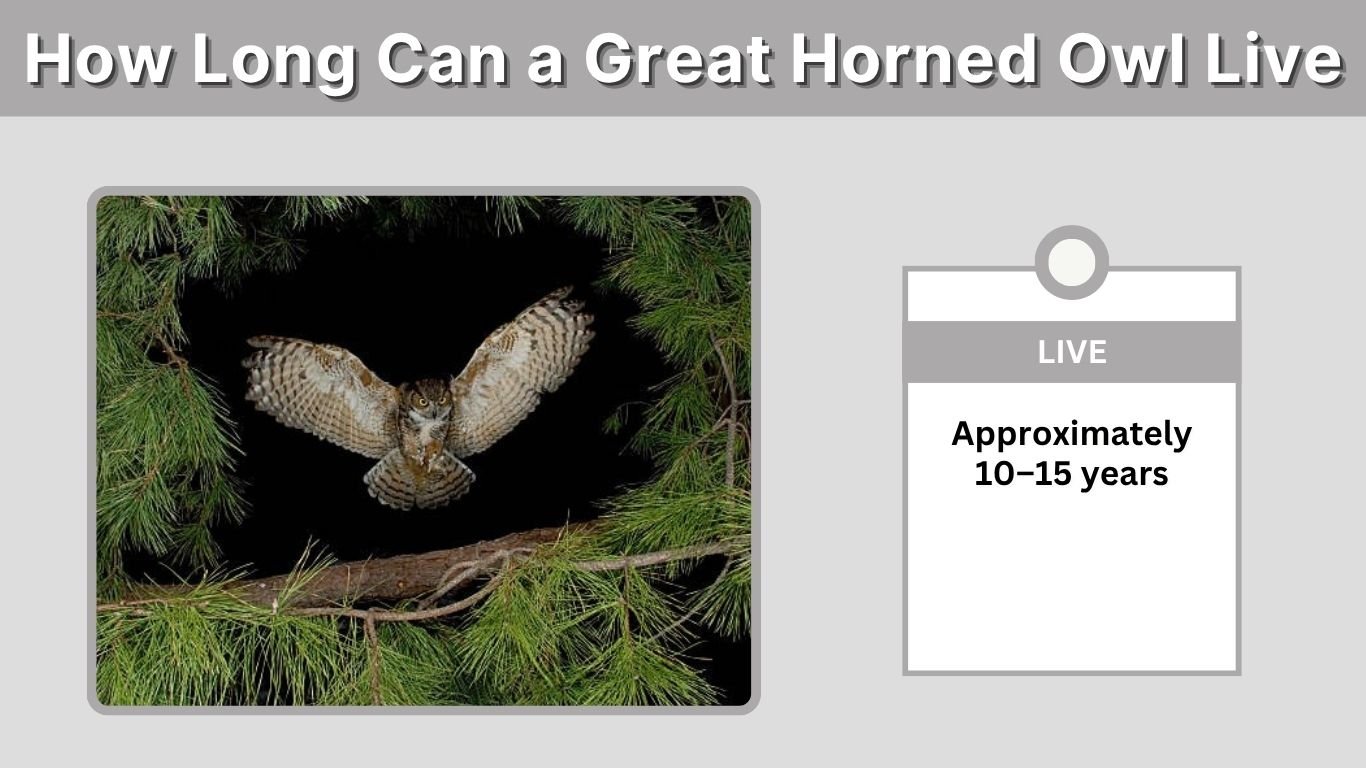
The Great Horned Owl is one of the most powerful and widespread owls in Florida. Known for its deep hoots, fearsome hunting ability, and iconic ear tufts, this large owl is found across the entire state—from North Florida pine forests to South Florida wetlands, and even urban parks and neighborhoods.
Habitat and Range in Florida
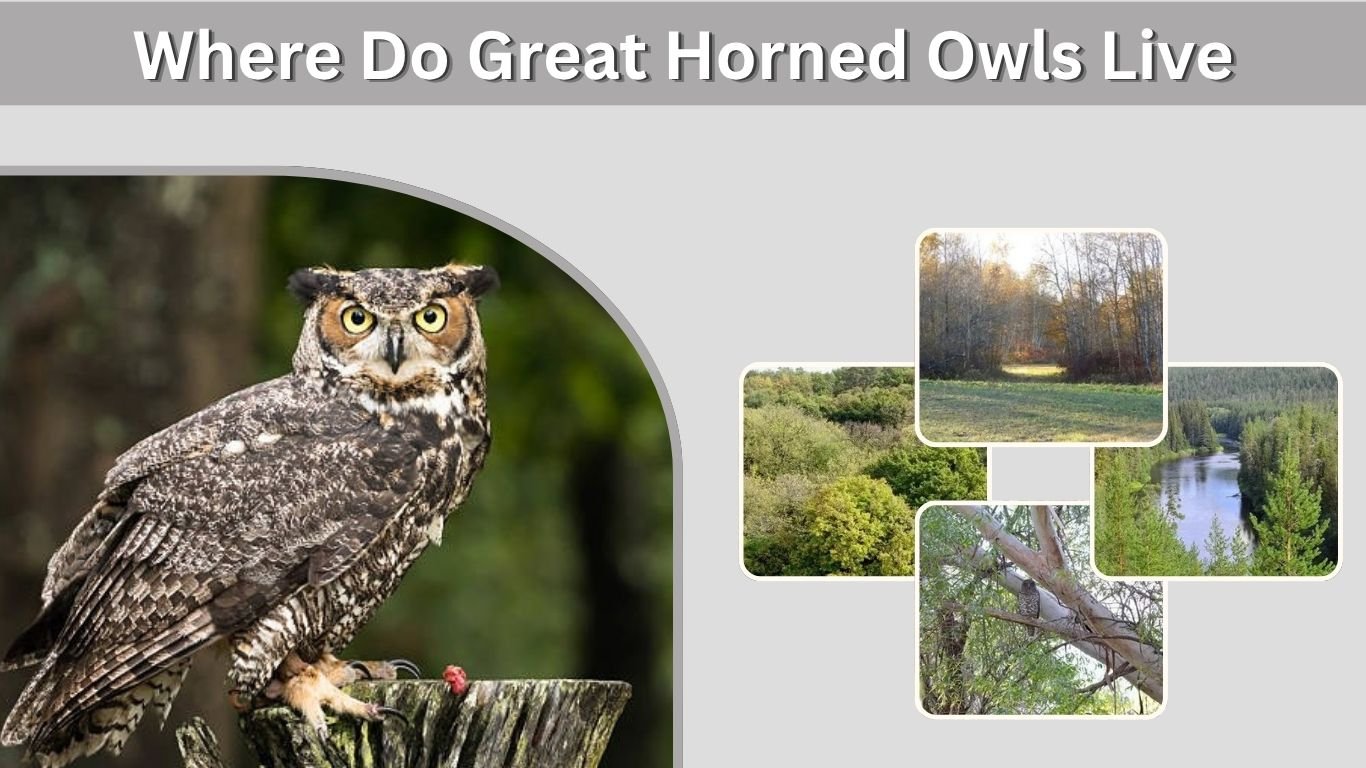
In Florida, Great Horned Owls are year-round residents and adapt to various habitats, including swamps, forests, coastal mangroves, suburban areas, and even golf courses. They are especially common in central and north Florida, but they also nest in southern regions, including the Everglades and Florida Panhandle.
Behavior and Sounds
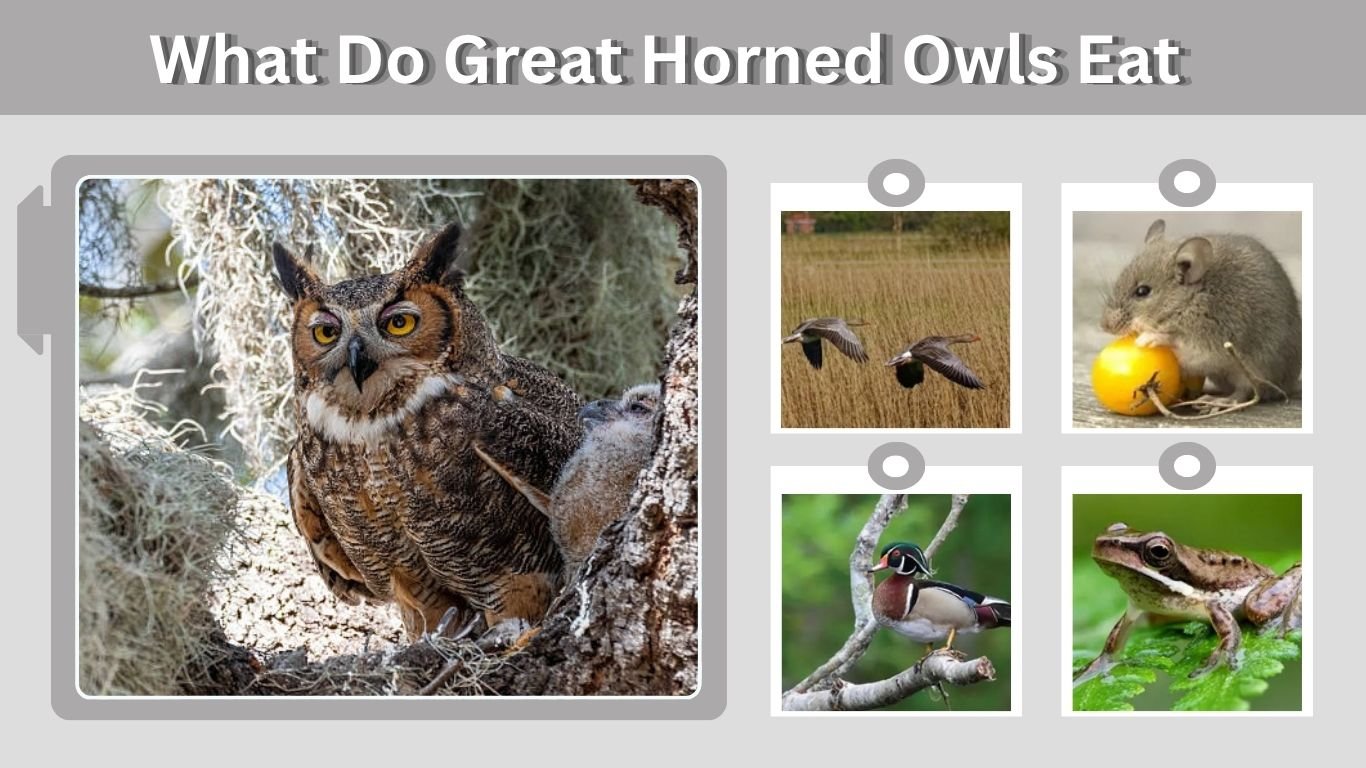
These owls are active at night and are known for their deep, booming hoots, which can carry over long distances. They are fierce predators, capable of hunting rabbits, snakes, skunks, and even other birds of prey. They often take over nests built by hawks or herons rather than building their own.
Identification
- Scientific Name: Bubo virginianus
- Size: 18–25 inches (46–64 cm)
- Wingspan: 3.3–4.8 feet (1–1.5 meters)
- Weight: 2–5.5 pounds (900–2500 grams)
- Color: Mottled brown and gray with a white throat patch
- Eyes: Large, yellow, forward-facing
- Ear Tufts: Prominent and upright
- Voice: Classic “hoo-h’HOO-hoo-hoo” pattern
- Nesting Sites: Abandoned hawk or heron nests, cliffs, tree cavities
- Diet: Mammals (rabbits, skunks), reptiles, birds
2. Barn Owl in Florida
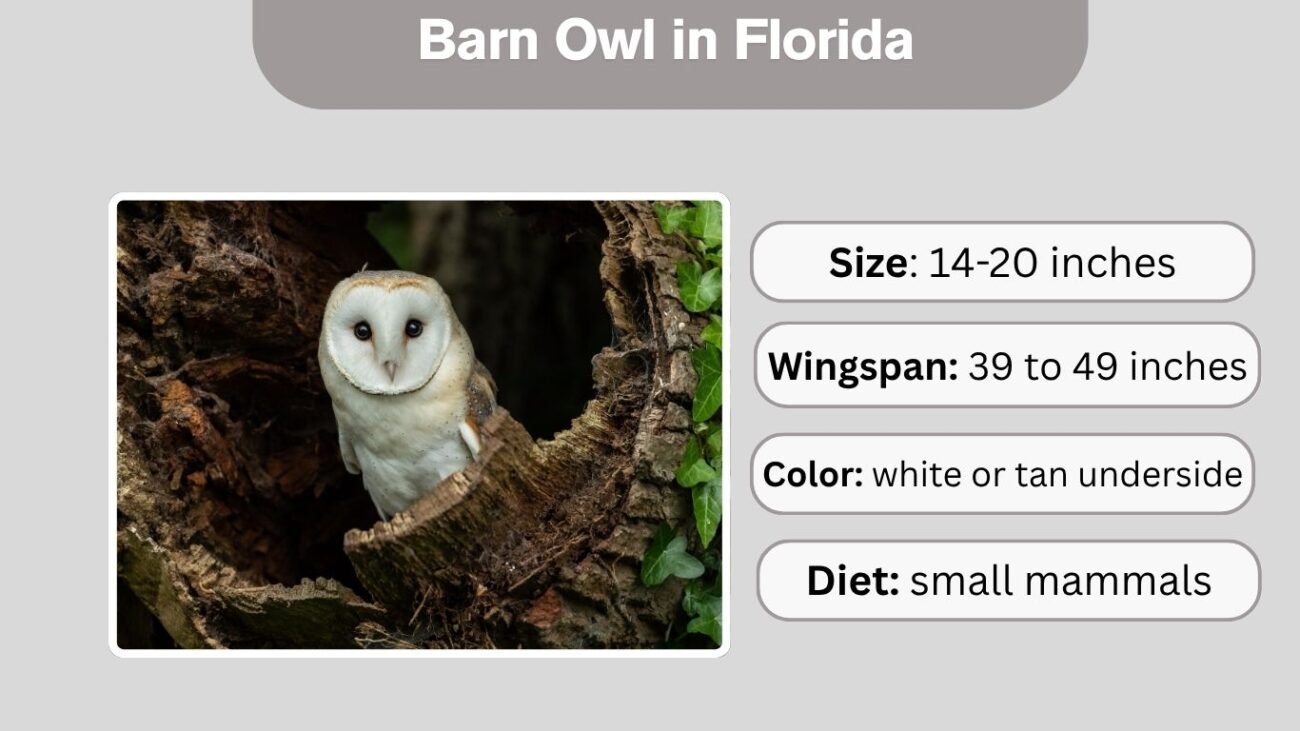
The Barn Owl is one of the most recognizable owls in Florida, thanks to its ghostly white face and silent, gliding flight. It is widespread across the state and plays an essential role in controlling rodent populations, especially in rural and agricultural areas.
Habitat and Range in Florida
Barn Owls are found throughout North, Central, and South Florida, including Tampa, Jacksonville, Ocala, and rural areas around Cape Coral. They prefer open habitats such as pastures, grasslands, marshes, citrus groves, and farmland, and often roost in barns, old buildings, palm trees, or nest boxes.
Behavior and Sounds
Unlike most owls, Barn Owls do not hoot. Instead, they emit long, eerie screeches and hisses, especially when disturbed. They are nocturnal and have exceptional hearing, allowing them to hunt rodents in complete darkness.
Identification
- Scientific Name: Tyto alba
- Size: 12.5 to 16 inches (32–40 cm)
- Wingspan: 39 to 49 inches (100–125 cm)
- Weight: 14–24 ounces (400–700 grams)
- Color: Pale heart-shaped face, white underparts, golden-gray back
- Eyes: Dark, set in a stark white facial disk
- Voice: Harsh screeches and raspy hissing
- Nesting Sites: Barns, tree cavities, nest boxes, old buildings
- Diet: Primarily rodents (mice, rats, voles)
3. Barred Owl in Florida
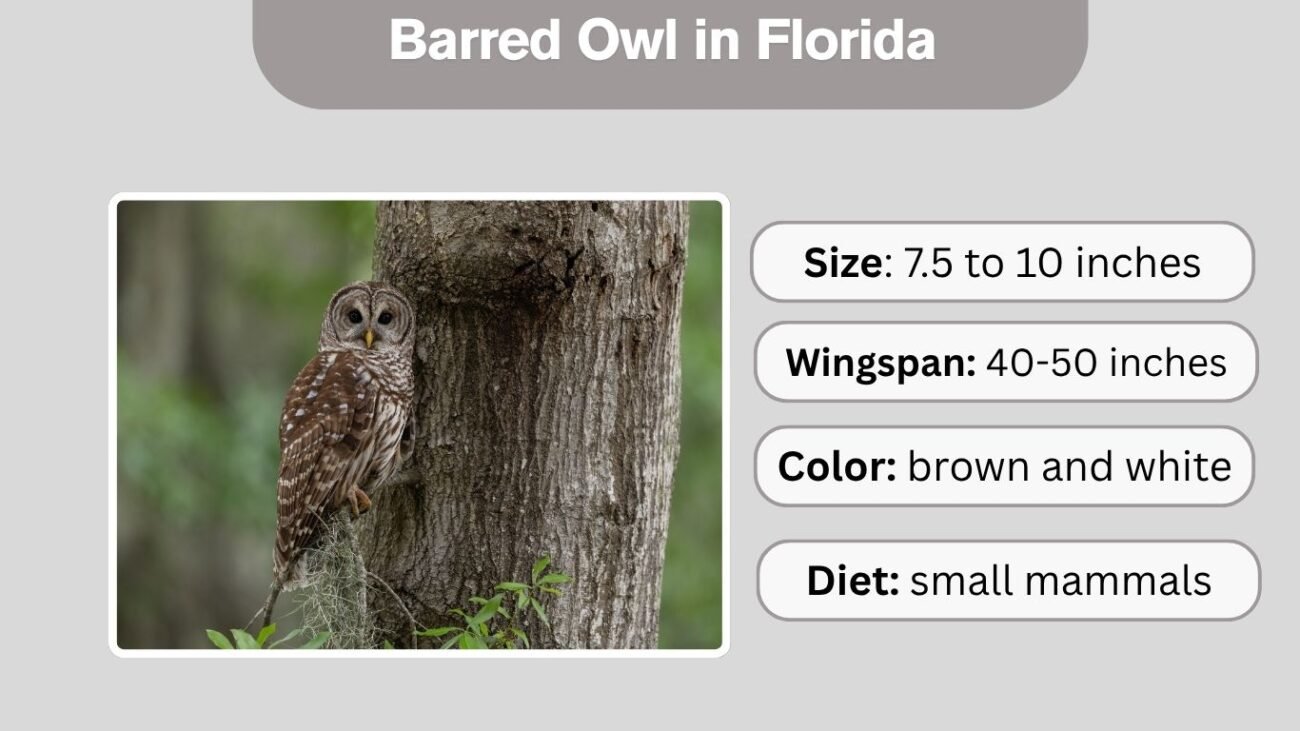
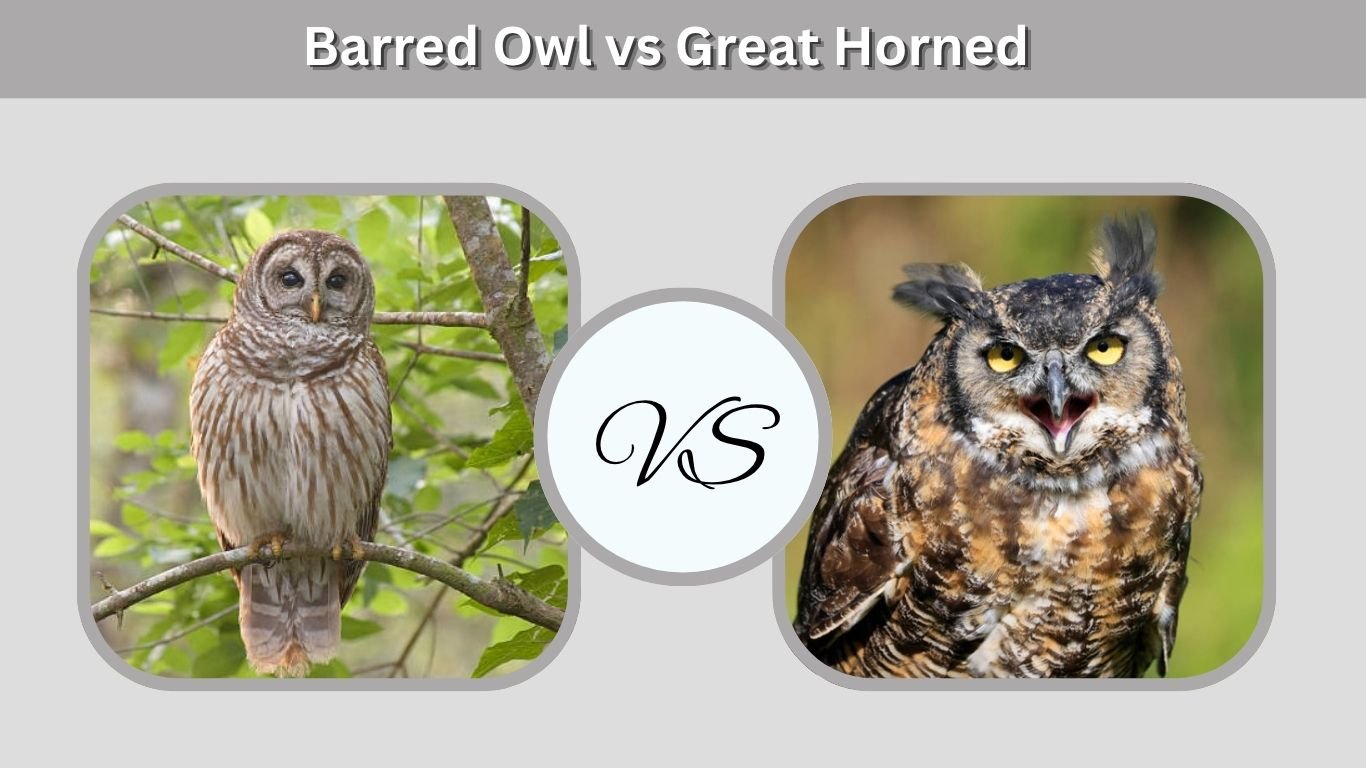
The Barred Owl is a large, round-headed owl native to Florida’s forests, swamps, and riverine woodlands. Known for its haunting call, “Who cooks for you? Who cooks for you all?” the Barred Owl is both common and easily heard throughout much of the state.
Habitat and Range in Florida
Barred Owls inhabit moist woodlands, swamps, cypress groves, and suburban forests across north, central, and south Florida. They are particularly common in areas like the Florida Panhandle, Ocala National Forest, and wetlands in South Florida.
Behavior and Sounds
These owls are mostly nocturnal but can be active during cloudy days or in shady swamps. They hunt from perches and feed on small mammals, amphibians, and reptiles. Their vocalizations are loud, rhythmic, and often involve duets between mates.
Identification
- Scientific Name: Strix varia
- Size: 16–25 inches (40–63 cm)
- Wingspan: 38–49 inches (96–125 cm)
- Weight: 1.1 to 2.5 lbs (500–1130 grams)
- Color: Mottled brown and white with horizontal chest bars and vertical belly streaks
- Eyes: Large and dark brown
- Voice: Classic “Who cooks for you? Who cooks for you all?” hoot
- Nesting Sites: Tree cavities and old hawk nests
- Diet: Rodents, frogs, snakes, insects
4. Burrowing Owl in Florida
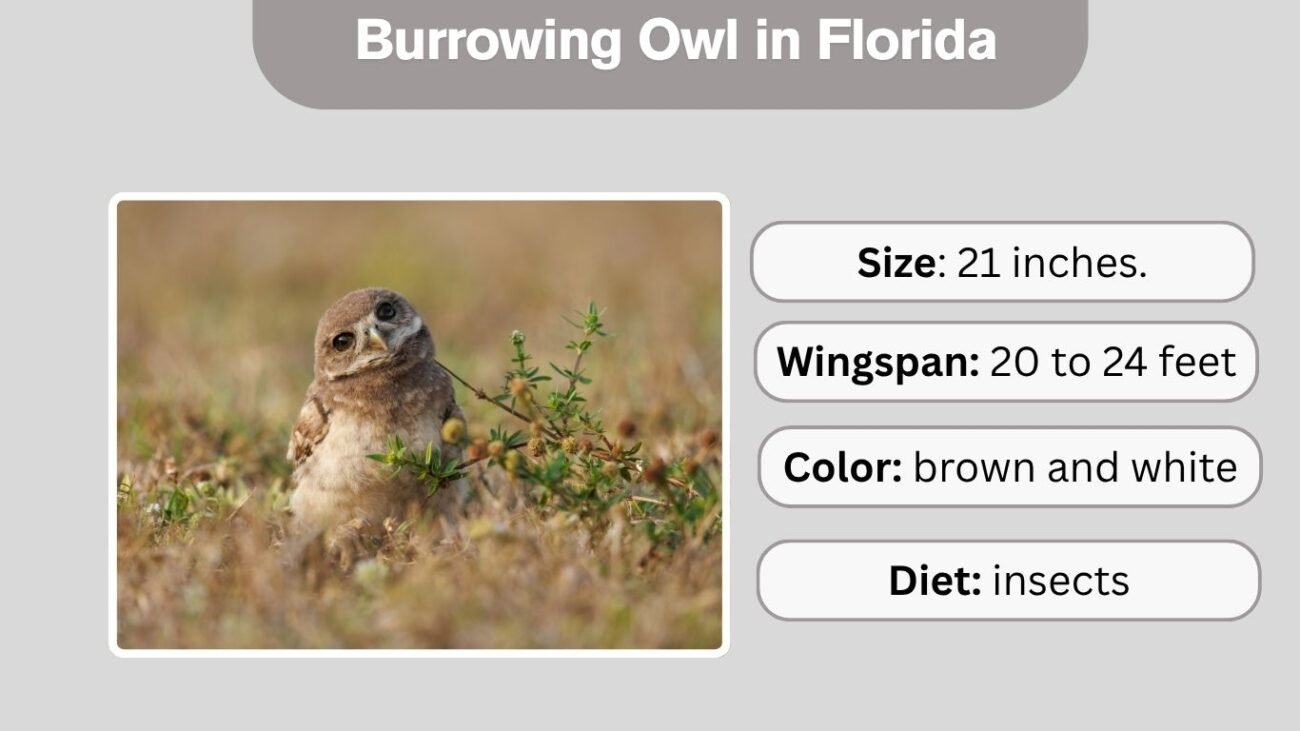
The Burrowing Owl is a small, long-legged owl that lives in open, grassy habitats across Florida. Unlike most owls, it is active during the day and nests underground—often in burrows dug by other animals or even dug by themselves.
Habitat and Range in Florida
Florida is home to a distinct subspecies: the Florida Burrowing Owl (Athene cunicularia floridana), found mainly in South Florida, especially in Cape Coral, Marco Island, and parts of central and southeast Florida. They prefer open fields, golf courses, airport grasslands, and vacant lots.
Behavior and Sounds
Burrowing Owls are diurnal and often seen standing by their burrow entrances. They bob their heads when alarmed and emit high-pitched chirps, coos, and rattling calls. During nesting season, they may mimic the sound of a rattlesnake to scare off intruders.
Identification
- Scientific Name: Athene cunicularia floridana
- Size: 7.5 to 10 inches (19–25 cm)
- Wingspan: 21 to 24 inches (53–61 cm)
- Weight: 4.5 to 9 oz (127–255 grams)
- Color: Brown with white spots and white eyebrows
- Eyes: Bright yellow
- Voice: Soft coos, clucks, hisses, and rattles
- Nesting Sites: Underground burrows, often reused or dug in sandy soil
- Diet: Insects, lizards, small rodents
5. Eastern Screech-Owl in Florida
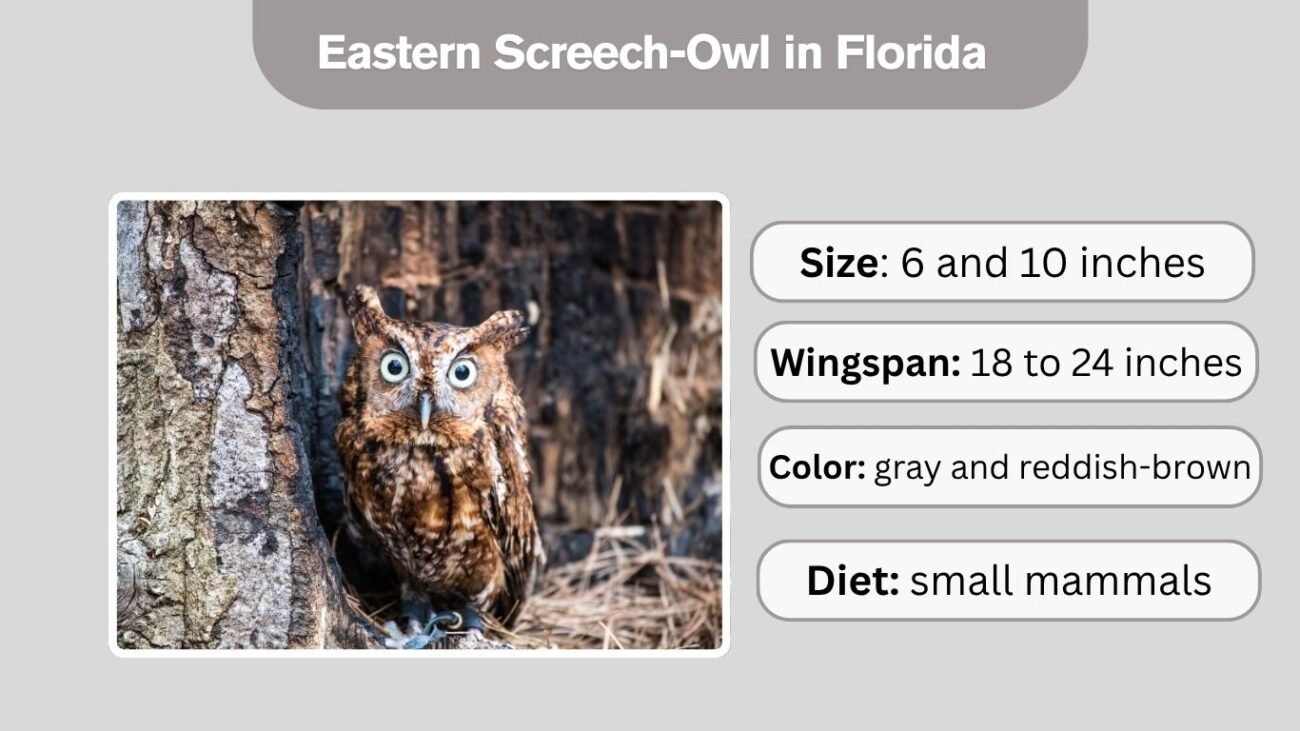
The Eastern Screech-Owl is a small, camouflaged owl that blends into tree bark, making it difficult to spot. It is common across much of Florida, especially in forests, suburban yards, and tree-lined streets.
Habitat and Range in Florida
These owls are found throughout North, Central, and South Florida, including the Florida Panhandle, Tampa Bay, Orlando, and residential areas with mature trees. They often nest in cavities, including natural tree hollows and nest boxes.
Behavior and Sounds
Despite their name, Eastern Screech-Owls don’t screech. Their vocalizations include soft trills and eerie descending whinnies, especially during the breeding season. They’re nocturnal and feed on insects, lizards, small birds, and mice.
Identification
- Scientific Name: Megascops asio
- Size: 6.3 to 9.8 inches (16–25 cm)
- Wingspan: 18.9 to 24 inches (48–61 cm)
- Weight: 4.3 to 8.6 oz (121–244 grams)
- Color: Varies—gray, reddish-brown (rufous), or brown with heavy streaks
- Eyes: Yellow
- Voice: Trills and horse-like whinnies, not screeches
- Nesting Sites: Tree cavities, nest boxes, buildings
6. Short-eared Owl in Florida
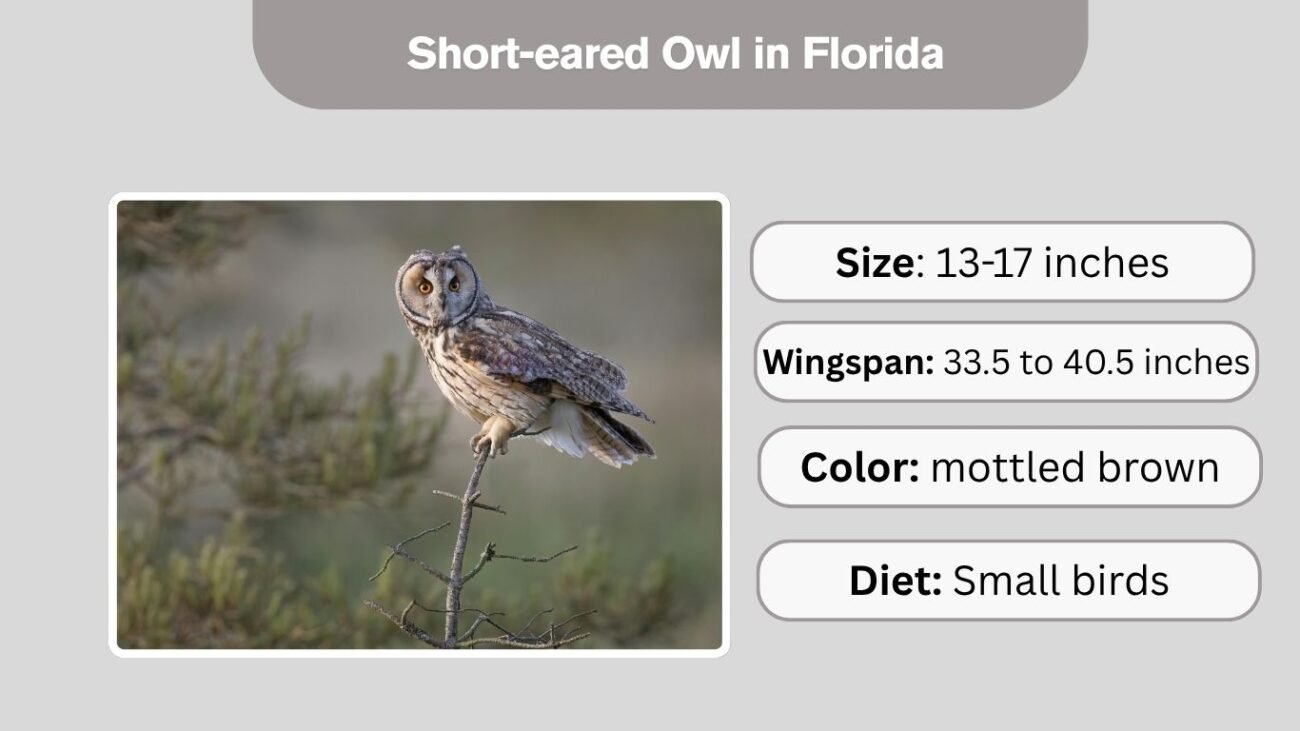
The Short-eared Owl is a medium-sized, ground-nesting owl often seen flying low over open fields and marshes. Though not a common resident, it visits Florida during winter, especially in open, grassy habitats across the state.
Habitat and Range in Florida
Short-eared Owls winter in North Florida, Central Florida, and parts of the Florida Panhandle. Preferred locations include airfields, coastal prairies, wetlands, and wildlife management areas. These owls are migratory and not seen year-round.
Behavior and Sounds
This species is crepuscular—active during dawn and dusk—and has a graceful, buoyant flight. Their calls are rare in Florida but may include a raspy bark or short “boo” note. They’re known to roost on the ground or in low grass cover during the day.
Identification
- Scientific Name: Asio flammeus
- Size: 13.4 to 17 inches (34–43 cm)
- Wingspan: 33.5 to 40.5 inches (85–103 cm)
- Weight: 7.3 to 17 oz (206–475 grams)
- Color: Light brown with dark streaks and spots
- Eyes: Yellow with black facial outline
- Voice: Rarely vocal in Florida; low barks or rasps
- Nesting Sites: On the ground in tall grass (outside Florida)
- Diet: Voles, mice, small birds
7. Long-eared Owl in Florida
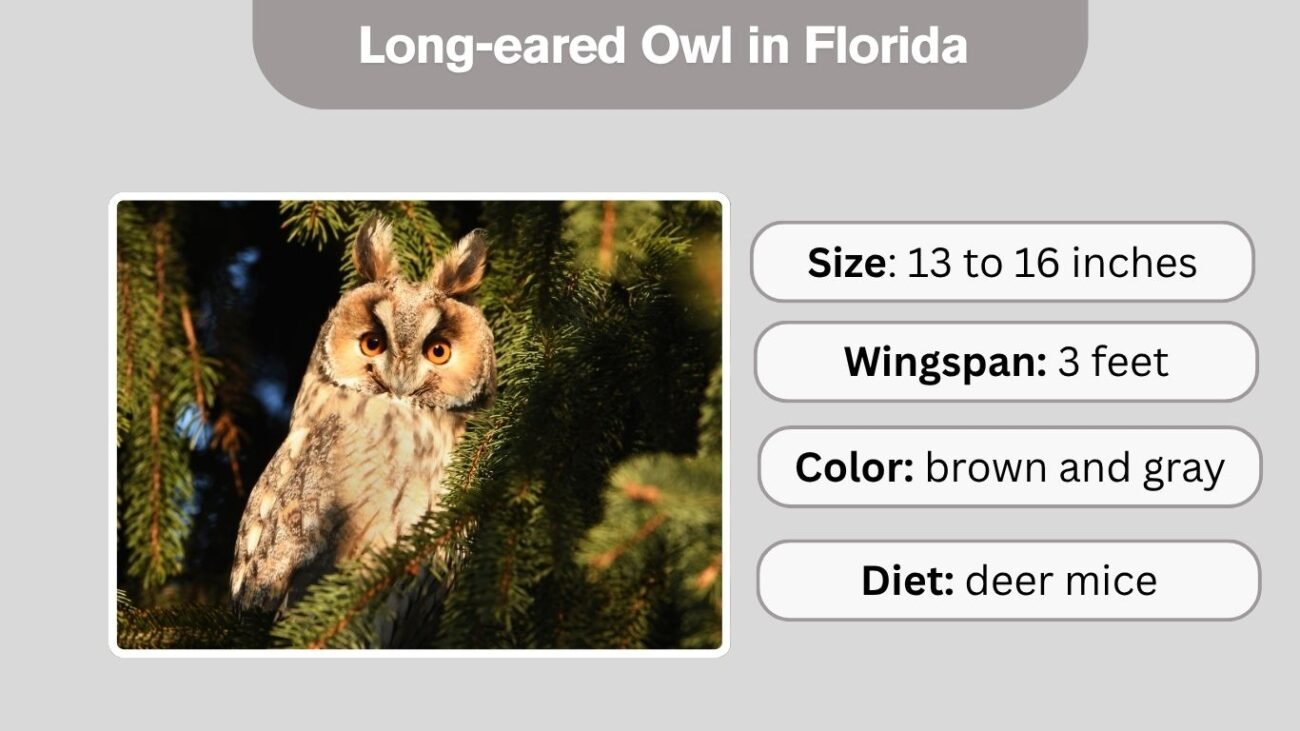
The Long-eared Owl is a secretive, slender owl with prominent ear tufts and striking orange eyes. It’s an uncommon winter visitor to Florida, primarily seen during migration and cold months in suitable woodlands and shrublands.
Habitat and Range in Florida
Long-eared Owls are rare in North and Central Florida and are more likely to be seen in dense forests near open fields, especially in conservation areas, wildlife refuges, and occasionally near airports. They may roost communally during winter in dense evergreen stands.
Behavior and Sounds
These owls are extremely secretive and roost silently during the day in thick foliage. At night, they hunt rodents and small mammals in open habitats. Their calls are rarely heard in Florida but include soft hoots, catlike mews, and high-pitched whistles.
Identification
- Scientific Name: Asio otus
- Size: 13.8 to 15.8 inches (35–40 cm)
- Wingspan: 35 to 39.4 inches (90–100 cm)
- Weight: 7.8 to 15.3 oz (220–435 grams)
- Color: Mottled brown with buff and black streaks
- Eyes: Orange
- Voice: Soft, low-pitched hoots, not often heard in Florida
- Nesting Sites: In other bird nests (outside Florida)
- Diet: Mice, voles, small birds
8. Snowy Owl in Florida
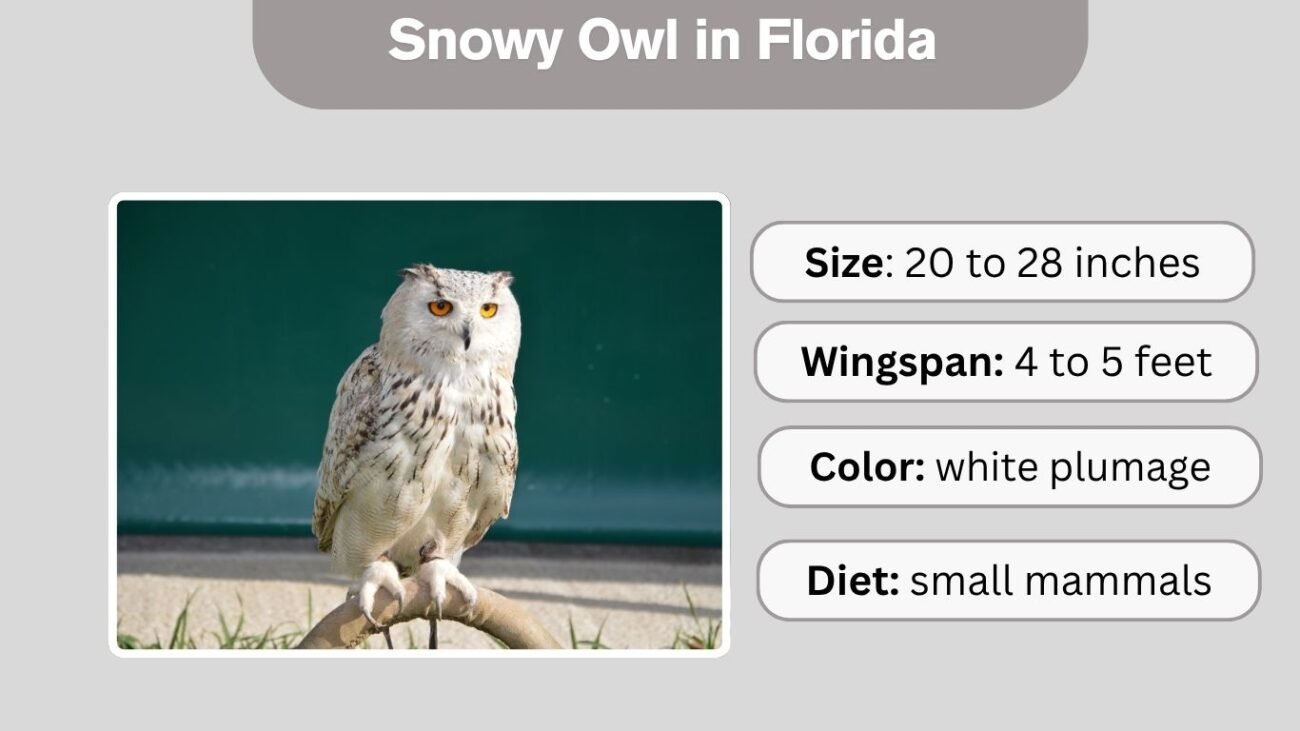
The Snowy Owl is a large, stunning white owl native to the Arctic. It is not a regular resident of Florida, but it has been spotted on very rare occasions during irruption years—when food shortages drive these owls much farther south than usual.
Habitat and Range in Florida
In the rare years Snowy Owls reach Florida, sightings have occurred in open coastal areas, airports, and barrier islands, especially in North Florida and parts of the Panhandle. These visits are sporadic and unpredictable.
Behavior and Sounds
Snowy Owls are mostly silent when wintering, though in their native Arctic, they may produce deep hoots and raspy barks. They are diurnal (active during the day) and prefer open, flat terrain like dunes, beaches, and airfields.
Identification
- Scientific Name: Bubo scandiacus
- Size: 20 to 28 inches (51–71 cm)
- Wingspan: 49 to 59 inches (125–150 cm)
- Weight: 3.5 to 6.6 lbs (1.6–3 kg)
- Color: White with variable black barring (males whiter than females)
- Eyes: Bright yellow
- Voice: Rarely vocal in Florida; deep hoots in Arctic breeding range
- Nesting Sites: Not applicable in Florida
9. Owl Legality in Florida (Can You Own an Owl?)

Many people wonder if they can own an owl in Florida, but the short answer is: not without a permit. Like most states, Florida protects owls under federal and state laws.
Can You Own an Owl in Florida?
Owls are protected by the Migratory Bird Treaty Act, meaning it is illegal to possess, buy, or sell a native owl without proper permits. In Florida, only licensed individuals—like falconers, wildlife rehabilitators, or educators—can legally possess owls, and only under specific circumstances.
Legal Exceptions
- Licensed falconers may keep specific owl species for falconry (e.g., Great Horned Owl)
- Wildlife rehabbers can care for injured owls under state and federal permits
- Educational permits allow some facilities to keep non-releasable owls for teaching purposes
Pet Ownership?
Owls are not allowed as pets in Florida. Even exotic or non-native owl species require federal approval and state inspection. They are not domesticated and require specialized care, diet, and housing.
Identification
- Legal Status: Protected under federal and state laws
- Permit Requirement: Yes – for falconry, rehab, or education
- Public Pet Ownership: Illegal
- Fines: Severe penalties for unlicensed possession