California is home to a fascinating variety of owl species, from the widespread Great Horned Owl to the elusive Flammulated Owl. Whether you’re birdwatching in Northern forests or deserts of the south, owls can be seen (and heard) in nearly every region. In this guide, you’ll discover 16 types of owls found in California, complete with identification tips, habitat details, and answers about owl legality and pet ownership laws.
1. Great Horned Owl in California
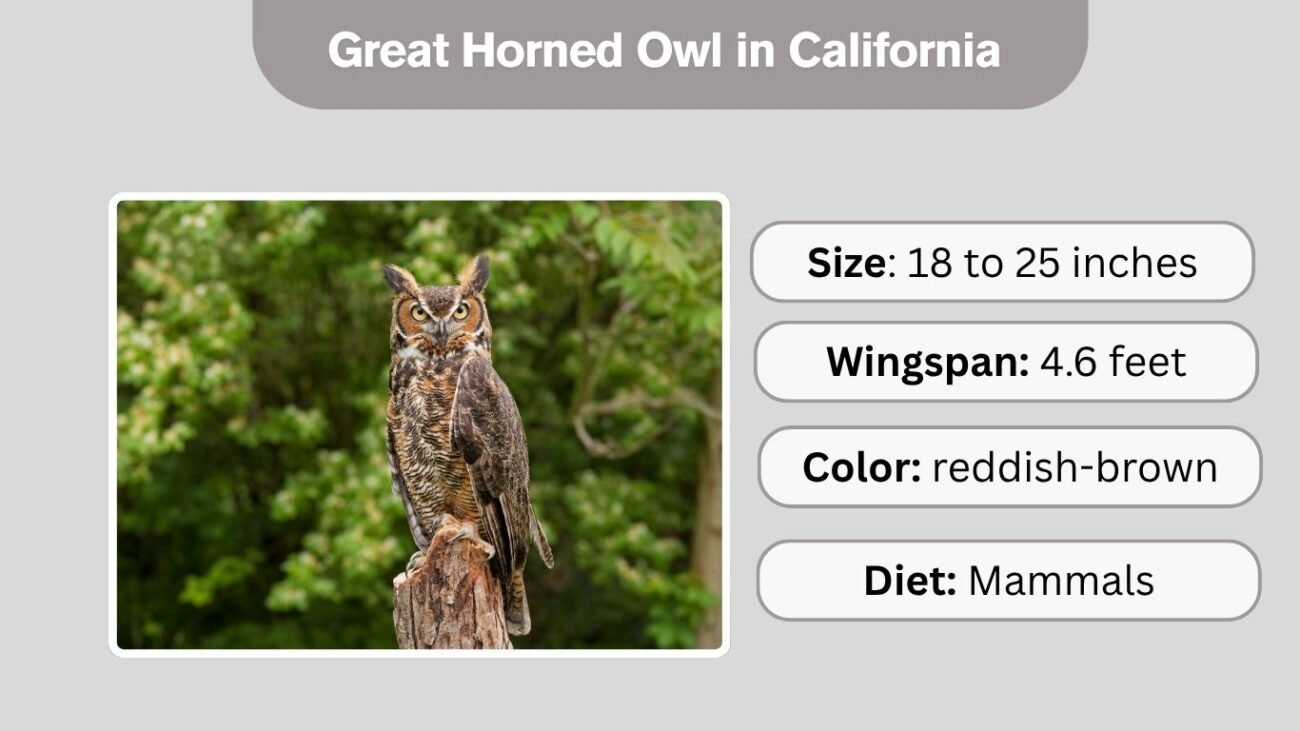
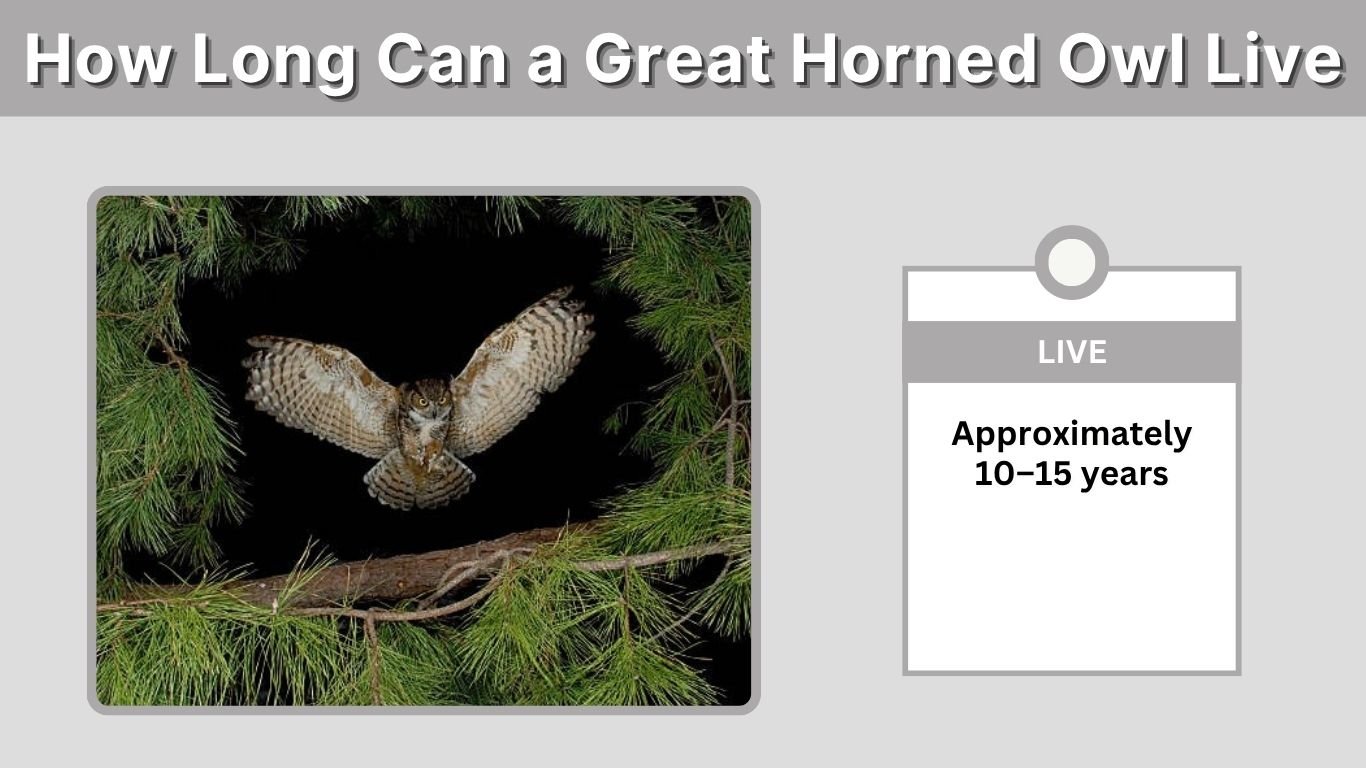
The Great Horned Owl is one of the most widespread and powerful owls in California, found from dense forests to city parks. Known for its ear tufts and fierce yellow eyes, this nocturnal hunter is active across northern, central, and southern California, including areas like Los Angeles, San Diego, and the Bay Area.
Habitat and Range in California
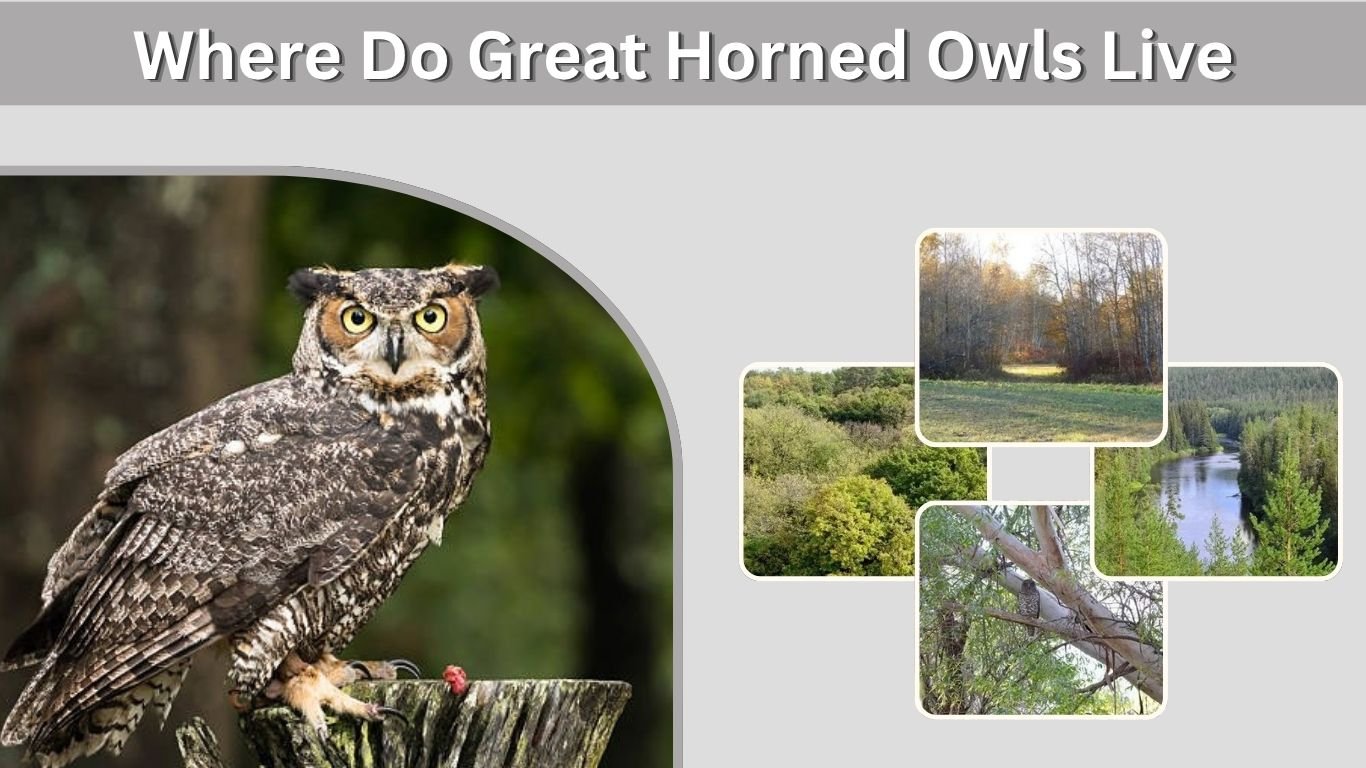
Great Horned Owls thrive throughout the entire state—from the forests of Northern California, through Los Angeles and San Diego, to open desert landscapes. They nest in cliffs, tree cavities, and even abandoned hawk nests. You can find them in urban parks, agricultural areas, mountains, and suburban neighborhoods.
Behavior and Sounds
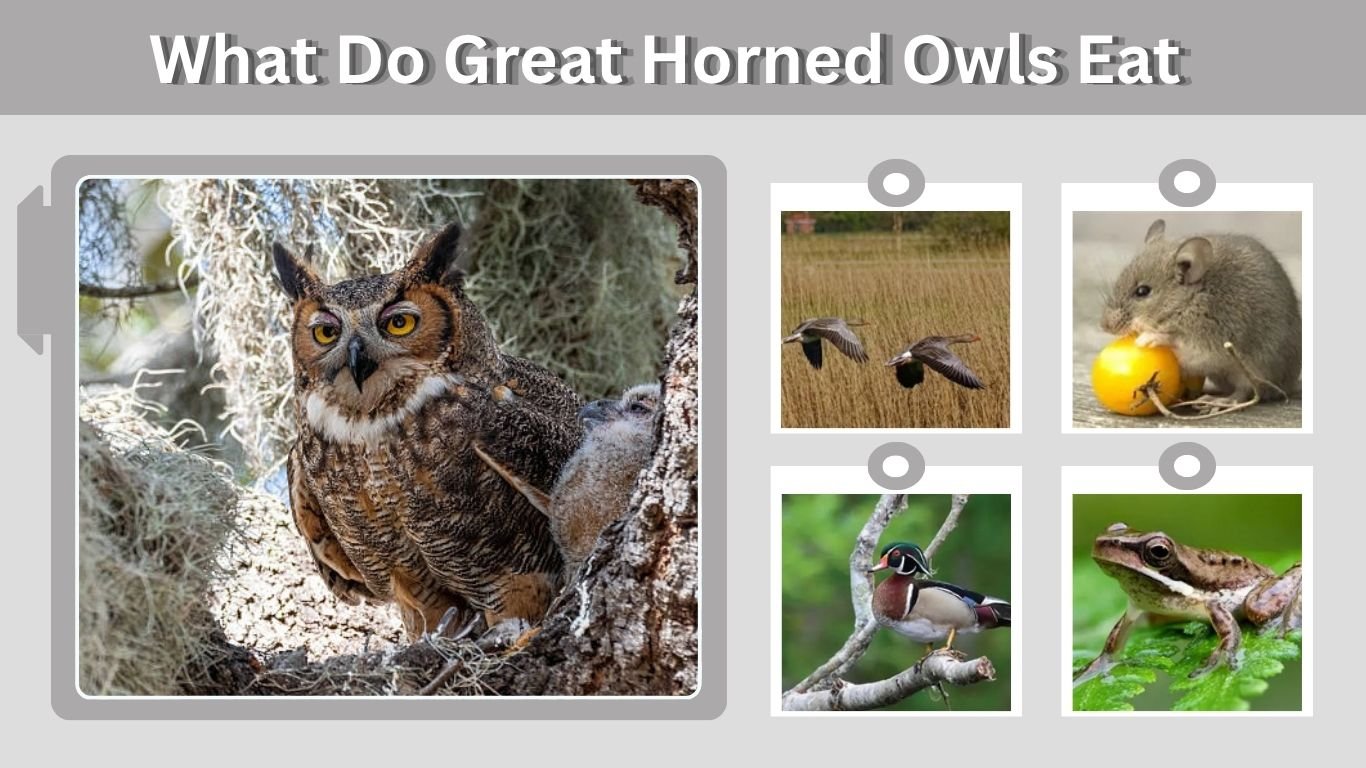
They are mostly active at night and well known for their deep, resonant hoots. Their call—often described as a classic “hoo-h’HOO-hoo-hoo”—can be heard in Southern California, Northern California, and even in city areas like San Diego County. These owls are stealthy hunters, feeding on rabbits, rodents, snakes, and even skunks.
Identification
- Scientific Name: Bubo virginianus
- Size: 18–25 inches (46–64 cm)
- Wingspan: 3.3–4.8 feet (1–1.5 meters)
- Weight: 2–5.5 pounds (900–2500 grams)
- Color: Mottled brown and gray body with white throat patch
- Eyes: Large, yellow, forward-facing
- Ear Tufts: Prominent and upright
- Voice: Deep hoots, usually in a pattern of 5–6 notes
- Activity: Nocturnal, sometimes active at dusk
- Nesting Sites: Trees, cliffs, buildings, and abandoned nests
- Diet: Rodents, hares, skunks, birds, reptiles
2. Barn Owl in California
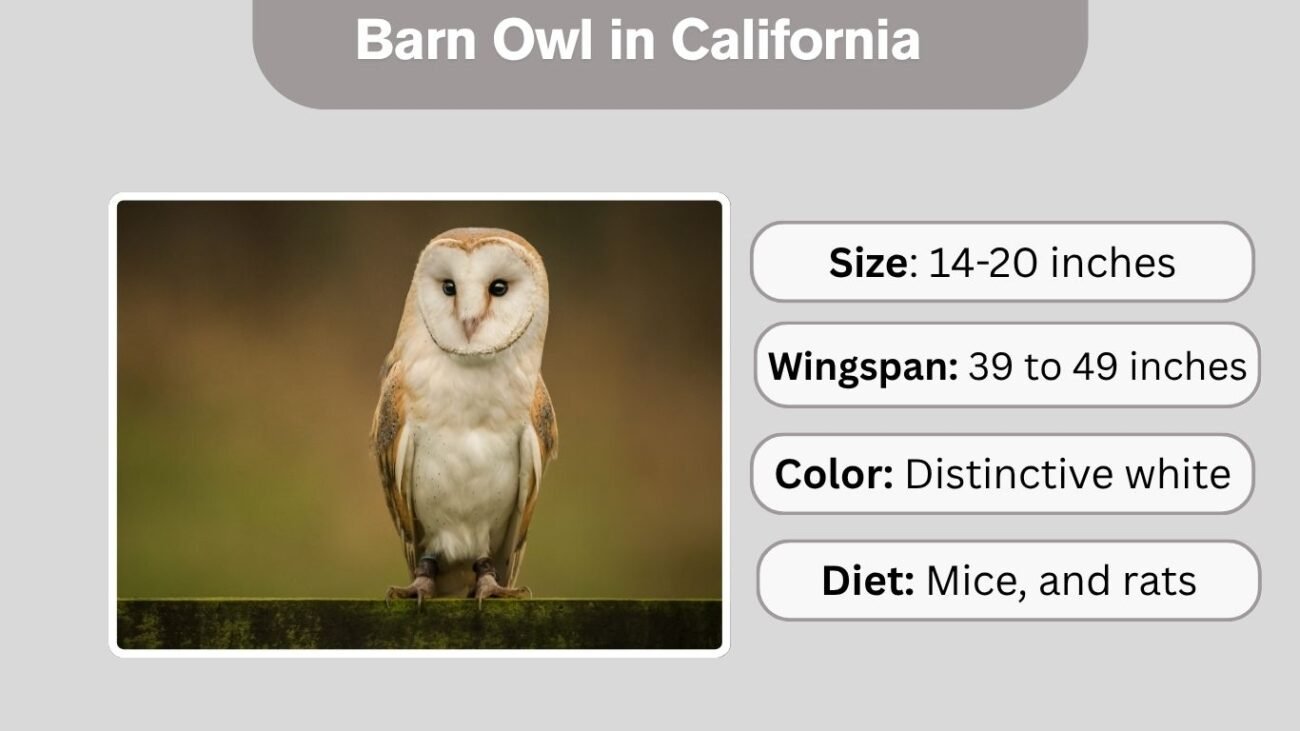
The Barn Owl is one of the most widespread owl species in California and around the world. It’s easily recognized by its pale, heart-shaped face and ghostly white body. Found across rural, suburban, and agricultural landscapes, it often nests in barns, tree hollows, and nest boxes.
Habitat and Range in California
Barn Owls are found throughout Southern California, Northern California, and Central California, including San Diego County, Los Angeles, and the Bay Area. They prefer open spaces like farmlands, grasslands, vineyards, and even golf courses where rodents are abundant.
Behavior and Sounds
Unlike most owls, Barn Owls do not hoot—they emit a long, harsh screech, which is quite eerie at night. These owls are expert rodent hunters, using their acute hearing to locate prey even in total darkness.
Identification
- Scientific Name: Tyto alba
- Size: 12.5 to 16 inches (32–40 cm)
- Wingspan: 39 to 49 inches (100–125 cm)
- Weight: 14–24 ounces (400–700 grams)
- Color: Pale white face and belly; golden to gray back
- Face: Distinct heart-shaped facial disk
- Eyes: Dark, set in a white face
- Voice: Screeching, hissing, and clicking—not hooting
- Nesting Sites: Barns, boxes, tree hollows, rock ledges
- Diet: Primarily rodents—mice, rats, voles
3. Burrowing Owl in California
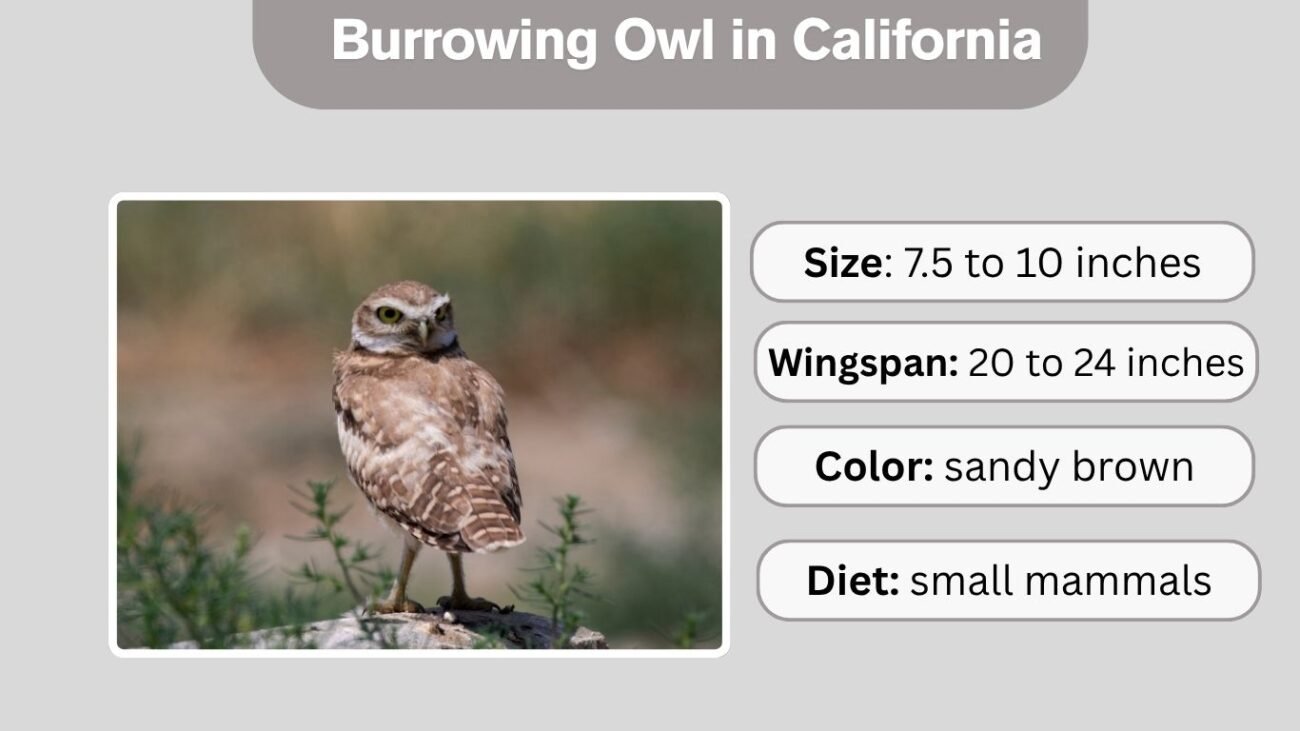
The Burrowing Owl is a small, long-legged owl that lives in open areas with sparse vegetation, such as grasslands, deserts, and agricultural fields. Unlike most owls, it’s active during the day and nests in underground burrows, often those dug by ground squirrels or prairie dogs.
Habitat and Range in California
Burrowing Owls are found in both Northern and Southern California, including the Imperial Valley, Central Valley, San Diego, and Bay Area. Their habitat is shrinking due to development, but they still survive in protected reserves, farmlands, and open grasslands.
Behavior and Sounds
These owls are semi-diurnal and often seen standing upright near their burrow during the day. Their calls include a soft cooing and a warning chattering when alarmed. They often bob their heads and may mimic rattlesnake hissing when threatened.
Identification
- Scientific Name: Athene cunicularia
- Size: 7.5 to 10 inches (19–25 cm)
- Wingspan: 21 to 24 inches (53–61 cm)
- Weight: 4.5 to 9 ounces (127–255 grams)
- Color: Brown with white spots; white eyebrows and chin
- Eyes: Bright yellow
- Voice: Soft cooing, clucks, and raspy chirps
- Nesting Sites: Underground burrows
- Diet: Insects, rodents, small reptiles
4. Spotted Owl in California
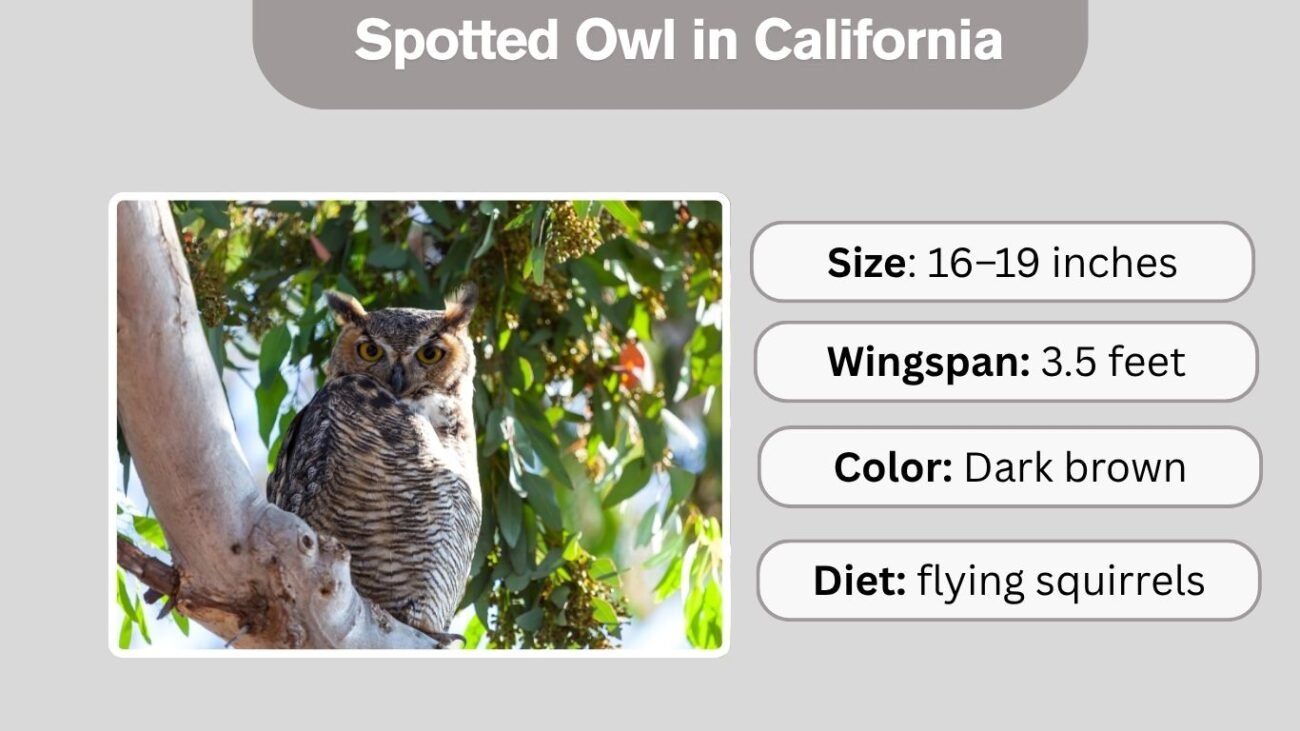
The Spotted Owl is a medium-sized forest owl that prefers old-growth woodlands and dense conifer forests. California is home to two subspecies: the California Spotted Owl and the Northern Spotted Owl—both of which face conservation concern due to habitat loss and competition from the invasive Barred Owl.
Habitat and Range in California
- The California Spotted Owl (Strix occidentalis occidentalis) is found in the Sierra Nevada, southern coastal ranges, and parts of Southern California, including Los Padres National Forest.
- The Northern Spotted Owl (Strix occidentalis caurina) is restricted to Northern California, especially in old-growth redwood and Douglas-fir forests.
Behavior and Sounds
Spotted Owls are quiet and elusive. Their hooting call is a four-note pattern often repeated in the dark forest canopy. They are mostly nocturnal and roost during the day in shaded foliage.
Identification
- Scientific Name: Strix occidentalis
- Size: 17–19 inches (43–48 cm)
- Wingspan: 39–45 inches (99–114 cm)
- Weight: 1.1–1.6 lbs (500–725 grams)
- Color: Dark brown with white spots on head, back, and chest
- Eyes: Dark brown, set in a round face
- Voice: Soft, deep hoots in a rhythmic 4-note pattern
- Nesting Sites: Tree cavities, broken treetops, old nests
- Diet: Woodrats, flying squirrels, small mammals
5. Western Screech-Owl in California
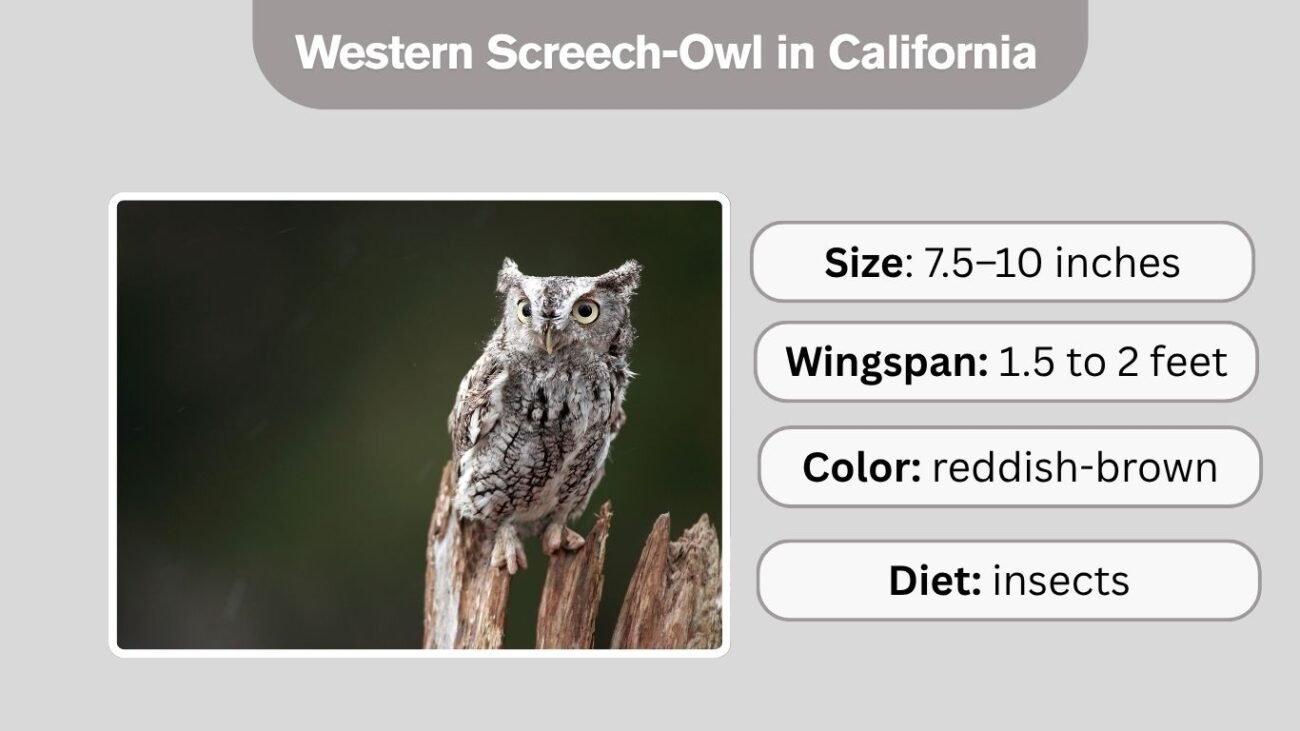
The Western Screech-Owl is a small but tough owl that lives in a wide range of habitats throughout California. Despite its name, it doesn’t screech—its call is a series of soft trills and toots.
Habitat and Range in California
Western Screech-Owls are highly adaptable and found in Northern, Central, and Southern California, including urban areas like Los Angeles, San Diego, Riverside, and even the Bay Area. They nest in tree cavities, nest boxes, and sometimes holes in buildings.
Behavior and Sounds
These owls are nocturnal and rely heavily on camouflage to avoid detection. Their call is a rhythmic, descending trill often mistaken for an insect or frog. They prey on insects, small birds, and rodents.
Identification
- Scientific Name: Megascops kennicottii
- Size: 7.5–10 inches (19–25 cm)
- Wingspan: 21–24 inches (53–61 cm)
- Weight: 4.3–8.6 oz (121–244 grams)
- Color: Gray or reddish-brown with streaked underside
- Eyes: Yellow
- Voice: Rapid trilling or bouncing-ball pattern of notes
- Nesting Sites: Tree cavities, nest boxes, crevices
- Diet: Insects, small birds, rodents
6. Northern Saw-whet Owl in California
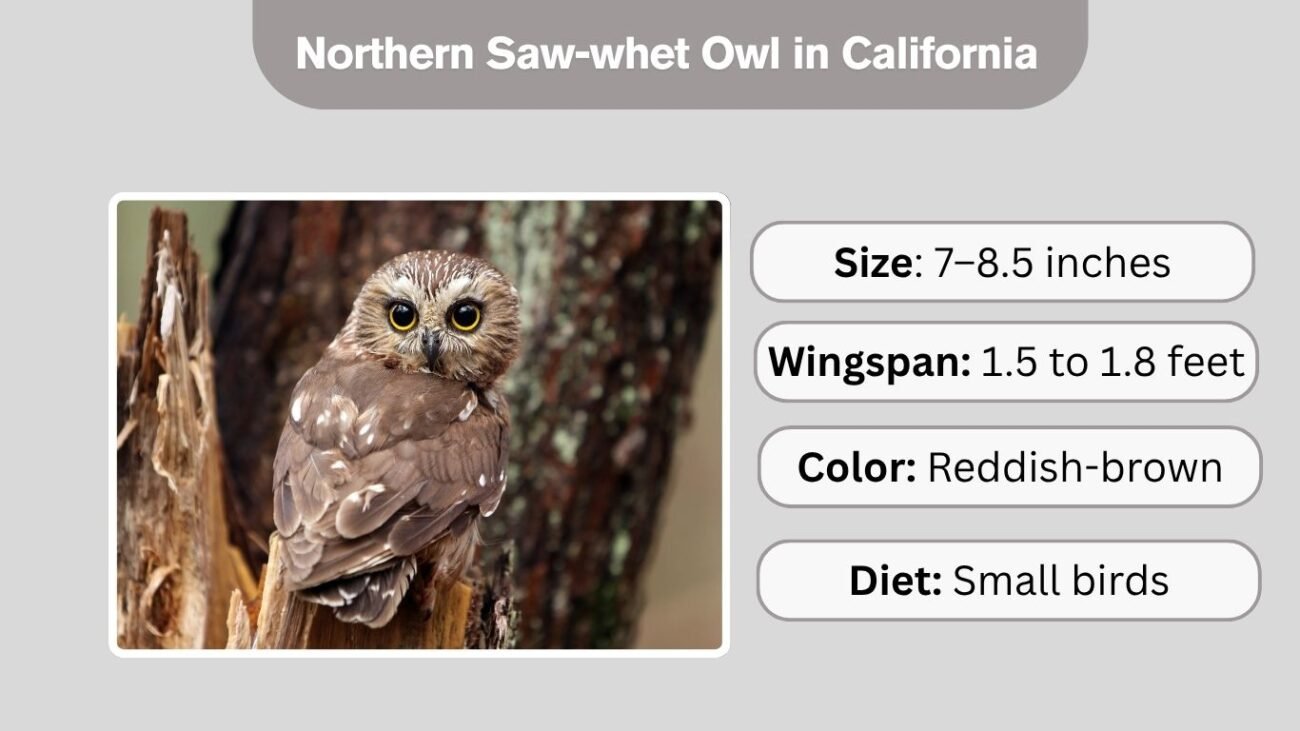
The Northern Saw-whet Owl is a tiny, elusive owl found in the forests of Northern and Central California, with rare sightings in the southern part of the state. Its size and secretive behavior make it one of the most overlooked owls in California.
Habitat and Range in California
This owl prefers dense coniferous and mixed forests, particularly at higher elevations in the Sierra Nevada, Cascade Range, and coastal redwoods of Northern California. It’s occasionally observed during migration or winter in more southern regions.
Behavior and Sounds
It gets its name from a repetitive, high-pitched whistle that sounds like a “saw being sharpened.” This call is often the only clue to its presence, as it’s shy and usually roosts in thick foliage during the day.
Identification
- Scientific Name: Aegolius acadicus
- Size: 7 to 8.3 inches (18–21 cm)
- Wingspan: 16.5 to 18.9 inches (42–48 cm)
- Weight: 2.3 to 5.3 oz (65–151 grams)
- Color: Brown upperparts with white spots; pale streaked chest
- Eyes: Large and yellow
- Voice: High-pitched “too-too-too” repeated evenly
- Nesting Sites: Tree cavities, abandoned woodpecker holes
- Diet: Mice, voles, small birds, insects
7. Long-eared Owl in California
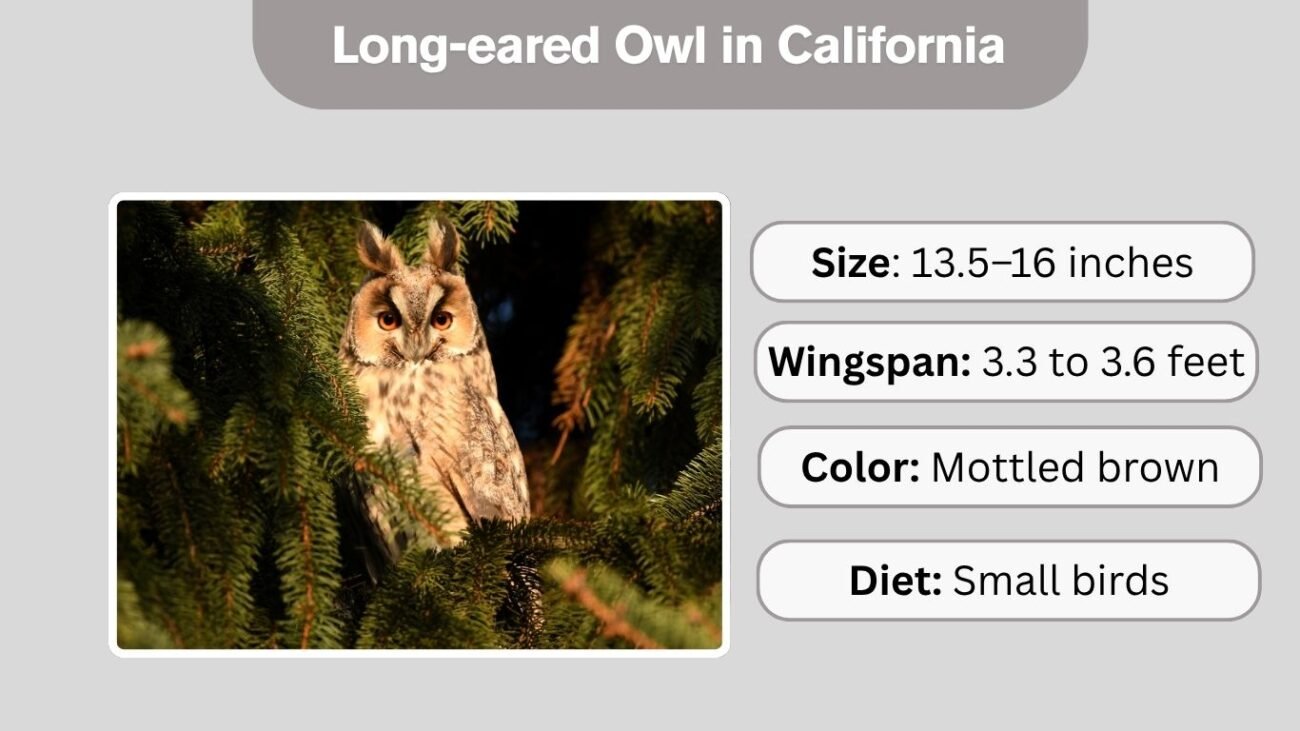
The Long-eared Owl is a medium-sized owl with tall ear tufts and piercing orange eyes. Though widespread, it’s secretive and hard to spot, often hiding in dense cover during the day.
Habitat and Range in California
This species inhabits riparian woodlands, dense shrubs, and forests, usually near open grasslands for hunting. It can be found across Northern, Central, and Southern California, including the Bay Area, Los Angeles County, and parts of San Diego County during winter months.
Behavior and Sounds
Long-eared Owls are nocturnal and form communal winter roosts in dense trees. Their vocalizations include deep hoots, squeals, and barking sounds, mostly during breeding season.
Identification
- Scientific Name: Asio otus
- Size: 13.8 to 15.8 inches (35–40 cm)
- Wingspan: 35 to 39.4 inches (90–100 cm)
- Weight: 7.8 to 15.3 oz (220–435 grams)
- Color: Mottled brown with buff and black streaking
- Eyes: Bright orange
- Voice: Soft low-pitched hoots, whistles, or cat-like mews
- Nesting Sites: Abandoned crow or magpie nests
- Diet: Mainly small mammals like voles and mice
8. Short-eared Owl in California
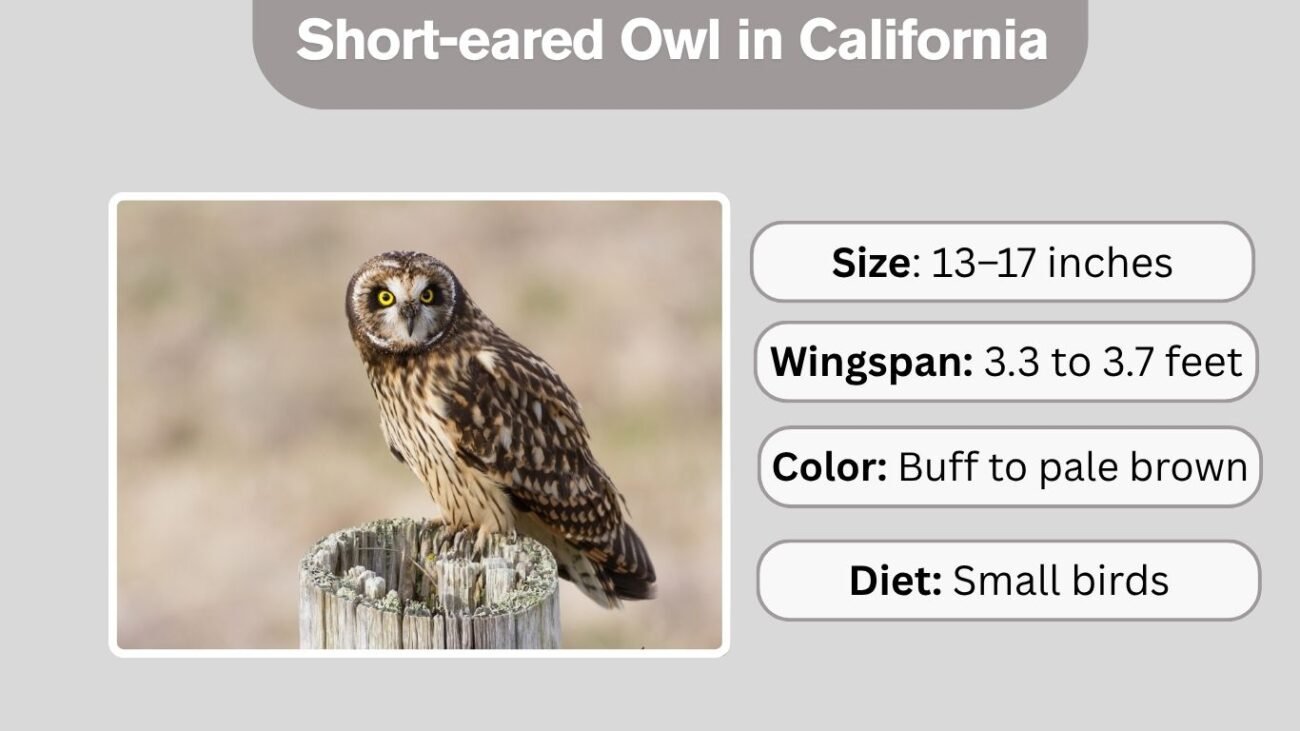
The Short-eared Owl is an open-country owl commonly found in grasslands, marshes, and agricultural fields. It’s one of the few owls that are frequently active during the day, especially at dawn and dusk.
Habitat and Range in California
Short-eared Owls can be found across Northern and Central California, with scattered populations in Southern California during winter. They frequent marshes, grasslands, coastal dunes, and airports, including areas near San Francisco Bay, Sacramento Valley, and Imperial Valley.
Behavior and Sounds
They fly with smooth, buoyant wingbeats, often low to the ground while hunting. Their call is a raspy bark or short “boo” sound, but they are mostly silent outside the breeding season.
Identification
- Scientific Name: Asio flammeus
- Size: 13.4 to 17 inches (34–43 cm)
- Wingspan: 33.5 to 40.5 inches (85–103 cm)
- Weight: 7.3 to 17 oz (206–475 grams)
- Color: Light brown with streaked chest; short ear tufts often hidden
- Eyes: Yellow with dark facial outline
- Voice: Bark-like calls, claps, and raspy cries
- Nesting Sites: Ground nests in tall grass or reeds
- Diet: Voles, mice, and small birds
9. Barred Owl in California
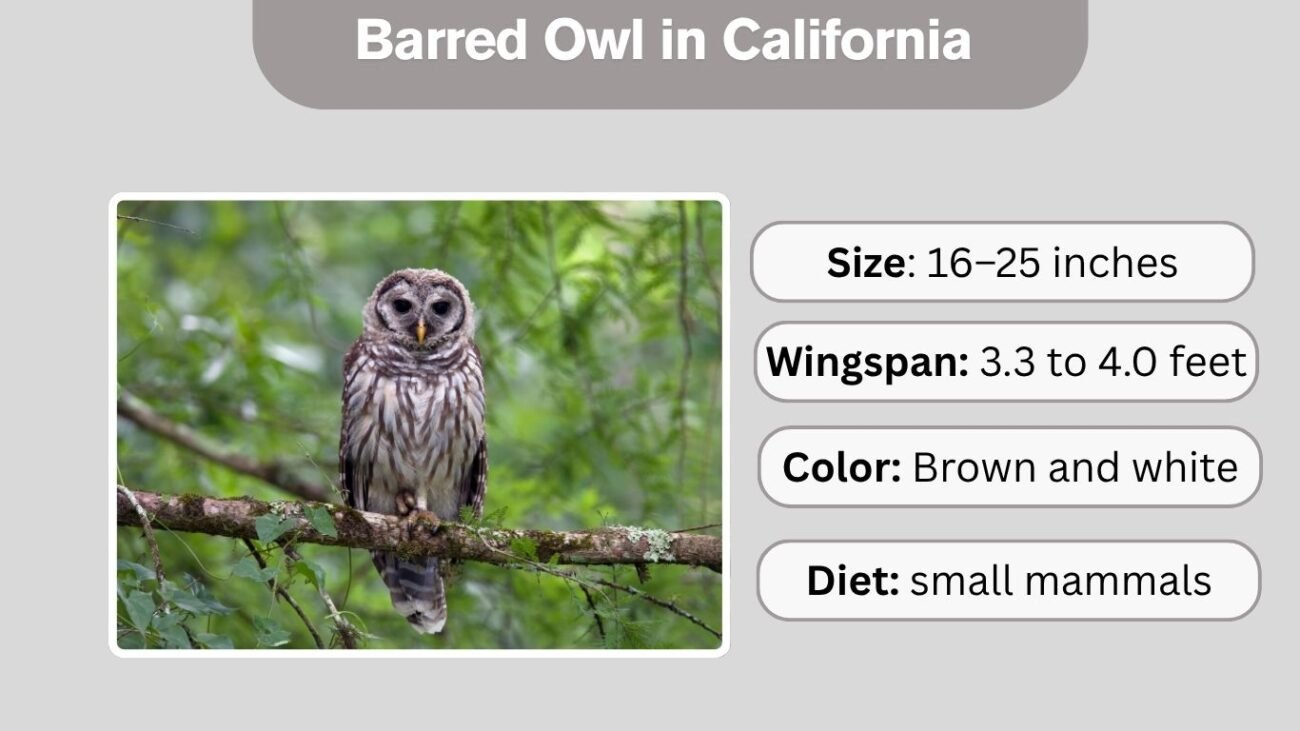
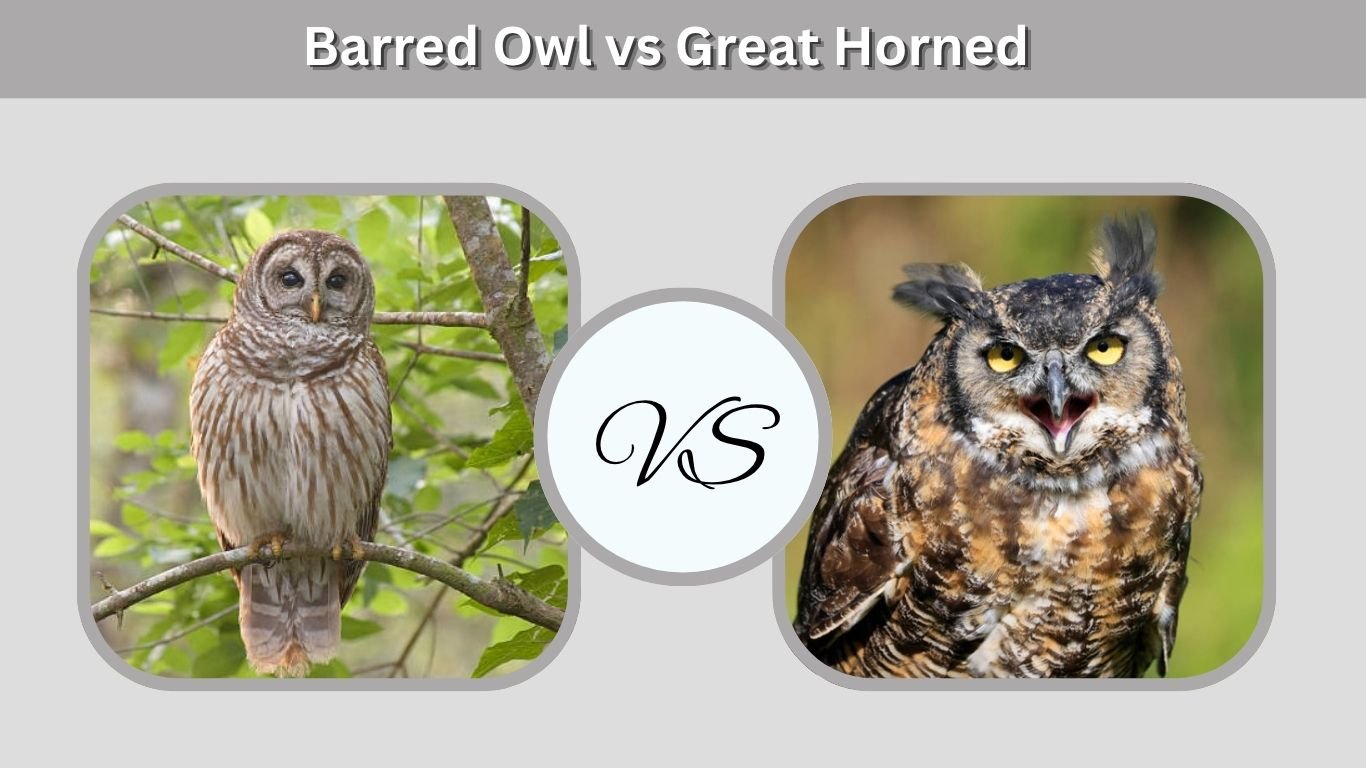
The Barred Owl is a large, round-headed forest owl originally native to the eastern U.S., but it has now expanded into Northern and Central California, where it competes with the native Spotted Owl.
Habitat and Range in California
Barred Owls are now found in Northern California, especially in redwood forests and river valleys, including parts of Humboldt, Del Norte, and Mendocino Counties. They prefer mature forests with large trees and access to water.
Behavior and Sounds
Barred Owls are known for their booming, memorable call: “Who cooks for you? Who cooks for you all?” They are mostly nocturnal and hunt from perches, feeding on a wide range of small animals.
Identification
- Scientific Name: Strix varia
- Size: 16 to 25 inches (40–63 cm)
- Wingspan: 38 to 49 inches (96–125 cm)
- Weight: 1.1 to 2.5 lbs (500–1130 grams)
- Color: Mottled brown and white with vertical streaking
- Eyes: Large, dark brown
- Voice: Distinctive 8-note hooting pattern
- Nesting Sites: Tree cavities and broken treetops
- Diet: Rodents, birds, amphibians, reptiles
10. Snowy Owl in California
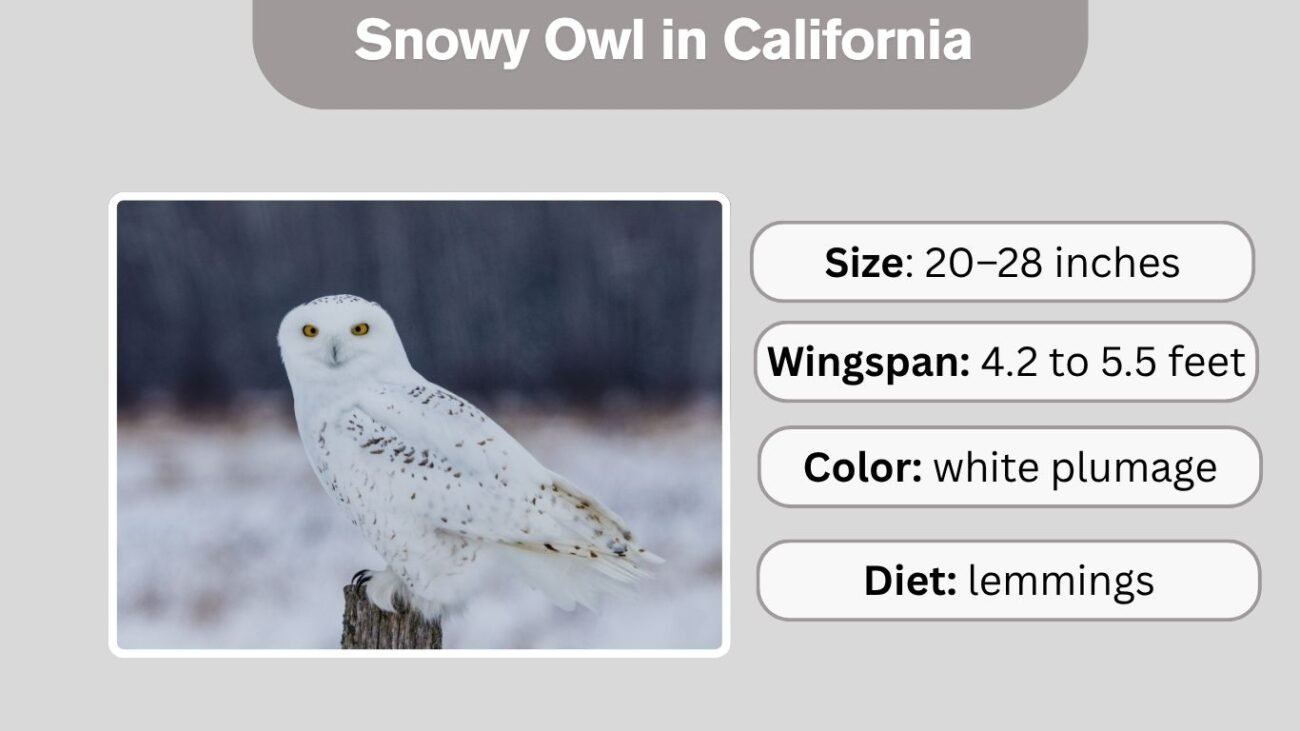
The Snowy Owl is a rare and exciting winter visitor to California. With its striking white plumage and large size, it draws attention when it occasionally migrates far south from the Arctic tundra.
Habitat and Range in California
Though not a resident species, Snowy Owls occasionally appear in Northern and Central California during irruption years—when food is scarce in the Arctic. Rare sightings have occurred in farmlands, airports, and coastal areas, including San Francisco Bay and even near Southern California beaches in unusual years.
Behavior and Sounds
Snowy Owls are active during the day and prefer flat, open terrain. They perch on fence posts, dunes, and even rooftops. Their call is a deep, booming hoot, but they are generally quiet outside the breeding season.
Identification
- Scientific Name: Bubo scandiacus
- Size: 20 to 28 inches (51–71 cm)
- Wingspan: 49 to 59 inches (125–150 cm)
- Weight: 3.5 to 6.6 lbs (1.6–3 kg)
- Color: Mostly white with scattered dark markings (males are whiter)
- Eyes: Bright yellow
- Voice: Low-pitched hoots and croaks (rare in California)
- Nesting Sites: Not in California (breeds in Arctic tundra)
- Diet: Lemmings, rodents, rabbits, birds
11. Elf Owl in California
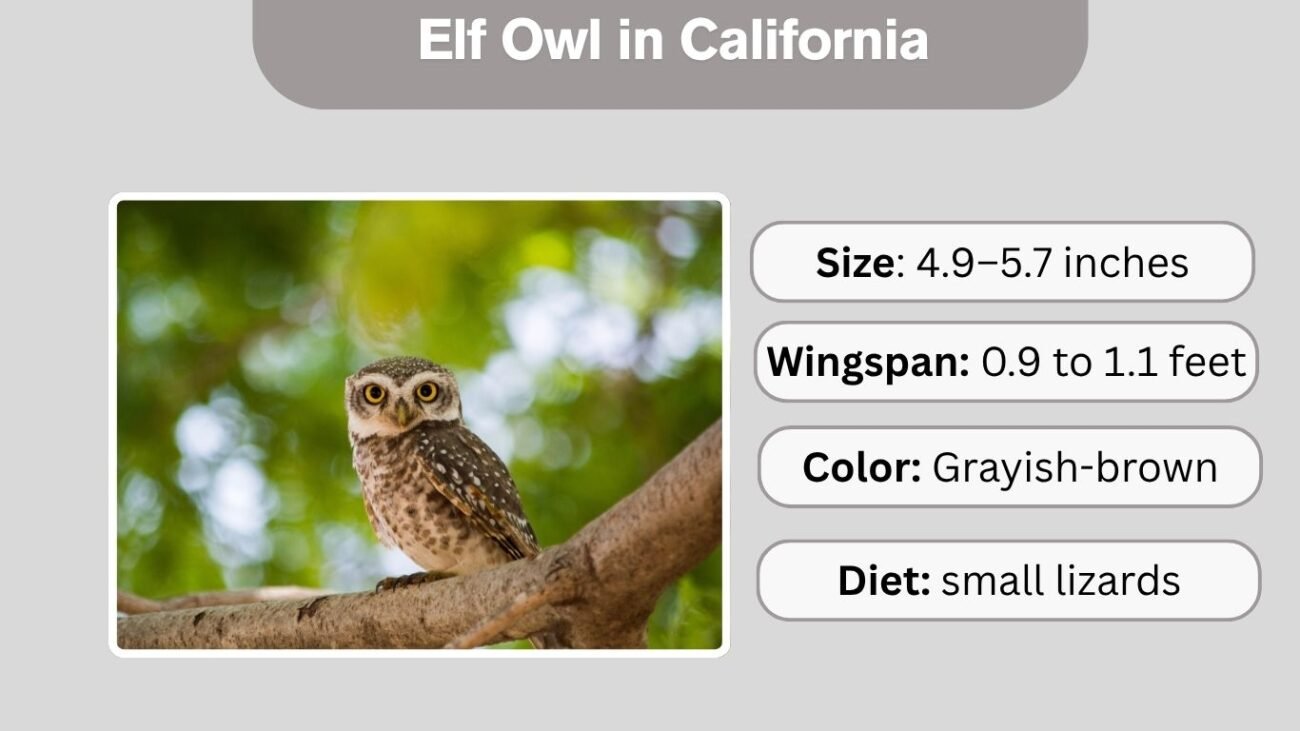
The Elf Owl is the smallest owl in North America and a rare resident in the deserts of Southern California. This tiny owl thrives in hot, dry habitats and is more often heard than seen.
Habitat and Range in California
Elf Owls are primarily found in southeastern California, particularly near the Colorado River, desert oases, and Joshua Tree National Park. They nest in old woodpecker holes in saguaro cacti, sycamores, or mesquite trees.
Behavior and Sounds
They are nocturnal and highly insectivorous, catching moths, beetles, and spiders. Their call is a high-pitched “cheer-cheer-cheer,” often given in rapid series. They can mimic other small owls or even insects.
Identification
- Scientific Name: Micrathene whitneyi
- Size: 4.9 to 5.7 inches (12.5–14.5 cm)
- Wingspan: About 10.5 inches (27 cm)
- Weight: 1.4 oz (40 grams)
- Color: Pale gray-brown with fine streaking
- Eyes: Yellow
- Voice: High, repetitive “cheer” calls
- Nesting Sites: Tree cavities and cacti
- Diet: Insects, spiders, scorpions
12. Northern Pygmy Owl in California
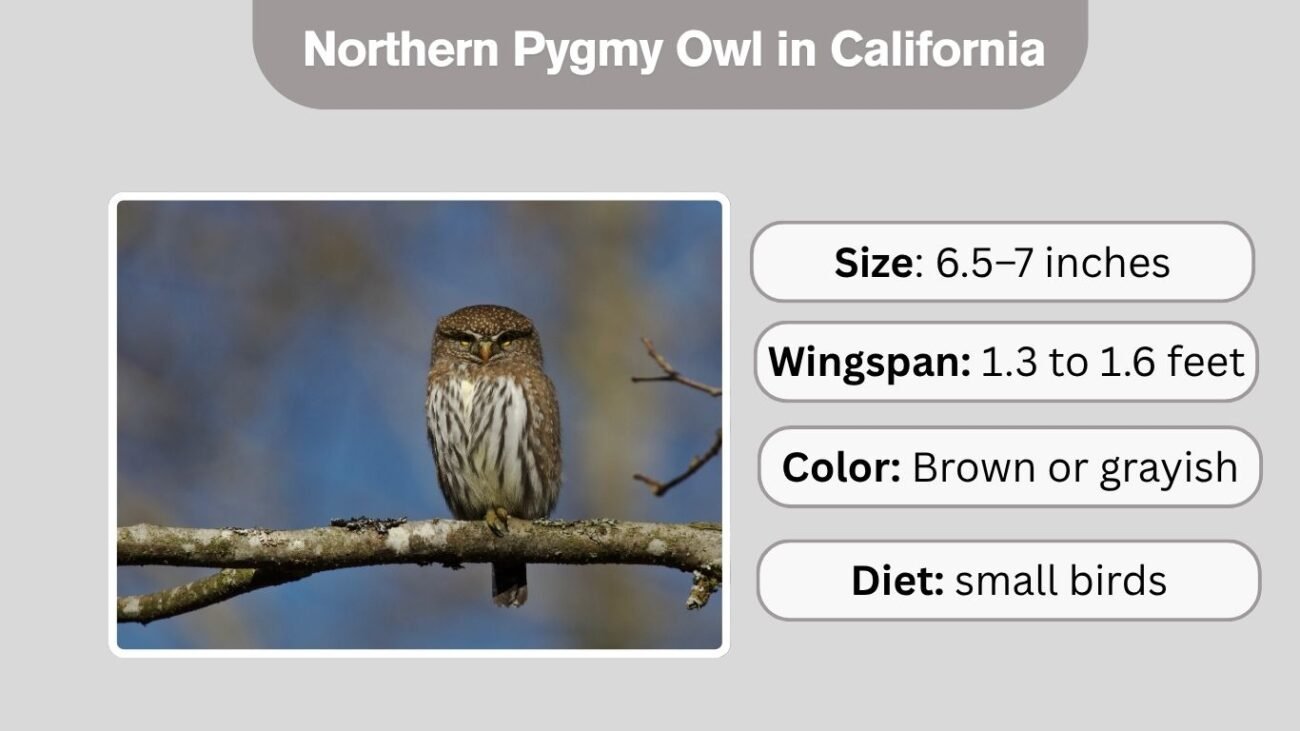
The Northern Pygmy Owl is a small but bold daytime hunter that lives in forests across Northern and Central California. Though tiny, it can take down prey as large as songbirds and is known for its aggressive hunting style.
Habitat and Range in California
This owl is commonly found in coniferous forests in the Sierra Nevada, Cascade Range, and coastal ranges of Northern California. It prefers mid- to high-elevation woodlands but may also descend to lower elevations during the cooler months.
Behavior and Sounds
Unlike many owls, Northern Pygmy Owls are active during the day. Their call is a consistent, high-pitched series of “toot” notes spaced evenly apart, often giving away their hidden perch.
Identification
- Scientific Name: Glaucidium gnoma
- Size: 6.3 to 7.1 inches (16–18 cm)
- Wingspan: 14.5 to 16 inches (37–41 cm)
- Weight: 2.1 to 2.5 oz (60–70 grams)
- Color: Brown upperparts with white spots; pale underparts with dark streaks
- Eyes: Yellow, forward-facing
- Voice: Repetitive high-pitched “toot-toot-toot”
- Nesting Sites: Tree cavities or old woodpecker holes
13. Flammulated Owl in California
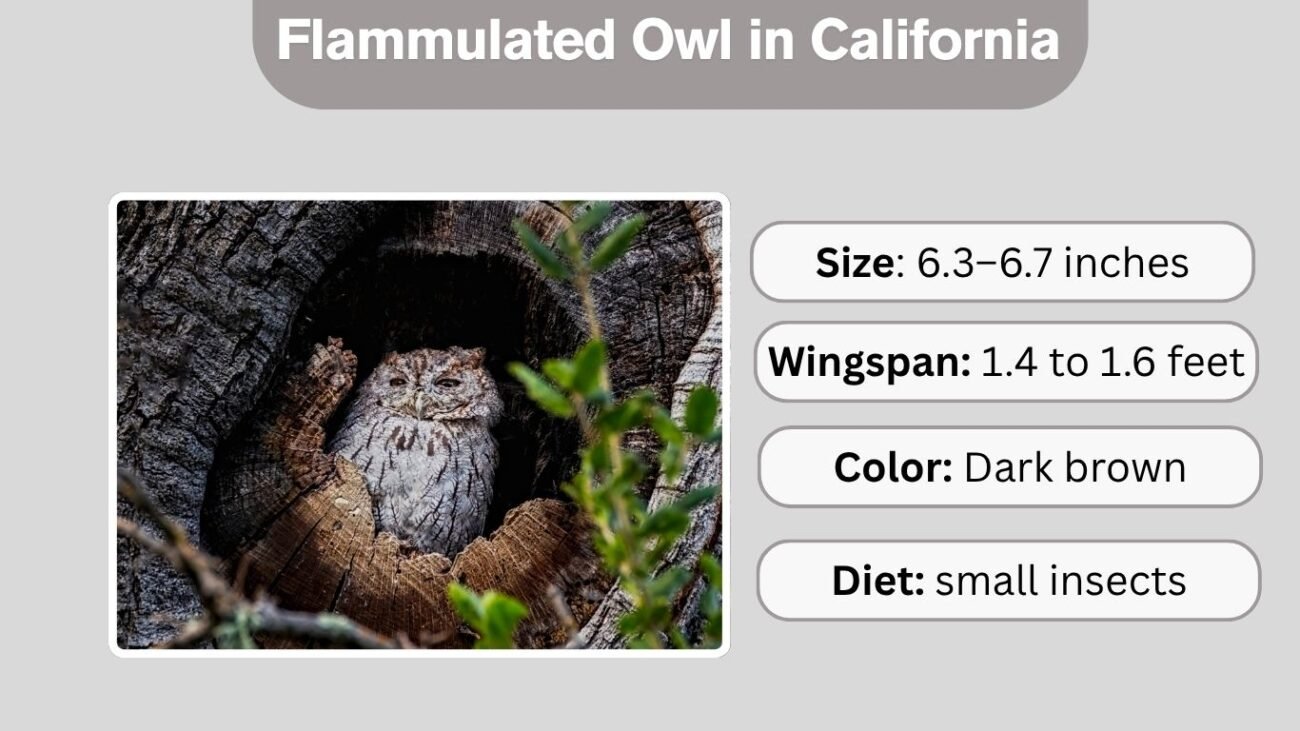
The Flammulated Owl is a small, migratory owl known for its deep voice and excellent camouflage. It is hard to spot, but it breeds in high-elevation forests in Northern and Central California.
Habitat and Range in California
Flammulated Owls breed in pine and mixed-conifer forests across the Sierra Nevada and Cascade Mountains. They are found in Northern and Central California during the summer breeding season and migrate to Mexico for winter.
Behavior and Sounds
Despite their tiny size, their deep, low-pitched hoots resemble those of much larger owls. These owls are strictly nocturnal and prefer to stay hidden in dense foliage.
Identification
- Scientific Name: Psiloscops flammeolus
- Size: 5.9 to 6.7 inches (15–17 cm)
- Wingspan: 14 inches (36 cm)
- Weight: 1.5 to 2.2 oz (43–63 grams)
- Color: Grayish-brown with flame-like markings; excellent tree bark camouflage
- Eyes: Dark brown
- Voice: Deep, soft hoots (low-pitched “boo” notes)
- Nesting Sites: Tree cavities, often old woodpecker holes
- Diet: Mostly insects—moths, crickets, beetles
14. Mexican Spotted Owl in California
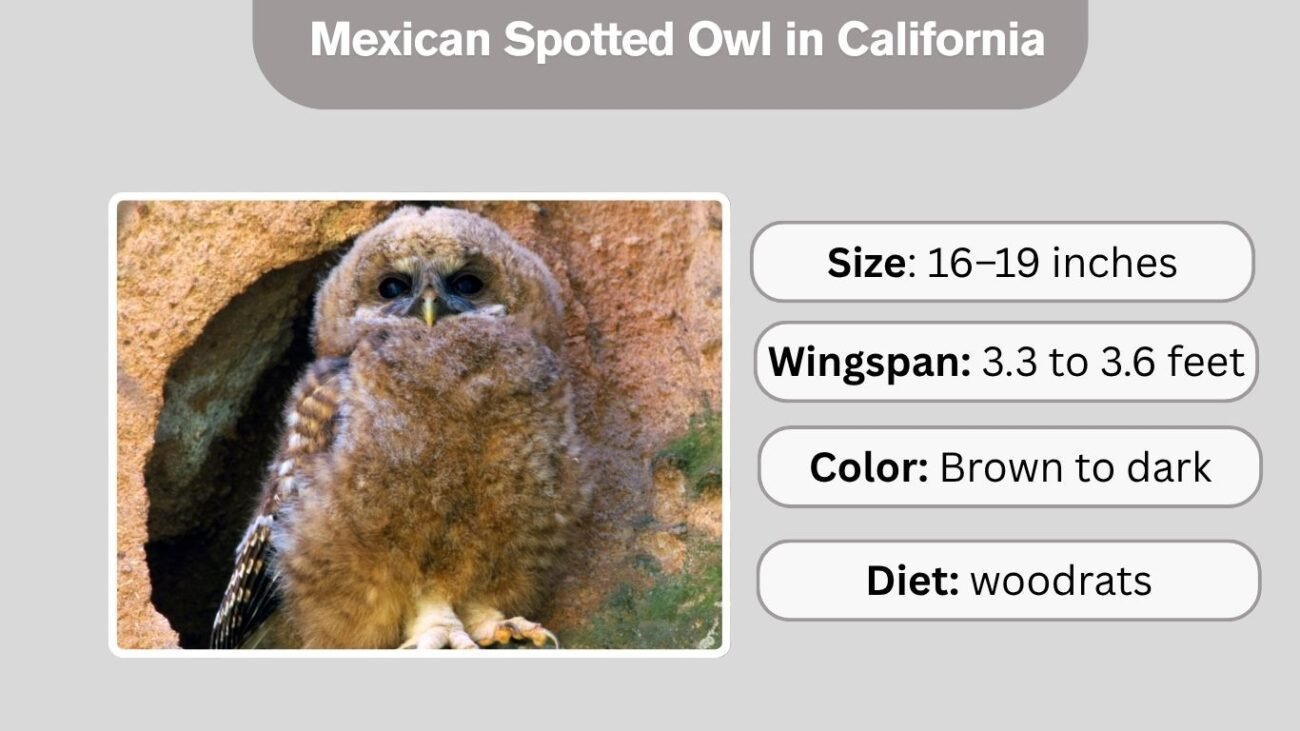
The Mexican Spotted Owl is a subspecies of the Spotted Owl, found mainly in the southern and eastern parts of California, especially in rugged canyon landscapes. It is listed as threatened under the U.S. Endangered Species Act.
Habitat and Range in California
This owl inhabits steep-walled canyons, cliff ledges, and mixed conifer-oak forests, especially in eastern San Bernardino Mountains, Los Padres National Forest, and portions of the southern Sierra Nevada. Unlike the other two Spotted Owl subspecies, the Mexican Spotted Owl prefers more arid, rocky habitats.
Behavior and Sounds
It’s secretive and nocturnal, calling in a series of soft hoots and whistles. It is slightly lighter in color than its northern relatives and is extremely sensitive to human disturbance and habitat fragmentation.
Identification
- Scientific Name: Strix occidentalis lucida
- Size: 17–19 inches (43–48 cm)
- Wingspan: 39–45 inches (99–114 cm)
- Weight: 1.1–1.6 lbs (500–725 grams)
- Color: Pale brown with lighter white spotting
- Eyes: Dark brown
- Voice: Series of soft hoots, like its relatives
- Nesting Sites: Caves, rock ledges, cliff crevices, and old trees
- Diet: Small mammals like woodrats and squirrels
15. White Owls in California (General Overview)
The term “white owl” can refer to several species observed in California with pale or mostly white coloration. While there is no native owl species that is entirely white year-round, a few owls exhibit pale or white morphs or are rarely seen as migrants.
Common White or Pale Owls in California
- Barn Owl – Has a ghostly white face and underparts; common across California
- Snowy Owl – Entirely white (sometimes with spots); rare winter visitor
- Leucistic Great Horned Owl – Very rare pale-colored individuals with reduced pigment
- White-morph Western Screech-Owl – Occasionally lighter-colored individuals seen
Behavior and Occurrence
- Snowy Owls may visit Northern or Southern California in irruption years
- Barn Owls are common in Los Angeles, San Diego, the Bay Area, and rural zones
- Leucistic owls are not separate species but genetic variations found very occasionally
Identification (Common White Owls)
- Barn Owl: White heart-shaped face, pale chest, golden back
- Snowy Owl: Entirely white with or without dark spots, yellow eyes
- Leucistic Owls: Washed-out coloring, may occur in several owl species
16. Owl Species Legality and Ownership in California
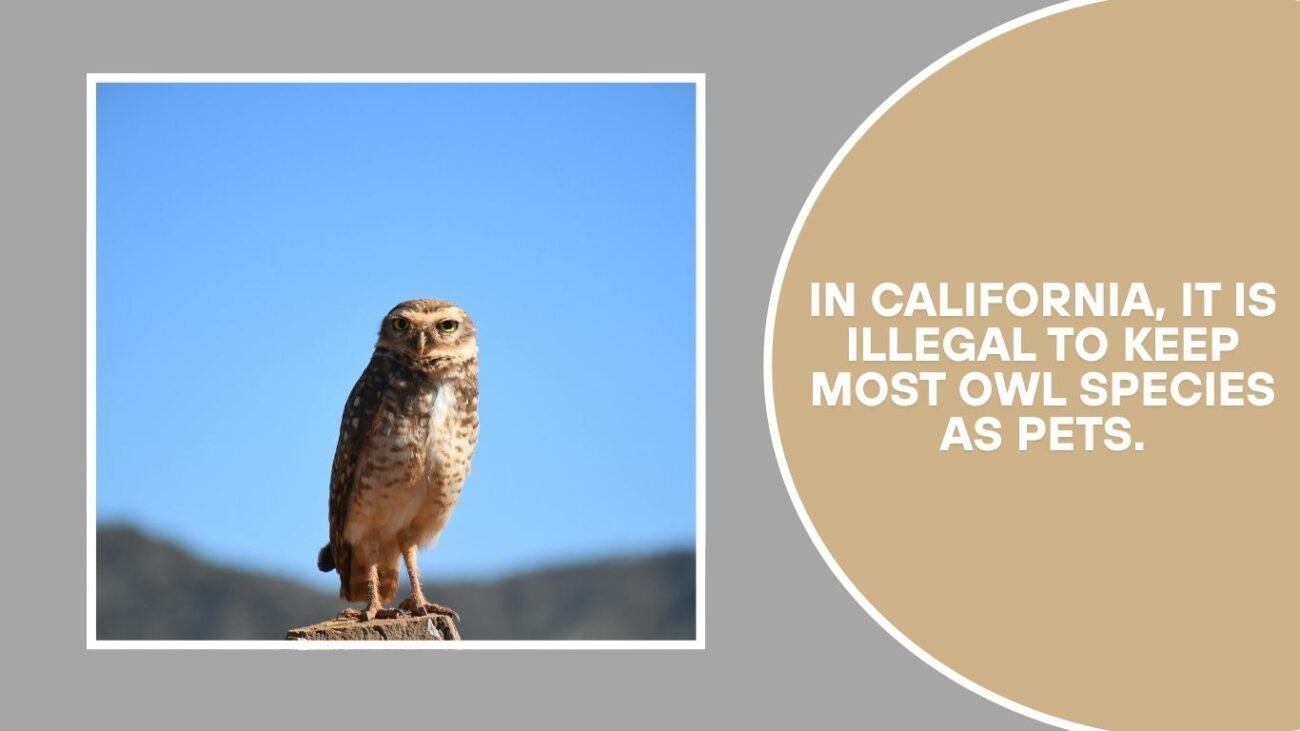
While many people are fascinated by owls and dream of owning one as a pet, it is illegal to own a wild owl in California—and in most parts of the United States—without a special permit. Owls are protected under federal and state laws to preserve wildlife and prevent exploitation.
Can You Own an Owl in California?
No, you cannot legally own an owl in California as a pet. All native owl species are protected by the Migratory Bird Treaty Act, and state laws further prohibit the private possession of wild birds without proper licensing.
Licensed wildlife rehabilitators, falconers, and educators may keep owls for specific purposes, but strict regulations apply, and these birds must be unreleasable.
Is It Legal to Have a Pet Owl in California?
- Not for the public: Regular citizens are not allowed to own owls, including exotic species.
- Even non-native species (like barn owls or snowy owls) require federal and state permits.
- Owls are not domesticated animals—they require specialized care, diet, and housing.
Identification
- Legal Status: Protected under Migratory Bird Treaty Act
- State Regulation: California Fish and Wildlife Code prohibits private ownership
- Permits Required: Yes, for education, rehab, or falconry only
- Owning Owls as Pets: Not allowed
- Buying or Selling Owls: Illegal