





Cranes are among the most elegant and symbolic birds in the world, admired for their tall stature, graceful movements, and cultural significance. Found across Asia, Africa, Europe, Australia, and the Americas, each species has its own unique features, habitats, and behaviors. From the snow-white Siberian Crane to the golden-crowned beauties of Africa, these birds display a remarkable diversity.
In this guide, we’ll explore 15 types of cranes, highlighting their identification, natural habitats, and fascinating behaviors.
1. Siberian Crane

The Siberian Crane (Leucogeranus leucogeranus) is a tall, graceful bird easily recognized for its all-white plumage and long migratory habits. Known as one of the most iconic wetland birds of Asia, it plays an important role in local cultures and ecosystems. Its long-distance migration, stretching across continents, makes it a fascinating species to study.
Identification
- Pure white plumage across the body
- Black primary feathers visible only in flight
- Bare red face with a long, reddish beak
- Tall stature, standing up to 140 cm (4.5 ft) with a wingspan of nearly 230 cm (7.5 ft)
- Long pinkish-red legs trailing behind in flight
Habitat
Siberian Cranes breed in the remote Arctic tundra of northeastern Siberia, where wetlands, lakes, and bogs provide nesting grounds. In winter, they migrate to warmer wetlands, particularly China’s Poyang Lake. Historically, they also wintered in India and Iran. These birds prefer open wetlands with shallow waters and rich aquatic vegetation.
Behavior
Siberian Cranes are highly social outside the breeding season, often traveling and foraging in flocks. They feed mainly on aquatic plants, tubers, and roots, which they dig out using their long beaks. During courtship, they perform elegant dances that involve wing-flapping, jumping, and synchronized movements with their mates. They are also known for their loud, trumpeting calls, which can be heard over long distances and help them stay connected during migration.
2. Whooping Crane

The Whooping Crane (Grus americana) is the tallest bird in North America and one of the rarest crane species in the world. Its striking appearance and loud calls make it highly distinctive. It is well known for its long migrations between Canada and the southern United States.
Identification
- White plumage with black wingtips visible in flight
- Red crown and dark mustache-like markings on the face
- Long, straight dark beak
- Height up to 150 cm (5 ft) with a wingspan over 230 cm (7.5 ft)
Habitat
Whooping Cranes breed in marshes and wetlands of northern Canada, especially Wood Buffalo National Park, and migrate to wintering grounds in coastal Texas. They rely on shallow marshes, tidal flats, and lagoons rich in aquatic plants and small animals.
Behavior
Whooping Cranes are territorial during breeding, with pairs building nests in remote wetlands. They forage for crabs, mollusks, insects, and plant roots. Their flight is powerful and graceful, with extended necks and trailing legs. During courtship, they perform elaborate dances, including leaps and bowing, which strengthen pair bonds.
3. Sandhill Crane

The Sandhill Crane (Antigone canadensis) is one of the most widespread and abundant crane species. Known for its bugling call and spectacular migratory gatherings, this bird is a symbol of wilderness across North America.
Identification
- Gray plumage often stained with rust-colored patches
- Red patch of bare skin on the forehead
- Long pointed bill and grayish legs
- Stands up to 120 cm (4 ft) tall with a wingspan around 200 cm (6.5 ft)
Habitat
Sandhill Cranes breed in open wetlands, grasslands, and tundra across North America, with some populations extending into Siberia. In winter, they gather in large flocks across the southern United States, Mexico, and Cuba. They prefer shallow marshes and fields for feeding.
Behavior
These cranes are highly social and form enormous flocks during migration, sometimes numbering in the tens of thousands. They feed on a varied diet including seeds, grains, insects, and small vertebrates. Their bugling calls echo for miles, especially during migration. Courtship involves dramatic dancing displays, with hopping, bowing, and wing-flapping performed by both males and females.
4. Common Crane (Eurasian Crane)

The Common Crane (Grus grus) is one of the most widespread crane species, found across Europe and Asia. It is famous for its loud, trumpeting calls and large migratory flocks.
Identification
- Gray plumage with darker flight feathers
- Distinctive white streak running from the eye to the upper neck
- Black face, throat, and legs with a red crown patch
- Height around 120 cm (4 ft) and wingspan up to 240 cm (7.8 ft)
Habitat
Common Cranes breed in northern Europe and Asia in bogs, wetlands, and forest clearings. During winter, they migrate to southern Europe, northern Africa, and parts of the Middle East. They prefer wetlands and open agricultural fields during migration and winter.
Behavior
These cranes are highly vocal, producing loud, rolling calls often in duet between mates. They migrate in large V-shaped flocks, creating a spectacular sight in the sky. Their diet is omnivorous, including grains, roots, insects, and small animals. They also perform elegant dances with leaps, bows, and wing displays both in courtship and as social bonding.
5. Demoiselle Crane

The Demoiselle Crane (Grus virgo) is the smallest of all crane species and is admired for its delicate and graceful appearance. It has cultural significance, especially in India, where it is celebrated in folklore.
Identification
- Slender body with bluish-gray plumage
- Long white feathers extending from the eyes down the neck
- Black feathers on the lower neck and chest
- Stands about 90 cm (3 ft) tall with a wingspan of 170 cm (5.5 ft)
Habitat
Demoiselle Cranes breed in central Eurasian steppes, from Ukraine and Russia to Mongolia. In winter, they migrate to India and Africa, gathering in large numbers in open plains and agricultural fields.
Behavior
These cranes are strong fliers, capable of crossing the Himalayas during migration, reaching altitudes above 16,000 feet. They are very social in winter, often forming large flocks while foraging on grains, seeds, and small insects. Courtship and pair-bonding involve quick, elegant dances with head bobbing and wing flapping, reflecting their name “demoiselle,” meaning young lady.
6. Black-necked Crane

The Black-necked Crane (Grus nigricollis) is a medium-sized crane found in the high-altitude plateaus of Asia. It is revered in Tibetan culture and often associated with good fortune and longevity.
Identification
- Gray body with a contrasting black neck and head
- Small red crown patch on top of the head
- White patch behind the eye extending toward the nape
- Height about 115 cm (3.8 ft) with a wingspan around 235 cm (7.7 ft)
Habitat
Black-necked Cranes breed in the high-altitude wetlands and alpine meadows of the Tibetan Plateau, Bhutan, and parts of India. In winter, they migrate to lower valleys, often in Bhutan and Arunachal Pradesh, preferring open marshes and river valleys.
Behavior
They are usually found in pairs or small groups, feeding on roots, tubers, and small invertebrates in wet meadows. Their calls are loud and carry over long distances, helping maintain contact in open landscapes. During breeding, they display synchronized dances, involving bowing, jumping, and flapping wings.
7. Hooded Crane

The Hooded Crane (Grus monacha) is a smaller, elegant crane species recognized by its unique hood-like white head contrasting with its dark body.
Identification
- Dark gray body with a striking white head and upper neck
- Small red crown patch visible on the top of the head
- Shorter in stature, standing around 100 cm (3.3 ft) with a wingspan of about 190 cm (6.2 ft)
- Slender, straight bill adapted for wetland foraging
Habitat
Hooded Cranes breed in southeastern Siberia and northern Mongolia, favoring wetlands and marshes surrounded by forests. In winter, they migrate to Japan, China, and Korea, with the largest wintering population in Izumi, Japan.
Behavior
They are social birds, often gathering in large flocks during migration and wintering. They forage for grains, aquatic plants, and insects in shallow wetlands and rice fields. Their calls are sharp and resonant, often heard when flocks are in flight. Courtship and pair-bonding involve coordinated dancing, which strengthens lifelong partnerships.
8. Red-crowned Crane (Japanese Crane)

The Red-crowned Crane (Grus japonensis) is one of the most iconic and majestic crane species, often seen as a symbol of luck, longevity, and fidelity in East Asian culture.
Identification
- White body with contrasting black on the neck, wings, and lower body
- Distinct red patch of bare skin on the crown of the head
- Stands about 150 cm (5 ft) tall with a wingspan up to 250 cm (8.2 ft)
- Long, straight bill and black legs
Habitat
Red-crowned Cranes breed in wetlands, marshes, and rivers of northeastern China, Russia, and Mongolia. In winter, they migrate to coastal regions of Japan and Korea. They prefer shallow wetlands rich in aquatic vegetation and small animals.
Behavior
These cranes are graceful and highly symbolic, often featured in traditional art and folklore. They feed on fish, amphibians, aquatic plants, and grains. Their courtship displays are particularly spectacular, involving synchronized dancing, bowing, and calling. They are mostly seen in pairs or small family groups, but in winter, larger flocks can be observed.
9. White-naped Crane

The White-naped Crane (Antigone vipio) is a tall, elegant species recognized for its distinctive white stripe that runs from the crown down the back of the neck.
Identification
- Gray body with a white stripe from the head down the nape
- Red face patch surrounding the eye
- Long pink legs and a stout bill
- Height around 130 cm (4.3 ft) with a wingspan up to 210 cm (6.9 ft)
Habitat
White-naped Cranes breed in wetlands and grasslands across Mongolia, northern China, and southeastern Russia. They migrate south in winter to areas of the Yangtze River basin in China, as well as parts of Korea and Japan.
Behavior
They are social birds, often moving in family groups and larger flocks during migration. Their diet includes plant roots, seeds, insects, and small aquatic animals. Mating pairs engage in coordinated calls and dances that strengthen their bond, and their loud trumpeting calls are easily recognized across wetlands.
10. Wattled Crane

The Wattled Crane (Grus carunculata) is the largest crane species in Africa, known for its distinctive wattles hanging from the throat. It is elegant in appearance and usually found in wetland habitats.
Identification
- Gray body with white neck and face
- Long red wattles hanging from the throat
- Black cap on the crown and long pointed bill
- Stands up to 175 cm (5.7 ft) tall with a wingspan over 260 cm (8.5 ft)
Habitat
Wattled Cranes inhabit wetlands, floodplains, and grasslands across sub-Saharan Africa, with strong populations in Zambia, Botswana, and Mozambique. They prefer shallow water areas with abundant vegetation such as sedges and water lilies.
Behavior
These cranes are usually shy and found in pairs or small groups. They feed mainly on aquatic plants, bulbs, and tubers, but also take small invertebrates when available. Their movements are more localized than other crane species, although some populations migrate seasonally. Courtship dances involve leaping and wing-flapping, with calls exchanged between pairs.
11. Blue Crane (Stanley Crane)

The Blue Crane (Anthropoides paradiseus) is the national bird of South Africa and is admired for its graceful, light-blue plumage. It is also the smallest crane species in Africa.
Identification
- Light bluish-gray body with darker wing tips
- Long ornamental wing feathers that trail toward the ground
- Small rounded head with a short bill compared to other cranes
- Height about 110 cm (3.6 ft) with a wingspan of 200 cm (6.5 ft)
Habitat
Blue Cranes are mainly found in the grasslands and savannas of South Africa, especially in the Eastern and Western Cape regions. They prefer open areas near water but are also known to feed in farmlands.
Behavior
Blue Cranes are highly social outside the breeding season, often gathering in flocks. They feed on grasses, seeds, and insects, occasionally taking small vertebrates. Their courtship dance is elegant and energetic, involving leaps, wing displays, and tossing objects into the air. They are known for their loud, rattling calls that echo across the grasslands.
12. Brolga
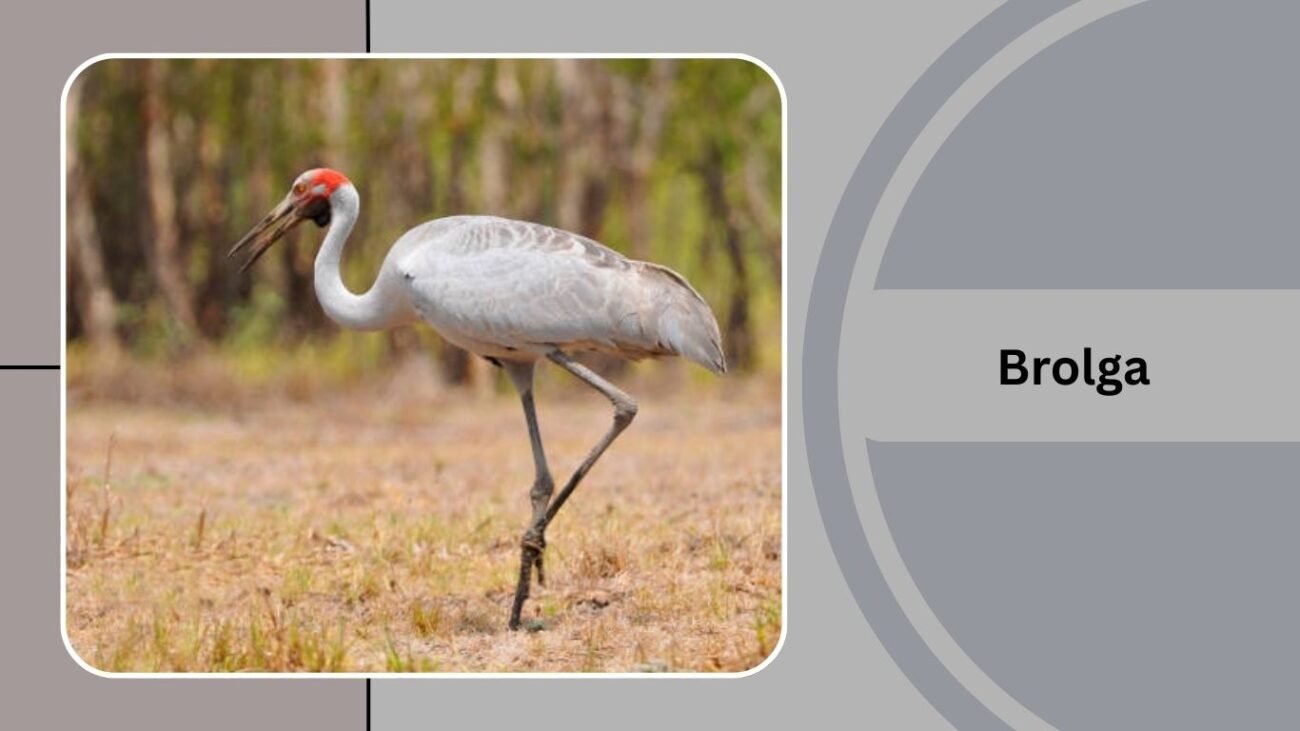
The Brolga (Antigone rubicunda) is Australia’s most famous crane, often referred to as the “Australian Crane.” It is well known for its elaborate and graceful dancing displays, which have become part of Aboriginal traditions and stories.
Identification
- Pale gray plumage with a contrasting red head and upper neck
- Long straight bill and slender body
- Legs are grayish-black, adapted for wading in wetlands
- Stands around 130 cm (4.3 ft) with a wingspan of 240 cm (7.9 ft)
Habitat
Brolgas are native to northern and eastern Australia and parts of New Guinea. They inhabit wetlands, floodplains, and grasslands, often found near shallow lakes and lagoons. They also adapt well to agricultural areas, feeding in crop fields.
Behavior
Brolgas are most famous for their ritualized dancing, where pairs leap, bow, and spread their wings in synchronized movements. This behavior is not only linked to courtship but also strengthens social bonds. They feed on tubers, wetland plants, insects, and small vertebrates, often probing the soil with their long beaks. During migration and winter, they gather in large flocks, creating spectacular displays in open landscapes.
13. Sarus Crane

The Sarus Crane (Antigone antigone) is the tallest flying bird in the world and is deeply revered in Indian culture as a symbol of marital fidelity and harmony.
Identification
- Gray body with striking red head and upper neck
- Long pale bill and reddish legs
- Taller than most cranes, standing up to 180 cm (6 ft) with a wingspan of 250 cm (8.2 ft)
- Slender but powerful build, making it highly recognizable in wetlands
Habitat
Sarus Cranes are widely distributed in South Asia, Southeast Asia, and northern Australia. They inhabit shallow wetlands, marshes, rice fields, and open grasslands. In India, they are often seen in agricultural landscapes alongside human settlements.
Behavior
Sarus Cranes are highly social and usually found in pairs or family groups. Their calls are loud and resonant, carrying long distances across wetlands. They feed on aquatic plants, grains, frogs, and small reptiles. Courtship is characterized by synchronized dancing, wing-spreading, and trumpeting calls. Mated pairs often remain together for life, reinforcing their reputation as symbols of love and loyalty in local folklore.
14. Grey Crowned Crane
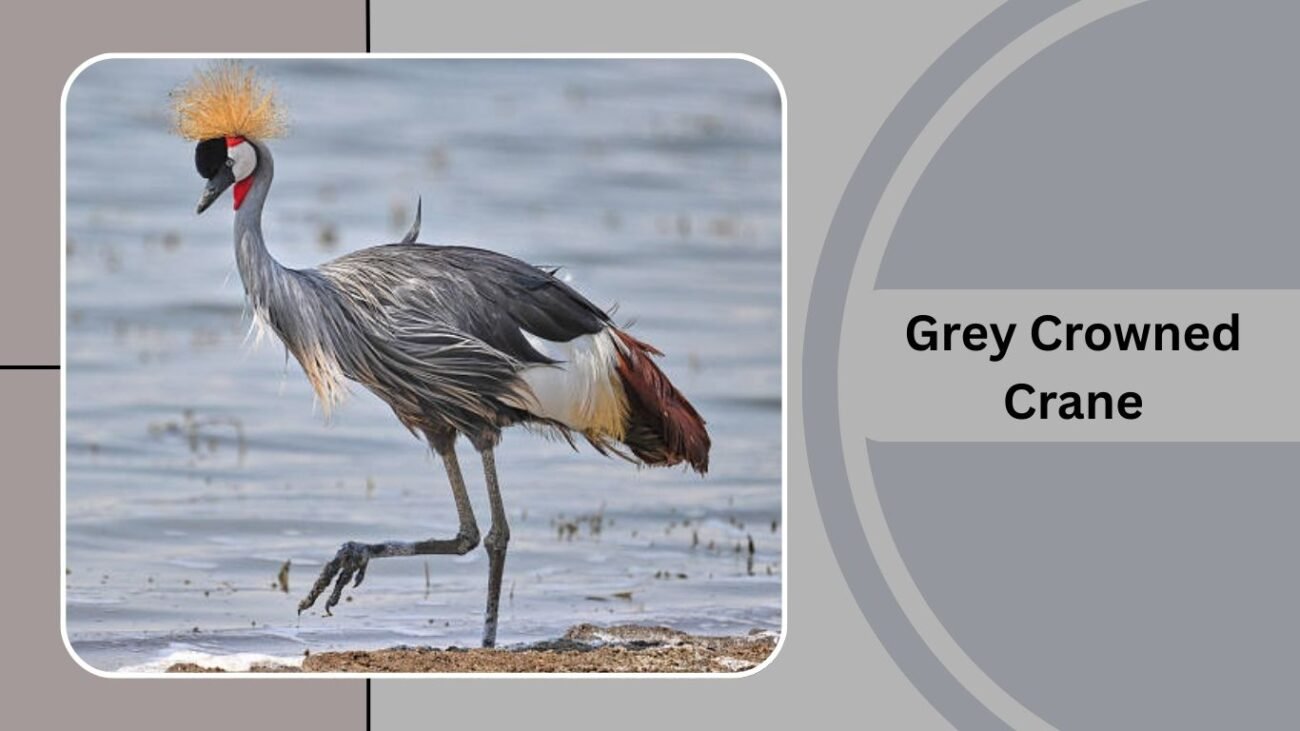
The Grey Crowned Crane (Balearica regulorum) is one of the most striking crane species, famous for the golden crown of stiff feathers on its head. It is also the national bird of Uganda, featured on the country’s flag and coat of arms.
Identification
- Gray body with white wings that contain gold, brown, and black feathers
- Distinct golden feathery crown on the head
- White cheeks with a bright red throat pouch (gular sac)
- Height around 100–110 cm (3.3–3.6 ft) with a wingspan of 200 cm (6.5 ft)
Habitat
Grey Crowned Cranes are found across eastern and southern Africa in wetlands, savannas, and grasslands. They prefer areas with tall grasses near rivers and lakes, but they also forage in farmland.
Behavior
Unlike most cranes, they can roost in trees thanks to their long hind toe that allows perching. They are highly social and often form large flocks outside the breeding season. Their diet includes grasses, seeds, insects, frogs, and small reptiles. Courtship involves elaborate dances with bows, leaps, and wing displays, often accompanied by synchronized calling.
15. Black Crowned Crane

The Black Crowned Crane (Balearica pavonina) is a close relative of the Grey Crowned Crane but darker in appearance. It is also adorned with a golden crown and is widely admired across Africa.
Identification
- Predominantly dark gray to black body
- Golden feathery crown on top of the head
- Red gular sac and white cheek patches
- Slightly smaller than the Grey Crowned Crane, standing about 100 cm (3.3 ft) tall with a wingspan near 190 cm (6.2 ft)
Habitat
This species is found in western and central Africa, from Senegal and Gambia to Chad and Sudan. It inhabits wetlands, floodplains, and moist savannas, often close to rivers and lakes.
Behavior
Black Crowned Cranes are active and vocal birds, often seen in pairs or small flocks. They forage on seeds, grasses, insects, and small vertebrates, frequently following grazing animals to catch disturbed prey. Like other crowned cranes, they are excellent dancers, performing leaps, wing spreads, and synchronized movements during courtship and social bonding.
FAQs
What is the tallest crane species?
The Sarus Crane holds the record as the tallest flying bird in the world. Standing up to 180 cm (6 ft), it is even taller than many humans. Its impressive height, combined with a wide wingspan of about 250 cm (8.2 ft), makes it one of the most striking crane species in both size and elegance.
Which crane species is considered the rarest?
The Siberian Crane is among the rarest and most endangered cranes. With its striking white plumage and limited populations, it has faced severe threats from habitat loss and hunting. Today, only small migratory groups remain, mainly wintering in China, with western populations almost gone.
Do cranes mate for life?
Yes, most crane species form long-term pair bonds, often staying with the same mate for life. Their courtship rituals, including synchronized dancing, bowing, and trumpeting calls, not only attract partners but also reinforce pair bonds year after year.
Where can crowned cranes be found?
Crowned cranes, including the Grey Crowned Crane and the Black Crowned Crane, are found in Africa. Grey Crowned Cranes inhabit eastern and southern Africa, while Black Crowned Cranes are more common in western and central Africa. Both species prefer wetlands, grasslands, and savanna habitats.
What do cranes typically eat?
Cranes are omnivorous and have a varied diet that includes plant roots, tubers, grains, seeds, and aquatic vegetation. They also feed on insects, small reptiles, frogs, and fish depending on the habitat. Their long bills and legs make them well adapted to foraging in wetlands and grasslands.