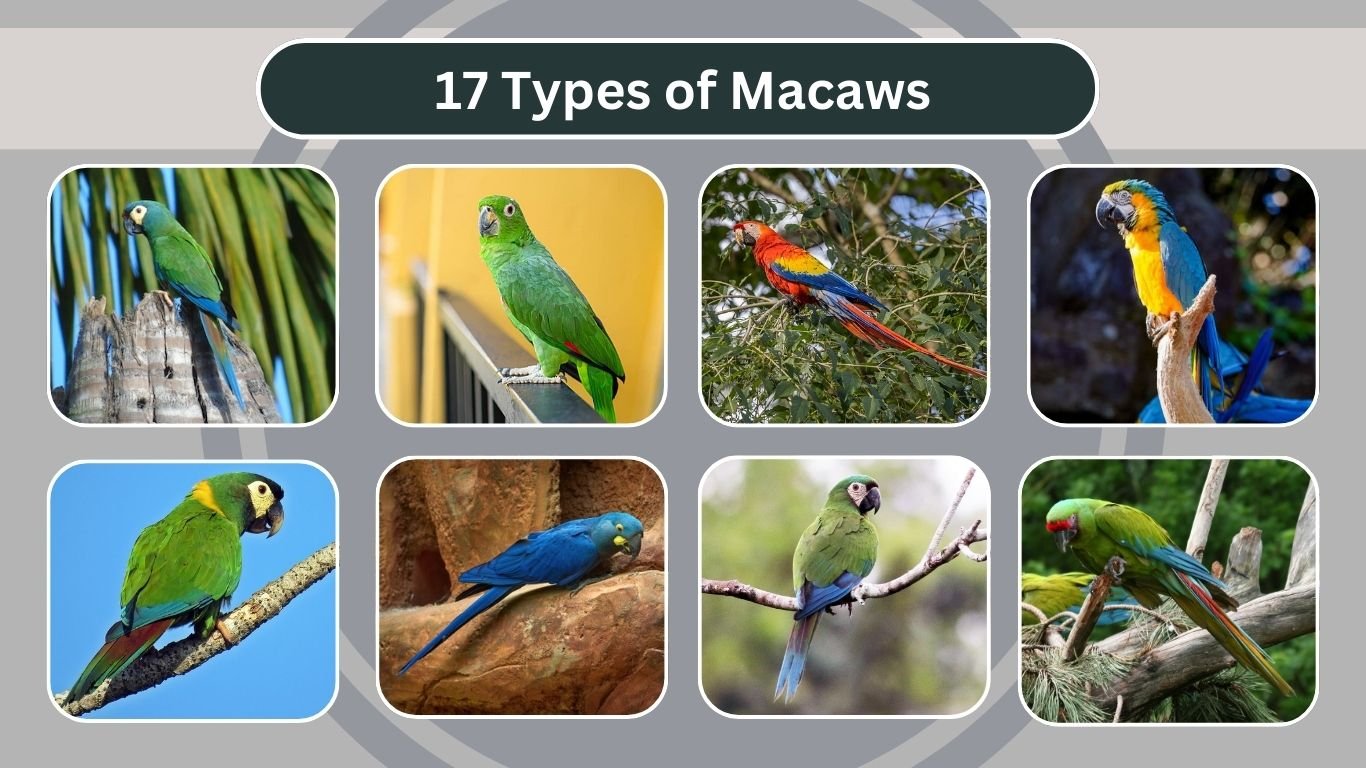
Macaws are some of the most vibrant and intelligent parrots in the world, instantly recognized for their brilliant plumage, strong personalities, and close pair bonds. Native to Central and South America, these birds thrive in tropical forests, savannas, and river valleys, where they play an important role in spreading seeds and maintaining ecosystems. From the enormous Hyacinth Macaw to the tiny Hahn’s Macaw, each species has unique colors, behaviors, and habitats. In this guide, we explore 17 fascinating types of macaws.
1. Scarlet Macaw

The Scarlet Macaw (Ara macao) is one of the most famous and colorful members of the macaw family. Known for its brilliant plumage and loud calls, it is often considered a symbol of the tropical rainforests of Central and South America.
Identification
- Bright red plumage covering most of the body
- Blue wings with yellow bands on the upper sides
- White, bare facial skin with fine feather lines
- Strong, hooked beak that is pale on top and dark on the bottom
- Large size, reaching about 81–96 cm (32–38 in) in length with a long tail
Habitat
Scarlet Macaws inhabit humid lowland rainforests, river edges, and savannas across Central and South America, particularly in Mexico, Peru, Brazil, and Bolivia. They are most often seen in tall trees near rivers and clay licks where they gather in flocks.
Behavior
These macaws are highly social and usually travel in pairs or small groups, though large flocks may gather at feeding and roosting sites. They feed on a wide variety of fruits, nuts, and seeds, often cracking hard shells with their powerful beaks. Clay-lick visits are common, where they consume mineral-rich soil that helps neutralize toxins from unripe fruits. Their loud, harsh calls echo through the forest canopy, making them easy to detect even before they are seen.
2. Blue-and-yellow Macaw

The Blue-and-yellow Macaw (Ara ararauna) is one of the most recognizable parrot species, admired for its striking coloration and playful personality. It is widely kept in captivity but also thrives in the wild across much of South America.
Identification
- Bright blue wings and back with golden-yellow underparts
- Greenish forehead blending into the blue crown
- White facial skin with black feather lines around the eyes
- Large black beak and long tapered tail
- Reaches about 76–86 cm (30–34 in) in length
Habitat
This macaw is found in forests, woodlands, and riverine areas across Panama, Colombia, Venezuela, Brazil, and much of the Amazon Basin. It prefers tall trees near rivers and swamps, often nesting in tree cavities.
Behavior
Blue-and-yellow Macaws are very social, often seen in pairs or small groups. They feed on nuts, fruits, seeds, and occasionally leaves, using their powerful beaks to crack open hard shells. Their flight is strong and graceful, with loud, piercing calls that carry over long distances. Pairs are monogamous, often staying together for life, and engage in synchronized movements and mutual preening.
3. Red-and-green Macaw

The Red-and-green Macaw (Ara chloropterus) is among the largest and most striking macaw species, second only to the Hyacinth Macaw in size. Its bold colors and strong presence make it a standout in its natural habitat.
Identification
- Deep red body with green upper wings
- Blue lower wings and tail feathers
- Bare white facial skin with fine red feather lines
- Large, strong beak, pale on top and darker below
- Length up to 90–95 cm (35–37 in), making it one of the biggest macaws
Habitat
Red-and-green Macaws are widely distributed across northern and central South America, from Panama through Brazil, Bolivia, and Paraguay. They inhabit rainforests, woodlands, and savannas, often nesting in tall trees or cliff faces.
Behavior
These macaws are intelligent and highly social, usually found in pairs or small family groups. They have a varied diet of seeds, nuts, fruits, and clay from riverbanks, which helps detoxify plant compounds. Their flight is strong and direct, and they produce loud, rasping calls that can be heard from far away. Courtship involves mutual grooming, synchronized flight, and strong pair bonding, with pairs often staying together for life.
4. Military Macaw

The Military Macaw (Ara militaris) is a medium to large macaw with mostly green plumage, blending perfectly into forest canopies. Its name comes from its resemblance to military uniforms due to its green coloration.
Identification
- Bright green body with blue flight feathers and red forehead
- Bare white facial skin with fine feather lines
- Strong, hooked beak that is dark gray to black
- Long, pointed tail with bluish tips
- Reaches about 70–75 cm (27–30 in) in length
Habitat
Military Macaws are found from Mexico through Central America into South America, especially in forests, woodlands, and mountainous regions. They often inhabit areas near cliffs or steep canyons where they nest.
Behavior
They are social birds, often traveling in pairs or small flocks. Military Macaws are strong fliers and can cover large distances in search of food. Their diet includes seeds, nuts, berries, and fruits, and they frequently visit clay licks to neutralize toxins. Their calls are loud and piercing, helping them stay connected while flying through dense forests.
5. Great Green Macaw
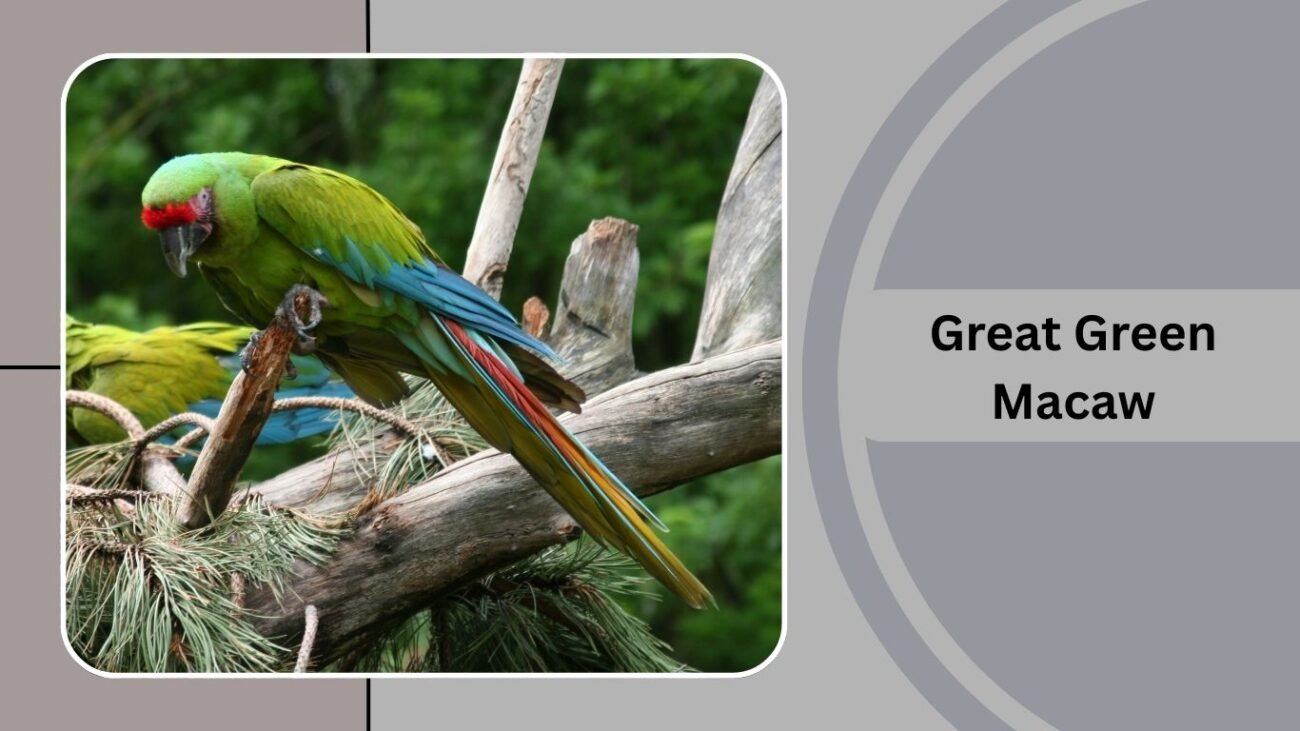
The Great Green Macaw (Ara ambiguus) is one of the largest macaw species and is closely related to the Military Macaw but more colorful and larger in size.
Identification
- Bright green body with blue on the wings and tail
- Red forehead and pale facial skin with feather lines
- Massive, strong black beak
- Long, broad tail with blue and red accents
- Grows up to 85–90 cm (33–35 in) in length
Habitat
Great Green Macaws live in tropical rainforests of Central and northern South America, including Honduras, Nicaragua, Costa Rica, Panama, Colombia, and Ecuador. They prefer lowland forests rich in large fruiting trees.
Behavior
They are generally seen in pairs or small groups, though sometimes they gather in larger flocks. Great Green Macaws feed heavily on nuts, seeds, and fruits, especially favoring large hard nuts that only they can crack open. Their calls are loud and raucous, often heard long before they are seen. They are monogamous, and pairs maintain strong lifelong bonds, often engaging in synchronized flight and mutual preening.
6. Blue-throated Macaw
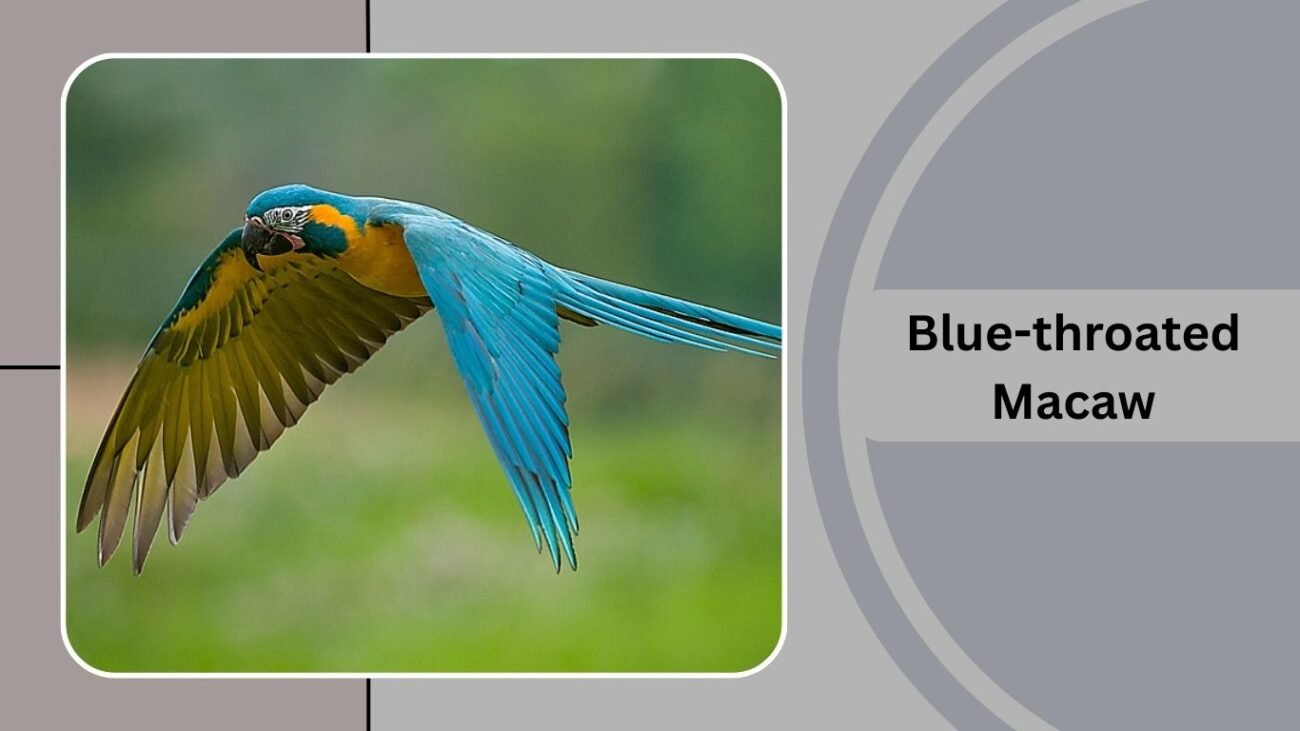
The Blue-throated Macaw (Ara glaucogularis) is a rare and striking species, found only in a small region of Bolivia. Its vibrant plumage and limited range make it one of the most unique macaws.
Identification
- Bright turquoise-blue wings, tail, and back
- Golden-yellow chest and underparts
- Distinct blue throat patch below the beak
- White facial skin with feather lines and a large gray beak
- Medium-large size, reaching 85 cm (33 in) in length
Habitat
This macaw is restricted to the savanna and forested areas of the Beni Department in Bolivia. It favors palm-dominated habitats, especially areas with Motacú palms, which provide food and nesting sites.
Behavior
Blue-throated Macaws are usually found in pairs or small family groups rather than large flocks. They feed primarily on palm nuts, fruits, and seeds, showing a strong dependence on certain tree species. Their flight is strong and direct, with loud calls used to communicate over long distances. They are known for their close pair bonds and synchronized movements, similar to other macaws.
7. Lear’s Macaw
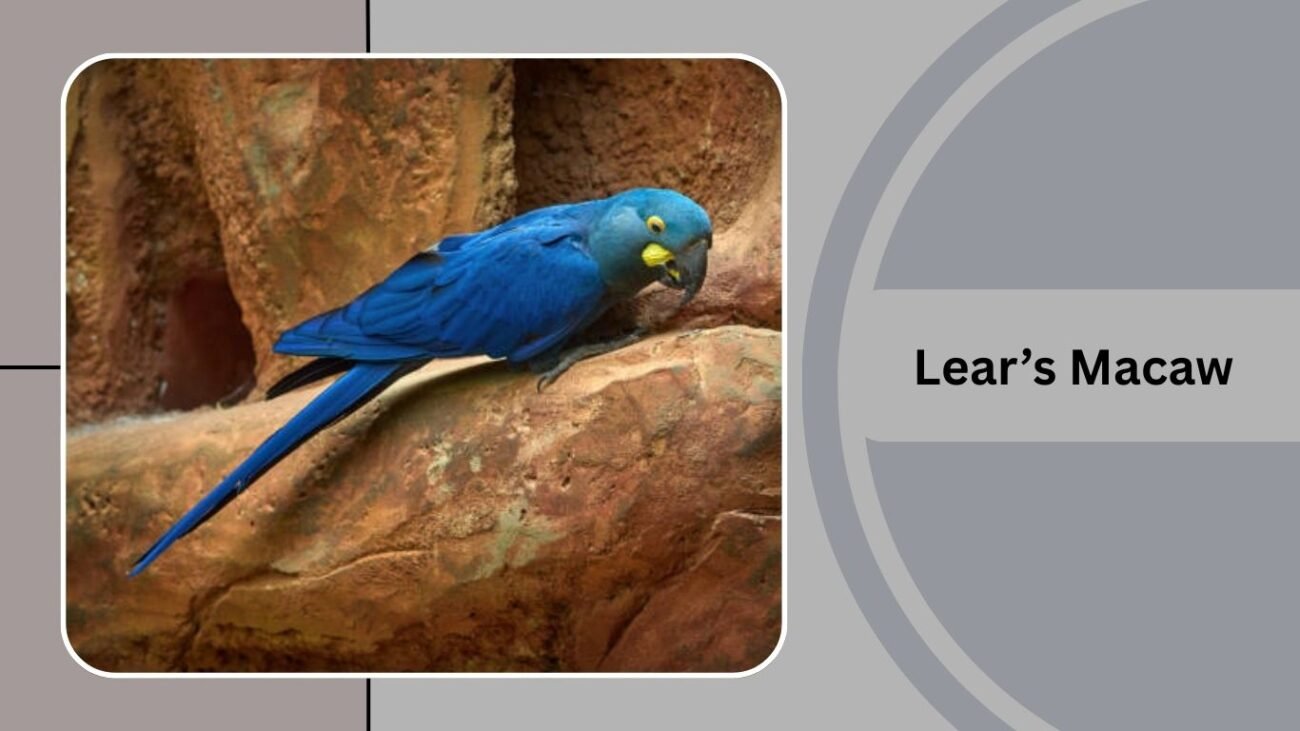
The Lear’s Macaw (Anodorhynchus leari), also known as the Indigo Macaw, is a beautiful and rare species with a striking blue plumage. It was named after the poet Edward Lear, who was famous for painting parrots.
Identification
- Rich cobalt-blue plumage over the entire body
- Bare yellow skin patch at the base of the beak
- Large, strong black beak adapted for cracking hard nuts
- Long pointed tail and grayish legs
- Medium-large size, measuring about 70 cm (27 in) in length
Habitat
Lear’s Macaws are native to northeastern Brazil, particularly the semi-arid caatinga region. They rely heavily on licuri palm groves, where they find both food and nesting opportunities.
Behavior
They are typically seen in small groups, often feeding and roosting together. Lear’s Macaws feed almost exclusively on licuri palm nuts, using their strong beaks to break the hard shells. They are intelligent and alert birds, with a loud, raucous call that helps them stay in contact across open landscapes. Mated pairs remain close, often engaging in affectionate preening and synchronized flight.
8. Hyacinth Macaw
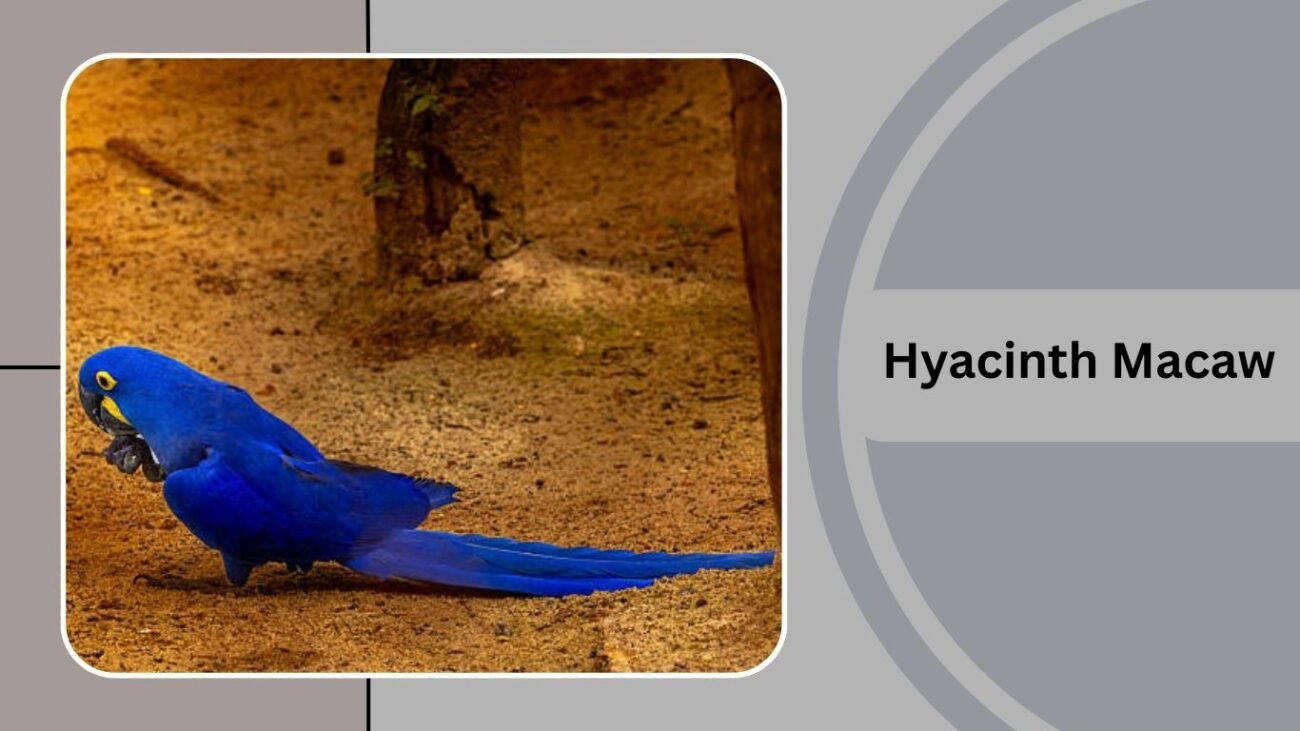
The Hyacinth Macaw (Anodorhynchus hyacinthinus) is the largest parrot species in the world and one of the most spectacular macaws. Its deep cobalt-blue plumage and massive size make it truly unmistakable.
Identification
- Striking cobalt-blue feathers covering the entire body
- Bare yellow skin patches around the eyes and at the base of the beak
- Enormous black beak, powerful enough to crack Brazil nuts
- Long pointed tail, contributing to a total length of 100 cm (39 in)
- Weighs up to 1.5 kg (3.3 lbs), making it the heaviest parrot
Habitat
Hyacinth Macaws are native to central and eastern South America, mainly in Brazil, Paraguay, and Bolivia. They inhabit open woodlands, palm swamps, and savannas, often near stands of palm trees that provide both food and nesting sites.
Behavior
They are gentle and social, often seen in pairs or small family groups. Their diet consists mainly of palm nuts, particularly from acuri and bocaiuva palms, which few other animals can eat due to their hard shells. Despite their size, they are agile fliers and produce loud, deep calls that carry over long distances. They are affectionate, with strong pair bonds, and are known for mutual preening and close companionship.
9. Glaucous Macaw

The Glaucous Macaw (Anodorhynchus glaucus) is a very rare species, possibly extinct, known from historical records and a handful of reports. It was once found in parts of South America but has not been reliably seen in decades.
Identification
- Pale turquoise-blue body with lighter underparts
- Bare yellow facial skin near the base of the beak
- Long, tapered tail and large black beak
- Similar in size to the Lear’s Macaw, reaching about 70 cm (27 in) in length
Habitat
Historically, Glaucous Macaws inhabited gallery forests and palm-rich areas along rivers in Paraguay, northeastern Argentina, Uruguay, and southern Brazil. They were strongly associated with yatay palms, which provided their primary food source.
Behavior
Little is known about their natural behavior due to their rarity. Based on related species, they likely lived in small groups, feeding mainly on palm nuts. Reports suggest they had loud calls similar to other large macaws. Their disappearance is attributed to habitat destruction, hunting, and the decline of palm groves they depended on.
10. Spix’s Macaw

The Spix’s Macaw (Cyanopsitta spixii), often called the “Little Blue Macaw,” is one of the most famous parrots due to its rarity and striking appearance. It gained worldwide attention after being featured in the animated movie Rio.
Identification
- Soft pale blue plumage with lighter shades on the head
- Slightly darker blue on the wings and tail
- Slender black beak and bare gray facial skin
- Small for a macaw, about 55–57 cm (21–23 in) in length
Habitat
Spix’s Macaws were once native to the gallery woodlands along the Rio São Francisco in northeastern Brazil, particularly areas dominated by caraibeira trees. Their natural habitat has been severely degraded, leading to their decline in the wild.
Behavior
They were usually solitary or in pairs, rather than large flocks. Their diet included seeds, nuts, fruits, and berries from native trees, especially the caraibeira. Known for their soft, high-pitched calls, they were quieter compared to larger macaws. Though extinct in the wild for many years, reintroduction efforts are ongoing through captive breeding programs.
11. Red-fronted Macaw

The Red-fronted Macaw (Ara rubrogenys) is one of the smaller macaws and is notable for its restricted range in Bolivia. Its bright forehead patch gives it a distinctive look.
Identification
- Green body with red patch on the forehead and crown
- Red shoulders and thighs with blue flight feathers
- White facial skin with fine feather lines
- Medium size, about 60 cm (24 in) in length
Habitat
Red-fronted Macaws are endemic to arid valleys in south-central Bolivia. They prefer dry scrubland, cliffs, and steep canyons, where they nest in rock crevices rather than tree cavities like most macaws.
Behavior
These macaws are highly social, often forming small groups or flocks. They feed on seeds, fruits, and cultivated crops, which sometimes causes conflict with farmers. Their calls are loud and harsh, echoing across rocky valleys. They are playful and acrobatic in flight, often engaging in synchronized movements with their mates.
12. Chestnut-fronted Macaw (Severe Macaw)

The Chestnut-fronted Macaw (Ara severus), also known as the Severe Macaw, is the largest of the “mini-macaws.” Despite being smaller than the giant macaws, it has a strong personality and is a popular companion parrot.
Identification
- Green body with blue on the wings and tail
- Chestnut-brown patch on the forehead and below the beak
- White bare facial skin with feather lines
- Medium size, reaching 45–50 cm (18–20 in) in length
Habitat
Chestnut-fronted Macaws range widely across northern South America, including Venezuela, Guyana, Colombia, Peru, Bolivia, and Brazil. They inhabit forests, woodlands, savannas, and agricultural areas.
Behavior
These macaws are active and noisy, often moving in pairs or flocks. They feed on seeds, nuts, fruits, and berries, frequently visiting cultivated fields. Their flight is swift, and they communicate with sharp screeches. Like larger macaws, they form strong pair bonds and engage in playful behaviors, both in the wild and in captivity.
13. Blue-headed Macaw

The Blue-headed Macaw (Primolius couloni) is a smaller and rarer macaw species, easily recognized by its vivid blue head contrasting with its green body.
Identification
- Bright green body with a striking blue head
- Blue on the wings and tail feathers
- Bare white skin patch around the eye with fine feather lines
- Smaller macaw, measuring about 40–42 cm (16–17 in) in length
Habitat
Blue-headed Macaws are found in southwestern Amazonia, including southeastern Peru, northern Bolivia, and western Brazil. They prefer tropical forests and woodland edges, often near rivers and floodplains.
Behavior
They are shy and less vocal compared to larger macaws, usually seen in pairs or small groups. Their diet consists of fruits, seeds, and nuts, with occasional visits to clay licks. Their calls are higher-pitched and less harsh, making them harder to detect in dense forests. Despite their smaller size, they show the same playful, intelligent behaviors typical of macaws.
14. Golden-collared Macaw

The Golden-collared Macaw (Primolius auricollis) is a small but vibrant macaw, named for the bright yellow band across its neck. It is playful, active, and often found in pairs or small flocks.
Identification
- Green body with a golden-yellow band (collar) around the back of the neck
- Blue flight feathers and tail with red under-tail coverts
- Bare white facial skin with fine feather lines
- Small macaw, about 38 cm (15 in) in length
Habitat
Golden-collared Macaws are native to central South America, including parts of Bolivia, Brazil, Paraguay, and northern Argentina. They inhabit woodland edges, savannas, and forested areas, often near rivers.
Behavior
They are social and lively, often traveling in pairs or groups of up to 10 individuals. Their diet includes seeds, fruits, berries, and nuts, and they are known to forage in cultivated areas. They are strong fliers and communicate with sharp, repetitive calls, often heard before they are seen.
15. Blue-winged Macaw

The Blue-winged Macaw (Primolius maracana), sometimes called the Illiger’s Macaw, is another smaller macaw known for its colorful plumage and adaptability.
Identification
- Green body with blue on the wings and tail
- Reddish patch on the lower belly
- Bare white facial patch with fine feather lines
- Medium-small size, about 40–43 cm (16–17 in) in length
Habitat
Blue-winged Macaws are found in eastern and southern Brazil, northeastern Argentina, and Paraguay. They prefer forest edges, wooded savannas, and gallery forests, often close to rivers and palm groves.
Behavior
They are intelligent and social, most often seen in pairs or small groups. Their diet includes palm fruits, seeds, berries, and cultivated crops. They are agile fliers with swift wingbeats and produce loud, sharp calls when flying. Like other macaws, they display strong pair bonds and frequently engage in mutual grooming and playful interactions.
16. Hahn’s Macaw
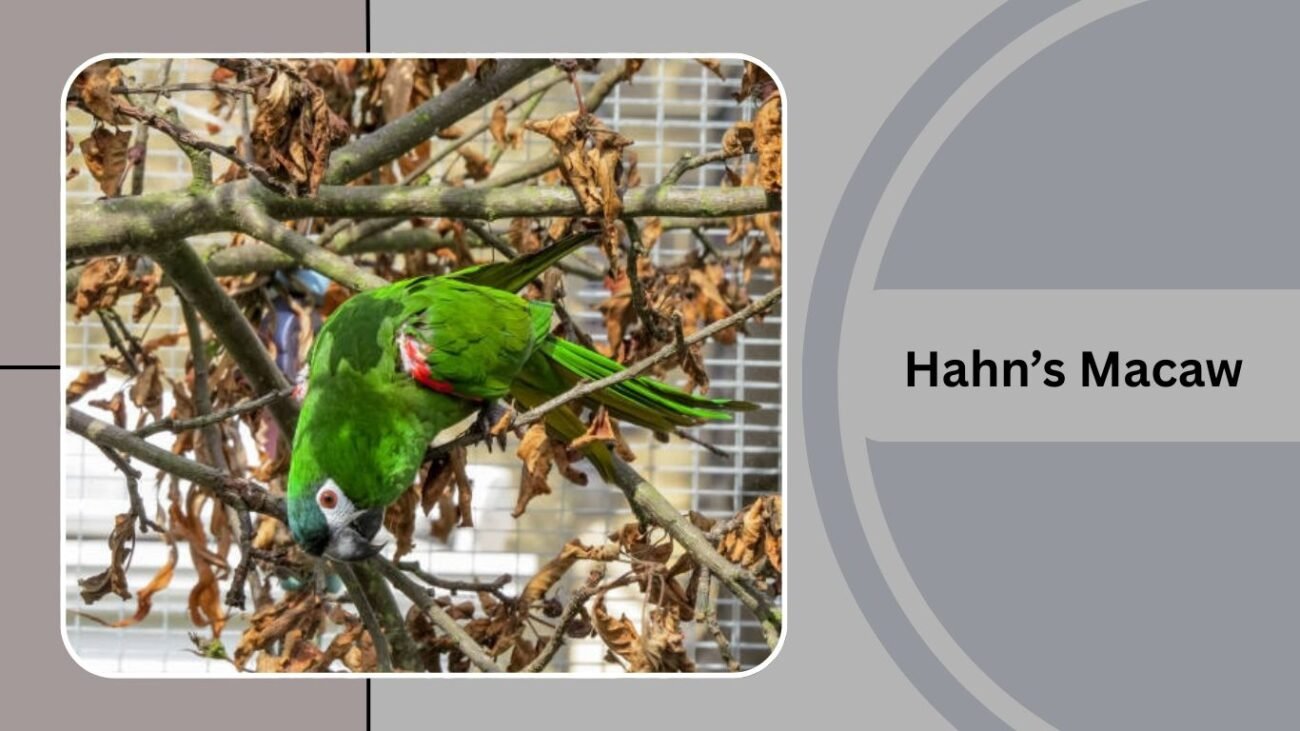
The Hahn’s Macaw (Diopsittaca nobilis nobilis) is the smallest macaw species, but it is full of personality. Despite its small size, it is lively, intelligent, and often kept as a companion bird.
Identification
- Green plumage covering most of the body
- Blue crown on the head and red undertail coverts
- White bare facial skin around the eye
- Small size, about 30 cm (12 in) in length
Habitat
Hahn’s Macaws are native to northern South America, including Venezuela, Guyana, Suriname, French Guiana, and northern Brazil. They inhabit savannas, forest edges, and woodland areas, often near rivers.
Behavior
They are active and playful, usually found in pairs or small flocks. Their diet includes seeds, fruits, berries, and nuts. They have high-pitched calls that are less harsh than larger macaws, but still loud for their size. They form strong pair bonds and are often seen engaging in mutual preening.
17. Noble Macaw

The Noble Macaw (Diopsittaca nobilis cumanensis) is closely related to the Hahn’s Macaw and sometimes considered a subspecies, though it is often treated as a distinct type due to differences in range and appearance.
Identification
- Similar green body and red undertail coverts as Hahn’s Macaw
- Slightly larger in size, reaching about 33 cm (13 in)
- Blue shading on the forehead and crown, though less vivid than Hahn’s
- Bare white facial patch around the eyes with a dark beak
Habitat
Noble Macaws are found further south than Hahn’s, ranging through central Brazil and into parts of Bolivia. They inhabit woodlands, forest edges, and open savannas with scattered trees.
Behavior
They are social birds, often seen in pairs or small groups. Their diet consists of fruits, seeds, palm nuts, and berries. Like other macaws, they are intelligent and curious, showing strong social bonds and playful behavior. Their calls are sharp and high-pitched, used to keep contact while flying or feeding.