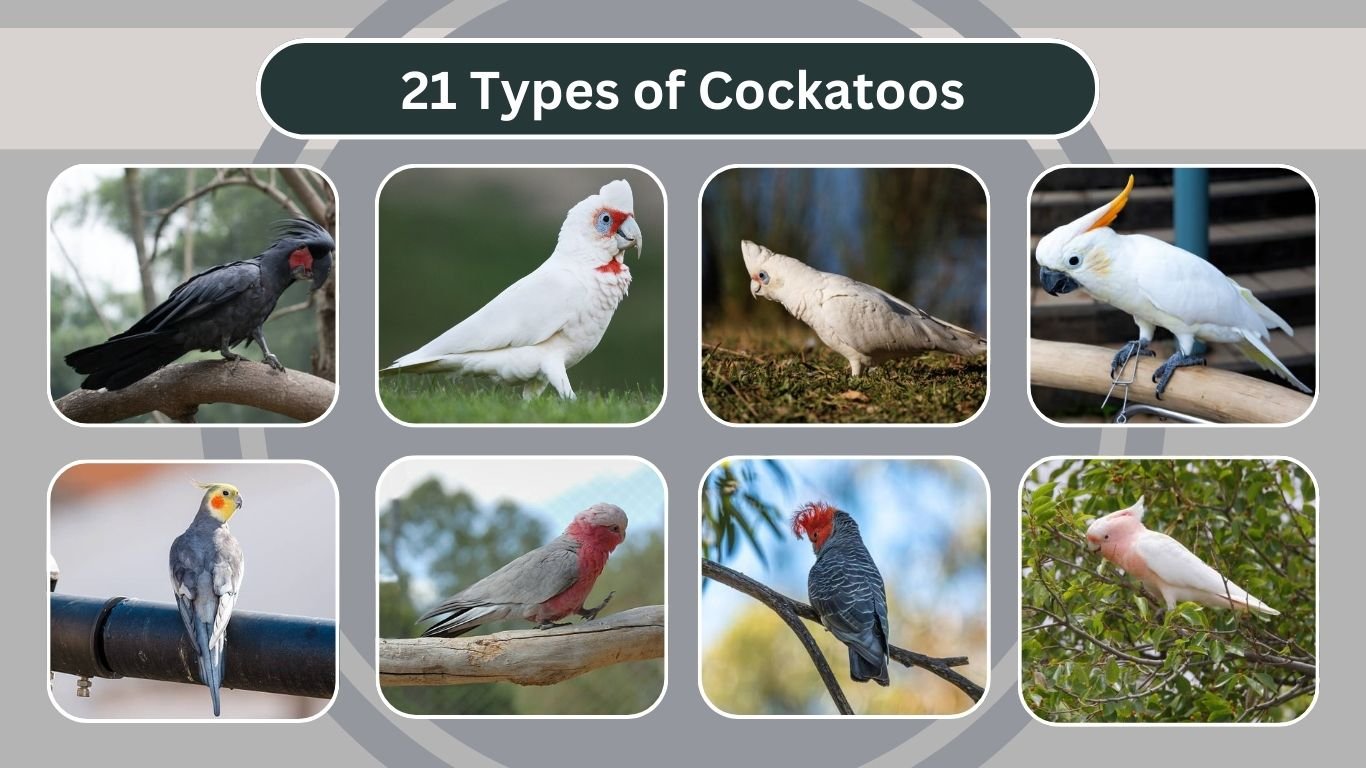
Cockatoos are some of the most charismatic and intelligent members of the parrot family, instantly recognizable by their expressive crests and loud, playful personalities. Found mainly in Australia, Indonesia, Papua New Guinea, and surrounding regions, these birds display remarkable diversity in size, color, and behavior. From the vibrant Red-tailed Black Cockatoo to the charming Cockatiel and the majestic Black Palm Cockatoo, each species has unique traits that make it fascinating. In this guide, we’ll explore 21 types of cockatoos with their identification and behaviors.
1. Sulphur-crested Cockatoo
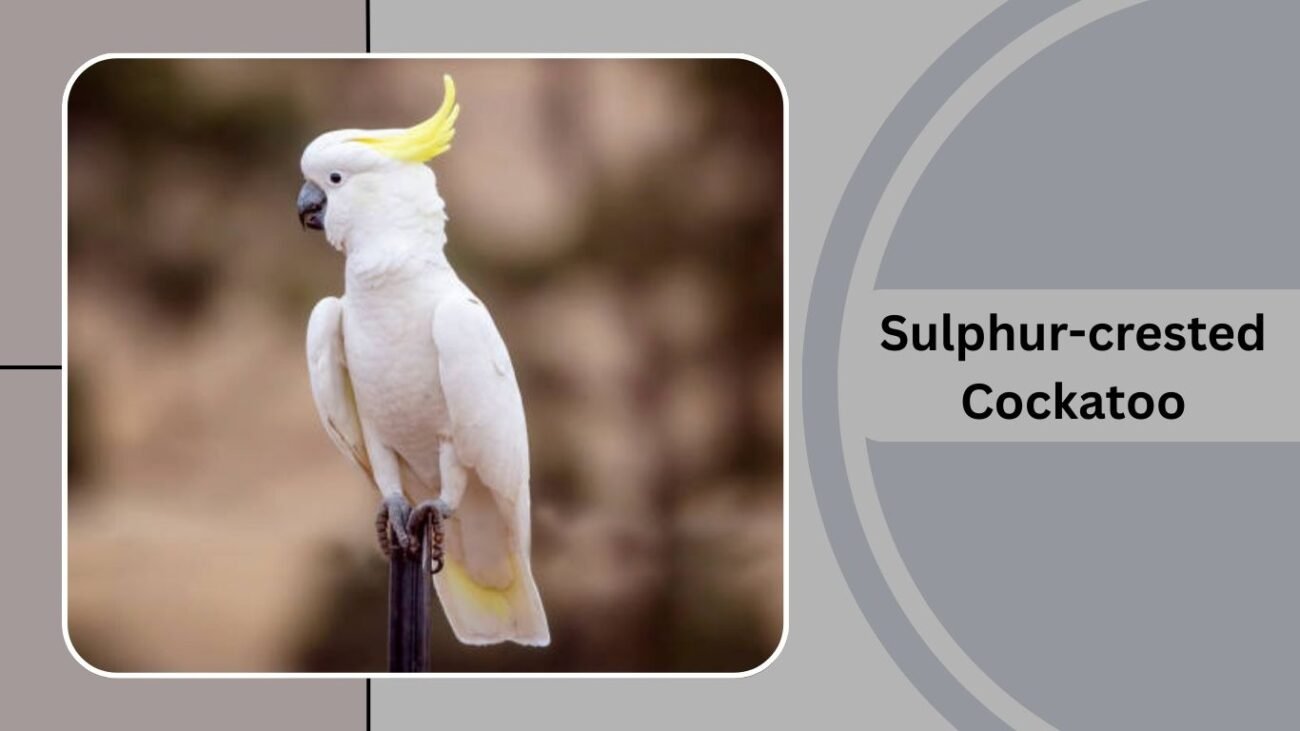
The Sulphur-crested Cockatoo (Cacatua galerita) is one of the most recognizable cockatoos, admired for its striking white feathers and flamboyant yellow crest. Native to Australia and nearby regions, it is a highly social and intelligent bird often seen in large, noisy flocks.
Identification
- Bright white plumage covering the entire body
- Large, yellow crest that can be raised or lowered
- Strong curved beak, grayish-black in color
- Stands about 45–50 cm (18–20 in) tall with a wingspan of up to 100 cm (39 in)
Habitat
Sulphur-crested Cockatoos inhabit a wide range of environments, including forests, woodlands, savannas, and even urban areas. They are commonly found in Australia, New Guinea, and some Indonesian islands, often adapting well to areas with human activity.
Behavior
These cockatoos are highly social, forming noisy flocks that can number in the hundreds. They are known for their loud, screeching calls and playful antics. Intelligent and curious, they often interact with humans, sometimes even learning simple tricks. Their diet includes seeds, fruits, nuts, roots, and occasionally insects. They also use their strong beaks to break open hard seeds and bark, showcasing impressive strength and problem-solving abilities.
2. Major Mitchell’s Cockatoo (Leadbeater’s Cockatoo)
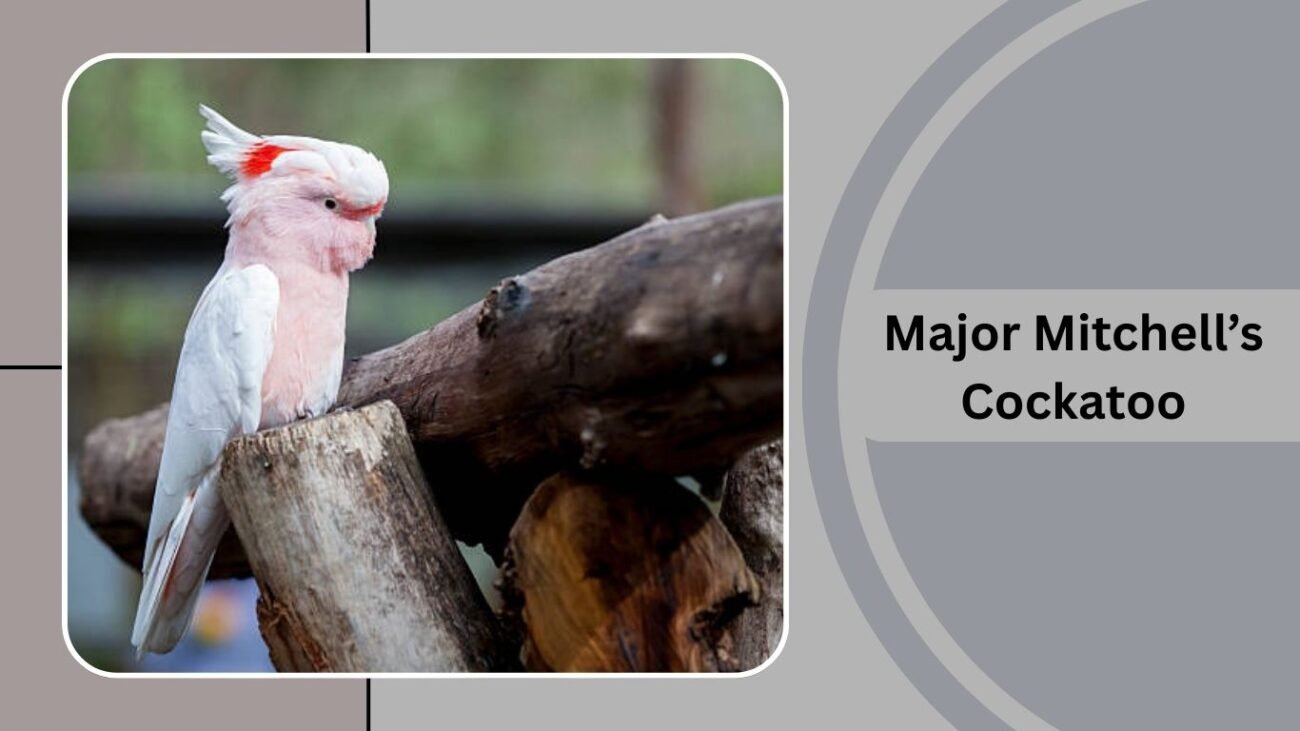
The Major Mitchell’s Cockatoo (Lophochroa leadbeateri), also known as the Pink Cockatoo, is often considered one of the most beautiful cockatoo species. Its striking mix of pink and white feathers and vibrant crest make it a favorite among bird enthusiasts.
Identification
- Soft pink plumage on the chest and underparts
- White wings and back with pale pink highlights
- Bright, multicolored crest of red, yellow, and white
- Medium-sized cockatoo, around 35–40 cm (14–16 in) tall
Habitat
Major Mitchell’s Cockatoos are native to inland Australia, inhabiting semi-arid woodlands, scrublands, and riverine forests. They prefer areas with eucalyptus trees for nesting and are less common in coastal regions.
Behavior
These cockatoos are more solitary compared to other species, often seen in pairs or small groups. They feed on seeds, nuts, berries, and roots, foraging mostly on the ground. Known for their strong pair bonds, they engage in synchronized flying and mutual preening. Their flight is graceful, often accompanied by high-pitched calls.
3. Galah (Rose-breasted Cockatoo)
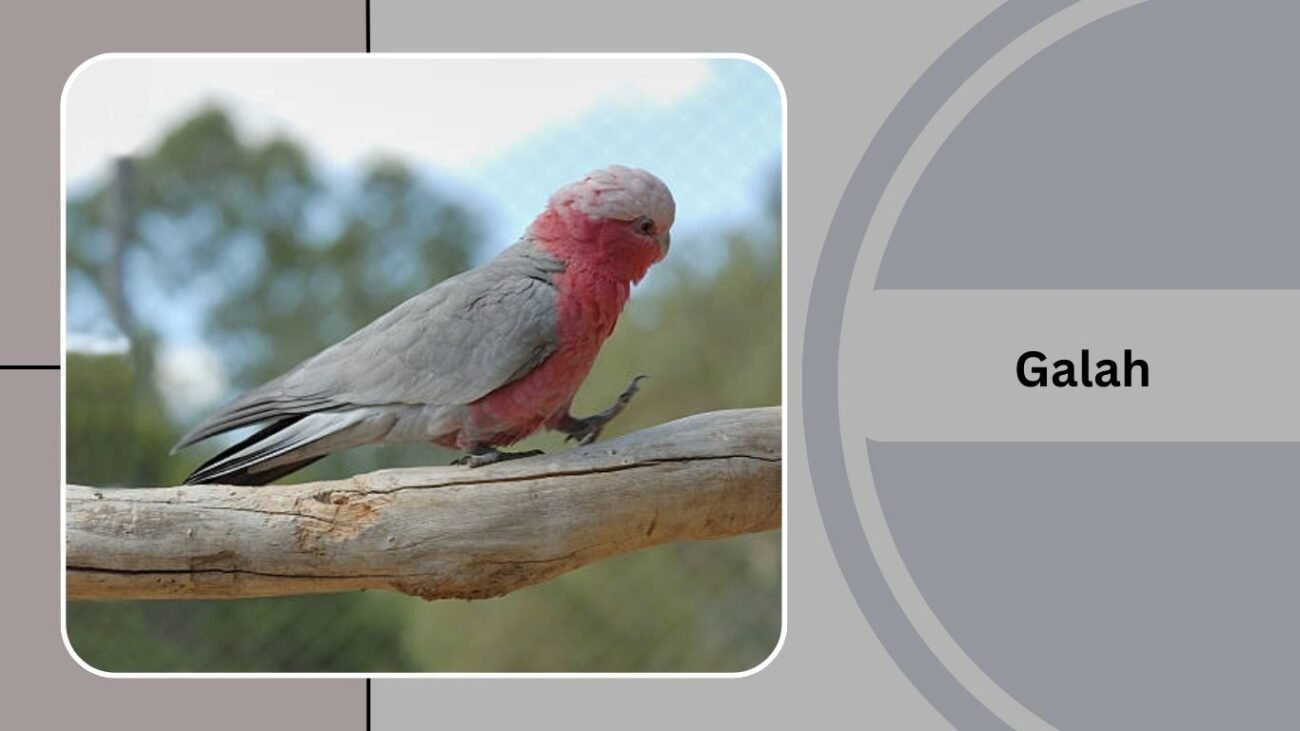
The Galah (Eolophus roseicapilla), also called the Rose-breasted Cockatoo, is one of Australia’s most widespread and familiar cockatoos. Its pink and gray coloring makes it stand out in both wild and urban landscapes.
Identification
- Bright pink chest and face with gray wings and back
- Small white crest compared to other cockatoos
- Stocky build with strong beak and short tail
- Medium size, about 35 cm (14 in) in length
Habitat
Galahs are found across nearly all of Australia, adapting to open woodlands, grasslands, farmland, and even cities. They nest in tree hollows and are highly adaptable to human presence.
Behavior
These birds are very social, forming large, noisy flocks. They are playful and intelligent, often seen hanging upside down from branches or performing acrobatics. Their diet includes seeds, grasses, and fruits, and they frequently forage on the ground. Their lively nature and affectionate behavior also make them popular as pets, although they require high mental stimulation.
4. Yellow-tailed Black Cockatoo
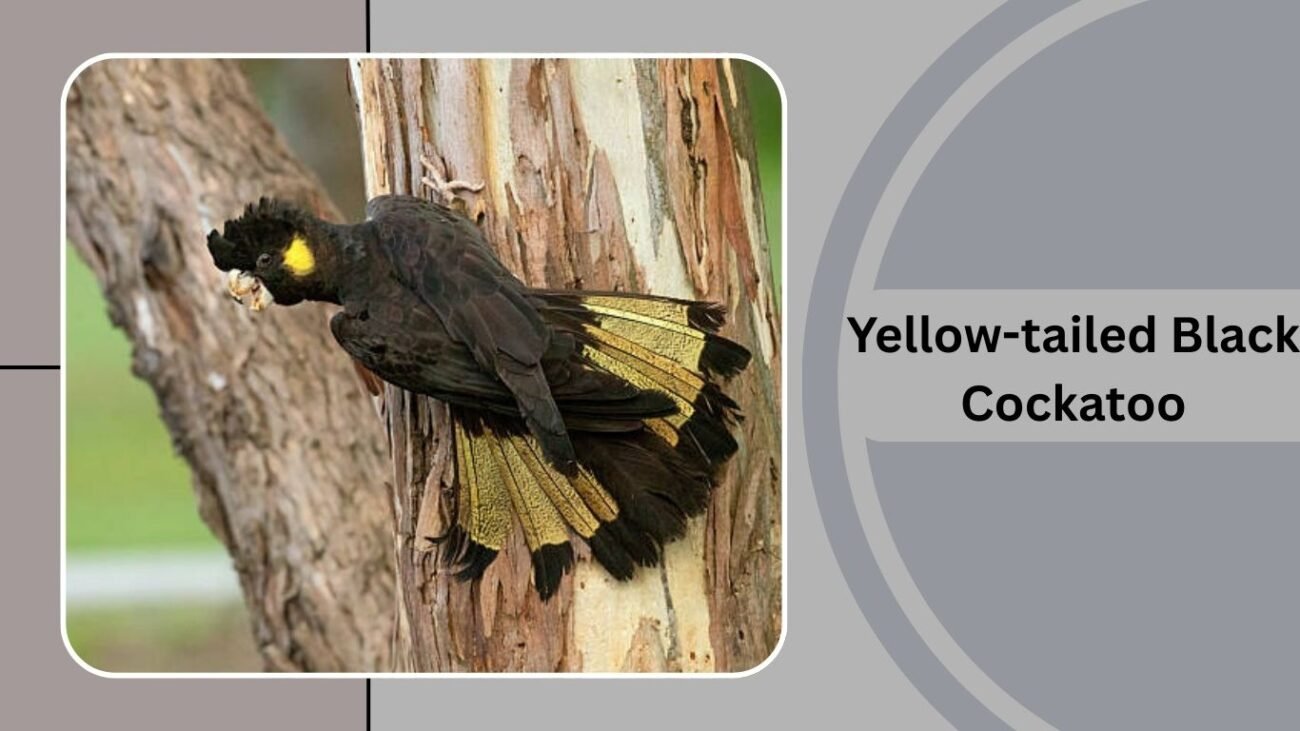
The Yellow-tailed Black Cockatoo (Calyptorhynchus funereus) is a striking bird, easily recognized by its dark plumage contrasted with bright yellow markings. It is native to southeastern Australia and is often heard before it is seen due to its distinctive wailing calls.
Identification
- Predominantly black plumage with yellow cheek patches
- Bright yellow panels on the tail, visible in flight
- Large, heavy bill suited for cracking seeds and cones
- Large size, about 55–65 cm (22–26 in) long
Habitat
Yellow-tailed Black Cockatoos inhabit forests, woodlands, and coastal regions of southeastern Australia, including Tasmania. They prefer areas with native pine, eucalyptus, and banksia trees, which provide both food and nesting sites.
Behavior
These cockatoos are slow, deliberate fliers, often seen gliding between tall trees. They feed on seeds, nuts, wood-boring larvae, and cones, using their strong beaks to tear into wood and extract food. Social in nature, they are typically seen in small groups, though larger flocks gather in areas with abundant food. Their loud, mournful calls echo across forests, making them easy to detect.
5. Red-tailed Black Cockatoo
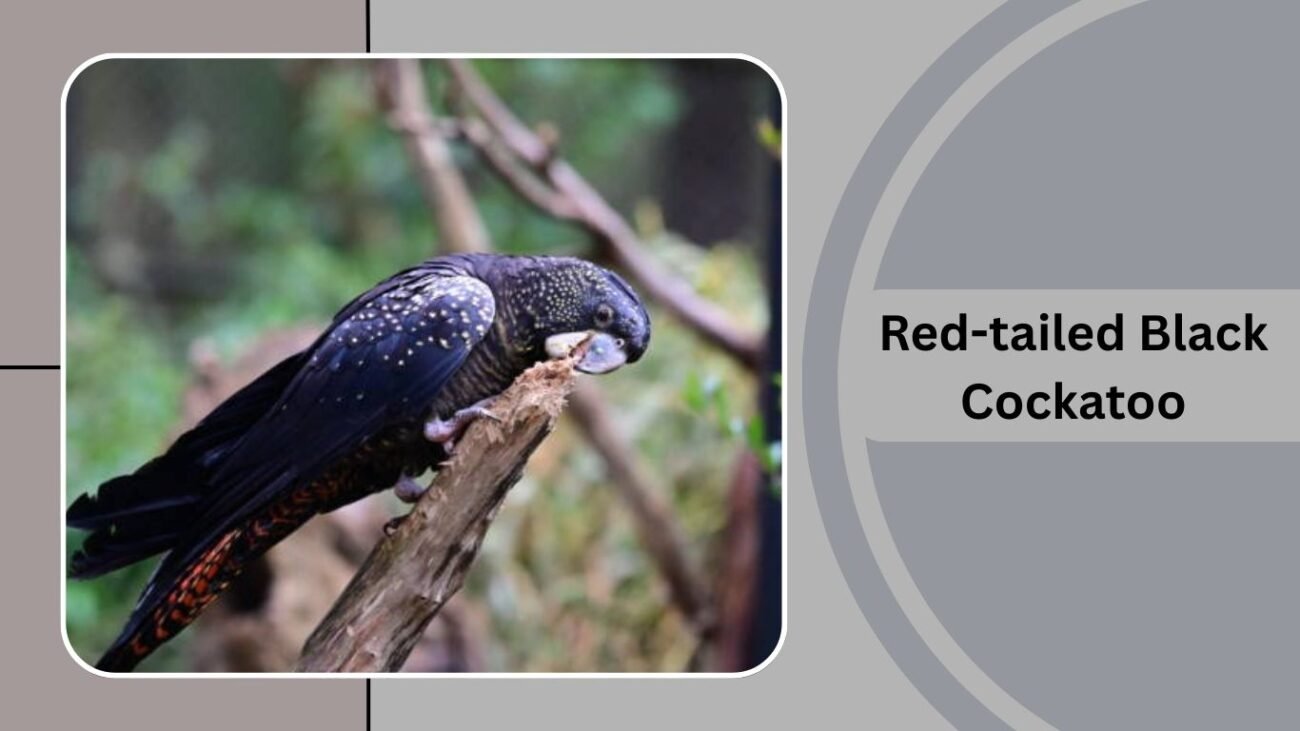
The Red-tailed Black Cockatoo (Calyptorhynchus banksii) is one of the most iconic cockatoos of northern and central Australia, admired for its glossy black feathers and striking red tail panels.
Identification
- Glossy black plumage with vivid red panels on the tail (males)
- Females are more mottled, with yellow spots and orange-yellow barring on the tail
- Large, curved bill and strong build
- Stands about 60 cm (24 in) tall, with a wingspan up to 120 cm (47 in)
Habitat
This species inhabits open woodlands, savannas, and inland deserts of northern and central Australia. They rely heavily on eucalyptus trees for food and nesting, but they are also found in grasslands and agricultural areas.
Behavior
Red-tailed Black Cockatoos are powerful fliers, often moving in small to medium flocks. They feed mainly on eucalyptus seeds, casuarina, and acacia pods, as well as fruits and berries. During feeding, they are often seen cracking open seed pods with remarkable strength. Males display their red tail panels during flight, especially in courtship, while their calls are deep, rolling, and carry over long distances.
6. Glossy Black Cockatoo
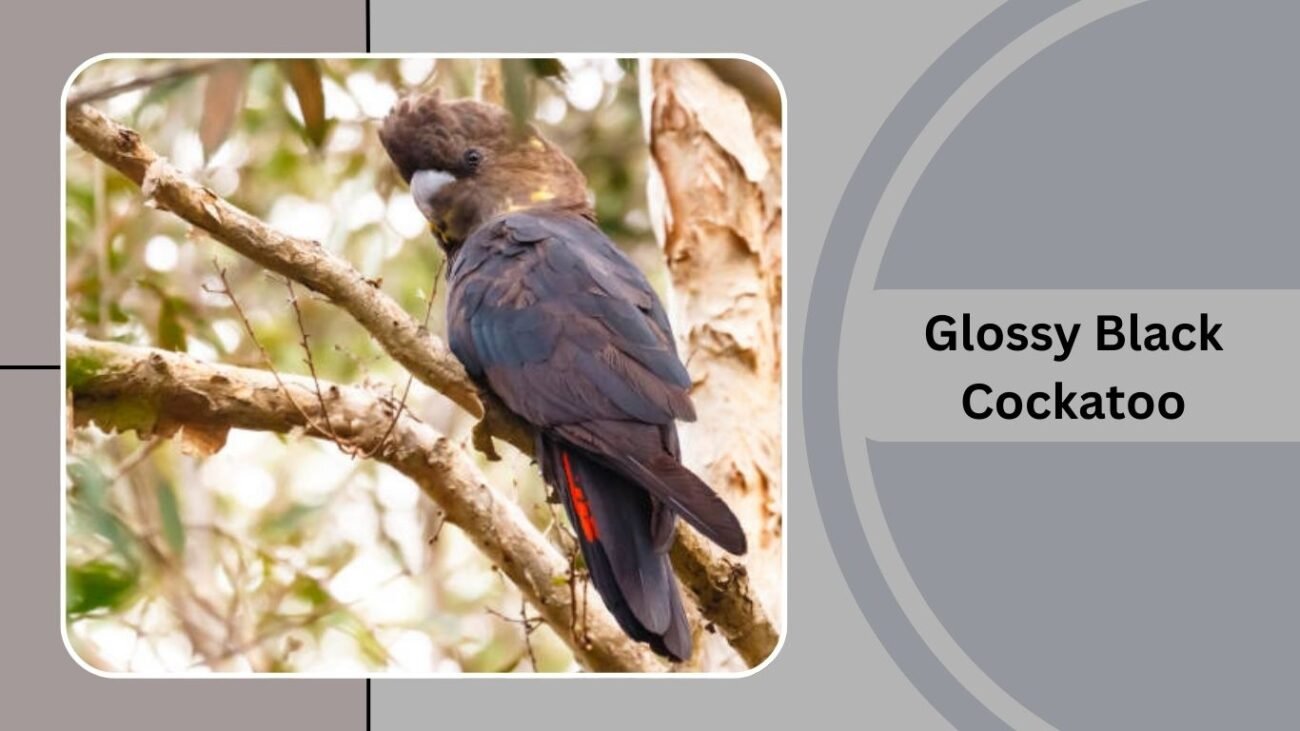
The Glossy Black Cockatoo (Calyptorhynchus lathami) is one of the smaller and more specialized black cockatoos, known for its quiet nature and dependence on casuarina trees. Despite its striking appearance, it is often shy and less conspicuous compared to other cockatoos.
Identification
- Dark brownish-black plumage with a slight glossy sheen
- Red panels in the tail (males), while females show yellow flecks on the head and neck
- Relatively small for a cockatoo, about 45–50 cm (18–20 in) long
- Shorter crest compared to other black cockatoos
Habitat
This species inhabits open woodlands, forests, and coastal regions of eastern Australia, particularly where casuarina trees grow. They are often seen in pairs or small family groups rather than large flocks.
Behavior
Glossy Black Cockatoos are quieter than most cockatoos, producing soft growling calls. They feed almost exclusively on casuarina seeds, using their powerful bills to crack open the hard cones. They are often seen perched quietly while feeding, making them harder to spot despite their size.
7. Gang-gang Cockatoo
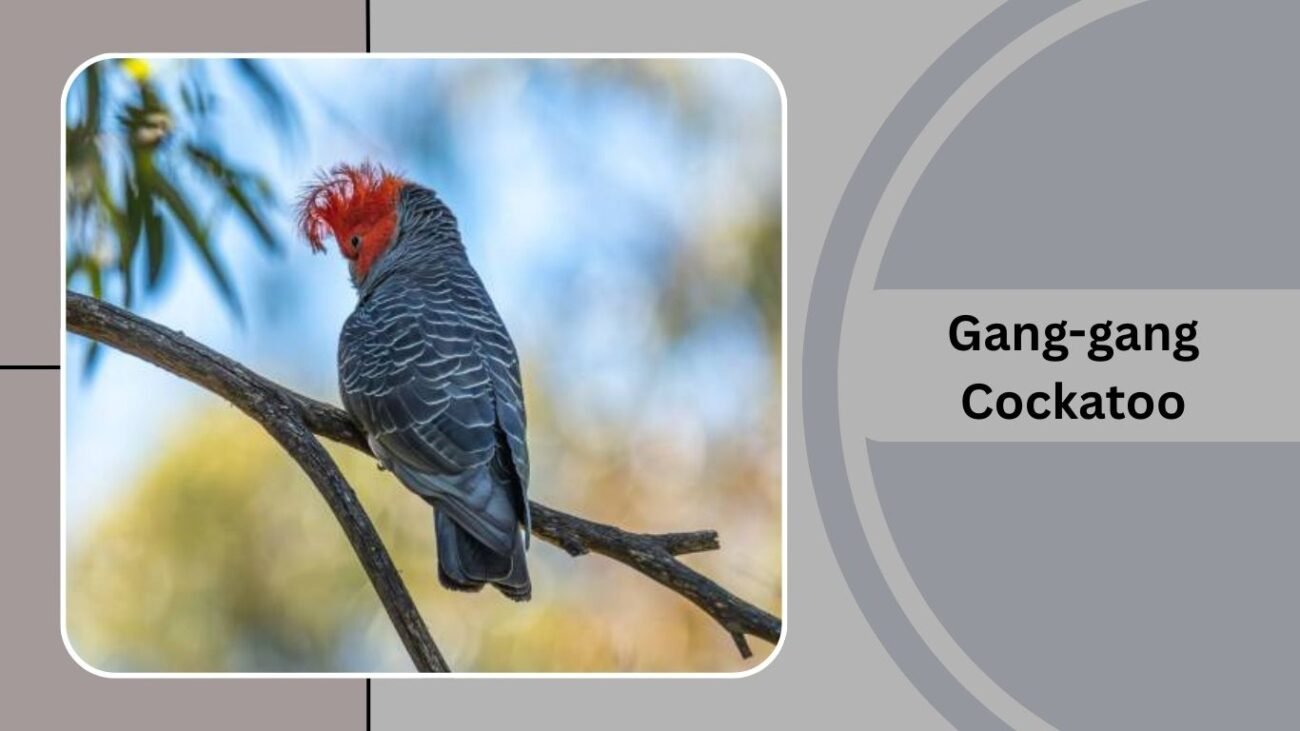
The Gang-gang Cockatoo (Callocephalon fimbriatum) is a unique and charming cockatoo, instantly recognizable by the male’s bright red head and its distinctive call, which resembles a creaking door.
Identification
- Males have a bright red head and crest with a gray body
- Females are gray overall with scalloped feathers and a smaller crest
- Compact build, about 35–36 cm (14 in) long
- Small bill compared to other cockatoos
Habitat
Gang-gang Cockatoos are found in the cool forests and woodlands of southeastern Australia, particularly in alpine regions. In winter, they may move to lower elevations and suburban areas.
Behavior
These cockatoos are gentle and social, usually found in pairs or small groups. They feed on seeds, berries, nuts, and fruits, often visiting gardens and orchards. Their call is distinctive and often described as sounding like a squeaky hinge. They are playful, curious, and sometimes seen hanging upside down from branches while feeding.
8. Long-billed Corella
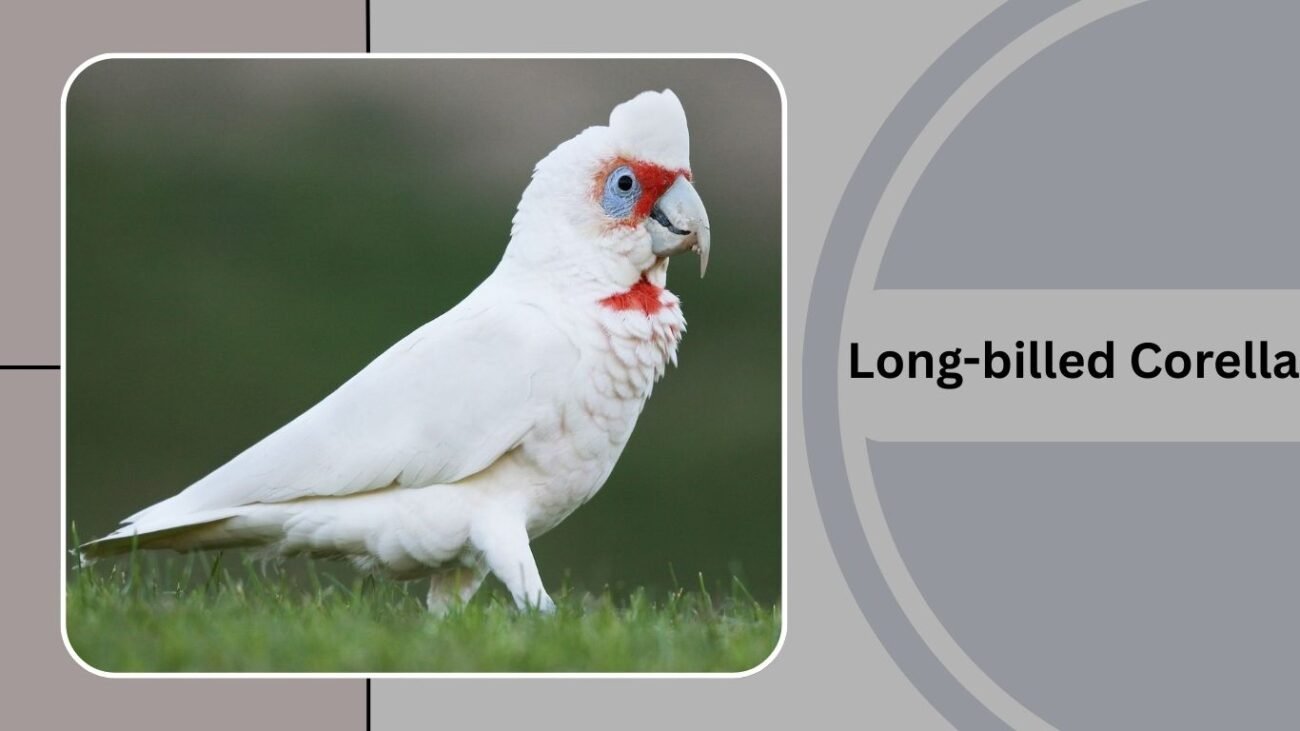
The Long-billed Corella (Cacatua tenuirostris) is a distinctive cockatoo with a long, narrow bill adapted for digging. It is native to southeastern Australia and is often found in both wild flocks and suburban settings.
Identification
- White plumage with a salmon-pink patch on the throat and face
- Long, slender upper bill extending downward, perfect for foraging
- Blue eye-ring with expressive dark eyes
- Medium size, about 40 cm (16 in) in length
Habitat
Long-billed Corellas are common in open woodlands, grasslands, and farmlands of Victoria, New South Wales, and South Australia. They adapt well to urban environments, frequently seen in parks, golf courses, and farmland.
Behavior
Highly social and intelligent, they often gather in large, noisy flocks. They use their long beaks to dig for roots, bulbs, and seeds, particularly favoring onion grass corms. These cockatoos are playful, vocal, and capable of mimicking human speech when kept as pets.
9. Little Corella
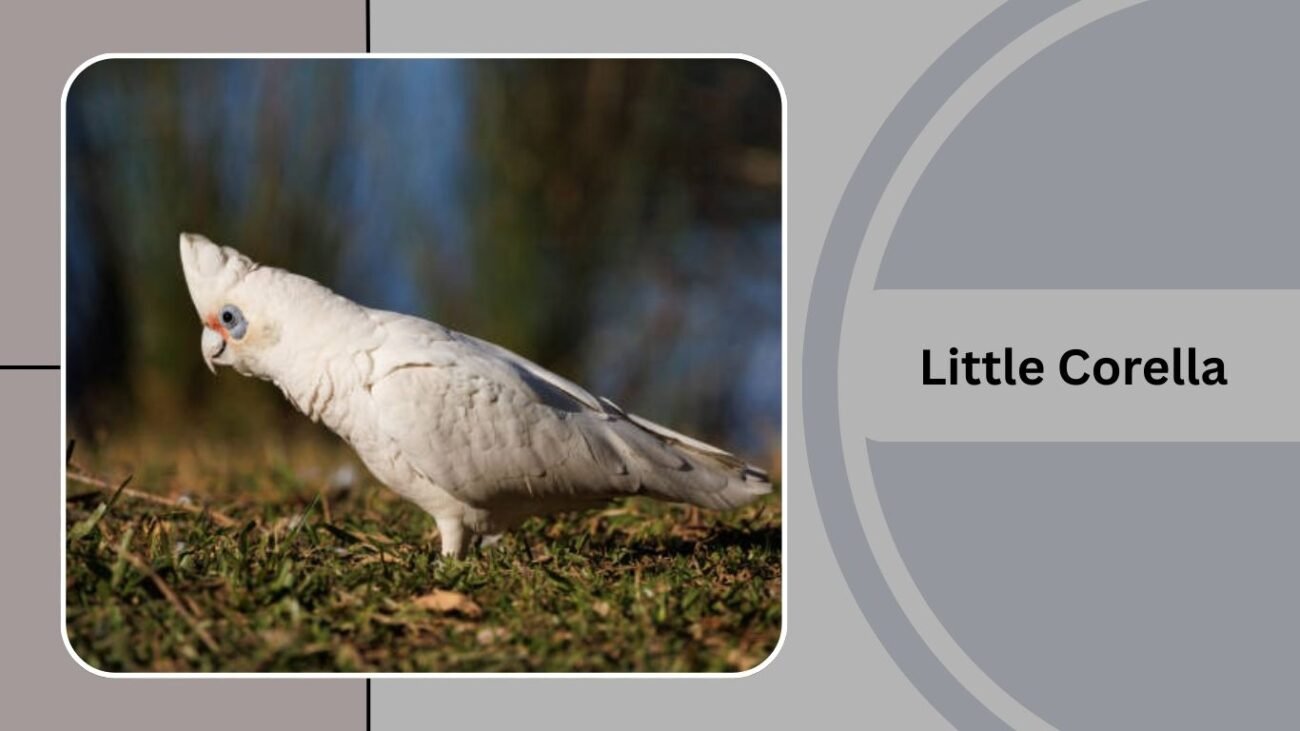
The Little Corella (Cacatua sanguinea), sometimes called the Bare-eyed Cockatoo, is a small, lively cockatoo that thrives in large flocks. It is one of the most common cockatoo species in Australia.
Identification
- Predominantly white plumage with a faint wash of pale pink near the base of the beak
- Bare blue eye-ring around the eyes
- Smaller and more compact than other corellas, about 35–39 cm (14–15 in) long
- Short, broad bill compared to the Long-billed Corella
Habitat
Little Corellas are found throughout most of Australia, especially in inland regions, grasslands, and agricultural areas. They often roost in large trees near rivers and water sources.
Behavior
These cockatoos are extremely gregarious, forming flocks of hundreds or even thousands. They feed on seeds, grains, nuts, and roots, often foraging in open fields. Their playful nature includes hanging upside down, sliding along wires, and engaging in aerial acrobatics. They are also known for their loud, screeching calls, which can be heard over great distances.
10. Western Corella
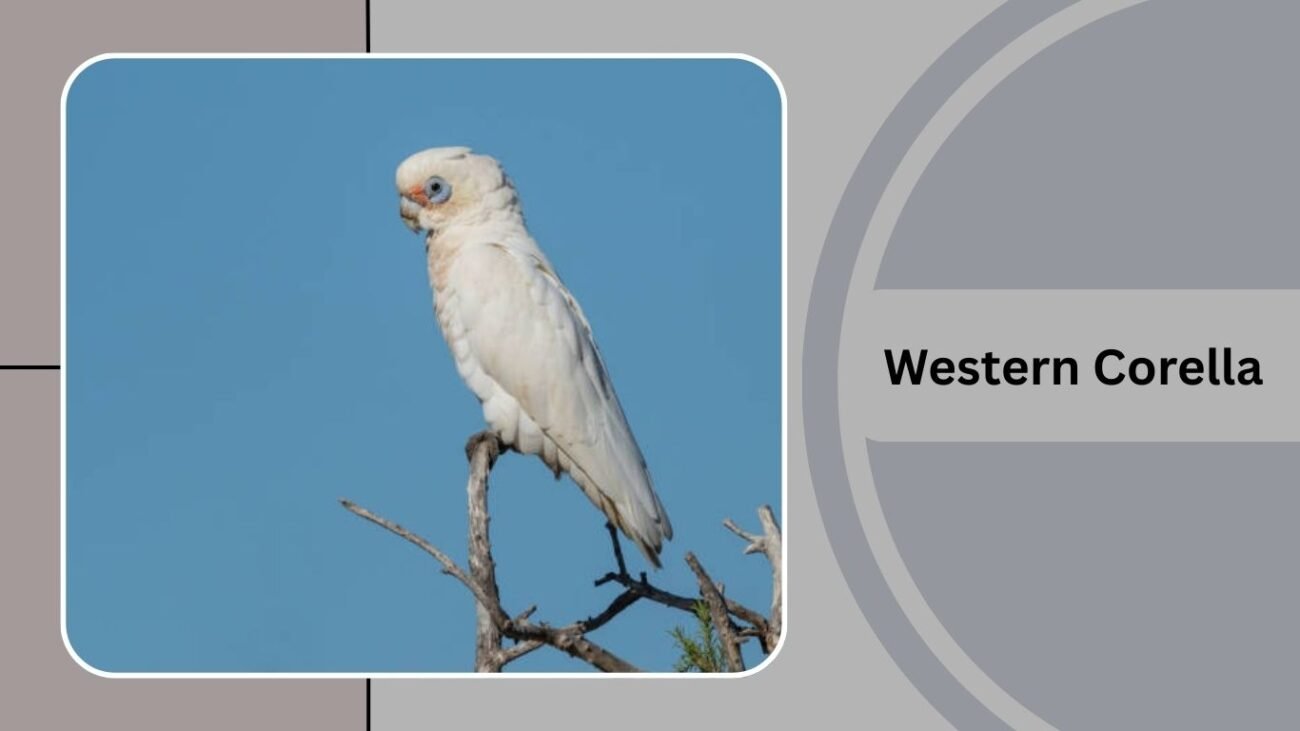
The Western Corella (Cacatua pastinator) is a rare corella species found only in parts of Western Australia. It closely resembles other corellas but is larger and less widespread, making it a special sight in its native range.
Identification
- White plumage with a faint pink patch near the base of the beak
- Blue eye-ring similar to the Little Corella
- Longer bill than the Little Corella, but shorter than the Long-billed Corella
- Size about 43–50 cm (17–20 in), making it one of the larger corellas
Habitat
Western Corellas are restricted to the southwestern regions of Western Australia. They inhabit open woodlands, farmlands, and grassy plains, often near rivers and wetlands.
Behavior
These cockatoos are highly social, living in medium to large flocks. They forage on the ground for seeds, bulbs, and roots, often using their strong bills to dig. Their playful and noisy nature makes them similar to other corellas, but they are less common and more localized in distribution.
11. Cockatiel
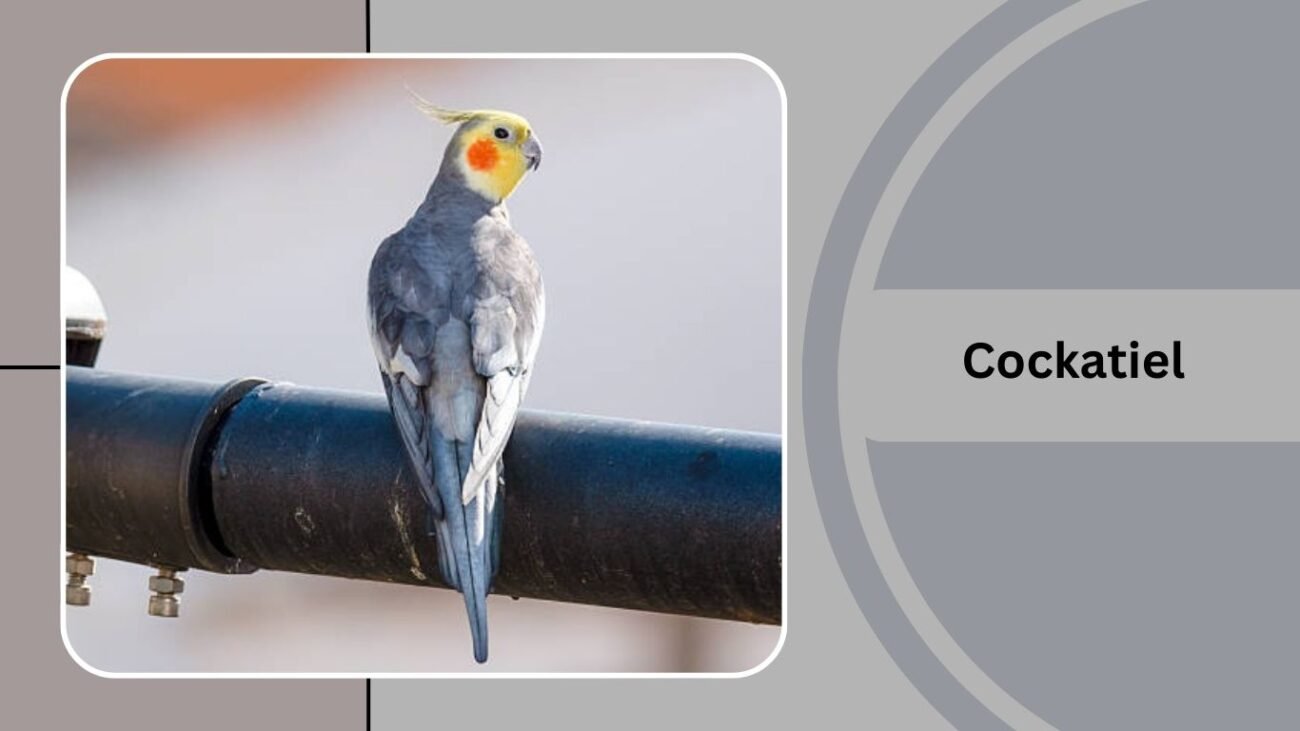
The Cockatiel (Nymphicus hollandicus) is the smallest member of the cockatoo family and one of the most popular pet birds worldwide. Native to Australia, it is admired for its charming personality and distinctive crest.
Identification
- Gray body with a bright yellow face and orange cheek patches (males)
- Females are duller, with gray faces and barring on the tail
- Upright crest that changes position based on mood
- Small size, about 30–33 cm (12–13 in) long
Habitat
Cockatiels inhabit Australia’s open country, including grasslands, shrublands, and farmlands. They prefer areas near water sources and are highly nomadic, moving in response to rainfall and food availability.
Behavior
Cockatiels are friendly, gentle, and highly social, often forming flocks in the wild. They feed on seeds, grasses, and fruits, usually foraging on the ground. Known for their whistling ability and affectionate nature, they are one of the most popular pet birds. In the wild, their swift, direct flight and constant calling help keep flocks together.
12. Blue-eyed Cockatoo
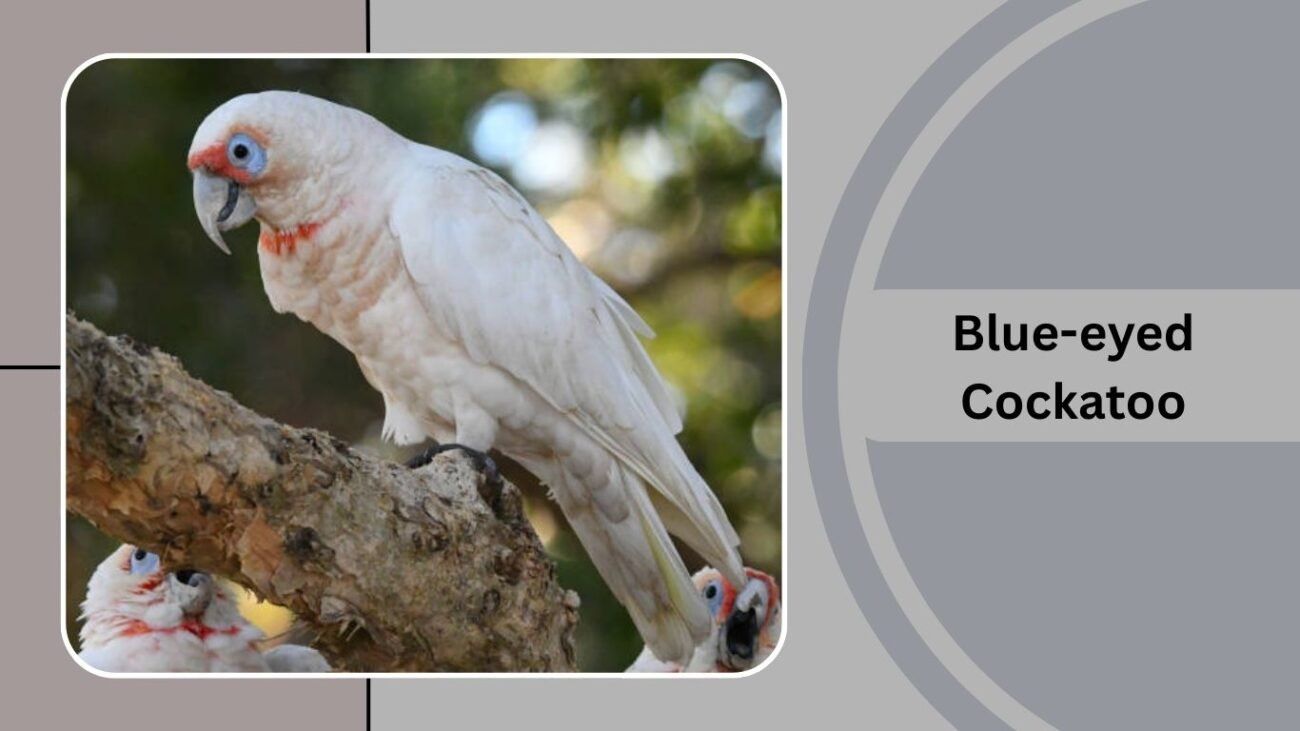
The Blue-eyed Cockatoo (Cacatua ophthalmica) is a striking cockatoo species found only in New Britain, Papua New Guinea. It is named for its vivid blue eye-rings, which contrast beautifully with its white plumage.
Identification
- Pure white plumage with a slight yellow tinge under the wings and tail
- Distinct bright blue skin around the eyes
- Strong, curved grayish-black bill
- Medium size, about 50 cm (20 in) long
Habitat
Blue-eyed Cockatoos are native to lowland forests, secondary growth, and cultivated areas of New Britain. They are arboreal, spending most of their time in the canopy.
Behavior
These cockatoos are intelligent and curious, often traveling in small flocks. They feed on seeds, fruits, berries, and nuts, using their powerful bills to crack hard shells. Their calls are loud and harsh, typical of cockatoos, and they are highly social, often engaging in playful interactions.
13. Ducorps’ Cockatoo (Solomon Islands Cockatoo)
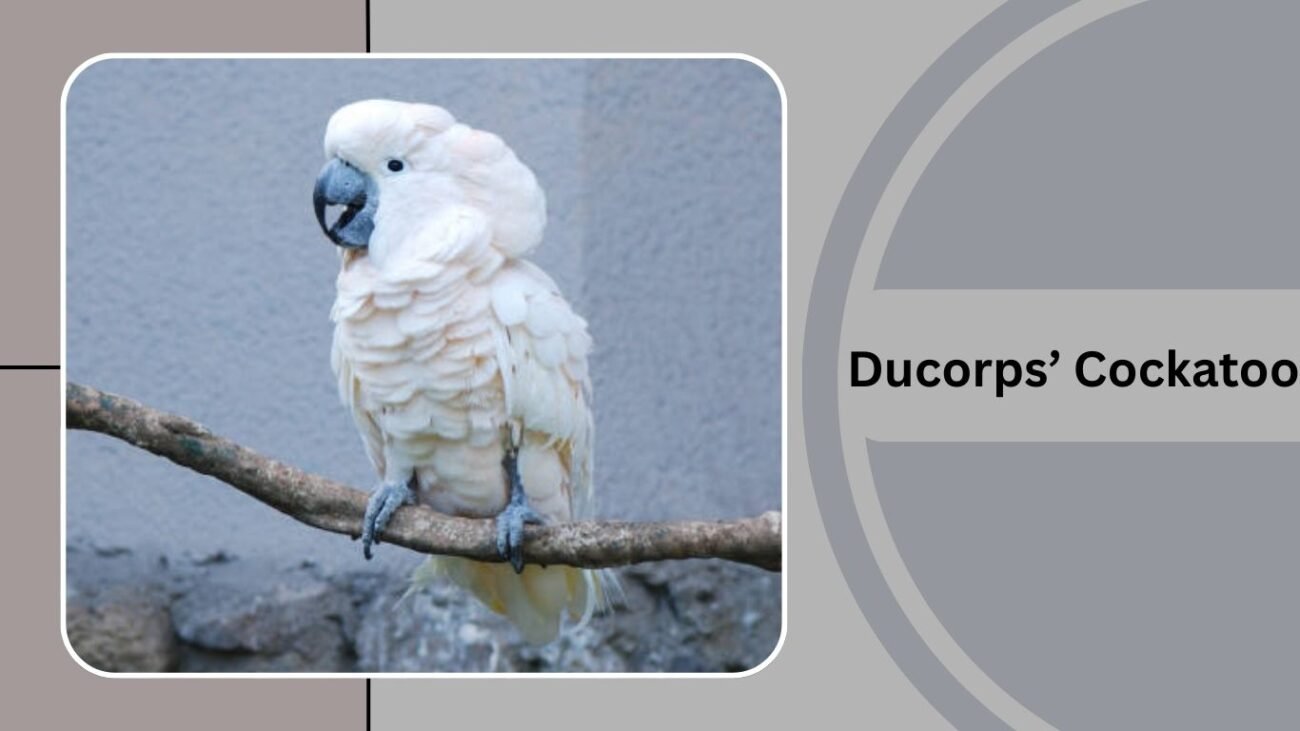
The Ducorps’ Cockatoo (Cacatua ducorpsii), also known as the Solomon Islands Cockatoo, is a small white cockatoo native to the Solomon Islands. It is less common in aviculture compared to other cockatoos.
Identification
- White plumage with a slight pink flush on the face
- Prominent blue eye-rings
- Short, broad crest that can be raised when excited
- Small size, about 30 cm (12 in) long
Habitat
This species is found only in the Solomon Islands, inhabiting forests, plantations, and gardens. It is highly adaptable and sometimes found in human settlements.
Behavior
Ducorps’ Cockatoos are lively and noisy, usually seen in pairs or small flocks. They feed on seeds, fruits, nuts, and berries. Their strong beaks allow them to open hard-shelled fruits, and they are often seen climbing actively through trees. They are intelligent, playful, and highly social, with a loud voice typical of cockatoos.
14. White Cockatoo (Umbrella Cockatoo)
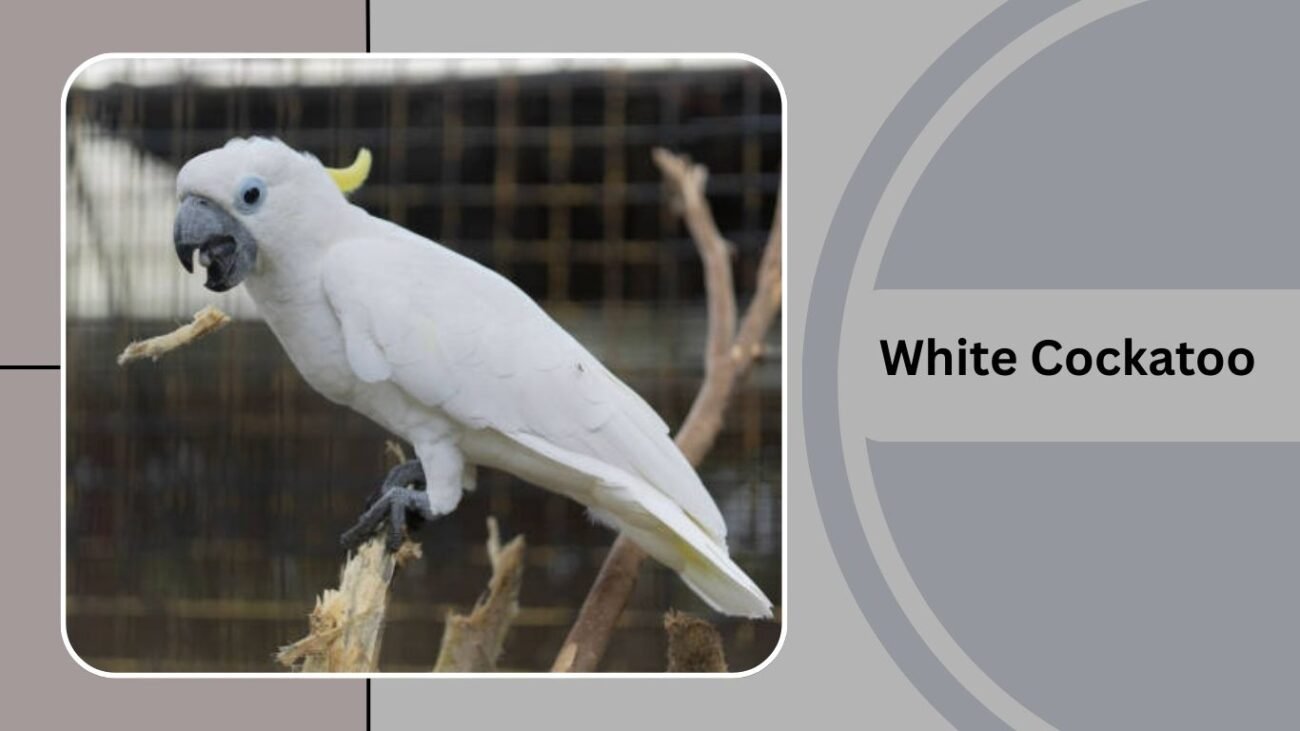
The White Cockatoo (Cacatua alba), also called the Umbrella Cockatoo, is a large and striking bird native to Indonesia. It gets its name from the broad, rounded crest that fans out like an umbrella when raised.
Identification
- Pure white plumage with a slight yellow wash under the wings and tail
- Large, rounded white crest that forms an umbrella shape
- Black beak and dark gray feet
- Large size, about 45–50 cm (18–20 in) long
Habitat
White Cockatoos are found on the islands of Halmahera and nearby regions in Indonesia. They prefer lowland forests, mangroves, and plantations but can also be found near villages.
Behavior
These cockatoos are affectionate, social, and highly intelligent. They feed on seeds, nuts, berries, and fruits, often foraging in the canopy. Known for their strong pair bonds, they are also highly vocal, producing loud, screeching calls. Their crest display is often used in communication, either to show excitement or to warn of danger.
15. Salmon-crested Cockatoo (Moluccan Cockatoo)
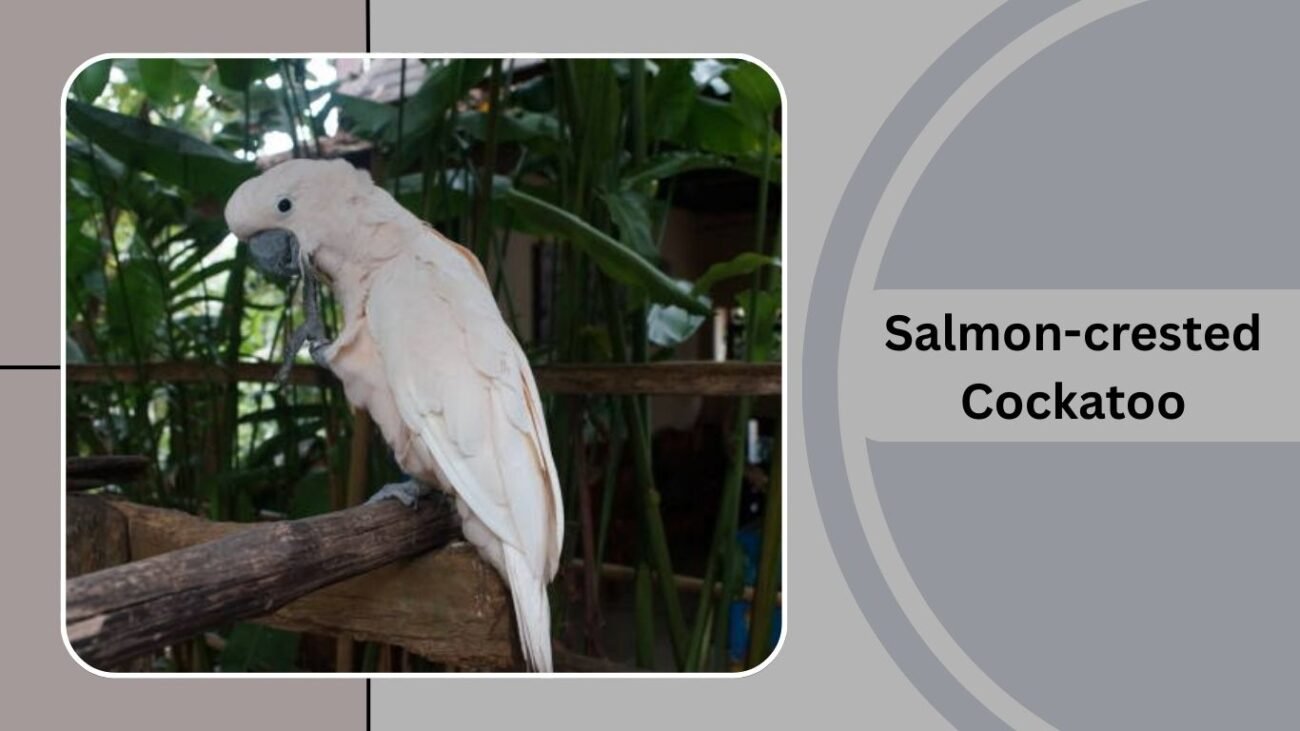
The Salmon-crested Cockatoo (Cacatua moluccensis), also known as the Moluccan Cockatoo, is one of the largest and most spectacular cockatoos. Its soft pink coloring and large crest make it a favorite among bird lovers.
Identification
- Pale pink plumage with a salmon-colored crest
- Slight yellow-orange wash under the wings and tail
- Large size, about 50 cm (20 in) tall with a strong build
- Powerful black beak and dark feet
Habitat
This species is native to the Seram archipelago in Indonesia, inhabiting forests, secondary growth, and cultivated areas. It prefers lowland and hill forests but may also be seen near villages.
Behavior
Salmon-crested Cockatoos are expressive and emotional birds, known for their affectionate but demanding nature. They feed on seeds, nuts, fruits, and flowers, often breaking branches to access food. Their large crest is raised dramatically during displays, especially when excited. They are highly vocal, producing loud calls that carry over long distances.
16. Goffin’s Cockatoo (Tanimbar Corella)
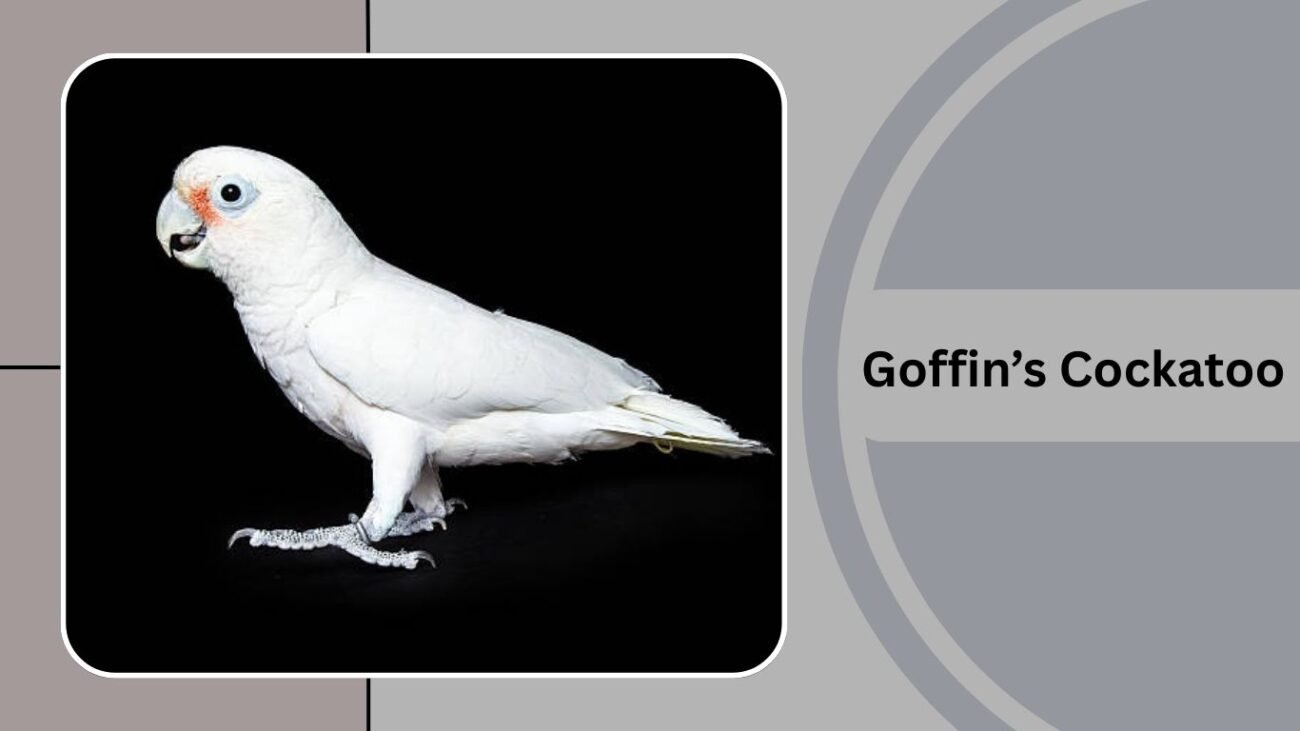
The Goffin’s Cockatoo (Cacatua goffiniana), also known as the Tanimbar Corella, is a small white cockatoo native to the Tanimbar Islands of Indonesia. It is known for its intelligence and problem-solving abilities, often featured in research studies on avian cognition.
Identification
- White plumage with a faint salmon-pink wash around the face and base of the beak
- Small, rounded crest that is less pronounced than in other cockatoos
- Pale gray beak and bluish eye-rings
- Small size, about 30 cm (12 in) long
Habitat
This species inhabits forests, mangroves, plantations, and agricultural areas in the Tanimbar Islands. It has also adapted to living near villages, where it often raids crops and gardens.
Behavior
Goffin’s Cockatoos are playful, inquisitive, and extremely intelligent. They have been observed using tools in captivity and solving puzzles to obtain food. In the wild, they feed on seeds, fruits, nuts, and grains, often foraging in flocks. They are highly social, with loud calls that keep the flock together while flying or feeding.
17. Philippine Cockatoo (Red-vented Cockatoo)
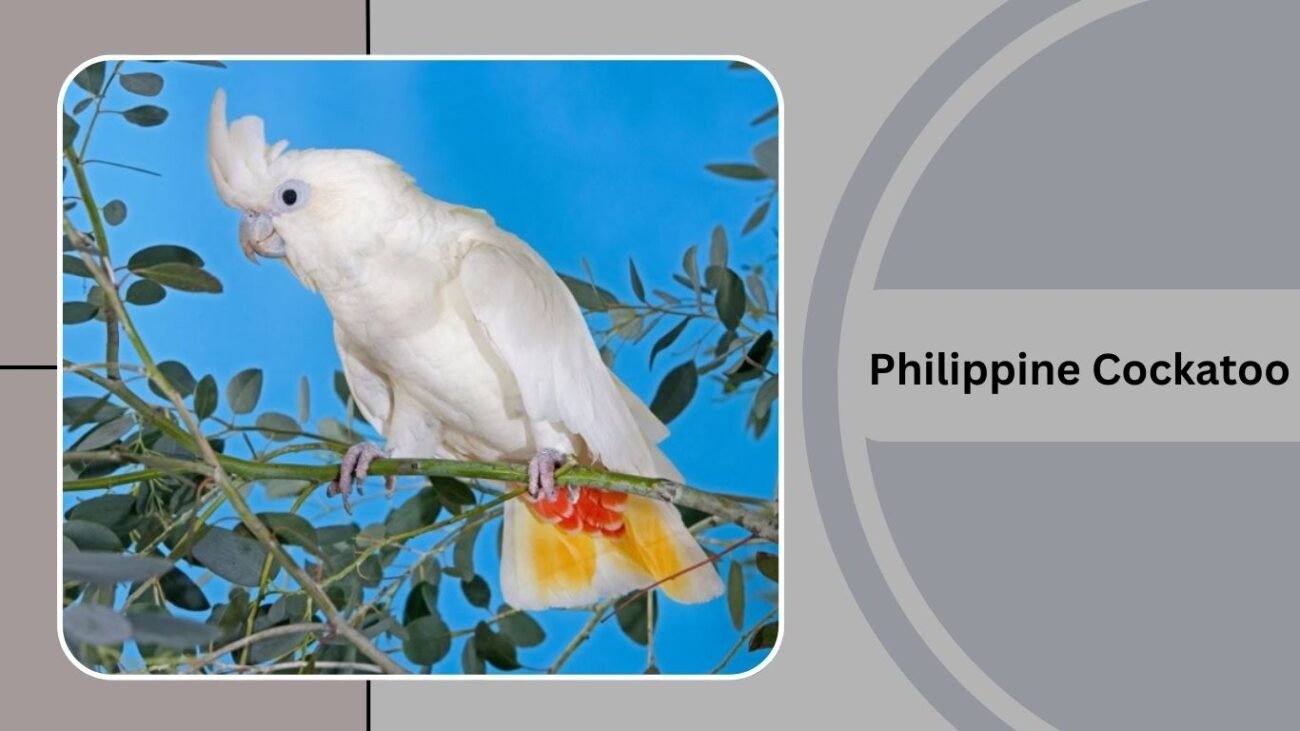
The Philippine Cockatoo (Cacatua haematuropygia), also known as the Red-vented Cockatoo, is a critically endangered species endemic to the Philippines. Its population has declined due to habitat loss and trapping for the pet trade.
Identification
- White plumage with a distinctive red undertail patch
- Pale yellow wash under the wings and tail
- Small crest that can be raised when alarmed or excited
- Size about 30 cm (12 in) in length
Habitat
This cockatoo is found in lowland forests, mangroves, and coastal areas of the Philippines, particularly on Palawan and nearby islands. It relies on tree hollows for nesting.
Behavior
Philippine Cockatoos are usually seen in small flocks, often feeding in cultivated fields, mangroves, and forest edges. They eat seeds, nuts, fruits, and occasionally flowers. Their calls are sharp and high-pitched, making them easy to detect in the wild. Despite their rarity, they are playful, intelligent, and social, much like other cockatoos.
18. Slender-billed Corella
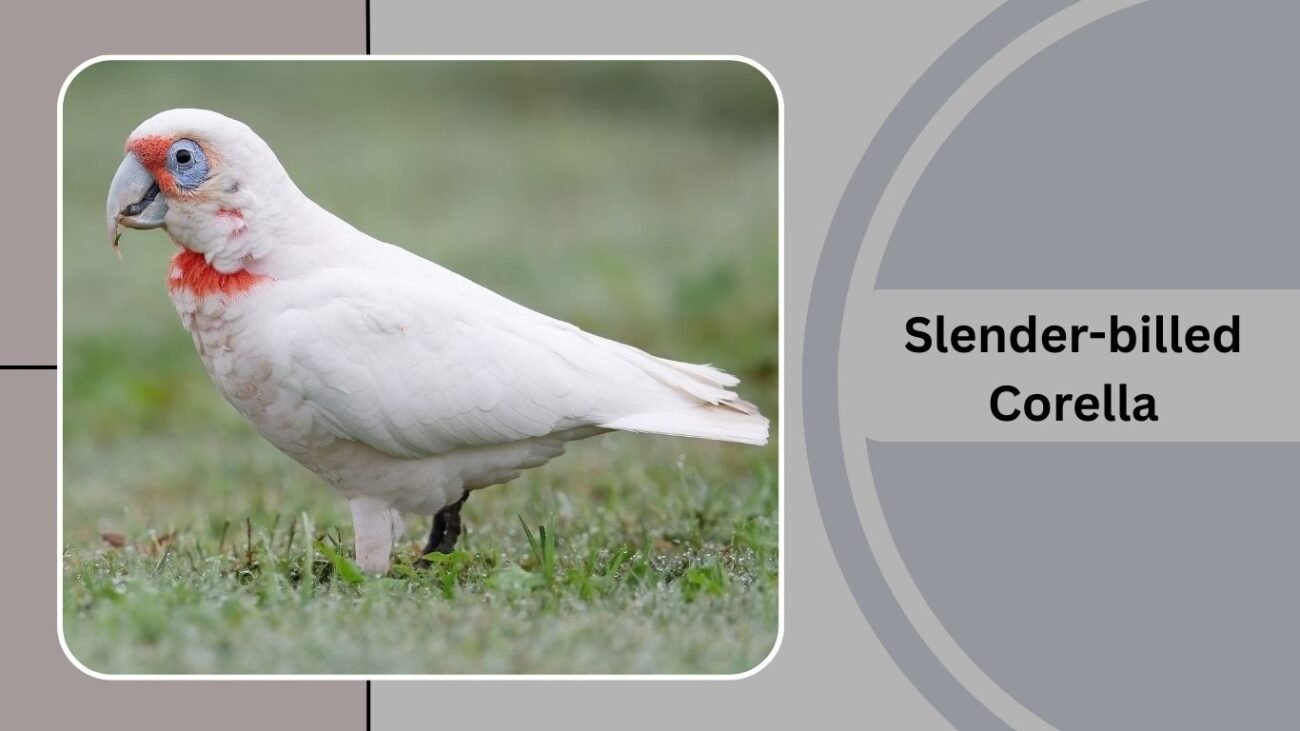
The Slender-billed Corella (Cacatua tenuirostris sub-species / Cacatua tenuirostris ssp.) is a close relative of the Long-billed Corella but distinguished by a slightly slimmer and more delicate bill. It is less common in aviculture and has a more limited distribution.
Identification
- Predominantly white plumage with faint salmon-pink coloring around the face and throat
- Slim, elongated upper bill designed for digging up roots and tubers
- Blue eye-rings around expressive dark eyes
- Medium-sized cockatoo, reaching about 40–45 cm (16–18 in) in length
Habitat
This species is native to southeastern Australia, preferring grassy woodlands, farmlands, and open plains. It often overlaps with the range of other corellas but remains more localized.
Behavior
Slender-billed Corellas are social, living in medium-sized flocks that forage on the ground. They primarily dig for roots, bulbs, and seeds with their long bills but will also take grains and nuts. Like other corellas, they are playful, vocal, and capable of acrobatic movements in trees.
19. Pink Cockatoo (Major Mitchell’s Cockatoo – alternate name)
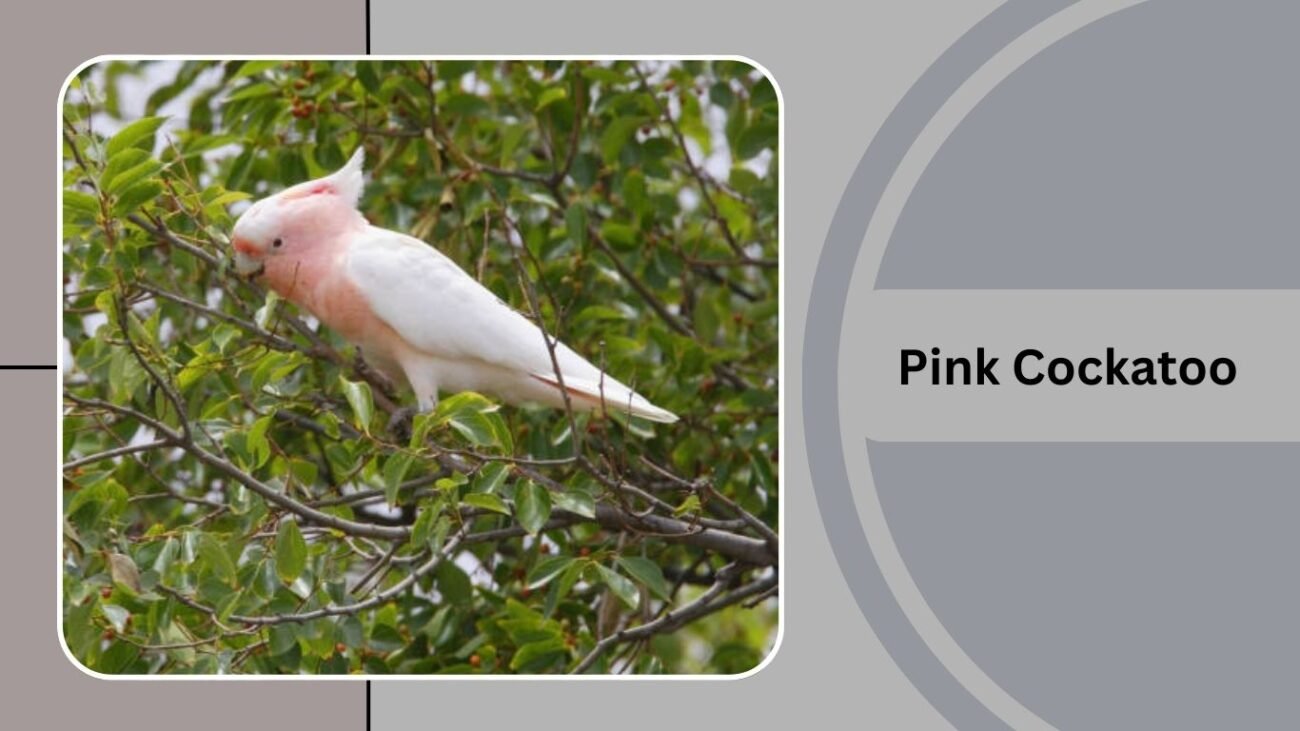
The Pink Cockatoo (Lophochroa leadbeateri), more commonly known as Major Mitchell’s Cockatoo, is renowned for its beautiful salmon-pink plumage and multicolored crest. It is often listed as a separate name but refers to the same species.
Identification
- Soft pink chest and underparts with white wings and back
- Distinctive crest with red, yellow, and white bands
- Compact size, about 35–40 cm (14–16 in) in length
- Strong beak adapted for seeds and nuts
Habitat
Pink Cockatoos inhabit arid and semi-arid regions of inland Australia, preferring woodlands and areas near watercourses. They are less common in coastal areas.
Behavior
These cockatoos are usually found in pairs or small groups, less gregarious than species like the Galah. They feed mainly on seeds, roots, and nuts, often foraging on the ground. Their strong pair bonds and synchronized displays make them symbols of love and beauty in Australian culture.
20. Black Palm Cockatoo (Goliath Cockatoo)
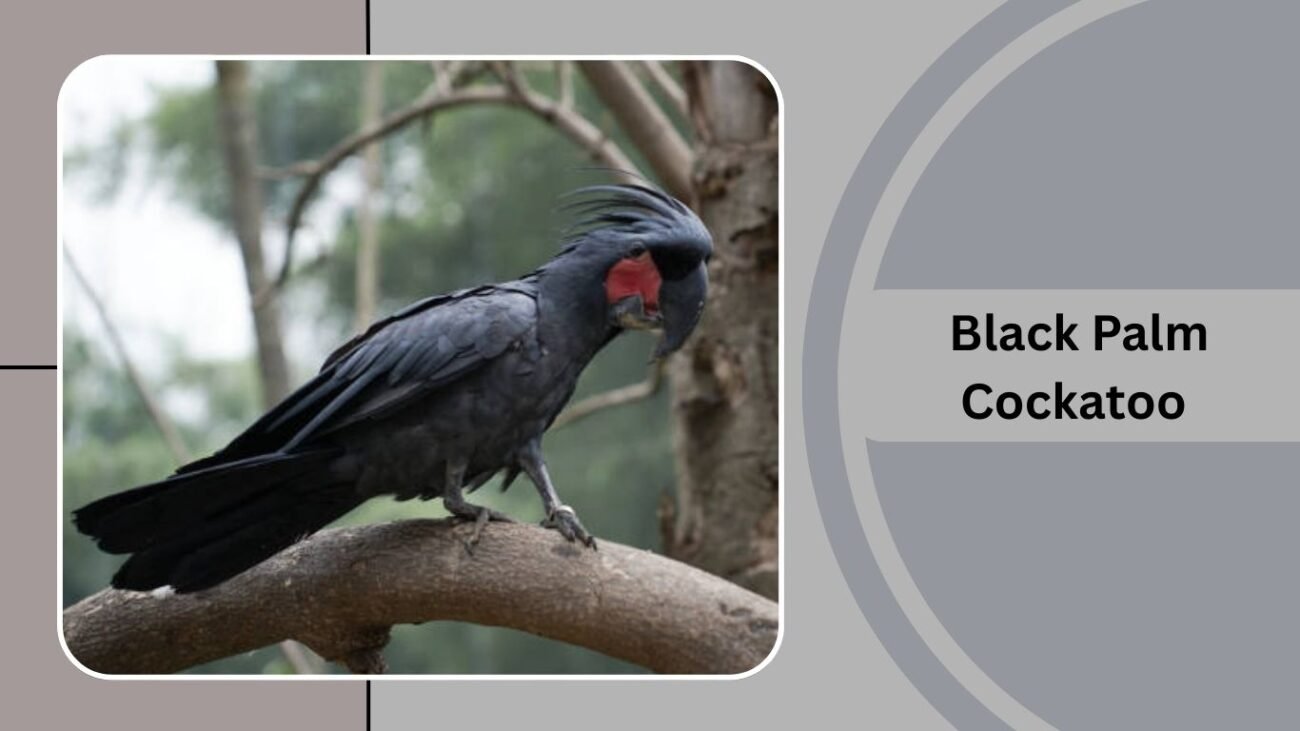
The Black Palm Cockatoo (Probosciger aterrimus), also called the Goliath Cockatoo, is the largest and most dramatic of all cockatoos. Its imposing size, jet-black feathers, and bright red facial patches make it one of the most unique parrots in the world.
Identification
- Glossy black plumage with long, sweeping crest feathers
- Bare red facial patches that change color with mood or excitement
- Massive curved beak, one of the largest of any parrot species
- Very large, reaching 55–60 cm (22–24 in) long with a wingspan up to 120 cm (47 in)
Habitat
Black Palm Cockatoos are found in New Guinea, northern Queensland (Australia), and nearby islands. They inhabit rainforests, monsoon forests, and savannas, often staying in tall trees near rivers.
Behavior
These cockatoos are highly intelligent and solitary compared to other species. They feed on nuts, fruits, seeds, and palm kernels, often using their powerful beak to crack very hard shells. They are famous for “tool use,” breaking sticks and drumming them against hollow trees as part of courtship displays. Their calls are deep, resonant, and carry over long distances.
21. Citron-crested Cockatoo
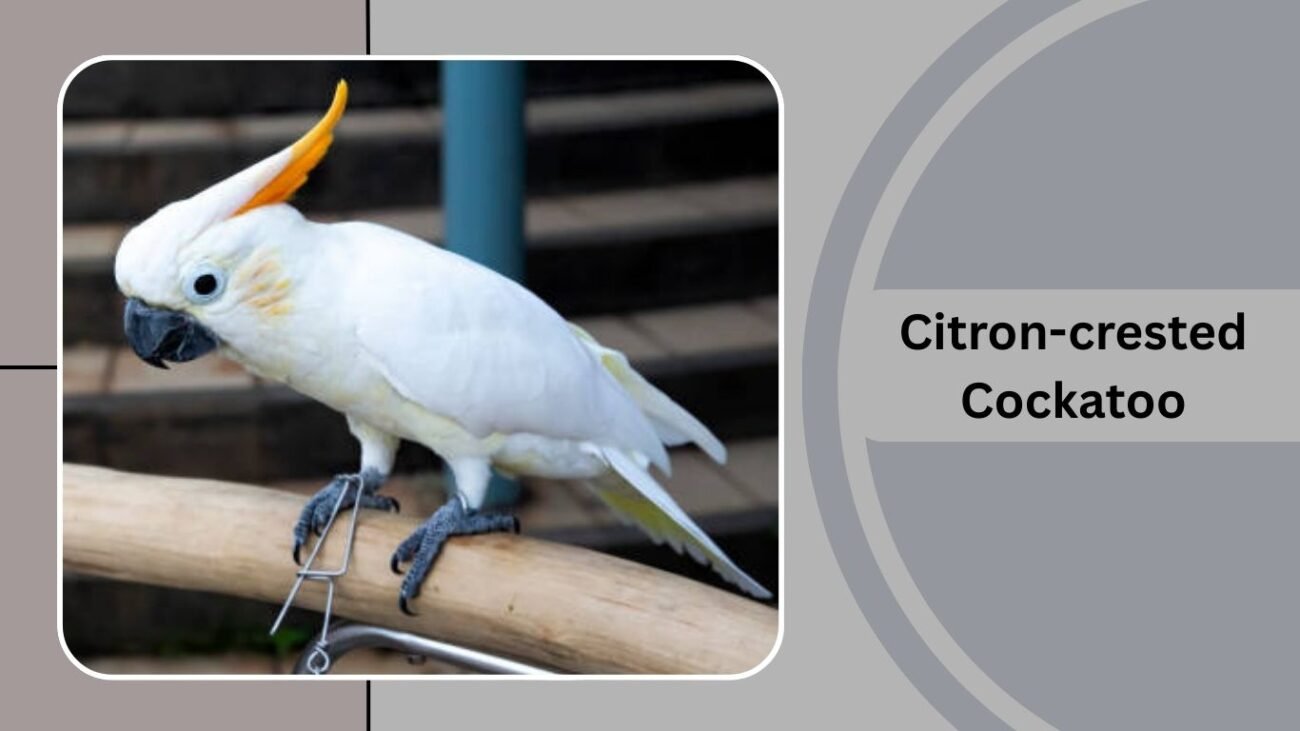
The Citron-crested Cockatoo (Cacatua citrinocristata) is a rare and beautiful cockatoo native to Indonesia, closely related to the Lesser Sulphur-crested Cockatoo but distinguished by its softer, orange-toned crest.
Identification
- White plumage with pale yellow wash under the wings and tail
- Distinctive orange-citron colored crest
- Gray beak and legs, with expressive dark eyes
- Medium size, about 35 cm (14 in) long
Habitat
This species is found only on Sumba Island in Indonesia, inhabiting forests, woodlands, and agricultural areas. Its distribution is very restricted, making it vulnerable in the wild.
Behavior
Citron-crested Cockatoos are lively, affectionate, and intelligent. They feed on seeds, fruits, nuts, and grains, often traveling in small flocks. They are highly vocal, producing loud, screeching calls, and are playful by nature. Their beautiful crest is raised during displays, especially when excited or communicating with mates.