
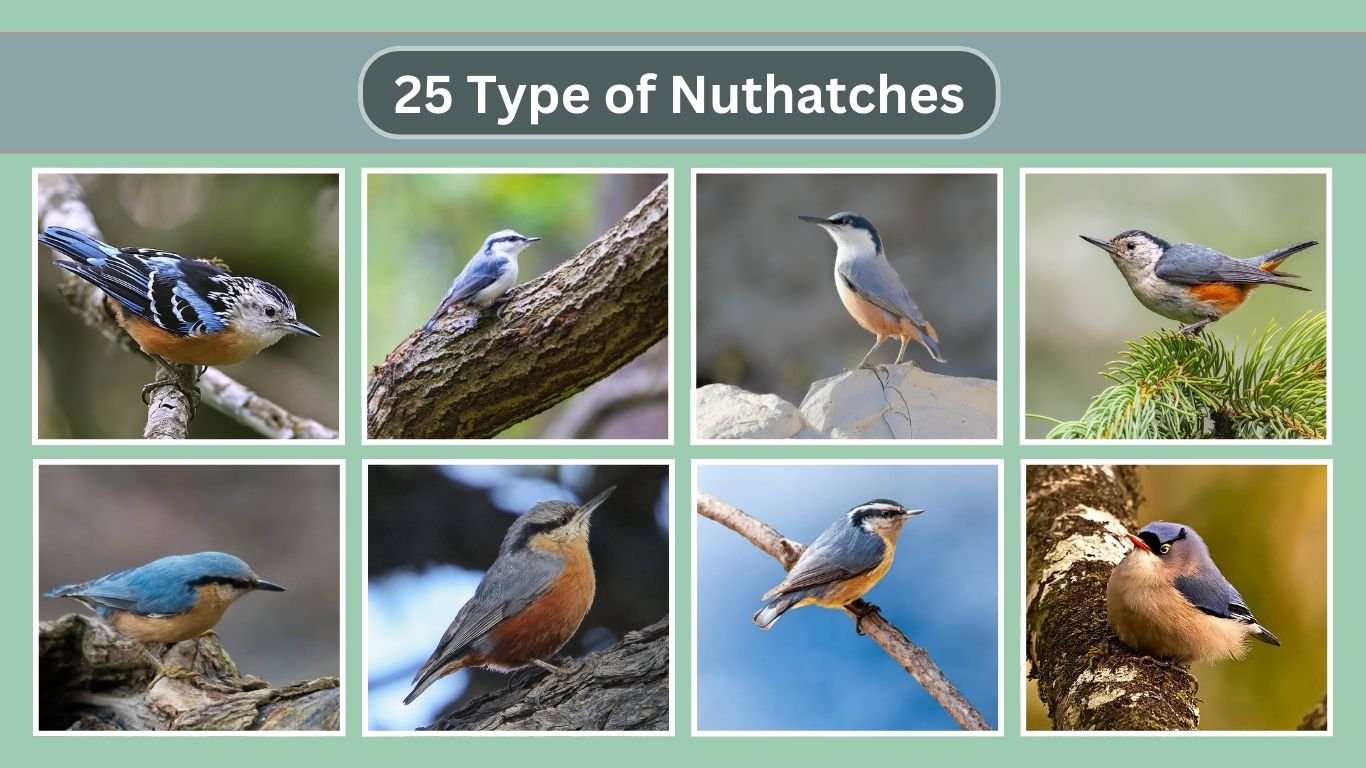
Nuthatches are small, agile songbirds belonging to the genus Sitta, recognized for their ability to climb down tree trunks headfirst—a skill few other birds possess. With species spread across North America, Europe, Africa, and Asia, these birds display diverse plumage, behaviors, and habitats. From the widespread White-breasted Nuthatch to the rare and colorful Beautiful Nuthatch, each species plays an important role in maintaining the balance of forest ecosystems worldwide.
1. White-breasted Nuthatch

The White-breasted Nuthatch (Sitta carolinensis) is the largest nuthatch species in North America, easily recognized by its bold plumage and habit of creeping headfirst down tree trunks. Known for its sharp calls and acrobatic movements, it is a familiar bird in woodlands, parks, and backyard feeders.
Identification
- Medium-sized songbird with a large head and short tail
- White face and underparts with a contrasting black or gray crown
- Blue-gray upperparts with black edging on the wings
- Strong, slightly upturned bill
- Males usually show a darker cap compared to females
Behavior
White-breasted Nuthatches are active and agile, often climbing down tree trunks headfirst while searching for insects hidden in bark. They are territorial year-round, with pairs defending their feeding grounds even during winter. Their vocalizations include a series of nasal, honking notes that serve both for communication and territory defense.
Habitat
They inhabit mature deciduous and mixed forests, especially oak, maple, and hickory woodlands. They are also common in suburban areas with large shade trees and are frequent visitors to bird feeders, particularly those offering sunflower seeds and suet.
Importance
As natural insect controllers, White-breasted Nuthatches play an important role in forest health by reducing bark-dwelling insect populations. They also contribute to seed dispersal, particularly of acorns and other nuts, which they wedge into bark crevices for storage. Their presence is considered an indicator of healthy, mature woodland ecosystems.
2. Red-breasted Nuthatch

The Red-breasted Nuthatch (Sitta canadensis) is a small, energetic bird widely distributed across North America, particularly in coniferous forests. Known for its bold personality and distinctive nasal call, it often appears at feeders and is easily recognized by its striking color pattern.
Identification
- Small-sized bird, about 11 cm (4.5 in) long
- Blue-gray upperparts with black-and-white striped head
- White eyebrow and dark eye line running through the face
- Rufous to deep orange underparts, giving its name
- Short tail and sharp, slightly upturned bill
Behavior
Red-breasted Nuthatches are acrobatic climbers, moving headfirst down tree trunks in search of insects. They are known for caching food, wedging seeds into bark for later use. Their sharp, nasal “yank-yank” call is distinctive and often heard before the bird is seen. Unlike the more territorial White-breasted Nuthatch, this species sometimes forms mixed foraging flocks with chickadees and kinglets in winter.
Habitat
They prefer boreal and montane coniferous forests dominated by spruce, fir, and pine. During winter, they may move southward in large numbers (an irruptive migration) depending on cone crop availability. In suburban areas, they are frequent visitors to feeders offering sunflower seeds, peanuts, and suet.
Importance
Red-breasted Nuthatches play a vital role in controlling bark-dwelling insects, contributing to forest health. Their habit of caching seeds helps with natural regeneration of coniferous trees. As an irruptive species, their movements also serve as ecological indicators of food abundance in northern forests.
3. Pygmy Nuthatch

The Pygmy Nuthatch (Sitta pygmaea) is one of the smallest members of the nuthatch family, found primarily in the western United States and Mexico. These highly social birds live in flocks, often roosting communally in tree cavities during cold nights, which helps them conserve warmth.
Identification
- Very small, only about 10–11 cm (4 in) long
- Blue-gray upperparts with a brownish-gray cap
- Whitish underparts with pale buff wash on the flanks
- Short tail and thin, sharp bill
- Lacks the bold face stripes seen in Red-breasted Nuthatch
Behavior
Unlike most nuthatches, Pygmy Nuthatches are cooperative breeders, with additional helpers (often offspring from previous years) assisting parents in raising young. They are extremely social, moving in flocks of 5–15 birds outside the breeding season. Their chattering calls are constant as they forage. At night, groups may crowd together in tree cavities, sometimes with up to 150 birds sharing one roost for warmth.
Habitat
They are closely associated with ponderosa pine and other open pine forests of western North America. They are rarely seen far from pine stands and prefer habitats with scattered trees rather than dense forests.
Importance
Pygmy Nuthatches contribute significantly to insect control in pine forests. Their communal lifestyle and cooperative breeding make them ecologically unique among North American songbirds. Their presence often indicates healthy pine ecosystems, and their cavity-roosting behavior highlights the importance of old trees with natural holes or woodpecker-excavated cavities.
4. Brown-headed Nuthatch

The Brown-headed Nuthatch (Sitta pusilla) is a tiny, lively bird native to the southeastern United States. Known for its squeaky, rubber-ducky-like call, it is often seen clinging to pine trunks and branches in small family groups.
Identification
- Very small, about 10–11 cm (4 in) long
- Brown cap contrasting with bluish-gray back
- Whitish underparts, sometimes with a faint buff wash on the sides
- Short tail and thin, straight bill
- Both sexes look alike, making them difficult to tell apart in the field
Behavior
Brown-headed Nuthatches are extremely social and often forage in family groups. They are known for using tools—a rare behavior in songbirds—sometimes holding pieces of bark in their bills to pry insects from tree crevices. Their calls are high-pitched squeaks, resembling the sound of a rubber duck toy. They are active climbers, moving headfirst down trunks and branches while hunting insects.
Habitat
This species lives primarily in mature pine forests of the southeastern U.S., especially longleaf pine ecosystems. They are also found in mixed pine-hardwood forests and occasionally in suburban areas with large pines.
Importance
Brown-headed Nuthatches are considered an indicator species for the health of southern pine ecosystems. They play a role in insect control and cavity nesting dynamics, often using old woodpecker holes. Conservation of pine habitats is critical to their long-term survival.
5. Eurasian Nuthatch

The Eurasian Nuthatch (Sitta europaea) is a widespread and easily recognizable species found across Europe and parts of Asia. It is known for its strong, direct movements and ability to move down tree trunks headfirst with ease.
Identification
- Medium-sized, 12–14 cm (5–5.5 in) long
- Blue-gray upperparts with a bold black eye-stripe
- White or buff underparts, varying slightly by region
- Strong bill and short tail
- Males may show richer chestnut on the flanks compared to females
Behavior
Eurasian Nuthatches are bold and agile, often wedging seeds into bark before hammering them open with their strong bill. They are territorial and aggressive toward other birds, sometimes plastering mud around their nest hole to reduce its entrance size and keep out intruders. Their calls are loud and varied, including whistles and sharp “dwip-dwip” notes.
Habitat
They are found in deciduous and mixed forests, especially oak, beech, and pine woodlands. They also adapt well to parks and large gardens with mature trees. Unlike many other nuthatches, they rarely join mixed flocks and are often seen alone or in pairs.
Importance
The Eurasian Nuthatch plays a role in forest seed dispersal and insect control. Its presence is a good indicator of healthy woodlands with old trees, as it relies on tree cavities for nesting. Its adaptability has made it one of the most common and familiar nuthatches across its range.
6. Corsican Nuthatch

The Corsican Nuthatch (Sitta whiteheadi) is a rare and localized species found only on the island of Corsica. It is closely tied to old-growth pine forests and is considered one of Europe’s most endangered nuthatches due to its restricted range.
Identification
- Small bird, around 11–12 cm long
- Blue-gray upperparts with a clean white throat and cheeks
- Males show a black crown, while females have a duller gray crown
- Pale underparts with a slight buff tone on the flanks
- Short tail and strong, straight bill typical of nuthatches
Behavior
Corsican Nuthatches are agile climbers, moving swiftly along trunks and branches in search of insects and seeds. They are territorial during breeding but may form small groups outside the nesting season. Their calls are sharp and high-pitched, similar to other nuthatches but softer and less varied than the Eurasian species.
Habitat
This species is restricted to mature stands of Corsican Pine (Pinus nigra laricio) at mid- to high elevations on Corsica. It depends heavily on old trees that provide both food (seeds) and nesting cavities. Logging and habitat loss pose significant threats to its survival.
Importance
As an island endemic, the Corsican Nuthatch is a flagship species for conservation in Corsica. Protecting its pine forests not only secures its future but also preserves the unique biodiversity of the region.
7. Krüper’s Nuthatch
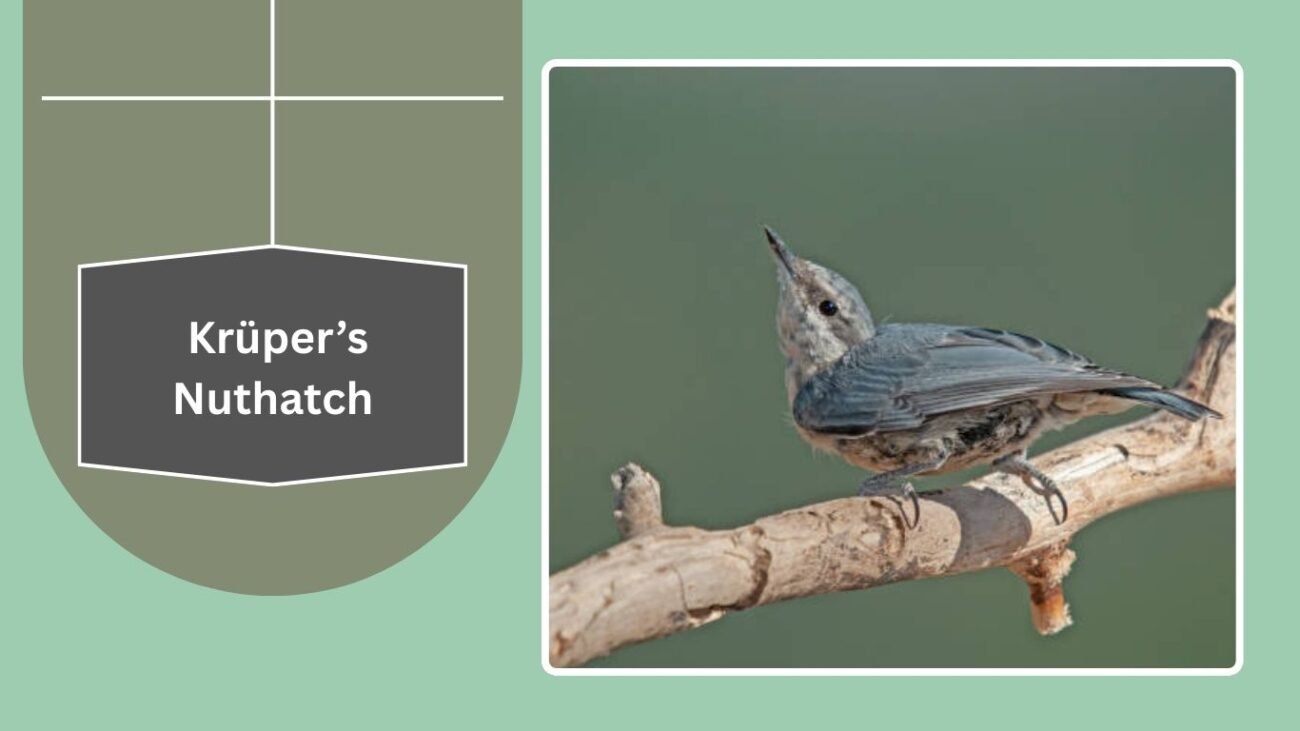
The Krüper’s Nuthatch (Sitta krueperi) is a distinctive species native to parts of southeastern Europe and western Asia, with populations in Turkey, Greece, and surrounding regions. It is closely associated with coniferous forests.
Identification
- Small bird, about 12 cm long
- Blue-gray upperparts with a contrasting white face and black eye-stripe
- Males show a distinctive reddish patch on the upper breast
- Females are duller, with less obvious coloration
- Strong bill and short tail, typical of the genus Sitta
Behavior
This species is active and acrobatic, often seen foraging along trunks and branches. It uses its powerful bill to extract insects from bark crevices and to hammer open seeds. Males are territorial and use loud, ringing calls to announce presence. They are also known for defending their nests aggressively from intruders.
Habitat
Krüper’s Nuthatch primarily inhabits pine and fir forests, especially Black Pine (Pinus nigra) and Turkish Pine (Pinus brutia). They are found from lowlands to mountainous regions but are dependent on mature coniferous stands.
Importance
This bird is a key species for the ecosystems of southeastern Europe and Turkey. It helps control forest insects and plays a role in seed dispersal. Because it is restricted to certain pine habitats, its populations are vulnerable to deforestation and forest degradation.
8. Algerian Nuthatch

The Algerian Nuthatch (Sitta ledanti) is a very rare and localized species, found only in a few mountain forests of northern Algeria. It was the last nuthatch species to be discovered, described in 1975, and remains critically endangered due to its limited distribution.
Identification
- Small nuthatch, about 12–13 cm long
- Blue-gray upperparts with a dark crown and bold black eye-stripe
- White throat and underparts with a slight buff wash on the flanks
- Short tail and pointed bill, adapted for bark foraging
- Males and females are similar, though males may show slightly stronger crown coloration
Behavior
The Algerian Nuthatch is active and restless, moving swiftly along tree trunks and branches in search of food. It often works in pairs or small family groups. Its vocalizations are sharp, nasal calls that help maintain contact within dense forest cover.
Habitat
This species inhabits humid montane forests of Kabylie, Algeria, mainly dominated by Algerian Fir, Black Pine, and Holm Oak. Its range is extremely restricted, limited to just a few locations, which makes it highly vulnerable to habitat destruction and forest fires.
Importance
As one of the rarest birds in North Africa, the Algerian Nuthatch is a flagship species for conservation. Protecting its remaining forest habitats is crucial for preserving biodiversity in the region.
9. Chestnut-bellied Nuthatch

The Chestnut-bellied Nuthatch (Sitta cinnamoventris) is a striking species found across the Indian subcontinent and parts of Southeast Asia. It is easily recognized by its rich chestnut-colored underparts and energetic climbing habits.
Identification
- Medium-sized nuthatch, around 12–13 cm long
- Blue-gray upperparts with a black cap and eye-stripe
- Underparts rich chestnut to cinnamon, extending from breast to belly
- Strong bill and short tail typical of nuthatches
- Both sexes look similar, but males may appear slightly brighter
Behavior
Chestnut-bellied Nuthatches are agile climbers, foraging up and down tree trunks and branches. They feed on insects and seeds, often hammering them open against bark. They are vocal birds, producing a variety of sharp, metallic calls. Pairs stay together year-round and defend territories actively.
Habitat
They inhabit deciduous and mixed forests, wooded hillsides, and gardens with tall trees. They are found from the Himalayan foothills across northern and central India, extending into Bangladesh, Nepal, and Myanmar.
Importance
This nuthatch plays a role in insect control in forest ecosystems and is a common and recognizable bird across much of its range. Its presence is often a sign of healthy woodland habitats.
10. Indian Nuthatch
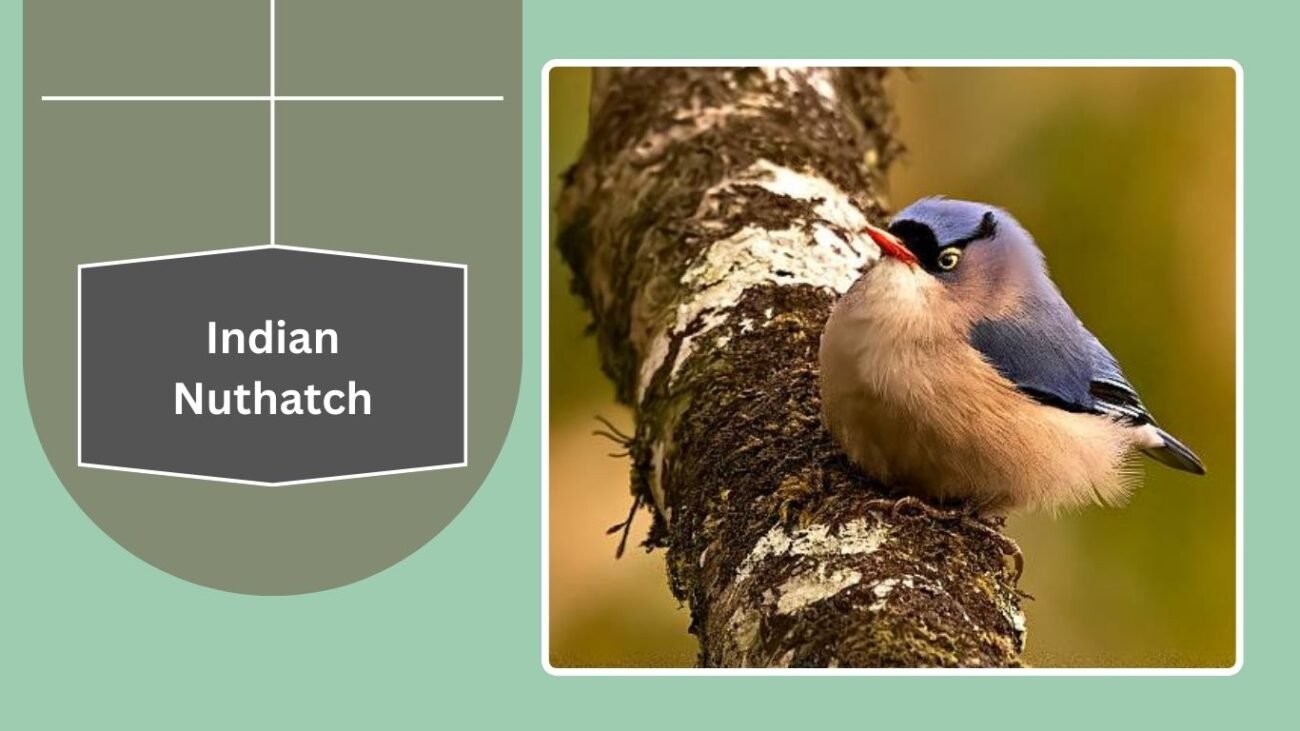
The Indian Nuthatch (Sitta castanea) is a beautiful woodland bird native to peninsular India. It is often confused with the Chestnut-bellied Nuthatch but can be distinguished by its slightly different plumage and distribution. It is a lively bird, moving quickly along tree trunks and branches in search of food.
Identification
- Medium-sized, about 13 cm long
- Blue-gray upperparts with a bold black eye-stripe running from the beak to the nape
- Underparts rich chestnut, slightly deeper than in the Chestnut-bellied Nuthatch
- Short tail and strong, pointed bill
- Sexes look similar, though males sometimes show slightly brighter coloration
Behavior
The Indian Nuthatch is active and agile, spending most of its time creeping along bark, probing crevices for insects and seeds. It often forages alone or in pairs, rarely joining mixed-species flocks. Its calls are sharp and repetitive, often given while moving quickly between branches. Unlike some other nuthatches, it is less shy and often seen in open wooded areas.
Habitat
This species is found primarily in dry deciduous forests, wooded farmlands, and gardens with large trees across peninsular India. It favors open landscapes with scattered trees rather than dense forests.
Importance
The Indian Nuthatch plays a role in insect control within its range, helping maintain ecological balance. It is also considered an indicator species for the health of dry deciduous woodlands in India.
11. Burmese Nuthatch
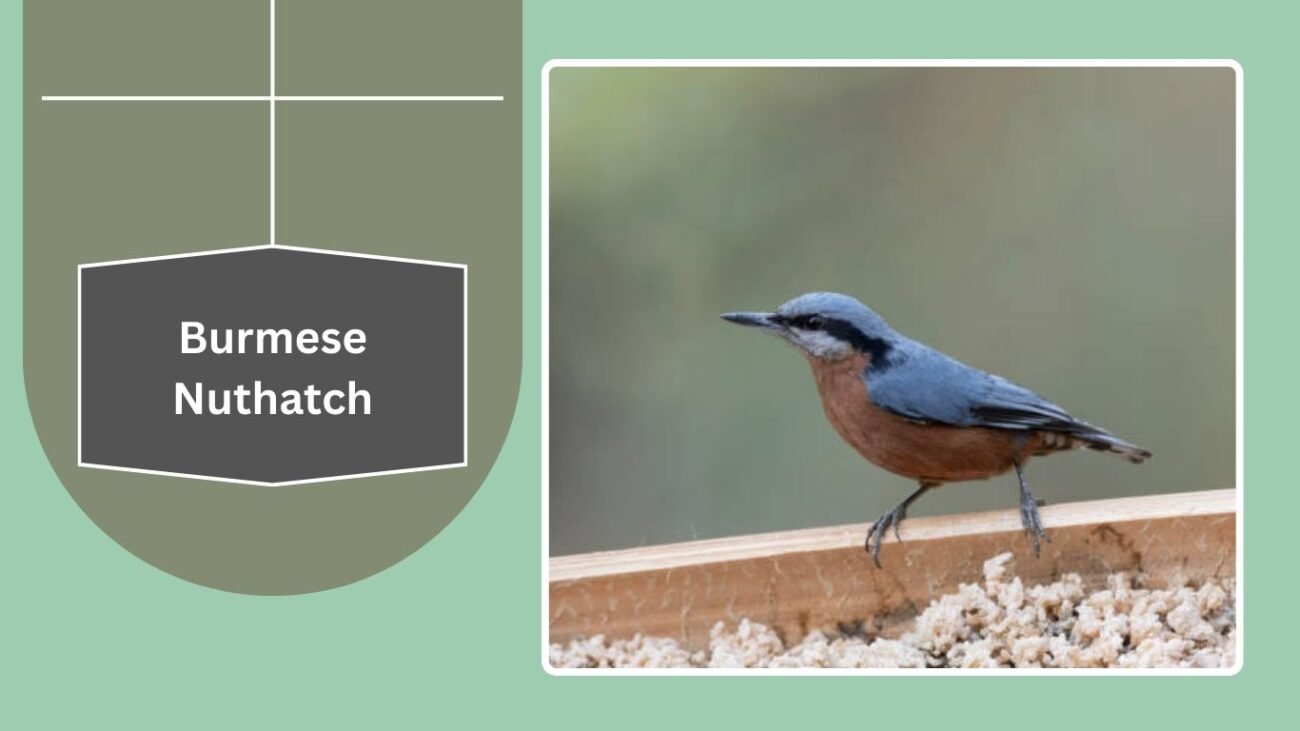
The Burmese Nuthatch (Sitta neglecta) is a forest-dwelling species of Southeast Asia, closely related to the Indian and Chestnut-bellied Nuthatches but distinct in its range and vocalizations. It is primarily found in Myanmar and adjacent regions.
Identification
- Small to medium-sized, about 12–13 cm long
- Blue-gray upperparts with a black eye-stripe
- Underparts rufous to chestnut, slightly paler than the Indian Nuthatch
- Compact body, strong bill, and short tail
- Males and females look alike, with little visible difference
Behavior
The Burmese Nuthatch is an energetic climber, moving headfirst down tree trunks while foraging for insects. It is known to hammer seeds into bark crevices to crack them open. Its calls are sharp, metallic, and slightly higher-pitched compared to the Indian species. Often seen in pairs, it sometimes joins mixed feeding flocks, especially in winter.
Habitat
It inhabits subtropical and tropical dry forests, evergreen woodlands, and secondary forests across Myanmar, parts of Thailand, Laos, Cambodia, and Vietnam. It is often found in areas with tall trees and prefers mature woodland.
Importance
The Burmese Nuthatch is an important part of Southeast Asia’s forest ecosystems, helping control insect populations and contributing to seed dispersal. Its presence also highlights the ecological richness of the forests in Myanmar and neighboring regions.
12. Velvet-fronted Nuthatch

The Velvet-fronted Nuthatch (Sitta frontalis) is one of the most colorful and striking nuthatches, easily recognized by its unique facial markings and bright plumage. It is widespread across South and Southeast Asia, often seen moving in small groups through forest canopies.
Identification
- Small bird, about 12–13 cm long
- Blue-purple upperparts with a velvety black forehead and crown
- Distinctive bright yellow eye, giving a striking appearance
- Underparts pinkish to violet-gray, sometimes with a reddish wash on the flanks
- Bill bright red, contrasting with the plumage
- Males and females look alike, though females may be slightly duller in coloration
Behavior
Velvet-fronted Nuthatches are active canopy foragers, moving in mixed flocks with other small forest birds such as tits, woodpeckers, and warblers. Unlike many other nuthatches that cling close to trunks, they prefer thinner branches and twigs high in the canopy. Their calls are high-pitched and sharp, often a series of quick, chattering notes. They frequently forage in small groups rather than strictly in pairs, making them more social than many related species.
Habitat
They inhabit tropical and subtropical forests, including moist evergreen and mixed woodlands. They are common in the Indian subcontinent, southern China, Myanmar, Thailand, Laos, Cambodia, and Indonesia. They adapt well to a range of altitudes, from lowland forests to hill ranges.
Importance
Velvet-fronted Nuthatches are significant insect controllers in forest canopies, consuming small invertebrates hidden in bark and leaves. Their social foraging behavior also makes them an important part of mixed-species bird flocks, contributing to the balance of tropical forest ecosystems.
13. Yellow-billed Nuthatch
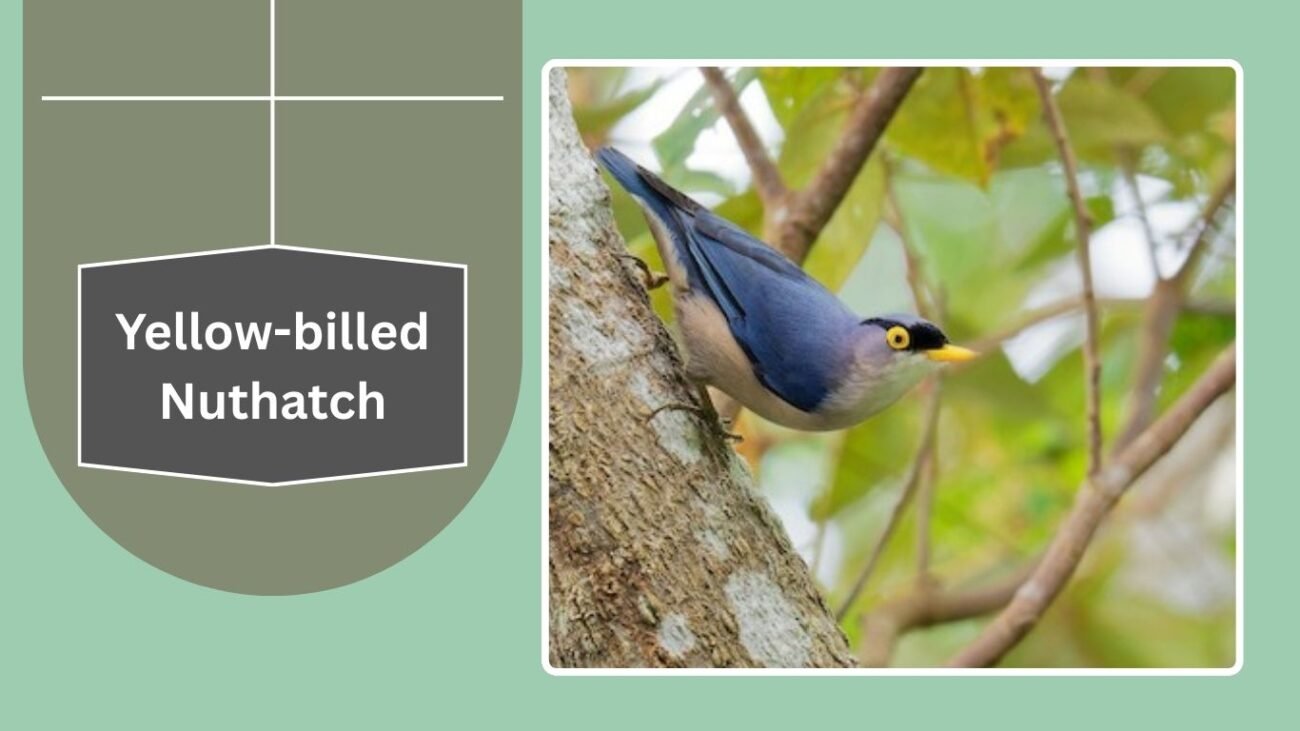
The Yellow-billed Nuthatch (Sitta solangiae) is a scarce and localized species, mainly found in parts of Southeast Asia. It is instantly recognized by its pale yellow bill, which sets it apart from other nuthatch species.
Identification
- Medium-sized, about 12–13 cm long
- Blue-gray upperparts with a dark eye-stripe and paler face
- Underparts whitish to buff, sometimes with faint orange on the flanks
- Distinct pale yellow bill, unique among nuthatches
- Both sexes are similar in appearance, with minimal sexual dimorphism
Behavior
The Yellow-billed Nuthatch is usually found in pairs or small groups, often joining mixed-species flocks in forests. Like other nuthatches, it is agile, climbing up and down trunks and branches while foraging for insects and seeds. It is less vocal than other species but produces soft, high-pitched calls. Its foraging style includes prying loose bark to uncover hidden insects.
Habitat
This species occurs in evergreen and montane forests of Laos, Vietnam, and southern China. It is typically found at mid- to high elevations, preferring older forests with tall trees. Its range is fragmented, making it vulnerable to habitat loss.
Importance
The Yellow-billed Nuthatch contributes to the health of forest ecosystems by controlling insect populations and dispersing seeds. Due to its restricted distribution, it is considered near-threatened, making forest conservation vital for its survival.
14. Giant Nuthatch
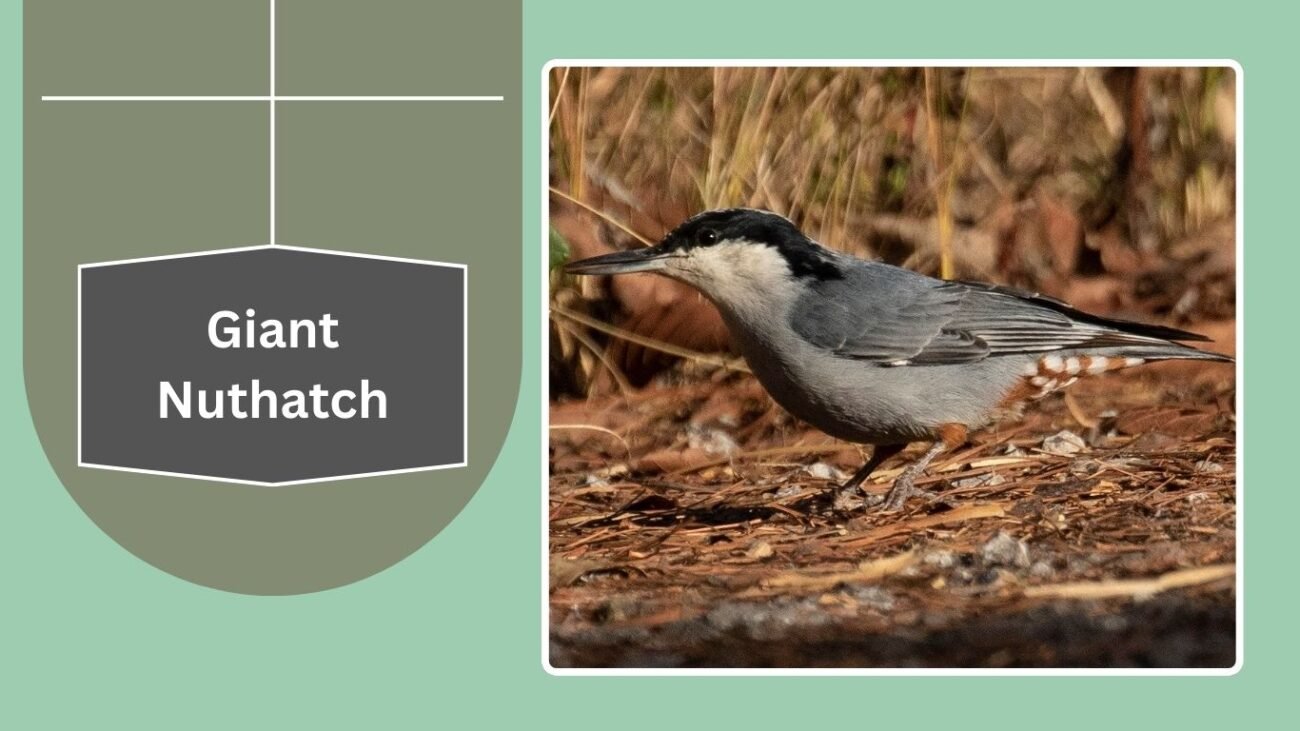
The Giant Nuthatch (Sitta magna) is the largest of all nuthatch species, standing out with its size and strong features. Native to parts of Southeast Asia, it is a rare and declining bird, restricted to specific montane forests.
Identification
- Large size for a nuthatch, about 19–20 cm long
- Upperparts blue-gray with darker flight feathers
- Underparts pale gray to whitish, sometimes with a buff wash on the flanks
- Black eye-stripe running from the bill across the eye
- Strong, long bill compared to smaller nuthatches
- Both sexes look similar, though males may show darker markings
Behavior
The Giant Nuthatch behaves much like its smaller relatives but is noticeably stronger and slower in movement. It forages along trunks and large branches, probing bark for insects and prying open seeds with its powerful bill. It usually travels in pairs or family groups and gives loud, ringing calls that carry across forested slopes. Unlike many smaller nuthatches, it is less likely to join mixed feeding flocks.
Habitat
This species inhabits montane pine and oak forests in parts of northern Thailand, southern China (Yunnan), and Myanmar. It is typically found at elevations between 1,200–2,500 meters. Due to habitat destruction, particularly logging of pine forests, its range is becoming increasingly fragmented.
Importance
The Giant Nuthatch is considered globally endangered, with fewer than 3,000 individuals estimated to remain. It is a flagship species for high-altitude forest conservation in Southeast Asia, and protecting its habitat benefits many other specialized mountain birds.
15. Yunnan Nuthatch

The Yunnan Nuthatch (Sitta yunnanensis) is a small and localized species endemic to southwestern China. It is closely related to the Eurasian Nuthatch but is distinguished by its subtle plumage differences and limited range.
Identification
- Small-sized, about 12 cm long
- Blue-gray upperparts with a faint black eye-stripe
- Underparts whitish with slight buff tones on the sides
- Bill short and thin compared to other nuthatches
- Sexes similar, though males sometimes have slightly darker crowns
Behavior
The Yunnan Nuthatch is an agile climber, foraging actively on pine trunks and branches for insects and small seeds. It is typically seen in pairs or small groups but is not as social as the Pygmy or Velvet-fronted Nuthatch. Its calls are high-pitched, thin whistles, often used to maintain contact while foraging. Unlike some other species, it prefers the middle and lower sections of trees rather than the canopy.
Habitat
It is found only in pine forests of Yunnan Province, China, often at elevations between 1,500–2,700 meters. It relies on old pine stands for both food and nesting cavities, making it vulnerable to deforestation and forest conversion.
Importance
As an endemic species, the Yunnan Nuthatch is a key indicator of the health of montane pine ecosystems in southwestern China. Protecting its limited habitat is crucial, not just for this bird but for many other mountain forest species.
16. Chinese Nuthatch
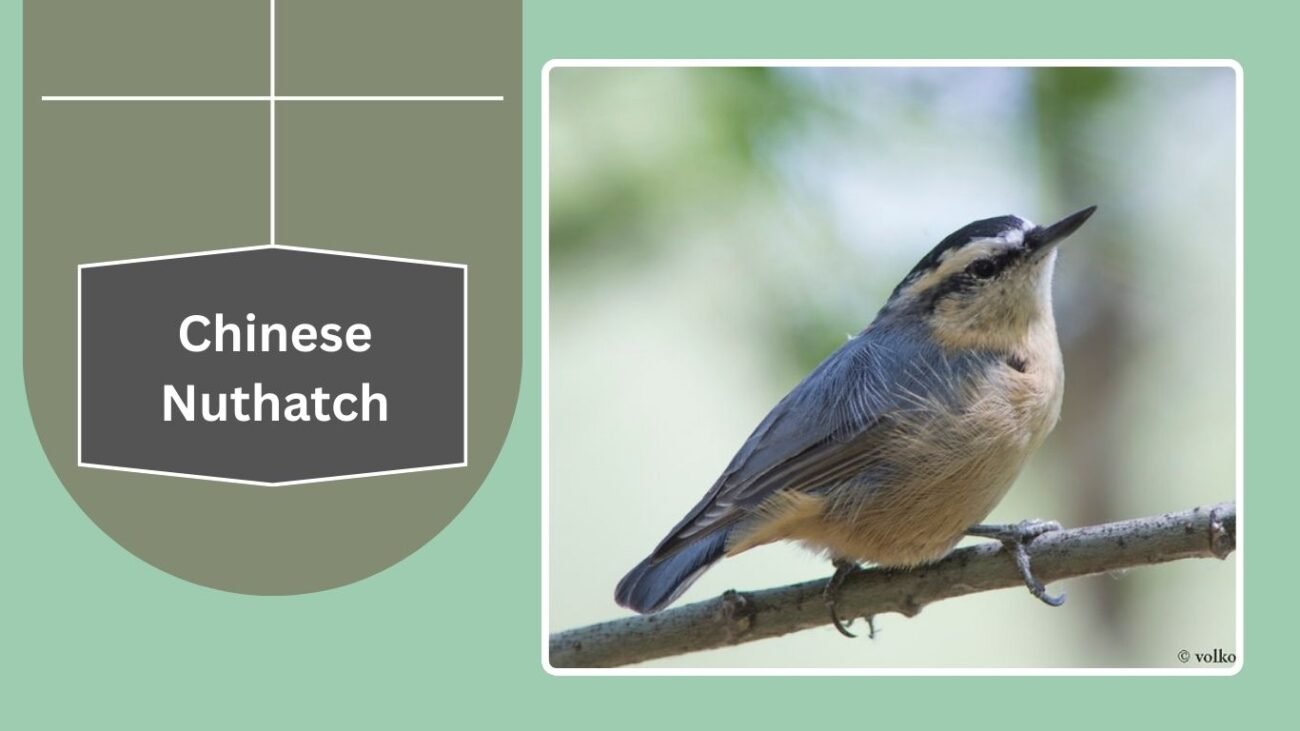
The Chinese Nuthatch (Sitta villosa) is a small and elegant species found in northeastern China, Korea, and parts of southeastern Russia. It is a close relative of the Eurasian Nuthatch but is smaller and more delicate in appearance.
Identification
- Small bird, about 11–12 cm long
- Blue-gray upperparts with a black eye-stripe
- Throat and underparts whitish, with a buff to cinnamon wash on the flanks
- Short tail and strong, straight bill
- Males may show slightly darker crown and stronger coloration than females
Behavior
The Chinese Nuthatch is active and agile, foraging along tree trunks and branches, often hanging upside down to probe bark for insects. It is less aggressive than the Eurasian Nuthatch and often forages quietly. Its calls are high, thin notes that resemble whistles, given frequently as contact calls. It is usually seen in pairs or small groups.
Habitat
This species inhabits coniferous and mixed forests of larch, pine, and birch. It is most common in mountainous areas, often between 800–2,500 meters in elevation. It adapts to cold climates and may descend to lower elevations during winter.
Importance
The Chinese Nuthatch plays a role in insect control within northern Asian forests and is an indicator of healthy coniferous ecosystems. Its limited range makes it vulnerable to deforestation, though it remains relatively stable compared to more restricted nuthatch species.
17. White-cheeked Nuthatch
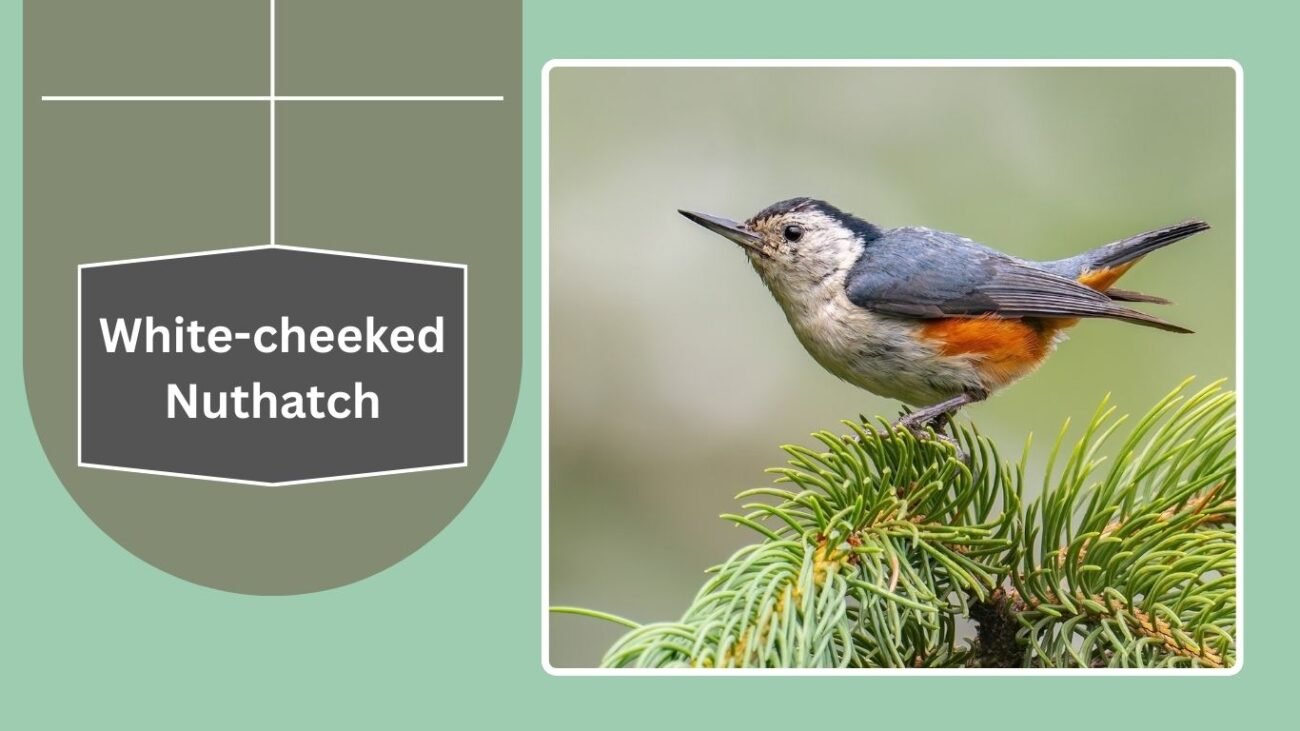
The White-cheeked Nuthatch (Sitta leucopsis) is a striking species found in the Himalayan region. Its bold markings and preference for high-altitude forests make it one of the more distinctive Asian nuthatches.
Identification
- Medium-sized, about 13–14 cm long
- Blue-gray upperparts with a black cap and eye-stripe
- Prominent white cheeks, throat, and breast, giving the species its name
- Underparts whitish with buff on the flanks
- Strong bill and short tail
- Males and females look very similar
Behavior
The White-cheeked Nuthatch is bold and energetic, foraging actively along tree trunks and large branches. It often works in pairs and defends territories with loud, ringing calls. Like other nuthatches, it wedges seeds into bark and hammers them open. It is adapted to high elevations and shows strong site fidelity, remaining in the same areas year-round.
Habitat
This species inhabits temperate and montane forests of the Himalayas, from Afghanistan and Pakistan through Nepal, Bhutan, and northern India. It favors mixed forests of pine, fir, oak, and rhododendron at elevations of 1,800–3,500 meters.
Importance
The White-cheeked Nuthatch is an important insect predator in high-altitude forests, helping maintain ecosystem balance. Its restricted range and dependence on Himalayan forests make it a key species for monitoring habitat health in mountain regions.
18. Kashmir Nuthatch
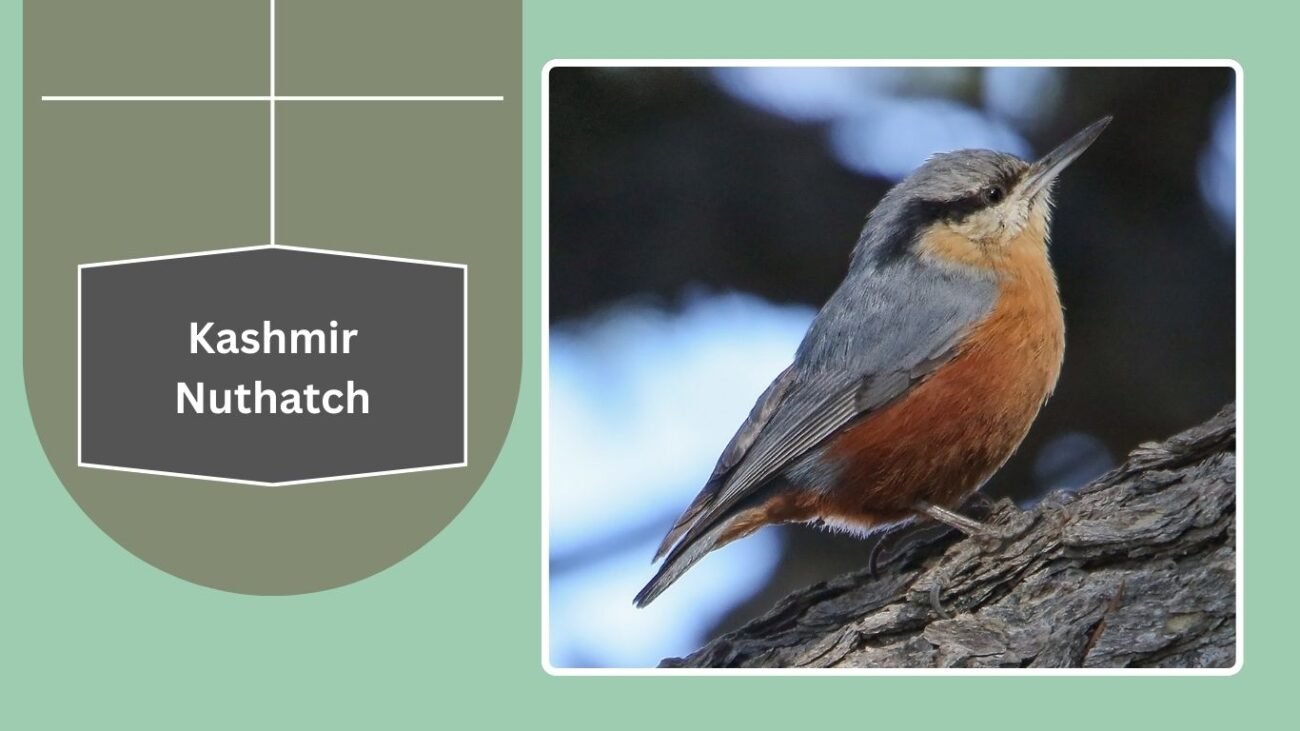
The Kashmir Nuthatch (Sitta cashmirensis) is a rare and localized species, found in the Western Himalayas. It is less studied compared to many other nuthatches, but its striking plumage and restricted range make it a special bird of high-altitude forests.
Identification
- Medium-sized, about 13–14 cm long
- Blue-gray upperparts with a faint black eye-stripe
- Underparts rich cinnamon to rufous, much darker than most nuthatches
- Throat and cheeks pale whitish, contrasting with darker underparts
- Strong bill and short tail, typical of Sitta species
- Males and females appear similar in plumage
Behavior
The Kashmir Nuthatch is energetic, climbing tree trunks and large branches with agility. It probes bark for insects and is also known to hammer seeds into crevices. Unlike some nuthatches, it is relatively quiet, producing softer calls that are less conspicuous. It is usually found singly or in pairs rather than in large groups.
Habitat
This species inhabits temperate and montane forests in the Western Himalayas, especially oak, pine, and mixed coniferous woodlands. It is most common at elevations between 1,800–3,300 meters, particularly in northern India, Pakistan, and parts of Nepal.
Importance
The Kashmir Nuthatch plays a role in maintaining forest health by consuming bark-dwelling insects. Its limited range and specialized habitat make it vulnerable to deforestation and climate change, highlighting the need for monitoring its population.
19. Chestnut-vented Nuthatch
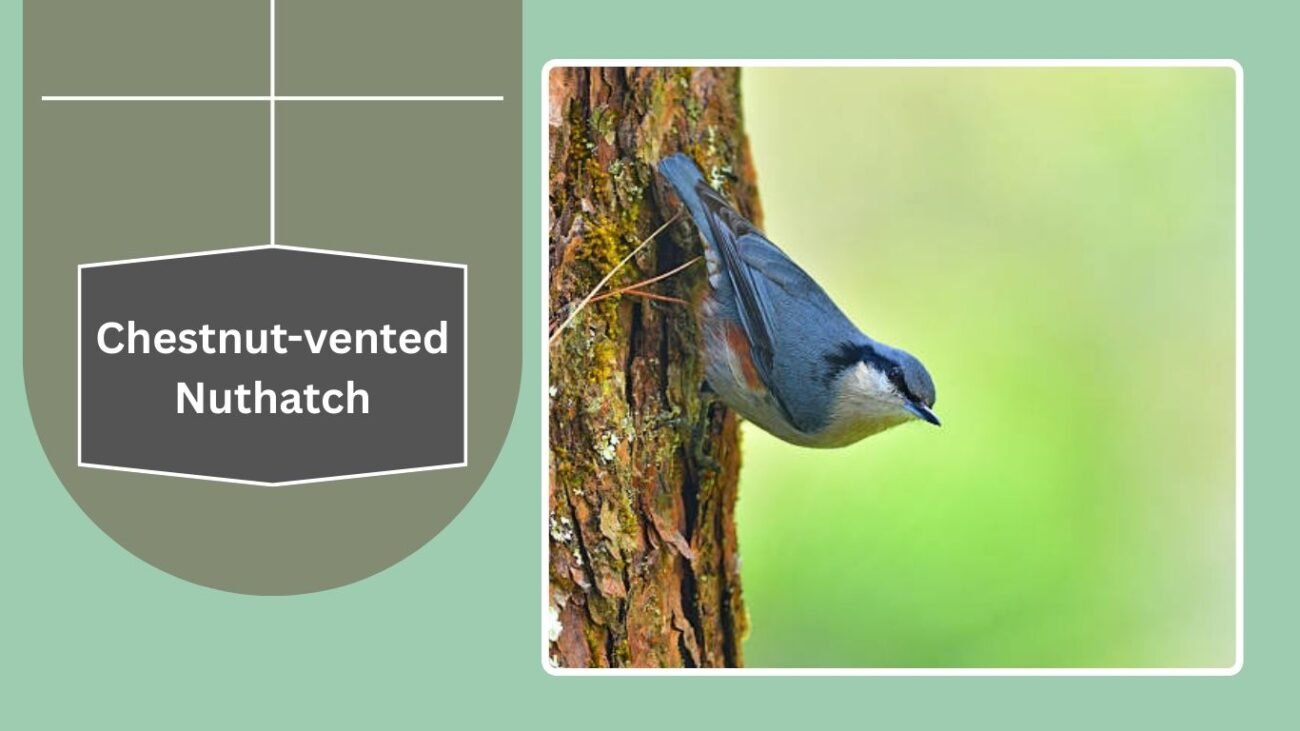
The Chestnut-vented Nuthatch (Sitta nagaensis) is a widespread Southeast Asian species, easily recognized by the rufous coloring on its belly and vent area. It is an active bird of forested hills and mountains, commonly seen across its range.
Identification
- Medium-sized, about 12–13 cm long
- Blue-gray upperparts with a black eye-stripe
- Underparts whitish to buff with a chestnut patch around the vent
- Strong, slightly upturned bill and short tail
- Both sexes look alike, though males may show slightly richer coloration
Behavior
This species forages energetically along trunks and branches, often headfirst, probing for insects and larvae. It has a sharp, metallic call used frequently while foraging. Unlike some high-altitude nuthatches, it adapts well to different elevations and may join mixed-species foraging flocks in winter.
Habitat
The Chestnut-vented Nuthatch inhabits subtropical and temperate forests across northeast India, Bhutan, Myanmar, southern China, Thailand, Laos, and Vietnam. It prefers oak, pine, and mixed evergreen forests, typically at 900–2,600 meters elevation.
Importance
This bird is a key insect controller in Southeast Asian forests and contributes to seed dispersal. Its wide range makes it more resilient than some restricted nuthatch species, but deforestation and habitat fragmentation remain potential threats.
20. Eastern Rock Nuthatch
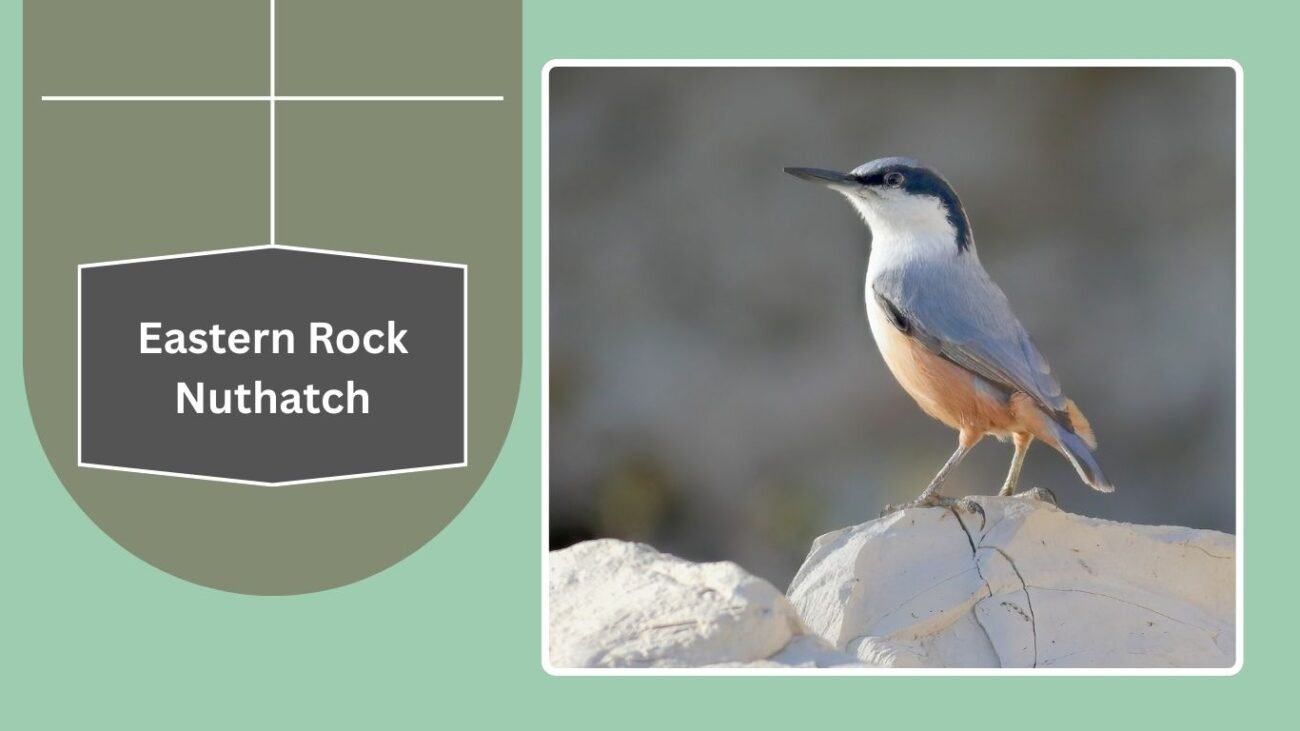
The Eastern Rock Nuthatch (Sitta tephronota) is one of the largest and most distinctive members of the nuthatch family. Unlike woodland nuthatches, this species is adapted to rocky landscapes and cliffs, where it forages and nests.
Identification
- Large for a nuthatch, about 15–16 cm long
- Pale gray upperparts with a strong black eye-stripe
- Whitish throat and breast, fading to buff or pale cinnamon on the belly
- Sturdy, long bill well-suited for hammering insects and seeds
- Short tail and robust body adapted to rocky habitats
- Males and females look very similar in appearance
Behavior
The Eastern Rock Nuthatch is agile and strong, moving confidently along rocky cliffs, boulders, and stone walls in search of insects and seeds. It is famous for its unique nesting behavior, constructing mud nests attached to cliff faces, often resembling a clay pot. Its calls are loud, ringing whistles that echo across rocky valleys. It is typically seen in pairs and maintains year-round territories.
Habitat
This species is found in dry, rocky regions across Turkey, Iran, Iraq, the Caucasus, and parts of Central Asia. It favors cliffs, gorges, and rocky outcrops, often far from dense forests.
Importance
The Eastern Rock Nuthatch is ecologically significant as an insect predator in arid, rocky habitats. Its unusual mud-built nests also contribute to the uniqueness of cliffside ecosystems. As a species adapted to non-forested landscapes, it shows the remarkable diversity of the nuthatch family.
21. Western Rock Nuthatch
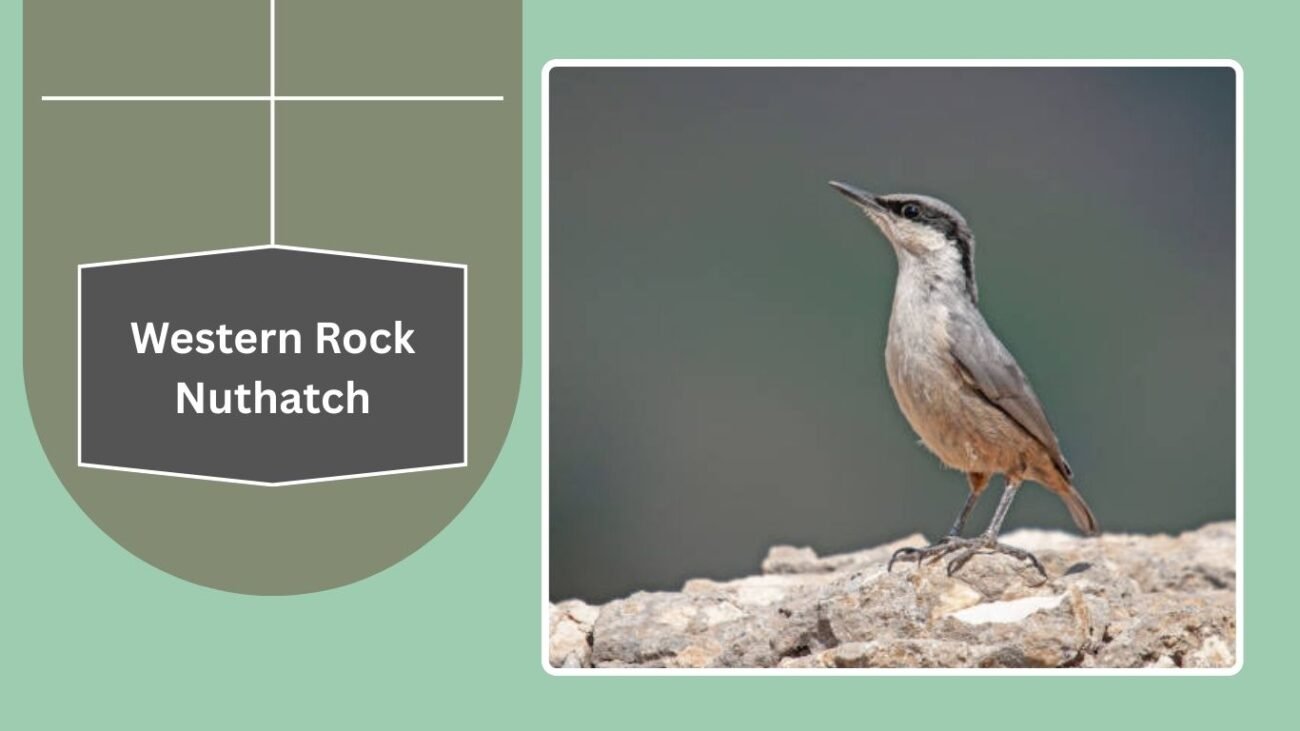
The Western Rock Nuthatch (Sitta neumayer) is the counterpart of the Eastern species, found mainly in southeastern Europe and the Middle East. It is slightly smaller but shares the same rocky lifestyle and striking behaviors.
Identification
- Medium to large-sized, about 14 cm long
- Blue-gray upperparts with a bold black eye-stripe
- Throat and breast whitish, underparts buff to pale brown
- Strong, pointed bill and compact body
- Similar in appearance to the Eastern Rock Nuthatch, but slightly smaller and warmer-toned below
Behavior
Western Rock Nuthatches are skilled climbers of cliffs and boulders, using their strong bills to pry insects from cracks. They build elaborate nests out of mud, reinforced with plant fibers, often placed on cliff ledges or in rock crevices. Their calls are harsh, repeated notes, used to communicate across rocky valleys. They are territorial and often defend their nesting sites aggressively.
Habitat
This species inhabits rocky hillsides, cliffs, and gorges across Greece, the Balkans, Turkey, and parts of the Middle East. It prefers arid or semi-arid landscapes but is strongly tied to rock formations rather than trees.
Importance
The Western Rock Nuthatch is an important insect controller in rocky environments and a key species for Mediterranean ecosystems. Its unique nesting style also makes it a fascinating bird for ornithologists, representing how nuthatches can adapt beyond woodland habitats.
22. Siberian Nuthatch
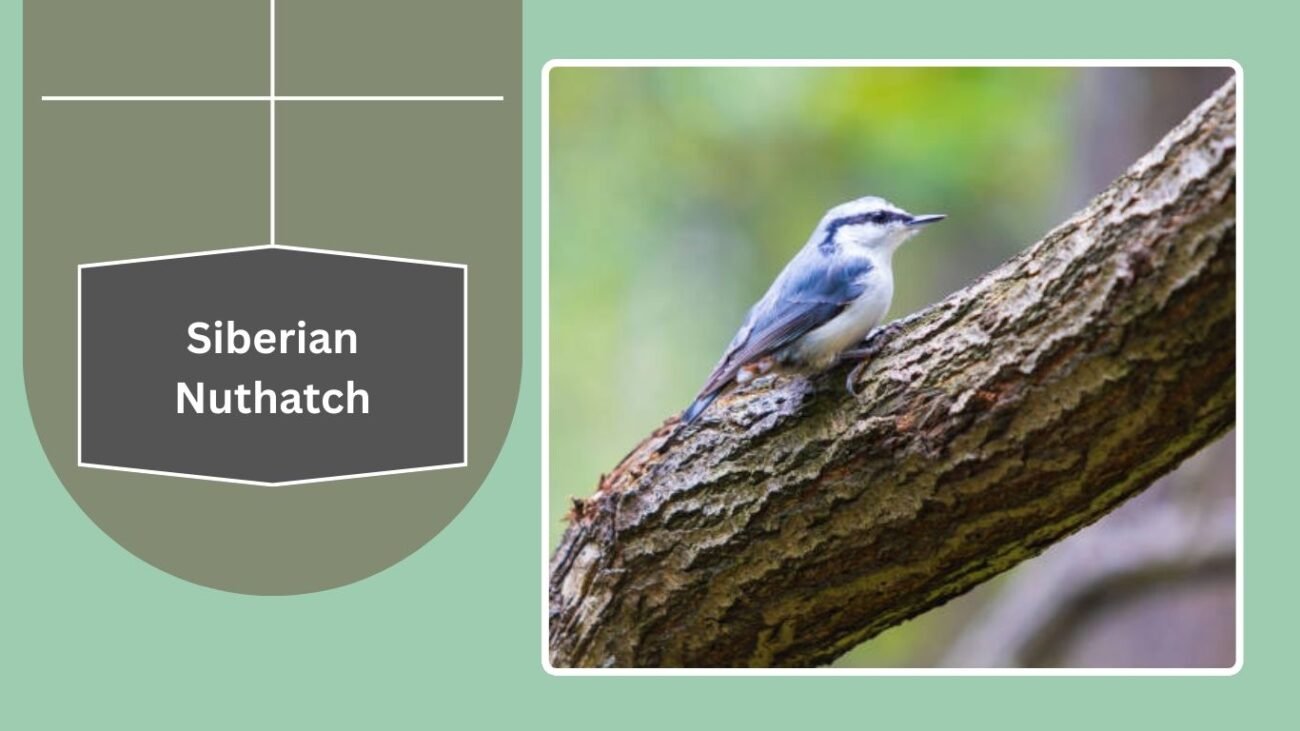
The Siberian Nuthatch (Sitta arctica) is a hardy species adapted to the vast boreal forests of northern Eurasia. Closely related to the Eurasian Nuthatch, it is slightly paler and lives farther north, often in extremely cold climates.
Identification
- Medium-sized, about 13–14 cm long
- Pale blue-gray upperparts with a faint black eye-stripe
- Underparts whitish, sometimes with a buff tinge on the flanks
- Bill long and straight, slightly stronger than that of Eurasian Nuthatch
- Sexes appear similar, though males may have slightly darker caps
Behavior
This bird is active throughout the year, even in harsh winter conditions. It forages for insects in summer and caches seeds in tree bark to survive the frozen months. Its movements along trunks and branches are quick and direct. Calls are short, sharp notes, less varied than those of the Eurasian Nuthatch. It is territorial and often aggressive toward other small birds when food resources are scarce.
Habitat
The Siberian Nuthatch inhabits coniferous and mixed forests across Siberia, northeastern Russia, and parts of Mongolia. It is strongly tied to taiga environments dominated by larch, pine, and spruce. In winter, some birds may move southward, but most remain within boreal zones.
Importance
As an insect predator and seed disperser in the taiga, the Siberian Nuthatch plays a crucial ecological role. Its survival in extreme conditions also makes it a valuable indicator species for the health of northern boreal ecosystems.
23. Plain Nuthatch
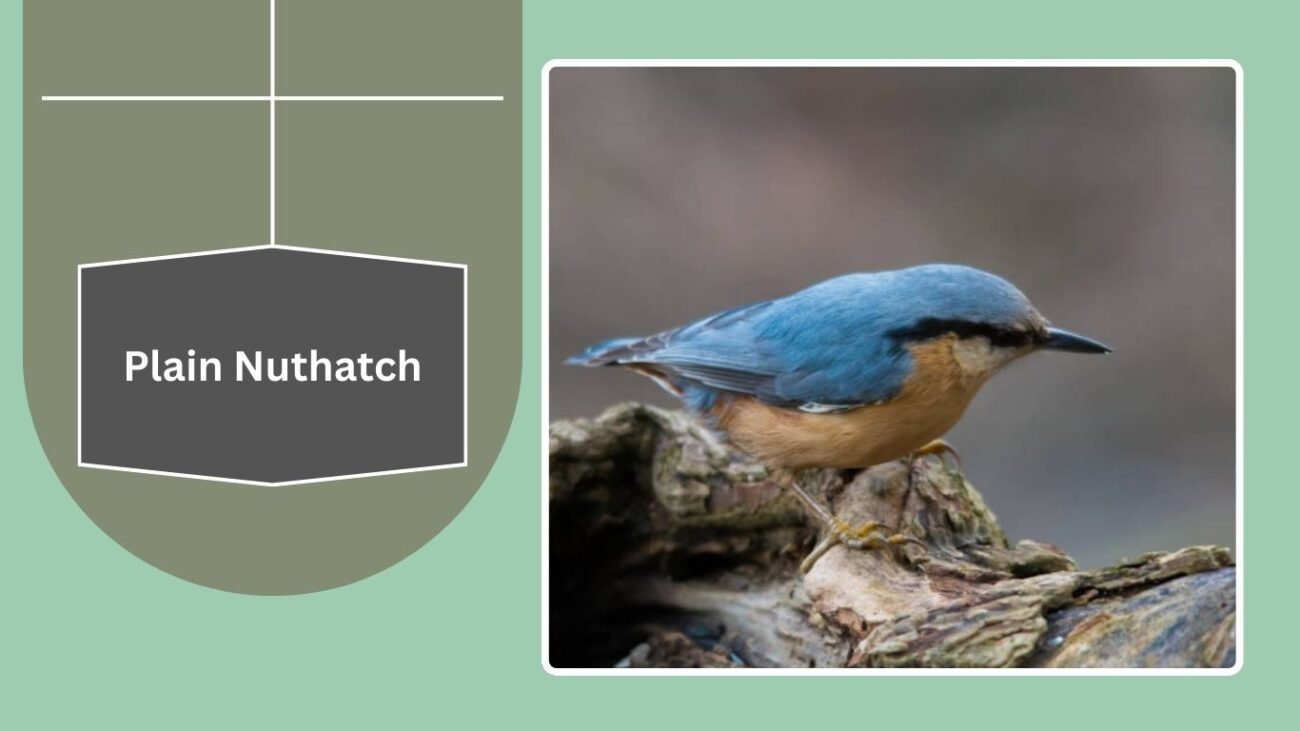
The Plain Nuthatch (Sitta neglecta)—sometimes treated as a subspecies of other Asian nuthatches but recognized by some authorities as distinct—is a little-known species from parts of Southeast Asia. Compared to many others, it is less colorful, hence its name.
Identification
- Small bird, around 12–13 cm long
- Blue-gray upperparts with faint black eye-stripe
- Underparts pale grayish-white with minimal rufous or buff tones
- Lacks the strong contrasting patterns seen in many nuthatches
- Males and females are almost identical in appearance
Behavior
Plain Nuthatches are agile climbers, moving rapidly along trunks and branches in search of insects. They hammer seeds into bark crevices to open them, a behavior typical of the genus. Their calls are thin and high-pitched, often overlooked in mixed flocks. They tend to stay in pairs or small family groups and are less aggressive than some of their relatives.
Habitat
They inhabit subtropical and tropical forests, particularly in parts of Myanmar, Thailand, Laos, and Vietnam. Preferring mixed woodlands and evergreen forests, they are usually found in upland or montane regions.
Importance
Although less studied, the Plain Nuthatch contributes to insect population control in its habitat. Its relatively plain plumage highlights the diversity of the nuthatch family, which ranges from vividly marked to very subdued species.
24. Nepal Nuthatch
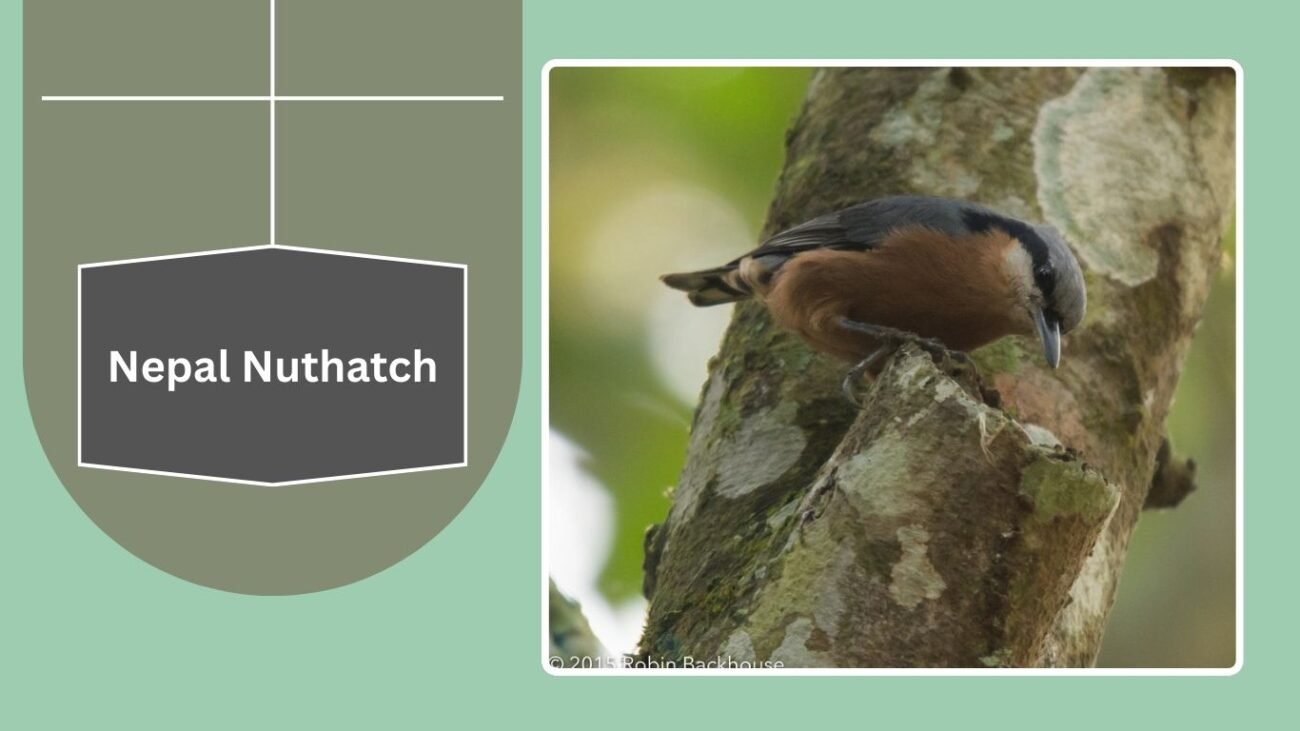
The Nepal Nuthatch (Sitta nipalensis) is a small and localized nuthatch species found in the Himalayan foothills. It is sometimes confused with the Chestnut-bellied and Burmese Nuthatches but is distinct in both range and subtle plumage differences.
Identification
- Small bird, about 12–13 cm long
- Blue-gray upperparts with a narrow black eye-stripe
- Underparts rufous to cinnamon, deeper on the belly and vent area
- Throat paler, contrasting slightly with darker underparts
- Short tail and slender, sharp bill typical of Sitta
- Males and females are very similar in appearance
Behavior
Nepal Nuthatches are energetic climbers, creeping up and down trunks and branches as they search for food. They often move in pairs and remain in small territories throughout the year. Their calls are sharp, repetitive notes, used to communicate between mates. Like other nuthatches, they are known to wedge seeds into bark crevices and hammer them open.
Habitat
This species inhabits subtropical and temperate forests in Nepal, Bhutan, and northeastern India. It prefers oak and pine woodlands, as well as mixed hill forests, usually between 1,000–2,500 meters in elevation.
Importance
The Nepal Nuthatch contributes to insect control in Himalayan forests and plays a role in seed dispersal. Its restricted range makes it a useful species for monitoring the health of mid-altitude woodlands in the region.
25. Beautiful Nuthatch
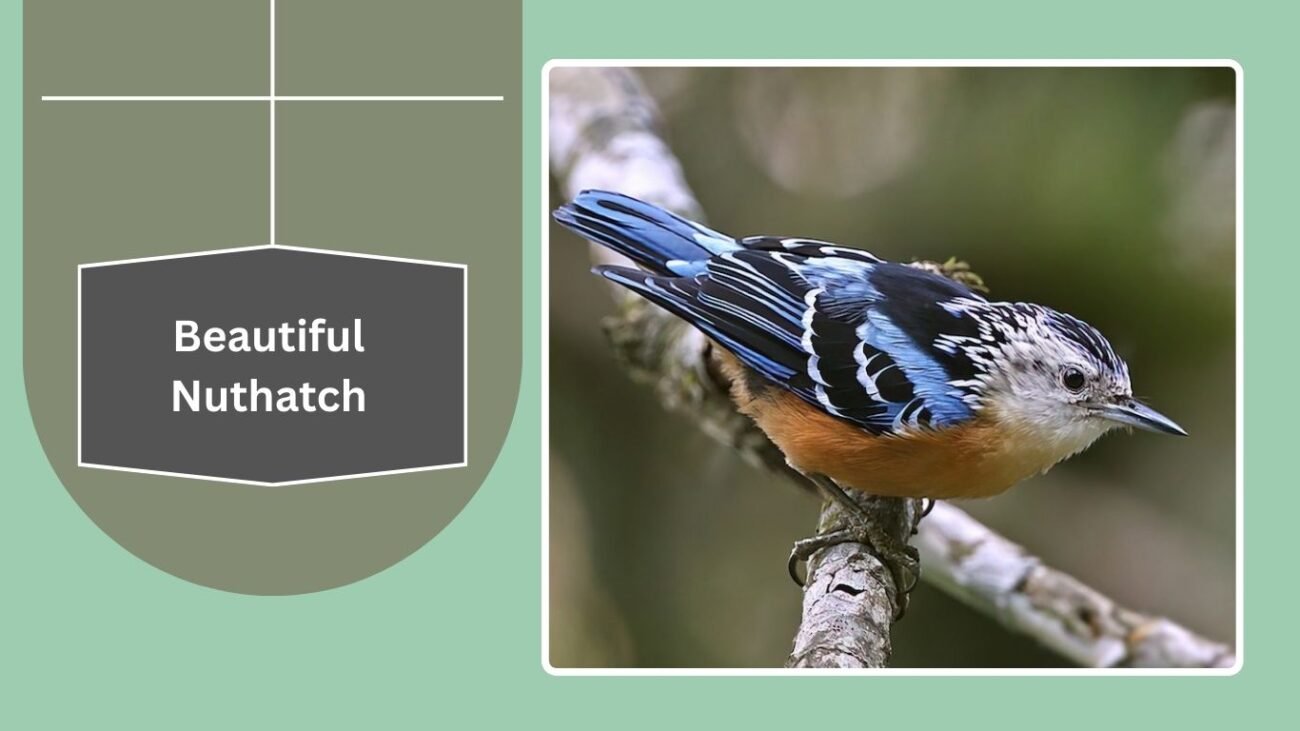
The Beautiful Nuthatch (Sitta formosa) is one of the most spectacular members of the nuthatch family, admired for its striking colors and rarity. Found in parts of South and Southeast Asia, it is a scarce species often sought after by birdwatchers.
Identification
- Medium-sized, about 16 cm long
- Blue-green upperparts with bold black streaking on the back
- Face white with a strong black eye-stripe and crown
- Underparts rich rufous to orange, contrasting with blue-gray wings
- Long, sharp bill and relatively long tail compared to other nuthatches
- Sexes similar in plumage
Behavior
The Beautiful Nuthatch is more elusive than many of its relatives, often staying high in the canopy. It forages for insects, spiders, and seeds, climbing along trunks and large branches. Its movements are quick and graceful, and it occasionally joins mixed-species flocks in forest canopies. Vocalizations are varied, but it is less noisy than species like the White-breasted Nuthatch.
Habitat
This species inhabits subtropical and tropical moist forests, especially in the eastern Himalayas, northern Myanmar, Laos, and western Thailand. It prefers tall, mature forests, usually between 600–2,500 meters in elevation.
Importance
The Beautiful Nuthatch is considered globally vulnerable due to deforestation and habitat loss. Its stunning appearance and rarity make it a flagship species for forest conservation in the eastern Himalayan region. Protecting its habitat benefits a wide range of other threatened forest birds.