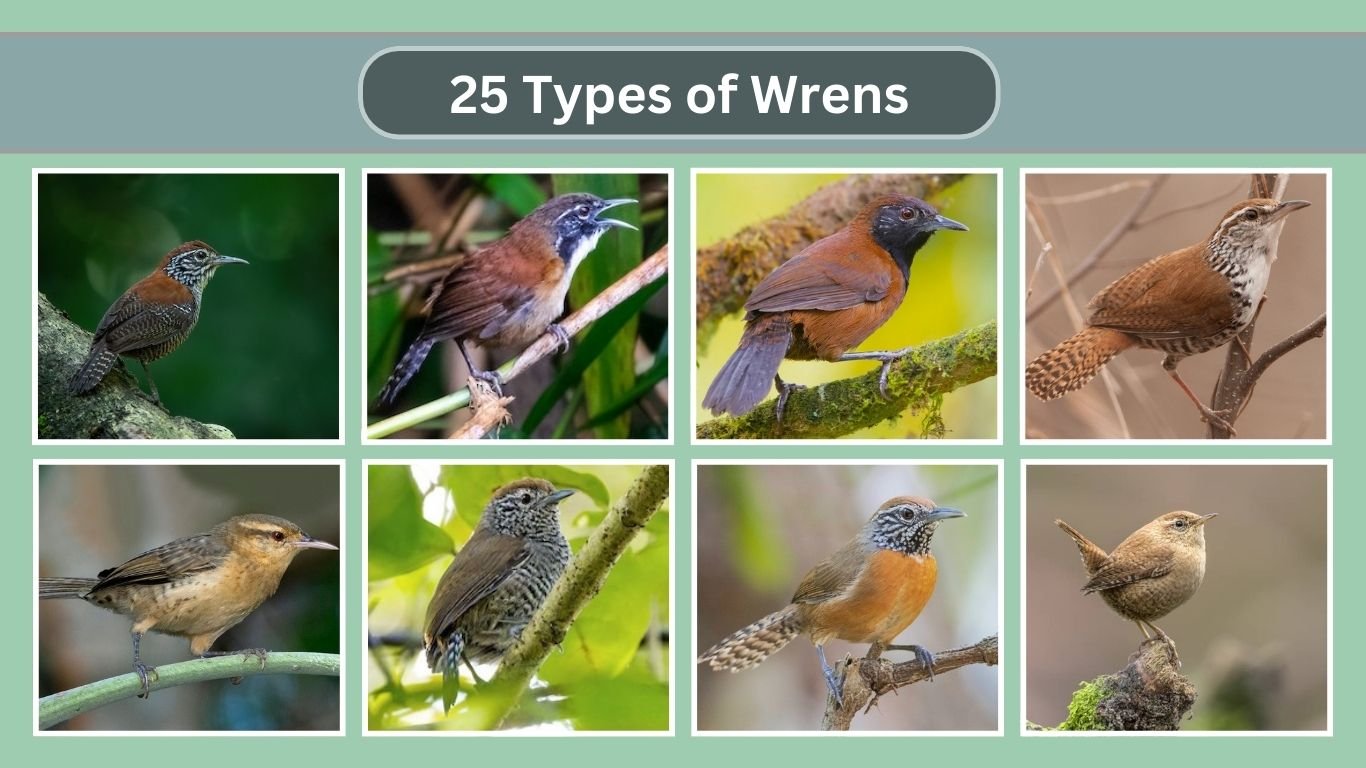
Wrens are small, energetic songbirds celebrated for their bold personalities, lively songs, and adaptability to diverse environments. Found across the Americas, Europe, and parts of Asia, these birds occupy habitats ranging from deserts and grasslands to dense forests and wetlands. Each species has its own unique markings, behaviors, and ecological role. In this article, we’ll explore 25 different types of wrens, focusing on their identification, habits, habitats, and importance.
1. House Wren
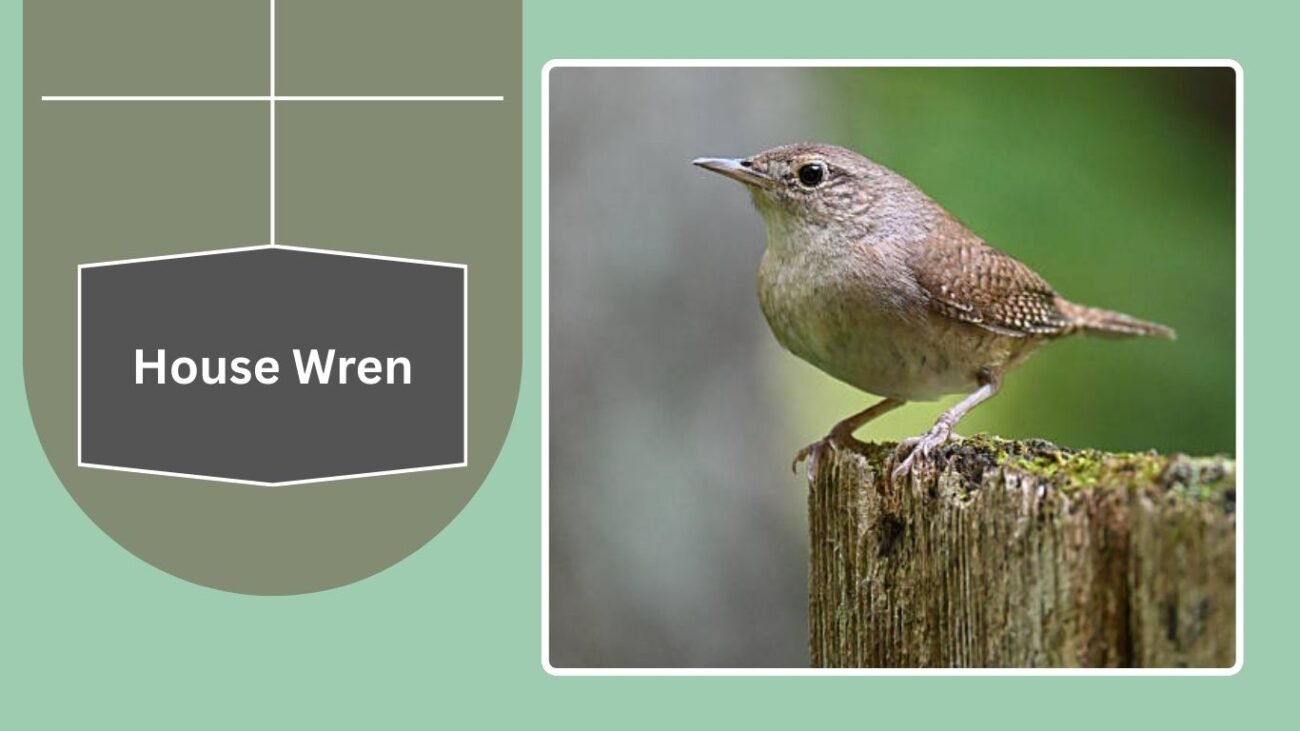
The House Wren (Troglodytes aedon) is one of the most widespread wrens, found across North and South America. Small but energetic, it is best known for its bubbly, musical song and curious behavior around human settlements. Despite its tiny size, the House Wren has a bold personality and readily nests in backyard birdhouses, gardens, and natural cavities.
Identification
- Length: about 11–13 cm (4–5 inches)
- Plumage: brown overall with fine barring on wings and tail
- Underparts: pale grayish or buff
- Bill: slender and slightly curved
- Tail: short, often held upright
- Both sexes look alike, with subtle seasonal variations
Behavior
House Wrens are active, restless birds, constantly hopping through shrubs, fences, and gardens in search of insects and spiders. They are highly vocal, producing a rich and complex song that can last several seconds, especially during breeding season. Males are territorial and may fill multiple nest sites with twigs, sometimes as a strategy to deter rivals.
Habitat
They adapt to a wide variety of habitats, including open woodlands, suburban yards, parks, and farmland edges. Their strong association with human settlements makes them one of the most familiar wrens. In North America, they are summer breeders, migrating to warmer regions in winter.
Importance
House Wrens play an important ecological role by controlling insect populations, as their diet consists mainly of beetles, caterpillars, and other small invertebrates. Their close association with humans also makes them an excellent backyard bird, providing both natural pest control and delightful song.
2. Winter Wren
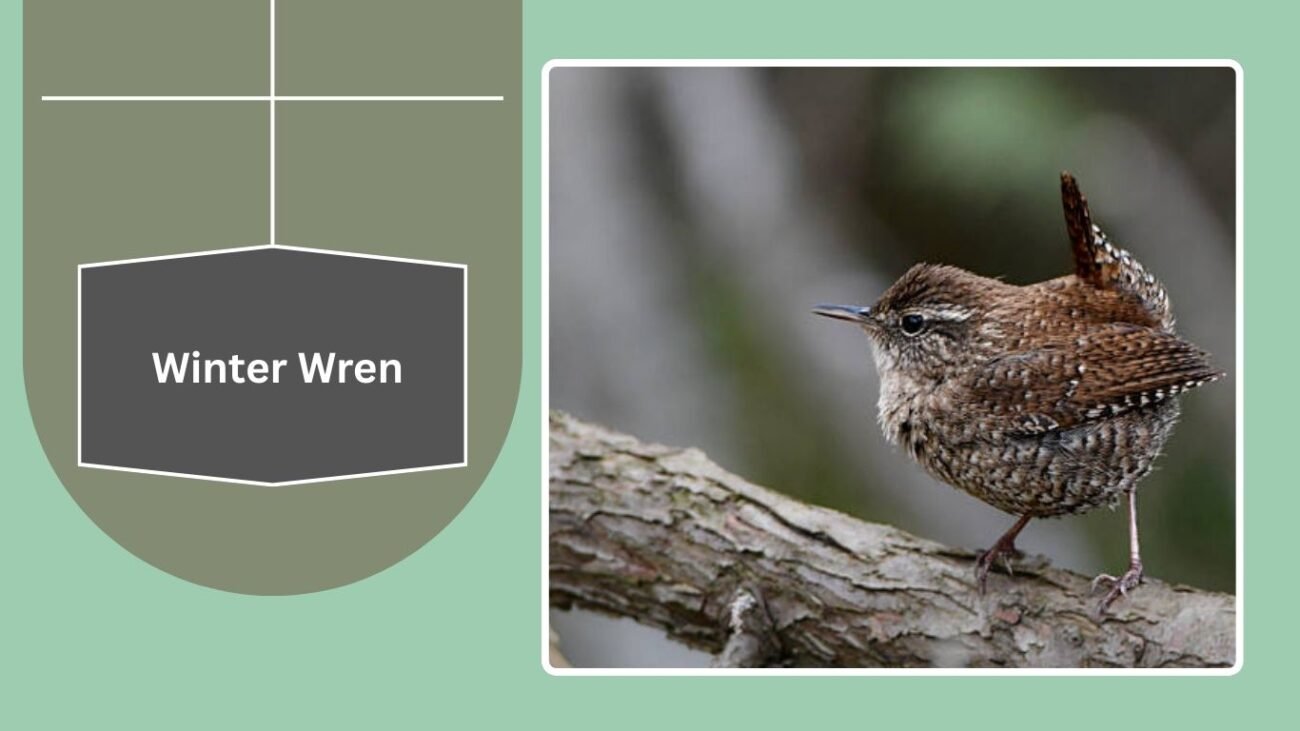
The Winter Wren (Troglodytes hiemalis) is a tiny, secretive bird known for its explosive and beautiful song that is surprisingly long and loud for its size. Found across North America, Europe, and Asia, this species inhabits dense forests, often staying low to the ground among fallen logs and undergrowth.
Identification
- Length: 8–10 cm (3–4 inches), one of the smallest wrens
- Plumage: dark brown with heavy barring on wings, tail, and flanks
- Underparts: slightly paler with fine streaks
- Bill: short, thin, and slightly downcurved
- Tail: very short, often cocked upright
- Round, compact body with a tiny appearance
Behavior
Winter Wrens are shy and elusive, spending much of their time flitting near the ground or under dense vegetation. Despite their secretive nature, males sing powerfully to defend territories and attract mates. Their song can last up to 10 seconds, filled with rapid trills and notes. They are also known for their quick, mouse-like movements while foraging for insects and spiders.
Habitat
They prefer damp, shady forests with thick undergrowth, especially near streams or wetlands. Fallen logs, brush piles, and mossy stumps are favorite hiding and foraging spots. In colder months, they may move to lower elevations or slightly more open habitats for shelter.
Importance
Winter Wrens are excellent indicators of healthy forest ecosystems. Their dependence on dense, moist woodland habitats makes them vulnerable to logging and habitat loss. Ecologically, they play a role in controlling insect populations, while their song contributes to the natural soundscape of woodlands.
3. Carolina Wren
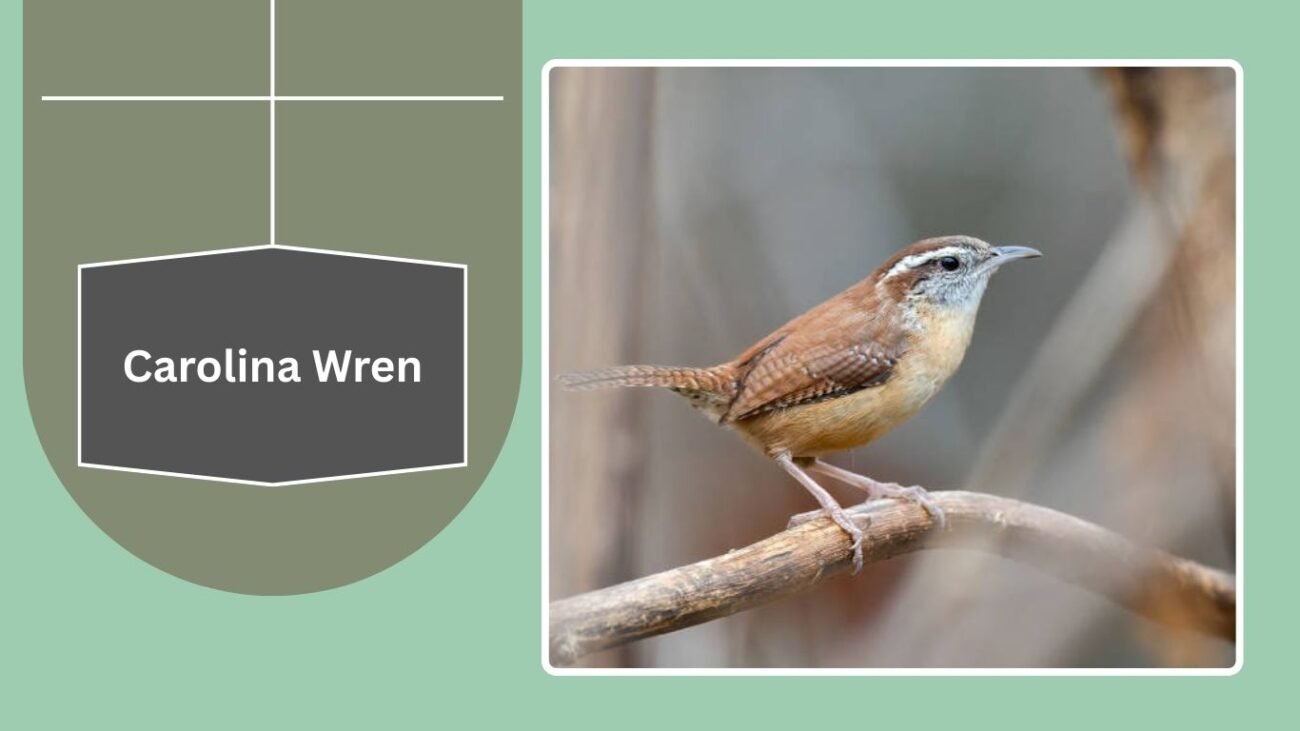
The Carolina Wren (Thryothorus ludovicianus) is a bold and vocal wren native to the eastern United States. Known for its loud “teakettle-teakettle” song, it is a year-round resident and one of the most common wrens spotted in gardens and woodlands.
Identification
- Length: 12–14 cm (4.7–5.5 inches)
- Plumage: reddish-brown above, warm buff below
- Distinct white eyebrow stripe, a key field mark
- Bill: long, slightly curved
- Tail: medium length, often held cocked
- Males and females look similar in appearance
Behavior
Carolina Wrens are energetic, curious, and often fearless around humans. They explore brush piles, porches, and sheds, sometimes nesting in flowerpots or boxes. Males sing loudly throughout the year to mark territory, and pairs often remain together year-round. Their constant chattering and exploratory nature make them easy to notice.
Habitat
They favor dense thickets, woodlots, forest edges, and suburban backyards with plenty of cover. Unlike migratory wrens, the Carolina Wren stays in the same area year-round, even braving cold winters if food and shelter are available.
Importance
Carolina Wrens play an important ecological role by helping control insects such as caterpillars, beetles, and grasshoppers. They are also cherished as backyard birds, adding lively songs and activity to gardens. Their adaptability has made them one of the most successful wren species in human-altered landscapes.
4. Bewick’s Wren

The Bewick’s Wren (Thryomanes bewickii) is a small, active bird native to North America, easily recognized by its long tail and sharp white eyebrow. Once widespread in the eastern U.S., its population has declined there, though it remains common in the west and parts of Mexico.
Identification
- Length: 12–14 cm (4.7–5.5 inches)
- Plumage: grayish-brown above, whitish below
- Distinct white supercilium (eyebrow) extending beyond the eye
- Long tail with black barring, often flicked upwards
- Bill: slender and slightly curved
- Both sexes appear similar
Behavior
Bewick’s Wrens are restless and quick, often seen flicking their tails as they hop through shrubs and brushy areas. Males sing a variety of clear, whistled phrases, often changing their songs between renditions. They are also territorial and will chase away other small birds from nesting areas.
Habitat
They prefer brushy thickets, desert scrub, woodland edges, and suburban gardens. Their adaptability allows them to live in both dry deserts and moist forests, though they strongly favor areas with dense cover.
Importance
Bewick’s Wrens are important insect predators, feeding heavily on beetles, caterpillars, and other small invertebrates. Their song and lively behavior make them a favorite among birdwatchers, while their sensitivity to habitat changes makes them useful indicators of ecosystem health.
5. Cactus Wren
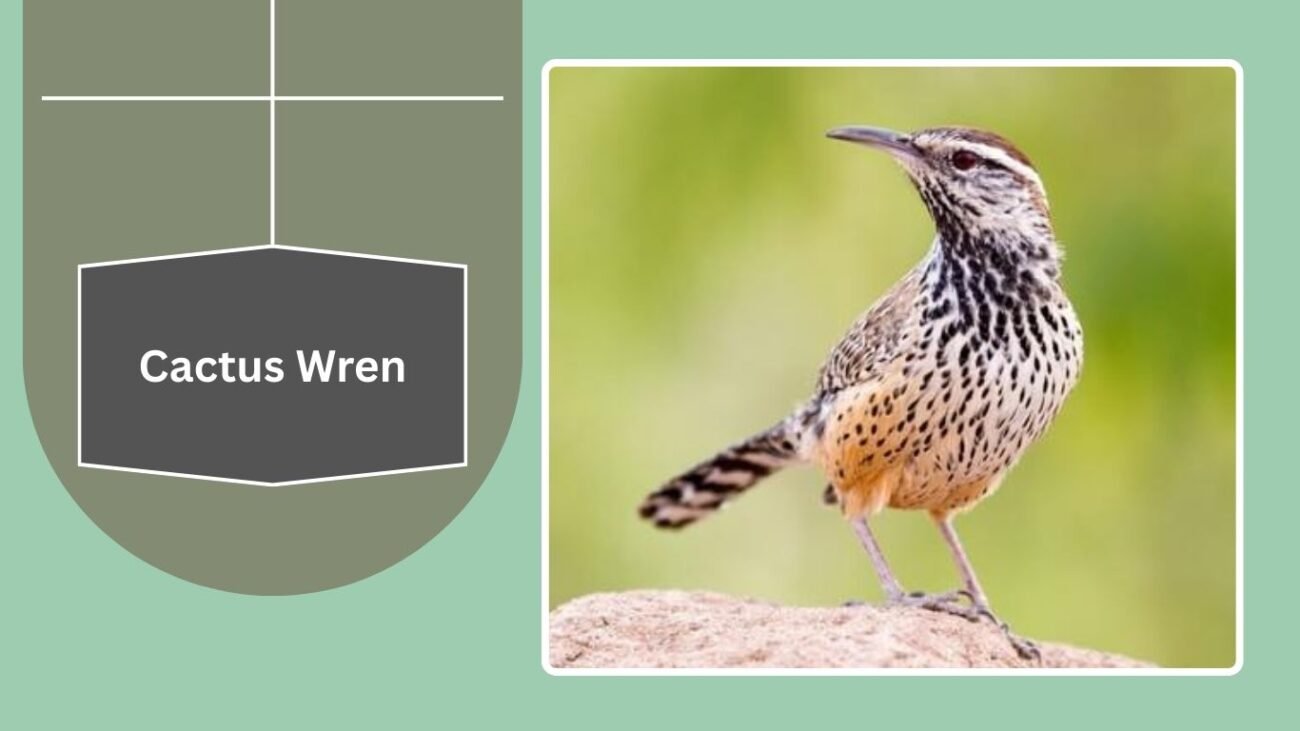
The Cactus Wren (Campylorhynchus brunneicapillus) is the largest wren in North America and a symbol of the desert southwest. Bold, noisy, and conspicuous, it often perches on cactus tops, singing its harsh, scratchy calls.
Identification
- Length: 18–20 cm (7–8 inches), noticeably larger than most wrens
- Plumage: brown with bold white streaks and spots
- Distinct white eyebrow stripe running across the face
- Tail: long with black barring
- Bill: slightly curved and strong
- Both sexes look alike
Behavior
Cactus Wrens are energetic and loud, often moving in pairs or family groups. They build large, football-shaped nests in thorny plants like cholla or prickly pear cacti, which protect them from predators. Unlike most wrens, their call is a harsh, raspy “char-char-char” rather than a melodious song.
Habitat
They thrive in arid deserts and dry scrublands, often among cactus, mesquite, and creosote bushes. Their association with desert vegetation makes them a true desert specialist and an unmistakable presence in southwestern landscapes.
Importance
Cactus Wrens are vital for desert ecosystems. They control insect populations and disperse seeds, while their nests provide shelter for other desert animals once abandoned. Their bold nature and frequent visibility make them one of the most recognizable desert birds.
6. Rock Wren

The Rock Wren (Salpinctes obsoletus) is a medium-sized wren well adapted to rocky habitats of western North America. Unlike other wrens that prefer dense vegetation, the Rock Wren is often found in open, arid, and rugged areas, hopping actively across stones and cliffs. It is famous for its loud, varied songs that echo across canyons and rocky slopes.
Identification
- Length: 12–15 cm (4.7–6 inches)
- Upperparts: grayish-brown with fine mottling for camouflage against rocks
- Underparts: whitish with faint spotting on the breast
- Long, thin bill, slightly curved downward
- Tail: long and barred with dark markings
- Pale eyebrow line above the eye
- Slim body and long legs, giving it a lanky appearance compared to smaller wrens
Behavior
Rock Wrens are constantly in motion, hopping from rock to rock while flicking their tails. They often use stones at the entrance of their nests, creating a “paved” walkway, which is a unique behavior among wrens. Their song consists of a series of sharp whistles and trills, with males capable of producing more than 100 different variations. Unlike many wrens, Rock Wrens rarely drink water directly, obtaining moisture from insects they eat.
Habitat
They inhabit arid, rocky environments such as cliffs, canyons, boulder-strewn slopes, and desert ridges. They prefer areas with sparse vegetation, making them highly specialized for rocky terrain. Their camouflage and behavior make them blend seamlessly with their environment, offering protection from predators.
Importance
Rock Wrens are valuable in controlling insect populations, feeding primarily on beetles, grasshoppers, and ants. Their presence is an indicator of healthy rocky ecosystems, and their unique nesting behavior provides insight into avian adaptation to arid landscapes.
7. Marsh Wren
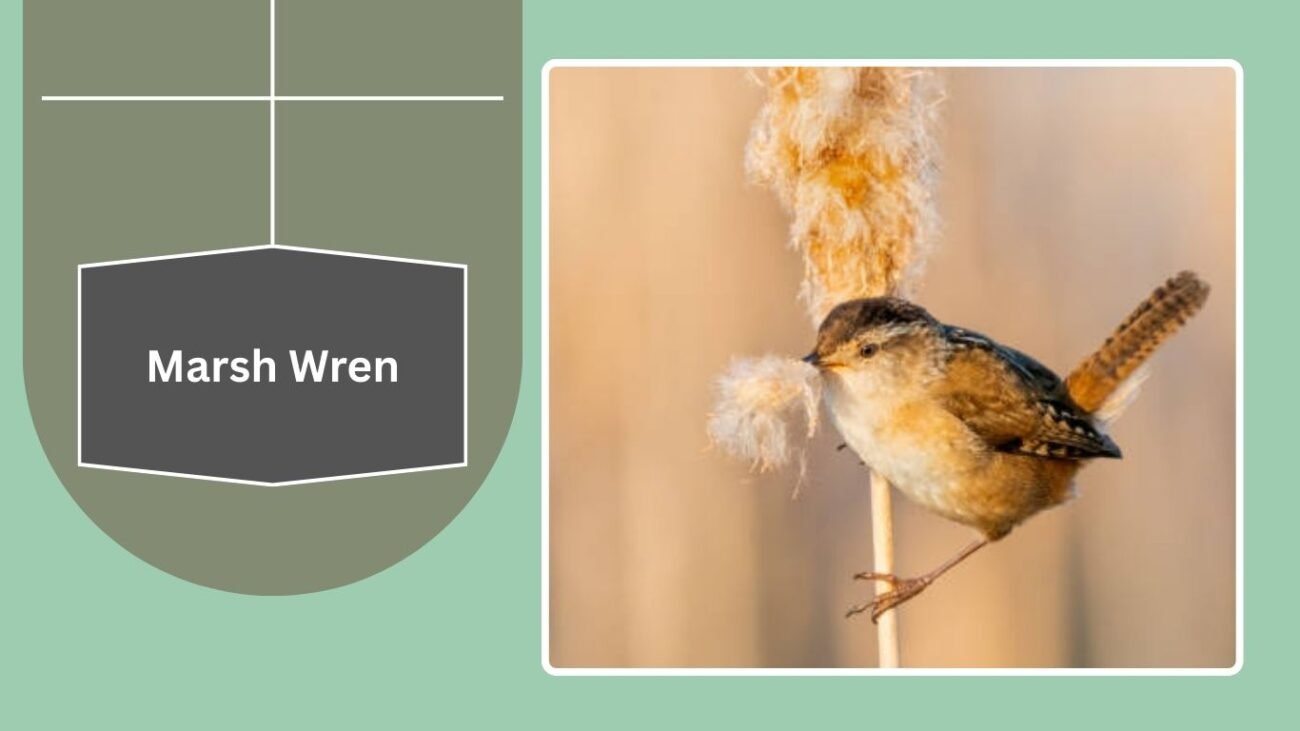
The Marsh Wren (Cistothorus palustris) is a small, secretive bird that thrives in wetland habitats across North America. Though tiny, it is known for its loud, gurgling song and aggressive defense of its territory. Males are prolific nest-builders, often constructing multiple nests within their territory.
Identification
- Length: 10–14 cm (4–5.5 inches)
- Upperparts: warm brown with black and white streaks on the back
- Underparts: pale grayish to whitish
- Distinct white eyebrow stripe extending behind the eye
- Bill: slender and slightly curved
- Tail: short, rounded, and often cocked upward
- Small, compact body typical of wrens
Behavior
Marsh Wrens are highly territorial and aggressive, often destroying the eggs of rival wrens within their range. Males build several “dummy” nests, which may serve both as decoys for predators and as options for females to choose from. They sing loudly, even at night during breeding season, producing harsh, chattering songs that carry well through wetlands. These wrens forage actively among reeds and cattails, rarely venturing into open areas.
Habitat
They are strongly associated with freshwater and brackish marshes, favoring dense stands of cattails, reeds, and tall grasses. Their ability to climb and cling to vertical stems allows them to move efficiently in thick vegetation where most birds cannot.
Importance
Marsh Wrens are essential in maintaining wetland ecosystems by consuming insects such as mosquitoes, flies, and beetles. Their abundance is also a strong indicator of wetland health, as they require thick vegetation and stable water levels. Additionally, their territorial behavior influences the structure of wetland bird communities.
8. Sedge Wren
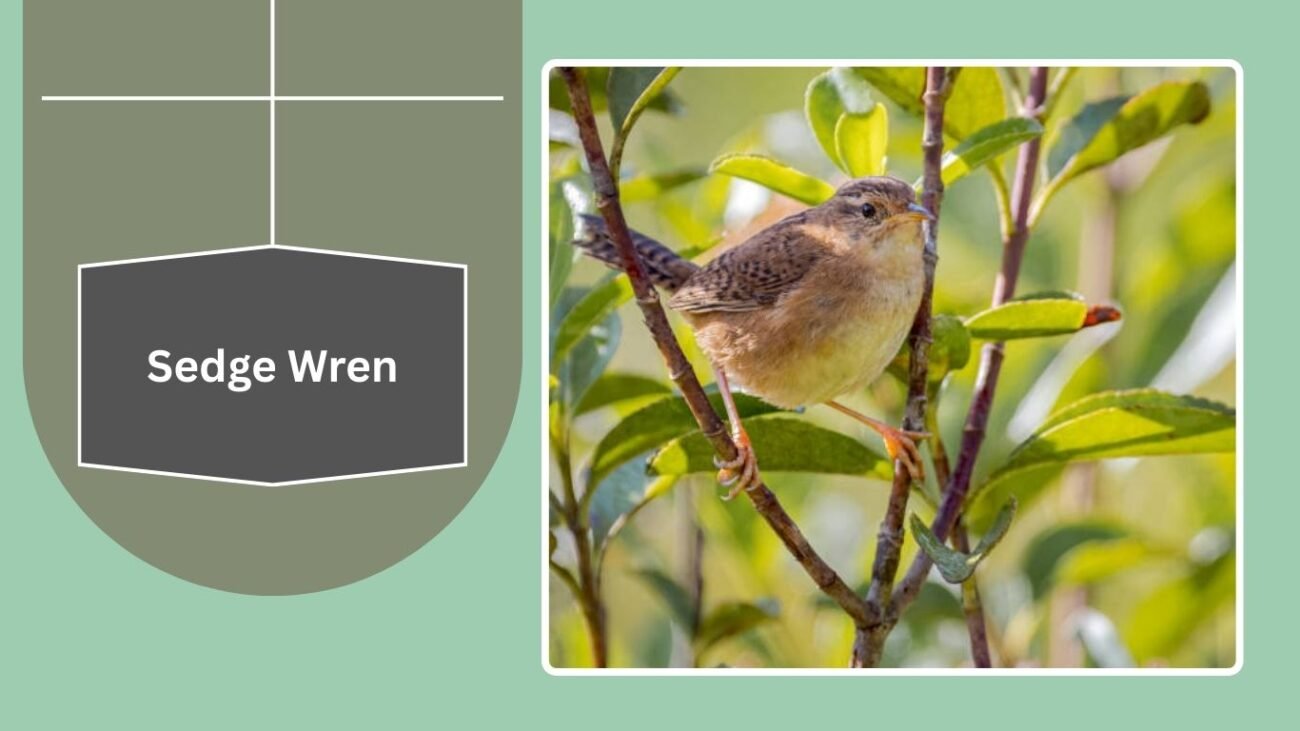
The Sedge Wren (Cistothorus stellaris) is a small, secretive bird that thrives in wet meadows and grassy marshes. It is closely related to the Marsh Wren but is smaller and more elusive, often darting between grasses rather than perching in open view. Its song is short, sharp, and insect-like, often delivered from low perches.
Identification
- Length: 10–12 cm (4–4.7 inches), smaller than most wrens
- Plumage: buffy brown above with fine streaks on the back and crown
- Underparts: whitish with a faint buff wash on the flanks
- Distinct pale eyebrow stripe
- Short, rounded wings and a tiny cocked tail
- Slim bill, slightly curved downward
Behavior
Sedge Wrens are active but highly secretive, typically staying low in grasses and sedges. Their song is a dry, chattering series of notes, resembling the sound of an insect. Males often sing persistently during breeding season while flitting between stems. Like Marsh Wrens, they may build multiple nests, with some remaining unused. They are also known for their nomadic tendencies, moving to new areas if conditions change.
Habitat
They prefer wet meadows, grassy marshes, and sedge-dominated fields, especially in areas with tall, dense vegetation. Unlike the Marsh Wren, Sedge Wrens avoid cattails and deeper water, staying in drier grassier patches. Their reliance on specific habitats makes them vulnerable to agricultural development and wetland drainage.
Importance
Sedge Wrens contribute to ecosystem balance by consuming small insects, including grasshoppers, beetles, and mosquitoes. They are also indicators of healthy wet meadow habitats, as their presence reflects stable, diverse vegetation and water conditions. Their nomadic movements also help recolonize restored wetlands.
9. Canyon Wren
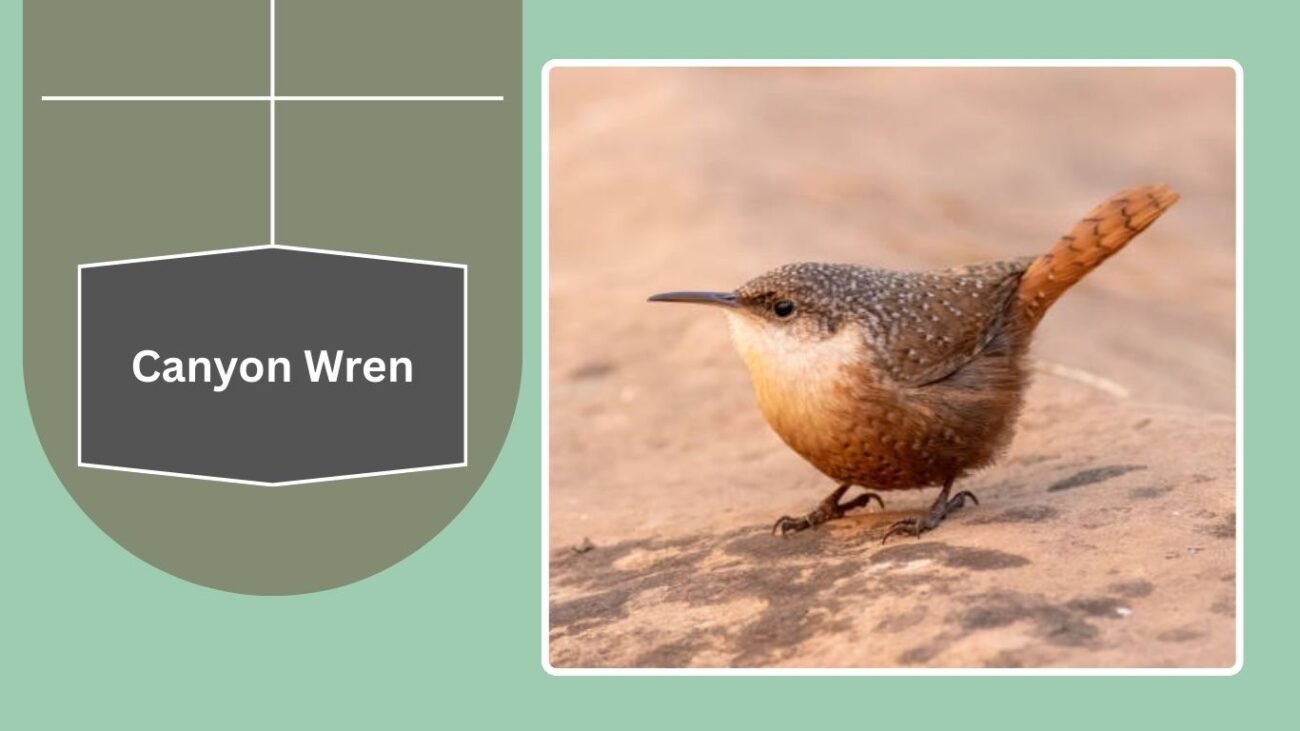
The Canyon Wren (Catherpes mexicanus) is one of the most distinctive wrens, known for its beautiful cascading song that echoes across rocky canyons and cliffs of western North America. Its striking plumage and melodious notes make it a favorite among bird enthusiasts and hikers.
Identification
- Length: 12–15 cm (4.7–6 inches)
- Rich chestnut belly and flanks with contrasting white throat and breast
- Back and wings grayish-brown with fine spotting
- Long, slightly decurved bill adapted for probing crevices
- Tail: medium length with fine barring
- Slender body with long legs suited for climbing rocks
Behavior
Canyon Wrens are agile climbers, moving easily across steep cliffs, boulders, and rocky walls as they probe crevices for insects and spiders. They are shy but reveal themselves through their remarkable song, a series of descending, liquid notes that resonate through canyons. Pairs maintain year-round territories and are rarely found far from rocky habitats.
Habitat
They are strongly tied to arid and semi-arid rocky environments such as canyons, cliffs, rocky slopes, and escarpments. While primarily desert birds, they may also occur in mountainous regions with suitable rock formations. Their distribution closely follows rocky terrain, making them highly specialized.
Importance
Canyon Wrens play an important ecological role as insect predators, reducing populations of beetles, ants, and spiders in rocky ecosystems. Their haunting song is also a hallmark of canyon landscapes, adding to the natural character of western deserts and mountain ranges. Their dependence on rocky habitats makes them strong indicators of the health of arid ecosystems.
10. Pacific Wren

The Pacific Wren (Troglodytes pacificus) is one of the smallest wrens in North America, yet it delivers one of the most powerful and complex songs. Found mainly in the dense coniferous forests of the Pacific Northwest, this wren spends much of its time hidden in thick undergrowth, making it more often heard than seen.
Identification
- Length: 8–10 cm (3–4 inches), tiny and round-bodied
- Plumage: dark brown overall with fine barring on wings, tail, and flanks
- Underparts: slightly paler but still dusky, blending into forest shadows
- Tail: very short, typically held upright
- Bill: small, thin, and slightly downcurved
- Compact shape, giving it a “tiny ball of feathers” appearance
Behavior
Pacific Wrens are extremely active, scurrying mouse-like across the forest floor and around fallen logs. Males are famous for their long, musical songs — lasting up to 10 seconds and composed of over 30 notes per second. These songs are used to mark territory and attract mates in the dense forest environment where visibility is low. They are secretive foragers, probing moss, bark, and leaf litter for tiny insects and spiders.
Habitat
They are strongly associated with old-growth and mature coniferous forests, particularly damp, mossy areas with fallen logs, root tangles, and dense understory. They thrive in shaded habitats with high humidity, avoiding open or dry landscapes. Their range extends along the Pacific coast from Alaska down to California.
Importance
Pacific Wrens are excellent indicators of old-growth forest health. Their presence often reflects intact, humid, and structurally complex habitats. Ecologically, they play an important role in controlling insect populations in dense woodlands, while their elaborate song contributes significantly to the natural soundscape of western forests.
11. Eurasian Wren
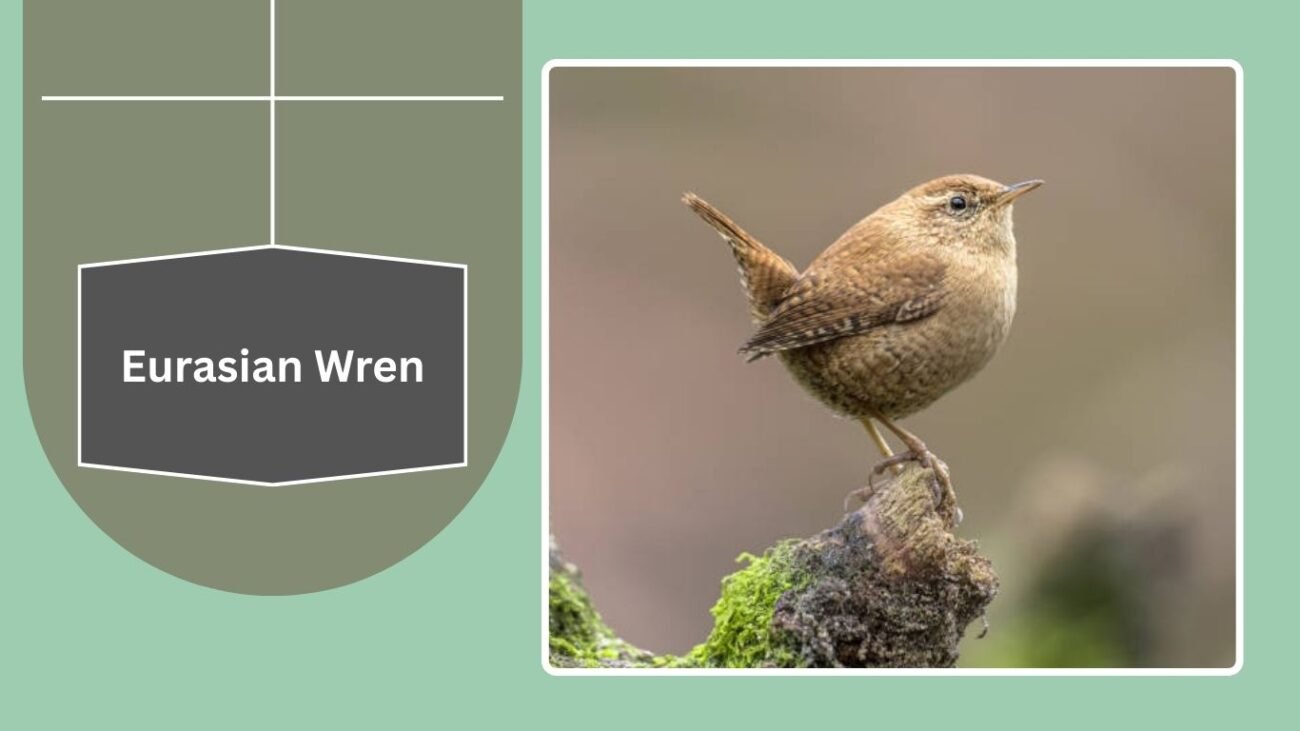
The Eurasian Wren (Troglodytes troglodytes), also simply called the “Wren” in Europe, is one of the most widespread and well-known small birds across Europe, Asia, and parts of North Africa. Despite its tiny size, it is bold and energetic, filling woodlands and gardens with its loud, trilling song.
Identification
- Length: 9–10.5 cm (3.5–4 inches)
- Plumage: warm brown overall with fine dark barring across wings and tail
- Underparts: paler brown with faint streaking on the belly and flanks
- Tail: very short, often cocked upright
- Bill: thin, slightly curved, adapted for insect foraging
- Small, round body with a compact shape
- Both sexes look alike, making them difficult to distinguish
Behavior
The Eurasian Wren is highly active and restless, darting quickly through underbrush, hedgerows, and stone walls. It is territorial, and males produce a powerful, complex song that carries surprisingly far for such a small bird. In colder climates, wrens often roost communally in cavities to conserve heat, sometimes with dozens packed together. Their foraging is low and secretive, usually close to the ground.
Habitat
They inhabit a wide variety of habitats including woodlands, gardens, hedges, scrubland, wetlands, and alpine slopes. Their adaptability allows them to live from sea level up to mountainous regions. They favor areas with dense cover, which provides both food sources and protection from predators.
Importance
The Eurasian Wren is a vital insect predator, feeding on spiders, beetles, and other small invertebrates. Its adaptability makes it one of the most successful small birds across Eurasia. In many cultures, it is also a symbol of resilience and persistence, admired for its loud song despite its tiny size.
12. Mountain Wren
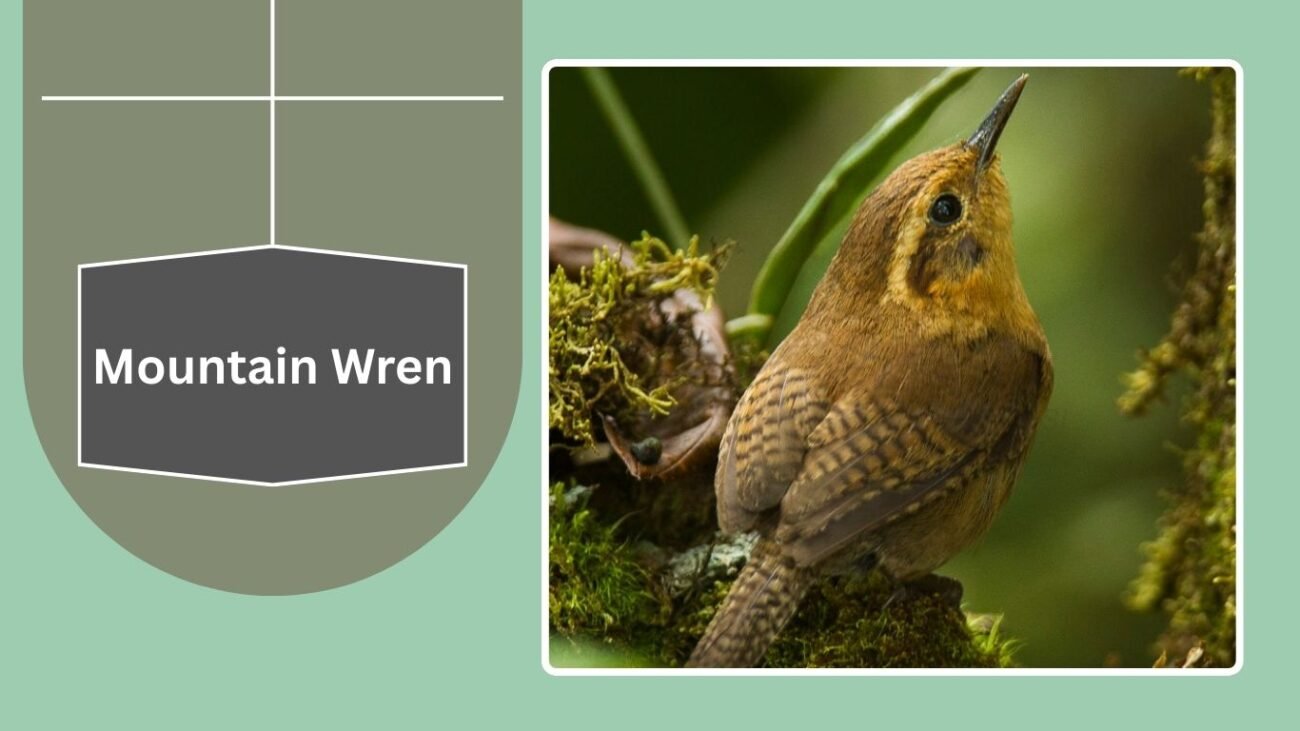
The Mountain Wren (Troglodytes solstitialis) is a small but striking bird native to the high-altitude regions of the Andes in South America. Unlike many wrens that inhabit lowlands, this species thrives in cool montane forests and shrubby slopes, often at elevations above 2,000 meters. Its sharp, melodic song carries well through the thin mountain air, making it more noticeable than its appearance.
Identification
- Length: 11–12 cm (4.3–4.7 inches)
- Plumage: rich rufous-brown on upperparts with fine streaking
- Underparts: buffy to whitish with slight spotting on the chest
- Distinct pale eyebrow line above the eye
- Bill: short, thin, and slightly curved
- Tail: short and barred, usually held upright
- Compact body typical of wrens, adapted for agile movement in dense shrubs
Behavior
Mountain Wrens are active foragers, moving quickly through undergrowth, mossy rocks, and shrubs. They are known for their persistent, melodious calls, which echo in mountainous valleys. These wrens often forage near the ground, probing moss and bark for insects. They are shy but vocal, announcing their presence even when hidden from view.
Habitat
Found mainly in montane forests, shrubby hillsides, and páramo (high Andean grasslands with scattered shrubs). They prefer areas with thick vegetation, mossy rocks, and moist conditions. Their distribution ranges from Venezuela to northern Chile and Argentina, making them a characteristic bird of the Andes.
Importance
Mountain Wrens are indicators of healthy montane ecosystems. Their dependence on dense vegetation and moss-rich habitats makes them sensitive to deforestation and land-use change. Ecologically, they control insect populations in high-altitude forests and contribute to the balance of montane biodiversity.
13. Banded Wren
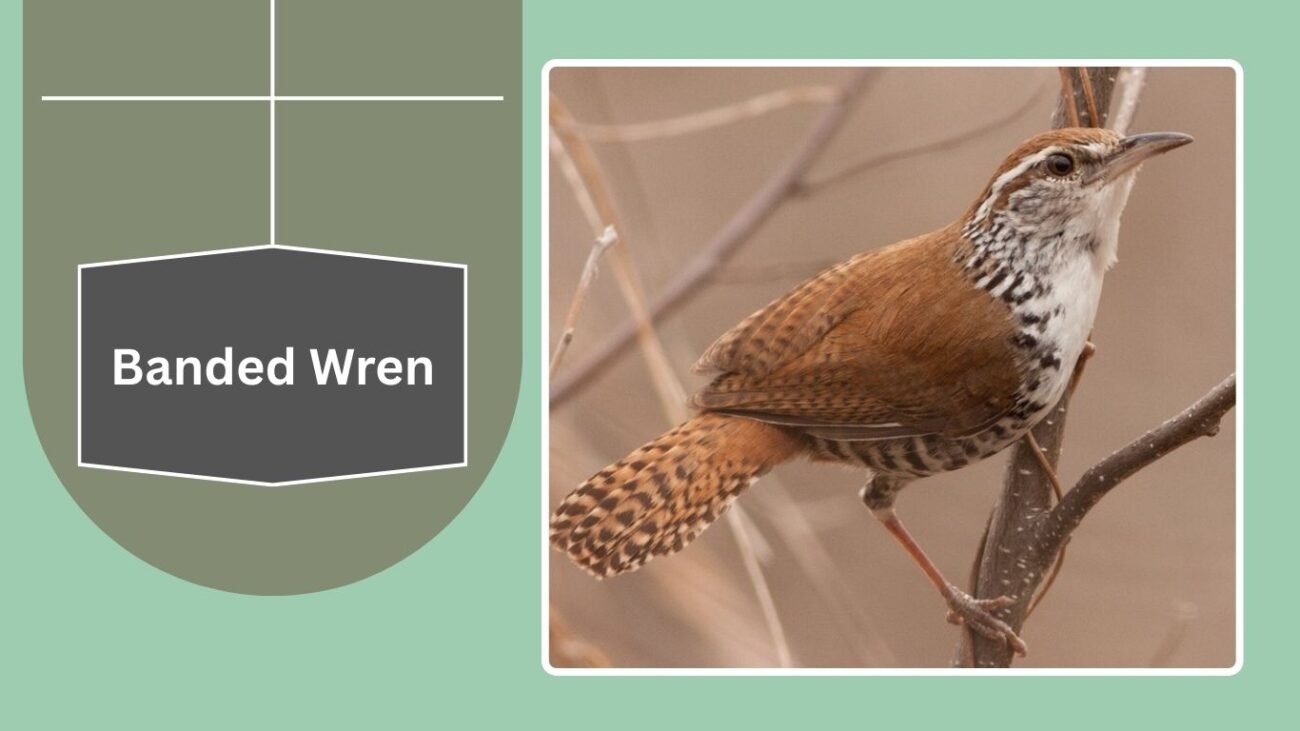
The Banded Wren (Thryophilus pleurostictus) is a boldly patterned species of Central America, easily recognized by its striking plumage and strong, whistled song. It is a more colorful and conspicuous wren compared to the plain brown species commonly found elsewhere.
Identification
- Length: 13–14 cm (5–5.5 inches)
- Upperparts: warm brown with darker streaking
- Underparts: whitish with bold black barring on the flanks and belly
- Distinct black-and-white face pattern with a strong white eyebrow
- Tail: medium length, barred with black
- Bill: slightly curved, sturdy, and suited for insect foraging
- Both sexes appear similar, though males may sing more frequently
Behavior
Banded Wrens are social and often found in pairs or family groups. They are active and bold, frequently perching in the open and delivering loud, whistled songs that carry across scrubby habitats. Their song is more musical than many wrens, with males performing duets with their mates, which helps strengthen pair bonds. They forage in low vegetation, flipping leaves and probing bark for insects.
Habitat
They inhabit dry forests, scrublands, thickets, and semi-arid regions from Mexico to Costa Rica. Banded Wrens are especially common in thorny scrub habitats where cover is dense but open spaces allow them to sing from exposed perches.
Importance
Banded Wrens contribute to insect control in scrub ecosystems, feeding on beetles, caterpillars, and grasshoppers. Their duets and striking patterns make them a favorite among birdwatchers in Central America, while their presence indicates the ecological balance of semi-arid scrub habitats.
14. Rufous-and-white Wren
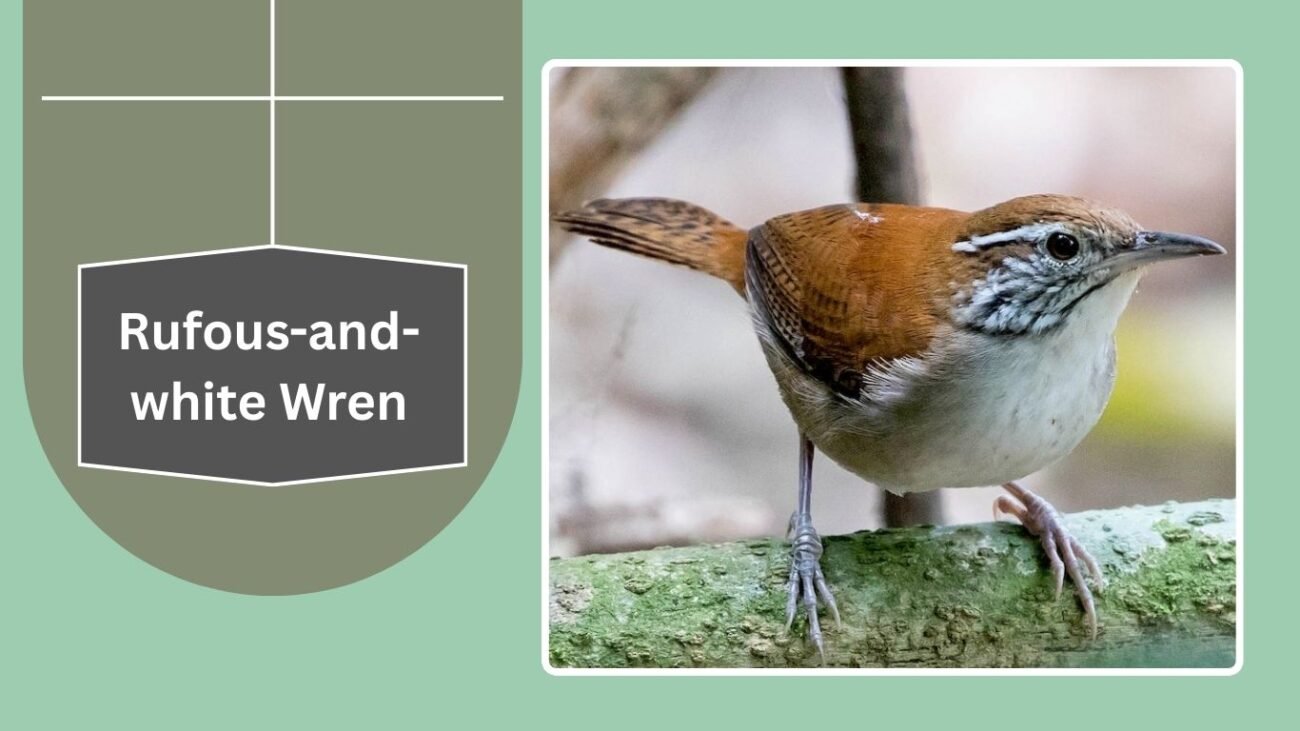
The Rufous-and-white Wren (Thryophilus rufalbus) is a striking Central American wren known for its bold plumage and rich whistling songs. Unlike many wrens that skulk in dense undergrowth, this species often sings from exposed perches, making it easier to spot.
Identification
- Length: 15–16 cm (6–6.3 inches), larger than many wrens
- Upperparts: warm rufous-brown on back, wings, and tail
- Underparts: bright white throat, chest, and belly
- Distinct black streaking on the wings and tail feathers
- Bold white eyebrow stripe with darker facial markings
- Bill: strong and slightly curved
- Tail: long and barred with dark markings
Behavior
Rufous-and-white Wrens are social birds, often moving in pairs or small groups. They are accomplished singers, producing loud, melodious whistles often performed in duets between mates. These wrens actively forage in low vegetation, leaf litter, and shrubs, flipping leaves and probing bark for prey. They are more conspicuous than many other wrens, frequently perching in the open.
Habitat
They thrive in dry forests, woodland edges, and scrubby habitats from southern Mexico through Central America into northern Colombia. They prefer semi-open areas with dense shrubbery for cover, but unlike secretive species, they often emerge into visible perches.
Importance
Rufous-and-white Wrens are key insect predators in tropical ecosystems, feeding on beetles, spiders, grasshoppers, and other invertebrates. Their duetting behavior is also an important example of social communication in birds, offering insights into pair bonding and territorial defense.
15. Plain Wren
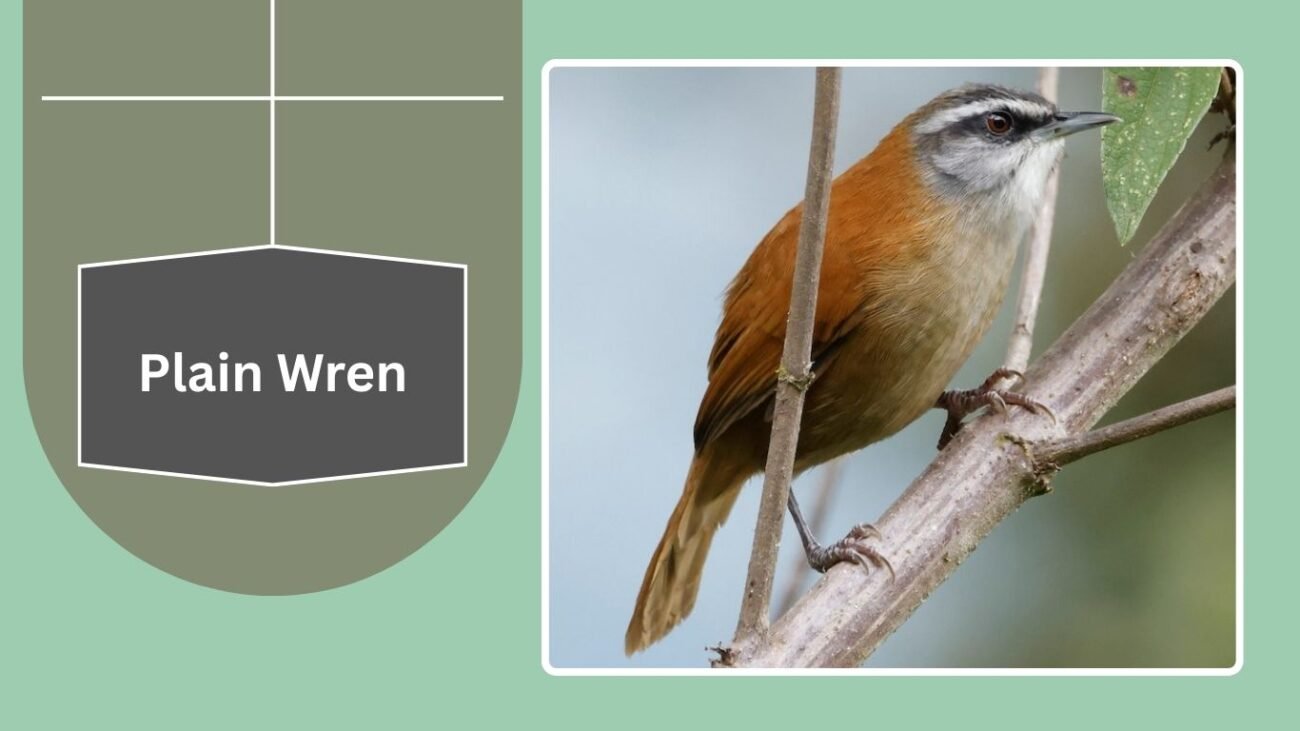
The Plain Wren (Cantorchilus modestus) is a small but lively bird of Central America, named for its relatively subdued plumage compared to more colorful relatives. Despite its “plain” appearance, it is a highly vocal species, known for duets and chattering calls that echo through thickets and forest edges.
Identification
- Length: 13–14 cm (5–5.5 inches)
- Upperparts: brown with faint barring on the wings and tail
- Underparts: pale buff to whitish, with a warmer wash on the sides
- Subtle white eyebrow stripe, less bold than in other wrens
- Tail: medium length, barred, often held cocked
- Bill: thin, slightly curved, adapted for insect foraging
- Overall, a plainer appearance compared to Rufous-and-white Wren
Behavior
Plain Wrens are active, noisy, and often found in pairs or small family groups. Like many wrens, they sing duets, with males and females alternating phrases in a rapid, coordinated performance. They spend most of their time in dense shrubs and tangles, foraging low for insects and small arthropods. Their constant chatter and duets make them easier to detect than to see.
Habitat
They inhabit lowland forests, secondary growth, gardens, and scrubby areas from Honduras to western Colombia and Costa Rica. They prefer dense vegetation, especially near water or in thickets, but adapt well to disturbed habitats.
Importance
Plain Wrens help regulate insect populations in forest edge habitats and are valuable for ecological balance. Their vocal duets are not only important for pair bonding but also serve as a fascinating subject for behavioral studies on bird communication.
16. Bay Wren
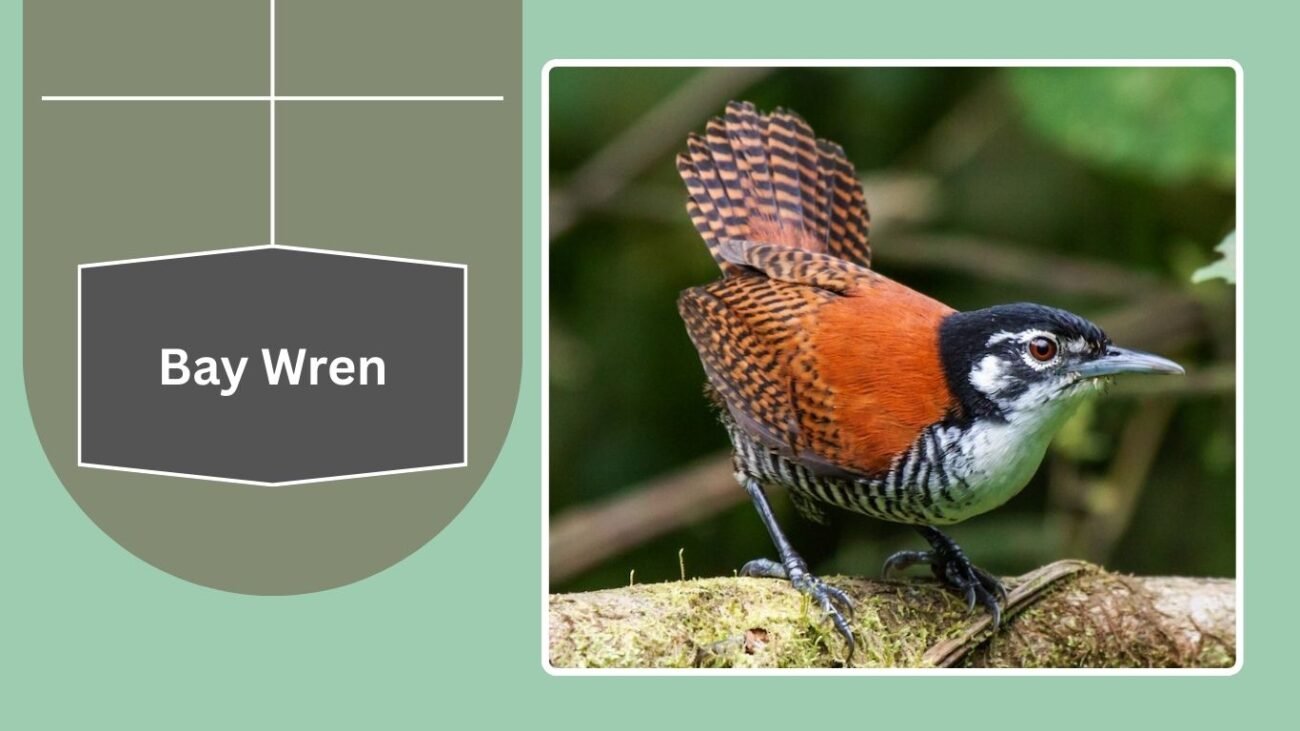
The Bay Wren (Cantorchilus nigricapillus) is a beautifully marked Central and South American wren known for its rich, ringing song and striking plumage. Unlike many wrens that blend in with earthy tones, the Bay Wren has bold contrasting colors that make it one of the most attractive members of its family.
Identification
- Length: 13–14 cm (5–5.5 inches)
- Head: black crown and face with a bold white eyebrow stripe
- Upperparts: rich chestnut-brown back and wings
- Underparts: bright white throat and chest, shading into buffy flanks
- Tail: chestnut with dark barring, often held cocked
- Bill: slender and slightly curved
- Both sexes look similar, though males sing more frequently
Behavior
Bay Wrens are energetic and highly vocal. Their song is loud, musical, and often delivered in duets by pairs, with coordinated back-and-forth exchanges. They spend much of their time in dense vegetation, flitting rapidly between vines, shrubs, and low branches. They forage actively for insects, spiders, and small arthropods, often hanging upside down while probing leaves and stems.
Habitat
This species prefers humid lowland forests, swampy areas, river edges, and dense secondary growth. They are strongly tied to tangled vegetation, such as thickets near streams and edges of tropical rainforests, ranging from Honduras to western Ecuador and northern South America.
Importance
Bay Wrens help maintain insect balance in tropical ecosystems by consuming beetles, grasshoppers, and other invertebrates. Their constant singing also makes them an important acoustic presence in tropical forests, serving as both pest controllers and contributors to the soundscape.
17. Stripe-breasted Wren

The Stripe-breasted Wren (Cantorchilus thoracicus) is a striking wren of Central and South America, easily recognized by the bold streaking across its chest. Its distinctive markings and loud, clear whistles make it stand out in the dense forests where it lives.
Identification
- Length: 13–15 cm (5–6 inches)
- Upperparts: rufous-brown back and wings
- Underparts: white with bold black streaks across the breast and flanks
- Head: dark crown with a broad white eyebrow stripe
- Tail: rufous with dark barring, usually cocked upright
- Bill: slender, slightly curved
- Compact body typical of wrens, with strong legs for moving through thickets
Behavior
Stripe-breasted Wrens are social and often found in pairs, frequently performing duets. Their song is a series of loud, ringing whistles, carrying well through forests and scrubby areas. They are active foragers, moving quickly through undergrowth to catch insects, spiders, and other small invertebrates. Despite their striking plumage, they prefer dense cover and are not always easy to see.
Habitat
They occur in humid lowland forests, edges, and dense thickets from Costa Rica through Panama and into northwestern Colombia and Ecuador. They thrive in shrubby areas, river edges, and disturbed forests where thick vegetation provides cover.
Importance
Stripe-breasted Wrens play an important ecological role by reducing insect populations and maintaining forest balance. Their loud, distinctive songs make them a key acoustic presence in tropical habitats, while their preference for dense vegetation means their populations reflect the health of secondary forests and edges.
18. Buff-breasted Wren
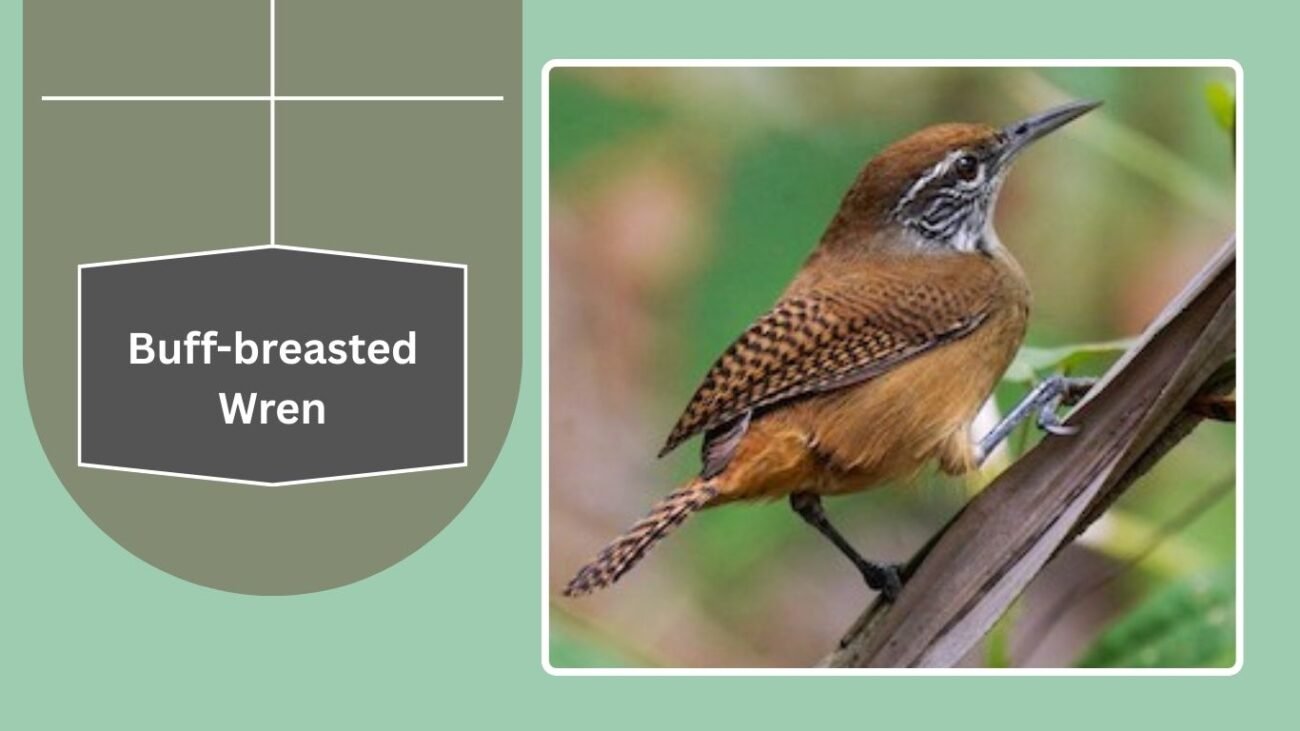
The Buff-breasted Wren (Cantorchilus leucotis) is a widespread South American species, notable for its soft buffy underparts and loud, whistled songs. Like many wrens, it is often heard before it is seen, as it stays low in dense vegetation, moving quickly and calling in duets with its mate.
Identification
- Length: 14–15 cm (5.5–6 inches)
- Upperparts: rich rufous-brown back and wings
- Underparts: buffy chest and belly, darker on the flanks
- Head: blackish crown with a prominent white eyebrow stripe
- Tail: rufous with fine dark barring, often held cocked
- Bill: slender, dark, and slightly curved
- Compact wren body with strong legs for ground and shrub foraging
Behavior
Buff-breasted Wrens are very vocal and social, often found in pairs or small family groups. They produce strong whistled duets, with males and females alternating notes in a synchronized performance. Foraging occurs mostly in low shrubs, vines, and thickets, where they probe leaves and stems for insects and spiders. They are shy, preferring cover, but their constant calls often reveal their presence.
Habitat
They inhabit humid lowland forests, dense thickets, river edges, and secondary growth across a wide range from Panama to Argentina. They are particularly common in shrubby habitats near water and along forest edges where dense vegetation is available.
Importance
Buff-breasted Wrens contribute to insect control in tropical ecosystems, feeding on beetles, ants, grasshoppers, and caterpillars. Their duet singing is important for pair bonding and territorial defense, and ecologists consider them a valuable indicator species for forest edge health.
19. Happy Wren
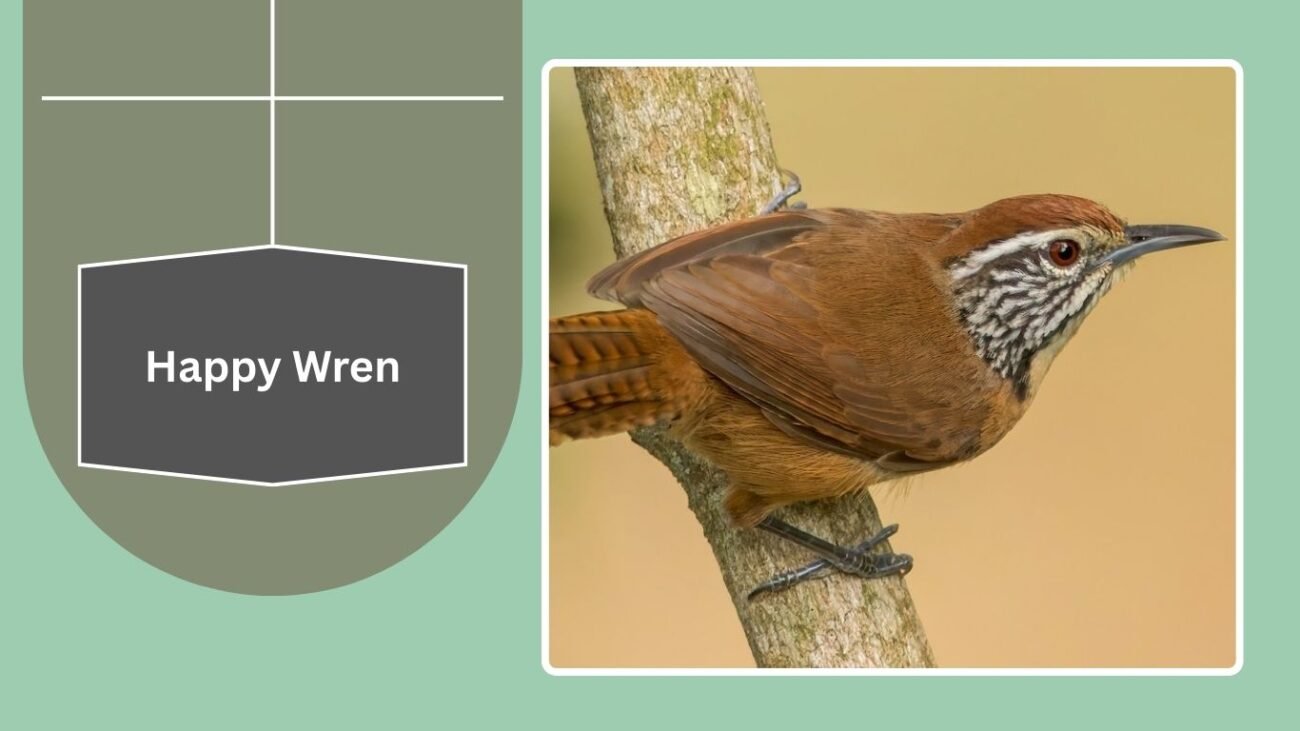
The Happy Wren (Pheugopedius felix) is a cheerful and lively bird of western Mexico, aptly named for its bright, whistled song that has a joyful quality. It is often found in dry forests and scrubby habitats, where it is more easily heard than seen.
Identification
- Length: 14–15 cm (5.5–6 inches)
- Upperparts: warm brown with faint streaks
- Underparts: whitish with buff flanks
- Head: bold white eyebrow stripe and dark eye line
- Tail: barred with black, often cocked upright
- Bill: slim, slightly curved
- Compact and active, typical of wrens
Behavior
Happy Wrens are social and often travel in pairs or family groups. Their song is a series of rich whistles, sometimes delivered as duets. They are active and restless foragers, hopping through low shrubs and brush piles to find insects, spiders, and other invertebrates. Despite their bold voices, they stay well-hidden in dense cover, making them difficult to observe directly.
Habitat
They occur in tropical dry forests, scrublands, and thickets along the Pacific slope of Mexico. They favor semi-open areas with tangled vegetation, often near villages and gardens where cover is available.
Importance
Happy Wrens are significant for insect control in dry forest ecosystems. Their cheerful, complex songs add to the soundscape of western Mexico, and their adaptability to semi-open areas makes them resilient to moderate habitat disturbance. They also represent an important species for studies of duet singing in wrens.
20. Rufous-breasted Wren
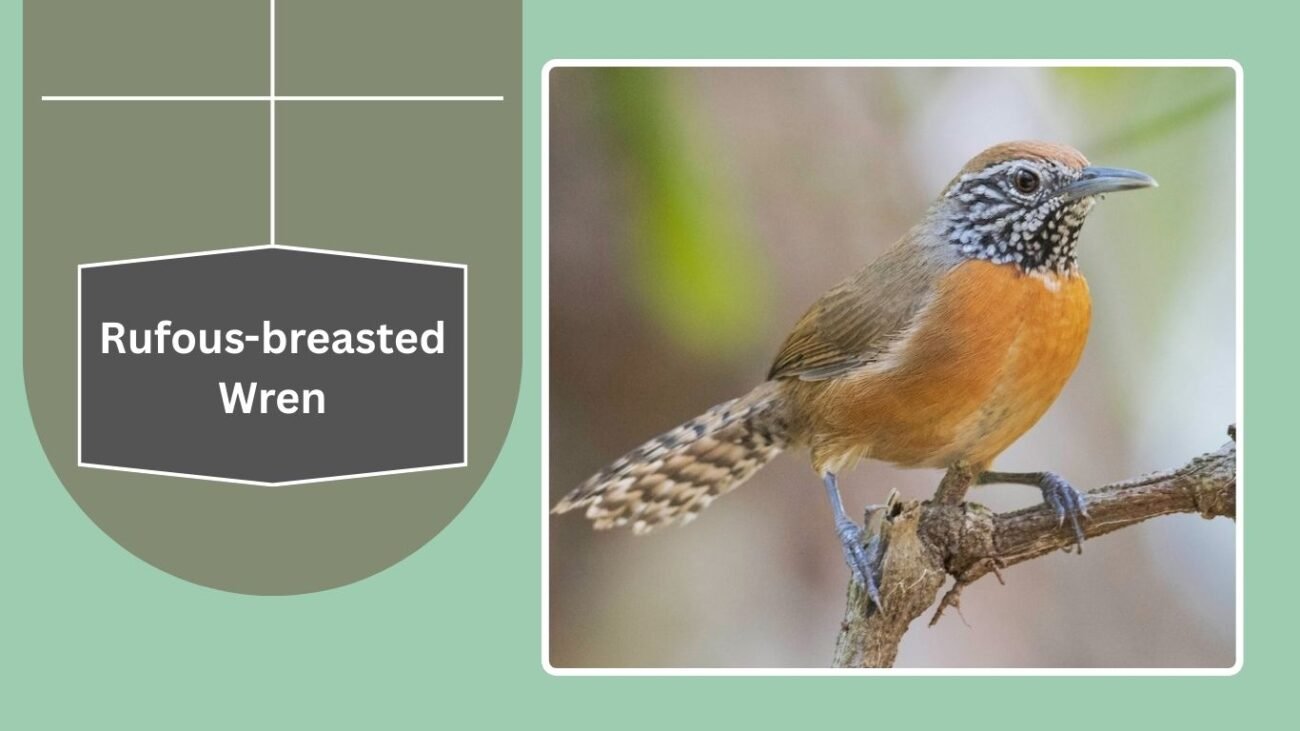
The Rufous-breasted Wren (Pheugopedius rutilus) is a boldly marked and vocal wren of Central and South America. Its vivid rufous underparts and loud duets make it one of the more conspicuous wrens in tropical forests, often detected long before it is seen.
Identification
- Length: 14–16 cm (5.5–6.3 inches)
- Upperparts: warm brown with faint streaking
- Underparts: rich rufous-orange from chest to belly
- Head: white eyebrow stripe with dark line through the eye
- Tail: barred with dark markings, often cocked
- Bill: slender, dark, and slightly curved
- Compact build with strong legs suited for low foraging
Behavior
This wren is highly vocal, often singing in duets where male and female alternate phrases in perfect coordination. The song is strong and ringing, carrying well through dense habitats. Rufous-breasted Wrens are active foragers, moving quickly through thickets and understory to feed on insects and spiders. They are shy in behavior, preferring cover, but reveal themselves by song.
Habitat
They inhabit humid forests, secondary growth, and thickets, particularly at forest edges and near streams. Their range extends from Central America into northern South America, including Colombia, Venezuela, and Trinidad.
Importance
Rufous-breasted Wrens help regulate insect populations in tropical forests and provide a key part of the acoustic environment through their duets. Their presence indicates healthy, vegetated habitats with sufficient cover, making them an important ecological marker.
21. Black-throated Wren
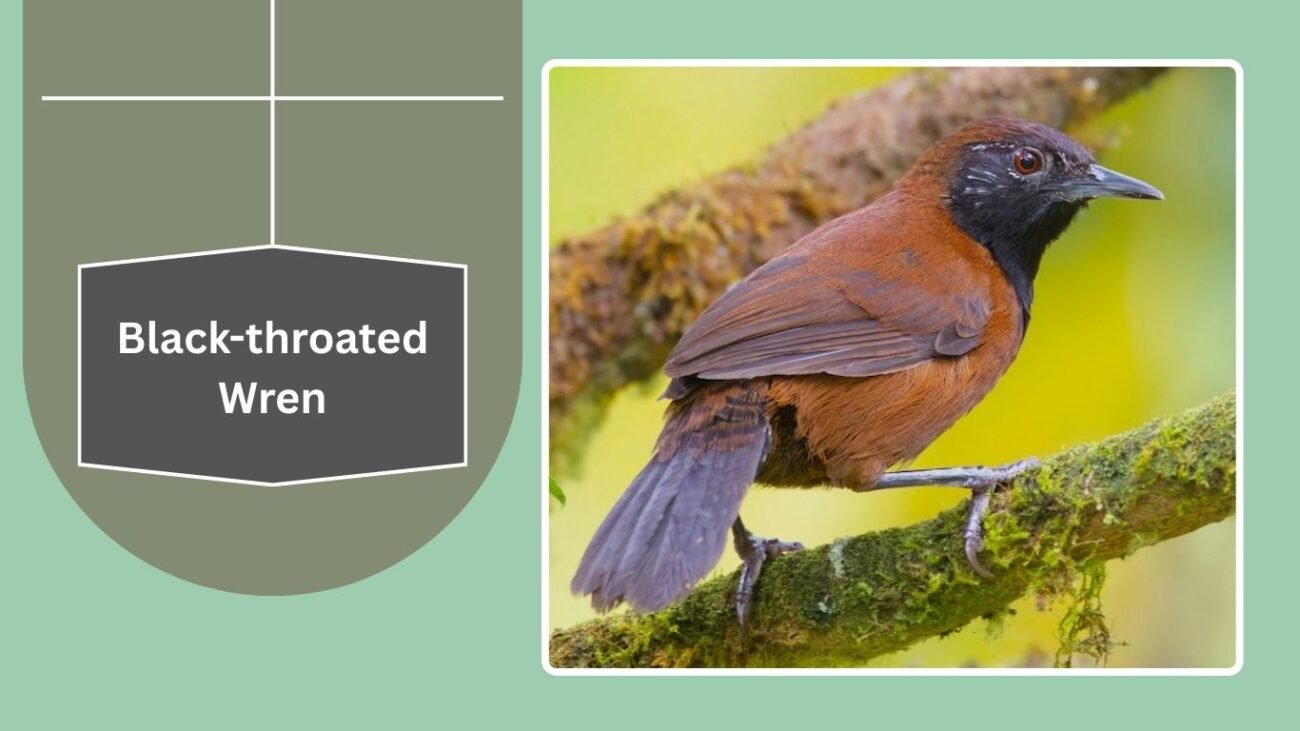
The Black-throated Wren (Pheugopedius atrogularis) is a striking and elusive species of Central America, named for its distinctive black throat patch that contrasts sharply with its white face and warm brown body. Though often hidden in dense thickets, its powerful song is unmistakable.
Identification
- Length: 13–14 cm (5–5.5 inches)
- Upperparts: rufous-brown with faint streaking
- Underparts: whitish belly with buffy flanks
- Throat and upper chest: solid black, the key field mark
- Head: white eyebrow stripe and dark facial markings
- Tail: rufous with black barring, usually held cocked
- Bill: thin, curved, and well adapted for probing insects
Behavior
Black-throated Wrens are secretive, spending most of their time in dense understory and tangled vines. They forage low, probing bark, leaves, and leaf litter for insects and spiders. Their vocalizations are loud and melodious, often performed in coordinated duets between mates. They tend to remain hidden while singing, making them more often heard than seen.
Habitat
They are found in humid lowland forests, swampy thickets, and secondary growth, particularly in Central America from Honduras to Panama. They prefer areas with dense cover and are strongly tied to moist habitats.
Importance
The Black-throated Wren contributes to insect control in dense tropical ecosystems. Its distinctive appearance and duetting behavior also make it an important species for studies on avian communication. As an indicator of dense forest health, its presence suggests intact understory structure.
22. Speckle-breasted Wren
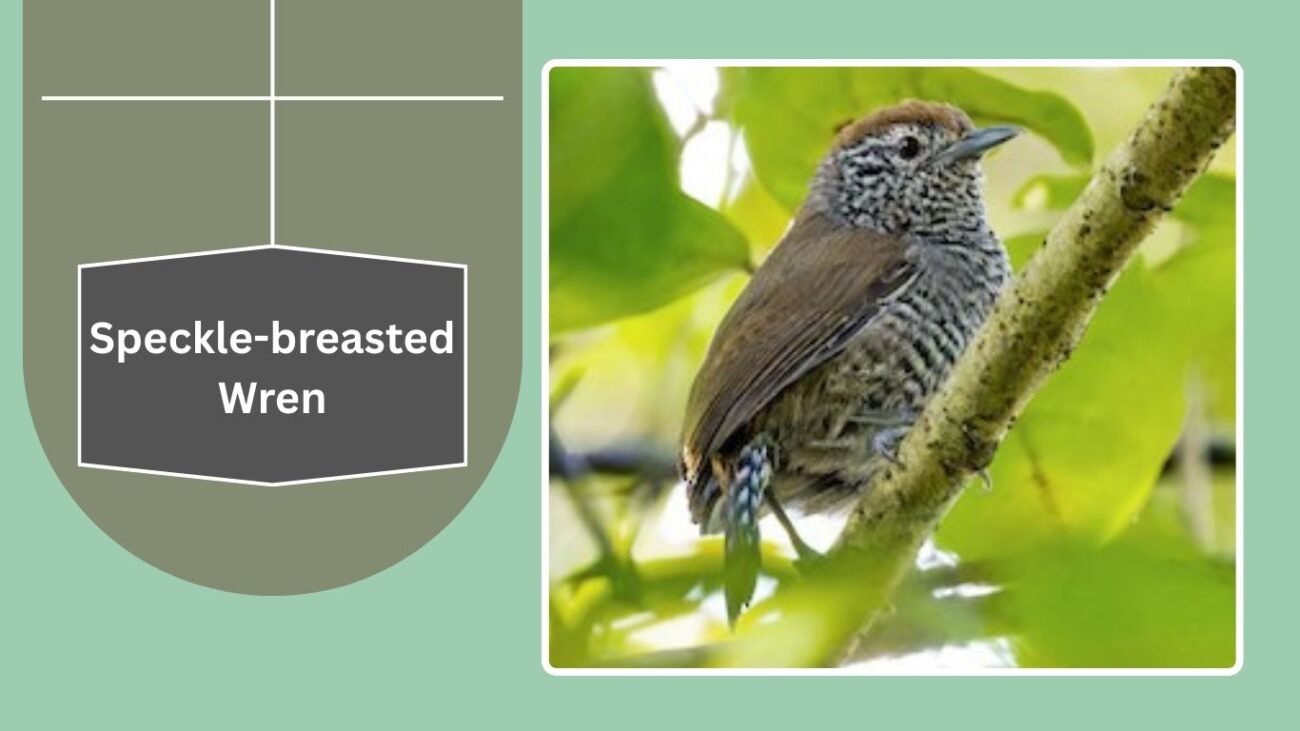
The Speckle-breasted Wren (Pheugopedius sclateri) is a beautiful South American wren known for its heavily spotted underparts and rich, melodious duets. It is found in forests and thickets, often in pairs or small groups, where its constant vocalizations reveal its presence.
Identification
- Length: 14–15 cm (5.5–6 inches)
- Upperparts: warm brown back and wings with faint streaking
- Underparts: whitish with bold black speckling on the chest and flanks
- Head: white eyebrow stripe with dark eye line
- Tail: rufous-brown with fine black barring, usually held cocked
- Bill: slender, slightly curved, dark in color
- Strong legs for moving through dense vegetation
Behavior
Speckle-breasted Wrens are active and noisy, frequently duetting in pairs with precise coordination. Their song is strong and musical, often consisting of a series of whistles that carry far through the forest. They forage mostly in the understory, probing bark, vines, and leaf litter for insects and spiders. They are shy but easier to detect by ear due to their continuous singing.
Habitat
They inhabit humid forests, dense thickets, and secondary growth, primarily in northwestern South America, including Colombia, Ecuador, and northern Peru. They prefer forest edges and areas with thick understory vegetation.
Importance
This wren plays a role in reducing insect populations in tropical forests and acts as an indicator of healthy understory growth. Their constant duets also enrich the acoustic diversity of forest ecosystems, making them a key component of tropical soundscapes.
23. Thrush-like Wren
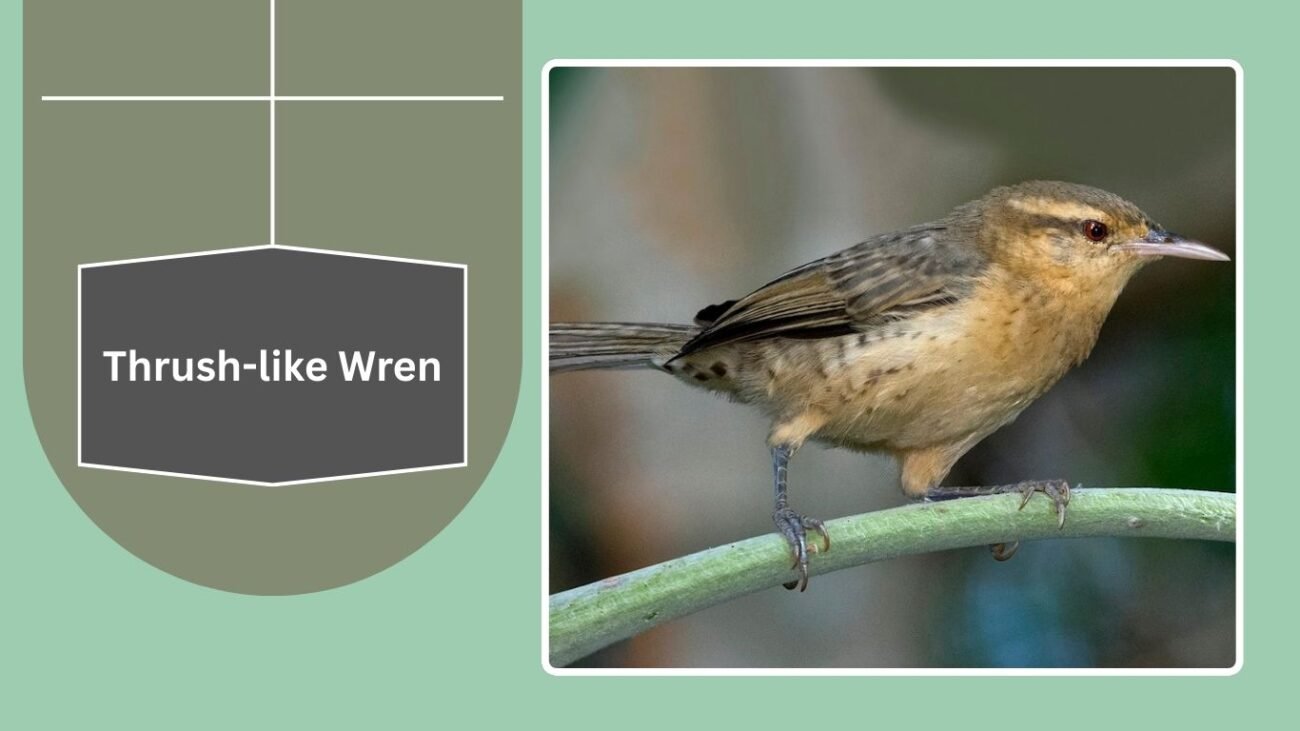
The Thrush-like Wren (Campylorhynchus turdinus) is one of the largest wrens and, as its name suggests, resembles a thrush in both size and behavior. Found across much of South America, it is a conspicuous species, often seen in noisy groups foraging in trees.
Identification
- Length: 18–20 cm (7–8 inches), one of the largest wrens
- Upperparts: brown with fine streaking on the back
- Underparts: whitish with bold dark streaking across the chest and belly
- Head: pale eyebrow stripe with darker crown and face markings
- Tail: long and barred, often flicked
- Bill: strong, slightly curved, larger than most wrens
- Sturdy body with long legs, adapted for active climbing
Behavior
Thrush-like Wrens are highly social, usually found in noisy family groups that forage together in the mid-story and canopy of forests. Their calls are loud and chattering, often given in chorus. Unlike many wrens that stay low, this species actively climbs trunks and branches, resembling thrushes in both size and feeding style. They feed mainly on insects but may also consume small fruits.
Habitat
They occur in tropical and subtropical forests, woodland edges, and secondary growth across a broad range in South America, including Brazil, Bolivia, Peru, and surrounding regions. They prefer areas with tall trees and open mid-canopy structure.
Importance
Thrush-like Wrens are important insect predators in tropical forests and also aid in seed dispersal when feeding on fruits. Their group behavior and loud calls make them highly visible members of the forest community, and their presence often signals a healthy and diverse woodland.
24. Coraya Wren
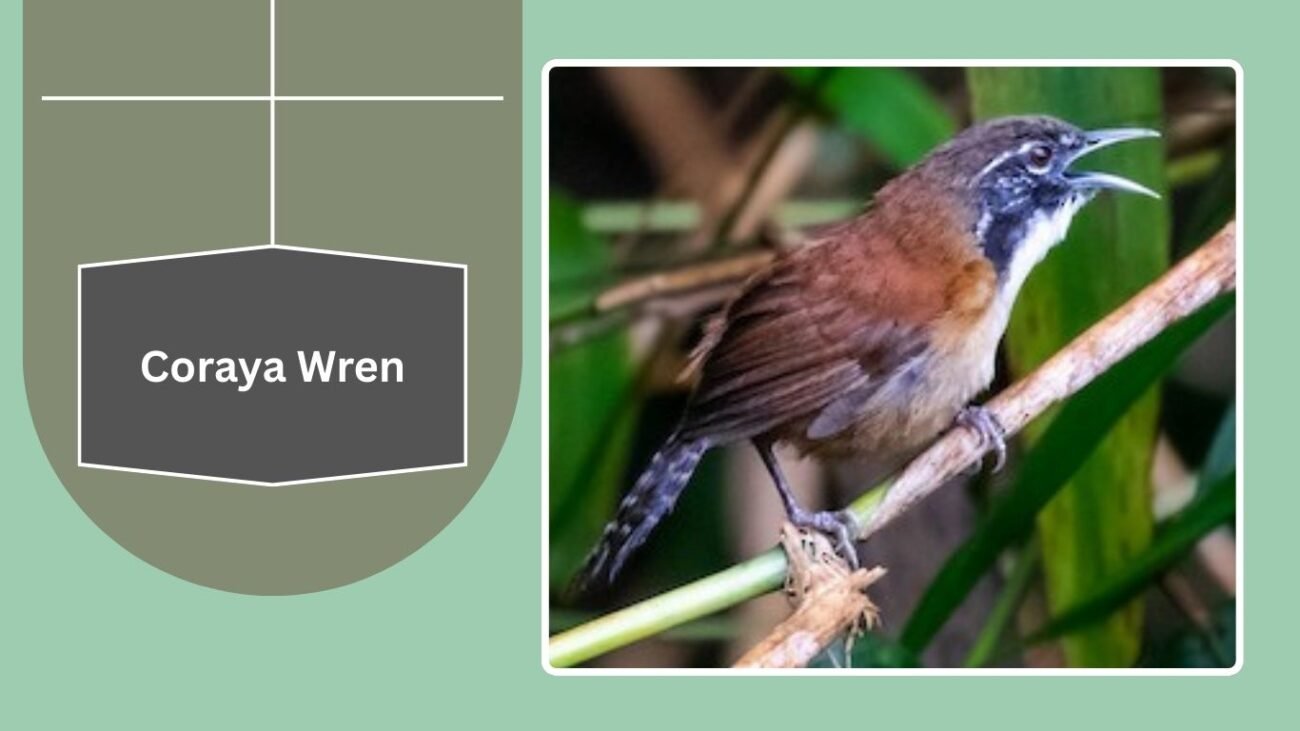
The Coraya Wren (Pheugopedius coraya) is a striking South American wren recognized for its bold black-and-white face pattern and strong vocal duets. Common in Amazonian forests, it is more often detected by its loud, melodious whistles than by sight, as it stays close to dense cover.
Identification
- Length: 14–15 cm (5.5–6 inches)
- Upperparts: warm rufous-brown on the back, wings, and tail
- Underparts: whitish chest and belly, with buffy flanks
- Head: black throat and face with a bold white eyebrow stripe
- Tail: reddish-brown with dark barring, typically cocked upright
- Bill: slender and slightly curved
- Both sexes similar in appearance
Behavior
Coraya Wrens are highly vocal, often singing in duets where the male and female alternate notes in rapid, precise coordination. They forage actively in pairs or small family groups, moving quickly through shrubs and understory. Their movements are swift and darting, as they probe leaves and vines for insects, spiders, and other invertebrates. Although shy, their strong, whistled songs carry far in forest habitats.
Habitat
They are found in humid lowland forests, forest edges, and secondary growth across the Amazon Basin, including Brazil, Colombia, Ecuador, Peru, and Venezuela. They prefer areas with thick vegetation near streams and rivers, where dense cover provides protection.
Importance
Coraya Wrens are important insect controllers in Amazonian ecosystems. Their duetting behavior has also made them a key subject for behavioral studies on bird communication. Their presence reflects healthy understory structure in tropical forests, making them valuable as an ecological indicator species.
25. Riverside Wren
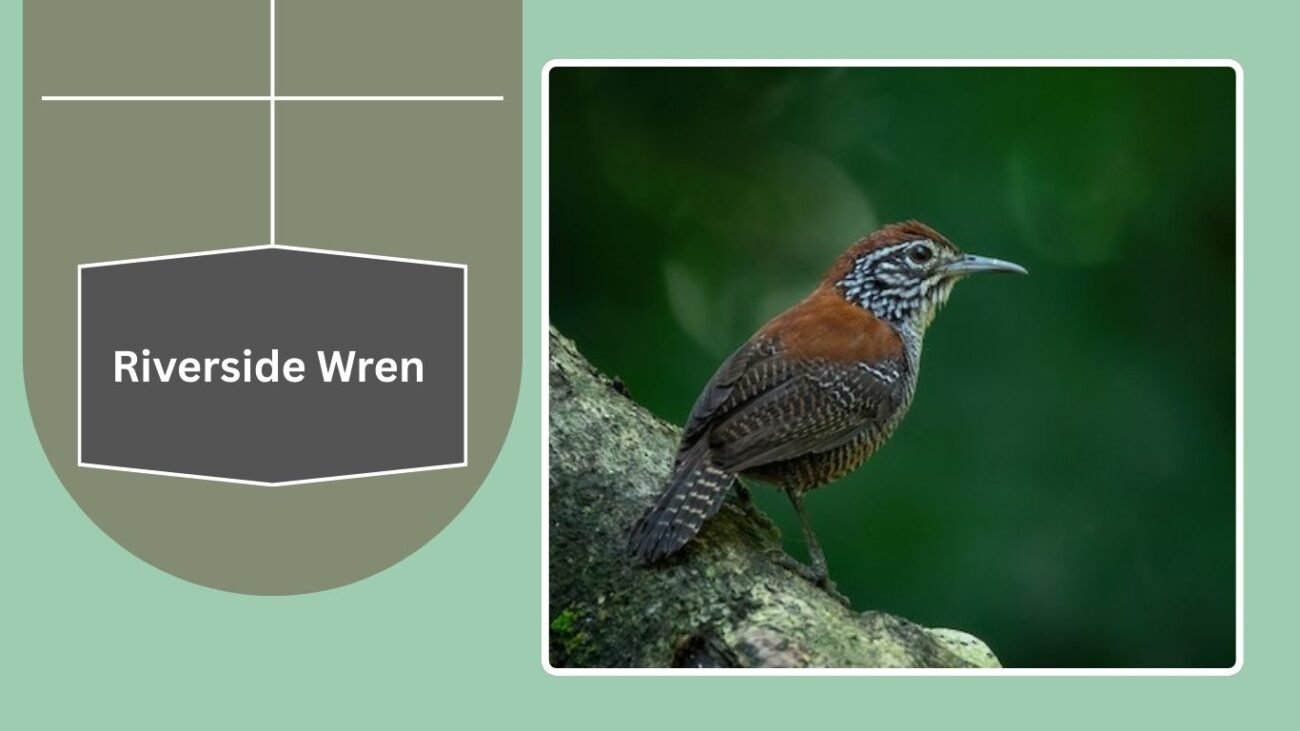
The Riverside Wren (Cantorchilus semibadius) is a beautifully patterned species of Central America, known for its bold streaking and preference for riparian habitats. It is most often heard delivering loud duets near rivers and streams in Costa Rica and Panama.
Identification
- Length: 13–14 cm (5–5.5 inches)
- Upperparts: dark brown back and wings with faint streaks
- Underparts: white chest and belly heavily streaked with black
- Flanks: warm rufous-brown, contrasting with streaked underparts
- Head: dark face with a distinct white eyebrow stripe
- Tail: rufous with black barring, often cocked
- Bill: thin, dark, and slightly curved
Behavior
Riverside Wrens are energetic and social, commonly found in pairs or family groups. They produce loud, complex duets, with males and females singing alternately in synchronized phrases. They forage actively at low levels, probing shrubs, vines, and tangled vegetation for insects, spiders, and small arthropods. Their strong, echoing calls are a distinctive feature of riparian forests.
Habitat
As their name suggests, Riverside Wrens are strongly tied to riparian environments. They inhabit dense vegetation along rivers, streams, and wetlands, primarily in southern Costa Rica and western Panama. Their preference for water-associated thickets makes them habitat specialists.
Importance
Riverside Wrens play a significant role in regulating insect populations in riparian ecosystems. Their duet singing adds to the acoustic character of riverine forests, and their presence indicates healthy, vegetated waterways. As a localized species, they are also of interest to conservationists monitoring habitat quality in Central America.