Pittas are among the most colorful and enchanting birds of the forest floor, often called the “jewels of the jungle.” Found across Asia and parts of Oceania, these secretive ground-dwellers are admired for their dazzling plumage, melodious whistles, and elusive habits. This article explores 15 types of pittas, highlighting their identification, habitats, diets, and behaviors, offering bird enthusiasts a closer look at these vibrant and fascinating species.
1. Indian Pitta
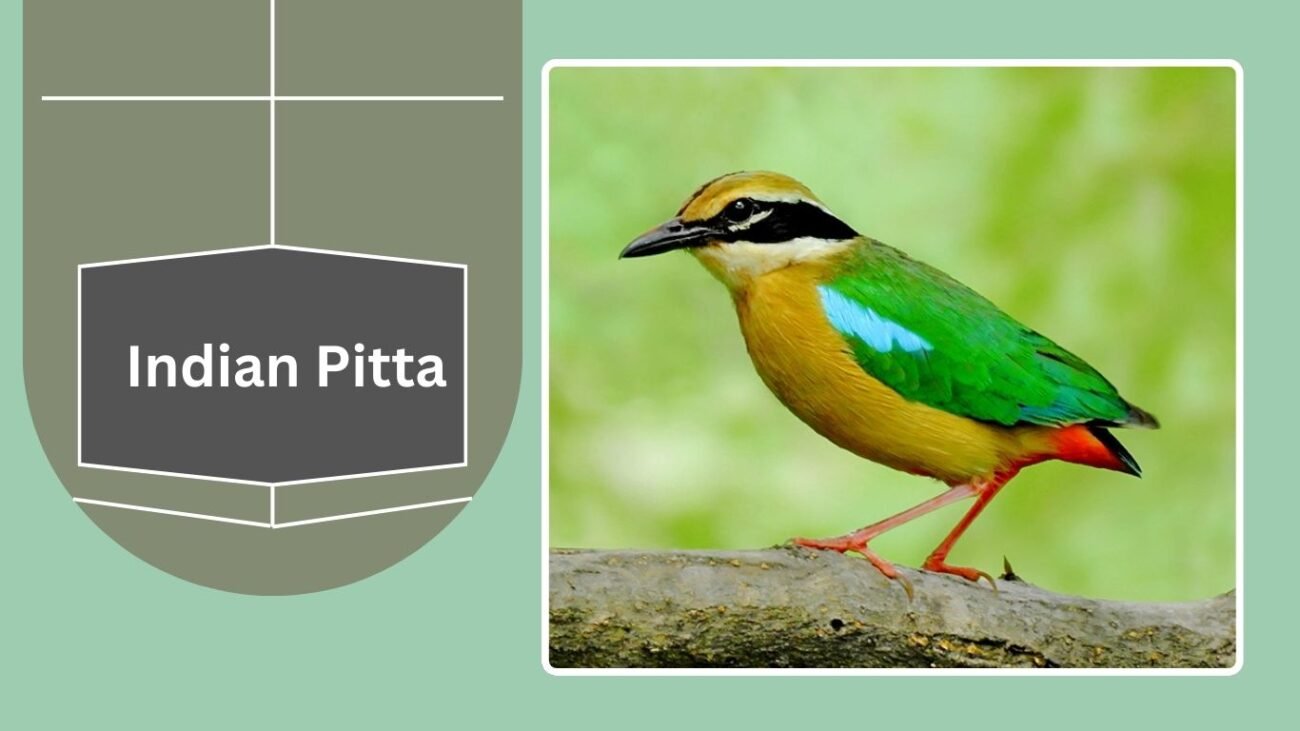
The Indian Pitta (Pitta brachyura) is a colorful ground-dwelling bird, often admired for its vibrant plumage and melodious two-note whistle. Commonly called the “Six-O’Clock bird” in India because of its dawn and dusk calls, it is a migratory species that breeds in the Himalayan foothills and winters across southern India and Sri Lanka.
Identification
- Medium-sized bird, about 19–21 cm in length
- Bright green upperparts with a blue wing patch
- Buff underparts with a reddish vent
- Black crown with a white supercilium (eyebrow-like stripe)
- Stout, pale bill and strong legs suited for ground foraging
Habitat
The Indian Pitta prefers dense undergrowth, scrub forests, bamboo thickets, and gardens. During migration and winter, it is often seen in wooded areas, leaf litter, and near forest edges.
Diet
It mainly feeds on insects, beetles, termites, ants, and earthworms. Occasionally, it may eat snails and small reptiles, using its strong bill to dig through soil and leaf litter.
Behavior
The Indian Pitta is secretive, usually staying low and hopping on the forest floor. It is more often heard than seen, producing its distinctive two-note “wheet-tew” call. It migrates seasonally, arriving in southern India just before the monsoon.
2. Blue-winged Pitta

The Blue-winged Pitta (Pitta moluccensis) is a strikingly colorful bird known for its dazzling plumage and loud, whistling calls. It breeds across South and Southeast Asia and migrates seasonally, often appearing in gardens, plantations, and forests. Its vivid mix of colors makes it one of the most admired members of the pitta family.
Identification
- Medium-sized bird, about 19–21 cm in length
- Green upperparts with a brilliant blue patch on the wings
- Buff underparts with a crimson vent
- Black head with a broad buffy-white supercilium
- Strong pinkish legs and a short, sturdy bill
Habitat
The Blue-winged Pitta prefers lowland forests, mangroves, plantations, and wooded gardens. During migration, it can be found in open scrub and near human habitation, often foraging on damp ground.
Diet
Its diet mainly consists of insects, worms, snails, and small invertebrates. It probes soil and leaf litter with its bill and sometimes smashes snail shells on hard surfaces before eating.
Behavior
Blue-winged Pittas are shy, ground-dwelling birds, but they reveal themselves through their distinctive two-note whistles. They migrate seasonally, breeding in parts of Southeast Asia and wintering further south. They are also known for their dome-shaped nests, built from twigs and leaves near the ground.
3. Fairy Pitta

The Fairy Pitta (Pitta nympha) is often called the “Little Jewel” for its dazzling rainbow-like plumage. This migratory bird breeds in East Asia, particularly Taiwan, Korea, and Japan, and winters in Southeast Asia. Its rarity and beauty make it a highly sought-after bird for birdwatchers across Asia.
Identification
- Medium-sized bird, about 16–19 cm in length
- Bright green back with a striking blue wing patch
- Reddish vent and buff underparts
- Black crown and eye stripe with a broad whitish supercilium
- Short tail with a mix of green and blue shades
Habitat
The Fairy Pitta prefers subtropical and temperate forests, often with dense undergrowth and near streams or moist areas. It breeds in hilly and lowland forests and migrates to tropical forests during the winter.
Diet
It feeds mainly on insects, earthworms, snails, and small invertebrates. Like other pittas, it scratches and digs in the leaf litter to find prey.
Behavior
The Fairy Pitta is a shy and secretive bird, usually spotted on the forest floor. It is a long-distance migrant, flying thousands of kilometers between breeding and wintering grounds. Its flute-like calls are often heard during the breeding season.
4. Hooded Pitta
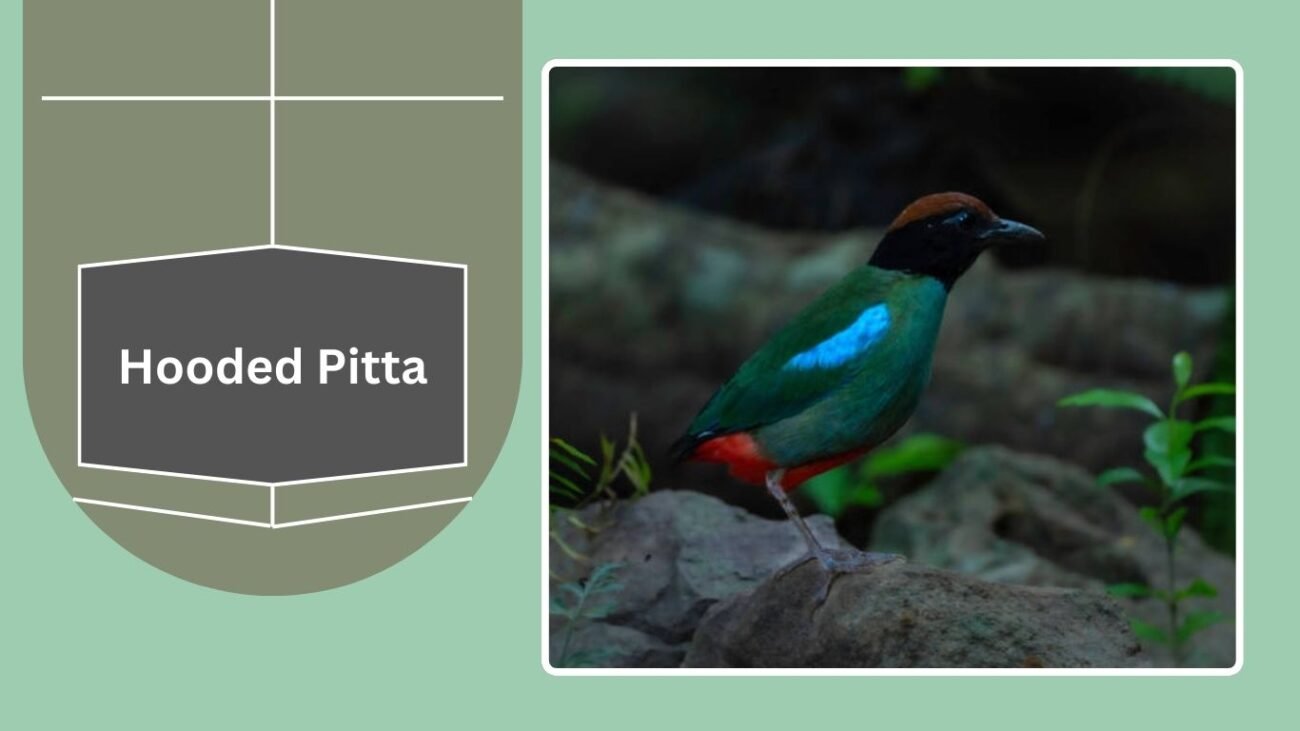
The Hooded Pitta (Pitta sordida) is a brilliantly colored bird recognized for its glossy black head and emerald-green body. It is widely distributed across South and Southeast Asia, including the Indian Subcontinent, Indonesia, and the Philippines. This bird is admired for its flute-like calls and is often heard before it is seen.
Identification
- Medium-sized, around 19–20 cm in length
- Striking black head and throat giving it a “hooded” look
- Bright green body with a turquoise-blue wing patch
- Red vent and under-tail coverts
- Strong, pinkish legs adapted for walking and hopping on the ground
Habitat
The Hooded Pitta inhabits lowland rainforests, bamboo thickets, plantations, and secondary forests. It is often found in humid, shaded areas with dense undergrowth.
Diet
It primarily feeds on insects, ants, beetles, termites, snails, and earthworms. Occasionally, it may eat small reptiles. It searches for food by probing leaf litter with its bill.
Behavior
This species is territorial and known for its loud, repetitive “wheet-tew” or “quoip-quoip” calls, often given during the breeding season. Like many pittas, it nests in domed structures on the ground, lined with leaves and twigs. It is also a partial migrant in some parts of its range.
5. Mangrove Pitta
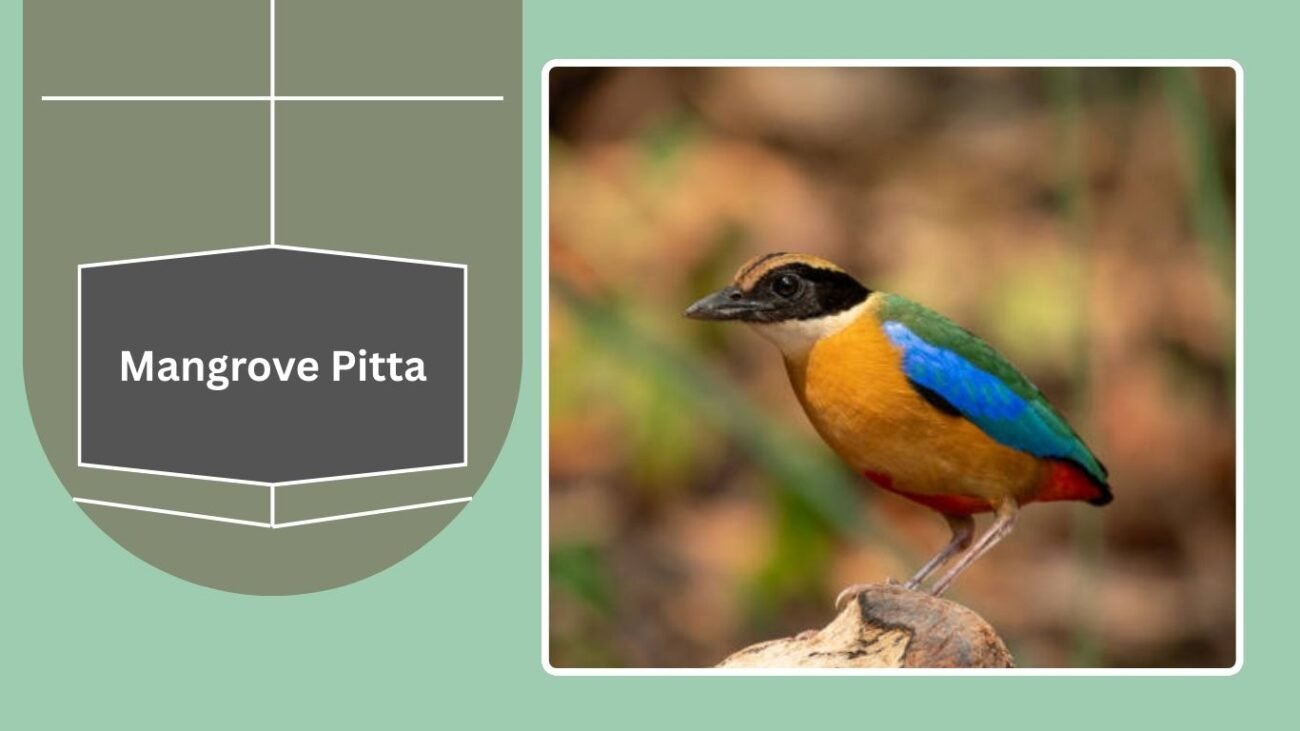
The Mangrove Pitta (Pitta megarhyncha) is a distinctive member of the pitta family, adapted to life in coastal habitats. As its name suggests, it is strongly associated with mangrove forests and tidal wetlands across South and Southeast Asia. Known for its loud, whistling calls, it is often spotted perched on low branches or hopping on muddy ground in search of food.
Identification
- Medium-sized bird, about 20–22 cm in length
- Bright green upperparts with blue on the wings and tail
- Buff underparts with a reddish vent
- Black head and broad black eye stripe with a pale supercilium
- Heavy, strong bill suited for feeding on crabs and snails
Habitat
The Mangrove Pitta is mainly found in mangrove forests, tidal creeks, and coastal swamps. Its range includes the Sundarbans in India and Bangladesh, coastal Thailand, Myanmar, and the Malay Peninsula.
Diet
Unlike many pittas, this species has a more specialized diet. It feeds heavily on crabs, mollusks, snails, and insects, cracking shells with its strong bill. It also eats worms and small reptiles found in muddy substrates.
Behavior
The Mangrove Pitta is usually solitary or seen in pairs. It is secretive but becomes more noticeable through its piercing “wheet-wheet” whistles that carry over the mangrove canopy. During low tide, it often forages on exposed mudflats. Its nesting style is similar to other pittas, with dome-shaped nests hidden in dense vegetation.
6. Garnet Pitta

The Garnet Pitta (Erythropitta granatina) is one of the most striking pittas, famous for its deep crimson plumage and rarity in the wild. Sometimes called the “jewel of the forest,” it is found in the lowland rainforests of Southeast Asia. Because of its elusive nature and limited range, spotting this bird is considered a prized moment for birdwatchers.
Identification
- Small to medium-sized, about 17–19 cm in length
- Brilliant crimson-red head, breast, and underparts
- Black wings and upperparts with a faint blue shoulder patch
- Dark bill with strong legs
- Both sexes look similar, but males tend to be slightly brighter
Habitat
The Garnet Pitta inhabits primary lowland rainforests, swamp forests, and dense undergrowth in countries like Malaysia, Thailand, Brunei, and Indonesia. It prefers moist, shaded areas with thick vegetation cover.
Diet
It feeds mainly on ants, beetles, termites, earthworms, and other forest-floor invertebrates. Like other pittas, it forages by hopping quietly through leaf litter and probing with its bill.
Behavior
The Garnet Pitta is shy and often stays hidden in dense vegetation, making it hard to observe. Its soft, whistling “puu-puu” call is more often heard than the bird itself. It nests on or near the ground in domed structures, camouflaged with leaves and moss.
7. Blue Pitta
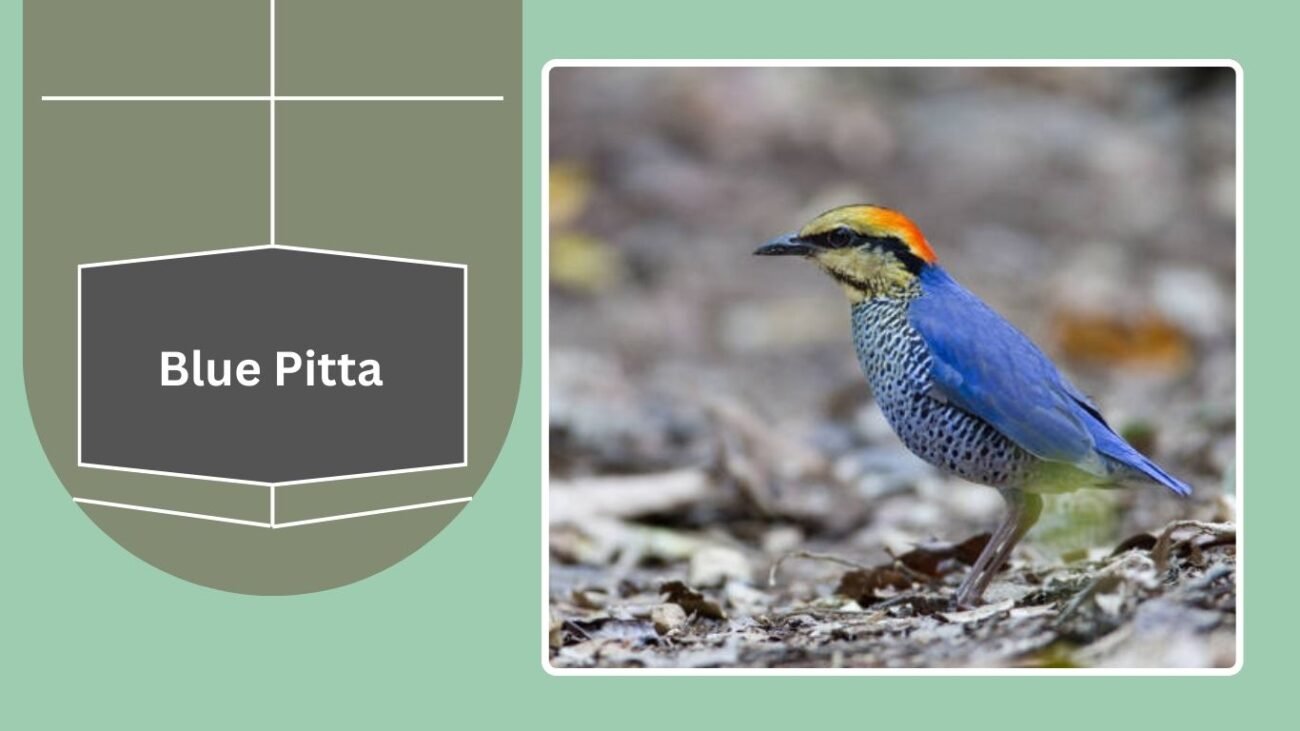
The Blue Pitta (Hydrornis cyaneus) is a dazzling forest bird known for its bright blue plumage and secretive lifestyle. Found across South and Southeast Asia, it prefers dense, shaded habitats where it can forage quietly on the forest floor. Its striking colors and elusive nature make it a favorite among bird enthusiasts.
Identification
- Medium-sized, about 21–23 cm in length
- Males have bright blue plumage with black speckling on the breast and flanks
- Females are more subdued, with greenish-blue tones and buff underparts
- Distinctive yellow-orange forehead and crown in males
- Strong legs and short tail, typical of pittas
Habitat
The Blue Pitta inhabits evergreen and moist deciduous forests, often in hilly or mountainous regions. It ranges across Nepal, northeast India, Myanmar, Thailand, Laos, Vietnam, and southern China.
Diet
It feeds mainly on insects, beetles, ants, and earthworms. Occasionally, it eats snails and other small invertebrates. Its strong bill is used to dig through leaf litter to uncover prey.
Behavior
The Blue Pitta is shy and solitary, typically found alone or in pairs. It stays close to the ground, moving cautiously and quietly. Its melodious, whistling call echoes through the forest during the breeding season, making it easier to detect than to see.
8. Giant Pitta
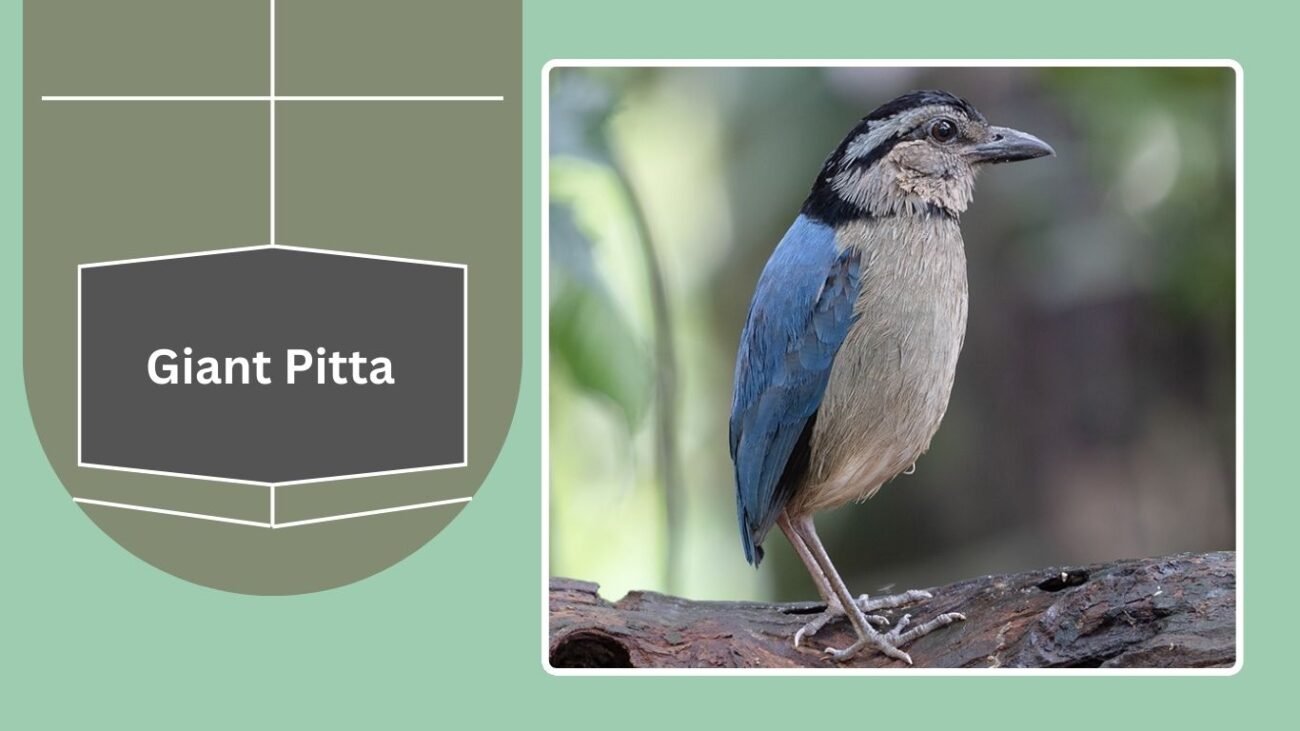
The Giant Pitta (Hydrornis caeruleus) is the largest member of the pitta family, known for its impressive size and deep, resonant calls. Despite its size, it is shy and elusive, often staying hidden in dense forests. This bird is considered a prized find among birdwatchers due to its rarity and secretive habits.
Identification
- Largest pitta, measuring about 25–29 cm in length
- Males have a bright blue crown and wings with rich brown upperparts
- Females are more subdued with olive-brown plumage and buff underparts
- Both sexes show streaking on the underparts
- Heavy, strong bill and sturdy pinkish legs
Habitat
The Giant Pitta inhabits dense, humid lowland and montane forests. Its range includes parts of Myanmar, Thailand, Laos, Vietnam, Malaysia, and Indonesia. It prefers thick undergrowth where it can remain hidden.
Diet
Its diet consists mainly of insects, beetles, ants, termites, snails, and earthworms. It uses its strong bill to dig and probe the forest floor. Occasionally, it may also eat small reptiles or amphibians.
Behavior
The Giant Pitta is solitary and secretive, often revealed only by its loud, booming calls during the breeding season. It moves quietly on the forest floor, hopping and pausing to forage. Like other pittas, it builds a dome-shaped nest on or near the ground, well-camouflaged with leaves and moss.
9. Rusty-naped Pitta
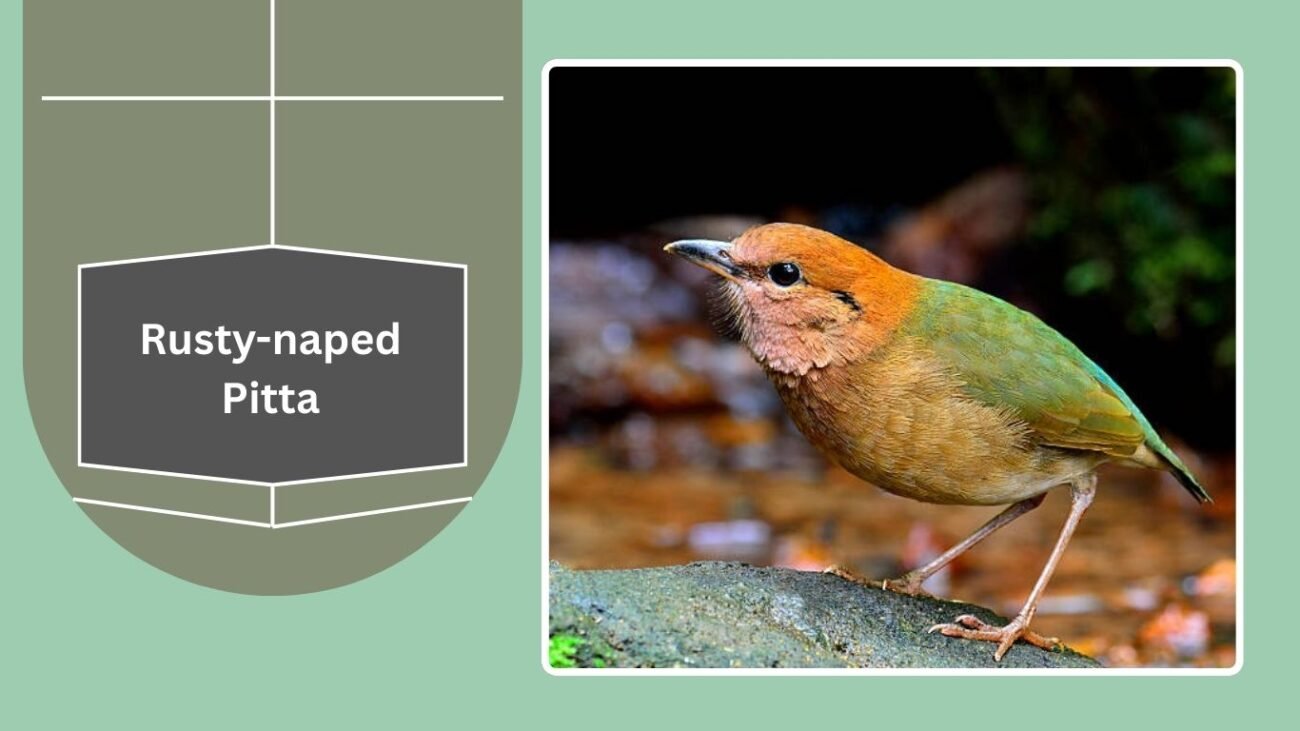
The Rusty-naped Pitta (Hydrornis oatesi) is a forest-dwelling bird named for its characteristic rusty-red head and nape. Found mainly in the Himalayan foothills and Southeast Asia, it is admired for its rich calls and elusive behavior. Birdwatchers consider it a challenge to spot because it prefers thick cover and moves quietly on the ground.
Identification
- Medium-sized bird, about 22–24 cm in length
- Distinct rusty-red head, neck, and nape
- Olive-brown back with lighter underparts
- Females are generally duller with paler tones
- Sturdy bill and strong legs typical of pittas
Habitat
The Rusty-naped Pitta inhabits subtropical and tropical forests, usually in moist, dense undergrowth and bamboo thickets. Its range extends from the Himalayas (Nepal, India, Bhutan) into southern China, Myanmar, Thailand, Laos, and Vietnam.
Diet
It feeds on insects, earthworms, beetles, and small invertebrates. Using its strong bill, it digs through forest leaf litter and soft soil to find prey.
Behavior
This species is shy, solitary, and mostly heard rather than seen. Its call is a clear, mournful whistle that often echoes in the early morning or late afternoon. The Rusty-naped Pitta nests close to the ground, using twigs, roots, and leaves to create a dome-like structure.
10. Banded Pitta

The Banded Pitta (Hydrornis guajanus) is one of the most visually stunning pittas, known for its bright, banded plumage. It is sometimes split into different regional species such as the Malayan, Bornean, and Javan Banded Pittas. With its dazzling colors, it is often referred to as the “jewel of the forest floor.”
Identification
- Medium-sized bird, about 20–23 cm in length
- Males have bright orange and yellow underparts with bold black barring
- Blue wings and tail, with a striking yellow stripe above the eye
- Females are duller, with brown upperparts and buff underparts marked with fine black barring
- Strong pinkish legs and a sturdy bill
Habitat
The Banded Pitta is found in lowland and hill rainforests, bamboo thickets, and dense secondary forests. Its range includes southern Thailand, Malaysia, Sumatra, Java, and Borneo.
Diet
It feeds mainly on ants, termites, beetles, snails, and worms. It often forages by hopping on the forest floor, digging through leaf litter with its bill.
Behavior
The Banded Pitta is shy and secretive, usually spotted alone or in pairs. Its call is a soft, whistling “whee-oo” repeated several times. During breeding, it builds a dome-shaped nest close to the ground, camouflaged with leaves and moss.
11. Gurney’s Pitta
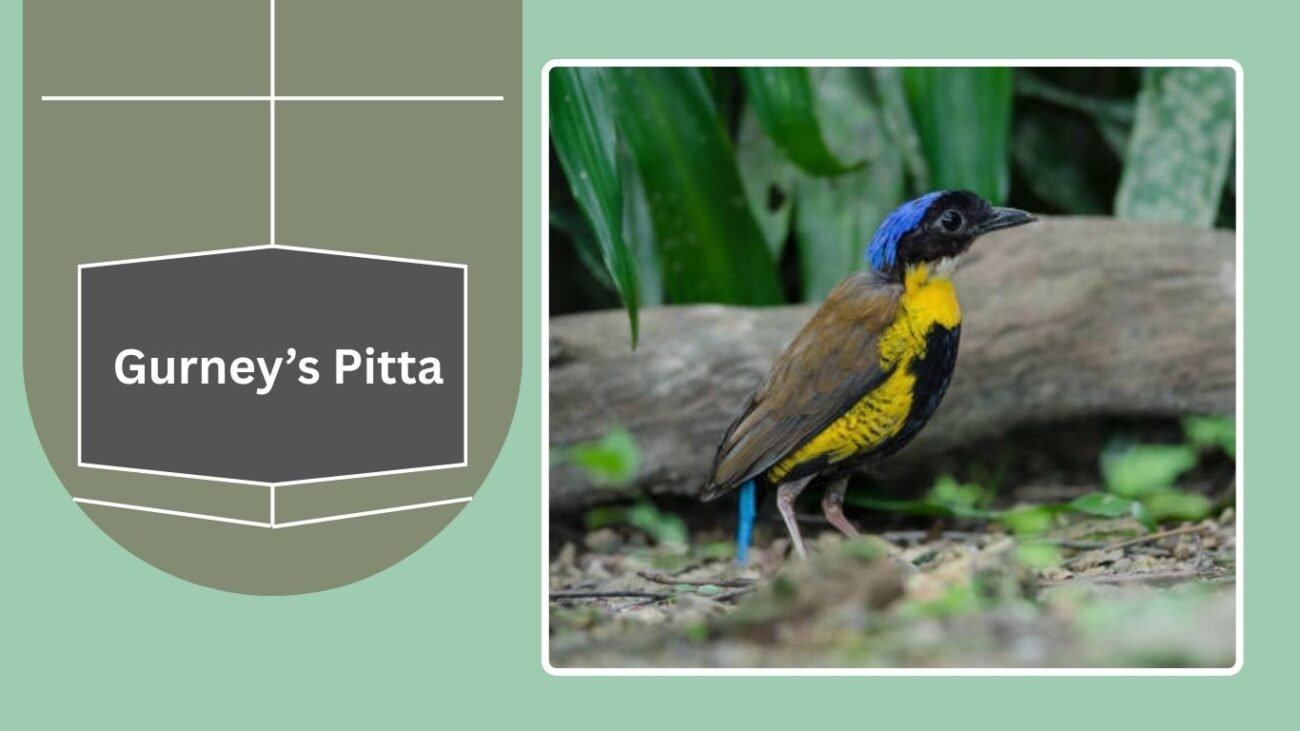
Gurney’s Pitta (Hydrornis gurneyi) is one of the rarest and most endangered pittas in the world. Once thought to be nearly extinct, it has been rediscovered in small forest patches in Thailand and Myanmar. Its striking plumage and rarity make it one of the most sought-after birds by ornithologists and birdwatchers alike.
Identification
- Medium-sized, about 20–22 cm in length
- Males have a bright yellow throat and belly, black head, and deep blue crown and wings
- Females are more subdued, with olive-brown upperparts and buff underparts
- Short tail and strong legs, typical of pittas
- Males are more vividly marked, especially during the breeding season
Habitat
Gurney’s Pitta inhabits lowland rainforests, especially dense, moist undergrowth with bamboo and rattan. Its main distribution is in southern Myanmar and peninsular Thailand. Habitat loss due to deforestation is the main reason for its endangered status.
Diet
Its diet consists of ants, beetles, earthworms, termites, and small invertebrates. It forages quietly on the forest floor, probing the soil and leaf litter.
Behavior
This bird is elusive and shy, preferring to stay hidden in dense cover. Its call is a series of high-pitched whistles, especially prominent in the breeding season. Due to its endangered status, conservation efforts are ongoing to protect its remaining habitats and increase its population.
12. Bar-bellied Pitta
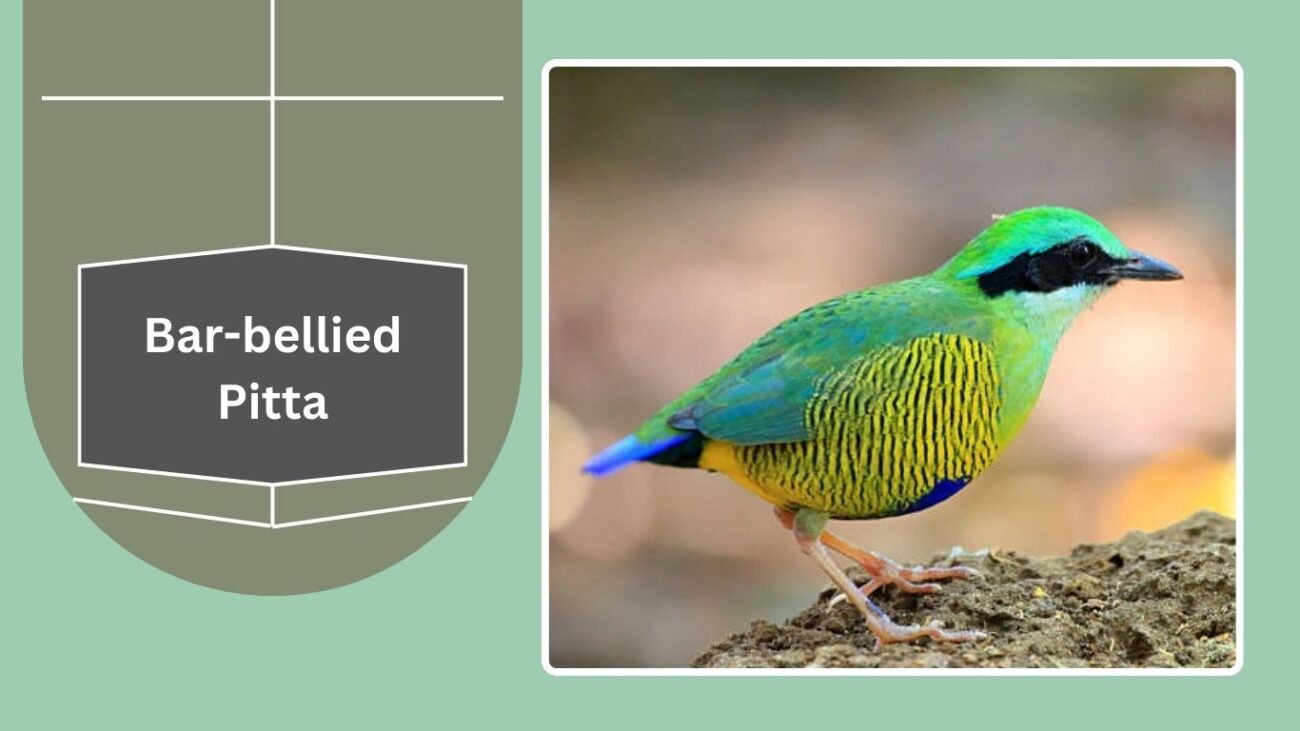
The Bar-bellied Pitta (Hydrornis elliotii) is a strikingly patterned bird found in Southeast Asia. Its bold, barred plumage makes it stand out among pittas, though it remains elusive due to its shy behavior and preference for dense forest cover. It is often more easily heard than seen.
Identification
- Medium-sized bird, about 22–24 cm in length
- Males have vivid green upperparts, yellow underparts with bold black barring, and a bright blue crown and wings
- Females are duller, with olive-brown upperparts and buff underparts, also barred with black
- Both sexes have a black eye stripe and pinkish legs
- Sturdy, short bill adapted for ground foraging
Habitat
The Bar-bellied Pitta inhabits subtropical and tropical forests, particularly in lowland and hill regions. Its range extends across Cambodia, Laos, Vietnam, and parts of Thailand.
Diet
It feeds on insects, earthworms, beetles, and other small invertebrates. Like other pittas, it forages by probing the forest floor and scratching through leaf litter.
Behavior
This pitta is elusive and usually stays hidden in thick vegetation. Its call is a series of clear, whistling notes, often given during the breeding season. The Bar-bellied Pitta builds dome-shaped nests near the ground, well-camouflaged among dense foliage.
13. Graceful Pitta
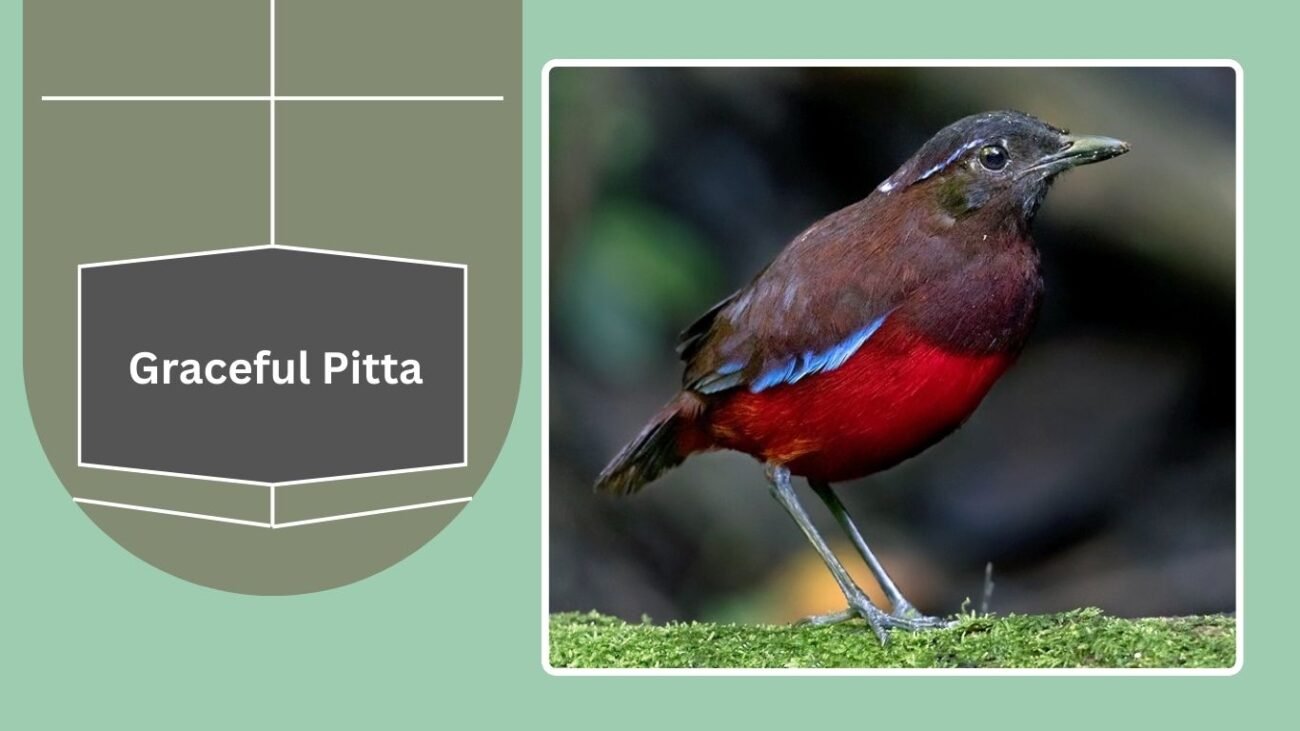
The Graceful Pitta (Erythropitta venusta) is a little-known and rare species, found only in restricted regions of Sumatra. As its name suggests, it is admired for its delicate beauty and elegant appearance. Its limited range and secretive habits make it one of the more difficult pittas to observe in the wild.
Identification
- Small to medium-sized, around 17–19 cm in length
- Striking dark blue upperparts with a contrasting crimson-red belly and breast
- Black head with a short pale supercilium
- Strong legs and short tail, typical of pittas
- Both sexes look similar, though females may appear slightly duller
Habitat
This species is confined to the montane forests of Sumatra, particularly in moist, dense undergrowth. It prefers elevations where thick foliage and damp soil provide ideal foraging conditions.
Diet
The Graceful Pitta feeds mainly on insects, beetles, ants, and earthworms. Like other pittas, it probes through leaf litter with its bill to find food.
Behavior
It is a shy, ground-dwelling bird that usually remains hidden within dense vegetation. Its call is a soft, clear whistle, most often heard during the breeding season. Due to its rarity and limited distribution, sightings are extremely uncommon, making it a prized bird for dedicated birdwatchers.
14. Elegant Pitta
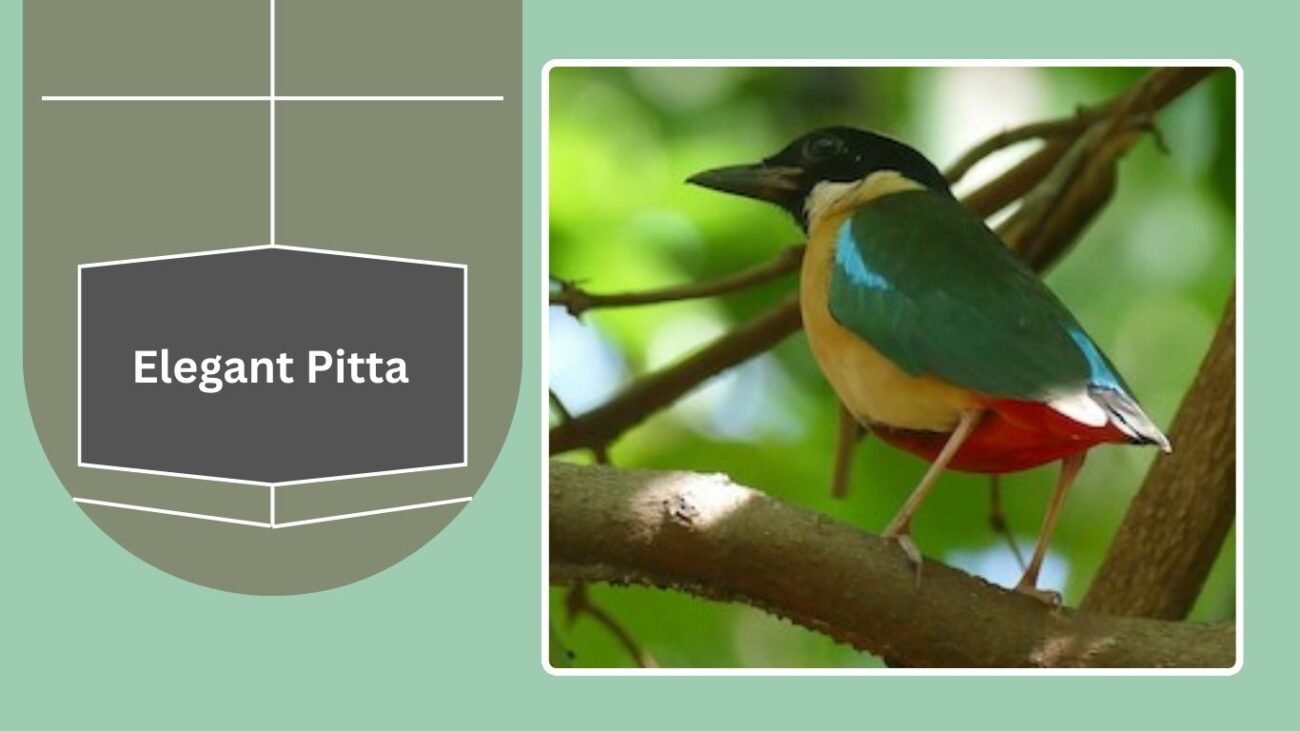
The Elegant Pitta (Pitta elegans) is a vibrant and attractive bird native to Indonesia and Timor-Leste. True to its name, it has a striking combination of colors that makes it stand out, although its shy nature means it is rarely seen for long in the wild.
Identification
- Medium-sized bird, about 18–20 cm in length
- Bright green upperparts with a deep blue wing patch
- Reddish belly and vent contrasting with buff underparts
- Black head with a buffy-white supercilium
- Strong legs and a short tail, typical of pittas
Habitat
The Elegant Pitta inhabits tropical and subtropical lowland forests, as well as wooded areas and secondary growth. It is primarily found in Indonesia’s Lesser Sunda Islands, including Timor, Flores, and nearby islands.
Diet
Its diet consists mainly of insects, beetles, termites, ants, and worms. It forages on the ground, scratching leaf litter and soil to uncover prey.
Behavior
The Elegant Pitta is solitary and secretive, usually spotted alone or in pairs. Its call is a series of loud, high-pitched whistles, which are often the best clue to its presence. Like other pittas, it builds a dome-shaped nest on or near the ground, hidden within thick vegetation.
15. Black-headed Pitta
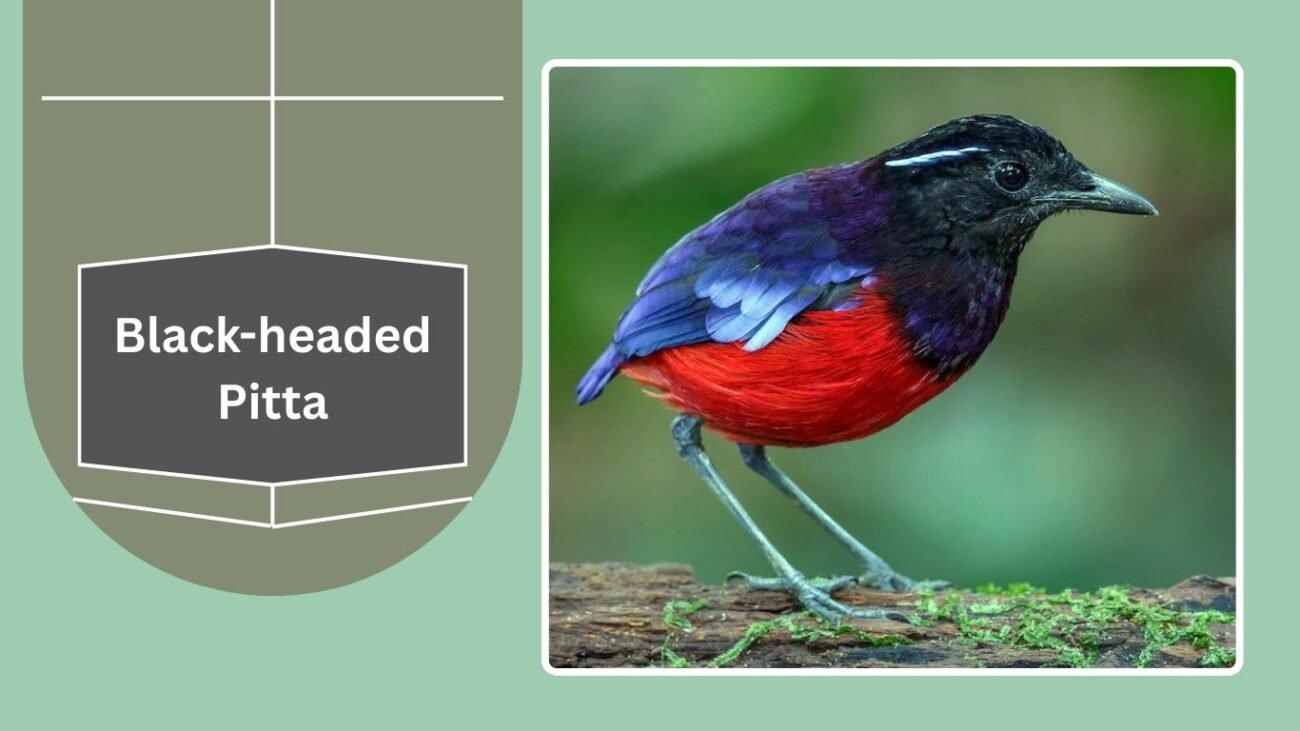
The Black-headed Pitta (Erythropitta ussheri) is a brilliantly colored, forest-dwelling bird native to Borneo. Its striking combination of deep red, bright blue, and black makes it one of the most visually stunning pittas. Endemic to the island, it is considered vulnerable due to habitat loss from deforestation.
Identification
- Medium-sized, about 17–19 cm in length
- Glossy black head, throat, and upper breast
- Bright crimson-red belly and breast
- Vivid blue wings and rump contrasting with darker upperparts
- Strong pink legs and a short tail, typical of pittas
Habitat
The Black-headed Pitta is found in lowland and hill forests of Borneo, particularly in Sabah, Sarawak, Brunei, and Kalimantan. It prefers dense, moist undergrowth in primary and secondary forests.
Diet
Its diet includes ants, beetles, termites, snails, and earthworms. It forages by hopping along the forest floor, probing into soil and leaf litter to uncover prey.
Behavior
The Black-headed Pitta is shy and solitary, rarely seen in the open. Its call is a series of sharp, whistling notes, most often heard during the breeding season. Like other pittas, it builds dome-shaped nests close to the ground, camouflaged with leaves and plant material.