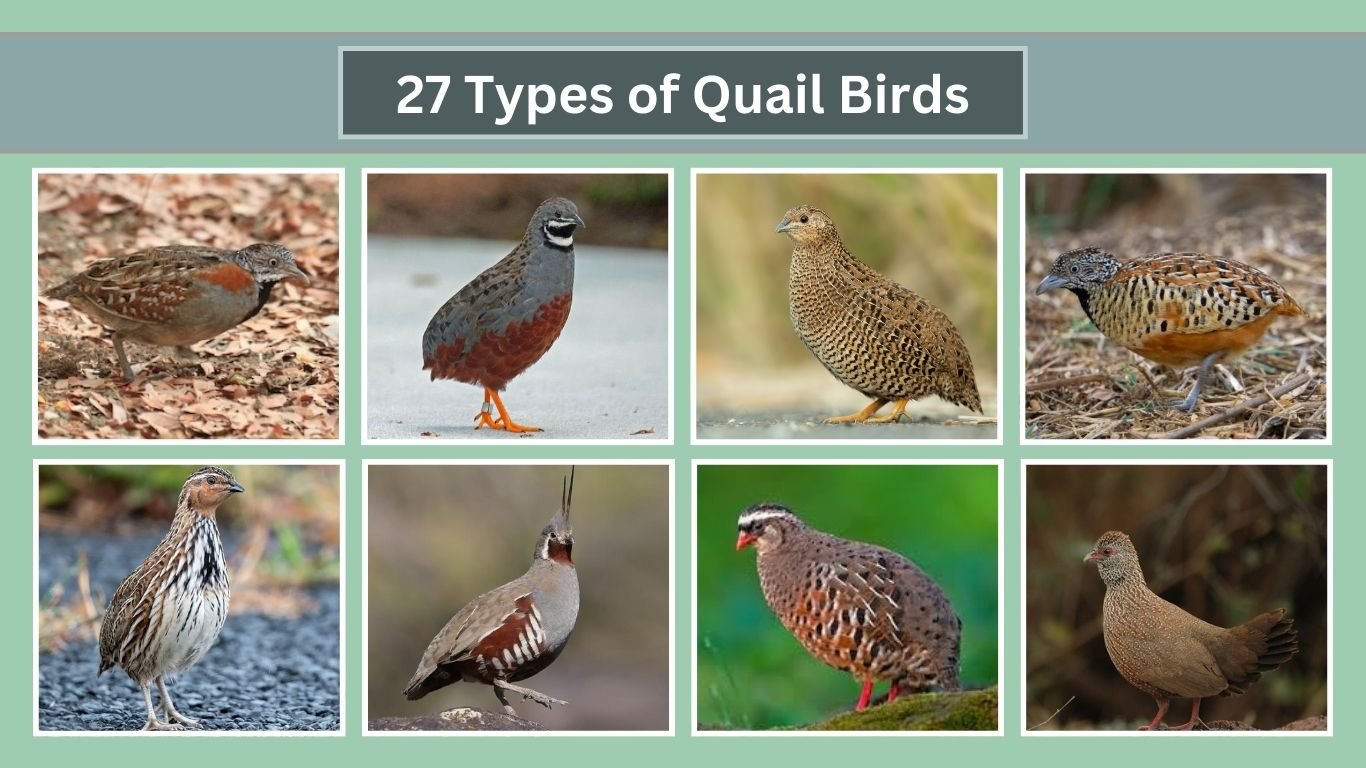
Quails are small, ground-dwelling birds known for their quick movements, distinctive calls, and remarkable diversity. Found across Asia, Africa, the Americas, and Oceania, these birds adapt to a wide range of habitats—from grasslands and forests to deserts and farmlands. Some species, like the Northern Bobwhite and California Quail, are familiar game birds, while others, such as the Snow Mountain Quail and Buff-breasted Buttonquail, remain elusive and rare. This guide explores 27 fascinating types of quail birds, highlighting their unique features, habitats, and behaviors.
1. Common Quail
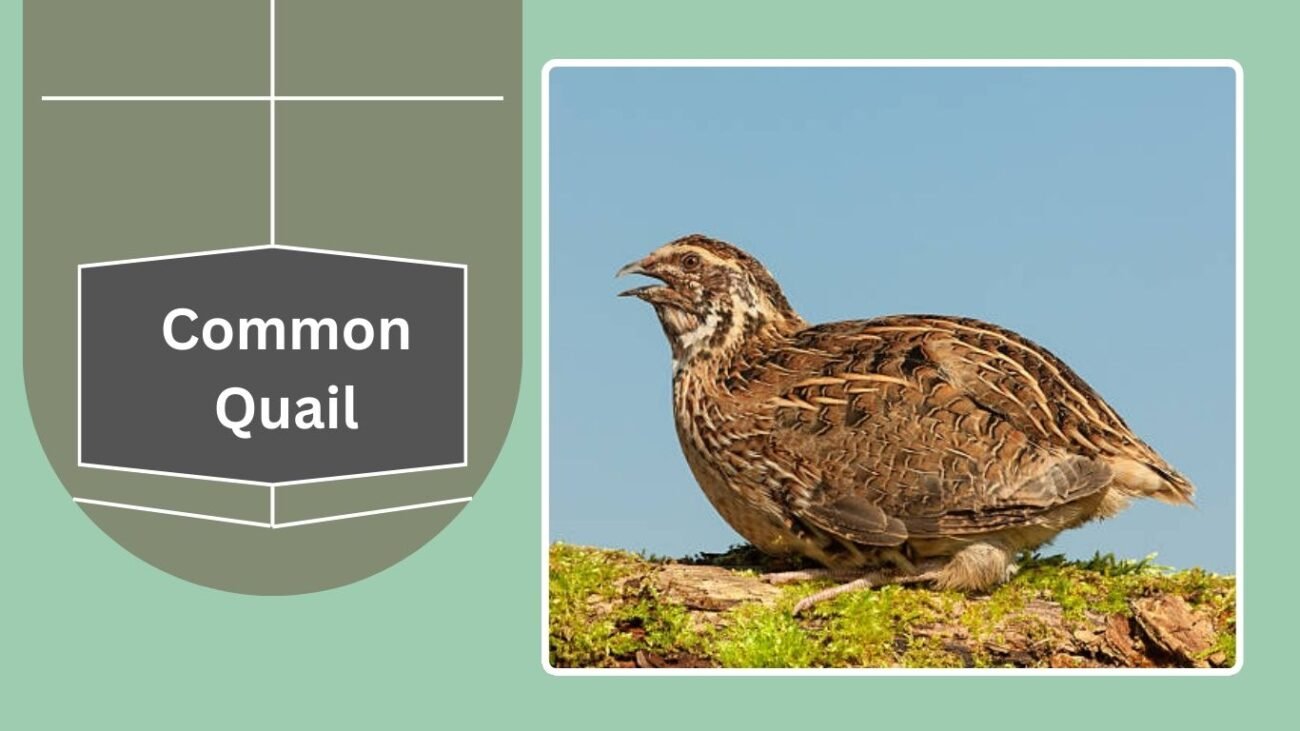
The Common Quail (Coturnix coturnix) is a small yet remarkable bird, celebrated for being the only true migratory quail species. Its journeys stretch thousands of kilometers between breeding and wintering grounds, making it unique among game birds. Known for its loud and rhythmic “wet-my-lips” call, this bird has been part of folklore, hunting traditions, and even ancient writings.
Identification
- Scientific name: Coturnix coturnix
- Appearance: Rounded body, streaked brown and buff plumage that blends with grass, pale belly, distinctive dark eye-stripe, and short tail
- Size: 16–18 cm (6–7 in) in length
- Wingspan: 32–35 cm
- Weight: 70–140 g
- Sexual dimorphism: Males have a darker throat patch, while females show a paler, streaked throat
Habitat and Range
Common Quails breed in temperate regions of Europe, North Africa, and western to central Asia. Each year, they migrate southwards to Africa, India, and the Middle East to escape harsh winters. Their preferred habitats include open grasslands, cultivated fields, meadows, and weedy farmlands, where thick ground vegetation provides cover and nesting opportunities.
Behavior and Diet
Common Quails are ground-nesting birds, building simple grass-lined scrapes for nests. They are mostly solitary but may form loose groups outside the breeding season. Their diet is varied:
- Seeds and grains: Wheat, barley, millet, and other cultivated crops
- Insects: Beetles, ants, caterpillars, and grasshoppers, especially important for chicks
- Green matter: Tender shoots, leaves, and buds during spring and summer
These quails are strong fliers despite their small size, with rapid wingbeats allowing long-distance migration. During the breeding season, males sing persistently at dawn and dusk to mark territory and attract females.
Reproduction
Females lay 8–13 speckled eggs in a ground nest, incubating them for about 16–18 days. Chicks are precocial, leaving the nest shortly after hatching and feeding independently under the mother’s guidance.
Importance and Conservation
Common Quails have historically been hunted for food and sport across Europe and Asia. They are also farmed in captivity for meat and eggs, with quail farming being popular worldwide. Despite heavy hunting pressure, they are classified as Least Concern due to their wide distribution and high reproductive capacity.
2. Japanese Quail
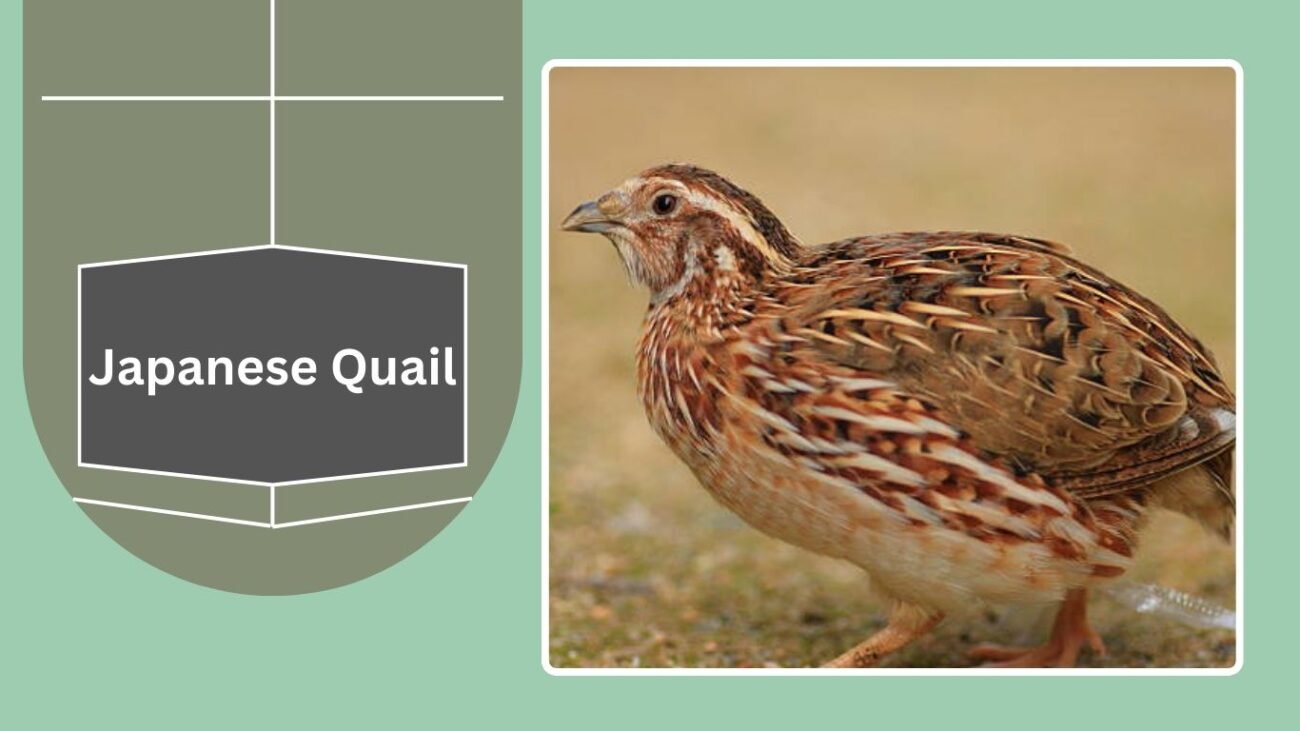
The Japanese Quail (Coturnix japonica) is another member of the Coturnix genus, closely related to the Common Quail but domesticated widely for farming. It has been bred for centuries for eggs, meat, and even scientific research, making it one of the most economically important quail species.
Identification
- Scientific name: Coturnix japonica
- Appearance: Similar to the Common Quail but slightly larger; mottled brown plumage with lighter underparts and a prominent eye-stripe
- Size: 18–20 cm (7–8 in)
- Weight: 90–130 g, with farmed birds often heavier
- Sexual dimorphism: Males have a reddish-brown breast, while females have speckled throats and paler underparts
Habitat and Range
In the wild, Japanese Quails inhabit grasslands, fields, and river valleys of East Asia, including Japan, Korea, China, and Russia. Today, domesticated varieties are found globally, bred in farms for commercial purposes.
Behavior and Diet
- Feeding habits: Omnivorous, consuming grains, seeds, small insects, and green vegetation
- Social behavior: More gregarious than Common Quails, often kept in flocks under farming conditions
- Flight: Capable of short, rapid flights but prefers staying low to the ground
Reproduction
Japanese Quails mature quickly, with females capable of laying eggs as early as six weeks old. They produce up to 300 eggs per year under captive breeding, making them vital for poultry farming. In the wild, they nest on the ground, laying 7–12 eggs per clutch.
Importance and Conservation
Unlike many wild quail species, the Japanese Quail has thrived under domestication. It is extensively used in agriculture and as a model organism in scientific studies due to its fast reproductive cycle. Wild populations, however, have declined in some regions due to habitat loss, but overall the species remains widespread.
3. California Quail
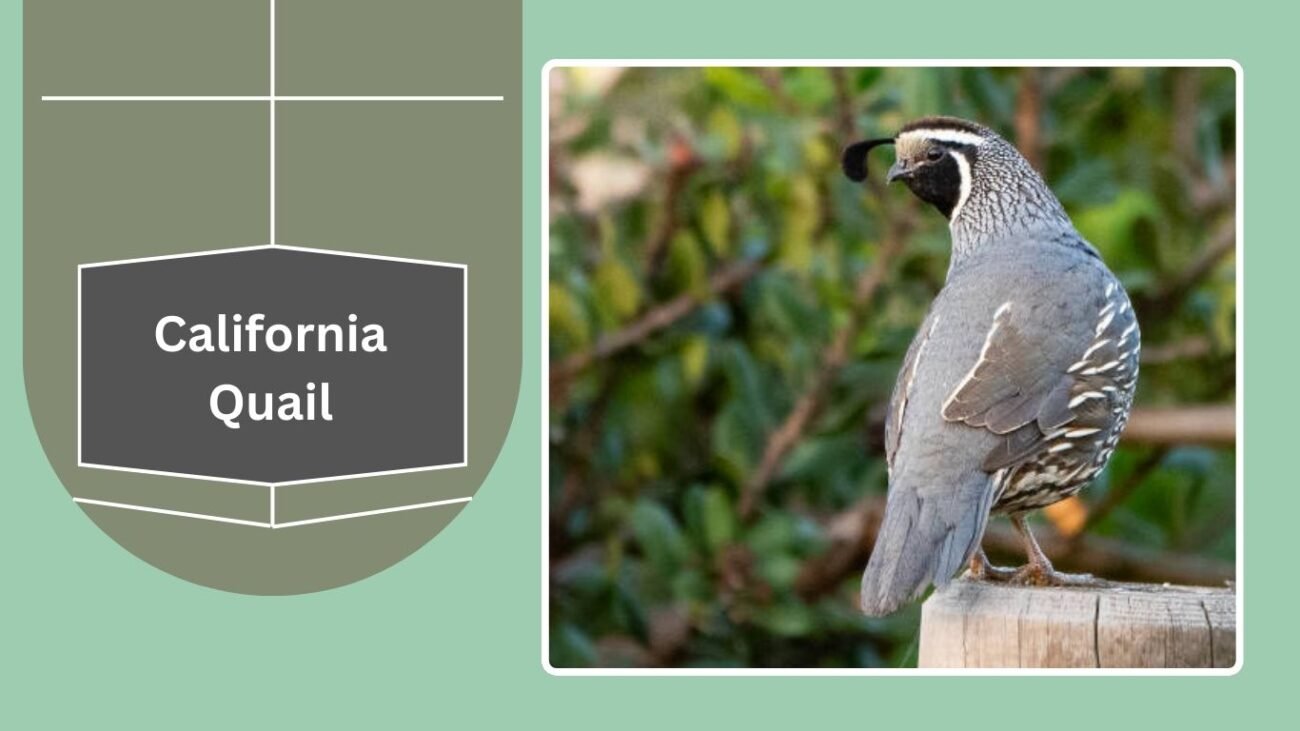
The California Quail (Callipepla californica), also called the Valley Quail, is a highly recognizable bird with its forward-drooping black head plume. It is the state bird of California and is admired for its sociable nature and distinctive calls.
Identification
- Scientific name: Callipepla californica
- Appearance: Males have gray-blue plumage, scaled belly, chestnut belly patch, and bold black-and-white face markings with a comma-shaped plume. Females are duller brown with shorter plumes.
- Size: 23–25 cm (9–10 in)
- Weight: 140–200 g
Habitat and Range
Native to the western United States, California Quails thrive in shrublands, foothills, open woodlands, and suburban areas. They have also been introduced to New Zealand, Chile, and Hawaii.
Behavior and Diet
They are highly social, often forming flocks called “coveys.” Their diet consists of seeds, leaves, berries, acorns, and small insects. Males perform courtship calls and displays, while females lay clutches of 12–16 eggs in shallow ground nests.
Reproduction
California Quails breed in spring and early summer. Chicks are precocial, feeding themselves immediately after hatching but staying with adults in protective groups.
4. Gambel’s Quail
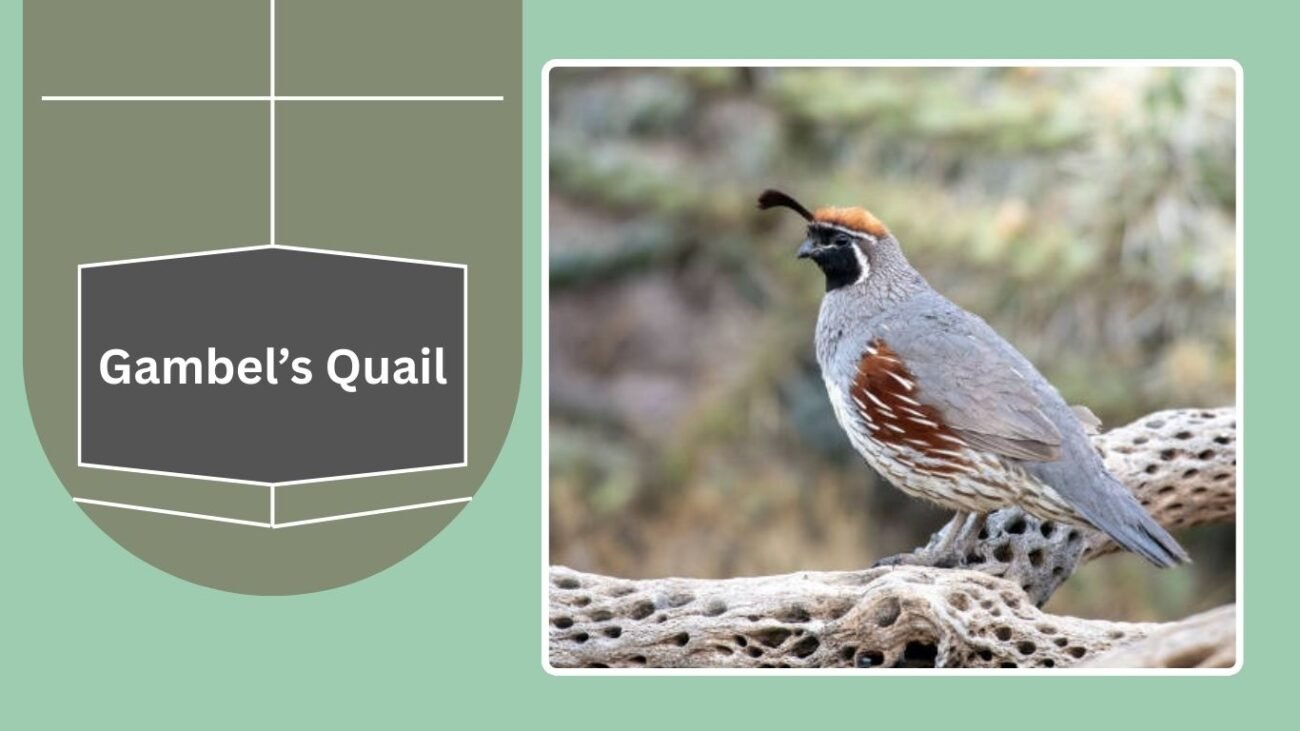
Gambel’s Quail (Callipepla gambelii) is a desert-dwelling quail species of the southwestern United States and northern Mexico, closely related to the California Quail but adapted to arid environments.
Identification
- Scientific name: Callipepla gambelii
- Appearance: Males have gray plumage, a chestnut crown, black face with white edges, and a prominent black belly patch. Both sexes feature the trademark teardrop-shaped plume.
- Size: 24–28 cm (9.5–11 in)
- Weight: 150–200 g
Habitat and Range
They inhabit desert scrublands, thorny thickets, mesquite groves, and river valleys of Arizona, New Mexico, Texas, California, and northern Mexico.
Behavior and Diet
Gambel’s Quails are ground-dwellers, forming coveys of up to 20 birds. They forage for seeds, cactus fruits, buds, and insects. In the heat of desert summers, they rely on succulent plants for moisture.
Reproduction
Their breeding season coincides with desert rains. Nests are shallow ground scrapes hidden under bushes, where females lay 10–12 eggs. Chicks hatch precocial and follow adults immediately.
5. Mountain Quail
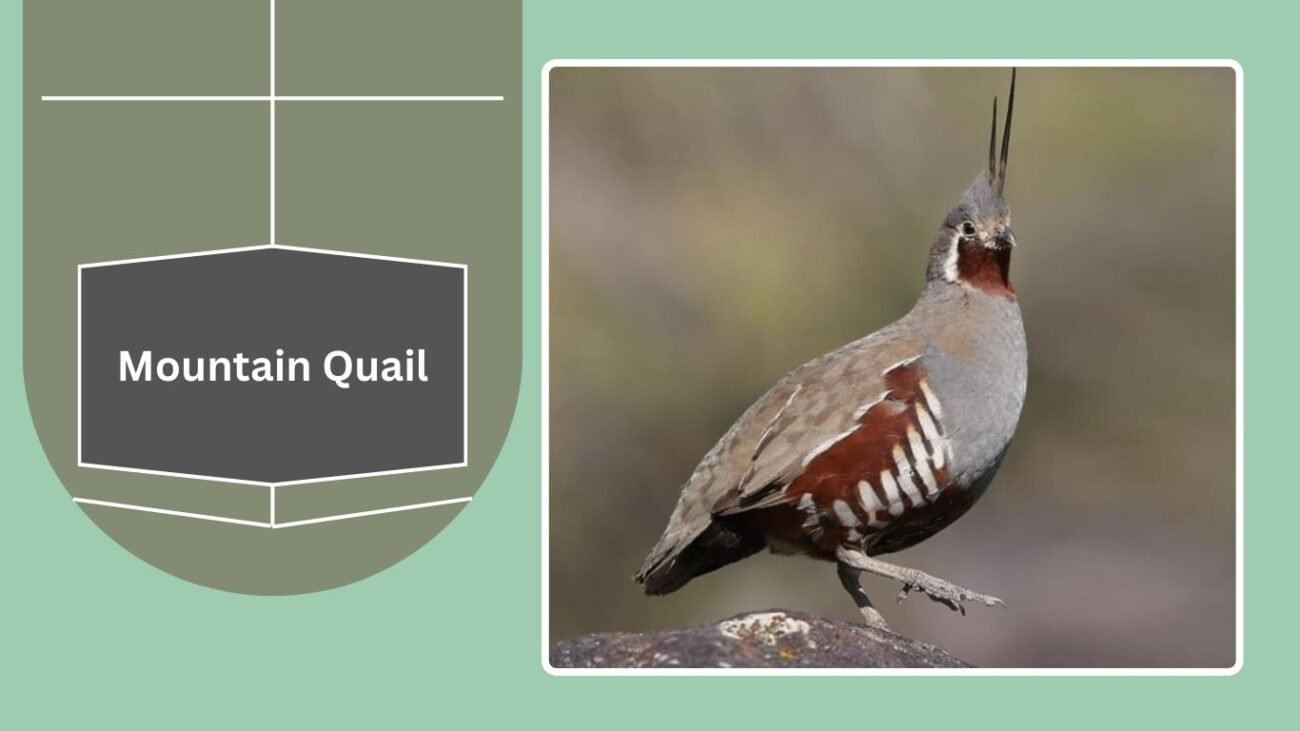
The Mountain Quail (Oreortyx pictus) is the largest quail species in North America, easily recognized by its long, straight head plume. It inhabits rugged mountain slopes and dense forests of the western United States.
Identification
- Scientific name: Oreortyx pictus
- Appearance: Gray body with chestnut throat, bold white barring on flanks, and a tall straight head plume. Females are duller but similar in pattern.
- Size: 26–28 cm (10–11 in)
- Weight: 210–260 g
Habitat and Range
They are found in mountainous areas of California, Oregon, Nevada, and Washington, thriving in brushy slopes, coniferous forests, and chaparral.
Behavior and Diet
Mountain Quails are secretive ground-dwellers, usually moving in small coveys. They forage for seeds, berries, roots, and insects, scratching the soil with their feet.
Reproduction
Nests are hidden in dense vegetation on slopes, with females laying 9–10 eggs. Unlike many quails, both parents may assist in raising the brood.
6. Scaled Quail
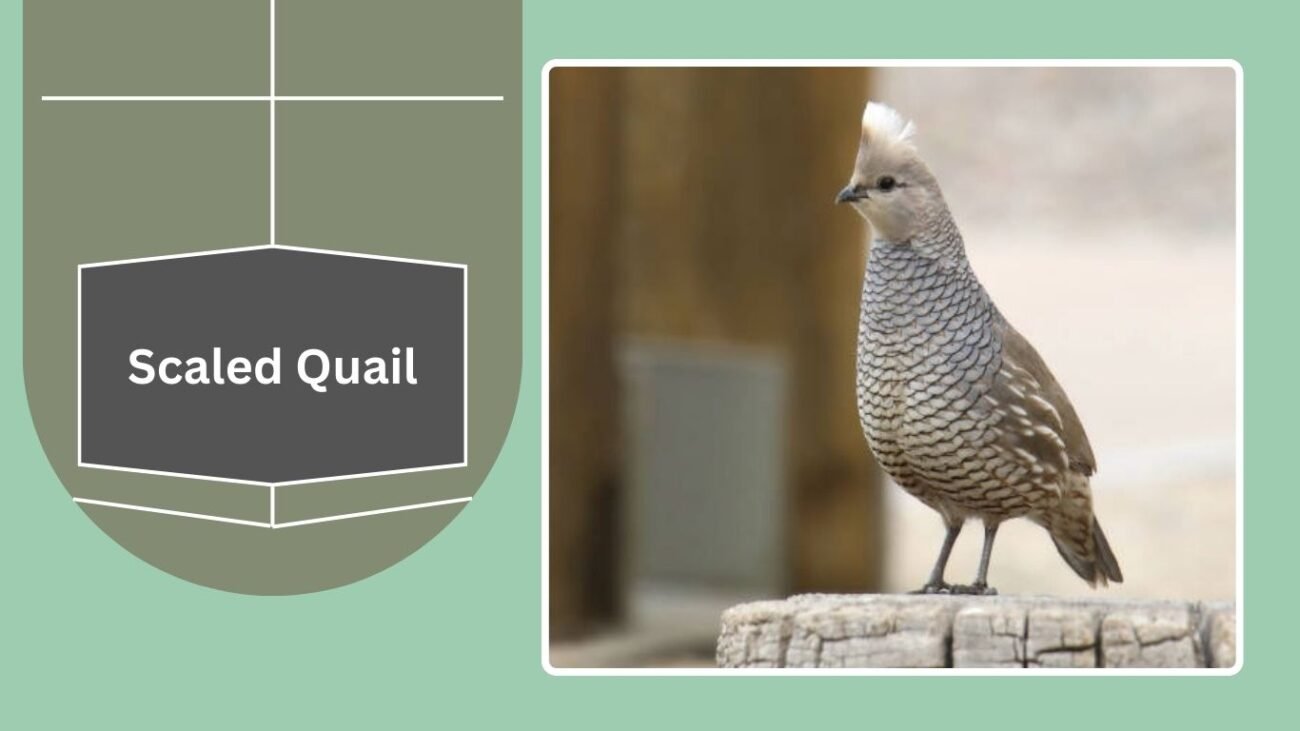
The Scaled Quail (Callipepla squamata), also called the Blue Quail, is named for its bluish-gray feathers that resemble fish scales. It is a hardy bird of arid grasslands.
Identification
- Scientific name: Callipepla squamata
- Appearance: Bluish-gray body with scaled feather patterns, white-tipped crest, and plain face compared to California and Gambel’s Quails.
- Size: 25–30 cm (10–12 in)
- Weight: 170–200 g
Habitat and Range
Scaled Quails are native to the southwestern United States and northern Mexico, inhabiting desert grasslands, scrublands, and open plains.
Behavior and Diet
They form large coveys, sometimes with dozens of birds, and prefer running swiftly across the ground rather than flying. Their diet includes seeds, grass shoots, berries, and insects.
Reproduction
Females lay 9–16 eggs in a ground nest hidden under grass or shrubs. The chicks hatch precocial and quickly follow the parents.
7. Northern Bobwhite
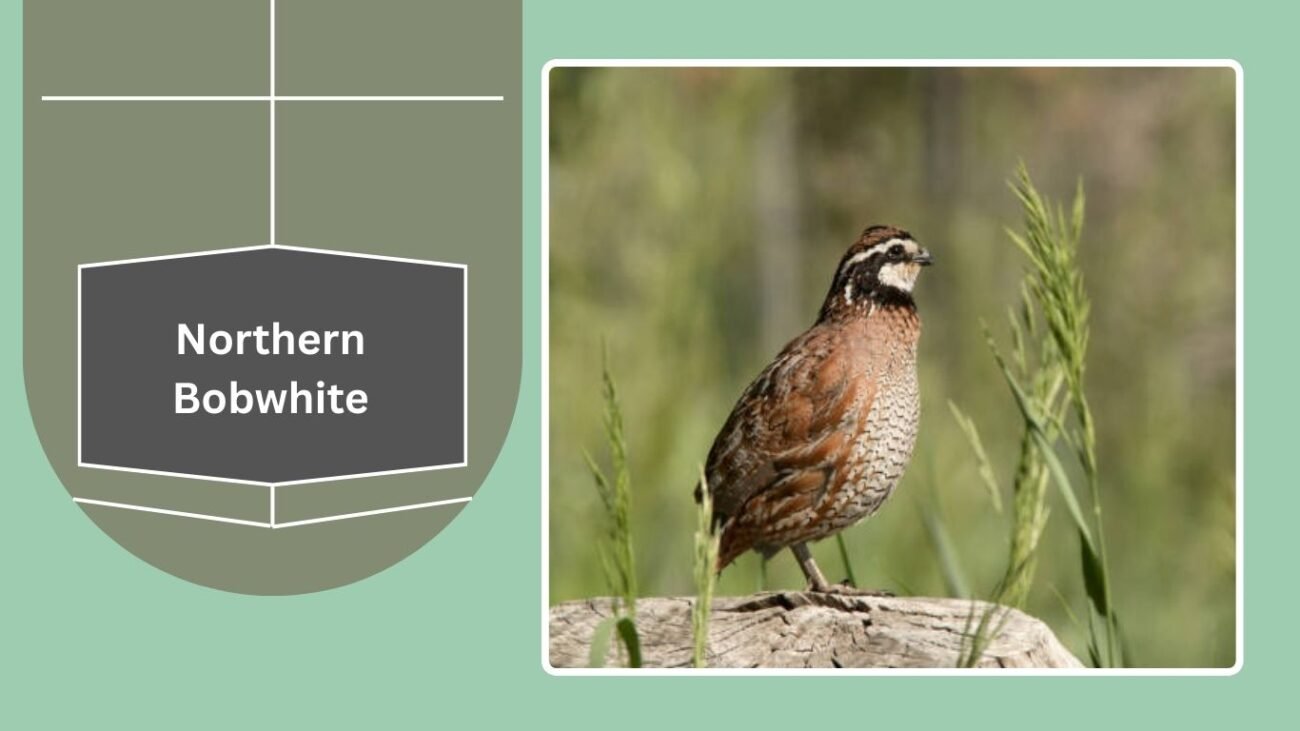
The Northern Bobwhite (Colinus virginianus) is one of the most well-known quails in North America, famous for its distinctive “bob-white” whistle. It is widely studied and has many recognized subspecies.
Identification
- Scientific name: Colinus virginianus
- Appearance: Males have a white throat and eye stripe bordered by black, reddish-brown chest, and mottled brown body. Females are similar but with buff-colored throats and eye stripes.
- Size: 20–24 cm (8–9.5 in)
- Weight: 150–200 g
Habitat and Range
They inhabit grasslands, agricultural fields, and open woodlands across the eastern and central United States, Mexico, and parts of the Caribbean.
Behavior and Diet
Northern Bobwhites live in coveys, roosting in tight circles on the ground for warmth and protection. Their diet includes seeds, grains, legumes, berries, and insects.
Reproduction
Females lay 12–16 eggs in ground nests lined with grass. Both parents may help raise chicks, which hatch precocial and follow adults immediately.
8. Masked Bobwhite
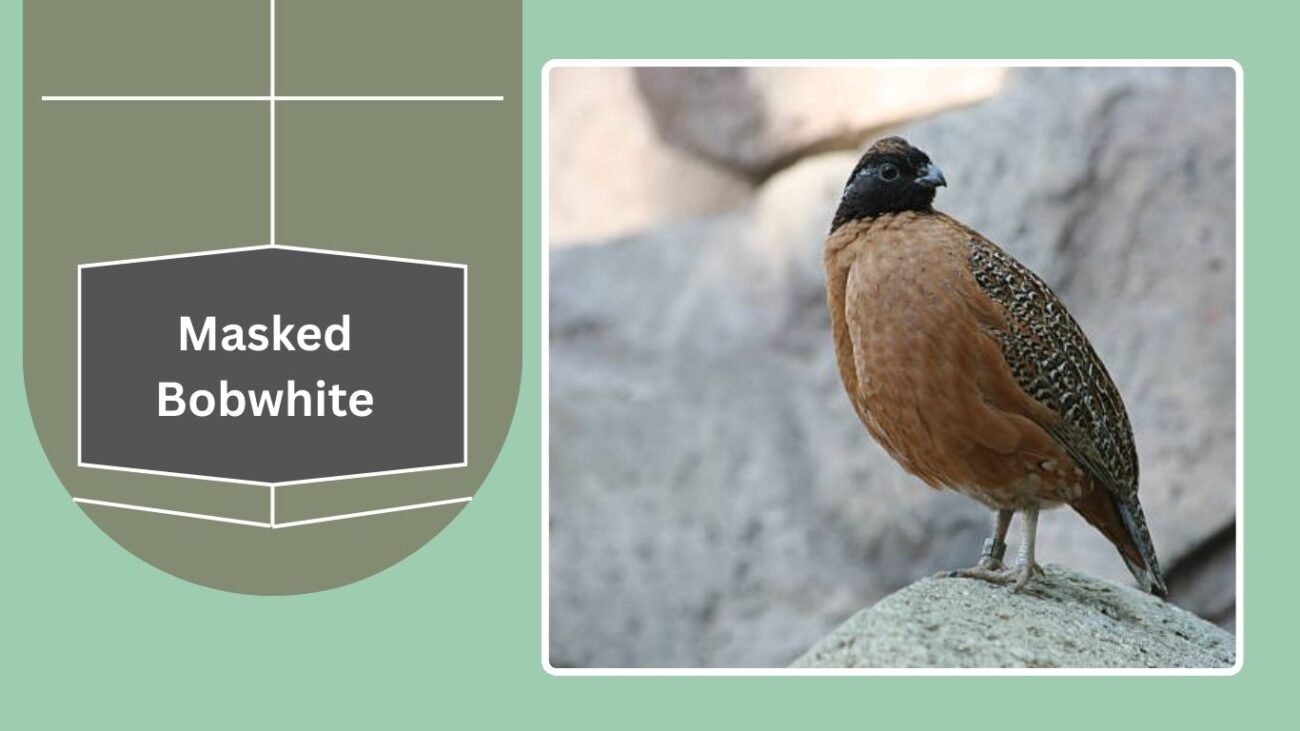
The Masked Bobwhite (Colinus virginianus ridgwayi) is a rare and endangered subspecies of the Northern Bobwhite, native to southern Arizona and northern Mexico.
Identification
- Scientific name: Colinus virginianus ridgwayi
- Appearance: Males have black faces and throats with rufous-red chest and flanks, while females are mottled brown with buff underparts.
- Size: 22–25 cm (8.5–10 in)
- Weight: 160–190 g
Habitat and Range
Historically found in desert grasslands and mesquite scrub, their population has drastically declined due to habitat loss and overgrazing. Remaining populations survive in captive breeding and reintroduction programs.
Behavior and Diet
Masked Bobwhites are ground foragers, feeding on seeds, grass shoots, insects, and berries. They prefer areas with dense cover for protection.
Reproduction
Nesting occurs in ground scrapes lined with grasses. Clutch size is smaller than other bobwhites, usually 8–12 eggs, with chicks leaving the nest soon after hatching.
9. Elegant Quail
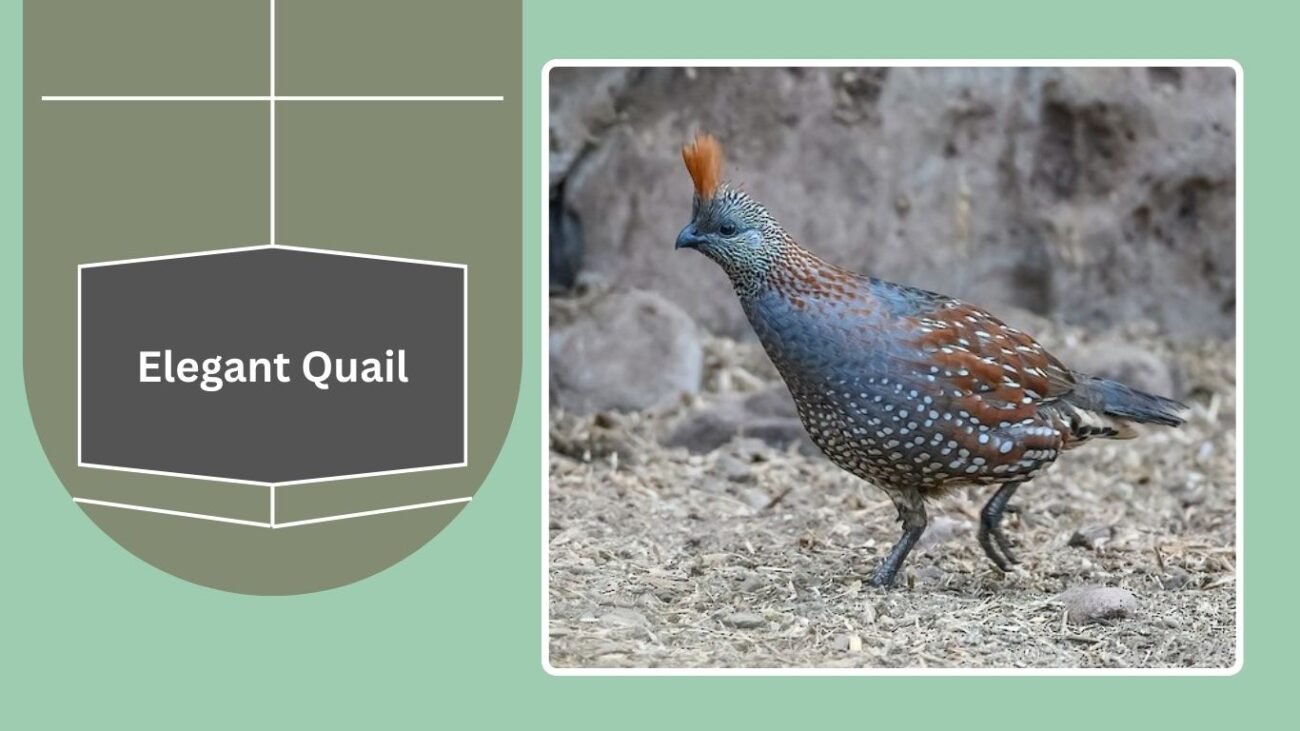
The Elegant Quail (Callipepla douglasii) is a colorful quail native to northwestern Mexico, known for its lively calls and attractive plumage.
Identification
- Scientific name: Callipepla douglasii
- Appearance: Males have gray upperparts, chestnut belly, finely scaled neck and chest, yellowish throat, and a forward-drooping plume. Females are duller with reduced facial markings.
- Size: 22–25 cm (8.5–10 in)
- Weight: 150–180 g
Habitat and Range
They inhabit dry forests, thorn scrub, and open woodlands of Sonora, Sinaloa, and Nayarit in Mexico.
Behavior and Diet
Elegant Quails form coveys that forage actively on the ground. Their diet includes grass seeds, grains, berries, and small insects. They are more vocal than most quails, with loud, musical calls.
Reproduction
Nesting occurs on the ground in sheltered spots. Females lay 10–12 eggs per clutch, and chicks hatch precocial, following the parents soon after.
10. Montezuma Quail
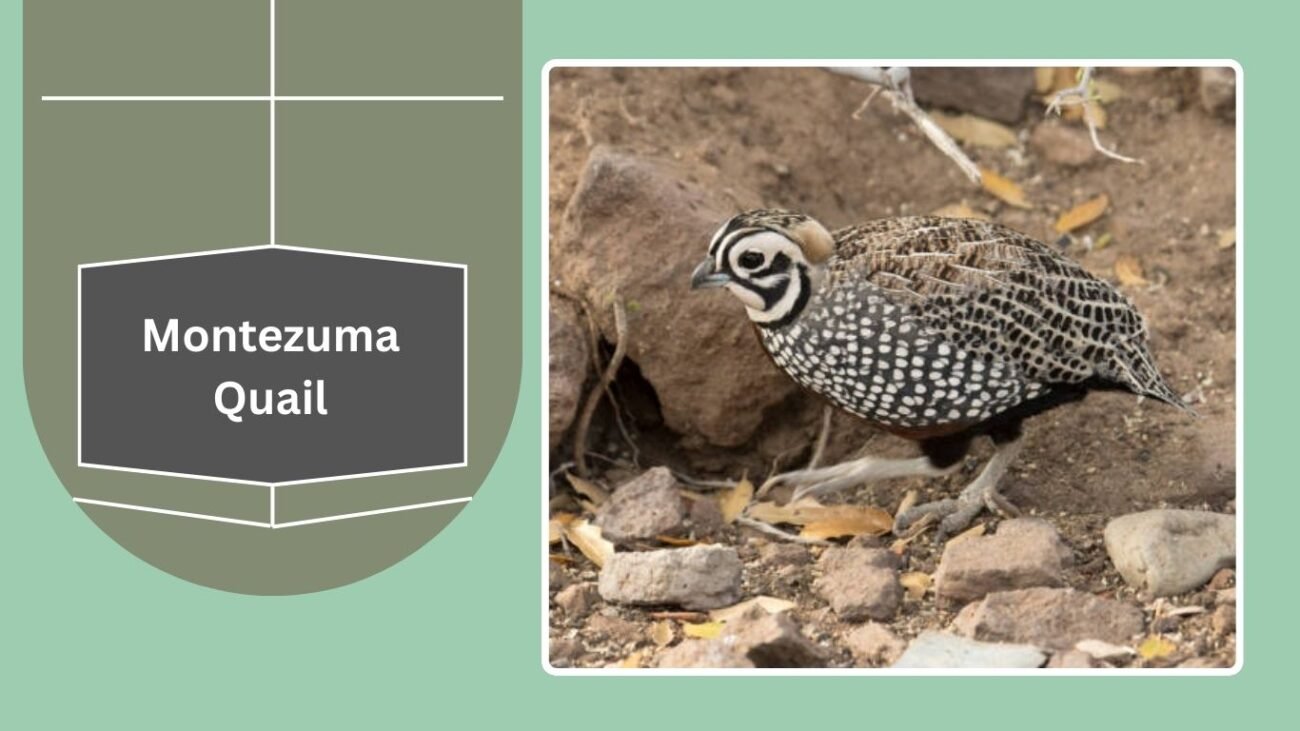
The Montezuma Quail (Cyrtonyx montezumae), also called the Harlequin Quail, is a strikingly patterned species of Mexico and the southwestern United States. It is one of the most distinctive quails due to its bold facial markings.
Identification
- Scientific name: Cyrtonyx montezumae
- Appearance: Males have dramatic black-and-white facial masks, mottled chestnut and gray body, and rounded shape. Females are more subdued with buff and brown tones.
- Size: 20–23 cm (8–9 in)
- Weight: 160–180 g
Habitat and Range
They inhabit grassy oak and pine woodlands of Mexico, Arizona, New Mexico, and Texas. They prefer highland meadows and forest edges.
Behavior and Diet
Montezuma Quails are secretive and often crouch motionless when approached. Their diet includes bulbs, tubers, grass seeds, and insects, which they dig from the soil using strong claws.
Reproduction
Nests are shallow depressions lined with grass. Females lay 6–12 eggs, and both parents may contribute to chick care after hatching.
11. Harlequin Quail
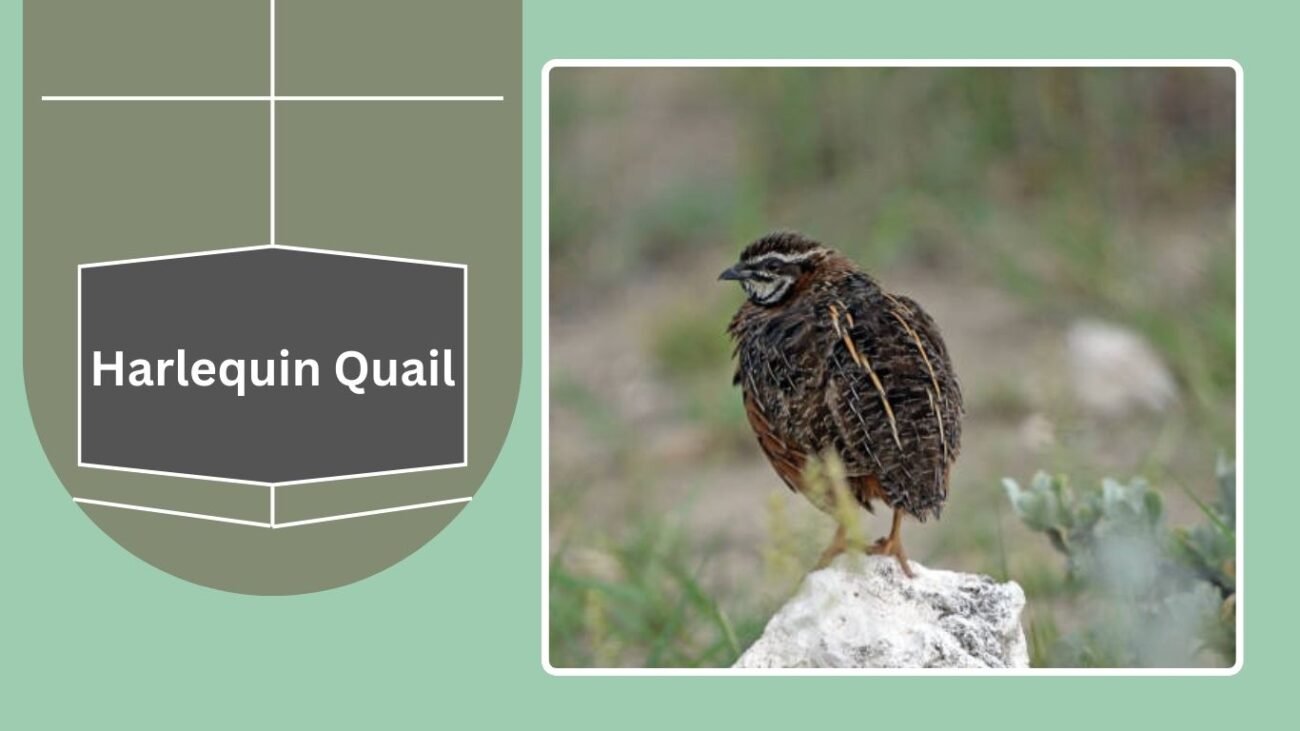
The Harlequin Quail (Coturnix delegorguei) is a small African species recognized for its bold, patterned plumage. It is widespread across sub-Saharan Africa and is often hunted as a game bird.
Identification
- Scientific name: Coturnix delegorguei
- Appearance: Males have striking black-and-white facial markings, chestnut breast, and mottled brown body. Females are duller with buff underparts and less contrast in facial features.
- Size: 16–18 cm (6–7 in)
- Weight: 110–130 g
Habitat and Range
They inhabit savannas, grasslands, and cultivated farmlands throughout Africa, especially in areas with tall grasses.
Behavior and Diet
Harlequin Quails are migratory in parts of Africa, moving with seasonal rains. Their diet includes seeds, grasses, small insects, and green shoots.
Reproduction
Nests are ground scrapes hidden in grass. Females lay 4–8 eggs, and chicks hatch precocial, capable of following adults immediately.
12. Rain Quail
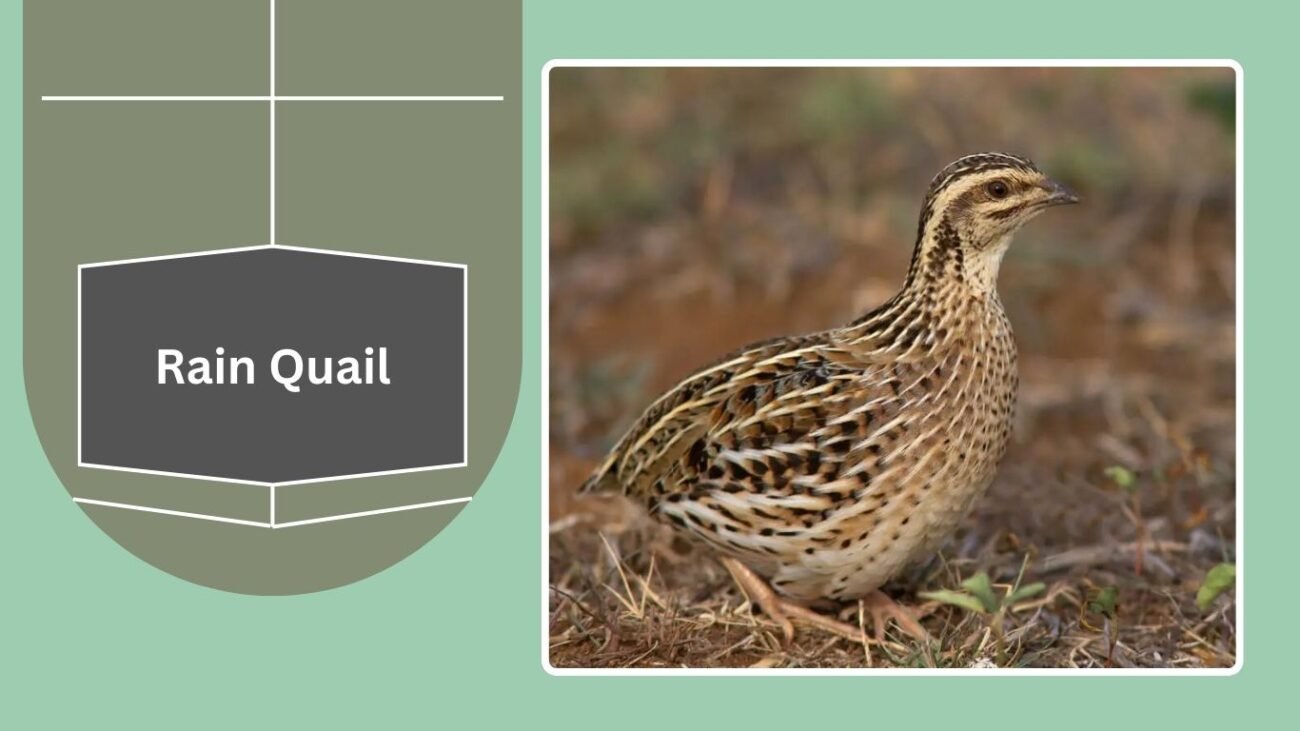
The Rain Quail (Coturnix coromandelica) is an Asian quail species noted for its whistling call, often heard during the monsoon season, which gives the bird its name.
Identification
- Scientific name: Coturnix coromandelica
- Appearance: Males have black breast bands, white face stripes, and streaked brown plumage. Females are lighter brown with mottled underparts and lack strong facial markings.
- Size: 16–18 cm (6–7 in)
- Weight: 70–85 g
Habitat and Range
They are widely distributed across the Indian subcontinent, including India, Nepal, Pakistan, and Bangladesh, thriving in open fields, scrublands, and grasslands.
Behavior and Diet
Rain Quails are active ground foragers, eating grass seeds, small insects, and cultivated grains. Their whistling call is especially frequent during monsoon rains.
Reproduction
They breed mainly in the rainy season. Females build nests in grassy areas, laying 6–8 speckled eggs. Chicks are precocial and feed independently soon after hatching.
13. Jungle Bush Quail
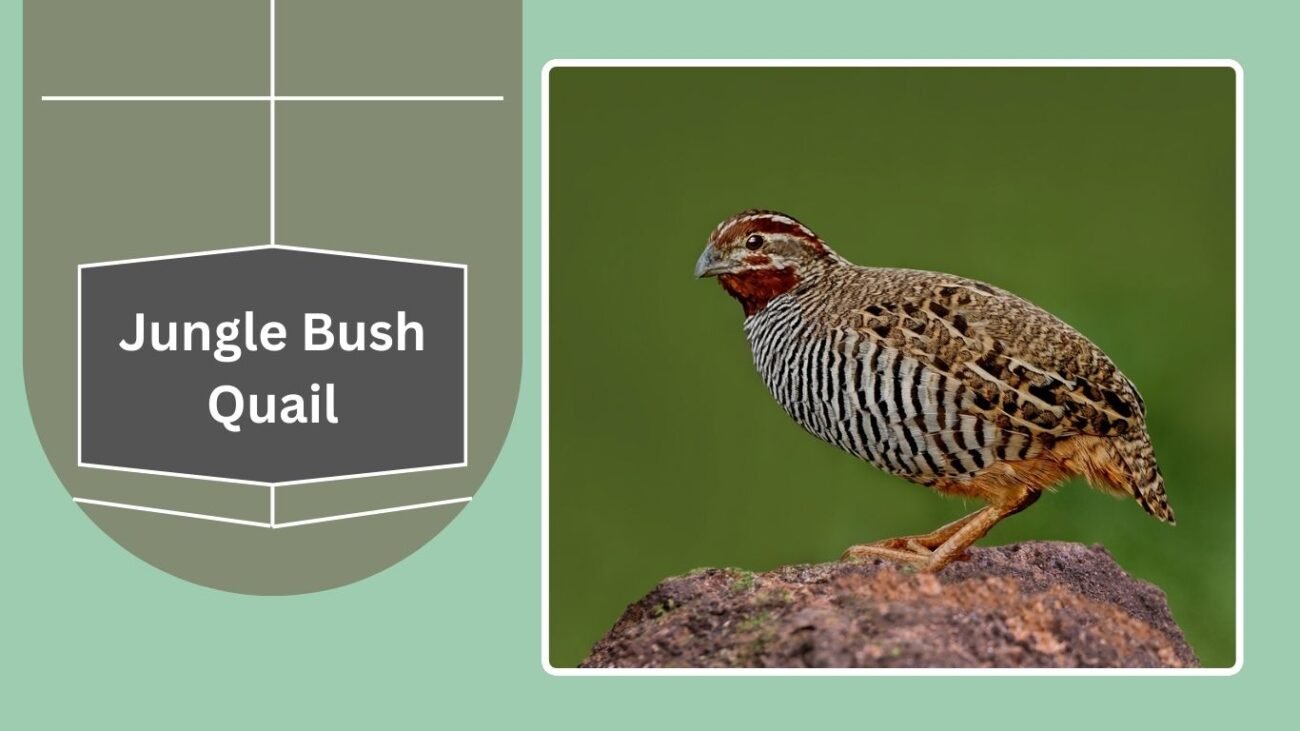
The Jungle Bush Quail (Perdicula asiatica) is a small quail species native to the Indian subcontinent, often found in coveys of 10–20 birds moving together through grasslands and scrub.
Identification
- Scientific name: Perdicula asiatica
- Appearance: Males have chestnut underparts with white streaks, brown upperparts with black markings, and a barred tail. Females are paler with duller chestnut coloring.
- Size: 15–17 cm (6–6.7 in)
- Weight: 50–65 g
Habitat and Range
They inhabit dry grasslands, scrublands, and open forests across India, Nepal, Sri Lanka, and Pakistan.
Behavior and Diet
These quails move in tight flocks, flying only short distances when disturbed. Their diet consists mainly of grass seeds, cultivated grains, and small insects.
Reproduction
Breeding occurs after monsoons. Females lay 6–8 eggs in grass-lined ground nests, with chicks hatching precocial and highly mobile.
14. Blue Quail
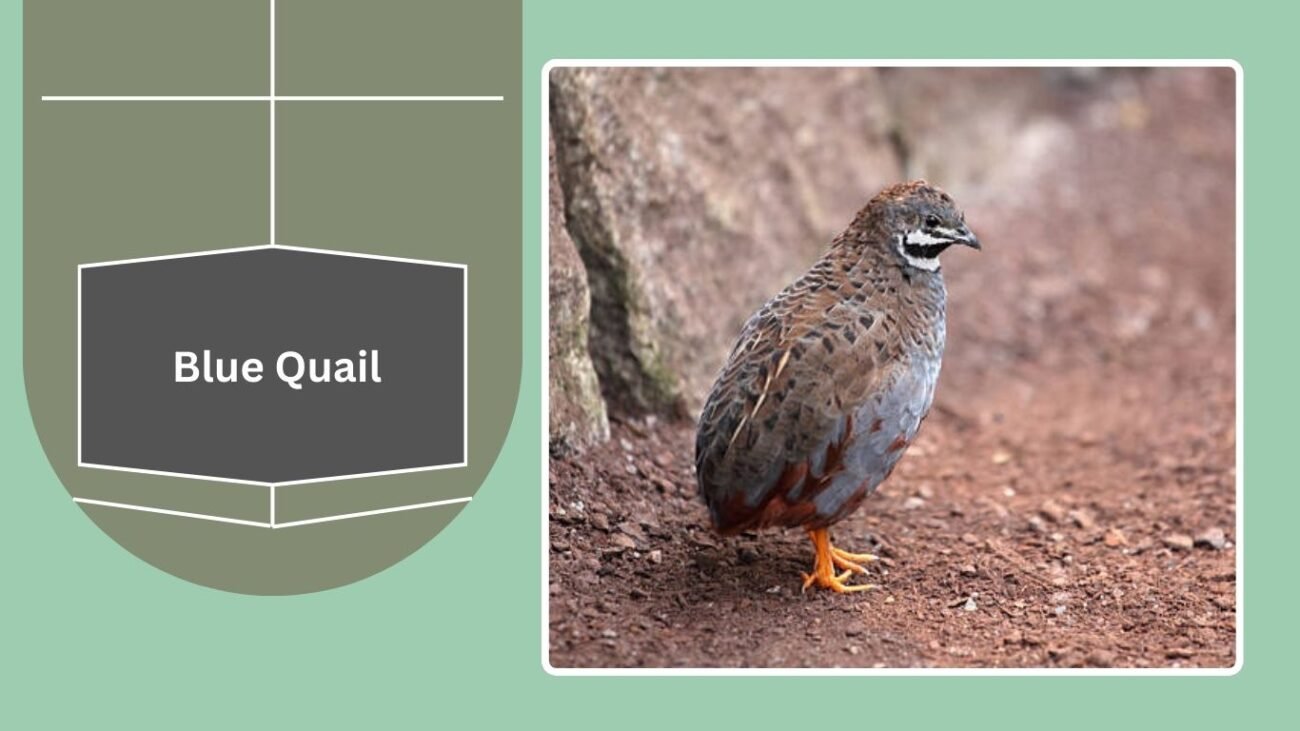
The Blue Quail (Synoicus adansonii), also known as the African Blue Quail, is a small, migratory quail species found in sub-Saharan Africa.
Identification
- Scientific name: Synoicus adansonii
- Appearance: Males have bluish-gray plumage on the chest and face, with a darker crown and mottled brown wings. Females are browner with streaked markings.
- Size: 14–16 cm (5.5–6.3 in)
- Weight: 40–50 g
Habitat and Range
They inhabit moist grasslands, floodplains, and areas near rivers across Africa, especially following seasonal rains.
Behavior and Diet
Blue Quails are migratory and move with wet seasons. They forage on the ground for grass seeds, grains, and small insects.
Reproduction
Breeding coincides with rainy periods. Nests are hidden among grasses, where females lay 5–7 small eggs that hatch after about 16 days.
15. King Quail (Button Quail)
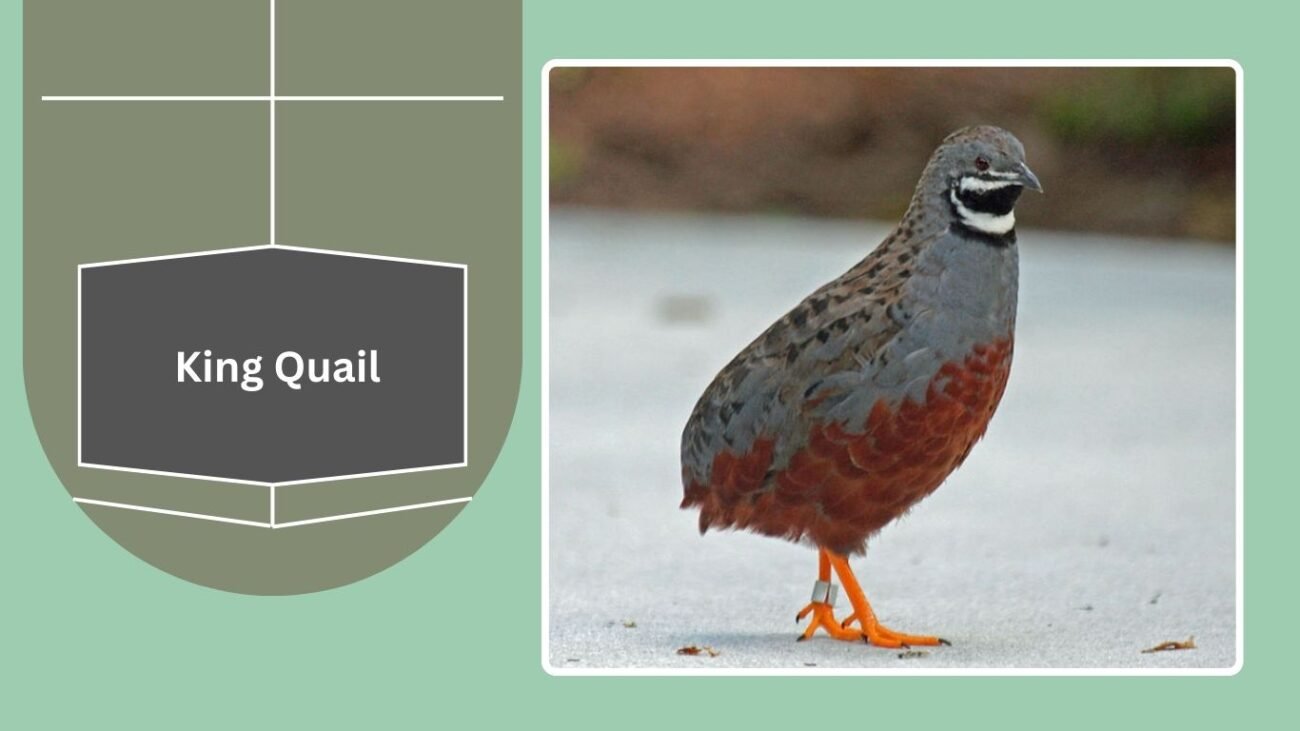
The King Quail (Synoicus chinensis), also called the Blue-breasted Quail or Button Quail, is one of the most popular small quails kept in captivity worldwide for ornamental purposes.
Identification
- Scientific name: Synoicus chinensis
- Appearance: Males display bluish-gray breast, chestnut belly, white throat band, and rich brown upperparts. Females are brown overall with streaked plumage for camouflage.
- Size: 12–14 cm (4.7–5.5 in)
- Weight: 40–50 g
Habitat and Range
Native to South and Southeast Asia, Australia, and parts of Oceania, they thrive in grasslands, wetlands, and cultivated fields.
Behavior and Diet
King Quails are secretive, preferring to hide in tall grass. They feed on small seeds, insects, and shoots. Despite their tiny size, they are hardy and adapt well to captivity.
Reproduction
Females lay 5–7 eggs in shallow grass nests. Incubation lasts about 16 days, and chicks are extremely small, leaving the nest soon after hatching.
16. Painted Bush Quail
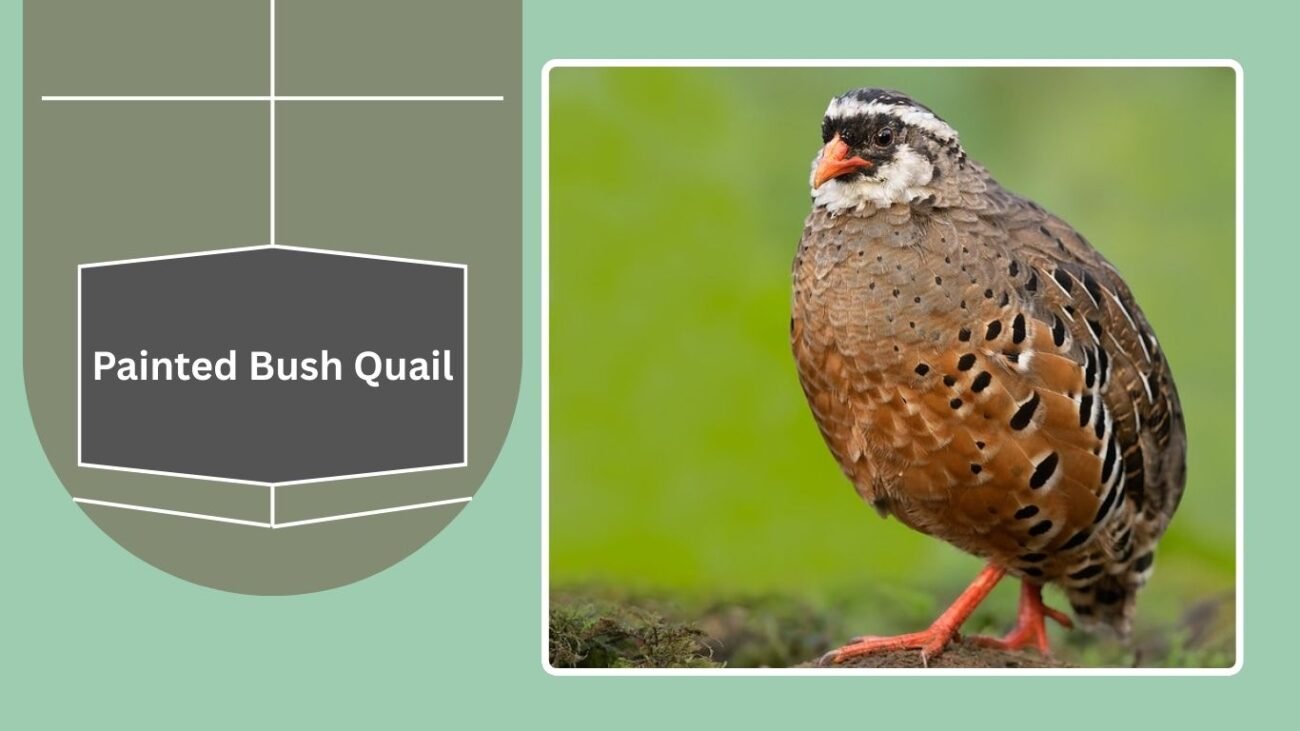
The Painted Bush Quail (Perdicula erythrorhyncha) is a colorful species native to India, often found in small groups that flush suddenly when disturbed.
Identification
- Scientific name: Perdicula erythrorhyncha
- Appearance: Males have rich chestnut plumage with black and white spots, red bill, and striking white throat patches. Females are duller brown with less vivid markings.
- Size: 16–18 cm (6–7 in)
- Weight: 55–70 g
Habitat and Range
They occur across peninsular India, favoring scrublands, dry forests, and grass-covered hills.
Behavior and Diet
These quails live in coveys and forage mainly on the ground for grass seeds, small fruits, and insects. When startled, they burst into rapid, short flights before diving back into cover.
Reproduction
Breeding occurs after the rainy season. Females lay 5–7 eggs in a simple grass-lined ground nest, and chicks hatch precocial, feeding on small seeds and insects.
17. Stubble Quail
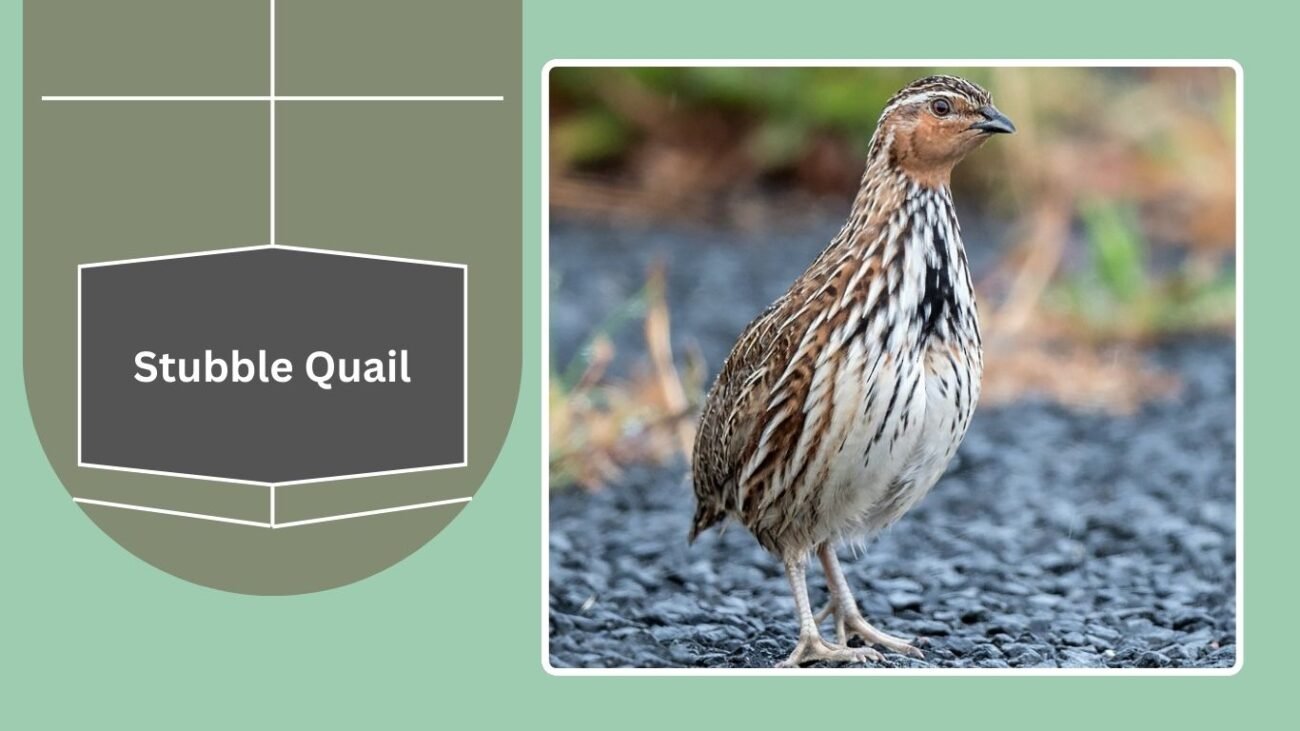
The Stubble Quail (Coturnix pectoralis) is an Australian native quail well adapted to grasslands and farmlands. Unlike some quail species, it is largely nomadic, moving with rainfall and food availability.
Identification
- Scientific name: Coturnix pectoralis
- Appearance: Brown, streaked plumage with cream and black markings, pale eyebrow stripe, and mottled chest. Males and females are similar, though females are slightly larger.
- Size: 18–20 cm (7–8 in)
- Weight: 75–100 g
Habitat and Range
They are found across much of Australia, especially in agricultural lands, pastures, and grassy plains.
Behavior and Diet
Stubble Quails are ground-dwelling, forming small flocks outside the breeding season. They feed mainly on grass seeds, cereal grains, and small insects.
Reproduction
Breeding is opportunistic, often following good rains. Females lay 7–10 eggs in a shallow grass nest. Chicks hatch precocial and become independent quickly.
18. Brown Quail
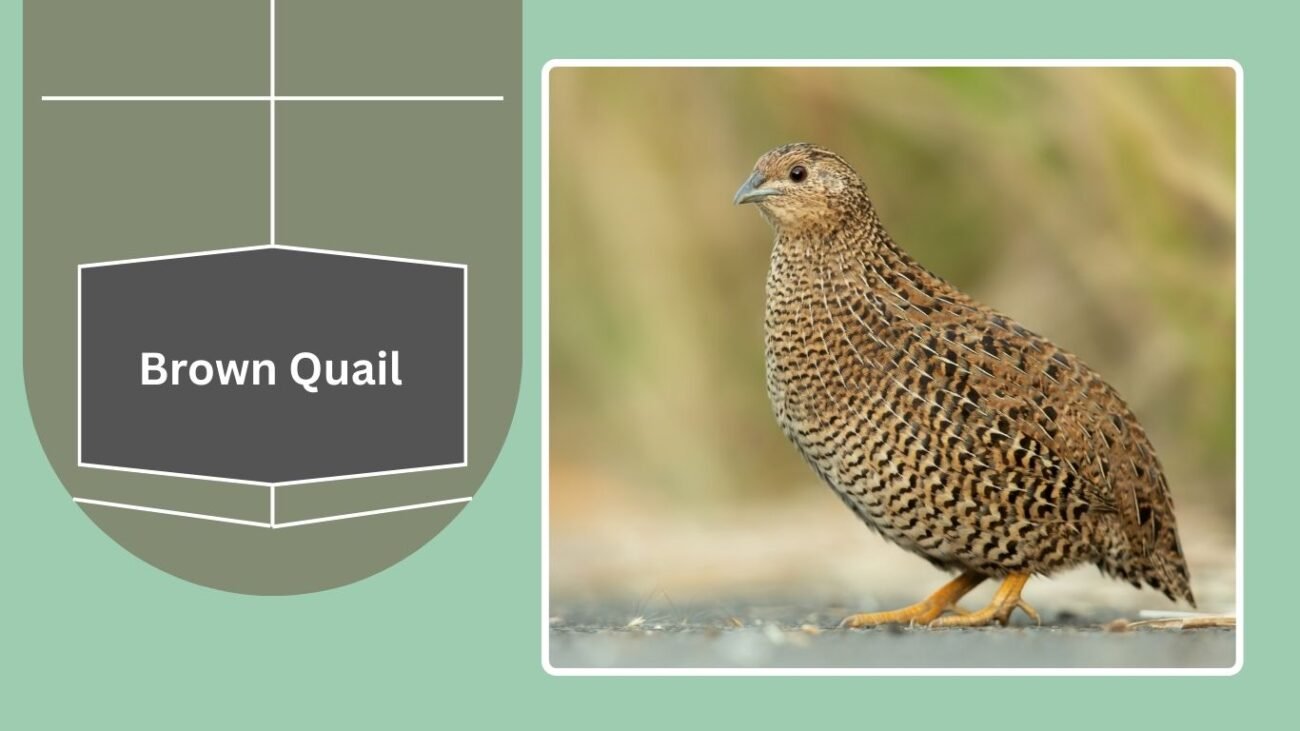
The Brown Quail (Synoicus ypsilophorus) is another widespread Australasian species, often found in wetter habitats compared to the Stubble Quail.
Identification
- Scientific name: Synoicus ypsilophorus
- Appearance: Dark brown, heavily streaked plumage with buff markings, short tail, and stout body. Sexes are similar in appearance.
- Size: 17–22 cm (6.7–8.7 in)
- Weight: 100–130 g
Habitat and Range
They inhabit grasslands, wetlands, and agricultural fields in Australia, Papua New Guinea, Indonesia, and surrounding islands.
Behavior and Diet
Brown Quails are ground feeders, consuming grass seeds, cultivated grains, and small invertebrates. They are shy and usually stay hidden in dense cover.
Reproduction
Nests are grass-lined scrapes on the ground. Females lay 6–9 eggs per clutch, with incubation lasting about 18 days. The chicks leave the nest almost immediately after hatching.
19. Snow Mountain Quail
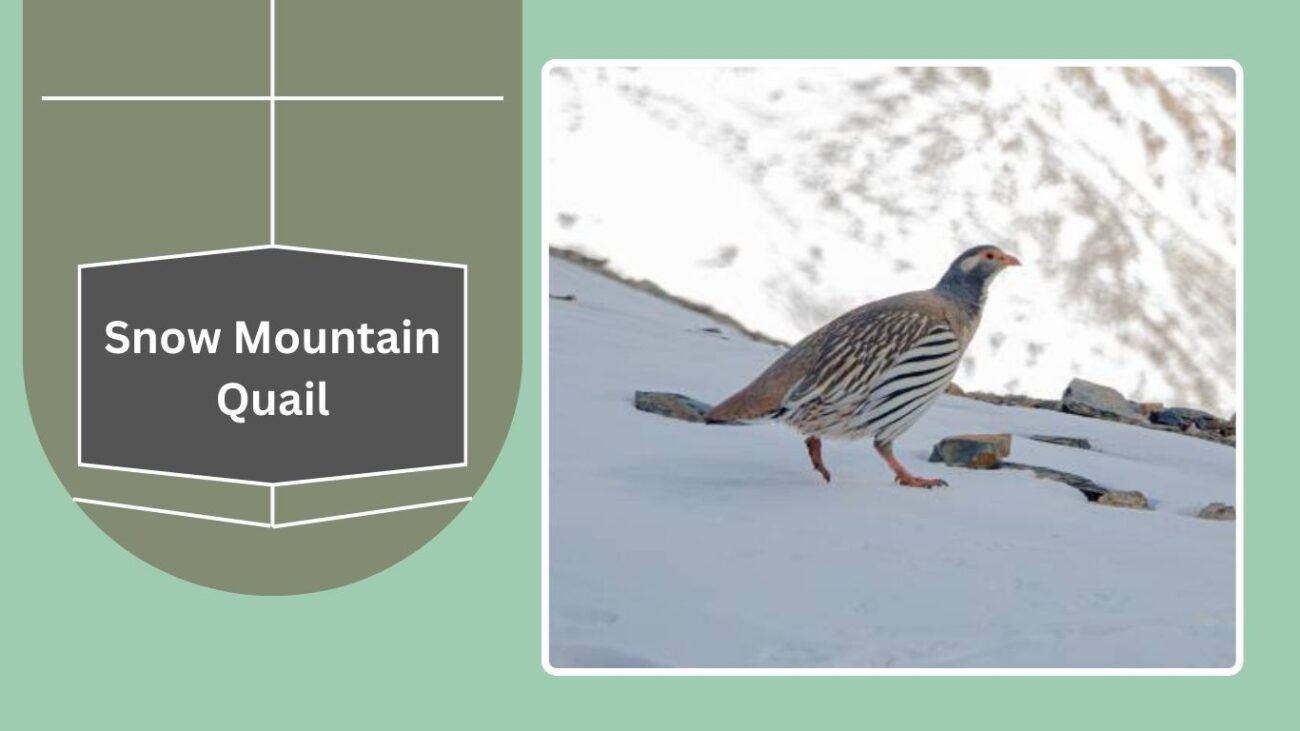
The Snow Mountain Quail (Synoicus monorthonyx) is a high-altitude species endemic to the Snow Mountains of western New Guinea. It is one of the least-studied quails due to its remote habitat.
Identification
- Scientific name: Synoicus monorthonyx
- Appearance: Compact body, mottled brown and gray plumage with black barring, short wings, and a pale eyebrow stripe. Both sexes look alike.
- Size: 18–20 cm (7–8 in)
- Weight: 100–120 g
Habitat and Range
They inhabit alpine grasslands, heathlands, and scrubby slopes above 3,000 meters in the Snow Mountains. The harsh environment makes them highly specialized for cold, high-altitude life.
Behavior and Diet
Snow Mountain Quails are ground dwellers, staying close to tussock grasses and shrubs. Their diet consists of alpine grasses, seeds, berries, and insects found in highland soils. They are secretive and rely on camouflage to avoid predators.
Reproduction
Breeding is believed to occur during the warmer months of the highland climate. Females lay 4–6 eggs in hidden grass nests, and chicks are precocial, leaving the nest within hours of hatching.
20. New Zealand Quail (Extinct)
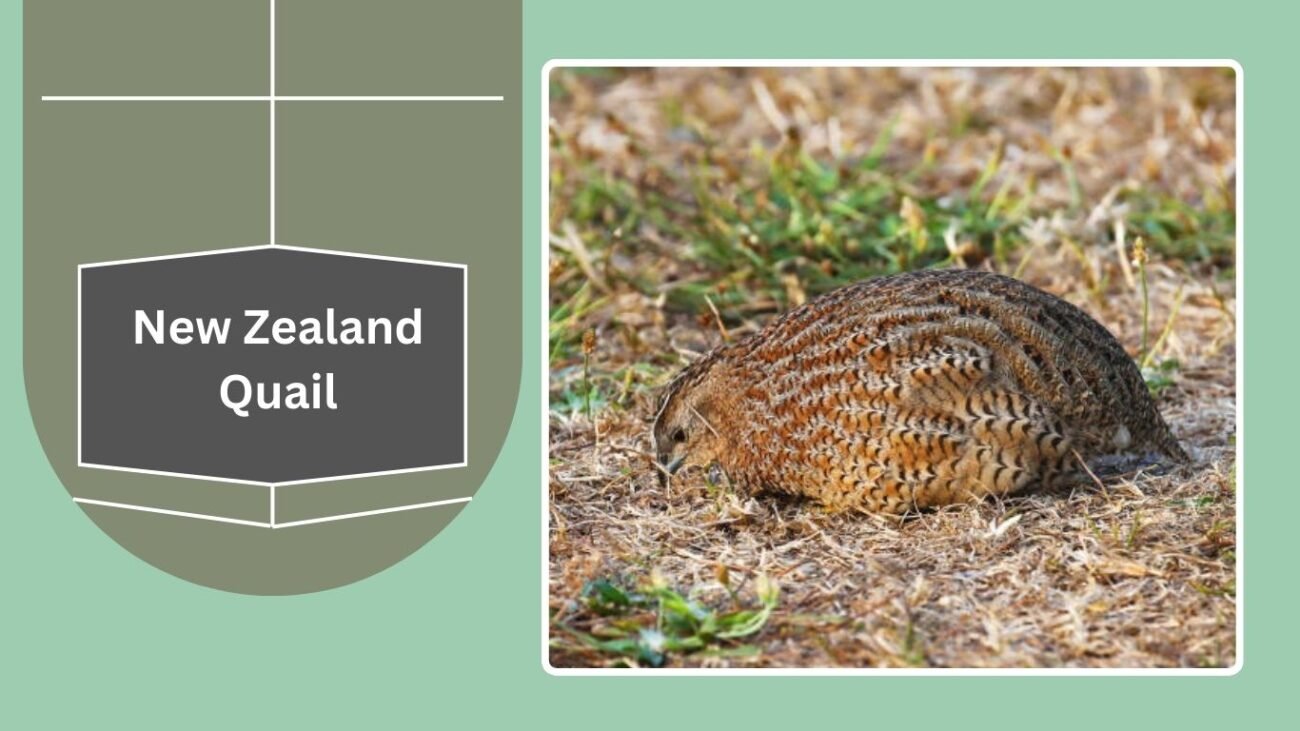
The New Zealand Quail (Coturnix novaezelandiae) was once widespread across New Zealand but became extinct in the late 19th century due to overhunting and habitat destruction.
Identification
- Scientific name: Coturnix novaezelandiae
- Appearance: Small, mottled brown bird with streaked plumage, resembling the Brown Quail but slightly smaller. Males were darker, females lighter with more distinct streaking.
- Size: 18–20 cm (7–8 in)
- Weight: Estimated 90–110 g
Habitat and Range
Historically found across New Zealand’s grasslands, fern country, and scrublands. They thrived in open habitats but declined rapidly after European colonization.
Behavior and Diet
They were ground-dwelling birds feeding on seeds, grass shoots, and insects. Observations suggest they lived in pairs or small groups, relying on dense cover for safety.
Reproduction
Nests were simple scrapes lined with grass. Females likely laid 6–8 eggs per clutch. Like other quails, chicks were precocial, though little is recorded about their exact breeding habits before extinction.
21. Black-throated Bobwhite
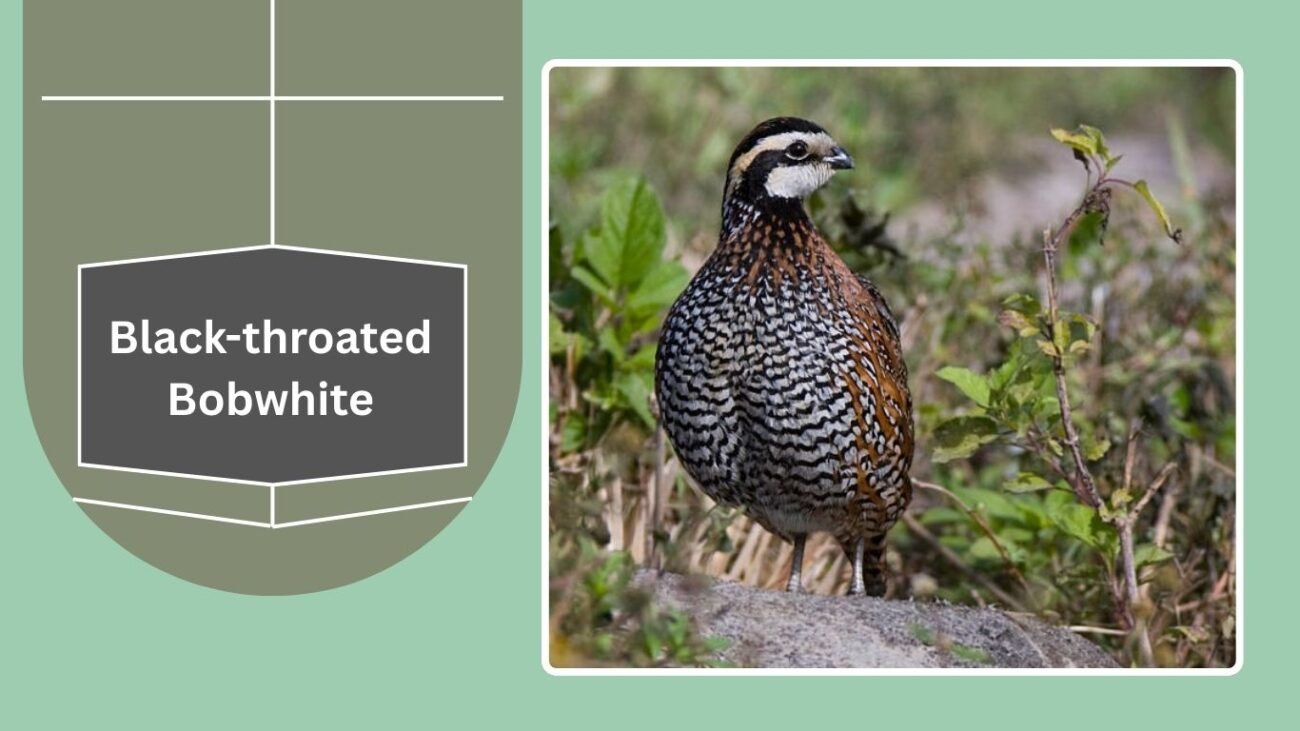
The Black-throated Bobwhite (Colinus nigrogularis) is a tropical quail species closely related to the Northern Bobwhite but with a darker and more striking throat pattern.
Identification
- Scientific name: Colinus nigrogularis
- Appearance: Males feature a bold black throat and face outlined with white, chestnut breast, and mottled brown back. Females have buff-colored throats and less defined facial markings.
- Size: 20–24 cm (8–9.5 in)
- Weight: 160–190 g
Habitat and Range
They are found in scrublands, savannas, and dry forests of Mexico, Belize, Honduras, and Guatemala.
Behavior and Diet
Black-throated Bobwhites live in small coveys, feeding mainly on seeds, grass shoots, and insects. They are more vocal than some related species, with loud calls used for communication.
Reproduction
Females lay 8–12 eggs in shallow ground nests concealed by grass. Chicks hatch precocial and remain with the covey for protection.
22. Spot-bellied Bobwhite
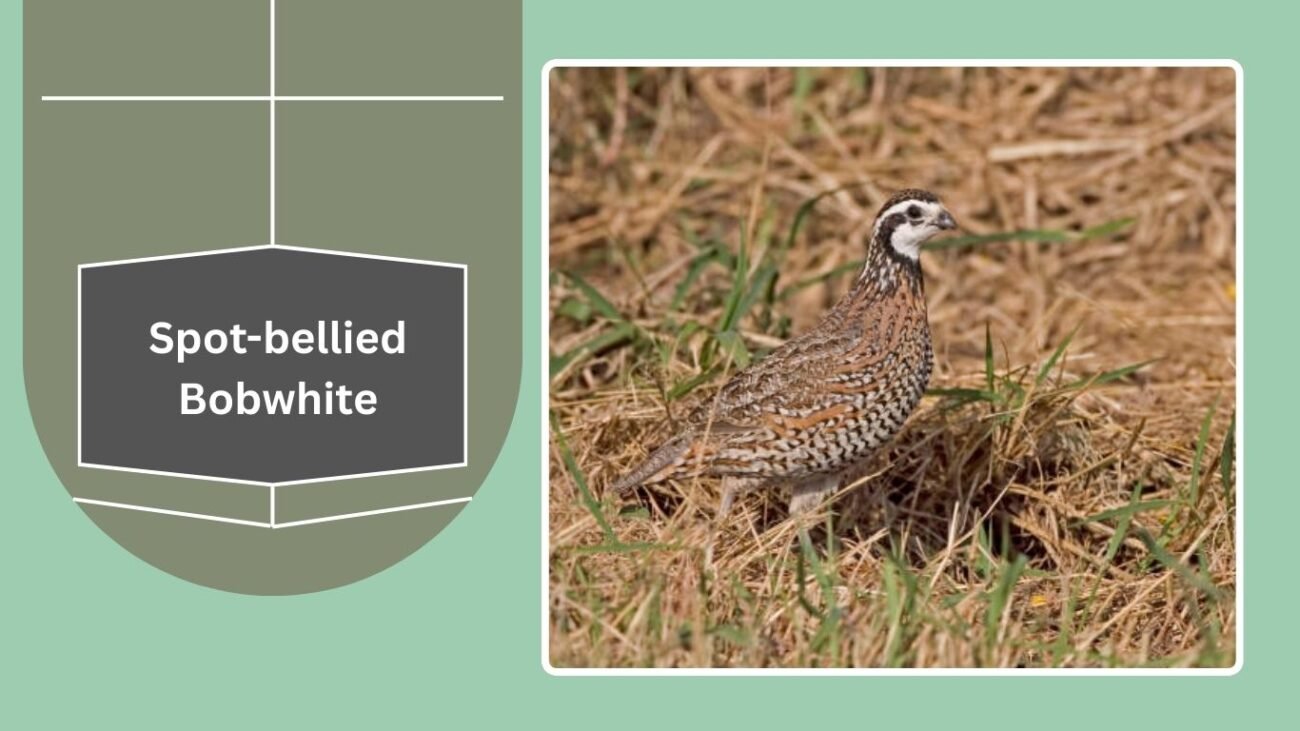
The Spot-bellied Bobwhite (Colinus leucopogon) is another member of the bobwhite group, native to Central America and distinguished by the spotting on its underparts.
Identification
- Scientific name: Colinus leucopogon
- Appearance: Males have a white throat bordered by black, spotted chest and belly, and mottled brown body. Females are duller with buff throats and lighter spotting.
- Size: 21–24 cm (8–9.5 in)
- Weight: 160–200 g
Habitat and Range
They inhabit grassy woodlands, scrub, and agricultural fields from Honduras and Nicaragua south into Costa Rica and Panama.
Behavior and Diet
Spot-bellied Bobwhites are ground feeders, consuming grass seeds, small grains, fruits, and insects. They are usually seen in coveys, foraging actively in open clearings.
Reproduction
Their nests are hidden in dense grass or low shrubs. Clutch size ranges from 8–14 eggs, and chicks are precocial, joining adults immediately after hatching.
23. Tawny-breasted Partridge (often called Quail)
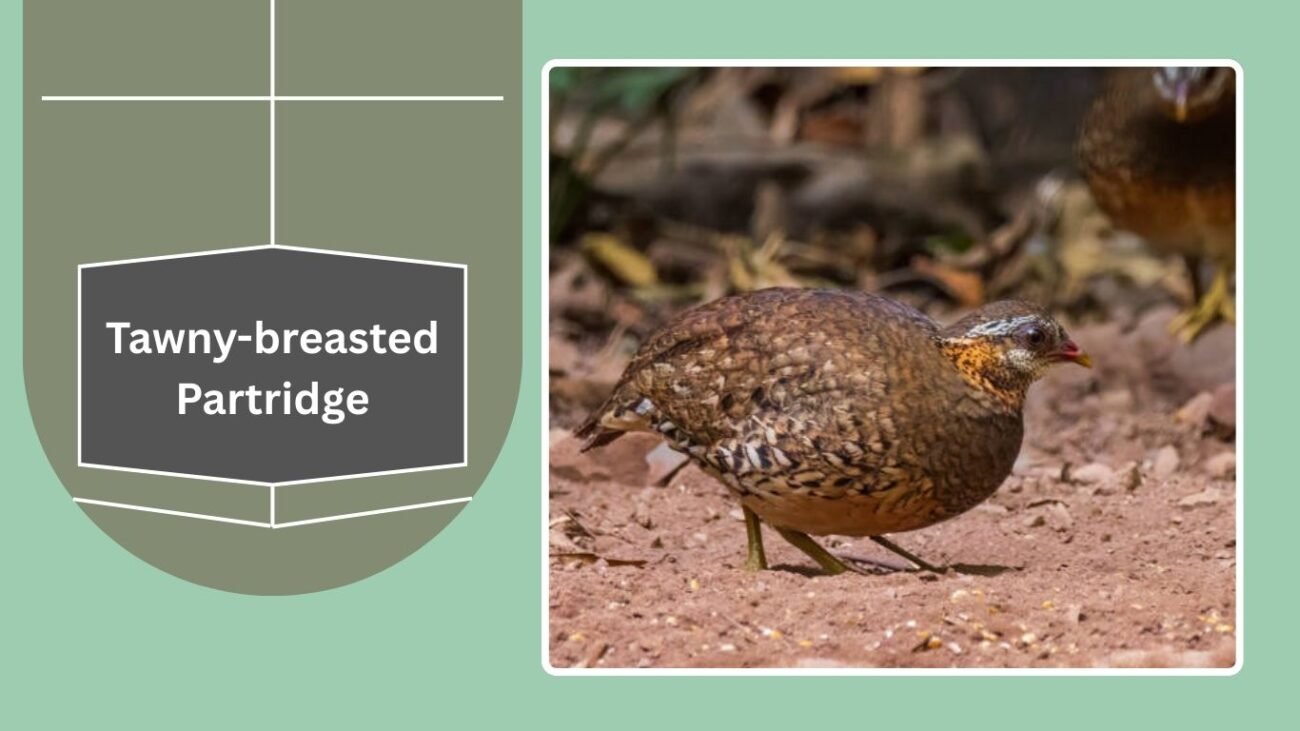
The Tawny-breasted Partridge (Arborophila campbelli), sometimes referred to as a quail due to its size and ground-dwelling habits, is a Southeast Asian species with rich chestnut plumage.
Identification
- Scientific name: Arborophila campbelli
- Appearance: Warm tawny breast, brown back with fine mottling, pale throat bordered by dark markings. Both sexes look similar.
- Size: 27–30 cm (10.5–12 in)
- Weight: 250–300 g
Habitat and Range
They inhabit subtropical and tropical forests in peninsular Malaysia and southern Thailand, preferring dense understory.
Behavior and Diet
Tawny-breasted Partridges forage on the forest floor for seeds, fallen fruits, shoots, and small insects. They are shy and move in pairs or small family groups.
Reproduction
Nests are built on the ground, hidden among leaf litter or grasses. Females typically lay 4–6 eggs per clutch.
24. Singing Quail
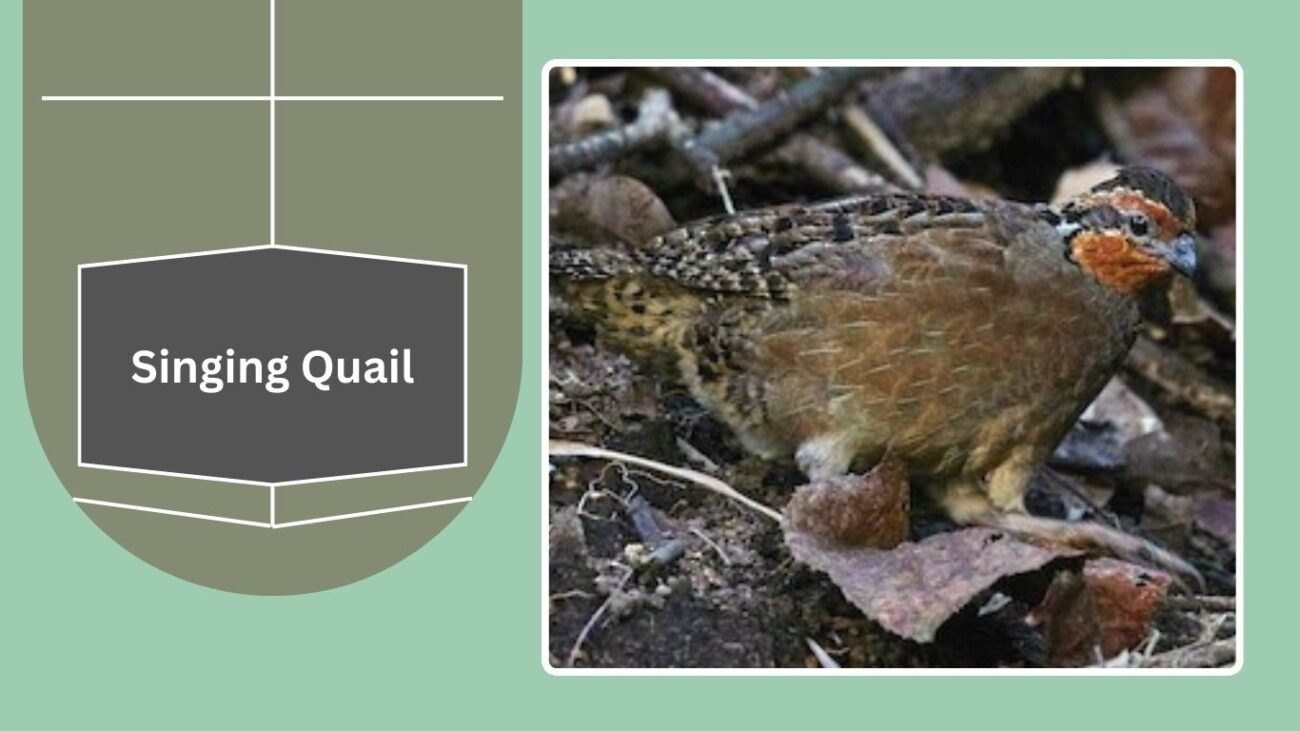
The Singing Quail (Dactylortyx thoracicus) is named for its loud, melodious calls, often heard in the forests of Central America.
Identification
- Scientific name: Dactylortyx thoracicus
- Appearance: Mottled brown body with bold white throat and breast markings, reddish flanks, and short tail. Females are similar but less vividly marked.
- Size: 23–28 cm (9–11 in)
- Weight: 200–250 g
Habitat and Range
They are found in humid forests, scrub, and plantations from Mexico to Honduras.
Behavior and Diet
Singing Quails forage in family groups, feeding on seeds, insects, and tender shoots. Their vocalizations are complex and used for communication within coveys.
Reproduction
Breeding occurs during the rainy season. Females lay 6–10 eggs in concealed ground nests, and both parents may help rear the chicks.
25. Stone Partridge (often grouped with Quails)
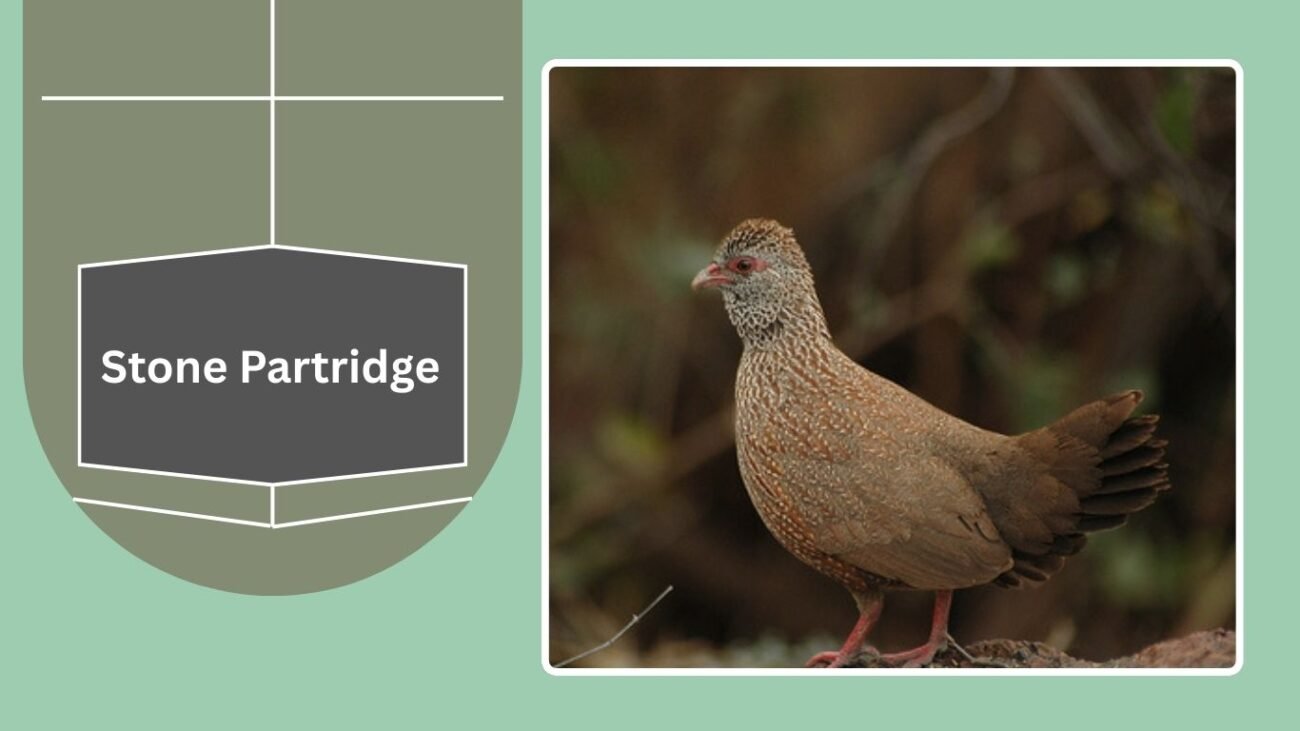
The Stone Partridge (Ptilopachus petrosus), though more closely related to African spurfowls, is often grouped with quails due to its size and ground-dwelling lifestyle. It is a hardy bird of rocky hillsides and savannas.
Identification
- Scientific name: Ptilopachus petrosus
- Appearance: Dark brown body with fine black-and-white streaking, red bill, and red legs. Both sexes look alike.
- Size: 28–30 cm (11–12 in)
- Weight: 250–300 g
Habitat and Range
Native to West and Central Africa, they inhabit rocky slopes, savannas, and scrub-covered hillsides.
Behavior and Diet
They live in pairs or small groups, feeding on seeds, berries, tubers, and insects. Their loud whistling calls echo across rocky landscapes.
Reproduction
Stone Partridges nest in ground scrapes sheltered by rocks or grass. Females lay 4–6 eggs, and both parents may help in raising the brood.
26. Buff-breasted Buttonquail
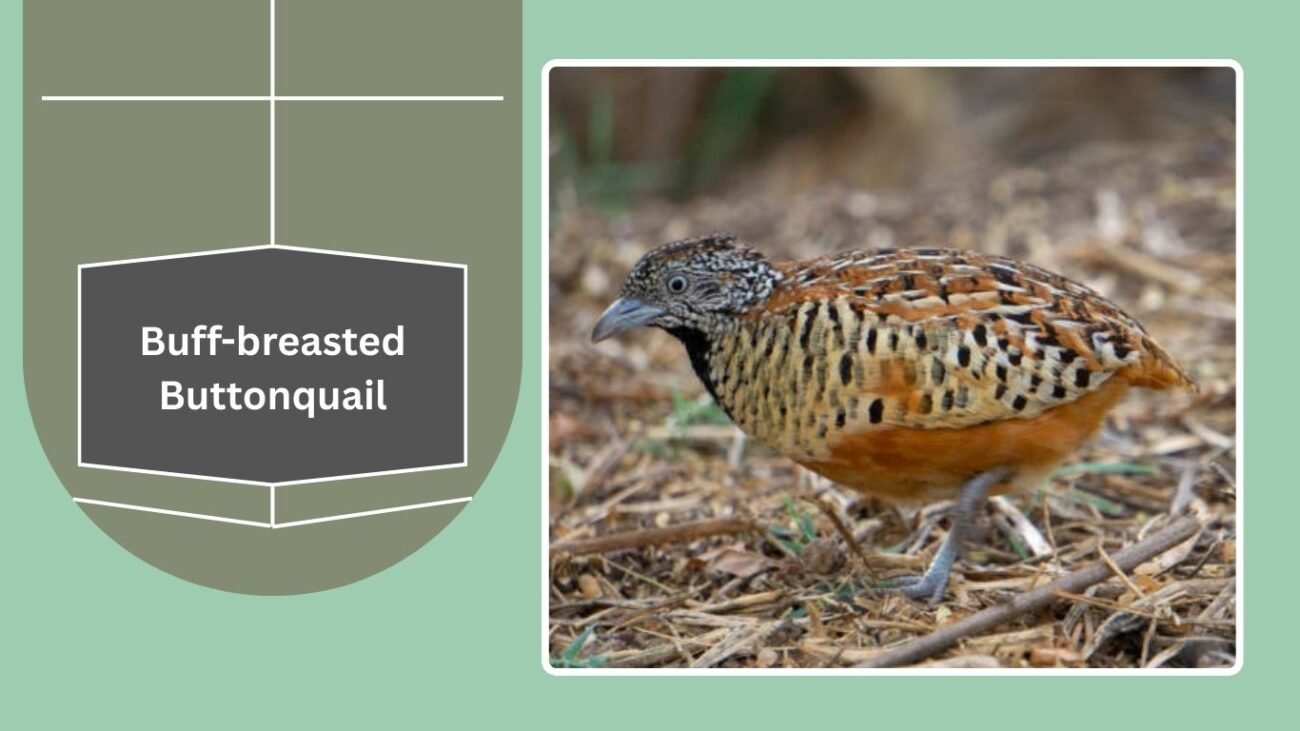
The Buff-breasted Buttonquail (Turnix olivii) is a rare and poorly known bird, the largest of the buttonquails, found only in northeastern Australia.
Identification
- Scientific name: Turnix olivii
- Appearance: Buff-colored breast, mottled brown back, pale belly, and rounded wings. Females are larger and more brightly marked than males.
- Size: 18–20 cm (7–8 in)
- Weight: 80–100 g
Habitat and Range
They inhabit grasslands and lightly wooded savannas of Cape York Peninsula in Queensland, Australia.
Behavior and Diet
Buff-breasted Buttonquails are elusive, often flushing only when disturbed. They feed on seeds, grass shoots, and insects, foraging quietly in tall grass.
Reproduction
Like other buttonquails, females are more dominant and initiate courtship. They lay 4–5 eggs in a grass-lined nest, which are incubated mainly by the male.
27. Madagascar Buttonquail
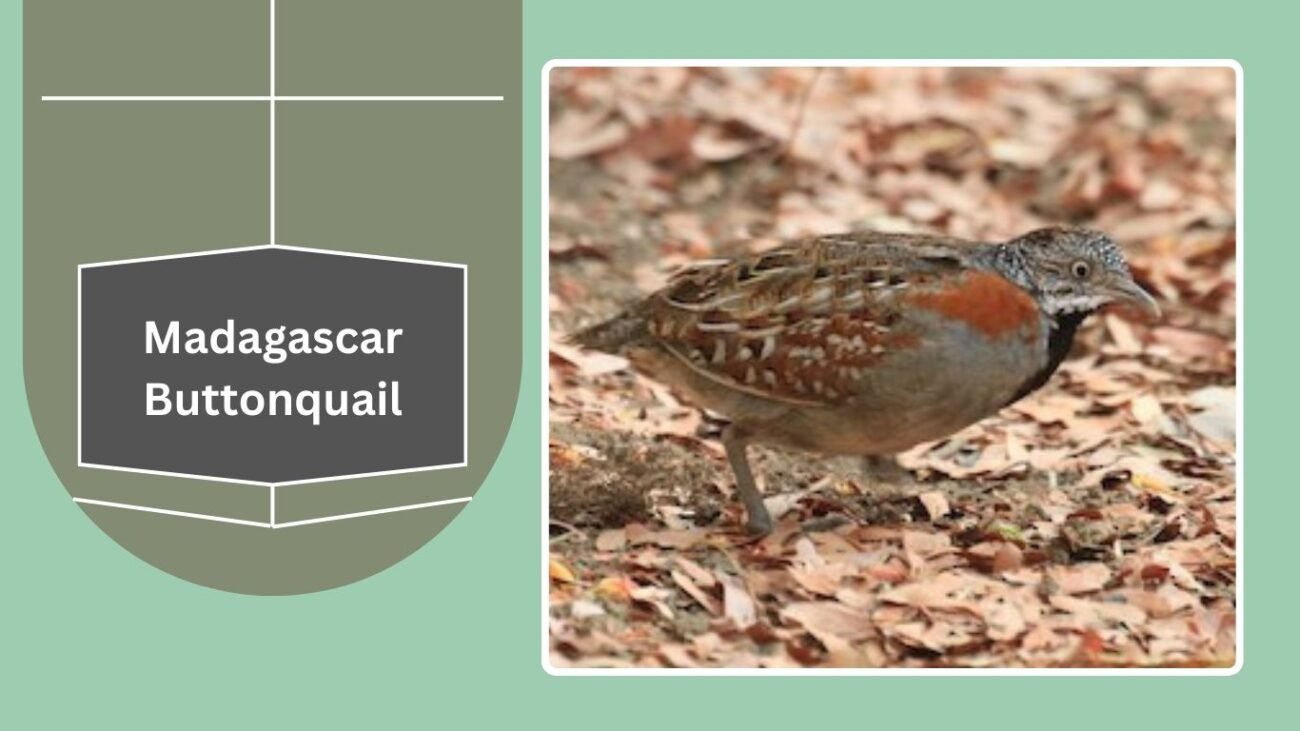
The Madagascar Buttonquail (Turnix nigricollis) is an endemic bird of Madagascar, belonging to the buttonquail family, which is often mistaken for true quails due to its small size and similar habits.
Identification
- Scientific name: Turnix nigricollis
- Appearance: Males and females differ noticeably; females are larger and more colorful with a black throat and spotted breast, while males are plainer brown with lighter underparts.
- Size: 16–18 cm (6–7 in)
- Weight: 50–65 g
Habitat and Range
They inhabit dry scrublands, grasslands, agricultural fields, and forest edges across Madagascar.
Behavior and Diet
Madagascar Buttonquails are ground-dwellers that prefer running to flying. Their diet includes seeds, small invertebrates, and green plant matter. They are shy birds, usually moving in pairs or small groups.
Reproduction
Unusually among birds, females are the more dominant sex, calling loudly to attract mates. After laying 4–6 eggs in a grass nest, the female leaves incubation and chick-rearing duties primarily to the male.