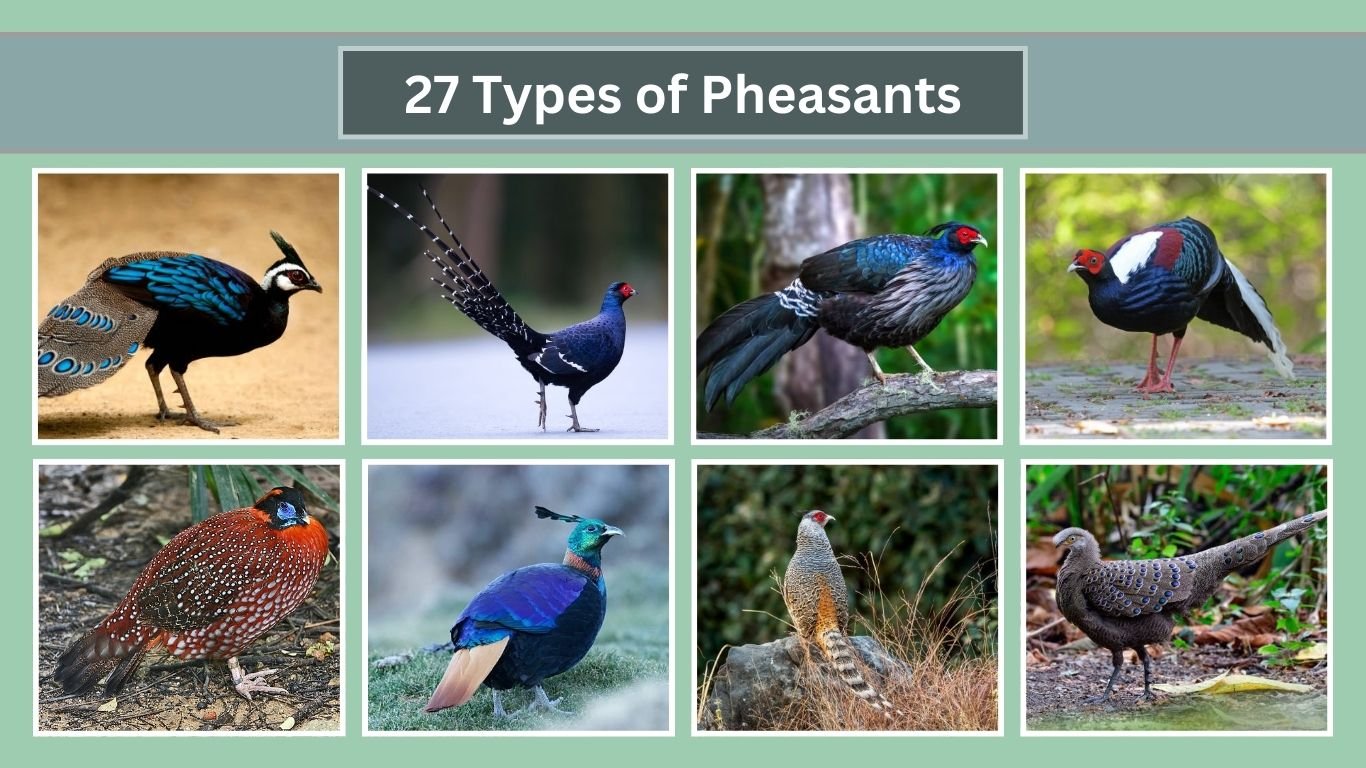
Pheasants are among the most colorful and diverse birds in the world, admired for their striking plumage, long tails, and elaborate courtship displays. Found mainly in Asia but introduced worldwide, they inhabit forests, grasslands, and mountainous regions. This guide explores 27 unique types of pheasants, highlighting their appearance, habitat, and behavior. From the well-known Common Pheasant to the rare Chinese Monal, each species showcases the beauty and diversity of this remarkable bird family.
1. Common Pheasant
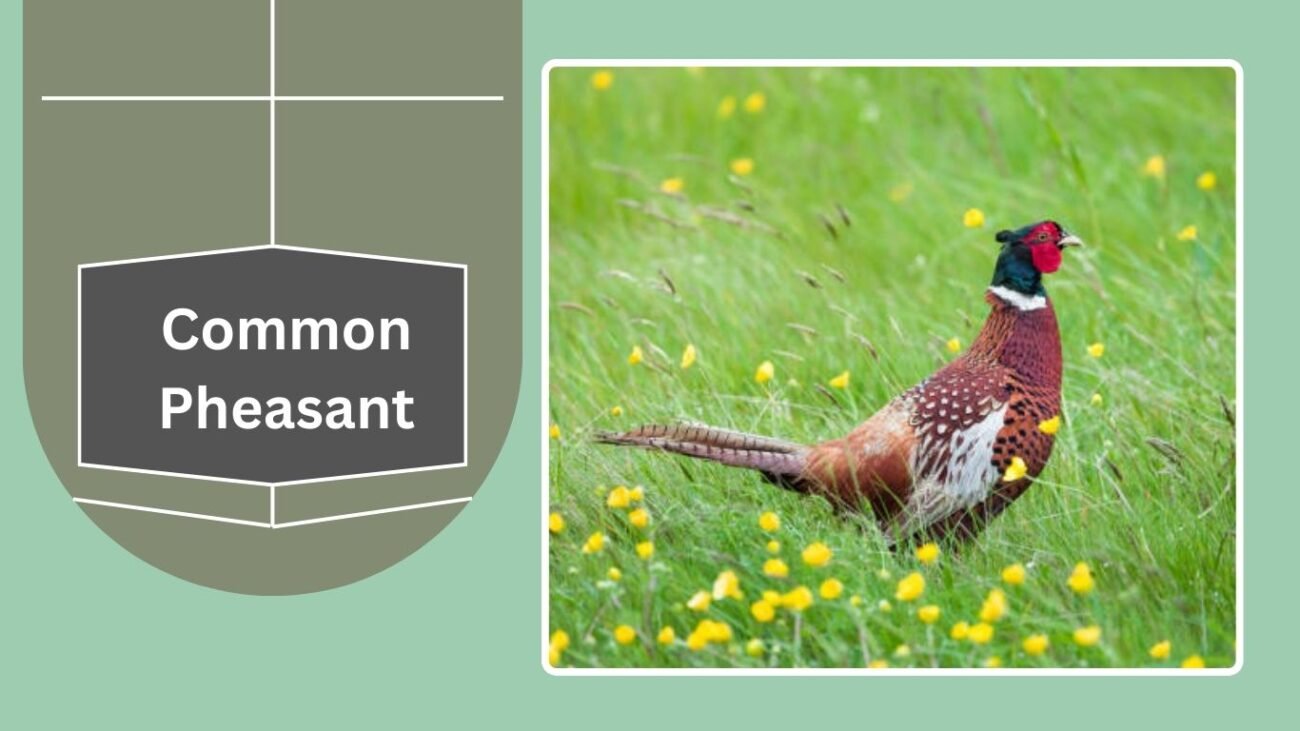
The Common Pheasant (Phasianus colchicus) is the most widespread pheasant species in the world, well-known for its adaptability and vibrant plumage. Native to Asia, it has been widely introduced to Europe and North America, mainly for hunting and ornamental purposes. Males are striking with iridescent feathers and long tails, while females are more camouflaged in brown tones for nesting protection.
Identification
- Scientific name: Phasianus colchicus
- Male plumage: Bright golden-brown body, green or blue head, red facial wattles, long barred tail
- Female plumage: Mottled brown and tan, shorter tail
- Size: 50–90 cm (20–35 in) in length, males much larger than females
Habitat and Range
Common Pheasants thrive in farmlands, grasslands, wood edges, and wetlands. They are native to Asia but now inhabit Europe, North America, and parts of New Zealand due to human introduction.
Behavior and Diet
They are ground-dwelling birds that forage for seeds, grains, fruits, and insects. During the breeding season, males display dramatically to attract females. Pheasants are strong runners and prefer running over flying unless threatened.
2. Golden Pheasant
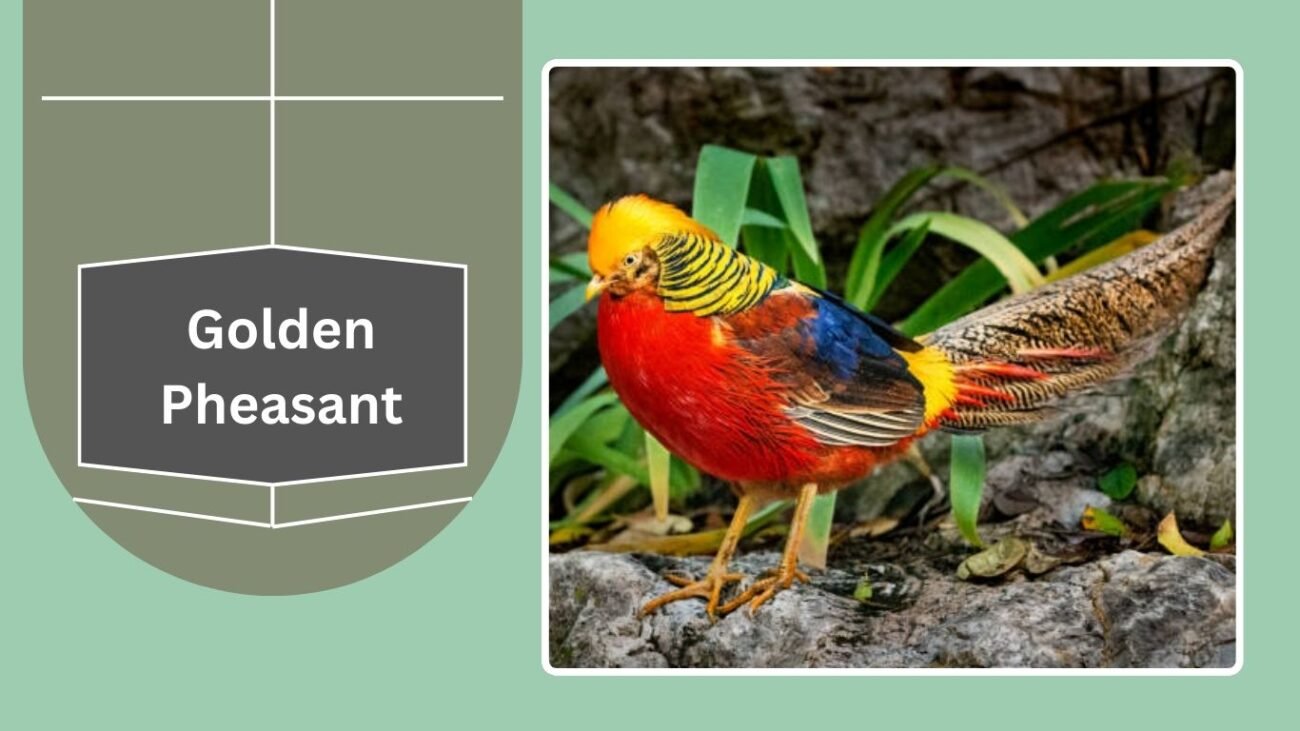
The Golden Pheasant (Chrysolophus pictus) is among the most visually stunning pheasants, admired for its brilliant colors and ornamental beauty. Native to the forests and mountainous regions of western China, it has also been introduced to parts of Europe. Males are especially eye-catching with vivid golden, red, and green feathers.
Identification
- Scientific name: Chrysolophus pictus
- Male plumage: Golden-yellow crest, bright red underparts, green upper back, long golden and brown barred tail
- Female plumage: Mottled brown, smaller crest, shorter tail
- Size: 90–105 cm (35–41 in), tail making up two-thirds of length
Habitat and Range
Golden Pheasants prefer dense forests, bamboo thickets, and woodland edges in mountainous areas. They are mainly found in China but small feral populations exist in the UK and elsewhere in Europe.
Behavior and Diet
These birds forage on the ground for seeds, leaves, berries, and small insects. Males perform elaborate displays, spreading their cape-like golden ruff to attract females.
Comparison with Next Species
While the Golden Pheasant is vivid with warm golden and red tones, the Lady Amherst’s Pheasant showcases a more elegant contrast of black, white, and green with intricate feather patterns.
3. Lady Amherst’s Pheasant
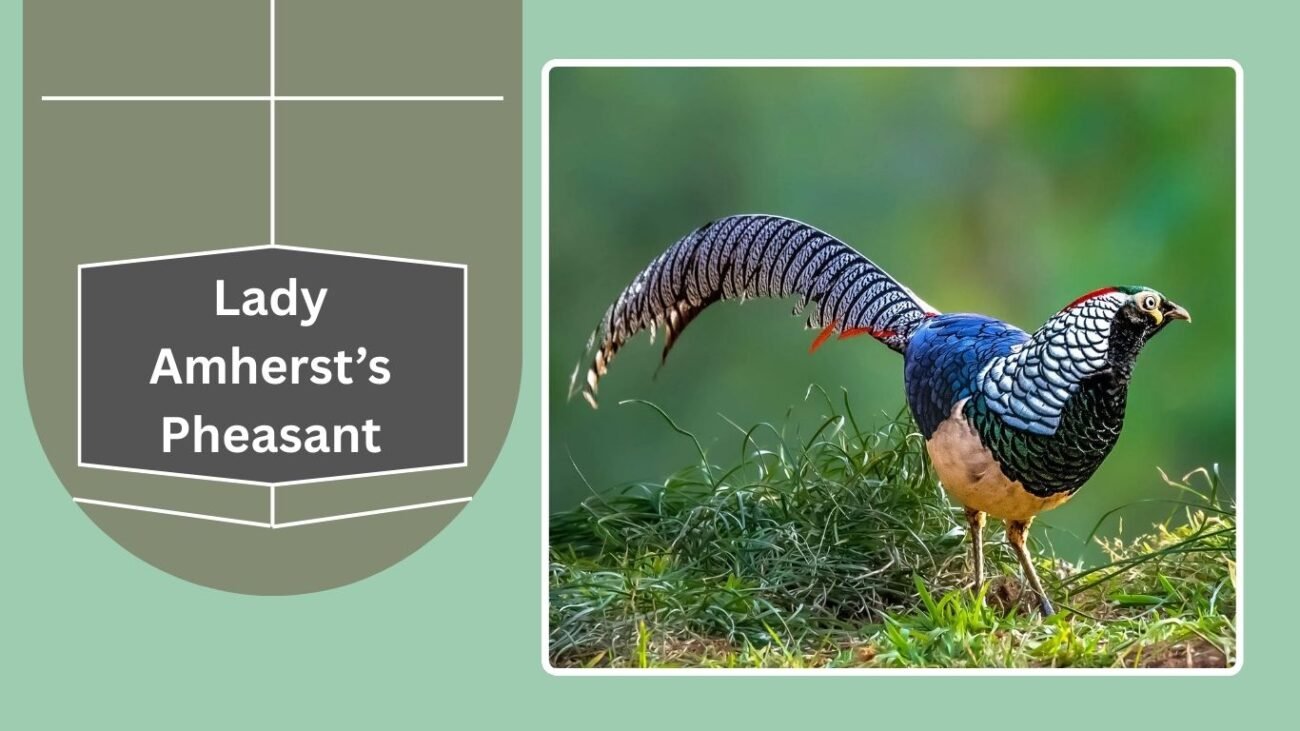
Lady Amherst’s Pheasant (Chrysolophus amherstiae) is a striking species known for its long tail feathers and contrasting black, white, green, and red colors. Closely related to the Golden Pheasant, it is native to southwestern China and northern Myanmar, though small populations were once found in England.
Identification
- Scientific name: Chrysolophus amherstiae
- Male plumage: White cape with black stripes, metallic green back, long black-and-white barred tail, red rump
- Female plumage: Brown mottled feathers for camouflage
- Size: 100–120 cm (39–47 in), with tail length dominating overall size
Habitat and Range
They prefer dense forests, bamboo groves, and mountainous regions. Native to Asia, feral populations have declined outside their natural range.
Behavior and Diet
Lady Amherst’s Pheasants are shy and elusive, spending most of their time foraging on the forest floor for seeds, berries, and insects. Males display their ornate cape and long tail during courtship.
4. Reeves’s Pheasant
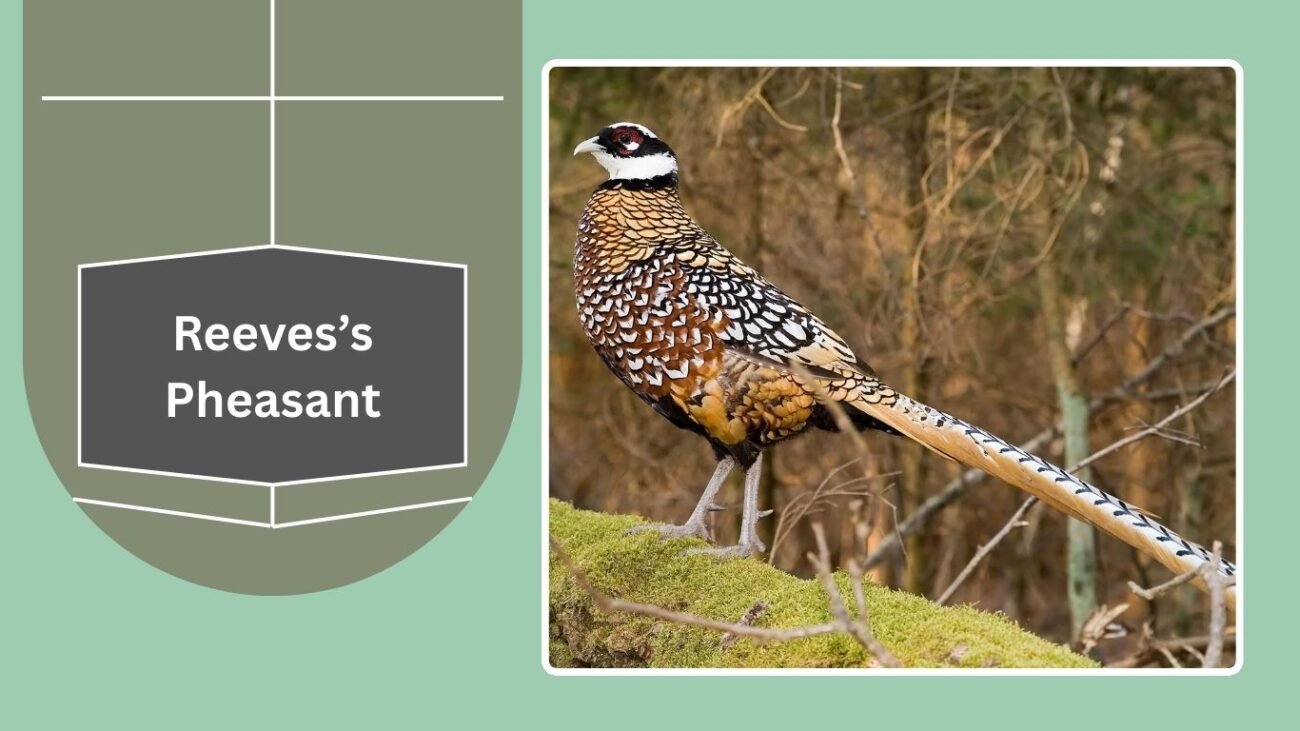
Reeves’s Pheasant (Syrmaticus reevesii) is famous for its exceptionally long tail and striking golden-brown plumage with bold black and white markings. Native to central and eastern China, it is one of the most spectacular pheasants in appearance and size.
Identification
- Scientific name: Syrmaticus reevesii
- Male plumage: Golden head, white throat, black face, scaly golden-brown body, extremely long barred tail (up to 2.4 m / 8 ft)
- Female plumage: Brown mottled, shorter tail, camouflaged
- Size: 150–210 cm (59–83 in) including tail
Habitat and Range
Reeves’s Pheasants live in mixed forests, shrublands, and hilly regions of China. They have been introduced in parts of Europe for ornamental purposes.
Behavior and Diet
They forage for seeds, berries, buds, and insects. Males are territorial and highly aggressive during the breeding season, often chasing rivals.
Comparison with Next Species
Reeves’s Pheasant is larger and more powerful compared to the silver-colored elegance of the Silver Pheasant.
5. Silver Pheasant
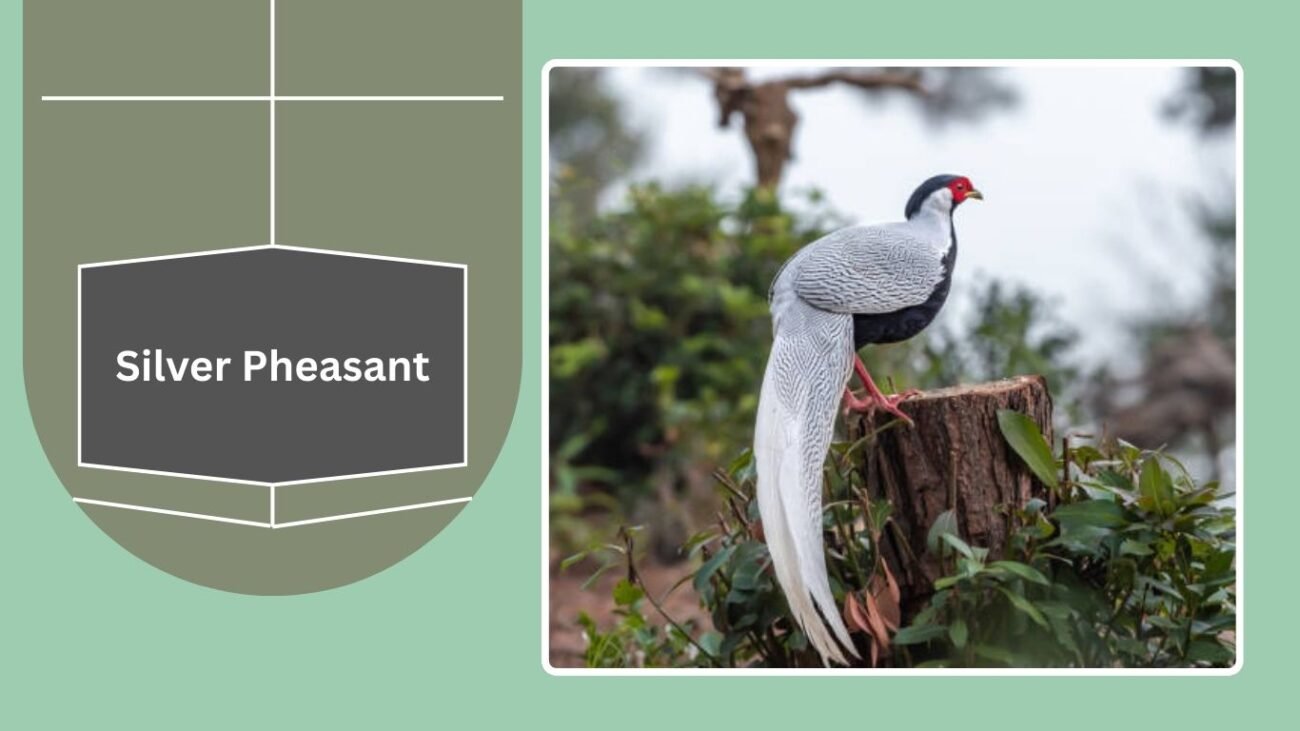
The Silver Pheasant (Lophura nycthemera) is a graceful bird recognized for its striking black-and-white plumage and red facial skin. It is widely found across Southeast Asia and southern China, often kept in aviaries for its ornamental beauty.
Identification
- Scientific name: Lophura nycthemera
- Male plumage: White body feathers patterned with fine black lines, glossy black underparts, red face wattles, long white tail
- Female plumage: Brown overall with shorter tail
- Size: 90–125 cm (35–49 in), males larger than females
Habitat and Range
Silver Pheasants prefer evergreen forests, bamboo thickets, and hilly terrains across Southeast Asia, including China, Vietnam, Laos, and Thailand.
Behavior and Diet
They are ground foragers, feeding on roots, shoots, seeds, and insects. Males are territorial and vocal, using calls and displays to ward off rivals.
6. Kalij Pheasant
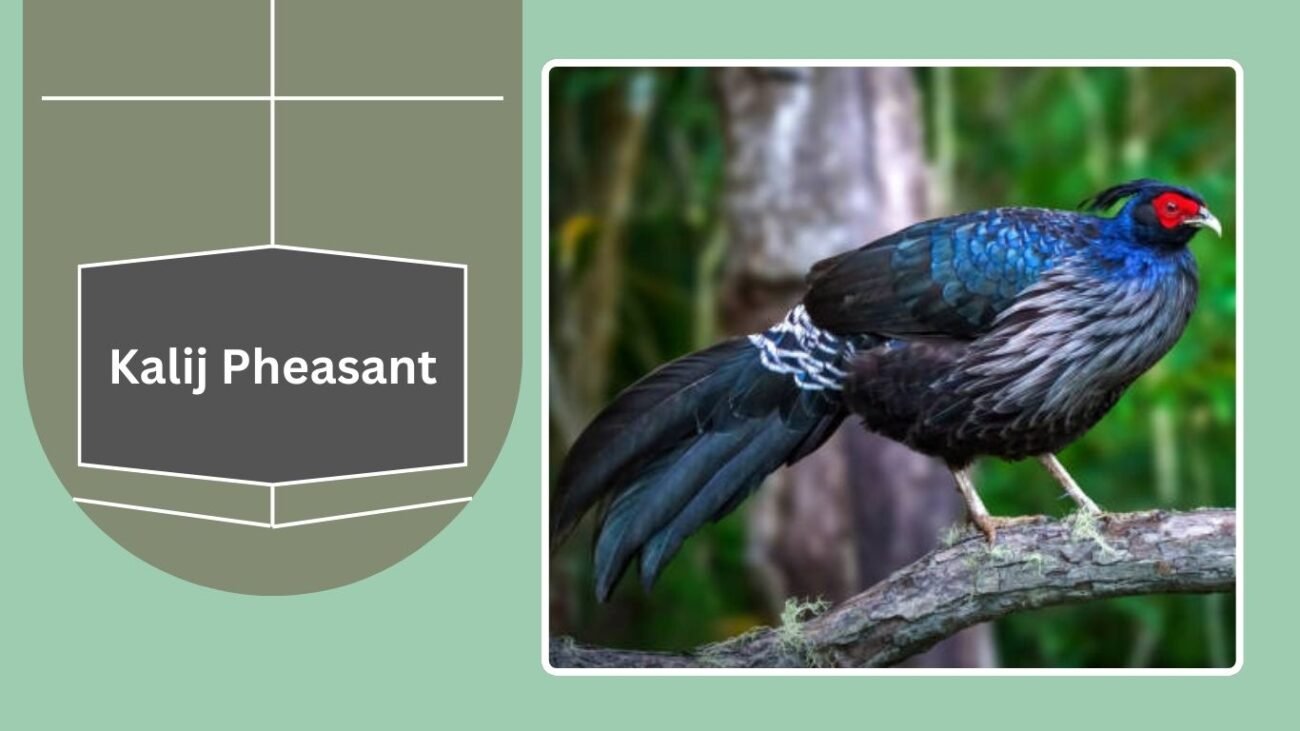
The Kalij Pheasant (Lophura leucomelanos) is a medium-sized pheasant known for its dark plumage with a bluish or metallic sheen. It is widely distributed across the Himalayan foothills and northern India, extending into Nepal, Bhutan, and Myanmar.
Identification
- Scientific name: Lophura leucomelanos
- Male plumage: Glossy blackish-blue feathers, white rump (varies by subspecies), red facial skin
- Female plumage: Brown mottled, shorter tail, less glossy
- Size: 63–74 cm (25–29 in) in length
Habitat and Range
Kalij Pheasants prefer subtropical and temperate forests, scrublands, and areas near villages in the Himalayan region.
Behavior and Diet
They are ground feeders, eating roots, tubers, berries, seeds, and small insects. Males can be quite bold, sometimes seen near human settlements.
7. Mikado Pheasant
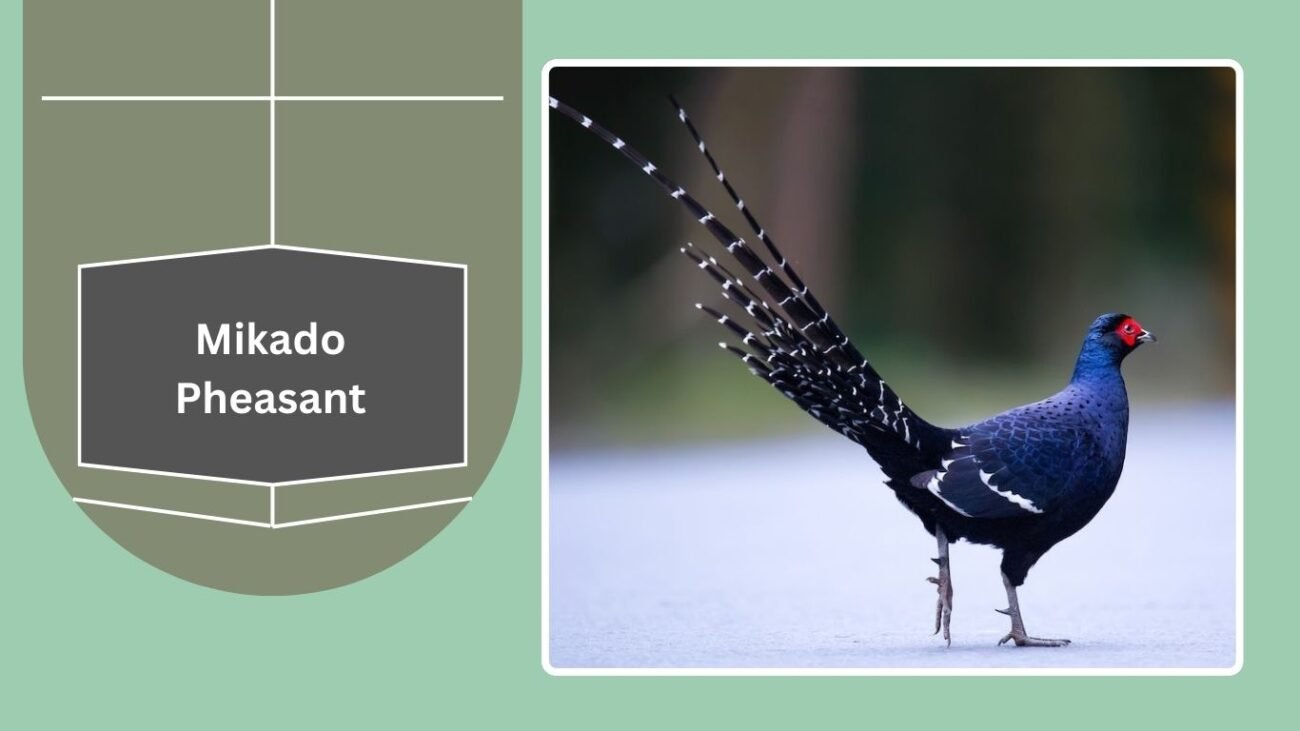
The Mikado Pheasant (Syrmaticus mikado) is a rare and elegant pheasant endemic to the mountainous forests of Taiwan. It is considered a national bird of Taiwan and is admired for its deep bluish-black plumage.
Identification
- Scientific name: Syrmaticus mikado
- Male plumage: Dark blue to black body, white wing stripes, long black tail with white bars, red facial wattles
- Female plumage: Brown with fine mottling, shorter barred tail
- Size: 70–80 cm (27–31 in), with males being larger
Habitat and Range
Mikado Pheasants inhabit montane forests, bamboo groves, and grassy slopes at elevations between 2,000–3,200 meters in Taiwan.
Behavior and Diet
They feed on plant shoots, berries, leaves, seeds, and insects. Known for their shy and elusive nature, they are rarely seen in the wild, often hiding in dense cover.
8. Hume’s Pheasant
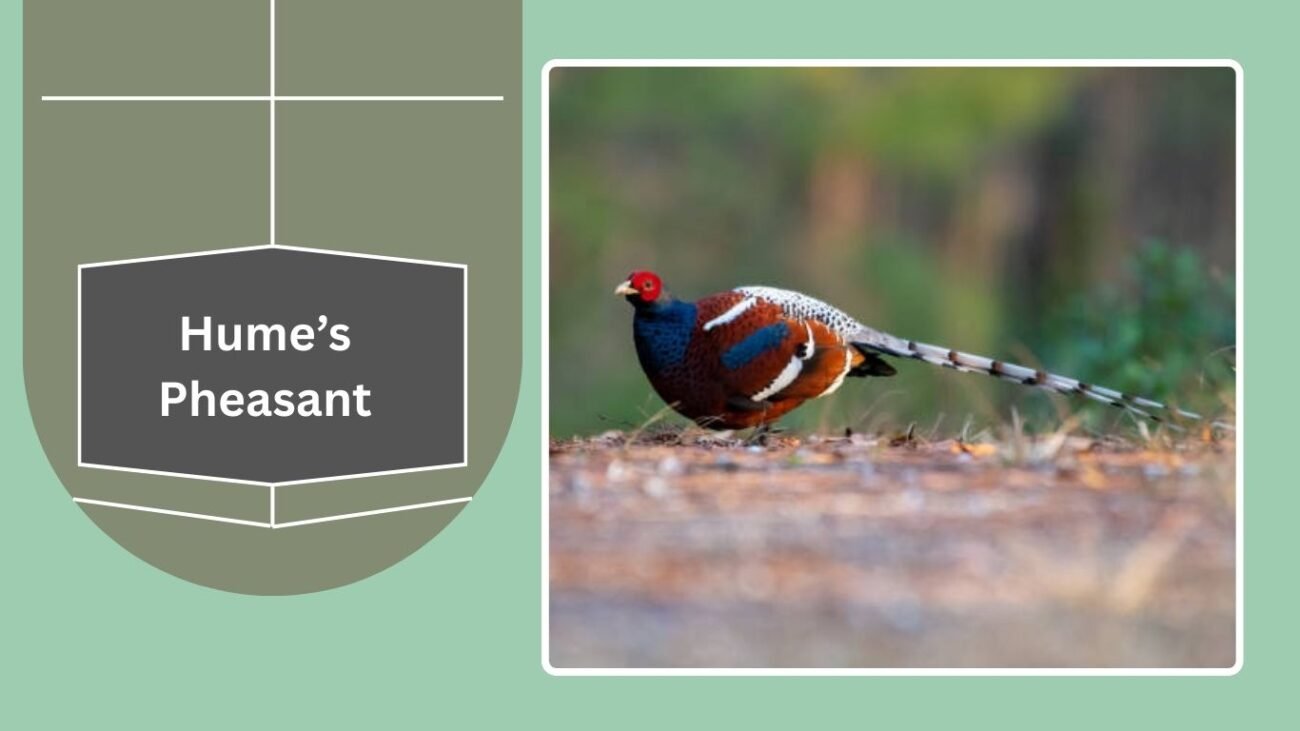
Hume’s Pheasant (Syrmaticus humiae), also called the Mrs. Hume’s Pheasant, is a beautiful but elusive bird found in forested regions of northeastern India, Myanmar, and parts of China. It is named after Mary Ann Hume, the wife of naturalist Allan Octavian Hume.
Identification
- Scientific name: Syrmaticus humiae
- Male plumage: Chestnut-brown body, bluish-grey wings, white wing patch, long barred tail, red facial wattles
- Female plumage: Brown mottled with buff markings, shorter tail
- Size: 80–90 cm (31–35 in) in length
Habitat and Range
They inhabit evergreen and mixed pine forests with bamboo understory, usually at mid to high elevations.
Behavior and Diet
Hume’s Pheasants feed on seeds, roots, berries, and insects. They are shy ground-dwellers, preferring to forage under cover, and fly only when disturbed.
9. Siamese Fireback Pheasant
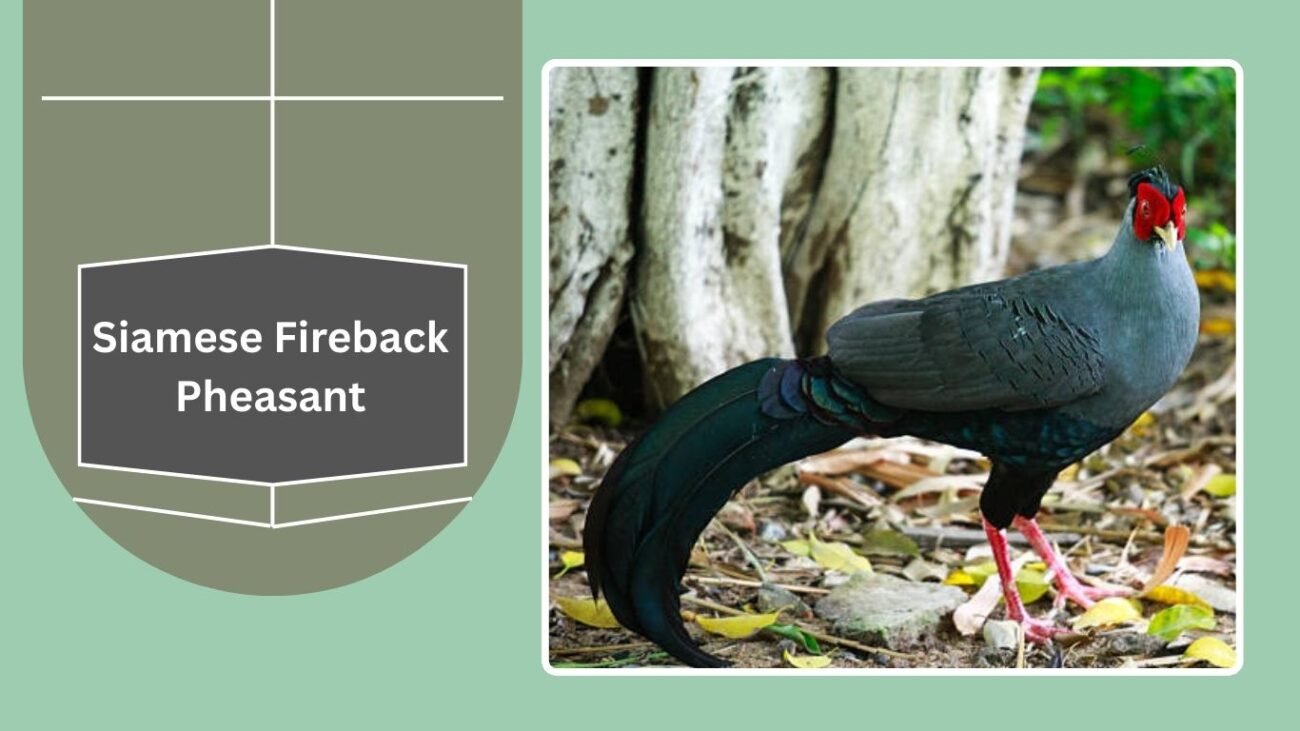
The Siamese Fireback (Lophura diardi) is the national bird of Thailand and is known for its metallic plumage and elegant tail. It inhabits lowland forests of Southeast Asia.
Identification
- Scientific name: Lophura diardi
- Male plumage: Shiny grey body, metallic green tail, red facial wattles, bright yellow legs, distinctive long crest
- Female plumage: Brown mottled, less striking, shorter tail
- Size: 80–90 cm (31–35 in)
Habitat and Range
Native to Cambodia, Laos, Vietnam, and Thailand, they thrive in evergreen and deciduous forests, especially in protected reserves.
Behavior and Diet
They forage on the ground for seeds, shoots, fruits, and small insects. Males are territorial and perform displays during courtship, showing off their crest and tail feathers.
10. Edward’s Pheasant
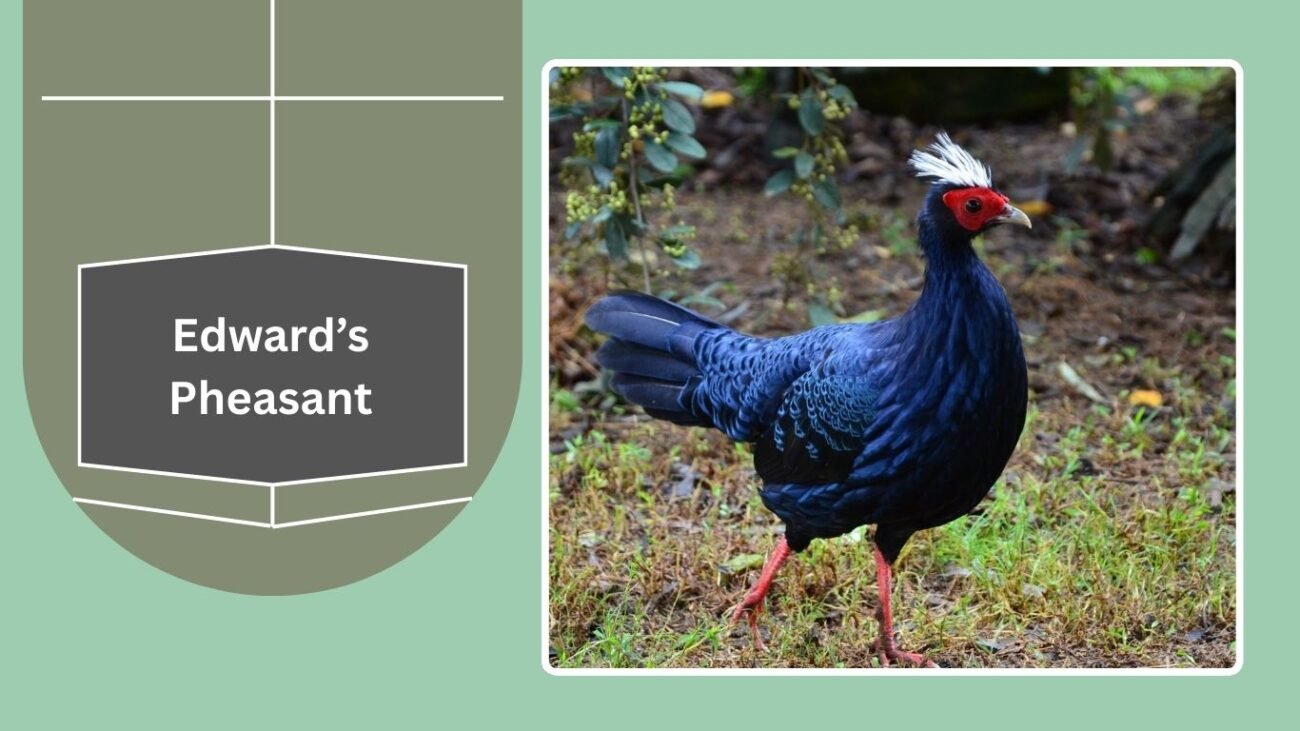
Edward’s Pheasant (Lophura edwardsi) is a critically endangered species native to central Vietnam. It is named after the French ornithologist Alphonse Milne-Edwards and is admired for its glossy, dark-blue plumage.
Identification
- Scientific name: Lophura edwardsi
- Male plumage: Deep blue body feathers with metallic sheen, white crest, crimson facial wattles, short tail
- Female plumage: Brown overall with lighter markings, shorter crest
- Size: 58–65 cm (23–26 in) in length
Habitat and Range
Edward’s Pheasants are found in lowland forests of central Vietnam, though habitat loss has reduced their population severely.
Behavior and Diet
They are shy ground birds, feeding on fallen fruits, seeds, insects, and shoots. Conservation breeding programs are ongoing to protect this rare species.
11. Vietnamese Pheasant
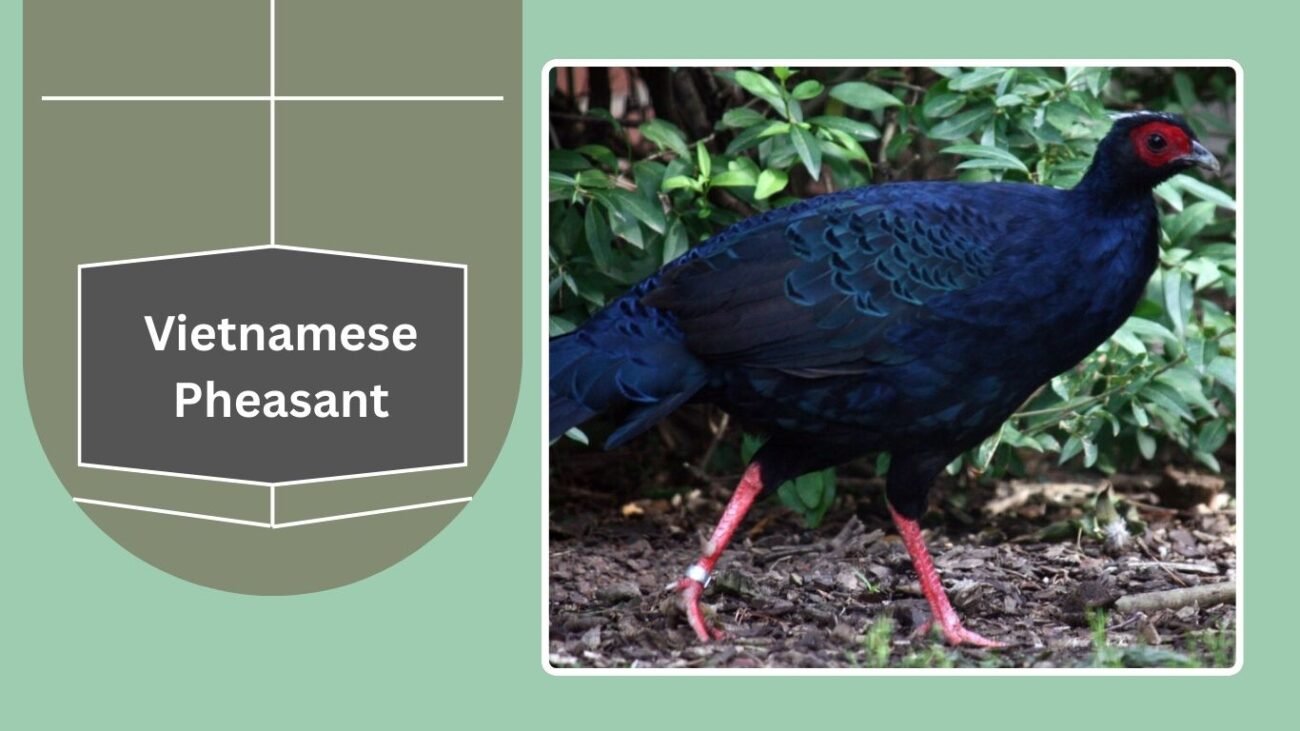
The Vietnamese Pheasant (Lophura hatinhensis), also known as the Imperial Pheasant, is a rare bird found only in a small region of central Vietnam. It is closely related to Edward’s Pheasant and often confused with it.
Identification
- Scientific name: Lophura hatinhensis
- Male plumage: Dark bluish-black body, white wing patches, red facial skin, long tail feathers
- Female plumage: Brown with mottled markings for camouflage
- Size: 60–70 cm (24–28 in) in length
Habitat and Range
This species inhabits subtropical forests in central Vietnam, particularly in the Hà Tĩnh and Quảng Bình provinces.
Behavior and Diet
Vietnamese Pheasants feed on seeds, fruits, berries, and insects while foraging on the forest floor. They are secretive and rare, making sightings extremely uncommon.
12. Swinhoe’s Pheasant
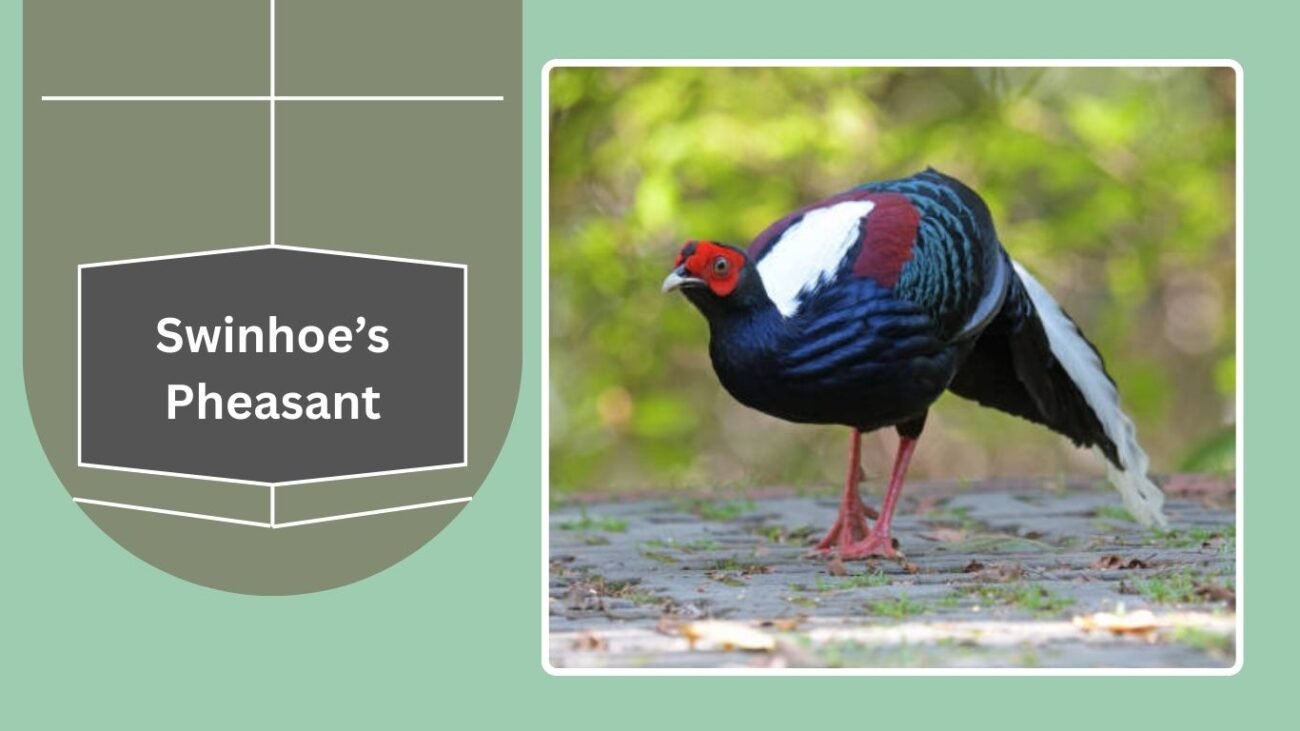
Swinhoe’s Pheasant (Lophura swinhoii) is an elegant and striking bird native to Taiwan. It is named after the British naturalist Robert Swinhoe and is a symbol of Taiwan’s rich wildlife.
Identification
- Scientific name: Lophura swinhoii
- Male plumage: Glossy blue-black body, white crest and back, long white tail feathers, red facial wattles
- Female plumage: Brown overall with barred markings, shorter tail
- Size: 70–80 cm (27–31 in) in length
Habitat and Range
They inhabit evergreen broadleaf forests at mid-elevations in Taiwan, often in protected reserves and mountainous regions.
Behavior and Diet
Swinhoe’s Pheasants feed on seeds, fruits, leaves, and insects. They are ground-dwellers but roost in trees at night. Males are known for their loud territorial calls.
13. Palawan Peacock-Pheasant
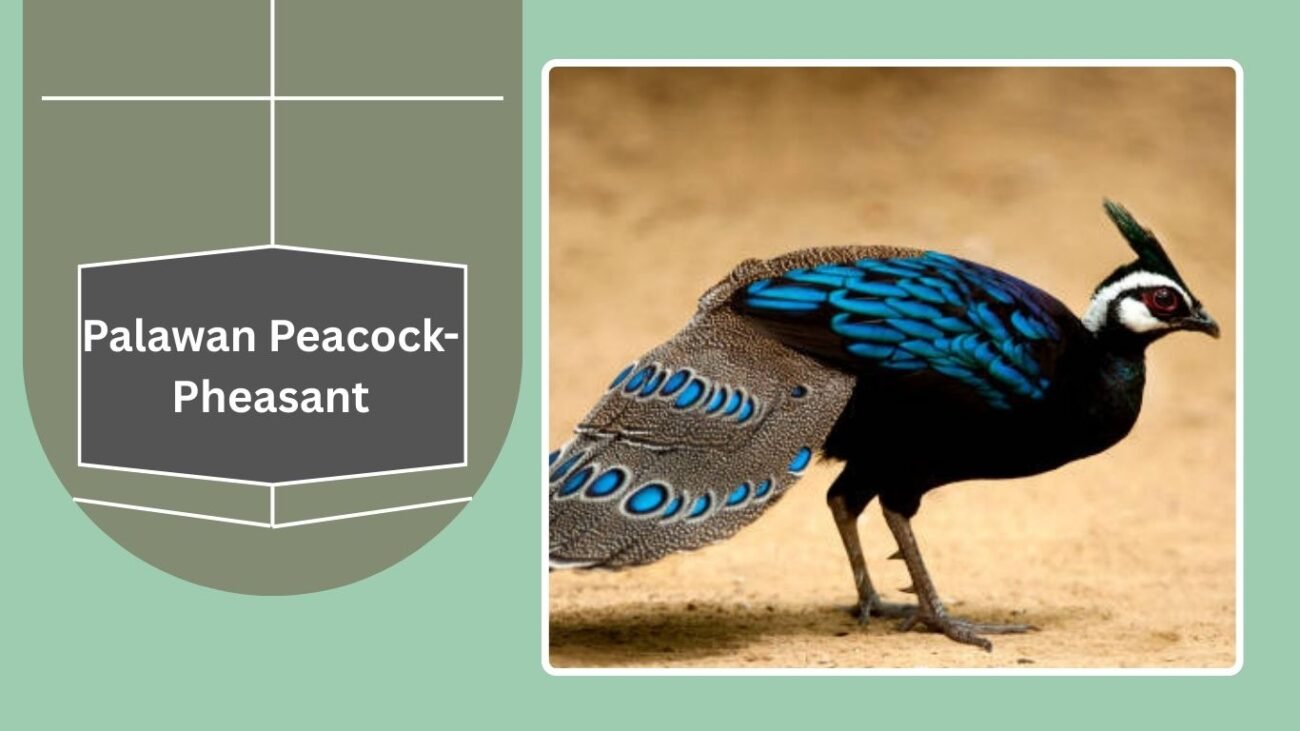
The Palawan Peacock-Pheasant (Polyplectron napoleonis) is one of the most stunning pheasants, endemic to the Palawan island of the Philippines. It is noted for its iridescent peacock-like display.
Identification
- Scientific name: Polyplectron napoleonis
- Male plumage: Metallic blue and green iridescence, long crest, fan-shaped tail with eye-spots, red facial wattles
- Female plumage: Brown mottled, smaller crest, less iridescent
- Size: 50–60 cm (20–23 in) in length
Habitat and Range
They live in lowland forests of Palawan, thriving in dense understory and secondary growth areas.
Behavior and Diet
Palawan Peacock-Pheasants forage for seeds, fruits, and insects. Males perform elaborate courtship dances, spreading their ornate tails and displaying shimmering feathers.
14. Bornean Peacock-Pheasant
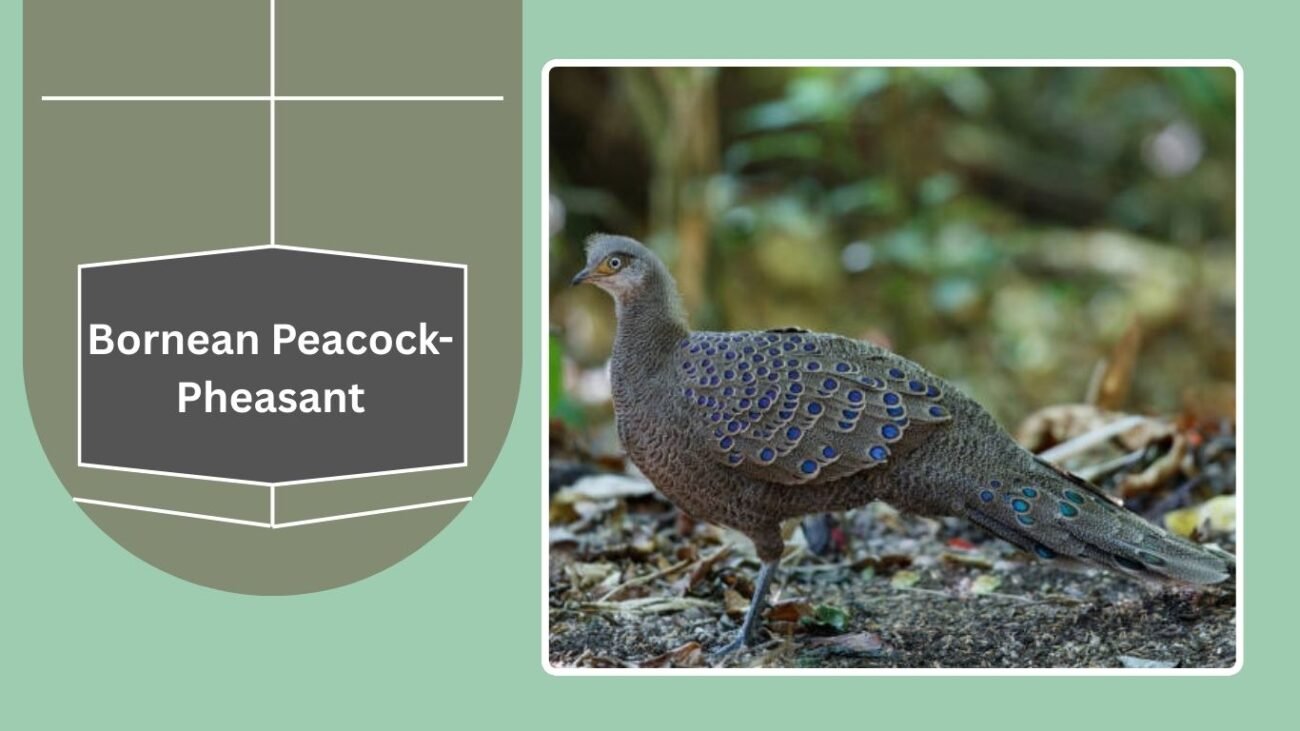
The Bornean Peacock-Pheasant (Polyplectron schleiermacheri) is a very rare and little-known species, endemic to the island of Borneo. It is considered one of the most elusive pheasants in the world.
Identification
- Scientific name: Polyplectron schleiermacheri
- Male plumage: Dark brown body with metallic green-blue eye-spots on wings and tail, small crest, red facial skin
- Female plumage: Smaller, dull brown with faint markings
- Size: 50–60 cm (20–24 in) in length
Habitat and Range
They inhabit lowland rainforests of Borneo, usually in dense understory vegetation. Sightings are extremely rare due to their secretive habits.
Behavior and Diet
They forage quietly on the forest floor for seeds, fallen fruits, and insects. Very little is known about their courtship displays due to their rarity.
15. Malayan Peacock-Pheasant
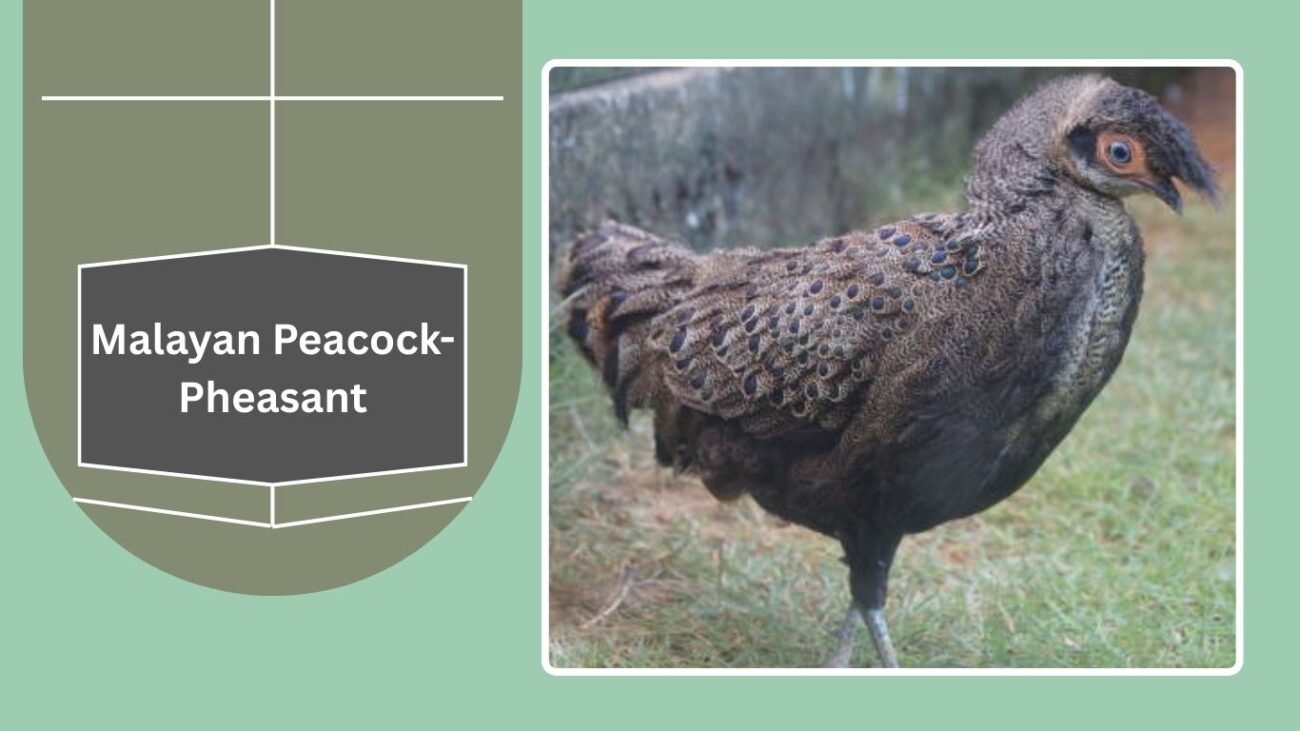
The Malayan Peacock-Pheasant (Polyplectron malacense) is a beautiful forest pheasant native to Peninsular Malaysia. It is known for its peacock-like tail and iridescent feather patterns.
Identification
- Scientific name: Polyplectron malacense
- Male plumage: Brown body with blue-green eye-spots on wings and tail, metallic sheen, red facial wattles
- Female plumage: Duller brown with smaller spots, shorter tail
- Size: 50–63 cm (20–25 in) in length
Habitat and Range
Found in lowland dipterocarp forests of Malaysia, they prefer dense jungle with plenty of cover.
Behavior and Diet
They are ground-dwelling foragers, eating seeds, insects, and berries. Males fan their tails and spread their wings in a peacock-like display during courtship.
16. Mountain Peacock-Pheasant
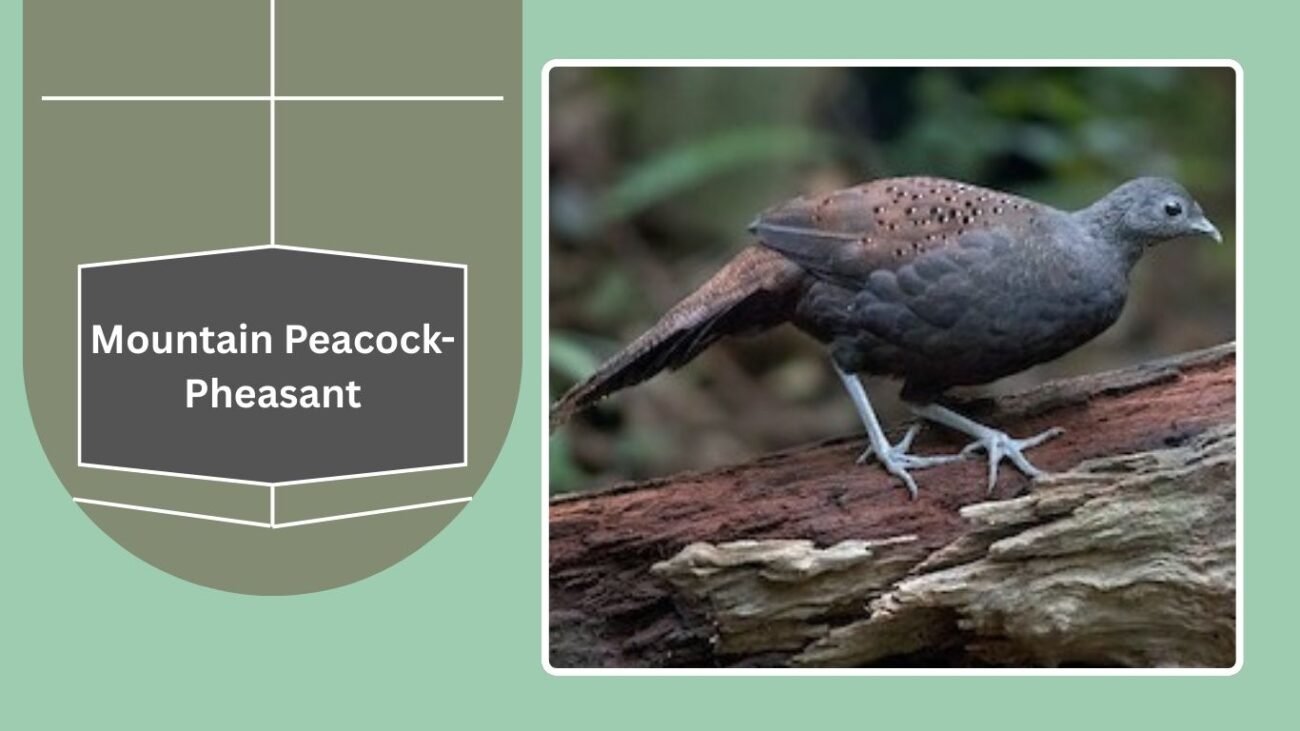
The Mountain Peacock-Pheasant (Polyplectron inopinatum) is a shy and elusive bird found in the highland forests of the Malay Peninsula. It is smaller than other peacock-pheasants but equally striking with its patterned plumage.
Identification
- Scientific name: Polyplectron inopinatum
- Male plumage: Dark brown body covered with metallic blue-green eye-spots, long rounded tail, red facial skin
- Female plumage: Smaller, dull brown with faint markings
- Size: 65–70 cm (25–27 in) in length
Habitat and Range
This species inhabits montane forests in Malaysia, preferring dense undergrowth at higher elevations.
Behavior and Diet
Mountain Peacock-Pheasants feed on seeds, small fruits, shoots, and insects. They are elusive ground-dwellers, rarely seen due to their secretive behavior.
17. Germain’s Peacock-Pheasant
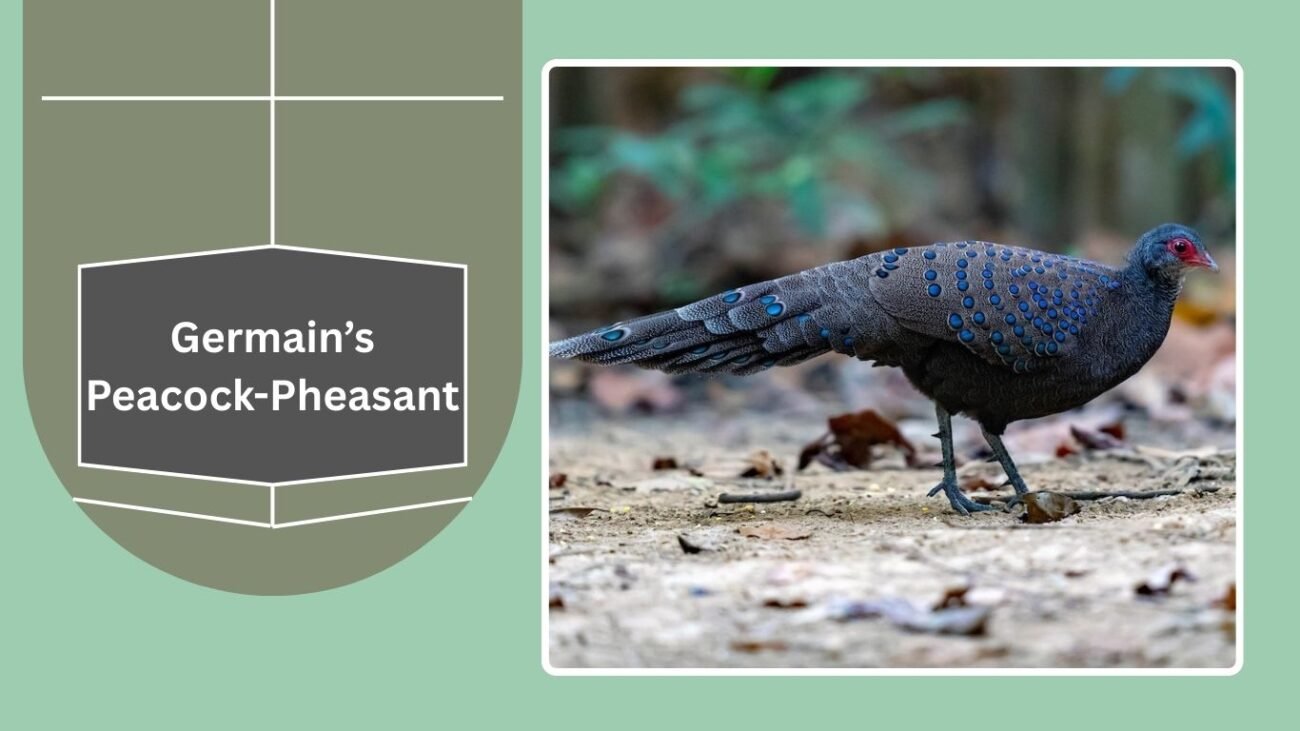
Germain’s Peacock-Pheasant (Polyplectron germaini) is native to Southeast Asia and is notable for its pale gray plumage adorned with iridescent eye-spots.
Identification
- Scientific name: Polyplectron germaini
- Male plumage: Light gray body, wings and tail covered with metallic blue-green eye-spots, red facial skin
- Female plumage: Smaller, dull brown with faint markings and shorter tail
- Size: 60–75 cm (23–29 in) in length
Habitat and Range
They inhabit forests of Cambodia, Vietnam, and Laos, especially lowland and hill forests with dense vegetation.
Behavior and Diet
These birds forage for seeds, insects, and small fruits on the forest floor. Males perform tail-fanning courtship displays to attract females.
18. Grey Peacock-Pheasant
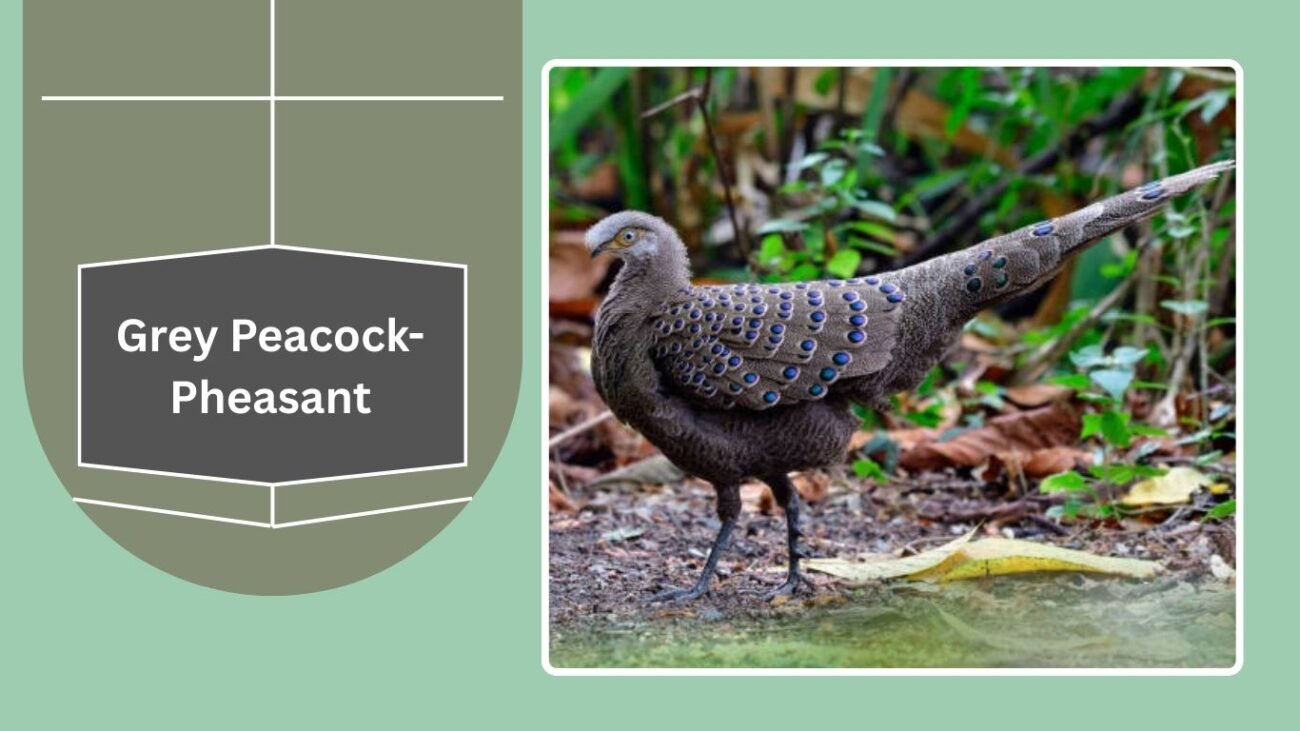
The Grey Peacock-Pheasant (Polyplectron bicalcaratum) is the most widespread of the peacock-pheasants, known for its elegant gray plumage decorated with numerous eye-spots. It is the national bird of Myanmar.
Identification
- Scientific name: Polyplectron bicalcaratum
- Male plumage: Soft gray body with metallic green and purple eye-spots on wings and tail, red facial skin, short crest
- Female plumage: Smaller, dull brown with faint spots, shorter tail
- Size: 60–75 cm (23–29 in) in length
Habitat and Range
They inhabit forests across the Himalayan foothills, northeastern India, Myanmar, and parts of Indochina.
Behavior and Diet
Grey Peacock-Pheasants forage on the ground for seeds, roots, berries, and insects. Males are known for their fan-tailed courtship displays, showing off their numerous shimmering eye-spots.
19. Bronze-tailed Peacock-Pheasant
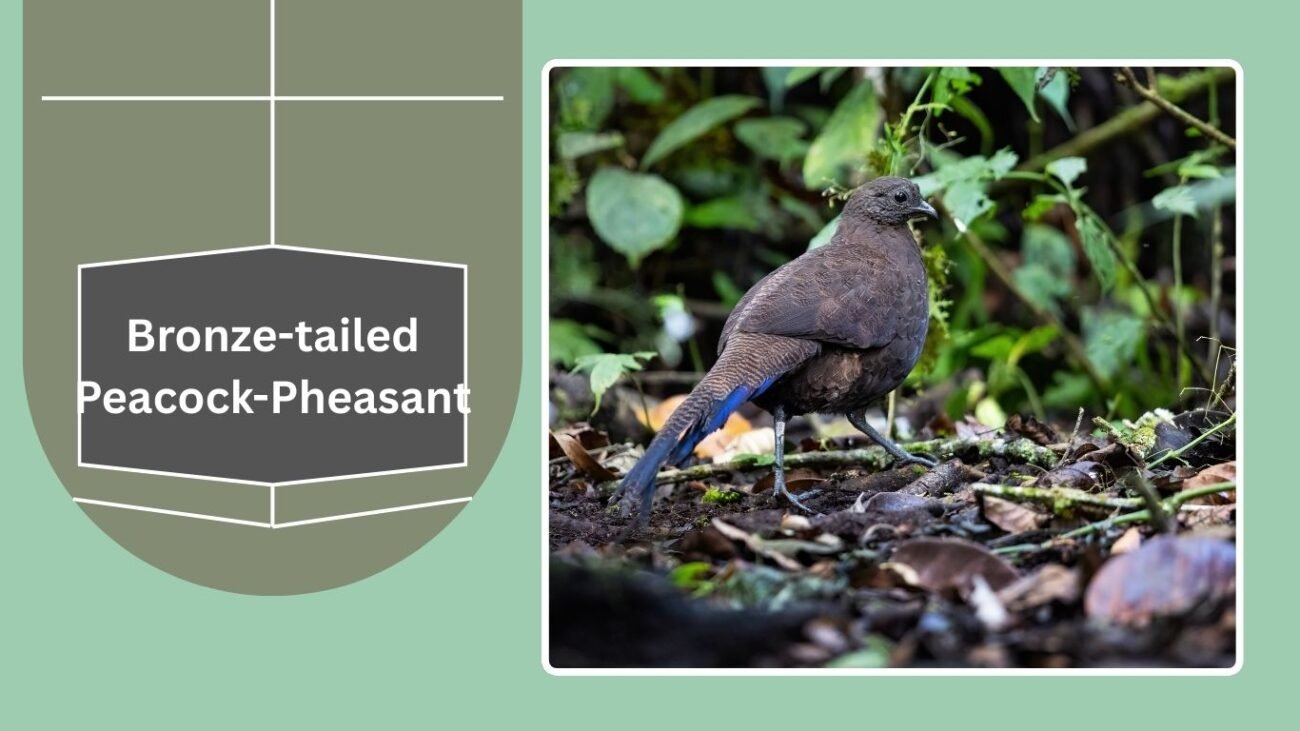
The Bronze-tailed Peacock-Pheasant (Polyplectron chalcurum) is an endemic species of Sumatra, Indonesia. It is recognized for its unique bronze-colored tail feathers.
Identification
- Scientific name: Polyplectron chalcurum
- Male plumage: Dark brown plumage with metallic bronze and green eye-spots, long bronze-shaded tail, red facial skin
- Female plumage: Smaller, duller brown with faint markings
- Size: 50–60 cm (20–24 in) in length
Habitat and Range
They are found in montane forests of Sumatra, typically at elevations above 1,000 meters.
Behavior and Diet
These pheasants feed on seeds, insects, berries, and shoots. Like other peacock-pheasants, males spread their tails in elaborate displays to court females.
20. Elliot’s Pheasant
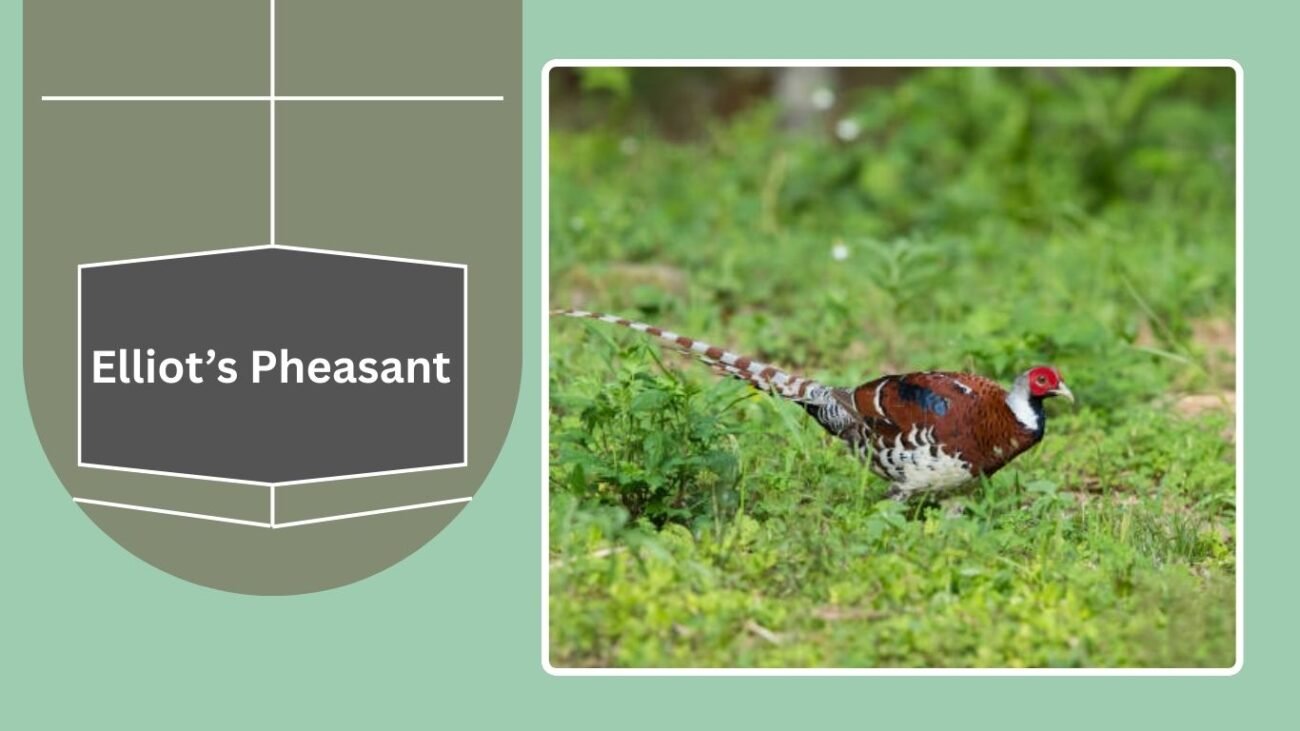
Elliot’s Pheasant (Syrmaticus ellioti) is a striking pheasant species native to southeastern China. It is admired for its elegant mix of chestnut, white, and barred feathers.
Identification
- Scientific name: Syrmaticus ellioti
- Male plumage: Chestnut underparts, white belly and throat, grayish back, long barred tail, red facial wattles
- Female plumage: Brown mottled with lighter underparts, shorter tail
- Size: 80–90 cm (31–35 in) in length
Habitat and Range
They live in subtropical forests, bamboo thickets, and mountain slopes across southeastern China.
Behavior and Diet
Elliot’s Pheasants feed on seeds, berries, shoots, and insects. They are shy ground-dwellers, moving quietly in thick forest cover.
21. Cheer Pheasant
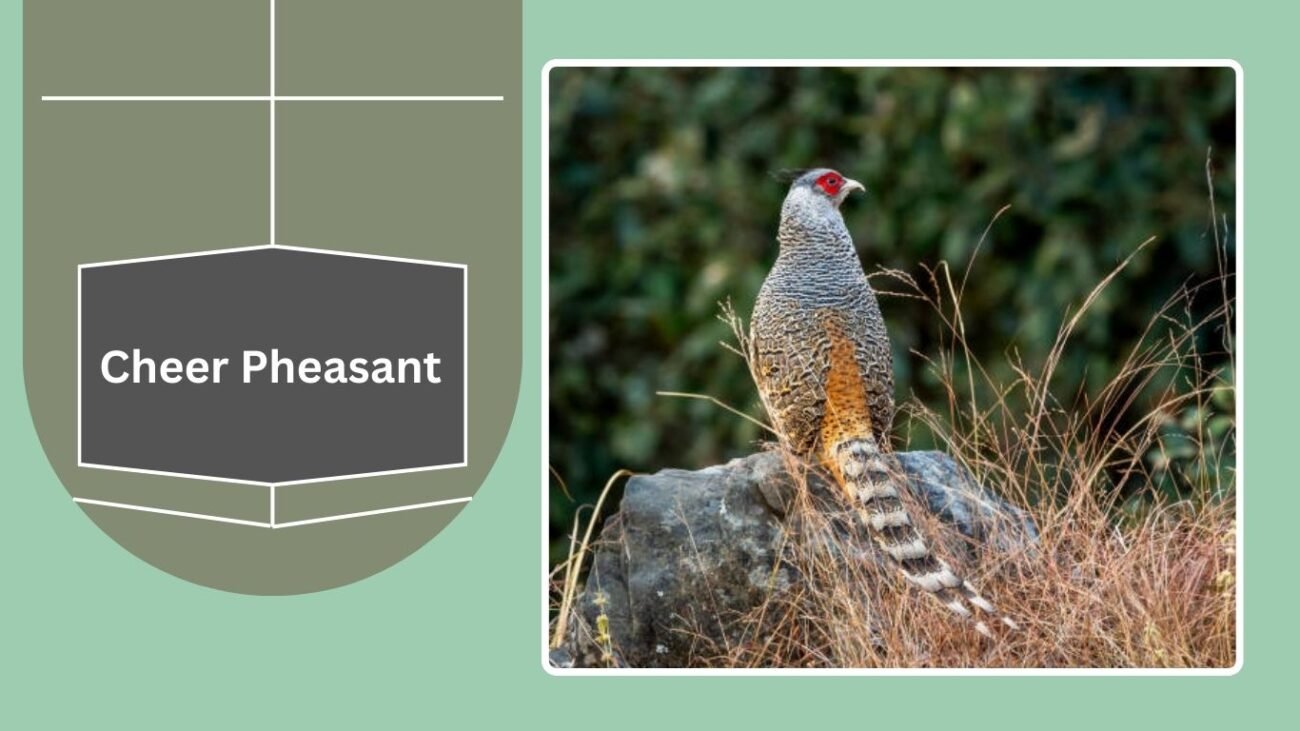
The Cheer Pheasant (Catreus wallichii) is a long-tailed pheasant found in the Himalayan foothills, known for its muted gray and brown tones.
Identification
- Scientific name: Catreus wallichii
- Male plumage: Grayish-brown body, long white-streaked tail, red facial skin
- Female plumage: Duller brown with mottled markings, shorter tail
- Size: 115–125 cm (45–49 in), tail contributing to much of the length
Habitat and Range
They inhabit grassy slopes, scrublands, and open forests in the western Himalayas, especially in Nepal and northern India.
Behavior and Diet
Cheer Pheasants feed on roots, tubers, seeds, and insects. They are ground-dwelling birds that prefer steep slopes for foraging and nesting.
22. Koklass Pheasant
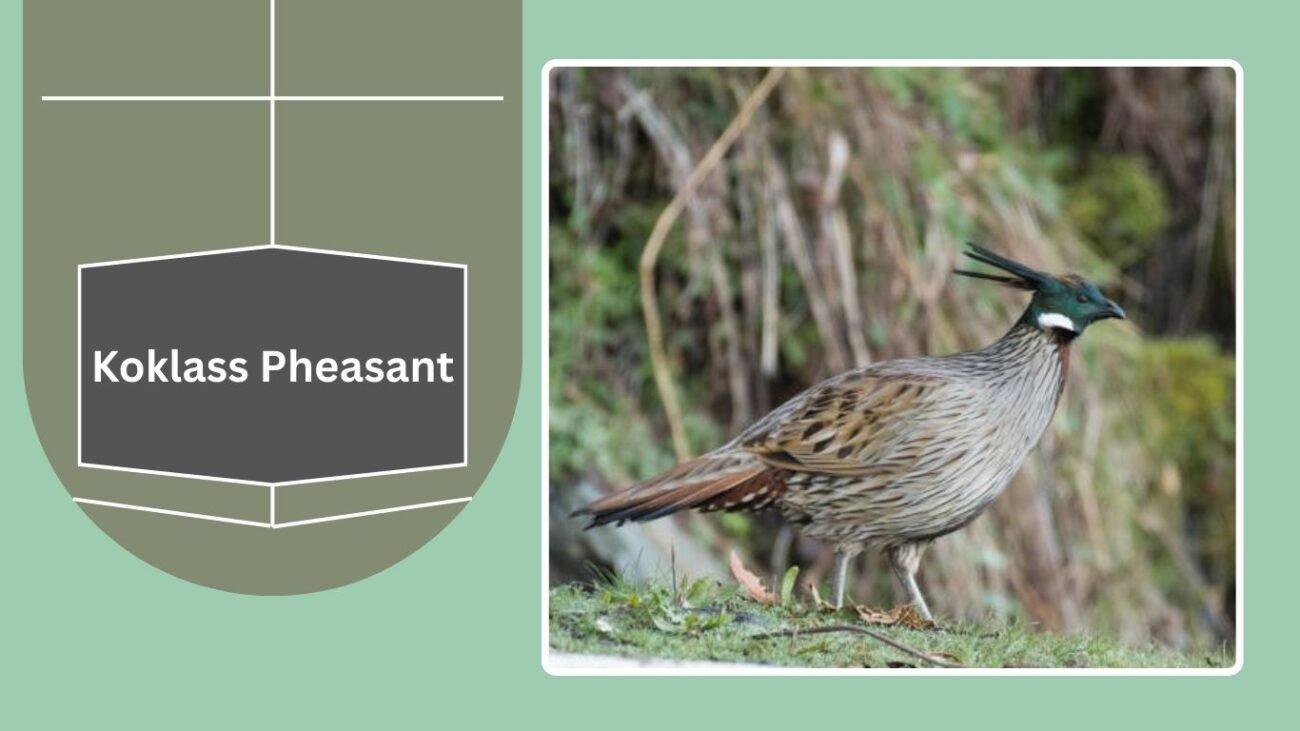
The Koklass Pheasant (Pucrasia macrolopha) is a hardy bird of the Himalayan forests, known for its unique upright posture and long crest. Unlike many pheasants, it is less ornamented but highly adapted to colder environments.
Identification
- Scientific name: Pucrasia macrolopha
- Male plumage: Olive-brown body with black and white markings, long pointed crest, reddish neck patch
- Female plumage: Brown mottled overall with lighter underparts, shorter crest
- Size: 58–72 cm (23–28 in) in length
Habitat and Range
They inhabit temperate and coniferous forests of the Himalayas, stretching from Afghanistan and northern Pakistan through Nepal, Bhutan, and into China.
Behavior and Diet
Koklass Pheasants forage on the ground for roots, tubers, seeds, berries, and insects. They are strong fliers compared to most pheasants and often flush upward when disturbed.
23. Himalayan Monal (Impeyan Pheasant)
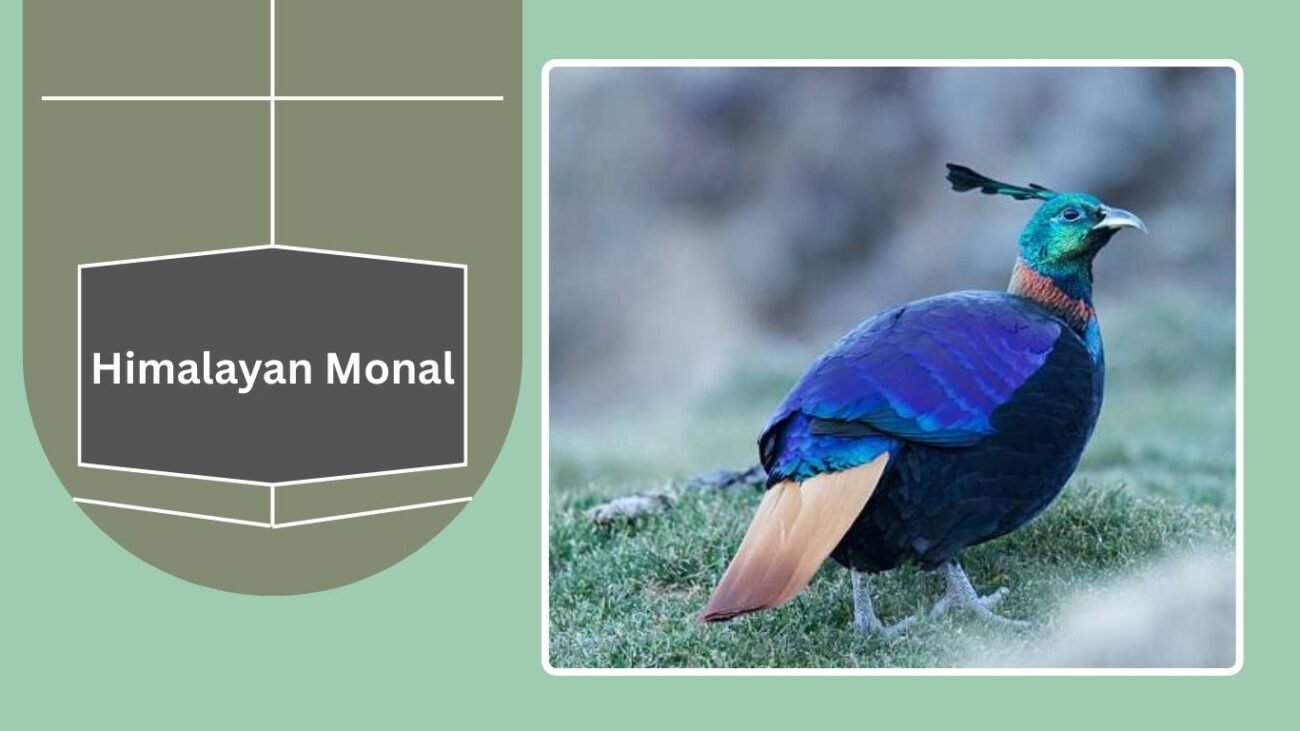
The Himalayan Monal (Lophophorus impejanus), also called the Impeyan Pheasant, is the national bird of Nepal. It is famous for its dazzling rainbow-like plumage.
Identification
- Scientific name: Lophophorus impejanus
- Male plumage: Iridescent feathers of blue, green, red, and gold, white rump, metallic green crest, red facial wattles
- Female plumage: Brown mottled body with white throat and lighter streaks, shorter crest
- Size: 60–72 cm (23–28 in) in length
Habitat and Range
They inhabit alpine meadows, rhododendron forests, and grassy slopes of the Himalayas, often above 3,000 meters.
Behavior and Diet
Himalayan Monals dig in the soil for tubers, roots, shoots, insects, and berries. During courtship, males fan their tail and display their shimmering plumage in sunlight.
24. Sclater’s Monal
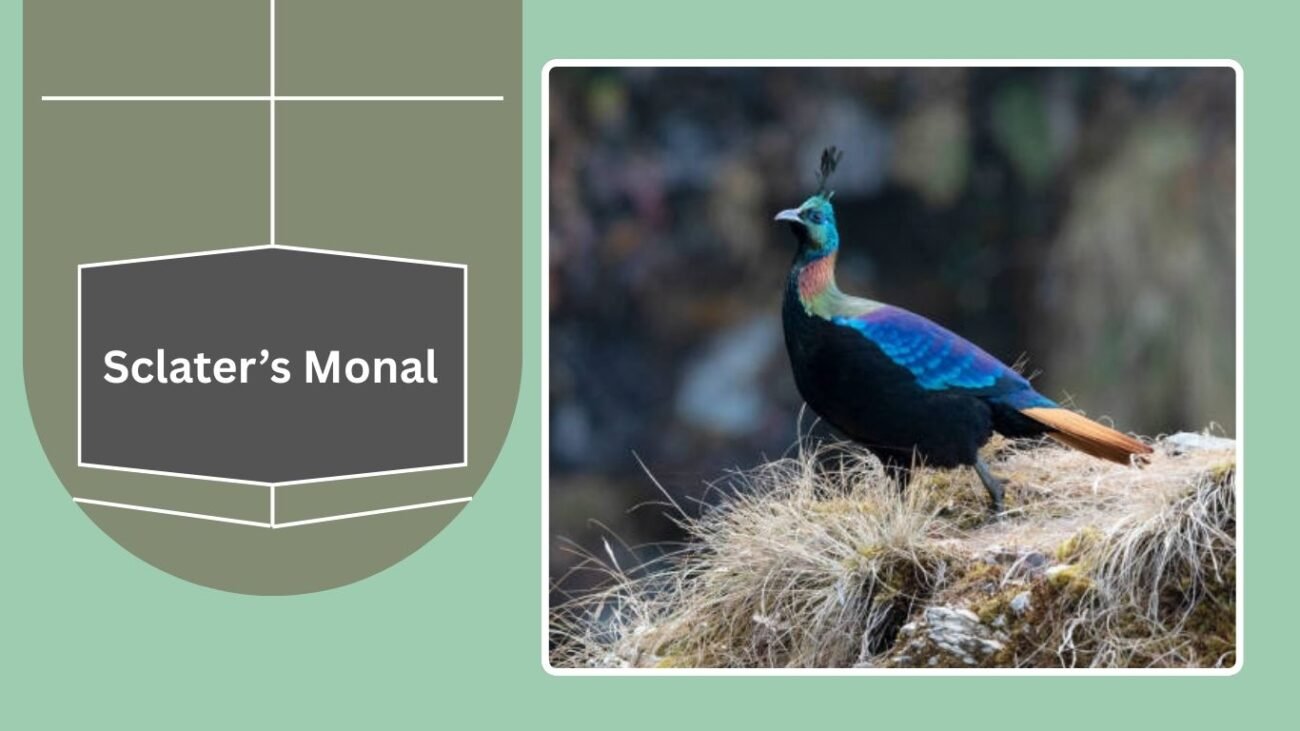
Sclater’s Monal (Lophophorus sclateri) is a brilliantly colored pheasant species found in the eastern Himalayas. It closely resembles the Himalayan Monal but is slightly smaller and more localized in distribution.
Identification
- Scientific name: Lophophorus sclateri
- Male plumage: Iridescent blue, green, and copper feathers, metallic green crest, white nape, reddish rump
- Female plumage: Brown mottled body with lighter markings and a whitish throat
- Size: 68–72 cm (27–28 in) in length
Habitat and Range
They live in high-altitude forests and alpine meadows of northeastern India, Bhutan, and northern Myanmar.
Behavior and Diet
Sclater’s Monals dig for roots, tubers, berries, and insects. They are ground foragers but roost in trees at night for safety.
25. Chinese Monal
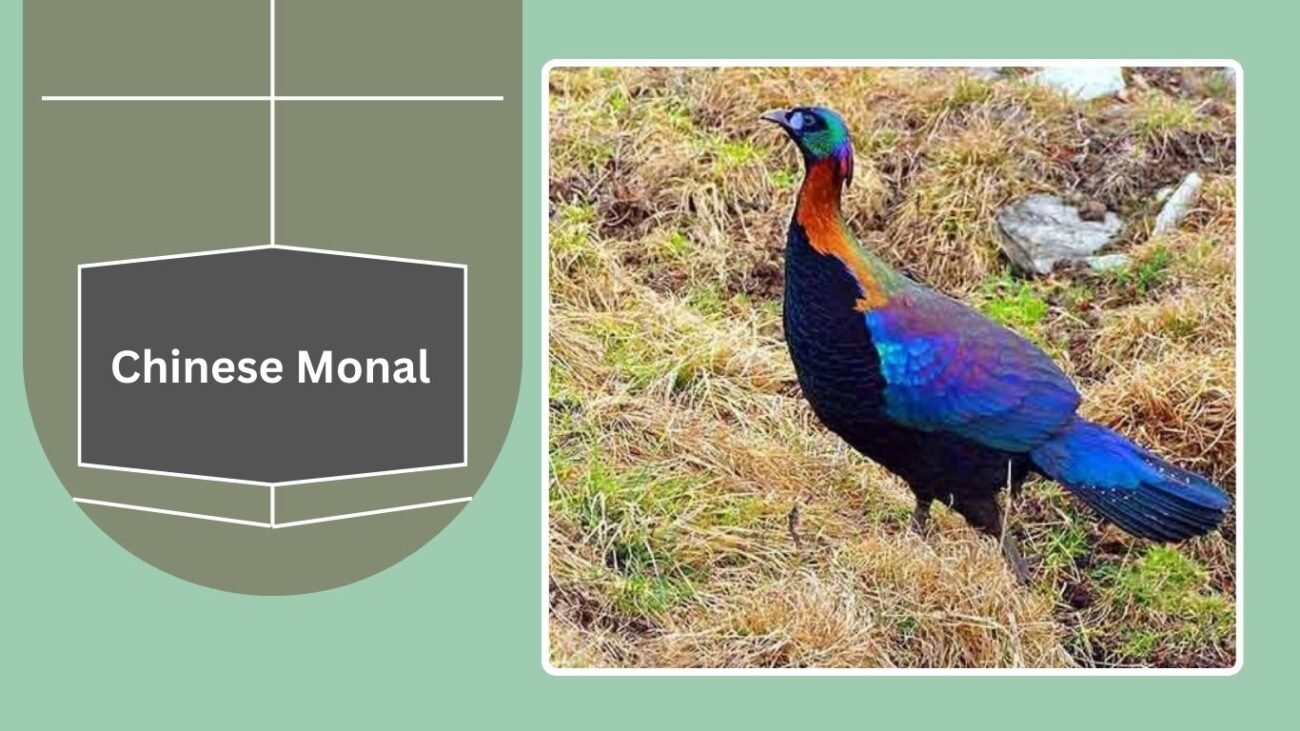
The Chinese Monal (Lophophorus lhuysii) is one of the rarest pheasants, endemic to the mountains of central China. It is strikingly beautiful but highly threatened due to habitat loss.
Identification
- Scientific name: Lophophorus lhuysii
- Male plumage: Iridescent blue, violet, and green plumage, white back and rump, metallic crest, red facial wattles
- Female plumage: Brown mottled with lighter streaks, smaller crest, shorter tail
- Size: 70–75 cm (27–29 in) in length
Habitat and Range
They inhabit subalpine meadows, high-altitude shrublands, and coniferous forests of central China, usually at elevations above 3,000 meters.
Behavior and Diet
Chinese Monals forage for roots, tubers, leaves, shoots, and insects. They are elusive and often remain in remote mountainous habitats.
26. Horned Pheasant (Satyr Tragopan)
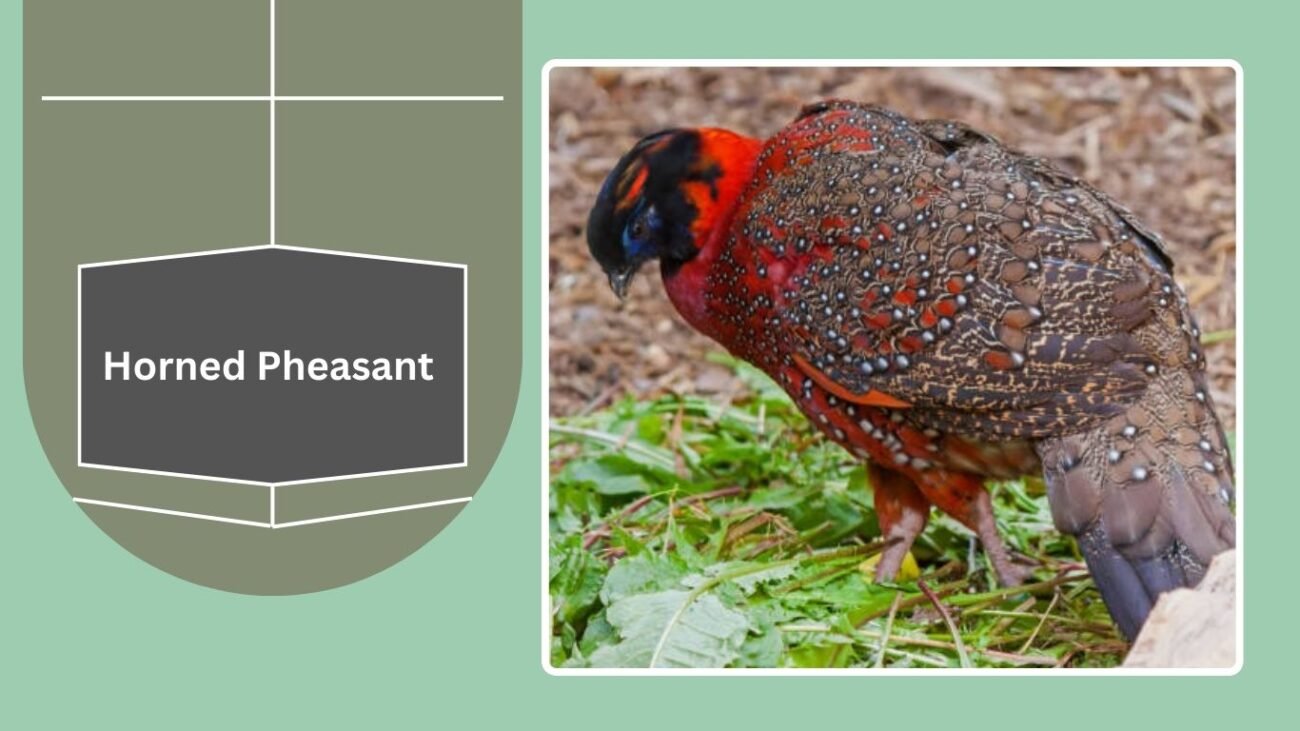
The Horned Pheasant, or Satyr Tragopan (Tragopan satyra), is a brilliantly colored Himalayan bird named for the inflatable blue horns that males display during courtship.
Identification
- Scientific name: Tragopan satyra
- Male plumage: Crimson-red body with white spots, black head, inflatable blue horns, and bright gular flap during display
- Female plumage: Brown mottled overall, cryptic for camouflage, shorter tail
- Size: 68–72 cm (27–28 in) in length
Habitat and Range
They inhabit temperate and rhododendron forests of the Himalayas, ranging across Nepal, Bhutan, and northern India.
Behavior and Diet
Horned Pheasants feed on berries, seeds, buds, and insects. Males are famous for their dramatic courtship displays, where they inflate horns and gular flaps to impress females.
27. Temminck’s Tragopan
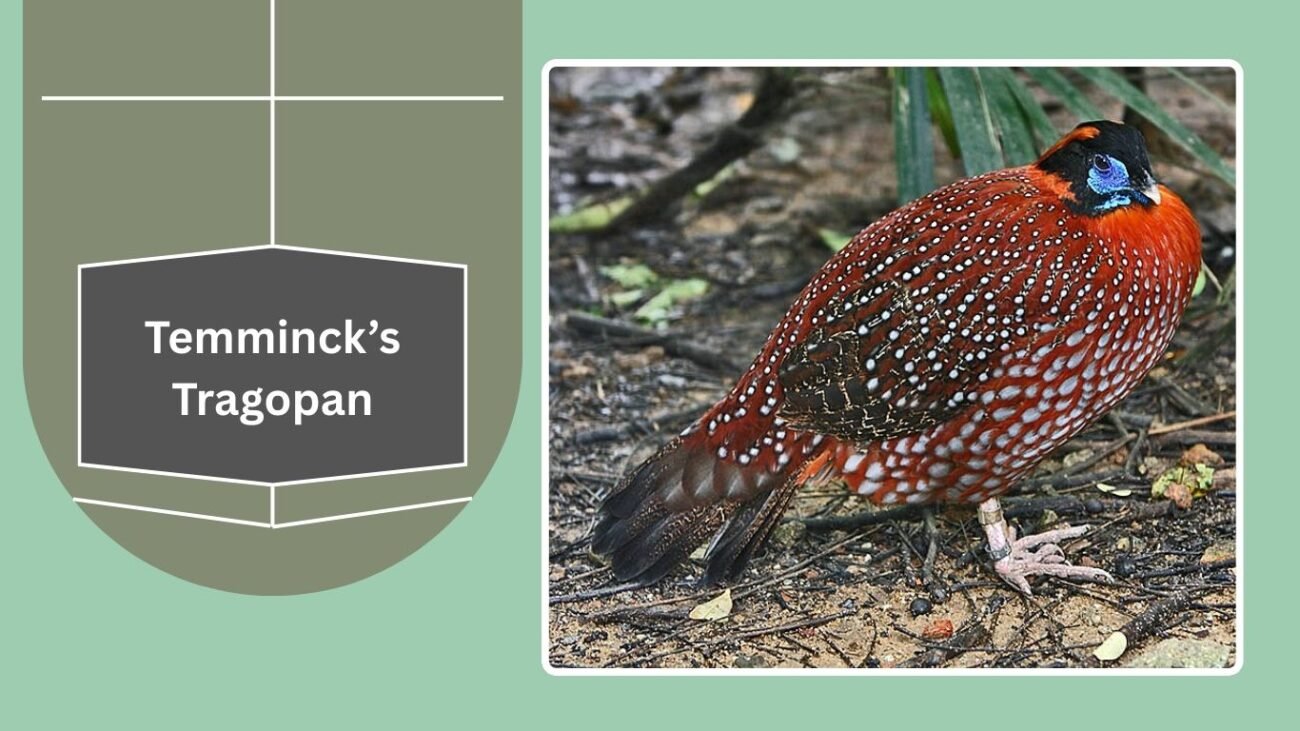
Temminck’s Tragopan (Tragopan temminckii) is one of the most colorful pheasants, widely admired for its bright plumage and elaborate courtship rituals.
Identification
- Scientific name: Tragopan temminckii
- Male plumage: Reddish-orange body covered in white spots, black face, inflatable blue horns, and bright gular sac during display
- Female plumage: Brown with mottled markings, well camouflaged, shorter tail
- Size: 64–68 cm (25–27 in) in length
Habitat and Range
Found in forests of northeastern India, Bhutan, Tibet, and northern Myanmar, they prefer high-altitude woodlands and bamboo thickets.
Behavior and Diet
Temminck’s Tragopans forage on the forest floor for seeds, fruits, leaves, and insects. Males are known for their striking display, inflating their blue horns and gular sac to attract mates.