


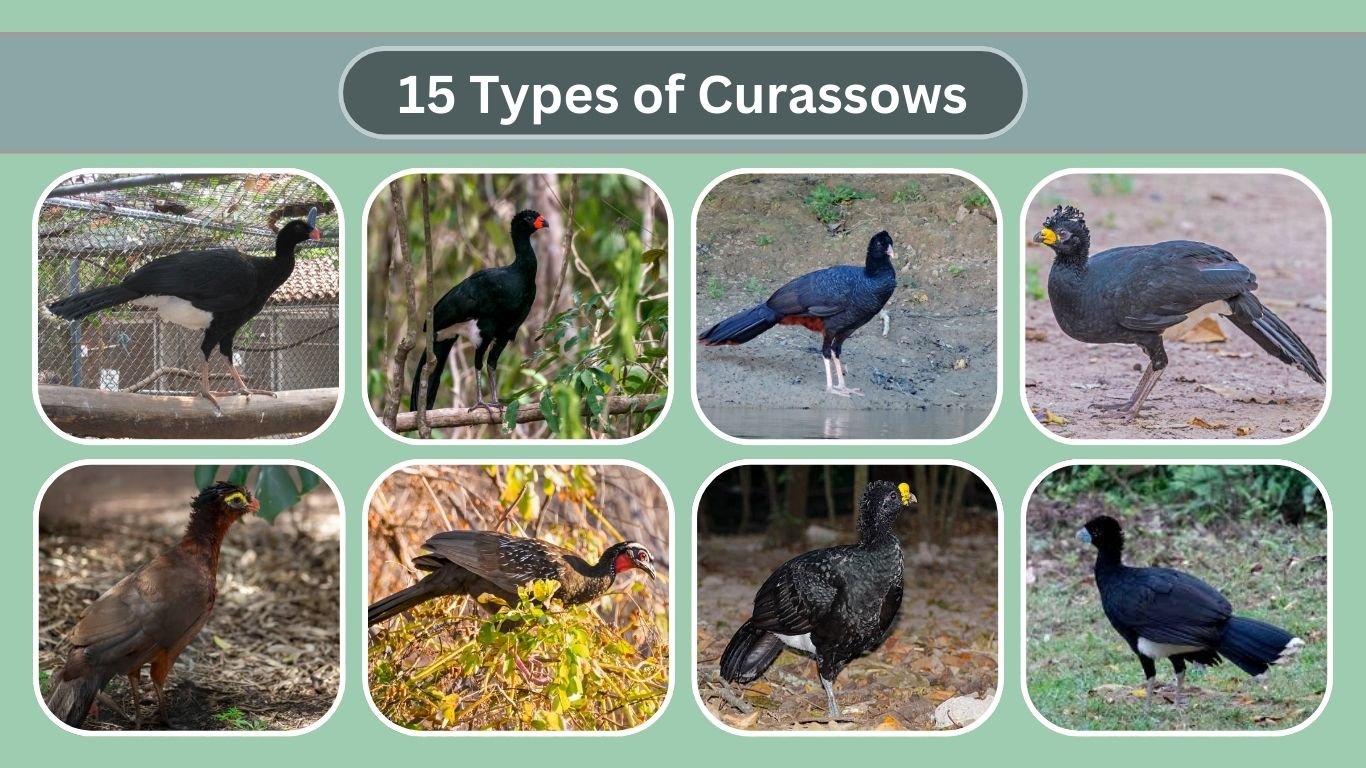
Curassows are large, ground-dwelling birds belonging to the Cracidae family, native to the tropical forests of Central and South America. Known for their curly crests, vibrant bill ornaments, and unique behaviors, these birds play an important role in forest ecosystems as seed dispersers. Many species are rare or endangered due to hunting and habitat loss. This guide highlights 15 distinct types of curassows, from the widespread Great Curassow to the elusive Nocturnal Curassow, showcasing their diversity and ecological importance.
1. Great Curassow

The Great Curassow (Crax rubra) is the largest and most widespread of all curassow species, native to the tropical forests of Central and South America. It is well known for its size, striking appearance, and curly crest.
Identification
- Scientific name: Crax rubra
- Male plumage: Glossy black body, curly crest, yellow knob at the base of the bill, white belly and undertail
- Female plumage: Highly variable—can be barred, rufous, or black with different crest patterns
- Size: 78–100 cm (30–39 in) in length
Habitat and Range
Great Curassows inhabit lowland rainforests, forest edges, and secondary growth areas from eastern Mexico through Central America to western Colombia and Ecuador.
Behavior and Diet
They forage mostly on the forest floor for fruits, seeds, and small animals, but will also feed in trees. Males are territorial, and during courtship, they produce deep booming calls to attract females.
2. Blue-billed Curassow
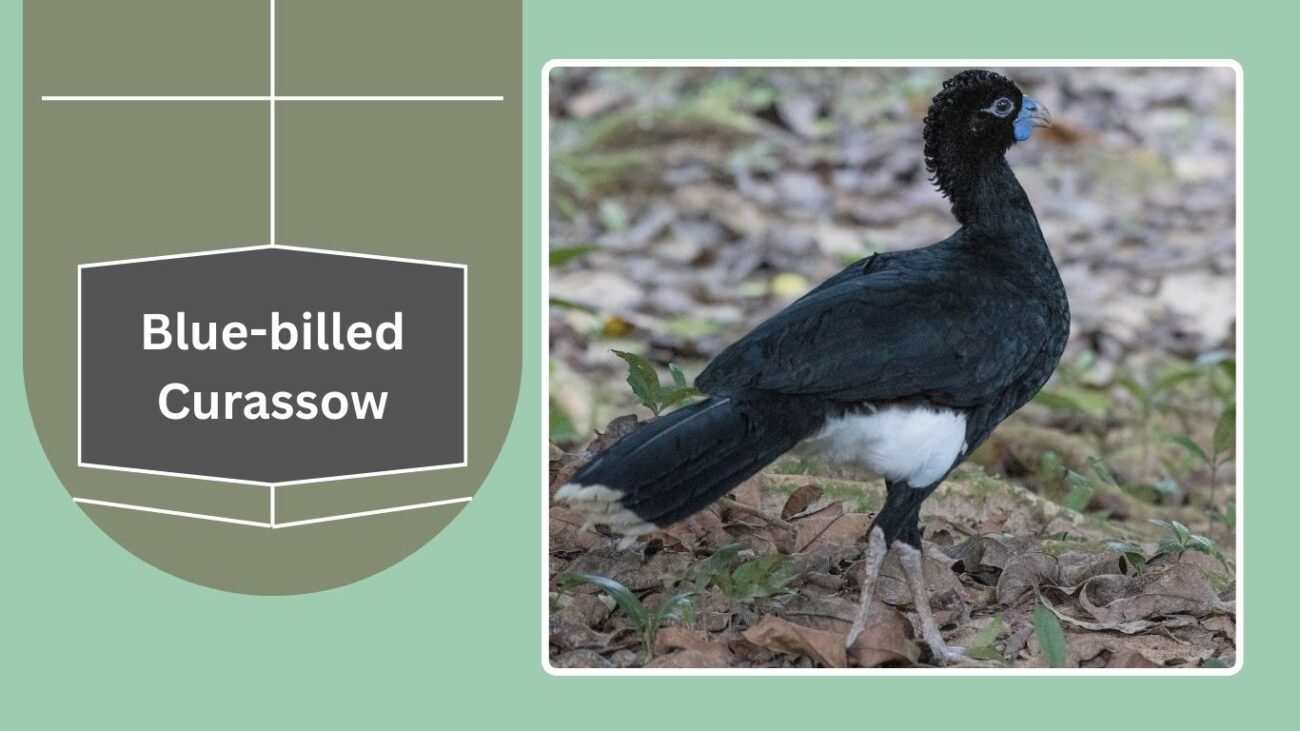
The Blue-billed Curassow (Crax alberti) is a critically endangered bird found only in northern Colombia. It is one of the rarest curassows and is instantly recognizable by the male’s distinctive blue bill knob.
Identification
- Scientific name: Crax alberti
- Male plumage: Black body with a glossy sheen, curly crest, striking blue knob at the base of the bill, white underparts and undertail
- Female plumage: Brown to rufous with black barring, smaller crest, lacks blue knob
- Size: 82–92 cm (32–36 in) in length
Habitat and Range
They live in lowland tropical forests of Colombia, especially in the Magdalena Valley, though their range has been drastically reduced due to deforestation and hunting.
Behavior and Diet
Blue-billed Curassows forage on the forest floor for fruits, seeds, insects, and small invertebrates. They are shy and elusive, usually moving in pairs or small family groups. Conservation programs focus on captive breeding to save this species from extinction.
3. Wattled Curassow
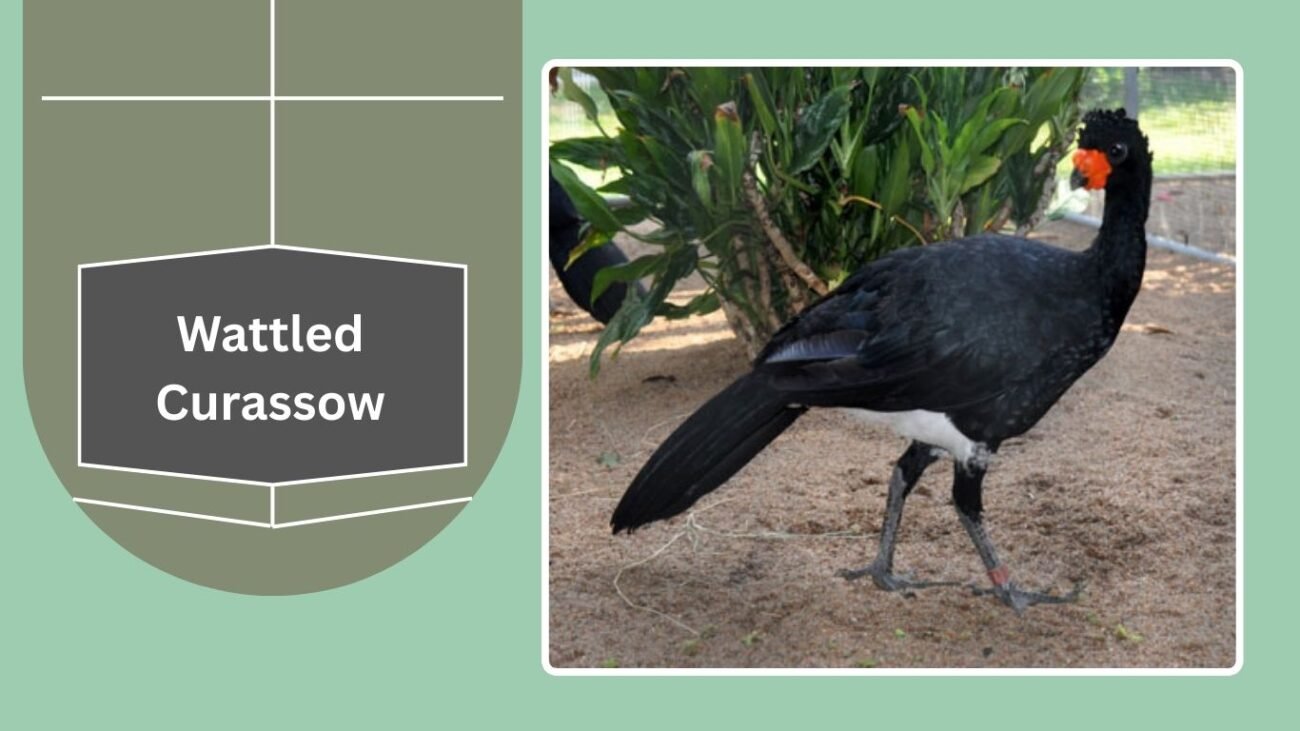
The Wattled Curassow (Crax globulosa) is a rare species of curassow, notable for the bright red wattles hanging from the base of its bill. It inhabits riverine forests of the western Amazon Basin.
Identification
- Scientific name: Crax globulosa
- Male plumage: Black body with a greenish gloss, curly crest, distinctive red wattles, white belly and undertail
- Female plumage: Dark brown to black with white barring, lacks wattles
- Size: 77–89 cm (30–35 in) in length
Habitat and Range
They are found in seasonally flooded forests along the Amazon River and its tributaries, particularly in Brazil, Peru, Colombia, and Bolivia.
Behavior and Diet
Wattled Curassows primarily eat fruits, seeds, and insects. They spend most of their time on the ground but roost in trees at night. Their populations are declining due to habitat loss and hunting pressure.
4. Black Curassow
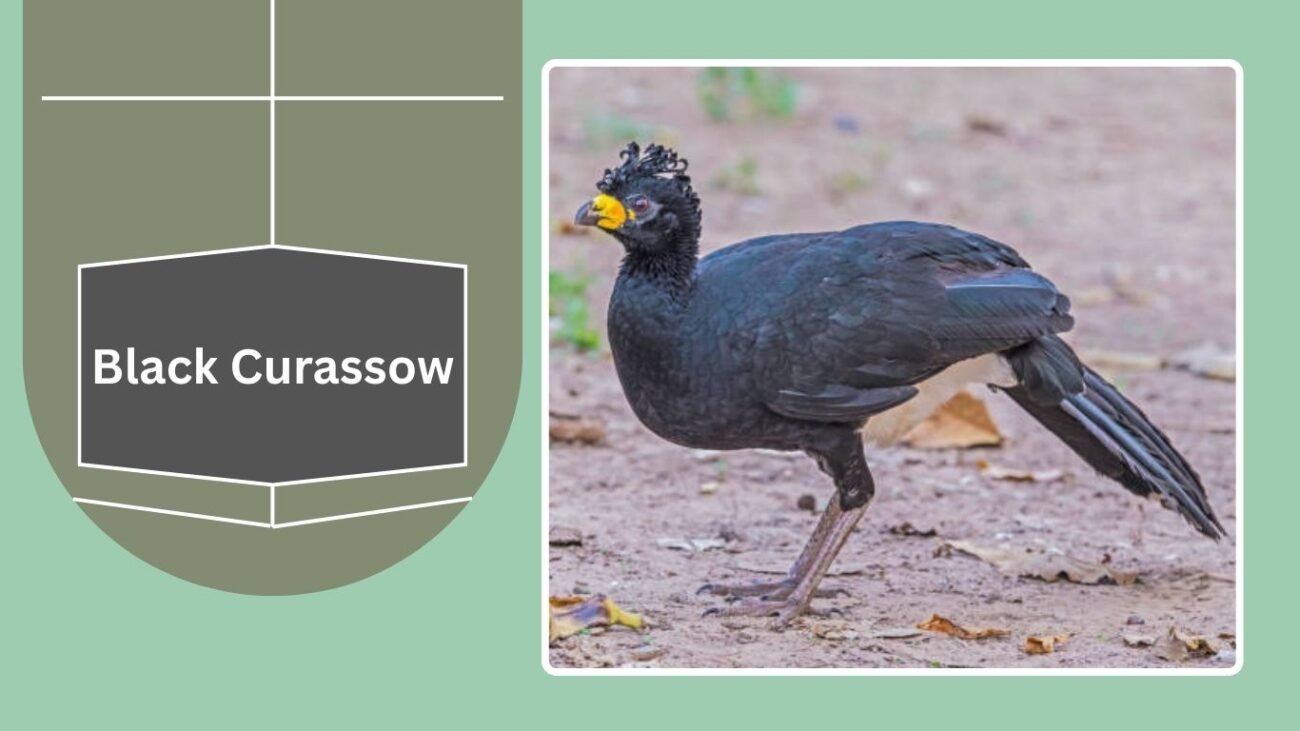
The Black Curassow (Crax alector) is a large forest bird found in northern South America. It is known for its entirely dark plumage contrasted by a pale bill knob and white underparts.
Identification
- Scientific name: Crax alector
- Male plumage: Glossy black body, curly crest, yellow or orange bill knob, white belly and undertail
- Female plumage: More varied—often brownish with barred or rufous markings, smaller crest
- Size: 82–97 cm (32–38 in) in length
Habitat and Range
They inhabit tropical lowland forests and riverine areas across Venezuela, Colombia, Guyana, Suriname, French Guiana, and northern Brazil.
Behavior and Diet
Black Curassows forage mostly on the ground, feeding on fruits, seeds, leaves, and insects. They are social birds, often seen in pairs or small family groups. Their loud booming calls are used to mark territory during the breeding season.
5. Bare-faced Curassow
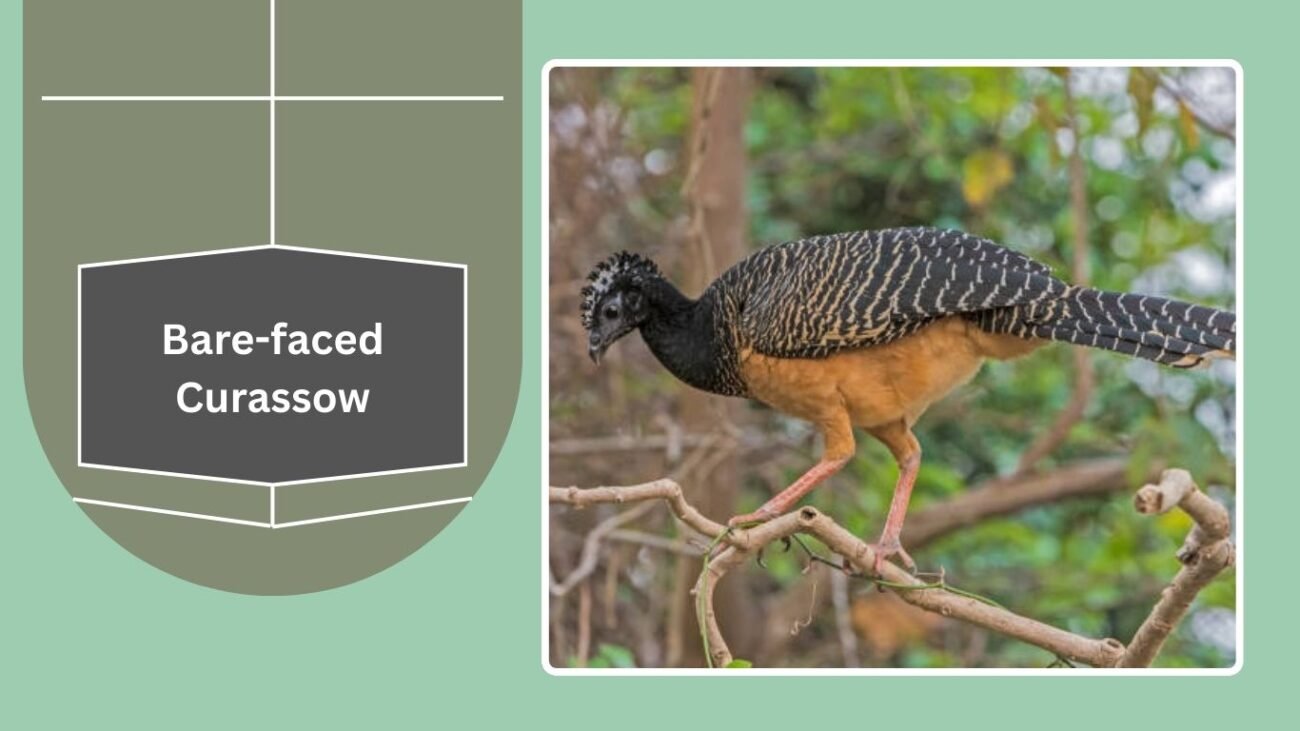
The Bare-faced Curassow (Crax fasciolata) is a striking bird with an exposed facial patch and unique feather patterns. It is one of the most widespread curassows in South America.
Identification
- Scientific name: Crax fasciolata
- Male plumage: Black body, white belly, curly crest, bare orange-yellow facial skin around the bill
- Female plumage: Highly variable—barred, rufous, or black-and-white, with smaller crest
- Size: 82–89 cm (32–35 in) in length
Habitat and Range
They inhabit savannas, gallery forests, and lowland woodlands in central South America, including Brazil, Paraguay, and Bolivia.
Behavior and Diet
Bare-faced Curassows feed on fruits, seeds, roots, and small invertebrates. They are known to adapt well to disturbed habitats compared to other curassow species. During courtship, males emit deep booming calls and display their colorful bare facial skin.
6. Yellow-knobbed Curassow
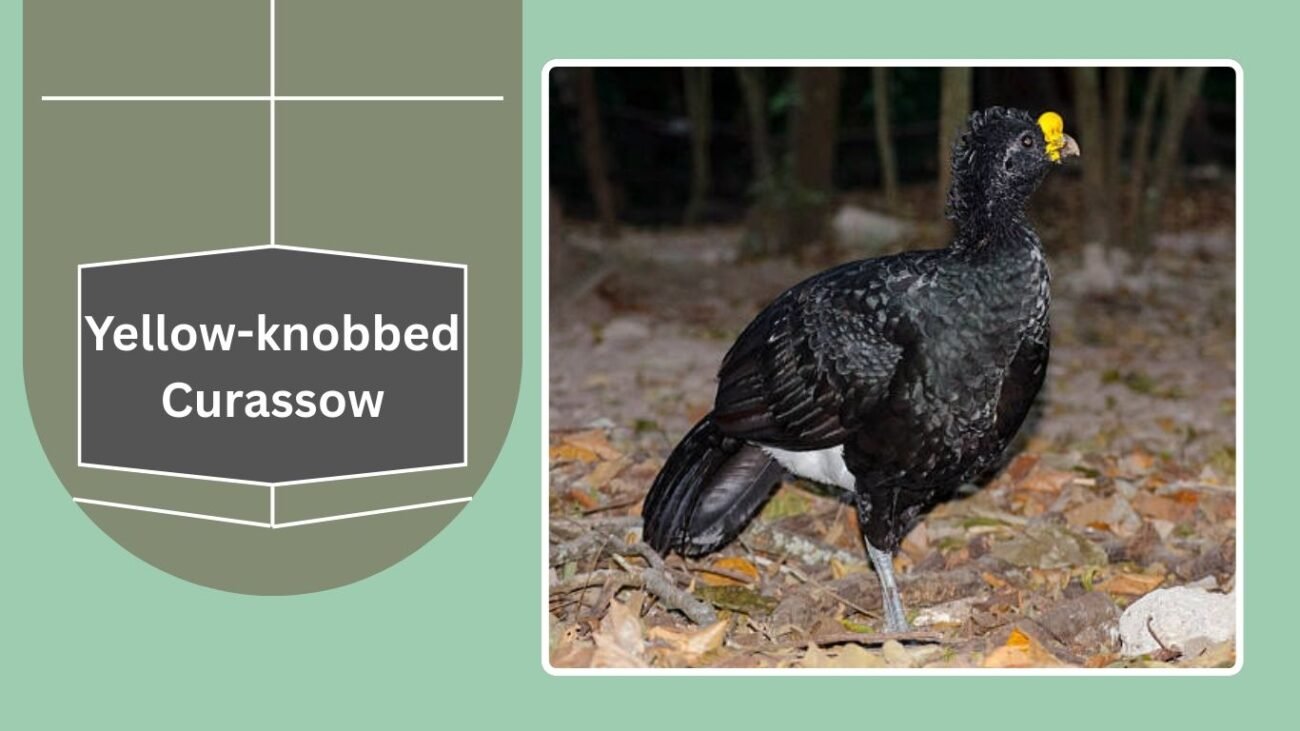
The Yellow-knobbed Curassow (Crax daubentoni) is a distinctive species recognized for the male’s bright yellow knob above the bill. It is a striking bird of northern South America.
Identification
- Scientific name: Crax daubentoni
- Male plumage: Glossy black body, curly crest, white belly and undertail, prominent yellow bill knob
- Female plumage: Brown to rufous with barred markings, lacks knob
- Size: 85–95 cm (33–37 in) in length
Habitat and Range
This species inhabits forests and woodlands of Venezuela and Colombia, often near rivers and seasonally flooded areas.
Behavior and Diet
Yellow-knobbed Curassows are ground foragers, feeding on fruits, seeds, shoots, and small invertebrates. They are shy and retreat quickly into dense vegetation when disturbed. Males use loud booming calls to establish territory.
7. Crestless Curassow
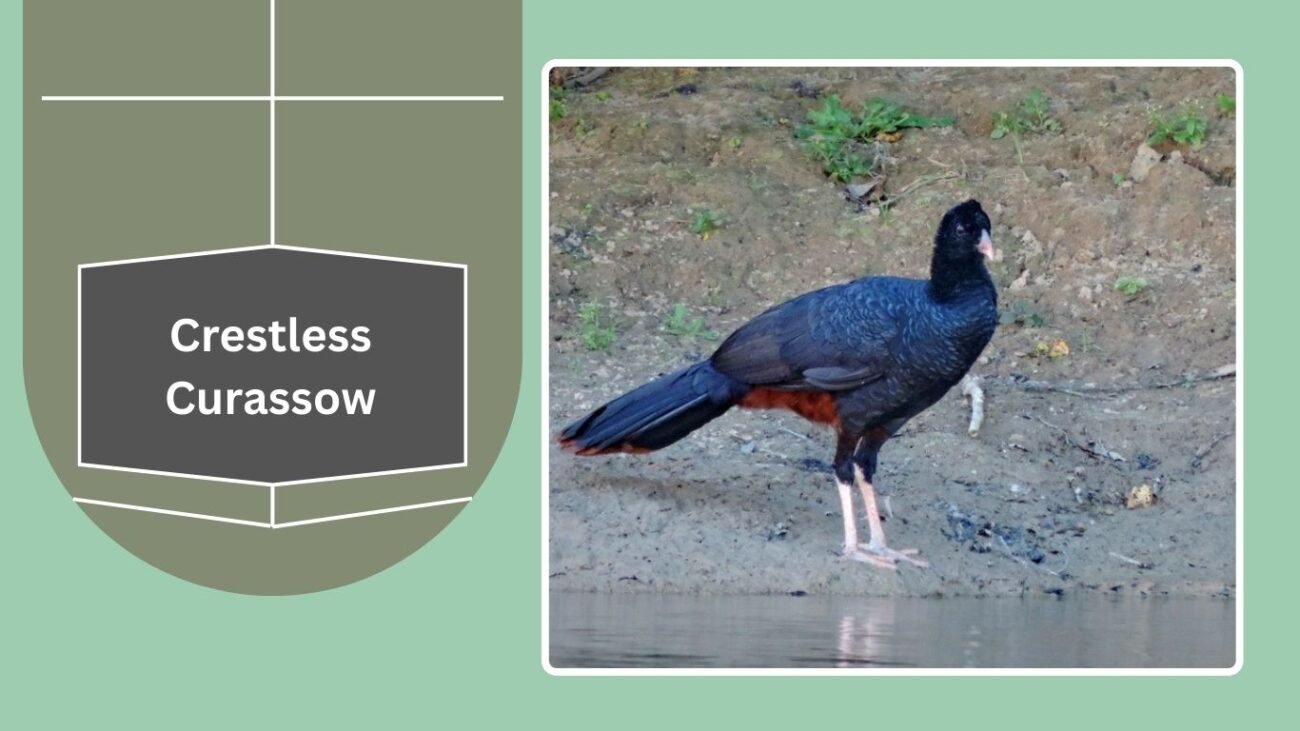
The Crestless Curassow (Mitu tomentosum) is unique among curassows for lacking the characteristic curly crest. It is found in the Amazon basin, usually near river systems.
Identification
- Scientific name: Mitu tomentosum
- Male and Female plumage: Both sexes look similar, with dark brown to black plumage, reddish bill, and pale belly
- Size: 76–84 cm (30–33 in) in length
Habitat and Range
They inhabit lowland tropical rainforests and riverine forests across Venezuela, Colombia, northern Brazil, and the Guianas.
Behavior and Diet
Crestless Curassows feed on fruits, seeds, nuts, and insects while foraging on the ground. They are secretive birds, usually seen in pairs, and are considered rare due to hunting and habitat destruction.
8. Alagoas Curassow
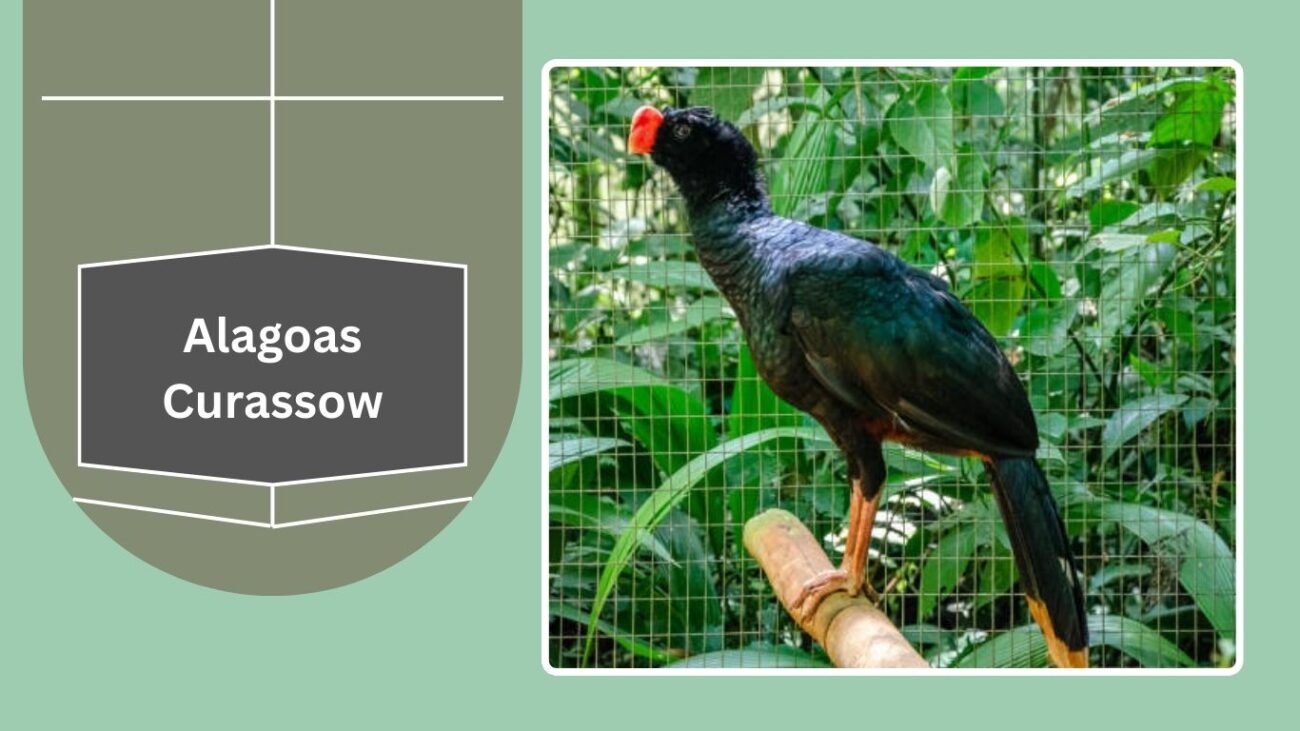
The Alagoas Curassow (Mitu mitu) is one of the rarest birds in the world, once declared extinct in the wild. It survives only through captive breeding programs in Brazil.
Identification
- Scientific name: Mitu mitu
- Male and Female plumage: Both sexes are similar—glossy black plumage with a purplish-blue sheen, red bill and legs, no crest
- Size: 83–89 cm (33–35 in) in length
Habitat and Range
Historically found in the Atlantic Forest of northeastern Brazil, particularly Alagoas state, but habitat loss led to its extinction in the wild.
Behavior and Diet
They primarily eat fruits, seeds, and nuts. In captivity, they are bred to preserve the species, with reintroduction efforts being studied to restore them to natural habitats.
9. Razor-billed Curassow
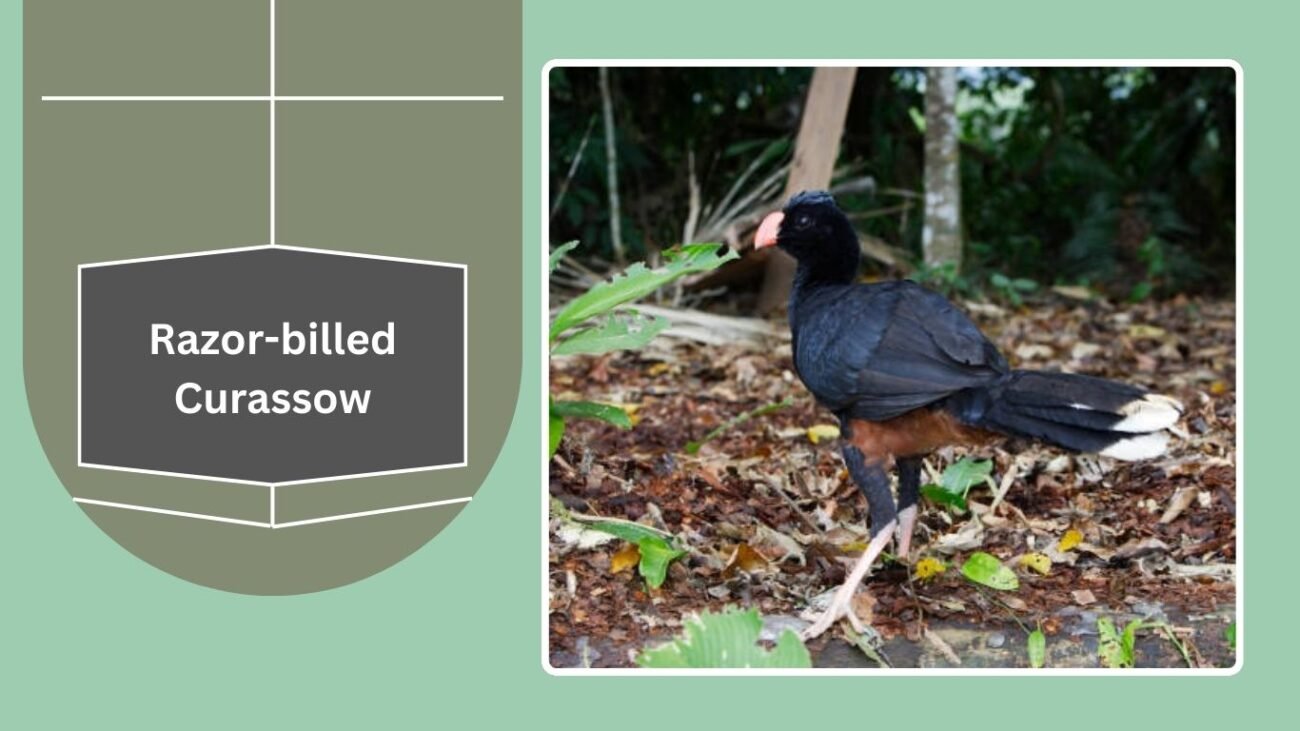
The Razor-billed Curassow (Mitu tuberosum) is a large Amazonian bird known for its heavy bill and powerful appearance.
Identification
- Scientific name: Mitu tuberosum
- Male and Female plumage: Both sexes are similar—black plumage with a greenish gloss, white belly, strong red bill, and reddish legs
- Size: 82–90 cm (32–35 in) in length
Habitat and Range
They are found throughout the Amazon rainforest, including Brazil, Peru, Ecuador, Colombia, and Bolivia, especially in lowland forests.
Behavior and Diet
Razor-billed Curassows feed on fruits, seeds, and insects, often following river edges. They are ground dwellers but roost in trees at night. Their loud calls echo through the forest during the breeding season.
10. Helmeted Curassow
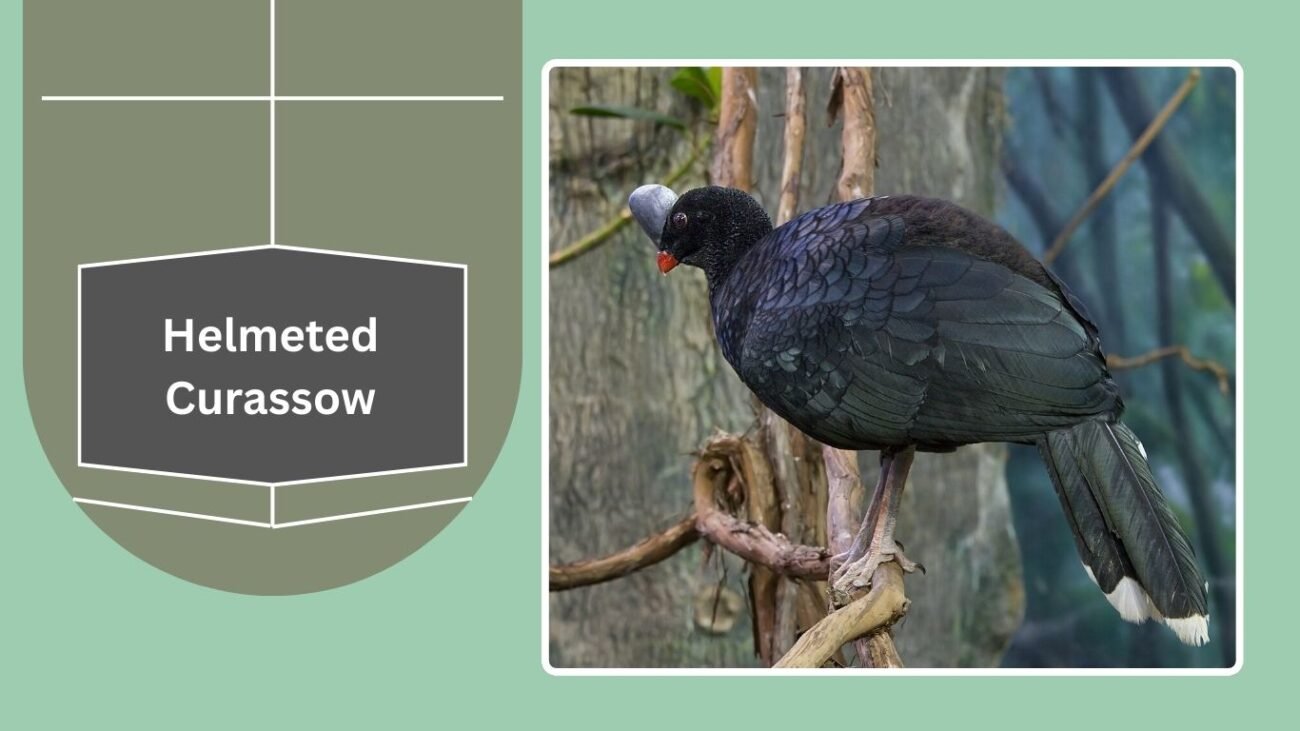
The Helmeted Curassow (Pauxi pauxi) is a large and striking bird, easily recognized by the distinctive bluish casque (helmet-like structure) on its forehead.
Identification
- Scientific name: Pauxi pauxi
- Male and Female plumage: Both sexes similar—black body with greenish sheen, white belly, bluish casque, red legs
- Size: 83–92 cm (33–36 in) in length
Habitat and Range
They inhabit montane forests of western Venezuela and northeastern Colombia, usually between 500–1,500 meters in elevation.
Behavior and Diet
Helmeted Curassows forage on the forest floor for fruits, seeds, shoots, and small invertebrates. They are shy birds, living in pairs or small groups, and are threatened by hunting and deforestation.
11. Saffron-headed Curassow
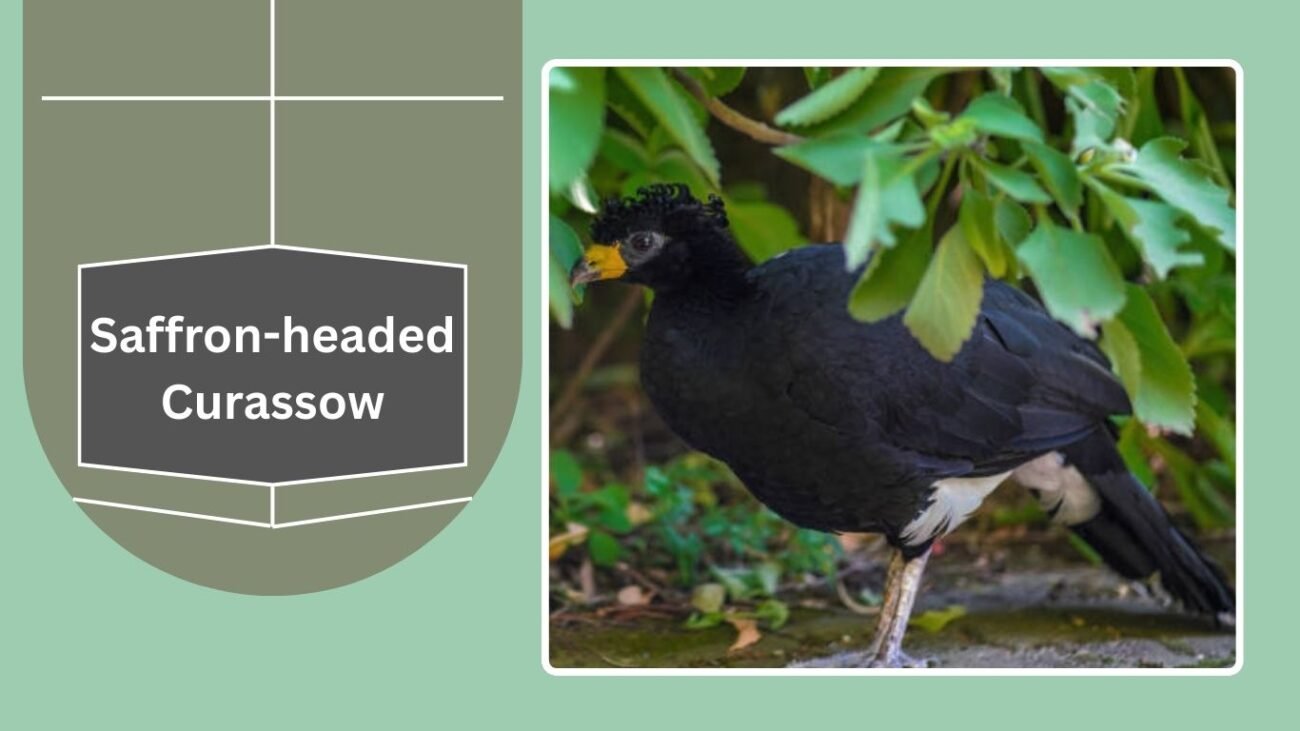
The Saffron-headed Curassow (Crax daubentoni suci) is a rare curassow subspecies, recognized for its bright saffron-colored head and distinctive appearance.
Identification
- Scientific name: Crax daubentoni suci
- Male plumage: Black glossy body, saffron-yellow head and neck, curly crest, white belly
- Female plumage: More subdued, brown to rufous with barred markings
- Size: Around 85–90 cm (33–35 in) in length
Habitat and Range
This rare bird is restricted to forested regions of northern South America, with a very limited distribution.
Behavior and Diet
They forage on the ground for fruits, seeds, berries, and insects. Due to their striking coloration, they are vulnerable to hunting, and habitat destruction further threatens their survival.
12. Horned Curassow
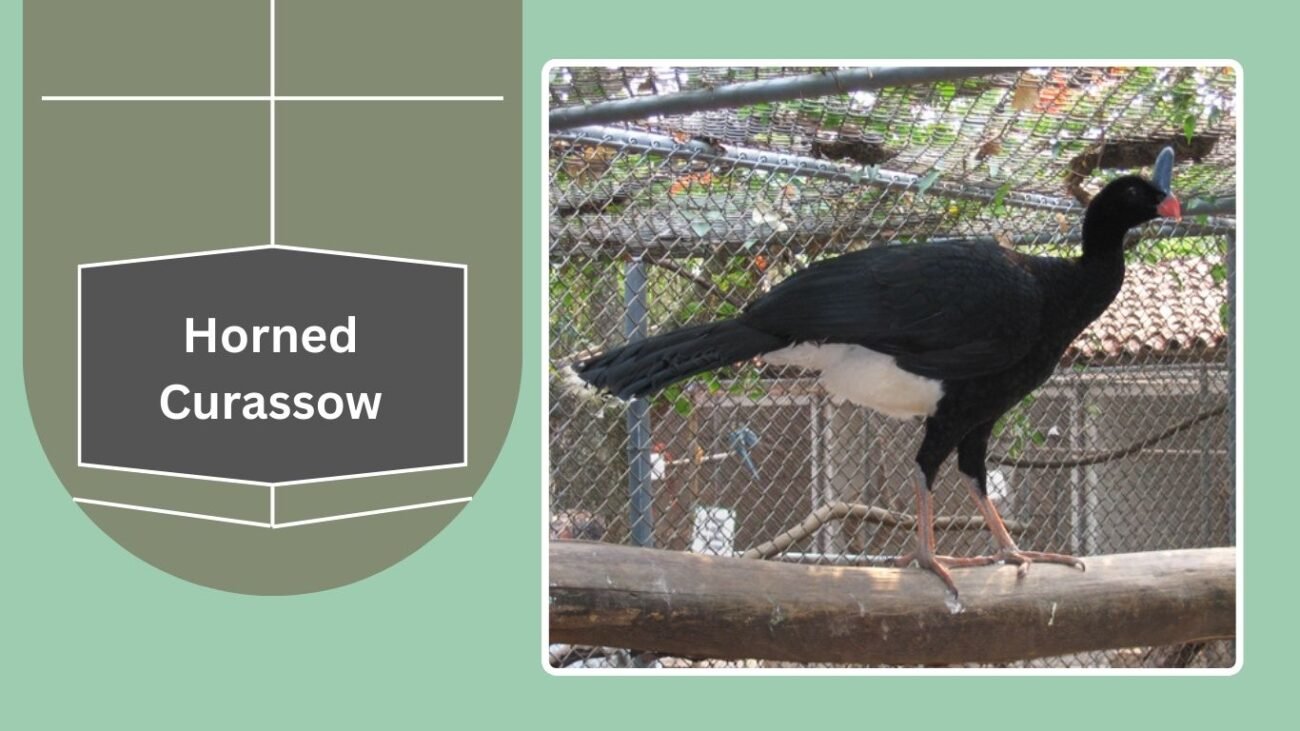
The Horned Curassow (Pauxi unicornis) is a rare and endangered species notable for the unique horn-like projection on its forehead.
Identification
- Scientific name: Pauxi unicornis
- Male and Female plumage: Both sexes similar—black body with bluish-green sheen, white belly and undertail, grayish horn-like casque on the forehead
- Size: 85–95 cm (33–37 in) in length
Habitat and Range
They are found in subtropical and montane forests of Bolivia and southern Peru, usually in remote and rugged terrain.
Behavior and Diet
Horned Curassows feed on fallen fruits, seeds, leaves, and small invertebrates. They are secretive and solitary, making them difficult to observe in the wild. Populations are severely declining due to hunting and habitat loss.
13. Red-billed Curassow
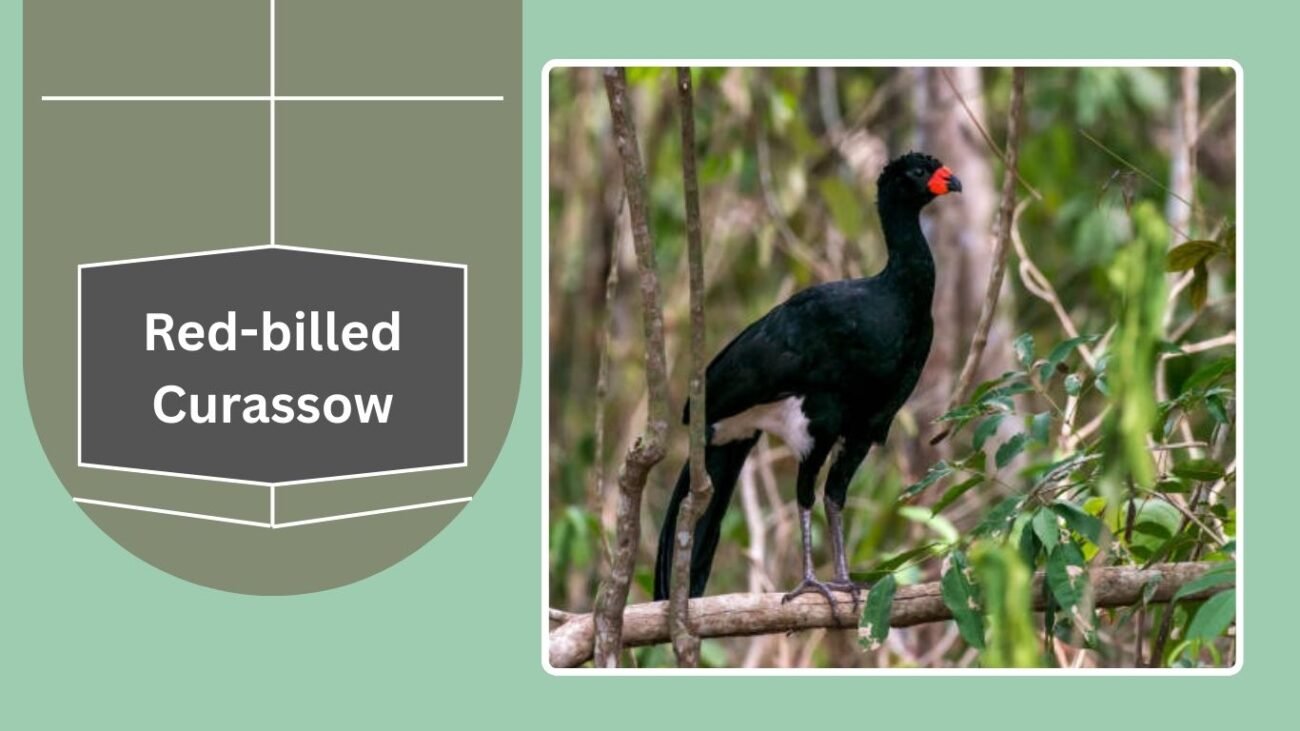
The Red-billed Curassow (Crax blumenbachii) is an endangered bird of Brazil’s Atlantic Forest, easily identified by its vivid red bill.
Identification
- Scientific name: Crax blumenbachii
- Male plumage: Glossy black body, curly crest, bright red bill, white belly and undertail
- Female plumage: Brown to black with barred markings, lacks red bill
- Size: 82–89 cm (32–35 in) in length
Habitat and Range
They are restricted to fragmented patches of the Atlantic Forest in eastern Brazil, one of the most threatened ecosystems in the world.
Behavior and Diet
Red-billed Curassows are mainly frugivorous, feeding on forest fruits and seeds, but they also eat insects and small invertebrates. They are shy ground-dwellers and highly vulnerable due to hunting and deforestation.
14. White-browed Curassow
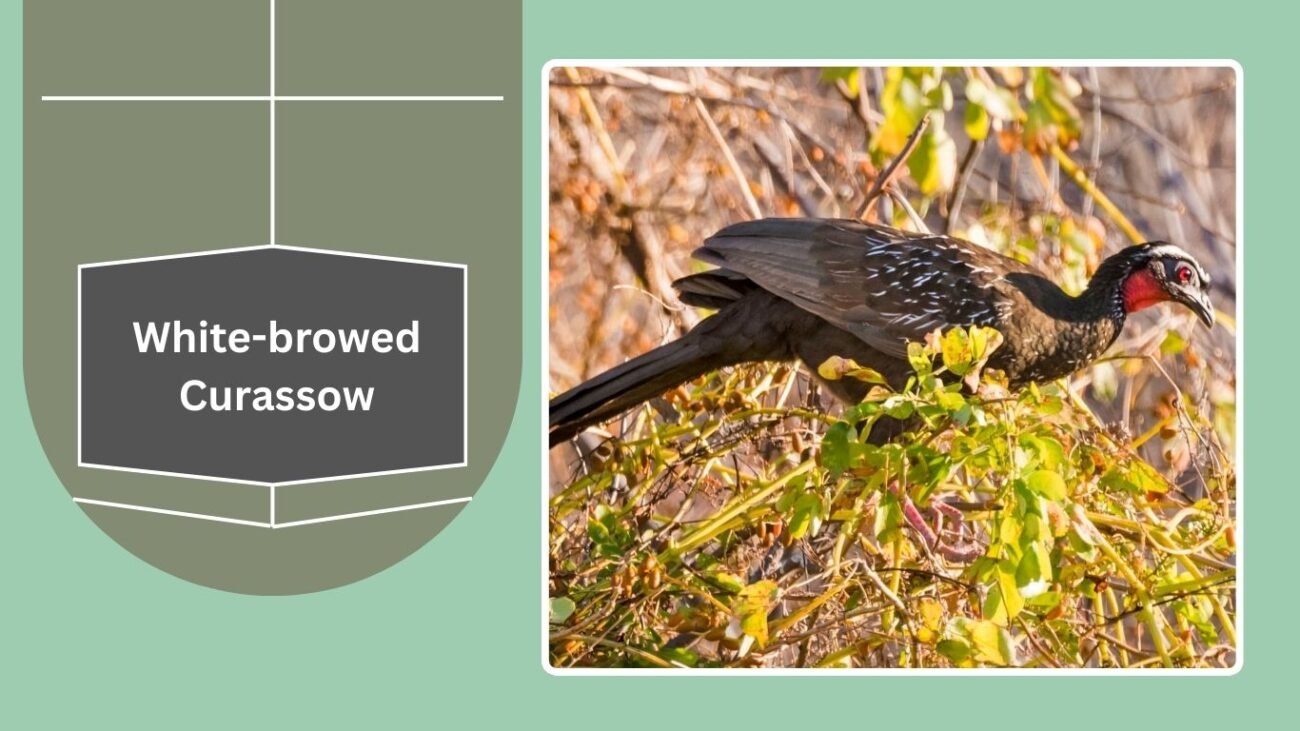
The White-browed Curassow (Crax alberti albescens) is a striking bird known for its bold white eyebrow stripe that contrasts with its dark plumage.
Identification
- Scientific name: Crax alberti albescens
- Male plumage: Glossy black body, prominent white eyebrow, curly crest, white belly and undertail
- Female plumage: Brown to rufous with lighter markings, lacks the bold white eyebrow
- Size: 80–90 cm (31–35 in) in length
Habitat and Range
They inhabit dense tropical forests in localized areas of South America, though their exact distribution is limited and populations are declining.
Behavior and Diet
White-browed Curassows forage for fruits, seeds, berries, and insects on the forest floor. They are elusive and mostly solitary, moving quietly through thick vegetation.
15. Nocturnal Curassow

The Nocturnal Curassow (Nothocrax urumutum) is unique among curassows for its nocturnal lifestyle, being most active at night.
Identification
- Scientific name: Nothocrax urumutum
- Male and Female plumage: Both sexes similar—dark brown to black plumage with faint mottling, shorter crest compared to other curassows
- Size: 70–80 cm (27–31 in) in length
Habitat and Range
They inhabit dense lowland forests across the Amazon Basin, including Brazil, Colombia, Ecuador, and Peru.
Behavior and Diet
Unlike other curassows, they are active mainly at night, feeding on fruits, seeds, and small insects. Their deep, booming calls can be heard in the dark, making them more often detected by sound than by sight.