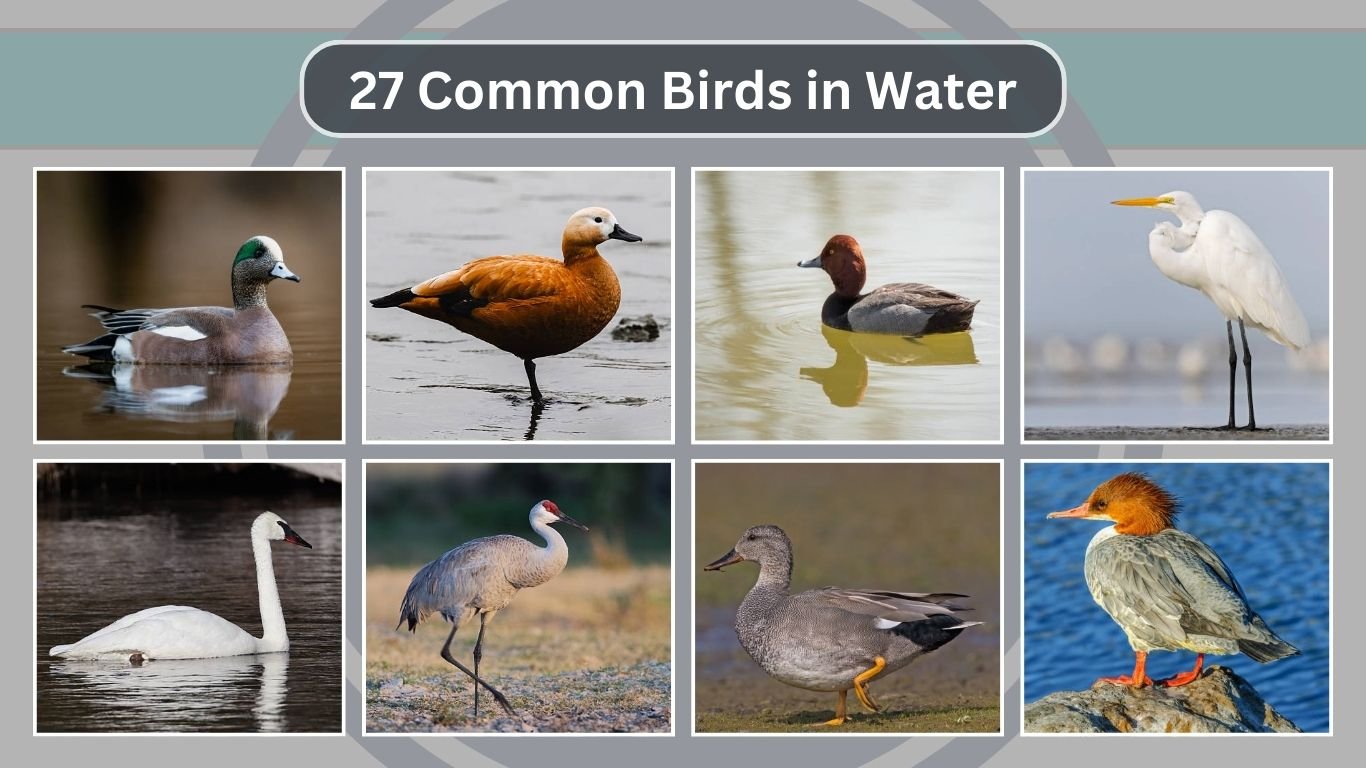
Water birds play a vital role in wetland and aquatic ecosystems, and many of them are familiar sights in ponds, rivers, lakes, and marshes across the world. From graceful swans and cranes to colorful ducks and striking herons, these species not only add beauty to natural landscapes but also help maintain ecological balance. In this guide, we’ll explore 27 common birds that live in or around water, highlighting their identification, habitats, behaviors, nesting habits, and diets.
1. Mallard
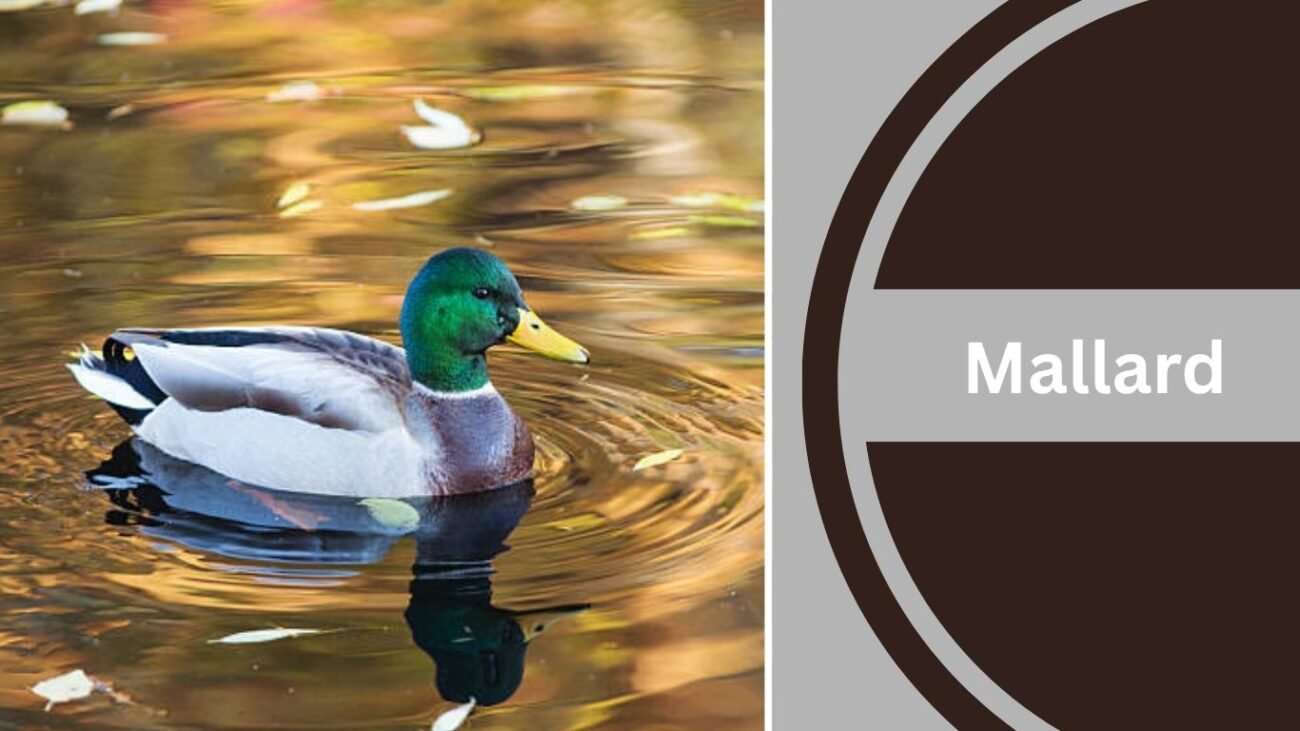
The Mallard (Anas platyrhynchos) is one of the most common and widely recognized waterfowl in the world. Known for its adaptability, it can thrive in ponds, lakes, rivers, and wetlands across North America, Europe, and Asia. Males are especially notable for their striking plumage, while females blend well into their environment with camouflaged feathers.
Identification
- Male: Glossy green head, white neck ring, chestnut-brown chest, gray body, yellow bill.
- Female: Mottled brown overall, orange bill with dark markings.
- Both sexes have a distinctive blue speculum (wing patch) bordered with white.
Habitat
Mallards live in freshwater wetlands, lakes, rivers, ponds, marshes, and even urban parks. They adapt easily to human environments and can often be seen in city lakes and canals.
Behaviors
Mallards are dabbling ducks, meaning they feed at the surface of the water rather than diving. They are social, often forming flocks, and migrate in groups during seasonal changes. Courtship displays are elaborate, with males showing off their plumage to attract females.
Nest
The female builds a ground nest, usually hidden among grasses or reeds near water. The nest is a shallow depression lined with grass and down feathers. Clutches usually contain 7–10 eggs, and the female incubates them alone.
Diet
Mallards are omnivorous. Their diet includes aquatic plants, seeds, grains, insects, snails, and small fish. In urban areas, they often eat bread or food given by humans, though natural foods are healthier for them.
2. Canada Goose
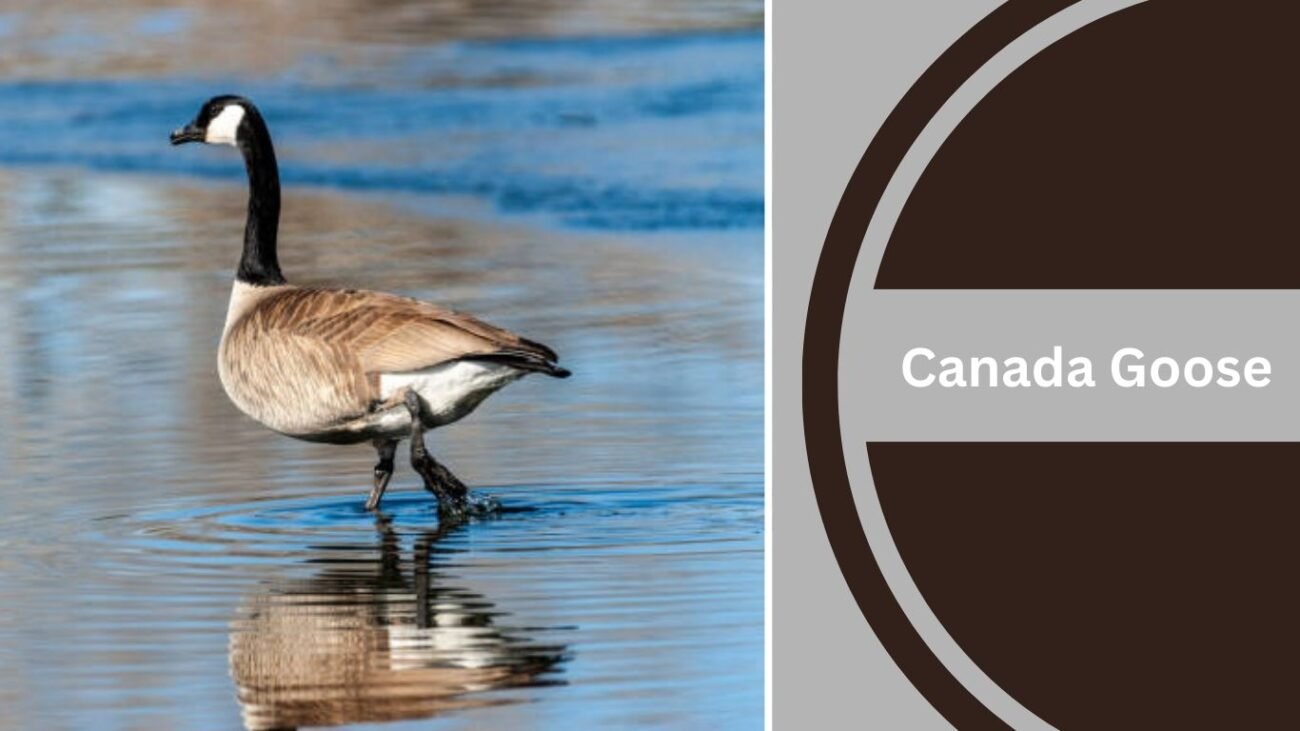
The Canada Goose (Branta canadensis) is a large water bird easily recognized by its black head and neck with a contrasting white cheek patch. It is one of the most widespread geese in North America and is also found in parts of Europe.
Identification
- Large body with brownish-gray plumage.
- Black head and neck with white chinstrap.
- Long neck and loud honking calls.
Habitat
Found in lakes, rivers, ponds, wetlands, and grassy fields near water. They are highly adaptable and often live in city parks, golf courses, and agricultural lands.
Behaviors
Known for their V-shaped migration flights and strong family bonds. They are highly territorial during breeding but form large flocks in winter. Their loud calls are used to communicate within the flock.
Nest
Built on the ground near water, often on islands or shorelines. The nest is lined with grass and down feathers. The female incubates while the male guards the territory.
Diet
Primarily herbivorous, feeding on grasses, grains, aquatic plants, and seeds. They may also eat small insects and crustaceans.
3. Great Blue Heron
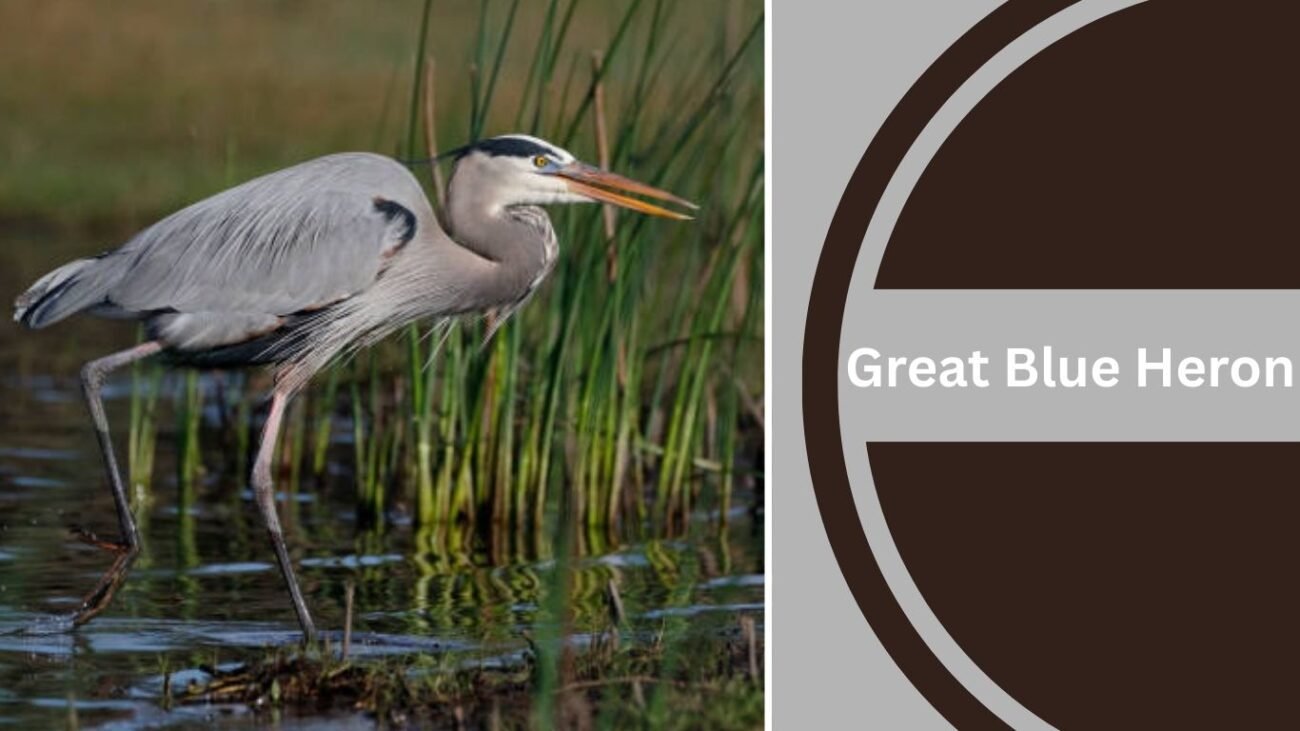
The Great Blue Heron (Ardea herodias) is the largest heron in North America and is a common sight along shorelines, rivers, marshes, and ponds.
Identification
- Tall wading bird with long legs and neck.
- Gray-blue plumage with black plumes on the head.
- Sharp yellow bill and slow, steady wingbeats in flight.
Habitat
Lives in both freshwater and saltwater environments, including rivers, lakes, marshes, coastal shores, and estuaries.
Behaviors
A solitary hunter, often seen standing motionless in shallow water while waiting to spear fish with its sharp bill. It flies with its neck tucked into an S-shape.
Nest
Nests in tall trees, usually in colonies called rookeries. The nest is a large stick platform lined with softer materials.
Diet
Carnivorous, mainly feeding on fish, frogs, snakes, insects, and small mammals. Occasionally eats other birds.
4. Mute Swan
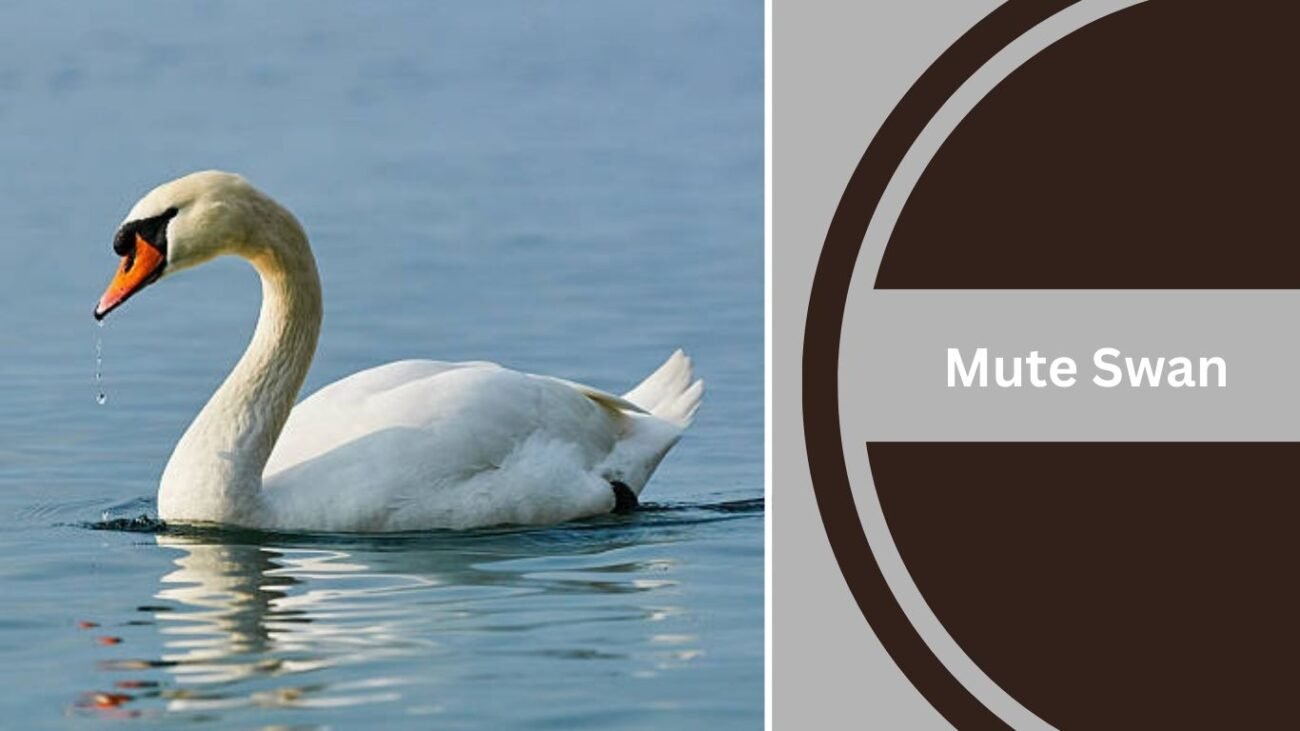
The Mute Swan (Cygnus olor) is a graceful water bird known for its long, curved neck and pure white plumage. It is native to Europe and Asia but has also been introduced to North America.
Identification
- Large white body with an orange bill and black knob at the base.
- Long, elegant neck often held in an S-shape.
- Males (cobs) are larger than females (pens).
Habitat
Commonly found in lakes, slow rivers, ponds, and coastal lagoons. Prefers calm waters with abundant aquatic vegetation.
Behaviors
Mute Swans are territorial, especially during breeding season. They glide smoothly on water and often display aggressive postures by arching their wings. Despite their name, they are not completely silent and make hissing and grunting sounds.
Nest
A massive nest of reeds and grasses built near the water’s edge. The female incubates while the male guards the nest.
Diet
Feeds mainly on aquatic plants, roots, and algae. They may also eat small insects, fish, and frogs occasionally.
5. Wood Duck
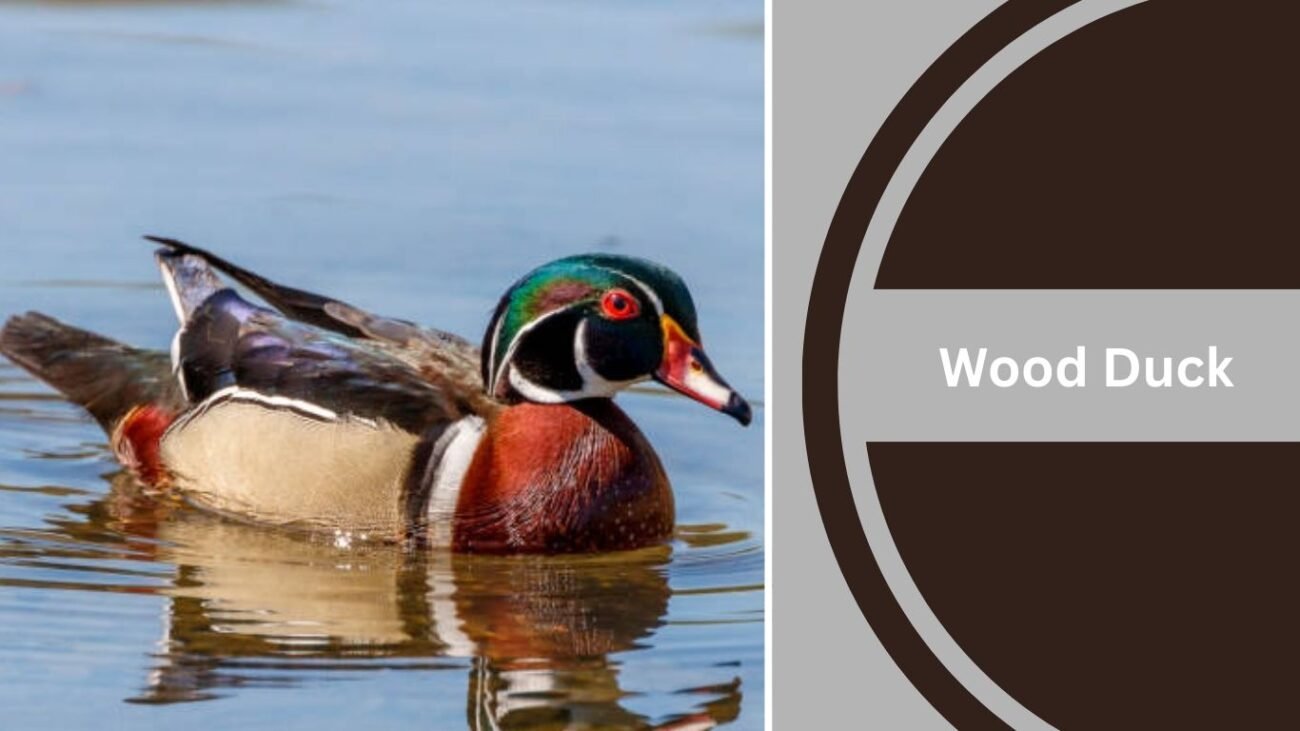
The Wood Duck (Aix sponsa) is one of the most colorful ducks in North America, often found in wooded swamps and ponds.
Identification
- Male: Iridescent green and purple head, red eyes, white throat stripes, and multicolored body.
- Female: Gray-brown body with a white eye-ring and crested head.
- Both have square-shaped tails.
Habitat
Prefers wooded swamps, ponds, marshes, and slow-moving rivers. They are unique among ducks for their preference for forested wetlands.
Behaviors
Known for nesting in tree cavities and their ability to perch on branches. They are agile flyers and often migrate in small flocks.
Nest
Built in tree cavities near water, sometimes using nest boxes provided by humans. Females line the nest with down feathers. Ducklings leap from the nest shortly after hatching.
Diet
Omnivorous, eating seeds, fruits, acorns, aquatic plants, insects, and small crustaceans.
6. American Coot
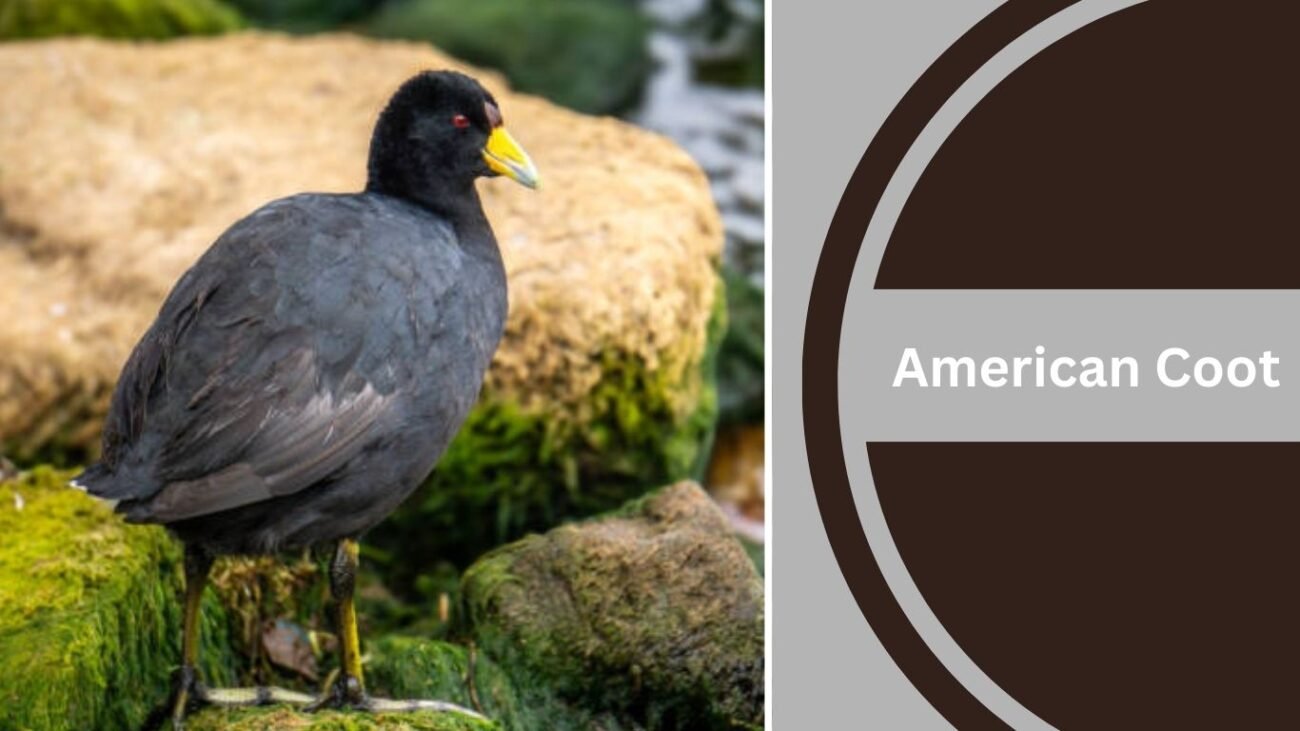
The American Coot (Fulica americana) is a medium-sized waterbird often mistaken for a duck, but it belongs to the rail family. It is common across North America in freshwater habitats.
Identification
- Slate-gray body with a white bill and forehead shield.
- Red eyes and short wings.
- Greenish lobed toes instead of webbed feet.
Habitat
Lives in lakes, ponds, marshes, and slow-moving rivers. They prefer areas with abundant aquatic vegetation.
Behaviors
Strong swimmers and divers, often seen paddling in groups. They are aggressive toward other birds during breeding and make short, jerky flights with rapid wingbeats.
Nest
Floating nests built from vegetation, usually anchored to cattails or reeds. Both parents share incubation duties.
Diet
Feeds on aquatic plants, algae, seeds, and small animals such as insects, snails, and fish. They sometimes steal food from ducks.
7. Common Loon
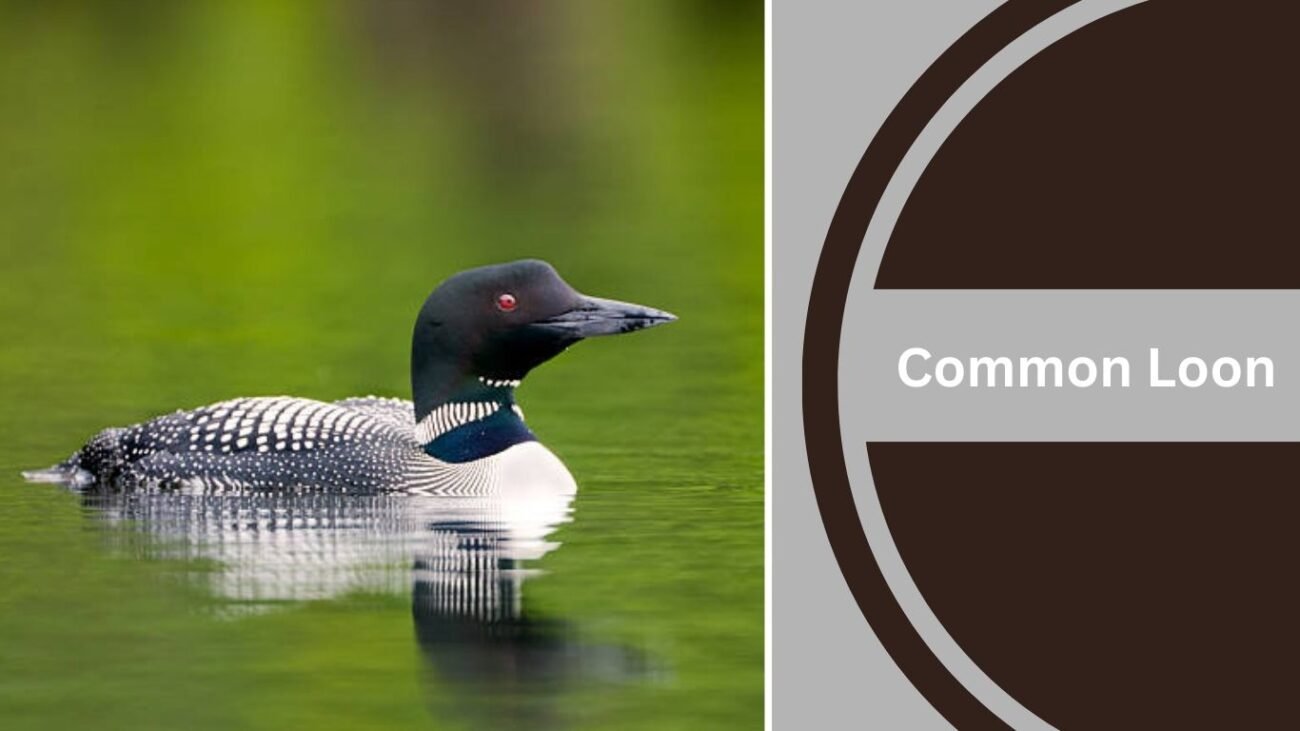
The Common Loon (Gavia immer) is a striking waterbird known for its haunting calls and striking breeding plumage. It is a symbol of northern lakes in North America.
Identification
- Black head, white necklace, and checkered black-and-white back during breeding.
- In winter, grayish body with white underparts.
- Red eyes and sharp dagger-like bill.
Habitat
Prefers clear freshwater lakes in summer. Winters along coastal bays, estuaries, and large inland lakes.
Behaviors
Excellent divers, capable of swimming long distances underwater to catch fish. Their eerie calls serve as communication and territorial signals. They are strong fliers but need a long water runway for takeoff.
Nest
Shallow nests built near the water’s edge, often on small islands. Both parents share incubation and chick-rearing.
Diet
Carnivorous, feeding mainly on fish such as perch and trout. They also eat amphibians, crustaceans, and aquatic insects.
8. Double-Crested Cormorant
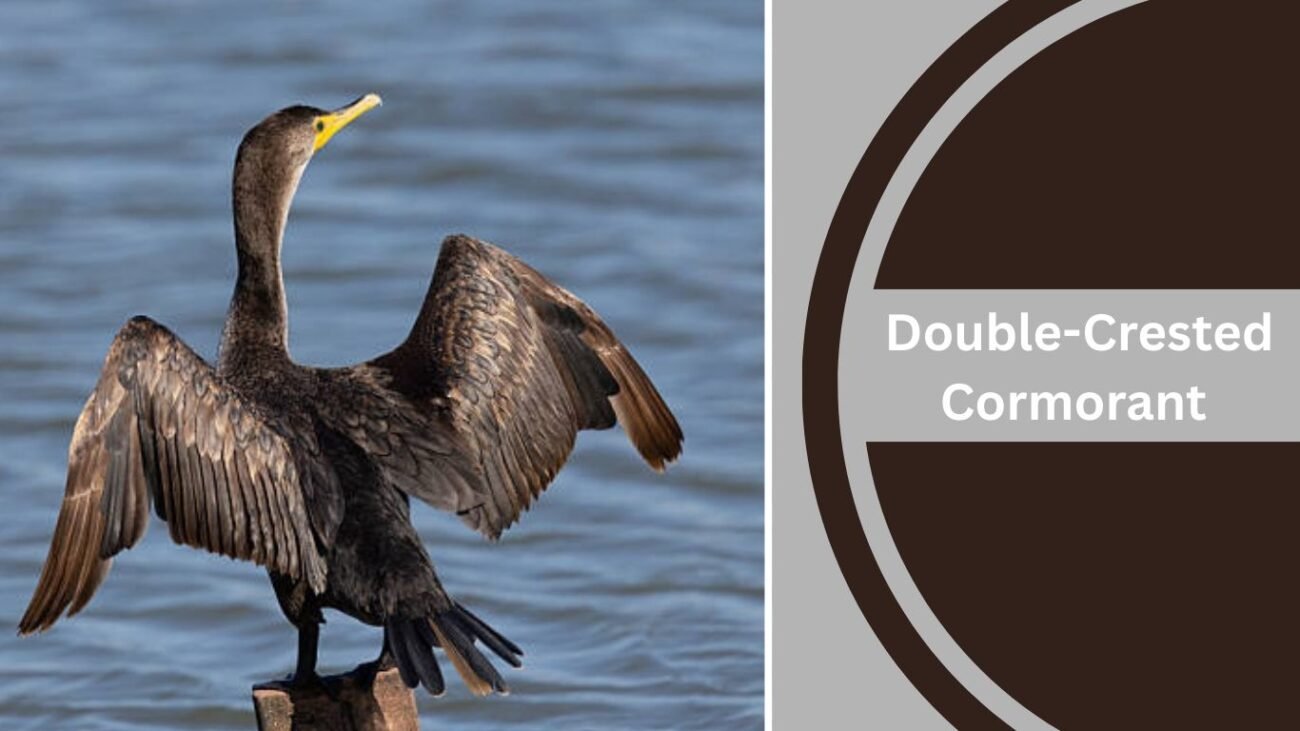
The Double-Crested Cormorant (Phalacrocorax auritus) is a large, fish-eating waterbird often seen perched with wings spread to dry. It is widespread across North America.
Identification
- Large blackish body with a long neck and hooked bill.
- Orange-yellow skin at the base of the bill.
- During breeding, adults show two small tufts (“double crests”) of white feathers.
Habitat
Found in lakes, rivers, reservoirs, coastal waters, and estuaries. They prefer areas rich in fish populations and often roost on rocks, pilings, or trees near water.
Behaviors
Expert divers, capable of swimming underwater to chase fish. They often hunt in groups and are commonly seen perched with wings outstretched to dry, as their feathers are less waterproof than those of ducks. They are strong fliers and migrate in flocks.
Nest
Colonial nesters, building large stick nests in trees, cliffs, or on the ground near water. Both parents incubate the eggs and feed the young by regurgitation.
Diet
Primarily fish, but they also eat amphibians, crustaceans, and occasionally small reptiles. Their efficient hunting sometimes brings them into conflict with fishermen.
9. Snowy Egret
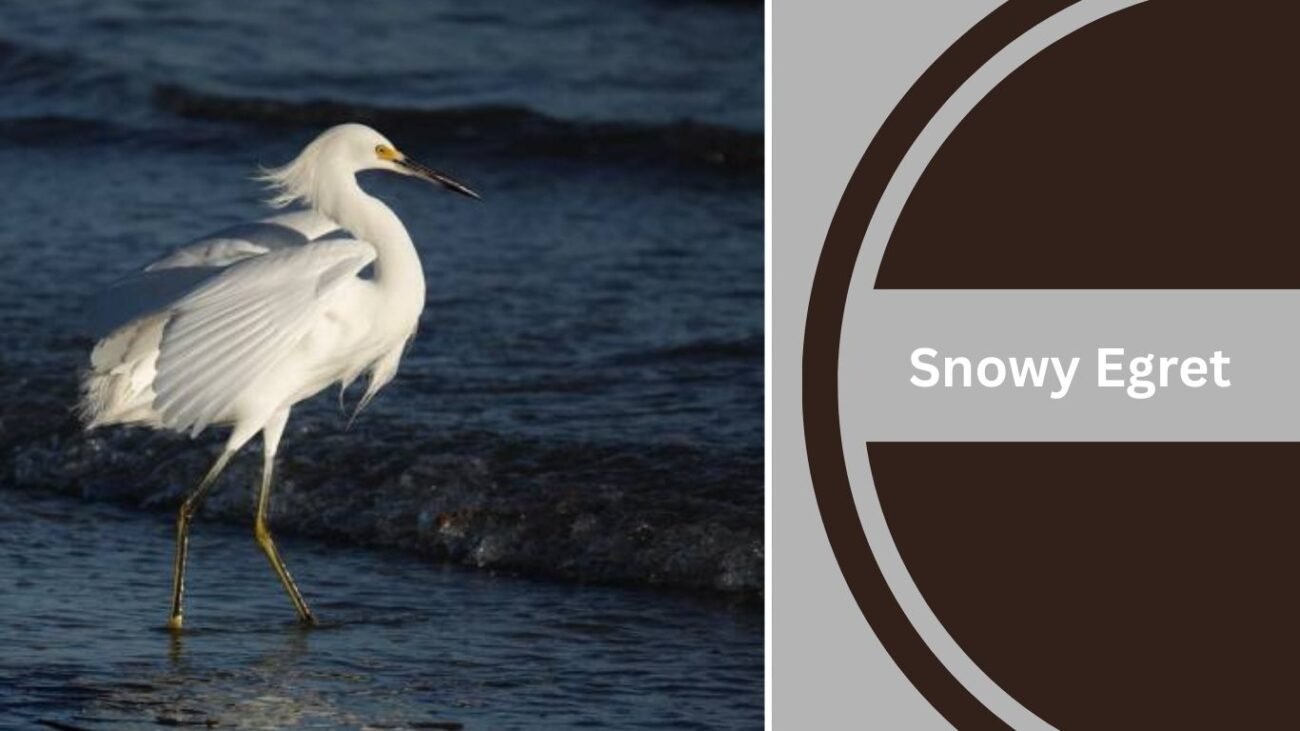
The Snowy Egret (Egretta thula) is a small, elegant heron admired for its white plumage and striking yellow and black features.
Identification
- Slim white body with long black legs.
- Bright yellow feet, often called “golden slippers.”
- Black bill with yellow skin at the base.
- Delicate plumes on the head and neck during breeding.
Habitat
Prefers shallow wetlands, marshes, coastal lagoons, tidal flats, and estuaries. They thrive in both freshwater and saltwater habitats.
Behaviors
Active hunters, often seen stirring the water with their feet to flush out fish. They use quick movements and darting strikes with their sharp bill. Snowy Egrets are graceful fliers and often feed alongside other wading birds.
Nest
Nests in colonies, often with other herons and ibises. They build stick nests in shrubs or trees near water. Both parents help incubate and raise the chicks.
Diet
Feeds mainly on small fish, amphibians, crustaceans, and aquatic insects. They also eat snails, worms, and other invertebrates. Their feeding strategy is more energetic than larger, slower herons.
10. Pied-billed Grebe
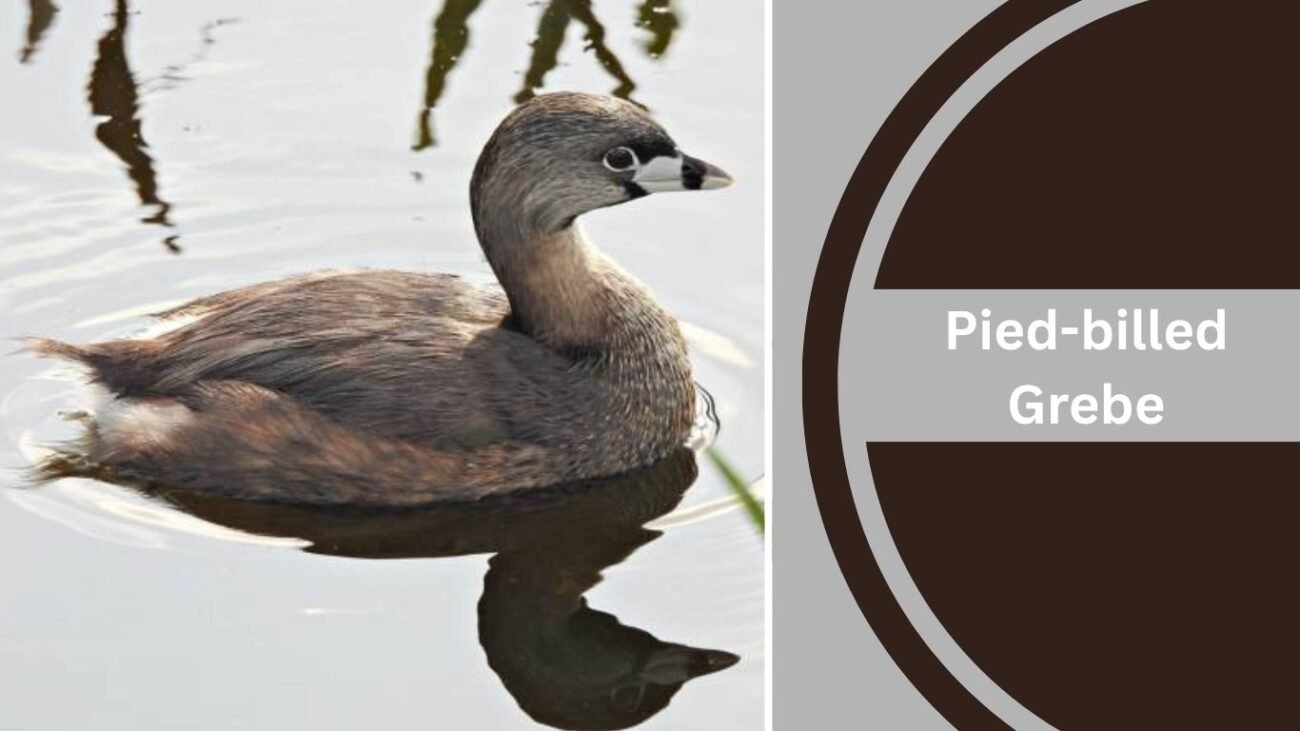
The Pied-billed Grebe (Podilymbus podiceps) is a small, secretive waterbird that spends most of its life on freshwater ponds and marshes. It is well known for its ability to sink quietly beneath the water’s surface to avoid predators.
Identification
- Small brownish bird with a short, thick bill.
- Breeding adults show a black band (“pied bill”) across their pale bill.
- Compact body with lobed toes instead of webbed feet.
Habitat
Found in freshwater ponds, lakes, marshes, and slow-moving rivers with dense vegetation. In winter, they may move to coastal bays and estuaries.
Behaviors
Shy and elusive, they often dive rather than fly when threatened. Excellent divers and swimmers, they propel themselves underwater using their lobed toes. They are solitary outside the breeding season.
Nest
Floating nests made from plant material anchored to cattails or reeds. The female covers the eggs with wet vegetation when leaving the nest. Both parents care for the young.
Diet
Feeds mainly on small fish, crustaceans, aquatic insects, snails, and amphibians. They swallow their own feathers to help digest bones and hard parts.
11. American White Pelican
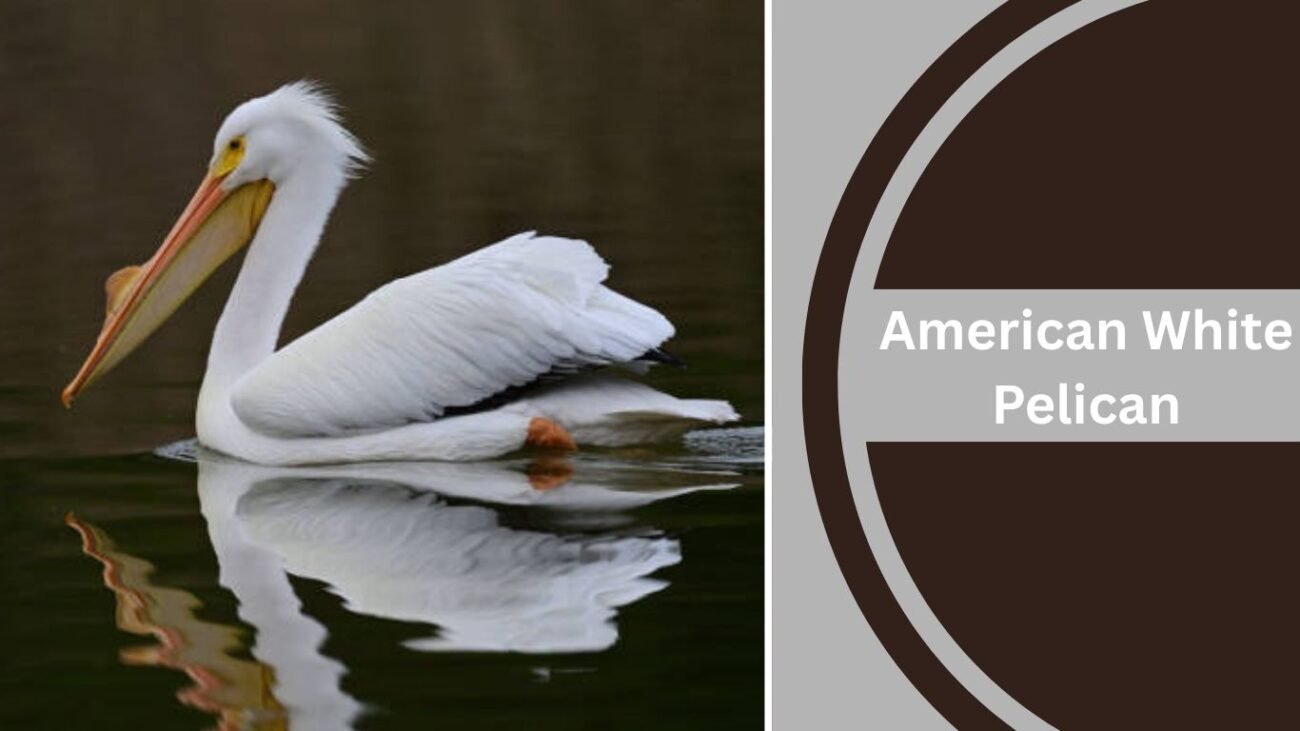
The American White Pelican (Pelecanus erythrorhynchos) is one of the largest North American waterbirds, famous for its cooperative feeding behavior.
Identification
- Enormous white body with black wing tips visible in flight.
- Long orange bill with a large throat pouch.
- During breeding, develops a yellow crest and a horn-like growth on the upper bill.
Habitat
Found in large freshwater lakes, reservoirs, rivers, and coastal bays. They breed on isolated islands in lakes across the northern Great Plains and Canadian prairies.
Behaviors
Unlike brown pelicans, they do not dive for fish. Instead, groups of pelicans herd fish into shallow waters and scoop them up. They are graceful fliers, often seen soaring in formation.
Nest
Colonial nesters, building shallow scrapes on the ground lined with vegetation or soil. Both parents share incubation and feeding duties.
Diet
Feeds mainly on fish, including minnows and carp, as well as amphibians and crustaceans. They catch prey by scooping it into their expandable throat pouch.
12. Northern Shoveler
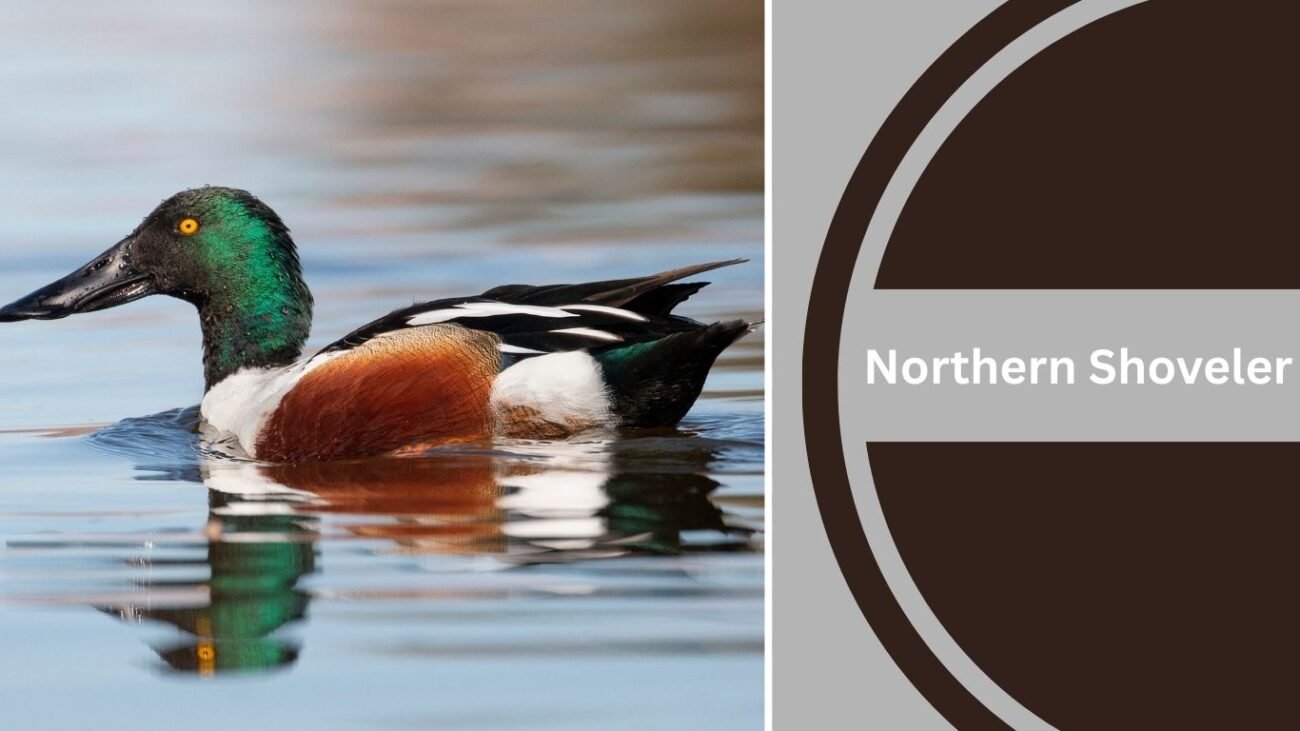
The Northern Shoveler (Anas clypeata) is a dabbling duck recognized by its large, spoon-shaped bill that it uses to filter food from the water.
Identification
- Male: Green head, white chest, chestnut sides, and distinctive broad, spatula-shaped bill.
- Female: Mottled brown with an oversized orange bill.
- Both sexes show blue forewings and green speculum in flight.
Habitat
Commonly found in shallow wetlands, ponds, marshes, and flooded fields. In winter, they migrate to coastal lagoons, estuaries, and southern wetlands.
Behaviors
They use their specialized bill to strain tiny organisms and seeds from the water, often swimming in circles to stir food up. Outside breeding season, they form mixed flocks with other dabbling ducks.
Nest
Built on the ground in grassy areas near water. The nest is a shallow scrape lined with grass and down. The female incubates while the male departs after mating.
Diet
Feeds on aquatic invertebrates, seeds, algae, and plankton. Their unique filter-feeding makes them stand out among ducks.
13. Green-winged Teal
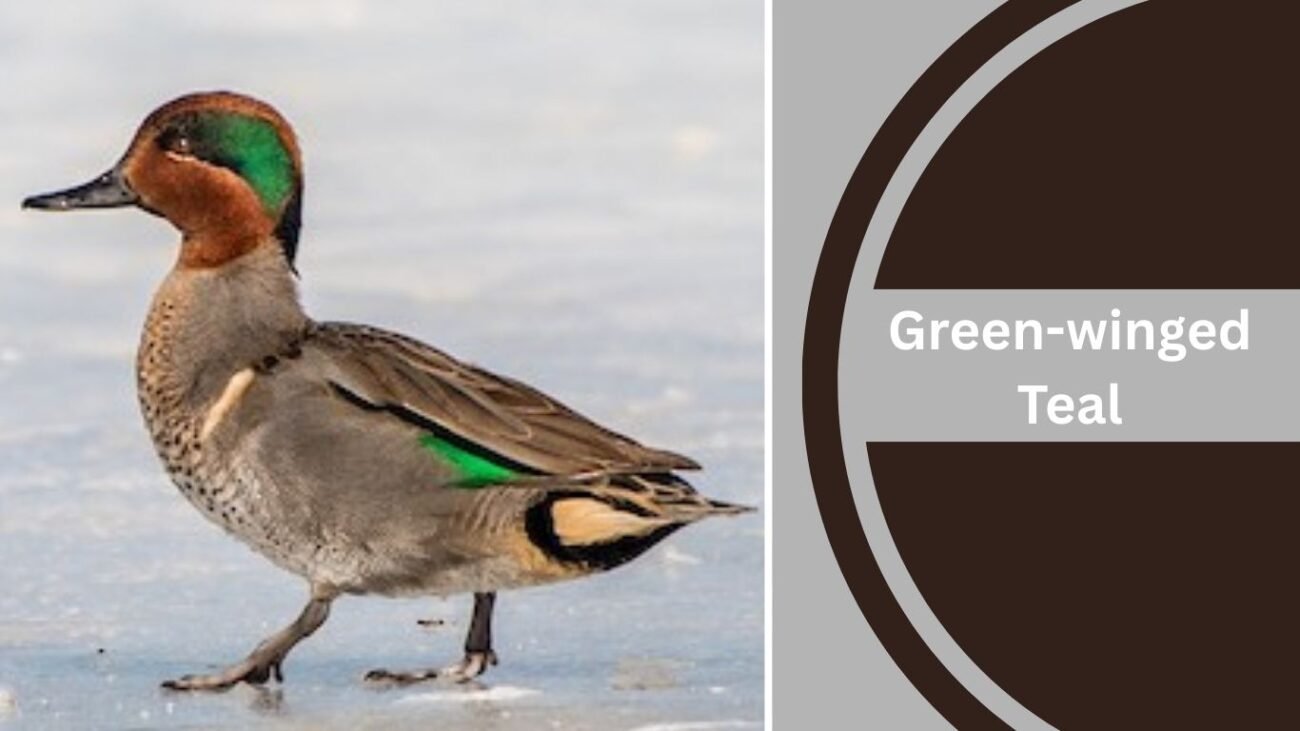
The Green-winged Teal (Anas crecca) is the smallest dabbling duck in North America, admired for its fast flight and colorful plumage.
Identification
- Male: Chestnut head with a broad green eye patch, gray body, and vertical white stripe on the side.
- Female: Mottled brown with a small, compact body and green speculum.
- Both sexes show bright green wing patches in flight.
Habitat
Prefers shallow freshwater ponds, marshes, rivers, and flooded fields. They are also found in coastal estuaries during migration and winter.
Behaviors
Agile and fast flyers, often seen in tight flocks. They forage in shallow water, dabbling and tipping forward to feed. Highly migratory, traveling long distances each year.
Nest
Ground nests built in dense grasses near water. The female lines the nest with down and incubates the eggs alone.
Diet
Eats seeds, aquatic plants, and invertebrates such as insects, snails, and crustaceans. They are opportunistic feeders and adapt to seasonal availability.
14. Gadwall
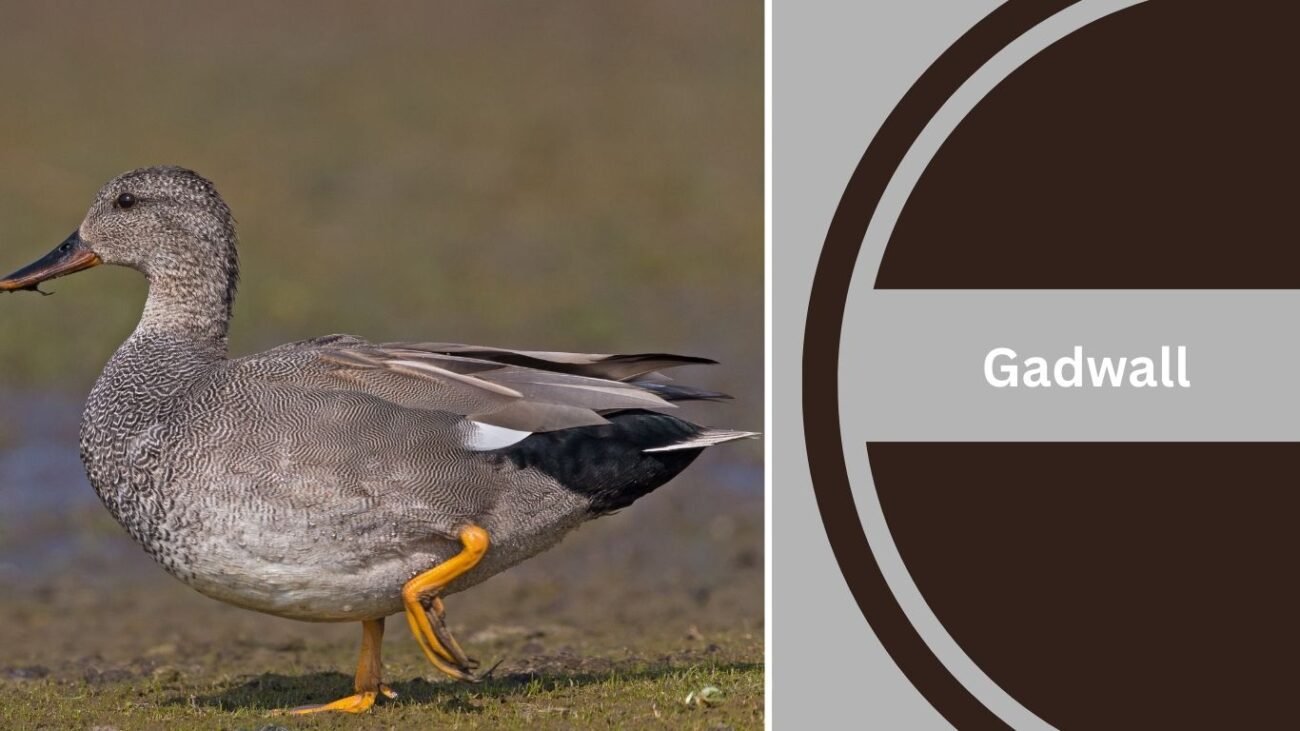
The Gadwall (Mareca strepera) is a medium-sized dabbling duck that may appear plain at first glance, but up close shows fine patterns and subtle beauty.
Identification
- Male: Gray-brown body with black rump and white wing patch visible in flight.
- Female: Mottled brown, resembling a female Mallard but slimmer.
- Both sexes have a slightly square-tipped tail.
Habitat
Inhabits freshwater marshes, lakes, reservoirs, and ponds. During winter, they are also found in coastal estuaries and lagoons.
Behaviors
Quiet and less showy compared to other ducks. They often mix with other dabbling ducks and are skilled at stealing food from coots and other waterbirds. Known for their graceful, direct flight.
Nest
Ground nests are hidden in grasses or reeds near water. The female incubates alone and lines the nest with down feathers.
Diet
Primarily herbivorous, feeding on aquatic plants, algae, seeds, and grasses. Occasionally eats insects and crustaceans.
15. Great Egret
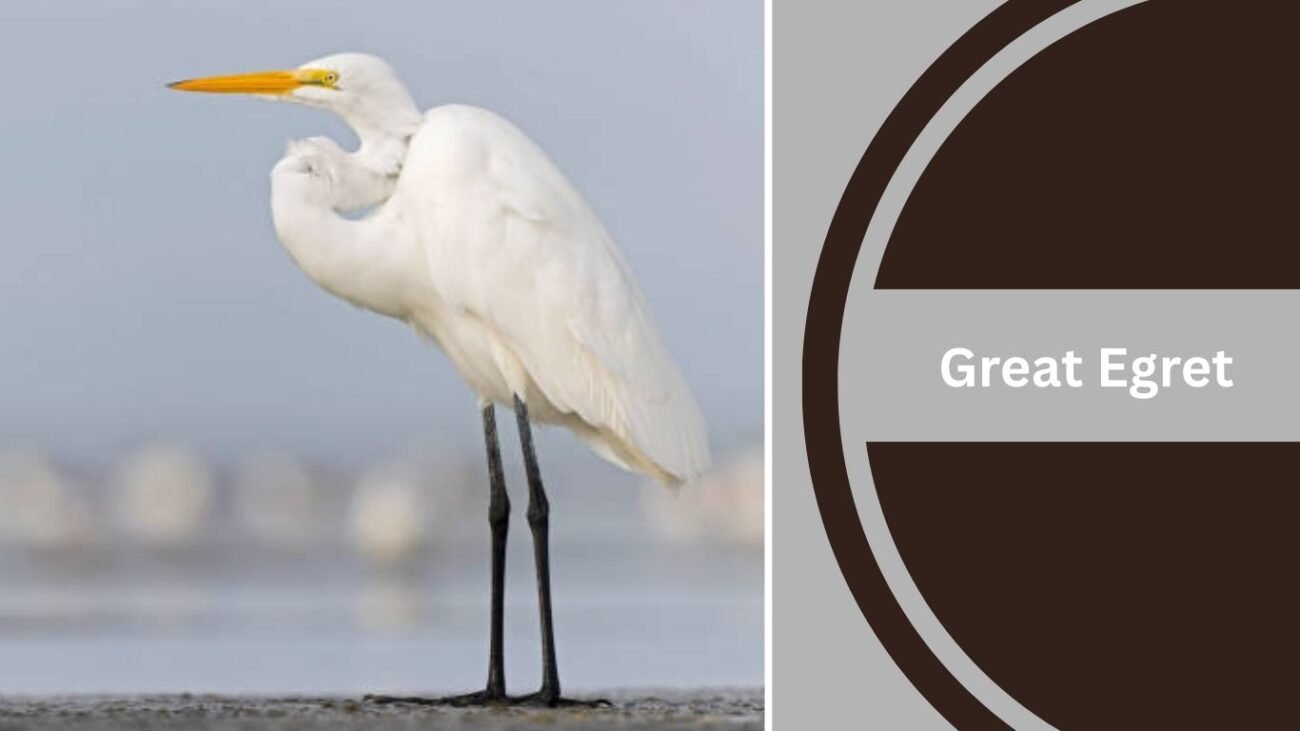
The Great Egret (Ardea alba) is a tall, elegant wading bird with striking white plumage and long legs, often seen stalking fish in shallow water.
Identification
- Large all-white body with long neck.
- Yellow bill and black legs and feet.
- In breeding season, develops long plumes on the back.
Habitat
Prefers freshwater and saltwater wetlands, including marshes, lakes, ponds, tidal flats, and mangroves.
Behaviors
Stalks prey slowly in shallow water, striking quickly with its sharp bill. They fly with steady wingbeats and their neck curved into an S-shape. Outside breeding, they are solitary but gather in rookeries to nest.
Nest
Nests in colonies, usually in tall trees or shrubs over water. The nest is built from sticks and lined with softer material. Both parents share incubation and feeding duties.
Diet
Feeds mainly on fish, but also eats amphibians, reptiles, crustaceans, and insects. Opportunistic hunters that adapt to seasonal prey availability.
16. Black-crowned Night Heron
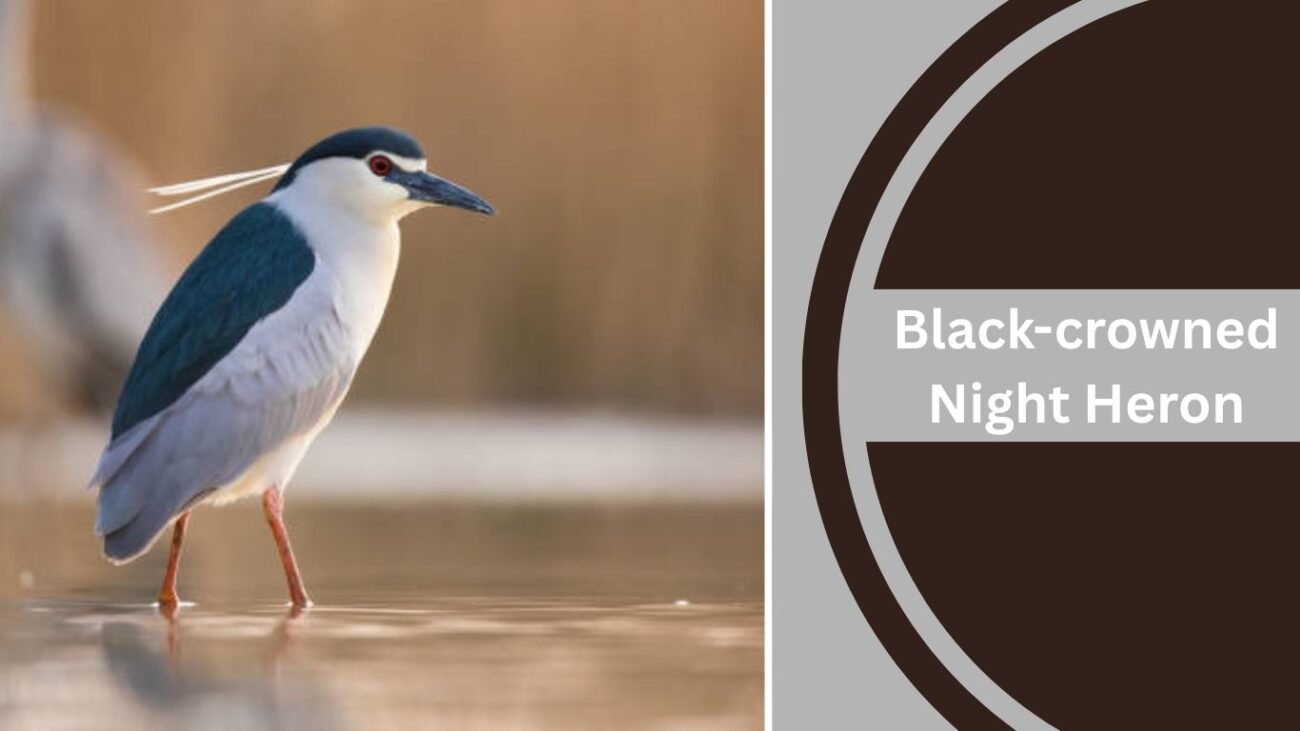
The Black-crowned Night Heron (Nycticorax nycticorax) is a medium-sized, stocky heron that is most active during dusk and nighttime, unlike many other herons.
Identification
- Stocky body with short neck and legs.
- Black crown and back with gray wings and white underparts.
- Red eyes and stout yellow bill.
- Juveniles are brown and streaked, resembling bitterns.
Habitat
Found in freshwater and saltwater wetlands, marshes, swamps, and along lakeshores and rivers. They prefer areas with dense vegetation for roosting.
Behaviors
Nocturnal hunters, often seen perching quietly by day and feeding at night. They are patient and strike quickly at fish and amphibians. They often nest in large colonies with other wading birds.
Nest
Stick nests built in trees, shrubs, or reed beds near water. Both parents incubate and feed the chicks.
Diet
Carnivorous, feeding on fish, amphibians, crustaceans, insects, and small mammals. They also scavenge and may take bird eggs.
17. Ring-necked Duck
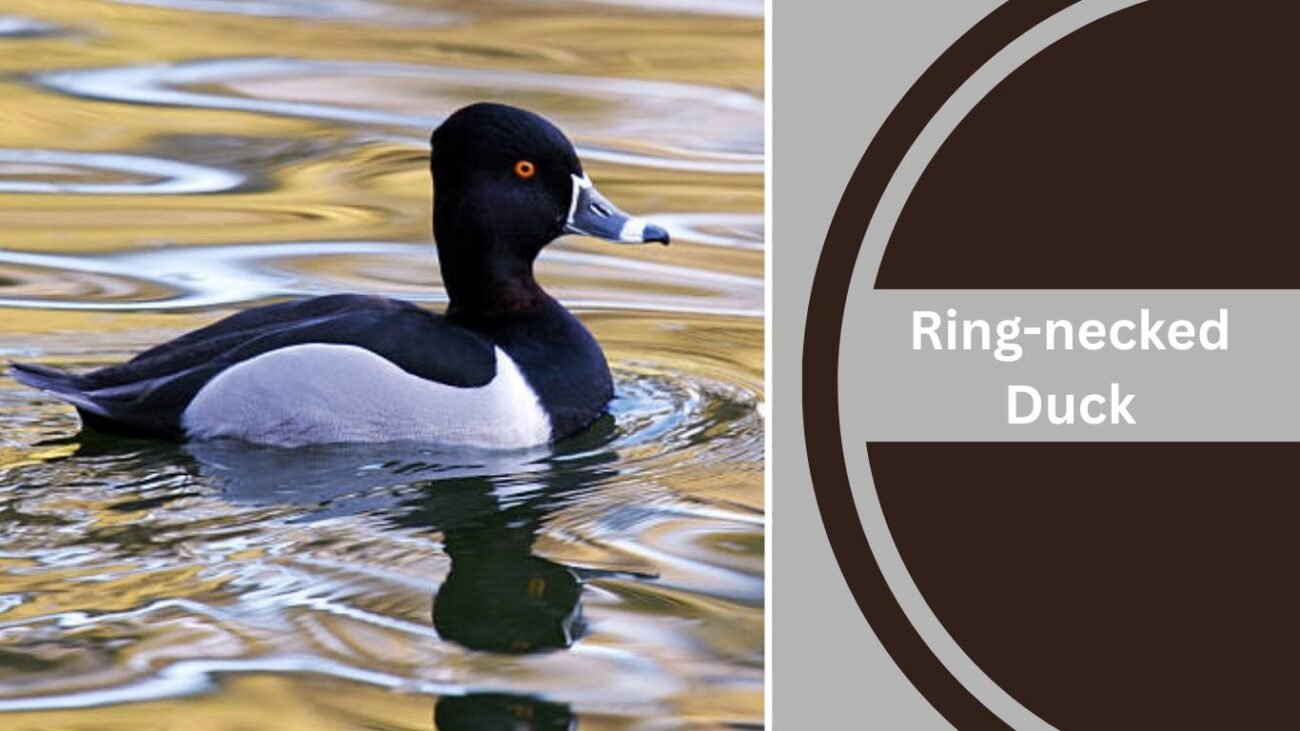
The Ring-necked Duck (Aythya collaris) is a medium-sized diving duck common in North America, known for its distinctive markings and diving habits.
Identification
- Male: Black back, gray sides, white ring near bill, faint brown ring around neck (hard to see).
- Female: Brown overall with a white eye-ring and pale face patch.
- Both sexes show a peaked head shape.
Habitat
Inhabits freshwater lakes, ponds, and marshes with abundant vegetation. Winters in southern U.S., Central America, and the Caribbean.
Behaviors
Excellent divers, often feeding underwater for long periods. They form small flocks and mix with other diving ducks during migration. Their flight is swift and direct.
Nest
Ground nests built in dense vegetation near water, often hidden among grasses or reeds. The female lines the nest with down feathers.
Diet
Feeds on aquatic plants, seeds, and tubers, as well as insects, snails, and small crustaceans. Their diving ability allows them to reach food unavailable to dabbling ducks.
18. Canvasback
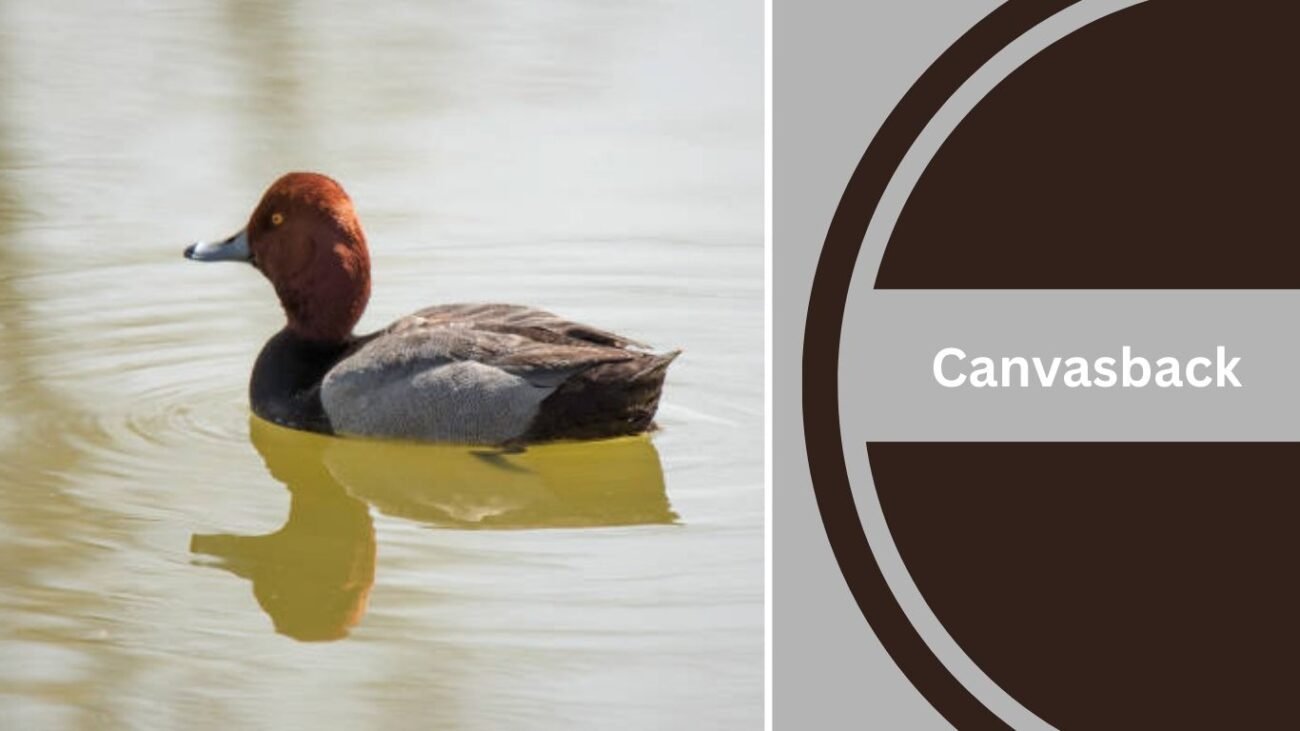
The Canvasback (Aythya valisineria) is a large diving duck admired for its striking profile and elegant appearance. It is often considered one of the most handsome ducks in North America.
Identification
- Male: Chestnut-red head, black chest, white back, and long sloping black bill.
- Female: Light brown head and body with a similar sloping bill.
- Both sexes have red eyes in breeding season (males especially vivid).
Habitat
Found in freshwater lakes, marshes, and ponds during breeding season. Winters in coastal bays, estuaries, and large lakes.
Behaviors
Strong divers that forage underwater for aquatic plants and invertebrates. They form large flocks in winter and migrate in groups. Known for fast, powerful flight.
Nest
Nests are built in dense marsh vegetation, often floating platforms made from reeds and cattails. The female incubates and cares for the young.
Diet
Feeds mainly on aquatic plants, especially wild celery, as well as seeds, tubers, and aquatic insects. Their diet varies seasonally.
19. Redhead
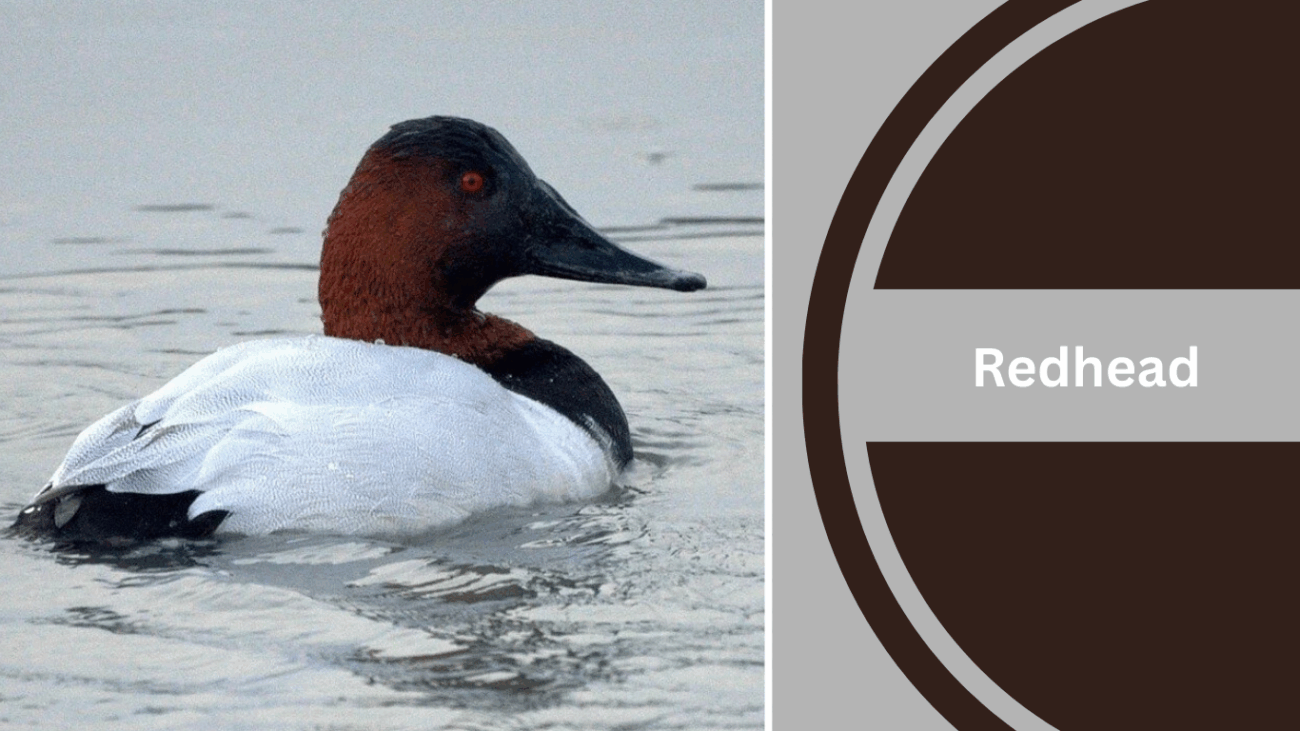
The Redhead (Aythya americana) is a medium-sized diving duck named for the male’s bright coppery-red head. It is widespread across North America and is often seen in mixed flocks.
Identification
- Male: Reddish head, black breast, gray back, and blue bill with black tip.
- Female: Uniform brown body with a pale face and gray bill.
- Both sexes have rounded heads compared to Canvasbacks.
Habitat
Breeds in prairie potholes, marshes, and shallow freshwater lakes. Winters in southern U.S., Mexico, and the Caribbean, often in coastal bays and estuaries.
Behaviors
Highly social, forming large flocks with other duck species. They are strong divers but also feed by dabbling at the surface. Known for parasitic nesting, where females sometimes lay eggs in the nests of other ducks.
Nest
Usually placed over water on floating vegetation or in dense marsh cover. The female lines the nest with down feathers.
Diet
Omnivorous, feeding on seeds, aquatic plants, snails, clams, and insects. They adjust their diet depending on habitat and season.
20. American Wigeon
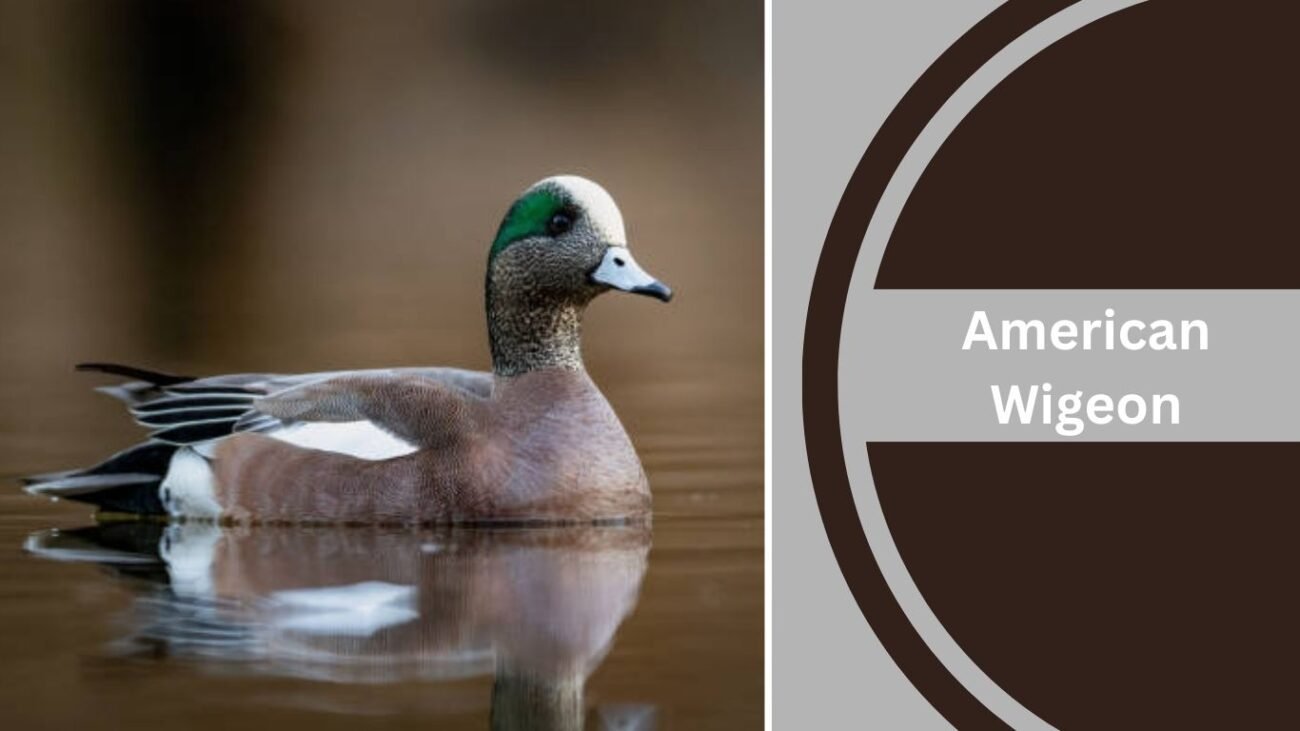
The American Wigeon (Mareca americana) is a medium-sized dabbling duck often called “baldpate” because of the male’s pale crown.
Identification
- Male: White crown, green eye patch, pinkish-brown body, and gray wings.
- Female: Gray-brown overall with a pale face and dark eye patch.
- Both sexes have a short bluish-gray bill tipped in black.
Habitat
Inhabits freshwater lakes, ponds, rivers, and wetlands. During migration and winter, they are often found in coastal estuaries and flooded fields.
Behaviors
Active foragers that often graze on land like geese. They are known for stealing food from diving ducks such as coots. Their flight is fast and agile.
Nest
Ground nests hidden in grasses or shrubs near water. The female incubates and raises the brood alone.
Diet
Primarily herbivorous, feeding on grasses, aquatic plants, and seeds. They also eat insects, snails, and small invertebrates, especially in summer.
21. Blue-winged Teal
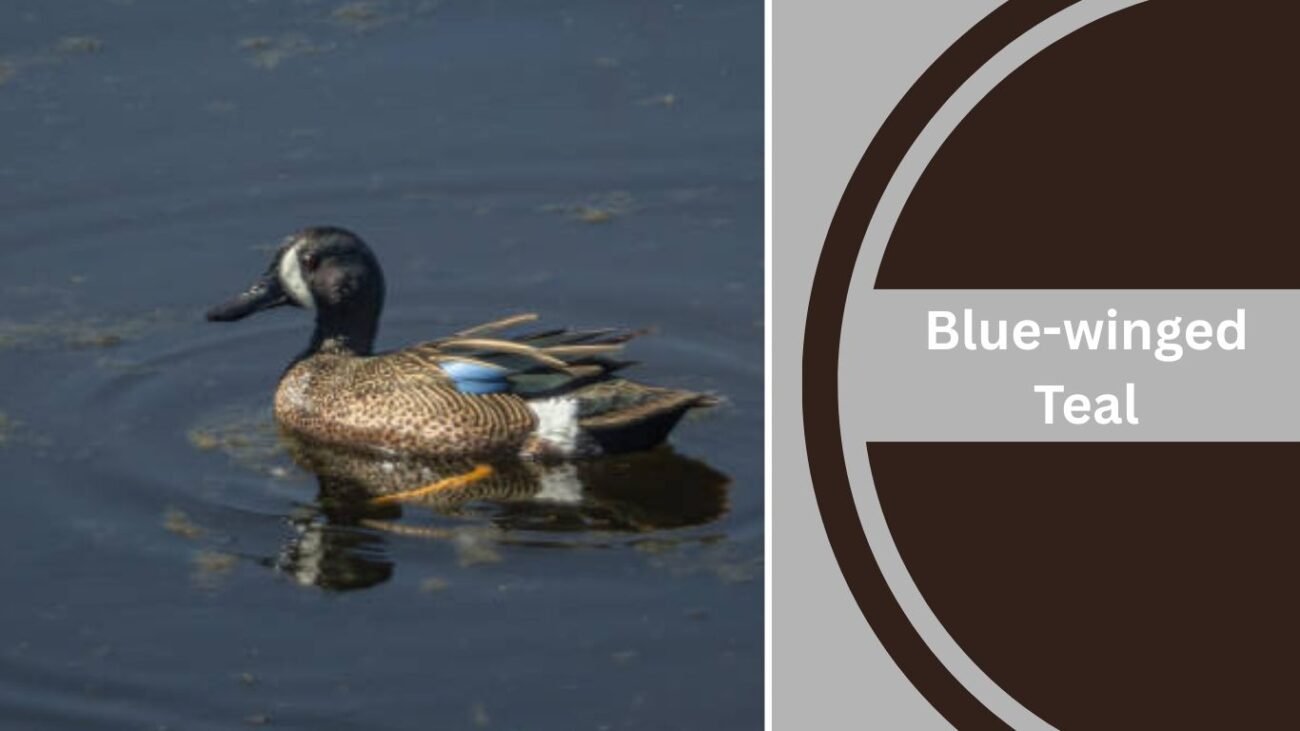
The Blue-winged Teal (Spatula discors) is a small, migratory dabbling duck that is one of the first to migrate south in fall.
Identification
- Male: Grayish-blue head with a bold white crescent in front of the eye, spotted brown body, and blue-gray forewings.
- Female: Mottled brown with a dark eye line and blue patches on wings.
- Both sexes have a compact body and swift flight.
Habitat
Prefers shallow ponds, marshes, and wetlands with dense vegetation. Winters in Central and South America, traveling farther than most other dabbling ducks.
Behaviors
Known for early migration and tight flocking behavior. They feed by dabbling in shallow water and foraging in mud for seeds and invertebrates.
Nest
Ground nests built in grasses or reeds near water. The female lines the nest with down feathers and incubates alone.
Diet
Eats seeds of aquatic plants, grasses, and sedges, along with insects, crustaceans, and mollusks during breeding season.
22. Hooded Merganser
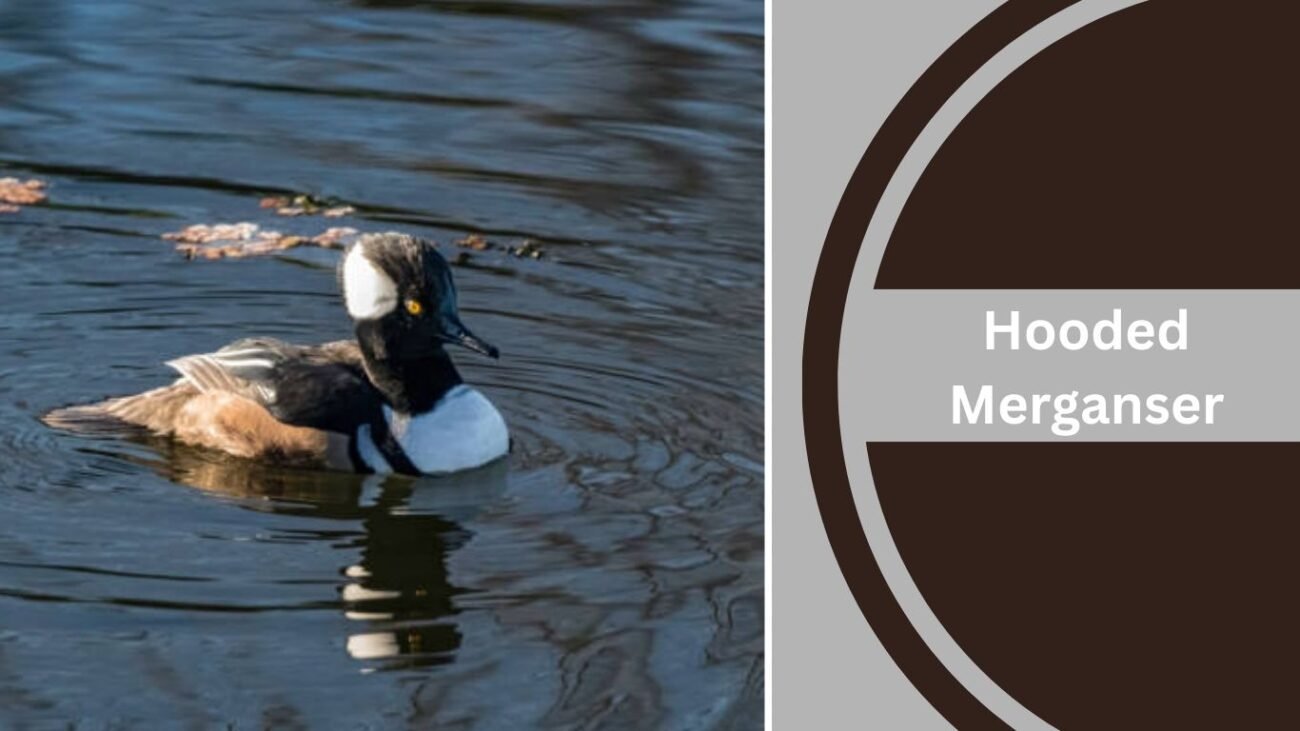
The Hooded Merganser (Lophodytes cucullatus) is a small, striking diving duck known for its dramatic head crest and sharp hunting skills.
Identification
- Male: Black head with large white fan-shaped crest, golden eyes, chestnut flanks, and black-and-white body.
- Female: Brown body with a cinnamon crest and dark eyes.
- Both sexes have thin, serrated bills for catching fish.
Habitat
Prefers wooded ponds, rivers, lakes, and swamps. They are cavity nesters and often use forested wetlands with nearby water.
Behaviors
Expert divers, feeding mainly underwater by chasing prey. Males perform courtship displays by raising and lowering their crests. They are strong fliers, often moving quickly between water bodies.
Nest
Nests in tree cavities near water, sometimes using old woodpecker holes or nest boxes. The female incubates alone and leads ducklings to water after hatching.
Diet
Primarily fish, but also eats crayfish, aquatic insects, amphibians, and small crustaceans. Their serrated bill helps grip slippery prey.
23. Common Merganser
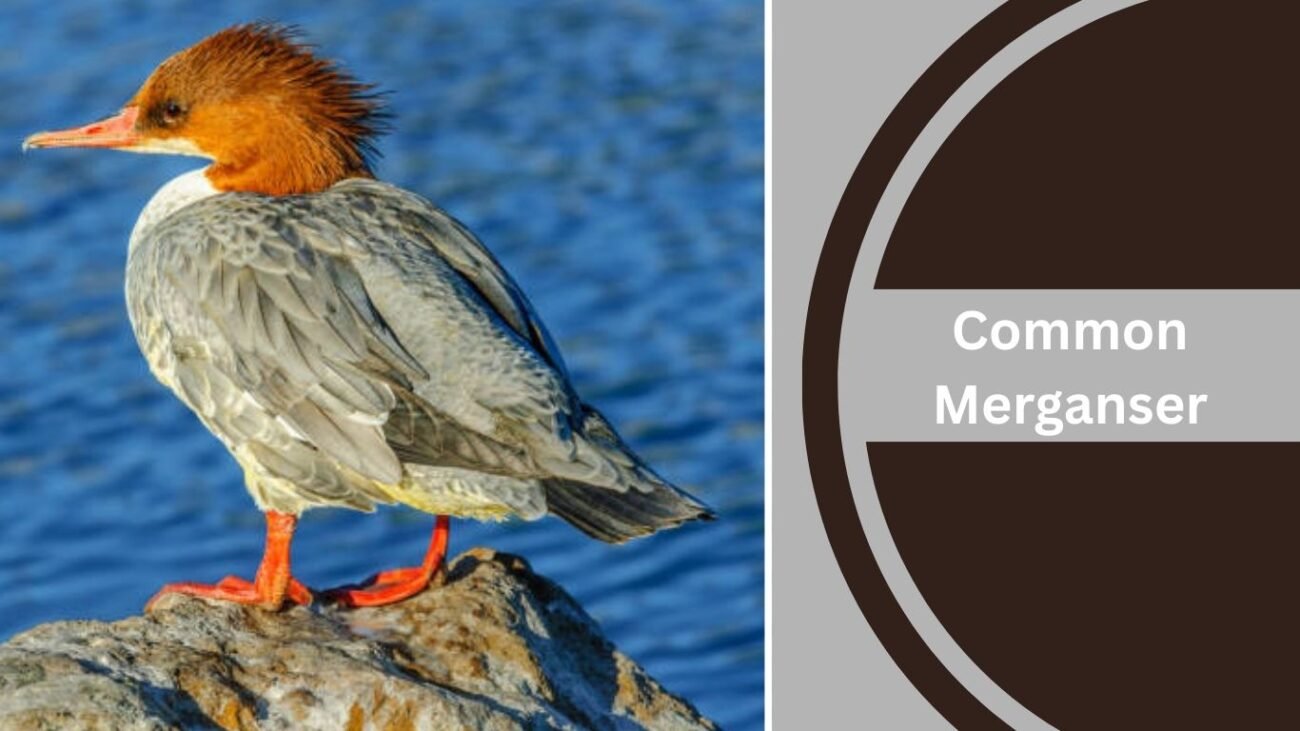
The Common Merganser (Mergus merganser) is a large fish-eating duck often found on clear rivers and lakes.
Identification
- Male: White body with black back, dark green head, and long red bill.
- Female: Gray body, reddish-brown head with a shaggy crest, and white chin.
- Both have slender, serrated bills adapted for catching fish.
Habitat
Lives in freshwater lakes, rivers, and reservoirs, especially in forested regions. In winter, they may move to coastal bays and estuaries.
Behaviors
Strong divers and swimmers, often hunting in groups. They chase fish underwater and swallow them whole. Known for their swift, direct flight.
Nest
Cavity nesters, using holes in trees, cliffs, or nest boxes near water. The female incubates and cares for the ducklings.
Diet
Mainly fish such as trout, perch, and minnows. They also eat aquatic insects, mollusks, and amphibians. Their diet makes them important indicators of healthy freshwater ecosystems.
24. Ruddy Duck
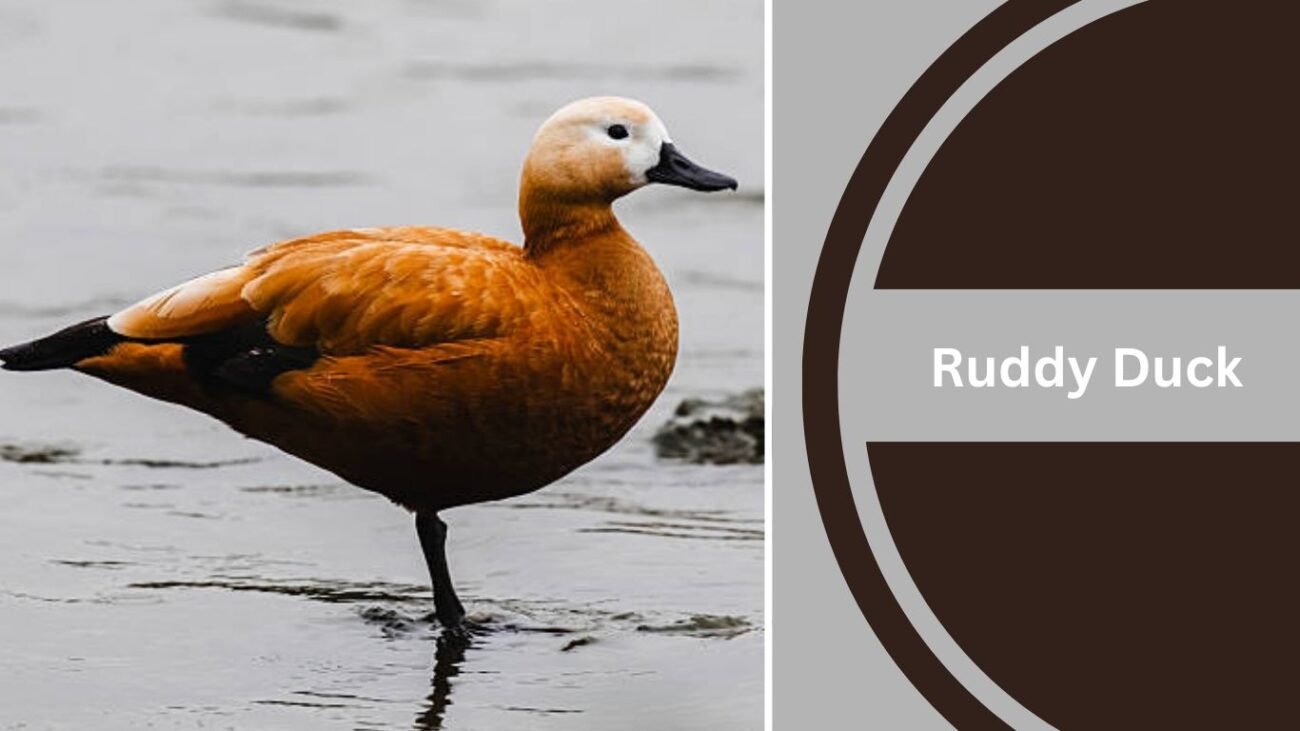
The Ruddy Duck (Oxyura jamaicensis) is a small, stiff-tailed diving duck recognized for the male’s bright breeding colors and unique courtship behavior.
Identification
- Male (breeding): Bright blue bill, chestnut body, black crown, and stiff upright tail.
- Male (non-breeding): Duller gray-brown with pale cheeks.
- Female: Brown overall with a dark cap and a distinct dark line across the cheek.
Habitat
Prefers freshwater marshes, lakes, ponds, and reservoirs. Winters in southern U.S., Central America, and coastal estuaries.
Behaviors
Diving duck that spends much of its time underwater feeding. Males display by beating their chest with their bills to create bubbles during courtship. They often hold their tails stiffly upright.
Nest
Nests are concealed in dense vegetation over water, made from grasses and lined with down. The female incubates alone.
Diet
Feeds on aquatic insects, crustaceans, mollusks, seeds, and aquatic plants. They dive to reach food at deeper levels than dabbling ducks.
25. Trumpeter Swan
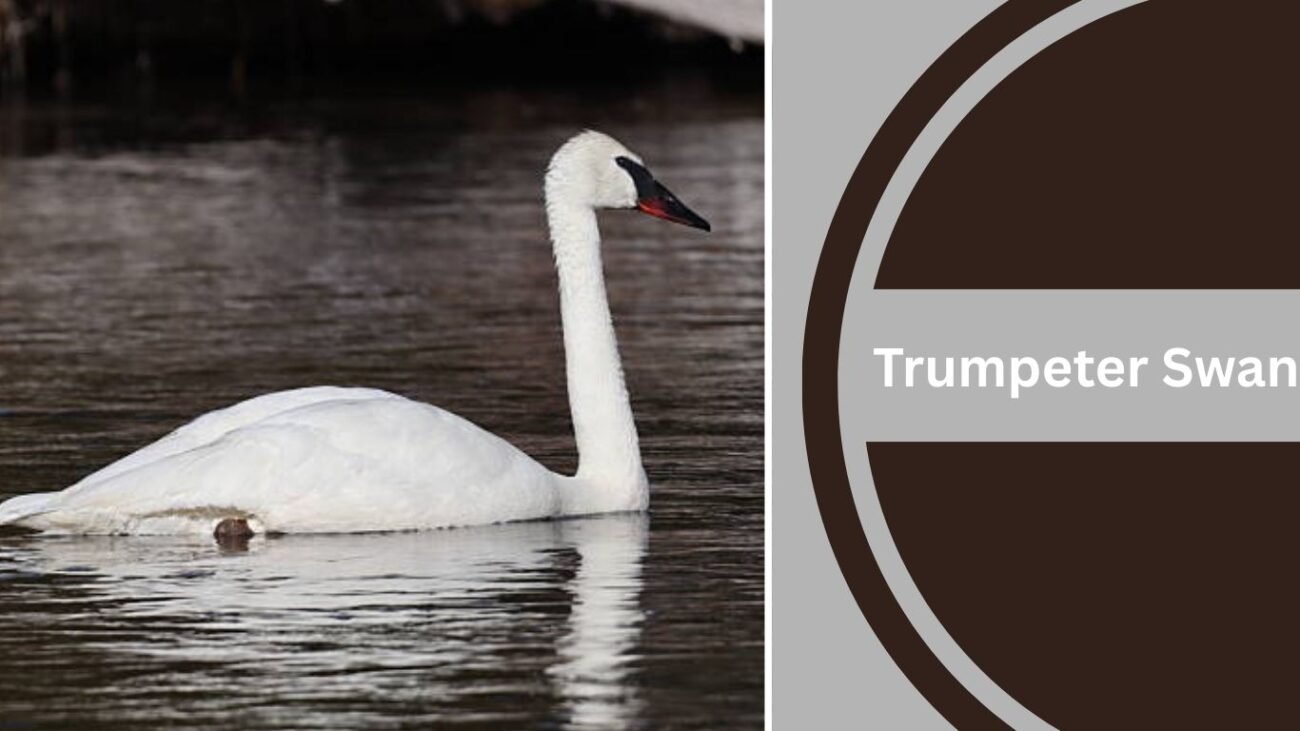
The Trumpeter Swan (Cygnus buccinator) is the largest native waterfowl in North America, known for its deep, trumpet-like call and graceful presence.
Identification
- Enormous white body with a long straight black bill.
- Long neck, often held straight in the water.
- Larger and heavier than the Mute Swan, with no orange on the bill.
Habitat
Found in large lakes, ponds, rivers, and marshes. They prefer remote wetlands with abundant aquatic vegetation.
Behaviors
Strong fliers despite their size. They form lifelong pair bonds and are highly territorial during breeding. Known for their loud trumpet-like calls that carry over long distances.
Nest
Massive mound nests built near or in shallow water using grasses, reeds, and aquatic plants. Both parents help guard the nest, though the female incubates the eggs.
Diet
Feeds primarily on aquatic plants, roots, tubers, and stems. They may also eat small fish, insects, and snails occasionally, but their diet is mostly vegetarian.
26. Sandhill Crane
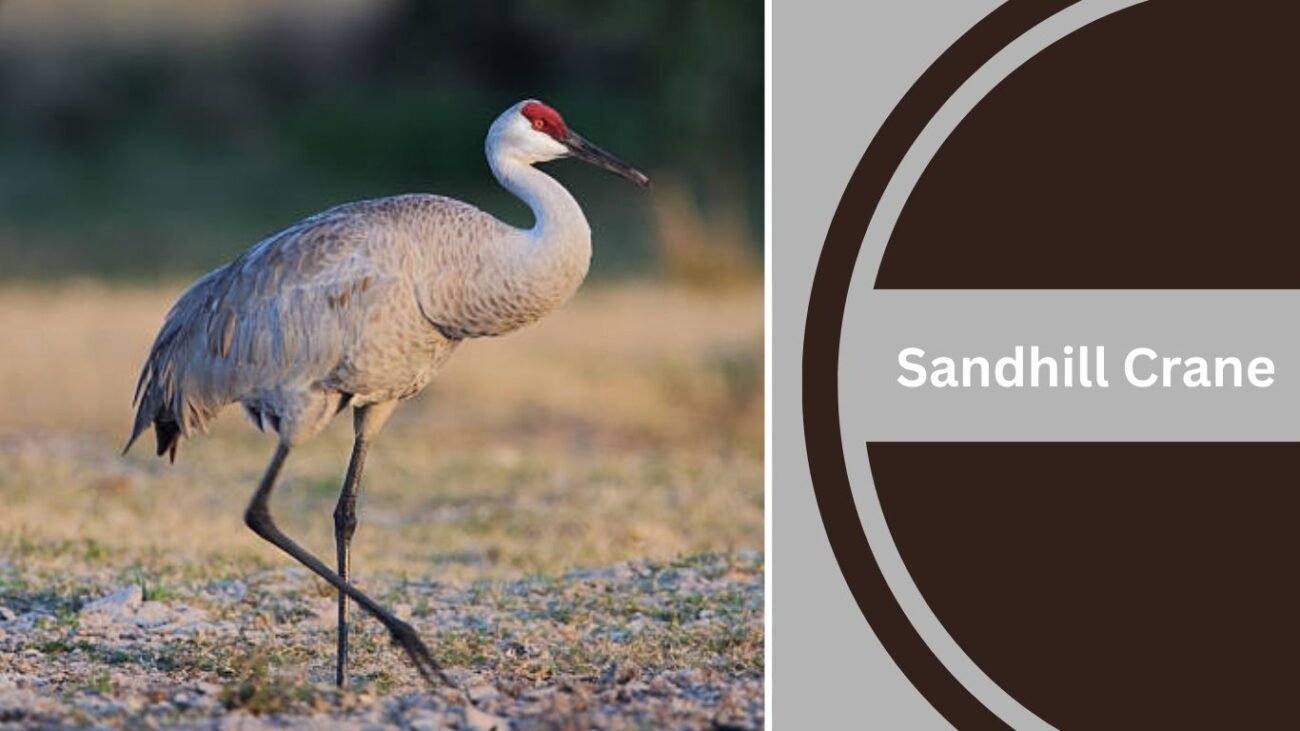
The Sandhill Crane (Antigone canadensis) is a tall, elegant bird known for its bugling calls and spectacular courtship dances. It is one of the oldest living bird species, with fossils dating back millions of years.
Identification
- Large gray body with long legs and neck.
- Distinct red forehead patch.
- Broad wings with black tips visible in flight.
Habitat
Found in wetlands, marshes, prairies, and fields. During migration, they gather in large flocks in shallow wetlands and agricultural areas.
Behaviors
Famous for courtship dances that include leaping, wing-flapping, and bowing. They migrate in large flocks, often flying in V-formations. Their bugling calls are loud and can carry for miles.
Nest
Built on the ground in wetlands, often on small mounds of vegetation surrounded by water. Both parents share incubation and care for the chicks.
Diet
Omnivorous, feeding on grains, seeds, tubers, insects, amphibians, small mammals, and even reptiles. They adapt their diet to the season and habitat.
27. Yellow-billed Cuckoo
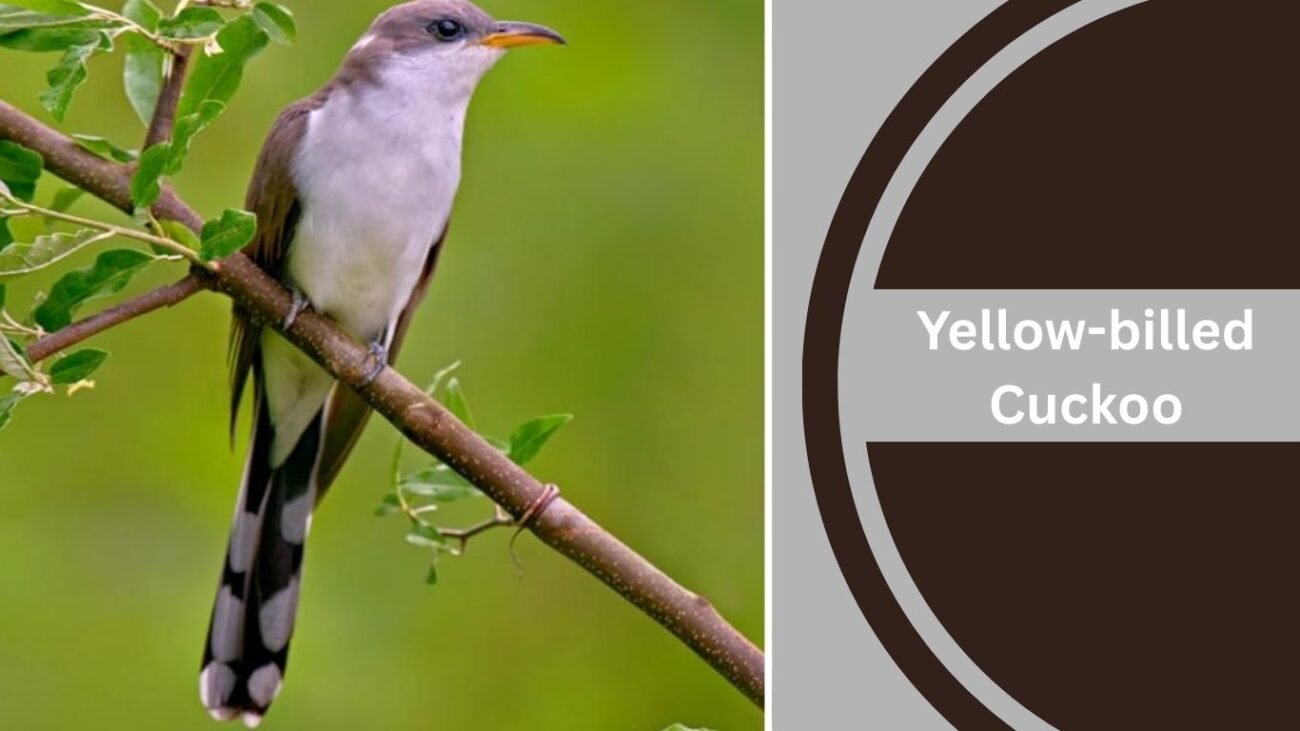
The Yellow-billed Cuckoo (Coccyzus americanus) is a slender, secretive bird often found in woodlands and thickets near water. It is well known for its distinctive croaking call.
Identification
- Slim body with long tail marked by bold white spots.
- Brownish upperparts and white underparts.
- Curved yellow and black bill.
Habitat
Prefers deciduous woodlands, riparian forests, and dense thickets near rivers, lakes, and wetlands. Often stays hidden in foliage.
Behaviors
Solitary and shy, moving quietly through trees in search of prey. Known for slow, graceful flight and distinctive “cuckoo” calls, especially before rain (earning it the nickname “rain crow”).
Nest
A flimsy platform of twigs placed in shrubs or trees. Both parents share incubation, and young grow rapidly, leaving the nest in under three weeks.
Diet
Feeds mainly on large insects such as caterpillars, grasshoppers, cicadas, and beetles. They also eat small lizards, frogs, bird eggs, and berries when available.