Bark beetles are small but destructive insects that infest and often kill trees by tunneling beneath their bark. Found across forests worldwide, they play a critical role in ecosystems but can also cause large-scale forest die-offs when populations explode. This guide explores 15 important species of bark beetles, highlighting their identification traits, habitats, behaviours, and lifecycles to better understand their impact on trees and forests.
1. Mountain Pine Beetle

The Mountain Pine Beetle (Dendroctonus ponderosae) is one of the most destructive bark beetles in North America. It primarily infests pine trees, especially lodgepole, ponderosa, and limber pines. Outbreaks can devastate large forested areas, leading to significant ecological and economic impacts.
Identification
- Small, cylindrical beetle about 5 mm long
- Dark brown to black in color
- Clubbed antennae
- Adults leave distinctive J-shaped galleries under the bark
- Pitch tubes (resin masses) visible on the bark surface of infested trees
Habitat
Mountain Pine Beetles are native to western North America. They thrive in coniferous forests, particularly at elevations between 1,500 and 3,000 meters. Outbreaks are more common in dense, mature pine stands where suitable hosts are abundant.
Behaviour
These beetles bore into the bark of pine trees to lay eggs. The larvae feed on the phloem, disrupting nutrient transport and killing the tree. Adults are capable of mass-attacking healthy trees, often overwhelming the tree’s natural resin defenses. They also carry blue-stain fungi, which further weakens the host.
Lifecycle
The life cycle typically takes one year, though it may extend in colder regions. Adults emerge in summer and attack new hosts, laying eggs beneath the bark. The eggs hatch into larvae that overwinter under the bark. Pupation occurs in late spring, followed by the emergence of new adults.
2. Southern Pine Beetle

The Southern Pine Beetle (Dendroctonus frontalis) is a highly aggressive bark beetle known for causing widespread damage in pine forests of the southeastern United States, Mexico, and Central America. It is considered one of the most destructive forest pests in its range, capable of killing both stressed and healthy trees.
Identification
- Small beetle, about 2–4 mm long
- Reddish-brown to black in color
- Cylindrical body shape with a rounded rear end
- Distinct S-shaped or winding galleries under the bark
- Pitch tubes may appear on infested trees, though sometimes absent in drought-stressed trees
Habitat
This beetle thrives in warm, humid climates and primarily infests loblolly, shortleaf, Virginia, and slash pines. Outbreaks often occur in dense stands with older, mature trees. Infestations can spread rapidly across large areas, especially during droughts or after storms that weaken trees.
Behaviour
Southern Pine Beetles attack trees in mass, releasing aggregation pheromones to attract more beetles. Once inside, the females lay eggs in galleries beneath the bark. Larvae feed on the phloem, cutting off nutrient and water transport. They also introduce blue-stain fungi, which accelerates the decline of the tree.
Lifecycle
The beetle has multiple generations per year, depending on climate. Eggs hatch into larvae that develop through four stages before pupating beneath the bark. Adults emerge and quickly seek new host trees. In warmer regions, up to six generations may occur annually, fueling explosive population growth.
3. Western Pine Beetle

The Western Pine Beetle (Dendroctonus brevicomis) is a destructive bark beetle native to western North America. It is notorious for attacking ponderosa pines, often killing large numbers of trees during outbreaks. This species has a long history of causing significant forest damage, especially in California and the southwestern United States.
Identification
- Small beetle, about 3–5 mm long
- Dark brown to black in color
- Short, stout body with rounded rear
- Females create winding, crisscross galleries beneath the bark
- Infested trees often show reddish crown discoloration and resin pitch tubes
Habitat
Western Pine Beetles primarily infest ponderosa pine but can also attack Coulter and Jeffrey pines. They are most common in dry, low- to mid-elevation forests in western North America. Trees weakened by drought, overcrowding, or disease are especially vulnerable.
Behaviour
Adults bore through the bark to reach the phloem layer, where they create galleries and lay eggs. Mass attacks occur when beetles release pheromones to attract others, overwhelming a tree’s defenses. The larvae feed under the bark, disrupting nutrient flow. Beetles also carry fungi that contribute to tree mortality.
Lifecycle
The Western Pine Beetle completes two to four generations per year, depending on climate. Adults typically emerge from spring through fall. Eggs hatch into larvae that tunnel beneath the bark, overwintering there before pupating. Successive generations can overlap, leading to continuous tree infestations during warm months.
4. Ips Engraver Beetle

The Ips Engraver Beetle (Ips spp.) is a group of bark beetles that attack various pine species across North America. They are less aggressive than some Dendroctonus beetles but can still cause serious damage during outbreaks, particularly when trees are stressed by drought, fire, or overcrowding.
Identification
- Small beetles, usually 3–6 mm long
- Brown to black in color
- Distinctive scooped-out posterior with several spines along the rear end
- Galleries beneath the bark form characteristic star-shaped or Y-shaped patterns
- Infested trees often exhibit reddish crowns and small resin pitch tubes
Habitat
Ips Engraver Beetles infest many species of pine, including lodgepole, ponderosa, slash, and spruce pine. They are most common in warmer, drier climates and are often found in recently cut logs, windthrown trees, or drought-stressed forests.
Behaviour
Adults colonize weakened or freshly damaged trees, boring beneath the bark to construct galleries. Unlike more aggressive species, Ips beetles often attack trees in groups but generally do not kill large, healthy ones unless populations are high. They also act as secondary invaders, accelerating decline in already stressed forests.
Lifecycle
Most Ips species produce multiple generations per year. Adults bore into bark to lay eggs, and larvae tunnel outward as they develop. They pupate beneath the bark and emerge as adults. In warm climates, as many as six generations may occur annually, allowing populations to build up quickly.
5. Spruce Beetle

The Spruce Beetle (Dendroctonus rufipennis) is the most destructive bark beetle affecting spruce trees in North America. Large outbreaks have killed millions of acres of spruce forests, particularly Engelmann and white spruce, altering entire ecosystems.
Identification
- Medium-sized bark beetle, about 4–7 mm long
- Dark brown to black, sometimes reddish-brown
- Cylindrical body with a rounded rear
- Galleries beneath bark are long and winding, packed with boring dust
- Infested trees show fading crowns and reddish-brown needles
Habitat
Spruce Beetles are found throughout spruce forests of North America, from Alaska to the Rocky Mountains. They prefer mature, dense stands of Engelmann spruce, Sitka spruce, and white spruce. Downed or windthrown trees often serve as breeding sites before outbreaks spread to standing trees.
Behaviour
Adults bore into host trees, where females create galleries for egg laying. Larvae feed in the phloem, disrupting nutrient and water flow. Beetles carry blue-stain fungi that weaken trees further. Outbreaks can last decades, killing large swaths of forest and reshaping landscapes.
Lifecycle
Typically, the life cycle takes two years in cooler climates, though in warmer regions it may be completed in a single year. Adults emerge in late spring to early summer, attack new hosts, and lay eggs. Larvae develop slowly under the bark, overwintering twice before pupating and emerging as adults.
6. Fir Engraver Beetle

The Fir Engraver Beetle (Scolytus ventralis) is a destructive bark beetle that primarily infests true firs (Abies species) in western North America. It is notorious for killing large numbers of stressed or drought-weakened fir trees, often leaving behind conspicuous patches of dead stands.
Identification
- Small beetle, about 4–7 mm long
- Dark brown to black, with reddish-brown wing covers
- Broad, flattened body compared to other bark beetles
- Galleries form irregular, winding patterns beneath the bark
- Infested trees exhibit top-down crown fading and red-brown needles
Habitat
Fir Engraver Beetles are found across western coniferous forests, especially in the Rocky Mountains, Sierra Nevada, and Pacific Northwest. They infest white fir, grand fir, red fir, and other true firs. Trees weakened by drought, root disease, or defoliation are highly susceptible.
Behaviour
Adults attack by boring through the bark into the phloem, where females create galleries for egg deposition. Larvae feed in the inner bark, cutting off nutrient flow. Unlike some other beetles, infestations usually begin at the crown, with needles turning reddish-brown from the top downward.
Lifecycle
The Fir Engraver typically produces one generation per year. Adults emerge in spring and seek new hosts. Eggs are laid under the bark, and larvae feed during summer. By late summer to fall, they pupate and overwinter beneath the bark as larvae or pupae, emerging as adults the following year.
7. Douglas-fir Beetle

The Douglas-fir Beetle (Dendroctonus pseudotsugae) is the most destructive bark beetle of Douglas-fir trees in North America. Outbreaks often follow windstorms, droughts, or defoliation events, leading to widespread tree mortality in mature stands.
Identification
- Medium-sized beetle, about 4–7 mm long
- Dark brown to black, with a cylindrical body
- Females construct long vertical galleries beneath the bark
- Infested trees often exhibit reddish crowns and resin pitch streams
- Boring dust accumulates around the base and bark crevices
Habitat
Douglas-fir Beetles are found throughout the range of Douglas-fir forests in western North America. They primarily infest large, mature, or weakened Douglas-fir trees, but during severe outbreaks they may also attack healthy individuals.
Behaviour
Adults bore through the bark to lay eggs in the phloem layer. Larvae feed beneath the bark, disrupting nutrient transport. Beetles carry blue-stain fungi that further weaken trees and contribute to rapid mortality. Infestations often begin in storm-damaged or drought-stressed trees and then spread to healthy stands.
Lifecycle
The life cycle usually takes one year, though in cooler climates it may take two. Adults emerge in late spring and early summer, colonizing new hosts. Eggs hatch into larvae that feed under the bark through summer and overwinter there. Pupation occurs in spring, followed by adult emergence.
8. Red Turpentine Beetle
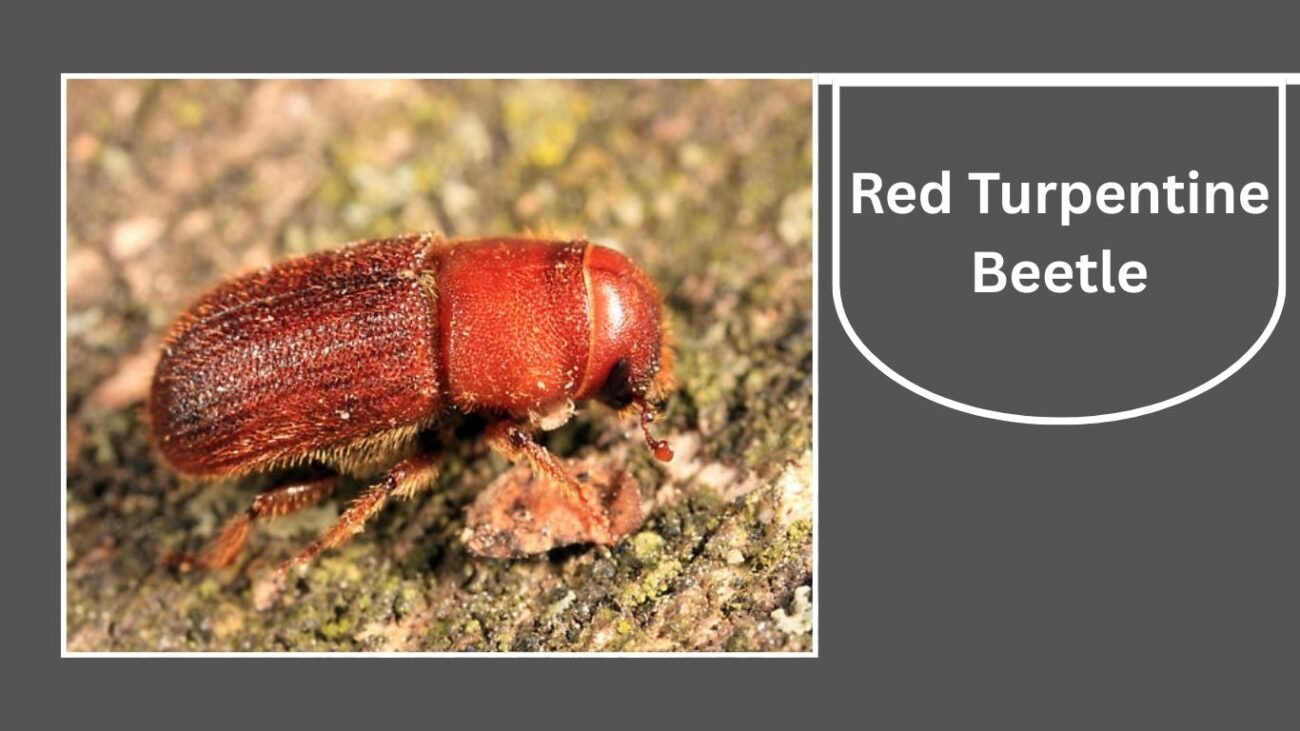
The Red Turpentine Beetle (Dendroctonus valens) is one of the largest bark beetles in North America. Although it usually attacks weakened or recently injured pines, it can still cause significant damage in stands stressed by drought, fire, or logging.
Identification
- Large bark beetle, about 6–10 mm long
- Reddish-brown in color, robust cylindrical body
- Creates wide, irregular galleries under the bark
- Infested trees show large, pinkish-white to reddish pitch tubes at the base of the trunk
- Needles may gradually fade to yellow or red if the attack is severe
Habitat
This species is found across North America, especially in coniferous forests of the western and eastern United States. It attacks many pine species, including ponderosa, lodgepole, red, and jack pines. Trees that are wounded or stressed are particularly vulnerable.
Behaviour
Red Turpentine Beetles typically infest the lower trunk of trees, boring beneath the bark to lay eggs. Unlike some more aggressive species, they seldom kill healthy trees alone but can contribute to mortality when combined with drought, fire injury, or other beetle infestations. They also vector fungi that increase damage.
Lifecycle
The life cycle can take one to two years, depending on climate. Adults emerge in spring or early summer, mate, and attack new hosts near the base of trees. Eggs are deposited under the bark, and larvae feed on inner bark tissue. They overwinter beneath the bark and pupate the following spring before emerging as adults.
9. Black Turpentine Beetle
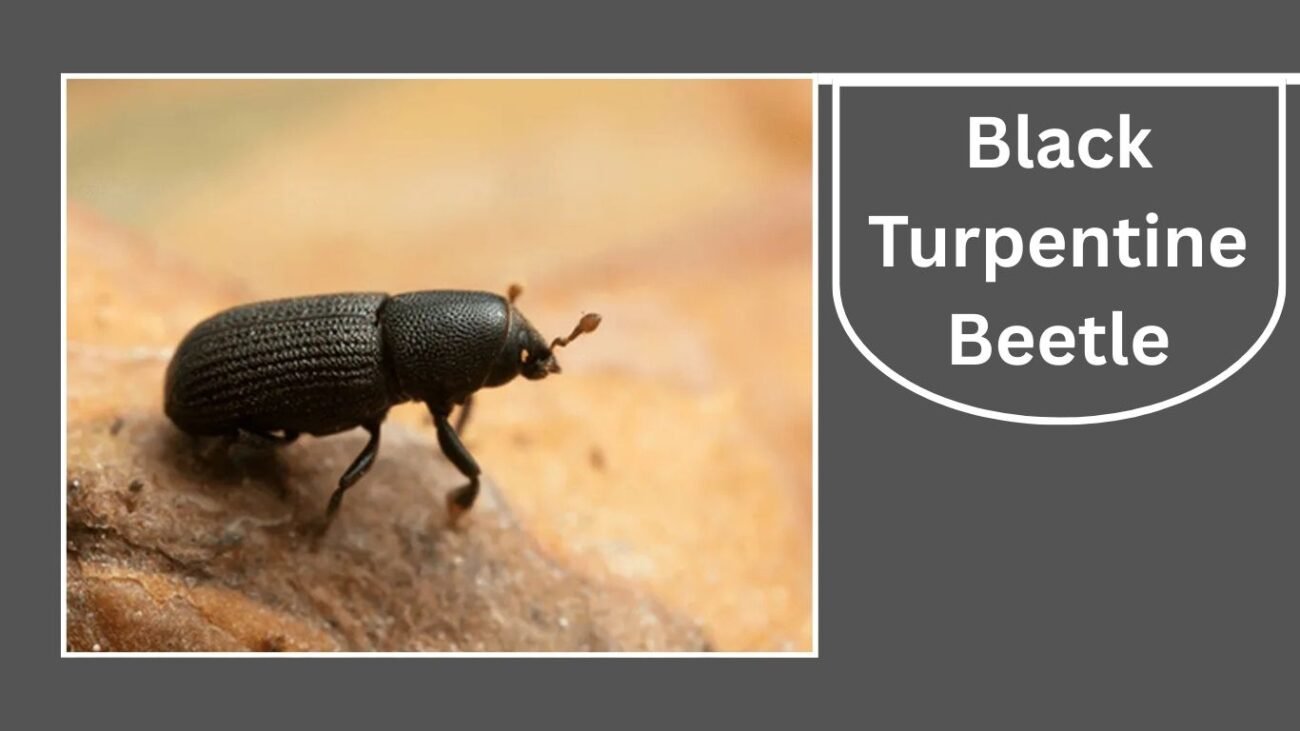
The Black Turpentine Beetle (Dendroctonus terebrans) is a large bark beetle that primarily attacks pine trees in the southeastern United States. While less aggressive than some related species, it can still cause significant losses in stressed or wounded stands, especially in combination with other pests.
Identification
- Large beetle, about 6–10 mm long
- Dark reddish-brown to nearly black in color
- Broad, cylindrical body with rounded rear
- Creates wide, irregular galleries beneath the bark
- Infested trees exhibit large, dark reddish-brown pitch tubes on the lower trunk, often near wounds
Habitat
The Black Turpentine Beetle is most common in southern pine forests, where it infests loblolly, longleaf, shortleaf, and slash pines. It prefers trees that have been damaged by fire, logging, or mechanical injury, though outbreaks can occur in dense, stressed stands.
Behaviour
Adults usually attack the lower 3 meters of the trunk, boring through the bark to lay eggs. Larvae feed on the phloem, disrupting nutrient flow. Although rarely capable of killing healthy trees alone, repeated attacks or infestations combined with other bark beetles can lead to mortality.
Lifecycle
The life cycle typically requires one year. Adults emerge in spring and early summer, lay eggs under the bark, and larvae feed during the warm months. They overwinter beneath the bark as larvae or pupae, emerging as adults the following spring to infest new hosts.
10. Eastern Larch Beetle
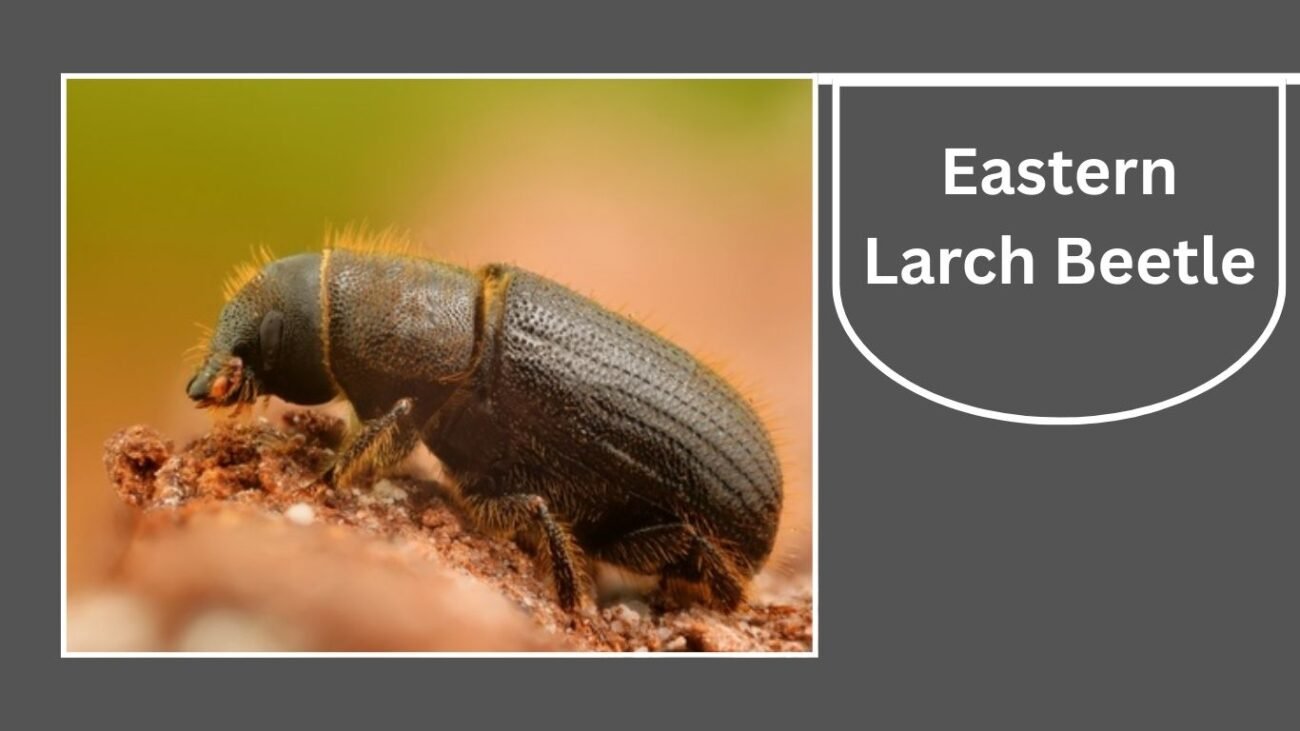
The Eastern Larch Beetle (Dendroctonus simplex) is a bark beetle that primarily attacks larch (Larix species), especially tamarack, across northern North America. Though it usually colonizes weakened or recently dead trees, outbreaks can lead to extensive mortality in stressed forests.
Identification
- Medium-sized beetle, about 4–6 mm long
- Dark brown to nearly black, cylindrical body
- Females create straight vertical galleries beneath the bark
- Larval galleries branch out horizontally from the main tunnel
- Infested trees show fading yellow to reddish-brown needles, often top-down
Habitat
This beetle is found across Canada, Alaska, and the northern United States, where larch or tamarack trees dominate. It thrives in cold boreal and wetland forests, especially in areas where trees are stressed by drought, flooding, or defoliation.
Behaviour
Adults attack the trunks of larch trees, boring beneath the bark to create egg galleries. Larvae feed on the phloem, disrupting nutrient and water flow, which eventually kills the host. The beetles often colonize windthrown, fire-damaged, or weakened trees but can spread to living stands during outbreaks.
Lifecycle
The life cycle is generally completed in one year. Adults emerge in spring, attack new trees, and lay eggs beneath the bark. Larvae develop through summer, overwinter as larvae or pupae under the bark, and emerge as adults the following spring to infest new hosts.
11. Cedar Bark Beetle
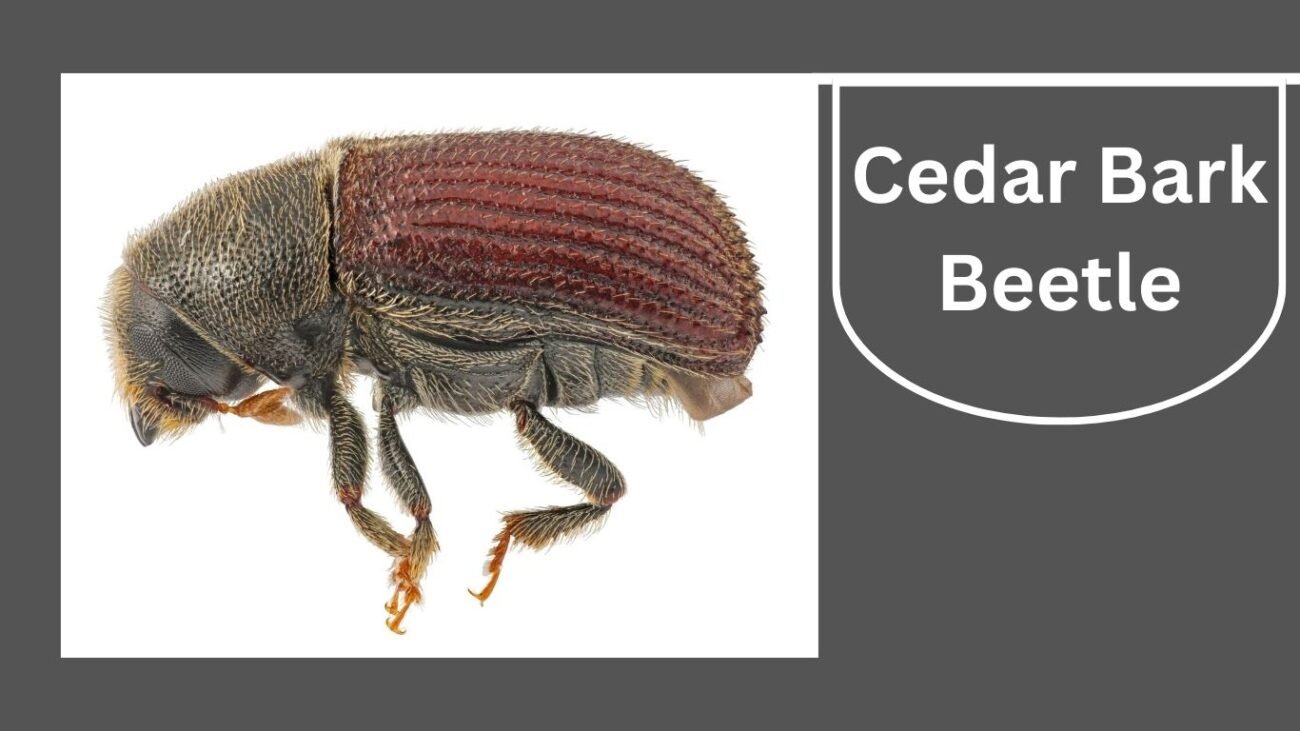
The Cedar Bark Beetle (Phloeosinus spp.) is a group of bark beetles that primarily infest cedar, juniper, and arborvitae trees. While often secondary pests that colonize weakened or stressed hosts, they can cause significant damage in ornamental plantings and natural forests during outbreaks.
Identification
- Small beetles, typically 2–4 mm long
- Brown to black, with a cylindrical body
- Characteristic egg galleries run vertically beneath the bark
- Larval tunnels radiate outward in a fan-like pattern
- Infested trees display browning or flagging of foliage, often in scattered branches
Habitat
Cedar Bark Beetles are distributed widely across North America, especially in areas where cedars, junipers, or arborvitae grow. They frequently infest ornamental plantings, windbreaks, and natural cedar stands, particularly when trees are stressed by drought or poor site conditions.
Behaviour
Adults bore into the bark and construct vertical galleries for egg laying. The larvae feed on the phloem, disrupting water and nutrient flow. Infestations often begin in branches or the upper crown before spreading downward. These beetles are also known vectors of pathogens that further weaken their hosts.
Lifecycle
Most species of Cedar Bark Beetles produce two or more generations per year, depending on climate. Adults emerge in spring, infest trees, and lay eggs. Larvae develop under the bark during summer, pupating and producing new adults. In warmer regions, overlapping generations allow infestations to persist nearly year-round.
12. Arizona Five-Spined Ips
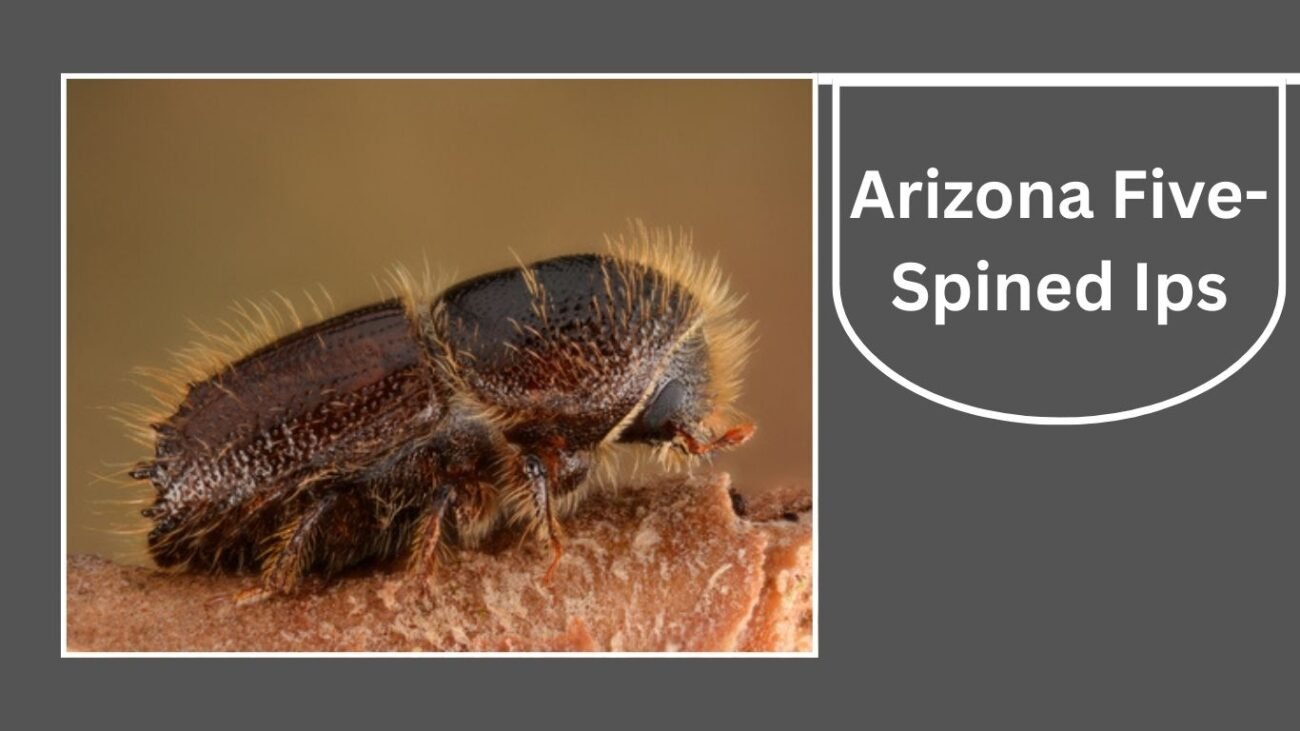
The Arizona Five-Spined Ips (Ips lecontei) is a common bark beetle in the southwestern United States and northern Mexico. It primarily infests pines, especially ponderosa and pinyon pine, and is recognized for its distinctive spines at the rear of the body.
Identification
- Small beetle, about 3–6 mm long
- Reddish-brown to dark brown in color
- Distinct scooped-out rear with five spines on each side
- Galleries beneath the bark often form Y- or star-shaped patterns
- Infested trees exhibit reddish crown fade and small pitch tubes
Habitat
This beetle inhabits dry pine forests of the Southwest, including Arizona, New Mexico, and adjacent regions of Mexico. It commonly attacks ponderosa, Apache, and pinyon pines, especially those weakened by drought, overcrowding, or mechanical injury.
Behaviour
Arizona Five-Spined Ips usually infest weakened or stressed trees, boring beneath the bark to construct galleries. Mass attacks can occur when populations are high, especially during prolonged drought. The beetles also infest slash and freshly cut logs, which can serve as breeding grounds.
Lifecycle
The beetle can produce several generations per year in warm climates. Adults emerge in spring, colonize new hosts, and lay eggs under the bark. Larvae feed through summer and pupate beneath the bark. Overlapping generations often result in continuous activity throughout much of the year.
13. California Five-Spined Ips

The California Five-Spined Ips (Ips paraconfusus) is a destructive bark beetle common in California and parts of the western United States. It primarily infests ponderosa, Coulter, and Monterey pines, with outbreaks causing extensive mortality in drought-stressed forests.
Identification
- Small beetle, about 3–5 mm long
- Reddish-brown to dark brown, cylindrical body
- Distinctive scooped-out rear end with five spines on each side
- Egg galleries form star- or Y-shaped patterns beneath the bark
- Infested trees display reddish needle fade and small resin pitch tubes
Habitat
This species is found across California, Oregon, and nearby western states, where it infests many pine species. It thrives in low- to mid-elevation pine forests, especially where trees are weakened by drought, overstocking, or fire injury.
Behaviour
California Five-Spined Ips colonize weakened trees and logging debris, but under outbreak conditions, they can mass-attack and kill healthy pines. Adults bore through the bark, construct galleries, and lay eggs. Larvae feed on the phloem, disrupting nutrient transport. The beetles also spread fungi that accelerate tree decline.
Lifecycle
In warm climates, the beetle produces multiple generations per year. Adults emerge in spring, attack new hosts, and lay eggs. Larvae develop through summer, and new adults emerge to continue infestations. Overlapping generations often lead to continuous tree damage from spring through fall.
14. Shothole Borer
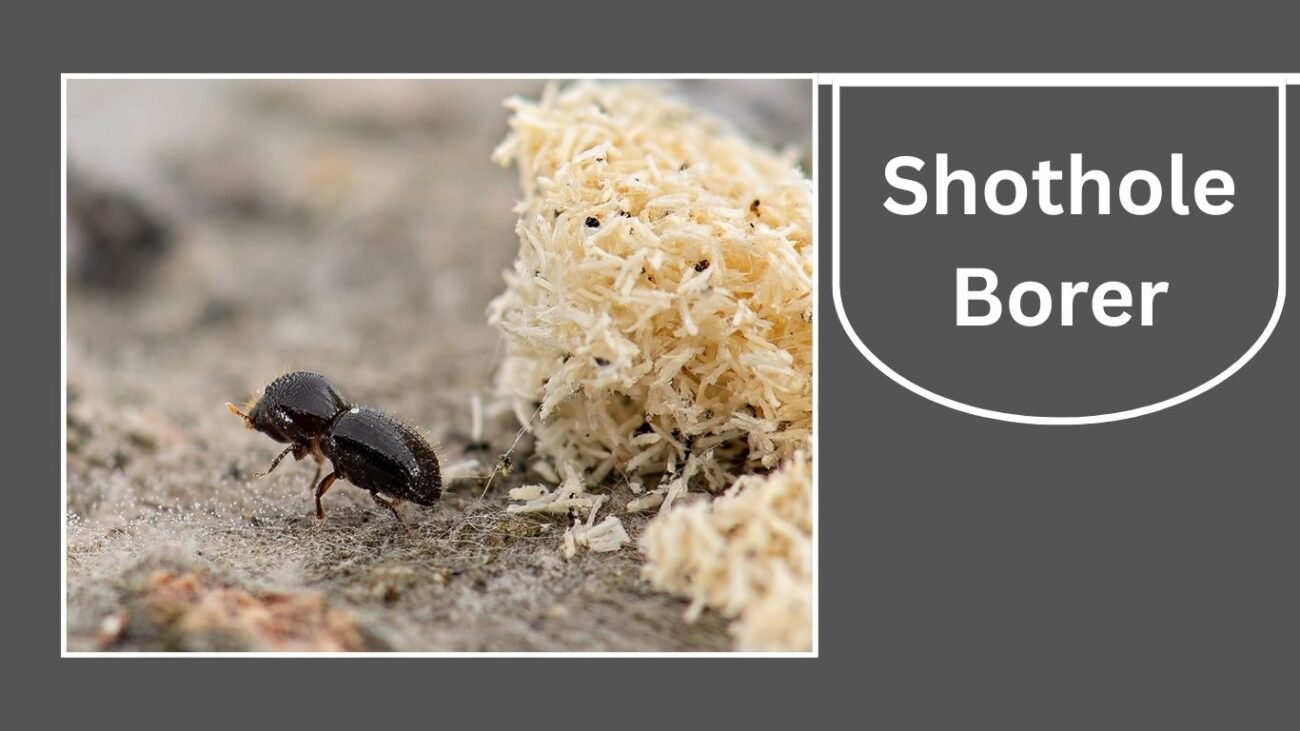
The Shothole Borer (Scolytinae: Xyleborini and other groups) refers to several species of tiny bark and ambrosia beetles that attack a wide range of trees, including fruit trees, ornamentals, and hardwoods. They are named for the small, round exit holes they create, resembling shotgun pellet damage.
Identification
- Very small beetles, typically 1.5–3 mm long
- Dark brown to black in color, cylindrical body
- Exit holes appear as tiny round “shot holes” on the bark surface
- Galleries beneath the bark are narrow and often filled with frass (fine boring dust)
- Infested trees may show wilting, dieback, or branch decline
Habitat
Shothole Borers are found worldwide, including North America, Europe, Asia, and Africa. They attack a wide range of hosts, from orchard trees (plum, peach, apricot) to ornamental and forest species. They often target stressed or recently transplanted trees, though some invasive species can attack healthy hosts.
Behaviour
These beetles bore into the bark and tunnel into sapwood or heartwood, where they cultivate symbiotic fungi (in the case of ambrosia beetles). The fungi serve as food for larvae and adults. Infested trees may decline rapidly, especially when combined with fungal pathogens introduced by the beetles.
Lifecycle
Most species have two or more generations per year, depending on climate. Adults bore into host trees to establish galleries, lay eggs, and introduce fungi. Larvae develop within the galleries, pupate, and emerge as new adults. Continuous infestations can occur in warm climates, leading to severe damage in orchards and nurseries.
15. Lesser Shothole Borer
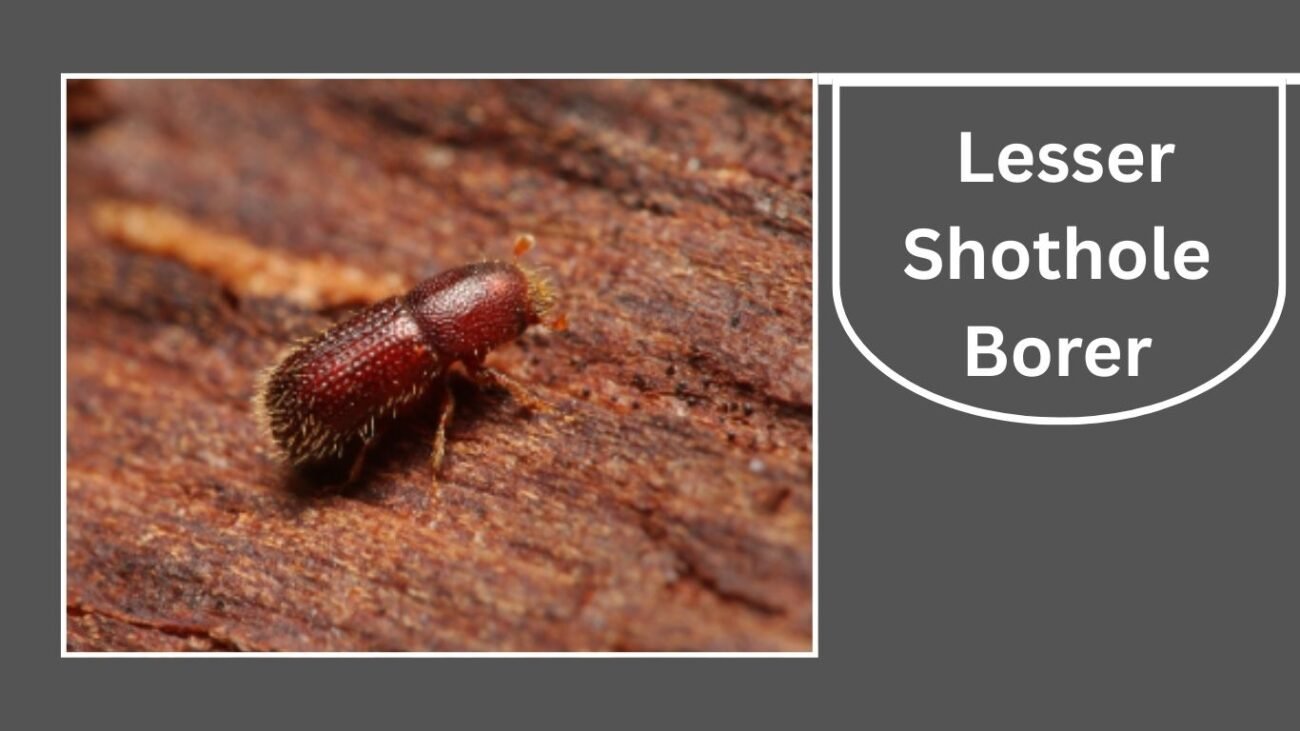
The Lesser Shothole Borer (Xyleborinus saxesenii) is a small ambrosia beetle that infests a wide range of hardwoods, fruit trees, and ornamentals. Though tiny, it can cause significant economic losses in orchards and nurseries by introducing fungal pathogens and weakening host trees.
Identification
- Very small beetle, about 1.5–2.5 mm long
- Dark brown to nearly black, cylindrical body
- Creates small, round exit holes resembling birdshot damage
- Tunnels run deep into the sapwood and heartwood
- Infested trees show wilting leaves, dieback, and branch decline
Habitat
This beetle is found across North America, Europe, Asia, and other temperate regions. It attacks a wide range of hosts, including apple, pear, peach, plum, oak, maple, and other hardwoods. Weakened or stressed trees are especially vulnerable, but high populations can attack healthy trees as well.
Behaviour
The Lesser Shothole Borer is an ambrosia beetle, meaning it carries and cultivates symbiotic fungi inside its galleries. Both adults and larvae feed on these fungi rather than directly on the wood. The fungi disrupt water transport in trees, contributing to rapid decline and mortality.
Lifecycle
Several generations may occur per year, depending on climate. Females bore into host trees, establish galleries, and introduce fungi. Eggs are laid inside, and larvae feed on the fungal growth. After pupation, new adults emerge to attack fresh hosts. In warm regions, infestations can continue almost year-round.