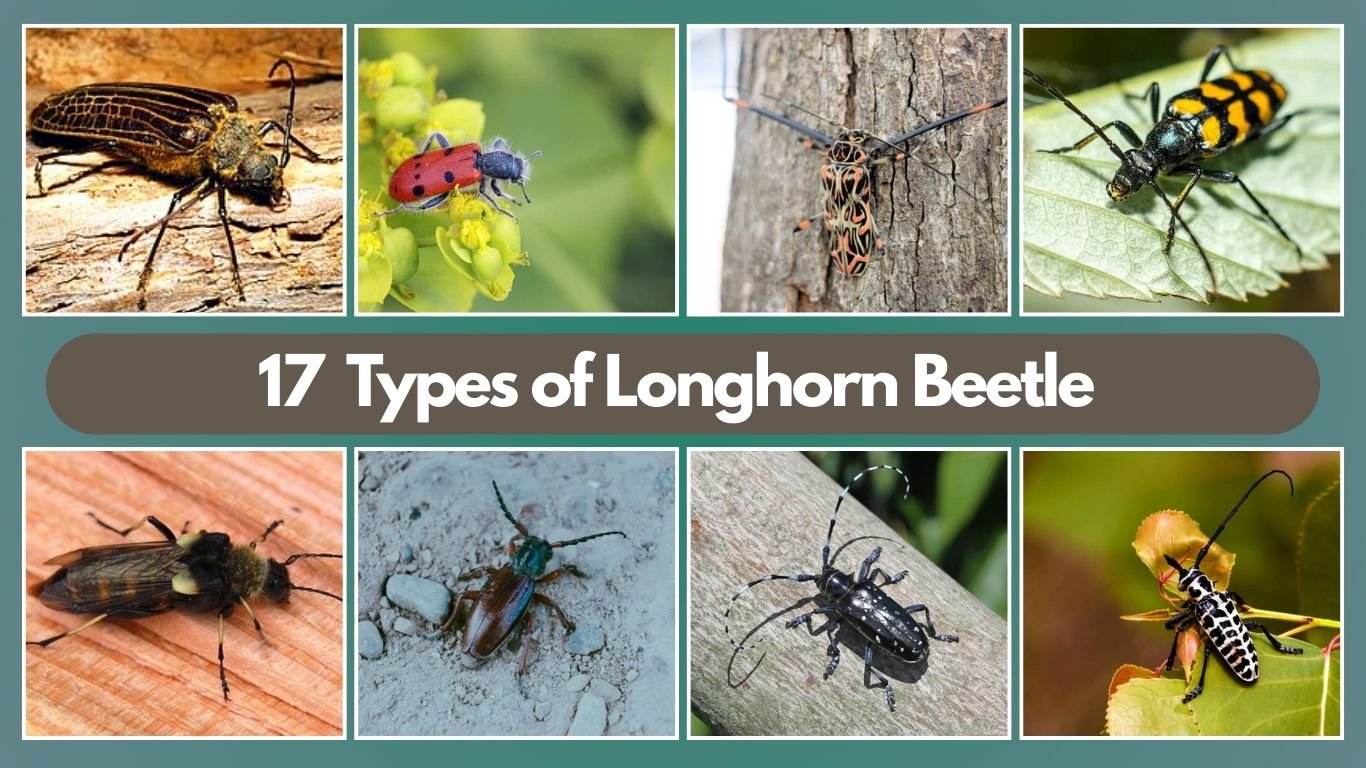
Longhorn beetles (family Cerambycidae) are a diverse group of insects recognized for their extremely long antennae and fascinating variety. Found worldwide, they play both beneficial and harmful roles in ecosystems—some aid in wood decomposition, while others are destructive pests of forests and crops. In this guide, we’ll explore 17 different longhorn beetle species, detailing their identification, habitats, behaviors, and diets.
1. Asian Longhorned Beetle (Anoplophora glabripennis)
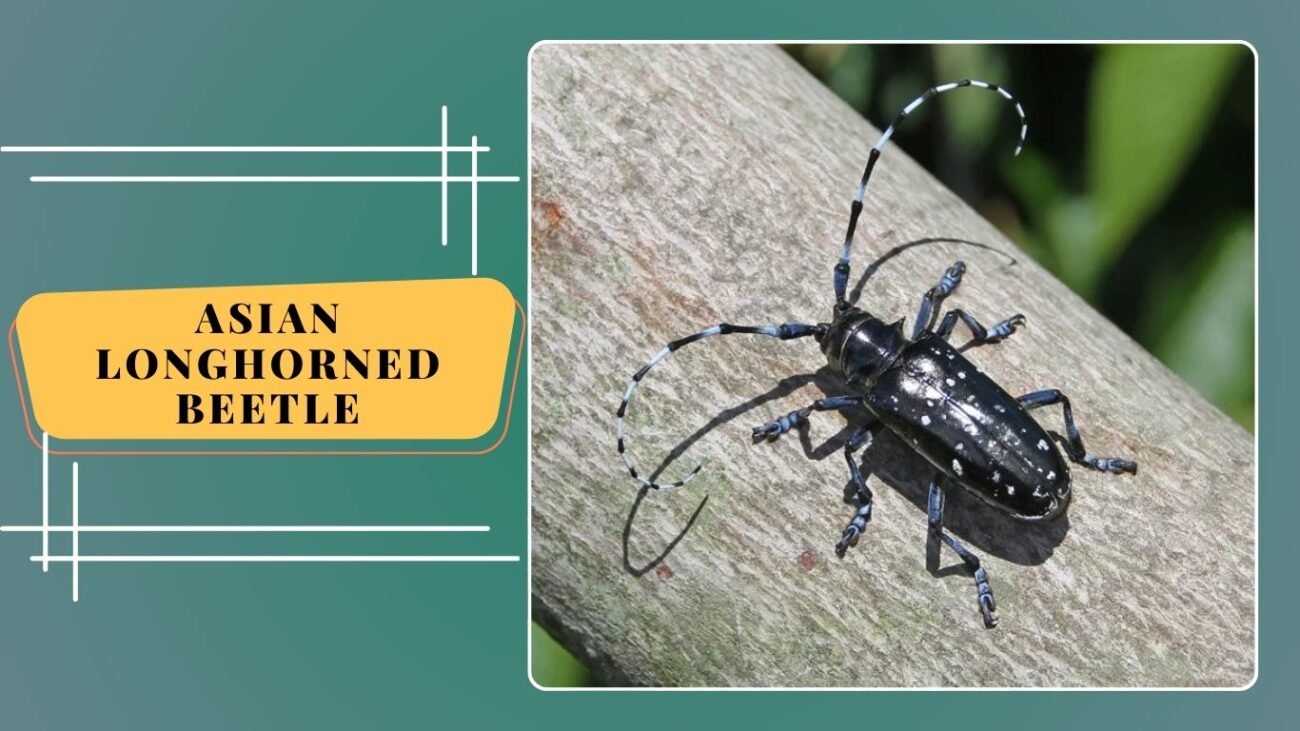
The Asian Longhorned Beetle is a destructive wood-boring insect native to China and Korea. It is known for attacking a wide variety of hardwood trees, making it a serious invasive species in many countries.
Identification
- Large beetle, typically 1 to 1.5 inches long
- Shiny black body with irregular white spots
- Long, black-and-white banded antennae, often longer than the body
- Six legs with a bluish tint
- Cylindrical body shape
Habitat
The Asian Longhorned Beetle primarily inhabits hardwood forests and urban areas with plenty of host trees. It thrives in maple, elm, willow, poplar, and birch trees, both in rural woodlands and city landscapes.
Behaviors
This beetle bores into the wood of trees, creating tunnels that disrupt nutrient and water flow. Adults emerge from round exit holes in summer, mate, and females lay eggs in bark crevices. Infestations often go unnoticed until significant damage has occurred.
Diet
Both larvae and adults feed on living trees. Larvae consume the inner wood and sapwood, while adults chew on leaves, bark, and twigs. Their feeding habits eventually weaken and kill host trees.
2. Citrus Long-horned Beetle (Anoplophora chinensis)
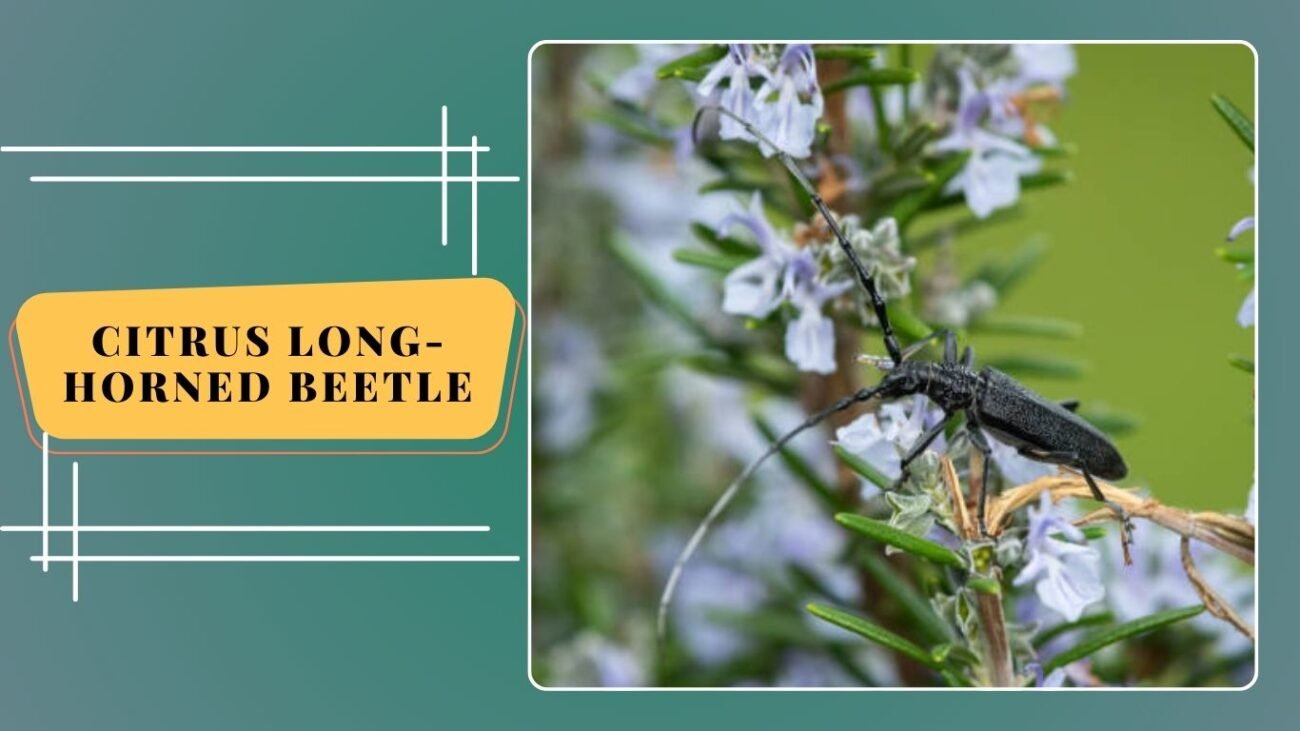
The Citrus Long-horned Beetle is a highly invasive pest native to Asia. It poses a serious threat to citrus orchards and hardwood trees, capable of damaging both cultivated and wild plant species.
Identification
- Size ranges from 1 to 1.6 inches long
- Shiny black body with distinct white or yellowish spots
- Long, banded black-and-white antennae, often longer than the body
- Stout cylindrical body with strong jaws
- Legs often have a bluish tint similar to the Asian Longhorned Beetle
Habitat
This beetle prefers citrus orchards but also infests a wide range of hardwoods such as maple, willow, birch, apple, and pear trees. It thrives in warm, temperate regions and adapts well to urban as well as rural environments.
Behaviors
Adults emerge during the summer, chewing through bark to create exit holes. Females lay eggs in small slits on host tree bark, and the larvae bore deeply into the wood. This boring weakens trees internally, often causing dieback and eventual death.
Diet
Larvae feed inside the trunks and roots of trees, disrupting nutrient flow, while adults chew on leaves, bark, and twigs. Citrus trees are a primary target, making this beetle a significant agricultural pest.
3. Pine Sawyer Beetle (Monochamus spp.)
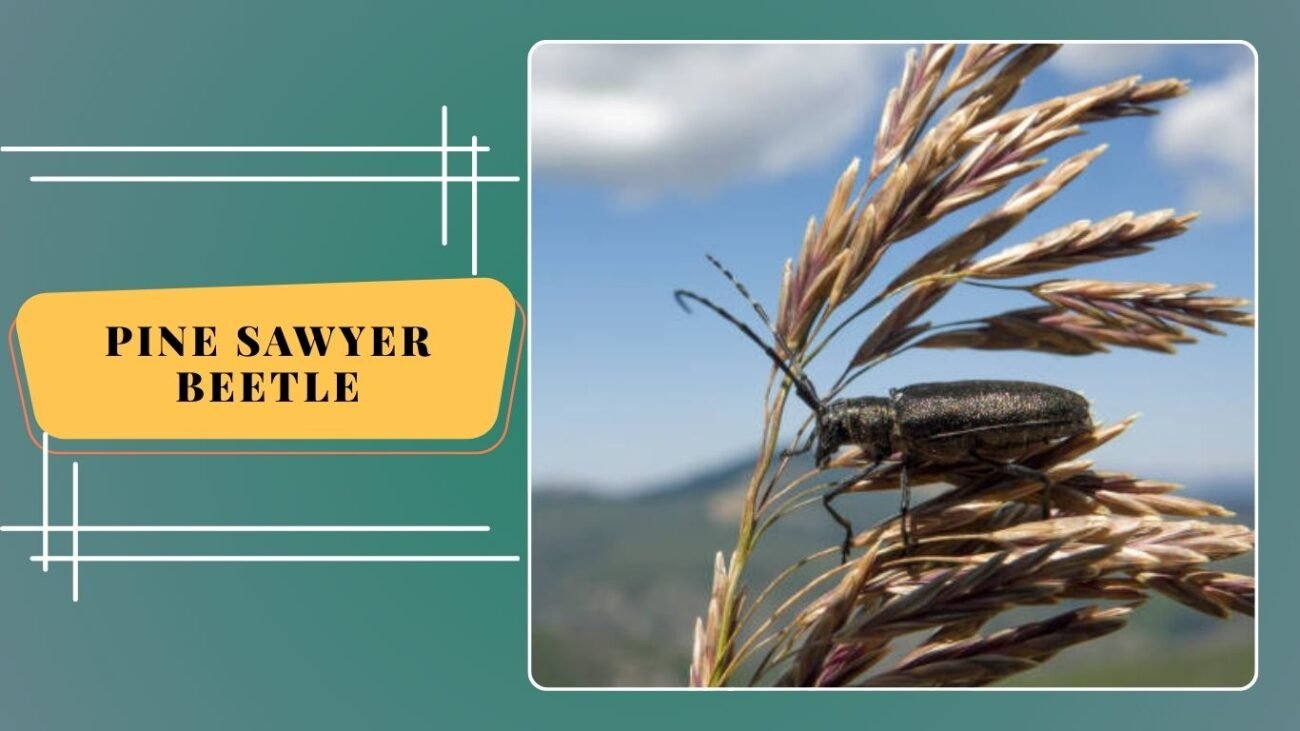
The Pine Sawyer Beetle is a group of longhorn beetles widely distributed across North America, Europe, and Asia. They are known for spreading the pinewood nematode, which can devastate pine forests.
Identification
- Size ranges from 0.5 to 1.5 inches long
- Dark brown to black body, sometimes with mottled gray markings
- Long antennae, often twice the length of the body in males
- Elongated, cylindrical body shape
- Strong mandibles for chewing wood
Habitat
Pine Sawyer Beetles inhabit coniferous forests, especially those with stressed, dying, or recently felled pines. They are commonly found in North American and Eurasian pine ecosystems.
Behaviors
Adults emerge in late spring to summer and are strong fliers. They typically infest weakened or dead pine trees rather than healthy ones. Females deposit eggs under bark, and larvae tunnel into the wood, aiding in decomposition but also transmitting harmful pinewood nematodes.
Diet
Larvae bore into pine wood, feeding on the inner bark and sapwood. Adults primarily chew on bark, twigs, and pine needles. Their feeding accelerates the decline of weakened trees and spreads pathogens.
4. White-spotted Sawyer (Monochamus scutellatus)
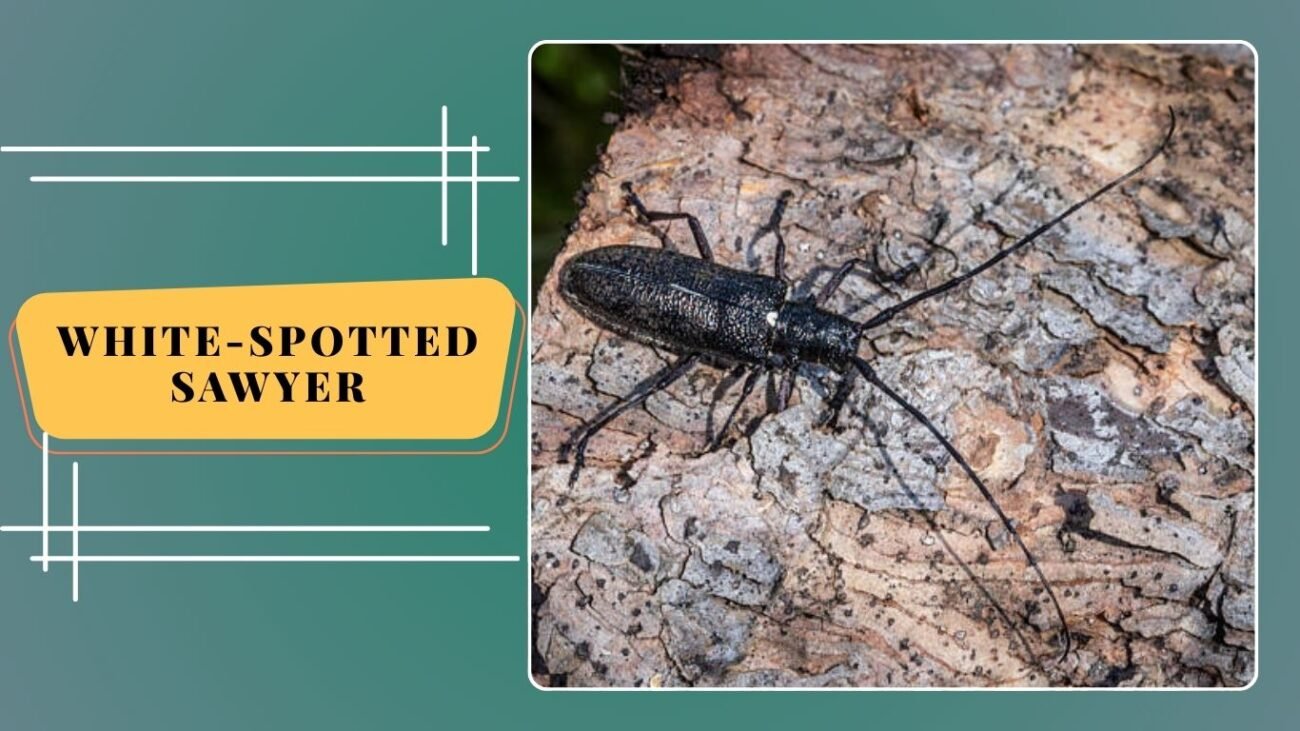
The White-spotted Sawyer is a common longhorn beetle found in North America. It plays a role in breaking down dead conifer trees but can sometimes be mistaken for the invasive Asian Longhorned Beetle.
Identification
- Size typically 0.6 to 1 inch long
- Dark brown to black body with distinct white spots
- A prominent white spot on the upper back (scutellum) is the key identifier
- Long antennae, with males having much longer ones than females
- Rough, textured body surface
Habitat
This beetle is usually found in coniferous forests, especially where spruce, pine, and fir trees grow. It prefers recently felled, dying, or fire-damaged trees rather than healthy ones.
Behaviors
The White-spotted Sawyer emerges in late spring to summer. Females lay eggs in dead or weakened conifers, and larvae tunnel deep into the wood. While they don’t normally infest healthy trees, large populations can still cause concern in logging areas.
Diet
Larvae feed on the inner bark and sapwood of conifers, while adults chew on needles and bark. Their feeding accelerates wood decay but does not usually threaten live, vigorous trees.
5. Titan Beetle (Titanus giganteus)

The Titan Beetle is one of the largest beetles in the world, native to the Amazon rainforest. Its enormous size and powerful jaws make it a fascinating yet intimidating insect.
Identification
- Can grow up to 6.5 inches long, among the largest beetles on Earth
- Dark brown to black, robust body
- Exceptionally strong mandibles capable of snapping pencils and piercing wood
- Long antennae, though not as banded or flashy as some other longhorn beetles
- Smooth, shiny exoskeleton with minimal markings
Habitat
The Titan Beetle inhabits tropical rainforests of South America, particularly in countries such as Brazil, Peru, Colombia, Ecuador, and Bolivia. They thrive in dense jungle environments with rich biodiversity.
Behaviors
Titan Beetles are nocturnal and are most active during the rainy season. Adults are powerful fliers, despite their large size. They are solitary and elusive, usually hiding in forest canopies during the day and coming out at night.
Diet
Interestingly, adult Titan Beetles do not feed. Their primary purpose after emerging is reproduction. The larvae, though rarely observed, are believed to bore deep into rotting wood, feeding on decaying plant matter for years before pupating.
6. Old House Borer (Hylotrupes bajulus)
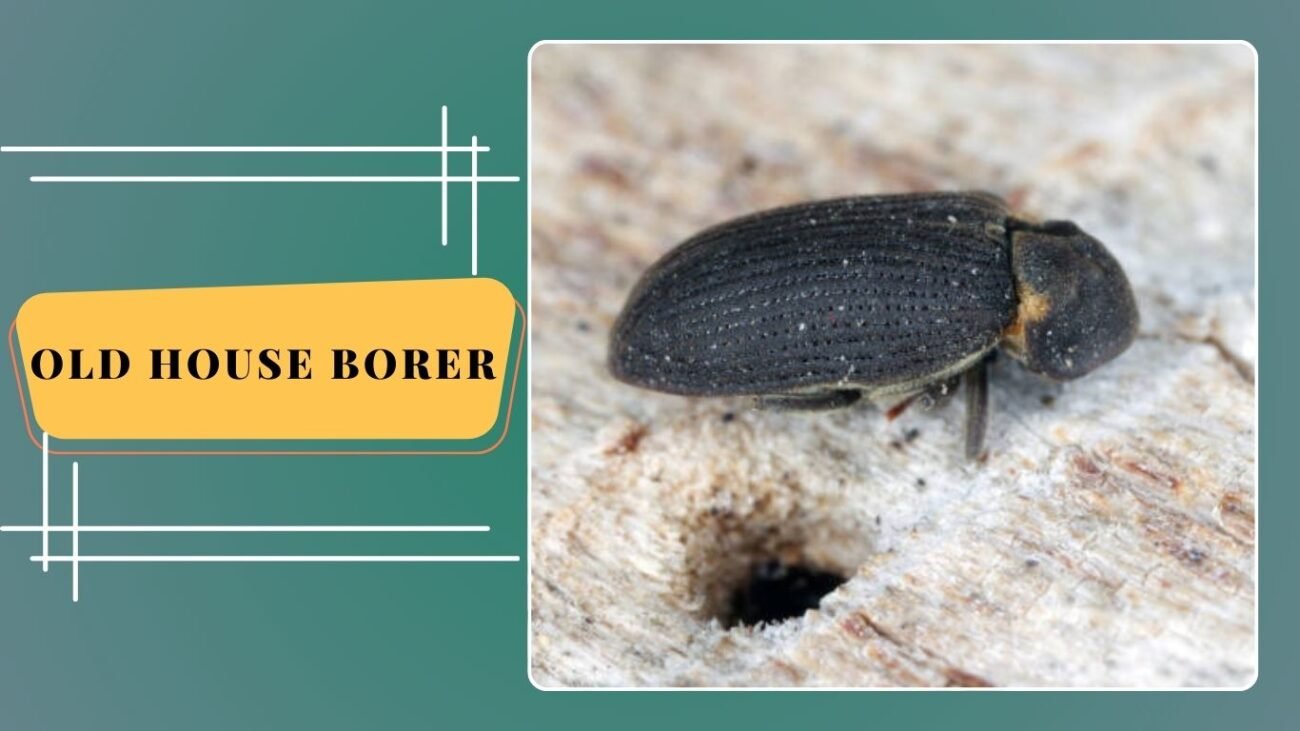
The Old House Borer is a wood-boring beetle originally from Europe but now found worldwide. It is a serious pest of structural timber, often infesting old wooden buildings and furniture.
Identification
- Medium-sized beetle, 0.4 to 1 inch long
- Dark brown to black body with fine grayish hairs
- Distinctive two shiny black spots on the pronotum (behind the head)
- Long, slender antennae about half the body length
- Elongated, somewhat flattened body shape
Habitat
This beetle thrives in human environments where softwood timbers (like pine and spruce) are used in construction. It is commonly found in old houses, furniture, and wooden beams.
Behaviors
The Old House Borer lays eggs in cracks and crevices of wood. The larvae bore deeply into timber, creating tunnels that weaken structures over time. Infestations are often hidden for years, only becoming visible when exit holes appear or wood sounds hollow.
Diet
Larvae feed on the sapwood of softwoods, especially pine, spruce, and fir. Adults do not cause significant feeding damage, but larvae can live inside wood for several years, consuming cellulose and weakening beams and furniture.
7. Cottonwood Borer (Plectrodera scalator)
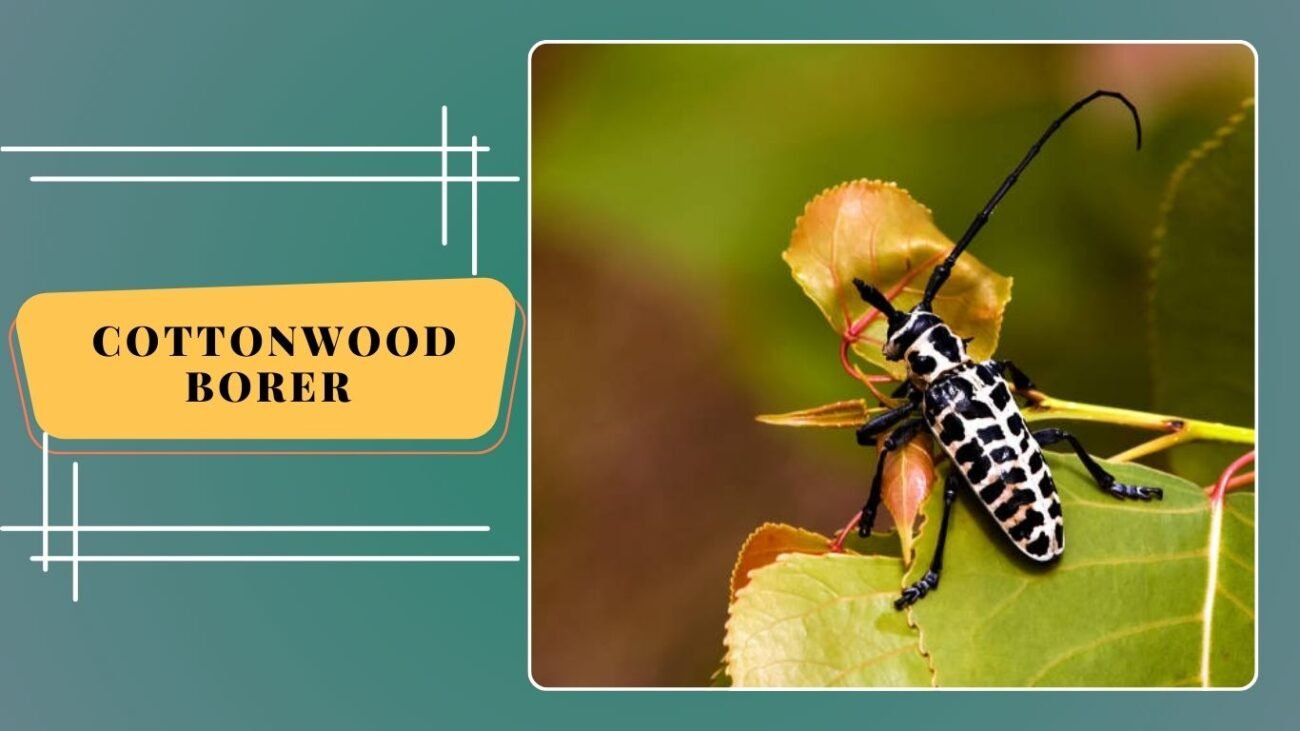
The Cottonwood Borer is a striking longhorn beetle native to North America. It is considered one of the largest and most beautiful beetles in the United States, known for its bold coloration and preference for cottonwood trees.
Identification
- Large beetle, reaching 1 to 1.6 inches in length
- Black-and-white banded pattern across the body and legs
- Long black-and-white striped antennae, longer than the body in males
- Sturdy, cylindrical body with strong legs
- Larvae are creamy-white, legless grubs found inside tree roots
Habitat
This beetle is primarily found in the central and southern United States. It inhabits areas with cottonwood, willow, and poplar trees, preferring floodplains and river valleys where these trees grow abundantly.
Behaviors
Adult Cottonwood Borers are most active during the summer, often seen on host trees. Females lay eggs near the base of trees, and the larvae tunnel into the roots, sometimes causing trees to weaken or die. Adults are strong fliers and can travel to locate new hosts.
Diet
Larvae feed extensively on the roots and lower trunks of cottonwood and willow trees. Adults chew on leaves, twigs, and bark, but most of the damage is caused by the larvae’s underground feeding.
8. Locust Borer (Megacyllene robiniae)

The Locust Borer is a colorful longhorn beetle native to North America. It is a major pest of black locust trees, often weakening and eventually killing its hosts when infestations are heavy.
Identification
- Medium-sized beetle, about 0.5 to 1 inch long
- Black body with bright yellow bands forming “W”-shaped patterns across the back
- Long, slender antennae, usually dark in color
- Legs often reddish with dark markings
- Distinct, wasp-like appearance for mimicry
Habitat
This beetle is found across the United States and southern Canada, wherever black locust trees grow. It thrives in fields, forest edges, and roadsides where locust trees are planted or occur naturally.
Behaviors
Locust Borers are most active in late summer and fall. Adults feed on goldenrod pollen, making them common around wildflower fields. Females lay eggs in cracks of black locust bark, and larvae bore into the wood, weakening trees from within. Repeated infestations can make trees vulnerable to wind breakage and disease.
Diet
Adults feed primarily on flower pollen, especially goldenrod. Larvae bore through the heartwood of black locust trees, consuming inner tissues and reducing the structural integrity of the tree.
9. Harlequin Beetle (Acrocinus longimanus)
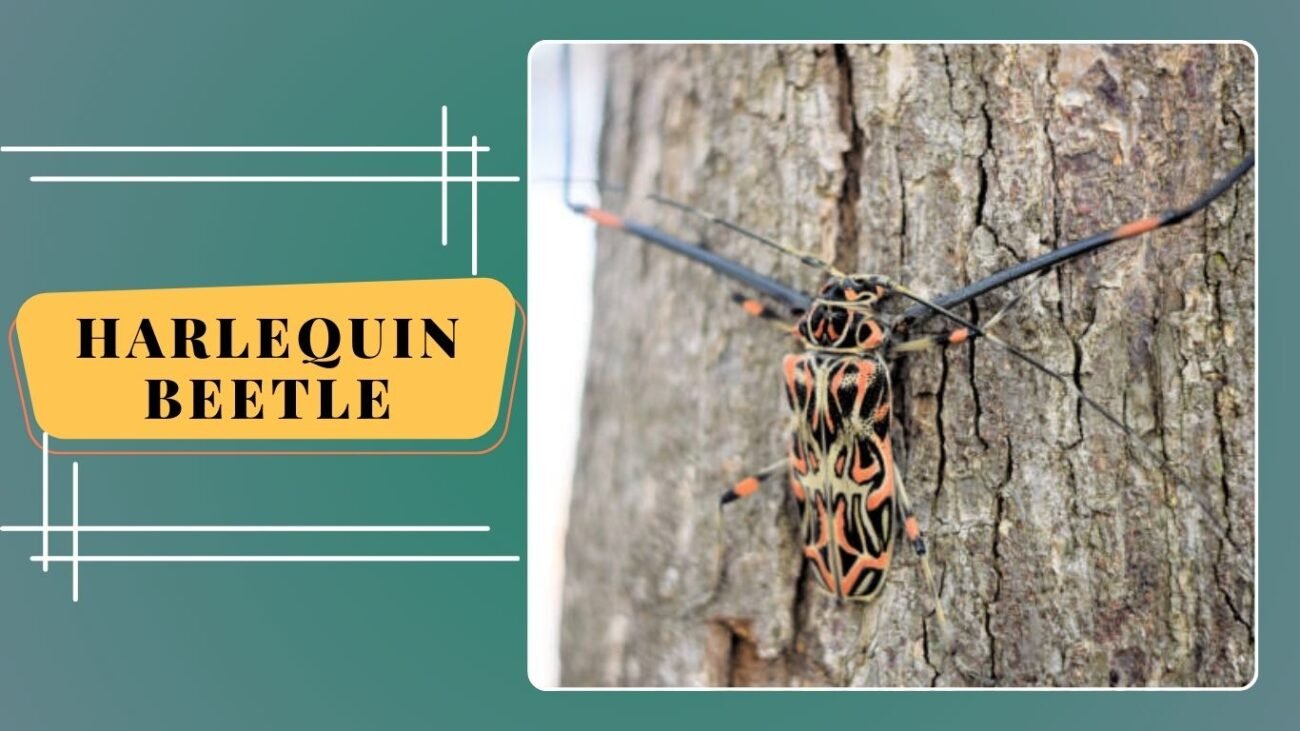
The Harlequin Beetle is a large, vividly patterned longhorn beetle native to Central and South America. It is famous for its striking coloration and extremely long forelegs in males.
Identification
- One of the largest longhorn beetles, reaching up to 3 inches long
- Brightly patterned body with black, red, orange, and green markings resembling a harlequin’s costume
- Males have extremely elongated forelegs, often twice the body length
- Long antennae, typical of longhorn beetles
- Flattened body adapted for crawling under bark
Habitat
This beetle inhabits tropical rainforests in Central and South America. It prefers recently fallen or decaying hardwood trees, where it lays eggs and larvae develop.
Behaviors
The Harlequin Beetle is active mainly at night but may be seen during the day on fallen logs. Males use their long forelegs for combat and competition over mates. Females lay eggs in cracks of rotting wood, and larvae tunnel inside. Interestingly, the beetle also serves as a “living platform” for pseudoscorpions that hitch rides on its body.
Diet
Larvae feed on decaying wood, helping recycle nutrients in rainforest ecosystems. Adults may consume tree sap or other plant fluids but are less destructive compared to some other longhorn beetles.
10. Red Milkweed Beetle (Tetraopes tetrophthalmus)
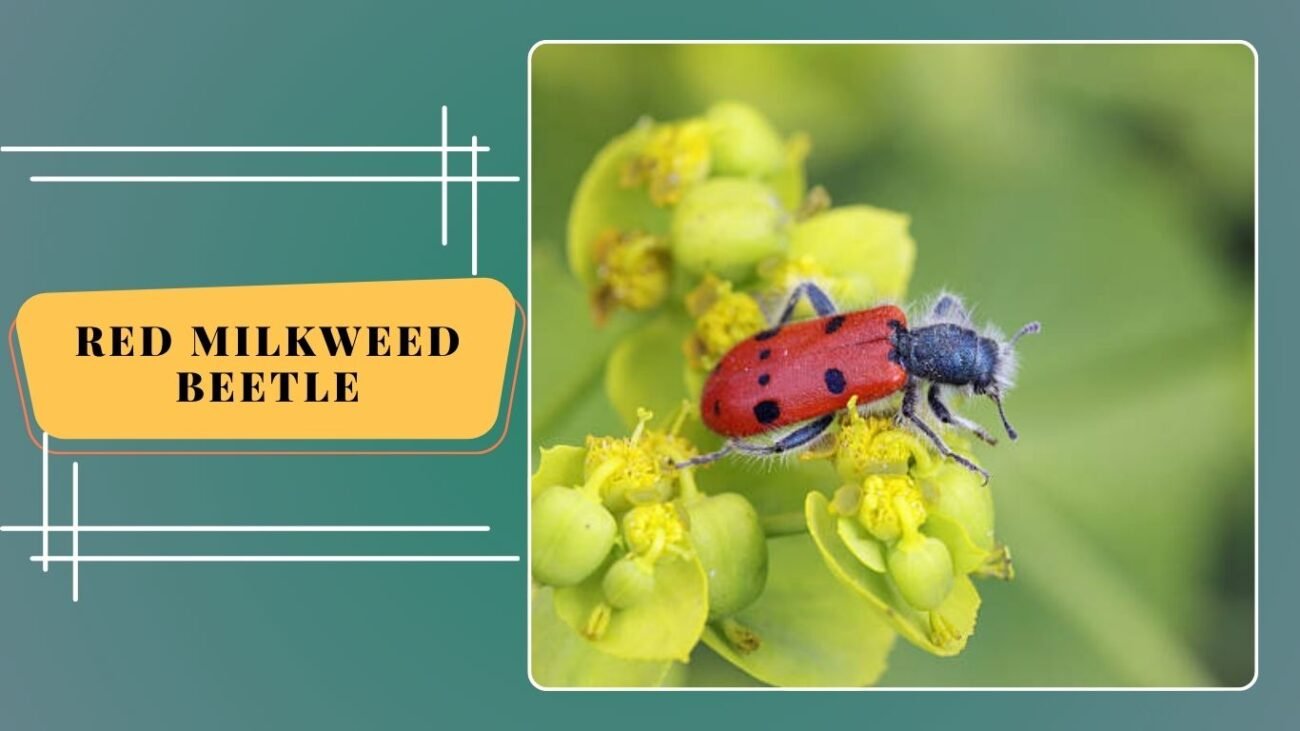
The Red Milkweed Beetle is a brightly colored longhorn beetle native to North America. It is closely associated with milkweed plants, both as a food source and breeding ground.
Identification
- Medium-sized beetle, about 0.4 to 0.6 inches long
- Striking red or orange body with four distinct black spots on each wing cover
- Long black antennae that curve backward, often crossing over the eyes
- Eyes are partially bisected by the antennae base, a unique trait of this species
- Cylindrical body with a smooth, glossy appearance
Habitat
This beetle inhabits fields, meadows, and roadsides where milkweed plants grow. It is widely distributed across the United States and southern Canada, especially in open sunny areas.
Behaviors
Adults are diurnal and most active during summer months, often seen crawling on milkweed plants. They are relatively slow-moving and rely on their bright coloration as a warning signal to predators. Females lay eggs at the base of milkweed stems, and larvae burrow into the plant roots.
Diet
Both larvae and adults specialize in feeding on milkweed. Adults consume leaves, stems, and flowers, while larvae feed on the roots. Like monarch butterflies, they sequester toxic compounds from milkweed, making them distasteful to predators.
11. Huhu Beetle (Prionoplus reticularis)
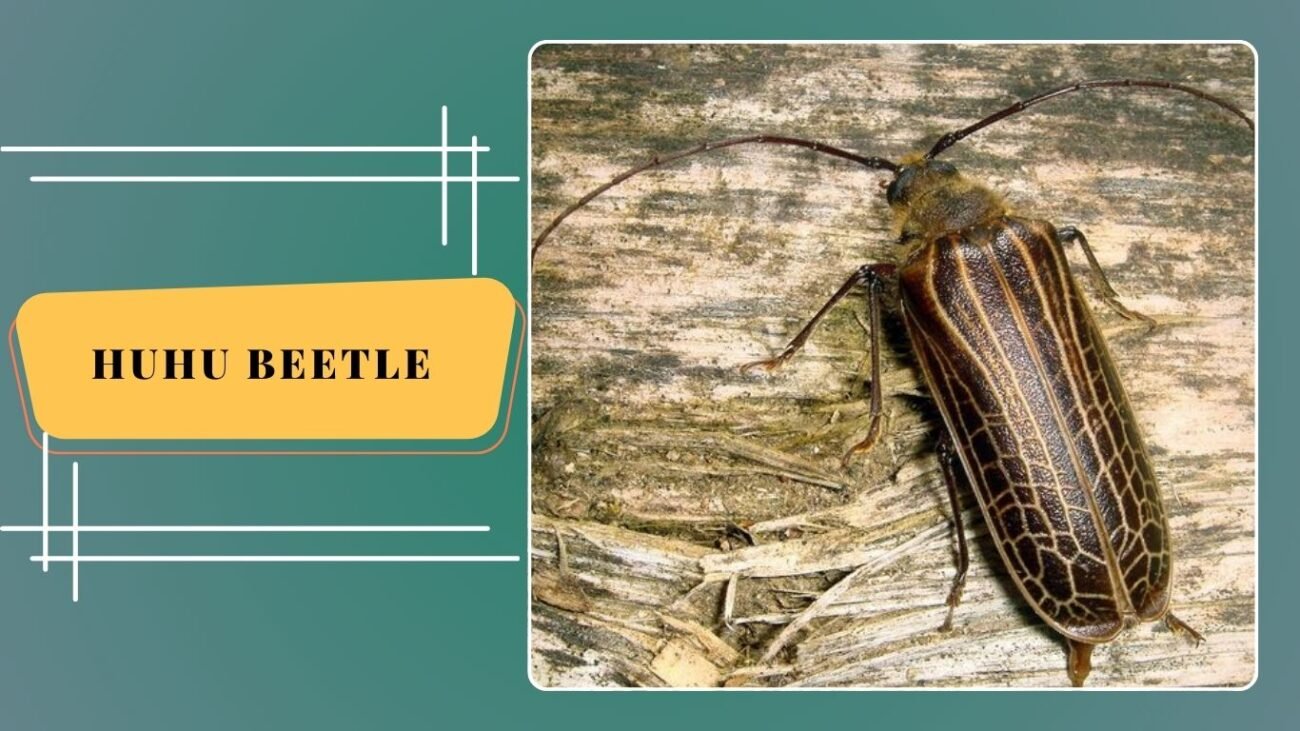
The Huhu Beetle is the largest beetle native to New Zealand. It is a well-known longhorn beetle, especially recognized for its large size and association with decaying wood.
Identification
- Very large beetle, reaching up to 2 inches long
- Dark brown to black body with a rough, reticulated (net-like) pattern on the wing covers
- Long antennae, about half the body length
- Strong mandibles used for chewing
- Heavy-bodied with a robust appearance
Habitat
The Huhu Beetle inhabits native forests and woodlands across New Zealand. It is commonly associated with rotting logs, stumps, and dead trees, which provide breeding sites and food for larvae.
Behaviors
Adults are nocturnal and are often attracted to lights at night, sometimes entering homes. They have strong, buzzing flight patterns despite their bulk. Larvae, known as “huhu grubs,” are much larger than adults and have been traditionally eaten as a source of protein by Māori communities.
Diet
Larvae feed on decaying wood, aiding in the decomposition process of fallen trees. Adults consume little to no solid food, though they may feed on plant sap or nectar. Most of their energy is spent on reproduction and dispersal.
12. Lion Beetle (Ulochaetes leoninus)
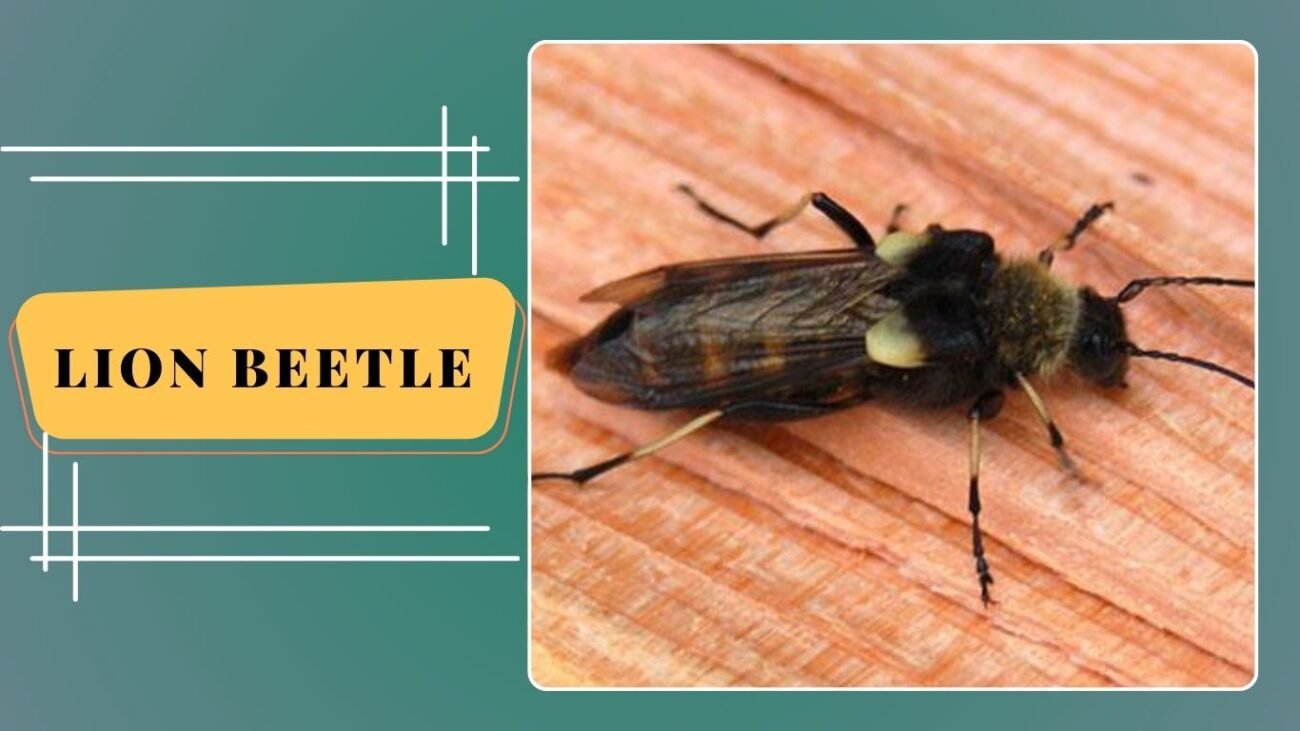
The Lion Beetle is a North American longhorn beetle that is less common than many others but is recognized for its distinctive hairy appearance, which gives it a lion-like look.
Identification
- Medium-sized beetle, about 0.4 to 0.7 inches long
- Covered in golden or yellowish-brown hairs, resembling a lion’s mane
- Antennae are long and slender, typical of longhorn beetles
- Body is elongated and somewhat flattened
- Larvae are creamy-white and wood-boring
Habitat
The Lion Beetle inhabits wooded areas of western North America. It is commonly found in forests with coniferous and hardwood trees, where its larvae develop inside dead or decaying wood.
Behaviors
Adults are most active during summer and are usually nocturnal, being attracted to lights at night. Females lay eggs in cracks of decaying wood, and larvae spend months to years tunneling inside before emerging as adults.
Diet
Larvae feed on rotting or weakened wood, contributing to the natural decomposition process. Adults may feed lightly on plant fluids but are not considered destructive to healthy trees.
13. Cactus Longhorn Beetle (Moneilema spp.)

The Cactus Longhorn Beetle is a unique longhorn beetle adapted to desert environments of North America. Unlike many other species, it is flightless and closely tied to cacti, especially prickly pear.
Identification
- Medium-sized beetle, about 0.6 to 1 inch long
- Matte black body, cylindrical and robust
- Short, strong legs adapted for walking on desert terrain
- Long antennae, though shorter compared to other longhorn beetles
- Wing covers are fused, making the beetle flightless
Habitat
These beetles are found in arid regions of the southwestern United States and Mexico. They primarily inhabit desert landscapes where prickly pear and other cacti are abundant.
Behaviors
Cactus Longhorn Beetles are active mostly at night or in the early morning to avoid desert heat. They crawl across desert soil and are often seen climbing on cacti. Females lay eggs at the base of cactus plants, and larvae bore inside, feeding unseen.
Diet
Both adults and larvae feed almost exclusively on cacti. Adults chew on pads, stems, and buds, while larvae consume internal tissues, sometimes causing severe damage to host plants.
14. Hibiscus Long-horned Beetle (Gelonaetha hirta)
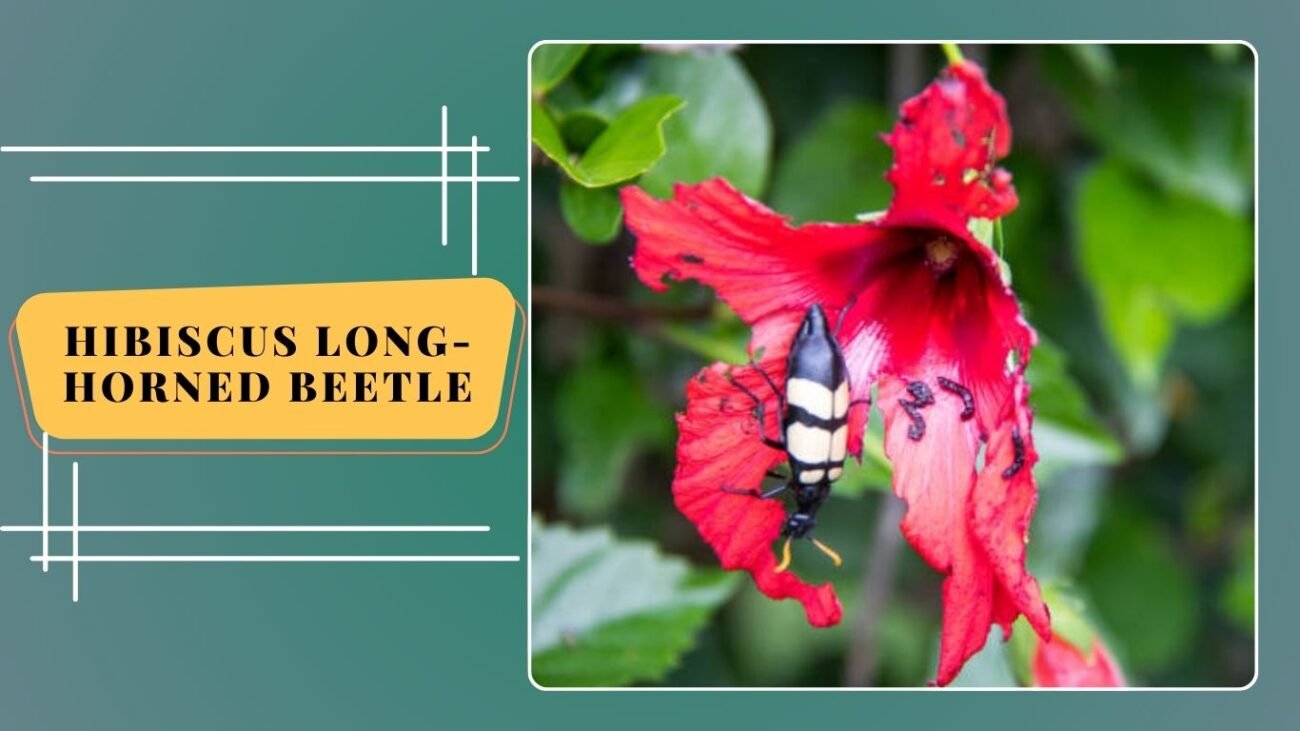
The Hibiscus Long-horned Beetle is a tropical longhorn beetle known for its association with hibiscus plants and other flowering hosts. It is less widespread than some species but notable in regions where hibiscus is cultivated.
Identification
- Medium-sized beetle, around 0.6 to 1 inch long
- Brown to reddish-brown body with a covering of fine hairs
- Long antennae, often as long as or longer than the body
- Elongated body with a slightly tapering end
- Larvae are creamy-white borers, typical of longhorn beetles
Habitat
This beetle inhabits tropical and subtropical regions, particularly areas where hibiscus and related ornamental plants grow. It is often found in gardens, plantations, and forest edges.
Behaviors
Adults are most active during warm months and are often seen feeding on flowers or stems. Females lay eggs in bark crevices or stems of hibiscus plants. Larvae bore inside the wood, causing structural damage to ornamental and cultivated plants.
Diet
Larvae feed within hibiscus stems and branches, weakening the plant internally. Adults may feed on bark, tender shoots, or flower parts. In areas of heavy infestation, hibiscus plants can decline or die.
15. Wallace’s Long-horn Beetle (Batocera wallacei)
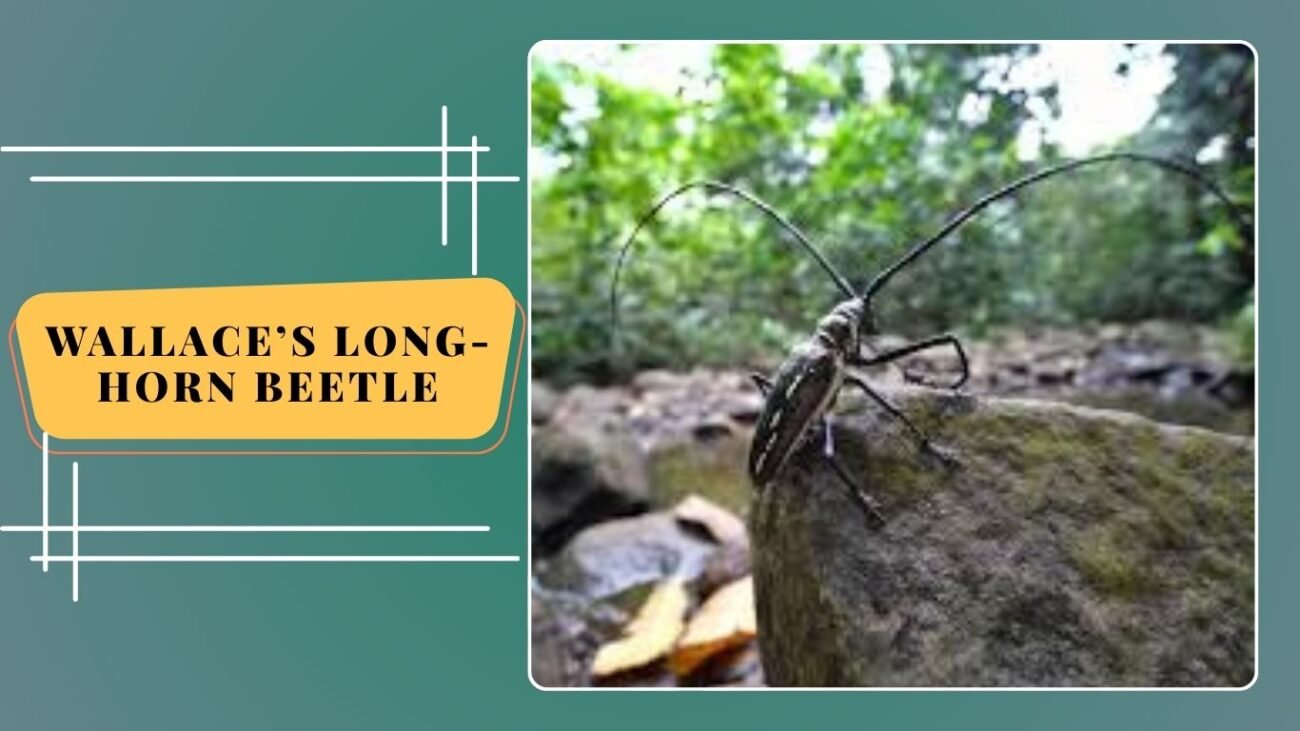
Wallace’s Long-horn Beetle is a rare and striking species from Southeast Asia, named after the naturalist Alfred Russel Wallace. It is one of the larger longhorn beetles and admired by collectors for its impressive size and markings.
Identification
- Large beetle, often 2 to 3 inches in length
- Brown to gray body with distinctive pale or yellowish spots
- Very long antennae, sometimes several times the body length
- Robust, elongated body with strong legs
- Larvae are thick, pale grubs that bore deeply into wood
Habitat
This species inhabits tropical forests of Indonesia and surrounding islands. It prefers regions with dense vegetation and abundant hardwood trees suitable for larval development.
Behaviors
Adults are nocturnal and are attracted to lights. They are strong fliers despite their size. Females deposit eggs on the bark of suitable host trees, and the larvae bore deeply into trunks and branches. Like other Batocera species, they may spend years in the larval stage before emerging as adults.
Diet
Larvae feed extensively on the inner wood of living and dead hardwood trees, weakening their structure. Adults feed lightly on bark, sap, or tender shoots but cause far less damage than the larvae.
16. Sinclair’s Longhorn (Calliprason sinclairi)
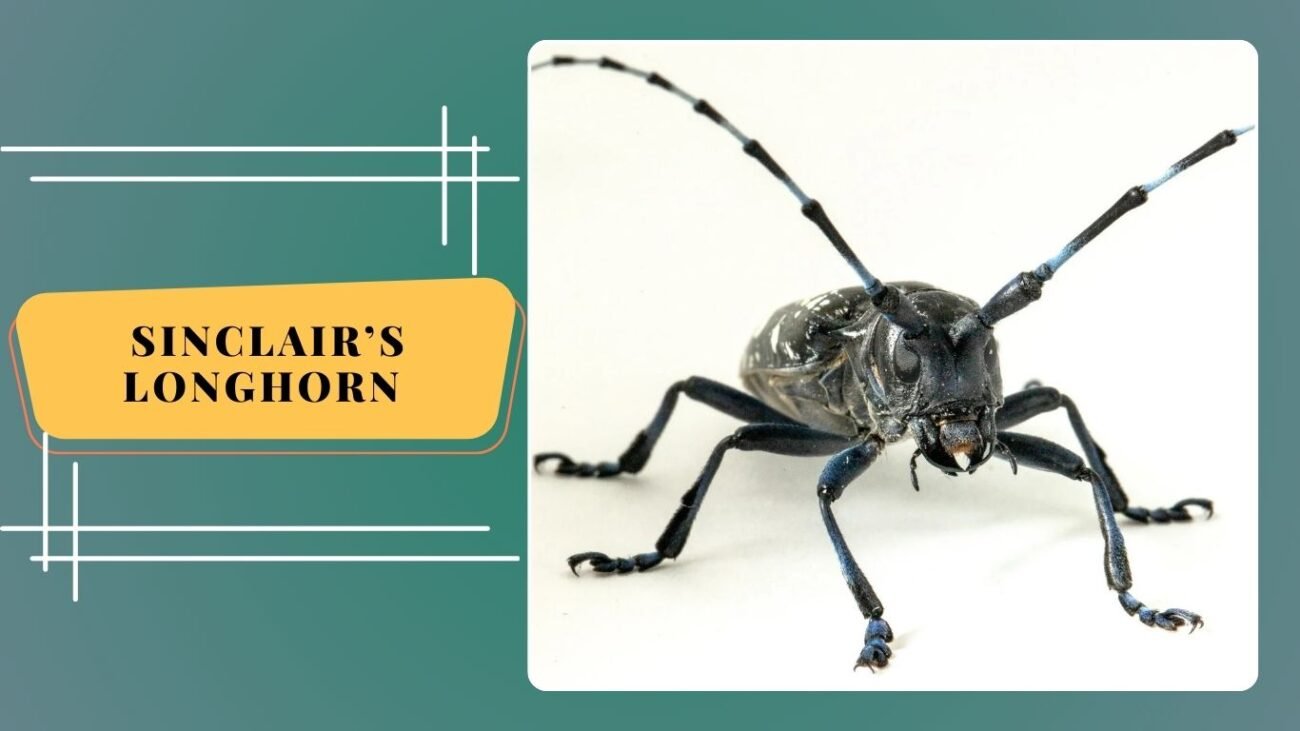
Sinclair’s Longhorn is a longhorn beetle native to New Zealand. Though not as large as some tropical relatives, it is distinctive and contributes to the natural decomposition of native forest trees.
Identification
- Medium-sized beetle, typically 0.6 to 1 inch long
- Body ranges from brown to reddish-brown with subtle markings
- Long, thin antennae, characteristic of longhorn beetles
- Elongated body, slightly flattened for crawling under bark
- Larvae are pale, wood-boring grubs that develop inside logs
Habitat
This species inhabits native New Zealand forests, where it is commonly associated with decaying or dead wood. It is often found in rotting logs and fallen branches of native hardwoods.
Behaviors
Adults are primarily nocturnal and are attracted to light sources. They are secretive and not often encountered in large numbers. Females lay eggs in dead wood, and larvae spend extended periods tunneling within before maturing.
Diet
Larvae feed on decayed or weakened wood, aiding in nutrient recycling in forest ecosystems. Adults may feed on sap or bark, but most of the life cycle impact comes from larval feeding inside logs.
17. Longhorn Shoot Borer (Tragocephala variegata)
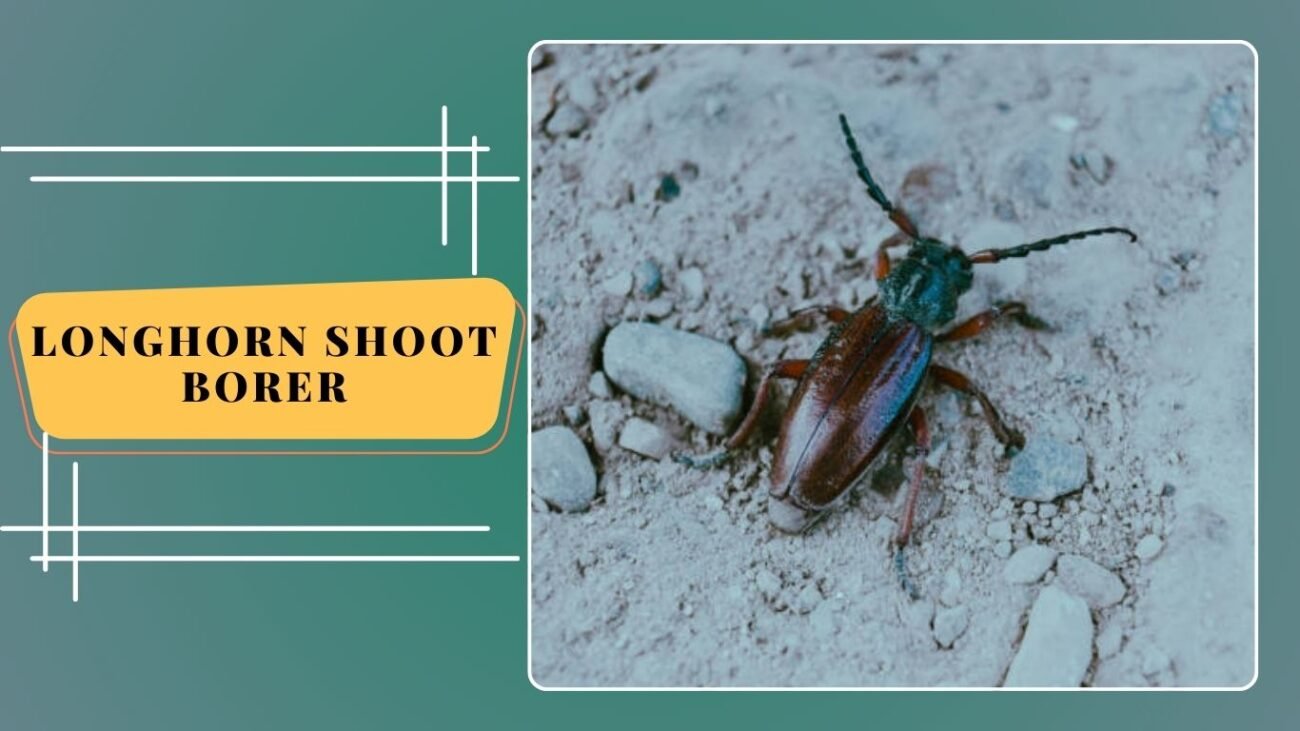
The Longhorn Shoot Borer is a colorful longhorn beetle species found in parts of Africa. It is known as a pest of fruit and ornamental trees, damaging shoots and reducing plant vigor.
Identification
- Medium to large beetle, about 0.8 to 1.2 inches long
- Brightly patterned body with yellow, green, and black markings
- Long, slender antennae, often exceeding body length
- Stout cylindrical body typical of longhorn beetles
- Larvae are cream-colored borers found inside shoots and stems
Habitat
This beetle inhabits tropical and subtropical regions of Africa. It thrives in orchards, plantations, and natural forests where host plants are available, especially fruit-bearing trees.
Behaviors
Adults are active during warm months and often seen on host plants. Females lay eggs in young shoots, and larvae tunnel inside, causing wilting and dieback. Heavy infestations can stunt growth and lower productivity in orchards.
Diet
Larvae feed on the soft inner tissues of shoots and stems, disrupting nutrient flow. Adults chew on bark, leaves, and tender stems but cause less damage than larvae. The shoot-boring activity of larvae makes them particularly harmful to cultivated trees.