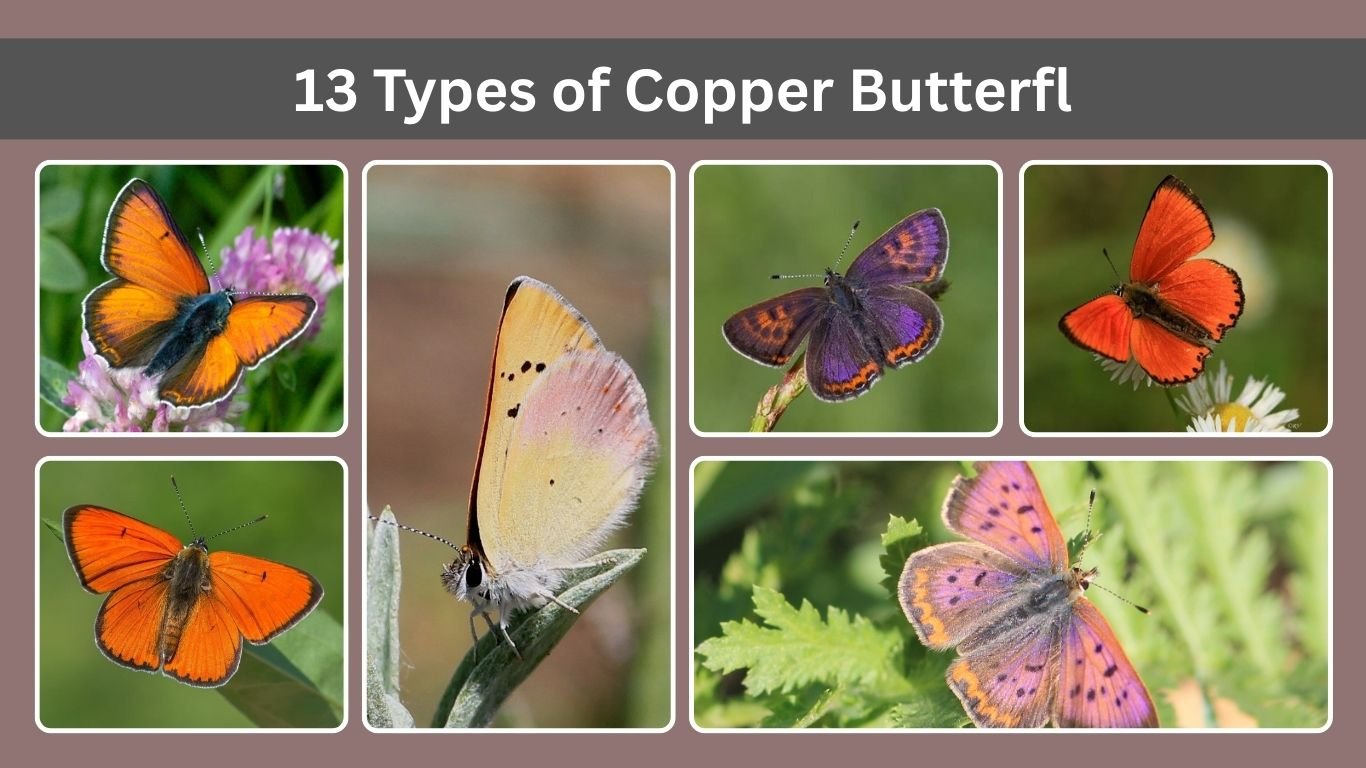
Copper butterflies, belonging to the genus Lycaena, are small but vibrant members of the Lycaenidae family. Known for their fiery orange, bronze, and sometimes violet hues, these butterflies inhabit diverse regions across North America, Europe, and Asia. Each species has unique features, habitats, and life patterns, making them fascinating subjects for study and observation in meadows, wetlands, and mountain landscapes.
1. American Copper (Lycaena phlaeas)
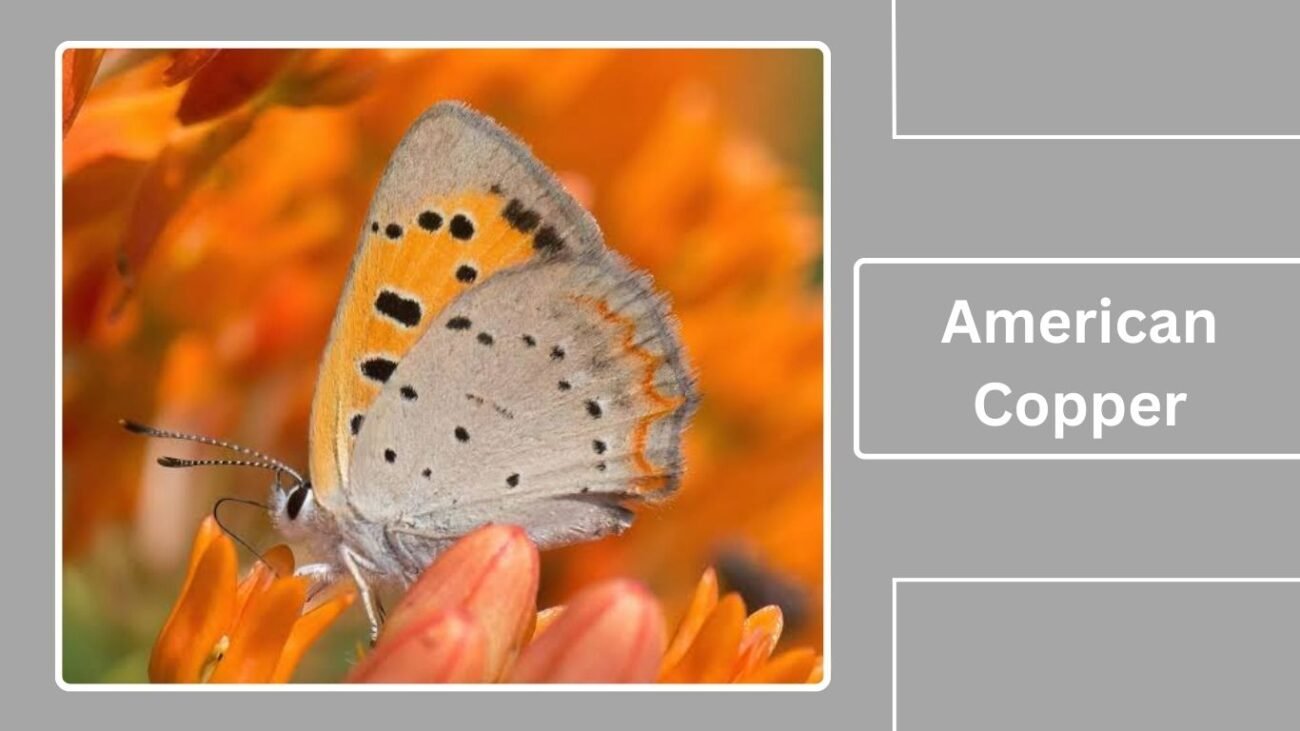
The American Copper is a small but vibrant butterfly commonly found across North America, admired for its fiery orange wings edged with dark borders. It is widespread, adaptable, and often seen in open, sunny habitats.
Identification
- Small-sized butterfly, wingspan about 22–35 mm
- Forewings bright orange with black spots and a dark border
- Hindwings dark brown with an orange border along the edge
- Underside of forewings orange with dark spots
- Underside of hindwings pale grayish-brown with black dots
Habitat
American Coppers inhabit fields, meadows, roadsides, and open grassy areas. They are often found in places where their host plants (mainly docks and sorrels) grow.
Behavior
They are territorial butterflies and can often be seen chasing away other insects. Their flight is fast and erratic, staying close to the ground. Males perch in sunny spots to wait for females.
Diet
Adult American Coppers feed primarily on nectar from flowers such as buttercups, asters, and clovers. Caterpillars feed on leaves of sorrels and docks (Rumex species).
Lifecycle
The species produces several broods per year. Eggs are laid singly on the host plant. Caterpillars are small, green, and slug-like, camouflaging well with leaves. Pupation occurs close to the ground, and depending on the climate, the species may overwinter in the larval or pupal stage.
2. Purplish Copper (Lycaena helloides)
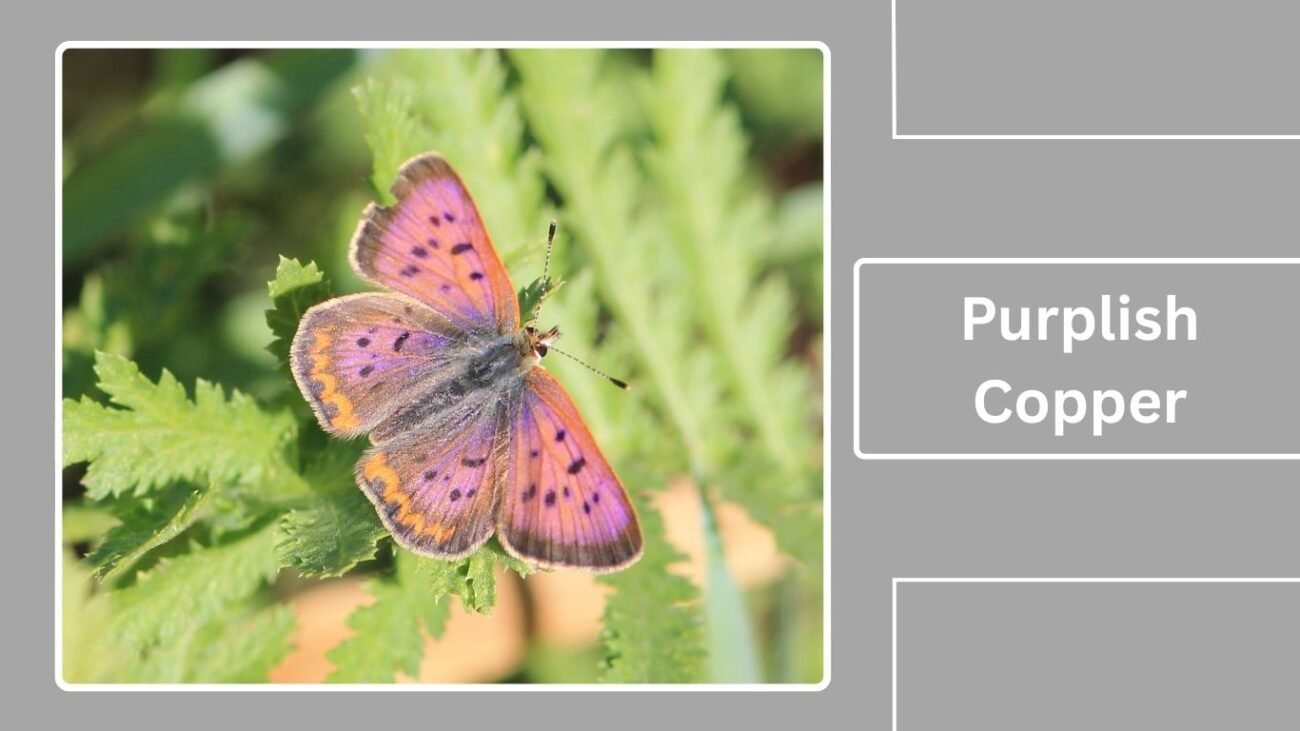
The Purplish Copper is a striking butterfly found in North America, particularly recognized for its purple iridescence on the wings. It thrives in wetland and marshy habitats and is often spotted near its host plants.
Identification
- Medium-sized butterfly with a wingspan of 25–35 mm
- Males show a purplish sheen on the upper wings
- Forewings orange with black spots, bordered with dark edges
- Hindwings brown with orange borders and small dark spots
- Underside pale gray to brown with black dots and orange bands near the edges
Habitat
This butterfly is usually found in moist areas such as marshes, wet meadows, stream banks, and ditches. It strongly associates with habitats where dock and knotweed grow.
Behavior
Purplish Coppers are active fliers, staying close to their host plants. Males patrol territories in sunny patches, while females fly lower to lay eggs. They are frequently observed basking with wings open in sunny conditions.
Diet
Adults feed on nectar from flowers like goldenrod, aster, and yarrow. Caterpillars feed on docks and knotweeds (Polygonaceae family).
Lifecycle
The species has multiple broods per year, depending on the climate. Eggs are laid singly on host plants. Caterpillars are green and blend in with leaves. Pupation occurs near the ground. In colder regions, overwintering takes place at the egg stage.
3. Dorcas Copper (Lycaena dorcas)
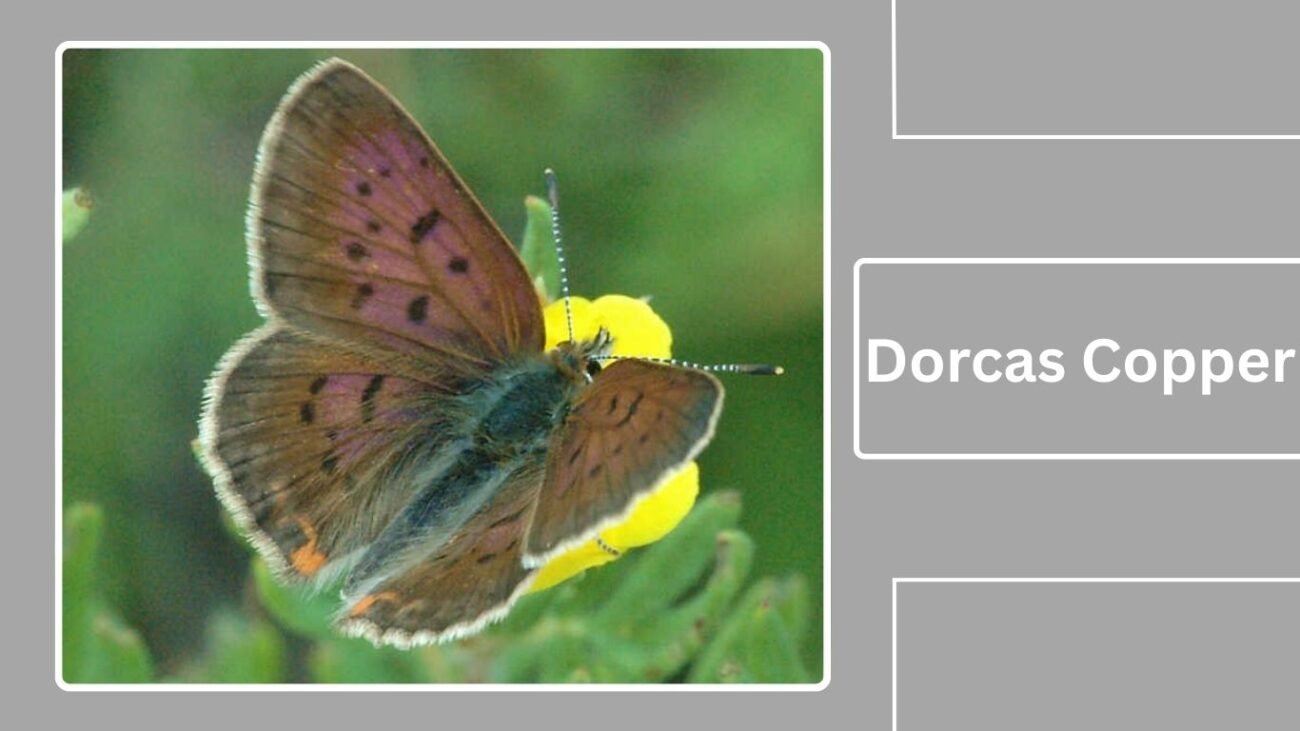
The Dorcas Copper is a northern species of copper butterfly, most commonly found in Canada and parts of the northern United States. It is a small, dark-toned butterfly that thrives in boggy and marshy areas.
Identification
- Small butterfly with a wingspan of 22–28 mm
- Forewings brownish-orange with dark spots and broad dark borders
- Hindwings dark brown with faint orange markings near the margins
- Underside pale brown to gray with dark spots and a subtle orange band along the edges
Habitat
Dorcas Coppers prefer bogs, fens, marshes, and other wetland habitats. They are closely tied to areas where their larval host plants, mainly bog birch (Betula pumila), are abundant.
Behavior
This butterfly is less conspicuous compared to other coppers, often flying low and close to vegetation. They have a short flight period and are most active during sunny, warm conditions.
Diet
Adults nectar on small flowers such as asters and goldenrods. Caterpillars feed on the leaves of bog birch and sometimes other wetland shrubs.
Lifecycle
Dorcas Coppers typically have a single brood per year. Eggs are laid on or near host plants. Larvae are green and cryptic, blending with host leaves. The species overwinters in the egg stage, emerging in spring to complete its cycle.
4. Bronze Copper (Lycaena hyllus)
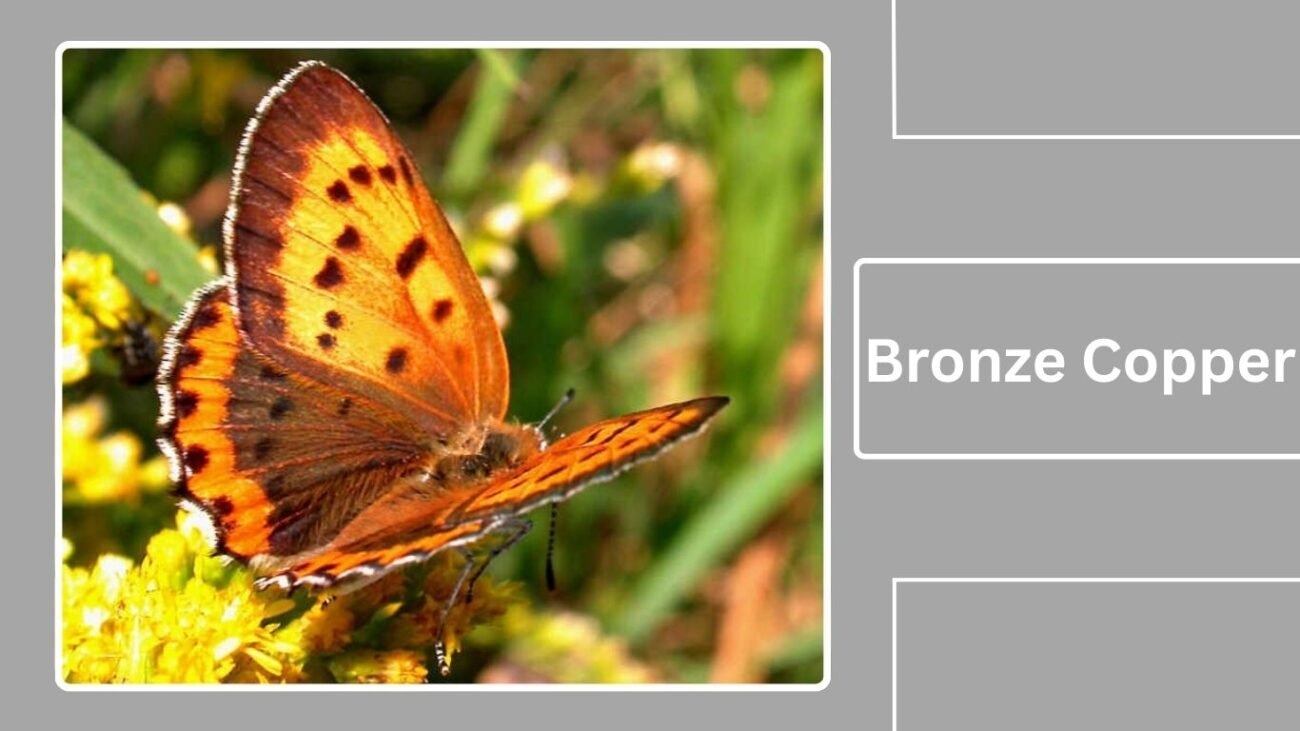
The Bronze Copper is a larger and more robust member of the copper butterflies, well-known for its rich bronze coloration. It is widespread in North America and often found in damp, open habitats.
Identification
- Medium to large copper butterfly, wingspan 32–38 mm
- Forewings bright orange with black spots and broad dark margins
- Hindwings bronze to brown, sometimes with a faint orange band near the edges
- Underside of forewings orange with black dots, bordered with brown
- Underside of hindwings pale grayish-brown with small dark spots
Habitat
Bronze Coppers favor wet meadows, marshes, streamsides, and prairies. They are closely associated with areas where docks (Rumex) and smartweeds (Polygonum) grow in abundance.
Behavior
They are strong fliers compared to smaller coppers, often patrolling large areas in search of mates or nectar. Males display territorial behavior, while females are more secretive when searching for egg-laying sites.
Diet
Adults feed on nectar from dogbane, milkweed, goldenrod, and other wildflowers. Caterpillars feed on docks and smartweeds, their primary host plants.
Lifecycle
Usually producing two broods per year, depending on latitude. Eggs are deposited singly on host plant leaves. Caterpillars are green with fine lines for camouflage. Pupation occurs in leaf litter near the host plant. The species overwinters in the egg stage, resuming development in spring.
5. Ruddy Copper (Lycaena rubidus)

The Ruddy Copper is one of the most brightly colored of the copper butterflies, admired for its rich, reddish-orange wings. It is a western North American species, often spotted in dry, open habitats.
Identification
- Medium-sized butterfly, wingspan 28–35 mm
- Males have brilliant reddish-orange upper wings with black spots and dark borders
- Females are more subdued, with darker brown wings and orange shading
- Underside of forewings orange with dark dots
- Underside of hindwings pale gray with small black spots and faint orange edges
Habitat
This species inhabits open, dry areas such as meadows, hillsides, sagebrush flats, and desert edges. It is strongly linked with areas where buckwheat (Eriogonum species) grows, its primary host plant.
Behavior
Ruddy Coppers are energetic and quick fliers, often seen basking with wings wide open in sunny conditions. Males patrol actively to find females, while females stay closer to host plants for egg-laying.
Diet
Adults feed on nectar from wildflowers such as buckwheat, rabbitbrush, and asters. Caterpillars feed exclusively on leaves of buckwheat plants.
Lifecycle
Typically, one or two broods occur annually, depending on climate. Eggs are laid singly on buckwheat plants. Larvae are green and well-camouflaged, feeding mainly at night. The species overwinters in the egg stage and completes development the following season.
6. Lustrous Copper (Lycaena cupreus)
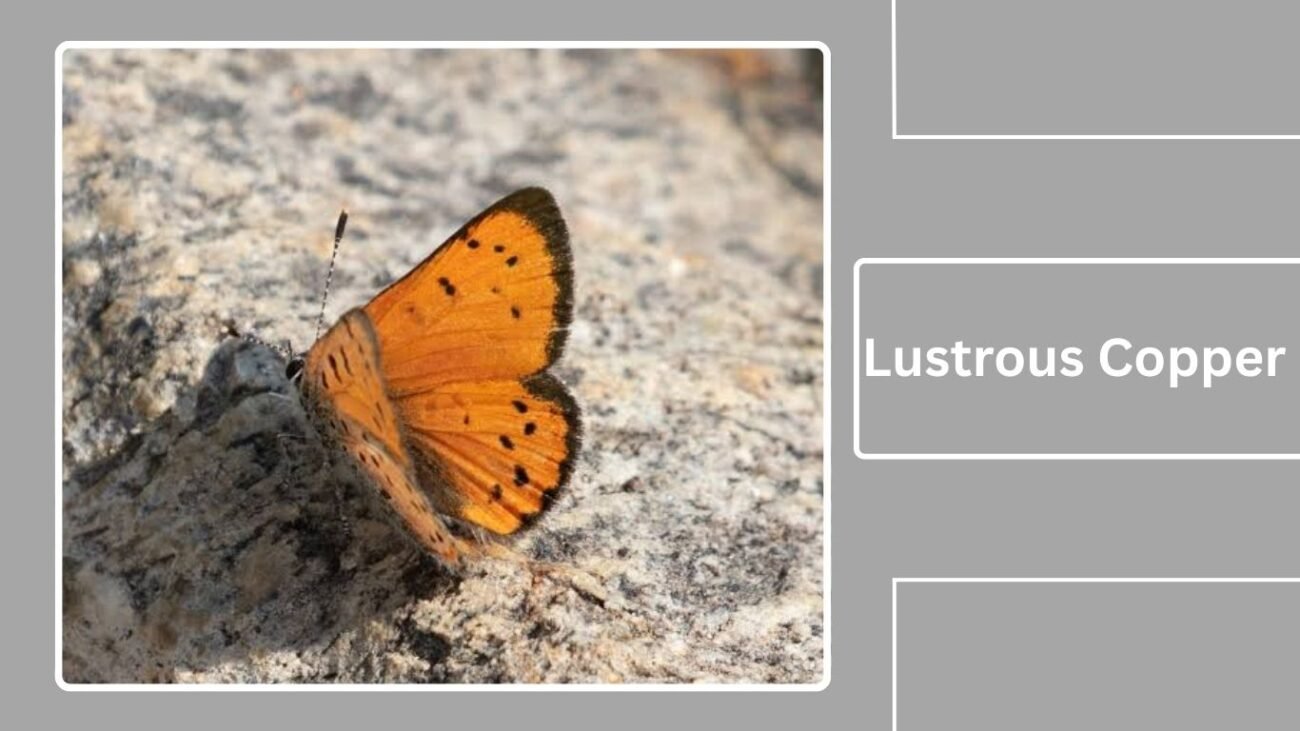
The Lustrous Copper is a striking butterfly of western North America, known for its brilliant metallic copper sheen. It is most often found in mountainous regions and open areas where its host plants grow.
Identification
- Medium-sized butterfly, wingspan 25–32 mm
- Males have a dazzling, shiny copper or orange upper side with minimal dark markings
- Females are darker, often with broader brown borders and small black spots
- Underside of forewings dull orange with dark spots
- Underside of hindwings grayish with black dots and a faint orange band near the margin
Habitat
This butterfly inhabits open mountain meadows, roadsides, and slopes at medium to high elevations. It is most abundant in areas where sheep sorrel (Rumex acetosella) and related plants grow.
Behavior
Lustrous Coppers are quick fliers, often staying low to the ground. Males perch on sunny slopes or open ground to watch for females, while females fly closer to host plants to lay eggs.
Diet
Adults visit a wide range of flowers for nectar, including clovers, asters, and yarrow. Caterpillars feed on sorrel and dock species (Rumex family).
Lifecycle
Usually produces one brood per year in higher elevations, sometimes two in lower regions. Eggs are laid singly on host plants. Larvae are green, slug-like, and difficult to spot among leaves. The species overwinters in the egg stage, with larvae emerging in spring.
7. Lilac-bordered Copper (Lycaena nivalis)
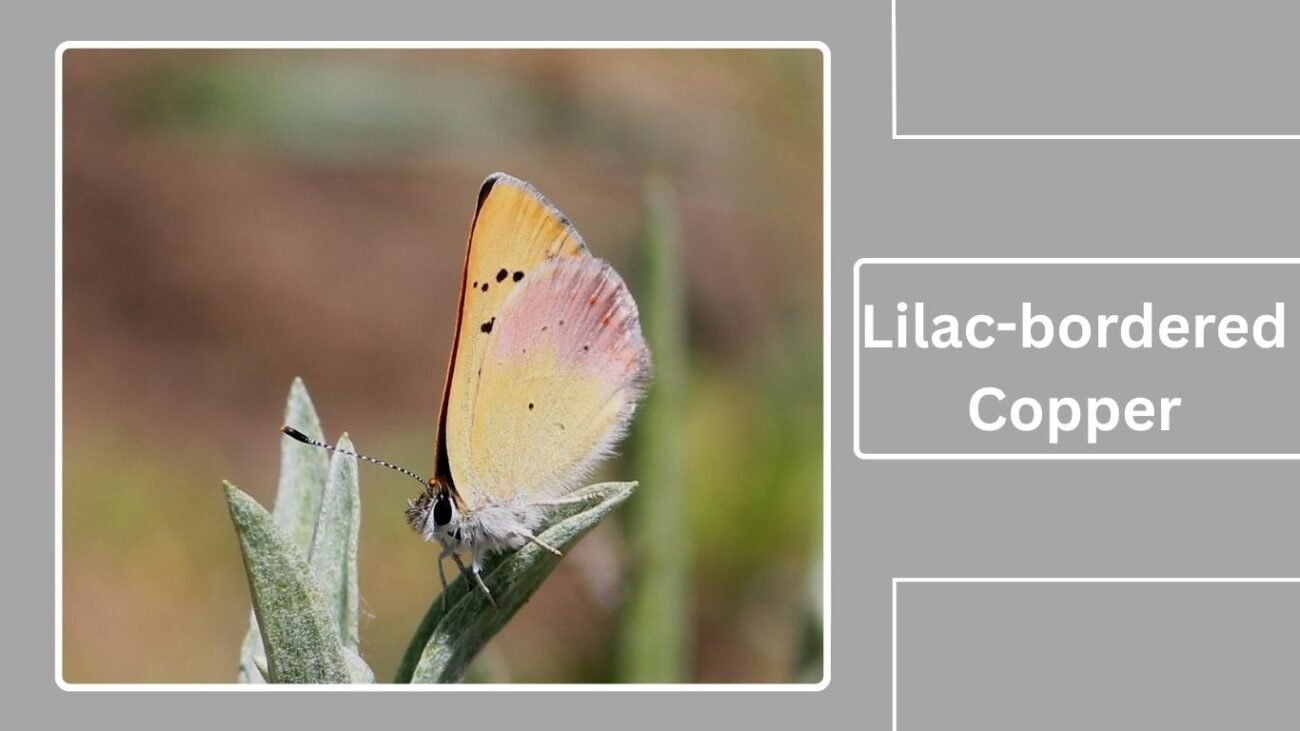
The Lilac-bordered Copper is a distinctive butterfly of western North America, notable for its soft lilac or purplish borders on the wings. It is a mountain species, often found in high-altitude meadows.
Identification
- Medium-sized butterfly, wingspan 28–36 mm
- Forewings bright orange with black spots and dark margins
- Hindwings brownish with a broad orange band along the edges
- Both sexes show a characteristic lilac or purplish iridescent border on the wings
- Underside pale gray to whitish with black spots and faint orange edging
Habitat
The Lilac-bordered Copper favors mountain meadows, open valleys, and forest edges at higher elevations. It is associated with areas where knotweeds and docks (Polygonaceae) are present.
Behavior
This butterfly is relatively calm compared to other coppers, often seen basking with wings spread. Males defend territories in sunny clearings, while females remain near host plants.
Diet
Adults nectar on wildflowers such as asters, goldenrod, and yarrow. Caterpillars feed primarily on plants in the buckwheat and dock families.
Lifecycle
Usually produces one generation per year in cooler, high-altitude regions. Eggs are laid singly on host plant leaves. Caterpillars are green and cryptically patterned to blend with foliage. The species overwinters in the egg stage, with larvae resuming development in spring.
8. Blue Copper (Lycaena heteronea)

The Blue Copper is one of the most unique copper butterflies, as males display a striking blue sheen unlike the typical orange coloration of most coppers. Found mainly in western North America, it thrives in dry, open habitats.
Identification
- Medium-sized butterfly, wingspan 25–35 mm
- Males have brilliant blue or bluish-violet upper wings with narrow dark borders
- Females are brownish with orange shading and small dark spots
- Underside of forewings pale grayish with black dots and faint orange edging
- Underside of hindwings gray with black spots and sometimes faint orange bands
Habitat
Blue Coppers inhabit sagebrush flats, dry meadows, foothills, and mountain slopes. They are particularly common in regions where wild buckwheat (Eriogonum) species grow.
Behavior
Males perch on low plants or bare ground, actively patrolling for females. They often bask with wings open to display their blue iridescence. Females remain closer to host plants for egg-laying.
Diet
Adults feed on nectar from buckwheat, rabbitbrush, and other wildflowers. Caterpillars feed primarily on leaves of buckwheat (Eriogonum).
Lifecycle
Generally produces one brood per year, though in warmer regions a partial second brood may occur. Eggs are laid singly on host plants. Larvae are green and flattened, resembling tiny slugs. Overwintering occurs in the egg stage, with development resuming in spring.
9. Great Copper (Lycaena dispar)
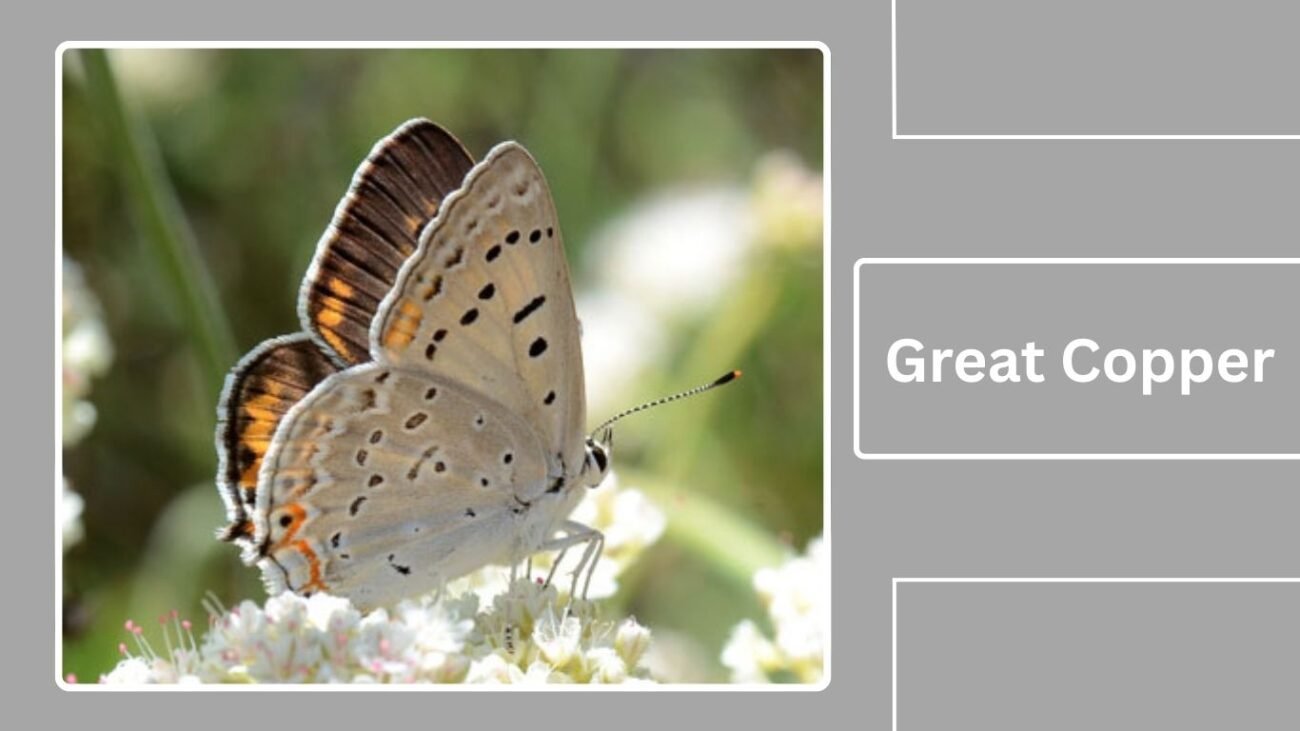
The Great Copper is one of the largest and most impressive copper butterflies, native to Europe and parts of Asia. Once widespread, its populations have declined due to habitat loss, making it a rare and localized species today.
Identification
- Large-sized copper, wingspan 40–50 mm
- Forewings bright orange with black spots and bold dark borders
- Hindwings orange-brown with dark borders and small black dots
- Underside of forewings pale orange with black spots
- Underside of hindwings light gray with black dots and faint orange edges
Habitat
The Great Copper inhabits wetlands, meadows, marshes, and floodplains. It is strongly tied to areas with abundant sorrel (Rumex species), its larval host plant.
Behavior
Great Coppers are powerful fliers compared to smaller species, often seen gliding over meadows and basking with wings open. Males patrol territories actively, while females focus on locating host plants for egg-laying.
Diet
Adults feed on nectar from a variety of flowers including thistles, knapweed, and meadow plants. Caterpillars feed on dock and sorrel (Rumex family).
Lifecycle
Usually produces one generation per year. Eggs are laid singly on host plants. Larvae are green and cryptically shaped, feeding on sorrel leaves. Pupation occurs near the base of plants. The species overwinters as eggs, with caterpillars hatching in spring.
10. Large Copper (Lycaena dispar batavus)
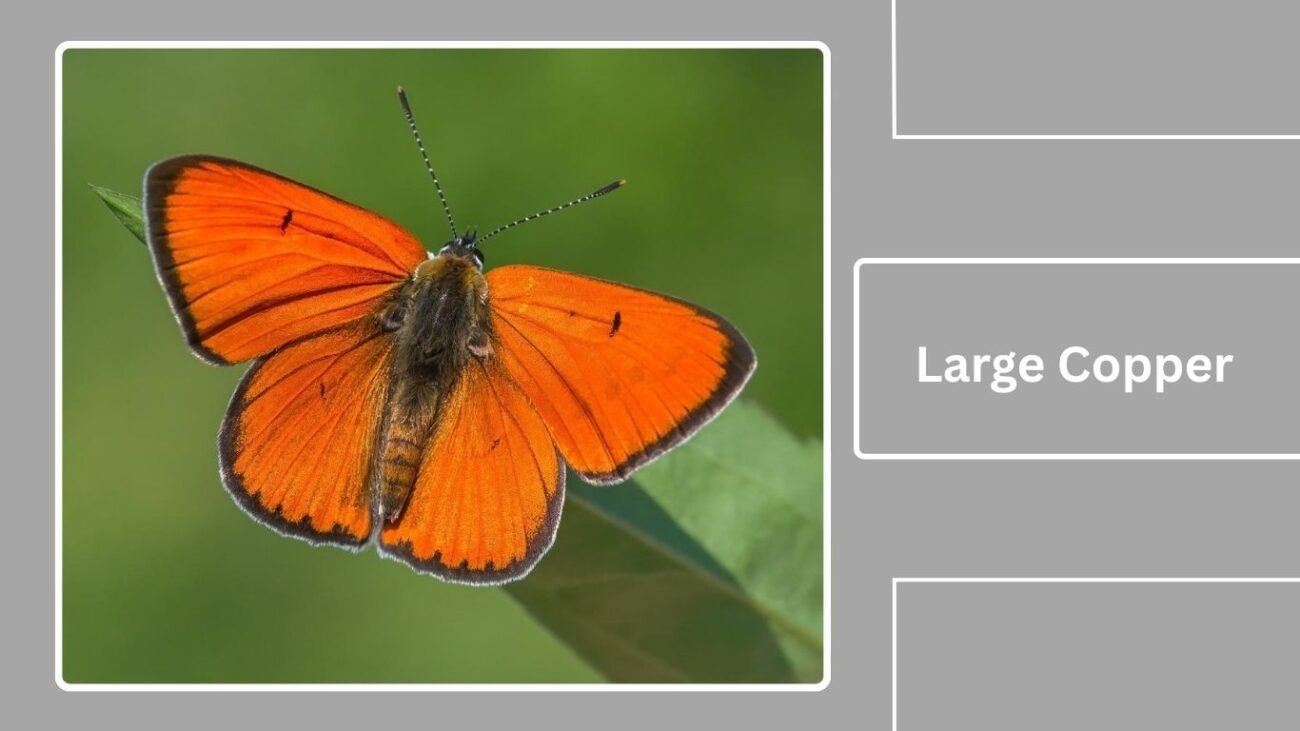
The Large Copper is a spectacular butterfly, considered one of the most beautiful of the coppers. It is a subspecies of the Great Copper, historically widespread in Europe but now extremely rare and protected due to habitat destruction.
Identification
- Large butterfly, wingspan 44–55 mm
- Forewings vivid orange with large black spots and bold dark borders
- Hindwings coppery orange with broad dark margins
- Females are slightly darker with more extensive black markings
- Underside pale gray to whitish with small black dots and faint orange edging
Habitat
This butterfly prefers wet meadows, fens, marshlands, and peat bogs. Its distribution is closely tied to areas where water docks (Rumex hydrolapathum) grow, which serve as the primary host plant.
Behavior
The Large Copper is a strong and fast flier, often staying close to wetland vegetation. Males establish territories in sunny areas, while females are seen more often near larval host plants. It frequently basks with wings open on warm days.
Diet
Adults nectar on flowers such as thistle, ragwort, and loosestrife. Caterpillars feed mainly on water dock (Rumex hydrolapathum), but occasionally on other dock species.
Lifecycle
Usually one brood per year in northern regions, though in warmer climates a partial second brood may occur. Eggs are laid singly on dock leaves. Caterpillars are green with fine stripes, camouflaging with the host foliage. Overwintering occurs in the larval stage, with pupation the following spring.
11. Scarce Copper (Lycaena virgaureae)
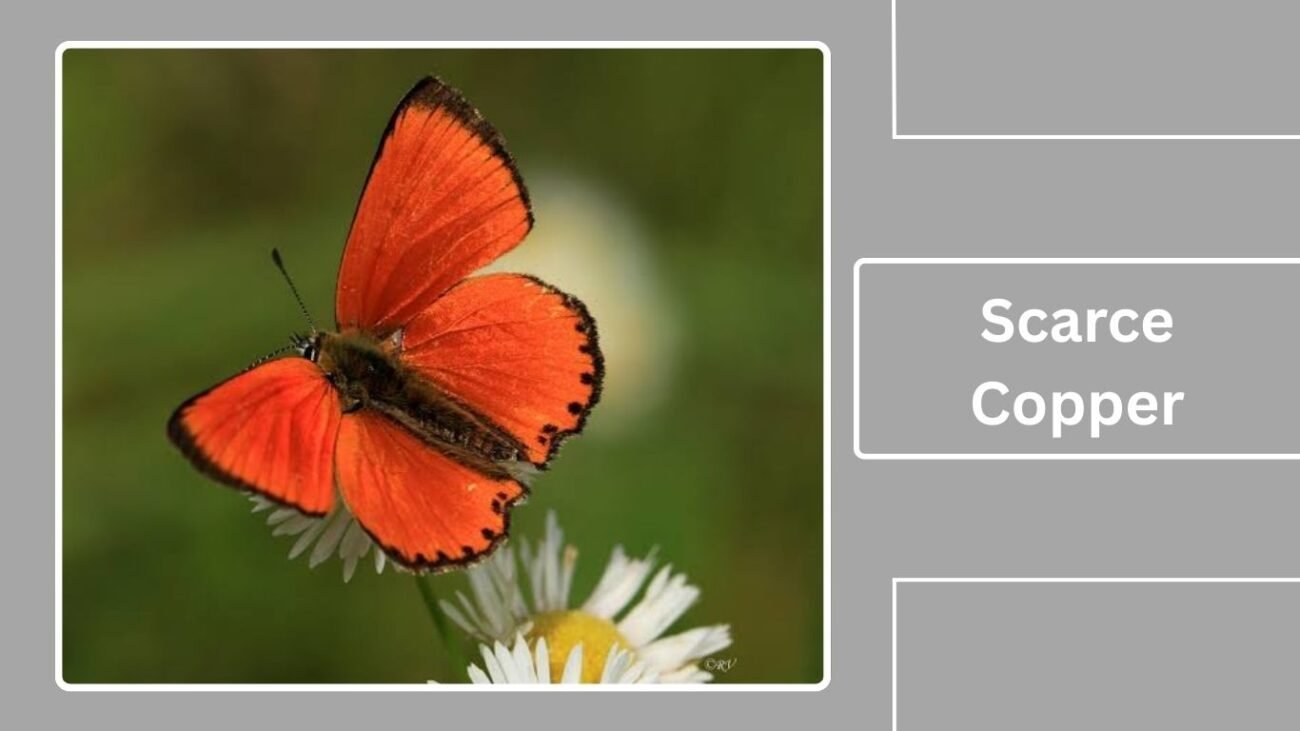
The Scarce Copper is one of the most brilliantly colored European butterflies, especially in males, which shine with fiery orange wings. It is widely distributed across central and eastern Europe but considered rare in some parts of its range.
Identification
- Medium to large butterfly, wingspan 30–40 mm
- Males have bright, unmarked, fiery orange upper wings with narrow dark borders
- Females are more patterned, with dark spots on the forewings and orange edging on hindwings
- Underside of forewings pale orange with dark spots
- Underside of hindwings gray-brown with black dots and faint orange bands near margins
Habitat
Scarce Coppers inhabit flower-rich meadows, woodland clearings, grasslands, and alpine valleys. They are typically found where sorrel (Rumex acetosa) and related plants grow.
Behavior
Males are highly active and territorial, often seen chasing rivals in sunny meadows. They are also frequent baskers, spreading their wings wide to display their fiery orange color. Females are more secretive, usually staying closer to host plants.
Diet
Adults feed on nectar from knapweed, thistles, scabious, and other meadow flowers. Caterpillars feed on sorrel (Rumex species).
Lifecycle
One or two generations per year, depending on latitude and altitude. Eggs are laid singly on host plants. Larvae are green with faint striping, well-camouflaged among leaves. The species overwinters in the egg stage and completes development the following spring.
12. Violet Copper (Lycaena hippothoe)
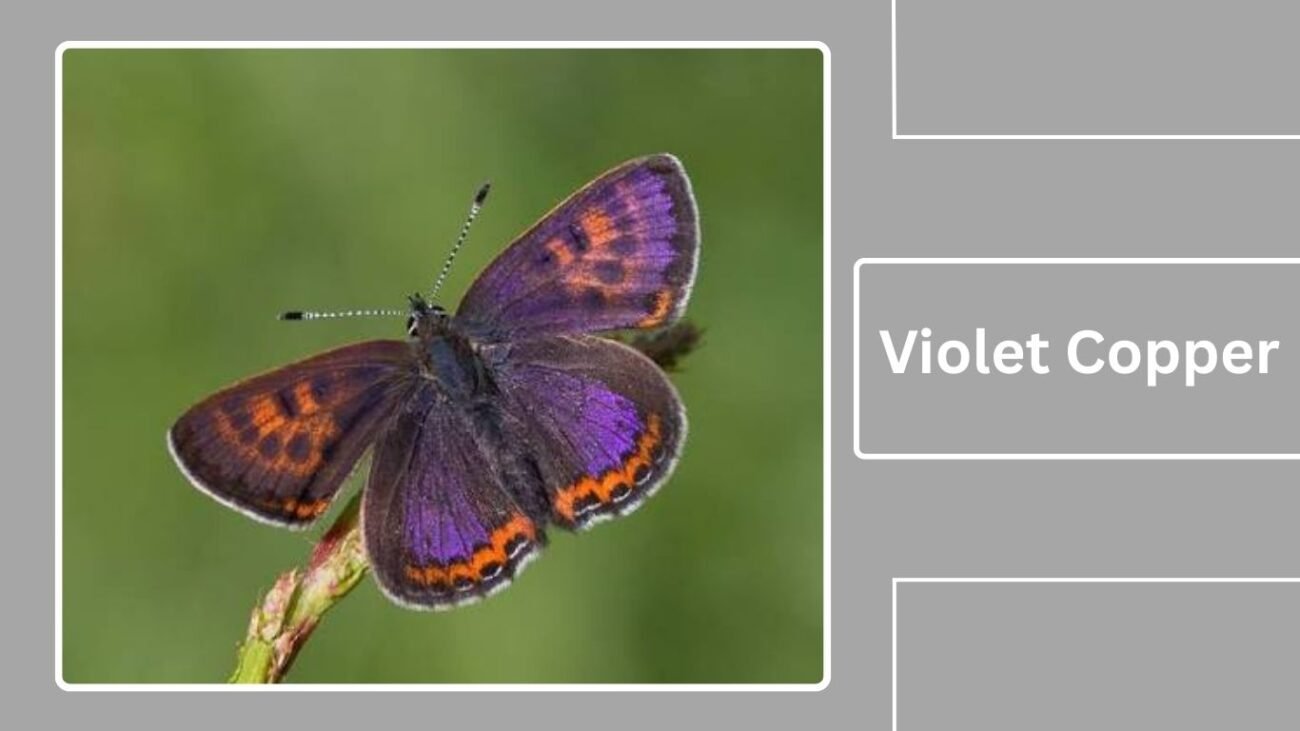
The Violet Copper is a striking butterfly of Europe and temperate Asia, recognized for the violet iridescence on the wings of males. It prefers moist, flower-rich meadows and is a favorite among butterfly watchers for its beauty.
Identification
- Medium-sized butterfly, wingspan 28–38 mm
- Males show a distinctive violet or purplish sheen over orange wings
- Females are more subdued, with orange forewings marked by black spots and brownish hindwings edged with orange
- Underside pale gray to brown with black dots and faint orange edging on hindwings
Habitat
The Violet Copper inhabits wet meadows, marshes, river valleys, and damp grasslands. It thrives in areas where sorrel (Rumex acetosa) and other dock species grow.
Behavior
Males are highly territorial, often seen perching in sunny patches or chasing intruders. Their violet shimmer is most visible in direct sunlight. Females fly more low and slow, concentrating on host plants for egg-laying.
Diet
Adults feed on nectar from flowers such as thistle, scabious, knapweed, and meadow herbs. Caterpillars feed mainly on sorrel (Rumex species).
Lifecycle
One to two generations per year depending on climate. Eggs are laid singly on sorrel leaves. Larvae are green and slug-like, blending with the foliage. Overwintering usually occurs in the egg stage, with hatching in spring.
13. Purple-edged Copper (Lycaena hippothoe eurydame)
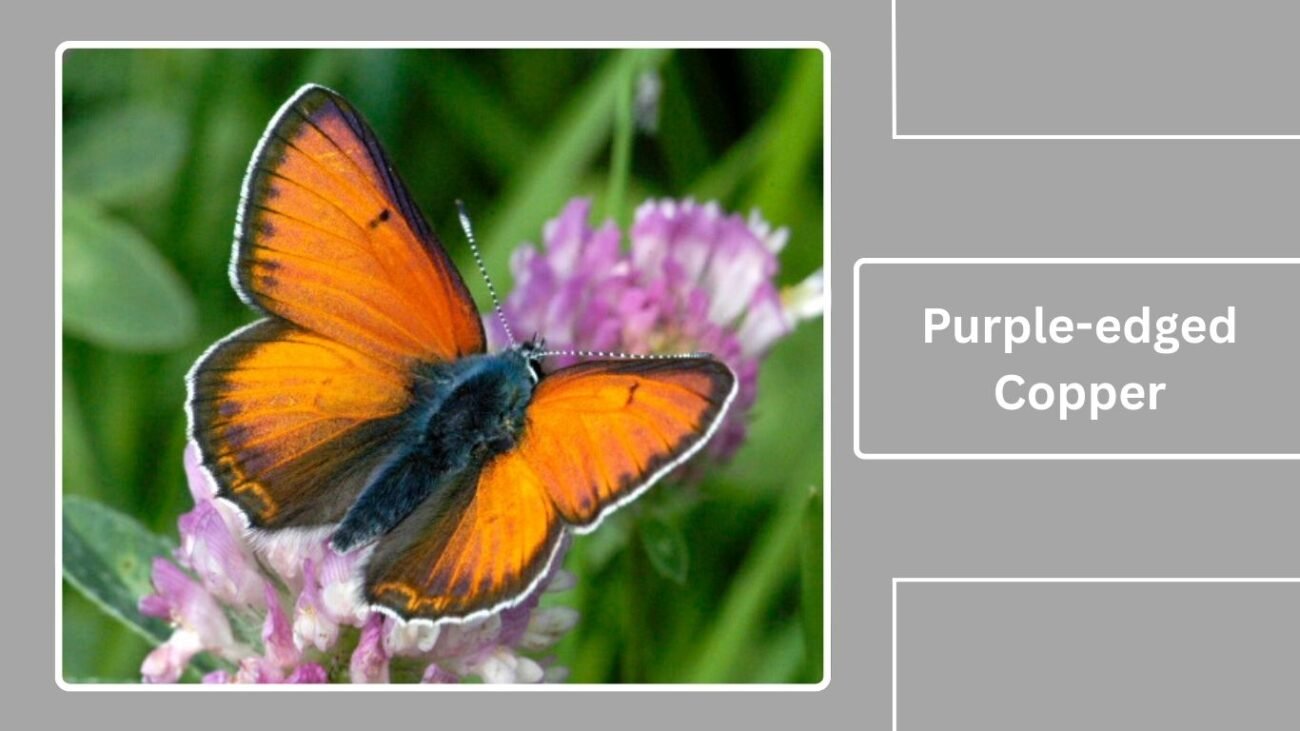
The Purple-edged Copper is a regional subspecies of the Violet Copper, found mainly in alpine and mountainous areas of Europe. It is especially admired for its glowing purple sheen and contrasting wing patterns.
Identification
- Medium-sized butterfly, wingspan 28–36 mm
- Males have bright orange wings with a distinct purplish-violet sheen and narrow dark borders
- Females are darker, with brownish forewings patterned with orange and black spots, and hindwings edged with orange
- Underside pale gray with small black dots and faint orange edging
Habitat
This butterfly inhabits alpine meadows, mountain valleys, and grassy slopes at moderate to high elevations. It strongly depends on areas where sorrel (Rumex) plants grow.
Behavior
Males are active and territorial, often basking with wings wide open to show their purple iridescence. Females fly closer to vegetation, focusing on locating host plants for egg-laying.
Diet
Adults feed on nectar from wildflowers such as thistles, knapweed, and alpine herbs. Caterpillars feed exclusively on sorrel species (Rumex).
Lifecycle
Typically produces one generation per year in alpine regions. Eggs are deposited singly on sorrel leaves. Caterpillars are green with subtle striping for camouflage. Overwintering occurs in the egg stage, with larvae developing the following spring.