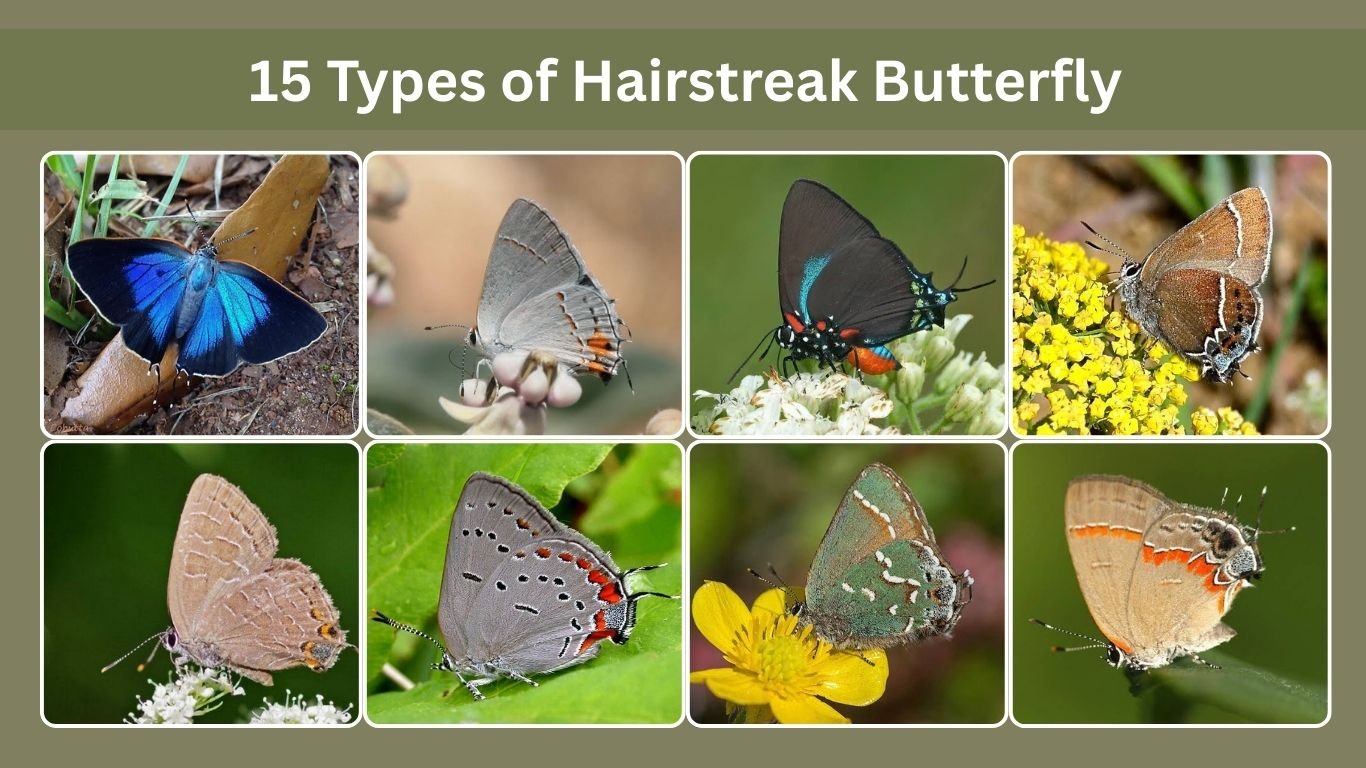
Butterflies are among the most fascinating creatures in nature, and hairstreaks are some of the most delicate and colorful members of this group. Known for their tiny tails and striking wing patterns, hairstreak butterflies thrive in diverse habitats across North America. This guide highlights 15 different species, outlining their identification, habitats, behaviors, diets, and lifecycles to help nature enthusiasts recognize and appreciate these beautiful insects.
1. Banded Hairstreak
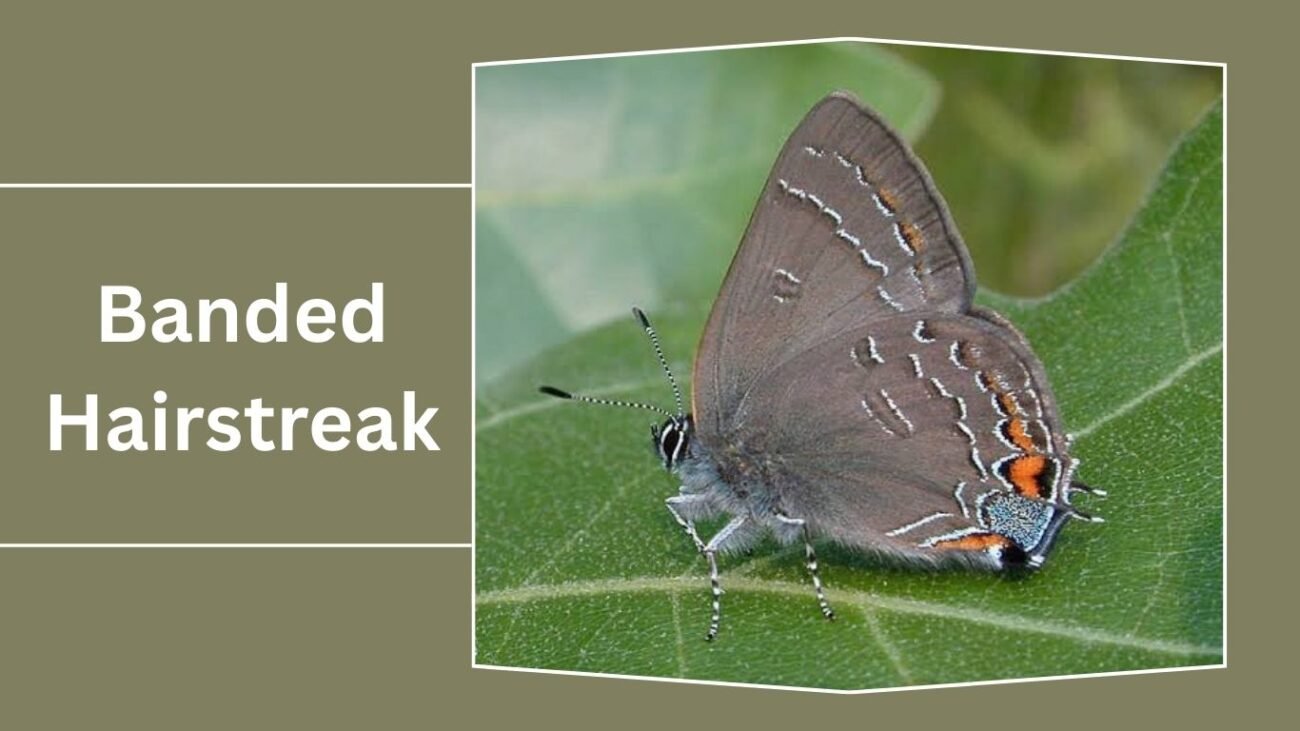
The Banded Hairstreak (Satyrium calanus) is a small yet striking butterfly commonly found in North America. It is admired for its delicate wing patterns and subtle elegance, often seen fluttering in sunny woodland edges during summer.
Identification
- Wingspan: 1 to 1.5 inches
- Dark brown wings with a distinctive iridescent blue sheen
- Two thin orange bands on the underside of hindwings
- Small tails on hindwings resembling antennae
- Males often perch on trees waiting for females
Habitat
The Banded Hairstreak thrives in deciduous woodlands, especially near oak and hickory trees. They prefer sunny forest edges, clearings, and areas with host plants.
Behavior
They are territorial butterflies, with males often engaging in short aerial displays to defend their perching spots. Their flight is quick and erratic, making them tricky to follow.
Diet
- Adults feed on nectar from flowers like dogbane, milkweed, and sumac.
- Caterpillars feed primarily on oak, hickory, and walnut leaves.
Lifecycle
The species has one brood per year. Eggs are laid on host plants, and caterpillars feed and develop through spring. After pupating, adults emerge in early to mid-summer, continuing the cycle.
2. Striped Hairstreak
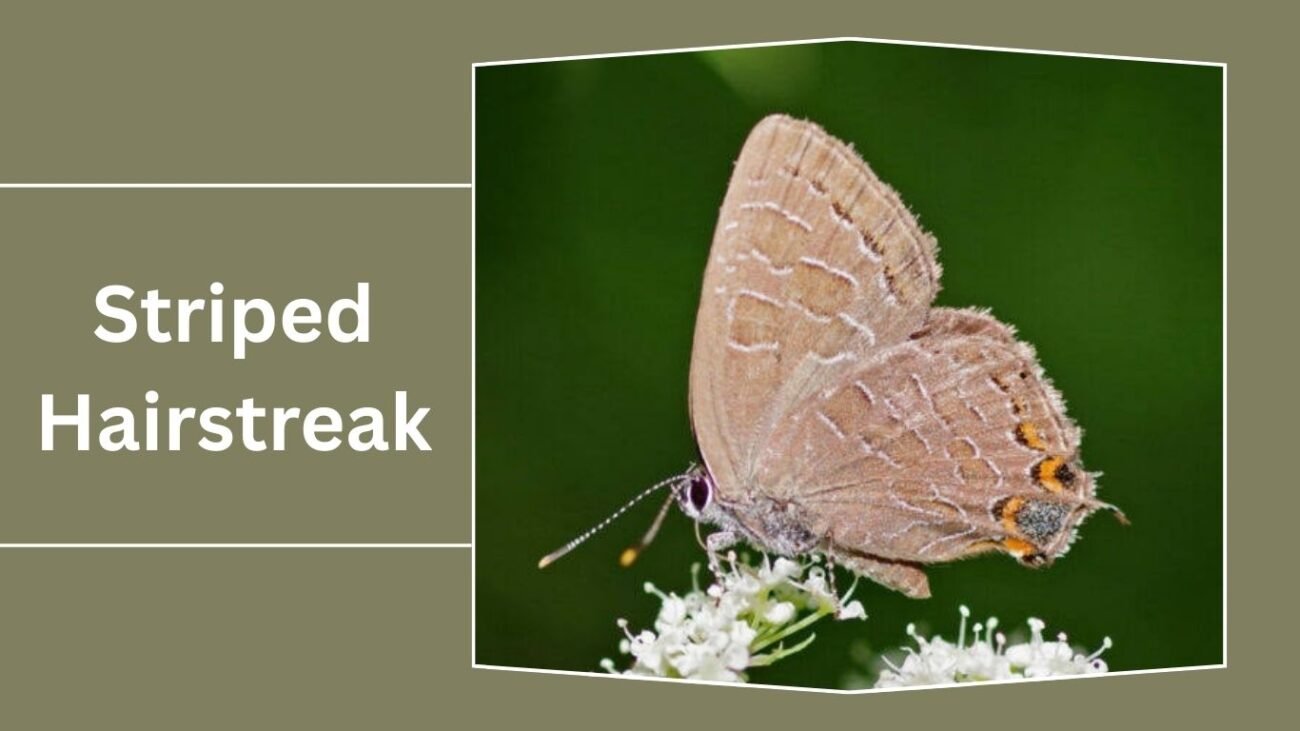
The Striped Hairstreak (Satyrium liparops) is a delicate butterfly known for its fine white streaks across dusky brown wings. Although less common than some other hairstreaks, it can be found in a variety of habitats across North America.
Identification
- Wingspan: 1 to 1.5 inches
- Brown upperwings with faint blue near the base
- Underside marked by distinct white stripes running diagonally
- Hindwings feature short, threadlike tails
- A small orange spot near the tails provides added contrast
Habitat
This butterfly prefers mixed woodlands, shrubby fields, and forest edges, especially where cherry and hawthorn are present.
Behavior
The Striped Hairstreak is often elusive, perching quietly in trees or shrubs. Males are known to perch in sunny spots while waiting for females. They tend to fly low and are more secretive compared to other hairstreaks.
Diet
- Adults nectar on dogbane, milkweed, viburnum, and other flowering shrubs.
- Caterpillars feed on hawthorn, wild cherry, and apple leaves.
Lifecycle
The butterfly produces one generation per year. Eggs are laid on twigs of host plants and overwinter until spring. Caterpillars hatch with the warming season, and adults emerge by late June through August.
3. Coral Hairstreak
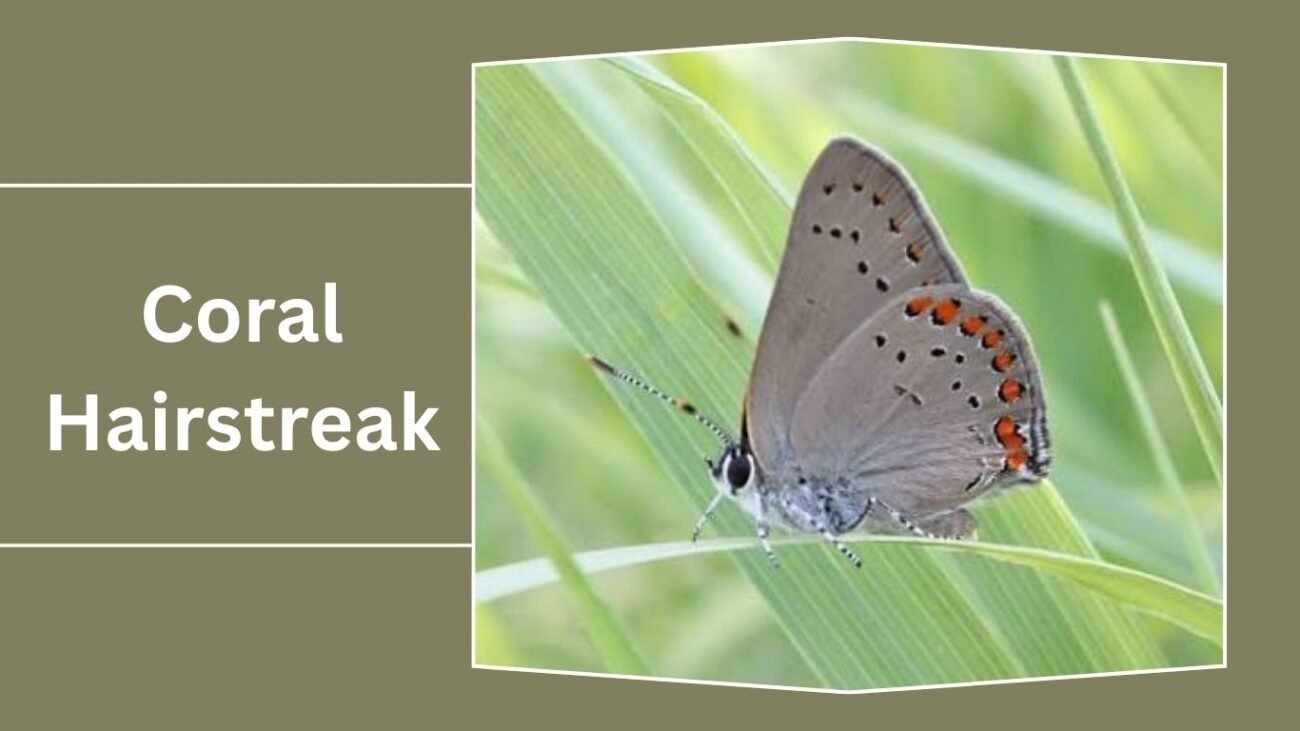
The Coral Hairstreak (Satyrium titus) is a charming butterfly recognized by its bright coral-red spots on the underside of the hindwings. Unlike many hairstreaks, it lacks tails, giving it a cleaner wing shape.
Identification
- Wingspan: 1 to 1.5 inches
- Upperwings are brown without distinctive markings
- Underside of hindwings displays a row of vivid coral-red spots
- Lacks tails, unlike most other hairstreaks
- Thin white line bordered with black runs across the hindwings
Habitat
Coral Hairstreaks are found in open woodlands, old fields, and edges of forests, especially near wild cherry trees, which serve as host plants.
Behavior
They are often observed perching on flowering shrubs and feeding actively during the day. Unlike some hairstreaks, they are not as territorial and are more frequently seen in small groups.
Diet
- Adults feed on nectar from dogbane, milkweed, butterfly weed, and thistles.
- Caterpillars feed primarily on wild cherry leaves, and occasionally on plum or peach.
Lifecycle
This butterfly has one brood per year. Eggs are laid on cherry twigs in summer and overwinter. Caterpillars hatch in spring, feed, and pupate, with adults flying from June through August.
4. Edwards’ Hairstreak
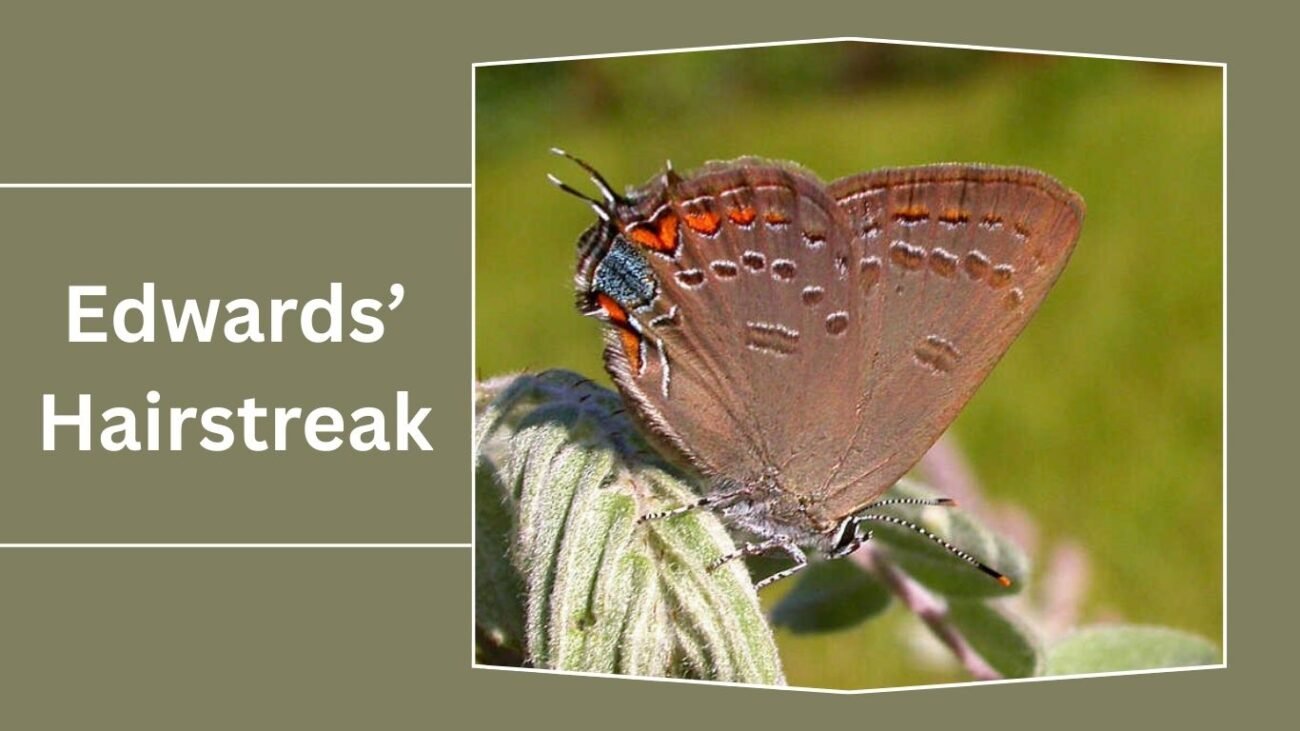
The Edwards’ Hairstreak (Satyrium edwardsii) is a scarce and localized butterfly, admired for its subtle coloration and fascinating relationship with ants during its larval stage.
Identification
- Wingspan: 1 to 1.5 inches
- Upperwings are brown with faint orange at the hindwing margins
- Underside is grayish brown with white and black streaks
- Hindwings display small orange spots near the tails
- Short tails are present, typical of many hairstreaks
Habitat
Edwards’ Hairstreak is primarily found in oak barrens, sandy oak woodlands, and pine-oak forests. It has a strong association with scrubby oak habitats.
Behavior
This butterfly is secretive and uncommon, often resting in the canopy of oaks. Males perch in the treetops to watch for females, while females descend to lay eggs on host plants.
Diet
- Adults feed on nectar from milkweed, dogbane, and sumac.
- Caterpillars feed mainly on oak leaves.
- Ants protect the caterpillars in exchange for sugary secretions, a mutualistic relationship.
Lifecycle
There is one generation per year. Eggs overwinter on oak twigs. Caterpillars hatch in spring and are guarded by ants while feeding. Pupation occurs in the leaf litter, and adults emerge in mid to late summer.
5. Hickory Hairstreak
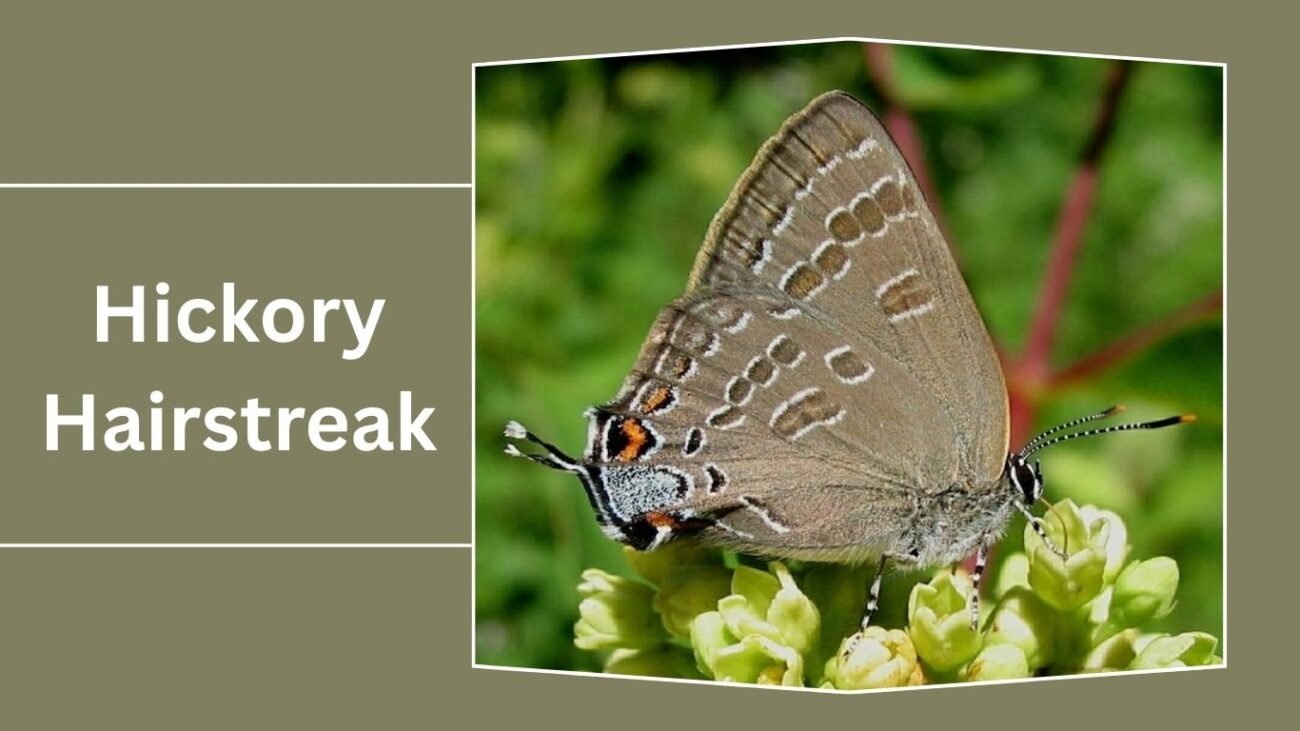
The Hickory Hairstreak (Satyrium caryaevorus) is a rare and localized butterfly that closely resembles the Banded Hairstreak but can be distinguished by its more prominent white markings.
Identification
- Wingspan: 1 to 1.5 inches
- Upperwings are dark brown with faint blue near the base
- Underside features a bold white postmedian line edged in black and orange
- Hindwings have small orange spots near short tails
- More sharply defined white lines than the Banded Hairstreak
Habitat
Hickory Hairstreaks inhabit deciduous woodlands, forest edges, and clearings, with a strong association to hickory trees, though they also use other hardwoods.
Behavior
They are generally elusive, spending much of their time in the canopy. Males perch high to intercept females, while both sexes descend to feed on nectar. Their flight is quick and often goes unnoticed among foliage.
Diet
- Adults nectar on dogbane, milkweed, sumac, and other wildflowers.
- Caterpillars feed primarily on hickory leaves, but also use walnut and butternut.
Lifecycle
The species has one brood annually. Eggs are laid on hickory twigs and overwinter. Caterpillars emerge in spring, feeding until pupation, with adults appearing from June through August.
6. Acadian Hairstreak
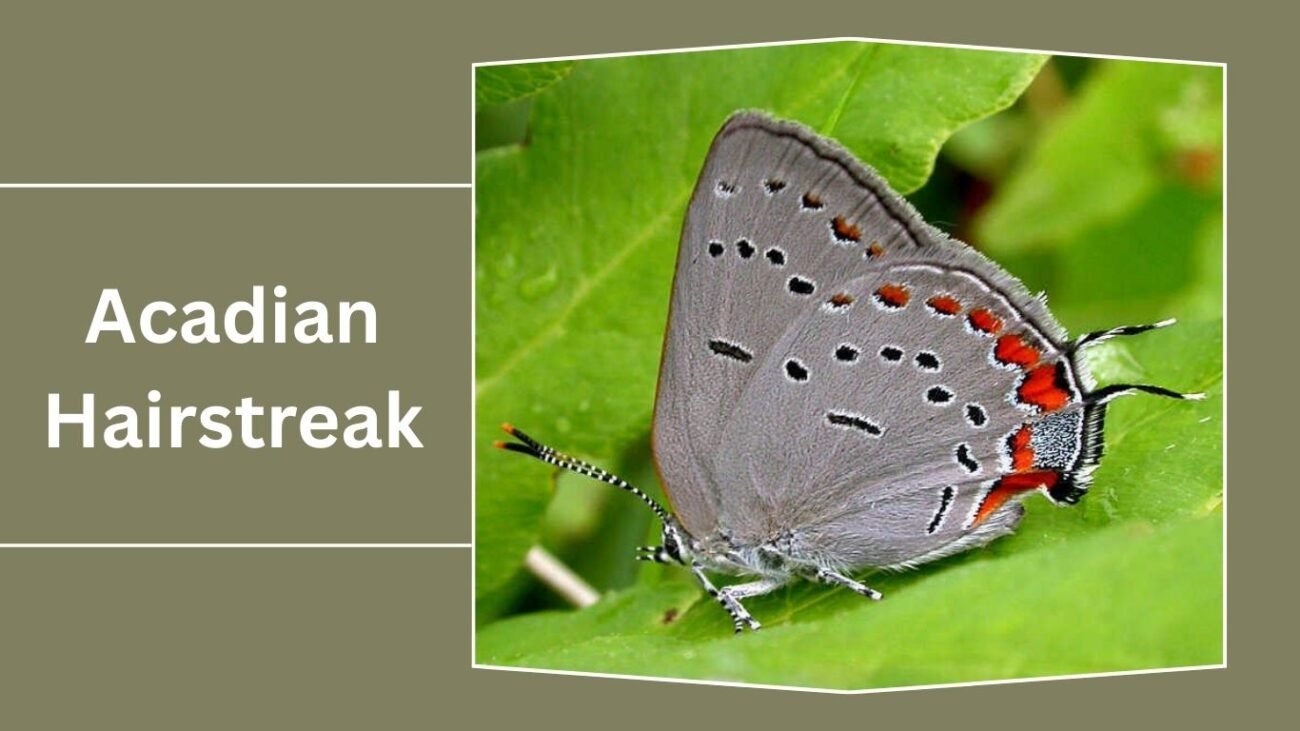
The Acadian Hairstreak (Satyrium acadicum) is a handsome butterfly easily recognized by its bold white lines and bright orange spots on the hindwings. It is one of the more striking hairstreaks found in eastern North America.
Identification
- Wingspan: 1.25 to 1.6 inches
- Upperwings are dark brown with hints of blue near the body
- Underside is grayish brown with a distinct white postmedian line bordered in black
- Hindwings feature orange spots capped with black and blue, plus short tails
- More colorful and patterned than closely related hairstreaks
Habitat
The Acadian Hairstreak prefers wet meadows, marshy edges, stream banks, and woodland clearings, particularly where willows are abundant.
Behavior
These butterflies are more active than some hairstreaks, often seen fluttering around nectar plants at low heights. Males patrol open sunny areas for mates, while females lay eggs near host plants.
Diet
- Adults nectar on milkweed, dogbane, thistle, and other summer flowers.
- Caterpillars feed primarily on willow leaves, their main host plant.
Lifecycle
The Acadian Hairstreak produces one brood per year. Eggs overwinter on willow twigs. Caterpillars emerge in spring, feed through early summer, and pupate. Adults fly from July through August.
7. King’s Hairstreak
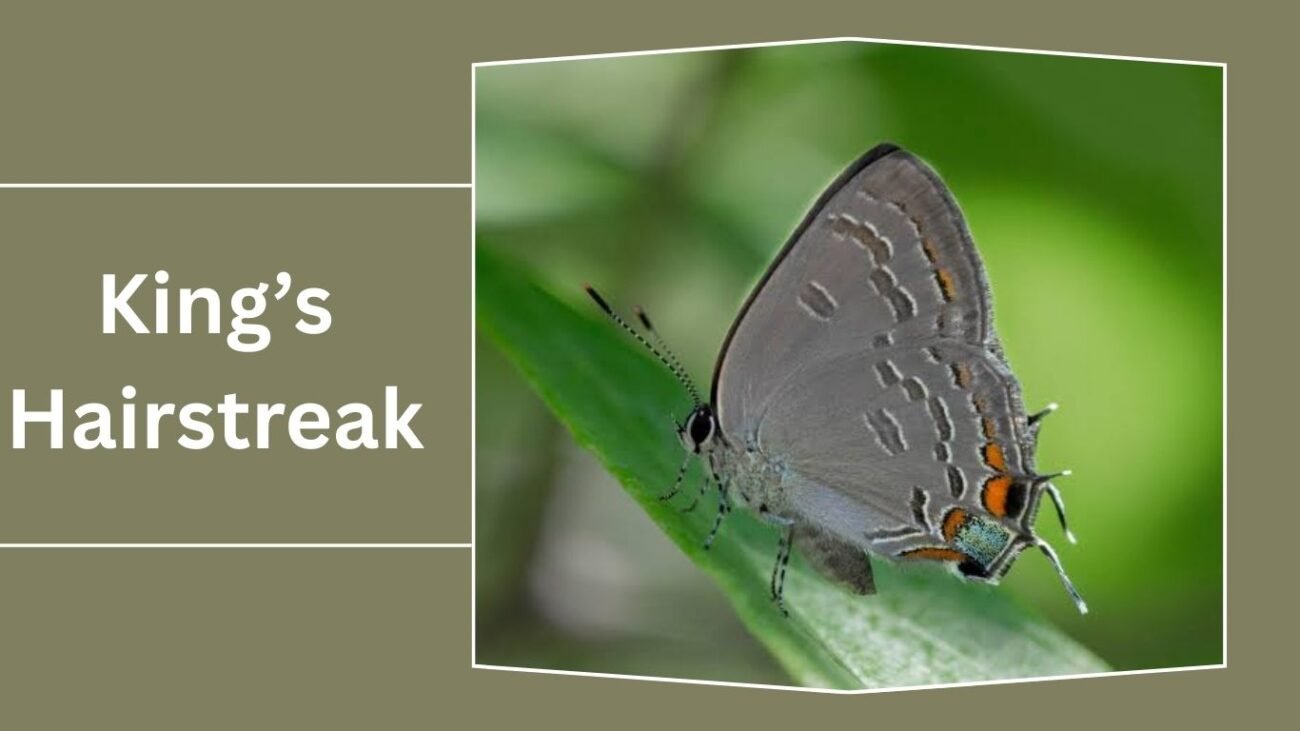
The King’s Hairstreak (Satyrium kingi) is a rare and localized butterfly, treasured by lepidopterists for its beauty and limited distribution. It is the only hairstreak in North America strongly associated with sweetleaf (Symplocos tinctoria).
Identification
- Wingspan: 1.25 to 1.6 inches
- Upperwings are dark brown with subtle blue near the base
- Underside is light brown with two parallel white lines edged in black
- Hindwings display orange spots with blue caps near the tails
- Short tails present, typical of hairstreaks
Habitat
King’s Hairstreak is found in hardwood forests, swamps, and moist woodland edges of the southeastern United States, especially where sweetleaf shrubs grow.
Behavior
This species is generally elusive, spending much time in the canopy. Adults occasionally descend to nectar on flowers, often in the morning. They are weak fliers and usually stay near host plants.
Diet
- Adults feed on nectar from dogbane, sumac, and other summer-blooming flowers.
- Caterpillars feed almost exclusively on sweetleaf (Symplocos tinctoria), making the species highly habitat-specific.
Lifecycle
The King’s Hairstreak has one brood per year. Eggs overwinter on twigs of sweetleaf. Caterpillars hatch in spring, feed through early summer, and pupate in leaf litter. Adults typically emerge in June and July.
8. Gray Hairstreak
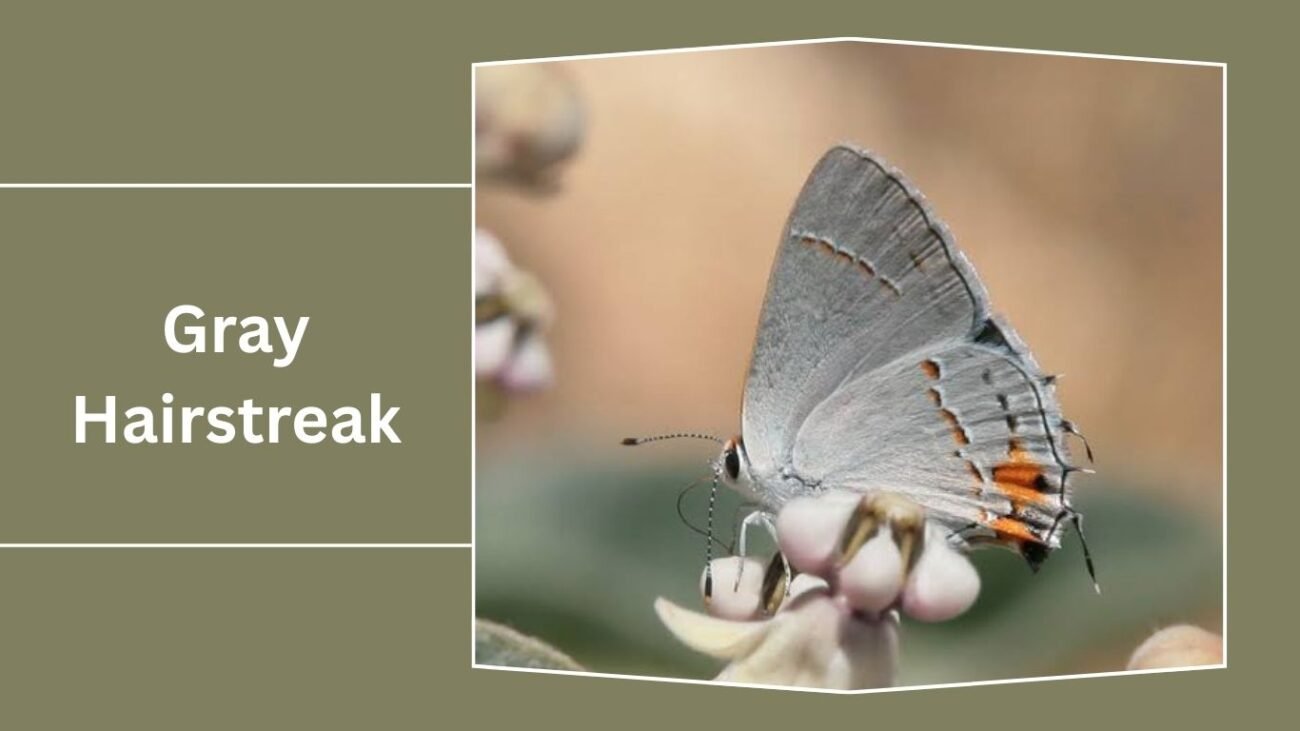
The Gray Hairstreak (Strymon melinus) is the most widespread and commonly seen hairstreak in North America. Its adaptability and bold wing markings make it one of the easiest hairstreaks to identify.
Identification
- Wingspan: 1 to 1.5 inches
- Upperwings are gray with a small orange spot on the hindwings
- Underside is pale gray with a single white line edged in black
- Hindwings have orange-capped black spots and short tails
- Antennae are black with white bands, matching the wing pattern
Habitat
The Gray Hairstreak thrives in a wide variety of environments, including fields, gardens, meadows, forest edges, roadsides, and even urban areas. It is one of the most adaptable hairstreaks.
Behavior
This butterfly is active, quick-flying, and often territorial. It frequently lands on flowers with wings closed, showing off its bright hindwing spots. Males defend perches, while females move between nectar sources and host plants.
Diet
- Adults nectar on many flowers, especially clover, dogbane, goldenrod, and milkweed.
- Caterpillars feed on a wide range of plants, including legumes, cotton, and mallow.
Lifecycle
The Gray Hairstreak can have multiple broods per year in warmer regions. Eggs are laid on host plants, and caterpillars feed until pupation. Adults may be seen from spring through fall, and in southern areas, year-round.
9. White-M Hairstreak
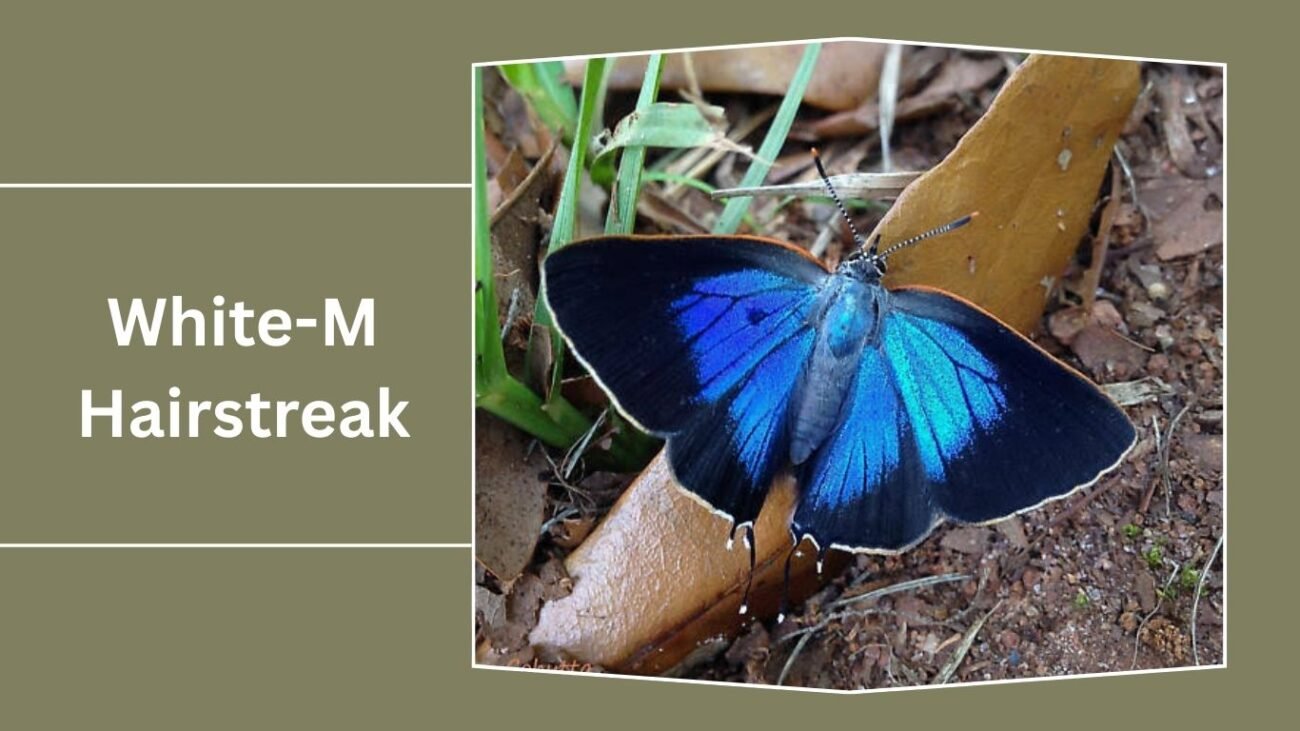
The White-M Hairstreak (Parrhasius m-album) is a striking butterfly named for the bold, white “M”-shaped mark on the underside of its hindwings. It is one of the more distinctive hairstreaks found in North America.
Identification
- Wingspan: 1.25 to 1.75 inches
- Upperwings are dark brown with a brilliant iridescent blue sheen (especially in males)
- Underside is gray-brown with a bold white “M” marking on the hindwings
- Hindwings feature short tails with orange and blue spots near the base
- Contrasting patterns make it easier to identify compared to other hairstreaks
Habitat
The White-M Hairstreak inhabits open woodlands, forest edges, fields, and shrubby areas. It is often associated with oak trees, which serve as its larval host.
Behavior
This butterfly is elusive and fast-flying, often spending much time in the treetops. Adults occasionally descend to feed on nectar, particularly in sunny clearings. Males are territorial, while females are more secretive as they search for host plants.
Diet
- Adults feed on nectar from dogbane, milkweed, goldenrod, and other wildflowers.
- Caterpillars feed primarily on oak leaves.
Lifecycle
The White-M Hairstreak usually has two broods per year in the south and one in the north. Eggs overwinter on host plants, caterpillars emerge in spring, and adults fly from April through September, depending on location.
10. Two-tailed Hairstreak
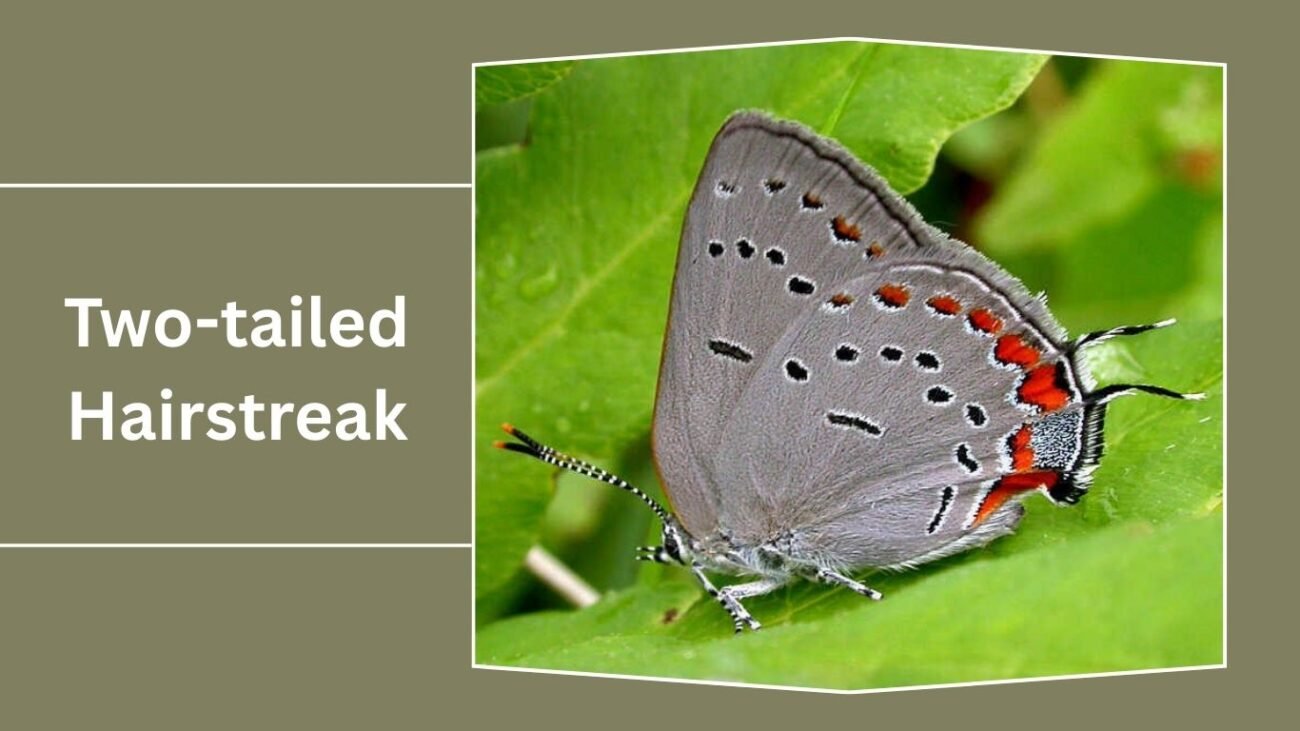
The Two-tailed Hairstreak (Calycopis cecrops) is a unique butterfly easily recognized by its pair of tails on each hindwing, setting it apart from most other hairstreaks that have only one.
Identification
- Wingspan: 1 to 1.5 inches
- Upperwings are brown with slight blue near the body
- Underside is light grayish brown with a thin white postmedian line
- Hindwings feature two slender tails instead of one
- Orange and black spots sit near the tails for added contrast
Habitat
This butterfly is typically found in open woodlands, clearings, and brushy areas, especially in the southeastern United States. It favors places where oaks and legumes grow.
Behavior
Two-tailed Hairstreaks are low-flying and often perch on shrubs or nectar plants. They use their double tails and hindwing spots as a false head to distract predators. Males perch in sunny spots to watch for passing females.
Diet
- Adults nectar on dogbane, milkweed, and various flowering shrubs.
- Caterpillars feed primarily on oak leaves, their main host plant.
Lifecycle
This species has several broods per year in warmer regions. Eggs are laid on oaks and overwinter. Caterpillars hatch in spring and feed until pupation. Adults may be seen from April through September, with longer flight periods in the south.
11. Great Purple Hairstreak
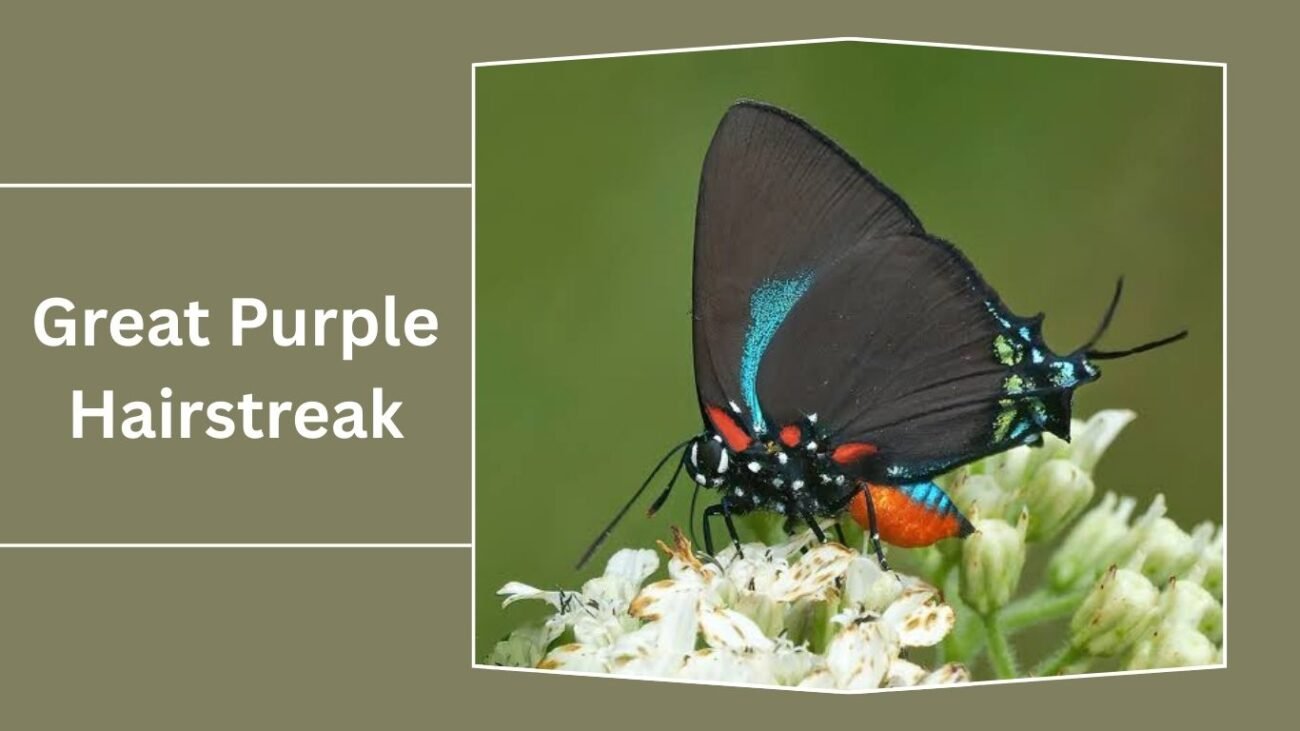
The Great Purple Hairstreak (Atlides halesus) is one of the most spectacular hairstreaks, known for its vivid coloration and relatively large size compared to others in its family.
Identification
- Wingspan: 1.25 to 2 inches
- Upperwings are deep black with a shimmering purple-blue sheen
- Underside is gray with bright orange and blue spots near the tails
- Hindwings feature a single slender tail on each side
- Brilliant metallic colors make it one of the most eye-catching hairstreaks
Habitat
This butterfly inhabits open woodlands, meadows, gardens, and roadsides, particularly where mistletoe, its host plant, is found growing on trees.
Behavior
The Great Purple Hairstreak is bold and active, often flying higher than other hairstreaks. Males patrol treetops and open areas for females, while adults frequently visit flowers for nectar. Their striking appearance often makes them stand out even from a distance.
Diet
- Adults nectar on goldenrod, dogbane, milkweed, and many other flowering plants.
- Caterpillars feed primarily on mistletoe leaves, making them unique among hairstreaks.
Lifecycle
This species typically has several broods per year in southern regions. Eggs are laid on mistletoe, and caterpillars feed until pupating in leaf litter or bark crevices. Adults can be seen flying from spring through fall, with longer activity in warmer climates.
12. Juniper Hairstreak
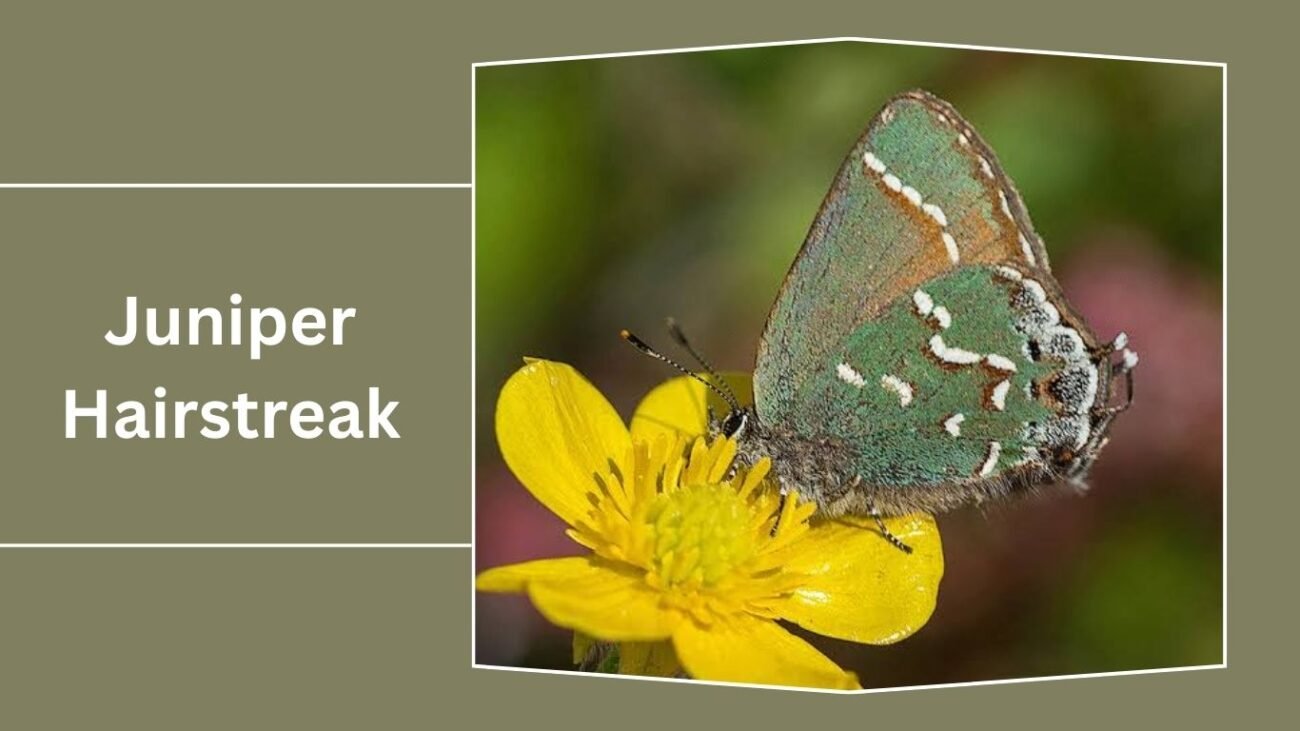
The Juniper Hairstreak (Callophrys gryneus) is a small but distinctive butterfly that varies in appearance across its range, though it is always closely tied to juniper trees.
Identification
- Wingspan: 0.9 to 1.25 inches
- Upperwings are brown, sometimes with a reddish tint
- Underside is bright green in many populations, with two irregular white lines across the hindwings
- Some regional forms are more brown or olive, but the white markings remain a key feature
- Short hindwing tails are present, though less prominent than in some hairstreaks
Habitat
The Juniper Hairstreak is found in open woodlands, cedar glades, fields, and dry hillsides where juniper or red cedar trees grow.
Behavior
This butterfly often perches low on vegetation or near juniper trees. Males are territorial and perch in sunny spots to wait for females. Their quick, erratic flight and green camouflage make them hard to spot when resting.
Diet
- Adults nectar on dogbane, milkweed, sumac, viburnum, and other flowering shrubs.
- Caterpillars feed almost exclusively on juniper (red cedar) leaves, giving the butterfly its name.
Lifecycle
The Juniper Hairstreak has multiple broods per year in southern regions and one or two in northern areas. Eggs are laid on juniper twigs, overwintering in some regions. Adults may be seen from early spring through late summer, depending on location.
13. Oak Hairstreak
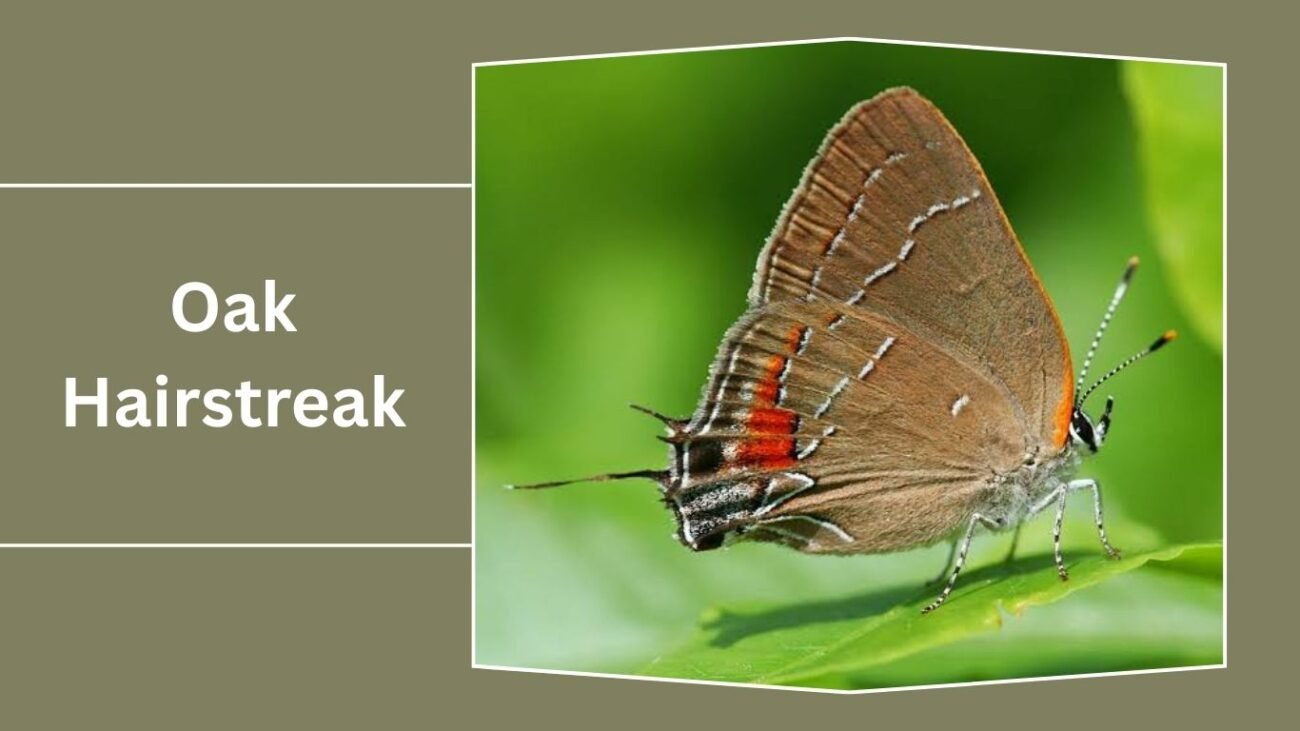
The Oak Hairstreak (Satyrium favonius) is a handsome butterfly closely tied to oak trees, from which it takes its name. Though not as common as some hairstreaks, it is striking with its bold wing markings.
Identification
- Wingspan: 1 to 1.5 inches
- Upperwings are dark brown with subtle blue near the base
- Underside is grayish brown with a thin white line edged in black
- Hindwings display orange spots capped with blue near the tails
- Short tails are present, typical of many hairstreaks
Habitat
The Oak Hairstreak inhabits oak woodlands, forest edges, and scrubby fields where oak trees grow, as they are essential for its life cycle.
Behavior
This butterfly is generally secretive, spending much of its time in the canopy. Adults descend occasionally to nectar on flowers. Males establish perches in sunny patches to wait for females.
Diet
- Adults feed on nectar from dogbane, milkweed, and sumac.
- Caterpillars feed primarily on oak leaves, their main host plant.
Lifecycle
The Oak Hairstreak produces one brood per year. Eggs are laid on oak twigs in summer and overwinter. Caterpillars hatch in spring, feeding until pupation. Adults usually appear from June through July.
14. Red-banded Hairstreak
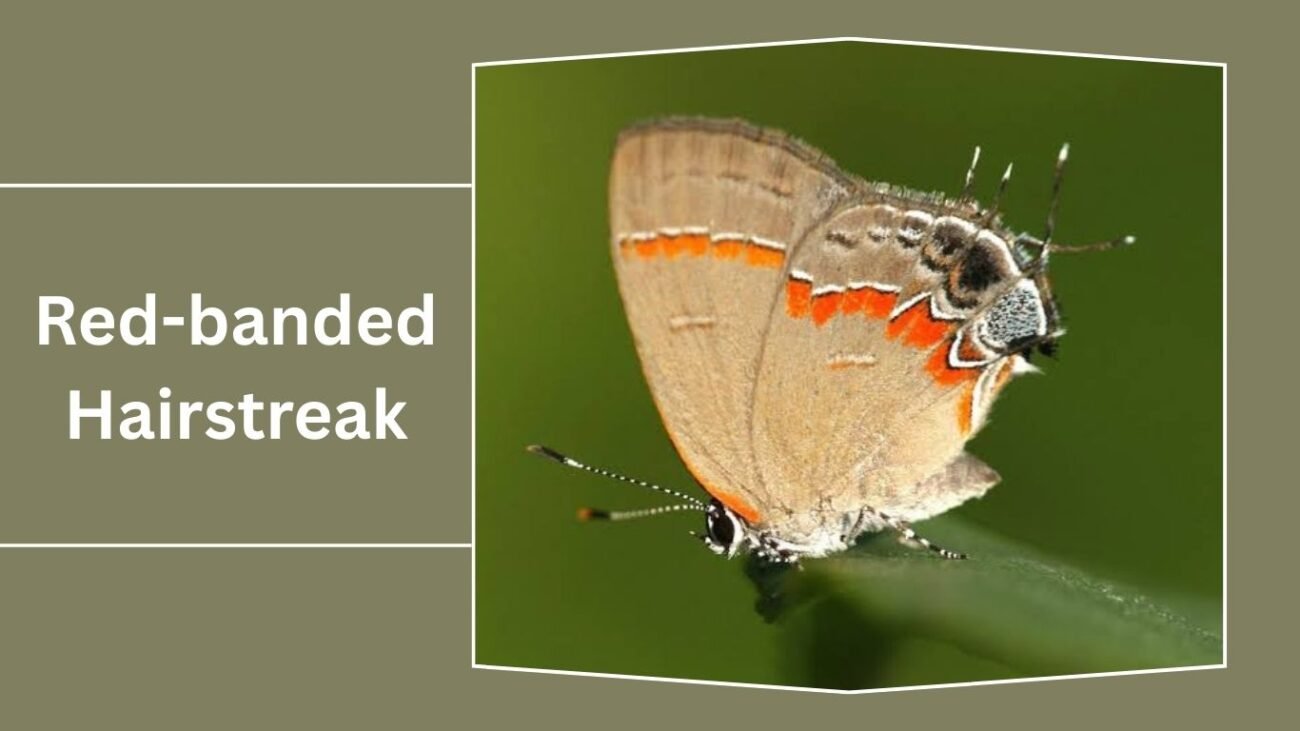
The Red-banded Hairstreak (Calycopis cecrops) is a beautiful butterfly easily recognized by its bright red stripe across the wings. It is widespread in the eastern United States and often spotted in sunny habitats.
Identification
- Wingspan: 1 to 1.25 inches
- Upperwings are brown with a slight blue sheen near the body
- Underside is gray with a bold red-orange band running diagonally across both forewings and hindwings
- Hindwings have two small tails with orange and blue spots near the base
- Distinctive red band makes this hairstreak unmistakable
Habitat
The Red-banded Hairstreak inhabits open woodlands, fields, roadsides, and coastal areas, thriving in sunny, disturbed habitats where host plants are abundant.
Behavior
This butterfly is often seen perching low to the ground and is one of the few hairstreaks that readily rests with its wings spread flat. Its false-head wing pattern, with tails and spots, helps deter predators.
Diet
- Adults nectar on dogbane, milkweed, sumac, and goldenrod.
- Caterpillars feed primarily on fallen leaves of sumac and other trees, rather than directly on living leaves, which is unusual among butterflies.
Lifecycle
The Red-banded Hairstreak may produce two or more broods per year, especially in warmer regions. Eggs are laid near host plants, and caterpillars develop through summer. Adults fly from spring through fall, with the longest season in the south.
15. Thicket Hairstreak
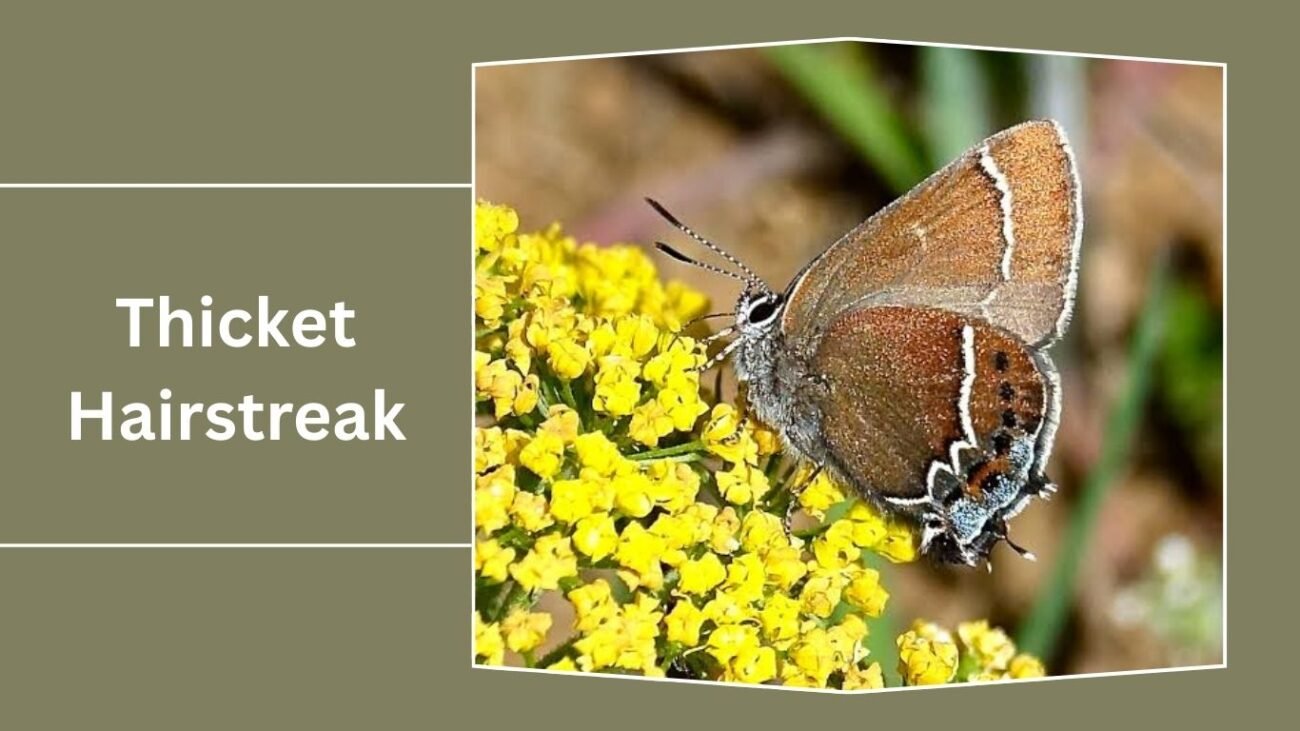
The Thicket Hairstreak (Callophrys spinetorum) is a distinctive butterfly best known for its bold markings and close relationship with mistletoe, its primary host plant. It is found mainly in the western United States.
Identification
- Wingspan: 1 to 1.25 inches
- Upperwings are dark brown with a faint blue base
- Underside is brown with a bold white zigzag line across both wings
- Hindwings feature orange-capped black spots and a short tail
- White markings are more jagged and bold compared to other hairstreaks
Habitat
The Thicket Hairstreak inhabits coniferous forests, scrubby slopes, and woodlands, especially in areas where mistletoe grows on pine or fir trees.
Behavior
This butterfly spends much of its time in treetops but can be seen visiting flowers for nectar. Its flight is quick and darting. The false-head pattern of tails and spots helps it evade predators.
Diet
- Adults nectar on flowers such as milkweed, dogbane, and buckwheat.
- Caterpillars feed almost exclusively on dwarf mistletoe, a parasitic plant on conifers.
Lifecycle
The Thicket Hairstreak has one brood per year. Eggs are laid on mistletoe, where caterpillars hatch and feed. Pupation occurs in the leaf litter or bark, and adults emerge in early to mid-summer.