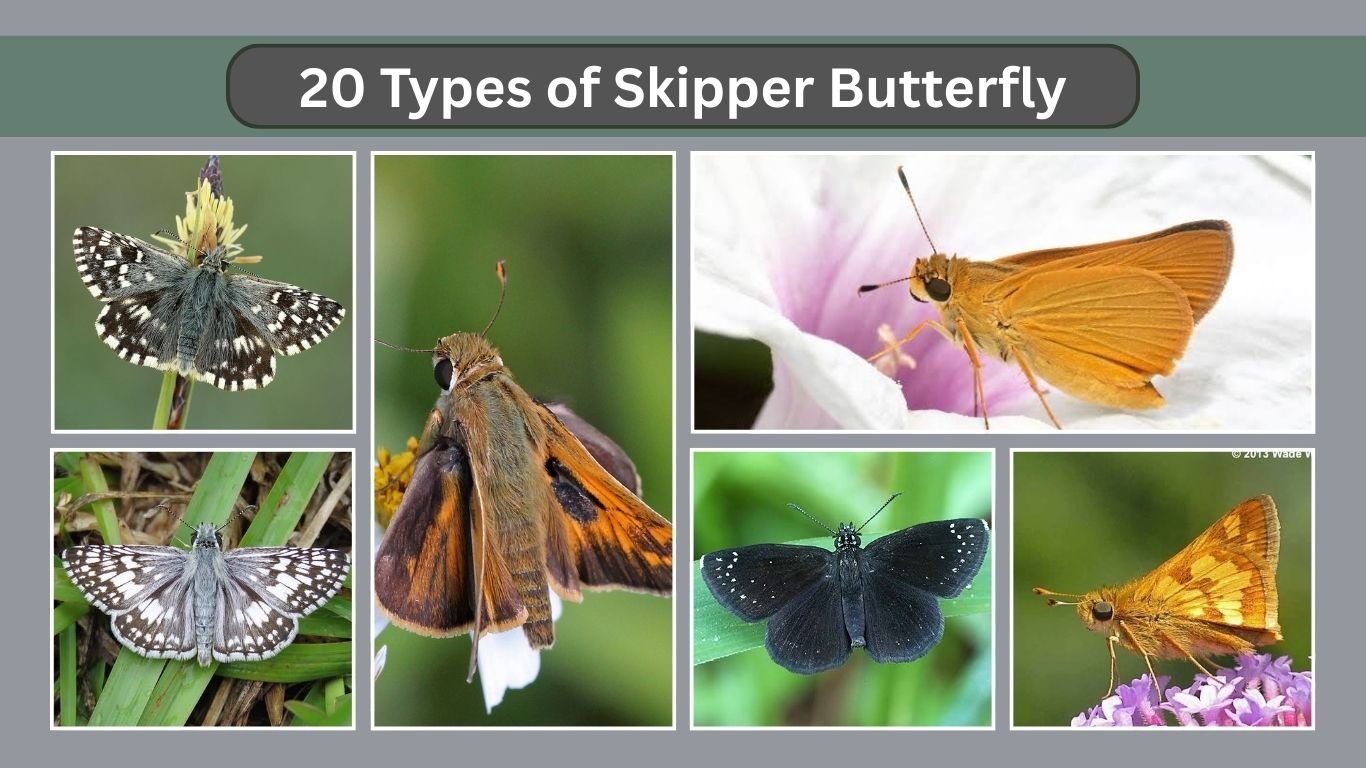
Skipper butterflies, belonging to the family Hesperiidae, are small, fast-flying butterflies known for their darting movements and hooked antennae. With over 3,500 species worldwide, these butterflies are often overlooked due to their subtle markings and quick flight. This guide highlights 20 common types of skippers, with identification tips, habitats, behaviors, and life cycles, helping nature enthusiasts recognize and appreciate these fascinating little butterflies.
1. Silver-Spotted Skipper

The Silver-Spotted Skipper (Epargyreus clarus) is one of the most easily recognizable skippers in North America. Known for its distinct silver-white patch on the underside of its hindwings, it is commonly seen flitting through open woodlands, gardens, and meadows.
Identification
- Medium-sized skipper butterfly (wingspan: 1.75 – 2.5 in / 4.5 – 6.3 cm).
- Prominent silver-white spot on the underside of the hindwing.
- Upperside is brown with orange and gold markings.
- Antennae are hooked at the tips, typical of skippers.
- Rapid, darting flight patterns.
Habitat
Silver-Spotted Skippers prefer open woodlands, fields, gardens, and roadsides. They are often found near legume host plants like locust trees, wisteria, and hog-peanut.
Behavior
These butterflies are active and quick flyers, often seen darting between flowers. They feed on nectar from a wide range of plants including thistles, milkweed, red clover, and blazing star.
Life Cycle
The females lay eggs on host plant leaves. The caterpillars are green with orange heads and a yellow collar, creating shelters by folding leaves with silk. Pupation occurs inside these shelters before emerging as adults.
2. Long-Tailed Skipper

The Long-Tailed Skipper (Urbanus proteus) is a striking skipper butterfly found in the Americas, easily recognized by its long tail-like extensions on the hindwings. Its iridescent blue-green body and wings set it apart from many other skippers.
Identification
- Medium to large skipper (wingspan: 1.5 – 2.25 in / 3.8 – 5.7 cm).
- Distinctive long tails on hindwings.
- Upperside: dark brown with bluish-green iridescence.
- Underside: mottled brown with lighter spots and shading.
- Rapid, erratic flight with frequent perching.
Habitat
Long-Tailed Skippers are commonly found in gardens, open fields, roadsides, and woodland edges, particularly in warm and subtropical regions.
Behavior
They are frequent garden visitors, feeding on nectar from flowers such as lantana, bougainvillea, and verbena. They often perch with wings spread, showing off their iridescence.
Life Cycle
Females lay eggs on host plants in the bean family (Fabaceae), especially beans and wisteria. Caterpillars, often called bean leafrollers, roll leaves into shelters using silk for protection.
3. Fiery Skipper

The Fiery Skipper (Hylephila phyleus) is a small, bright-colored skipper commonly seen in gardens, lawns, and open sunny areas. Its fiery-orange appearance makes it one of the most noticeable grass skippers.
Identification
- Small butterfly (wingspan: 1 – 1.5 in / 2.5 – 3.8 cm).
- Males: bright orange with black spots and borders.
- Females: darker brown with orange patches and spots.
- Antennae hooked at the tips.
- Quick, darting flight close to the ground.
Habitat
Fiery Skippers thrive in lawns, gardens, meadows, and fields where grasses—their host plants—are abundant. They prefer sunny, open habitats.
Behavior
These skippers are frequent visitors to marigolds, lantana, verbena, and zinnias, where they sip nectar. They often perch with their forewings open while hindwings remain flat.
Life Cycle
Females lay eggs on grasses such as Bermudagrass, St. Augustine grass, and crabgrass. The caterpillars are greenish with dark heads, feeding within grass shelters before pupating.
4. Sachem Skipper

The Sachem Skipper (Atalopedes campestris) is a widespread and abundant skipper in North America. It is often confused with the Fiery Skipper but can be identified by its distinctive wing markings and larger size.
Identification
- Small to medium skipper (wingspan: 1.25 – 1.6 in / 3.2 – 4 cm).
- Males: orange-brown wings with a large dark brown border and a noticeable rectangular stigma (scent patch) on the forewing.
- Females: darker brown with orange patches and pale spots.
- Both sexes have short antennae with hooked tips.
- Wings are often held in a “jet-plane” posture (forewings angled up, hindwings flat).
Habitat
Sachem Skippers are found in lawns, fields, gardens, meadows, and roadsides, especially in sunny open areas with plenty of grass.
Behavior
They are active and territorial butterflies, often seen perching on grasses or flowers waiting for mates. They feed on nectar from flowers such as clover, thistle, goldenrod, and asters.
Life Cycle
Eggs are laid on grasses including Bermudagrass, crabgrass, and St. Augustine grass. The caterpillars roll grass blades to create shelters where they rest and feed before pupating.
5. Peck’s Skipper

The Peck’s Skipper (Polites peckius) is a small, widespread grass skipper known for its contrasting orange and brown wing patterns. It is often seen in gardens and meadows, flitting low among flowers and grasses.
Identification
- Small butterfly (wingspan: 1 – 1.25 in / 2.5 – 3.2 cm).
- Upperside: dark brown with bright orange patches and bands.
- Underside: yellowish-orange with dark brown spots.
- Males and females look similar, though females are slightly darker.
- Holds wings in the typical skipper “jet-plane” position when at rest.
Habitat
Peck’s Skippers inhabit lawns, meadows, fields, gardens, and roadsides where grasses are abundant. They are common in both rural and suburban areas.
Behavior
They are active, darting fliers and feed on nectar from a wide variety of flowers including milkweed, clover, thistle, and dogbane. They are also frequently spotted visiting backyard gardens.
Life Cycle
Females lay eggs on various grasses such as bluegrass, fescues, and other turf grasses. The caterpillars live in silken shelters made by folding grass blades, feeding until pupation.
6. Tawny-Edged Skipper
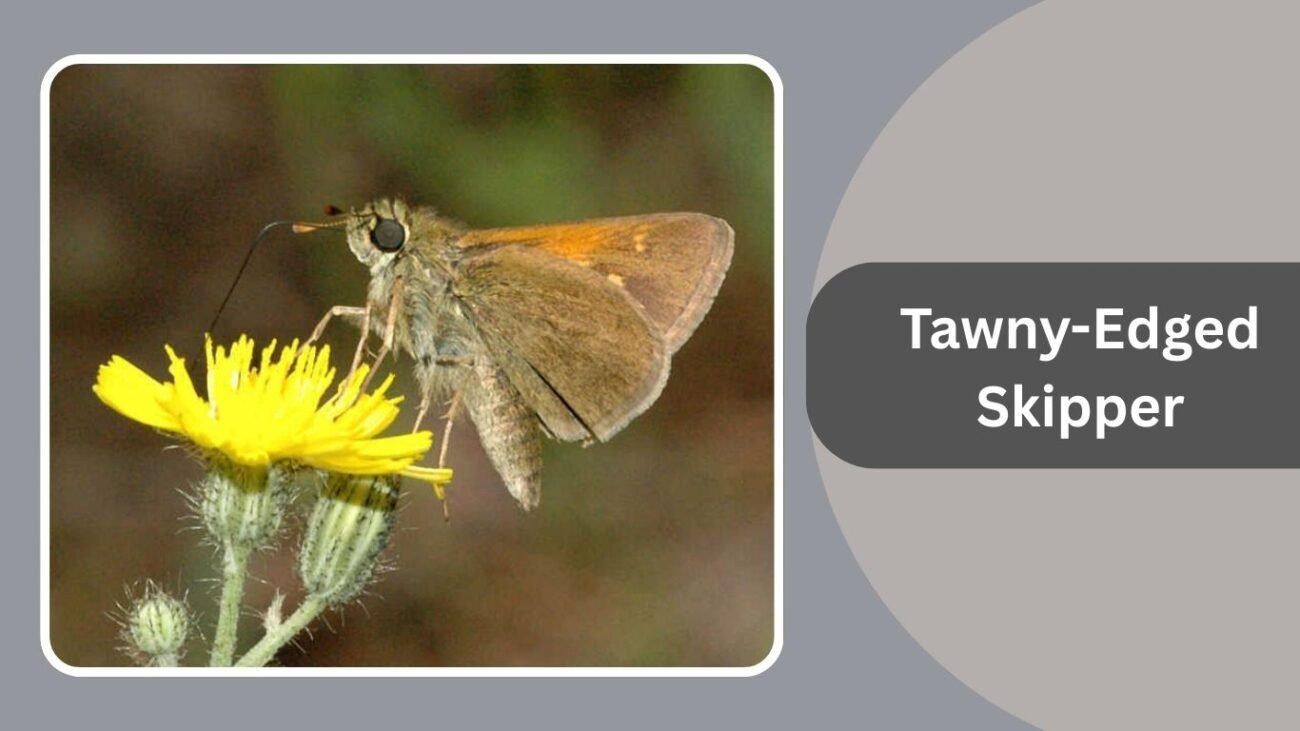
The Tawny-Edged Skipper (Polites themistocles) is a small, widespread grass skipper that is often overlooked due to its subtle markings. However, its warm tawny-orange edging on the wings makes it distinctive upon closer observation.
Identification
- Small butterfly (wingspan: 0.8 – 1.2 in / 2 – 3 cm).
- Upperside: dark brown wings with orange patches, especially a tawny-orange border on the forewings.
- Underside: yellowish to brown with faint pale spots.
- Males have a small, dark stigma (scent mark) on the forewings.
- Antennae tips are hooked, typical of skippers.
Habitat
Found in open meadows, fields, forest edges, and gardens, especially where grasses are plentiful. They prefer sunny areas with low vegetation.
Behavior
Tawny-Edged Skippers are fast, low fliers often seen sipping nectar from milkweed, clover, dogbane, and asters. They perch frequently on grasses or flowers, making short flights between them.
Life Cycle
Females deposit eggs on grasses such as bluegrass, fescues, and bentgrass. Caterpillars feed in shelters made by folding blades of grass with silk, later pupating within these shelters.
7. Common Checkered Skipper

The Common Checkered Skipper (Burnsius communis) is one of the most recognizable skippers, thanks to its bold black-and-white checkered wing pattern. It is widespread across North America and is often spotted in sunny open habitats.
Identification
- Small to medium skipper (wingspan: 1 – 1.5 in / 2.5 – 3.8 cm).
- Upperside: black-and-white checkered pattern across both wings.
- Underside: grayish with faint white spots, providing camouflage when resting.
- Body covered in bluish-gray hairs, especially in males.
- Antennae are short with hooked tips.
Habitat
Common in open fields, gardens, meadows, prairies, and roadsides, especially in sunny spots with abundant flowers and host plants.
Behavior
They are active daytime fliers, frequently visiting flowers such as marigold, lantana, mint, and asters. Their distinctive checkered pattern makes them easy to identify in flight or while feeding.
Life Cycle
Females lay eggs on plants in the mallow family (Malvaceae), including mallow, hibiscus, and hollyhock. Caterpillars create leaf shelters with silk for protection while feeding before pupating.
8. Delaware Skipper
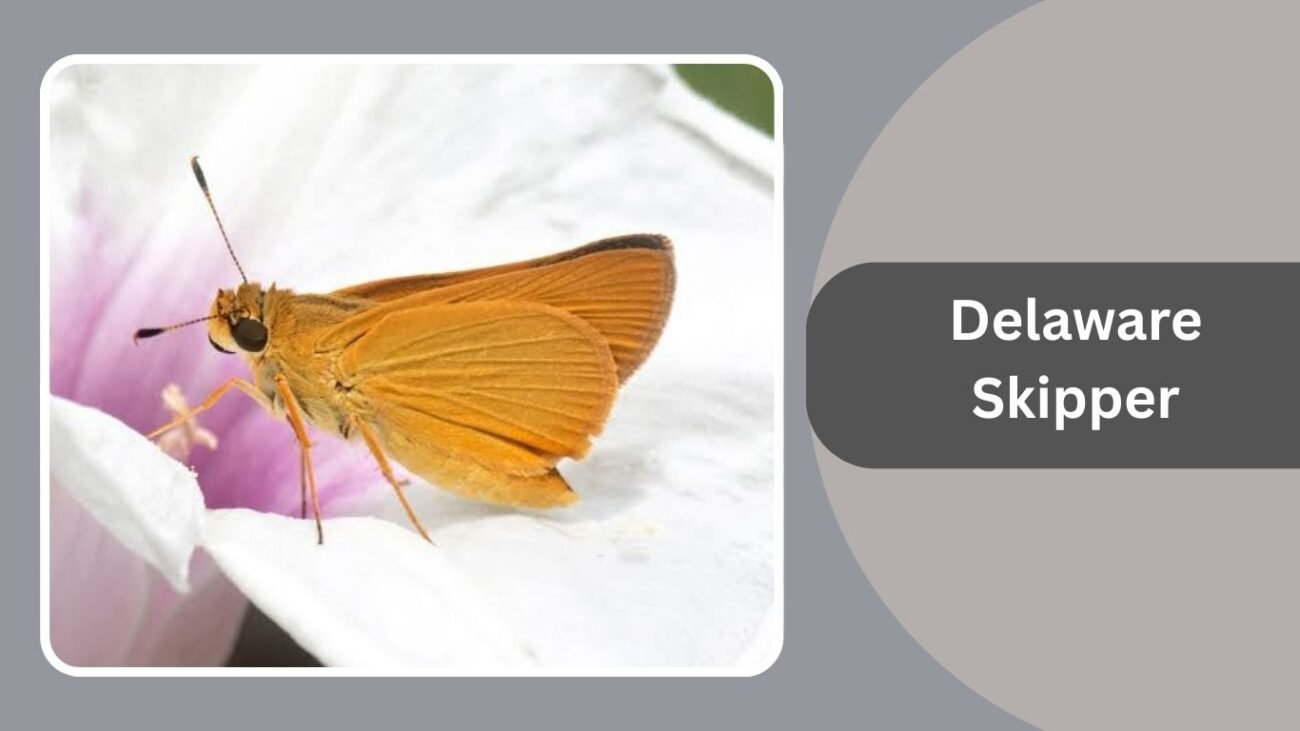
The Delaware Skipper (Anatrytone logan) is a bright orange skipper that stands out due to its smooth, clean wing coloration. Unlike many other skippers with mottled or checkered patterns, the Delaware Skipper has a simple yet striking appearance.
Identification
- Medium-sized skipper (wingspan: 1.25 – 1.6 in / 3.2 – 4 cm).
- Upperside: uniform bright orange with thin dark borders.
- Underside: plain orange-yellow without spots, helping to distinguish it from similar skippers.
- Antennae short with hooked tips.
- Flight is fast and direct, often close to the ground.
Habitat
Delaware Skippers thrive in moist meadows, prairies, marsh edges, and gardens. They are especially common in open areas with tall grasses.
Behavior
They are frequent nectar feeders, visiting flowers such as milkweed, thistles, blazing star, and coneflowers. They often perch on tall grass stems or flower heads.
Life Cycle
Eggs are laid on grasses including big bluestem, switchgrass, and other tall prairie grasses. Caterpillars roll grass blades with silk to create shelters where they feed and later pupate.
9. Least Skipper
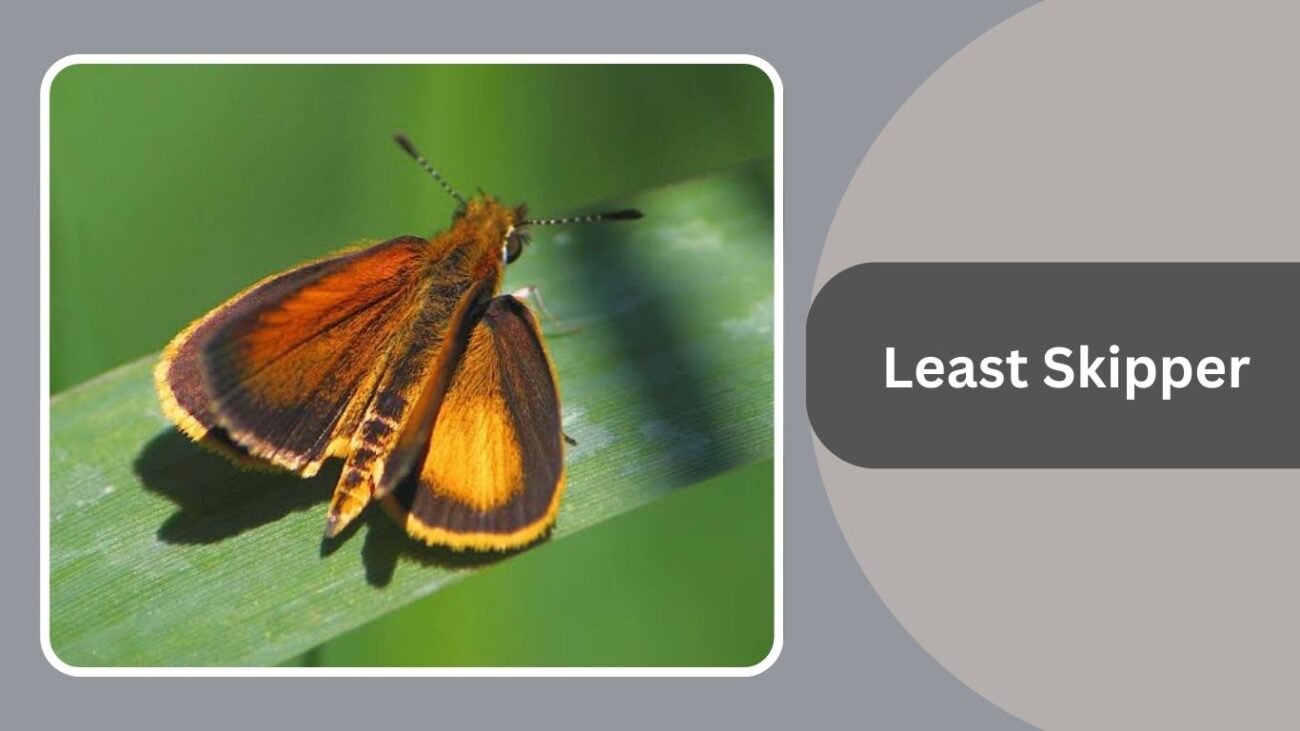
The Least Skipper (Ancyloxypha numitor) is one of the smallest skipper butterflies in North America. Despite its size, it is charming and easy to recognize thanks to its bright orange wings and weak, fluttery flight.
Identification
- Tiny butterfly (wingspan: 0.75 – 1 in / 1.9 – 2.5 cm).
- Upperside: bright orange with narrow dark brown margins.
- Underside: plain yellowish-orange with very little patterning.
- Slender body and delicate appearance compared to other skippers.
- Weak, slow flight close to grasses and flowers.
Habitat
Least Skippers prefer wet meadows, marshes, ditches, and grassy areas near streams or ponds, where host plants are abundant.
Behavior
They are gentle fliers, often seen fluttering low among grasses or sipping nectar from small flowers like clover, asters, and dogbane. Their slow movement makes them easier to observe than many other skippers.
Life Cycle
Eggs are laid on grasses such as rice cutgrass, panic grass, and bluegrass. Caterpillars construct shelters by folding grass blades and pupate within them.
10. European Skipper (Essex Skipper)

The European Skipper (Thymelicus lineola), also known as the Essex Skipper, is a small orange skipper introduced to North America from Europe. It is now common in grassy habitats across much of the northeastern United States and Canada.
Identification
- Small butterfly (wingspan: 1 – 1.25 in / 2.5 – 3.2 cm).
- Upperside: bright orange with thin dark brown borders.
- Underside: pale yellowish-orange, usually plain and unmarked.
- Distinguishing feature: antennae tips are black beneath, unlike the similar Small Skipper.
- Holds wings in the characteristic skipper “jet-plane” position when perched.
Habitat
Found in meadows, roadsides, hayfields, and pastures where grasses are plentiful. They prefer open, sunny locations.
Behavior
European Skippers fly in large numbers during summer and feed on nectar from flowers like red clover, daisies, and thistles. They are quick, active fliers, often seen in swarms across fields.
Life Cycle
Females lay eggs in clusters on grass stems, particularly timothy grass. Caterpillars overwinter in the egg stage and later feed on grasses before pupating.
11. Grizzled Skipper

The Grizzled Skipper (Pyrgus malvae) is a small but striking skipper, named for its bold checkered pattern. It is native to Europe and parts of Asia, and though less common in North America, it is an important representative of the Pyrgus group of skippers.
Identification
- Small butterfly (wingspan: 0.9 – 1.2 in / 2.3 – 3 cm).
- Upperside: dark brown wings with bold white spots, giving a checkered or “grizzled” appearance.
- Underside: mottled greenish-gray with pale markings for camouflage.
- Compact body with hooked antennae typical of skippers.
- Distinctive fast, low, and jerky flight.
Habitat
Grizzled Skippers are typically found in sunny grasslands, open woodland clearings, meadows, and chalk downlands. They prefer areas with sparse vegetation and patches of bare ground.
Behavior
They are active fliers, often basking on bare soil or stones in sunny spots. Adults feed on nectar from flowers such as buttercups, dandelions, and violets.
Life Cycle
Females lay eggs on plants in the rose family (Rosaceae), especially agrimony, cinquefoils, and wild strawberry. Caterpillars live in silken shelters made by folding leaves, feeding until pupation.
12. Lulworth Skipper

The Lulworth Skipper (Thymelicus acteon) is a small, warm-toned skipper native to parts of Europe. It gets its name from the region of Lulworth in southern England, where it was first identified. Its distinctive golden coloring and resting wing posture make it a unique member of the skipper family.
Identification
- Small butterfly (wingspan: 0.9 – 1.1 in / 2.3 – 2.8 cm).
- Upperside: golden-orange with darker brown margins.
- Females often show a crescent-shaped marking on the forewing.
- Underside: light yellowish-brown with faint markings, aiding in camouflage.
- Holds wings partially open in a distinctive “half-open” skipper posture.
Habitat
Lulworth Skippers are found in chalk grasslands, coastal meadows, and sunny hillsides, particularly where tall grasses grow. They are restricted to warm, open habitats.
Behavior
These skippers are low, fast fliers, often seen basking on tall grass heads or nectar plants such as knapweed, marjoram, and scabious. They are more localized than many other skipper species.
Life Cycle
Females lay eggs on coarse grasses such as tor-grass and cock’s-foot. Caterpillars create shelters in grass leaves, where they remain until pupation.
13. Small Skipper

The Small Skipper (Thymelicus sylvestris) is a widespread grass skipper across Europe and parts of Asia. It is very similar to the European (Essex) Skipper but can be told apart by its antennae and subtle wing features.
Identification
- Small butterfly (wingspan: 1 – 1.25 in / 2.5 – 3.2 cm).
- Upperside: bright orange with narrow brown borders.
- Underside: pale orange-brown, usually without distinct spots.
- Key difference: antennae tips are orange underneath, unlike the Essex Skipper, which has black undersides.
- Holds wings in a half-open “jet-plane” posture while resting.
Habitat
Common in grassy meadows, roadsides, pastures, and field edges. They thrive in areas with abundant tall grasses.
Behavior
Small Skippers are active during summer, flying in sunny conditions. They feed on nectar from flowers like thistles, knapweed, and clovers. Their fast, darting flight makes them lively in grassy landscapes.
Life Cycle
Females lay eggs on coarse grasses such as cock’s-foot, timothy, and meadow foxtail. Caterpillars live within grass leaves folded together by silk, feeding until pupation the following year.
14. Wild Indigo Duskywing
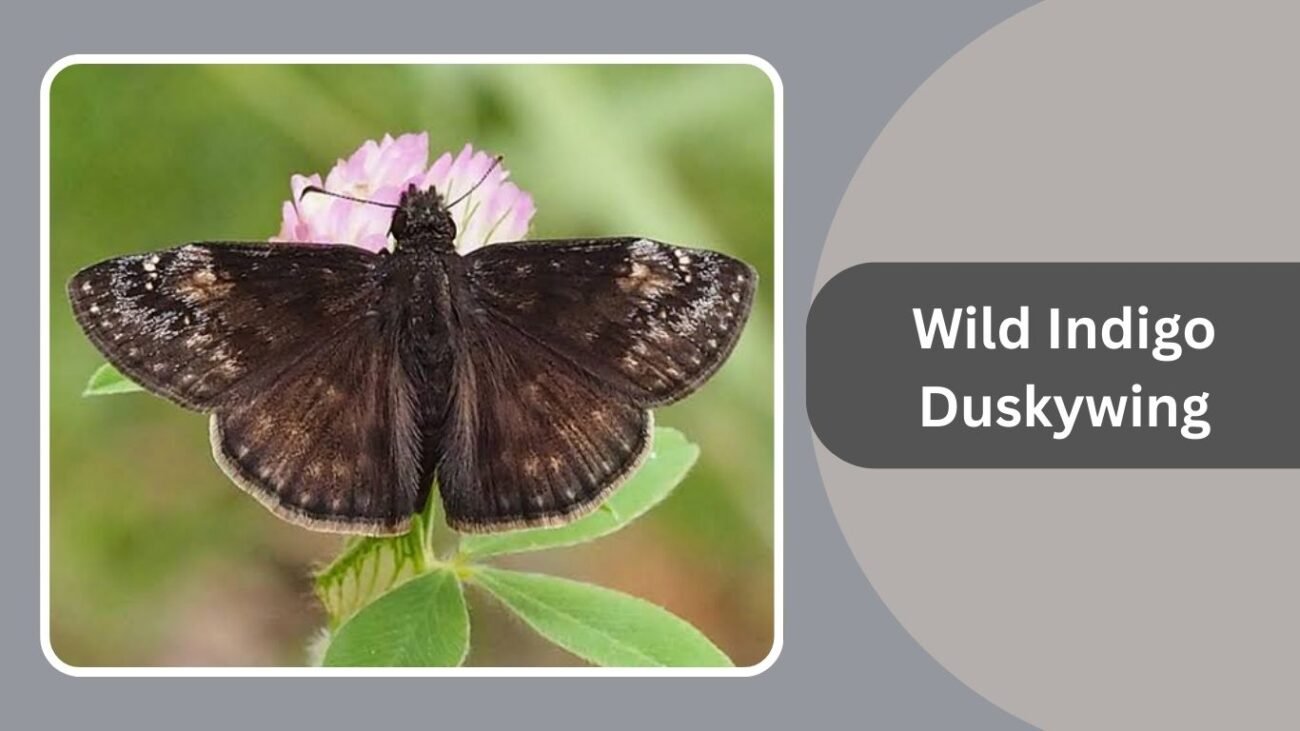
The Wild Indigo Duskywing (Erynnis baptisiae) is a dusky-colored skipper butterfly that belongs to the spread-wing skippers. It is often mistaken for the Horace’s Duskywing or Juvenal’s Duskywing, but it can be distinguished by its preference for wild indigo as a host plant.
Identification
- Medium-sized skipper (wingspan: 1.25 – 1.75 in / 3.2 – 4.4 cm).
- Upperside: dark brown to sooty gray with small white spots on the forewings.
- Males: usually darker overall with faint spotting.
- Females: often paler with more noticeable white markings.
- Holds wings flat and spread while resting (unlike many grass skippers).
Habitat
Found in open fields, meadows, prairies, and disturbed areas where host plants are present. It adapts well to man-made habitats where wild indigo has spread.
Behavior
Adults are active fliers, often basking with wings open on the ground or low vegetation. They feed on nectar from dogbane, milkweed, clover, and thistles.
Life Cycle
Eggs are laid on wild indigo (Baptisia) and other legumes. Caterpillars hide in folded leaves during the day, feeding at night, and later pupate within silken shelters.
15. Zabulon Skipper
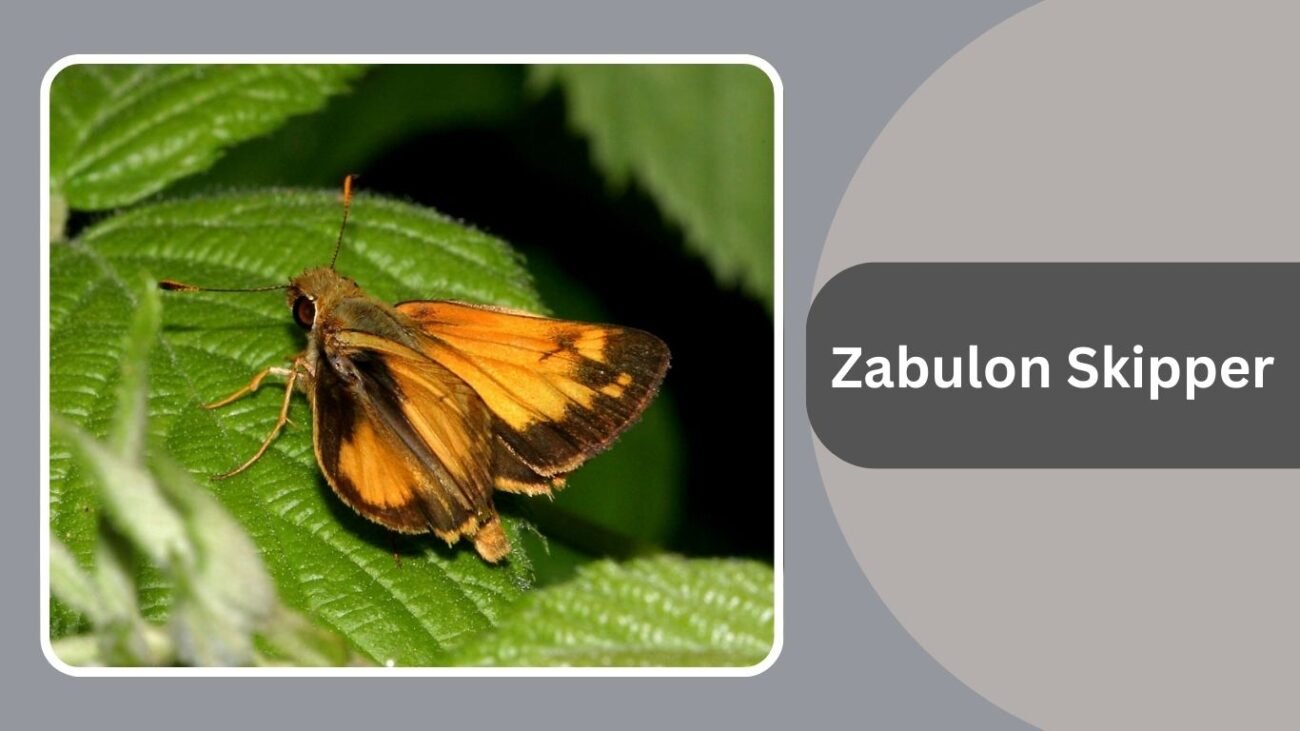
The Zabulon Skipper (Poanes zabulon) is a bright and attractive skipper often seen in wooded areas, gardens, and along trails. Its sexual dimorphism makes males and females look noticeably different, which helps with identification.
Identification
- Medium-sized skipper (wingspan: 1.25 – 1.5 in / 3.2 – 3.8 cm).
- Males: golden-orange forewings with dark brown borders; hindwings mostly orange.
- Females: dark brown wings with pale yellow patches and an orange hindwing underside.
- Antennae hooked at the tips, typical of skippers.
- Resting posture: wings often held in the jet-plane position.
Habitat
Zabulon Skippers inhabit woodland edges, gardens, meadows, and shaded trails. They are often found in partially shaded spots where flowers and grasses grow together.
Behavior
Males perch in sunny clearings to wait for females, while both sexes feed on nectar from flowers such as milkweed, clover, and thistles. They are strong but short-distance fliers.
Life Cycle
Eggs are laid on grasses such as purpletop, crabgrass, and other native species. Caterpillars feed in folded grass shelters and pupate in hidden spots among the vegetation.
16. Hoary Edge Skipper

The Hoary Edge Skipper (Achalarus lyciades) is a distinctive spread-wing skipper with bold markings on its hindwings. It is related to the Silver-Spotted Skipper but has subtler colors and a more muted appearance.
Identification
- Medium to large skipper (wingspan: 1.5 – 2 in / 3.8 – 5 cm).
- Upperside: dark brown wings with orange patches on the forewings.
- Hindwings show a broad, frosty-white band (hoary edge) on the underside.
- Stocky body with hooked antennae.
- Often mistaken for the Silver-Spotted Skipper but lacks its large silver spot.
Habitat
Common in woodland edges, fields, meadows, and gardens, especially in areas with legumes, which serve as host plants.
Behavior
These skippers are strong fliers, often seen visiting flowers such as thistles, clover, and blazing star. They perch frequently on leaves and often return to the same spot after short flights.
Life Cycle
Females lay eggs on legumes including tick-trefoil, bush clover, and beggar’s lice. Caterpillars create leafy shelters with silk for protection during feeding and later pupate in concealed spots.
17. Golden-Headed Scallopwing
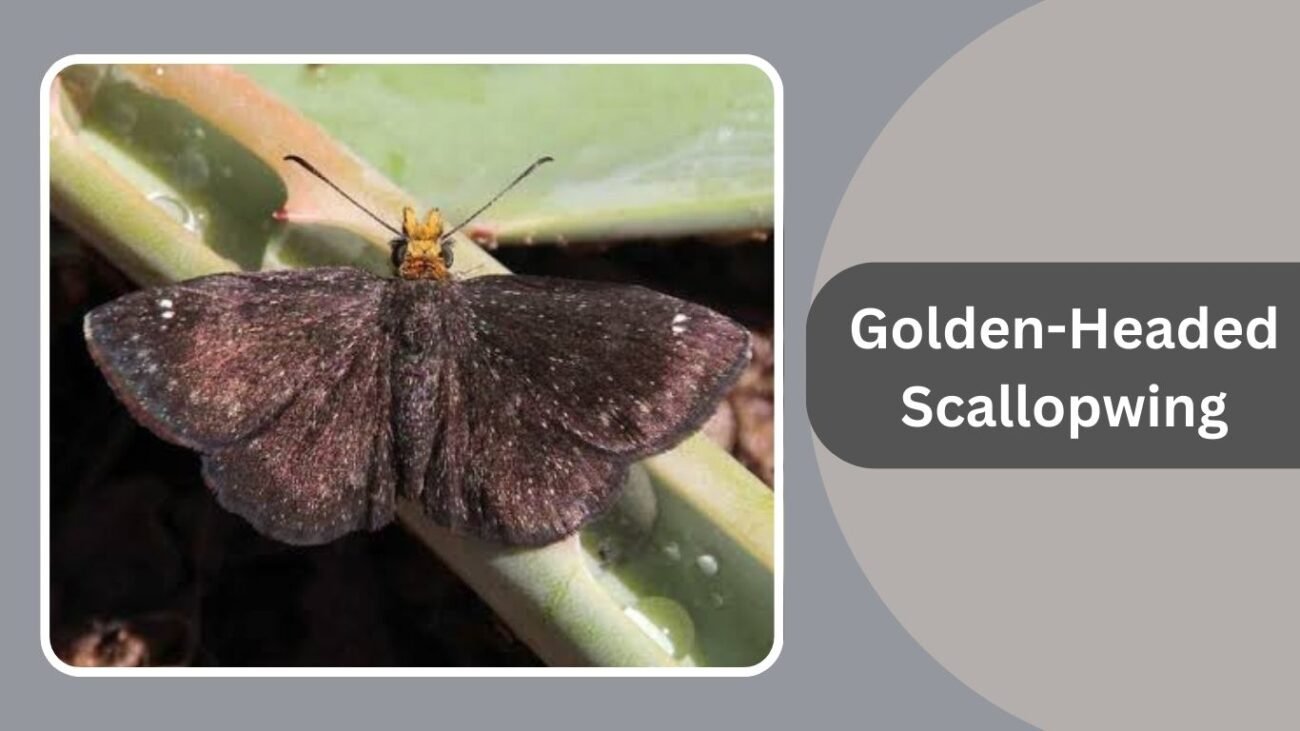
The Golden-Headed Scallopwing (Staphylus hayhurstii) is a small and somewhat uncommon skipper with scalloped wing edges and a distinctive golden sheen on its head and thorax. Its unique appearance makes it stand out among other duskywing-type skippers.
Identification
- Small skipper (wingspan: 1 – 1.25 in / 2.5 – 3.2 cm).
- Upperside: dark brown wings with lighter spots on the forewings.
- Hindwings: scalloped edges, giving the species its name.
- Head and thorax covered in golden hairs, the key feature.
- Resting posture: wings often spread flat, like other spread-wing skippers.
Habitat
Found in open woodlands, meadows, and gardens, especially where host plants and nectar sources are present. More localized in distribution compared to other common skippers.
Behavior
Golden-Headed Scallopwings are active during sunny hours, feeding on nectar from dogbane, clover, asters, and thistles. They often bask with wings open on low vegetation.
Life Cycle
Females lay eggs on mallow family plants (Malvaceae), including mallow and hibiscus. Caterpillars live within folded leaves, feeding until they pupate.
18. Common Sootywing
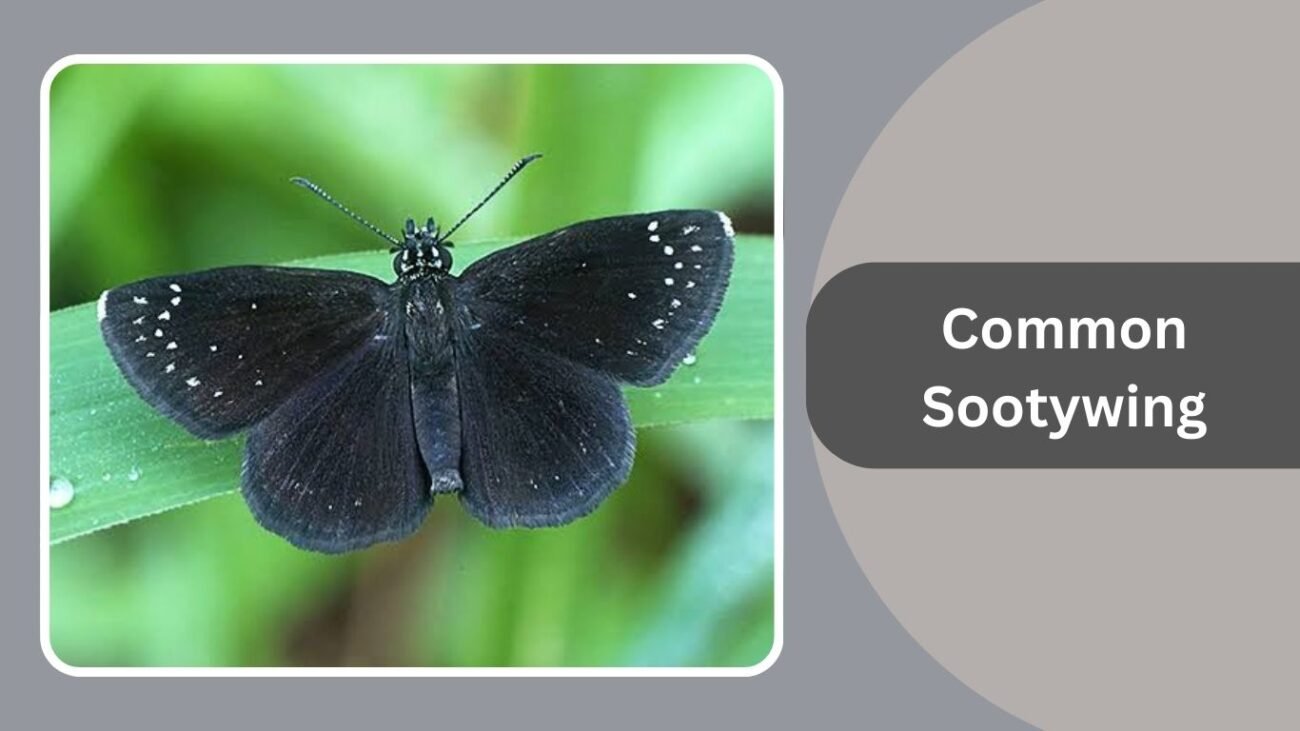
The Common Sootywing (Pholisora catullus) is a small, dark skipper with a velvety appearance. Its sooty black wings with subtle spotting make it easy to distinguish from brighter orange or checkered skippers.
Identification
- Small skipper (wingspan: 1 – 1.25 in / 2.5 – 3.2 cm).
- Upperside: sooty black wings with small white spots near the tips of the forewings.
- Underside: dark brown to black with faint pale spots.
- Body covered in dark hairs, blending with its wing color.
- Holds wings flat when basking.
Habitat
This species thrives in open fields, gardens, waste lots, and roadsides, particularly where host plants like pigweed are common.
Behavior
Common Sootywings are fast, low fliers that visit flowers for nectar, especially clover, dogbane, and asters. They often perch close to the ground.
Life Cycle
Females lay eggs on plants in the amaranth family (Amaranthaceae), including pigweed and lamb’s quarters. Caterpillars hide in silken shelters made from folded leaves until pupation.
19. Northern Broken Dash

The Northern Broken Dash (Wallengrenia egeremet) is a grass skipper that blends into its surroundings with its dusky brown coloration. It is widespread in the eastern United States and southern Canada, often encountered in meadows and gardens.
Identification
- Small to medium skipper (wingspan: 1 – 1.5 in / 2.5 – 3.8 cm).
- Upperside: dark brown with orange patches on the forewings.
- Underside: brown with faint pale patches and a fuzzy appearance.
- Subtle markings make it harder to spot compared to brighter skippers.
- Typical skipper resting posture: forewings angled, hindwings flat.
Habitat
Found in meadows, grassy fields, gardens, and woodland edges, especially where nectar sources and grasses coexist.
Behavior
They are quick, darting fliers often visiting milkweed, dogbane, clover, and goldenrod for nectar. Males are territorial and perch on grasses or low shrubs to watch for females.
Life Cycle
Eggs are laid on grasses such as panic grass and purpletop. Caterpillars feed at night, hiding in silken grass shelters during the day before pupating.
20. Little Glassywing
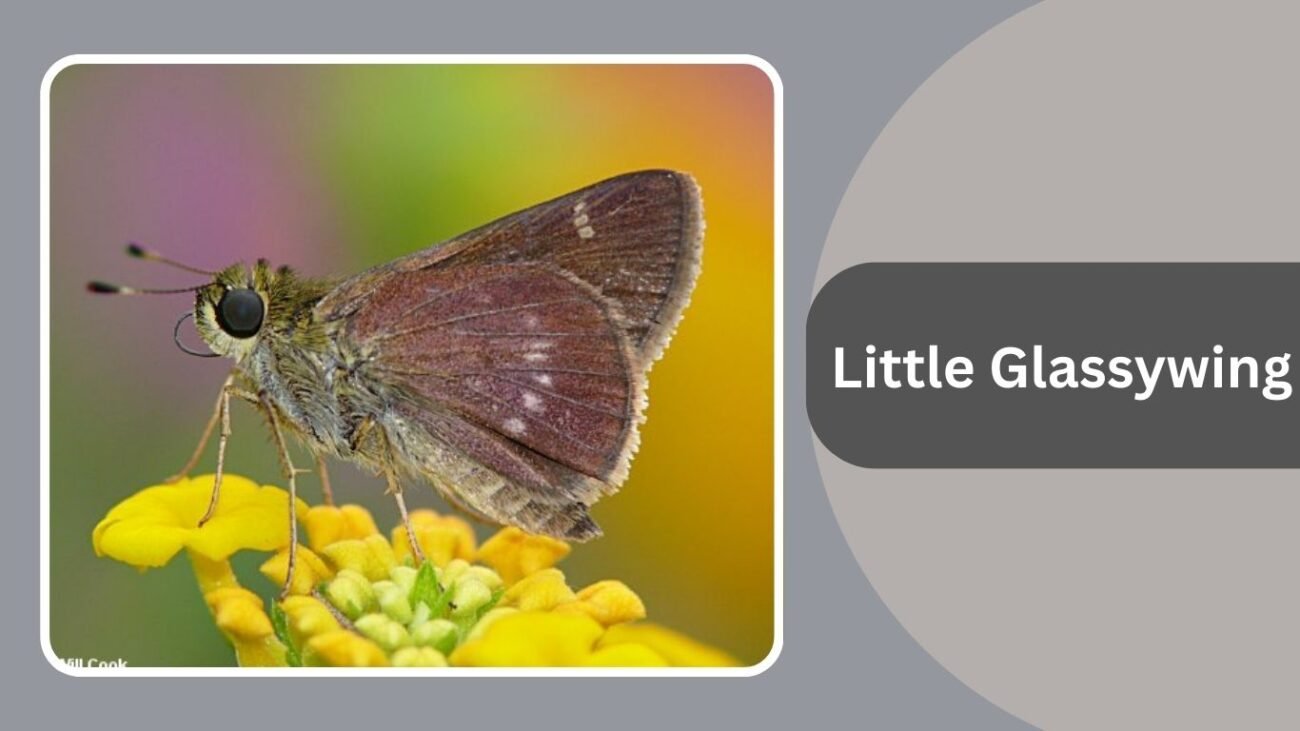
The Little Glassywing (Pompeius verna) is a dark, medium-sized skipper that gets its name from the faint, translucent patches on its wings. It is a common summer butterfly in the eastern United States.
Identification
- Medium-sized skipper (wingspan: 1.25 – 1.5 in / 3.2 – 3.8 cm).
- Upperside: dark brown wings with small, glassy-white spots near the center of the forewings.
- Underside: mottled brown with lighter shading, offering camouflage.
- Body is dark and fuzzy, blending with wing coloration.
- Resting posture: wings usually angled in the “jet-plane” position.
Habitat
Inhabits moist meadows, grassy fields, woodland clearings, and gardens. Most abundant in sunny areas with tall grasses and flowers.
Behavior
Little Glassywings are strong fliers, frequently feeding on nectar from milkweed, dogbane, buttonbush, and thistles. Males are territorial, often returning to the same perch.
Life Cycle
Eggs are laid on panic grasses and purpletop grasses. Caterpillars live in folded grass shelters until pupation, later emerging as adults in summer.