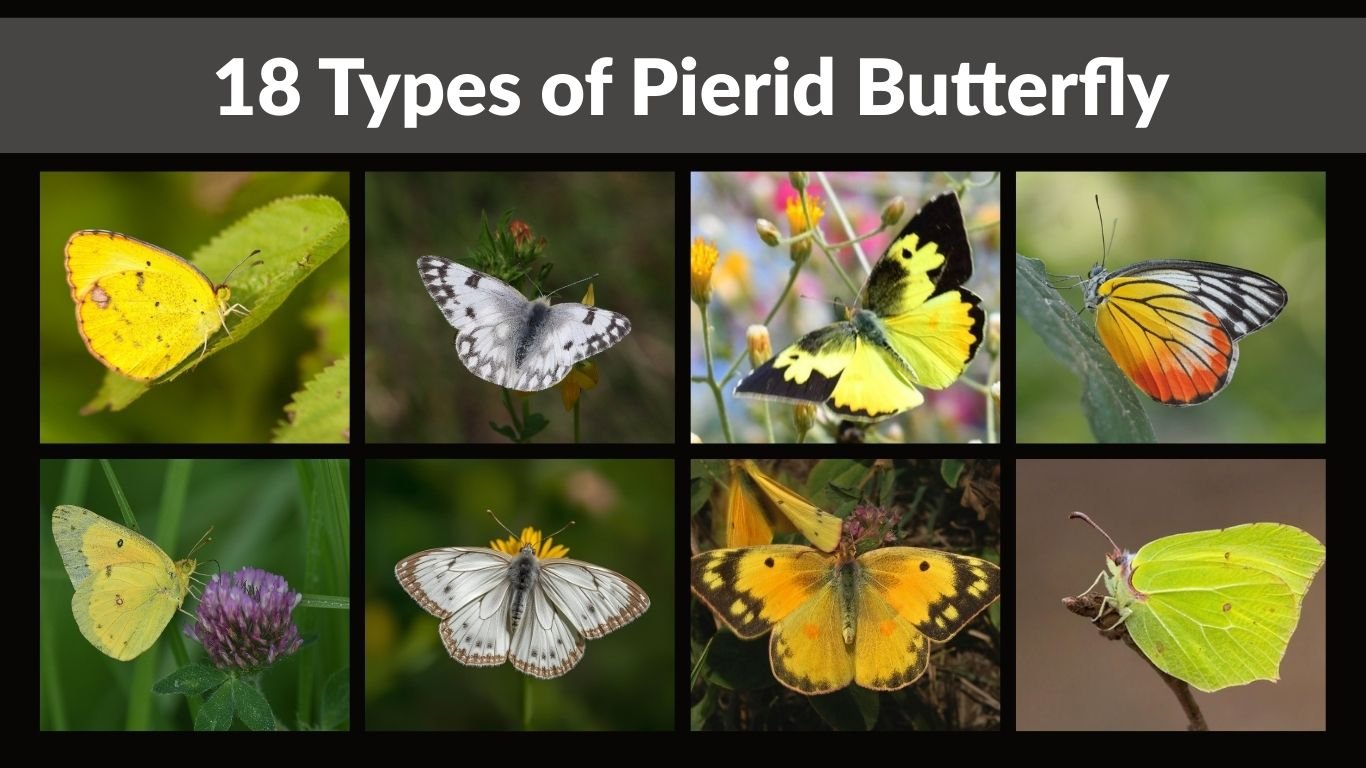
Pierid butterflies, belonging to the family Pieridae, are among the most widespread and recognizable butterflies in the world. Known for their bright whites, yellows, and oranges, they thrive in diverse habitats ranging from meadows to forests. This guide introduces 18 fascinating species of Pierid butterflies, highlighting their identification features, natural habitats, behaviors, diets, and lifecycles to help enthusiasts and learners appreciate their beauty and ecological importance.
1. Cabbage White (Pieris rapae)

The Cabbage White is one of the most widespread butterflies in the Pieridae family, easily recognizable and commonly seen in gardens, fields, and farmlands. It is considered a pest species in many regions due to its caterpillars feeding on cabbage and related crops.
Identification
- Medium-sized butterfly with a wingspan of 32–47 mm
- Wings white with dark tips on the forewings
- Males have one black spot on each forewing; females have two
- Underside of hindwings pale yellowish with faint gray speckles
- Antennae are slender with black-and-white clubbed tips
Habitat
Cabbage Whites thrive in gardens, fields, meadows, and agricultural lands. They are especially abundant in areas where cruciferous plants grow, both wild and cultivated.
Behavior
They are strong fliers with a fluttering flight and are frequently seen hovering around flowering plants. Males are active in patrolling for females, while females spend more time near host plants for egg-laying.
Diet
Adults feed on nectar from a variety of flowers such as dandelions, clovers, and mustards. Caterpillars feed heavily on members of the mustard family (Brassicaceae), including cabbages, broccoli, and kale.
Lifecycle
The species is highly prolific, producing several broods per year. Eggs are laid singly on host plant leaves. Caterpillars are green with faint yellow lines, camouflaging well among foliage. Pupation occurs in a chrysalis attached to stems or walls, and in many regions, the butterfly can be seen almost year-round.
2. Large White (Pieris brassicae)

The Large White, often called the “Cabbage Butterfly,” is a common and widespread species across Europe, Asia, and North Africa. It is larger than the Small Cabbage White and is notorious for its caterpillars that feed on brassica crops, making it an important agricultural pest.
Identification
- Large butterfly with a wingspan of 50–70 mm
- Upper forewings white with bold black tips
- Females show two distinct black spots on each forewing; males may lack them
- Hindwings white above, with yellowish underside and black speckling
- Strong, bold appearance compared to the smaller Pieris rapae
Habitat
The Large White prefers open areas such as gardens, meadows, farmland, parks, and allotments. It is commonly found wherever cruciferous plants grow.
Behavior
This butterfly has a strong and powerful flight, often traveling long distances. Males patrol for females in open sunny areas, while females are seen hovering over cabbages and other host plants for egg-laying.
Diet
Adults feed on nectar from flowers including thistles, dandelions, and clovers. Caterpillars feed voraciously on cruciferous plants such as cabbage, kale, and mustard, often causing significant crop damage.
Lifecycle
The Large White produces two to three broods per year. Eggs are laid in large clusters on the underside of leaves. Caterpillars are yellow-green with black spots and hairs, often found in groups. Pupation occurs as a green or brown chrysalis attached to plant stems or nearby surfaces. In colder climates, the pupal stage serves as the overwintering phase.
3. Green-veined White (Pieris napi)

The Green-veined White is a delicate and attractive butterfly, widespread across Europe, Asia, and North America. Unlike the Cabbage White, it is less damaging to crops and is easily identified by the greenish patterning on the undersides of its wings.
Identification
- Medium-sized butterfly with a wingspan of 40–52 mm
- Upper wings white with dusky black tips on forewings
- Males usually have faint or no black spots; females show one or two
- Underside of hindwings and forewing tips marked with greenish or grayish veins, giving the species its name
- More delicate appearance compared to Pieris rapae and P. brassicae
Habitat
The Green-veined White is commonly found in damp meadows, woodland clearings, hedgerows, gardens, and riverbanks. It prefers areas with lush vegetation and is more associated with wild habitats than agricultural fields.
Behavior
This butterfly flies low to the ground, with a graceful and fluttering flight. Males patrol sunny glades and meadows in search of females. It often basks with wings closed, showing the distinctive green-veined undersides.
Diet
Adults feed on nectar from flowers such as dandelions, cuckooflowers, bugle, and thistles. Caterpillars feed on cruciferous wild plants, including cuckooflower (Cardamine pratensis) and garlic mustard (Alliaria petiolata).
Lifecycle
The Green-veined White has two or more broods per year. Eggs are laid singly on host plant leaves. Caterpillars are green with faint yellow lines, blending well with foliage. Pupation occurs as a green or brown chrysalis attached to stems. In colder regions, the chrysalis stage allows the species to overwinter.
4. Checkered White (Pontia protodice)
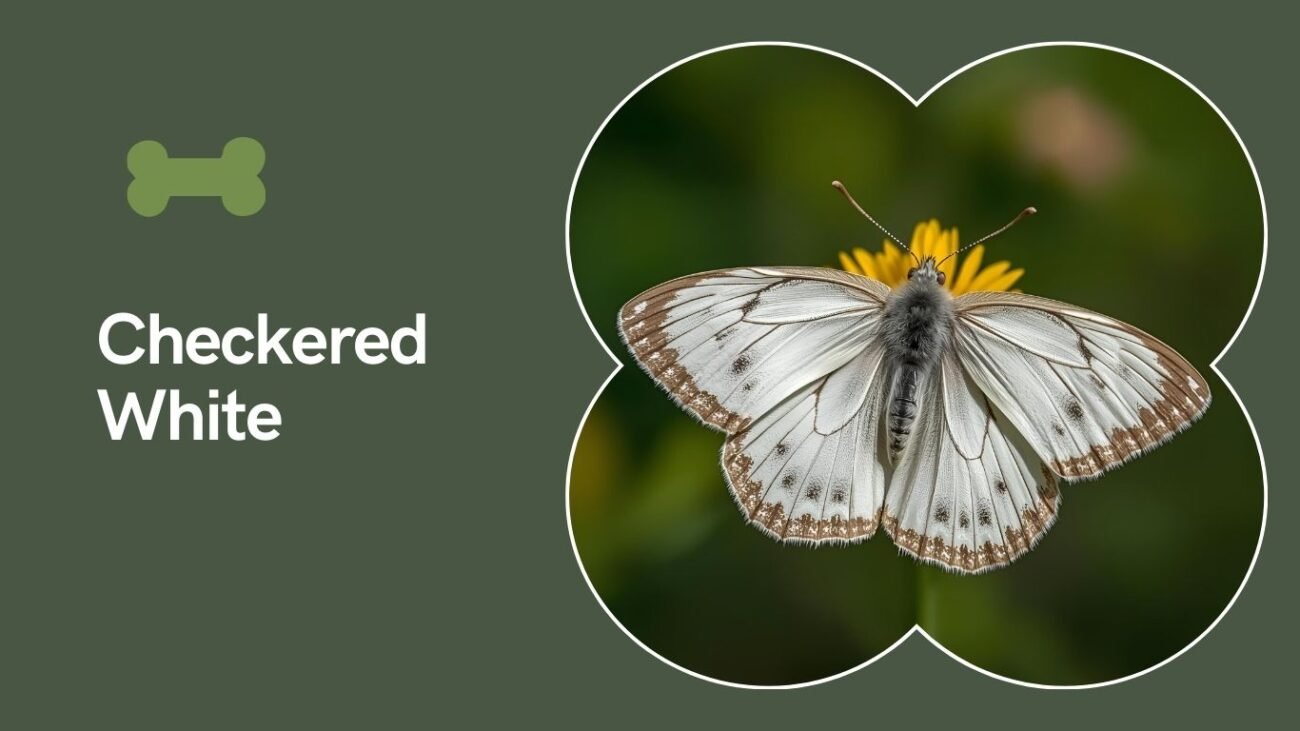
The Checkered White is a graceful butterfly native to North America, recognized by its distinctive checkered wing pattern. It is commonly found in open, dry habitats and is sometimes called the “Southern Cabbage Butterfly.”
Identification
- Small to medium-sized butterfly with a wingspan of 38–53 mm
- Upper forewings white with dark gray to black checkered markings
- Males have lighter markings; females are more heavily patterned
- Underside of hindwings shows gray or yellow-tan checkering, providing camouflage
- Antennae banded black and white with small clubs
Habitat
Checkered Whites thrive in open, dry, and sunny environments such as prairies, fields, roadsides, deserts, and grasslands. They are often found in disturbed areas where host plants grow.
Behavior
This butterfly has a light, fluttering flight, often staying close to the ground. Males patrol open areas to locate females, while females are seen hovering near host plants for egg-laying. They are highly visible when basking with wings open.
Diet
Adults feed on nectar from flowers such as asters, mustards, alfalfa, and clovers. Caterpillars feed on plants in the mustard family (Brassicaceae), particularly Lepidium and Sisymbrium species.
Lifecycle
The Checkered White produces several broods per year, especially in warmer climates. Eggs are laid singly on host plants. Caterpillars are green with faint stripes, blending with foliage. Pupation occurs in a slender chrysalis, which may serve as the overwintering stage in colder regions.
5. Bath White (Pontia daplidice)
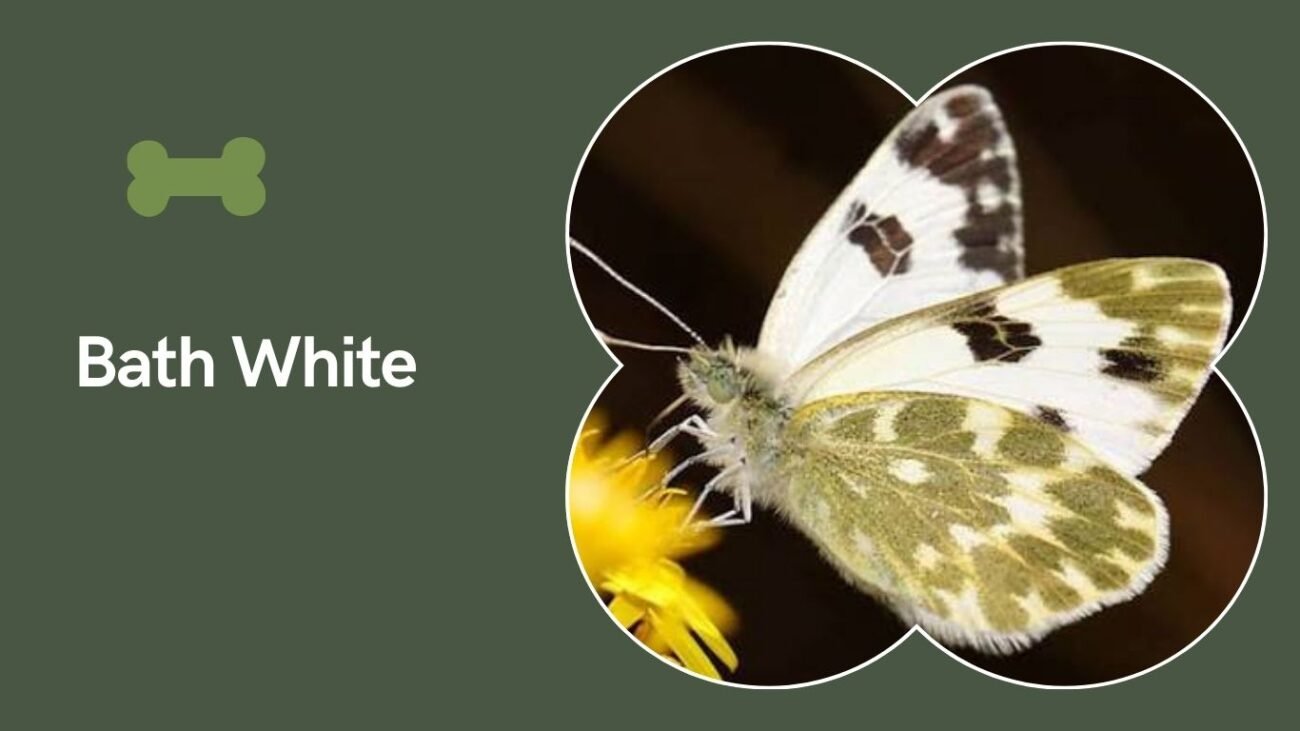
The Bath White is a distinctive butterfly widely distributed across Europe, North Africa, and parts of Asia. It is known for its green-marbled undersides and is one of the more striking members of the Pieridae family.
Identification
- Medium-sized butterfly with a wingspan of 45–55 mm
- Upper side of wings white with black markings near the tips of forewings
- Females often show additional black spots on forewings
- Underside of hindwings patterned with greenish marbling, giving excellent camouflage
- More heavily patterned than similar Pontia species
Habitat
Bath Whites prefer warm, open, and dry environments such as scrublands, rocky hillsides, grasslands, and cultivated areas. They are often seen in semi-arid regions where wild crucifers grow.
Behavior
This butterfly is a strong and fast flier, often covering wide areas in search of flowers or host plants. Males patrol sunny open spaces for females, while females concentrate near host plants to lay eggs.
Diet
Adults feed on nectar from a wide variety of flowers, including thistles, mustards, and mallows. Caterpillars feed mainly on cruciferous plants (Brassicaceae), especially Reseda and Isatis species.
Lifecycle
The Bath White has multiple broods annually, particularly in warmer regions. Eggs are laid singly on host plants. Caterpillars are green with fine stripes, camouflaging well against foliage. Pupation occurs in a slender chrysalis attached to stems or rocks, and in cooler climates, the species overwinters in this stage.
6. Western White (Pontia occidentalis)
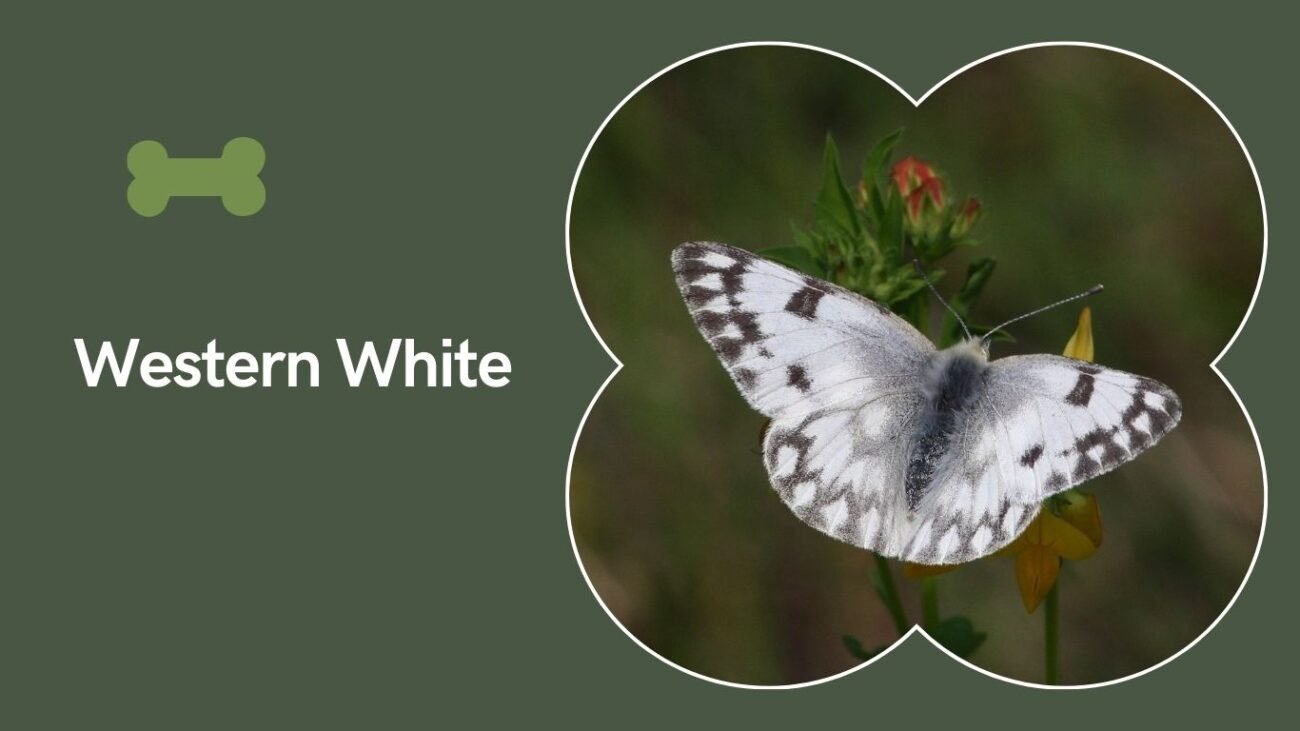
The Western White is a butterfly native to North America, particularly abundant in the western regions. It is closely related to other Pontia species but is distinguished by its wing pattern and alpine habitat preferences.
Identification
- Small to medium-sized butterfly with a wingspan of 38–50 mm
- Upper forewings white with dark gray to black markings near the tips
- Females often display more extensive dark markings than males
- Underside of hindwings yellowish-white with gray-green marbling, aiding in camouflage
- Very similar to the Checkered White but tends to be paler and with subtler patterns
Habitat
Western Whites are found in open areas such as meadows, prairies, foothills, and mountain slopes. They are especially common in higher elevations of the western United States and southern Canada.
Behavior
This butterfly has a light, fluttering flight and often remains close to the ground. Males actively patrol open areas in search of females, while females are more selective and remain near host plants when laying eggs.
Diet
Adults feed on nectar from flowers like asters, mustards, clovers, and dandelions. Caterpillars primarily feed on wild mustards and other cruciferous plants (Brassicaceae).
Lifecycle
The Western White usually has two broods per year, though in mountainous regions only one brood may occur. Eggs are laid singly on host plants. Caterpillars are green with faint striping, well camouflaged among foliage. Pupation occurs in a narrow chrysalis, which may overwinter depending on climate conditions.
7. Orange-tip (Anthocharis cardamines)
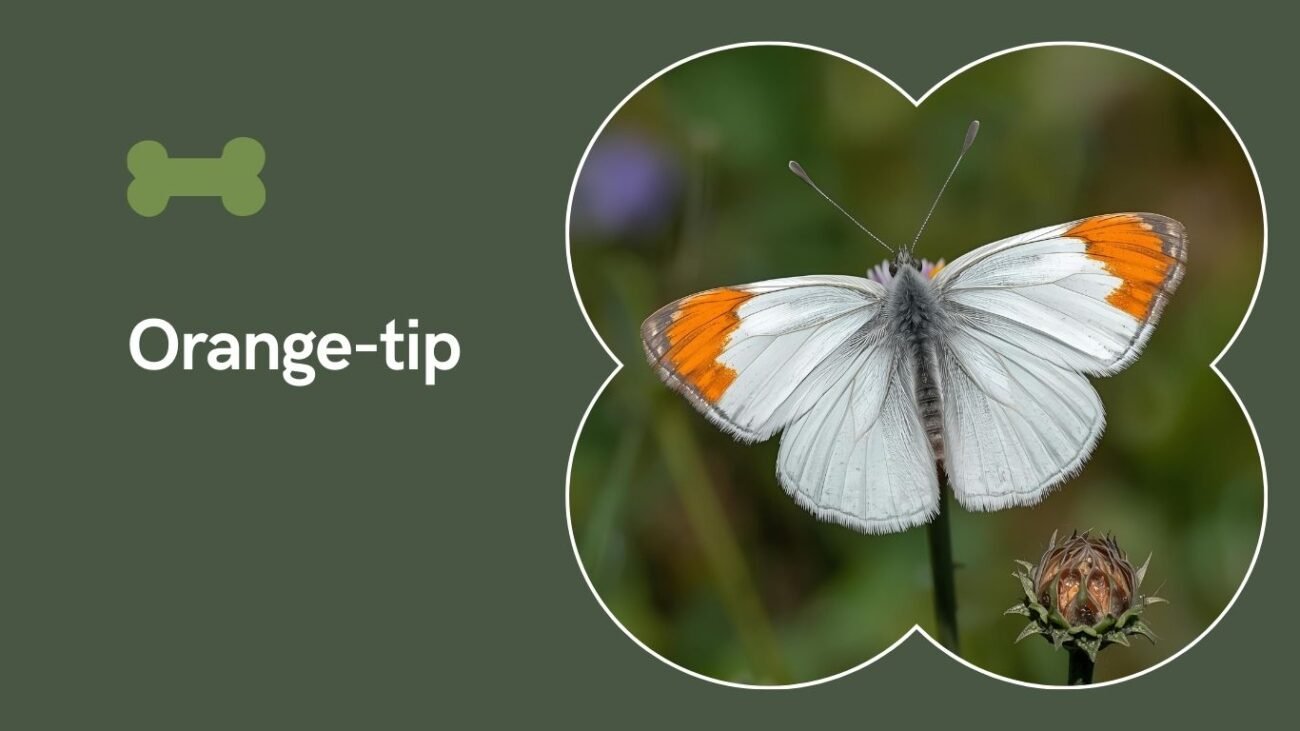
The Orange-tip is one of the most easily recognized Pierid butterflies, especially the males with their vivid orange forewing tips. Found across Europe and Asia, it is a herald of spring and commonly seen in meadows and woodland edges.
Identification
- Medium-sized butterfly with a wingspan of 45–52 mm
- Males have bright orange tips on the forewings, bordered with black
- Females lack the orange, appearing mostly white with dark wingtips
- Underside of hindwings mottled green and white, offering excellent camouflage when at rest
- Slender body with clubbed, black-and-white antennae
Habitat
Orange-tips inhabit damp meadows, hedgerows, woodland clearings, riverbanks, and grassy roadsides. They prefer areas rich in wildflowers and host plants.
Behavior
These butterflies are active in spring, flying from early morning until evening. Males patrol hedgerows and meadows to find females, often flying in a rapid, darting manner. When resting, they usually perch with wings closed, blending into vegetation.
Diet
Adults feed on nectar from flowers such as cuckooflower, garlic mustard, dandelions, and bluebells. Caterpillars feed on host plants in the mustard family (Brassicaceae), particularly cuckooflower (Cardamine pratensis) and garlic mustard (Alliaria petiolata).
Lifecycle
The Orange-tip is typically single-brooded, flying mainly in spring. Eggs are laid singly on the flower buds of host plants. Caterpillars are green with fine lines, blending into stems and seed pods. Pupation occurs in a slender chrysalis attached to stems, where the butterfly overwinters until the following spring.
8. Falcate Orangetip (Anthocharis midea)
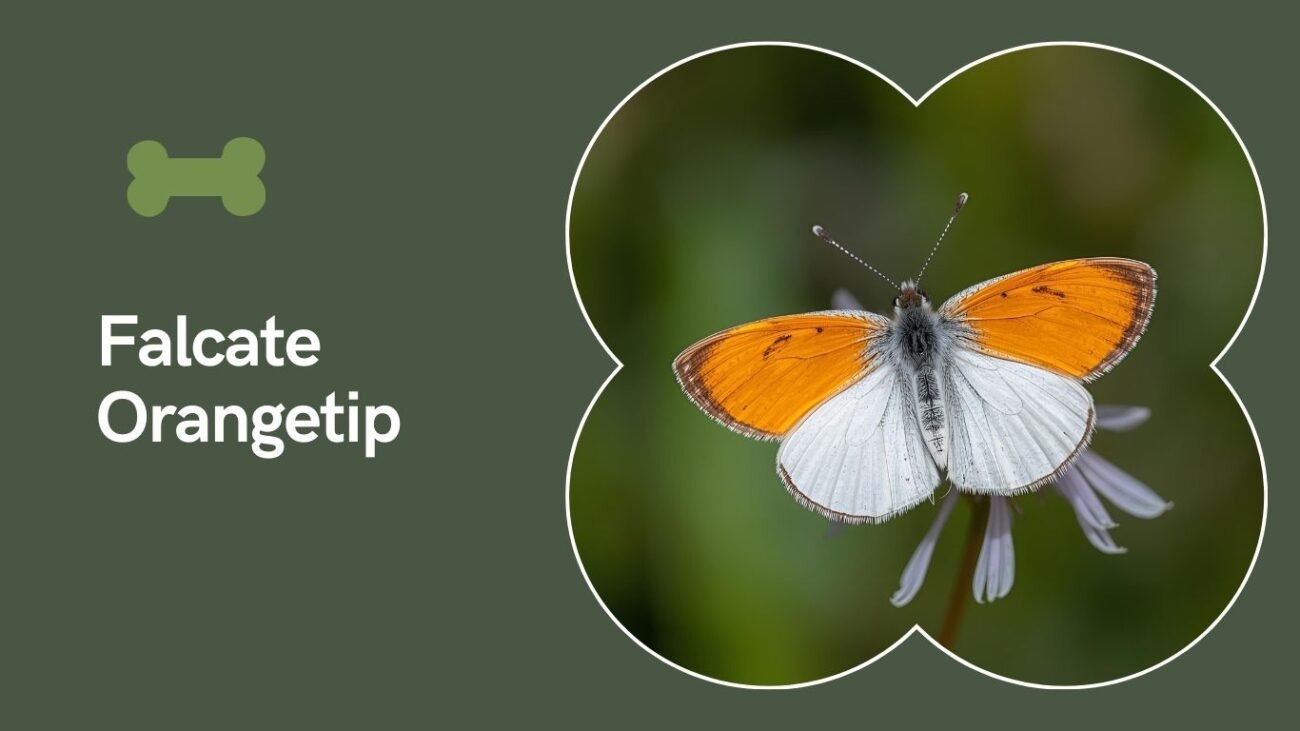
The Falcate Orangetip is a small and delicate butterfly native to North America. It is especially notable for the hooked tips of its forewings and the bright orange patches seen in males. This butterfly is an early spring flyer, often associated with woodlands and streamside habitats.
Identification
- Small butterfly with a wingspan of 30–45 mm
- Males have bright orange tips on forewings with falcate (hooked) shape
- Females lack the orange, appearing mostly white with grayish markings
- Underside of hindwings marbled with green and white, providing camouflage
- Slender and graceful, smaller than the European Orange-tip
Habitat
The Falcate Orangetip inhabits open woodlands, forest edges, stream banks, meadows, and brushy fields. It prefers moist areas where its host plants grow.
Behavior
This butterfly has a rapid, fluttering flight and is most active in spring. Males patrol sunny clearings in search of females, while females are more secretive, staying near host plants for egg-laying. When resting, they keep wings closed, blending into vegetation.
Diet
Adults feed on nectar from early spring flowers, including violets, wild mustards, and toothworts. Caterpillars feed on plants in the mustard family (Brassicaceae), particularly toothworts (Cardamine species).
Lifecycle
The Falcate Orangetip has a single brood each year, flying mainly in spring. Eggs are laid singly on flower buds or stems of host plants. Caterpillars are green and slender, blending well with foliage. Pupation occurs in a slender chrysalis attached to stems, which overwinters until the next spring.
9. Southern Dogface (Zerene cesonia)

The Southern Dogface is a striking butterfly from North and Central America, named for the dog-head-shaped pattern on its forewings. It is brightly colored, fast-flying, and often seen in open, sunny landscapes.
Identification
- Medium-sized butterfly with a wingspan of 47–65 mm
- Forewings bright yellow with a distinct black border forming a dog’s head shape (visible when wings are open)
- Hindwings yellow with a black margin and small eyespot on the underside
- Females sometimes show lighter or less distinct markings
- Underside varies seasonally: summer forms are pale yellow, while winter forms are mottled with gray
Habitat
Southern Dogfaces are found in prairies, fields, pastures, roadsides, and open woodlands. They prefer sunny, dry areas where host plants grow abundantly.
Behavior
This butterfly is very active and fast-flying, often darting rapidly across fields. Males are territorial and patrol open spaces for females. They are also migratory in some parts of their range, moving northward in summer.
Diet
Adults feed on nectar from a wide range of flowers, especially clovers, alfalfa, and asters. Caterpillars feed on legumes, particularly false indigo (Amorpha species) and alfalfa.
Lifecycle
The Southern Dogface produces multiple broods each year in warmer regions. Eggs are laid singly on host plants. Caterpillars are green with fine stripes, well camouflaged among foliage. Pupation occurs in a chrysalis attached to stems, and in cooler areas, the chrysalis overwinters.
10. Cloudless Sulphur (Phoebis sennae)
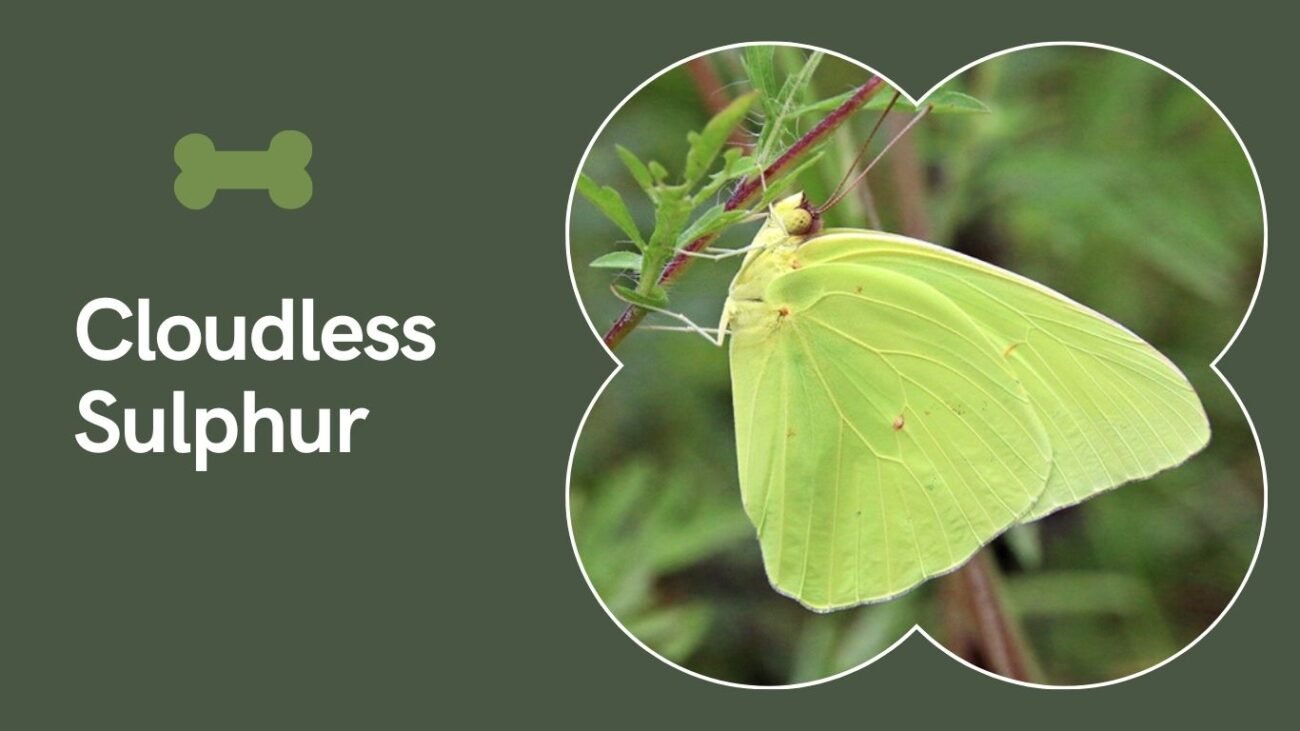
The Cloudless Sulphur is one of the largest and most recognizable sulphur butterflies in the Americas. Known for its bright yellow wings and long migratory flights, it is commonly seen in gardens, fields, and along roadsides.
Identification
- Large butterfly with a wingspan of 55–70 mm
- Males are brilliant lemon-yellow with clean wings and few markings
- Females are paler yellow to whitish, often with small dark spots on forewings
- Underside pale yellow to greenish with faint small dots, aiding camouflage
- Long, pointed forewings distinguish it from smaller sulphurs
Habitat
Cloudless Sulphurs inhabit open sunny areas such as fields, gardens, meadows, roadsides, and disturbed habitats. They are also frequent in subtropical and tropical regions.
Behavior
This species is highly active, strong-flying, and often migratory, traveling long distances seasonally. Males patrol open spaces to find females. They are frequently seen fluttering rapidly at flower patches or flying high across landscapes during migration.
Diet
Adults feed on nectar from a wide range of flowers including hibiscus, bougainvillea, lantana, and red clover. Caterpillars feed on legumes, especially senna (Senna species), which gives the butterfly its scientific name.
Lifecycle
The Cloudless Sulphur has several broods annually in warm climates. Eggs are laid singly on host plants. Caterpillars are green with a yellow stripe, blending well with senna leaves. Pupation occurs in a slender, green or yellow chrysalis. In temperate areas, they cannot survive freezing winters, but in subtropical regions, they breed year-round.
11. Clouded Sulphur (Colias philodice)
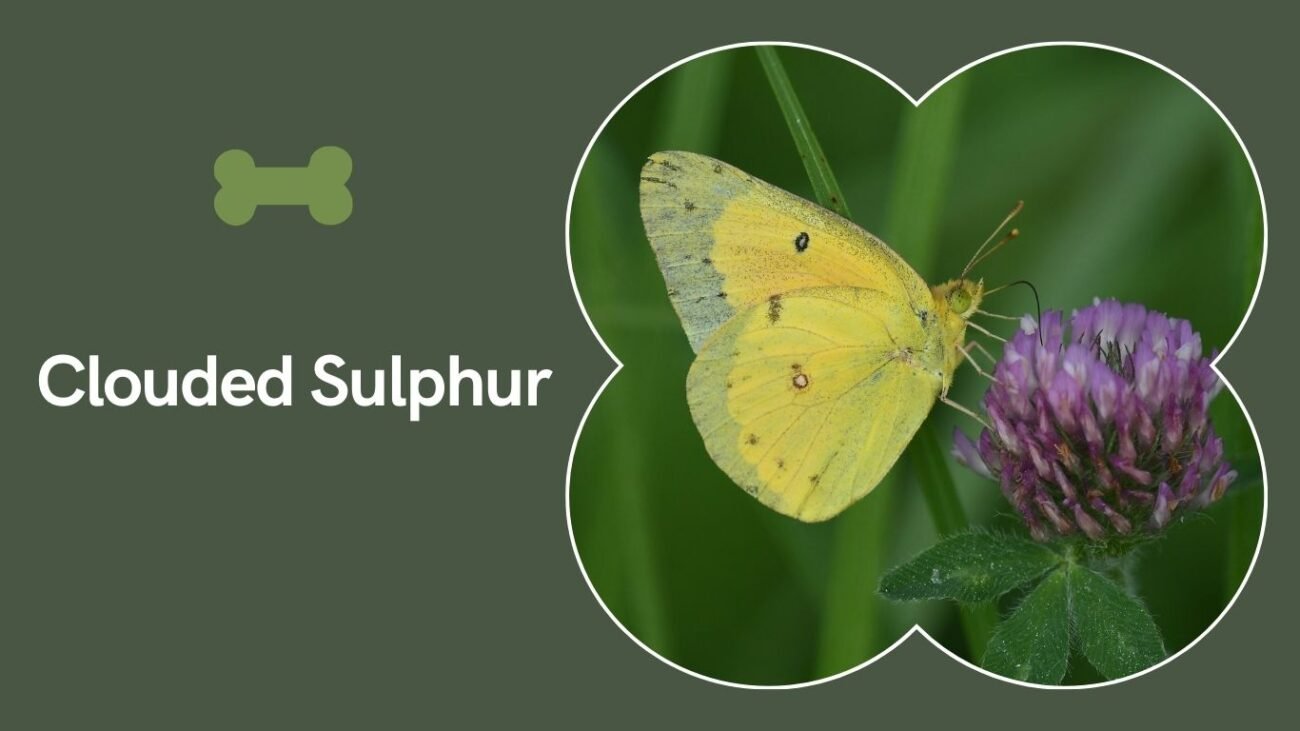
The Clouded Sulphur is one of the most widespread sulphur butterflies in North America. It is a familiar sight in fields and meadows, recognized by its soft yellow wings bordered in dark markings.
Identification
- Medium-sized butterfly with a wingspan of 32–54 mm
- Upperside of wings yellow with dark borders, more pronounced in females
- Males lack central spots, while females often have one or two black spots on forewings
- Underside pale yellow with a silver or white spot on each hindwing
- Seasonal variations occur: summer forms are brighter, winter forms are duller
Habitat
Clouded Sulphurs thrive in open areas such as meadows, fields, pastures, roadsides, and gardens. They are particularly common in regions where clover and alfalfa are abundant.
Behavior
These butterflies have a low, fluttering flight and are often seen in large numbers. Males actively patrol meadows searching for females. They are known for “mud-puddling,” gathering in groups on damp soil to absorb minerals.
Diet
Adults feed on nectar from clover, dandelions, asters, and milkweeds. Caterpillars feed primarily on legumes, especially clover (Trifolium species) and alfalfa (Medicago sativa).
Lifecycle
The Clouded Sulphur produces multiple broods per year, sometimes continuing into late autumn. Eggs are laid singly on host plants. Caterpillars are green with white or yellow side stripes, blending well with foliage. Pupation occurs in a green or brown chrysalis, and in colder regions, the species overwinters as a pupa.
12. Orange Sulphur (Colias eurytheme)
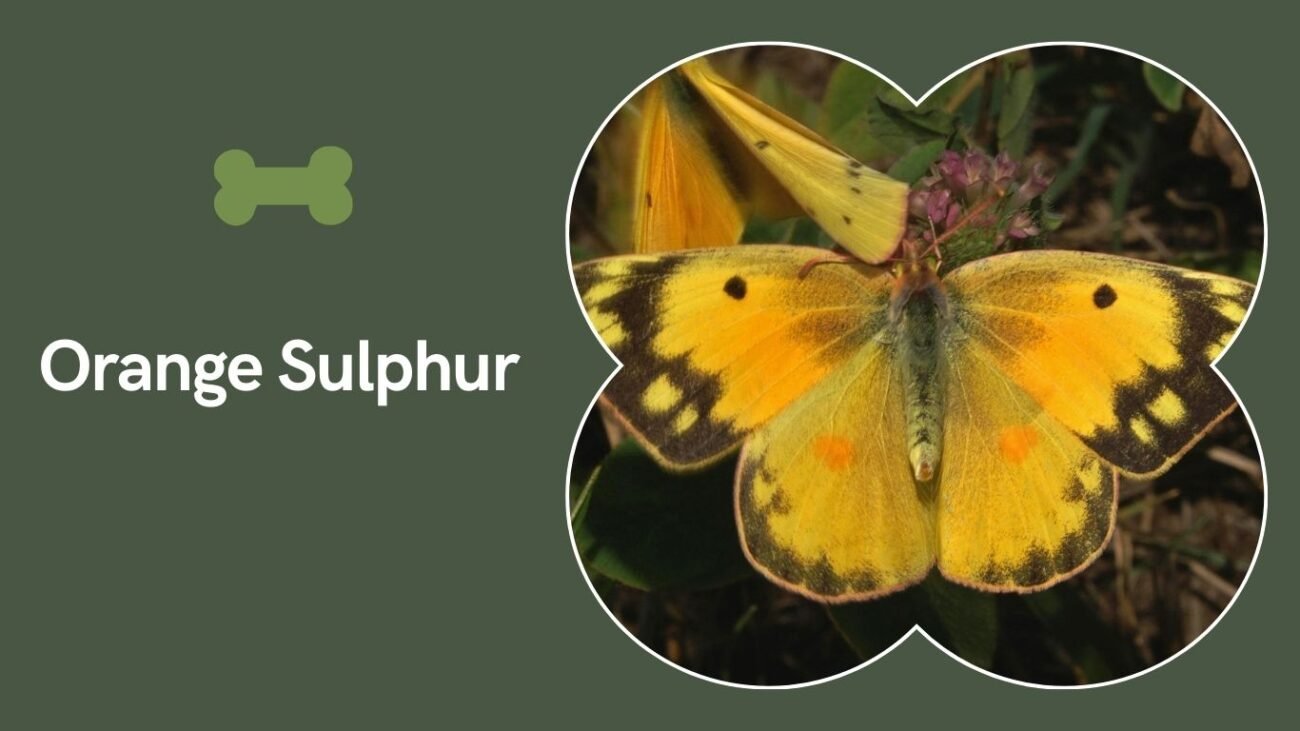
The Orange Sulphur is a close relative of the Clouded Sulphur and is widespread across North America. It is easily recognized by the warm orange wash on its wings and is commonly seen in fields, gardens, and roadsides.
Identification
- Medium-sized butterfly with a wingspan of 32–54 mm
- Upperside of wings orange-yellow with broad black borders
- Males usually lack forewing spots; females often have one or two black spots
- Hindwings show a small dark spot; underside yellow to orange with a silvery spot on each hindwing
- Seasonal variation: summer forms are more vividly orange, winter forms appear paler
Habitat
Orange Sulphurs inhabit open sunny areas including meadows, fields, gardens, prairies, and roadsides. They thrive in agricultural regions, especially where legumes are grown.
Behavior
These butterflies fly close to the ground with a rapid, darting flight. Males patrol fields in search of females. They are frequently observed mud-puddling in groups and may also swarm in flower patches.
Diet
Adults feed on nectar from clover, alfalfa, asters, goldenrods, and milkweeds. Caterpillars feed mainly on legumes, particularly alfalfa (Medicago sativa) and clover (Trifolium species).
Lifecycle
The Orange Sulphur produces several broods each year, extending into late fall. Eggs are laid singly on host plants. Caterpillars are green with faint white or yellow stripes, blending into foliage. Pupation occurs in a slender green chrysalis, which may overwinter in colder regions.
13. Brimstone (Gonepteryx rhamni)

The Brimstone is a well-known butterfly in Europe and parts of Asia, often considered the inspiration for the word “butterfly” due to the male’s bright yellow wings. It is a hardy species, capable of surviving cold winters through hibernation.
Identification
- Large butterfly with a wingspan of 60–74 mm
- Males bright lemon-yellow; females pale greenish-white
- Wings leaf-shaped with strong venation and pointed tips
- Underside pale green, providing excellent camouflage when at rest
- Distinctive compared to other sulphurs due to its size and unique shape
Habitat
Brimstones favor woodlands, scrub, hedgerows, and gardens. They are often found in areas where their larval host plants, buckthorns (Rhamnus species), are abundant.
Behavior
They are strong fliers and often among the first butterflies to be seen in spring, as adults hibernate through winter. Males actively patrol hedgerows and woodland edges in search of females. When resting, they fold wings tightly to resemble leaves.
Diet
Adults feed on nectar from a wide range of flowers, including primroses, bluebells, thistles, and knapweeds. Caterpillars feed mainly on buckthorn (Rhamnus cathartica) and alder buckthorn (Frangula alnus).
Lifecycle
The Brimstone has one brood per year. Eggs are laid singly on host plant leaves. Caterpillars are green with faint stripes, camouflaging well against buckthorn foliage. Pupation occurs as a greenish chrysalis attached to stems. Adults emerge in late summer and hibernate through the winter, reappearing in spring.
14. Sleepy Orange (Eurema nicippe)
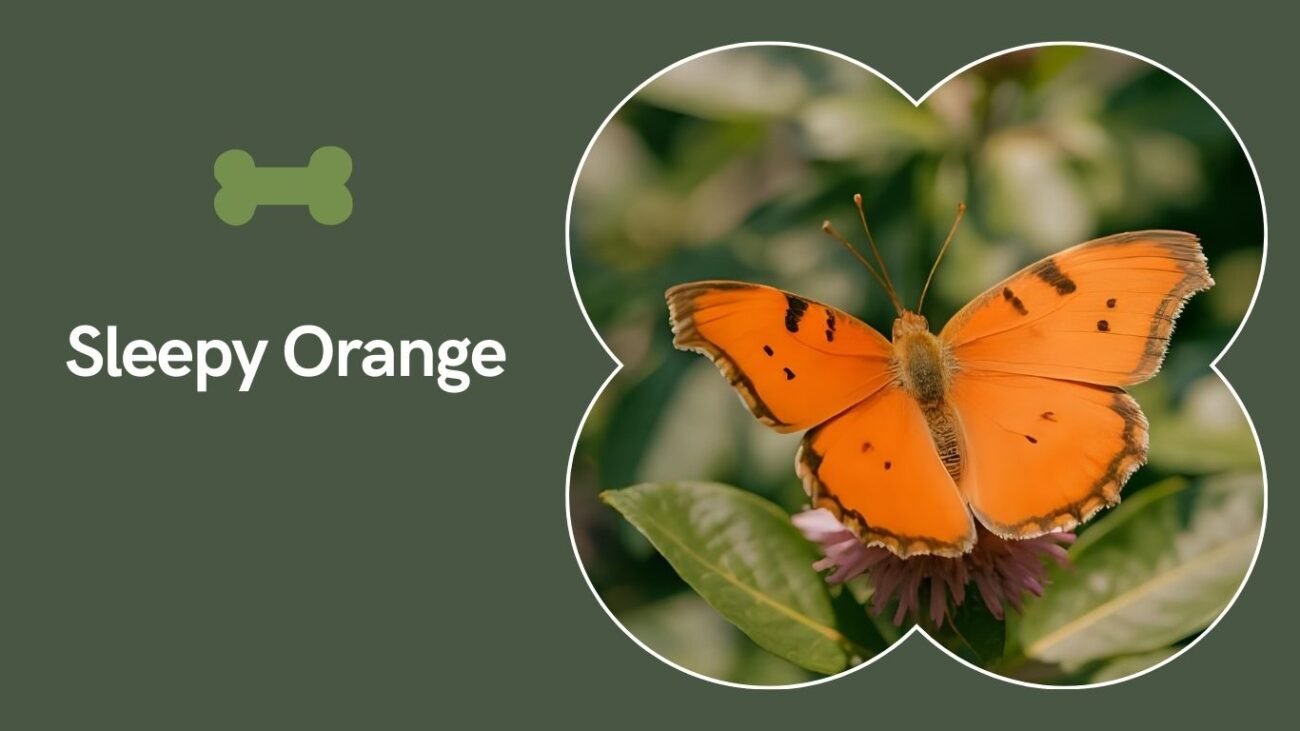
The Sleepy Orange is a small but vibrant sulphur butterfly found throughout North America. Its name comes from the sleepy-looking black marking near the forewing, which resembles a closed eye.
Identification
- Small butterfly with a wingspan of 32–44 mm
- Upperside bright orange with wide black borders
- Underside varies seasonally: summer forms are yellow-orange, winter forms are mottled with brown and gray for camouflage
- Hindwings often have a faint eyespot and subtle darker markings
- Easily confused with other Eurema species but distinguished by its “sleepy eye” marking
Habitat
Sleepy Oranges inhabit open, sunny areas such as roadsides, fields, pastures, gardens, and woodland edges. They are especially common where host plants like senna are present.
Behavior
They are fast-flying and active butterflies, often seen darting low over fields and nectar patches. Males patrol sunny areas for females. They frequently perch with wings closed, blending into vegetation.
Diet
Adults feed on nectar from flowers such as asters, goldenrods, shepherd’s needle, and clovers. Caterpillars feed on legumes, particularly senna (Senna species) and partridge pea (Chamaecrista fasciculata).
Lifecycle
Sleepy Oranges have multiple broods each year in warmer regions. Eggs are laid singly on host plants. Caterpillars are green with fine yellow stripes, camouflaging with leaves. Pupation occurs in a green chrysalis. In colder climates, adults may migrate southward or overwinter in sheltered areas.
15. Little Yellow (Eurema lisa)
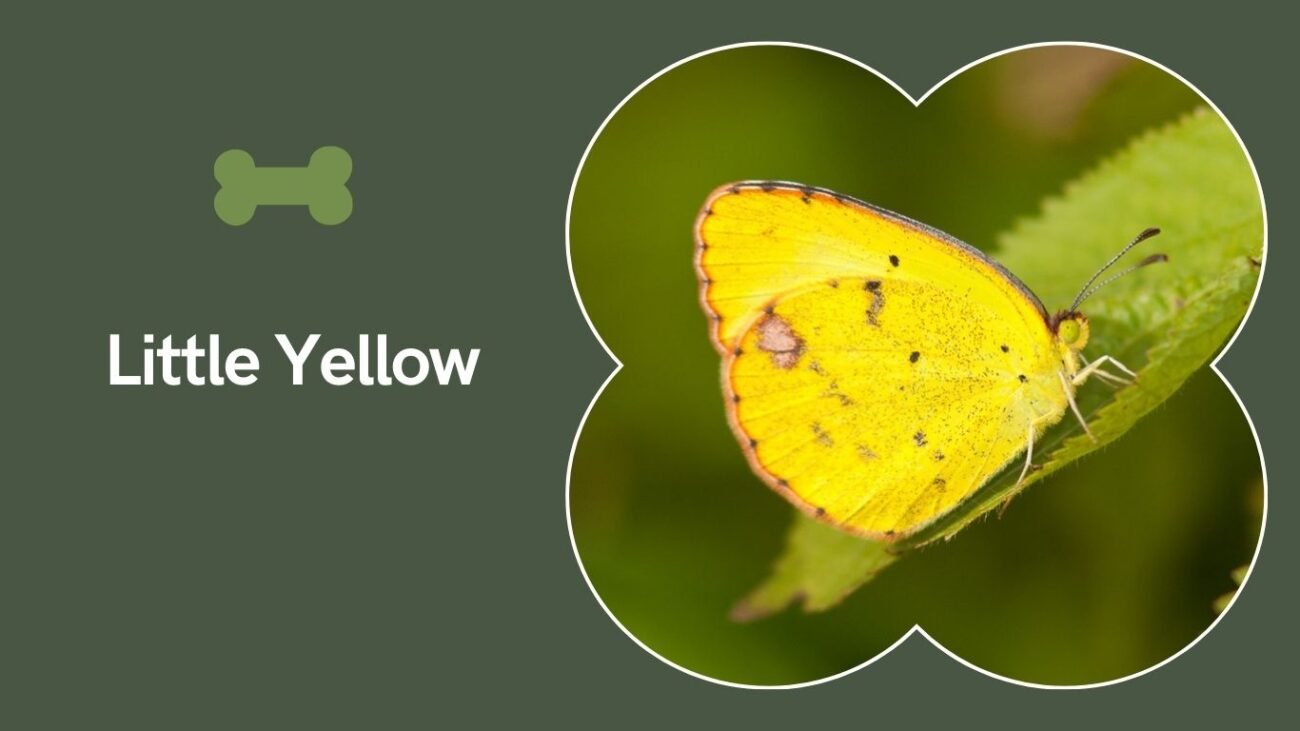
The Little Yellow is a widespread butterfly in North and Central America, easily recognized by its bright yellow wings and small size. Despite its delicate appearance, it is a hardy species that thrives in open sunny habitats.
Identification
- Small butterfly with a wingspan of 25–38 mm
- Upperside bright lemon-yellow with narrow black borders on the forewings
- Hindwings rounded with minimal markings
- Underside pale yellow with faint brown spots, aiding camouflage
- Distinguished from the Sleepy Orange by its smaller size and lack of strong orange tones
Habitat
Little Yellows prefer open fields, roadsides, pastures, gardens, and meadows. They are abundant in sunny, disturbed areas where legumes grow.
Behavior
These butterflies fly close to the ground in a quick, erratic manner. Males patrol sunny meadows and roadsides, while females stay closer to host plants for egg-laying. They often nectar in groups when flowers are abundant.
Diet
Adults feed on nectar from clovers, asters, shepherd’s needle, and other small wildflowers. Caterpillars feed on legumes, especially partridge pea (Chamaecrista fasciculata) and senna (Senna species).
Lifecycle
The Little Yellow has several broods per year, especially in warmer climates. Eggs are laid singly on host plant leaves. Caterpillars are green with yellowish stripes, blending with foliage. Pupation occurs in a small green chrysalis. In temperate regions, they may overwinter in the pupal stage.
16. Tailed Orange (Eurema proterpia)
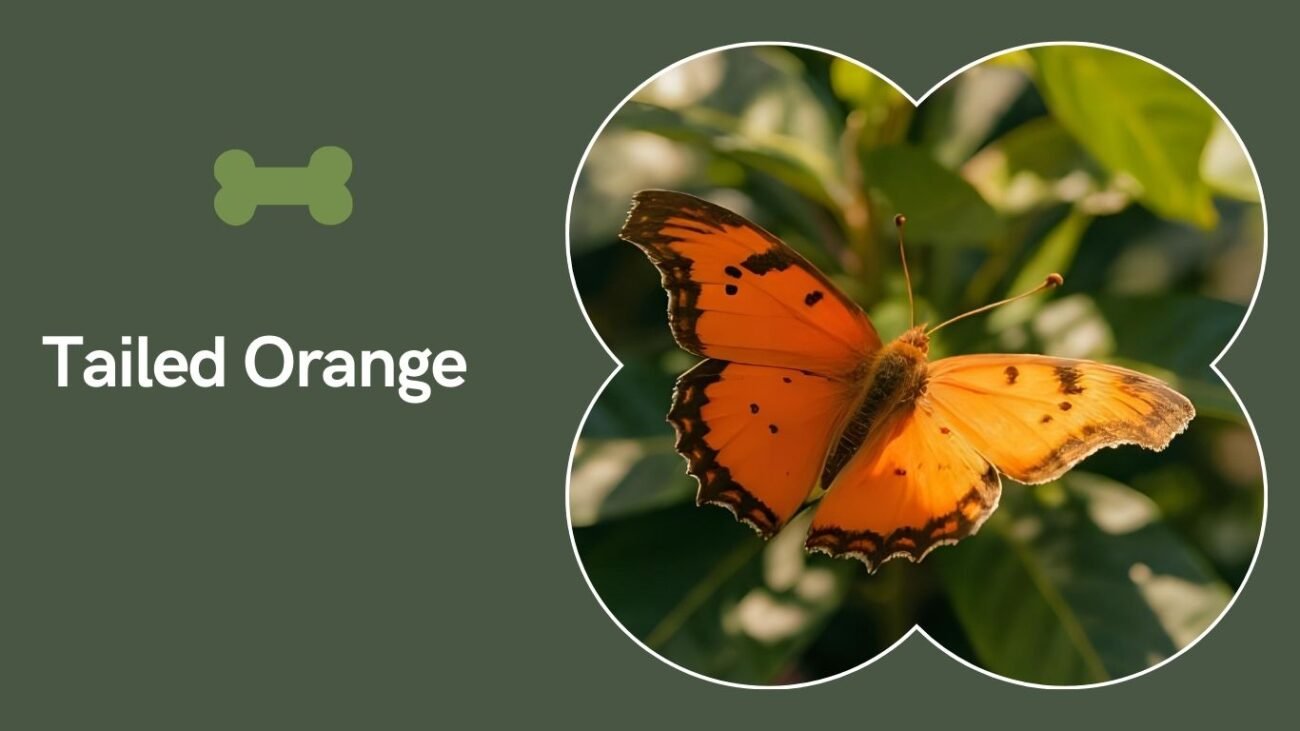
The Tailed Orange is a distinctive sulphur butterfly found across the southern United States, Central America, and into South America. It is named for the small tail-like extension on its hindwings, which sets it apart from many other sulphurs.
Identification
- Small to medium-sized butterfly with a wingspan of 32–57 mm
- Upperside orange to reddish-orange with broad black borders
- Hindwings with short, pointed tails (unique among Eurema species)
- Females vary from yellow-orange to whitish with dark markings
- Underside seasonally variable: summer form is yellowish-orange, winter form is heavily mottled with brown for camouflage
Habitat
Tailed Oranges inhabit open areas such as fields, scrub, roadsides, deserts, and tropical clearings. They prefer warm climates and are especially common in dry, sunny regions.
Behavior
They are active and fast-flying butterflies, often low to the ground. Males patrol open spaces for females, while females are seen fluttering slowly around host plants. They often rest with wings closed, showing their cryptic undersides.
Diet
Adults feed on nectar from a wide variety of flowers, including asters, lantana, and shepherd’s needle. Caterpillars feed mainly on legumes, especially cassia and senna (Senna species).
Lifecycle
Tailed Oranges produce multiple broods per year in warmer regions. Eggs are laid singly on host plant leaves or buds. Caterpillars are green with subtle yellow lines, blending well with foliage. Pupation occurs in a green chrysalis that may overwinter in cooler regions.
17. Great Southern White (Ascia monuste)
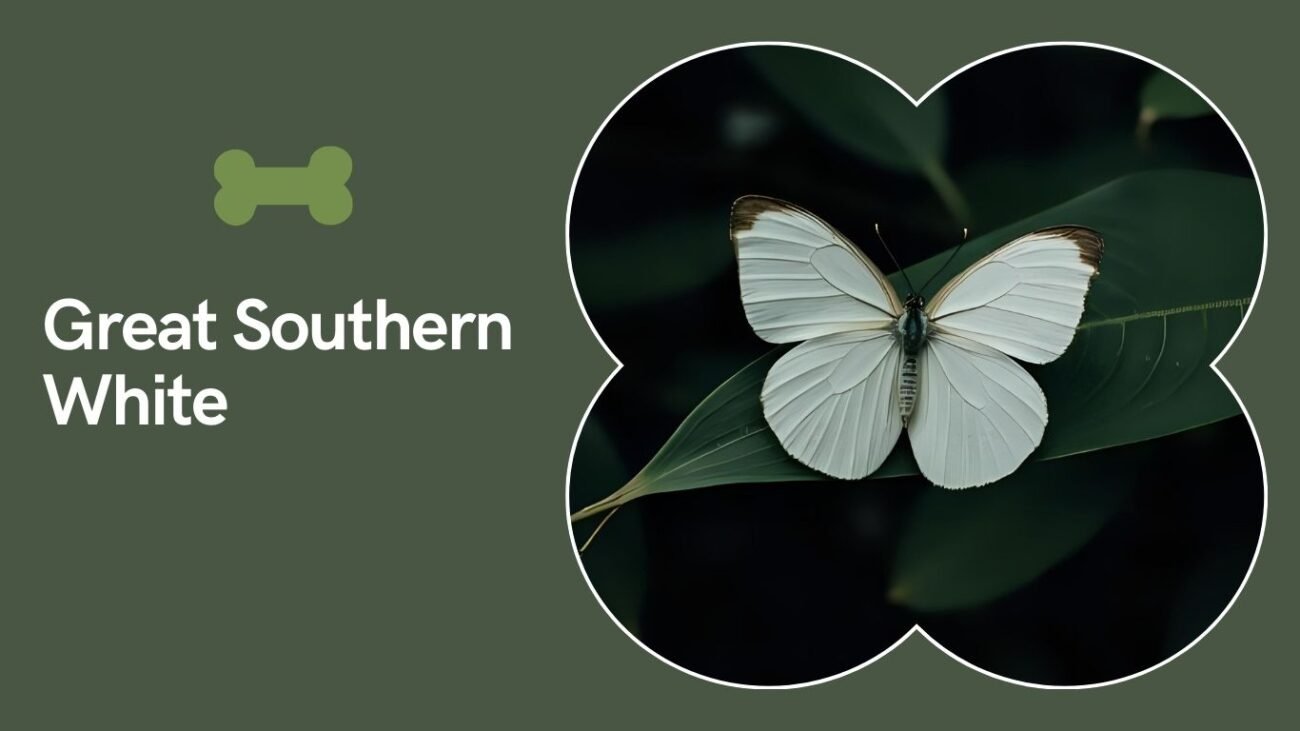
The Great Southern White is a large and elegant butterfly native to the southern United States, Central America, and South America. It is particularly noted for its bluish-green antenna tips, which help distinguish it from other white butterflies.
Identification
- Large butterfly with a wingspan of 53–77 mm
- Upperside of wings white with black wingtips; females often show additional gray to black scaling
- Underside varies from white to yellowish with faint gray streaks
- Antennae tipped with a unique bluish-green color, a key identifying feature
- Sexual dimorphism: females darker and more patterned than males
Habitat
The Great Southern White thrives in coastal dunes, salt marshes, gardens, roadsides, and open fields. It is especially abundant in subtropical and tropical regions.
Behavior
These butterflies are strong and graceful fliers. Males actively patrol open sunny areas to locate females, while females remain closer to host plants. In coastal areas, they may be seen in large numbers during seasonal movements.
Diet
Adults nectar on lantana, bougainvillea, saltwort, and shepherd’s needle. Caterpillars feed on cruciferous plants (Brassicaceae), especially saltwort (Batis maritima) and pepperweed (Lepidium species).
Lifecycle
The Great Southern White produces several broods annually in warm climates. Eggs are laid in clusters on host plant leaves. Caterpillars are greenish with fine stripes and often feed in groups when young. Pupation occurs in a slender green or brown chrysalis. Adults may be present year-round in subtropical regions.
18. Painted Jezebel (Delias hyparete)
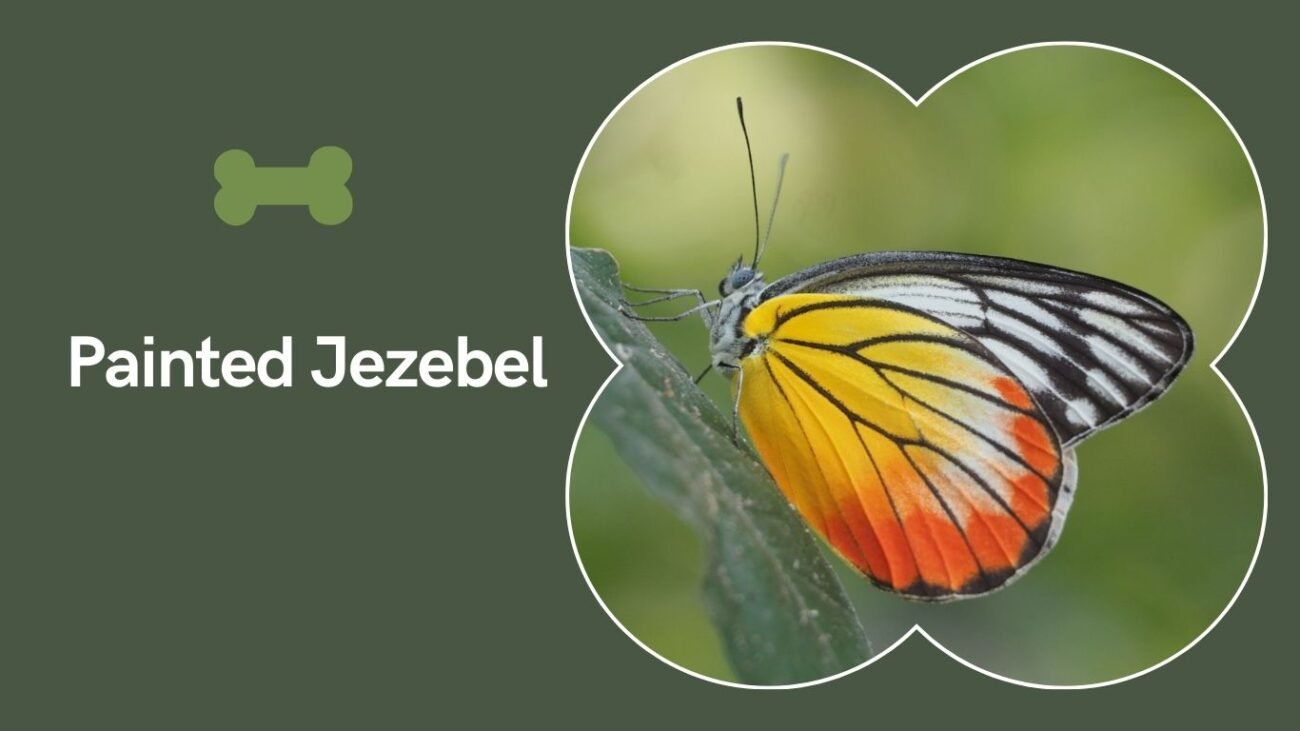
The Painted Jezebel is a brilliantly colored butterfly widespread in South and Southeast Asia. Known for its striking combination of white, yellow, red, and black, it is one of the most eye-catching members of the Pieridae family.
Identification
- Medium-sized butterfly with a wingspan of 60–80 mm
- Upperside of wings white with black borders and veins
- Underside bright yellow with contrasting black veins and vivid red patches on hindwings
- Females are generally duller with wider black borders than males
- Easily distinguished from other Pierids by its bold red-and-yellow hindwings
Habitat
Painted Jezebels are common in gardens, parks, forests, and open countryside. They are often seen in lowland areas but also occur in hilly regions up to moderate elevations.
Behavior
These butterflies have a slow, floating flight and are frequently observed feeding at flowering trees and shrubs. They are often seen flying high in the canopy but will descend to nectar at lower flowers. Males patrol for females in sunny areas, while females concentrate on host plants for egg-laying.
Diet
Adults feed on nectar from flowering trees such as lantana, ixora, and mistletoe-associated plants. Caterpillars feed primarily on mistletoe (Loranthaceae family), which serves as their main larval host plant.
Lifecycle
The Painted Jezebel produces several broods throughout the year in tropical climates. Eggs are laid in clusters on mistletoe leaves. Caterpillars are dark with stripes and feed gregariously when young. Pupation occurs in a slender chrysalis attached to stems or leaves. In many regions, adults are present year-round.