Robber flies (family Asilidae) are fierce aerial predators found worldwide. With their sharp vision, spiny legs, and piercing mouthparts, they play a crucial role in controlling insect populations. This guide highlights 20 fascinating species, providing key details on their identification, habitat, hunting behavior, and life cycle. From bee-mimicking Laphria to powerful Promachus, each species showcases unique adaptations that make robber flies remarkable hunters of the insect world.
1. Promachus rufipes (Red-footed Cannibalfly)

The Red-footed Cannibalfly (Promachus rufipes) is one of the largest and most recognizable robber flies found in North America. Known for its aggressive predatory behavior, it plays an important role in regulating insect populations.
Identification
- Large, robust body ranging from 18–28 mm in length
- Distinct reddish-orange legs (hence the name “red-footed”)
- Grayish thorax with bristly hairs
- Dark, elongated abdomen with a tapering end
- Strong, spiny legs adapted for grasping prey
- Large compound eyes providing excellent vision
Habitat
Promachus rufipes inhabits open, sunny environments such as grasslands, meadows, forest edges, and agricultural fields. They are often seen perching on tall grasses or fence posts, scanning for prey.
Behavior
These robber flies are ambush predators. They capture other insects mid-flight, using their strong legs to immobilize them before injecting neurotoxic saliva that paralyzes and digests the prey. Their diet includes grasshoppers, bees, wasps, and other flies.
Lifecycle
The lifecycle begins when eggs are laid in soil or plant matter. Larvae develop underground, feeding on soil-dwelling insects and organic matter for 1–3 years. Pupation occurs in the soil, and adults emerge during summer months. Adults live for several weeks, focusing mainly on hunting and reproduction.
2. Promachus vertebratus

Promachus vertebratus is another large species of robber fly belonging to the genus Promachus. It is closely related to Promachus rufipes and is known for its powerful hunting abilities and preference for open habitats.
Identification
- Body length usually 20–25 mm
- Grayish to brown thorax with dense bristles
- Abdomen marked with dark and light bands along its length
- Strong, spiny legs for grasping prey
- Large compound eyes with excellent vision
- Wings transparent to smoky, often with darker veins
Habitat
This species thrives in open areas such as grasslands, fields, and forest edges. They are frequently observed resting on tall vegetation or open perches where they can easily spot flying insects.
Behavior
Like other robber flies, Promachus vertebratus is an aerial predator. It launches from a perch to capture prey in mid-air, using its legs to subdue them. Its prey includes grasshoppers, bees, beetles, and other flies. After injecting digestive enzymes, it consumes the liquefied insides of its prey.
Lifecycle
Eggs are deposited in soil or rotting vegetation. Larvae develop underground, feeding on small insects and organic debris. The larval stage can last up to two years, followed by pupation in the soil. Adults emerge in summer and are most active during warm, sunny days.
3. Promachus yesonicus

Promachus yesonicus is a striking species of robber fly native to East Asia, particularly Japan. It is admired for its size and distinctive appearance, making it one of the more recognizable members of the Promachus genus in its range.
Identification
- Large body, measuring about 22–30 mm in length
- Grayish thorax with dense bristles
- Abdomen with alternating dark and pale bands
- Legs often with reddish or orange hues
- Strong, spiny legs designed for seizing prey
- Transparent wings with visible dark veins
Habitat
This species prefers open landscapes such as meadows, riverbanks, forest clearings, and grasslands. They are often found perched on tall grasses or shrubs where they have a good vantage point to ambush prey.
Behavior
Promachus yesonicus is an aggressive aerial hunter. It captures insects in flight, immobilizes them with its strong legs, and injects paralyzing saliva that also aids in digestion. Prey includes bees, butterflies, beetles, and other flies. They are territorial and often return to the same perch after a hunt.
Lifecycle
Eggs are laid in soil or decaying vegetation. The larvae remain hidden underground, feeding on smaller invertebrates and organic matter. Larval development can last for one to two years, followed by pupation in the soil. Adults emerge in summer, with their activity peaking during hot, sunny days.
4. Efferia aestuans
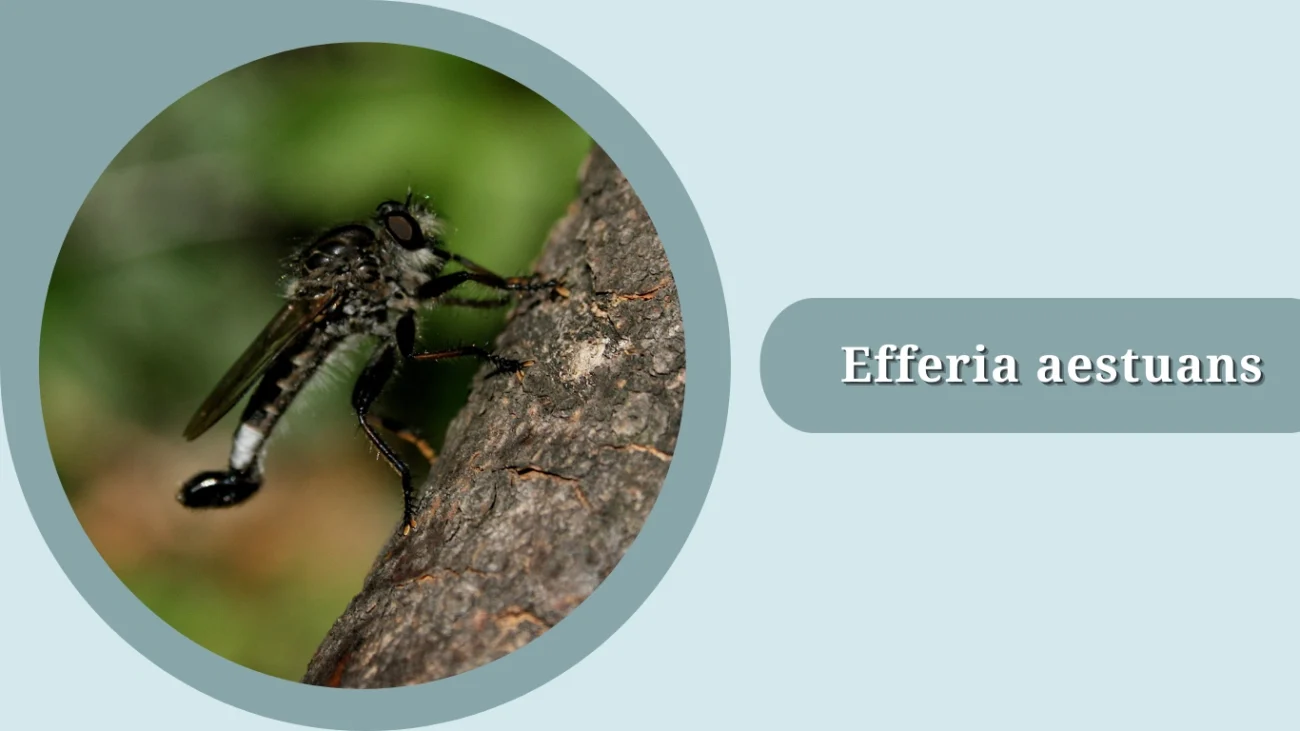
Efferia aestuans is a widespread robber fly species in North America, particularly common in the eastern United States. It is a notable member of the genus Efferia, which contains many medium to large predatory flies.
Identification
- Medium to large body, 18–25 mm in length
- Gray to brown thorax with dense bristly hairs
- Abdomen narrow with alternating light and dark banding
- Legs long and spiny, typically dark-colored
- Face covered with short, dense white or gray hairs (“mystax”)
- Wings usually clear with slightly darkened veins
Habitat
This species is typically found in open, dry, and sandy areas such as fields, meadows, dunes, and roadsides. They prefer perches on low vegetation or bare ground, where they can easily ambush prey.
Behavior
Efferia aestuans is an opportunistic predator. It launches swiftly from perches to intercept flying insects, subduing them with its spiny legs and injecting paralyzing saliva. Prey includes grasshoppers, wasps, bees, beetles, and other flies. They often feed in sunny, open areas and return to favored hunting spots.
Lifecycle
Eggs are laid in soil or sandy substrates. The larvae live underground, preying on small insects and organic material. Larval development usually takes one to two years, after which pupation occurs in the soil. Adults emerge in late spring and summer, remaining active during the warmest months.
5. Efferia albibarbis
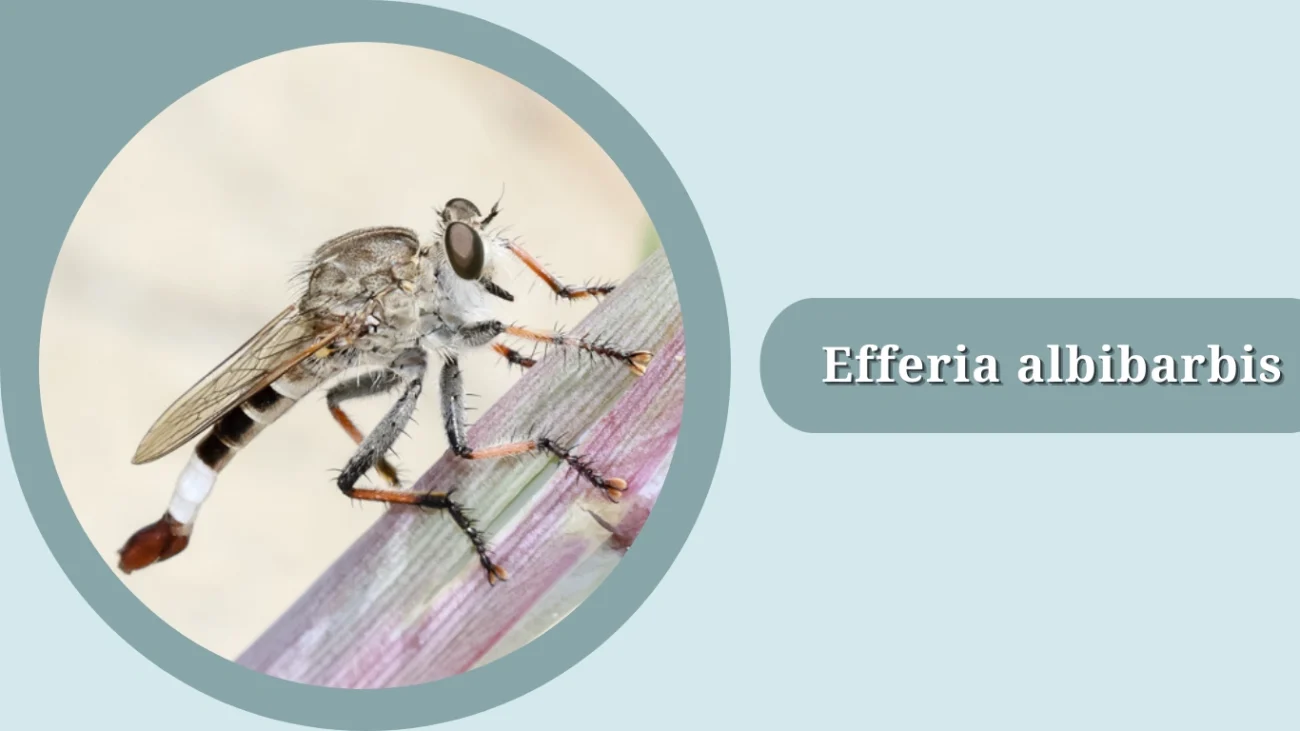
Efferia albibarbis is a medium-sized robber fly species within the diverse Efferia genus. Its name, meaning “white-bearded,” refers to the noticeable pale hairs on its face.
Identification
- Body length 15–22 mm
- Gray to brown thorax with short bristles
- Abdomen slender, with alternating dark and pale bands
- Legs dark, covered with small spines
- Distinctive pale or whitish facial hairs (mystax)
- Wings clear to slightly smoky with well-defined veins
Habitat
This species is most often found in dry, open habitats such as prairies, grasslands, sandy clearings, and fields. They favor sunny areas with scattered vegetation where they can perch and launch hunting flights.
Behavior
Efferia albibarbis is a perch-hunting predator. It waits on grasses or low shrubs for passing insects, then intercepts them in mid-air. Prey typically includes bees, wasps, beetles, flies, and grasshoppers. Like other robber flies, it injects digestive enzymes into prey before consuming them.
Lifecycle
Females lay eggs in sandy or loose soil. The larvae live underground, preying on soft-bodied invertebrates and feeding on organic material. Development may take more than one year, with pupation occurring in soil chambers. Adults appear in summer and remain active in warm, dry weather.
6. Efferia pogonias
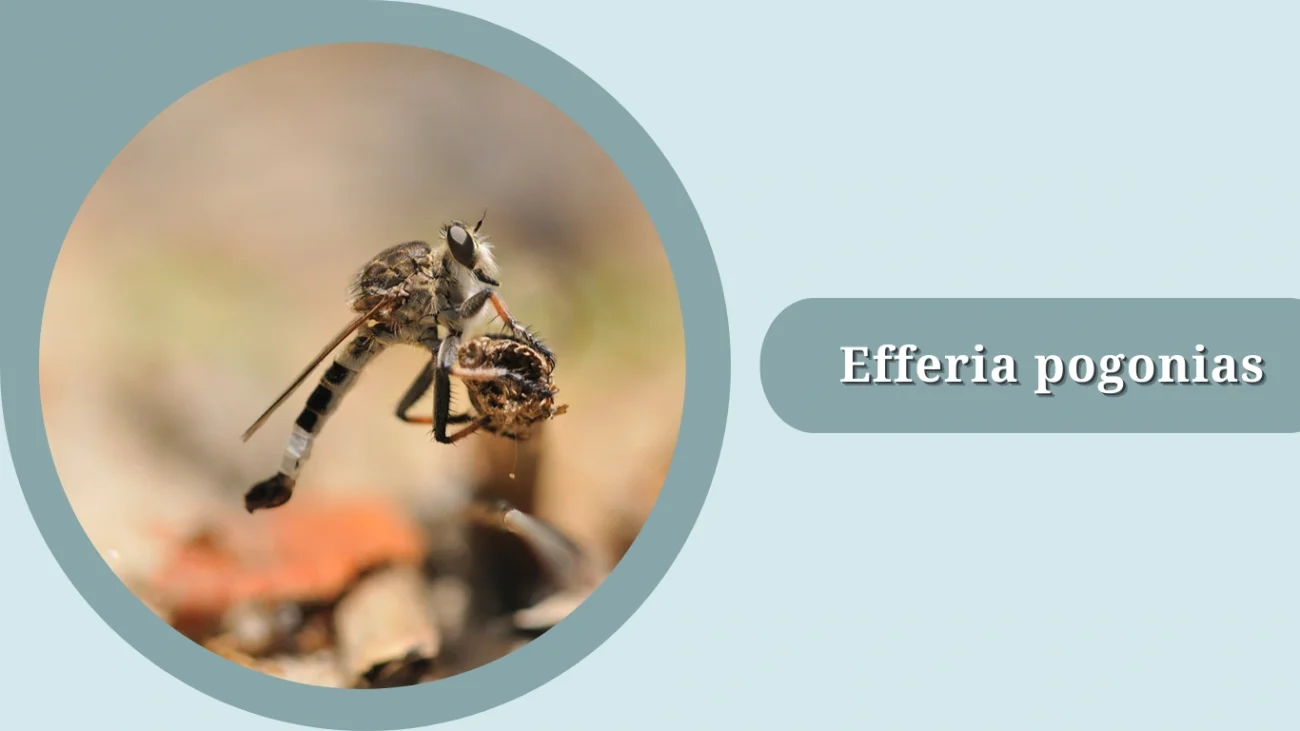
Efferia pogonias is a widespread robber fly species found across North America. It is one of the more frequently observed Efferia species, known for its predatory skills and adaptability to a variety of open habitats.
Identification
- Medium-sized body, typically 16–24 mm long
- Grayish thorax with short, dense bristles
- Abdomen elongated with alternating pale and dark segments
- Legs dark, slender, and spiny for grasping prey
- Face with a distinct mystax (bristle-like hairs), usually whitish to yellowish
- Wings clear or slightly smoky, with strong venation
Habitat
Efferia pogonias thrives in open, sunny habitats including grasslands, fields, forest edges, and sandy clearings. They are often observed perching on low vegetation, fence posts, or rocks, waiting to ambush prey.
Behavior
This species is an aggressive aerial hunter. It launches quickly to capture prey mid-flight, using its spiny legs to immobilize them. Prey includes a wide range of insects such as bees, wasps, grasshoppers, and beetles. Like other robber flies, it injects paralyzing saliva that liquefies the insides of its prey for consumption.
Lifecycle
Eggs are deposited in soil or rotting vegetation. Larvae live underground, feeding on small invertebrates and decomposing material. Development can last one to two years. Pupation occurs in soil chambers, with adults emerging in summer, when they are most active in warm, sunny conditions.
7. Laphria thoracica
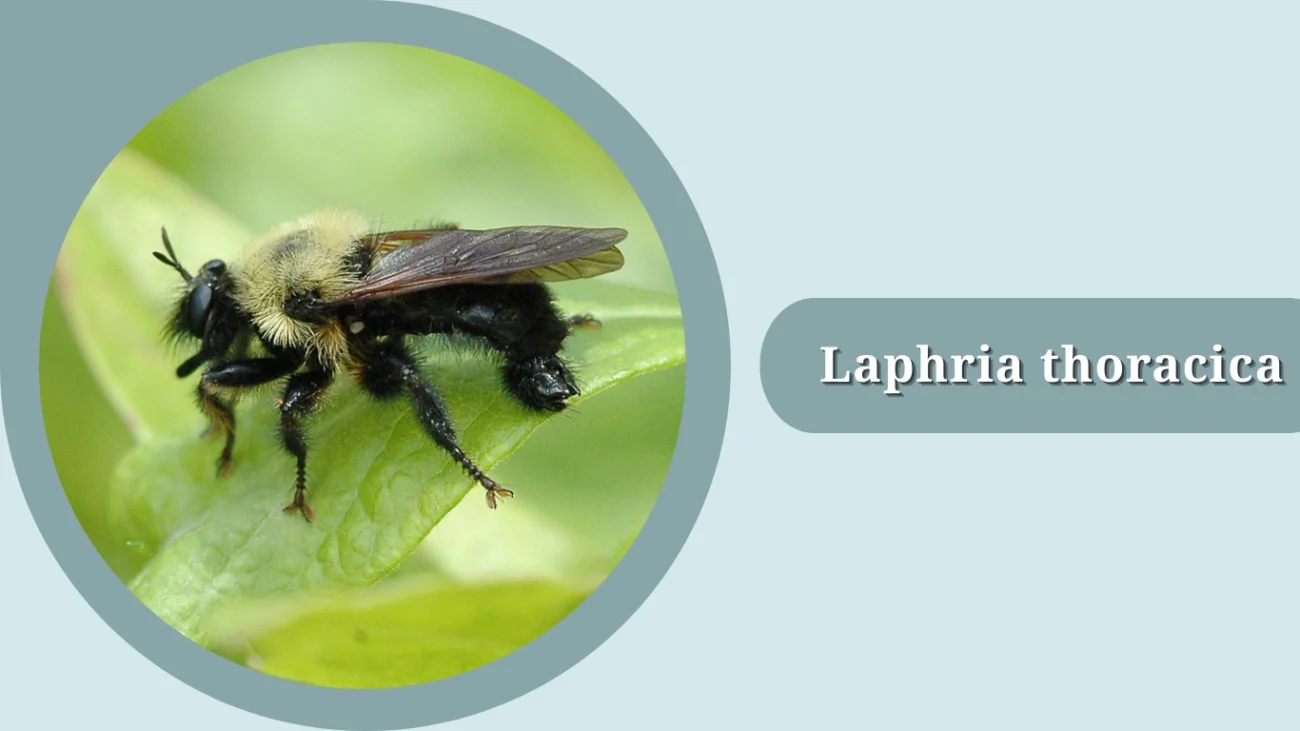
Laphria thoracica is a striking robber fly species belonging to the genus Laphria, often referred to as “bee-mimic robber flies.” Its appearance resembles that of bumblebees, offering it protection from potential predators.
Identification
- Body length around 15–20 mm
- Thorax covered with dense yellow to orange hairs, giving a bee-like look
- Abdomen dark, slender, and shiny with sparse hairs
- Legs black with spines for gripping prey
- Large compound eyes with excellent vision
- Wings transparent, sometimes slightly smoky
Habitat
This species is usually found in woodland edges, clearings, and meadows near forests. They favor sunny spots where they can perch on logs, leaves, or low vegetation to ambush prey.
Behavior
Laphria thoracica is an aggressive predator despite its bee-like disguise. It hunts by perching and swiftly intercepting flying insects, often targeting bees, wasps, beetles, and flies. Its strong legs and paralyzing saliva allow it to immobilize prey efficiently. The bee mimicry helps it approach prey unnoticed and deters larger predators.
Lifecycle
Eggs are laid in rotting wood or decaying organic material. The larvae develop inside, feeding on beetle larvae and other wood-dwelling insects. Larval development can span one to two years before pupation occurs. Adults emerge in summer and are typically active during warm, sunny days.
8. Laphria grossa
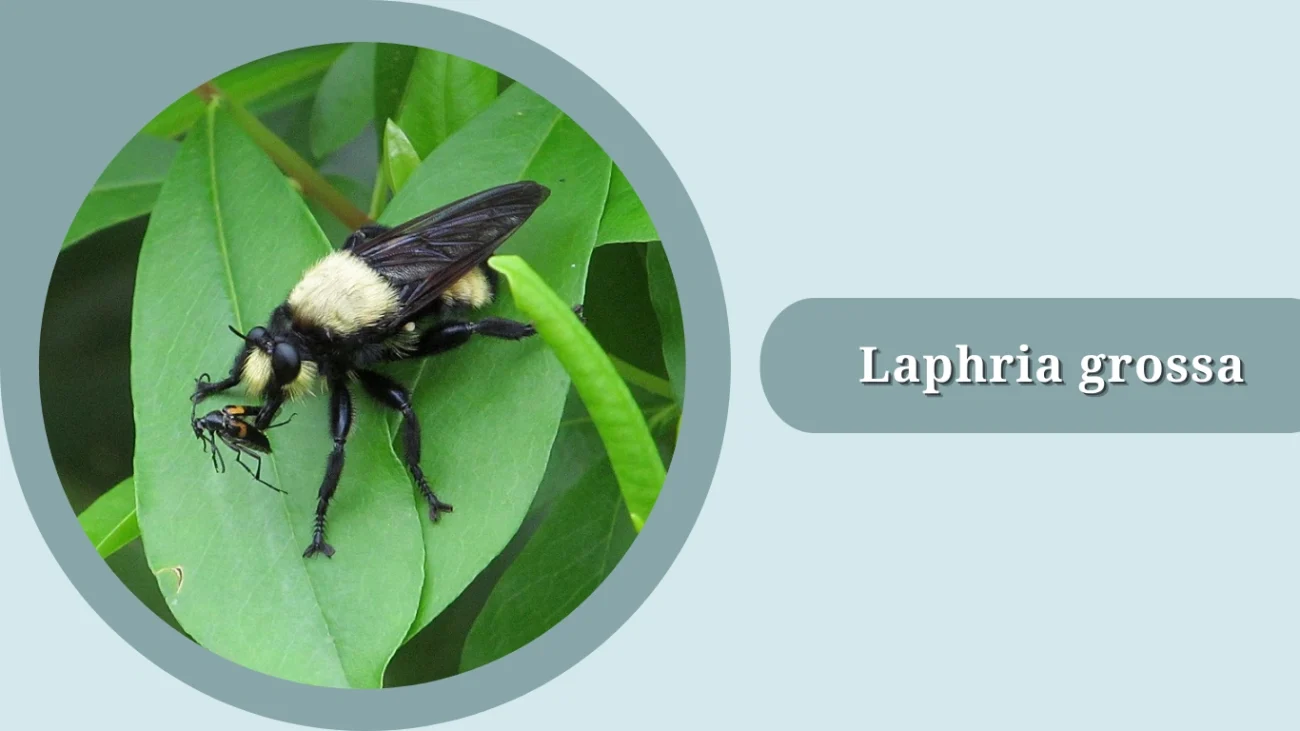
Laphria grossa is one of the largest bee-mimicking robber flies in the genus Laphria. Its bold coloration and size make it an impressive insect often mistaken for a bumblebee.
Identification
- Large body size, 18–25 mm in length
- Thorax densely covered with golden-yellow hairs resembling a bumblebee
- Abdomen dark, shiny, and slender with sparse bristles
- Legs black, strong, and spiny for gripping prey
- Large compound eyes suited for detecting movement
- Clear wings with dark venation
Habitat
This species is commonly found in forest edges, clearings, meadows, and near decaying wood. They often perch on logs, stumps, or vegetation in sunny areas where prey is abundant.
Behavior
Laphria grossa hunts by ambush, launching from perches to seize flying insects mid-air. Its diet consists of beetles, bees, wasps, butterflies, and other flies. The bumblebee mimicry not only deters predators but also allows it to approach prey with less suspicion.
Lifecycle
Eggs are usually laid in rotting wood, where the larvae feed on beetle grubs and other insects living in decayed timber. The larval stage may last up to two years, after which pupation occurs within the wood. Adults emerge in summer, actively hunting during warm and sunny conditions.
9. Laphria flavicollis
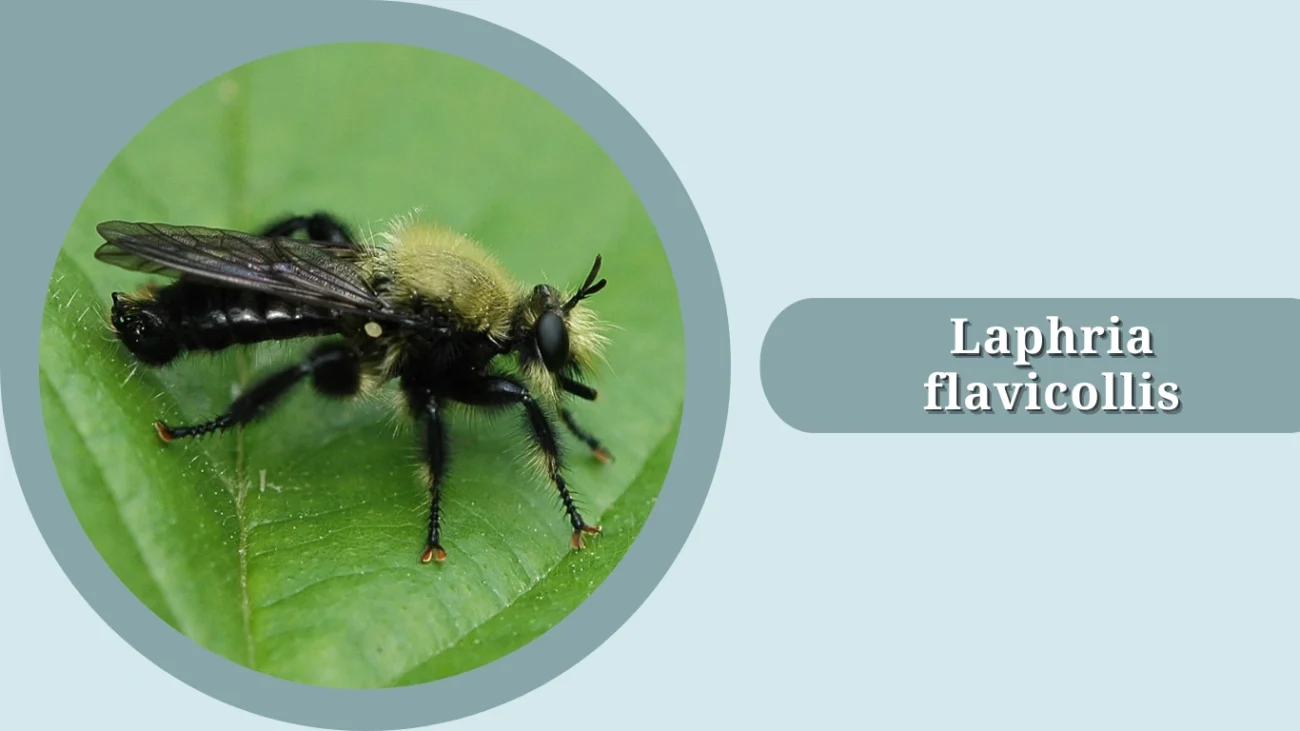
Laphria flavicollis is a bee-mimicking robber fly that belongs to the Laphria genus. Its dense body hairs and coloration allow it to resemble bumblebees, which helps in both protection and hunting.
Identification
- Body length around 15–20 mm
- Thorax densely covered in bright yellow hairs
- Abdomen shiny black, elongated, and slender
- Legs black, spiny, and adapted for seizing prey
- Large compound eyes, positioned for detecting fast movement
- Clear wings with darker veins
Habitat
This species inhabits forest edges, meadows, and open woodlands. They often perch on logs, stumps, or low vegetation in sunny areas where insect activity is high.
Behavior
Laphria flavicollis hunts by ambush. It perches and swiftly intercepts prey in mid-air, commonly targeting bees, beetles, and other flying insects. Its bee-like mimicry deters predators and allows it to blend seamlessly into environments where real bees are active.
Lifecycle
Eggs are deposited in decaying wood or rotting plant material. The larvae develop inside, feeding on beetle larvae and other insects found within decomposing wood. This stage can last for one or more years. Pupation occurs within the wood, and adults emerge during the summer months to hunt and reproduce.
10. Laphria canis
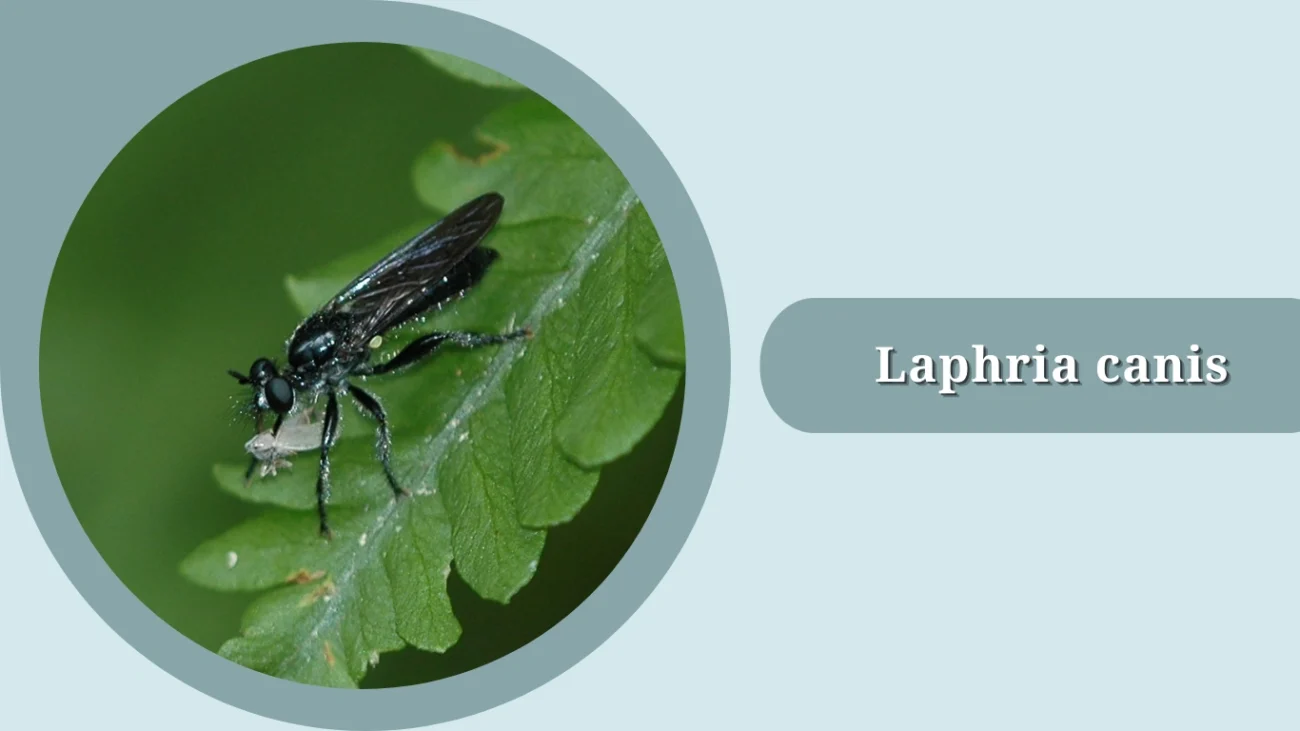
Laphria canis is another striking member of the Laphria genus, well-known for its mimicry of bumblebees. Its robust build and hairy thorax give it a deceptive appearance that provides protection from predators while enhancing its hunting strategy.
Identification
- Medium to large body size, typically 15–22 mm
- Thorax covered with dense yellow to golden hairs
- Abdomen dark, elongated, and shiny with fine bristles
- Legs black and spiny, strong for grasping prey
- Large compound eyes with a wide field of vision
- Wings clear or slightly smoky, with dark veins
Habitat
Laphria canis inhabits forest edges, open woodlands, and meadows. They prefer perches such as logs, stumps, or low vegetation in sunny areas, where flying insects are abundant.
Behavior
This species is a skilled ambush predator. It perches patiently until prey passes nearby, then launches into swift aerial attacks. Prey includes bees, wasps, beetles, and other flies. Its bumblebee mimicry deters predators and helps it move unnoticed among real bees.
Lifecycle
Eggs are laid in decaying wood or rotting plant matter. The larvae develop inside, preying on beetle larvae and other small wood-dwelling insects. Development may take more than a year, after which pupation occurs in the same habitat. Adults emerge in summer and are active hunters during warm daylight hours.
11. Laphria gilva

Laphria gilva is a bee-mimicking robber fly recognized for its dense golden-yellow hairs and strong resemblance to bumblebees. Like other Laphria species, it combines deceptive appearance with powerful predatory skills.
Identification
- Body length about 14–20 mm
- Thorax covered in thick golden-yellow hairs
- Abdomen dark, shiny, and somewhat tapered
- Legs black, strong, and equipped with spines for gripping prey
- Large compound eyes for detecting movement
- Clear wings, sometimes with a faint smoky tint
Habitat
This species is usually found in woodland edges, meadows, and near decaying logs or stumps. It favors sunny perches where prey insects are abundant.
Behavior
Laphria gilva hunts by ambush, waiting on logs, leaves, or low vegetation before darting out to capture prey in mid-flight. Its prey typically includes beetles, bees, wasps, and flies. Mimicry of bumblebees not only protects it from predators but also allows it to blend into areas where bees are active.
Lifecycle
Eggs are laid in rotting wood or decayed plant material. The larvae develop inside, feeding on beetle larvae and other insects associated with decomposing wood. The larval stage can last one to two years, after which pupation occurs in the same substrate. Adults emerge in summer, active mainly during hot, sunny days.
12. Dioctria hyalipennis
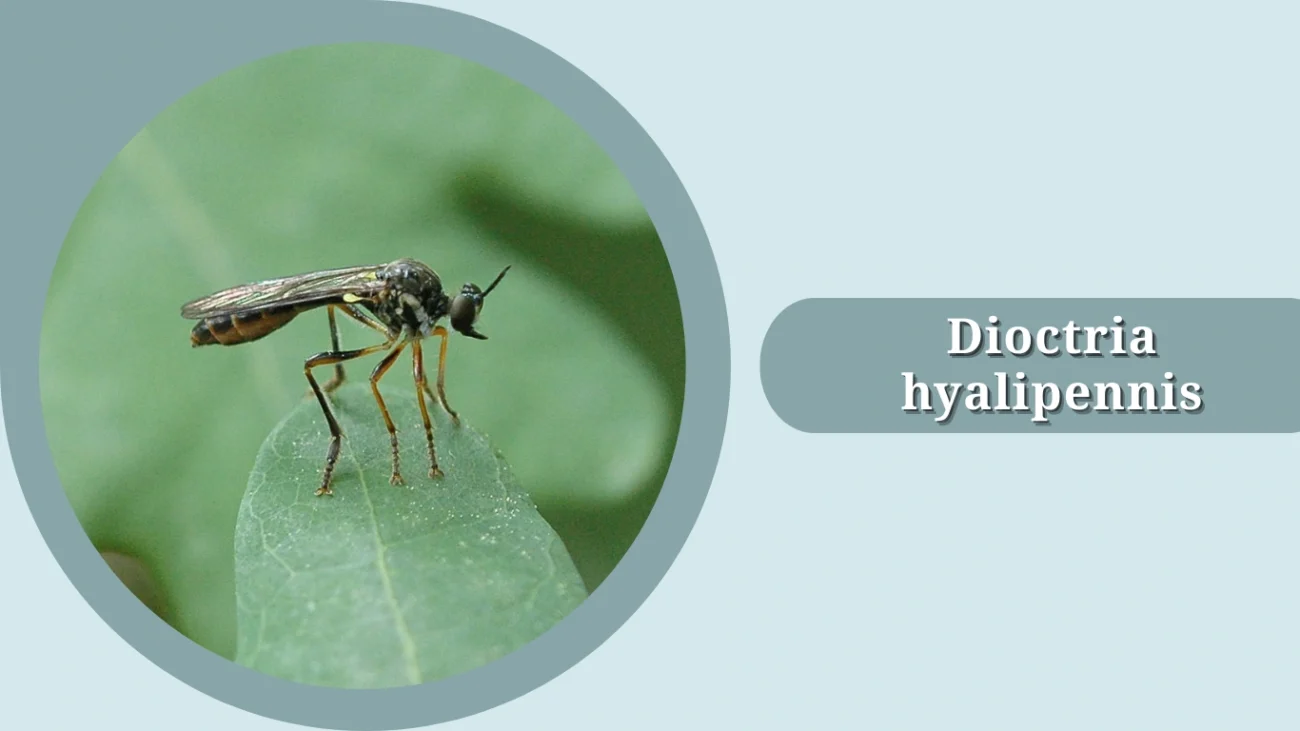
Dioctria hyalipennis is a slender and elegant robber fly from the genus Dioctria, often called “needle flies” due to their slim build. Unlike the bulky Laphria species, they are more delicate and usually perch on grasses while hunting.
Identification
- Small to medium body size, about 8–12 mm
- Slender, elongated black body
- Abdomen narrow, tapering toward the end
- Legs partly reddish-orange with dark tips and spines
- Distinct mystax (facial bristles), though less dense than larger species
- Wings clear (hyaline), with fine venation
Habitat
This species prefers grassy meadows, hedgerows, forest edges, and sunny open fields. They perch on tall grasses and shrubs where they have good visibility to spot prey.
Behavior
Dioctria hyalipennis is an active aerial hunter. It often hovers briefly before striking smaller insects such as flies, wasps, and beetles. Compared to larger robber flies, it targets smaller prey but employs the same method: seizing in flight, injecting paralyzing saliva, and feeding on liquefied tissues.
Lifecycle
Eggs are laid in soil or plant debris. The larvae develop underground, feeding on tiny soil-dwelling invertebrates and organic matter. They overwinter as larvae or pupae before emerging as adults in late spring to early summer. Adults remain active throughout the warmer months, with peak activity during sunny days.
13. Dioctria atricapilla
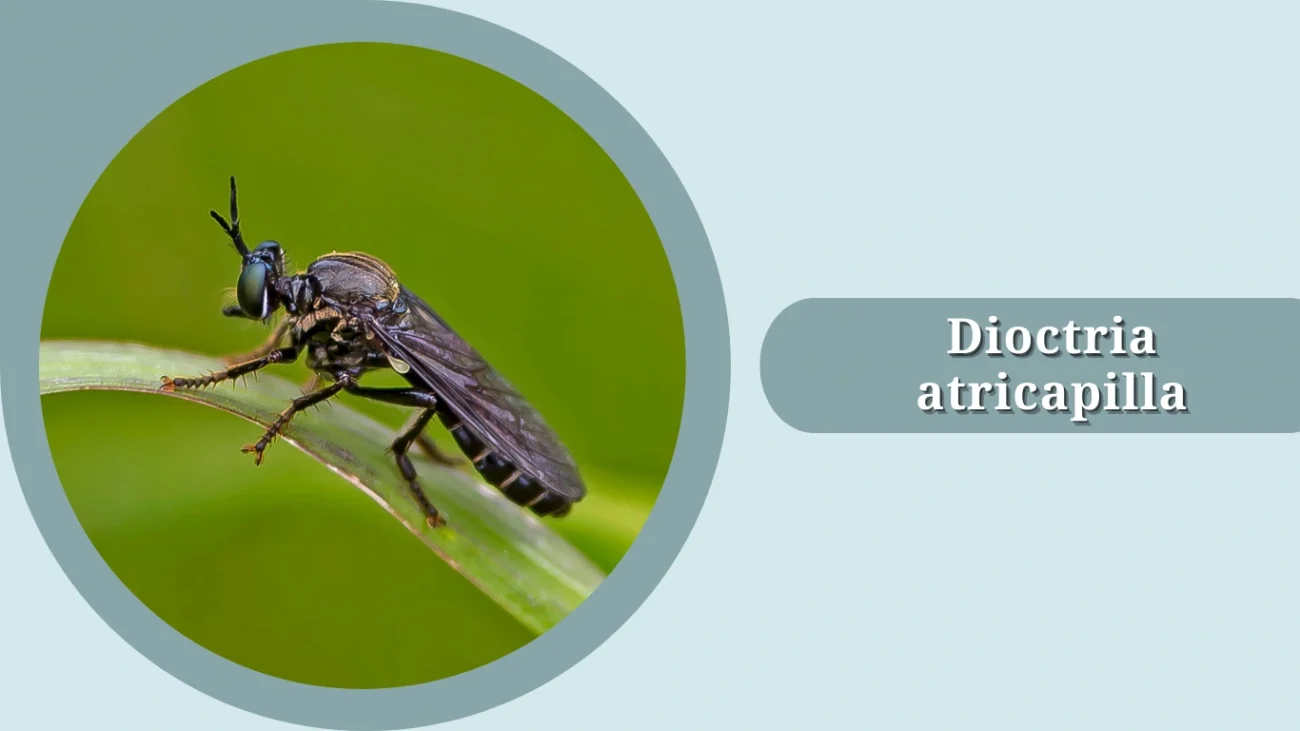
Dioctria atricapilla, commonly called the Violet Black-legged Robber Fly, is a small but agile species in the Dioctria genus. It is distinguished by its dark, glossy body and preference for grassy habitats.
Identification
- Small to medium body size, about 9–12 mm
- Slender, elongated form with a glossy black thorax
- Abdomen shiny black, slightly metallic in appearance
- Legs partly reddish-orange with darkened tips and spines
- Distinct mystax of short white hairs on the face
- Clear wings with fine, dark venation
Habitat
This species favors sunny meadows, woodland edges, grasslands, and hedgerows. It usually perches on grasses and low shrubs where prey insects are abundant.
Behavior
Dioctria atricapilla is a swift aerial predator. It launches from perches to capture smaller insects such as flies, small beetles, and wasps. Like its relatives, it immobilizes prey with its strong legs and injects digestive enzymes before consuming the liquefied tissues. Its hunting style is quick, making it an efficient predator in grassy landscapes.
Lifecycle
Eggs are laid in soil or decaying vegetation. The larvae live underground, preying on small soil invertebrates and feeding on organic matter. After one or two years of development, pupation occurs in the soil. Adults emerge in late spring and are active throughout the summer months.
14. Dioctria cothurnata
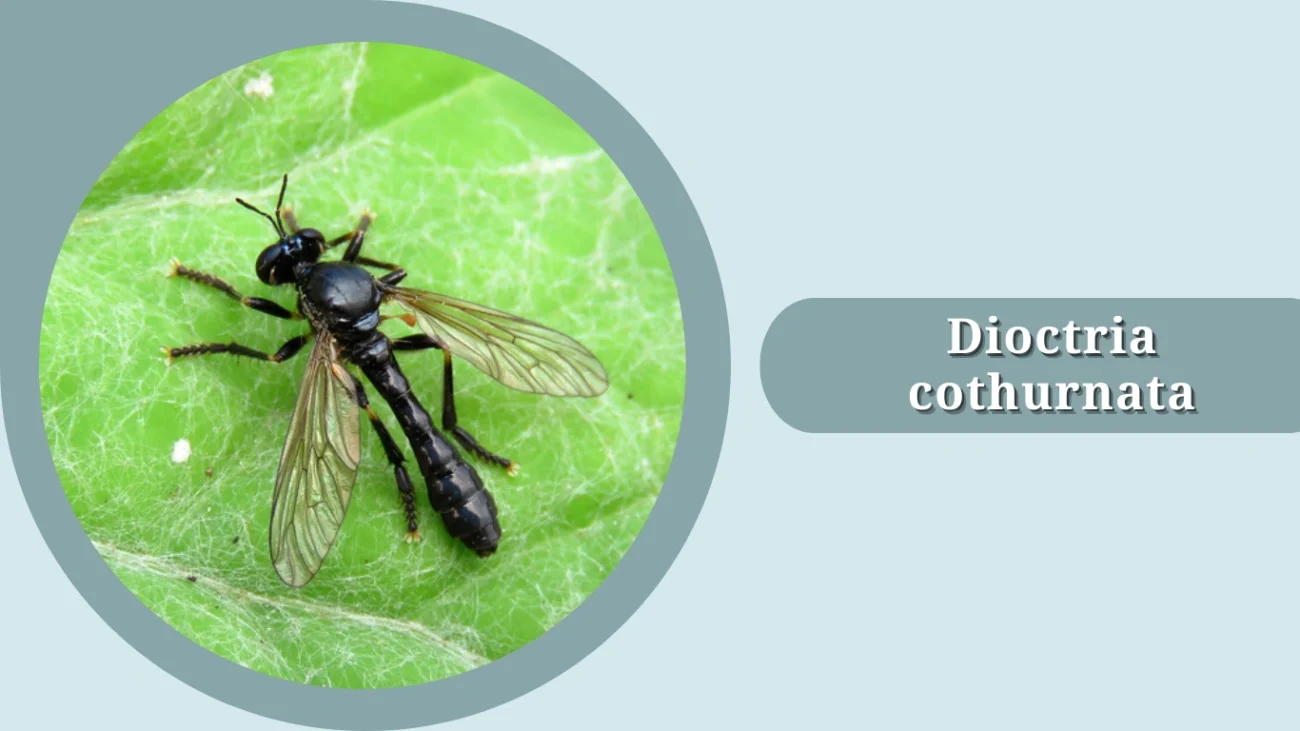
Dioctria cothurnata is a slim and agile robber fly species belonging to the Dioctria genus. It is recognized for its reddish legs and sleek body, which make it well adapted for hunting smaller flying insects.
Identification
- Small to medium body size, typically 8–11 mm
- Slender, elongated body, mostly black with slight metallic sheen
- Abdomen narrow, tapering at the tip
- Legs reddish-orange with darker tips and small spines
- Distinct but fine mystax (facial bristles)
- Wings transparent with clear venation
Habitat
This species inhabits sunny grasslands, meadows, and woodland edges. It is often seen perched on tall grasses, herbs, or low shrubs, using these vantage points to detect prey.
Behavior
Dioctria cothurnata is an ambush predator that specializes in catching smaller insects such as flies, small beetles, and wasps. It launches from perches with speed, seizing prey in mid-flight. After immobilizing its prey, it injects paralyzing saliva and consumes the liquefied tissues.
Lifecycle
Eggs are deposited in soil or rotting plant matter. The larvae live underground, where they feed on tiny invertebrates and decaying organic material. Development usually takes one to two years, after which pupation occurs in the soil. Adults emerge in late spring and remain active through summer.
15. Machimus atricapillus
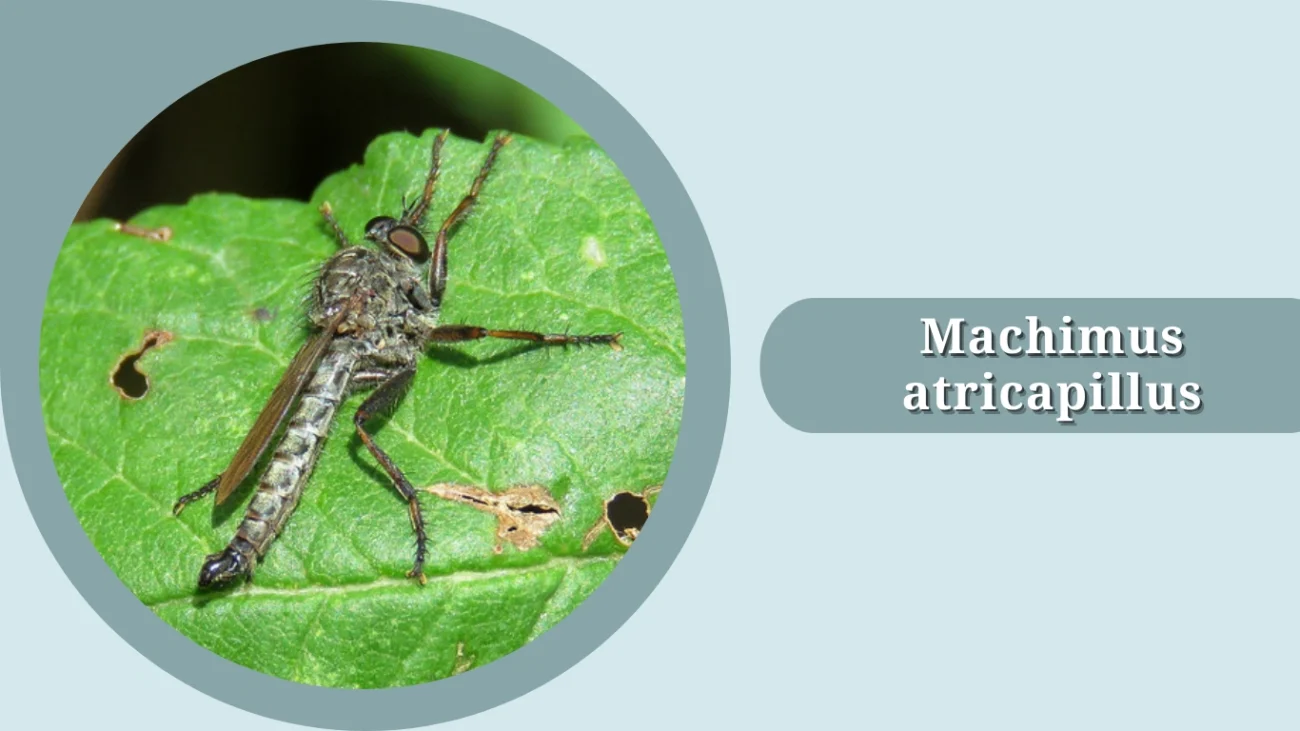
Machimus atricapillus is a common robber fly species in Europe, belonging to the Machimus genus. It is a robust predator with a camouflaged appearance, well-suited to blend into grassy and open habitats.
Identification
- Medium-sized body, typically 12–16 mm
- Thorax grayish-brown with short bristles
- Abdomen elongated, dark with pale segment bands
- Legs dark with short spines for grasping prey
- Distinct mystax (white facial bristles)
- Wings transparent, slightly smoky in mature individuals
Habitat
This species favors dry grasslands, meadows, forest edges, and sandy areas. It often perches on tall grasses or bare ground, waiting to ambush passing prey.
Behavior
Machimus atricapillus is an opportunistic predator, preying on flies, beetles, bees, and other small insects. It uses its excellent vision to detect movement and launches from perches to seize prey mid-air. Like other robber flies, it injects digestive saliva that immobilizes and liquefies its prey.
Lifecycle
Eggs are deposited in soil or decaying vegetation. Larvae live underground, where they feed on small invertebrates and decomposing organic matter. Development may take one to two years before pupation occurs. Adults appear in mid to late summer, hunting actively in warm and sunny conditions.
16. Machimus chrysitis
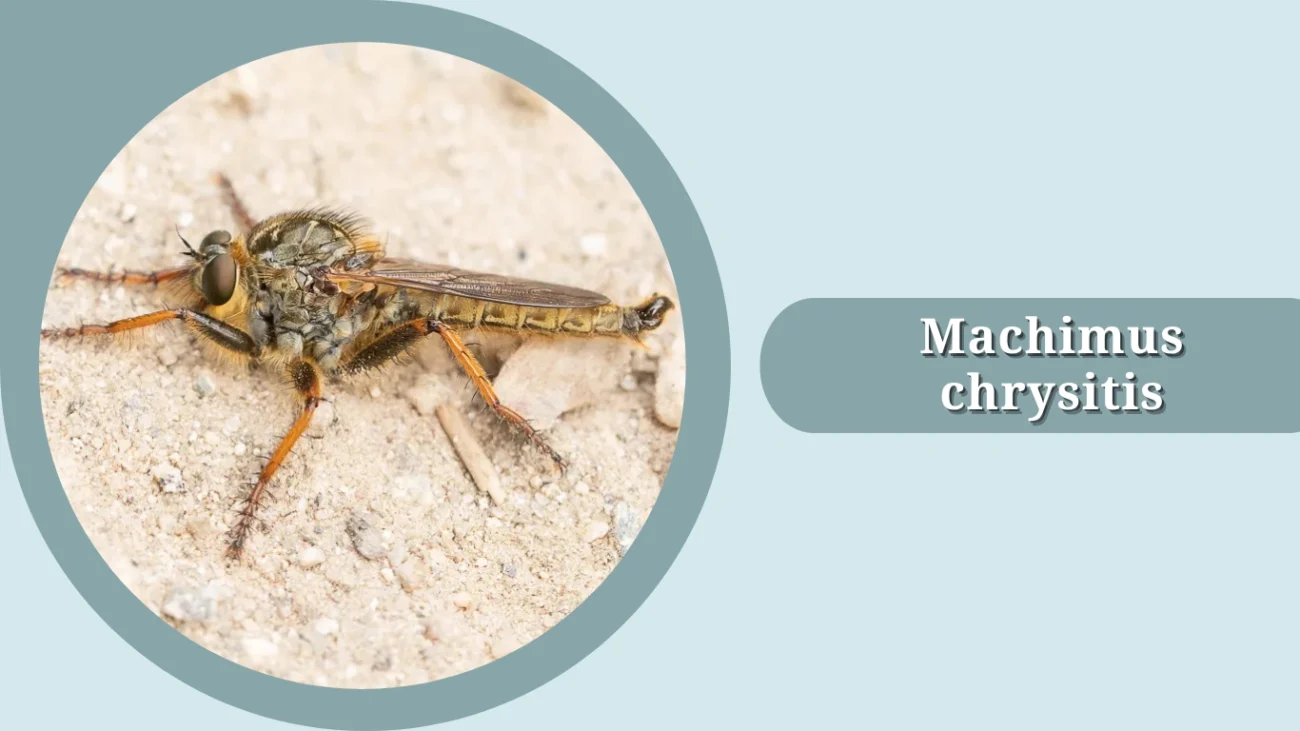
Machimus chrysitis is a medium-sized robber fly species found mainly across Europe and parts of Asia. It is a skilled aerial predator that thrives in open, sunlit habitats.
Identification
- Body length typically 12–15 mm
- Thorax grayish with fine bristles
- Abdomen dark, slender, with pale banding on segments
- Legs dark with strong spines for grasping prey
- Mystax (facial bristles) pale or whitish
- Wings clear with visible venation
Habitat
This species inhabits grasslands, meadows, and open woodland edges. It prefers sunny environments with tall grasses or shrubs where it can perch and watch for prey.
Behavior
Machimus chrysitis hunts by perching and quickly darting out to capture prey in mid-flight. It feeds on a variety of insects including beetles, flies, bees, and wasps. Like other robber flies, it subdues prey with its legs, injects saliva containing neurotoxins and digestive enzymes, then consumes the liquefied tissues.
Lifecycle
Eggs are laid in soil or plant debris. Larvae live underground for one to two years, feeding on small invertebrates and organic matter. After pupation in soil chambers, adults emerge in summer and remain active throughout warm months.
17. Machimus arthriticus
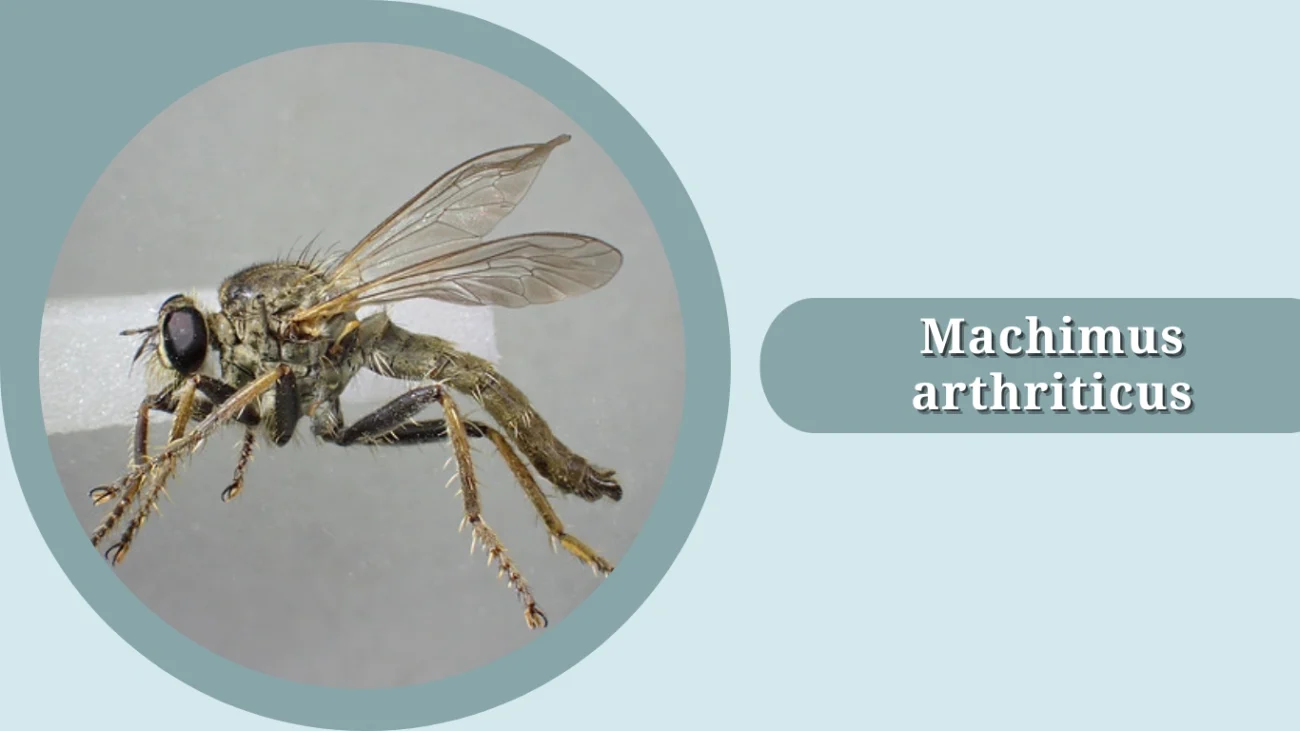
Machimus arthriticus is a robber fly species belonging to the Machimus genus, distributed mainly across parts of Europe. It is a stealthy predator that prefers dry, open habitats where it can perch and ambush prey.
Identification
- Medium-sized body, usually 12–16 mm
- Thorax grayish-brown with short bristles
- Abdomen elongated, dark with lighter segment bands
- Legs dark, spiny, and well-adapted for grasping prey
- Distinct pale mystax (facial bristles)
- Wings transparent with clear venation
Habitat
This species is often found in dry grasslands, meadows, heaths, and sandy clearings. It chooses sunny perches such as grasses, low shrubs, or bare soil where it can easily launch at passing insects.
Behavior
Machimus arthriticus is a perch-hunting predator. It waits patiently before launching into rapid flight to seize prey such as flies, bees, beetles, and wasps. Its hunting strategy involves immobilizing prey with strong legs, injecting paralyzing saliva, and consuming the digested insides.
Lifecycle
Eggs are deposited in soil or decaying organic matter. Larvae develop underground, feeding on smaller invertebrates and decomposing material. The larval stage may last up to two years before pupation. Adults emerge in summer and are most active on warm, sunny days.
18. Ommatius tibialis
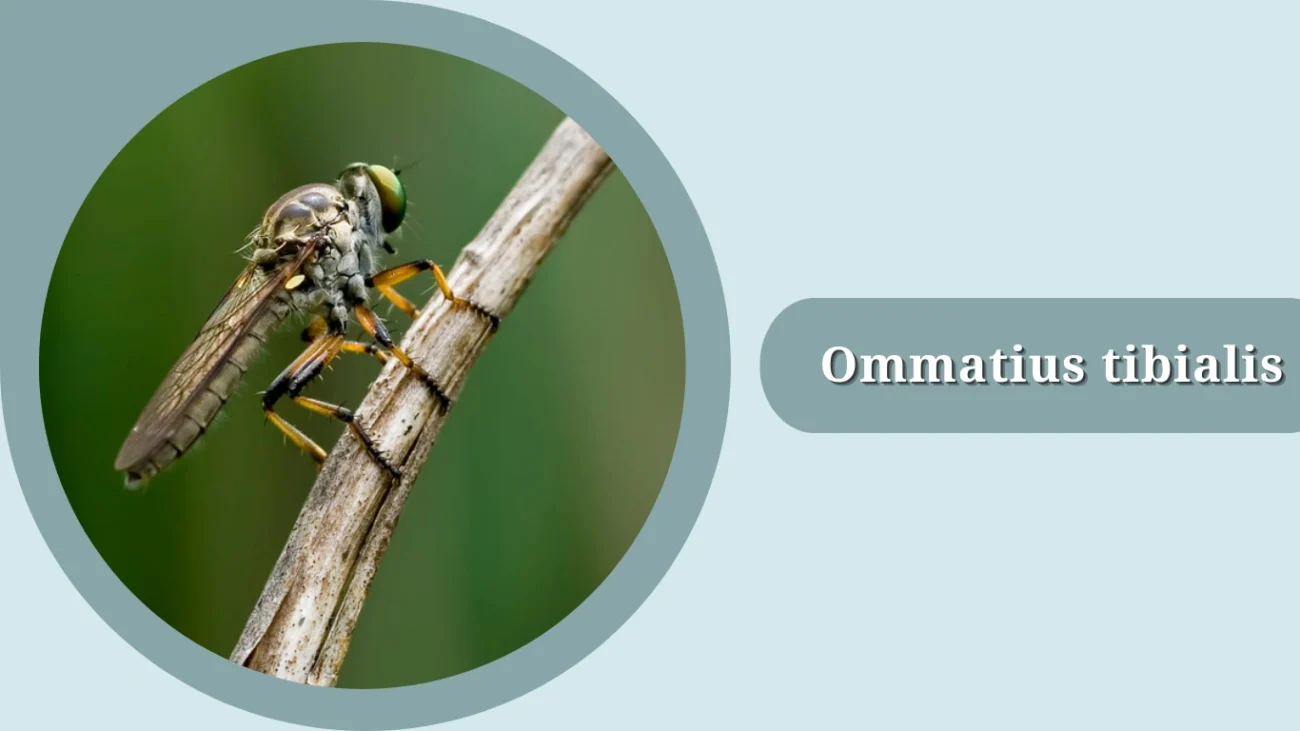
Ommatius tibialis is a slender robber fly species from the genus Ommatius, known for its speed and agility. Unlike the bulkier Laphria or Promachus flies, members of this genus are slimmer and often more inconspicuous.
Identification
- Medium-sized body, usually 10–14 mm
- Slender, elongated build with a grayish to brown thorax
- Abdomen narrow, dark, with faint pale banding
- Legs often reddish to yellowish with darker tips and strong spines
- Sparse mystax (facial bristles) compared to larger robber flies
- Wings transparent with fine venation
Habitat
This species prefers open, sunny habitats such as grasslands, meadows, and lightly wooded areas. They often perch on low vegetation, stones, or bare ground to scan for flying insects.
Behavior
Ommatius tibialis is an agile aerial predator. It launches swiftly to capture small to medium-sized insects, including flies, small bees, and wasps. Its lightweight build allows for quick maneuverability, making it an efficient hunter of fast-moving prey.
Lifecycle
Eggs are laid in soil or decomposing vegetation. The larvae live underground, feeding on small invertebrates and organic material. Development generally takes one to two years, followed by pupation in the soil. Adults emerge in late spring and summer, remaining active during warm daylight hours.
19. Ommatius bicolor
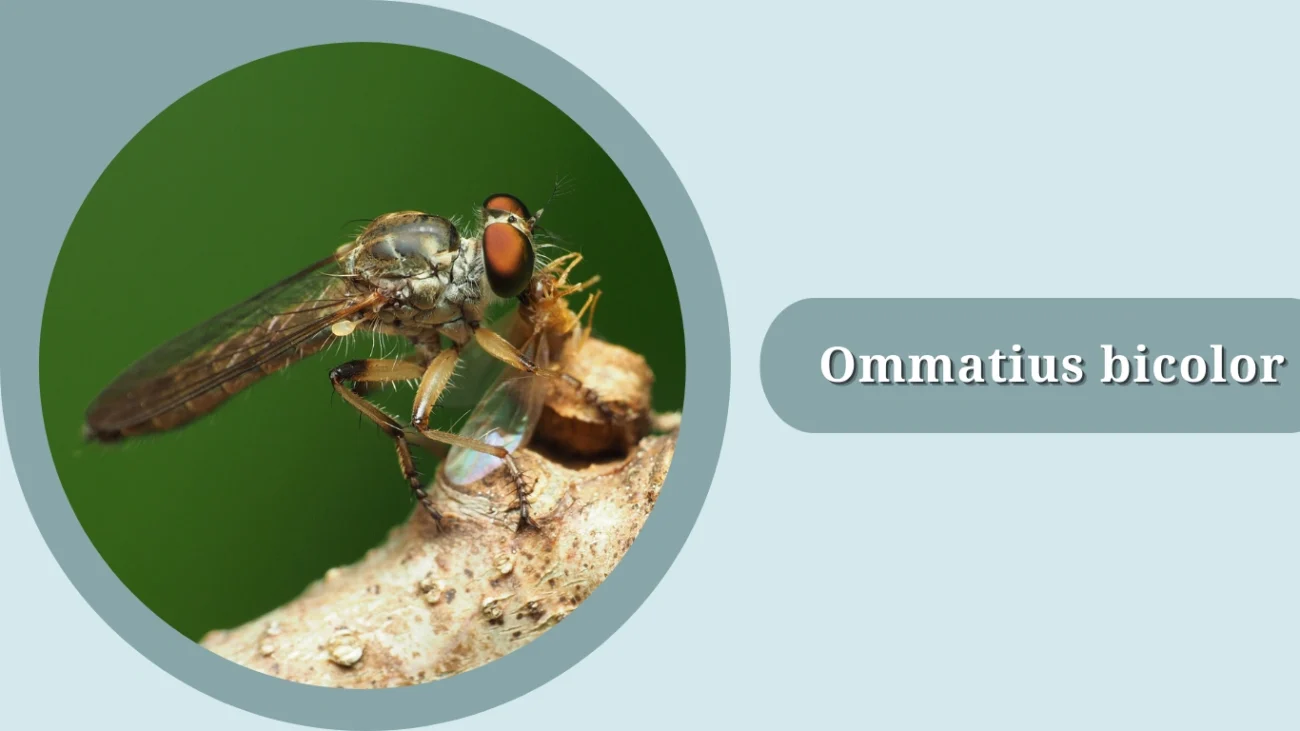
Ommatius bicolor is a sleek robber fly species within the Ommatius genus, recognized for its two-toned coloration and agile hunting style. Like other Ommatius flies, it is more slender compared to larger genera such as Promachus.
Identification
- Medium body size, about 10–14 mm
- Slender, elongated body form
- Thorax grayish to brown with fine bristles
- Abdomen dark with lighter banding, often giving a two-toned (bicolor) appearance
- Legs partly yellowish or reddish with darker tips and strong spines
- Mystax (facial bristles) sparse compared to bulkier species
- Wings clear, sometimes faintly smoky
Habitat
This species inhabits sunny, open landscapes such as grasslands, scrubby areas, and forest edges. It often perches on grasses, stones, or low plants, where it has a clear vantage point to hunt.
Behavior
Ommatius bicolor is an ambush hunter, preying primarily on small flies, bees, and wasps. It uses speed and agility to catch prey mid-flight, immobilizing them with its spiny legs before injecting saliva that paralyzes and digests the tissues.
Lifecycle
Eggs are laid in sandy or loose soil. The larvae remain underground, feeding on soft-bodied invertebrates and decaying material. The larval stage usually lasts one to two years, followed by pupation in soil chambers. Adults emerge in summer and remain active during warm, sunny weather.
20. Andrenosoma fulvicaudum
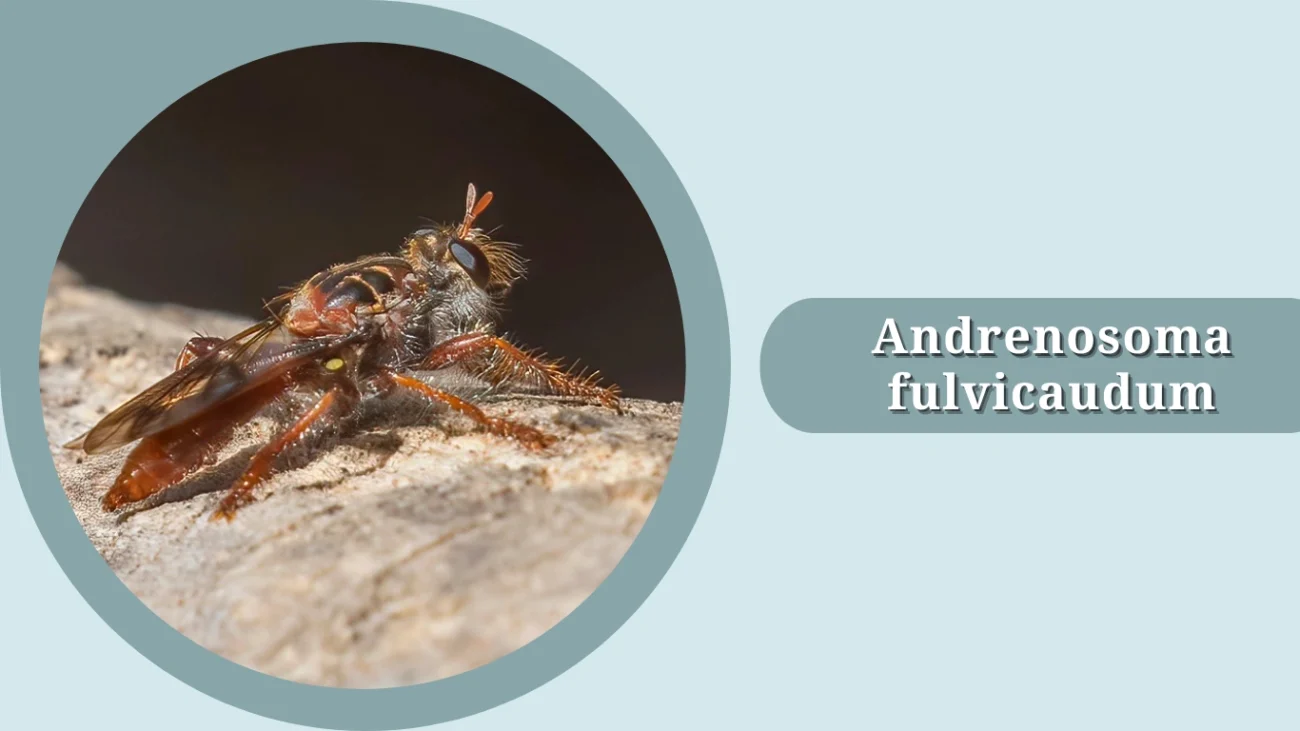
Andrenosoma fulvicaudum is a large and robust robber fly species, known for its reddish-brown coloration and powerful predatory abilities. It is one of the more striking members of the Andrenosoma genus.
Identification
- Large body size, typically 18–25 mm
- Thorax dark brown to black, covered with fine bristles
- Abdomen elongated, reddish-brown (fulvicaudum = “tawny-tailed”)
- Legs dark, strong, and heavily spined for grasping prey
- Mystax (facial bristles) dense and pale, aiding in prey capture
- Wings clear to slightly smoky with bold venation
Habitat
This species prefers warm, open environments such as grasslands, meadows, and dry woodland edges. It often rests on bare ground, rocks, or low vegetation, from which it launches hunting flights.
Behavior
Andrenosoma fulvicaudum is an aggressive hunter of medium to large insects, including beetles, bees, and wasps. It uses its strength to overpower prey in flight, injecting saliva that both paralyzes and digests. Adults are solitary and territorial, often returning to favored hunting perches.
Lifecycle
Eggs are deposited in soil or rotting organic matter. Larvae are predatory and develop underground, feeding on small soil invertebrates and organic debris. Development may take up to two years, after which pupation occurs in soil. Adults emerge in summer and are active during the hottest months of the year.