


Alderflies (Sialidae) are fascinating aquatic insects belonging to the order Megaloptera. Though often overlooked, they play an essential role in freshwater ecosystems, especially during their long-lived larval stage as predators of aquatic invertebrates. Found across Europe and North America, alderflies are recognized for their smoky wings, short antennae, and association with rivers, lakes, and streams. This guide explores 12 distinct species, highlighting their identification, habitat, behavior, and life cycle.
1. Sialis lutaria
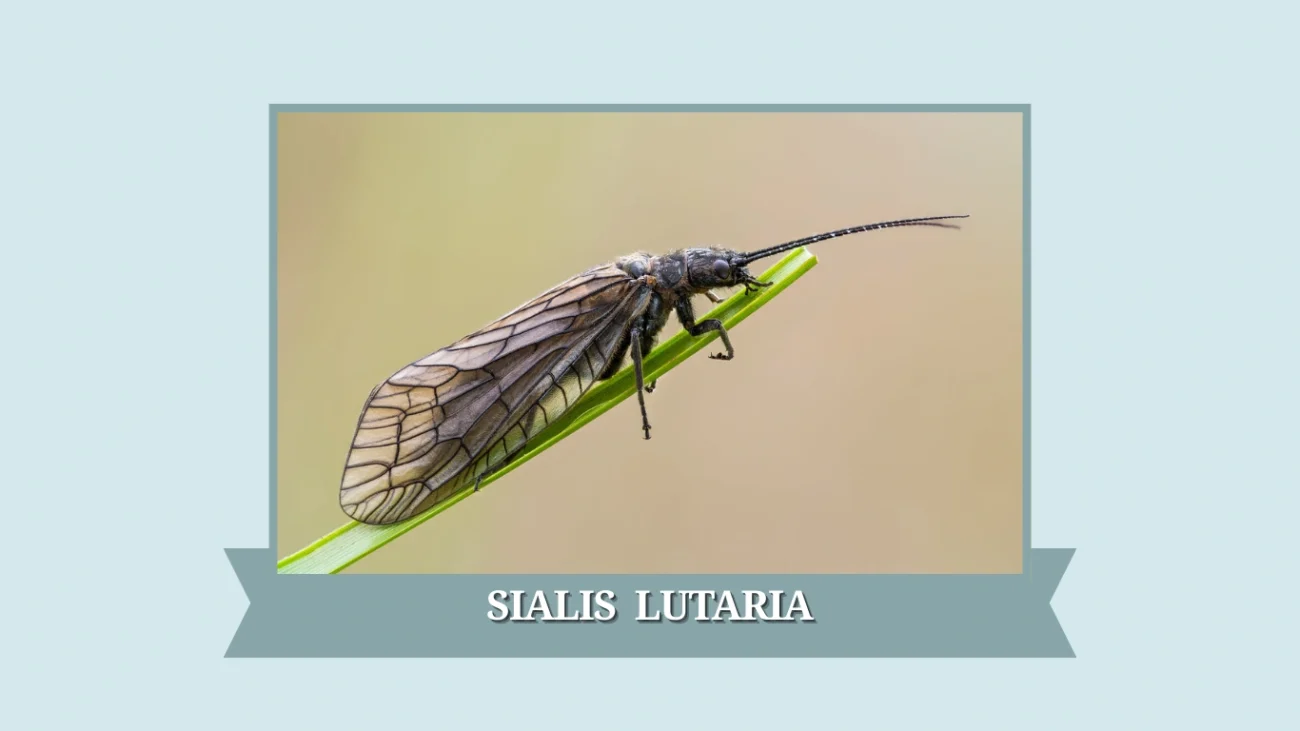
The Sialis lutaria, commonly known as the common alderfly, is one of the most widespread species in Europe. It thrives in freshwater habitats and is easily recognized by its distinctive wing patterns and robust build. This species plays an important role in aquatic ecosystems, especially during its larval stage.
Identification
- Medium-sized alderfly, about 15–20 mm in length
- Dark brown to black body
- Two pairs of smoky, net-veined wings held roof-like over the body when at rest
- Short, clubbed antennae
- Larvae have elongated bodies with prominent lateral filaments for respiration
Habitat
Sialis lutaria is typically found near slow-moving rivers, streams, ponds, and lakes with muddy or sandy bottoms. The larvae are aquatic and prefer shallow, vegetated waters where they can burrow and hunt for prey.
Behavior
Adults are weak fliers and generally remain close to water bodies. They are often seen resting on vegetation during the day. Larvae are predatory, feeding on small aquatic invertebrates such as midge larvae and worms.
Lifecycle
The lifecycle spans one to two years. Eggs are laid in batches on vegetation overhanging water. Upon hatching, the larvae drop into the water, where they live and develop for up to two years. Pupation occurs in damp soil or sediment near water, and adults emerge in spring to early summer, living only a few weeks to reproduce.
2. Sialis fuliginosa
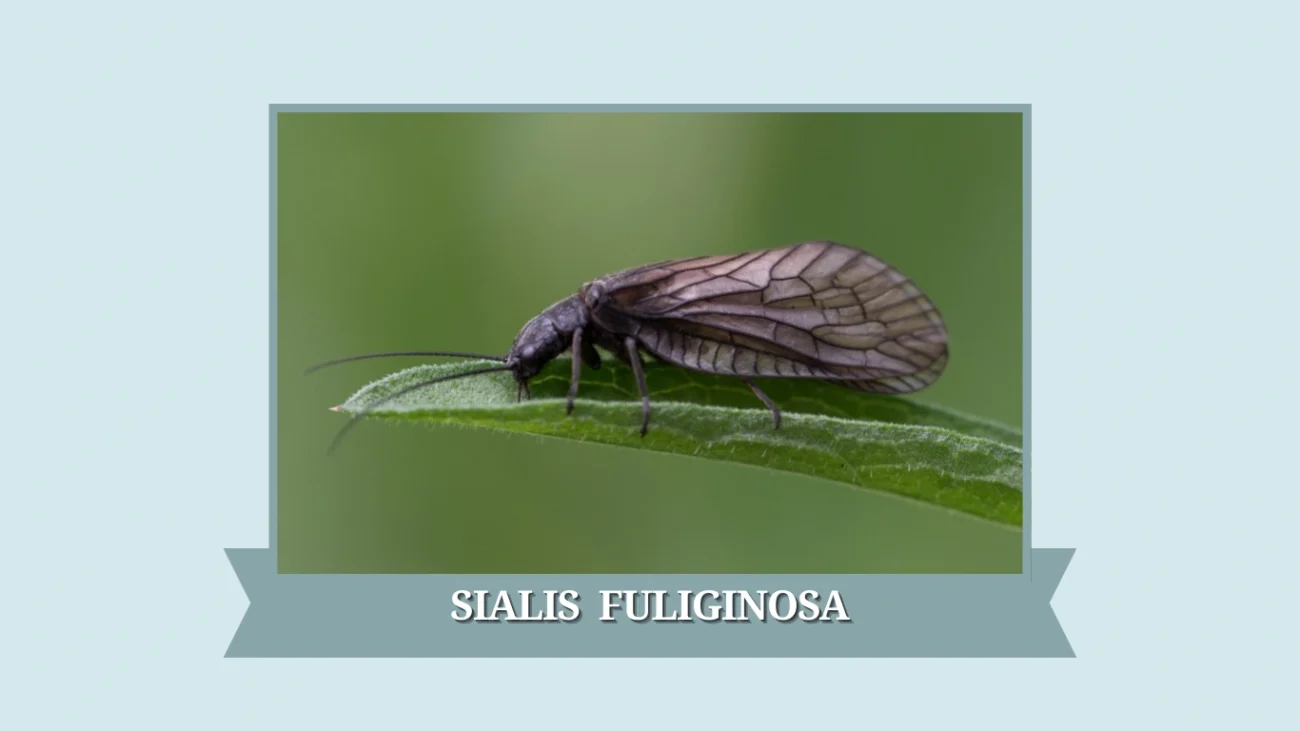
The Sialis fuliginosa is another alderfly species closely resembling the common alderfly but with subtle differences in appearance and distribution. It is less widespread than Sialis lutaria and typically found in specific freshwater habitats across Europe.
Identification
- Body length ranges from 12–18 mm
- Darker overall coloration than Sialis lutaria
- Wings are dusky with a more uniform smoky tint and finer venation
- Antennae short and thread-like
- Larvae resemble S. lutaria but are slightly smaller and more slender
Habitat
This species inhabits rivers, streams, and lakes with clear, slow-moving water. It prefers environments with good oxygen levels and sandy or gravel substrates. Larvae live beneath stones or buried in sediment, making them less visible than some other alderfly larvae.
Behavior
Adults are mostly nocturnal or crepuscular, hiding during the day and becoming active in the evening. Larvae are efficient predators of aquatic insect larvae and play a role in regulating benthic invertebrate populations.
Lifecycle
Eggs are laid on vegetation or substrates near water. Larvae develop underwater for about one to two years, feeding actively throughout their growth stages. Pupation takes place in moist soil along the water’s edge, with adults emerging in late spring to early summer.
3. Sialis nigripes
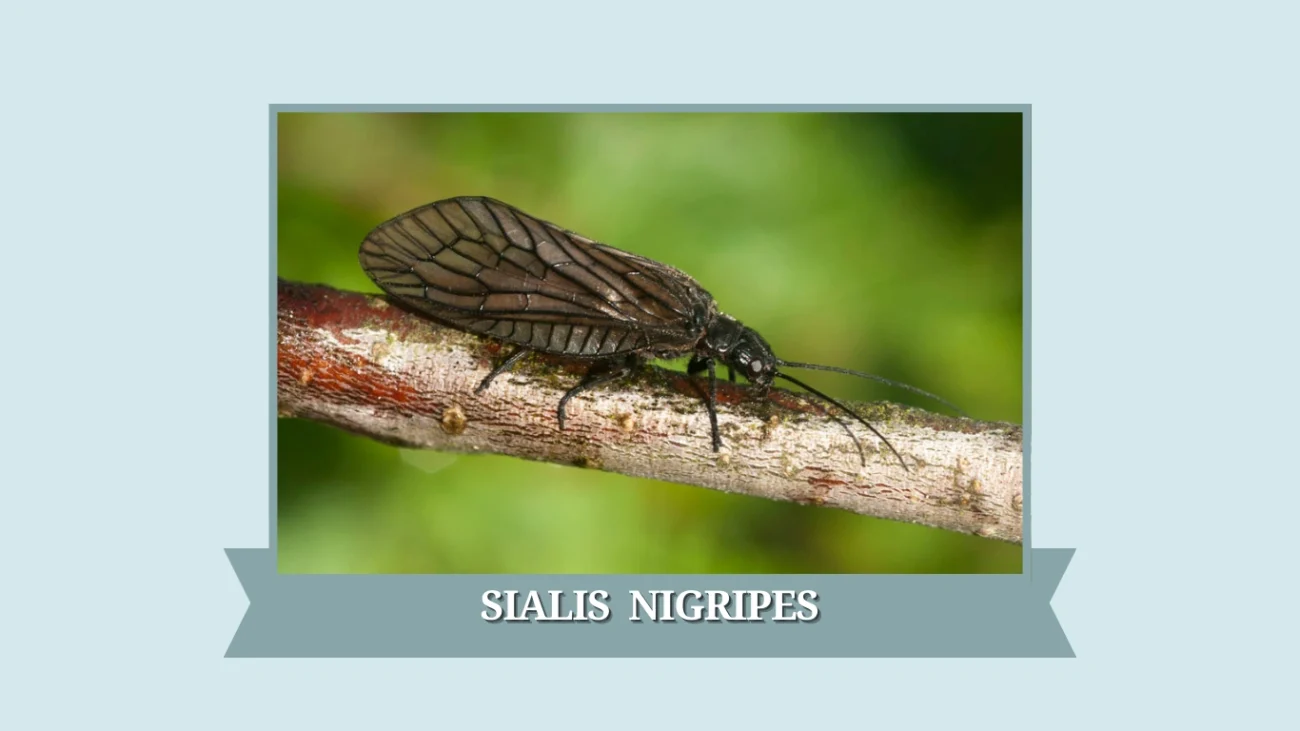
The Sialis nigripes is a rarer alderfly species, recognized for its distinctive dark features, particularly its black legs, which set it apart from other members of the genus. Its distribution is more limited compared to Sialis lutaria and Sialis fuliginosa.
Identification
- Medium-sized insect, around 14–18 mm in length
- Dark brown to almost black body
- Legs entirely black (key identification feature)
- Wings dark, slightly more opaque than those of Sialis lutaria
- Larvae similar in form to other Sialis species but slightly more robust
Habitat
This species prefers clean, well-oxygenated streams and rivers, often in upland areas. Larvae inhabit gravelly or sandy substrates, where they can burrow and hunt for aquatic invertebrates.
Behavior
Adults are weak fliers and remain close to water sources. They are often found resting on low vegetation during the day. Larvae are active predators, preying on insect larvae and other small benthic organisms, thus contributing to freshwater food web dynamics.
Lifecycle
Eggs are deposited on plants and structures near water surfaces. The larvae live underwater for up to two years, passing through several instars before pupating in damp soil near the banks. Adults emerge during late spring, living only a few weeks with the primary goal of reproduction.
4. Sialis mohri
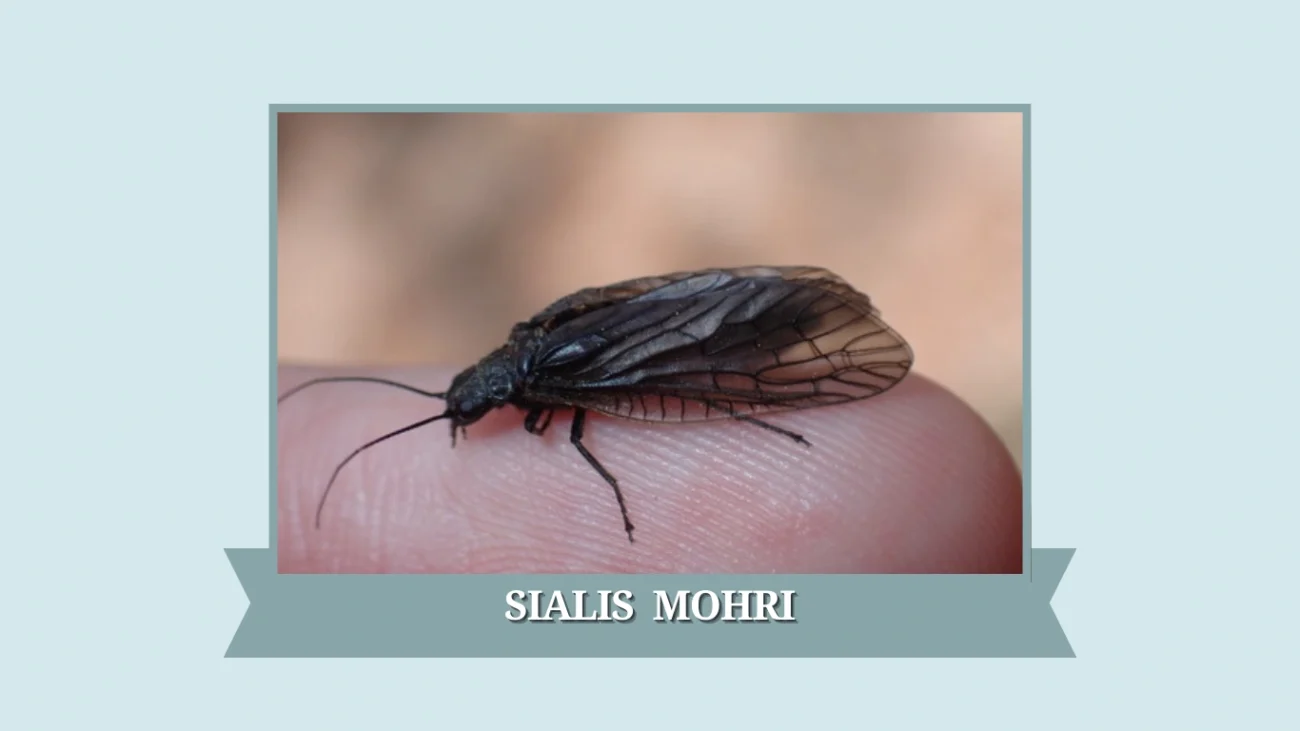
The Sialis mohri is a North American alderfly species, less known compared to its European relatives. It is an important aquatic insect in its native range, contributing to freshwater ecosystems as both predator (larva) and prey (adult).
Identification
- Medium-sized, typically 12–16 mm long
- Dark brown body with slightly lighter thorax
- Wings smoky and heavily veined, folded tent-like over the body at rest
- Legs dark brown, but not entirely black as in Sialis nigripes
- Larvae elongated with lateral abdominal filaments, similar to other Sialis larvae
Habitat
This species inhabits streams, ponds, and lakes across parts of North America. It is often associated with slow-moving or still waters where larvae can thrive in muddy or sandy bottoms.
Behavior
Adults are weak fliers and often remain close to emergent vegetation around water bodies. They are most active during late spring and early summer. Larvae are predators of aquatic invertebrates, including midge and mosquito larvae, making them ecologically significant.
Lifecycle
Eggs are laid in clusters on plants or debris overhanging water. After hatching, larvae drop into the water and live there for one to two years. They undergo several molts before pupating in moist soil or leaf litter near the shoreline. Adults emerge in spring, surviving only a short time to mate and reproduce.
5. Sialis hasta
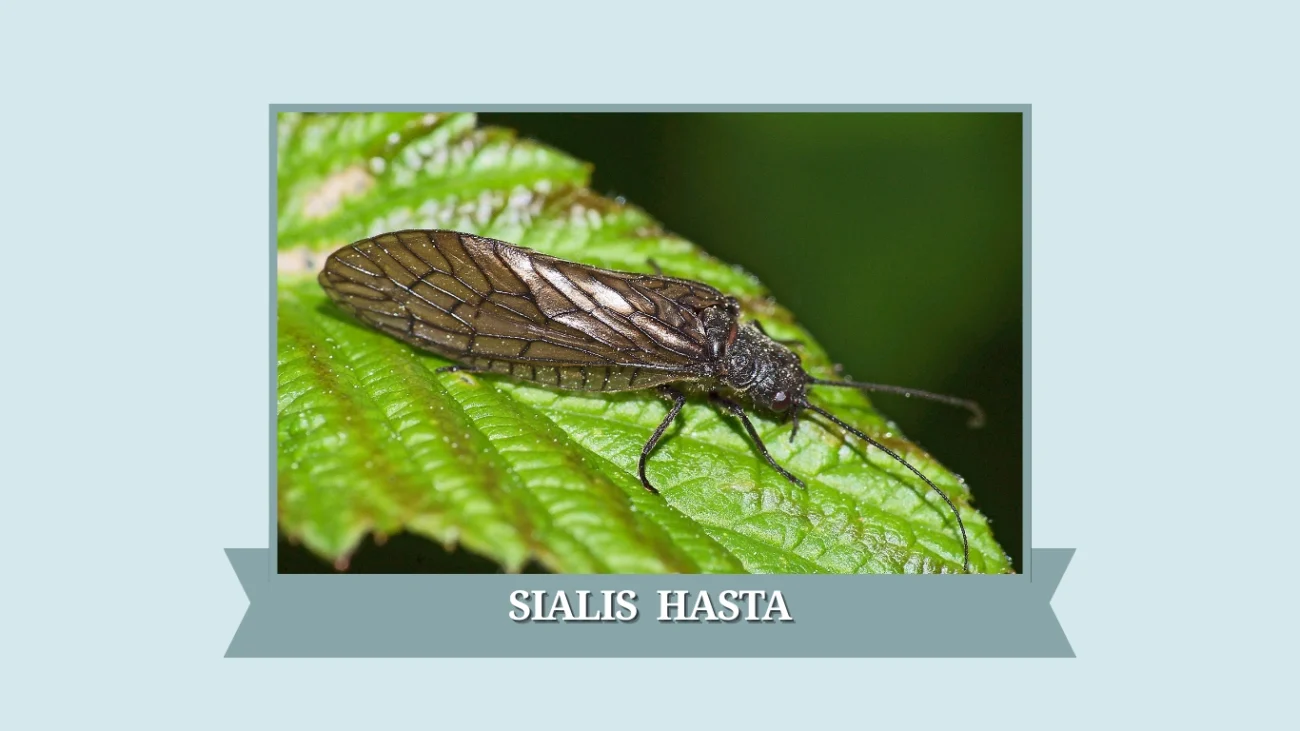
The Sialis hasta is a North American alderfly species recognized for its relatively wide distribution in eastern regions. Like its relatives, it plays an important role in aquatic ecosystems, especially during its predatory larval stage.
Identification
- Size typically ranges from 12–15 mm
- Dark brown to nearly black body
- Wings dusky with clear venation, held roof-like when at rest
- Antennae slender and relatively short
- Larvae elongated with characteristic lateral abdominal filaments for underwater respiration
Habitat
Sialis hasta thrives in streams, rivers, and lakes with soft bottoms such as mud or sand. It is particularly common in still or gently flowing water, where larvae burrow into the substrate to feed.
Behavior
Adults are sluggish fliers and tend to remain on vegetation close to water. They are often seen during spring and early summer. Larvae are active hunters of small aquatic organisms, such as insect larvae and worms, helping regulate invertebrate populations.
Lifecycle
Eggs are laid on surfaces above water, often in clusters on plants or stones. Upon hatching, larvae enter the water, where they live for one to two years before pupating in damp soil or sediment along the water’s edge. Adults emerge in spring, live for only a few weeks, and focus solely on reproduction.
6. Sialis sordida
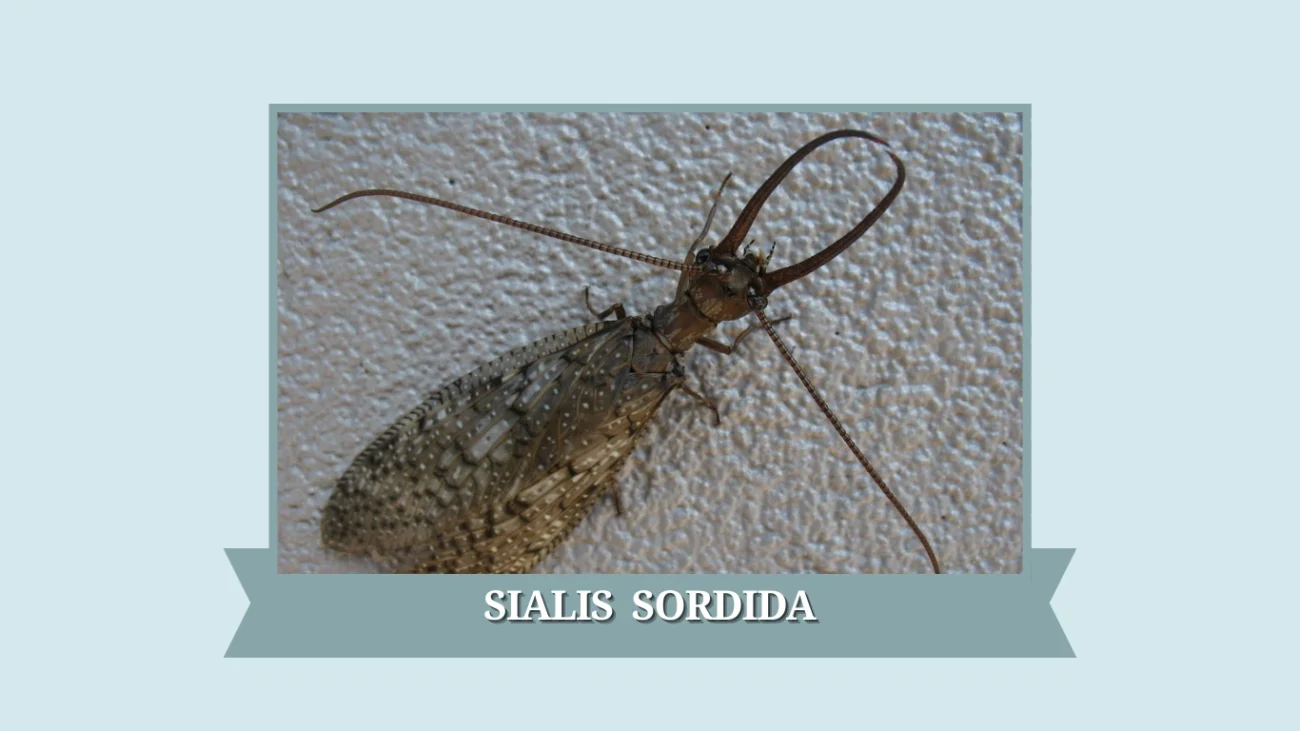
The Sialis sordida is a lesser-known alderfly species native to North America. Though not as widespread as some relatives, it is an important predator in freshwater ecosystems where it occurs.
Identification
- Adult length about 12–16 mm
- Body dark brown with slightly mottled appearance
- Wings smoky with fine reticulated venation, darker near the tips
- Antennae short and bead-like
- Larvae with elongated bodies and lateral abdominal filaments for breathing underwater
Habitat
This species inhabits slow-moving streams, ponds, and lakes. It favors muddy or sandy bottoms where larvae can burrow and remain concealed while hunting. Clean, oxygen-rich water is important for their survival.
Behavior
Adults are weak flyers and stay close to vegetation around aquatic environments. They are most often encountered during spring and early summer. Larvae are predatory, feeding on a wide range of benthic invertebrates, including chironomid larvae and small crustaceans.
Lifecycle
Eggs are laid in masses on leaves, stems, or rocks near water. After hatching, larvae fall into the water and spend one to two years developing. They eventually pupate in damp soil or debris near shorelines. Adults emerge in spring, live only a short time, and focus on reproduction before dying.
7. Sialis vagans
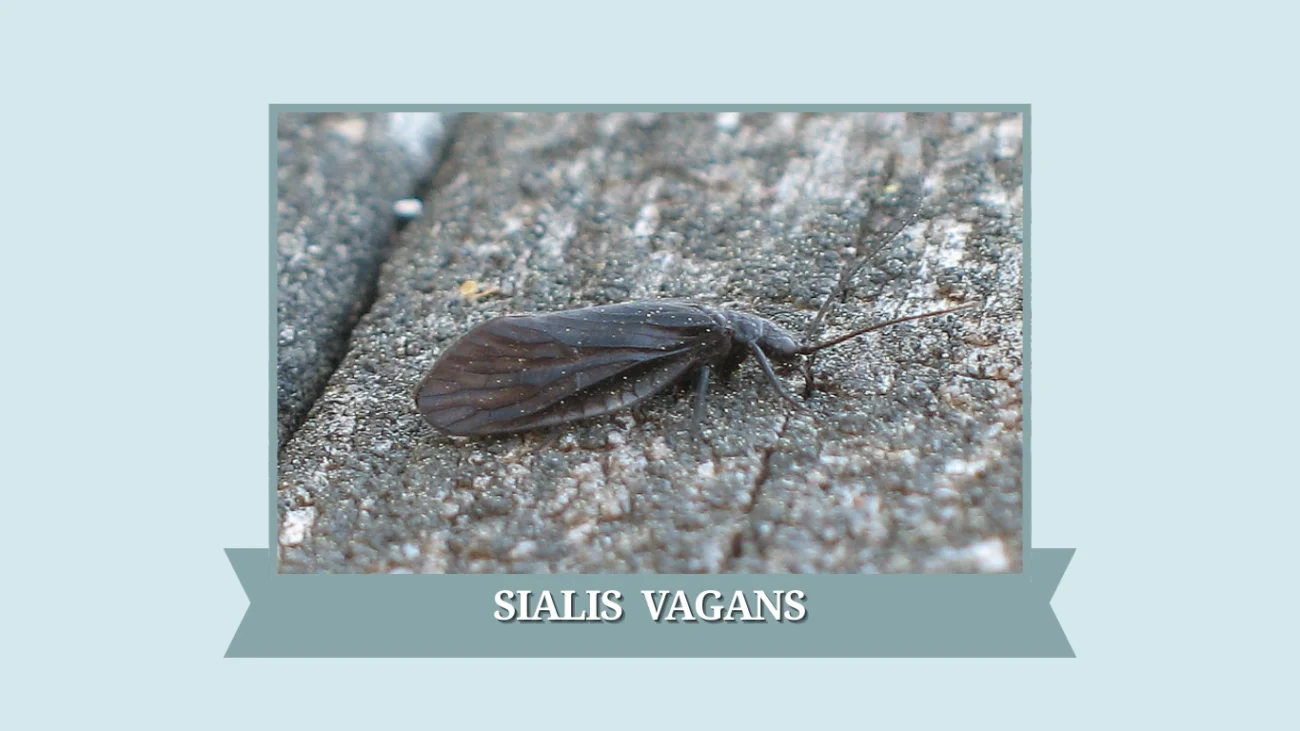
The Sialis vagans is a North American alderfly species with a scattered distribution, often associated with cool, slow-moving freshwater habitats. Although not as common as some other species, it contributes to aquatic biodiversity through its predatory larval stage.
Identification
- Adult size about 12–15 mm
- Body dark brown to nearly black
- Wings semi-transparent, smoky, with delicate net-like venation
- Antennae short, thread-like
- Larvae elongated with prominent lateral filaments and strong jaws for predation
Habitat
Sialis vagans inhabits streams, rivers, and lakes, particularly those with sandy or silty bottoms. It tends to occur in regions with cooler climates and well-oxygenated waters. Larvae are often buried in sediment or beneath stones.
Behavior
Adults are weak fliers and are usually seen resting on low vegetation close to water during spring. They are mostly inactive during the day but become more active in cooler hours. Larvae are voracious predators of small aquatic invertebrates, contributing to the balance of benthic communities.
Lifecycle
Eggs are deposited in clusters on surfaces above water. After hatching, larvae drop into the water and remain there for up to two years, feeding and growing through successive molts. Pupation takes place in moist soil along shorelines. Adults emerge in late spring, with a brief lifespan dedicated to reproduction.
8. Sialis aequalis
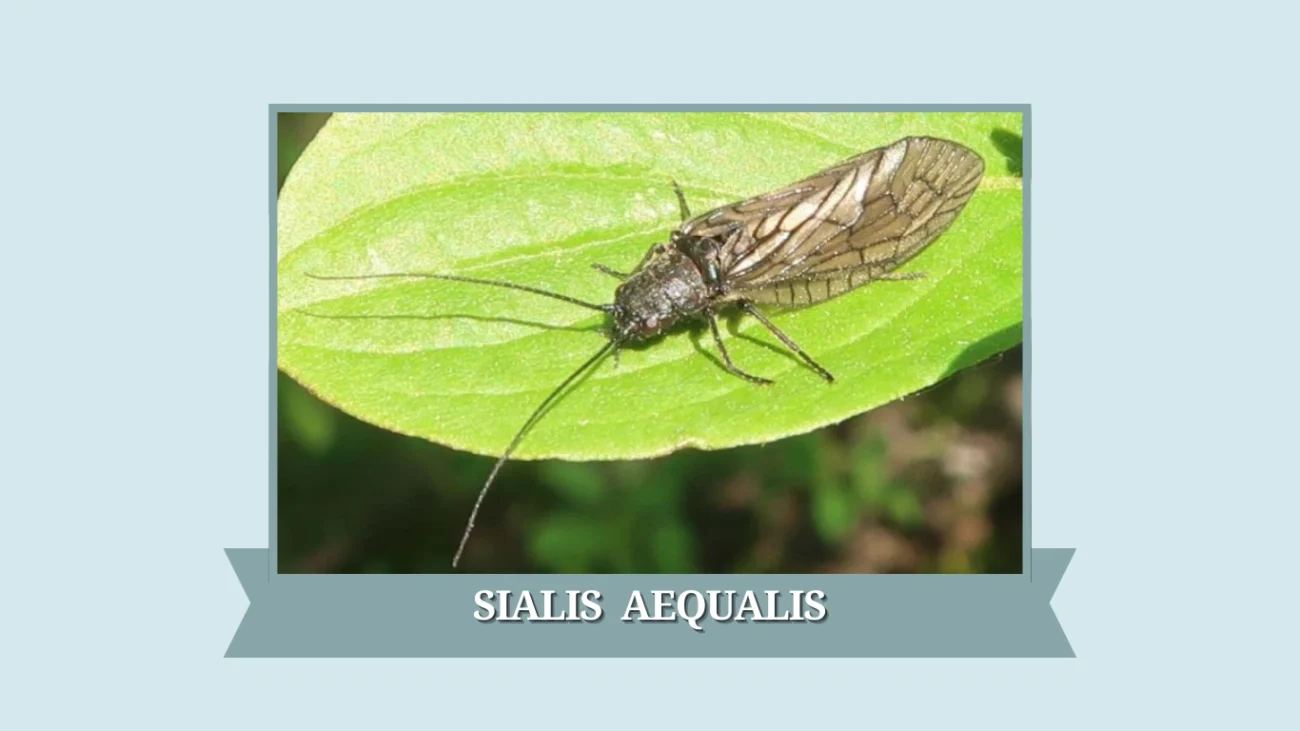
The Sialis aequalis is a North American alderfly species known for inhabiting a wide range of freshwater environments. Though less frequently encountered than some related species, it follows a similar ecological pattern in its life cycle and behavior.
Identification
- Adult length around 12–16 mm
- Dark brown to black body, fairly uniform in color
- Wings dusky, with clear reticulated venation and slightly darker tips
- Antennae short and slender
- Larvae elongated with lateral abdominal filaments, robust jaws, and segmented bodies
Habitat
This species is found in lakes, ponds, and slow-moving rivers or streams, often in areas with muddy or sandy bottoms. Larvae live within the substrate, preferring well-oxygenated waters for development.
Behavior
Adults are poor fliers, staying close to water on nearby vegetation. They emerge in spring and early summer, often during cooler weather. Larvae are active predators of aquatic invertebrates such as midge larvae, mosquito larvae, and small worms.
Lifecycle
Eggs are laid in masses on plants and surfaces near water. After hatching, larvae enter the water, where they live for one to two years. They pupate in damp soil or debris near shorelines before emerging as adults. The adult stage is short-lived, lasting only long enough to mate and reproduce.
9. Sialis itasca
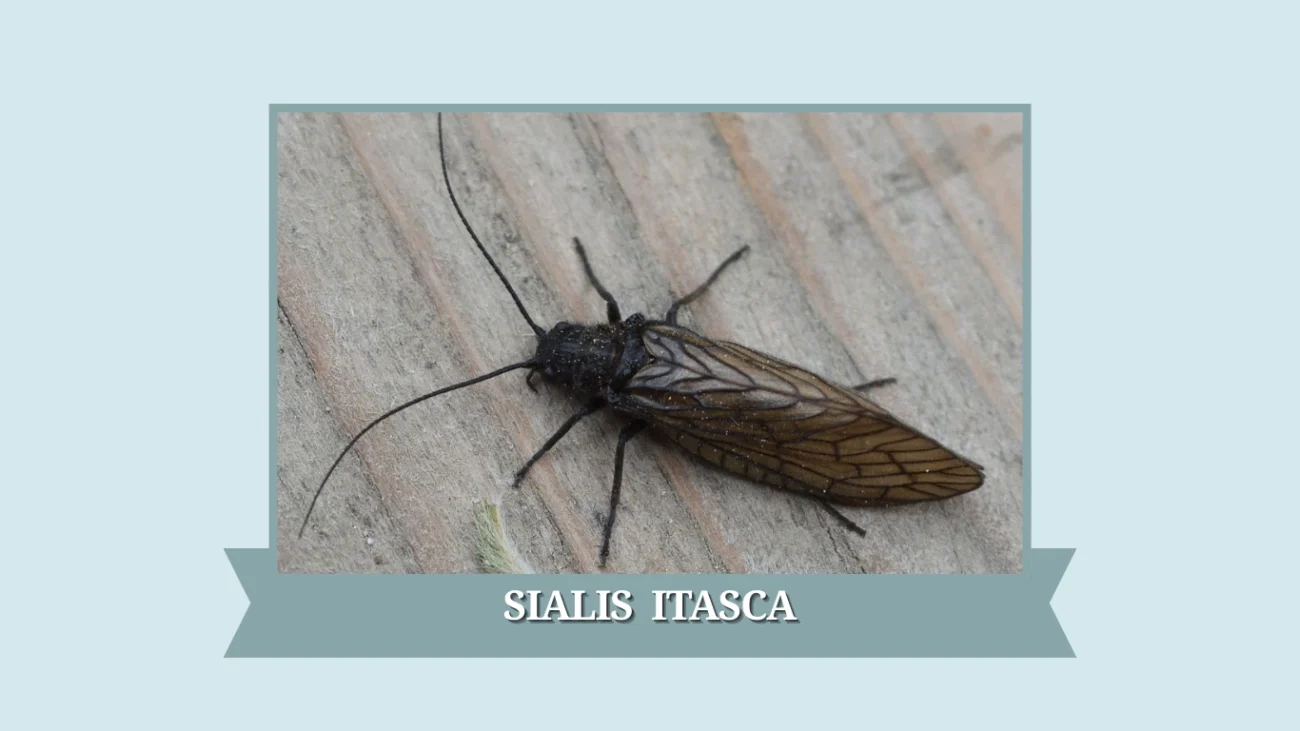
The Sialis itasca is a North American alderfly species with a relatively localized distribution. Like its relatives, it plays an important role in aquatic ecosystems through its long-lived larval stage.
Identification
- Adult size typically 11–15 mm
- Dark brown to nearly black body, slightly narrower than some other species
- Wings smoky, semi-transparent, with fine venation and darker tips
- Antennae short and thread-like
- Larvae elongated, with prominent lateral abdominal filaments and strong mandibles for predation
Habitat
Sialis itasca inhabits cool, slow-moving streams, rivers, and ponds. It is often associated with sandy or silty substrates, where larvae burrow and feed. This species is usually found in cleaner, well-oxygenated waters.
Behavior
Adults are weak fliers, spending most of their time resting on vegetation near water. They are typically seen in late spring and early summer. Larvae are aggressive predators of small aquatic invertebrates, especially insect larvae, and are important in regulating benthic populations.
Lifecycle
Eggs are laid in clusters on vegetation, rocks, or debris above water. Larvae hatch and fall into the water, where they remain for up to two years, molting multiple times as they grow. Pupation occurs in damp soil or substrate near shorelines, with adults emerging in late spring. The adult lifespan is short, devoted primarily to mating and reproduction.
10. Sialis hamata
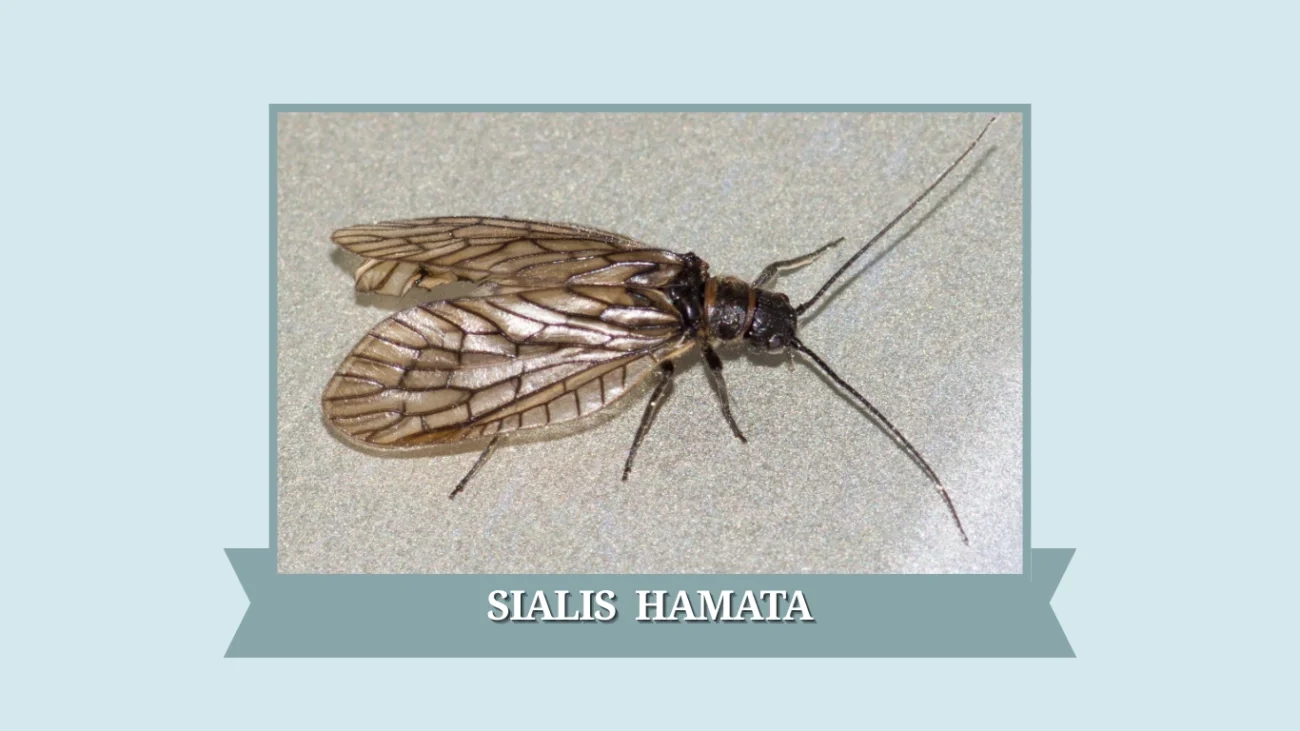
The Sialis hamata is a North American alderfly species recognized for its characteristic wing shape and typical alderfly features. It is part of the diverse Sialis genus, contributing to freshwater food webs through its long larval development.
Identification
- Adult length about 12–16 mm
- Body dark brown to black, fairly robust
- Wings smoky with distinct venation; slightly hooked appearance near tips (hence the name hamata)
- Antennae short, thread-like
- Larvae elongated with segmented bodies and lateral abdominal filaments
Habitat
Sialis hamata is commonly found in streams, rivers, ponds, and lakes with sandy or muddy bottoms. It prefers slow-moving waters where larvae can burrow into sediment and thrive in oxygen-rich habitats.
Behavior
Adults are weak fliers and stay close to water, typically seen resting on vegetation in late spring. They are not active feeders as adults, whereas larvae are efficient aquatic predators, consuming insect larvae, worms, and other small organisms.
Lifecycle
Eggs are laid in clusters on leaves, stems, or stones near water. After hatching, larvae drop into aquatic environments, where they remain for one to two years. Pupation occurs in moist soil or debris at the water’s edge. Adults emerge in spring to early summer and live briefly, focusing only on reproduction.
11. Sialis occidens
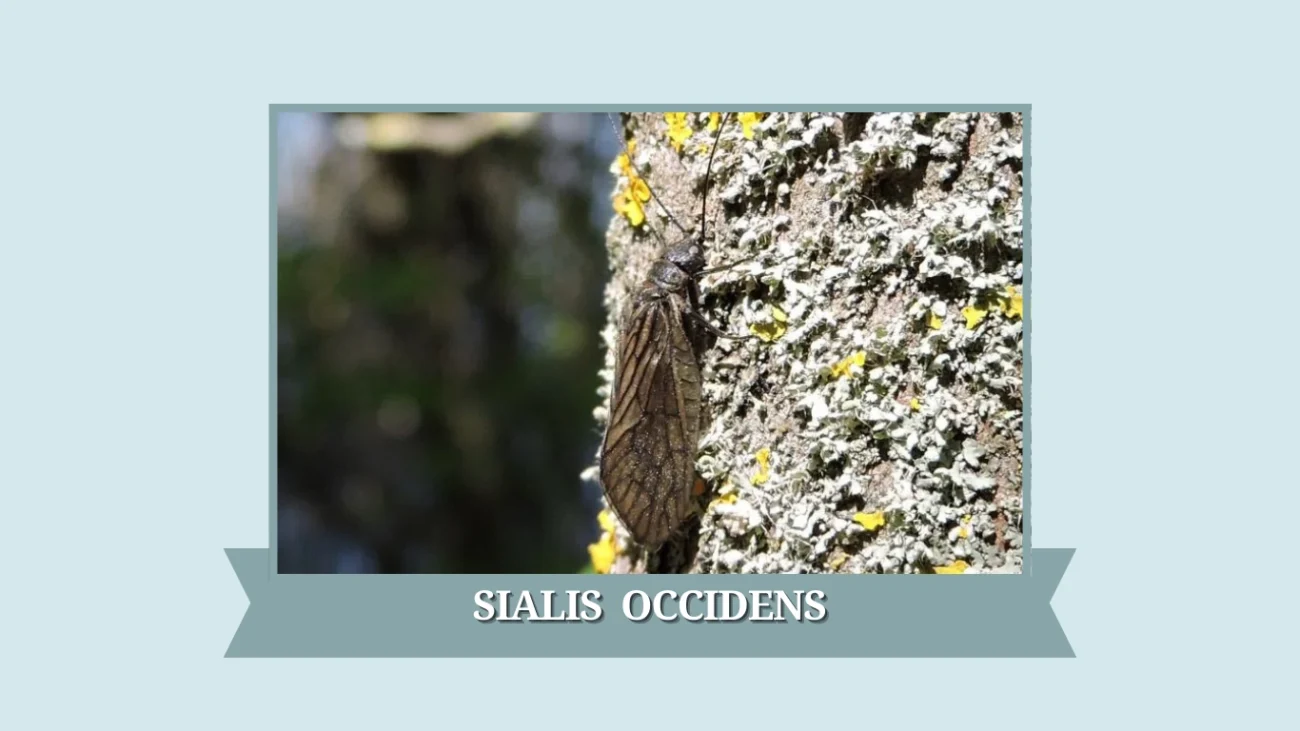
The Sialis occidens is a western North American alderfly species, occurring mainly in the Pacific regions. It is ecologically similar to its eastern relatives, with aquatic larvae that play an important role as predators in freshwater ecosystems.
Identification
- Adult length ranges from 12–15 mm
- Dark brown to nearly black body
- Wings smoky with distinct net-like venation, slightly darker at the margins
- Antennae short and fine
- Larvae elongated, brownish, with characteristic lateral abdominal filaments for respiration
Habitat
Sialis occidens inhabits slow-moving streams, rivers, ponds, and lakes in western North America. It prefers substrates of sand, silt, or mud where larvae can burrow and actively hunt prey.
Behavior
Adults are weak fliers and tend to remain close to aquatic vegetation. They are most active during spring and early summer. Larvae are predatory, feeding on benthic invertebrates such as small insect larvae, worms, and crustaceans, thereby influencing freshwater community structure.
Lifecycle
Eggs are laid in masses on vegetation or debris overhanging water. After hatching, larvae fall into the water and remain there for up to two years, molting multiple times. Pupation occurs in moist soil near shorelines. Adults emerge in spring, live only a few weeks, and dedicate their short lifespan to reproduction.
12. Sialis infumata
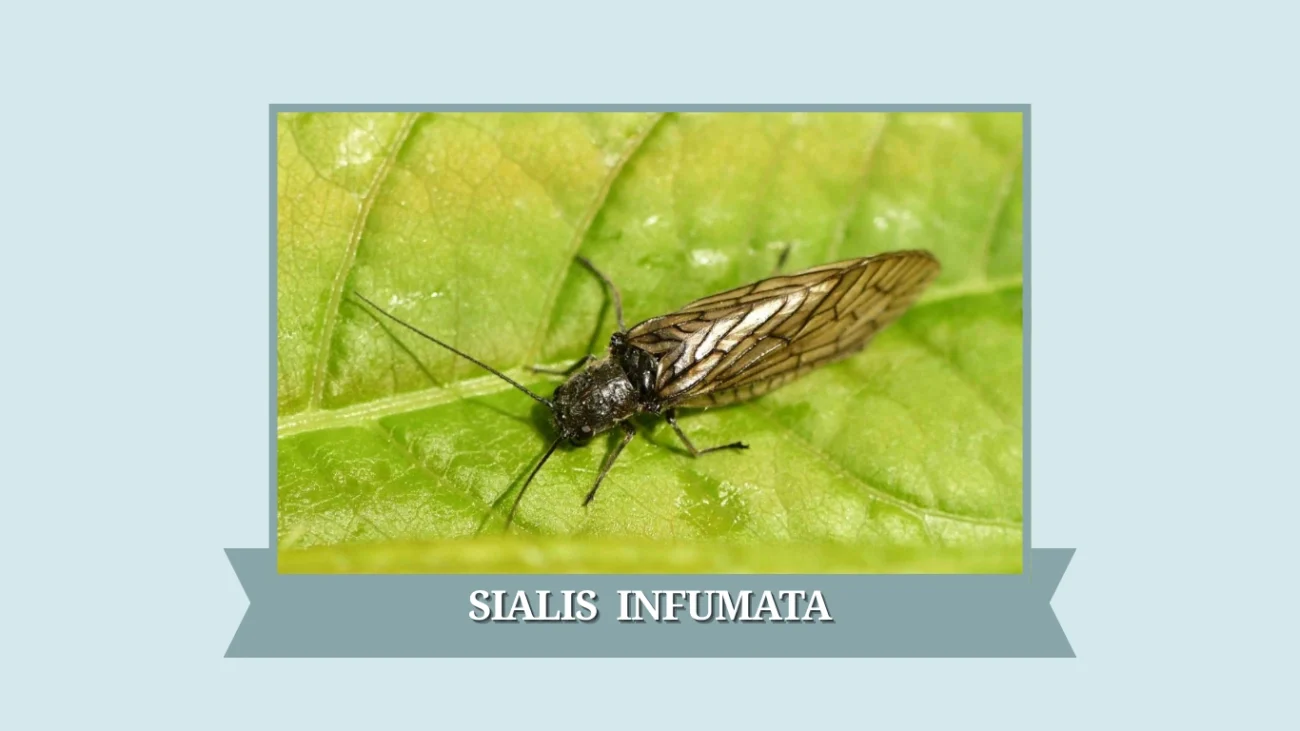
The Sialis infumata is a North American alderfly species, completing the series of commonly recognized Sialis members. It is characterized by its smoky wing appearance and its role as an aquatic predator during the larval stage.
Identification
- Adult length about 12–16 mm
- Body dark brown to black, fairly slender compared to some relatives
- Wings distinctly smoky and more uniformly dark than many other Sialis species
- Antennae short and thread-like
- Larvae elongated, with segmented bodies and lateral abdominal filaments for underwater respiration
Habitat
Sialis infumata inhabits streams, rivers, and ponds across parts of North America. It is generally associated with slow-flowing or still waters that have sandy or muddy substrates where larvae can burrow and feed.
Behavior
Adults are sluggish and remain close to vegetation near water. They are most active during late spring and early summer. Larvae are effective aquatic predators, consuming insect larvae, worms, and other small invertebrates, thereby helping maintain ecological balance in benthic communities.
Lifecycle
Eggs are laid in clusters on plants, rocks, or other surfaces above water. After hatching, larvae drop into the water, where they live for one to two years. Pupation takes place in damp soil or sediment near shorelines. Adults emerge in spring, live briefly, and focus on reproduction before dying.


