











The California Blue Jay, often admired for its vivid plumage and lively calls, is one of the most recognizable birds along the western coast of the United States. Known scientifically as Aphelocoma californica, this species displays remarkable intelligence, curiosity, and adaptability. Found across California’s woodlands and urban spaces, the California Blue Jay thrives in diverse habitats. This article explores its physical traits, natural range, fascinating behaviors, feeding habits, and unique lifecycle.
Identification

The California Blue Jay (Aphelocoma californica) is easily recognized by its distinctive appearance and vocal personality. Below is a detailed list of its key identifying traits:
Physical Characteristics
- Size: Medium-sized bird measuring about 11 inches (28 cm) long with a wingspan around 15 inches (38 cm).
- Coloration: Bright sky-blue upperparts with grayish-white underparts.
- Head and Face: Flat head with no crest; features a bold blue crown and dark gray mask around the eyes.
- Bill and Legs: Strong, pointed black bill and sturdy black legs adapted for foraging.
- Tail: Long and narrow, providing balance and agility in flight.
- Sex Differences: Males and females look nearly identical; juveniles appear duller with softer shades of blue and gray.
- Flight Pattern: Direct and steady flight, with short glides between wingbeats.
Habitat
Geographic Range
The California Blue Jay inhabits much of the western United States, primarily in California, Oregon, Nevada, and parts of Baja California in Mexico. It prefers warm, dry environments but can also survive in cooler coastal regions and mountain foothills. Its range has gradually expanded due to its remarkable adaptability to human-altered landscapes.
Preferred Environments
This bird thrives in a variety of habitats, from oak woodlands and coastal scrub to suburban parks and backyards. It favors areas with trees and open spaces, providing both shelter and foraging grounds. In oak woodlands, Blue Jays play a vital role in acorn dispersal, helping forests regenerate naturally. Their adaptability allows them to live comfortably near humans without losing their wild nature.
Adaptability and Urban Presence
Few wild birds adapt as successfully to city life as the California Blue Jay. They are often spotted in residential areas, scavenging near gardens, bird feeders, and even picnic tables. Their fearless and inquisitive nature makes them both charming and mischievous. While their loud calls sometimes annoy homeowners, they contribute to pest control by feeding on insects and larvae. The species’ resilience in urban settings highlights its impressive ability to adjust to changing environments.
Behavior
Social Structure and Territoriality
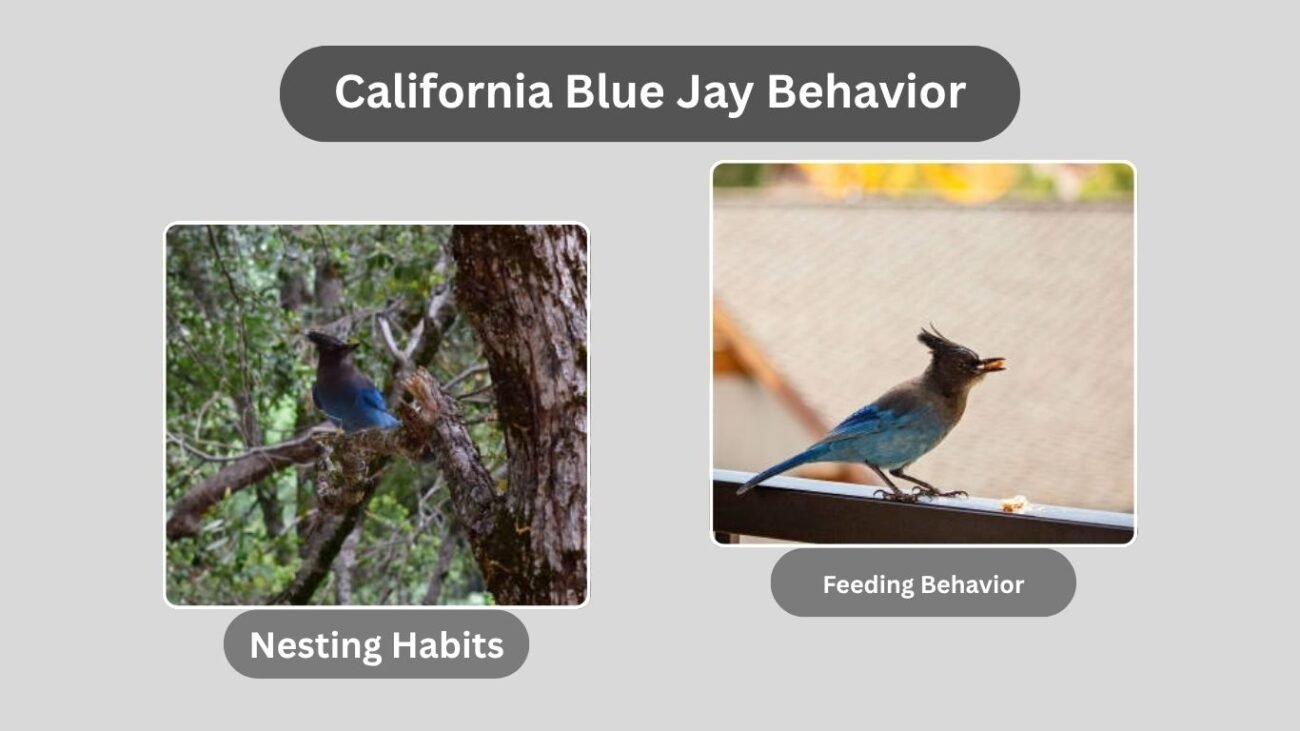
California Blue Jays are generally monogamous, forming strong pair bonds that may last several years. They are highly territorial during the breeding season, fiercely defending their nests from intruders. Outside of breeding, they can be seen in small family groups or loose flocks. Their social behavior often includes cooperative defense, where multiple birds band together to chase away predators like hawks or snakes.
Communication and Intelligence
Renowned for their intelligence, these birds exhibit problem-solving skills and an impressive memory. They are known to store acorns and other food items in various locations, remembering where they buried them even months later. Studies show that they use cognitive mapping to locate hidden caches — an ability rivaling some mammals. Their communication involves a combination of visual cues, postures, and vocalizations, showing a level of social complexity uncommon among small birds.
Mating and Nesting Habits
The breeding season typically begins in early spring, from March through June. Males court females by offering food, fluttering their wings, and performing short display flights. Once paired, both partners participate in building the nest, usually hidden in dense shrubs or low trees. The nest is crafted from twigs, grass, and mud, forming a sturdy cup structure. During nesting, the pair becomes highly protective, chasing away other birds that approach their territory.
Diet
Primary Food Sources
The California Blue Jay’s diet is remarkably diverse, reflecting its adaptability. It consumes acorns, seeds, fruits, insects, and occasionally small vertebrates like lizards or baby birds. During autumn, acorns become the main food source — the jay gathers and hides them underground for winter use. This caching behavior not only ensures survival during food-scarce months but also contributes to forest regeneration when forgotten acorns sprout into new trees.
Feeding Behavior
Their foraging technique is active and curious. They hop along branches or the ground, using their strong bills to pry open nuts or dig for insects. Blue Jays often visit bird feeders, preferring peanuts, suet, and sunflower seeds. They also exhibit food theft behavior, stealing from other birds’ caches or scavenging human leftovers. Despite these antics, their feeding habits play a crucial role in balancing ecosystems by dispersing seeds and controlling pest populations.
Lifecycle
Breeding Season and Courtship
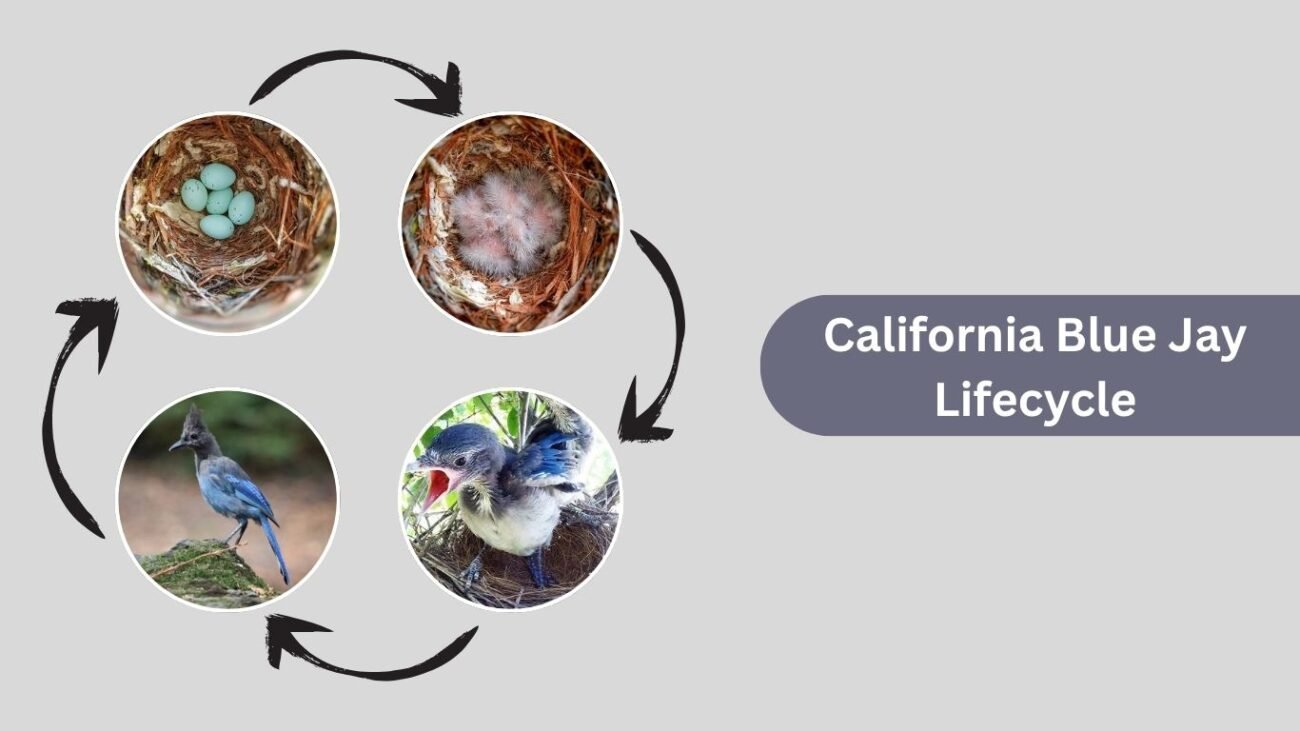
California Blue Jays typically begin their breeding season between March and June when temperatures rise and food becomes abundant. During this period, males engage in elaborate courtship rituals to attract females, including offering food and performing short aerial displays. Once a pair forms a bond, they remain together for several seasons, sometimes for life. The partnership is highly cooperative — both partners share responsibilities in nesting, incubating, and feeding the chicks.
Eggs, Incubation, and Fledging
A typical clutch contains three to six eggs, pale green or bluish with brown speckles. The female incubates them for around 16–18 days while the male provides food. After hatching, both parents feed the nestlings a diet rich in insects, ensuring rapid growth. Within about three weeks, the chicks fledge — leaving the nest but still depending on their parents for guidance and food. During this stage, young jays learn essential survival skills, such as identifying food sources and recognizing predators.
Juvenile Growth and Maturity
Juvenile California Blue Jays have duller plumage than adults, with softer shades of blue and gray. They remain close to their parents for several weeks after fledging, gradually developing independence. By their first year, they attain adult coloration and behavioral maturity. Sexual maturity usually occurs around one year of age, at which point young birds begin seeking mates and territories of their own.
Lifespan and Survival
In the wild, the average lifespan of a California Blue Jay is between 9 and 15 years, though some individuals may live longer in favorable conditions. Survival rates depend on habitat quality, predator threats, and food availability. Common predators include hawks, owls, snakes, and domestic cats. However, their keen awareness and cooperative defense strategies often help them evade danger. Despite challenges, the species’ population remains stable, aided by its adaptability to both natural and urban environments.
Role in the Ecosystem

Seed Dispersal and Reforestation
One of the most important ecological roles of the California Blue Jay lies in its habit of caching acorns. Each bird can bury hundreds of acorns annually, many of which are never retrieved. These forgotten seeds eventually germinate, helping regenerate oak forests and maintain woodland ecosystems. This natural behavior makes the Blue Jay a key contributor to reforestation and biodiversity across California’s landscapes.
Predators and Natural Threats
Predators such as red-tailed hawks, raccoons, and snakes pose consistent threats to Blue Jays, particularly during nesting season. They use alarm calls to alert others in the flock and will often mob larger predators to drive them away. Disease outbreaks, such as West Nile Virus, have also affected some populations, but recovery has been steady. Their intelligence and adaptability continue to serve as strong defenses against natural and human-induced dangers.
Impact on Human Environments
In urban and suburban settings, California Blue Jays are both appreciated and misunderstood. Gardeners value them for eating insects and dispersing seeds, yet they can be mischievous — raiding feeders or stealing shiny objects. Their curiosity often leads them to interact with humans more closely than most wild birds. As a result, they’ve become a familiar sight in California’s backyards, embodying the coexistence of wildlife and urban development.
Key Takeaways
- The California Blue Jay (Aphelocoma californica) is a highly intelligent, vibrant bird native to the western U.S.
- It thrives in diverse habitats, from oak woodlands to city gardens.
- Known for its food caching, the Blue Jay helps regenerate forests through acorn dispersal.
- Exhibits complex communication, problem-solving, and memory skills.
- Forms strong pair bonds, raising chicks cooperatively during spring and early summer.
- Lives on average 9–15 years, maintaining a stable population despite habitat changes.
FAQs
What makes the California Blue Jay different from other Blue Jays?
Unlike the Eastern Blue Jay, the California Blue Jay lacks a crest and shows lighter, more muted blue coloration. It also thrives in dry, open habitats rather than dense forests. Its strong adaptability and role in seed dispersal make it uniquely suited to California’s landscape.
Where can I commonly spot a California Blue Jay?
You can find California Blue Jays in oak woodlands, suburban neighborhoods, and parks throughout California, Oregon, and Nevada. They often visit gardens, bird feeders, and picnic areas, showing little fear of humans and adapting well to residential spaces.
What do California Blue Jays eat throughout the year?
Their diet shifts seasonally — in summer, they eat insects, fruits, and seeds, while in autumn, they focus on acorns and nuts. During winter, they rely on their cached food stores, displaying remarkable memories by recovering hidden acorns even months later.
How intelligent are California Blue Jays compared to other birds?
Extremely intelligent, California Blue Jays exhibit advanced problem-solving and memory abilities. They remember cache locations, recognize individuals, and even display deceptive behavior by hiding food while others aren’t watching — traits comparable to crows and ravens in the corvid family.
How long do California Blue Jays live in the wild?
In natural environments, California Blue Jays typically live 9 to 15 years. Their longevity depends on factors like food availability, predator exposure, and disease. Birds living in stable, suburban habitats with reliable food sources often live longer than their forest-dwelling counterparts.


