











Blue Jays and Cardinals are two of North America’s most admired backyard birds. Their bold colors and distinctive personalities make them instantly recognizable. While Cardinals charm with their bright red plumage and melodic songs, Blue Jays impress with intelligence, social behavior, and striking blue feathers. Birdwatchers often compare these two species to understand their differences in appearance, habits, and symbolism. Let’s explore how they match up across several key aspects of their lives.
Blue Jays vs Cardinals Identification and First Impressions
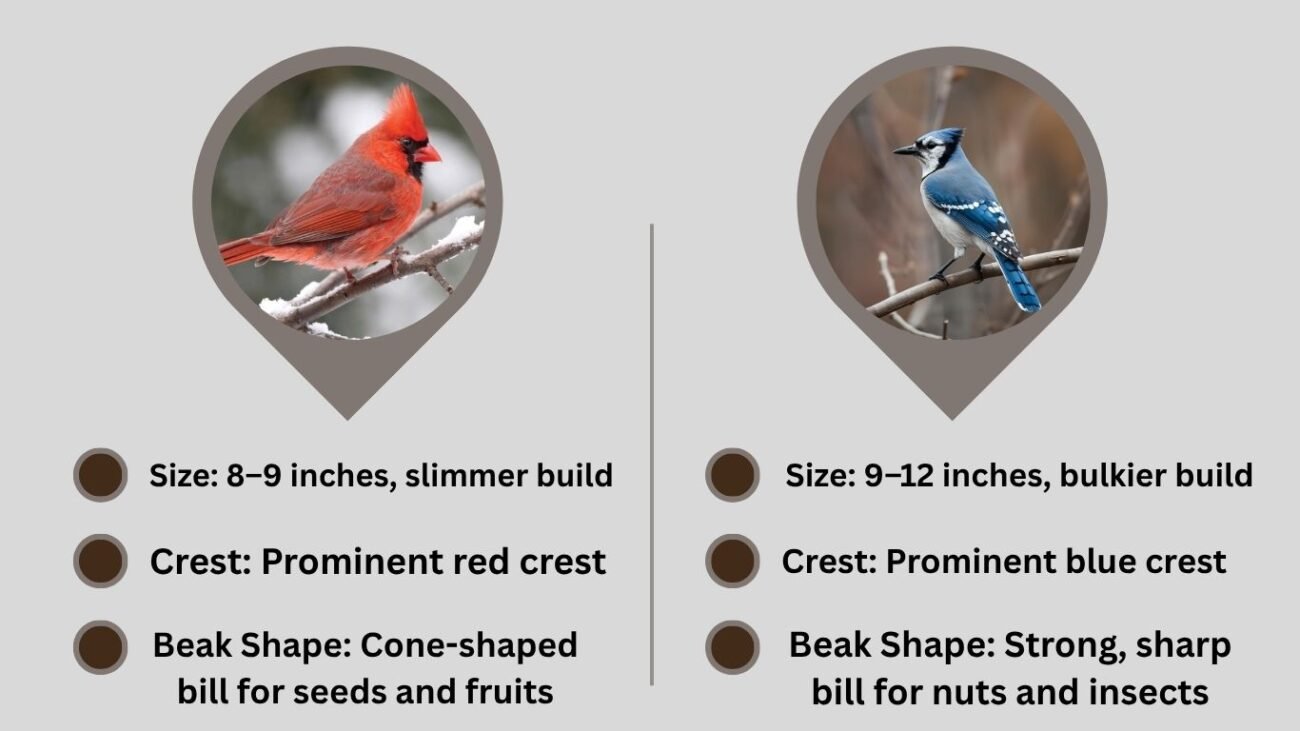
| Feature | Blue Jay 🟦 | Cardinal 🔴 |
| Coloration | Bright blue with black and white markings | Vivid red (males), brown with red tinges (females) |
| Size | 9–12 inches, bulkier build | 8–9 inches, slimmer build |
| Crest | Prominent blue crest | Prominent red crest |
| Beak Shape | Strong, sharp bill for nuts and insects | Cone-shaped bill for seeds and fruits |
| Behavior | Bold, noisy, often dominant at feeders | Calm, gentle, usually peaceful at feeders |
| First Impression | Loud, confident, and highly noticeable | Graceful, melodic, and symbolic |
Plumage and Physical Differences
Coloration and Markings
Cardinals boast brilliant red in males and warm brown with red accents in females. Their colors remain vibrant year-round, unlike many birds that molt into duller shades. Blue Jays, on the other hand, show layered shades of blue with barred wings and a striking black necklace pattern. Interestingly, their blue appearance is caused by light refraction in feathers rather than pigment.
Size and Body Structure
Blue Jays are bulkier, with stronger bills designed for cracking nuts and defending against threats. Cardinals are slimmer with more delicate beaks suited for seeds and fruits. While the size difference is only a few inches, Jays appear more imposing.
Male vs Female Differences
Cardinals show obvious sexual dimorphism, with males in vivid red and females in subtle brownish-red. Blue Jays look nearly identical between sexes, making it harder to distinguish male from female without observing behavior during nesting.
Behavior and Temperament
Social Behavior of Blue Jays
Blue Jays are highly social birds, often traveling in small groups. They are known for their intelligence, problem-solving skills, and even tool use. However, their boldness can sometimes make them seem aggressive, especially around feeders where they chase away smaller birds.
The Gentle Nature of Cardinals
Cardinals are calmer and less confrontational. They often appear in pairs, with males singing loudly to defend territories while females remain nearby. Their peaceful presence makes them a favorite among backyard bird enthusiasts.
Aggression and Territorial Displays
During nesting season, both species show territorial aggression. Blue Jays are louder and more forceful in protecting their area, even mobbing predators like hawks. Cardinals rely on vocal songs and visual displays rather than physical confrontation.
Vocalizations and Communication
Cardinal Songs and Melodies
Cardinals are renowned for their sweet, whistling songs that vary regionally. Both males and females sing, often exchanging calls back and forth. Their vocalizations are melodic and soothing, frequently used as morning songs in birdwatching apps.
Blue Jay Calls and Mimicry
Blue Jays are not known for musical songs but for a wide range of calls, from harsh “jay-jay” sounds to whistles. Remarkably, they can mimic hawks, potentially to scare off rivals or alert their flock. This adaptability highlights their intelligence and survival strategies.
Comparing Soundscapes
Cardinals fill the air with music, while Blue Jays dominate with sharp, commanding calls. Together, they create a lively mix in backyard habitats, with one representing harmony and the other strength.
Habitat and Distribution

Where Blue Jays Live
Blue Jays are found throughout eastern and central North America, thriving in woodlands, parks, and suburban areas. They prefer oak-rich regions due to their reliance on acorns but are adaptable enough to appear in backyards with feeders.
Where Cardinals Thrive
Cardinals are most common in the eastern and southern United States, with populations spreading into Mexico and parts of Canada. They favor thickets, gardens, and woodland edges where cover is abundant.
Overlapping Regions
Both birds share much of their range across the eastern U.S., making it common to see them in the same backyard. Their coexistence highlights how two strikingly different species can adapt to similar environments without directly competing for survival.
Nesting and Reproduction
Blue Jay Nesting Habits
Blue Jays are skilled builders, constructing cup-shaped nests high in trees, often 10–25 feet above ground. Both males and females participate, weaving twigs, bark, and roots into sturdy bases, then lining them with moss and grass. They usually lay 3–6 eggs, which are incubated primarily by the female while the male provides food.
Cardinal Nesting Patterns
Cardinals prefer dense shrubs, hedges, or small trees for their nests, usually built lower than those of Blue Jays. The female does most of the construction, creating a neat nest of grass and twigs. Their clutches also average 3–4 eggs, which hatch in about two weeks.
Raising the Young
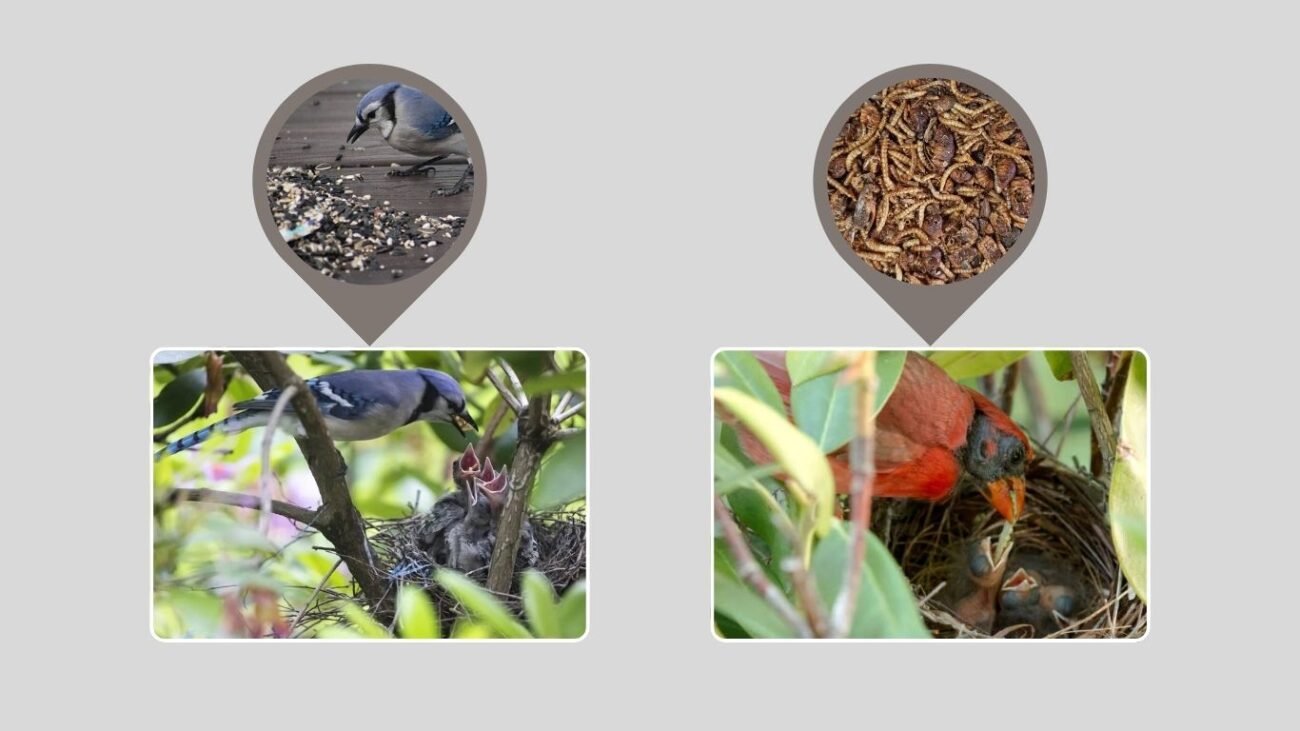
In both species, parents care for the chicks diligently. Blue Jays are particularly protective, often mobbing predators to keep them away. Cardinals are gentler but equally attentive, feeding their young insects and seeds until they fledge within two weeks.
Diet and Feeding Habits
What Blue Jays Eat
Blue Jays are omnivores with a broad diet. They consume acorns, nuts, seeds, berries, and insects, but also scavenge eggs and small nestlings when food is scarce. Their strong bills allow them to crack hard shells and dig into tough food sources.
What Cardinals Eat
Cardinals primarily eat seeds, grains, and fruits, supplemented by insects during breeding season. Their thick, cone-shaped bills are perfect for cracking sunflower seeds, making them one of the most common feeder visitors.
Feeder Preferences in Your Yard
At feeders, Blue Jays often go for peanuts and corn, while Cardinals prefer black oil sunflower seeds and safflower seeds. Providing a mix of both ensures that each bird finds its favorite food without competition.
Blue Jays vs Cardinals in the Ecosystem
Role in Seed Dispersal
Blue Jays play a critical ecological role by caching acorns and nuts, some of which they forget, allowing new trees to sprout. This behavior contributes significantly to forest regeneration. Cardinals, while not hoarders, still help disperse seeds through fruit consumption.
Insect Control and Balance
Both birds help control insect populations, especially during nesting season when they feed protein-rich bugs to their young. Cardinals focus more on beetles and caterpillars, while Jays consume a wider range, including wasps and grasshoppers.
Impact on Other Birds
Blue Jays can be aggressive toward smaller birds, chasing them away from feeders or nests. Cardinals are less confrontational and often coexist peacefully. Together, they represent two distinct survival strategies: dominance versus coexistence.
Symbolism and Cultural Significance
Cardinals as Symbols of Love and Spirit
The Northern Cardinal holds deep cultural meaning. Many people believe seeing a cardinal represents a visit from a lost loved one, making it a powerful spiritual symbol. Its bright red feathers also associate it with vitality, passion, and hope.
Blue Jays as Symbols of Intelligence and Courage
Blue Jays symbolize strength, determination, and intelligence. Their bold behavior reflects perseverance, while their mimicry skills emphasize cleverness. Some cultures view them as tricksters, while others admire their fearless defense of family.
Which Bird Holds Greater Cultural Importance?
Cardinals often appear in art, music, and folklore as gentle messengers of hope, while Blue Jays are celebrated for resilience and bravery. Both carry unique symbolism, enriching their presence in human culture.
Birdwatching and Backyard Attraction
How to Attract Cardinals
Cardinals are drawn to feeders stocked with sunflower or safflower seeds. Providing dense shrubs or hedges offers them safe nesting spaces. They also enjoy shallow birdbaths for drinking and bathing.
How to Attract Blue Jays
Blue Jays favor peanuts (shelled or unshelled) and suet. They also appreciate tall trees for nesting and open spaces for foraging. Water sources like birdbaths enhance their attraction to yards.
Can You Attract Both Together?
Yes, with careful feeder setup. Using platform feeders for Jays and tube feeders for Cardinals ensures less competition. Planting a mix of shrubs and trees allows both to thrive side by side.
Blue Jay vs Cardinal — Who Would Win?

Strength and Size Comparisons
Blue Jays are larger, stronger, and more aggressive. In a direct confrontation, a Blue Jay would likely dominate due to its size advantage and assertive personality.
Real-Life Interactions and Observations
While conflicts do occur at feeders, full fights are rare. Usually, Blue Jays chase Cardinals away rather than engage in prolonged battles. Cardinals often yield space rather than risk injury.
Myths vs Reality
The idea of a “fight to the finish” is more myth than reality. In nature, survival matters more than dominance. While Blue Jays may appear tougher, Cardinals rely on avoidance and resourcefulness to thrive.
Key Takeaways
- Blue Jays are bold, intelligent, and dominant, while Cardinals are gentle, melodic, and symbolic.
- Jays are larger, noisier, and more aggressive; Cardinals are smaller, peaceful, and spiritual.
- Both species play important roles in ecosystems through seed dispersal and insect control.
- Blue Jays prefer peanuts and tall trees; Cardinals love sunflower seeds and dense shrubs.
- Their coexistence in backyards offers birdwatchers a colorful and fascinating contrast.
FAQs
Are Blue Jays bigger than Cardinals?
Yes, Blue Jays are typically 9–12 inches long, while Cardinals measure about 8–9 inches. Jays also appear bulkier and more robust, giving them a size advantage in most interactions.
Do Blue Jays attack Cardinals?
Blue Jays sometimes chase Cardinals from feeders or nesting areas, especially in spring. While they may appear aggressive, these encounters are usually short-lived and rarely cause serious harm.
Can Cardinals and Blue Jays live in the same yard?
Absolutely. Many birdwatchers see both species sharing the same habitat. With proper food variety and multiple feeder types, they can coexist peacefully in suburban or rural areas.
Which bird is more aggressive?
Blue Jays are far more aggressive. They defend their nests fiercely, mob predators, and dominate feeders. Cardinals are territorial but generally avoid physical conflict, relying more on song and display.
What’s the spiritual meaning of seeing a Blue Jay vs a Cardinal?
A Cardinal often symbolizes love, hope, or a visit from a departed loved one. A Blue Jay represents intelligence, courage, and determination. Together, their sightings can symbolize balance between strength and peace.


