










Crows are among the most intelligent and adaptable birds on the planet. Known for their problem-solving skills and complex social structures, they can thrive in almost any environment — from cities to forests. One of the most intriguing aspects of their life cycle is their nesting and reproduction process, particularly their eggs. Crow eggs are beautiful, uniquely patterned, and play a vital role in the species’ survival and family dynamics.
Identification of Crow Eggs

What Do Crow Eggs Look Like?
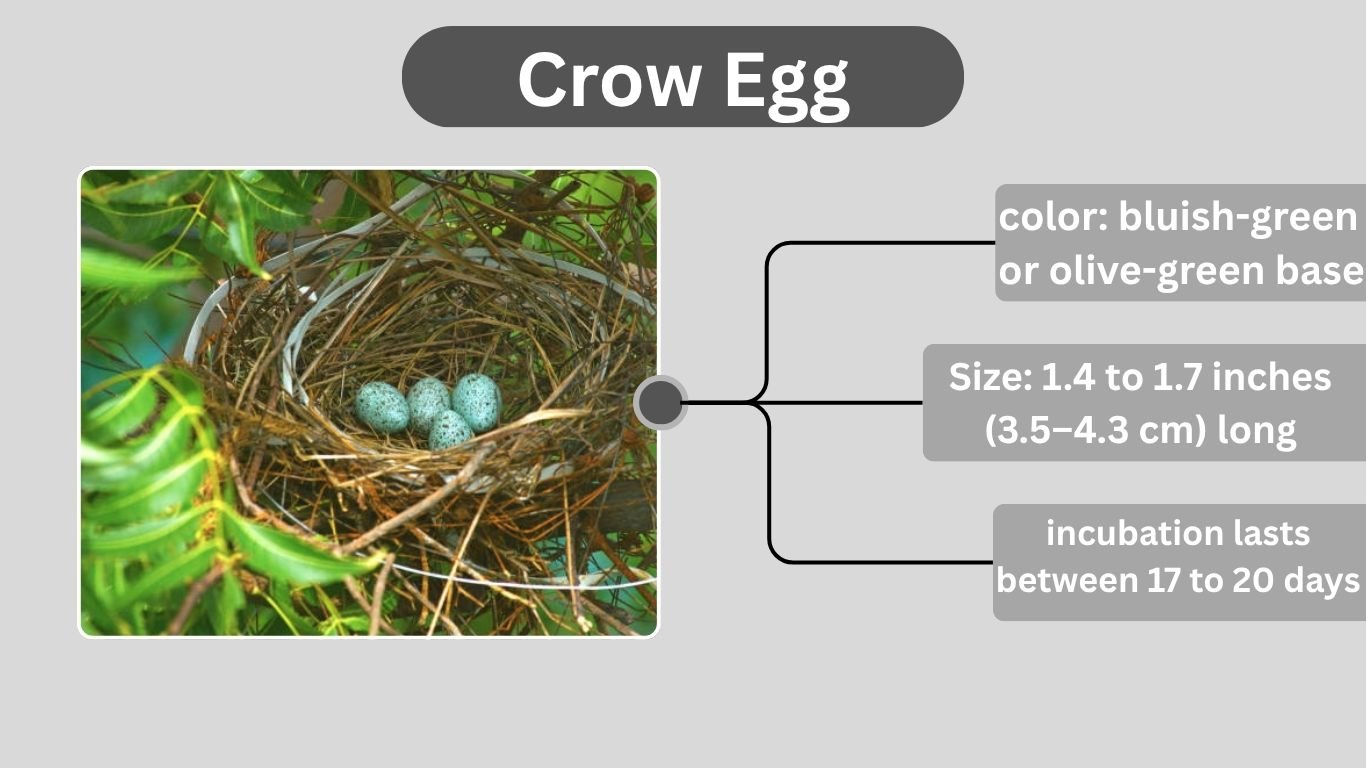
Crow eggs are medium-sized and oval-shaped, typically measuring about 1.4 to 1.7 inches (3.5–4.3 cm) long. Their smooth, slightly glossy shells help protect the developing chicks from external elements. When freshly laid, the eggs have a delicate shine, which fades slightly as incubation progresses. Each egg is a small masterpiece of nature, blending subtle hues and intricate markings that make it easily distinguishable from other bird species.
Crow Egg Color and Pattern
The color of crow eggs varies slightly among species, but most have a bluish-green or olive-green base speckled with brown, gray, or black spots. These patterns act as natural camouflage, helping the eggs blend seamlessly into their nests.
- American Crow eggs usually have a light greenish-blue tint with dark brown blotches.
- Carrion Crow eggs are more olive with gray or purplish markings.
- Compared to raven eggs, which are larger and darker, crow eggs appear lighter and smaller.
No two crow eggs are identical — even within the same clutch. This variation adds a fascinating aesthetic diversity that bird watchers often admire during the breeding season.
H3: Crow Egg Images and Visual Features
If you observe a crow nest from a distance, you’ll notice how the eggs are tucked deep inside, surrounded by twigs, grass, and sometimes even shiny objects. Crows often choose materials that blend with their environment to conceal the eggs from predators. It’s important never to disturb or touch wild crow eggs, as interference can lead to nest abandonment or egg loss.
Size, Number, and Incubation Period
How Big Are Crow Eggs?
Crow eggs are roughly the size of a large grape or small plum — smaller than a chicken egg but slightly larger than a robin’s egg. Their average weight is between 10 to 12 grams. The size of each egg can depend on the female’s age, health, and food availability. A well-fed and experienced female often lays slightly larger eggs with thicker shells.
How Many Eggs Do Crows Lay?
Most crows lay 3 to 6 eggs per clutch, although the exact number may vary based on environmental conditions and species type. The female typically lays one egg per day until the full clutch is complete. After laying, she begins incubation immediately, rarely leaving the nest except for short feeding breaks. Males play a supportive role by bringing food and defending the nesting territory.
In urban settings, where food sources are abundant, crows may sometimes raise two broods in one year, though this is rare. Typically, they stick to one breeding cycle annually.
Crow Egg Incubation and Hatching
Once the last egg is laid, incubation lasts between 17 to 20 days. During this time, the female remains dedicated to maintaining the ideal temperature, turning the eggs regularly to ensure even heat distribution. The male crow often stands guard nearby, warning of potential threats and bringing small meals to the nesting female.
When the chicks hatch, they are featherless, blind, and completely dependent on their parents. Both male and female crows work together to feed the hatchlings, providing insects, worms, and soft fruits. Over the next few weeks, the nestlings grow rapidly and begin to develop the black feathers that will later define their adult appearance.
Crow Nesting and Breeding Habits

When Do Crows Lay Eggs?
Crows typically begin laying eggs in late March through early June, depending on the region. In warmer climates, breeding may start earlier, while in colder regions, nesting occurs later in spring. The timing ensures that chicks hatch when food — such as insects, fruits, and seeds — is most plentiful.
Crows are monogamous birds, often mating for life. Pairs stay together year-round, scouting and defending their nesting territory long before the breeding season begins.
Where Do Crows Build Their Nests?
Crows prefer elevated nesting sites — usually 20 to 60 feet high in tall trees. In urban areas, they may also nest on power poles, rooftops, or large shrubs. Their nests are large, bowl-shaped structures made of sticks, twigs, grass, bark, and even wire or string. The interior is lined with soft materials like feathers or animal fur for insulation.
These nests are not built in isolation. Often, younger crows — the previous year’s offspring — help their parents construct and protect the new nest. This cooperative breeding behavior is one reason crows have such strong family bonds and high chick survival rates.
Diet and Egg-Eating Behavior
Do Crows Eat Eggs?
Crows are opportunistic omnivores, meaning they eat whatever food sources are most accessible. Their diet includes insects, seeds, fruits, small animals, and sometimes eggs. While crows do eat eggs occasionally, it is usually out of necessity rather than preference. During the breeding season, eggs are a nutrient-rich source of protein, which helps fuel their demanding nesting duties.
They often raid other birds’ nests, especially when food is scarce or when they discover unprotected eggs. However, this behavior also contributes to maintaining ecological balance by preventing overpopulation of smaller birds.
Do Crows Eat Other Birds’ Eggs or Babies?
Yes, crows sometimes eat the eggs or chicks of smaller birds such as robins, pigeons, and sparrows. They are intelligent enough to watch where other birds build their nests and may return later to steal eggs when the parents are away.
Despite this, crows are not primarily predators — they are scavengers that take advantage of easy opportunities. In fact, they are more likely to eat already broken or abandoned eggs than to attack a live nest.
This behavior may seem harsh, but in nature, it’s part of the food chain. Crows also act as nature’s cleanup crew, feeding on carrion and waste, helping keep ecosystems balanced.
Can Crows Eat Boiled or Raw Eggs?
Crows can and do eat both raw and boiled eggs, especially when offered by humans. In many urban areas, people feed crows boiled eggs or egg pieces as treats. These eggs are rich in protein and beneficial for the birds, particularly during molting or breeding seasons.
However, eggs should always be plain and not salted or spiced, as artificial additives can harm birds.
Crows also have a unique way of eating raw eggs — they’ll carefully peck a hole in the shell and drink the contents rather than breaking it completely. This precision feeding showcases their incredible intelligence and problem-solving ability.
Do Crows Steal Eggs?
Crows are infamous for stealing eggs, not just for food but sometimes out of curiosity. They may raid unattended nests and take an egg back to examine or hide it. Their sharp memory helps them remember nest locations, so they can return later when conditions are safer.
Despite this reputation, it’s important to note that egg-stealing is a small part of a crow’s diet. Most of their daily meals consist of insects, grains, fruits, and scraps found in human settlements.
Fertilized and Edible Crow Eggs
Fertilized Crow Eggs and Hatching
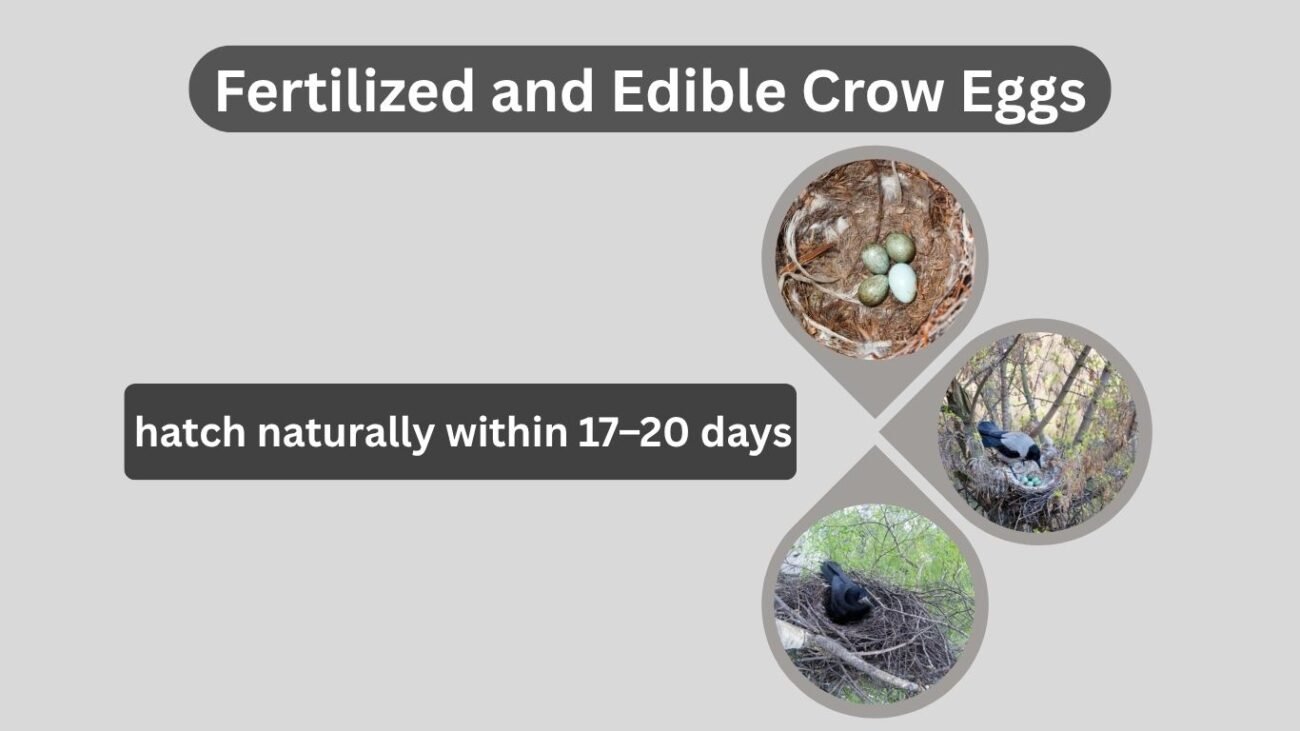
Fertilized crow eggs are those that contain developing embryos after mating occurs. In the wild, these eggs hatch naturally within 17–20 days under the care of the female. Artificially hatching or collecting crow eggs is illegal in many regions, as crows are protected under wildlife conservation laws.
Attempting to incubate wild crow eggs disrupts their natural life cycle and can harm both parent birds and their ecosystem.
For bird enthusiasts, the best way to experience this process is through observation — from a distance using binoculars or wildlife cameras.
Can You Eat Crow Eggs?
Technically, crow eggs are edible for humans, but they are rarely consumed for several reasons:
- Legal Restrictions: Most crow species are protected by wildlife laws. Taking or eating their eggs is illegal in many countries.
- Ethical Concerns: Crows are intelligent, long-living birds that form strong family bonds. Collecting their eggs disrupts their breeding success.
- Scarcity: Crows usually lay only a few eggs per year, making them unsuitable for sustainable harvesting.
While historical records show that some rural communities occasionally ate crow eggs, it’s not a common or encouraged practice today.
Crow Eggs for Sale — Myths and Facts
Online searches for “crow eggs for sale” often yield misleading or fake listings. In most cases, these are not real crow eggs, but mislabeled items like “crow egg apples” — a small fruit variety named for its shape and color.
Legally, it is not permitted to buy or sell wild crow eggs, whether fertilized or not, without special research permits. If you ever come across such offers, they are likely scams or misunderstandings.
Interesting Facts and Cultural References
Crow Egg Apple – Not an Egg at All
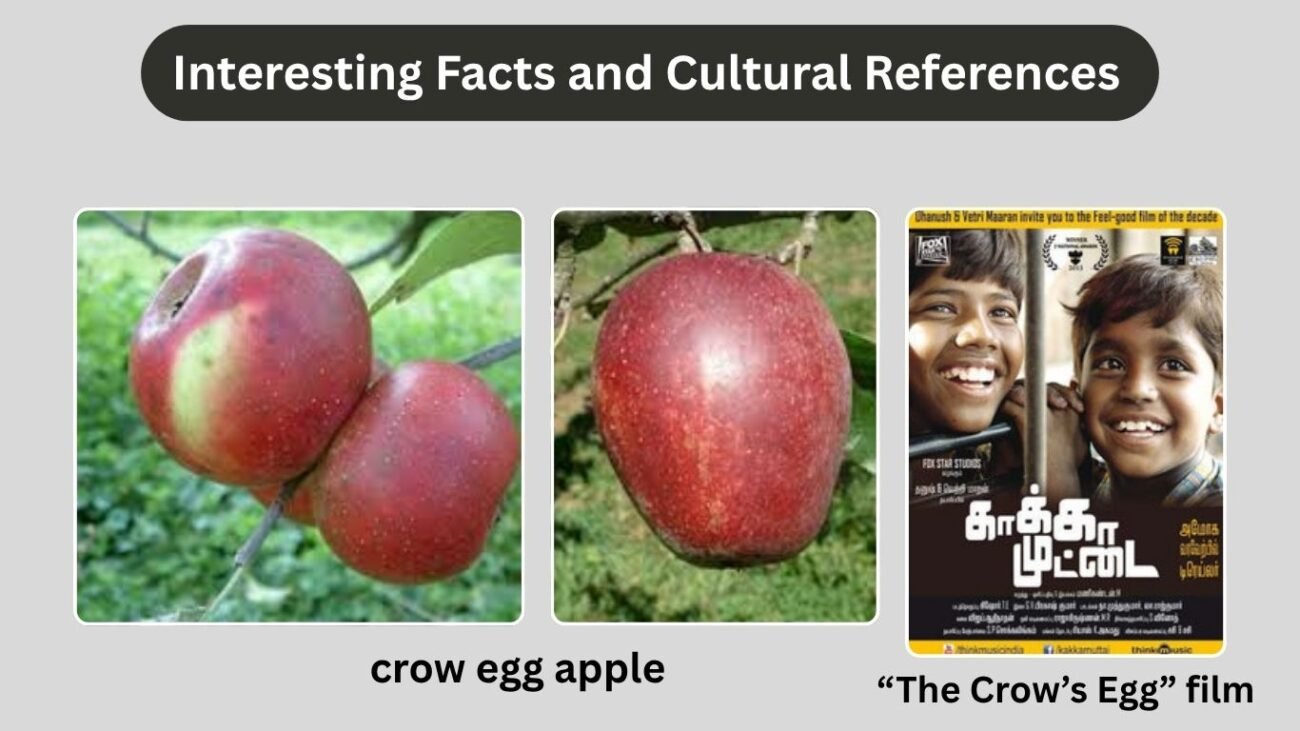
The term “crow egg apple” often confuses people searching for real bird eggs. It actually refers to a variety of apple tree that produces small, round fruits resembling crow eggs in shape and color. These apples are popular in certain regions and have no relation to actual crows or birds.
Crow Eggs in Culture and Media
Crows and their eggs have appeared in many cultural contexts. The Tamil film Kaaka Muttai (“The Crow’s Egg”) used the bird’s egg as a metaphor for innocence and aspiration. In Western symbolism, crow eggs often represent rebirth, intelligence, and mystery due to the crow’s association with magic and transformation.
Fun Trivia About Crows and Eggs
- Crows sometimes use broken eggshells as calcium supplements, pecking at the fragments after chicks hatch.
- They often reuse old nests, repairing them year after year — a rare trait among birds.
- Despite being noisy and bold, crows are excellent parents, fiercely protective of their eggs and chicks.
Key Takeaways
- Crow eggs are bluish-green or olive with brown speckles, perfectly camouflaged in their nests.
- A typical clutch contains 3–6 eggs, incubated for around 18 days.
- Crows occasionally eat other birds’ eggs but mostly survive on insects, fruits, and scraps.
- It’s illegal to collect, sell, or eat crow eggs in most regions.
- “Crow Egg Apple” refers to a fruit, not an actual crow egg.
FAQs
What color are crow eggs?
Crow eggs are usually pale bluish-green or olive with brown or gray speckles. The exact shade varies by species and helps camouflage the eggs in their nests.
How many eggs do crows lay at once?
Most crows lay between three and six eggs in a single breeding season, depending on food availability, climate, and species.
Do crows eat other birds’ eggs?
Yes, crows sometimes eat the eggs or chicks of smaller birds, especially if food is scarce. However, eggs make up only a small portion of their diet.
Can humans eat crow eggs?
Crow eggs are technically edible but are not legally or ethically consumed, as crows are protected wild birds in many countries.
When do crows lay eggs?
Crows typically lay their eggs from late March through early June. This timing ensures that chicks hatch when food sources like insects and fruits are abundant.


