











Florida crows are among the most intelligent and adaptable birds in the Sunshine State. Known for their glossy black feathers, sharp calls, and remarkable problem-solving skills, these birds thrive across Florida’s cities, coasts, and forests. Their presence is both familiar and fascinating — from scavenging near beaches to calling from treetops. In this guide, we’ll explore how to identify Florida’s crows, where they live, their behaviors, diet, and how long they live in the wild.
Identification of Florida Crows
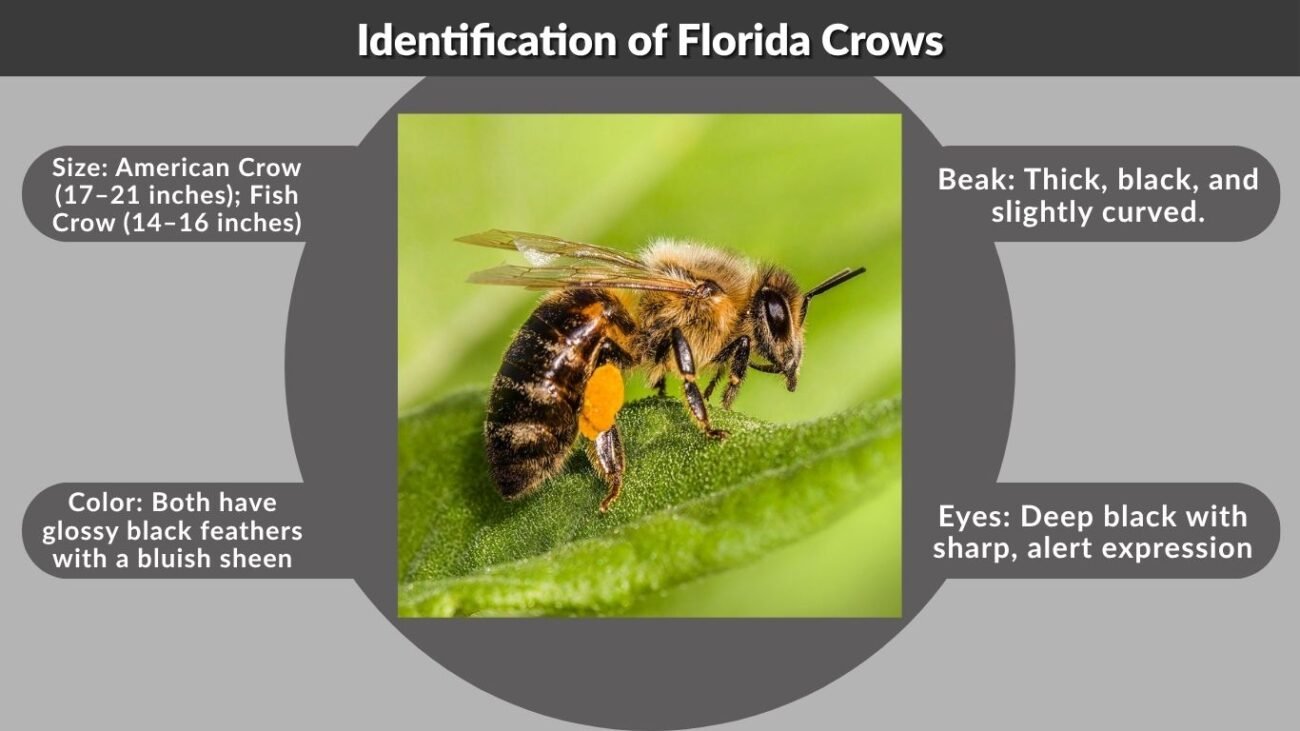
Florida has two main crow species — the American Crow (Corvus brachyrhynchos) and the Fish Crow (Corvus ossifragus). They look similar but differ slightly in voice and size.
- Size: American Crow (17–21 inches); Fish Crow (14–16 inches).
- Color: Both have glossy black feathers with a bluish sheen.
- Beak: Thick, black, and slightly curved.
- Tail: American Crow’s tail is fan-shaped; Fish Crow’s is more square.
- Voice: American Crow calls “caw-caw”; Fish Crow has a nasal “uh-uh.”
- Eyes: Deep black with sharp, alert expression.
- Flight: Steady wingbeats and short glides; often seen in small flocks.
These traits make Florida crows easy to recognize once you know what to look for — sleek black feathers, confident posture, and a distinctive call that echoes through almost every part of the state.
Habitat of Florida Crows
Geographic Range
Crows are widespread across all regions of Florida, from the Panhandle to the Keys. Their adaptability allows them to live in a range of environments, including urban areas, forests, marshlands, farmlands, and coastal zones.
- American Crows are most commonly found in northern and central Florida, where they inhabit fields, pine forests, and open lands.
- Fish Crows dominate southern and coastal Florida, thriving around beaches, rivers, estuaries, and mangroves.
Their flexibility to exploit different habitats has made them one of the most successful bird species in the state. They are equally at home in Miami parking lots or Everglades wetlands, demonstrating how urbanization has expanded their range rather than limited it.
Preferred Nesting and Roosting Areas
Crows prefer to nest high above the ground, usually in tall pine trees, cypress stands, or mangroves, where they can survey their surroundings and protect their young. A typical crow nest is a sturdy bowl made of sticks, lined with softer materials like grass, moss, or fur. Both male and female crows participate in nest-building and caring for their young.
In Florida, nesting usually occurs from February through May, aligning with warmer weather and abundant food supply. Crows are known for their cooperative breeding — offspring from previous years sometimes help raise the next generation, forming tight-knit family units.
As social birds, they gather in large communal roosts, especially during cooler months. These nighttime gatherings can number in the hundreds or even thousands, offering warmth, safety, and social interaction. Florida’s urban areas and wetlands often host such massive roosts, especially near waterways and lighted spaces that deter predators.
Adaptation to Human Environments
Florida crows have proven remarkably adept at living alongside humans. They thrive in suburban neighborhoods, parking lots, college campuses, and agricultural areas, where they find abundant food and shelter. Their intelligence allows them to recognize traffic patterns, time their scavenging safely, and even drop hard-shelled nuts on roads for cars to crack open.
In cities like Tampa, Orlando, and Fort Lauderdale, crows are a common sight perched on streetlights or garbage bins, calling to one another and exploring for meals. Their ability to exploit human activity — without becoming dependent on it — highlights their adaptability and resourcefulness.
Behavior of Florida Crows
Social and Intelligent Birds
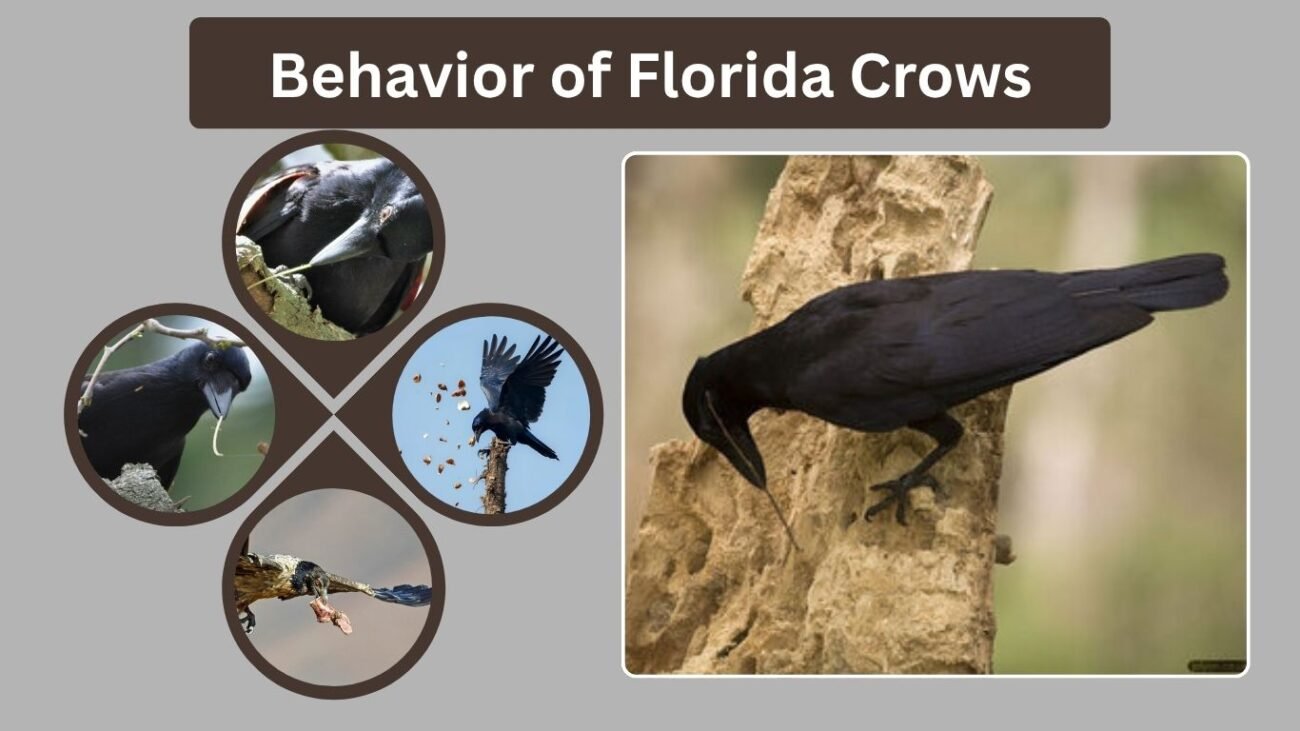
Crows are among the most intelligent birds in the world, and Florida’s crows are no exception. They demonstrate problem-solving abilities, tool use, and even facial recognition — capable of remembering human faces for years. Researchers have observed Florida crows using twigs to extract insects or dropping shells from heights to break them open.
Their social structure is equally fascinating. Crows live in family groups where older siblings often help raise younger chicks. They communicate through a wide range of calls, postures, and even coordinated mobbing behavior when defending against predators such as hawks or owls. This cooperation strengthens their survival and reinforces social bonds within the flock.
Migration and Movement
Most Florida crows are permanent residents, staying in the state year-round. However, some northern populations of American Crows migrate south to Florida during the colder months. During these migrations, massive mixed flocks can be seen foraging across fields and coastal regions.
Local crows also show seasonal movement within Florida, often shifting between urban and rural zones depending on food supply and nesting needs. In winter, they gather into large communal roosts, sometimes numbering thousands, offering warmth and safety during chilly nights.
Legal and Cultural Aspects
Crows are protected under the U.S. Migratory Bird Treaty Act, which prohibits capturing, killing, or keeping them without a permit. In Florida, hunting seasons are highly regulated, and permits are usually limited to agricultural pest control.
Culturally, crows have a dual reputation — seen as symbols of intelligence, mystery, and transformation, yet sometimes misunderstood as omens. In Florida folklore, their presence is often considered a sign of change or adaptability, echoing how they’ve learned to thrive amid human expansion.
Diet of Florida Crows
What Do Florida Crows Eat?
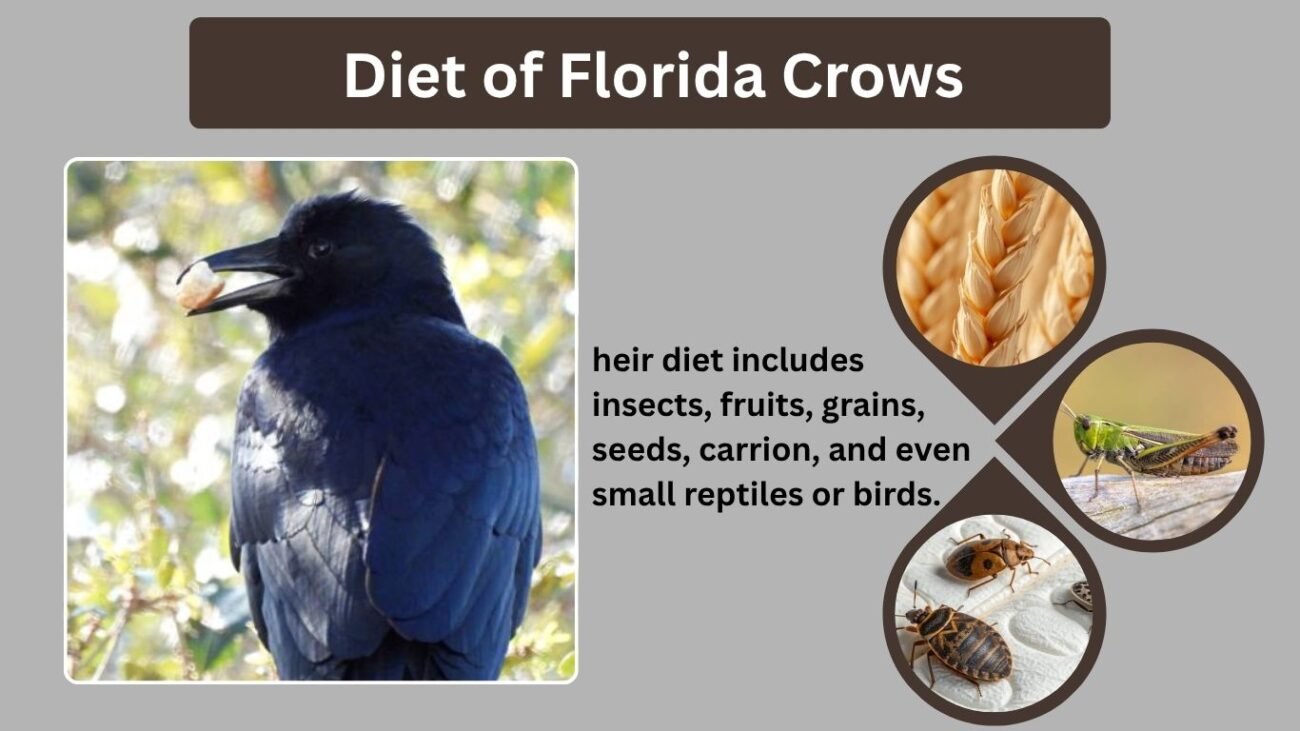
Florida crows are omnivorous scavengers, feeding on both plant and animal matter. Their diet is incredibly varied, helping them survive in nearly any habitat. They consume:
- Fruits and seeds such as berries, acorns, corn, and palmetto fruits.
- Insects and small animals like beetles, frogs, lizards, and snakes.
- Carrion (dead animals), roadkill, and food scraps.
- Eggs and nestlings from other birds when natural food is scarce.
- Marine foods, especially for Fish Crows, including crabs, clams, shrimp, and small fish.
Their strong beaks allow them to tear meat, crack shells, and manipulate objects skillfully. This flexibility gives them an edge over more specialized species, especially in Florida’s unpredictable ecosystems.
Feeding Habits and Techniques
Crows in Florida often forage in groups, using cooperative strategies to locate and protect food. They’re known to cache (hide) food in the ground or under leaves to eat later, showcasing advanced memory skills. In urban settings, crows frequently scavenge from dumpsters, picnic areas, and beaches, timing their visits to avoid human interference.
Fish Crows display unique behavior near coasts — they drop shellfish onto hard surfaces or shallow water to crack them open. Some have even been seen following fishermen to snatch discarded bait or small fish. These behaviors underline their adaptability and intelligence.
Seasonal Diet Variation
- Spring and Summer: Protein-rich diet of insects, amphibians, and bird eggs to support breeding.
- Fall and Winter: Switch to plant matter like grains, fruits, and scavenged remains.
- South Florida: A stronger reliance on marine food due to abundant coastal ecosystems.
This seasonal flexibility helps crows maintain stable populations across Florida, regardless of environmental change or urban development.
Lifespan and Conservation
How Long Do Florida Crows Live?
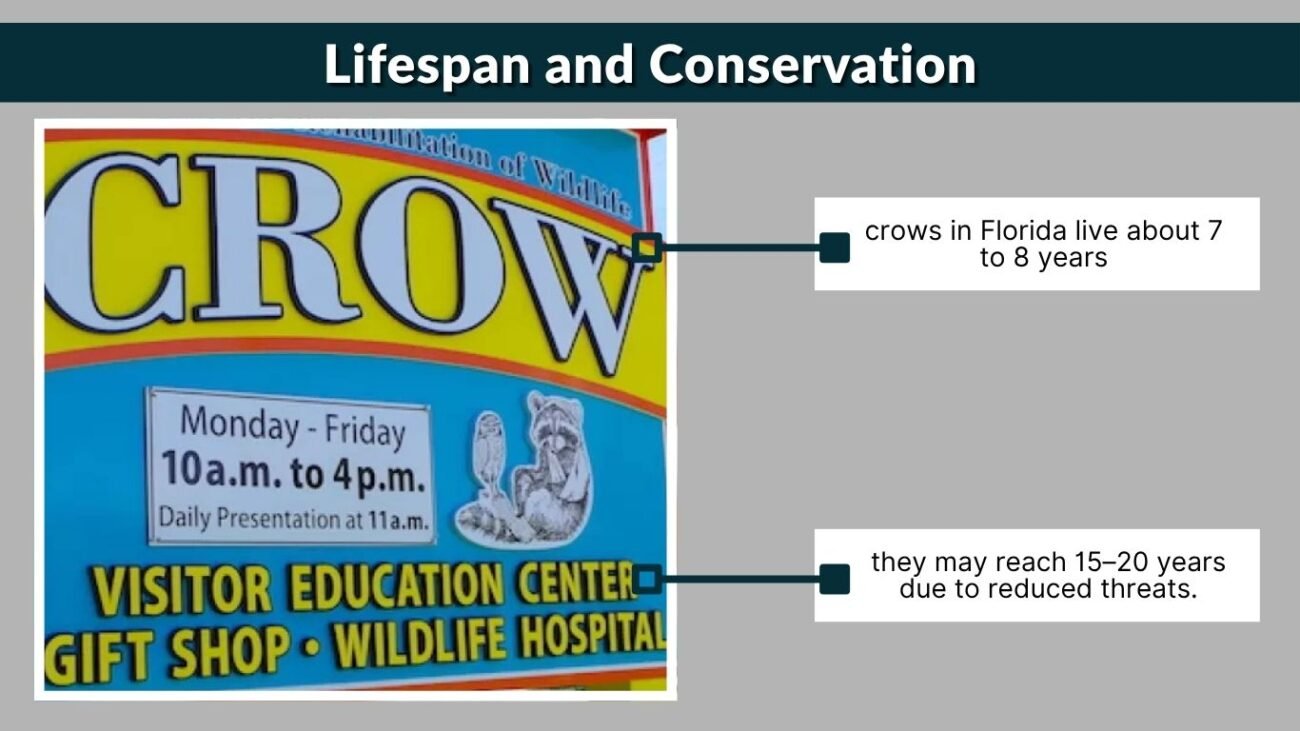
In the wild, most crows in Florida live about 7 to 8 years, though some individuals can survive well over a decade. In captivity or under rehabilitation, they may reach 15–20 years due to reduced threats.
Their main predators include hawks, owls, raccoons, and snakes, which target eggs and fledglings. Adult crows face dangers from vehicles, habitat loss, and environmental toxins, but their intelligence and adaptability give them a strong advantage for survival.
Crow Rehabilitation and Rescue Centers
Florida is home to several facilities dedicated to wildlife care, including the Clinic for the Rehabilitation of Wildlife (CROW) on Sanibel Island. This center specializes in treating injured birds, including crows harmed by storms, vehicles, or pollution.
Rehabilitation centers play a vital role in crow conservation, nursing injured individuals back to health and educating the public about their ecological importance. Many rescues emphasize how crows help control pests, clean up carrion, and maintain balance within ecosystems.
Key Takeaways
- Florida is home to two main species: the American Crow and the Fish Crow.
- Crows inhabit all regions of the state, from cities to coastal wetlands.
- Their intelligence and social behavior make them one of Florida’s most fascinating birds.
- As omnivores, they eat a wide variety of food, helping to clean the environment.
- Crows live up to 8 years in the wild and are protected under U.S. law.
- Rehabilitation centers such as CROW Sanibel Island aid in their recovery and conservation.
FAQs About Florida Crows
Are crows native to Florida?
Yes. Both the American Crow and the Fish Crow are native residents of Florida. While the American Crow is widespread across North America, the Fish Crow is especially common in coastal and southern regions of the state.
What do crows eat in Florida?
Crows eat fruits, seeds, insects, amphibians, carrion, and human leftovers. The Fish Crow also feeds on aquatic prey such as crabs and small fish. Their adaptable diet ensures survival in urban, rural, and coastal environments.
Are crows protected in Florida?
Yes. Under the Migratory Bird Treaty Act, crows cannot be captured, killed, or kept as pets without authorization. Limited hunting is permitted in specific agricultural zones with proper permits.
Do crows migrate to Florida?
Some northern populations of American Crows migrate to Florida during winter. However, most crows living in Florida are permanent residents that stay year-round, moving only slightly depending on food availability.
How long do crows live in Florida?
On average, crows live 7–8 years in the wild, though some exceed 15 years in favorable conditions. In captivity or rehabilitation centers, they may live up to 20 years with proper care and protection.


