


Turkey Vultures are among the most skilled scavengers in the animal kingdom. Known for their soaring flight and keen sense of smell, these birds feed primarily on carrion—dead animals that help keep nature’s ecosystems clean. Although their diet may seem unappealing, Turkey Vultures play a vital role in preventing the spread of disease and recycling nutrients back into the environment.
Overview of the Turkey Vulture’s Diet
A Scavenger’s Role
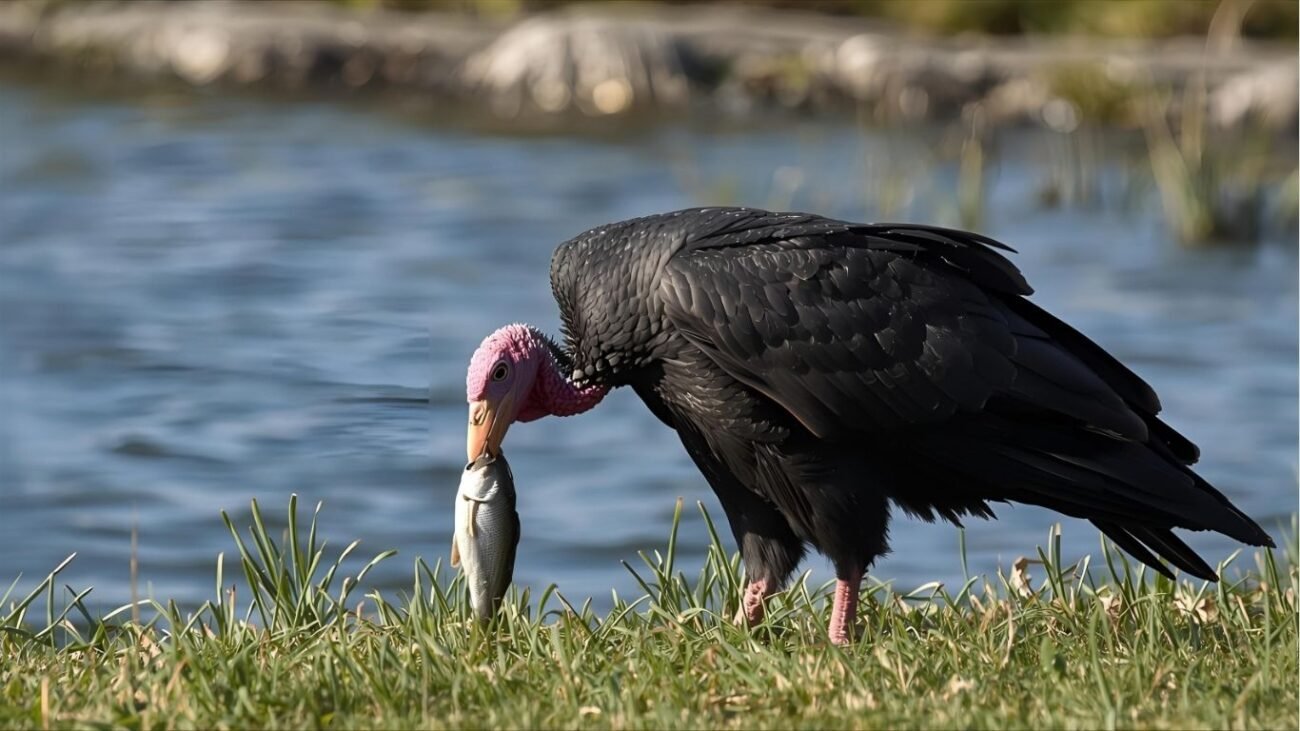
Turkey Vultures are nature’s cleanup crew. Rather than hunting live prey, they specialize in consuming carrion, which includes the remains of animals that have died from natural causes or accidents. This feeding behavior prevents decay and disease from spreading through the ecosystem. Their diet helps balance the natural food chain by removing carcasses that would otherwise attract harmful bacteria and parasites.
General Feeding Behavior
Turkey Vultures are opportunistic eaters. They rely heavily on smell—a rare ability in birds—to detect dead animals even beneath dense vegetation. Once they find a food source, they descend in smooth spirals, gliding with wings held in a shallow “V.” They prefer freshly dead animals, avoiding those that are too decomposed. Often, several vultures will feed together, waiting patiently and taking turns instead of fighting over food.
Main Foods Turkey Vultures Eat
Carrion – Their Primary Food Source
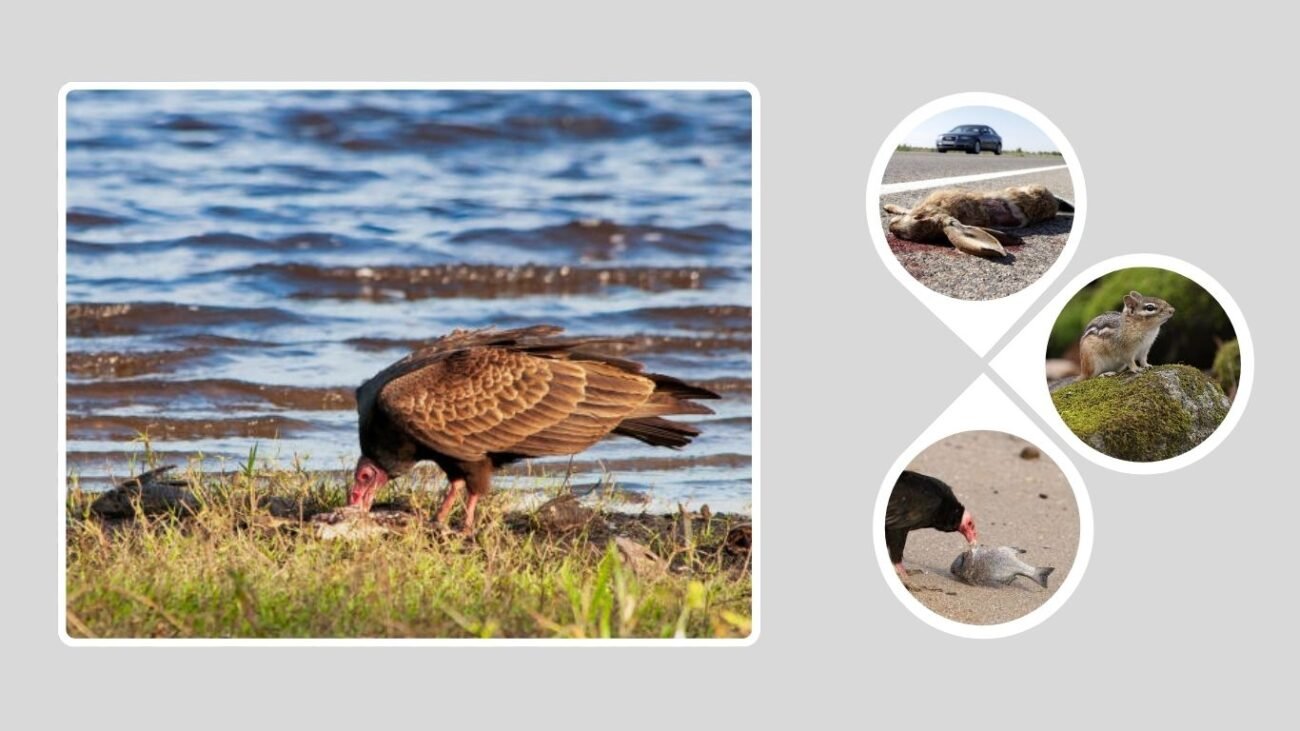
Carrion makes up nearly all of a Turkey Vulture’s diet. They consume the remains of small to medium-sized mammals such as raccoons, rabbits, deer, and opossums. They also feed on birds, reptiles, amphibians, and fish when available. Unlike predators, Turkey Vultures rarely kill; instead, they seek animals that have recently died. Their sharp beaks easily tear through tough hides, while their weak feet are suited for balancing, not grasping prey. This combination of traits perfectly fits their scavenger lifestyle.
Regional and Habitat Variations
The diet of Turkey Vultures can change depending on where they live:
- Forests and Grasslands: Small mammals, rodents, and deer carcasses.
- Deserts: Lizards, snakes, and smaller mammals adapted to arid climates.
- Coastal Areas: Dead fish, crabs, and other marine life washed ashore.
- Farmland and Roadsides: Livestock remains, roadkill, and discarded meat.
Their adaptability allows them to survive in nearly any habitat where carrion is available, from dense forests to open beaches.
Feeding Techniques and Behavior
How Turkey Vultures Find Food
Turkey Vultures possess one of the strongest senses of smell in the bird world. They can detect gases like ethyl mercaptan, which is released by decaying animals. While soaring thousands of feet in the air, they scan the landscape both visually and through scent. When one vulture locates food, others often follow, forming small groups known as “wakes.” Interestingly, Black Vultures—another species of scavenger—often track Turkey Vultures to carcasses, depending on their superior sense of smell.
How They Eat
Once on the ground, Turkey Vultures feed cautiously. They use their strong, hooked beak to rip flesh, starting with softer areas such as the eyes, tongue, and internal organs. Because their feet are not designed to hold prey, they must stand beside the carcass while eating. They feed until full, sometimes regurgitating food later to lighten their load for flight. This unique feeding method ensures they can eat safely without overexertion.
Feeding by Life Stage
What Do Baby Turkey Vultures Eat?
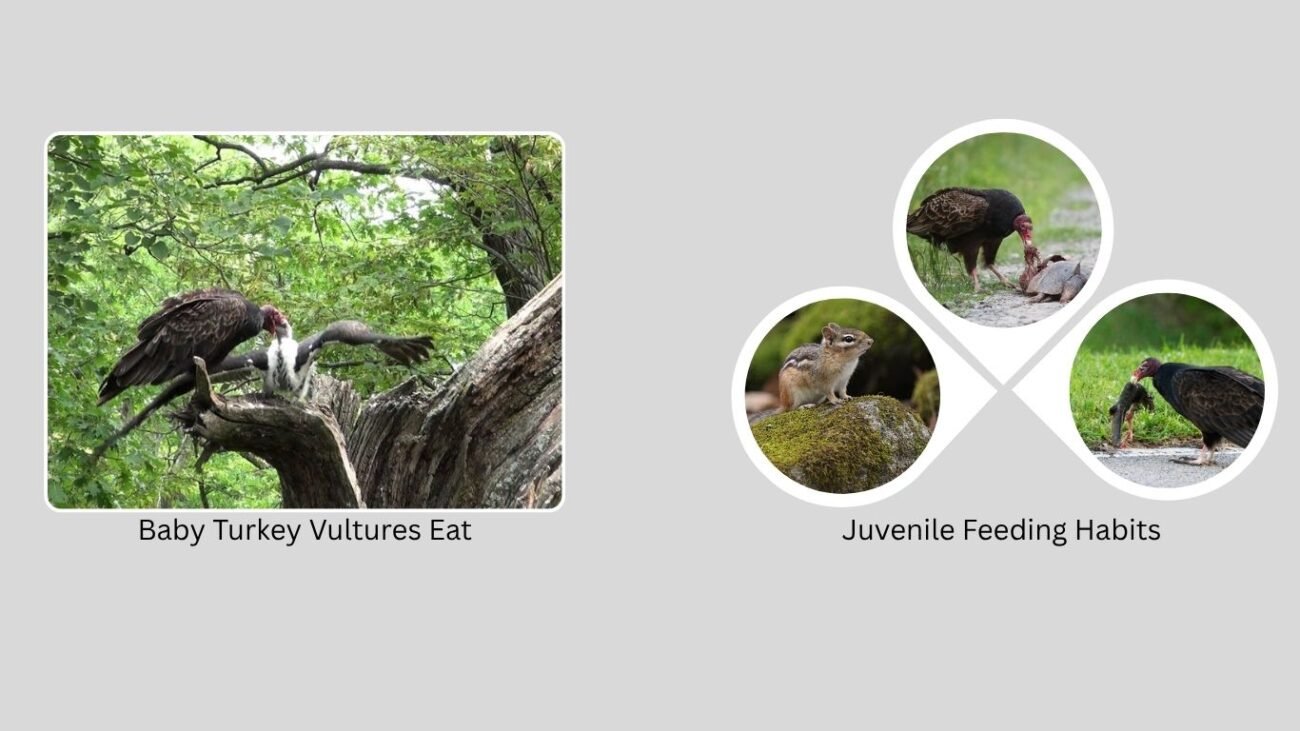
Baby Turkey Vultures, or chicks, depend entirely on their parents for food. Adult vultures regurgitate partially digested carrion directly into the chicks’ mouths. This ensures that the food is soft and safe for them to digest. Both parents share feeding duties, visiting the nest several times a day. As chicks grow, the regurgitated food becomes thicker and less processed until they are ready to feed on small carcasses near the nest.
Juvenile Feeding Habits
Once fledged, juvenile Turkey Vultures begin learning to find food by following adults. They rely on imitation and observation, practicing circling behavior and identifying scents. Over time, young vultures gain independence, joining other birds in communal feeding groups known as “roosts.” These early experiences teach them how to locate carrion efficiently and recognize safe food sources.
Feeding Time and Daily Routine
When Do Turkey Vultures Eat?
Turkey Vultures are diurnal feeders, meaning they are active during the day. They typically begin feeding in the morning once the air warms enough to create rising thermals that aid their flight. Midday and early afternoon are prime feeding times when visibility and air currents are optimal. They avoid feeding during the hottest part of the day, as heat can accelerate decomposition and make carcasses less appealing. At dusk, they roost in trees or cliffs to rest and digest.
Social Feeding
Although they often feed alone, Turkey Vultures may gather in small groups when a large carcass is available. These gatherings are orderly, with dominant adults feeding first. Instead of fighting, vultures display patience, taking turns until all have eaten. This cooperative behavior helps maintain group stability and prevents injury — a remarkable trait for scavenging birds.
Adaptations for a Scavenger Lifestyle
Physical Adaptations
Turkey Vultures are perfectly evolved for scavenging.
- Bald Head: Keeps bacteria and parasites from sticking while feeding on carcasses.
- Powerful Beak: Sharp and hooked for tearing through thick hides and flesh.
- Acidic Stomach: Strong digestive acids neutralize deadly toxins like anthrax and botulism.
- Large Wingspan: Allows them to glide effortlessly for miles in search of carrion.
- Keen Senses: Exceptional smell and eyesight make locating food efficient, even in dense forests.
Behavioral Adaptations
These birds rely on teamwork and patience rather than aggression.
- They often circle silently in groups called “kettles” while searching for food.
- Feed in orderly turns, avoiding fights that could cause injury.
- Regurgitate food as a defensive response or to lighten their load for quick flight.
- Can go several days without eating, conserving energy through slow metabolism.
Diet in Different Environments
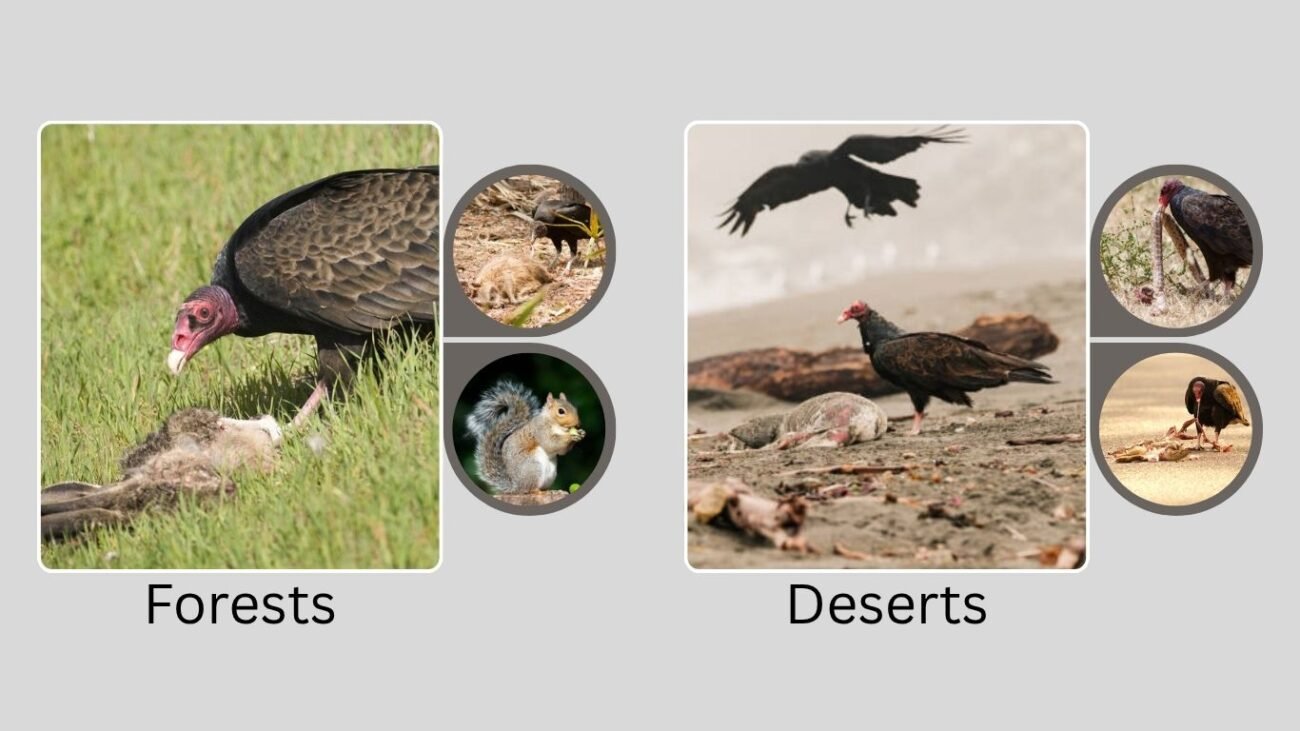
| Habitat Type | Primary Foods | Feeding Notes |
| Forests | Deer, raccoons, squirrels | Common along roadways and wooded clearings |
| Deserts | Lizards, snakes, small rodents | Adapted to hot, dry environments |
| Coastal Areas | Fish, crabs, sea mammals | Feed on washed-up marine life |
| Farmland | Livestock carcasses, rodents | Often seen following plowing fields or feeding on roadkill |
| Urban/Suburban Areas | Roadside carrion, waste meat | Thrive near highways and landfills |
Their adaptability to so many habitats has made Turkey Vultures one of the most widespread large birds in the Americas.
Ecological Importance of Their Diet
Nature’s Cleanup Crew
Turkey Vultures serve as nature’s sanitation system. By consuming carrion, they prevent the spread of dangerous pathogens. Their stomach acids kill bacteria that could harm other animals, including anthrax and salmonella. In doing so, they recycle nutrients back into the environment and help maintain a healthy ecosystem.
Comparison with Other Scavengers
- Black Vultures: Rely more on sight and aggression; often follow Turkey Vultures to carcasses.
- Crows and Ravens: Eat smaller carrion and are more opportunistic.
- Coyotes and Foxes: Compete for food but cannot digest the same level of decay safely.
This ecological teamwork ensures that no part of an animal’s life goes to waste.
Spiritual and Symbolic Meaning
Across many cultures, Turkey Vultures hold symbolic meaning beyond their ecological role. They are seen as symbols of purification, transformation, and renewal — turning death into life by cleansing the land. In Native American beliefs, they represent patience and awareness, teaching humans to act with purpose rather than haste. Spiritually, seeing a vulture can signify the need to release negativity and embrace change.
FAQs
Do turkey vultures eat live animals?
No, Turkey Vultures do not hunt. They strictly eat carrion — animals that have already died. Their weak feet and gentle nature make them unsuited for killing prey.
How do turkey vultures find food?
They rely on a remarkable sense of smell to detect gases from decomposing flesh, even under dense cover. Their keen eyesight helps confirm food sources from the air.
What do baby turkey vultures eat?
Chicks are fed regurgitated carrion by both parents. As they grow, they begin eating larger pieces until they can find food on their own.
Do turkey vultures eat fish or reptiles?
Yes. Coastal populations consume dead fish and crabs, while desert vultures often eat snakes and small lizards. Their diet adjusts to whatever carrion is available.
When do turkey vultures usually eat?
They are diurnal feeders, most active in the late morning and afternoon when warm air currents allow them to soar effortlessly in search of food.


