











Turkeys are fascinating birds with lifespans that vary dramatically depending on where they live, how they’re raised, and what breed they belong to. A wild turkey roaming in hardwood forests faces a completely different life expectancy than a broad-breasted commercial turkey bred for rapid growth. Meanwhile, heritage breeds and pet turkeys can live surprisingly long, sometimes over a decade. Understanding how long turkeys live—and why their lifespans differ—helps explain everything from conservation efforts to farming practices. This guide breaks down the natural lifespan of turkeys in the wild, on farms, as pets, and in commercial production, including special categories like turkey vultures and presidentially pardoned turkeys.
Average Turkey Lifespan – Quick Overview

On average, most turkeys live 3 to 10 years, but this number varies widely:
- Wild turkeys: 3–5 years
- Domestic/pet turkeys: 7–12 years
- Commercial meat turkeys: 4–6 months
- Heritage turkeys: 8–12 years
- Turkey vultures: 10–20 years (wild), up to 30+ (captivity)
The main factors affecting turkey lifespan include predators, disease, human management, breed genetics, climate, and body structure. Some turkeys are bred to live long, healthy lives, while others are bred for rapid growth and early processing.
How Long Wild Turkeys Live
Wild turkeys face countless challenges in natural environments. Their lifespan depends heavily on predation, habitat quality, and the harshness of seasons.
Average Wild Turkey Lifespan
Most wild turkeys live around 3–5 years. Although adults are hardy and alert, the majority of lifespan loss comes from chick mortality. More than half of turkey poults die within the first few weeks due to predators, weather, and lack of food. Turkeys that reach adulthood often survive longer, as they can fly, roost in trees, and detect threats early.
Lifespan by Region
Wild turkey lifespan also varies by location:
- Northern states (Minnesota, Wisconsin, Michigan): Winters are long and harsh, reducing survival rates.
- Eastern regions: Eastern wild turkeys typically face more predators, but forests provide excellent cover.
- Southern & Western states (Texas, West Texas, Rio Grande areas): Milder winters help turkeys live slightly longer, though drought can reduce food availability.
Climate, food sources, and predator density all shape how long wild turkeys survive.
Wild Turkeys in Captivity
When wild turkeys are kept in protected environments—rehabilitation centers, wildlife farms, or controlled reserves—their lifespan can increase dramatically. Without predators and with access to safe food and medical care, they may live 10 years or more. However, wild turkeys remain more high-strung than domestic varieties, making long-term captivity challenging in some cases.
How Long Domestic & Captive Turkeys Live

Domestic turkeys typically live much longer than wild turkeys because they are protected from predators and dangerous weather conditions.
Farm & Homestead Turkeys
Turkeys raised on small farms or homesteads often live 7–10 years, assuming they are not processed for meat. They receive steady food, shelter, medical treatment, and safety from predators. Heritage breeds, which have more natural body proportions, tend to live the longest in these environments.
Pet Turkeys
When kept as pets, turkeys can be surprisingly long-lived. With good nutrition, low stress, and regular veterinary care, pet turkeys may reach 10–12 years, and in rare cases, even longer. Pet turkeys build strong bonds with owners, reducing stress and improving survival rates.
Tame or Backyard Turkeys
Backyard turkeys fall somewhere between farm and pet birds. Their lifespan depends on:
- Space and exercise
- Safety from predators
- Weather exposure
- Social environment
Most live between 6–10 years, depending on breed and care quality.
How Long Meat & Commercial Turkeys Live
Commercial turkeys have dramatically shorter lifespans than any other group due to selective breeding for rapid growth.
Broad-Breasted Commercial Breeds
The most commonly raised commercial turkeys—Broad Breasted White and Broad Breasted Bronze—are designed to grow extremely fast. Their bodies become too large to live long, leading to:
- Heart strain
- Leg problems
- Difficulty moving
- Overgrown breast muscles
As a result, they typically live only 4–6 months, which is the standard age for processing.
Why Commercial Turkeys Don’t Live Long Naturally
If a broad-breasted turkey is kept alive beyond processing age, it may suffer:
- Joint damage
- Organ failure
- Mobility issues
- Respiratory strain
Most cannot survive past 2–3 years, even with excellent care.
Industrial Farming Timeline
In commercial farming:
- Turkeys hatch in large incubators
- Grow rapidly for 14–20 weeks
- Reach processing weight in under 6 months
This short lifespan is entirely due to selective breeding and is very different from natural turkey biology.
Heritage Turkey Lifespans (Breed-by-Breed Breakdown)
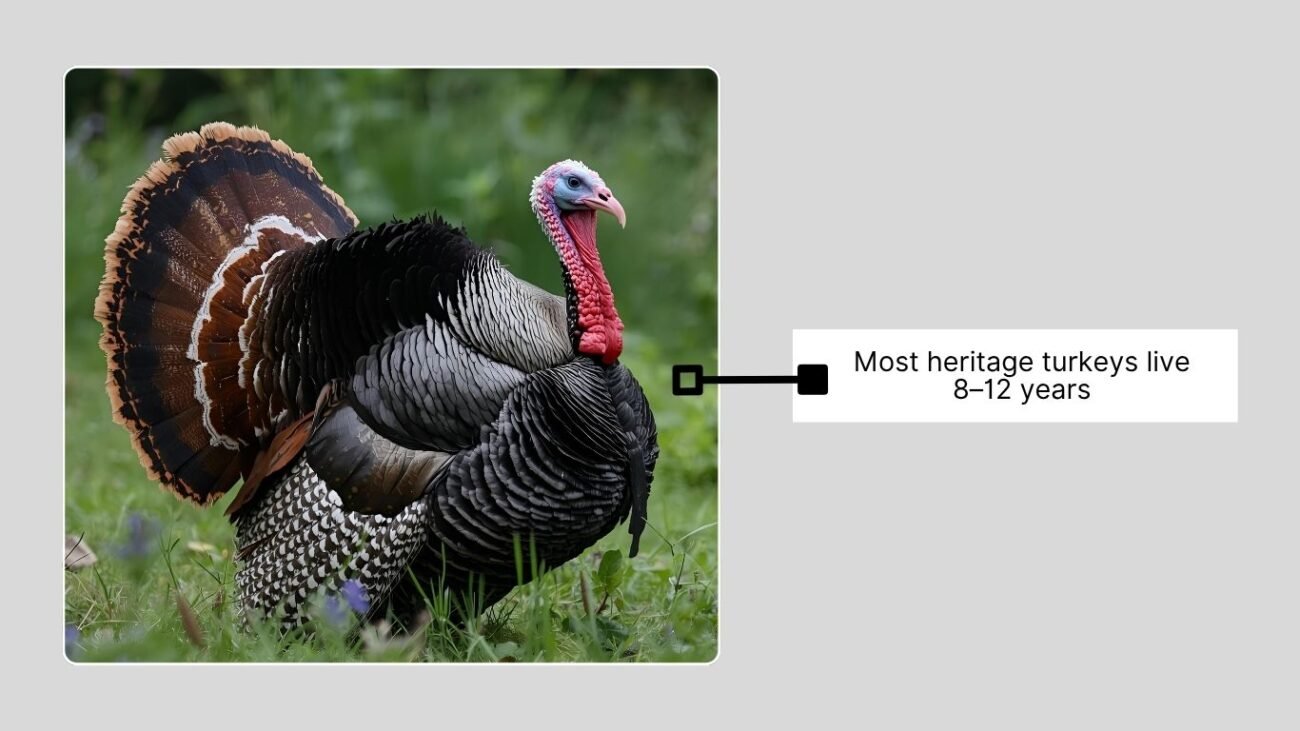
Unlike commercial turkeys, heritage breeds retain natural body proportions, allowing them to live much longer. These birds grow slower, stay healthier, and maintain strong instinctive behaviors such as foraging and roosting.
Long-Lived Heritage Breeds
Most heritage turkeys live 8–12 years, sometimes even longer in ideal conditions.
Common long-lived breeds include:
- Bourbon Red – One of the hardiest, often reaching 10–12 years
- Narragansett – Known for excellent survival ability and strong genetics
- Royal Palm – Smaller, agile, and long-lived
- Black Spanish – Hardy and robust
- Blue Slate – Attractive plumage and relatively long lifespan
- Bronze Turkeys – Traditional breed with strong immune systems
These breeds are common on small farms or homesteads and tend to thrive when allowed to roam and forage naturally.
Smaller or Specialty Breeds
Some heritage varieties are naturally smaller but still long-lived:
- Midget White: Compact size, good health, 8–10 years
- Artisan Gold: Premium breed, sleek build, 9–11 years
These birds face fewer mobility problems than broad-breasted commercial turkeys.
Australian Brush & Bush Turkeys (Not True Turkeys)
Searches for “bush turkeys” or “brush turkeys” refer to Australian megapodes, not North American turkeys.
However, their lifespan is often included in turkey searches.
- Brush/bush turkeys typically live 10–15 years
- They build massive nesting mounds
- They are completely unrelated to the turkey family
Male vs Female Turkey Lifespan
Gender plays a role in turkey longevity, especially in wild populations.
How Long Toms (Male Turkeys) Live
Male turkeys typically live slightly shorter lives due to:
- Aggressive behavior
- Dominance fights
- Bragging displays that attract predators
- Stress during breeding season
In commercial breeds, toms grow larger and suffer more health complications, reducing lifespan even further.
How Long Hens (Female Turkeys) Live
Female turkeys generally live longer than males:
- They are smaller and less prone to mobility problems
- They engage in fewer aggressive conflicts
- Natural instincts help them avoid predators
Hens may live 1–3 years longer than toms in both wild and domestic environments.
Turkey Vultures & Turkey Buzzards: Lifespan Compared to Turkeys
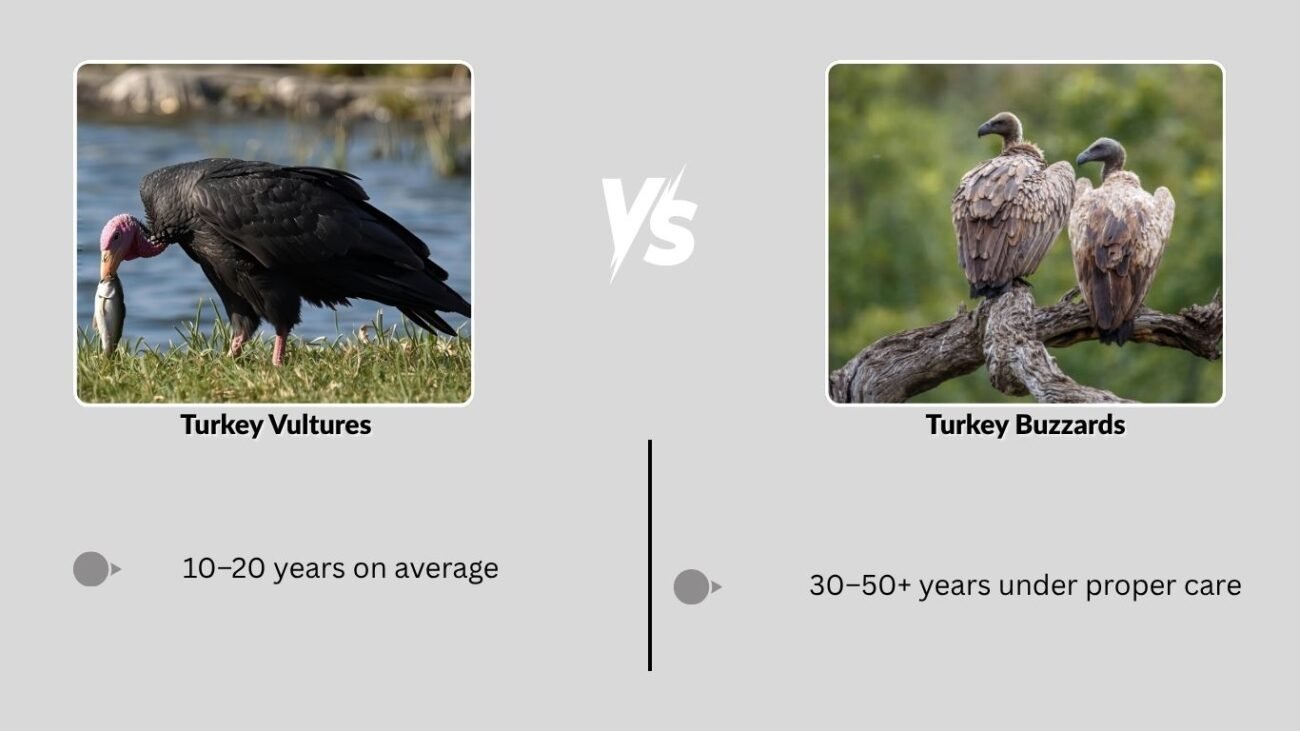
Turkey vultures—often called “turkey buzzards”—are unrelated to turkeys despite the similar name. They belong to a completely different bird family and have much longer lifespans.
Wild Turkey Vulture Lifespan
In the wild, turkey vultures live:
- 10–20 years on average
- Some reach 25+ years
- Predation risk is low due to their size and flight ability
Turkey Vultures in Captivity
With veterinary care and guaranteed food, vultures can live:
- 30–40 years
- Some individuals have exceeded 45 years
This makes them among the longest-lived scavenger birds.
How Long Pardoned Presidential Turkeys Live
Pardoned turkeys from the White House ceremony are almost always Broad Breasted Whites, meaning they suffer from the same health problems as other commercial turkeys.
Why Pardoned Turkeys Still Die Early
Even with special care:
- Their rapid-growth bodies strain their organs
- They cannot support long-term mobility
- They develop heart and joint issues
As a result, most pardoned turkeys live:
- 1–2 years after pardoning
- Rarely beyond age 3
Historical Examples
In the past decade, nearly all pardoned turkeys have died within two years of the event. They are sent to farms, sanctuaries, or universities, but their genetics limit their natural lifespan.
Lifespans of Things Named “Turkey” (Trees, Mites & More)
Some searches refer not to birds but to plants or insects that include “turkey” in their name.
Turkey Fig Trees & Brown Turkey Fig Trees
Brown turkey fig trees typically live:
- 30–50+ years under proper care
- Long-lived in warm climates
Turkey Oak Trees
Turkey oaks are extremely long-lived:
- 150–300 years
- Some exceed 500 years
Turkey Mites
Turkey mites (larval ticks) live:
- Only a few days to weeks
- Life cycle depends on humidity and host availability
Cooking Timelines for Turkey Liver, Gizzards & Heart
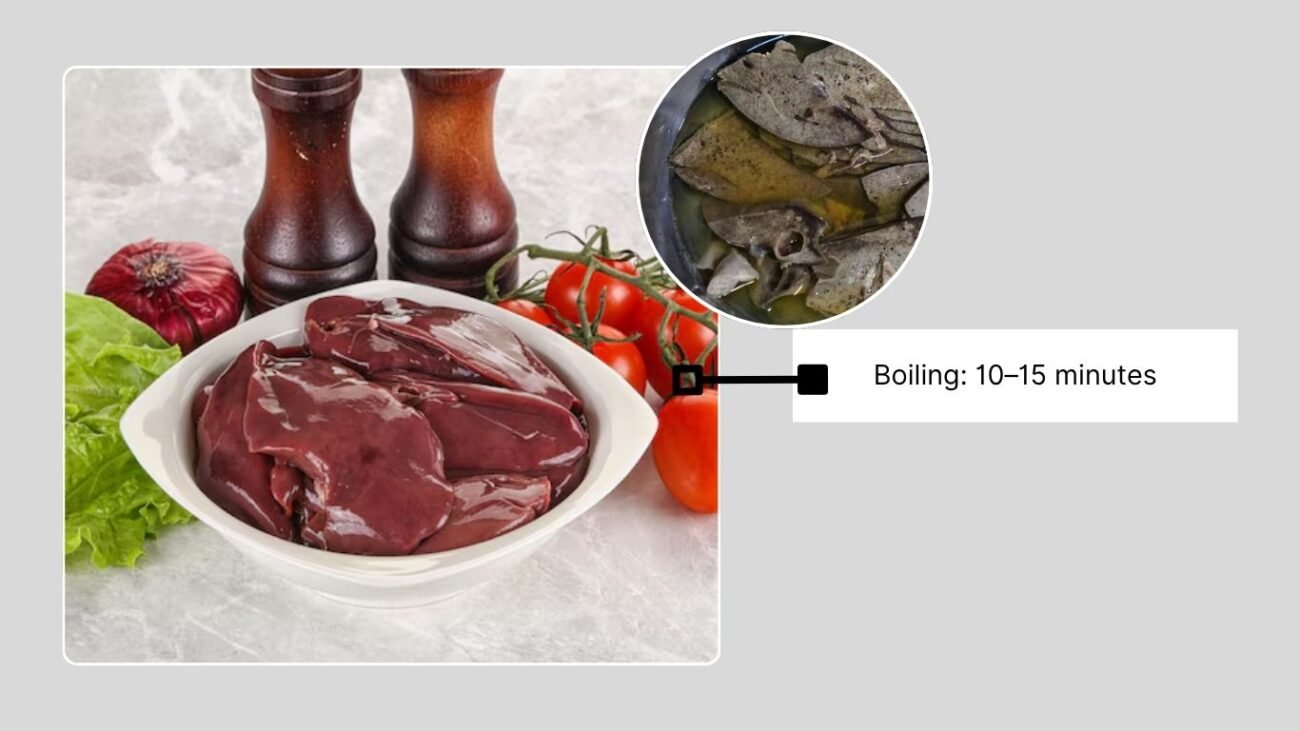
Because many lifespan-related searches included cooking queries, here is a helpful section covering turkey organ cooking times.
How Long to Cook Turkey Liver
- Boiling: 10–15 minutes
- Pan-cooking: 5–7 minutes per side
- Cook until firm and no longer pink
How Long to Boil Turkey Gizzards & Heart
- Gizzards: 35–45 minutes (or simmer 1–2 hours for tenderness)
- Heart: 20–30 minutes
- Often used to flavor gravy, dressing, and broth
FAQs
How long do wild turkeys live?
Wild turkeys usually live 3–5 years, though many young birds don’t survive their first year. Adults can live longer when food is abundant and predators are fewer.
How long do domestic turkeys live?
Domestic turkeys typically live 7–10 years, especially when kept on small farms or as pets. Heritage breeds often live the longest.
How long do meat turkeys live before slaughter?
Commercial meat turkeys are processed at 4–6 months old, well before their natural lifespan due to rapid-growth genetics.
Do male or female turkeys live longer?
Female turkeys (hens) generally live longer than males (toms) because they have fewer injuries, less aggression, and smaller body mass.
How long do pardoned presidential turkeys live?
Despite being spared, pardoned turkeys usually live 1–2 years due to their commercial breed’s genetic limitations.
How long do turkey vultures live?
Turkey vultures live 10–20 years in the wild and up to 30–40 years in captivity, much longer than typical turkeys.


