











Naked mole rats are among the most unusual mammals on Earth. Their hairless bodies, wrinkled skin, huge teeth, and nearly blind eyes make them look almost alien, yet they thrive in environments that would kill most other animals. Native to the arid regions of East Africa, naked mole rats live underground in complex colonies that resemble insect societies more than typical mammalian groups. Their extraordinary biology — including long lifespans, minimal aging, cancer resistance, and survival with little oxygen — has made them a major focus of scientific research. In this guide, we explore how to identify naked mole rats, where they live, how they behave, what they eat, and how they grow and reproduce.
Identification
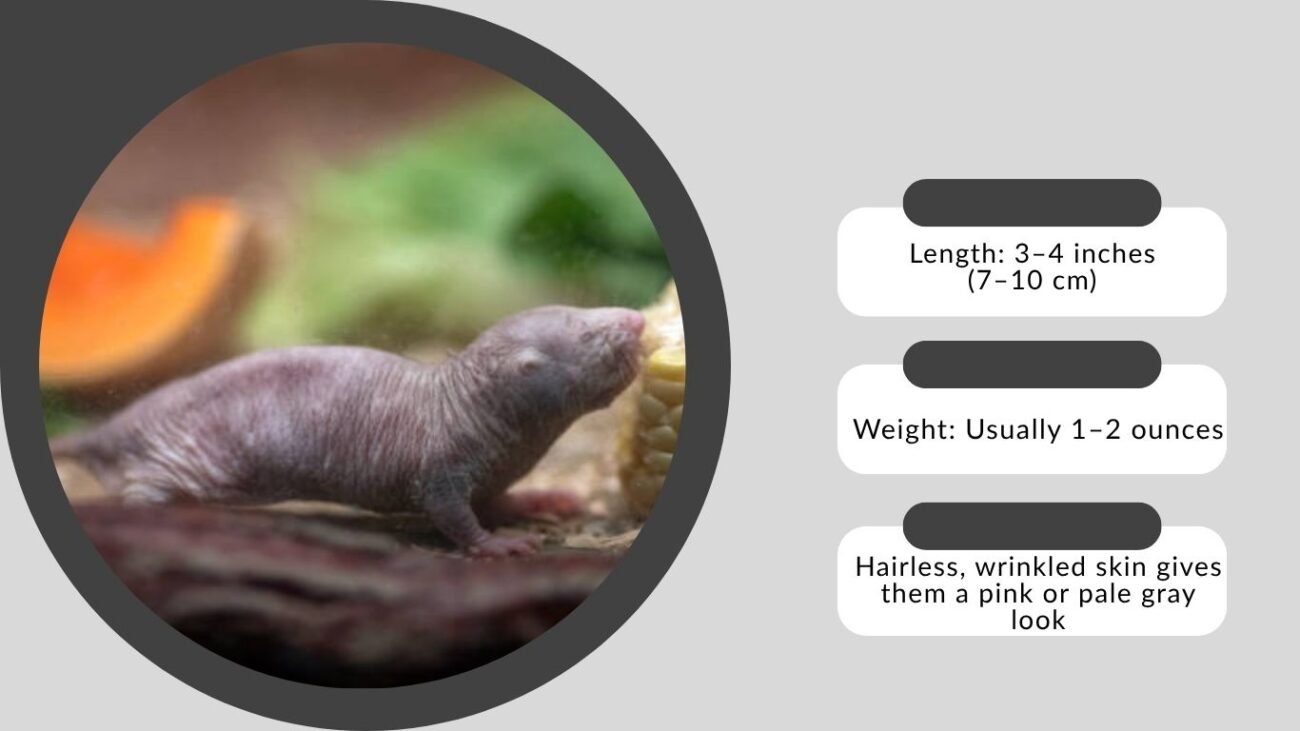
Naked mole rats have several traits that immediately set them apart from other mammals. Although they are classified as rodents, they are unlike typical rats, moles, or mice in both appearance and behavior.
Scientific Classification & Name
The scientific name of the naked mole rat is Heterocephalus glaber, which translates to “hairless head.” Despite the name, they are neither true moles nor true rats. They belong to a unique branch of African mole rats and are one of only two known eusocial mammal species on the planet.
Physical Appearance
The naked mole rat’s appearance is unmistakable:
- Hairless, wrinkled skin gives them a pink or pale gray look.
- Large protruding incisors extend outside the mouth and are used like shovels for digging tunnels.
- Small eyes make them nearly blind but well-suited for dark underground life.
- Long, cylindrical bodies allow smooth movement through tunnels.
- Strong jaw muscles support hours of digging in hard-packed soil.
Despite their strange appearance, their body shape is highly specialized for life below the surface.
Size & Weight
Naked mole rats are small animals:
- Length: 3–4 inches (7–10 cm)
- Weight: Usually 1–2 ounces
Different members of the colony vary in size. Workers tend to be smaller, while soldiers are larger and more muscular. The queen — the only reproducing female — is the largest member, with an elongated body adapted for carrying multiple litters.
Habitat

Naked mole rats thrive in environments that are inhospitable to most mammals. Their survival depends on their ability to live underground year-round.
Geographic Range
Naked mole rats are native to East Africa, particularly:
- Ethiopia
- Kenya
- Somalia
These regions experience long dry seasons, hard-packed soil, and limited vegetation — challenging conditions that shaped the mole rat’s unusual adaptations.
Underground Burrow Systems
Their underground homes are architectural feats. Burrow systems may extend for hundreds of feet and include:
- Nest chambers
- Food storage rooms
- Toilet tunnels
- Main transport tunnels
These burrows maintain stable temperatures and protect the colony from predators and harsh climates.
Environmental Conditions
The underground world of the naked mole rat includes:
- Very low oxygen levels
- High carbon dioxide concentrations
- Little available water
- Limited light and sensory cues
Naked mole rats cope with these extreme conditions through unique physiological adaptations, making them one of the most resilient mammals on Earth.
Behaviors
Behavior is where naked mole rats differ most dramatically from other mammals. Their societies are structured more like insect colonies than mammalian groups.
Eusocial Colony Structure
Naked mole rats are the only known eusocial mammal, meaning they live in highly organized colonies with division of labor:
- Queen: The only fertile female; produces all offspring.
- Breeding males: 1–3 selected males mate with the queen.
- Workers: Responsible for digging, cleaning, and caring for pups.
- Soldiers: Larger individuals that defend tunnels from predators.
This system is similar to bees, ants, or termites — extremely rare for mammals.
Communication & Social Interaction
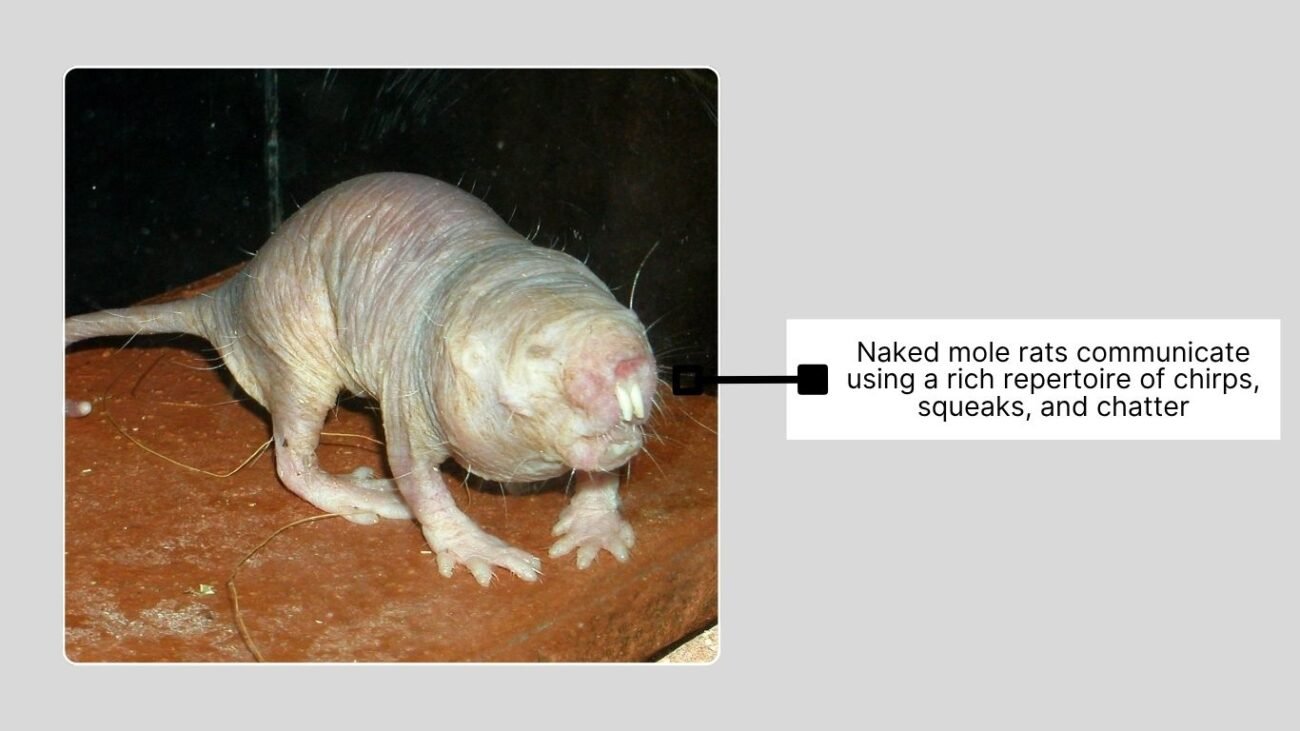
Naked mole rats communicate using a rich repertoire of chirps, squeaks, and chatter. Each colony has its own “accent,” helping members identify outsiders instantly. Constant social contact reduces stress and strengthens colony cohesion.
Survival & Defense Behaviors
Soldiers play a critical role in protecting the colony:
- They form defensive lines in tunnels.
- They fight off snakes — the primary underground predator.
- They rapidly seal off tunnels to trap intruders.
Workers cooperate in enormous digging teams, expanding tunnels using synchronized movements.
Movement & Navigation
Although nearly blind, naked mole rats are excellent navigators. They rely on:
- Whiskers to sense tunnel walls
- Body contact to stay oriented
- Vibrations to detect movement nearby
Their flexible bodies allow them to move forward and backward with equal ease, an essential skill in tight spaces.
Diet
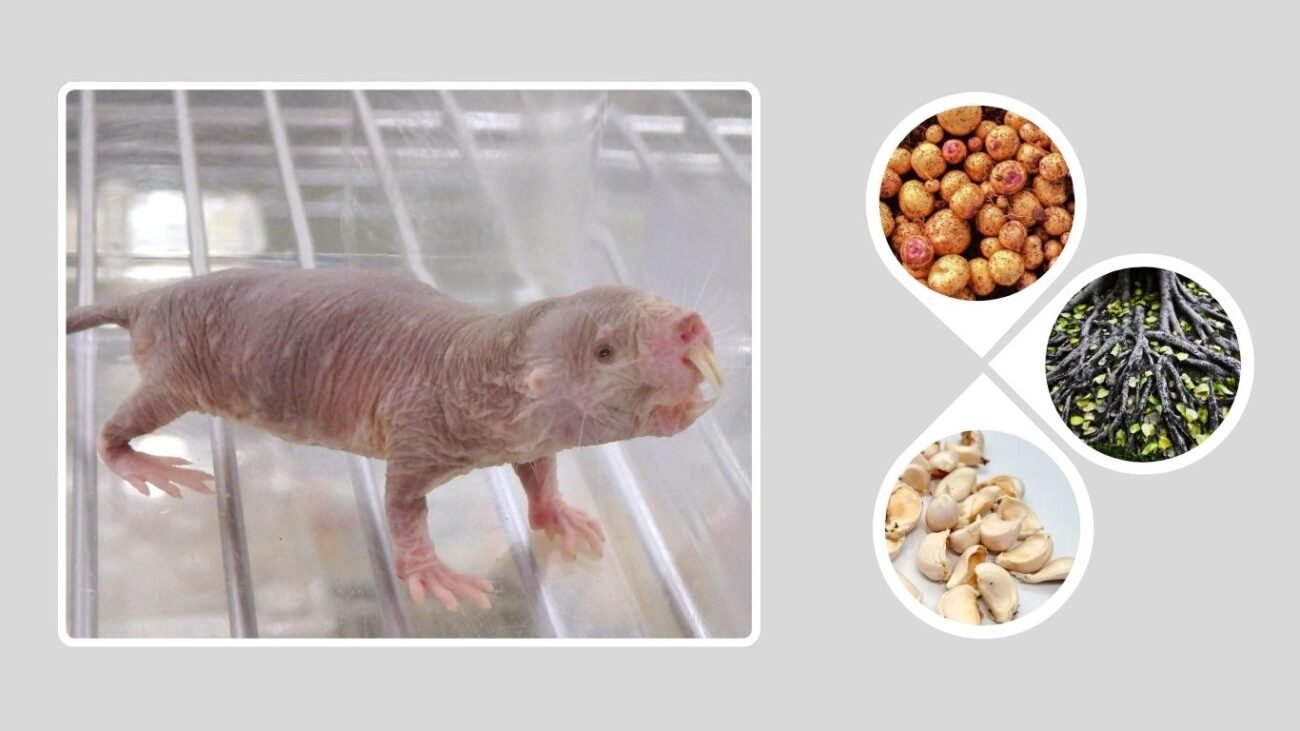
Naked mole rats are specialized herbivores, thriving almost entirely on underground plant material. Their diet is closely tied to the arid East African landscapes they inhabit.
Primary Food Sources
Their food supply comes mostly from:
- Large underground tubers
- Roots
- Bulbs
- Rhizomes and plant stems
Tubers are especially valuable because they can be enormous — sometimes weighing several pounds — and can feed a colony for months.
Feeding Behavior
Naked mole rats show remarkable efficiency when feeding. Instead of destroying a food source, they often eat from the inside out, allowing the tuber to remain alive and continue growing. This strategy provides:
- Long-term food stability
- Moisture for hydration
- Protection from above-ground predators
Workers carry food back to storage chambers, where it is shared with the entire colony. Their digestive system is adapted to high-fiber foods, and their gut microbiome helps break down tough plant materials.
Adaptations for Feeding
Several anatomical adaptations help them feed successfully underground:
- Strong incisors operate independently like miniature tools.
- Their lips close behind their teeth so they don’t swallow dirt while digging.
- Their metabolism is extremely low, reducing food requirements.
These traits allow naked mole rats to survive long periods of food scarcity.
Lifecycle
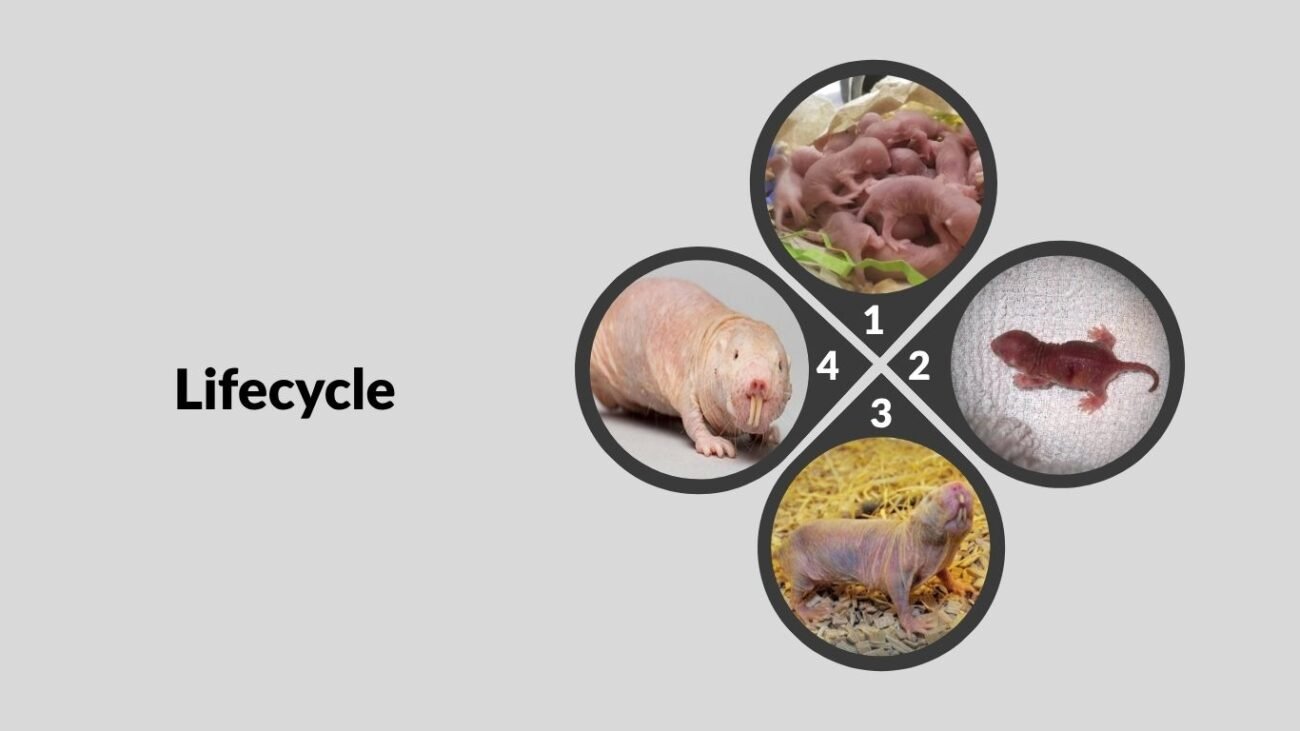
The lifecycle of a naked mole rat is unlike that of any other mammal, primarily due to their eusocial structure and remarkable longevity.
Reproduction
Only one female — the queen — is responsible for reproduction. Her physiology is unique:
- Her spine elongates to accommodate large litters.
- She produces pheromones that suppress fertility in other females.
- Only 1–3 chosen males are allowed to mate with her.
This eusocial system ensures colony stability and prevents competition.
Gestation & Birth
After a gestation period of about 70 days, the queen gives birth to:
- 10–25 pups, though litters can be larger
- Blind, hairless neonates
- Rapidly developing offspring that depend entirely on workers for care
Workers transport, groom, and protect the pups, functioning like nursery caretakers.
Growth & Development
Pups grow slowly compared to typical rodents. Development stages include:
- Weeks 1–3: Eyes remain closed; workers feed them solid food early.
- Weeks 4–6: They become more mobile and explore tunnels.
- Months 2–3: Most pups transition into worker roles.
Exceptional individuals may eventually grow into soldiers, and in rare cases, replace the queen.
Lifespan & Aging
One of the most extraordinary traits of naked mole rats is their exceptionally long lifespan. While most rodents live 2–3 years, naked mole rats can live:
- 25–32 years in captivity
- Well over 20 years even in demanding conditions
They show almost no signs of aging, lacking the typical increases in disease, inflammation, or physical decline seen in other mammals. Their longevity makes them a major subject of aging research.
Other Key Biological Features
Naked mole rats possess several incredible physiological traits that set them apart from most mammals.
Cancer Resistance
Naked mole rats almost never develop cancer, thanks to:
- High-molecular-weight hyaluronan (HMW-HA) that prevents cells from overcrowding
- Strong contact inhibition that stops abnormal cell growth
- Highly efficient DNA repair mechanisms
These features have sparked global interest in cancer research.
Pain & Sensory Adaptations
These animals show unique sensory traits:
- Insensitivity to certain types of pain, such as acid burns
- Ability to survive extreme low oxygen (hypoxia) for minutes at a time
- Adaptation to CO₂ buildup in tunnels
Their nervous system functions differently from other mammals, contributing to medical studies on pain and inflammation.
Thermal Regulation
Naked mole rats are one of the few mammals that are ectothermic-like, meaning they cannot regulate their body temperature well. They rely on:
- Tunnel depth
- Huddling behavior
- Movement toward warmer or cooler chambers
These behaviors allow them to maintain safe temperatures underground.
Scientific Importance
Their unusual biology contributes to breakthroughs in:
- Aging research
- Cancer studies
- Stroke and hypoxia treatment models
- Pain management science
They are considered one of the most important non-traditional model animals alive today.
Naked Mole Rats in Pop Culture

Rufus from Kim Possible
A major reason many people know about naked mole rats is thanks to Rufus, the beloved sidekick of Ron Stoppable in Disney’s Kim Possible.
Rufus is portrayed as:
- Intelligent
- Loyal
- Comical
- Surprisingly capable
This character boosted global interest in naked mole rats, making the species a pop-culture icon.
Educational Impact
Rufus helped introduce younger audiences to:
- Unique mammals
- Underground habitats
- Cooperative animal societies
This representation remains one of the most memorable aspects of the show.
Conservation Status
Naked mole rats are currently not endangered. Their underground lifestyle offers natural protection against many environmental threats, and their populations remain stable across East Africa.
However:
- Habitat changes
- Development
- Climate shifts
…may pose future risks, especially in areas where soil structure becomes unsuitable for burrowing.
Interesting Facts About Naked Mole Rats
- Only eusocial mammal species
- Able to survive 18 minutes without oxygen
- Can run backward as easily as forward
- Have around 17 distinct vocalizations
- Their incisors move independently
- Colonies may include 50–300+ individuals
- They do not appear to age in the traditional mammalian sense
FAQs
Why are naked mole rats hairless?
Naked mole rats evolved hairless, wrinkled skin as an adaptation to life underground. Fur would trap heat and dirt inside tunnels, while their loose skin allows them to squeeze through tight spaces without injury. Their appearance is unusual, but perfectly suited for a subterranean lifestyle.
Are naked mole rats blind?
Naked mole rats are not fully blind, but their eyesight is extremely poor. Their tiny eyes sense light and shadow but cannot form detailed images. Because they live in total darkness underground, they rely more on touch, smell, and whisker vibrations to navigate their tunnels.
What do naked mole rats eat?
Naked mole rats primarily eat underground roots and tubers found in East African soils. They often feed from the inside of large tubers, allowing the plant to stay alive and regrow. This strategy provides a renewable food source and helps the colony survive long periods without new food.
How long do naked mole rats live?
Naked mole rats are the longest-lived rodents in the world, surviving up to 25–32 years in captivity. Their bodies show minimal signs of aging, and they rarely develop cancer or age-related diseases. Their longevity continues to be a major focus of scientific research.
Can naked mole rats be kept as pets?
Naked mole rats do not make good pets and are illegal or restricted in many regions. They require large colonies, complex underground tunnel systems, and climate-controlled environments. Their specialized needs mean they are best kept in zoos or research facilities rather than private homes.


